- Advertisement -
Home Blog Page 13

Fetch My Guest Announces Stays Group Vacation Rental Network in Support of #Bookdirect Expansion

2
vacation rentals best price guaranteed

Stays Group is the largest non profit network of Independent Vacation Rental Professionals working together as stakeholders in our cooperative marketplaces that drive direct bookings and reduce OTA dependencies.

Fetch My Guest Inc, the leader in marketing automation services for independent vacation rental professionals announced the release of the Stays Group. In partnership with well respected vacation rental associations, Stays Group represents regional vacation rental marketplaces that serve vacation rental travelers in North America.

Stays Group network members have been serving the vacation rental community for an average of 20 years. The industry leading standards developed by the membership are time tested and have always put the vacation traveler first.  Stays Group members offer the vacation rental traveler clean and well maintained properties, on the ground experts with local knowledge and the industries only best price guarantee.  Stays Group members distinguished themselves during the pandemic as the exclusive providers of each property in our marketplace.  Exclusivity plays an important role to vacation rental travelers as they understand the importance of having flexible cancellation policies, real time local information and of course, the best price guarantee. 

“Today, our members have taken a big step towards creating their own cooperative platform and distinguishing their vacation rental businesses as they lead the future of #bookdirect for the coming generations.  For the past few years, many corporate backed interests have interfered with the valued relationships we have nurtured with our guests and our local communities. I am proud to work alongside our membership as we continue to grow and find innovative ways to give the guest unfettered access to our respected brands.  Stays Group represents a trusted network of quality brands dedicated to one singular mission; to continue to serve the best interest of our guests and local communities.” said, Vince Perez, CEO of Fetch My Guest, Partner, Beach House Rentals and Stays Group Member.

To learn more about our exclusive membership, schedule a call with one of our members.

Sep. 24 Demo Day: Guesty, TRACK, Rentals United, Streamline and StayFi

1
Tech for vacation rental and short-term rental managers

VRM Intel Demo Days start today, and here’s the lineup:

SEPT 24 LINEUP (DESCRIPTIONS BELOW)

10:00 AM ET, SEP 24, GUESTY

See Guesty’s Property Management Platform in Action  
Link: https://us02web.zoom.us/webinar/register/WN_iQ-KFyq4RzeGNx47I9PEdA
With 2020 being an unprecedented year for every company in the travel space, short-term rental property management software Guesty focused on providing technological advancements, new resources and increased platform flexibility to support users during this period.   In this live demo, Joseph Binestock will showcase the platform live, highlighting users’ favorite features, including the Unified Inbox, Automation Tools, the Multi-Calendar and more. This session will also cover the product developments that Guesty has made since the beginning of the year to help vacation rental managers navigate COVID-19 in order to maintain business stability and ultimately longevity, such as enabling extended stays of 28 days or more, supporting digital rental agreements, and giving users more flexibility than ever before. Register to learn more.


11:00 AM ET, SEP 24, TRAVELNET SOLUTIONS / TRACK

Transforming the Future of Vacation Rental Property Management Software Together

Link: https://tnsinc.zoom.us/meeting/register/tJcqcO-vrj8rHtMa_ecX8M1XjEPluNo6YbKf
Join John Stokinger to See how TRACK helps leading short term rental companies consolidate applications, improve operational efficiency and financial performance. Learn how to book more and spend less with 0% commission fees with direct connections to VRBO and Airbnb.        
 

12:00 PM ET, SEP 24, RENTALS UNITED

LIVE DEMO: Advanced Channel Management with Rentals United
Link: https://lu.ma/uevqd5ay
Specifically intended for DARM attendees, get a deep dive into how a specialized channel manager can boost your revenue. Today more than ever it is crucial to have a well-balanced marketing mix with superior API connections. That’s what we do for more than half of the world’s largest property managers. Don’t sit back, don’t relax, we’re ready for your questions – including technical ones. With Matthew Luzaich


1:00 PM ET, SEP 24, STREAMLINE

Streamline – Gold Standard for VR Software – Now and Future
Link: https://streamlinevrs.zoom.us/webinar/register/8016008173485/WN_Wz4PFWOnRla9XPm0ofaC-Q
Join CPO Brett Parry and Software Consulting Director Kyle Holmes as they explore the power, direction, and experience of vacation rental industry’s True all-in-one solution. 


4:00 PM ET, SEP 24, STAYFI             

StayFi – Vacation Rental WiFi That Collects Valuable Guest Data

Link: https://hubspot.stayfi.com/stayfi-demodays-webinar
Join Founder & CEO, Arthur Colker, to learn more about cloud-managed guest WiFi. We will explore a real customer account and discuss email marketing and other direct booking strategies to maximize the value of guest data.

Last Chance to Register for the Upcoming Live Vacation Rental Data and Revenue Management Conference

0

The Second Annual Vacation Rental Data and Revenue Management (DARM) Conference starts on Tuesday, Sep. 15, and the early ticket price ($299) expire at 3 ET / 12 PT on Monday, Sep. 14. After that, the registration fee is $349.

The live conference is being held Sep. 15 – 17, and is divided up into three general sections: data, strategy, and implementation/technology. All of the sessions are live. However, we are recording all the sessions (except the software breakout sessions), and videos will be available through March 2021. 

The discipline of revenue management in the vacation rental industry is still in its infancy, and we do not yet have best practices and formal education. However, this conference is designed to take a big step in that direction  For vacation rental companies, these sessions provide an understanding of market and internal data, revenue management fundamentals and strategies, a broad comparison between the hotel and short-term rental industries, technology tools, pricing on channels, and an overall view of where we are as an industry when it comes to revenue management. 

Check out the DARM conference workbook:


Join us for the Second Annual Vacation Rental Data and Revenue Management Conference.


360 Blue Acquired by Natural Retreats

2

Today Natural Retreats announced its acquisition of Florida-based 360 Blue, doubling its inventory to 1,500 vacation home rentals across 17 destinations.

Founded in Santa Rosa Beach in 2008 by Jason and Jeremy Sprenkle, 360 Blue grew quickly to manage 325 high-end vacation home rentals on the Florida panhandle before acquiring St. Joe Club & Resorts’ prestigious vacation rental program in late 2017, adding 235 homes to the company’s portfolio.

In May 2019, 360 Blue expanded again by purchasing BookBreck in Breckenridge, Colorado. With 575 home under management, the company continuing to grow organically, adding another 175 luxury rentals in 15 months.

“360 Blue is one of the best regional VRM operators in the U.S. and completely aligned with Natural Retreats in terms of vision, high standards, company value, and a strong commitment to homeowners and guests,” said Chris Holden, CEO of Natural Retreats. “This acquisition helps solidify Natural Retreats’ position as the leading national brand in high-end vacation rental management.”

With the objective of being “the preeminent luxury vacation rental brand,” Natural Retreats has purchased multiple vacation rentals along the way, including Big Sky Rentals (60 homes) in Montana in 2016, and Resorts West (125 homes) in Park City in 2017. At the time of the Park City purchase, a press release reported the company completed 13 acquisitions between 2015 and 2017, employed 500 annual team members, and managed “over 1,400 retreats in 35 stunning destinations across the US, UK and Europe.”

Currently, Natural Retreats employs 350 people across 17 markets. According to 360 Blue, CEO and former co-owner Ashley Horsely will continue to lead the Florida panhandle’s operations. When asked if the 360 Blue’s employees will remain with the company, a Natural Retreats spokesperson said, “360 Blue is an exceptionally run organization and we are seeking to grow, not contract.”

Is Natural Retreats pursuing more growth via acquisition? According to the company’s spokesperson, “We are focused on the successful integration of a rather large acquisition right now . . . smart growth opportunities are evaluated on a case by case basis,” and added, “We will continue to consider evaluating great VRM operations in choice vacation destinations.”

Even though Jason Sprenkle is leaving 360 Blue, he will continue to be a prominent face in the vacation rental industry as CEO of Key Data Dashboard and will be presenting 2020 performance data next week at the annual Vacation Rental Data and Revenue Management Conference, Sep. 15 -1 7. 

Course Outline for Upcoming Vacation Rental Data and Revenue Management Conference, Sep 15-17

0

The Second Annual Vacation Rental Data and Revenue Management Conference is only a few days away, and we’ve finalized the schedule. You will find session details with times, presenters and descriptions on the VRDARM.com agenda page, but below is a brief outline of the classes that will be offered.

The conference is divided up into three general sections: Data, Strategy, and Technology. This is shaping up to be a master class in short-term rental revenue management.


Tuesday, September 15: Understanding Internal and Market Data

  • 2020 Vacation Rental Performance with AirDNA, Key Data, and STR (Part 1, Eastern North America, UK, EU)
  • Terminology and KPIs (+ Industry Debate: Getting on the Same Page with RevPAR)
  • 12:30 pm ET: Data Tool Demoground – *Free* Session (Click here to register)
  • Segmenting Properties and Building Comp Sets
  • Internal Demand Data: Using Website and Call Center Data in Revenue Management Strategy
  • Utilizing Property Data in Dynamic Pricing Decisions and How Property Data Affects Rankings
  • Winter Resort Markets: 2020/2021 Outlook in a Pandemic Economy
  • 2020 Vacation Rental Performance with AirDNA, Key Data, and STR (Part 2, Western North America, AU, NZ)


Wednesday, September 16: Revenue Management and Pricing Strategies

  • What the $@$% is Revenue Management?
  • Hotel Strategies vs Vacation Rental Strategies
  • How Low Can You Go in VR? Understanding Profitability at the Company and Home Level
  • Proven Vacation Rental Pricing Strategies
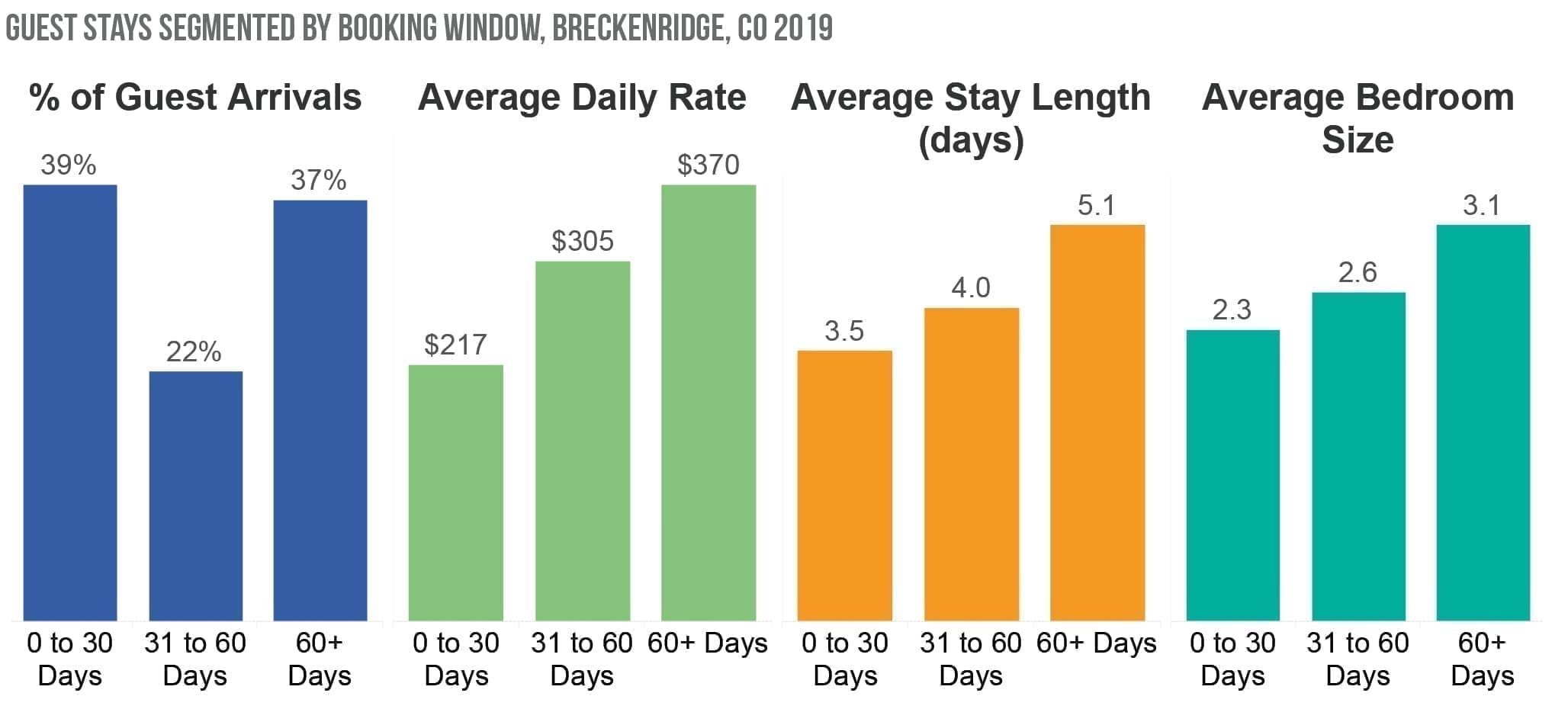
  • Deeper Dive: Translating Daily Rates into Weekly, Monthly Stays and Understanding the Booking Window
  • Homeowners: Contracts, Communications, Reporting


Thursday, September 17: Going from Strategy to Implementation 

  • Pushing out Pricing to Channels: Airbnb, Booking.com, Expedia, Google, and Other Channels
  • 11:00 am ET: Changing Pricing in Your Software – *Free Session (Click on your software below)*
  • Cost per Acquisition with Kalibri Labs
  • 12:45 pm ET: Pricing Tool Demoground – *Free* Session (Click here to register)
  • In-house vs Outsource: Advantages, Disadvantages, and Evaluation
  • Using Your Website and Call Center to Communicate Pricing Changes
  • Additional Sources of Revenue

This agenda will be presented live in a rapid-fire format with 25 sessions and 60 presenters.

However, all sessions are being recorded, and attendees will get a supplemental conference workbook and have access to recordings and presentation materials for six months following the conference. The registration fee is $299, and if you need convincing, one or two additional reservations gained from attending the conference would justify the cost. 

For vacation rental managers and revenue managers, you’re not going to want to miss this one! Join us, Sep. 15 -17, for the Second Annual Vacation Rental Revenue Management Conference. 


New Association for Vacation Rental Homeowners Launches This Week

1

A new association for vacation rental owners, the Association for Short-Term Rental Homeowners (ASTRHO), is launching this week to “bring together like-minded individuals and companies with a shared interest in offering safe, legal, and successful short-term rentals for owners, guests, and vendors.” 

As a not-for-profit, ASTRHO was created for homeowners seeking to find education and resources related to marketing, operations, and investment, and it welcomes existing and aspiring short-term rental homeowners, corporate solution and service providers, and academic experts in hospitality and relevant disciplines. The association serves short-term rental homeowners who are:

  • Seeking to invest in a short-term rental or vacation home,
  • Self-managing a short-term rental or vacation home, or
  • Selecting a property or hospitality management company.

“While the lodging industry has professional development and trade associations for hotels, resorts, and other lodging sectors, short-term rental and vacation rental homeowners are now a segment of their own,” said Heather Richer, ASTRHO board president and former RedAwning, and Kimpton Hotels & Restaurants executive. “There are an estimated 10 million short-term rental homeowners globally, and they need a professional community. We’re looking forward to playing a role in the further advancement of this lodging segment.”

In addition, the association’s website, ASTRHO.ORG, offers eLearning courses, local and regional community discussion boards, relevant news updates, and networking opportunities. It also serves as an aggregator of the fragmented information, tools, and solutions available to short-term rental homeowners. The cost for homeowners to join this association is $10 per month or $100 per year, and they are offering homeowners a free 14-day trial period.

“We’ve identified three trends to watch,” Richer said. “First, approximately 50 percent of short-term rental owners choose to self-manage, and technology advancements will further empower these entrepreneurs and small business owners, making profitability and operational success even easier. Second, we’ll see more branded opportunities. There will be both new entrants and traditional hospitality management companies, like we’ve seen with Marriott Homes and Villas. Finally, with COVID-19, guest demand for second-home rentals has increased. Whether seeking a place to vacation away from crowds or working remotely, travelers are considering vacation home stays now more than ever before.”

Richer added, “According to AirDNA, year over year, between May and June, US vacation rental bookings were up 20 percent.”

ASTRHO will host a virtual launch event on Tuesday, September 22, 2020, at 12:00 pm ET, 9:00 am PT. At this membership drive, homeowners will get an overview of the community and the organization’s purpose, and ASTRHO will spotlight homeowner members and introduce supporting industry leaders and experts.

To learn more about the launch event or to become a member, visit https://astrho.org/.

Hotel and Vacation Rental Experts Come Together to Discuss Revenue Management at Upcoming Forum

0

For decades, the travel industry has bobbed in and out of speculative attempts toward what many believe to be an inevitable convergence of the hotel and short-term rental industries.

Historically, there were missteps along the way dating back to ResortQuest’s founding and sale to Gaylord and then to Wyndham. Accor wrote off $288M in losses related to its purchase of  OneFineStay, and we watched Hyatt and Accor trade losses with Oasis before the company was essentially gifted to Vacasa in 2018. In 2019, hopes of bringing the two industries together got a second wind as Airbnb purchased HotelTonight, Marriott launched Homes and Villas, STR began tracking short-term rental data, and Skift introduced its Short-term Rental Summit.

Next week, several recognized hotel and resort industry veterans are speaking alongside 40 short-term rental experts at the upcoming Second Annual Vacation Rental Data and Revenue Management (DARM) Conference, including Cindy Estis Green, cofounder and CEO at Kalibri Labs; Kelly McGuire, author and former senior vice president of revenue management, distribution and direct marketing for MGM Resorts International; Breffni Noone, revenue management and hospitality professor at Penn State; Ralf Garrison, founder of Insights Collective and founder and former CEO at Mountain Travel Symposium and Destimetrics; Cara Goodrich, vice president of sales and revenue, Castle Hotels and Resorts; and Heather Richer, HSMAI Revenue Management Advisory Board member and former and vice president of revenue management and distribution at Kimpton Hotels. From STR, chief strategy officer Elizabeth Winkle and vice president of research and development, Patrick Mayock (former editor in chief, HotelNewsNow), and senior associates Lyse Perrigo and Will Sanford will be discussing market data with short-term rental data leaders AirDNA and Key Data.

The DARM Conference, Sep. 15 – 17, will present data comparing and contrasting 2020’s hotel and short-term rental performance, and one in five attendees registered for the event are coming from hotels, resorts, and OTAs, including Booking.com and Expedia.

In a post-COVID travel environment, whole-home rentals in drive-to leisure markets surged as travelers escaped city centers; and with professionals working remotely and schools moving online, families are taking advantage of increased ability to stay in vacation homes for longer stays and in off-peak seasons. One coastal vacation rental manager said this week, “We could close down for the rest of the year and still be ahead of 2019.”

“While hoteliers and short-term rental operators historically have struggled to find common ground in service and operations, we’re discovering much more commonality in revenue management, distribution, and direct marketing,” said DARM Conference founder Amy Hinote. “When we realized we had to move this conference online, it gave us an increased ability to pull in experts from multiple sectors. As we bring vacation rental operators, technology providers, hoteliers, and academics together to discuss the revenue side of the business, it will be interesting to learn from each other and uncover where these sectors truly intersect.”

The content at the conference is divided into three general sections with the first day focused on data, the second day discussing revenue management strategies, and the third day centered on technology and execution. 

Related: Register for the Second Annual Vacation Rental Data and Revenue Management Conference, Sep. 15 – 17. 

Carolina Retreats Continues to Grow with Second Inn Purchase on NC Coast

0

Based in Surf City, North Carolina, Carolina Retreats recently announced its acquisition of the Island Resort and Inn located on Oak Island, along with a rebrand of the hotel to The Beach House at Oak Island

Founded and operated by vacation rental industry leader and former VRMA president, Mike Harrington, Carolina Retreats is rapidly growing and now includes the full-service management of 300+ vacation homes, Topsail Realty by Carolina Retreats, the Loggerhead Inn, and the Island Resort and Inn

The Island Resort and Inn, originally constructed in the 1960s, and then added on to in the early 80s, consists of 22 total rental units. With direct ocean views from each room, the Island Resort and Inn features ten units that are double occupancy motel style rooms, perfect for a couple looking to getaway for a weekend; and twelve that are one- and two-bedroom apartment-style units featuring mini kitchens, separate bedrooms, and large living spaces.

Guests can currently enjoy an onsite swimming pool with convenient beach access and walking distance to the oceanfront Lazy Turtle Bar & Grill and the Oak Island Pier.


“I am extremely excited for the opportunity take the Island Resort and Inn into the future as its next owner”, stated Mike Harrington, CEO & Owner of Carolina Retreats.

“When we stumbled upon the Island Resort and discovered it was for sale, I immediately fell in love with the property. From the location, the guest room layout, and the history, it checked all the boxes of not only a successful business opportunity, but the potential to leave a legacy and turn it back into a prized asset for the community of Oak island. We’ll be planning a phased renovation of the entire property as soon as the season ends, making improvements over time and as needed”, Harrington added.


About Carolina Retreats

Carolina Retreats is a specialty lodging, vacation rental management, and real estate consulting company headquartered in Surf City, NC. Through our local brands and affiliates, we provide unrivaled property management and hospitality services to over 300 property owners by utilizing high-tech tools, modern online marketing, and an unparalleled team. Our singular focus is on creating unforgettable, authentic experiences for our valued guests, and protecting our owner client’s hard-earned assets while maximizing their income and occupancy potential.

Matt Landau Expands Footprint with New Podcast Featuring Dana Lubner and Sponsored by TRACK Software

1

Matt Landau, founder of VRMB and host of the online series The Vacation Rental Show, is expanding his toolkit of resources for short-term rental companies with a new podcast featuring Dana Lubner, director of sales at Effortless Rental Group, based in Denver, Colorado. 

Sponsored by TRACK software, the podcast, titled How To Save Your Vacation Rental Business, is a 10-part educational series hosted by Dana Lubner that will teach short-term rental managers how to solve the greatest looming threat—unfair regulation—from the ground up.  

The rise in popularity of short-term rental platforms like Airbnb has prompted neighbors and lawmakers around the world to ask, “Where do alternative accommodations fit in our community?” And without active participation from professional stakeholders, the sector’s bad apples are threatening to ruin the bunch. 

Dana Lubner knows this all too well. Her company Effortless Rental Group, which according to the company website, “specializes in maximizing exposure on platforms such as Airbnb, Vrbo, and the Expedia Partner Central Network,” was in danger of being shut down due to several problem operators ruining the image of Denver’s hosting community. The hosts in question were sent affidavits, and some were even charged with felonies when legitimacy of primary residency was in question. The news headlines were weaving a story that made the community at large view hosting as a crime, when in fact it’s not.

As a result, Lubner organized the Good Neighbor Summit: a first-of-its-kind event designed to unite local professional hosts under one roof and establish standards. The Good Neighbor Summit sparked a series of collaborative successes, which have created what Lubner calls a “narration shift” showcasing the good side of the local hosting community. But the learning process wasn’t easy. 

“The one thing I always wished we had in Denver was a how-to guide on better advocacy practices,” says Lubner. “Most people have no experience in this kind of leadership, so learning what works and what doesn’t really speeds up the process. It can literally save a vacation rental business.”   

To fill this need, Lubner teamed up with Matt Landau to produce “How To Save Your Vacation Rental Business,” a ten-episode masterclass into the world of vacation rental advocacy. The series will feature a variety of the nation’s most vocal participants: from Public Affairs and policy experts to leading vacation rental managers, and even to neighborhood advocates rarely included in pro-short term rental conversations. 

“We’ve been thinking about ways to get more involved in this advocacy challenge,” says Landau. “Dana has proven herself to be such a courageous leader locally in Denver, we were honored for the chance to expedite her research and amplify her findings with the greater community.” 

The chance to help shape the evolution of the vacation rental industry and be a part of shaping the narrative moving forward is what led this season’s sponsor, TRACK Hospitality Software powered by TravelNet Solutions, to join in the initiative. “As a supporter of our vacation rental community, we think responsible participation by vendors is more important than it’s ever been.” Said Ryan Bailey, CEO of TravelNet Solutions. “The topic of advocacy, an experienced voice in Dana, and an industry advocate in Matt is the perfect combo to drive this discussion forward.”


Vacation Rental Data and Revenue Management “Master Class” Coming Sep 15 -17

0

You’re invited to the Second Annual Vacation Rental Data and Revenue Management (DARM) Conference, Sep 15 – 17.

This is more than a conference. It’s a Master Class.

Once we accepted that we would be unable to host DARM as an in-person conference, we set out to reimagine this event and create something new . . . a high-level educational curriculum that brings property managers, revenue managers, academics, and technology providers together to help the vacation rental industry discover the enormous gains that can be derived from understanding performance data and implementing effective revenue management strategies.

Over the last few months, since COVID-19 rocked the travel world, the vacation rental industry was able to tap into the value of real-time market data and use dynamic pricing tactics and tools like never before. Using data tools like AirDNA, Key Data, and STR—along with revenue management and pricing tools/services like Beyond Pricing, PriceLabs, Rented, and RevPARTY— hundreds of property managers were able to gain a competitive advantage by pivoting strategies to maximize revenue. In contrast, others sat still with static pricing, leaving money on the table or rental homes empty.

Most concerning, too many vacation rental managers do not yet know that they could have used these strategies and tools to forecast demand and maximize revenue. And even more do not yet know how to evaluate pricing performance.

This is our why.

We want vacation rental operators to have the knowledge, tools, and technology to turn lemons into lemonade or make a good situation even better. We want PMs to feel confident in assessing performance data and utilizing pricing strategies to maximize revenues for their homeowners and for their companies.

As a result, we went deep.

With the help of 50+ contributors, we’ve crafted a three-day, deep-dive Master Class for vacation rental data and revenue management. The cost to attend is $299, and the curriculum is divided into 3 sections: Data & Basics, Revenue Management & Pricing Strategy, and Technology/How-To.


Tue, Sep 15: Data & Basics

  • 2020 Vacation Rental Performance
  • Terminology and KPIs
  • The Great RevPAR Debate
  • Segmentation and Competitive Sets
  • Comparative Market Data
  • Internal Data (Website, Call Center, Property)


Wed, Sep 16: Revenue Management & Pricing Strategy

  • Revenue Management Components
  • Hotel Strategies vs Vacation Rental Strategies
  • Profitability: Understanding Costs, Risk, and Breakeven
  • Proven Short-term Rental Pricing Strategies
  • Translating Daily Rates into Weekly/Monthly Stays and Understanding the Booking Window
  • Working with Homeowners: Contracts, Communications, and Reporting


Thu, Sep 17: Going From Strategy to Implementation

  • Pushing Pricing to Google, OTAs, and Other Channels
  • Master Rates and Rate Rules in Your Software (Breakouts with the Leading PMS Providers: Barefoot, Guesty, Escapia, Streamline, TRACK)
  • VR Pricing Tools
  • Using Your Website and Call Center to Communicate Pricing Changes
  • In-house vs Outsourced Revenue Management and Evaluating Performance
  • Additional Revenue Opportunities

This event is designed for serious vacation rental companies looking to the future.

And a huge thank you to these sponsors! Each of these companies is going over and above by contributing thought leadership, data, talent, resources, and time to ensure that this DARM Master Class is relevant, educational, current, and value-driven.

Plus: New Sponsors, STR Global and Yapstone/VacationRentPayment

Click here to register for DARM, Sep 15 – 17, 2020.

None of us know all there is to know about revenue management for vacation rentals. This is a dynamic space. But this event will push us forward as an industry.

To quote the musical Hamilton, this is the “room where it happens.”

Dealers and Dreamers: Get Your Reservations Team Ready for Calls from Deal-Seeking, Vacation Daydreamers

0

What a crazy couple of months it has been for our vacation rental reservations sales staff, who were on the very frontlines of the pandemic.

First, they fielded a tidal wave of calls from panicked guests and had difficult conversations regarding cancellation penalties and the fine print of travel insurance. Second, came the flood of digital correspondence from those who booked via third-party channels, along with requests for documentation from finance managers responding to chargebacks. Third, came the eye of the storm, as everything grew eerily quiet after the initial chaos. This quiet phase will not—and in some destinations, did not—last for long. Now wise vacation rental (VR) managers and supervisors are preparing their reservations team for what is going to happen next.

Like the VR and overall lodging industry, activity at my company, Kennedy Training Network, Inc., has mirrored the same trends. We used our own “quiet phase” to develop new training content, which for now will be delivered via private webcam to our clients’ reservations teams, and to update our mystery shopping criteria and call coaching processes. Following are some of our reservations sales tips you can use for in-house training, but first let’s look at what comes next.

Although many are out of work, a huge chunk of the workforce is for the first time experiencing the work-from-home model, while simultaneously coaching their children through distance learning technology and attempting to tutor them. Workers in essential services are racking up overtime, especially superheroes in the medical profession and in biotech research, first responders, and those working in other essential services such as the food supply chain. Many people are still working in jobs that are completely unaffected, going home after work to do their part to flatten the curve, and missing social connections.

One thing most of us have right now is extra downtime at home. Pretty soon we will have cleaned out all our closets, washed the outside windows, walked our dogs to exhaustion, and grown tired of binge-watching Netflix. As a flattening curve brings hope for the end of social distancing, more and more people will feel safe enough to engage in what I call “vacation daydreaming.”

The trickle of inquiries will start to grow into a stream and soon thereafter a flood. However, that’s not to say that things will return to “normal” for vacation rental reservations sales. Following are changes I anticipate along with training tips from our KTN training web coaching.


“Voice” Returns with a Vengeance

There are several reasons I predict an uptick in voice reservations calls. First, those who have previously booked via OTAs and other third-party platforms have either experienced firsthand what this means during times of crisis, or they have read stories and heard firsthand accounts of the challenges guests have experienced. Also, guests are going to be looking for personalized reassurances about deposit, cancellation, and refund policies. They will be asking pointed questions about cleaning and disinfection procedures.


“Dialing for Deals”

As I have always heard from our reservations sales workshop participants, many of those who called previously were looking to negotiate special rates or to get fees waived.

Given that it’s no secret that the travel industry is going through hard times, we can be assured that what I call the “value-driven deal seekers” will be dialing for deals more than ever. Those who don’t call will instead shoot over blunt “let’s make a deal” emails like “I see the rental is $X for this week; can you check with the owner and see if they will take $Y?”

Surely, the traditional sales training techniques that the VR industry has embraced will be important, such as connecting with the caller (or email sender), asking investigative questions, and using a storytelling approach. However, it’s a great time to revisit some of our more advanced sales techniques.


Use a “Rate Framing” Approach

When offering any new quotes for any rates other than the very peak-demand rates, mention the “normal” or “prevailing” rate as a reference point. Marketing experts often call this “slash pricing,” such as used on OTAs and online retailers.

Your agents’ ability to do this skillfully will vary greatly according to your property management system and your rate strategy. Ideally, they can reference a specific high-demand rate for what the same vacation home goes for during holiday periods. Here’s an example:

“Okay, in checking your selected home for those dates . . . the prevailing/normal rate is $X, but for your dates I’m able to offer you a rate of $Y.”


Position Rates as Being a Surprisingly Good Value

Even if your agents are not able to easily see high-demand rates to reference, they can at least express that the rates quoted reflect value pricing. Here’s an example:

“In checking . . . Wow! At this time I’m showing the rate of . . .”


Creating Urgency—More Important Than Ever

One unique challenge in the VR niche of lodging versus KTN’s traditional resort clients is that availability is completely transparent. In other words, when prospective guests search specific dates, they can see firsthand specifically how many homes remain open.

Not only will this fuel the deal seekers, but it will also give prospective guests a good reason to put off their decision and perhaps wait for a better deal to surface. Here are some examples of how to create urgency when you are in fact “wide open.”

“Yes, as you said, right now I am showing lots of availability, but it sounds like this home is a perfect match for your family vacation.”

“Yes, we do have homes open, but I have to say we have been recently getting a lot more calls, as people seem ready to travel again.”


Remove Barriers to Booking Now

Most companies have relaxed deposit and/or cancellation policies. Be sure to coach your agents on how to explain this. First, they should create urgency such as indicated above, and then reduce commitment barriers by saying:

“With our relaxed cancellation policy, I can lock this in for you now; if the situation changes you can always cancel before X date for a full refund of the deposit, less only a booking fee of Y.”


Personalize Follow-Up on Inquiries

Despite one’s best efforts, many of our vacation daydreamers are simply not going to be ready to commit just yet. Therefore, it’s more important than ever before to obtain the caller’s contact information, send a personalized follow-up note, and then reach out again a couple of times down the road, alternating between phone calls and emails.

We hope that the above ideas are helpful for your in-house training. Stay tuned to www.KennedyTrainingNetwork.com as we continue to develop and launch new live web-training content in response to the VR industry’s reservations sales training needs. Certainly, your reservations sales agents need a break after the stress of the cancellation calls, and your company might also be looking to conserve cash on payroll and reduced hours. Yet, it is wise to also use this time to upskill your reservations team and get ready for the rebound.

Booking Pace Snapshots: Examining Year-over-Year Adjusted Occupancy Rates, March through July

0

As the United States slowly awakened to the reality that COVID-19 was putting a halt on travel, Key Data Dashboard’s Melanie Brown and I began tracking the pandemic’s effect on the forward-looking booking pace, taking snapshots of data for six regions: Hawaii, Oregon, California, Colorado, the Gulf Coast, and the Southeastern Atlantic Coast.

Beginning on March 5, we documented the adjusted occupancy rate booked on that day and compared it to the same metric on the same day in 2019, looking ahead monthly to March, April, May, June, and July. We then continued to pull these same data sets every seven to 14 days through May 8 to track how vacation rental travel bookings were comparing to 2019.

The data sets provide a piece of history—one we have not had until recently with the wide adoption of benchmarking data.


How to Read the Data

As you will see in the charts and tables below, each region’s data set is characterized by an “as-of ” date (e.g., Hawaii: YOY Adjusted Occupancy As of March 5). The “Adjusted Occupancy” rate represents reservations on the books as of March 5, 2020, compared year over year to reservations on the books as of March 5, 2019.The “Adjusted Occupancy” metric measures paid occupancy, or nights available to rent, and excludes owner stays and maintenance holds. 

The data sets then compare this booking pace for 2019 and 2020 as of March 5, March 13, March 23, April 7, April 14, April 29, and May 8. Key Data sources and aggregates its data from thousands of professionally managed vacation rental companies and compiles it using direct API-driven connection with property management software systems.


Now that we have benchmarking data, we must learn how to interpret it. For example, the chart to the right tracks June’s YOY change in adjusted occupancy rates across all the regions we examined “as of ” the days on which we took snapshots. For example, the SE Atlantic Coast region’s bookings are still pacing 25 percent below 2019 for June occupancy booked as of May 8, 2020, compared to occupancy booked as of May 8, 2019.


Q&A with Breezeway founder Jeremy Gall about company’s $8 million funding round and more

0

Earlier this week, Breezeway announced that the company has raised an additional $8 million in funding led by Schooner Capital, along with Tamarisc Ventures, Krillion Ventures and Launch Capital. This Series A round follows seed funding of approximately $5 million since its launch in 2015, bringing the total amount raised by the company to just over $13 million.

>> Related: Breezeway’s 2020 Vacation Rental Property Operations Report

Background

Breezeway is a technology platform that gives property managers the ability to facilitate and manage housekeeping/maintenance operations, guest and contractor messaging, and safety management. Based in Boston, Jeremy Gall (who also cofounded FlipKey in 2007) launched Breezway in 2016 with the help of initial investors, including Jason Sprenkle of Key Data Dashboard. According to its site, “Breezeway’s property care and operations platform helps coordinate, communicate, and verify detailed work, and deliver the best service experience to clients.”

Additional announcements

The company also announced that it has added Peter Andruszkiewicz to its integrations team and Simon Lehmann to its board of directors.

Peter Andruszkiewicz joined Breezeway after serving five years at Airbnb where he started as a regional market manager servicing the New England area and advanced through the company to head up strategic API partnerships for North America.

Simon Lehmann has been a leader in the hospitality industry since 2005 as CEO at Interhome, president of Phocuswright, CEO of Biketec, and deputy CEO of the Hotelplan-Gruppe. In 2018, Lehmann founded AJL Consulting and was added to BookingPal’s board of directors.

“The product and company are uniquely positioned to change the standards for what it means to manage interactions at physical space,” Lehmann said about Breezeway. “In addition to Jeremy, the team is made up of people with deep roots in the vacation rental industry: former property managers, industry suppliers, safety experts, etc. They understand the complexities of managing vacation rentals and are determined to deliver market-leading tools to make it easier to coordinate and verify the cleanliness, safety and quality of the experience for guests and owners.”


Q&A with Breezeway Founder Jeremy Gall

We reached out to Breezeway’s founder, Jeremy Gall, to learn more about the funding and company’s trajectory.


Q: With the new funds, what can VRMs expect to see from Breezeway?

Jeremy Gall (JG): Expect to see us invest heavily in our product to help improve how managers perform the detailed work of preparing and maintaining homes and delivering hospitality service to guests and owners. We have built comprehensive software for property care, operations and communication, but there’s still so much more value that we can bring to property managers through additions to our platform.


Q: How has the pandemic affected Breezeway and the team?

JG: We were fortunate, thanks to a team that is dedicated to our mission and each other, to keep everyone on the team through the pandemic. We even added a few folks, most recently Peter Andruszkiewicz, who previously was running API partnerships at Airbnb. We now have thirty people distributed in California, North Carolina, Washington, Maine, and Europe, in addition to the core team in Boston. Everyone has been working remotely since March and while it was a transition at first, we’re finding creative ways to build upon our team unity and culture.

As we all know, the pandemic brought travel to a standstill, and then vacation rental demand came roaring back in many markets. Even managers that had been on top of their operations for years struggled with the whipsaw nature of going from zero to sixty as markets opened up. Safety and quality are the key trends in travel and vacation rentals. There is so much more sensitivity to how property is maintained and prepared carefully, and this dynamic has been building for years. The pandemic has added to that and we’ll see this continued emphasis in the industry.


Q: Will you be pushing out a homeowner product to the mix?

JG: We’re focused on professional operators because that is where hospitality, vacation rentals and property management services are headed. We will be adding homeowner products in the future. However, they won’t be the type that folks typically think of. But before that, we have some really exciting products to announce in the coming months.


Q: Were any of these investors already invested in the company?

JG: Yes, many of our existing investors participated in this round. We have a shared vision with our investors of the role that detailed service is going to play in the future of property management and the opportunity for Breezeway.


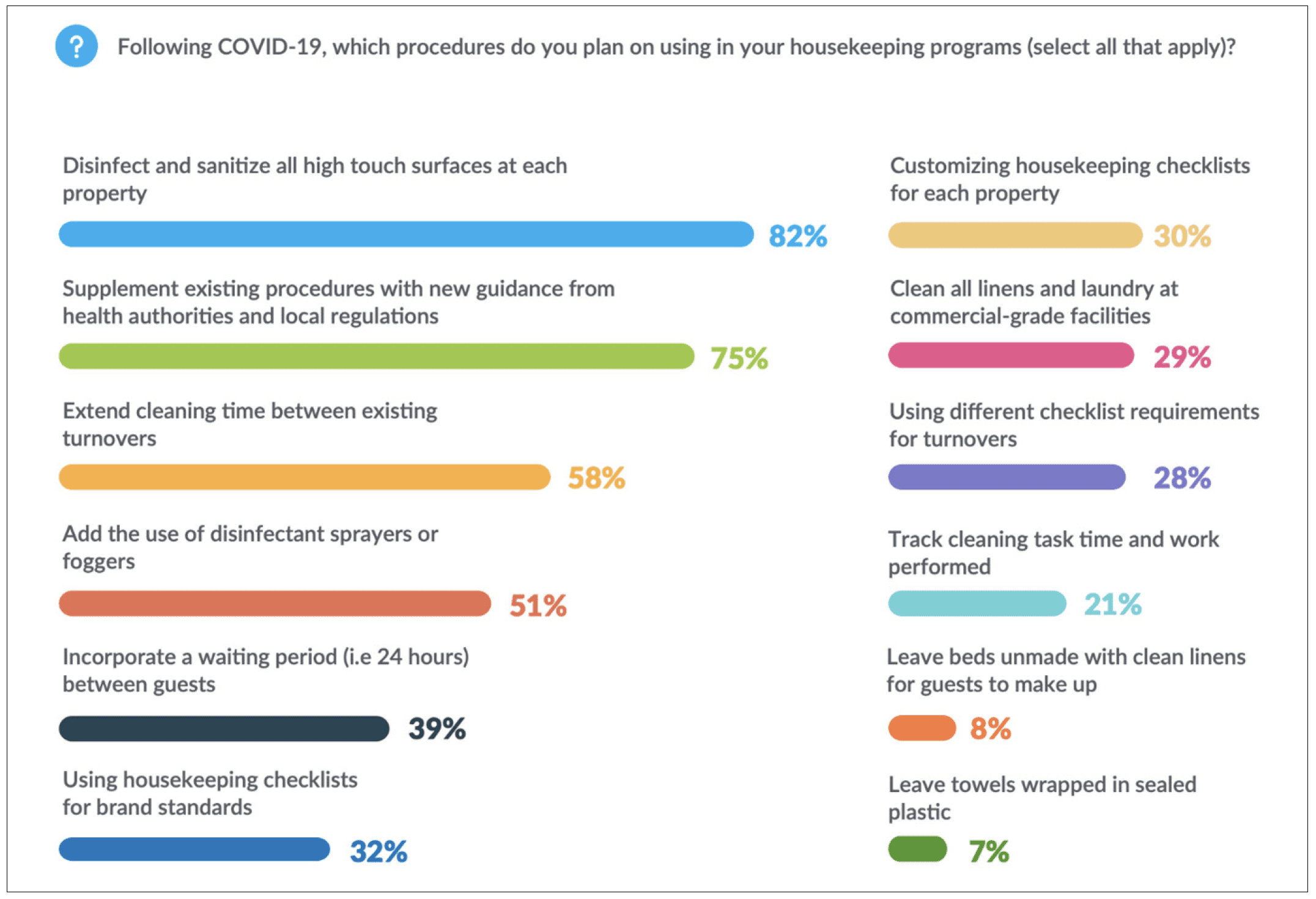
Breezeway recently released a study titled 2020 Vacation Rental Property Operation Report, which surveyed over 200 professional vacation rental managers to “measure how professionals are enhancing their property care programs to better deliver predictable, safe and high-quality vacation rental experiences in 2020 during travel’s new normal.” 

Jeremy Gall will be speaking about the role of property data in revenue management at the upcoming Vacation Rental Data and Revenue Conference, September 15–17. 

Restoring Your Pricing Strategy

2

COVID-19 Road Map to Recovery Key Indicators

Travel trends are changing daily as the world navigates through the COVID-19 crisis, especially in the vacation rental industry. We’ve been monitoring markets affected by COVID-19 since January and have focused on key indicators to identify important trends ahead of time. Although there is still uncertainty regarding recovery, we wanted to share how we have been monitoring markets, so you can keep an eye out for signs that your own market is starting to recover.


Cancellations by Cancel Date

As soon as COVID-19 cases began to rise in the United States, cancellations in the vacation rental market surged for about a week, signaling a weakening of travel confidence.

Although this initial wave of cancellations lasted a week, there is potential for another wave of cancellations for summer and fall reservations. We will probably see another round of cancellations for most markets as shelter-in-place restrictions extend further.


Additionally, if there are flare-ups of a second wave of the virus in the fall, we may see more cancellations then. Always be aware of travel perceptions in the media as well as shelter-in-place restrictions in your part of the country; these factors will be early indicators of future rounds of cancellations.


Cancellations by Check-in Date

In addition to looking at the number of cancellations made when travel restrictions are issues, we can also glean insight from analyzing the stay dates for those cancelled reservations to measure how uncertain guests are about their ability to fulfill their future travel plans. In most of the United States, we have not seen many reservations cancelled past mid-May (at the time of publication).

This dynamic will depend on market lead time, but the majority of cancellations made were for bookings in the same 30- to 60-day period. Because this is a fluid situation, monitoring how far out guests are cancelling reservations is another main indicator of consumer confidence moving forward.


Booking Pace

Just as cancellation data can give insight into how optimistic guests are about fulfilling future travel plans, new bookings are also key measures of guest confidence.

As long as there is uncertainty surrounding the forecasted end date for most markets, we can expect the booking pace to remain slow. Guests are making few bookings farther out, and most bookings are made less than seven days prior to arrival, as a result of COVID-19.


Shifts in Market Pricing by Listing Type

In addition to monitoring cancellations and booking pace, we have also seen a major shift in length of stay, particularly in urban centers. Looking at both US and European data, we see a clear shift to longer-term bookings. As a result, the ADR in the short term has also dropped significantly, given that most managers price their 30-plus-day rentals at a discounted rate compared with short-term daily pricing.

This might change the supply of vacation rentals because many of these urban managers might shift toward a long-term strategy.

A change in short-term stay supply in the near future will benefit those managers who continue to practice solely short-term bookings. Although it is too early to tell if supply has permanently shifted between different distribution channels (removing listings or shifting to long-term stays), this will probably appear in the long term and have an impact on prices across different channels.


Pent-Up Demand

Unlike the gradual recovery of a stock market recession/depression, it is likely that when either a vaccine or antibody test (or both) are released to the general population, groups of individuals will reenter normal society after months of being cooped up at home.

We might see a recession/depression as a result of COVID-19; however, we believe that travel, particularly for vacation rentals, will recover faster than most industries once the shelter-in-place orders are dropped for a majority of the general population. The signals we will watch for to measure this recovery are a decrease in cancellations, an increase in booking pace, and a lengthening of the booking lead time in various markets.


The Need for Active Revenue Management for the Recovery

Despite decades of research and development, and millions spent on developing proprietary pricing algorithms, airlines and major hotel chains still practice “active revenue management.” This entails having revenue managers and pricing analysts constantly watch what their software is suggesting, so they can make judgment calls on behalf of their businesses. It is absolutely critical that property managers in the vacation rental space mirror these practices by investing time and resources into using objective data to make pricing decisions for their businesses.


Dynamic Pricing Is More Important Now Than Ever

Staying on top of changes in supply and demand in your market has always been important, but with travel trends changing daily now, dynamic pricing is an important tool for the entire vacation rental industry. It will continue to be important to react quickly to changes in your market, moving forward.

Using market-level data alongside individual listing data points allows dynamic pricing tools to stay competitive in a quickly changing landscape. Typically, market supply and demand do not shift much from day to day. This has changed recently, though; most markets around the world are changing daily as cancellations increase and booking pace decreases.


Bringing on New Owners Poses a New Challenge

The lack of quality historical data during the months most affected by COVID-19 will make establishing initial rates for new properties much more challenging.

To confront that directly, take advantage of market demand to gauge how to best set prices and edit and adapt those prices almost daily for new listings as you monitor pacing. You can do so manually or with an automated dynamic pricing tool. In either case, spending dedicated time daily to focus on pricing will be critical for the recovery process.


Be Ready for a Flood of Short Lead Time Bookings

Once restrictions are lifted, be prepared for a noticeable increase in short lead time bookings. With reservations slowing down dramatically for stay dates within the next six months, you’ll have more open calendars (even during high season) than you will have had in years prior. As a result, you’ll need to react quickly to adjust your last-minute discount strategy, override prices or minimum stay requirements, and reconsider new promotions or discounts you have in place.

These nimble approaches will attract new guests during orphan nights (available nights positioned on the calendar between two other reservations) and uncertain times.

The speed of the recovery is unknown, and every property management company will have to follow it daily to make the best strategic revenue management decisions for their organization.


A Caveat on Lowering Prices

With a lot of uncertainty right now, we caution you against lowering prices too aggressively to gain occupancy in the short term. Lowering your prices to be more competitive can be easily imitated by your competitors and can ultimately lead to a nasty price war.

Although occupancy may rebound quickly in the near future as guests begin traveling again, lower ADRs can take years to recover.

Use market data insights to assess how aggressively you need to update your strategy on a daily basis. Avoid lowering prices just because demand is low for your market, and be sure to take a look at booking pace, pricing by listing type, average length of stay, and more key indicators to make informed decisions when it comes to pricing. Although staying competitive with your pricing is important, it’s best to avoid digging price holes in the short term, which you could take years to emerge from in the future.


Revenue Management Is More Than Just Pricing

Revenue management and dynamic pricing are not one and the same. Using dynamic pricing is a great practice, but with low demand in many markets, property managers are going to have to develop their strategy to stay competitive when markets begin to bounce back.

Dynamic pricing is one component of a larger revenue management strategy that should also include channel management, marketing, forecasting, and other methods. Right now is a great time to get a grasp on a comprehensive revenue management strategy to implement in your business, starting with the way your inventory is sold and distributed.


Getting Creative with Distribution

If you are currently selling only on one channel (your direct website, Airbnb, Vrbo, or others), have you looked into expanding your channel presence and getting more eyes on your properties?

Low prices may not be enough to get occupancy levels up, and there can be completely new audiences for you to sell to on different channels. If you are not driving more traffic to your website via increased marketing efforts, then you should not expect more guests to find you.

Expanding your online channel presence can be an easy way to increase your potential guest pool. As always, it’s important to be mindful of the cost of distribution on various channels, given that we know commissions and fees can vary. Be sure to review any costs associated with expanding to new channels as well as the net rates you would see after booking.

Gatlinburg-based Cabins For YOU acquires Chalet Village and is looking for more. Q&A with owner and founder Greg Plimpton

2

Last month, Gatlinburg-based Cabins For YOU closed on its cash purchase of Chalet Village for an undisclosed sum. With the acquisition of Chalet Village’s 70 rentals, Cabins for YOU now manages approximately 450 vacation rental properties in Sevier County, Tennessee. The purchase also included the office location on Ski Mountain, Chalet Village’s laundry facility, and the company’s fleet of company vehicles.

Founded in 1972, Chalet Village Properties is reportedly the oldest vacation rental management company in Gatlinburg and was established by a development group that moved into the area, building roads, dividing the mountain into lots, and selling these lots to people looking to build cabins.

>> Related: Carrying the Torch: Five Generations of Vacation Rental Management

According to Cabins for YOU founder, Greg Plimpton, “At the time, Gatlinburg was the city to visit because it was right at the edge of the national park. In fact, the mountain that Chalet Village sits on is bordered by the national park on three sides.”

“The most recent owners purchased Chalet Village property management in 1982,” Plimpton continued. “They knew early on that—because of tourism— the village would be better suited for overnight rentals, and they expanded the company as such. When they started, there were no cell phones, internet, or even photographs of the properties. They were making reservations over the phone through verbal descriptions and keeping records of upcoming reservations on a whiteboard in the office. At the time, people were not necessarily coming for the accommodations: They were coming for the downtown area and the national park. Amenities that are now expected (hot tubs, pool tables, TVs in bedrooms) were considered a luxury.”

Plimpton added, “You may be familiar with the wildfire we had back in the winter of 2016. The heart of the fire was in Chalet Village on that mountain. There were 550 homes destroyed in the village alone, and over 300 have been rebuilt since then. While there is a lot of history with older properties in the area, there is also a lot of new development, which is interesting because when the previous owners purchased, they purchased during a development boom; and here we are purchasing the in same area during another boom (for different and more unfortunate reasons, but a boom nonetheless).”


Additional Q&A with Greg Plimpton, owner and founder, Cabins For YOU

Q: What additional benefits did you receive with the asset purchases of the office and laundry facilities?

GP: The Chalet Village office we purchased is an iconic building on Ski Mountain in Gatlinburg. It’s in a high traffic location that opens the opportunity for more walk-in business, which we haven’t done a lot of but are open to. Most of our business has been remote. There’s a convenience in our guests not being required to check-in anywhere physically, but there’s also an inconvenience for the guests that wanted to see someone in person. We believe it’s a small percentage but prior to this purchase, it wasn’t really possible. Our offices were all geared towards operations.

In addition, our main laundry facility is around half an hour from the new Gatlinburg location. The new office has a smaller laundry facility included, which will help our cleaning staff service our Gatlinburg cabins faster. A roundtrip visit from Gatlinburg to the main laundry facility and back would easily take an hour or more without the new location. And this isn’t limited to linens, of course. We have in-cabin collateral and inventory that we’ll be able to keep at this facility to save on travel and response time.

Q: What attributes did you see in Chalet Village that made it an attractive acquisition opportunity?  

GP: Chalet Village is a reputable company that has been in the area since the 1970s. Like us, it was family-owned. Their properties were in a notorious, central location in Gatlinburg on the edge of the national park, and there’s a lot of history and loyalty to Chalet Village (the area) and Chalet Village (the management company).

Why did we decide to acquire in general? We’re always chasing growth.

Q: We are seeing strong signs that the future of consolidation in the vacation rental industry is going to be found in geo-adjacent acquisitions. Do you have any insight on the value of buying neighbors vs acquiring companies across the country?

GP: Absolutely. In fact, the previous owner of Chalet Village would never sell to a more “corporate” company that wasn’t family-owned. It was important to them that they transfer from their family to another family.

Furthermore, there is a lot of value in having an established presence in the market you’re acquiring in. We’ve been in the Smoky Mountain market since 2001, so we have decades of performance data, experience, testimonials, and knowledge that we are able to bring to the table. One of the biggest concerns we had with the acquisition is how the cabin owners would respond. Change can be upsetting, especially when unanticipated, and even more so in the middle of a pandemic. We have a robust business development and owner relations team that was prepared to handle the tough conversations and answer the hard questions.

That said, we do have plans to explore other markets and continue to grow. We know a challenge we’ll have in those markets is the argument that we’re new to the area, but my belief is that our extensive knowledge of the vacation rental industry in general—and our efforts to stay cutting-edge and push the envelope—will serve us in those moments.

Q: With what you’ve learned, what would future criteria be for another acquisition?

GP: We’ve found this transition to be easy based on the size of the company, and the fact that we already had human capital in the market served us well. So while the price is always a factor, the others would be the size of the company, the human capital in the company, and the values/reputation of the company.

Chalet Village’s vacation rental homes are currently available to rent on the Cabins For YOU website.

2nd Annual Vacation Rental Data and Revenue Management Conference set for Sep 15-17

0

VRM Intel is hosting the Second Annual Vacation Rental Data and Revenue Management Conference, September 15 – 17, 2020. This educational summit, presented by AirDNA, Beyond Pricing, Pricelabs, and Rented.com, will be held online and is designed to help property managers increase profitability by creating and implementing data-driven revenue management strategies. 

In the vacation rental industry, data management and revenue management disciplines are transforming in front of our eyes.

Historically, property managers determined pricing based on a combination of fixed seasons and days of the week. Today, to maximize profitability and occupancy, managers find themselves needing to:

  • Understand comparative data,
  • Segment properties and create competitive sets,
  • Identify and analyze key performance indicators,
  • Create revenue management strategies,
  • Establish rate rules,
  • Maximize technology solutions, and
  • Monitor and evaluate performance with a watchful eye on profitability.

It’s not easy, and the industry does not yet have established best practices for vacation rental revenue management, but we are getting closer.

The Vacation Rental Data and Revenue Management Conference (DARM) is designed to help professional PMs examine 2020 performance and understand available data sources, property segmentation, comp sets, breakeven points, KPI metrics, and pricing strategies as ingredients of a sound revenue strategy. 

While we would love to have this conference in Denver as planned, due to Covid-19, we must host this in an online format. As a result, we will be putting an additional focus on education, and we’re confident that this curriculum will advance your understanding of data/revenue management and will help you realize a new level of profits and occupancy for your company and for your homeowners.

Tuesday, Sep. 15:  Data

>> 2020 VR performance, overview, KPIs, data sources (comparative, internal, property, marketing), segmentation, and comp sets

Wednesday, Sep. 16:  Revenue Management and Pricing Strategies

>> Revenue management components, hotel strategies vs VR strategies, profitability, VR tactics, booking window and daily rate translations into weekly and longer term rates, and homeowner metrics/communications

Thursday, Sep. 17:  Technology

>> Going from strategy to implementation, pricing tools, software user groups, channel management, in-house vs outsource, and evaluation

With the online format, the cost to attend has been cut to $299, and participants will receive access to all sessions and recordings, the DARM conference workbook, a certificate of completion, and exclusive DARM resources. 

Click here to register and we hope to see you there! 

Special thanks to our sponsors:

Scenario Planning: Determine Your Game Plan Using Scenario-Based Forecasting

0

Determining Your Coronavirus Game Plan

As states and nations start reopening their economies, the business world looks a lot different than any of us could have imagined 90 days ago. We are surrounded by uncertainty in our social and professional lives, and anyone who expects business as usual to return soon is mistaken. The remaining course of the disease, the economic impact of closures, the effects of unprecedented monetary stimulus, the changes in consumer behavior, and the course of public health regulations are all unknown. Vacation rentals have been severely affected and will continue to be affected. Many in this industry have wondered—at least privately—if their businesses can survive. Will yours? How do you know?

Every business involved in the vacation rental industry needs an answer to that question and a clear game plan for the next year or more. “Winging it” is not a smart approach to get to the other side of this disruption. But with so much uncertainty, how is it even possible to plan or prepare?


[su_box title=”HOW TO IMMEDIATELY REDUCE RISK” style=”default” box_color=”#212653″ title_color=”#FFFFFF” radius=”3″ class=”” id=””]

Unless you are Netflix or some other lucky business, the short-term effects of the coronavirus are going to be bad. Forced public health closures, loss of customers and revenue, workers unable or unwilling to come to work, and vendors or suppliers who are unable to deliver are just some of the problems that are pummeling businesses.

Here are eight important risk mitigation actions to take now:

  1. Right size your work force.
  2. Renegotiate subcontractor terms, including lease and loan commitments.
  3. Review loans and commercial commitments and consider renegotiation or refinancing if financial or operational constraints need it. Consider emergency loans if available and needed.
  4. Review credit risk of people who owe you money, as well as your customer credit and collection processes, even for long-standing customers.
  5. Review vendors and companies that enable your business to stay afloat to confirm they will continue to supply you. Even your largest, most stable vendors may leave a geographic area or change their offering in a way that affects your business.
  6. Identify contingency plans for any area that seems at risk.
  7. Adjust your operating model to accommodate the right social distancing, PPE, sanitization, touchless operation, and other measures, to increase customer and employee confidence.
  8. Review budgets and spending and eliminate expenses that are not needed or may not be needed in the short term.

[/su_box]


SCENARIO PLANNING

Today, “business scenario planning” is typically run as a type of sensitivity analysis to answer questions like “If I raise prices 5 percent, what happens to my profitability?” or “If I lose my top three homes, what happens to my cash flow?” This approach depends on stability in the larger environment that cannot be assumed with COVID-19. COVID-19 has closed restaurants, schools, and theme parks; reduced air travel to levels not seen since jet engines were first invented; and pushed the price of oil to $20 per barrel. So where do we even start when it comes to business planning now?

As is often the case, military intelligence has tools that can be adapted for business. In the 1950s, Herman Kahn and the Rand Corporation developed an approach to scenario planning specifically to understand radical discontinuous change. There is no “crystal ball” to predict the future, but Kahn’s approach to scenario planning can help businesses understand and prepare for a range of possibilities to get ahead of the curve instead of falling further behind by surprise. Kahn’s approach has four basic components:

1. Identify the drivers.

2. Set a time frame, link the drivers, and develop scenarios.

3. Consolidate the scenarios into two to four “stories” that describe the future.

4. Identify the implications for each story and what actions might be appropriate.

The three scenarios presented in this article draw on proprietary research completed by Cunningham CPA and can serve as a starting point for your scenario planning work. They should be adapted and customized for your specific situation and business. For example, a business that owns a portfolio of beach rentals in Florida has a different story than a ski condo owner in Colorado.


Scenario Planning Drivers for Coronavirus Uncertainties

Your best coronavirus game plan will depend upon the unique characteristics of your business as well as the following:

The course of the disease;

The path of consumer psychology;

The duration and extent of shutdowns; and

Governmental responses.


The Generic COVID-19 Scenarios

The following three scenarios are possible over the next 18 months:

1) SWOOSH—Best case: Swift opening for most jurisdictions in the spring/summer of 2020, constrained by consumer behavior and ongoing but light public health regulations. This scenario includes few new and ongoing hot spots and localized lockdowns even as business steadily returns to something that looks “normal.”

2) MEANDER—Mid case: Slower opening following a test, trace, and isolate strategy with more significant new and ongoing hot spots and/or regional and localized lockdowns.

3) RELAPSE—Worst case: Openings delayed and/or reversed with major subsequent waves; overwhelmed hospitals; and the resumption of concurrent regional, national, and/or global lockdowns.

These scenarios rely on the assumptions below. But if the assumptions prove incorrect, the scenarios would be changed.

Breakthrough treatments and vaccines will not become available within the time frame of this analysis.

The federal government and the Federal Reserve will provide whatever level of fiscal and monetary stimulus is needed to avoid a deflationary depression.

Fiscal and monetary relief will not result in a major devaluation of the US dollar.

Economic distress will be tolerated by the population and will not lead to severe social unrest or crippling crime waves.

Supply chains will continue to adequately meet food, electricity, health, and other basic needs.


SCENARIO 1: SWOOSH
Best-case scenario for a vacation rental business

COVID-19 is still “out there,” but a combination of distancing, hand washing, and warm weather keeps the curve adequately flat. Hospitalizations do not exceed capacity, and the number of deaths continues to decline week by week. The US avoids new acute waves like the ones that affected Milan and New York.

Public health authorities loosen restrictions, but some restrictions remain. Many businesses adopt incremental measures such as requiring gloves and/or masks to be worn by employees and/or customers. Temperature measurements become routine, and extra cleaning and sanitization measures become the norm. Properties may incorporate enhanced or certified sanitization and safety procedures. Large events like conventions and sporting events likely remain postponed, and venues like theme parks remain closed. If large events do occur, they fail to achieve historical volume.

In this scenario, restrictions on vacation rentals are lifted, and beaches and outdoor areas are opened. However, attractions such as concerts, festivals, and theme parks probably remain postponed or closed. Restaurants, miniature golf courses, go-kart tracks, pools, water parks, and other attractions may open but with reduced capacity.

Consumer fear broadly recedes, but individual behaviors and responses to COVID-19 are extremely diverse. Some consumers will be nonchalant and dismissive, and others will be extremely concerned and make significant changes. Behavioral changes noticeably reduce total demand for vacation rentals. Fewer people will opt for “fly-to” locations, and more will opt for “drive-to” locations. Some properties may be able to replace lost customers with new demographic segments. For example, vacationers who used to fly to Cancun or Orlando may become attractive targets for beach rentals. International travel remains limited; vacation destinations and properties that rely on foreign visitors need to attract new customers or face reduced occupancy.

Growing acceptance of remote working may create entirely new market segments for extended-duration “working vacations.” High-density urban properties and larger properties with crowded common areas and beaches may be viewed as less desirable. On the other hand, less dense properties such as single homes and duplexes with private beaches and limited-access swimming pools may increase in desirability. Properties relying on conventions, concerts, and retail shopping attractions to drive demand may suffer, whereas properties relying on low-density outdoor activities like beach activities or golf may experience increased desirability. Property managers will need to understand evolving consumer preferences quickly and adjust their offerings and marketing to keep occupancy and ADRs up.

Economic performance takes a deep hit, with the GDP contracting at a pace similar to the Great Recession of 2008. Higher unemployment drives consumer belt-tightening, and employers find it easier to hire and retain qualified employees. Federal spending on coronavirus relief and stimulus helps the economy recover steadily starting in Q3 2020 without triggering heavy inflation or major tax increases. Lingering concerns about safety, closed amenities, and household finances dampen the total demand for vacation rentals, but some properties perform well while others do not. Some properties will need intensive management to replace lost customers.


SCENARIO 2: MEANDER
Mid-case scenario for a vacation rental business

In this scenario the disease does not fade into the background quietly but continues to keep at least some hospitals very busy, generate headlines, and cause an unsettling number of deaths.

Governmental health policy in the mid-case scenario follows a more cautious route; economic reopening is slow, incremental, and subject to rollback. Policy objectives are more ambitious and focused on eradicating the virus using tracing and quarantines of sick as well as exposed individuals and their immediate families. Social distancing, temperature checks, masks, and other measures are strictly enforced by many jurisdictions. In addition to the closures mentioned in the “SWOOSH” scenario, public health authorities close or limit boating, beaches, pools, and other activities. There may be a degree of flip-flopping as restrictions are relaxed and reinstated.

Consumer behavior remains diverse but with much higher concern and lingering levels of fear as many consumers hunker down, pending a vaccine or treatment. Concerns about the disease lead to less travel and less interest in vacation rentals. The impact is most severe in locations that have limited access to amenities or closed amenities of all kinds. Booking and refund policies may need to be relaxed to attract customers.

Under this scenario, the broader economy performs poorly. Unemployment remains high, the stock market stays low, and lenders continue to raise underwriting requirements. Policy makers in Washington view March and April levels of stimulus and relief spending as unsustainable, and the economy starts to show signs of stagflation.

In this scenario the vacation rental market reels from a loss of demand, and there is heavy price competition to attract visitors. Lower occupancy and ADRs are a reality; management fees, maintenance, and housekeeping fees suffer. Credit risk becomes a larger issue as many vendors go unpaid. In some cases, companies and/or properties may not have adequate cash flow to service debt and pay HOA fees and may choose to sell or contribute additional capital to keep going. Some properties may have problems with HOA collections, and leveraged units may end up in bankruptcy. There will be temptations to defer maintenance and cut corners. As in Scenario 1, there will be a range of localized outcomes but few “bright spots” for vacation rentals.


SCENARIO 3: EXTENDED RELAPSE
worst case FOR A VACATION RENTAL BUSINESS

In the worst case, the disease continues on its rampage or reemerges with a vengeance after a pause in the summer of 2020. There are frequent and even concurrent waves in multiple regions and cities. These waves are broad and/or severe.

Public health policies revert to shutdowns as we saw in April 2020. While more relaxed periods may be sprinkled among the shutdowns, shutdowns continue to be in place for large parts of the population. These public health restrictions prevent resumption of normal commercial or social life. Many schools do not reopen after summer break; restaurants remain carry-out only; and shopping locations, bars, and other high-contact venues remain closed. Vacation amenities such as pools, water parks, and zip lines remain closed; beaches are closed or highly restricted; and fear is the dominant sentiment for most consumers.

Consumer behavior in this scenario is constrained by public health policy, fear, and family financial conditions. The ability and willingness to travel for vacation and the willingness of vacation communities to open public resources are limited. A significant portion of the population experiences financial stress.

In the face of public health shutdowns and psychological fear, a stimulus is unable to force broad economic recovery. Job losses expand and become long-term, large corporations start closing capacity, and layoffs expand. While this scenario may cause fleeting spikes of demand in specific vacation rental markets, the overall industry is hit hard and becomes depressed. Vacation rentals carrying a mortgage are no longer able to service debt from vacation rental income, and there are few buyers. Foreclosures spike, and many vendors providing cleaning, maintenance, marketing, and other services within the vacation rental industry will close. In some cases, vacation rentals may be converted to long-term rentals for remote workers who want to escape the city. All options in this scenario will be constrained by depressed securities markets, loss of household wealth, and limited job and earning potential.


[su_box title=”UNDERSTAND YOUR BREAK EVEN” style=”default” box_color=”#212653″ title_color=”#FFFFFF” radius=”3″ class=”” id=””]

Every business has a volume or revenue level that represents “break even.” Sales above that number are profitable, but if revenue comes up less than that number, the business will lose money. Be sure to understand your break-even point and the economics of your situation.

A rough break even can be calculated by subtracting necessary costs incurred on each sale (variable costs), like commissions, cleaning services, and labor, from the sale amount. Take this amount, the “contribution,” and divide it into the sum of the business costs that have to be paid every month regardless of sales (the company’s fixed costs), such as rent or mortgage and the cost of management salaries.

Break-even sales occur when the total revenue equals variable costs plus fixed costs. Revenue less than this amount does not cover the fixed costs. Revenue higher than break even covers the variable cost with more than enough left over to cover rent, home office salaries, and other fixed costs.

[/su_box]


How Does Your Business Perform Under Each Scenario?

The three scenarios above are starting points. You may need to extend or revise them for your geographic, operating, and customer profiles. Once you have a clear vision of the scenario, the next step is to think through how your business would perform within each one. You may conclude that only small tweaks are needed, or that a full rethink and reformulation of the business is needed. The strongest planning approach would be to detail full COVID-19 plans for each scenario even if you do not implement them. For example, you may feel that Scenario 3, Extended Relapse, is unlikely and choose not to invest much preparing for it. However, if we get to December and the virus is starting to rage out of control, you can get a jump on future events by having your plan ready to go. There are five key areas to think through to draw out your COVID-19 plan for each scenario:

1. Customer relationships

How do your current product and service offerings align with changing customer psychology and demands for each scenario? Can the offerings be adapted to better match customer needs? For example, if you manage rental units, can you deploy touchless check-ins, more fully equipped kitchens with updated kitchen packages, and higher-speed Internet service? How do you build confidence in your customers that sanitization is complete between stays? Do your marketing messages, channels, and audience need to be adjusted? How will you replace lost customers?

2. Revenue

How does revenue change in each scenario? In addition to the level of revenue, are there changes in collectability? The pattern of revenue? Do you need to reduce pricing or offer incentives for retention? Is there an opportunity to increase price?

3. Cost and capital structure

How do anticipated changes in revenue play through in your cost structure? Business owners must understand their cost structure with attention to fixed versus variable costs. Fixed costs are things like rent or managers’ salaries, which do not change as sales go up and down. Variable costs do go up and down as sales go up and down and include things like sales commissions and costs of products sold.

4. Labor model

The labor model required to operate your business should be considered under each scenario. This includes the number of employees, the skills needed, and the anticipated wage levels and impact on the company’s cost structure. Is your staff prepared to operate in a virtual mode? Do you need to push some work to temporary or contract help?

5. Vendors and suppliers

Think through the impact of each scenario on your important vendors and suppliers. As we learned recently, assuming something as simple as toilet paper will be available can be a problem. Evaluate all services and products needed to operate your business. Are they subject to regulatory closure? Will they stay solvent and open? Are they adequately staffed? Is there a risk they will exit the market or increase their pricing? Do you have alternatives? This could be anyone from your IT vendor to your housekeeping service to a marketing service.


STAY FLEXIBLE

The vacation rental industry is already going through significant disruption, and that will not stop any time soon. Well-executed scenario planning will help you quickly understand the implications for your business as events unfold. Avoid the temptation to lock in one scenario; remain ready to adapt and update today’s scenarios (and the plans they spawn) as time passes and a different set of facts and uncertainties apply. Update your break-even calculations as your costs and pricing change, and understand how to maintain and drive profitability in a changing market.

You may face decisions to close or sell underperforming segments of your business or to consider opportunities for joint ventures, collaborations, acquisitions, or new business start-ups as the environment changes.

No matter what, the sun is going to rise every morning and set every night; life and business will find a way, even if that road is not now completely clear.

Navigating COVID-19: What’s Next in Marketing

0

The vacation rental industry is a unique market that is constantly in flux, but one thing remains certain: vacation rental companies are as adaptable as they are resilient. At the heart of this industry are the relationships built among property managers, homeowners, and guests. As the rental landscape changes and unforeseen challenges continue to present themselves, this relationship is key and will always be the foundation upon which this industry is built.

In times of crisis, the most important thing to remember is to keep the lines of communication open and clear. During these unprecedented times, we are all left feeling a bit confused about what our next steps should be. However, one thing I’ve learned through our COVID-19 webinars and by listening to our clients in the property management field is that we all have a lot of fight left in us. At ICND, we want to use our experience and knowledge of the vacation rental industry to help guide you to sunnier days ahead.

As marketers, we learn to think toward the future. Every action has a reaction, and it is our job, through data and analytics, to not only predict what that reaction will be but also to prepare a strategy to handle it and make it profitable.

While your focus should remain on nurturing the relationships between your homeowners and guests, your marketing team should focus on what’s next and on making sure that your brand messaging stays relevant through this crisis.

Here are our tips to help your team navigate this pandemic.


Communication and Transparency


[su_row class=””] [su_column size=”1/3″ center=”no” class=””]

[/su_column] [su_column size=”2/3″ center=”no” class=””]

Online Website Chat

With remote work distractions like pets, children, and spouses being inevitable, the best way to keep the lines of communication open while presenting a professional persona is through online chat.

[/su_column] [/su_row]


Emails

By now, we’ve all received COVID-19 emails from every company we have ever done business with, including the company that we bought a washcloth from in 2005. Now we are all wondering what is next. Here are our suggestions:

Stay relevant and send emails once a month at a minimum.

Promote future travel and community engagement.

Partner with local restaurants that has been affected by COVID-19. This is great for brand reputation and for promoting community.

Share your story. Are you giving to an organization or providing meals to your local hospital? Share your community involvement.


Social Media

Keep your presence up on social media. Everyone in the world is browsing and dreaming of better days.

Create a Facebook quiz that goes viral.

Start a photo contest to keep engagement active.

Share your company’s quarantine tips.

Highlight local businesses that may be struggling.

Ask followers to participate in an inspiration post by sharing their favorite memory of vacationing with you.

Share updates of your location to keep guests dreaming.

Share virtual tours of your homes and attractions to keep people interested.


Google PPC

The billboard effect carries a lot of value in future purchasing. Don’t pull the plug; just be smart. Reduce spending and narrow your keyword list to make it more targeted. As terms related to COVID-19 begin to trend, ensure that you add these to a negative keyword list to prevent spending on irrelevant searches.


Google My Business

Remain in front of consumers:

Post updates

Link to prominent pages

Keep your hours current

Respond to reviews


Be an Authority

[su_row class=””] [su_column size=”1/2″ center=”no” class=””]

[/su_column] [su_column size=”1/2″ center=”no” class=””]

Homepage Announcements

This is a great way to get information front and center during any crisis.

[/su_column] [/su_row]


[su_row class=””] [su_column size=”1/2″ center=”no” class=””]

Callouts

Use callouts to increase click-through rates and to push your most relevant content out.

[/su_column] [su_column size=”1/2″ center=”no” class=””]

[/su_column] [/su_row]

[su_row class=””] [su_column size=”1/2″ center=”no” class=””]

[/su_column] [su_column size=”1/2″ center=”no” class=””]

New Landing Page

Show potential leads, homeowners, and search engines that you are an authority and are being proactive.

Include:

Travel insurance options

Cancellation policies

Local hospital information

CDC and WHO guidelines

Links to the local authority pages of the county/town

[/su_column] [/su_row]


Rock Your Onsite SEO

SEO and Website

SEO should be a top priority. As the old adage goes, “this too shall pass.” When it does, you want to be prepared and not have any organic ranking loss.

Update content with relevant keywords

Create fresh content, blog posts, key pages, and FAQs

Stockpile your content now while you can

Google’s algorithms scan your content frequently. If your competition is consistently making updates and you’re not, they will have the upper hand when the market bounces back.

When the peak of this pandemic has passed, consumers will be ready to decompress in their favorite vacation spots. This isn’t a matter of if, but a matter of when, which is why it is so vital to remain proactive in your marketing strategy and to be prepared for what comes next.

Distribution Policies: Rethinking Distribution and Strategic Partnerships in a Post-COVID World

2

This year was off to a solid start for many vacation rental management companies. Summer reservations were pacing ahead of last year in popular beach destinations such as Myrtle Beach, Destin, Panama, City Beach, and several of Condo-World’s enterprise-level partners on the East Coast felt confident this would be another year of five to ten percent growth. Overtourism was actually a major concern for international destinations like Italy, Spain, and Amsterdam. As Simon Lehmann said in a recent webinar regarding the booming growth of vacation rentals, “Things were almost too good.”


Day-to-Day Turned Upside Down

Fast forward to mid-March when we all witnessed our industry go into a free fall, seemingly overnight. Beaches, resorts, cities, and states were shut down like Fort Knox. Property managers dealt with the complexity of managing a fluid situation that necessitated sometimes daily changes to foundational business policies, including but not limited to completely rewriting cancellation policies.

Balancing stakeholder interests became increasingly complicated as the weeks progressed. Managers have had to walk a fine line between upholding fiduciary responsibilities to homeowners while also working with guests to mitigate online backlash.

In a crisis of this magnitude, managers are forced to make quick decisions, evaluate the results, and then iterate. Many companies we’re affiliated with have made their best attempts to satisfy guests on a case-by-case basis in this order: 1) change dates in the same unit, 2) offer a credit toward a future stay, or 3) offer a partial or full refund. This hands-on approach, although tedious, has proven effective and necessary to protect the interests of our homeowners, our guests, and our businesses.


OTAs and Force Majeure Policies

Although as property managers we have done our best to manage what is within our control, this entire crisis, and the responses of the channels we rely on, has been totally out of our control. Airbnb, Expedia, and Booking.com enacted force majeure to override all supplier cancellation policies prior to many state and local closures going into effect, which severely compromised the internal efforts that property managers had taken to protect their revenue.

When push came to shove, the channels did not provide adequate customer service for guests who booked on their platforms, and their consideration for their suppliers’ concerns was virtually nonexistent. This brazen disregard toward partners magnifies a larger issue that could very well influence how much professional supply is distributed on their platforms coming out of the crisis, and I believe it is prudent for managers to start looking for alternative ways to distribute and market their properties.


Humans versus Algorithms:

Putting the “TA” Back in OTA

Whether you are an OTA that relies on suppliers for inventory or a property manager who relies on homeowners, we all have one thing in common: we wouldn’t have a business without each other. Condo-World has a unique perspective as we are both a property management company and an OTA, or hybrid OTA, as we like to call it. With 35 years of experience in property management, our offering is inherently different from traditional OTAs, which is reflected in our partner-centric mentality. It’s easy for big corporations to say that they care about their partners, but for us, it is true— we treat our partners like we treat our homeowners. Relationships guide our decisions, not algorithms. We uphold our partners’ policies, 100 percent of the time, and our partners are always Merchant of Record. In times of crisis, we work closely with our partners to determine the most efficient way to handle changes and cancellations. We’ve stepped in to help partners with emergency communications to their guests and homeowners, deployed email campaigns on their behalf, written copy for emergency response pages on websites, and temporarily handled social media. The benefits of having close relationships with the channels that drive significant revenue to your business are invaluable in times like these. If there is any silver lining in a crisis, it is the benefit of learning to lean in and connect with your stakeholders—this not only creates alignment but enhances your connection for future success.


Diversify Your Distribution

Whether existing in a good or bad economy, vacation rental managers should always be looking to diversify their distribution. Partnering with niche websites that cater to your area or type of lodging allows you to reduce your reliance on the major OTAs and enhances your value proposition with potential homeowners. Homeowners can easily list their properties on Vrbo or Airbnb, but they can’t form strategic marketing partnerships like businesses with multiple rentals can. Partnerships with channels like Condo- World often include additional opportunities to promote to large databases and reach customers you wouldn’t otherwise have access to, giving you a substantial advantage over your local competition.

At the end of the day, there are many ways to drive revenue outside of the major OTAs. This is a great time to evaluate opportunities that allow you to reach new customers while protecting the long-term interests of your business. As Winston Churchill said, “Never let a good crisis go to waste.”

If you’re interested in learning more about how we partner with resorts and rental companies, we’d love to hear from you. Visit us at Condo-World.com/Partners or email partners@condo-world.com for more information.

Three VRM Fundamentals That Haven’t Changed: Diversification, Relationships, and Branding

0

As we come out on the other side of this pandemic and prepare for relaunch, it is important to recognize that there were already signs of weakness in our industry before the pandemic started. This situation has exposed many business models that were questionable or driven by irrational exuberance.

The economic recovery ahead of us will not be easy. However, the formula for success has not changed, nor have the factors that drive it.


1) Expect OTAs to Become Even More Aggressive

Vacation rental professionals have operated for years under the false assumption that the OTAs would change their habits.

The OTAs are valuable parts of our ecosystem and did a tremendous job of raising the profile of our industry. We traded our brand value for advertising, which culminated in an overall win for all stakeholders. However, those days are long gone; most OTAs will move to centralized platforms.

We can expect OTAs to make a bigger push to control your inventory, your policies, and your merchant of record. Without a strategy to diversify and drive more direct bookings, you will have a difficult time staying profitable.

Takeaway: Make sure OTAs are incremental, not detrimental, to your business.


2) Relationships—with Owners, Team, and Guests—are What Matter

If you were to strip away all the “tools” you use to run your business, you would be left with the foundational pillars, and one of these is trust.

Now is the time to rely on the “trust equity” you have accumulated with each of these stakeholders. Our ability to communicate openly and honestly will carry us through this period.

What we have learned these past two months is that although not every conversation has satisfied the particular interest of these different constituents, the fact that we pick up the phone and remain accessible reaffirms our commitment to excellence and professionalism. We appreciate our owners’ loyalty, but at the same time we understand that some will have financial hardship, and we must stay flexible and willing to leave our comfort zone to help solve these issues.

Takeaway: Trust matters.


3) Your Brand is Your Most Important Asset

The OTAs have been silent and will remain that way for the remainder of the year. Now is the perfect opportunity to reach new people with your story.

For those brands that are OTA dependent, you have a clear path to highlight your distinct attributes with past guests or newcomers through social media channels, feeder market advertising, and newsletter/email campaigns.

For those that are not OTA dependent, what a great opportunity to extend your brands through alternative channels that will drive even more direct bookings.

Takeaway: The time for brand optimization is now.

The 5-hr Drive Market: Targeting the “Five-Hour Drive” Leisure Traveler Using Geotargeting and Local SEO

0

The COVID-19 pandemic will change the way vacation rental providers operate for the foreseeable future— cancellation policies, cleaning standards, procedures, and even the amenities and experiences you offer will be different. Rethinking how you market your properties will also change—from what you market to how and to whom. As you shift to a surgical focus on your drive-to market, this could be an audience who has been neglected by your traditional marketing for a while—those travelers desperate for ideas of where to go and what to do in their own neighborhood, so to speak.

Search terms for “vacations within 5 hours of [my location]” and “places to go near me” receive massive amounts of Google searches each month, and there is little doubt people are anxious to take a vacation close to home.

But how do you market to this audience? Luckily, with Google AdWords, Facebook and Instagram marketing, Pinterest advertising, and SEO, you can reach audiences looking for a vacation close to home.


Tips for Organic Marketing to Local Audiences

In my experience, organic (i.e., unpaid) marketing strategies are often overlooked or incomplete. Time, consistency, staffing, and knowledge are extremely important factors of the equation, and paying for advertising often seems easier. When you pay for advertising without focusing some of your efforts on organic marketing, however, you will always have to pay for advertising. Why not focus on just a few keys now that can lead to a big payoff in the long run?


Add Your Information—Everywhere

First, be sure you are in all the right places and that your information is consistent.

Set up Google Business to ensure your business shows up on Google Maps. Add your full address, your service areas (be broad), and a phone number with regional area code. Use keywords in your description that include distance from key cities within your six-hour drive radius; include regional terms such as “The Texas Hill Country” or “Florida Panhandle.” Once completed, set your business information up with the native iPhone map tool as well as with Bing business tools.

Then, add your info to Yellowpages.com, Yelp, Foursquare, Whitepages, and other local listing sites such as your local and regional chamber of commerce. Be sure all your information is consistent across every site. Your name, address, phone number, services, service areas, and details must all be the same for search engines to make the connection.


Don’t Neglect Local SEO

Looking at your website’s SEO, be sure your listing content, image tags, and meta descriptions include geographic location. Add your proximity to key cities and regions, such as “located two hours from Atlanta.”

Add blog posts to your site as well—this is crucial for SEO. Focus on the keywords “weekend getaways near (large city or feeder zone)” or “things to do with kids in Central Florida.” Ensure your content includes location information, proximity details, and other necessary info.

Use a keyword tool such as Keywords Everywhere to find relevant topics.

Don’t try to rank your website for highly competitive content such as “things to do in San Antonio” with 74,000 monthly searches— find smaller, relevant searches such as “hill country road trip.” You can see from the image above a small inn has ranked fourth place for this term just by thoughtful use of keyword search and consistent, long-term blogging.


Use Social Media Marketing

It is crucial that your social media sites include all your relevant location and proximity details. Even if you do not use all these sites for marketing purposes, create your account and claim your business name; basic profile details, including “vacation rentals in Marathon, Florida Keys”; address; and phone number to Facebook, Instagram, Pinterest, Twitter, and LinkedIn.


Use Location Tags to Market Your Vacation Rental on Social Media

Another great idea is to create a Facebook location tag for your business and individual properties and ask guests to “check in” on Facebook and “tag” you on Instagram. Let guests know before their stay that you would love to share their photos on your profiles (many people love being featured on another social stream).

Pro Tip: To encourage your guests to check in, add a short request to your welcome note in the rental, or create a “special place” for photos at your property—maybe it’s a deck with a view or something even more original. One homeowner had a large wooden frame built with a gorgeous view behind it. She encouraged guests to take photos and share them on social media. Now, almost every guest makes use of this feature, and her Instagram stream is full of location tags.

Add location tags to your Instagram posts, stories, Facebook photos, and videos. Mix up your location tags often. You may want to share one post from a property’s exact address, the next post from your town, and then the next from the metro area.

How does this help with geotargeting? People who click that geotag location (or follow it) can view all the other posts people are uploading at that location. Those people will see the vacation rental photos and videos you have tagged—and those posts will reach a new audience. Travelers can search the geotags to decide if they want to book with you.

On Instagram and Pinterest, you can add location hashtags to your posts. People use hashtags to search for specific content. Think of it as a link to other related content. So, if you use the hashtag #bluemountainbeach or #30avacationrental in your posts, you increase your chances of being seen by people who search or follow those hashtags.

Although many people consider Pinterest a social media network, it is actually a top search engine, and location targeting on Pinterest is extremely helpful to your overall organic marketing strategy. In the example below, note the location-specific keywords used in the profile and on the Pinterest boards and pins.

When posting new content from your website to your Pinterest boards, include those relevant location keywords as well as your proximity keywords. “Vacation Rental Cabin in Marion, North Carolina, near Grandfather Mountain in the Blue Ridge Mountains. Our mountain cabin is a two-hour drive from Asheville, North Carolina, and five hours from Nashville.”

Look at how many location-specific keywords are included in one description field!

Pro Tip: Use old-fashioned public relations to get your vacation rental in front of a nearby audience. Do you have a fun experience awaiting travelers? Can you add relevant and newsworthy information to a media pitch to entice local travel bloggers or regional lifestyle magazines or newspapers? Your farm stay, glamping cottage, or historic rental may have the perfect story—don’t hesitate to share your pitch with large regional and city newspapers whose readers are looking for somewhere new to visit. These articles are extremely popular.


Geotargeting in Your Advertising

As you can see, adding your location in multiple places and in multiple ways across various sites can help improve your chances of being seen by audiences closer to your destination, but to guarantee more traffic to your website, consider geotargeted advertising as well.


Google Ads

Geotargeting in Google Ads is a fairly simple process. First, set up your ad information, including the landing page you are sending traffic to.

It is key that your ad copy and target location are specific and congruent to your landing page. People want to recognize themselves and their needs in your ad and web page. If your ad targets a large city, mention the city in the ad copy. If your ad mentions a winery tour or romantic getaway, include that in the ad copy as well as on the page to which you are sending traffic.

Next, limit your geographic search. In this ad (left), I’ll target Houston, Texas, so I will limit my ad geographic area to Houston and the surrounding suburbs. Fortunately, Google makes doing that a breeze.

If I want to target a specific region but remove a particular geographic region, I can do that too. In this example, I am targeting the city of Austin and the surrounding area but have removed all zip codes within 40 miles of the vacation rental. This is just an example—for the most part, you’ll want to exclude a larger radius around your destination.

Next, limit your geographic search. In this ad (bottom left), I’ll target Houston, Texas, so I will limit my ad geographic area to Houston and the surrounding suburbs. Fortunately, Google makes doing that a breeze.

If I want to target a specific region but remove a particular geographic region, I can do that too. In this example, I am targeting the city of Austin and the surrounding area but have removed all zip codes within 40 miles of the vacation rental. This is just an example—for the most part, you’ll want to exclude a larger radius around your destination.

Try a variety of copy, depending on the keywords and locations you are targeting. Think of who is searching for the terms you are targeting. Are you talking to busy moms looking for an inexpensive family vacation? If so, say that in your ad.


Facebook and Instagram Advertising

Facebook and Instagram ads are similar to Google Ads in that you can target specific geographic regions; however, these are interruptive ads, so rather than targeting keywords people are searching for, target audiences by interest and demographics and then limit that audience by geographic region.

I love these ads for vacation rentals for several reasons. First, people love great photos and videos of destinations, so it is easy to get their attention if you have good imagery.

A strategic process is definitely involved in connecting your ad, your audience, and your imagery, so pay careful attention to those details. For example, if you are targeting parents of toddlers and school-aged children, then you want congruency.

First, create a great video, slideshow, or still image showing children happily riding their bikes on a trail, swimming in a pool, roasting marshmallows, or building a sandcastle.

Next, be sure your ad copy relates to the vacation experience for the kids and the mom. Speak directly to her: “Moms, are you ready to get your kids off the computer and out in nature? Plan a family hiking trip to the mountains—just a five-hour drive from Nashville. Visit our mountain cabin, and spend your days hiking, biking, and playing in the trees and your evenings roasting marshmallows.”

Third, set up your Facebook audience in Facebook Ads Manager. Choose demographics, behaviors, and interests such as women aged 30 to 45; parents of toddlers and preteens; and people interested in hiking, camping, and so forth. Don’t forget to target your specific city or region (the five-hour drive radius is great).

I encourage you to be creative with the ad copy, images, and videos you use in your Facebook and Instagram ads. With interruptive marketing (interrupting the user with something they may not be searching for), stand out in the newsfeed to entice the user to spend time with your ad, watch your video, read your copy, and ultimately click on your landing page.

Pro Tip: Set up multiple campaigns at once. Determine your budget, choose a few different audiences (including retargeting your website visitors), and create compelling content that speaks to the specific niches you are targeting.


Combined Advertising for a Winning Strategy

One of my favorite strategies of late is to create geotargeted Pinterest ads that send people back to website content that is not a booking call to action. Using Pinterest keyword research, determine content you can create for your site, such as “10 great breweries to visit in North Carolina.”

In your article, lead the reader with links to your booking page with gentle calls to action.

Pinterest ads are relatively inexpensive, so create a few different images or videos for the content and add your creative pins to a couple of different Pinterest boards. Then set up advertising for the pin using keywords and geotargeting.

In the meantime, create a Facebook audience based on your Facebook pixels for your blog post page—that page only.

You can set up a Google AdWords ad for the same content. Then, let your Pinterest ad “seed” your Facebook pixel. This means your website traffic will increase from your Pinterest ad.

You can then remarket to that traffic in Facebook ads only to only those people who saw your content. You can now be even more specific with them, and they may be ready to see your message about your vacation rental within a few miles of those 10 great breweries.

This effort definitely takes some planning, but this kind of campaign can create multiple audiences for future use. Add an email signup form to your blog page, set up new “lookalike” audiences, send the post to your current email list, and pursue many other options.

It’s all part of a feeder-market strategy—and in these trying times, a strategy is what you may need to survive and thrive.

5 tips to make guests “feel” good when walking in the door for the first time

0

1) Provide clear directions to the property at their fingertips.

First, provide guests with easy-to-follow directions via both text and email. Don’t bury directions in an app or in a pdf. Use a separate text and email just for directions and keycodes, and don’t be wordy. Test directions with Gen X,Y,Z, and Boomer team members to make sure they are understandable. If the property is in a rural area, do not rely on Google. That said, if Google isn’t showing easy directions, contact Google. They will quickly change it for you as Google Maps hates being wrong.

2) Start the stay before guests walk in the door.

Using a sports metaphor, you are “on the clock” the minute they pull up in the driveway. Keyless entry and lockboxes can be confusing. Text and email very specific instructions, and don’t bury these instructions in an app or in a contract pdf. Entry instructions should be the easiest thing they get from your company. And, please, leave exterior lights on.

3) And they’re in! Open up the best views and leave lights on.

When weary travelers open the door, first impressions are everything. If they feel uneasy or creeped out, everything will be scrutinized. However, if the guest walks into a vacation home that feels and smells clean, warm, and inviting, they will let down their guard and become excited to finally be on vacation.

The augmented cleaning protocols should take care of the smell. If you normally keep drapes/blinds/shutters closed, consider opening the window treatments exposing the best views when guests are arriving. Additionally, with guests getting to the home later as check-in times get pushed back, don’t let them come into a dark home. It is difficult to make a dark cabin in the middle of the woods feel clean and welcoming, no matter how hard you try. Leaving some strategic lights on will make the home feel warm and welcoming. And for those of you in cabin destinations, consider changing out dark lamp shades. In addition, leaving the living room TV on, set to a music channel is extra. Not only does it eliminate the eerie silence, it helps them operate the TV.

4) Staging

We often have pushed for inspectors to be titled “stagers,” as staging the home for arrival is critical. When pillows, cushions, accessories, and rugs are aligned in the right place, the whole home feels organized. Then, they see your clutter-free, shiny kitchen countertops with your welcome note and amenity package. As they move through the home and inevitably rush to the bathroom, they see the cleaning seals on the toilets, perfectly placed clean towels, and hand sanitizer. As they take their luggage to their bedrooms, they sigh in relief at the fresh, white, professionally laundered bedding in bedrooms and clean bedside lamps that give off the right amount of light.

5) The Cheerio Standard

In the past, a stray Cheerio or Goldfish cracker left under a chair or bed or in a cushion was a little annoying. Post- COVID, that same Cheerio represents to the guest that the home still has surfaces on which a child’s slobbery residue remains. In short, a guest does not want to see evidence that another human being has been in the home. When checking for Cheerios, check for flies, love bugs, lady bugs, etc. The only thing that will kill a vacation vibe more that a Cheerio is a bug. So don’t leave a bug or a Cheerio.

Managing first impressions will put your guests at ease and allow them to begin their vacation at once. And your relationship with them begins.

Dear Vacation Rental Industry: Letters from Vacation Rental Industry Executives

4

In the vacation rental industry, facing crises is something we do well, from fires and earthquakes to hurricanes and oil spills. However, the seismic nature of this pandemic affected everyone—each business owner, homeowner, supervisor, reservation agent, housekeeper, accountant, customer service agent, marketer, and guest all across the globe. In the latest issue of VRM Intel Magazine, vacation rental industry leaders shared heartfelt letters with their thoughts, predictions, initiatives, appreciation, and words of encouragement. As you read these messages know that—while there is still much uncertainty—thousands of vacation rental companies are determined to make it to the other side of this challenge and be better for it.

[su_row class=””] [su_column size=”1/2″ center=”no” class=””][/su_column] [su_column size=”1/2″ center=”no” class=””]

We will see not only the other side of this global pause in travel, but also the next levels for the industry and many property managers. We’re seeing clients and partners rethink their businesses and strategically plan for what we’re anticipating as a strong return for the vacation rental industry. Enterprise-level vacation rental companies are poised to emerge and take a leadership role in the future of travel. We’re excited to be a part of this community movement pushing forward and proud of the property managers, vendors, and industry leaders driving the new future of the vacation rental industry.

[/su_column] [/su_row]


[su_row class=””] [su_column size=”1/2″ center=”no” class=””][/su_column] [su_column size=”1/2″ center=”no” class=””]

You are all the heroes in the shadows of your own cities, whether you know it or not. You are resilient. You are brave. You are passionate. Recent times have stressed our organizations, our teams, our operations and processes, and our sanity beyond a level we ever thought possible. Kudos to you all for hanging in there with your head held high. If you are like me, some days you wake up and wonder how you can keep going. It’s hard— really hard.

What’s your purpose?

I have sometimes struggled to answer this question over the past two months. I felt defeated and broken down. I questioned whether what I was doing to our employees, our business, our owners, and our guests was right and fair. After all, it is difficult to figure out how to make hundreds of people happy with your choices. But, as I communicated with hundreds of families while cancelling their beach vacations, I found the empathy from our guests toward our team and community heartwarming. A wonderful guest of ours wrote, “You all are always spoken of so highly on forums and in reviews. The same types of stories I tell you. I read the same sentiment of how easy transactions and working with you all are, as well as confidence from other renters that you all go out of your way to make sure our stays in your properties are spectacular.”

And it hit me. My purpose is to help alleviate the stress of others and offer them an opportunity to own and/or visit a vacation home where they don’t have to worry about a thing—an escape from their everyday realities. The funny thing about our industry is that no matter how much technology you have, how your operations are run, what type of bed sheets you use, or where your properties are located, the experience boils down to human interaction. Remember that you make your business succeed. You control your destiny and fate. As a united industry, I believe we’ll recover with grace and be able to offer a compassionate experience to our guests and owners alike. Don’t give up—it’s time to get your superhero cape on and fly high!

“People do not decide to become extraordinary. They decide to accomplish extraordinary things.” – Edmund Hillary

[/su_column] [/su_row]


[su_row class=””] [su_column size=”1/2″ center=”no” class=””][/su_column] [su_column size=”1/2″ center=”no” class=””]

Tim and I have both been affected by COVID-19, both by having a full house when it all shut down (my companies) and by having 80 percent of our business over the summer months (Tim’s companies). We are focused on the positive, and we believe that professional vacation rental companies will fare best through this by putting forth high-quality cleaning standards, lots of proactive and personal guest and owner communication, and taking care of our staff while watching our budgets like a hawk.

We have continued to record and release Sarah and T Podcast episodes, and that has filled us with much-needed energy. Check out our episode on every idea we could think of to weather this storm.

We also recently interviewed Matt Landau and Sharon Keefe, covering the “underdog narrative” and creative ideas to connect with your guests and owners, as well as a good one with VRHP Advisory Board member Michelle Williams about specifics on altering our cleaning practices.

We both believe the drive-to markets are the ones to target right now and that vacation rentals will recover faster than hotels because they offer more privacy. Keyless locks are more important than ever, and so is your return guest pool who already trust you.

Keep fighting the good fight, try to stay calm, and remember Faye Wattleton’s words: “The only safe ship in a storm is leadership.”

[/su_column] [/su_row]


[su_row class=””] [su_column size=”1/2″ center=”no” class=””][/su_column] [su_column size=”1/2″ center=”no” class=””]

Times have been tough for everyone; we’ve had to make quick adjustments, learning to be nimble, keeping a close eye on how things are changing, and finding ways to reinvent messages and images that no longer work in the current climate.

With increased bookings, a pivot to new marketing strategies, and a focus on safe vacation practices in our “new normal,” we are finally seeing the light at the end of the tunnel. We can see that everything will be okay—though a bit different than before—and we remain positive looking ahead to the rest of 2020 for Cabins for YOU and in the vacation industry!

[/su_column] [/su_row]


[su_row class=””] [su_column size=”1/2″ center=”no” class=””][/su_column] [su_column size=”1/2″ center=”no” class=””]

This unpredictable and unprecedented COVID-19 pandemic has impacted us all in various ways, some more personal than others. There is sadly no shortage of stories about businesses that have been impacted, jobs that have been lost, and loved ones that have lost their lives and experienced serious health issues.

But as is often the case, particularly trying times tend to bring out the best in us. It has been refreshing and heartwarming to see the vacation rental community of property managers, vendors, and thought leaders come together to encourage and enlighten one another as we seek to navigate these challenging times.

I’m encouraged to see indications that we may be through the worst of it and am optimistic that the vacation rental industry will come back stronger than ever. If my conversations with friends and family are representative of how the majority of people feel right now, they can’t wait to get out of their own houses and get away for a week with loved ones to somewhere else they feel safe (a vacation rental, not a hotel). When that time comes, I know you will be there to provide a clean, safe, welcoming place for people to make new and lasting memories!

Together we will weather this storm and come back stronger.

[/su_column] [/su_row]


[su_row class=””] [su_column size=”1/2″ center=”no” class=””][/su_column] [su_column size=”1/2″ center=”no” class=””]

“How do I love thee? Let me count the ways.”

There’s something so special and indescribable about what we do! This industry not only has helped put the bread on my family’s table for over 30 years but also has been my life blood. For years when my children were little, and we would be in the car stuck in the never-ending summer beach traffic in Gulf Shores, they would whine, “Why is it taking so long?!” I would smile and say, “Mommy did this! I helped invite all of these people here.”

And I was so proud. I was proud because I knew that in a lot of those cars were people who had never before seen our beautiful beaches. Some of them would be seeing a beach for the very first time. Many had waited and saved for months— if not years—to get here. I knew that over the next few days, those families would spend time together creating memories that would last a lifetime.

I worked for one of the best property management companies there ever was, and after they sold, I helped build a new company where I met some of the finest homeowners on the planet. And the day I finally purchased my very own vacation rental condo, I felt like I’d come full circle in this industry.

Then I started working for VRM Intel, and I’m prouder than ever because I now get to work with colleagues, property managers, vendors, and homeowners across the globe. I no longer feel like it’s a circle—it’s an infinity sign. These past few months have been tough, but we—all of us—are tougher, and we will go on. And on. And on—to infinity and beyond!

[/su_column] [/su_row]


[su_row class=””] [su_column size=”1/2″ center=”no” class=””][/su_column] [su_column size=”1/2″ center=”no” class=””]

I have never been more grateful and honored to be working in the professionally managed #vacationrental industry. I am proud to see how PMs are managing the effects of this crisis, including unprecedented cancellations, with such grace and integrity.

In word and deed, you are carefully balancing both guest and economic considerations with humanity and clarity.

This crisis is clearly separating the truly professional PMs from everyone else.

[/su_column] [/su_row]


[su_row class=””] [su_column size=”1/2″ center=”no” class=””][/su_column] [su_column size=”1/2″ center=”no” class=””]

These are tough times for all of us. No one has been immune to the impact of this pandemic, including Streamline. We have to stick together and stay positive. Let’s be strong for those who are counting on us for reassurance.

In Park City, our property management company has taken a unique approach. Along with you, we are seeing firsthand the impact of the situation, and as a result, we are trying to become more proactive and efficient.

This is a great time to assess and improve the entire life cycle of your guest. Refine your internal communication to better assist maintenance, housekeeping, and your entire team. Review all your critical documents and do the little things you were not able to accomplish before. Most important, stay connected with previous guests. This is a great time to showcase your best units to past guests because people have the time to daydream. Get them to your website, and they will have more time to engage with your portfolio.

I miss you all!

[/su_column] [/su_row]


[su_row class=””] [su_column size=”1/2″ center=”no” class=””][/su_column] [su_column size=”1/2″ center=”no” class=””]

It’s been a rough few weeks, and it’s probably been a bit lonely (unless you’ve been endlessly meeting on Zoom like many of us have!).

This is an important time to realize that you’re not alone, and there are many great ideas out there about how we can get back on our feet as the economy moves toward a restart. Take advantage of the fact that you are in an industry that is generally okay with sharing ideas. Share your ideas and solutions, and you will get ten more back in return. See how others are overcoming their challenges and make that part of your recovery strategy.

My second piece of advice is to take this unique moment in time to shore up a piece of your business that has always been lacking. Invest some of this time in yourself, your systems, your owners, your staff, and your guests. There has never been a better time to become better at some part of what you do. In that way, you will come out of this crisis stronger than before.

I cannot promise you that the next two years will be easy, but I can assure you that if you are willing to put in the effort, you’ve got this!

[/su_column] [/su_row]


[su_row class=””] [su_column size=”1/2″ center=”no” class=””][/su_column] [su_column size=”1/2″ center=”no” class=””]

We will bounce back bigger and stronger together!

Australia has a population of 25.5 million, of which 40 percent live in Sydney or Melbourne and 49 percent live in the 16 other major cities, so, contrary to popular belief, Australia is predominantly an urban population. Because of this, the government has managed to quickly restrict the spread of COVID-19. At the time of writing, the confirmed cases (6,738) and recorded deaths (90) can be considered a positive outcome in the larger scheme of the world pandemic (even though no one wants to see any deaths).

Why have the numbers stayed low? Australia has the advantage of being able to seal itself off from the rest of the world on top of locking down each state to prevent new sources of the virus entering from overseas. The Australian government acted quickly and, like other countries, introduced many restrictions.

The restriction that has most affected our industry is that it is now illegal for anyone to stay in short-term rental accommodation or even their own second home except under specific circumstances. It was made clear that no one should stay anywhere other than their own permanent home, and individuals (and businesses) could be fined or even imprisoned if they break these rules. There are some exemptions, which include frontline workers, caregivers, or those staying in STRs for education purposes.

Travel and tourism is one of Australia’s biggest industries, contributing over $50 billion per year. COVID-19 has had a serious impact, and I had to make some major decisions very quickly. We have had to close our offices, but I want to keep my staff employed. I need to manage my owner and guest expectations, and I need to work on strategies for bouncing back.

The Australian government introduced a JobKeeper allowance, which has allowed me to keep 22 staff employed and working from home. This obviously has its challenges, but I am blessed to have such a great team who have responded admirably. The biggest challenge we all have is that we don’t know exactly when these restrictions will be lifted and when the demand will return, or even what shape this demand will take. Therefore, my focus has been on what happens next.

While the reality should not be dressed up, it has been important for me to remind my team and owners that there is a light at the end of the COVID tunnel, and a large proportion of my day is spent working on the future. Some of the questions I have asked myself are: How will this change our industry? What can we do better than we did before? What can we do to improve our guest experience? What other revenue streams can I introduce? Our industry is unique and strong and a wonderful space to work in, and, as global travel restrictions and social distancing measures are eased, demand to travel and holiday again (especially within one’s own country) will return just as quickly as the virus hit our shores. Let’s work collectively on the future and bounce back bigger and stronger together!

[/su_column] [/su_row]


[su_row class=””] [su_column size=”1/2″ center=”no” class=””][/su_column] [su_column size=”1/2″ center=”no” class=””]

While vacation rentals have existed since the mid-1600s, a focus on safety is still very new. Many of us, including myself, started out managing vacation rentals because of the unique opportunity to set our own hours, develop our own business, and be around the joy of people vacationing. Of course, the lure of the money that comes with it is very nice too! Unfortunately, many of us skipped the boring or hard parts of the business in the race to get our first rentals advertised and rented. One of those hard parts (certainly not boring) is safety. As a result of skipping safety, I got caught up in an accident that resulted in a life-long injury to one of my renters in 2013. That accident changed my destiny forever. I now share what I have learned and continue to learn with all of you so you don’t have to go through the challenge of attending to an injured guest, or worse, a death in one of your rentals. Safety is the one thing you can absolutely control in your rentals because accidents are 100 percent preventable. In the Safety and Certifications Programs Division at Breezeway, we’ve developed checklists that are unique to short-term rentals that help ensure managers have the resources they need to make their rentals safe. I am proud to be a part of a team that now certifies vacation managers as Short-Term Rental Safety Inspectors or STRSIs. You can begin a greater focus on safety now by accepting that smoke detectors are the most important item in your rentals. With that initial focus, you’ll be on the path to operating a more successful rental agency.

[/su_column] [/su_row]


[su_row class=””] [su_column size=”1/2″ center=”no” class=””][/su_column] [su_column size=”1/2″ center=”no” class=””]

We’ve been using a lot of our time on the phone with guests. We’ve found that they very much want to travel and are appreciative of our calls, heck we are now on first-name basis with almost all of them after talking to them so much. They are upset when we tell them they can’t come, but they understand, especially after we tell them we want them here just as much as they want to be here. However, (at the time of writing this) the government will not allow us to accept them into our community as our guests. We’ve found that they will keep rescheduling and are looking forward to coming as soon as they can.

We have used this opportunity to collect a lot of positive reviews (in the queue at Google) from them, even though not all of them have actually had their stay just yet. The people we speak with are patient, kind, and fun . . . in most cases. So, consider this a time to grab some positive reviews, then blow them away with a little gift upon their arrival at the property. This will help turn them into guests with your company for a long time. Keep your head up, become a stronger company, and show how we have learned to be professionals in our industry!

[/su_column] [/su_row]


[su_row class=””] [su_column size=”1/2″ center=”no” class=””][/su_column] [su_column size=”1/2″ center=”no” class=””]

People are the true essentials in our awesome industry! As early messages about closing down were coming through and taking hold worldwide, it was quality people on the ground who were absorbing new information, changing plans hourly, and adapting to the unthinkable. It was a team of essential people setting aside the shock and adjusting to a new normal. No website flying in “internet outer-space” was coming to the rescue. No fancy idea, underwritten with private equity money, would save the day. Nope! Digital “ones” and “zeros” flying through the internet are only valuable in a supporting role. The true stars are teams of people.

In the future, the essentials in our industry will continue to be the local people who open doors, clean floors, wash towels, make beds, answer phone calls, and welcome guests. They can never be replaced.

[/su_column] [/su_row]


[su_row class=””] [su_column size=”1/2″ center=”no” class=””][/su_column] [su_column size=”1/2″ center=”no” class=””]

It seems like a decade ago, but it was just in 2019 when I sat down to consider a three-year Vivid Vision plan for Meyer Vacation Rentals. I wrote out plans for what 2021 would look like, and this plan has served as a road map for our team in goal- and metric-setting. Although I know we can never anticipate the unexpected, I certainly didn’t expect a massive, worldwide pandemic impacting our business. But as I reflect back on the very first page of our Vivid Vision, there is one thing that is still relevant and unchanging: our culture.

Just as adults sometimes reflect on the impact of childhood on our personalities and character traits as we age, I believe that the foundation of an organization breathes life into the culture, mission, and the core values that an organization will develop. As an organization, we were raised to envision the magnificent future that we could achieve as a team, working together and in unison to share the dream of real estate ownership on our stretch of the Gulf Coast. In 1967, our founders could have been plenty successful trying their hand at nearly anything other than a startup real estate company in a little-known and underdeveloped area, but taking the easy route wasn’t the point. We were birthed to feed a dream—a vision—of what an old fishing village could become, which started a ripple effect that continues today. We were born to create, to innovate, and to be the pacesetter. The dream was never a one-person job; it always has required a team of dedicated and diverse individuals who wanted to be a part of something larger than themselves, to be a part of a ripple effect that they could carry forward and extend beyond themselves. Indeed, we were made for this.

We love successful years that we can end in celebration of record growth, but, more often than not, we have seen those years come after the hard work required to survive an unexpected loss, struggle, or unforeseen challenge.

Wherever you are, whatever your impact, remember where you come from and what you are made of. Together, we will all see this through and be a stronger industry on the other side. Stay strong, my friends!

[/su_column] [/su_row]


[su_row class=””] [su_column size=”1/2″ center=”no” class=””][/su_column] [su_column size=”1/2″ center=”no” class=””]

The past few months have been unprecedented, to say the least. What have we learned? We are indeed stronger together as an industry. ICND is known for offering the best websites and marketing for direct booking strategies, but when the traffic came to a halt, we knew we needed to shift our focus from direct bookings to collaboration with VRMs.

ICND has put together a webinar series not to share promotions for ICND’s services, but to give the stage to VRMs to share what they are doing to get through these tough times. VRMs share homes, hospitality, and memories with their guests. They share revenue, property care, and ideas with their owners. Today, it is more important than ever to share with your colleagues. Share experiences, thoughts, inspiration with each other. And, when the traffic and demand come back, we’ll continue to offer insights on how to recharge your marketing efforts and come back stronger than ever, together.

[/su_column] [/su_row]


[su_row class=””] [su_column size=”1/2″ center=”no” class=””][/su_column] [su_column size=”1/2″ center=”no” class=””]

While none of us ever expected an event of this magnitude would become the common denominator across our world and businesses, there are always silver linings in times of crisis. If there was ever a time for our industry to prevail, it is now, as long as the appropriate actions are taken. Many of the investment-funded companies that have dominated headlines and conference stages for the past few years will not survive this. The rubber has met the road for some of these companies, and we are reminded that profitability and solvency have always been the necessary elements to keep doors open in good and bad times.

So where does this leave the traditional vacation rental companies, from boutique to enterprise, that have been the backbone of our industry for decades? History has proven that economic downturns provide an opportunity to gain market share, so adopting an action-focused, resilient mindset is imperative right now. There are large growth opportunities waiting for us on the other side of the pandemic. Get your head around the idea that any action is better than none and that the more actions you take, the more solvent your economy will become.

Now is the time to tackle projects that have been on the backburner, refine better processes, and trim the fat from your organization; this will set you up to thrive in all areas of your business: marketing, operations, homeowner acquisition and retention, and customer service. Use this time to seek out strategic relationships with other companies within the industry. Get creative with your offerings and find new streams of revenue. There has never been a better time to hit the reset button.

In January, I attended a conference that featured world-renowned speaker and business leader Les Brown. He told us, “Your life in 2020, 2021, and 2022 will be different, better, and more magical.” He was right: 2020 has been very different. But the future is bright for all of us in the years to come. In times of gloom and doom, it’s time to boom. Best wishes to everyone!

[/su_column] [/su_row]


[su_row class=””] [su_column size=”1/2″ center=”no” class=””][/su_column] [su_column size=”1/2″ center=”no” class=””]

I’ve now been part of this amazing community for over a decade, and I was in a reflective mood even prior to COVID as a result. The challenges ahead of us have constantly reminded me of how resilient people in this community are. I use the word “community” intentionally because no matter how big or small your company is, all of us bring tourists to communities around the world to help them experience a connection they rarely do elsewhere. Those connections and lifelong memories happen with the family and friends that join them for their travels, but also with the local people they meet, and the experiences they have while they stay in vacation rentals.

I have a four-year-old girl and a two-year-old boy who dominate my thoughts and act as my primary motivators to be a better person every day. I also have some of my best memories of their young lives watching them experiencing new things for the first time in vacation rentals around the world. We are fortunate to have the opportunity to travel, and it is one that I didn’t often have growing up. Hopefully we can all pull together and continue to give people those wonderful memories when they need them the most.

Many people have experienced unthinkable tragedies due to this pandemic, including the loss of loved ones far too soon or caring for and losing patients at an inconceivable rate. They’re going to need places to heal, and I’m certain that our community will be there to help them, as I’ve already seen many of you step up now as you always have in the past. We all need to pick each other up throughout this time, and I’ll certainly do what I can on my end to help!

[/su_column] [/su_row]


[su_row class=””] [su_column size=”1/2″ center=”no” class=””][/su_column] [su_column size=”1/2″ center=”no” class=””]

While we have lost face-to-face connections, this new normal has brought out the absolute best in the Beyond Pricing team. We’ve discovered secret talents: Carrie the landscape painter, Sammy the cellist, and Mila the poker queen. Most important, we now regularly celebrate our much-better-halves—the doctors and nurses on the frontlines. Our fellow vendors are also sharing their creativity: from Streamline’s dance-a-thons to Bluetent’s team scavenger hunts and Direct’s hackathons. Our property manager partners are taking this creativity to another level per usual. A couple of favorites include Taylor-Made’s Jodi and Chad’s sibling-rivalry cookoff (sorry Jodi, but Chad wins in my opinion) and Natural Retreats’ Sarah Franzen’s insanely cool acapella sessions on Facebook.

As we all know, PMs are the heart of our vacation rental industry. We would be lost without these local experts who enthusiastically serve as our travel guides, trust accountants, travel insurance agents, and even grocery specialists, amongst many other critical functions. Simply put, they are the best asset managers in the world.

The best part of my job over the past decade has been seeing firsthand the immense impact that property managers have on our local economies. When our economy comes roaring back, it will once again be due to these hard-working, innovative family-run businesses that serve as the boots on the ground that spearhead our recovery every single time. Here at Beyond Pricing, we’ve always been humbled by the generosity exhibited by property managers in giving people exceptional experiences and vacations. In that spirit, we thought it was our time to lend a helping hand, which is why we’ve decided to give our data away for free. You may be feeling like you’re flying blind in this new normal and that the future is uncertain, so let us help give you a bit more footing on the path to recovery. Simply put, we’re here for you.

We can’t wait to see everyone on their home turf at the next St. Paddy’s Day parade in Savannah, the next Ironman in Big Island, or the next Destin Seafood Festival (which is still one of my personal favorites). Come to think of it, I think the whole Beyond Pricing team is most excited to see Luxury Gulf ’s Chuck Steeg get back to his day job of preaching to his Sunday “congregation” at the Florabama. Stay safe, stay healthy, and let us know what we can do to help.

[/su_column] [/su_row]


[su_row class=””] [su_column size=”1/2″ center=”no” class=””][/su_column] [su_column size=”1/2″ center=”no” class=””]

Work–life balance: we hear this term frequently, especially from our millennial employees. But what does it really mean on an individual level? During the past several weeks and now months, I’ve pondered my personal work–life balance. Over the past few years, I’ve clearly leaned too far into the work side of an unbalanced lifestyle. With my vacation rentals being closed for several weeks, and with only one employee and a lot less work to do, I’ve been able to bring a bit more life balance into the picture.

However, almost everything I like to do on the life side of this balancing act is temporarily unavailable, with restaurants and activities closed, all national forest recreation sites near my home closed down, and stay-at-home mandates directed from our governor. However, I’m finding new ways to enjoy my life, including cooking at home a lot more (and trying new recipes), picking up books that are sitting on the end table waiting to be read, and walking around my neighborhood discovering little things I had never noticed before and talking with neighbors I had not taken the time to get to know.

I’m uncertain how my work–life balance is going to shape up in the months and years to come; however, I’ve made a commitment to put much more effort into the life side of the equation.

[/su_column] [/su_row]


[su_row class=””] [su_column size=”1/2″ center=”no” class=””][/su_column] [su_column size=”1/2″ center=”no” class=””]

A hard reset.

You’re probably familiar with the scene: your computer or television or internet router doesn’t work, so you hop on the phone with tech support and follow the instructions for a hard reset. A hard reset isn’t merely powering off the device and then restarting it. The hard reset means turning off the device, holding down some combination of buttons for some period of time, erasing all the information you have put in it and returning it (hopefully) to the state it was when new. If the hard reset works, your device is ready to go.

While certainly not invited, the COVID-19 pandemic has forced every vacation rental manager to pull the plug on their operations, step back from the day-to-day, and reflect on what they want from their business moving forward. What was working and what wasn’t? What fun stuff should we do more of? What annoying aspects can we cut out for good? This process is especially powerful in our niche because so many pros got started accidentally without any specific plan or map. This is a healthy recalibration.

The pandemic has done to your business what the malware, glitch, or accident did to your device. Use the mindset of a hard reset to marry the best of what you had in the past with the future you envision.

We are standing at the gateway of a new vacation rental future. Everyone is at the starting line, which means that, if your hard reset works, you’ll be ready to roll.

[/su_column] [/su_row]


[su_row class=””] [su_column size=”1/2″ center=”no” class=””][/su_column] [su_column size=”1/2″ center=”no” class=””]

As small-business owners and leaders in your community, you are the backbone of this great country, and your grit and determination through this pandemic have helped keep me going. Seeing and hearing your examples of perseverance have made this difficult journey feel more surmountable.

As the great Admiral James Stockdale stated, “You must never confuse faith that you will prevail in the end—which you can never afford to lose—with the discipline to confront the most brutal facts of your current reality, whatever that might be.”

These may be unprecedented, challenging times, but we will never give up, and we will rise even stronger!

A hui hou, and may God bless each and every one of you and your businesses.

[/su_column] [/su_row]


[su_row class=””] [su_column size=”1/2″ center=”no” class=””][/su_column] [su_column size=”1/2″ center=”no” class=””]

We miss you. That’s the universal sentiment throughout the industry at this time. It’s not that we don’t want to be together right now, enjoying sweeping views of the horizon and transfixing our gaze on tranquil waters. We do. But “the powers that be” have insisted that being apart right now is for our own safety. That doesn’t make it any easier. Just remember that families all over the United States are not longing for an impersonal and endless hotel hallway right now. Moms, dads, kids, grandparents— they’re all counting down the days until they can run up the steps of your property, kick off their shoes in the foyer and jump into the backyard pool, or cozy up on a big couch in front of a fireplace. So, the minute those restrictions are lifted, you better be ready for one big warm embrace. Hang in there, VR.

Stronger together.

[/su_column] [/su_row]


[su_row class=””] [su_column size=”1/2″ center=”no” class=””][/su_column] [su_column size=”1/2″ center=”no” class=””]

Your resilience, a trait forged by building an industry where none previously existed, never ceases to impress. I have learned over the past month to take solace in the counsel of many who have been instrumental in establishing the very framework upon which our industry now operates. There is a calm that can be found in the eyes of those who have faced the many trials of our industry, whether it is a hurricane, fire, or even a pandemic. As I was assured during one such conversation, “This will not define us—we will persevere.”

Thank you for the lessons that you have taught me both personally and professionally. I am forever grateful.

[/su_column] [/su_row]


[su_row class=””] [su_column size=”1/2″ center=”no” class=””][/su_column] [su_column size=”1/2″ center=”no” class=””]

Diversity in professional backgrounds has always been high in our industry. This is what makes it so interesting and so much fun to hang out with fellow industry members late at night at various conferences. I know a property manager who used to be a female world cup paragliding champion (Adel H.), another who was a flight attendant (Antonio B.), another who was an IBM consultant (Andrew M.), and yet another who is a microbiology expert (Richard V.).

While offline conferences have temporarily closed their doors, I’ve had the chance to talk on Zoom with dozens of vacation rental managers from all over the world in the past weeks, from Bali to Puerto Rico and from New Zealand to Barcelona. These property managers are facing contrasting, uncertain, and shifting situations:

• Bans on vacation and short-term rentals apply differently across world regions (e.g., bans throughout Spain, but none in next door Portugal).

• Demand has disappeared in some places (e.g., northern Italy) while other areas are currently hosting guests (e.g., frontline workers in Missouri, stranded Russian travelers in Bali, digital nomads in Budapest).

• Urban rental empires built by Airbnb hosts are crumbling in some US cities, while others have quickly switched to offering longer stays and have been able to get occupancy back up (at low ADR).

Beyond these contrasts, I have witnessed again what makes property managers such great individuals to rub shoulders with:

• Proven resilience: Many came to this industry as a way to reinvent themselves. Now they may have to do it again, but they already have proven that they could do it once, so I know they can do it again.

• Proven adaptability: I’ve listened to great stories about property managers adapting to longer stays by changing their model (e.g., length-of-stay discounts), rebalancing their urban property portfolio by reaching out to seaside and countryside property owners, and adding new revenue streams by acting as consultants for large resorts that are not as savvy on Booking or Airbnb.

• Proven interpersonal skills: Some property managers have needed to negotiate temporary flexible policies with homeowners, convince guests to reschedule their trips instead of opting for a refund, or explain to staff what the current situation is. Some have had to do all of the above.

Once again, I’ve been impressed by property managers. This is a difficult time, and, for some, this is about either surviving the crisis or escaping altogether from the industry. Yet, whatever path each of us will be taking, I look forward to hearing about your unique stories. At a bar after a conference. On Zoom. At one of your properties. We will meet again.

[/su_column] [/su_row]


[su_row class=””] [su_column size=”1/2″ center=”no” class=””][/su_column] [su_column size=”1/2″ center=”no” class=””]

Where to even start? These past several months have been unlike anything most of us have ever experienced. Even with recessions or prior dips in travel, rarely have our personal and physical safety been put at risk in quite the same and sustained way as at present. This time really is different. And the toll it is taking is just as new as it is different and difficult.

Perhaps that is where we can start with the positives. Because it is so new, and different, and downright difficult for all of us, we are connecting in ways that are just as new and different. This has always been an industry based on relationships and personal connections. Whether it is our core business of welcoming families into our homes, or the fact that our conferences often feel as much like family reunions as educational events, ours can feel like an industry that is as steeped in friendly collaboration as in competition.

This approach has always made our industry special. It makes it even more so today as people around the industry and around the world dive in to help one another. We’re helping companies navigate the current uncertainties so that they can survive to the other side of this. We are helping those who find themselves suddenly and surprisingly unemployed to find new jobs and help pay the bills in the meantime. We’re helping local communities who, now more than ever, are missing the liveliness, and the livelihood, that vacation rentals bring. We are doing all of this and more because we’re all in this together.

In the present environment, you could be forgiven for failing to plan ahead. Simply keeping your head above water day-to-day may seem like a herculean task in its own right. But even though it is forgivable, it is not recommended. The truth is that although things are different—although things have changed—markets will open up. Travelers will come back. When that happens, you want to be ready. The time to prepare is now.

No one knows for sure when things will get back to normal, or what normal will even mean on the other side of this. The one thing I can say with almost 100 percent certainty is that, as an industry, we will come out of this more connected and more resilient than when we entered it. We will come back from this in an even better position to succeed in the long term, but only if we take the difficult steps required and make the necessary investments today.

None of this will be easy, but, then again, none of this ever was.

[/su_column] [/su_row]


[su_row class=””] [su_column size=”1/2″ center=”no” class=””][/su_column] [su_column size=”1/2″ center=”no” class=””]

Despite the virus being possibly the worst negative shock on the global economy over the past decade, it has paradoxically also delivered some of the most uplifting human stories of our time. There is no better example than Captain Tom, a 100-year-old veteran who helped raise £32 million for the UK’s National Health Service (NHS). It’s not about the money. It is about the spirit, the determination, and the resulting smiles his actions sparked. It’s human to the core.

That very DNA of humanness is something the vacation rental industry has buckets of. As we struggle with business, let’s not forget what we’re great at: being human, putting smiles on faces, and helping create wonderful memories. We may not have that opportunity right now, but guests will return, and when they do, they’ll need us to help revive and restore them. We’re innately better positioned than any other form of accommodation to do this!

I’d also like to give a shout out to Hostfully, a fierce competitor of ours when it comes to guidebooks. We had such fun collaborating with them on To Guests With Love, a celebration of our industry. We both dropped our competitive barriers for something far bigger than ourselves, and I can confidently say that we’ve now become friends through the process of sharing stories of our own lives, swapping photos, and encouraging each other through these tough times. That’s what I’m talking about. That’s our industry to the core!

[/su_column] [/su_row]


[su_row class=””] [su_column size=”1/2″ center=”no” class=””][/su_column] [su_column size=”1/2″ center=”no” class=””]

I feel your pain, and I am sending you hugs from Maine!

I offer you a beautiful quote from Sister Joan Chittester as we reassess who we are and what we do. I have been quoting this to my owners and guests as we make our way through this challenge.

Hospitality means we take people into the space that is our lives and our minds and our hearts and our work and our efforts. Hospitality is the way we come out of ourselves. It is the first step towards dismantling the barriers of the world. Hospitality is the way we turn a prejudiced world around, one heart at a time.”

Be well, and no jumping off the ledge!

[/su_column] [/su_row]


[su_row class=””] [su_column size=”1/2″ center=”no” class=””][/su_column] [su_column size=”1/2″ center=”no” class=””]

When I walked into a small office in the heart of Boston 12 years ago, I had no idea that I’d fall in love with the vacation rental industry. Sure, I’d always had an affinity for travel, but I didn’t fully understand the extent to which accepting a job at a travel start up would shape my career, identity, and love for the vacation rental community.

In the seven years I was with FlipKey/TripAdvisor, I learned firsthand how big an impact distribution can have on small businesses and about the immense benefit of collecting and sharing guest reviews in building a brand. Then I dove into an often-overlooked part of the business: back of house operations. Scaling Breezeway these past four years has helped me realize just how instrumental housekeepers, inspectors, and maintenance teams are in ensuring well-maintained properties and providing amazing experiences at vacation rentals.

In between these two experiences, though, I took a break from the industry. I thought I was ready for a fresh start, but I quickly learned that I was wrong. I missed the vacation rental community and the people who make it so incredible. After more than 10 years, I’ve gotten to know many of you and heard about your families and life events: the weddings, babies, vacations, and losses.

And it’s because of these people that I know our industry will come back stronger and more determined than ever. The past few months have, no doubt, been challenging and have forced uncomfortable decisions like letting go of staff and accepting hundreds of cancellations.

But make no mistake. Whether it’s next week or next month, those same people faced with the hard decisions today will put on a smile and welcome guests back to their respective markets. And, hopefully, we’ll all be a little kinder to and more thankful for one another.

I know I will.

[/su_column] [/su_row]


[su_row class=””] [su_column size=”1/2″ center=”no” class=””][/su_column] [su_column size=”1/2″ center=”no” class=””]

We overcame 9/11. We overcame SARS. We overcame the Great Recession. We overcame hurricanes and fires. We overcame oil spills. We overcame no snow. We overcame earthquakes. And we will now overcome COVID! If nothing else, this pandemic has shown us how fragile our lives and our economy are. We must make sure our industry gets stronger from all of this, and I truly believe we will.

[/su_column] [/su_row]


[su_row class=””] [su_column size=”1/2″ center=”no” class=””][/su_column] [su_column size=”1/2″ center=”no” class=””]

You support the memories we cherish for a lifetime: laughter around the dinner table with families and hugs with loved ones around campfires. Right now, things are anything but normal, but this is not the first challenge our industry has faced, nor will it be our last. We built our businesses through vision, grit, and ingenuity. Together, we will get through this and come out on the other side, creating even more memories to carry with us.

[/su_column] [/su_row]


[su_row class=””] [su_column size=”1/2″ center=”no” class=””][/su_column] [su_column size=”1/2″ center=”no” class=””]

We have crazy times out there, but we will pull through this. Self-isolate, stay home, and have robust conversations in your business about best- and worst-case scenarios. Plan for both. Take time to sharpen the saw so that your business is the best it has ever been.

Give some extra love to your staff and your owners, as you are going to need them to be resilient and stand by your side when we come out of this, as we still have some water to flow under the bridge. Once we get rolling, give your guests a free night or something special, as now is the best time ever for your business to shine and show that you really care. Plan for the worst; hope for the best.

See you all on the other side, where the good news is that everyone will need a holiday/vacation.

[/su_column] [/su_row]


[su_row class=””] [su_column size=”1/2″ center=”no” class=””][/su_column] [su_column size=”1/2″ center=”no” class=””]

Your vision, expertise, and dedication have built an amazing industry that is a fundamental part of American life. There’s a strong spirit among travelers who want adventure and those who host them, and that spirit won’t be broken by this crisis or by anything else.

For myself, my team, and our clients, this crisis has summoned a passion and perseverance in all of us more than ever before. Your challenges are our challenges, and we’re linked arm in arm with you, fighting the good fight.

As we start to see the results of pent-up demand, I can’t wait to celebrate our swift recovery with you!

[/su_column] [/su_row]


[su_row class=””] [su_column size=”1/2″ center=”no” class=””][/su_column] [su_column size=”1/2″ center=”no” class=””]

Despite the mountainous sea of changes caused by the coronavirus, we have been comforted in some ways that, despite the complexity, the fundamentals of our industry remain largely intact. Quality inventory built on trust, service expectations that meet the needs of guests, and a professional team focused on a great guest experience remain the name of the game. Happily, this is still a people-focused business.

Organizational agility and on-the-ground engagement count for more than ever, as do local relationships across interests and industries. Trust—hard-earned over time—in every direction remains the single most valuable leadership currency. In a crisis, credibility is hard to underestimate.

While automation remains tempting, we are reminded at times like these that there is no substitute for knowing your customers as people. Candid, accessible, and transparent information communicated regularly wins the day, even when much of the information is imperfect or even unknown. Social engagement is messy . . . but don’t hide from it. Problems are best identified at the front line. They are best solved there as well—empower your team to act.

It’s easy to get paralyzed by confusion or competing demands. We simply come to work every day and say we were going to try to do the right thing and do the best we can, time and again, day in and day out, until we are through it.

From a leadership perspective, when times get hard, I think simplicity is what carries the day. If nothing else, lead by example and take care of your people. Make sure they are giving a day of their life to something that makes a positive difference.

[/su_column] [/su_row]


[su_row class=””] [su_column size=”1/2″ center=”no” class=””][/su_column] [su_column size=”1/2″ center=”no” class=””]

We will come out of this stronger because disruption makes us think creatively instead of just continuing what we have done in the past. For many PMCs, the past few years have held a disruption of another kind: the loss of control. For both owner and guest, local expertise and professionalism did not seem to matter quite as much as they had in the past.

With COVID-19 this has changed, and you have an opportunity to reclaim that power.

Travel will not just open; it will be a process that differs for each market and will be accompanied by enhanced cleaning, clear and concise information, and services that really can only be provided by someone familiar with the area. What you sell and provide has been altered. It is still a property, a vacation experience, and your local expertise, but what is most important is trust. The trust with owners that you are not just doing the bookings but also managing some of their biggest assets. The trust with guests who need a safe, remarkable vacation, not just a unit. I’d be happy to talk in more depth and share relevant experience and thoughts.

[/su_column] [/su_row]


[su_row class=””] [su_column size=”1/2″ center=”no” class=””][/su_column] [su_column size=”1/2″ center=”no” class=””]

Reflection

This crisis has given time for reflection. Less travel, less expense, and less of a carbon footprint have made me and many of my colleagues realize that we are on the cusp of a new era in business and personal focus, accelerated by this crisis. I have also enjoyed less pollution, cleaner air, less noise, dark skies, and bright stars with no vapor trails, and so has the planet.

In the vacation rental world, the hidden enemy is not going away and has highlighted the burden of an increasingly mobile population and its travel disappointments. With an increasing corporate focus on efficiency, concern about terrorism, bag-size checks, grumpy staff, plastic knives and forks, and so on, frequent travel is not as enjoyable anymore. Although I’m definitely webinar-weary, the use of virtual communication is here to stay and will continue to reduce travel. Large businesses will have realized that full- or part-time work from home can save office space costs, reduce staff travel and stress, and help people be more productive. The shorter the trip, the greater the chance of it being replaced by the virtual world.

Rural real estate is now rising in price as many city dwellers have not enjoyed this experience, and the denser a population becomes, the greater the dangers. Combined with virtual communication, local neighborhoods may see a new resurgence.

Many small businesses have been on the proverbial hamster wheel for years and never looked outside the cage to realize that they are powering the corporations’ light bulbs and hoping for a few nuts on the way. Actual holidays and major events will still be high on people’s personal agenda, but this will have its own new battleground: hygiene. The impact of this virus is only just being felt, and this is where the major corporations will have a powerful influence and are currently setting their stalls out to influence guests and your business.

Escaping the rodent cage is a common discussion in times of reflection. The togetherness and selflessness we have witnessed during this period has shown the true nature of the human spirit. This spirit should be harnessed in the business world too, where we all work toward a common goal and healthy independence. Collaboration, slowing down, and planning to power your own hamster wheel, but only when you need the lights on, has to be important. In fact, this can bring about a true sharing economy. Unless we reevaluate our approach to the whole ecosystem now, the next global crisis could be the last.

[/su_column] [/su_row]


[su_row class=””] [su_column size=”1/2″ center=”no” class=””][/su_column] [su_column size=”1/2″ center=”no” class=””]

This is our moment. Getting through to the other side may require the flexibility of a contortionist with a side gig as a catnip farmer herding felines cats through fields. Let’s face it; if we can’t imagine what the other side looks like, then it’s tough to know what to do now. Our business was forged in the fires of the last great economic calamity, a time we had to look hard for silver linings. Silver linings are tough to see right now. Here’s one. People are fantasizing about traveling when this is over. People are focused on what they love and value in their lives, and for many, it’s travel. After WWII and the Great Recession lodging came roaring back. Is COVID-19 the perfect storm of isolation and pent-up demand to inspire travel to high-value lodging, safely socially distanced from the masses? This is our moment to prepare for the light at the end of the tunnel.

How are we to help our communities now, when everything is vacant? For many of you, in times of forest fires, hurricanes, or other large-scale events, there was an obvious answer. We asked our homeowners if they’d donate their homes to frontline workers in need of isolation. Our owners responded with enthusiasm, and we formed a coalition with the vacation rental companies in our area called Vacation Rentals to the Rescue. It has filled a need in our community, and it has been a way for our companies to shine in a different light. It has brightened this time for us. Media attention inspired paid travel directly to us where appropriate. We can’t help but wonder if many who are cooped up in their homes, after seeing that coverage and longing to travel to their special places, will think of vacation rentals first. Until then, this is our moment.

[/su_column] [/su_row]


[su_row class=””] [su_column size=”1/2″ center=”no” class=””][/su_column] [su_column size=”1/2″ center=”no” class=””]

We’ve all joked about how the vacation rental industry is like the Wild Wild West. I never truly believed that this analogy would become our reality. I have been in this wonderful industry for over 30 years, and while the past 10 years or so have been challenging with the Great Recession in 2008 and the Deep Horizon oil spill in 2010, the last two years have been unimaginable after being hit by Category 5 Hurricane Michael in 2018.

In 2020, in a world we thought would resemble the Jetsons, we are all quarantined at home, forced to close our businesses and beaches and to wear masks to protect our families from what some call an unseen killer and others call a media-driven virus. Regardless of where you fall on that spectrum, nobody is exempt from its effects.

A worldwide pandemic is something I had read about in history books and fiction novels. I never would have imagined living through one. Putting personal inconveniences aside, COVID-19 has put vacation rental managers around the world in unprecedented situations. Some countries shut down completely, whereas others skirted the fine line of being precautionary and resistant.

I’m grateful to say that the state of Florida and its leaders have made the right, albeit tough, decisions. It’s not easy to shut your doors in a month that usually sees hundreds of thousands of families enjoying their spring break vacations. It is bizarre, to say the least, to see the “World’s Most Beautiful Beaches” in Panama City deserted except for the occasional seagull.

Having said that, what I’m most proud to have seen during this time is a team who has made huge sacrifices to serve the greater good. My work family has been challenged in more ways than one; many have not yet recovered from Hurricane Michael and have now had to face more unknowns about their future. But, as they say, through adversity comes strength.

We know this to be true now more than ever before. I’m fortunate to have peers and colleagues who have become like family to me, especially through organizations like the Onsite Property Management Association (OPMA). Although we are all affected equally, not a day passes where I don’t send or receive a text, phone call, or email just to “check in” and support one another.

While we remain mindful of the situation, let’s not be fearful. I pray for our safety and health, and I look forward to seeing you all (hopefully on the beach) soon.

[/su_column] [/su_row]


[su_row class=””] [su_column size=”1/2″ center=”no” class=””][/su_column] [su_column size=”1/2″ center=”no” class=””]

As we come out of these times, people will be chomping at the bit for a vacation getaway with their family. No one is more uniquely qualified to provide a memorable experience than you are. I am confident we will come out of this stronger than ever.

Thank you for your resilience time and time again in the face of adversity. When talking with so many of you in the industry before this crisis, I was reminded daily of your remarkably creative and innovative instincts. It is obvious that you love what you do, and it shows in how you take care of your staff, vendors, owners, and guests. This is a winning combination, and I look forward to seeing how our industry becomes even more professional, vibrant, and integral to our well-being—because we all know everyone values vacations and travel experiences. I look forward to continuing to hear and learn from you.

[/su_column] [/su_row]

Beyond Pricing Acquires Blizzard Internet Marketing

1

Today Beyond Pricing announced that it has acquired Blizzard Internet Marketing’s website design, hosting, and booking engine business from RedAwning for an undisclosed sum.

According to Beyond Pricing, the acquired assets, people, contracts, and business will continue to operate under the Blizzard brand. In addition, Beyond Pricing has rehired four Blizzard employees whom RedAwning laid off in March: Nicki Polen, Lynn Singer, Greg Chavez, and Tish Lockard. “These four individuals have been with Blizzard for years and bring with them strong customer relationships and incredible know-how. We are thrilled to have them as part of the Beyond Pricing team, and we’re looking forward to reconnecting each of them to the Blizzard customers.”

For Blizzard’s existing marketing services customers, SEO, PPC, and email marketing services will remain under the RedAwning umbrella.

“Recent events have led to a renewed interest in booking direct and for good reason—both customers and property managers win when they can skip OTAs,” said Beyond Pricing cofounder and CEO David Kelso. “But to replicate the experience, property managers need accurate real-time pricing and availability on their website. With Blizzard’s world class booking engine and Beyond Pricing’s unrivaled dynamic pricing, our customers will have a platform perfectly built to bring guests from the OTAs.”

As part of the agreement, Beyond Pricing will integrate Blizzard Marketing’s suite of vacation rental technologies into its current pricing, analytics, and channel management portfolio to further strengthen the company’s position as the leading provider of revenue management tools to vacation rental industry professionals.

“Each of Blizzard’s hosted websites are included in this deal. As such, we will be the hosting provider for Blizzard’s entire website and booking engine customer base,” said Kam Bain, Beyond Pricing’s director of strategy. “Currently, our focus is on ensuring the Blizzard customers’ website design and booking engine needs are met and exceeded. For those customers who have also worked with Blizzard to fulfill marketing services needs, those customers will be able to have those needs met by RedAwning.”

“We at Beyond Pricing have always focused on doing what it takes to help vacation rental property managers succeed,” Bain added. “A big part of that is effective revenue optimization and management through dynamic and responsive pricing, and now, enabling PMs to keep more of their hard-earned revenue through direct booking websites.”

Beyond Pricing will immediately begin to support existing Blizzard Marketing customers using Blizzard’s booking engine, hosting and design services. Existing API agreements with property management software platforms will be intact with the acquisition. “We understand the critical need to have a property managers website connected directly to their PMS, and as such, we will be bringing those API integrations and partnerships over to Beyond Pricing,”

Founded in 1997, Blizzard Internet Marketing was purchased by RedAwning in May 2018 shortly after it announced a $40 million raise in funding. At the time, RedAwning CEO Tim Choate said about the acquisition, “For the past year, RedAwning has been working on marketing solutions that will further support our managers’ marketing efforts. We are about to unroll a few new website and marketing services of our own—watch this space—and Blizzard’s established expertise and services in internet marketing expand our end-to end marketing solutions even further, faster.”

In Spetember 2019, Beyond Pricing announced a $42 million Series A investment round led by Bessemer

Existing Blizzard customers are encouraged to email blizzard@beyondpricing.com with any questions.