- Advertisement -
Home Blog Page 7

Purpose-Built Vacation Rental Neighborhood Discovery Heights Providing Solutions for High Rental Demands

1

At the south end of the Long Beach peninsula lies a large basalt headland consisting of forested hilltops and magnificent capes overlooking the Pacific Ocean. The breathtaking views will have you drawn in the second you lay your eyes on the property that will become Discovery Heights.

A sunset over vast waters, an open-air breeze from your boat rental, and the feeling of riding horseback along the beach, a vacation in Discovery Heights will have you feeling like you just stepped out of your favorite movie. The imagery is just too incredible to describe – you have to see it for yourself.

But there’s just one problem – this development doesn’t exist yet.


In today’s vacation rental market, one thing seems to be on everyone’s mind – the demand for new vacation rental properties. 

At a time post-pandemic when, thankfully, many property managers and homeowners seem to have no issues booking their vacation rental properties, the focus has turned toward homeowner acquisition and the purchase of new rental properties.

But where is this inventory going to come from?

See Related: VRBO is Looking For More Supply
See Related: Airbnb CEO Acknowledges Vacation Rentals in Last Week’s Earnings Call
See Related: Now is the best time to Grow Your Inventory


The Solution

Florida, Texas, South Carolina, and Tennessee – all are states where vacation rental properties are happily invited to exist within existing residential zoning. In places like these, finding new inventory for vacation rentals faces little difficulty.

However, this isn’t the case in most places.

States like Oregon and Washington face the challenge of local towns and counties restricting the growth of vacation rentals.

So in this time when we are turning our focus to the growth of the vacation rental industry, new purpose-built vacation rental resorts are a solution to our problem. 

From a marketing perspective, purpose-built niche properties lend themselves to booking directly and less reliance on OTAs to attract guests.

These properties are purposefully built with you in mind. With the goal of providing new vacation rentals, the building of a purpose-built property requires thorough research, attention to detail, and deep understanding of the chosen market.

See Related: Building for a Niche Audience: Three Vacation Rental Entrepreneurs Purpose-Design Vacation Rentals to Meet Unique Travel Needs


Enter Discovery Heights

With a magnificent combination of location, history and demographics coupled with one gorgeous piece of property, Discovery Heights is ready to become an extraordinary vacation rental resort – a purpose-built development.


Weston Roberts Discovery Drive Listing from Reflective Films on Vimeo.


Located between two booming Portland and Seattle metropolitan areas lies this resort development that will house around 450 luxury units. The acreage of Discovery Heights lies just along Lewis & Clark National Park, and amenities include breathtaking ocean views, two local lighthouses, world-renowned trails for hiking, and popular Cape Disappointment State Park. The current owners of the Discovery Heights acreage all have personal ties to the local communities going back to the 1800s and have dreamt of and encouraged the development of a large-scale resort at the site.

The owners of Discovery Heights have been inspired by other successful purpose-built neighborhoods, like Seabrook, WA,  to develop this impeccable piece of land into a place for all of us to enjoy. 

Envision yourself at this destination development enjoying breathtaking ocean views, lighthouse walks, quick access to miles of coastal rainforest and protected state parks, sunset horse rides and enjoying a quintessential beach trip experience all right outside your back door.


Discovery Heights the Solution to Our Industry Challenges?

We in the vacation rental industry are in need of new vacation rental properties as the demand for bookings only continues to grow. Purpose-built properties just may be the answer. 

Perhaps Airbnb, VRBO, and the significant number of private equity firms pouring capital into VRMs will take a detour and help create new inventory on the Washington coast.

You too can become a part of the solution of this purpose-built development. Learn more and get involved today.

Remote Controls: The Property Manager’s Ultimate Frenemy

1

How can something so small be so infuriating? No, we’re not talking about mosquitos. At least you can kill those. 

Remote controls are the ultimate frenemy of the vacation rental manager. Not unlike mosquitos, they continue to multiply, controlling not just televisions and cable boxes, but spa heaters, ceiling fans, air conditioners, garage doors, and even window shutters. 

“Why can’t we just have one gigantic remote that controls everything?” lamented Katie Bien, director of business at Chattanooga Vacation Rentals. 

These tiny bars of plastic torment property managers and guests alike, and solutions remain hit-or-miss. 

“I almost get anxiety,” said Stephanie Coughlin, broker at SMS Realty Group who manages 20 vacation rentals in the Las Vegas area and takes calls personally from guests. “I may not know how to resolve this problem, and I can’t just call my handyman because he’s not tech-savvy either.” 

Welcome book instructions? Check  

Labels on the remotes? Check  

Instructional videos? Check  

Laminated sheets with arrows showing which buttons to push? Check  

Went over it in person with the guest at check-in? Check  


Nice try. Cue the property manager’s phone ringing. 

“’I can’t get the TV to work!’” exclaims Gail Boisclair, mimicking the typical guest phone call. Gail is the owner of Perfectly Paris and has managed properties in France for 20 years. “‘Is it on the right source?’ I ask. It’s almost always related to the source button. ‘Well, I didn’t change the source!’ the guest will say. ‘Maybe you accidentally hit the button? Maybe a child playing with the remote control accidentally hit the button?’ Let’s blame it on somebody else. Because it’s almost always related to the source button.” 

Several managers said Roku remotes are a particular horror because they are so small and also slippery. Guests often end up inadvertently putting one in their suitcase. Or, they get “eaten up” in the depths of a sofa. Bien said that when she found herself ordering a new Roku remote each week, she turned to housekeeping to help solve the problem. 

“I asked housekeeping to tip over the sofa,” Bien said. “Four Roku remotes came out! I knew they were in there, but we just couldn’t get to them!” 

Now, Bien has ordered a clever cover for all Chattanooga Vacation Rentals’ Roku remotes. They’re not just colorful and silicone (making them less slippery), but they also glow in the dark and have a long “tail” attached. This inexpensive solution has helped keep the remotes in plain sight—and out of couches and suitcases. 

Managers can find similar covers for Apple TV remotes, which are even smaller and slipperier than Roku remotes and, as Al Thompson points out, cost $50 to replace. 

“They are very tiny and very sensitive, and if you’ve never used one before, well, it could be a nightmare for someone over 70,” said Thompson, who manages a handful of his own rentals in New York City. “They are pretty slick. A little too slick.” 

Thompson has the interesting perspective of being on the other side of the remote control battle because in addition to managing his properties, he spends several months a year living in vacation rentals. He estimates he’s stayed in at least a dozen in the past two years. He said he tried to be a good guest at one property and replace the batteries for a spa remote because the remote was not working. 

“I took it to Home Depot because I didn’t know what battery it used,” Thompson said. “So the guy uses a tool to open it and everything was corroded. It was still wet inside—someone had dropped it in the pool or spa. Come to find out those spa remotes run $200 bucks. How do you create a spa remote that isn’t waterproof?” 

Coughlin confirmed firsthand experience with the wet spa remote trauma, so she’s started mounting these remotes, and others such as fan remotes, on the wall. She has found that wall-mounted remotes have solved many of her woes. However, she still does not have a solution for the sports bar TV setup one of her owners created in his vacation rental. 

“There are four TVs mounted on the wall,” she explained. “One of the TVs has cable, and the other three just have Roku. We have four different remotes . . . It was a cool idea, but the execution is not so easy. Needless to say, we don’t have multiple TVs on one wall at any of our other houses.” 

Coughlin also added that they’ve stopped providing garage remotes to guests because too many of them ended up being returned with the guests’ rental cars. Putting a sticker on the back of the garage remote with a phone number may help locate the remote with a rental car company after the guest has checked out, managers said. 

Another pain point is the mysterious loss of the small plastic panel that covers the batteries on the back of the remote. This issue also results in having to purchase a replacement remote. Two managers mentioned wrapping remotes in fresh plastic for each guest to avoid losing that part and in hopes of keeping the remotes clean. It also prevents guests from removing the batteries to use in another device and never replacing them. 

Apparently some homeowners have even attempted to remove remotes altogether, which is not a very convenient solution, according to Thompson. He stayed at a property where he had to ask the host to turn on the spa remotely when he wanted to use it, which became rather inconvenient. 

“You’re up late with your lady, you’ve got a bottle of Prosecco, and you say ‘Hey, let’s go in the hot tub!’” Thompson said. “But you feel bad, and you don’t want to bother them. ‘Sorry for waking you, but can you turn the spa on please?’” 

And while one might imagine remotes are a problem money can solve, it turns out even luxury rentals suffer from the same dilemmas. Laik LePera, director of operations for Village Realty in North Carolina, which manages more than 650 vacation rental properties, said that problems only escalate with fancy home theaters and integrated sound systems. He had a tech-savvy maintenance staff member overhaul the setup in one property, but he also had to get the owner’s approval to spend approximately $1,200 to do so. 

“We concentrate on trying to simplify [the theater systems],” he said. “We provide instructions, and that brings the calls down a little. Does it solve it completely? No. But when we reduce remotes, we have reduced options.” 

At the end of the day, Coughlin may have found the easiest overall solution: Rent to families. 

“I never have questions about remote controls or Wi-Fi when the guests have kids with them,” she said. “I think the kids figure it out and show the adults how to work it.” 


Will this Ever End: Yet Another Canadian Government Shutdown Has Property Managers Feeling like Groundhog Day

0

Someone once told me that, to the majority of our US friends, Canada is like the attic in their homes. They know it’s up there, but very few people actually know what’s in it. 

So, as Canadian property managers, here we were with cottage rentals banned for six weeks, with caution tape around playgrounds and recreational areas, patio areas closed, and lines outside grocery stores extending around the block. The not-in-my-backyard (NIMBY) full-time residents were complaining that property owners should not be visiting their places at all, let alone advertising them for rent. 

That was late April to early June 2020 in Ontario, Canada, and we were juggling the repercussions of all of this for our 170 properties. 

Like everyone else in the vacation rental business, it was a tough time to be a property manager, and there were big decisions to make. Which staff should be furloughed, and how would they manage? What should we do about cancellations and the fear that was driving them? Could we survive without a summer rental season when the bank reserves would need to tide us over a full year until the next travel season? 

Then June 5 arrived, and the province reopened. We celebrated, brought our staff back, and commenced the busiest summer season ever—at one point with more than 1,000 families on a waiting list. 

It was a story that echoed across the US, with less fortunate exceptions in Hawaii and in urban areas. But in general, it felt good, and we had the highest revenue in our 18-year history. 

Over the next six months, there was a lot of fallout. We lost nearly 25 percent of our inventory as homeowners took advantage of soaring real estate prices for lakefront homes and cashed out. Other homeowners, fatigued by neighbors’ attitudes and the fear and wariness triggered by media accounts of “city folk” bringing sickness to their rural idyll, decided not to rent anymore. 


Then along came Groundhog Day. 

Do you remember that movie? The one where the jaded weatherman is forced to cover the emergence of Punxsutawney Phil, the celebrated Pennsylvania groundhog, as he predicted when winter would end. After a blizzard forces him to stay in town overnight, Phil Connors, the presenter (played by Bill Murray), wakes up to a time loop and experiences the same 24-hour period over and over again. 

When Phil realizes he is destined to stay in the time loop forever, he begins to play with it—acting out—as he realizes whatever he does in that 24-hour period will have no future impact because he’ll wake up to the refrains of “I Got You Babe” every day anyway. After committing suicide on multiple occasions and attempting to drive himself and the poor groundhog off of a cliff, Phil accepts the inevitability of his situation and begins to use his knowledge of the time loop as a blessing instead of a curse and an opportunity to foster positive change. 

So when Boxing Day (December 26, 2020) arrived and we were forced into another six-week lockdown, it felt like Groundhog Day. We’d been there and done that, and we used the knowledge gained from the earlier experience to ride it out. 

We dutifully canceled all those wonderful winter rentals that pay for things like staffing and monthly expenses. We absorbed the costs of cancellations and the ire of guests who couldn’t understand why their trip to cottage country to live in splendid snowy isolation was so darn risky. 

Then for a few glorious weeks in March, as we were able to reopen, it really looked like we were back on track and out of the woods. At 100 percent occupancy for July and August and around 70 percent occupancy for June, it almost seemed safe to look back on the long year of COVID-19 and see it receding into the distance. 

But that wasn’t to be. 

Canada’s COVID numbers rose, ICU capacity diminished, infection rates soared, and expressions such as “variant of concern” became common. 

Regions were given color codes; and your color determined whether you could go into a store, eat out on a patio, play a game of golf, or – you guessed it – rent a cottage. 

Properties in gray and red were canceled again, and those in orange and green were OK until someone sneezed and they changed once more. 

It was a dizzying time of reacting each day to changing notifications. 

Until Groundhog Day came around again, it was almost comforting to at least know that a complete province-wide lockdown had some consistency. We may have entered a Stockholm Syndrome situation. 

So here we are in April 2021, with cottage rentals banned for yet another six weeks, caution tape around playgrounds and recreational areas, patio areas closed, and lines outside the grocery stores extending around the block. The not-in-my-backyard (NIMBY) full-time residents are complaining that property owners should not be visiting their places at all, let alone advertising them for rent. 

Like the determined Phil Connors, we’re looking for something positive and doing some outside-the-box thinking. We’ve decided to capitalize on our travel agents’ designation and look for other products to sell that are not so regulated. 

Oddly enough, while you cannot book a short-term rental, it’s okay to rent a houseboat on one of our waterways, so guests can now go to our website and rent a cruiser in Ontario and maybe look ahead for a cruising vacation in Europe. 

We haven’t furloughed staff this time. They all have projects to keep them busy, so when we do put this behind us, we’ll come out swinging. 

We hope that June 5 will roll around again and allow rentals to proceed for another summer. 

If they don’t, you might find me on a cruiser on the Rideau Canal! 


The Importance of SEO to Your Vacation Rental Website and Marketing Strategy

9

When I tell people I’m a search engine optimization (SEO) specialist, I see their eyes glaze over. I often resort to a short response of, “I get companies to show up at the top of Google.” We all know SEO is a vital part of every vacation rental company’s marketing strategy, but due to its technical nature, it is often left out of the water cooler conversations. Cut down to its basics, SEO is the discipline that increases your website’s visibility in search engines for terms that are relevant to your product. When executed properly, it will increase qualified organic traffic, which will contribute to a higher click-through rate and more conversions. 

With over 3.5 billion Google searches per day, we know SEO is important. We know it drives traffic to your website “naturally.” However, the mystery is the how. SEO is not an exact science. It’s a compilation of experience, algorithms, and adapting to feed Google the right information so it favors your website. There are many misconceptions about SEO, and I’m here to answer the how (and how not) for vacation rental companies to help you evaluate your marketing efforts, both internally and externally. 


You Can’t Rely on Tools to Do Your SEO 

The vacation rental industry is a unique niche when it comes to proper SEO practices. It does not follow the same road map as, say, a clothing company or restaurant, because the product being purchased is more of an experience than a tangible good, and its value is more heavily reliant on the demand of the consumer rather than the value of the product itself. 

However, no matter what type of product you have, we consistently see PMs and other agencies rely on “scores” scores for page speed, scores for site audits, and scores from Google Search Console. These scores are guides. That’s all they are. They won’t make you rank better. 

Site auditing tools are extremely valuable to help you pinpoint your website’s strengths and weaknesses. However, fixing errors alone cannot make your site rank better. They should be used as a helpful guide, nothing more. It’s the interpretation of that data by a seasoned SEO specialist and the application of those methods to your website that increases your rankings. 

Think of it this way: you are improving your “score” in order to pass a test. However, that “score” may only constitute 20 percent of your overall “grade” with Google. There are many important items to work on to rank. 

This website, with all its “errors” and issues, is one of the highest-ranking websites in our arsenal for a very highly competitive area. It not only ranks in the top three positions for the destination itself (many number-one rankings), but it also ranks for individual communities, condo complexes, and other areas—aka the money keywords, as we call them. 

Action Item: Challenge your agency when they are solely working on “getting you a better audit score.” These are vanity metrics. Solely increasing your score is a waste of time and money. While audits are important, chances are, SEO pros should be working on something else to better your ranking unless they can specifically tell you why that particular item is important. For more info, check out http://www.icnd.net/scaretactics. 


The Old Tactics Still Work 

When optimizing a vacation rental website, there are three key factors: content, links, and accessibility but it all starts with keywords. 


Define a Goal, and Start with Keywords 

The first question to ask yourself is this: What is the intent behind my website? For vacation rental companies, it is to see conversions through bookings. The second question is this: How do I achieve this goal? The answer is by defining your audience, developing a strategy to attract them, and making sure your site is set up to allow for a seamless booking transaction when they do find you. 

Although “rentals” or “vacation rentals” may be the biggest terms, they are market-dependent. For example, if you have a rental property with a water view on the Gulf Coast, it’s a “beachfront rental.” If it’s on the east coast or west coast, it’s an “oceanfront rental.” What about finding a rental in the mountains? That term is “lodging.” More quaint mountain town? “Cottage.” Let’s not forget about “cabin.” Are you Australian or trying to appeal to the Australian market? You use “accommodation” as opposed to “vacation rental.” 

Each of those terms has a different intent behind it, and each term has a different conversion rate. Finding the right one for your niche is vital. 

These seem like small changes, but if your primary audience is searching for an “Oceanfront Beach Condo,” and you’re optimizing for “Beachfront Villa,” you will miss out on that traffic because you have it labeled differently. Yes, these terms all mean “vacation rental,” but keep in mind that the way travelers search largely depends on both the destination and where THEY are from. 

Finding the perfect group of keywords to optimize your site for is potentially the most important component in your SEO strategy. 

When your marketing agency provides you with a list of keywords, make sure they are focused on your audience and what your brand is selling and not just your brand name. 


Long-Tail Keywords 

For smaller companies, the best strategy is to find a specific niche in the market (also known as long-tail keywords) that you can rank for, rather than focusing on broad, highly competitive words. 

Once the niche is defined, create a dedicated landing page on your site. As an example, if you have several houses with private pools, build a page dedicated to that. Use tools like SEM Rush, Ahrefs, and Keywords Everywhere to create a list of long-tail specific keywords that carry a high search volume. 

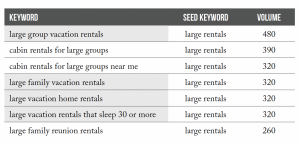
For example, “large vacation rentals that sleep 30 or more” is extremely specific, but it has as much volume as some of the broader terms and optimizing for these keyword phrases will get yield high conversion rates. 

When creating site content and doing keyword research, consider both desktop and mobile users. Long-tail keywords are becoming more valuable as speech-to-text technology becomes more popular. 

Action Item: Ask your agency what keywords they are focusing on and “why.” Are they going after any long-tail keywords? Ask them to research those you think would be good and report back with the search volume and your brand’s current position. 


Link Building: External and Internal 

In the world of SEO, the one thing that shows a search engine crawler the value of your website is links from other high-power authority sites pointing back to your site. Each quality link counts as a “vote.” The more quality “votes,” the higher you will rank. Creating diversified backlinks from various websites can sound like a grueling task, but it is not impossible. 

External Linking: A great way to build domain authority and increase your Google ranking is to develop relationships with local businesses. Find local businesses where your content and audiences overlap, such as attractions, shops, restaurants, and so forth. Reach out to them to establish a mutually beneficial relationship where both websites and audiences benefit from the exchange of an external link. Your SEO agency should be working on establishing links to your website from other avenues such as articles and large publications, but local external link building can be done in-house and is extremely beneficial for your website’s growth. 

Internal Linking: Internal linking is vital to show search engines what content on your website is valuable. It is also important to keep users clicking around on your site, which increases session times and helps with ranking. With the right internal linking strategy, you can guide Google and your site users to your most important pages. In addition, interlinking can also increase the SEO value of pages. Many times the homepage of a website carries the highest link weight because it has the majority of backlinks. When you add internal links to a page that has a high link value, that value is shared between all the links found on that page, and the link value inherited from that page will then be shared with all the links on the next page. Interlinking helps search engines (like Google) and users navigate your website to find the most valuable content. 


EAT 

In the era of misinformation, EAT is quickly becoming a top-ranking factor in the Google Algorithm. EAT stands for “expertise, authoritativeness, and trustworthiness” and is referenced in the Google Rater Guidelines numerous times. 

Satisfy “expertise” by creating quality content users want and need. Answer all the questions they may have about your company or your rentals. 

Satisfy “authoritativeness” by building internal and external links. Remember, these links count as votes. The more votes you have, the more authority you have. 

Satisfy “trustworthiness” by getting reviews on your website, reviews on Google, reviews everywhere you can! Diversify your review portfolio as well. 


Properties Themselves Need SEO Love, Too 

“Because it is MY name!” Arthur Miller, The Crucible 

This is crucial and can make or break a booking. First things first: naming the vacation rental home. Over the past two years, we’ve seen an increase in property pages as organic landing pages. This happens when potential guests type the property name into Google. Consumers are learning to Google the home names they see on Airbnb, Vrbo, and other OTAs. The #bookdirect education is working, and it’s important to leave breadcrumbs within your OTA listings to help potential leads find that book-direct connection. 

Action Item: Google the names of your properties (with and without your destination name) and see where you stand. Your property pages should always be first. If they aren’t, you may need to structure those pages better or work with your agency to get them to rank better. URLs, meta titles, and page content (and plenty more) all play a role in ranking your property pages. Discuss these with your agency. 


OG (Open Graph) Tags Optimize Your Social Channels 

OG tags are specifically important for property description pages because they are shared on social media. These tags can be found in the source code and control how URLs are displayed when shared on social media. Have you ever shared something and seen the wrong photo come up or that the title is incorrect? That’s because the OG tags on the page are misconfigured or just plain missing. When you share a property page through your social channels, and the preview image pops up, showing consumers the content in an eye-catching glance, that is due to the proper OG tags. Without OG tags on your property pages, there is a good chance that an unrelated image will appear when your website is shared on social channels or that the description will be inaccurate, decreasing your click-through rate. 

If you want to test your OG tags, you can use the Facebook debugger tool: https://developers.facebook.com/tools/debug/.


Proper Niche Keywords with Property Results Pages 

If done correctly, custom property results search pages within your website will become your main source of organic traffic. To rank for anything, you need to have a dedicated landing page. Remember how it all starts with keywords? Creating dedicated pages for popular search terms like “Pet Friendly,” “Oceanfront,” and “Ski-In Ski- Out” will not only strengthen your site for those keywords but also give your website more authority as a whole. 

Creating multiple search results pages for high-volume keywords is the ideal strategy to rank higher organically for those high-volume keywords. For example, if you have a lot of pet-friendly homes, you should have a dedicated search results page geared specifically to pet-friendly homes. Within this page, you will want to create pet-friendly specific content and link out to other popular amenity pages or helpful pet-friendly vacation landing pages you have created on your website. 

Action Item: Make sure you have dedicated pages with related content for your top keyword variations. 


Not All Traffic Is Created Equal 

We’ve seen agencies in the past tout the increased traffic numbers they have achieved, sometimes doubling or even tripling the organic traffic from the previous year. An increase in traffic does not always mean an increase in conversions. Ranking for “Best Ice Cream Shops in <your area>” or “Weather in <your area>” is great, but it does not bring in qualified leads to your website or increase your conversions, which is the goal. Think of the user who is searching for these queries: they are likely already in your destination and don’t need a vacation rental. It is important to create content for your guests’ experience, but keep in mind that this type of traffic does not equal more bookings. 

More site traffic doesn’t always equal better rankings. In 2021, all traffic is up everywhere. Evaluate your traffic-to-conversion ratio to determine how qualified and engaged your traffic is with your product. 

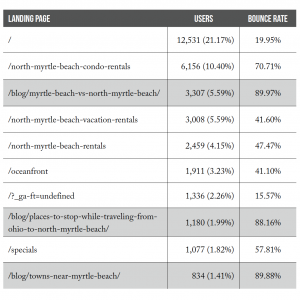
Blog posts are an excellent source of traffic and help build up authority, but looking at bounce rates and conversions, they aren’t breadwinners. If you look at the property search results pages for condo rentals and oceanfront, you will notice a higher conversion rate. 

There is also an argument out there that “content is king,” and having a lot of it strengthens your website as a whole. This is true; however, it needs to be the correct content. If your blog posts are primarily about attractions, for example, you are sending mixed signals to Google. We once removed an entire blog for a client as it was filled with short blog posts that weren’t related to the rental industry. Without any other work, within a few weeks, rankings started improving for rental-related terms. The website “as a whole” is more about rentals now. 

Action Item: Ask for a year-over-year (YOY) landing pages report, or get it yourself in Google Analytics. Head over to Behavior > Site Content > Landing Pages. Look through what is there. You will see a mixture of blog posts (with no bookings) and your top search results pages (with bookings). You can do a YOY comparison as well. If most of your traffic comes from blog posts, look at the transactions you received from those posts and decide if it’s worth the effort. 


Does Having More Inventory and Availability Affect Your Ranking? 

This is a great question, and like most SEO questions, the answer is, “It depends.” 

Post-COVID-19 travel has shaken up the vacation rental industry, and we can see those changes firsthand within the search engine results pages (SERPs). Every search engine has unique algorithms, but they all revolve around the same ideal, which is to provide the most accurate and actionable results to a searcher using their platform. Pogo-sticking is a coined marketing term that refers to a searcher quickly hopping back and forth between the SERP and the results it provides. 

In 2018, this ranking metric was debunked, but more recently, UX, or user experience, has surfaced as one of the top-ranking factors for 2021. One way for Google to quantitatively measure this metric is by collecting data on whether the user’s query has been successfully met by measuring how many times the user returned to the SERP to find a better source. 

A recent trend we are seeing within the industry is volatility within the SERPs, which could be due in part to a rapid shift in rental availability on vacation rental websites. Google’s crawlers are not intuitive enough to know if your calendars are full, but they are intuitive enough to use contextual clues to determine if you have low inventory. This means if a consumer clicks on the link in the SERP to go to your website and hits the back button to go back to the search results page to continue searching, Google records that interaction as one wherein the “content/products” on your page did not satisfy that searcher’s query. We see this primarily in larger, competitive markets. The underlying ranking factors are still there and play a large role, however; with users bouncing back and forth between sites constantly, the “intent” algorithm is shaking things up. 

Although we can’t say that having more inventory will affect your rank on Google, we can say that longer session times and satisfying the searchers’ query do contribute to your rank. 

It’s important to keep this in mind when looking at your data. If you have a large amount of organic traffic coming to your website but no conversions, first look at your availability. If everything is booked, do some comparative analysis with your competitors to isolate the variables. 

Action Item: Make sure your marketing agency is focused on both prongs of your business from generating vacation rental leads to property management leads. Work on optimizing your site for UX; these action items include page speed, a variety of well-organized inventory, an easy online booking experience, and an interactive live calendar that shows availability. Think of ways to keep them on the site, rather than pogo-sticking. 


Google My Business and Maps 

Google My Business can be the first impression a consumer has of your brand, which makes it an extremely valuable tool. Optimizing your business listing on Google should be in the top five in the “How to Optimize Your Vacation Rental Website” handbook. To optimize your Google My Business listing, add geotagged photos, fill out all your information, post regular updates, and use keywords when possible. Google My Business is often overlooked but can increase your ranking to page 1 by earning a spot in the local map pack. 


Reviews 

If you have reviews that use keywords you’re trying to rank for, you will show up higher in the map pack. Solicit Google reviews by adding links in your email exchanges with previous guests. 


The Technical Stuff 

We have only scratched the surface of SEO, but trying to explain the following items would require a much larger article. 

Here are just a few technical items that your SEO specialist should apply in the strategy: 

XML sitemaps 

Canonical tags 

Crawl budgets 

Thin content 

Site architecture 

Core web vitals 

Structured data 

301s, 302s, and 404s 

JavaScript rendering 

Toxic backlinks 

If I’ve already lost you, that’s okay; these things are boring, and you don’t need to know how to fix them, but your marketing agency should. We have seen websites tank due to one single line of code on a page that made Google think twice about its decision to serve it up as a top result. 


SEO Is Like an Onion 

SEO has many layers, from creative to technical. Each business is unique, with multiple variables that affect its success online, which is why there is no one-size-fits-all digital marketing strategy. 


Pro-Tips

Don’t let a site audit that emphasizes one small negative aspect of your site scare you. It’s perfectly fine to have errors (as long as the important ones are corrected). 

Question everything from every angle and more importantly, ask why. Why is the traffic like that? Why did you change that? Why do we need to focus on x instead of y? 

Want to vet your potential marketing company? Ask them how much time they spend in Google Webmaster Tools (Google changed its name to Search Console a few years ago). Veterans in the industry should know that. 

If your agency doesn’t allow you access to your own data, that is a red flag! 


There are multiple factors that play a role in the optimization of a website, including website health, page speed, keyword usage, useability, location, linking, meta tags, site structure, and domain authority. A good marketing agency will handle all aspects of optimization from the technical to the creative. 


The Bottom Line 

Everyone wants to show up on page one of Google, but as the market grows more saturated, that goal becomes more difficult to achieve. 

By knowing these basic SEO tips and knowing what to ask your marketing agency, you increase your chances and give your prime audience a better chance at finding your products. 


Taxes for Vacation Rentals: Six Ways You Can Help Cut Your Homeowner’s Taxes

0

Property managers get all kinds of questions from homeowner clients, and sometimes these are tax and financial questions. Homeowners may share tax-relevant information with you. Listening for a few key topics or phrases may help guide them to a much better financial result—and that is what great property management is all about. 

This guide introduces a few critical and advanced tax topics that often affect vacation rental owners. Vacation rentals are particularly complex from a tax perspective, so be sure you or your clients engage a CPA or other qualified professional for advice specific to their situation. This introduction is intended to help recognize potential opportunities and initiate a discussion rather than reach any conclusions or recommendations. 

The article is written from the perspective of individuals who own property directly or through a single-member LLC (including LLCs owned by married couples). Partnership tax often has similar implications, but partnership taxation is even more complex, beyond the scope of this article. S corporations are not covered because, as you will read, real estate should (almost) never be held in an S corporation. 


1. Should they be taxed as a business or as an investment? 

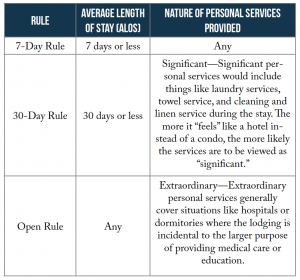
Believe it or not, property managers often make decisions and set policies that cause a vacation rental to be classified as a business instead of an investment. The tax implications for the owner can be substantial. A rental will be considered a business, and it will be filed on Schedule C in the following situations. Otherwise, they will be taxed as an investment using Schedule E. (See IRS Publication 925 for more). 


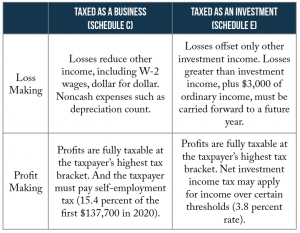
Generally, vacation rental owners will fall under the 7-day rule or 30-day rule. The open rule typically will not apply to vacation rentals. Property managers can affect the tax treatment their homeowners face by setting the average rental duration to be over or under seven days. They may also adjust the service bundle to be significant or not. Generally speaking, owners of a property operating at a loss will prefer to be taxed as a business, whereas those reporting a profit will prefer to be taxed as a rental or investment. The difference can be substantial. 


2. Help Them Qualify For a 20% QBI deduction 

The 2017 Tax Cuts and Jobs Act created a significant 20 percent deduction for most income generated by entities other than C corporations. Rental real estate considered a “trade or business” qualifies for QBI, assuming the other general requirements are met. However, as discussed above, determining if a vacation rental is a trade or business is not always easy. 

In 2018, the IRS published regulations clarifying a QBI Safe Harbor that, if met, allows most vacation rentals to receive the QBI deduction. The safe harbor requires the following: 

 The taxpayer (your client or you on their behalf) must keep separate books and records of income and expenses. 

 250 or more hours of rental services are performed annually, by the owner or someone working on the owners’ behalf—such as housekeeping, property management, supervision, maintenance work, billing, booking, or collection of payment. 

 The 250 hours must be documented with contemporaneous records showing hours of service, description of service(s), the dates of service, and the person(s) who performed the service. 

 Hours may be aggregated across multiple properties that have been designated in advance as a group by the taxpayer. 

The QBI reduces taxable income by 20 percent. That’s a big deal for most people. 

Consider helping your homeowners cut their tax bill using the QBI Real Estate Safe Harbor rules by documenting the hours spent on their property. This “extra mile” service might attract and retain clients, making it worth an extra fee in some cases. 


3. Avoid S Corporations 

The best form of business for rental or investment real estate is frequently debated. Many owners of single properties or smaller portfolios hold them directly. Although direct ownership does not afford the same liability protection as an LLC or other legal entity, insurance products can mitigate that concern. 

LLCs are the most popular legal entity for holding vacation rental property. Any LLCs with one owner (or one owner plus a spouse) is called a “disregarded entity” by the IRS and taxed the same as sole proprietorships on Schedule C (or E). Any LLCs with additional owners will be taxed as partnerships by default. Any of these might be a good option for holding real estate. 

The owner(s) of an LLC may elect to be taxed as a C or S corporation. Disregarded entities are also entitled to take a C or S corporation election. Usually the C corporation is a bad move because income will be taxed twice. And S corporations are never a good idea for rental real estate. There are four reasons why: 

 With extremely limited exceptions, appreciated property cannot be distributed from an S corporation without triggering capital gains taxes. 

 Tax-free exchanges under Section 1031 are complicated and may not be able to achieve the desired result. 

 Losses in basis step up upon the death of an owner. 

 There will be a loss of tax shield for the owner’s loans against the property. 

If your clients are considering what form of business to use for their vacation rentals, and especially if they are considering an S corporation, send them to a tax professional for guidance. 


4. Eliminate Capital Gains Tax 

Many investors have a simple rule: “Never sell real estate!” That is probably good advice, but sometimes people have good reasons to sell. In some cases, listing and selling might be a good way to exit. For appreciated property, a 1031 tax-free exchange can be a smart move because it defers tax on the appreciation of the property (capital gains tax). This is particularly relevant in 2021 and beyond, given that real estate and other asset classes have appreciated quite rapidly. 

But what if I told you there was a way not only to delay capital gains tax but to completely avoid it forever? For estates worth less than $11.4 million, appreciated assets, including appreciated vacation rental property, pass tax-free to heirs. And even better, the tax basis of bequeathed property is adjusted upward to the current market value. This means the heirs can sell it the next day at the current market value without owing a penny in capital gains tax. Yes, even if the bequeathed property was fully depreciated and carried at zero basis by the parent, spouse, or other benefactor, the sale of the inherited property is untaxed. Selling can cause the property owner to miss out on what may be the single greatest tax loophole in the entire US tax code: don’t sell! 

Property managers can share this nugget of information to help homeowner clients (or their heirs) who are considering selling appreciated and/or depreciated real estate save a bundle on taxes and keep a property under management in the process. 


5. Help Them Book “Paper Losses” 

Ahhh, paper losses are those wonderful tax deductions that you get but without spending any cash out of pocket (well, at least not that year). The biggest driver of paper losses in vacation rental real estate is depreciation. Generally, the cost of the improvements, but not the land, is divided by 27.5 years, with the resulting amount taken as depreciation each year. In some situations, it may be advantageous to separately depreciation equipment like ovens, range hoods, fans, and refrigerators. (If classified as a business, these costs and related depreciation will reduce taxability in the current year, including W-2 income.) 

Note: The IRS requires that property used as a rental be depreciated: if it is not depreciated, the error can cause higher tax liabilities when the property is subsequently sold. 

In some cases, repairs, restorations, and refurbishments, such as new carpet or replacement appliances, can be expensed in the year they are purchased. In other cases, these costs must be added to the original cost of the property and depreciated. 

Mistakes in depreciation (such as not taking it), can be fixed by filing Form 3115 to notify the IRS of a change in accounting methods. 

Property managers who help clients with maintenance and repairs can provide good records not only of the amounts spent but also of whether the expenditures were upgrades, or maintenance; they can then ask homeowner clients if they are taking appropriate depreciation. 


6. Avoid Using the Rental as a Residence 

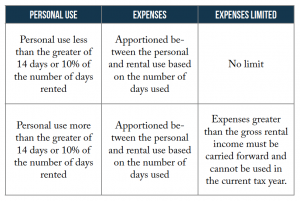
One of the best things about owning vacation rental property is the prospect of using it yourself. Of course, that not only can displace billable rental revenue but it can also change the tax treatment of the rental. Here are the thresholds and the implications of each option:


This is primarily relevant to homeowners who are booking paper losses and wish to use them to offset current income (e.g., average rental days less than seven). Property managers can alert clients who are booking more personal time than these limits allow that they may forgo some short-term tax benefits by doing so. 


Jeremy Gall Discusses Challenges & Opportunities: Where Is Vacation Rental Management Heading?

0

When we started Breezeway in 2016, few companies in the vacation rental ecosystem were talking about property care and operations. Managers were focused on maximizing bookings and acquiring owners as they were rightfully swept up in the rapid growth of the industry. “Property operations” wasn’t a well-known concept, which became clear to us from our conversations at industry conferences. 

The growth of the short-term rental category over the past five years is well documented—not only with respect to the number of rentable homes and management companies, but also the identity of the operator and the pain points and priorities that come with them. The pandemic accelerated the importance of property operations (now a ubiquitous term and distinct category within the business), changing processes and restructuring the daily lives of most vacation rental professionals. 

This was the impetus for hosting ELEVATE, the industry’s first-ever conference dedicated to property preparation that Breezeway held in March. Our mission for the summit was to strengthen the dialogue about operations, so we brought a variety of leading voices under one roof—voices from local housekeeping supervisors to leaders of multinational brands. Some 800 registrants listened as those experts shared insights and experiences about numerous topics that included the convergence of rental supply, new technology trends, and coping with more work and less time to do it. 

In this article, I share my perspective on where vacation rentals are headed. I’ll discuss how the current expectations of guests, owners, and regulators are creating new challenges and opportunities for professional managers, and why navigating the demands of each persona is critical for the industry’s future. 


Expectations for Industry Growth 

Short-term rentals are no longer perceived as “alternative accommodations.” Instead, they are a preferred lodging category. The industry has been building toward this state for decades, and now travelers are embracing it. According to Key Data, bookings per rental have more than doubled since 2019, and occupancy rates in such vacation-rental-dominated markets as the Outer Banks and Cape Cod have risen more than 20 percent. 

Although attributes such as more privacy, ample space, and family-friendly amenities have positioned vacation rentals well amidst the pandemic, the expectation for elevated quality will be key to the industry’s sustained growth. “As companies build their brands, and are known for more quality, then we’ll reach new markets,” said Merliee Karr, founder and CEO of UnderTheDoormat. “There are new customers coming into our market, and whether we like it or not, we are going to be competing with hotels. Eleven percent of consumers are more likely to book a short-term rental coming out of COVID than they were going into it. This is our opportunity.” 


For Consumers, It’s All About the Experience 

Travelers continue to demand more personalized and premium vacation rental experiences. Lingering sensitivity about safety and cleanliness are steering consumers toward rentals that deliver professionalism, a sentiment that 71 percent of operators believe will remain indefinitely, according to Breezeway’s 2021 Operations Survey. At the same time, millennials and younger generations are projected to account for 75 percent of travelers by 2025, a cohort of consumers that, according to Airbnb Report, holds higher standards for service and convenience. 

Operators are taking this “experience first” approach for their guests, from booking all the way through checkout, in innovative ways that have much more of a “hospitality” feel. 

ALTIDO, for example, has implemented new services to deliver a more predictable and concierge-like experience. “We’ve started to offer guests a virtual tour of the property with a walk-in experience that gives them a great indication of how the property will look and feel,” said Anthony Lee, head of operations in London. “Expectations are as high as ever, and it’s all about convenience and experience. We offer pre-check as well as grocery delivery so that the fridge is stocked up upon arrival.” 

The challenge extends beyond property preparation and doesn’t end after the guest checks in to the property. Expectations for in-stay experiences, such as mid-stay cleaning, late checkout, and surrounding amenities and recommendations, have stretched managers by increasing both the scope and depth of their work. Purposeful communication has become a core tenet of the job, a necessary means of facilitating VIP guest experiences so they can enjoy the property to its fullest extent. 

For Ashley Kubiszyn, CEO of River Ridge Rentals, the key to resolving issues and delivering service in a timely matter is tying property operations and guest communication programs together: “As soon as our team is on the way [to fix the issue], we mark the task as in process, and the guest gets that update. Then, we close the loop with an ‘it’s been completed’ text, as this is so important.” 


“Managing Up” to Homeowner Clients 

There are competing macroeconomic factors that have shifted the supply and demand of property management services. First, the low-interest-rate environment has catalyzed purchases of second homes, increasing the number of available vacation rentals for managers to compete for. But the number of homeowners interested in management services has leveled because the software ecosystem offers platforms and tools that have lowered the barrier for self-management, and that has increased the variance in the quality of vacation rentals. The playing field for marketing also has leveled, driving acquisition costs higher. 

Simply put, owner relations—both fostering existing relationships for higher retention as well as efficiently acquiring inventory—remains a challenge for vacation rental managers. Owners expect more visibility into how their assets are (and will be) managed. Such companies as Berkshire Hathaway Homeservices in Vail, Colorado, are addressing this challenge upfront by showcasing their process to prospective clients. “When I meet with new owners, I put technology forward and show them our operations platform,” says vice president and general manager Jon Eskin. “More than anything, owners want to see how you run your operations, so we show them how we do inspections, and they love that.” 

Detailed attention to and communication with homeowners shouldn’t be a one-time thing. Providing consistent visibility into asset management programs leads to healthier owner relationships that, in turn, drives higher retention, glowing testimonials, and word-of-mouth referrals. Each owner and property is unique, and many professional managers customize their method and frequency of communication to the personality and preference of each homeowner. Doing so creates a heavier operational burden, but the coming years should prove that managers are up to the task to monetize more service and deliver more client value. 

Embracing property services is a huge growth opportunity for managers, but it can be a double-edged sword because it challenges operators to cope with more work and less time. The intersection between property operations and owner relations might just be the key to unlocking internal efficiency and controlling the narrative with owner clients. 

“We use technology to update owner liaisons whenever there’s a maintenance issue, and within minutes we can notify the owner and deal with it internally,” said Eskin. 

Taking good care of a rental is one thing but, without communication, owners won’t know the full value you provide. Sharing property data and service interactions with owners will help highlight your professionalism and assure your clients that their home is in good hands. 


What About Regulation? 

The growth in vacation rentals has caught the eye of municipal policymakers, increasing scrutiny and restrictive policies. But, according to Philip Minardi, head of public affairs at Expedia, the pandemic has altered the trend in regulation. Last year underscored the economic value that vacation rentals bring to the table, creating a unique opportunity for operators and cities to further the conversation about fair and effective policies. 

“Consumer demand is driving the dialogue forward, and the industry recognizes the importance of putting our best foot forward, being proactive, and engaging in these discussions before they get vitriolic,” said Minardi. 

As an industry, we need to come together to promote responsible hosting practices and minimize disturbances within our communities. A clear and cost-efficient way to achieve this aim is to use best-in-breed technology that delivers travelers more predictable and higher-quality experiences. If recovery continues to unify regulators and operators, then regulation shouldn’t hamper growth but, rather, elevate the professionalism of the entire industry. 


VRM Careerists: Seasoned VR Pro Laik Lepera, Director of Operations at Village Realty

0

Three seasoned VR pros share how they have survived and thrived in the industry. 

In this series of VRM Careerists, VRM Intel is continuing to dive into the lives of the careerists among us, those managers who have made it over the river and through the woods of vacation rental life, and yet have still chosen to persevere in a business that is as rigorous as it is unglamorous, as challenging as it is heartwarming. 

Last, but certainly not least, is the story of Laik Lepera.


Laik LePera: Director of Operations, Village Realty

Guest lockouts are a fact of life in the vacation rental industry. But climbing into a second-story window isn’t the usual solution. And with a six-month-old baby in the car, the challenge increases.

“Can you hold my baby?” Laik LePera remembers asking the guests at the time. “I’ve gotta climb up here to this second floor, and I’ve got to go in through this window. The guest was like, ‘Oh yeah, sure.’ So I gave them my baby, climbed up, and got them in.”

“Thanks very much, have a nice night, and thanks for holding my baby!” LePera said as he let them in.

LePera, now director of operations at Village Realty, makes every step of his career path in vacation rentals feel like the Adventures of Huckleberry Finn. Enthusiasm and laughter fill his voice as he describes even the dirtiest work. 

“They are happy memories,” he explains. “It really got me to the spot I’m in today. I look back on all of it fondly.”

LePera first heard about vacation rentals in the summer of 2001. Shortly after, he decided to transfer to Temple University and change his major to tourism and hospitality management. At the time, he said there wasn’t much information on the industry. Most of his professors were familiar with hospitality as it related to hotels, which wasn’t LePera’s area of interest.

“I was writing papers on vacation rentals, and teachers are like, ‘We know nothing about this,’” he said. “I was getting great grades!”

When it was time for an internship, he realized that the only way to meet the who’s who of vacation rentals was to attend the Vacation Rental Management Association (VRMA) conference. With a college-student budget, he approached the VRMA about interning at the conference in exchange for a hotel room.

“Basically, they told me no five times,” he explained. “So I would go online and look for someone else in the office and call them. Then they would tell me no. And then I would call back the next day.”

Eventually, the VRMA relented.

“They put me to work. I think I worked 10-hour days while I was down there,” he recalled. “But I met some key people in the industry.”

Tim Cafferty, then president of ResortQuest Outer Banks, was one of those people. LePera scraped together enough money to buy a car and drove down to start his internship with Cafferty in North Carolina. He rotated through all the departments, getting a little taste of everything. 

But when offered a job after his internship, he threw them for a loop: “I want to work in housekeeping,” LePera told them. 

“They were like, ‘No really, ha ha ha, what do you really want to do?’ I’m like, ‘Dude! I want to work in housekeeping!’” 

His logic? He determined housekeeping was the only department that every other department complained about, and he wanted to change it. As a consequence, he helped create an international exchange student work program. Before he knew it, he had 30 students from Eastern Europe, and he created a cleaning team with them all. 

LePera stayed with Cafferty through his business transition from ResortQuest to Outer Banks Blue. LePera also served for several years as a member of the Vacation Rental Housekeeping Professionals board of directors. 

LePera’s adventures never seem to end. He tells stories of being the keeper of the “after-hours phone” for two solid years, answering calls for 200 properties spanning 400 miles of beach while having a young family at home. And then he took a break and shifted to working for Village Realty, overseeing small inns in the area. 

Now, as Village Realty’s Director of Operations, he sits atop a company managing 650 vacation rental properties among other real estate ventures. LePera’s wealth of experiences seem to have only served to ramp up his energetic approach to his work and the industry’s future. 

“I like to think we’re just getting started here,” he said. “There’s a lot more work to do!”


Read More about Other VRM Careerists Below


VRM Careerists: Seasoned VR Pro Julie Byrd, Vice President of Sales at Cabo Villas

0

Three seasoned VR pros share how they have survived and thrived in the industry. 

In this series of VRM Careerists, VRM Intel is continuing to dive into the lives of the careerists among us, those managers who have made it over the river and through the woods of vacation rental life, and yet have still chosen to persevere in a business that is as rigorous as it is unglamorous, as challenging as it is heartwarming. 

Next on our list is the story of Julie Byrd.


Julie Byrd: Vice President of Sales, Cabo Villas 

Julie had always planned on a career in travel. But as fate would have it, she was selling ad space for a local newspaper when she walked into the CaboVillas.com office. Little did she know she’d find her vacation rental “family” and work with them for the next two decades. 

“It will be 20 years in December,” Byrd said, who is now CaboVillas. com’s Vice President of Sales. “I started working for them when I had just turned 30 . . . and now I’m getting ready to turn 50. I’m going to have a big party in Cabo to celebrate these two big events.” 

Byrd started her career working for a handful of traditional travel agencies, honing her itinerary development skills. She has put that talent to good use at CaboVillas.com, where guests can reserve far more than just accommodations. 

“We offer guests really customized itineraries,” she explained. “We can have chefs come in, organize spa days, tequila tastings—a whole gamut of services.” 

One of the reasons she began working with CaboVillas.com was its founder, Don Hirschaut, who passed away in a tragic accident in 2019. Byrd said he was a mentor who encouraged her to make decisions, even bad ones, if they resulted in her learning from her mistakes along the way. 

“He always had his door open,” she said. “We were able to look at the big picture together. With our different opinions, we’d dance around the issue, but always come to a really good conclusion.” 

She also credits Hirschaut with helping her navigate cultural differences, which sometimes played a role in how she was perceived as a manager. 

“His support of my leadership was always what helped me move forward with our company and move up within our company,” she said. 

While Byrd makes several trips per year to Los Cabos from her home in Northern California, the company has a full-time team on the ground in Mexico to handle all guest needs. They personally greet all guests, which can pose a challenge when they arrive intoxicated. 

“One thing we deal with a lot in Cabo is people start drinking on the plane,” she explained. “Then they get to the airport and are taking shots of tequila, so they’ve had a lot to drink by the time they get to the house, and we’re trying to explain to them how to use the Jacuzzi.” 

The past three months, Byrd said, have been the craziest of her career. She calls the amount of business they are currently doing as “insanity,” and that’s paired simultaneously with a vacation rental software change. Still, she’s content in her journey. 

“Knowing I can provide a full vacation, a safe vacation, with all the bells and whistles and the detailed itinerary for clients . . . when people have a really great vacation, they are better to everyone they deal with,” she said.


Read More about Other VRM Careerists Below


VRM Careerists: Seasoned VR Pro Gail Boisclair and How She’s Survived & Thrived in the Industry

3

VRM Intel is diving into the lives of the careerists among us: those managers who have made it over the river and through the woods of vacation rental life yet have still chosen to persevere in a business that is as rigorous as it is unglamorous and as challenging as it is heartwarming. 

This is the second installment of VRM Intel’s Careerists series, profiling leaders in the vacation rental industry who have stood the test of time—and have no intention of getting off the roller coaster! 

This trio provides their individual insights into the industry as well as a few good laughs. One bucks all the trends, personally greeting her guests, eschewing OTAs, and sending all her emails personally. Another has developed strategies for hosting over-served guests. And the third, well, he can solve any guest lockout, so long as you’ll hold his baby while he climbs in a second-story window. 

Dive right into the Careerists. They’re just crazy enough to inspire you to keep going.

Our first story to share with you? That’s none other than Gail Boisclair.


Gail Boisclair: Founder, Perfectly Paris 

Like so many of her colleagues, Gail Boisclair entered the vacation rental world haphazardly. 

The romantic twist is what sets her apart: She moved with her boyfriend to Paris, France. Her company, Perfectly Paris, was born from that life change. 

“I didn’t have a job or anything, and he told me I should start renting out the cottage he had purchased in Montmartre,” Boisclair explained. “I said, ‘Rent it to whom?’ and he said ‘Tourists!’” And I said, ‘People do that?’ It was 2001. I didn’t want to be a French landlady.” 

Boisclair didn’t become a French landlady. (She’s Canadian!) She did, however, end up building a very successful business, one property at a time, in an old-school, word-of-mouth fashion. And now, 20 years later, the French boyfriend is long gone, but she’s still at it. Named a Condé Naste Villa Rental Specialist since 2008, she is recognized as a leader in the industry. 

“It feels like a minute,” she said. “I don’t even know where those 20 years went.” 


Boisclair didn’t have a mentor or a road map in creating her vacation rental business. But she did have diverse experience in her previous jobs, having worked as everything from a receptionist to a marketing manager to running the front and back of the house at a bar in St. Martin. 

Along the way, she learned skills from website building to bartending to running payroll. 

“I’m always on a quest for knowledge,” she said. “I love to learn things and figure out everything, and in the end, that makes a good property manager.” 

At its peak, Perfectly Paris had a stable of 35 properties. French government short-term rental restrictions have cut that number almost in half. Still, Boisclair has never had more than one full-time employee, besides herself. Currently, with COVID-19 challenges, she’s a one-woman show. 

Yet all guests are still personally greeted in Paris. And she continues to do all her own emails, by hand, with the help of a simple Microsoft Word document with a few templates. She doesn’t use any property management software and also doesn’t use the OTA platforms. In the very early days, she even cleaned the apartments herself. 

“I love my job. I want to continue doing my job until I get writer’s cramp from typing my own emails,” she said. 

It’s about as personalized as service can get. Case in point, she once was a little late to greet guests because she had been across the street finding out she was pregnant at the doctor’s office. She arrived a bit flustered and apologized to the couple, explaining her predicament. 

“I told them I was pregnant, and I had never even met these people,” she explained. “I proceeded to do my check-in, and they were so nice. At the end of their stay, they left a little teddy bear with a congratulations note. It was Yasmin’s first teddy bear, and Chuck and Joe (the guests) ended up becoming very close friends. They used to call themselves Yasmin’s fairy godfathers.” 

With a 65 percent returning guest rate, her methods clearly work. And her overall philosophy isn’t too bad either. 

“Hard work, no sleep, and lots of champagne,” she concluded. 


Read More about Other VRM Careerists Below


Reinventing Your Business’ Front Line for a Better Guest Experience

0

The excited family pulls up to their rental home for a highly anticipated week of vacation. Everyone jumps out of the vehicle, and they rush through the front door to admire the amazing view as they split up to explore the property they have been dreaming about all year. Everything seems perfect! 

But upon further inspection, although the property appears as it was pictured on the website, it becomes obvious that there is a laundry list (pun intended) of unaddressed cleaning and maintenance issues. What seemed like a perfect location for a dream vacation has turned into what will most likely be a drawn-out process of trying to get the management company to make it right. 

Phone calls, maintenance techs, and housekeepers will disrupt their precious vacation time while working around them. Although the vacation experience can be salvaged, the damage has been done. 

While this is a nightmare for the seasoned vacation rental manager, it’s a regular occurrence for travelers out in the vacation rental world. 

In most US markets, the past year has shown record numbers of guests staying in vacation rentals. Early research shows that more first-time vacation rental users have come into the market than in any other twelve-month period in history. 


The New Front Line 

There is no question that marketing, reservations, and business development are the primary drivers of revenue in a modern VRM. They are heavily reliant on experienced and technically capable team members who drive the business forward, and these team members typically are compensated accordingly. 

In the past, the front line for customer service was found at a company’s front desk or call center. However, with the advent and almost ubiquitous post-pandemic use of direct check-in at the property, guests rarely see the front desk. Add guest apps, texting as a preferred communication method, and even in-property artificial intelligence in homes (Alexa, Google Home, etc.) offering guests the answers they need, and it’s clear that guest service is becoming increasingly about technical logistics. 

Consequently, housekeeping and maintenance staff members are the first—and in some cases, only—” faces” a guest is likely to encounter for customer service. Without strong execution in these areas, the guest experience can suffer greatly. 

Despite these new demands, housekeepers and maintenance technicians are usually the positions with the lowest salary ranges, the highest turnover rates, and the least amount of customer service training. The hardest service for a VRM to deliver is the consistent production of high-quality cleaning and maintenance. This challenge can be attributed to the fact that it is exceptionally difficult to identify, hire, and retain team members who produce results effectively over a long period. 

When talking to many VRMs, they consider this a given. They have come to the conclusion that the situation “is what it is,” and all they can do is try their best to replace those who come and go in the hopes that some team members will stick with them. 

If you ask the guests (we did for more than twenty years), they will tell you consistently that the most important thing a manager can do for them is to make sure the property is clean and well maintained. 

The people who influence guest satisfaction most are given the least amount of consideration when it comes to identifying and hiring the best possible people. 


Is High Turnover Really a Given? 

When we ask VRMs whether some cleaners and maintenance techs stick around, they almost always have a few examples of those who have withstood the test of time and have produced over the long run. In many cases, these employees are considered anomalies—unlikely to be replicated—and VRMs are simply happy to have that handful of unique folks who seem designed for the job. 

Wait . . . designed for the job? Designed for the position? But what if they are? 

What if there is a way to identify the type of people who not only are great at providing these types of services but also are happy to do so for the long term? What if we could stop the revolving door and build an exceptional front line? 


How Most Companies Hire 

Identifying the right person for a particular role is one of the most challenging things to do in business. Most companies heavily emphasize the résumé and interview process. 

Although solid experience in a particular role can be helpful, what someone has done in the past does not guarantee they will do it well within a particular organizational culture. 

A well-structured interview should be part of the selection process, but there are other factors to consider. In two or three discussions, employers try to assess through mostly standard interview questions whether the person will be a good fit. 

The process can get even less structured than that when a company gets desperate to fill a role. At that point, it comes down to “Can they fog a mirror? Hired!” (which seldom works well as a long-term hiring strategy). 


Behavioral Profiling 

Although résumés and interviews can provide some data points about a person, these methods aren’t enough to predict whether that person will be the right fit. Some companies benefit from pre-employment screening techniques that provide far more information about the applicant. 

We recommend behavioral profiling and cognitive testing as two such tools. Behavioral profiling is a form of personality testing. Although some personality tests take a long time and are challenging to administer, there are self-selection psychometric tests that take only a few minutes to complete. These tests are exceptionally accurate at identifying key attributes of a person’s behavior. 

“Before using personality testing, we made a number of unsuccessful hires,” said Christina Thorenson, co-owner of Chattanooga Vacation Rentals. “We had the wrong people in the wrong seats, and the business suffered. After implementing behavioral profiling to survey all applicants, we have found our team growing in strength and abilities, and we are able to move the company forward faster. Imagine hiring a housekeeper who loves what they do, pays great attention to detail, and is excited about the result of a happy guest!” 

With changes in who the front line includes, it’s clear that the ideal candidate’s profile may have changed as well. 


Filling the Funnel 

Leveraging tools such as behavioral profiling is great—that is, if you have applicants to profile. 

In today’s environment, there is more competition than ever for quality candidates. Building a front line that is capable and consistent is hard when getting people to apply can be a challenge. 

Our company’s view is that VRMs market and sell three things in this industry. The first and most obvious is the property rental. The second revolves around a solid growth plan for new property acquisition. The third is identifying and hiring the best people. 

We find that most companies have plans and budgets for the first two. They focus on driving occupancy and revenue on the rental side, there is a solid growth plan for new properties, and there is a marketing budget for both. But we rarely find a VRM who has a talent acquisition plan that comes close to what they have in the other two categories. 

If you are growing rental revenue and property count but don’t have the team to execute, and if you don’t have a strong front line that makes sure those guests and owners you worked so hard to acquire are raving fans of the services you provide, then long-term success will be a challenge. 

Although the front line is broken in many cases, it doesn’t have to be. A company doesn’t need to hire out of desperation the first person who walks in the door. Turnover doesn’t have to be a given. You can decide that this component of the business requires a renewed emphasis. 

You can and should reinvent your front line to better serve your guests and owners, which will enable you to be a market leader long into the future. 


Preparing Your Company to Sell Part 2: Staff and Management Contracts

0

In the first article of this series in VRM Intel Magazine’s winter issue, we focused on your company’s financials as a way to prepare for the eventual sale. In this segment, we will cover two other essential items: your staff and management contracts. 

There are a plethora of buyers in the industry, and they all have different criteria when deciding which companies they want to purchase. One commonality, however, is a shared interest in a “clean” company. Both a strong staff and updated inventory management contracts are paramount for buyers. 


Staff 

The majority of vacation rental companies are small- and medium-sized businesses, and the owners are intimately involved in the day-to-day operations. This is okay and expected; however, to make your company as appealing as possible, you should have employees in the following positions: 


Homeowner Relations 

You, as the company owner, need to remove yourself from the day-to-day interactions with your homeowners. This can be achieved by hiring a homeowner relations employee or cross-training a few current employees. Because the management contracts are typically the “assets” of an acquisition, you will need another employee to handle these after you sell. 


General Manager (GM) 

Hiring a GM or Director of Operations prior to the sales process is important for two reasons. First, many buyers will not already have a GM in place to take over after the sale. For this reason, your transition timing might be directly tied to the hiring of a GM. Second, this will create an easier way to find your true EBITDA during negotiations. 

There are two important reasons for focusing on your organizational chart prior to a sale. The first is to back up your argument for your true EBITDA. Finding a company’s true EBITDA is typically a subjective process, as the buyer and seller negotiate what expenses were allocated to the owners and whether they are to be removed from the P&L. The second is to remove or limit some of the contingencies that a buyer would need to attribute to the acquisition price based on unit churn or another metric post-sale. 


Management Contracts 

Because many vacation rental management companies have been around more than ten years, they may have gone through several versions of management contracts with different commissions, ancillary fees, and verbiage. This is okay, as it is almost impossible to maintain the exact rates for every single homeowner. However, there are two clauses that you will want in every single contract: 


Auto-Renew Clause 

Whether your contracts are for one, two, or three years, you will want them to auto-renew if state law allows. In this way, you won’t need to get the contracts re-signed every time the term ends. The less you can “rock the boat” with the homeowners, the better. Homeowners can be fickle and are constantly being marketed to by your competitors. 


Assignability Clause 

The majority of acquisitions are asset-based deals. Thus, you will be assigning the management contracts (assets) to the buyer. The largest obstacle results from the contracts having a clause that says something to the effect of, “this agreement shall not be assigned by either party without the written consent of the other.” 

If your contracts say this, you will likely need to have the homeowners sign new contracts with the buyer at closing. You can proactively reach out to the homeowners now to sign new contracts that either remove or reword this clause, allowing for assignability. This can be a challenging endeavor, so you will want to complete it sooner rather than later. Every state has slightly different regulations, so you will want to consult an attorney on this matter prior to making any changes. 

In the final segment of the Preparing to Sell series, C2G Advisors will discuss deal structures and other miscellaneous items while preparing your company for the eventual sale. 


Hand-to-Hand Combat: Winning the Battle for Direct Bookings

2

For years now, vacation rental companies have been fighting desperately to win back market share from third parties, such as online travel agencies (OTAs), and thus reduce the cost of customer acquisition. Huge sums are spent on strategic initiatives, such as email campaigns, improving organic and paid SEO, making sure that the website tells the company’s story, and ensuring a smooth journey from looking to booking. 

All of these measures increase the likelihood that a prospective, web-surfing guest will engage directly with the rental company. 

In military terms, I would say that this approach is a bit like aerial strafing because the “ammo” has a mostly random chance of hitting its target. 

But too many vacation rental (VR) leaders overlook the real means by which battles are won, and history buffs know that wars are won one battle at a time. 

Let’s acknowledge that the most important opportunities to encourage guests to book directly, and to rebook future stays, occur through human—not digital—interactions. Whether by phone, chat, email, or in person, it is the people who make the difference. 

For too long, the lodging industry, in general, has been obsessed with digital marketing and distribution at the expense of focusing on human engagement. Perhaps this is because digital encounters make it easier to empirically measure and report KPIs to the boss, whereas the very nature of human encounters between staff and guests lends these types of engagement to anecdotal evidence. 

The good news is that emerging tech has made it increasingly easier to measure these human conversations. For example, there are cloud-based phone providers that offer call recordings, enabling managers to coach-up their teams. A few of these phone systems allow agents to track “disposition codes” and turn inbound calls into transient leads worthy of follow-up. Engaged leaders can also peruse chat logs and email exchanges between staff and prospective guests. 

Now, all of this takes a bit more time than glancing at a Google Analytics report or examining website conversion data. Yet marketing and operations leaders who are willing to do so will find a plethora of training and coaching opportunities to mentor staff. At my company, we have come to recognize these opportunities through the work my team does with remote call scoring, telephone mystery shopping, and training, but I also uncover opportunities during my consulting engagements. Here are some training tips from our programs and services. 


Encourage Website Visitors to Call Direct 

Post your company’s phone number prominently on each page instead of burying it in the “contact us” page. 

Use a local, well-known area code instead of an 800 number. 

If using a vanity number, spell it out below and make it click-to-call on mobile. 

Right above or below the number, post copy reading, “Call Now to Book Direct” or “Call Our Local Area Experts.” 


Live Chat 

Teach your team members that, although chat is wonderful for answering quick questions, they should look for opportunities to offer to call the guest immediately to complete the booking. 

When guests start to ask questions, such as “What’s the difference between this home and that one?” or other specific questions indicating a strong interest, respond by saying, “If you like, I can call you right now to assist.” 

Remind your staff that chatting with guests is not like texting friends. They need to rehumanize the medium by reacting to what the chat sender writes. Example: “I’m thinking of booking the XYC Condo for our honeymoon, but I just wanted to make sure it has a full water view.” Instead of clicking back with “Yes, it does have a view,” instead write, “Wow, congratulations! And this one is perfect for a honeymoon. Would you like me to call you now to answer any other questions and complete this booking?” 


Email 

Similar to chat, prospective guests will often pose email questions about rates, bedroom configurations, and special needs. Staff should always personalize their responses. 
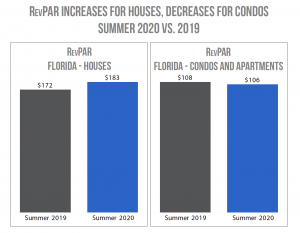
End with a sentence such as “Our onsite team would love to assist you personally with completing your booking. You can reach in-house reservations at [number] during [hours], or just reply to this email with your phone number and time range and we will call you directly.” 


Phone 

Today’s reservations inquiry calls are often disguised as “I just have a quick question about . . . ” 

Teach your team that after they answer an initial question they should follow up by asking, “Now that I’ve answered your question, may I ask what dates (or what home) you are looking at?” 

Oftentimes callers simply ask about the total price including taxes and fees. This is because many OTAs display various rates differently than your website. Again, after answering questions, agents should ask, “Because we always offer our best rates here at in-house reservations, are there any dates I can check for you right now?” 

When callers are obviously comparing rates they see online, train your team to ask, “May I ask what website you are on?” and then offer to check directly. 

It is also important to coach your team on how to sell the advantages of booking directly. This pitch might include the timing of advance deposits, lower booking fees, and more personalized arrival experiences. 

From what we see, vacation rental companies may find that it is the highest-rated/top tier inventory that sells out first. Therefore, train your team to “down sell” to less-desirable locations/views when that is all there is left. Replace “All we have left is . . . ” with “Fortunately, what we still have open . . . ” 

Of course, it is also important to engage in reservations sales training and remote call scoring (or traditional mystery shopping) on an ongoing basis. Not only will this practice help your staff convert calls, but it will also promote a higher level of guest service excellence. 


In-House Guests 

Perhaps the best channel conversion “tool” of all is harnessing the talents and efforts of your entire guest services staff. Train them to engage guests whenever possible, such as when they stop by the reception office or when a maintenance tech strikes up a conversation while in the home for a minor repair. 

Ask guests, “How did you hear about us?” When they say they booked through a third party, talk up the benefits of booking directly next time. 

Whenever guests call the office, such as to reconfirm third-party bookings, recognize this as an opportunity to obtain email addresses. Use language that encourages guests to provide it, such as, “Oh, and while I have you on the line, can I grab an email address to put on file in the event we need to reach you, such as for any lost-and-found items?” 

For higher-revenue bookings, use personalized video email messages to welcome guests and/or to send a fond farewell at departure. 


Amid Unemployment Benefits & Hiring Struggles: How to Attract & Retain a Seasonal Workforce

0

The war for talent continues to plague businesses into summer 2021. Just one year ago in April and May, we saw unemployment rates in excess of 20 percent. Today the national unemployment rate is 6 percent (March 2021). Even with the high levels of unemployment, and more than one year after the pandemic began, many employers continue to report labor shortages and hiring difficulties. The extension of state and federal unemployment benefits continues to hinder employers’ ability to staff seasonal workforces. 

Weekly state unemployment benefits run anywhere from $275 a week in Alabama to $790 a week in Washington. Now add in the federal unemployment benefit of $300 per week, and you have individuals earning between $575 and $1,090 a week. This is the equivalent of $14.38 to $27.25 per hour. Although this benefit is less than the federal unemployment benefit of $600 a week provided last summer, it is still a significant amount for people to walk away from, leaving employers struggling to find workers. 

Recruiting in today’s environment is tough. Thus, it’s time to get creative and compete for talent through the following approaches:

 Understanding the impact of the federal unemployment benefit of $300 for seasonal hires 

 Intensifying your recruitment activities 

 Implementing a “significant” employee referral bonus 

 Offering additional pay for hard-to-fill positions 

 Enhancing employee benefits 

 Focusing on what differentiates your business from your competitors 


Seasonal Hires and the Federal Unemployment Benefit of $300 

One approach to attracting applicants is to let them know that, because of the seasonal nature of the work, they may still be eligible to receive a small portion of their state unemployment benefit. What is important to note is that individuals who earn less than their maximum weekly benefit through the state will continue to receive the $300 federal unemployment supplement. At this point, people are not willing to give up a weekly supplement of $300 for a seasonal position. Finding ways to inform applicants that they may remain eligible for a portion of their state unemployment and all the federal unemployment benefits while taking on seasonal work is a key strategy to hiring your seasonal help. 


Intensify Your Recruitment Activities 

One thing I strongly recommend is identifying one employee who is responsible for overseeing and managing your entire recruitment process. Having one point of contact will ensure timely follow-up and communication with applicants. As we all know, the early bird catches the worm. 

One thing that we have seen in this economy is the first job offered is typically the one accepted. It is all about the response time. That is why it is so important to have one person managing the process. This is not to say this person should be the only one involved in recruiting. Interviews and hiring decisions may still be made by management; however, there should be one person managing the process, reviewing applications, following up with applicants, and maintaining timely communications with individuals in the pipeline. 

Another approach is to provide applicants with a snapshot of what the pay looks like for the position for which they are applying. It is important to illustrate what the potential earnings might look like so that you’re communicating the total pay potential. Besides hourly rates or piece rates, show other incentives you’re offering, such as mileage reimbursement, on-the-job training, logo gear, free breakfasts or lunches, incentives, and other on-the-spot bonuses. Make it visual. Do the math for people; make it easy to understand so that applicants can compare your snapshot of total pay to their current earnings. Apples to apples. 


Employee Referral Bonuses 

Employee referrals remain your best recruitment source. Overall, 61 percent of employees have referred at least one employee and sometimes more. Employees typically refer people who will do a good job and reflect positively on themselves. Did you know that employee referrals are four times more likely to be hired? 

The Society for Human Resources recently shared research stating 45 percent of employees sourced from employee referrals stay with an employer for four-plus years, versus two-plus years for employees sourced through other recruitment channels. 

Employee referrals are huge opportunities for employers. Competing for labor with an employee referral bonus of significance is key. I recommend a significant bonus because a $50 or $100 bonus is not enough to incentivize people to delve into the recesses of their minds to find candidates to refer. If you want to incentivize your employees to spend time thinking about possible referrals, make it worth their time by offering an employer referral of $250 or more. There are several companies in the industry that are currently offering up to $500 for employee referrals. 

You may gasp at $500, but remember how much it costs to hire employees. It is not just about the cost of job postings or the cost of background checks. The main component to your cost per hire is the cost of your employees’ time. Think about the time your team spends posting positions, reviewing applications, calling applicants, scheduling interviews, meeting with applicants, and conducting follow-up. When you add the cost of the time that your team spends on the recruitment process, more often than not it will exceed $500. 

You need not pay out the employee referral all at once; however, ensure that employees receive a timely payment upfront to continue to incentivize them to refer more employees. For example, if you offer a $500 employee referral, you might consider a payment schedule such as $100 after the employee’s first month of work, $150 after the employee’s second month of work, with the remaining $250 at the end of the season. 

One last note on employee referrals: you do not need to pay the same referral fee for all positions. At a time like this, when demand is high and supply is low, you may want to pay more for those hard-to-find and hard-to-fill positions. 


Offering Additional Pay 

Offering additional pay as an incentive is becoming common these days to attract and retain seasonal workforces. Listed below are key inducements I see companies offering in an attempt to staff appropriately. 


Offer a hiring or sign-on bonus 

These bonuses are making a comeback as a competitive practice. Offering someone $500 to take a job may just be the incentive they need to sign on the dotted line. You can and should focus your hiring or sign-on bonuses on employee retention. One approach is to take the $500 and divide it by the number of weeks in the season and provide the employee with additional pay each pay period. For example, if you’re hiring a housekeeper for a 10-week season and offer them a sign-on bonus of $500, you could pay it out at $50 a week. You could also treat it like the employee referral and pay someone a portion upfront, another portion at mid-season, and a final payment at the end of the season. 


Increase seasonal wages with temporary adjustments 

Remain competitive with piece rates and hourly rates. When a position is in high demand, you might want to offer a temporary premium rate for specific days, shifts, or other hard-to-fill times. Offering shift premiums is a way to incentivize people to show up to work on key back-to-back days. For example: offering a shift premium of $3 per hour equates to $24 a day for someone working an eight-hour day. Right now, it is all about the money when it comes to attracting seasonal hires. 


Offer incentives 

Some companies in the industry have found success by offering an incentive for each property cleaned. For example, for each property cleaned, employees get an additional amount ranging from $10– $25. It is important to communicate that the additional incentive is dependent upon certain criteria such as cleanliness scores, guest reviews, or other metrics you have in place. 


Consider retention bonuses 

When you think about a sign-on bonus, its intent is to incentivize someone to sign on with your company. You may also want to offer a retention bonus to employees who stay with you through the entire season. A retention bonus is a great way to retain workers. You could base the bonus on a monthly amount, such as $100 per month, or you could pay a set amount such as $300 at the end of the season. As with the other bonuses and incentives, it is important to tie the bonus to metrics to ensure that the new employees are meeting and exceeding your performance metrics. 


Raise wages for hard-to-fill positions 

It’s simply supply and demand: the more demand for the positions, the higher the rate of pay. You may want to consider adjusting your pay rates to meet market demands. For positions in high demand, such as housekeepers, inspectors, laundry cleaners, maintenance techs, and other skilled laborers, you can pay a premium. If you end up providing a premium for a position, I would do it as additional pay. For example, if you were hiring an inspector at $13 per hour and wanted to pay them $15 per hour, I suggest keeping the pay rate at $13 per hour and providing additional pay at $2 per hour. This way the pay rate remains consistent throughout your company, and you can increase or decrease the premium as supply and demand changes. 


Enhance Your Benefits 

Another sure way to attract and retain talent is to enhance and communicate your benefit offerings. 

Today, one of the most important benefits to workers is flexibility with their schedules. Some people may only want to work one day a week instead of three days a week. Find ways to accommodate more flexible work schedules. 

Paying your seasonal employees weekly is a competitive advantage. If you’re paying biweekly, consider increasing your pay frequency to weekly or setting up a weekly payroll for seasonal employees. 

When recruiting for seasonal talent, think about transportation. There’s a population out there who may not have a driver’s license or a vehicle to get to and from work. Or there may be a workforce available 100 miles away. Think about how you might provide transportation to bring people to you. Hiring a driver, renting a shuttle bus, or whatever it takes may still outweigh being short-staffed through the season. 

Housing is the biggest conundrum for employers today in travel destinations. Finding ways to house employees is another competitive advantage. Some companies are expanding their laundry facilities with a second floor to provide discounted lodging. Others are taking homes off the market to provide housing to workers. Companies close to universities and colleges are seeking space in dormitories to house seasonal workers. Other companies are providing a stipend for housing assistance to retain employees in the area. 

Employee assistance programs (EAPs) have become popular over the last 15 months. An EAP is a voluntary, confidential program that provides your employees (and management) with access to counselors for personal or work-related concerns, such as stress, financial issues, legal issues, and family problems. Since COVID-19, these are the kinds of things that your managers are dealing with on a day-to-day basis outside their normal job responsibilities. Offering an EAP for your employees will reduce some of the personal or work-related concerns that your managers may not be fully equipped to deal with.


Focus on What Differentiates Your Company 

Focus on what differentiates you from the company down the street so you can clearly articulate your advantages to applicants. Think about your culture, the different opportunities (e.g., year-round, full time) and the training you provide, flexibility with schedules, and incentives and employee bonuses. What is it that you do differently than your competition that attracts people to come to work for you? Figure this out, then communicate it through your job postings, job descriptions, and snapshots of pay (total pay illustrations) at every step during the applicant’s interview process. 

Finally, remember random acts of kindness go a long way with your employees. Providing food to go, logo gear, and on-the-spot recognition with gift cards will go a long way toward engaging and retaining your seasonal workforce. 


Is Influencer Marketing the Right Tactic for Your Vacation Rental Business?

1

Scrolling through online vacation rental marketing and management forums will quickly reveal the story of what many professional owners and property managers think of influencers—freebie seekers and scam artists who want a free stay. 

Although there are thousands of freebie seekers who have no motivation in mind except to stay at a vacation rental and post a few photos, there are also plenty of influencers out there who will do exactly what they say—get eyeballs for your rentals, add bookings to the calendar, give you thousands of interested social media followers and email subscribers, and provide excellent lifestyle images and videos to use in your marketing. 

In other words, if you are receiving multiple partnership requests on Instagram from influencers, it is worth the time to investigate this marketing option for your rental business. These requests mean these influencers see photo opportunities and a chance to increase the value for their own brands by using your vacation experience as a backdrop. It could be a win-win for both of you. 

Influencers are people who have authentic social media followings of fans who like and trust them and see them as experts. The relationship they have with their followers is so powerful that they can “influence” their buying decisions. You can compare it to celebrity endorsements, but in today’s world, influencers are celebrities to their audience, even if their audience is small. 

Yvette Strange, of Spoon Mountain Glamping, recently used an Instagram influencer who solicited her through her direct messages (DMs). She worked with the influencer, who specialized in food and unique stays, to help launch her three glamping tents in the Texas Hill Country. In less than a week, the 10-percent discount code given to the influencer had been used more than 45 times— nearly twice as often as Yvette’s own email waitlist. The influencer was able to use the content for a TikTok video that would help her build a TikTok following. When the TikTok went viral, the influencer and Spoon Mountain Glamping received even more followers and attention on both platforms. At last count, Spoon Mountain Glamping had increased their social media following from around 1,800 to more than 17,000, and their email list expanded by nearly 1,000 subscribers. More important, they booked more than 150 nights, including every weekend for two months. 

One common mistake people make when thinking about an influencer partnership is assuming the influencer must have millions of followers for it to work, but that’s not true at all. Many influencers, called micro-influencers, have fewer than 10,000 followers in specialized markets. What’s important is not the number of followers, but the relationship they have with their following and what they can persuade them to buy—or book! 

There are definitely some strategies for choosing the right influencer and knowing what to offer, how to pitch your property, and what to ask for in return. But first it’s important to understand what types of properties influencers are looking for and whether yours fits the bill. 

In my experience, most travel influencers are looking to work with properties that provide great visuals for their photo and video “stream.” They prefer a property that is in the right destination and price range for their followers and that is part of a unique experience they cannot get right down the street. You may consider working with other local travel brands to provide a full experience with your property as the home base. 

Using influencers requires a partnership, and a good influencer will only partner with a business that is right for their audience. Remember, they have an image to uphold with their followers. 


Choosing an Influencer 

There are influencers in all niches, and travel and food are two of the biggest, so you shouldn’t have any problem finding an influencer to work with. Think outside the box when choosing influencers, and most important, be sure to find an influencer who has a following consistent with your target audience. 

When an influencer reaches out, or you start searching for one on your own, first look at the number of followers and assess how much engagement they have. Typically, I wouldn’t choose an influencer with an audience of fewer than 10,000, though there are exceptions. 

Look for influencers who specialize in your region, type of property, or type of experience or those who have followers made up of people likely to book your home. There are travel bloggers, YouTubers, and influencers for almost every region of the world. Some specialize in certain locations; some specialize in the type of experience, like Glamping; and some specialize in the type of travel—such as beach travel, family travel, historical travel, and foodie travel. You may also want to look for influencers who can speak to the experience you provide or the target market you are trying to attract. For example, if your Alaskan cabin is perfect for fishing, find a fishing or outdoors influencer on YouTube who will appreciate and share your experience—you may even want to partner with a local fishing guide. 

Last fall, Martie Jobe, cofounder at Happy in The Keys, worked with a mommy blogger to highlight opportunities for social distancing, remote work, and homeschooling in her rentals. The goal of the partnership was less about bookings and more about the content she would get from the influencer—videos and still images of a family of five enjoying time in the water, taking lessons, and having lots of family fun in her amazing luxury properties. 

The influencer you choose should have an engagement rate of at least 10 percent on most of their posts—this means likes and comments. Likes can be purchased, so if you see someone with hundreds of likes, but few comments, they aren’t engaging with their followers—they are just providing entertainment. You want to see authentic relationships, which means comments back and forth. 

Scroll through their post feed, stories, story highlights, and reels, and look at photos and read captions on Instagram. On YouTube, check the comments and replies as well as the total number subscribers; for TikTok, look at likes and comments on their videos as well as the follower count. 

If they are a travel influencer, make sure they are sharing photos of the spaces they are staying in. You want to see images of properties that look like yours—usually this means a special place or experience they can’t find right down the street. For example, if you have a luxury penthouse condo in the downtown area, you should look to see whether they have worked with the same type of experience. If their feed is made up of beach houses or ski condos, yours wouldn’t be the best fit. 

Next, inspect the photo and video quality. Do they have great photos of the places they have visited? Do they have lifestyle images of themselves or others enjoying the space? Are there too many photos of themselves and not enough photos of the property? What is their visual aesthetic—does it match or complement yours? One of the best reasons to invest in a top-notch influencer is the visuals they can provide, so look at their product and ensure it captures your brand’s vibe. 

Finally, read captions. How are they selling the places they are promoting? Are they providing calls to action? Are they asking questions and inviting people to comment? Are they tagging the property in their photos and mentioning them in the captions? 

Once you have decided you like the look and feel of the influencer or influencers you’ve chosen, reach out to them or reply to their inquiry and ask for a media kit. Most influencers will provide something that details their monetary expectations, reviews from other businesses, their follower count and engagement rate, and previous brand partnerships. If they can’t provide this, don’t think it is a deal-breaker. In fact, if they don’t have this in place, they may be an influencer who is willing to do more for less because they are trying to build their own influencer brand. 


Working with an Influencer 

Remember, an influencer relationship is a partnership. You are giving them great content for their followers. You are the one with the amazing experience that will allow them to grow their following. They will be providing you with access to their following and with a seal of approval. 

First, make a list of what you want out of the relationship and what you are willing to give up. A professional travel influencer is not looking for a free weekend getaway. They are looking for partnership opportunities with brands that will appeal to their target market because they want to provide their followers with a great stay. 

You should be willing to give up at least one night and day at the rental to give them enough time to photograph and video the property in different lights. If one free night interrupts your normal booking schedule and you have it to give, offer a second night as well. However, a professional influencer will usually want to be paid beyond the free night. Remember, they aren’t on vacation—they are working. You will also want to provide them with all the extras you usually give your guests, so they can share that experience with their followers. 

Usually travel influencers are great photographers, so make sure photos and/or videos are part of the negotiation. You need lifestyle images and different shots of your property, and they will provide you with views and angles that you may not have thought about before. Get something in writing stating that they will provide images and videos and that you have the rights to use them commercially. 

Should you pay an influencer? If the influencer can provide you with evidence of solid numbers of bookings at similar properties and has references you can verify, then yes! Work together on how you will evaluate the value they provide. Give them a special link from bit.ly, a WordPress Plugin, or a Pretty Link, or give them a discount code, and—as always—be sure to ask guests when they book how they heard about you. 

Once you’ve worked with one influencer, you may be hooked! Ann- Tyler Konradi of Yurtopia Wimberley has worked with several influencers on both Instagram and TikTok and sees her bookings go up significantly after each stay. With a waitlist of more than 18,000 subscribers, she may not use an influencer for a while, but she is open to new ideas if approached. 

Influence is a growing industry, and vacation rental owners and property managers should think about how they can add this exciting tactic to their arsenal. Although it isn’t right for everyone, and not every vacation rental will provide the requisite experience, if you have something unique and know it provides great visuals, it might be something you want to try this year. If not, think about ways you could partner with other local businesses, tourism boards, or CVBs to get your vacation rental in front of new eyes! 


Industry Veteran and Rented CCO Cliff Johnson Departs Vacation Rental Industry to Join Realtor.com

3

Rented CCO Cliff Johnson has resigned from his role to join Realtor.com as vice president of new homes, category manager. In his new role at Realtor.com, Johnson will work closely with home builders, new home buyers, agents, and brokers to make the process of building and buying a new home as easy as possible. Johnson will continue to support the team at Rented as a member of the company’s board of directors. 

“Cliff has been someone who I have had the distinct pleasure of working with both as a client and as a peer,” said Rented CEO Andrew McConnell. “While there is no getting around the loss we will feel on a day-to-day basis with Cliff taking on this new role, I speak for all of us when I say I am incredibly excited for this new opportunity for him. I also very much look forward to continuing our work together to help support and strengthen local vacation rental managers through Cliff’s continued presence and contributions as a member of Rented’s Board of Directors.”

“It has been a pleasure to reimagine Rented with Andrew and the team over the past three-plus years,” Johnson said. “While I’m really excited to join Realtor.com and support a new industry, I will miss the team at Rented and all of our wonderful manager and supplier partners dearly and will be excited to watch them continue to grow and thrive and support them however I can.”

Johnson cofounded Vacasa with Eric Breon in 2009 and was an early adopter of Rented’s platform. When he decided to leave Vacasa in 2018, he knew exactly where he wanted to go and was able to join Rented at that time. In his time at Rented, the company’s focus shifted from helping managers grow their inventory to helping them optimize their inventory, and they launched an entirely new company Rented, Inc. in April 2020 to focus solely on optimizing revenue for vacation rental managers. The core products Rented offers today are Art, an automated pricing tool and RMS, a full-service revenue management solution.    

With significant industry overlap between real estate and vacation rental management, Johnson says he is looking forward to staying engaged with members in the vacation rental community who often perform these real estate development roles as well. 

Johnson added, “I’ve learned so much over the past 12 years about vacation rentals primarily, but I’ve also gained a deeper understanding and appreciation of the real estate industry that vacation rentals are so closely integrated with. I’m excited to expand that knowledge to a deeper level and immerse myself in the world of new homes so I can help make the process of building and buying a new home easy and help alleviate the current supply issues that we are seeing across the United States.”

Johnson will still be joining us in Charleston for the Data and Revenue Management Conference, Aug 17 – 18, where he will provide education about identifying, calculating, and comparing key performance indicators in the vacation rental industry. 

Software veteran Kimberly Lang to Lead Inhabit IQ’s Vacation Division

0

Inhabit IQ, a collective of tech-forward products serving the residential, commercial and vacation rental management industries, announced today that Kimberly Lang has joined the organization as Managing Director of its Vacation division.

In this newly created position, Lang will work across the division to drive strategic initiatives and client advocacy programs that accelerate the future of vacation rental technology and deliver greater value for the vacation rental industry. She will report to Eric Broughton, Chief Strategy Officer.

“Kimberly is a results-driven executive with a knack for building successful teams, operational efficiencies, and client loyalty,” said Lisa Stinnett, CEO of Inhabit. “Our friends in the vacation rental industry are experiencing an exciting post-pandemic revitalization, and Kimberly will lead the brands that can help them further enhance and grow their business through best-in-class tech solutions.”

With more than 20 years of experience in the technology and software space across property management, real estate, and payment processing, Kimberly recently served as Chief Business Officer at CheckAlt and as Chief Operating Officer at ExamSoft. Previously, Lang spent more than a decade in various leadership roles with RealPage, a multinational property management software corporation.

Under Lang’s leadership and demonstrated expertise in client success and business transformation, Inhabit will strengthen its Vacation division software and services and identify valuable integrations and cross-selling opportunities to support company growth and deliver greater value for the vacation rental industry.

Lang added, “We’re seeing a renewed desire for travel which presents an enormous opportunity in the vacation rental market. With a focus on product innovation, Inhabit IQ is uniquely positioned to deliver world-class user experiences to travelers and property managers alike.”

Additionally, Robin Bulba has joined the company as Vice President, Vacation PMS. With more than 20 years of experience in property management, Bulba has led all aspects of business operations. She is skilled at strengthening operations management while improving workflow, streamlining processes, systems analysis, quality improvement, and cost control.

Scott Butler, longtime EVP of Inhabit’s Vacation division, will drive growth through greater focus on digital marketing and business development efforts. The duo will report to Lang as part of the Vacation division leadership team.

About Inhabit IQ
Inhabit IQ is a unique collective of tech-forward companies serving the vacation and property management industries. Our brands’ strategic partnerships deliver best-in-class software solutions and services while fostering innovation and collaboration with like-minded entrepreneurs and industry leaders. We believe that property managers should have the opportunity to choose platforms that best support their business goals and benefit from strategic partnerships across our ecosystem.

Sarah and T Podcast releases its 100th episode—and it matters

0

The Sarah and T Podcast dropped its 100th episode today, and enterprise-level vacation rental managers are better for it. Currently in its fifth season, the Sarah and T Podcast launched in the fall of 2017 by hosts, Sarah Bradford of Steamboat and Winter Park Lodging Company and Tim Cafferty of Sandbridge and Outer Banks Blue. The show addresses, in a uniquely candid and fun-filled format, the broad range of challenges professional vacation rental managers face every day. 

Bradford and Cafferty are masterfully fluent in the language of large property managers, and their hands-on knowledge about all aspects of the company resonates with the industry. 

Steve Milo, founder and CEO of VTrips, told the duo during the 100th episode, “I just find the banter between you two when you’re talking about a random topic to be fascinating. I was really interested in your take on revenue management and paying third parties to do pricing, and I was fascinated by the conversation. I always gain insight anytime I listen to one of your podcasts. I’m a big fan.”

Milo is not alone. Industry veterans including Clark Twiddy, Matt Landau, Miller Hawkins, Amy Gaster, Carrie Efird, Filipa Leitão de Aguiar, Brian Harris, Nicole Twigg, Lance Stitcher, and Brandon Sauls lined up for the opportunity to offer their thanks, as well. We joined the chorus. 

Clark Twiddy, president at Twiddy and Co., shared his appreciation saying, “Let there never be any doubt that one person can change an industry because you have.”

Claire Reiswerg of Sand ‘N Sea in Galveston, TX was also on air to offer her gratitude and take much-deserved credit for introducing Sarah and Tim to each other. “As I keep listening to you, this is part of my legacy as a vacation rental manager that I introduced you two and helped spawn this incredible podcast for the industry.”

Bradford and Cafferty have brought on big names such as customer service guru John DiJulius, author John Ruhlin, Vrbo president Jeff Hurst, HomeAway cofounder Carl Shepherd, Airbnb’s Clara Liang, and Netflix star Peter Lorimer. However, unlike other large podcasts, it doesn’t take a big name to make the episodes valuable.

Matt Landau, who recently also reached the 100th episode benchmark with his Unlocked Podcast, appreciates the work involved and congratulated the pair, adding, “We as independent property owners and managers need to be very careful about where we give our attention and who we look up to. And it’s not necessarily the institutions and the organizations that the media tells us to; rather it’s the managers next to us who are actively problem solving and doing the hard work.”

Vendors in the vacation rental industry have also discovered the podcast and are finding it valuable to listen in. ICND CEO Brandon Sauls talked about how the podcast has influenced his company’s decision making. “You have a great pulse on the industry. . . The podcasts are a great way for us to hear the property managers’ perspective and help us move and tool our products as we take tidbits from the things we’ve gotten from your podcast.” 

At VRM Intel, we echo what Lance Stitcher, cofounder at Seaside Vacations, said: “You guys motivate me to make my business better every two weeks. You have been a great source of shared information for the entire industry. You’ve made my business better. You’ve made all our businesses better. You have lifted the industry up, one podcast at a time.”

So, along with thousands of industry professionals, congratulations and thank you to Sarah Bradford and Tim Cafferty, and we look forward to having the duo emcee the 2021 Vacation Rental Data and Revenue Management Conference, Aug 17 – 18, in Charleston.

Want to catch up on the podcasts? Here are some fan-favorite episodes:

Vintory’s Director of Digital Marketing Gives a Crash Course: How to Get The Most Out of Your Digital Advertising Efforts

1

“We’re seeing lots of traffic, it’s not just converting.”

How many times have you heard this? How many times have you said it yourself?

Google Ads is a highly effective way to get qualified leads when it comes to B2B and B2C marketing, but it’s important to view the effectiveness of these leads through the correct lens. 

I’ve got news for you – your Cost-per-Click (CPC) is not the most important metric to follow when evaluating success.


Top 5 Takeaways:

  Understand the industry averages for paid search performance. Check out our benchmarks below. 

  Know which metrics to focus on to make smart ad spends that lead to higher conversions and signed deals. 

  Expert tip: Test headlines and descriptions through Responsive Search Ads, and let Google’s algorithm serve up your most engaging ad variations.

  Optimize your conversion rate by putting conversion tracking in place in Google Ads.

  Find a trusted digital marketing partner who can help you analyze your data and make smart ad spend decisions to grow your business.


The Sticker Shock of Owner Metrics vs. Traveler Metrics

When looking at your marketing strategies for travelers, getting volume to your website is important. The best marketers realize that travelers have multiple touchpoints, including third-party OTA’s and review sites, before making their ultimate booking.

Plus, you’re not just competing with other vacation rental companies. You’re competing with hotels, resorts, inns, B&B’s, lodges, motels, and the list goes on.

Ultimately, we’re looking to drive as many of these travelers to direct bookings as possible, and to do that, there needs to be a comprehensive strategy with as many people getting to your website as possible. You don’t want to pay big money for these clicks, as your Average Daily Rate (ADR) is going to dictate what kind of ROI you’re seeing on these clicks. 

On average, the hospitality industry sees about $1.65 CPC on the traveler side of the marketing spectrum, with brand terms driving a much lower CPC (usually under $1, depending on the name of your business). Those numbers are very appealing, given ADR ranges from $100-500 depending on location and property type.

Ultimately the cost of these clicks is so low because there are many more impressions available, and at its heart, the Google Auction is modeled off of supply and demand (with plenty of nuance along the way). People are ALWAYS (especially now) looking for inspiration to travel and go on vacation. The number of people who are going to travel in a given time period vs the number of people who are looking to list their home with a professional rental manager is vastly different.

This creates a bit of sticker shock when the limited supply, and high level of competition in many popular rental markets, tends to drive the CPC up. 

The average CPC range we see at Vintory on owner acquisition is anywhere from $3-$20. Those vacation rental managers who are used to spending $300-$500 to generate 300+ guest website visits are taken aback when the same amount nets them 40-45 clicks on the owner side, and really puts a premium on spending that money wisely.

So how can vacation rental managers get the most bang for their buck when it comes to digital advertising? 

Make sure you’re focusing on the right metrics!

Here are some of the key performance indicators (KPIs) that the team at Vintory uses to drive more value for partners.


What Click-Thru Rate (CTR) Means and How To Use It

Do you have compelling messaging that’s driving people to your website in your digital advertising? Your Click-Thru Rate (CTR) or Interaction Rate is going to give you a lot of insights into whether or not this is the case. Industry average for CTR ranges from 3-5%, depending on the level of the sales funnel at which you’re engaging searchers.

Similar to how Open Rates in email marketing are really more a measure of the strength of your Subject Line, CTR is really mostly about ad copy in Google Ads. That’s why it’s important to leverage all of Google’s tools to improve this number as much as possible. 

One of my favorite ways to test headlines and descriptions is through Responsive Search Ads, which lets Google’s algorithm help serve up your most engaging ad variations.


How to Optimize Your Conversion Rate

A low Cost-per-Click is good when volume is what you’re trying to drive, but vacation rental managers are typically playing the volume game because their direct-booking conversion rate is low. Less than a percent is fairly standard for the industry, much of this is attributable to the fact that travelers are able to book through so many different channels.

Because there is some manual nature to either importing conversions into Google Ads, or adding conversion scripts to your website, some advertisers will actually go without conversion tracking in place in Google Ads, and will simply try to monitor in Google Analytics. 

Why is this such a missed opportunity? 

Google uses a lot of automation behind the scenes to optimize for conversions (even going so far as to create multiple automated bidding strategies that optimize specifically for conversions). By not giving Google the tools to measure conversions, you’re also not able to optimize for them as easily.


Use Cost per Conversion to Make Smart Budget Decisions

If your heart is set on having a cost metric to measure performance, I’d recommend reviewing your cost per conversion. 

Yes, clicks are a desired action, but unless your click-to-lead conversion is 100%, you’re only getting a fraction of the story with CPC as a main KPI. 

Viewing campaigns through a cost-per-conversion lens allows you to make better investments in your higher converting channels. A business may be getting a ridiculously low CPC for specific keywords, but if none of those searchers are converting, how valuable were the cheap clicks?

On the traveler side of things, you’re measuring this based on your ADR and Revenue per Available Room (RevPAR). On the owner acquisition side, your cost per conversion is measured against your Gross Booking Revenue (GBR) for the new rental entering your inventory. Depending on your market this could be $20,000 or could be $200,000. 
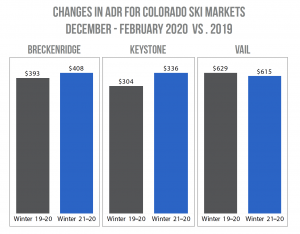
Now let’s take that Gross Booking Revenue a step further. On average, net margins on that GBR are approximately 10%, so you’ve got somewhere between $2,000 and $20,000 hitting your bottom line. That’s just one year – hopefully, you’re not only keeping a rental in your program for one year.


At Vintory, we calculate the customer lifetime by dividing a partner’s churn percentage by one, so a partner with a 10% average owner churn would have a 10 year lifetime on average:

Let’s go back to $2,000 – $20,000 hitting the net margins each year. With a 10-year lifetime value, you’re looking at somewhere between $20,000 and $200,000 in lifetime value and a lifetime Gross Booking Revenue of $2M+. 

At those GBR numbers, a $10 Cost-per-Click, and a $300 Cost-per-Conversion doesn’t seem so outlandish.


Don’t Set It and Forget It

All of these KPIs are important, but if you aren’t actually paying attention to the numbers, and not adjusting your strategies based on what the data is telling you, you’ll never get the most out of your digital advertising efforts. 

Make sure that you are consistently checking in on your campaigns to ensure that these, and other KPIs are in line with your marketing and revenue goals.


Here are 3 recommendations to help automate some of these check-ins:

1. Create Custom Reports in Google Ads and Google Analytics that highlight your own KPIs, whether you use those listed above, or generate your own set.

2. Create Custom Alerts in Google Analytics to receive notifications when your KPIs are reporting performance outside of industry benchmarks/your desired results.

3. Make sure that Google Analytics and Google Ads are linked and sharing information. Google Ads will show you interaction with your ads — Google Analytics will show you the subsequent interaction with your website. It’s important to be able to connect the dots.


And make sure to find a trusted digital marketing partner who can help you read and analyze this data, to help you make the right decisions to grow your business!

Piecing Together Technology Systems to Execute Revenue Management Strategies

0

In business and life in general, they say to avoid extremes. Make a solid plan, make corrective adjustments, but stay the course and “fly in the middle.” Because 2020 was a year of extremes, it did not afford us that option. The pendulum swings were both swift and wide. Extremes in bookings, demand, staffing, politics—you name it, we experienced it. 

As we reflect on this past year and get excited to see each other in person again at the upcoming Vacation Rental Data and Revenue Management (DARM) Conference, it’s important to really take a look back internally and identify our biggest challenges so we can ask the right questions and get the answers that we need. 

We all have experiences to share. We all have had horror stories, success stories, and likely plenty of aha moments along the way. We all have something to offer, but more importantly, what do we want to learn from each other? What do YOU want to learn the most? 


Revenue Management Strategy 

Revenue management in the vacation rental industry is an amalgamation of many different moving parts including distribution, pricing, digital marketing, and reputation management. Throw in the seemingly infinite metrics and data points, some of which the industry can’t even agree on, and vacation rental revenue management gets complicated pretty quickly. But how do you eat an elephant? One bite at a time. So, we’ve been breaking down and analyzing our strategies and processes to find out what worked this year, what stood the test of time in extreme climates, and what we completely abandoned. 

Like you, we learned a lot at Casiola this year. Some lessons were forced out of necessity, some were happy accidents, some were intentional wins that knocked it out of the park, and others were failures we had to abandon quickly. We learned that no matter how much we think we know, we have to stay humble. If something is working, exploit it. If something is not, quickly move on. At the DARM conference in August, we’re looking forward to sharing our experiences and hearing what strategies worked (and didn’t) across the industry. 

Related: Property Management Newcomer Casiola: How their Fresh Look at the Industry is Making them Successful


Execution 

Each of these strategic components is fundamentally important to the revenue management process. However, the best strategies in the world are only as good as a company’s ability to execute them efficiently. 

More often than not, I find myself creating strategies around my ability to implement them, which feels like uncomfortably working backward. 

We are only as fast as our slowest component and only as strong as our weakest link. From a conceptual perspective, this is true for almost any category in any business. To use an analogy: What purpose does it serve for a restaurant to create the fairest seating arrangements for their servers if the hostess isn’t properly trained on table numbers? Everything we do, start to finish, we should do with intention. However, even with the best intentions, failure occurs. Evaluating each and every step of our processes—and our tools— and their effectiveness is paramount. 


Careful Evaluation of Technology 

For vacation rental revenue management, we have recently experienced incredible technological advancements, but we also still have significant limitations. It is no secret that, with so many moving parts and our industry’s relative youth, software systems have yet to come up with a full solution, start to finish. 

How many metaphorical “hands” does one reservation go through from start to finish? Until product evolution produces a more comprehensive solution for our processes, most of us find ourselves piecing various components together. And what happens when one of your software components doesn’t completely align or integrate with another? Layer in a workaround! 

The more complicated your strategy or process, the more layers and even additional software products need to be added. A perfect full solution is something we just do not have. Instead, it feels like there are an overwhelming number of “perfect partial solutions,” almost to the point of tech fatigue. 

Whether it is your website, booking engine, pricing technology, PMS, channel manager, or the channels themselves, now is a great time to take a hard look over the past year and evaluate your weakest links. What parts of the process didn’t hold up under pressure or with rapidly changing dynamics? Were there components that required a disproportionate amount of company resources? Maybe you had to contact support too many times, sacrificing resources from your reservations team, which resulted in lost revenue from missed booking opportunities. Find your weakest links and cut them out, replace them, or fix them. 

In my experience, most technology vendors are more than willing to collaborate with property managers and value their input regarding product features. If part of their product isn’t working for you, tell them. There are brilliant minds out there eager and willing to build and adapt their products to your needs. Sometimes it takes longer than we want or requires a bit more nudging. Sometimes the squeaky wheel gets the grease, and sometimes it requires a ton of persistence. However, if we don’t constantly try to better our strategies and our ability to execute them, we do not evolve as a company or an industry. 

Here’s a great example. Our pricing software supported a dynamic minimum LOS (length of stay) strategy we wanted to implement, but our channel manager did not. Again, what good is developing a strategy if there is no way to execute it? We had two options: abandon the strategy or try to collaborate with our channel manager to find a solution. After tons of troubleshooting, together we were able to find the core issue, and they agreed to write the software fix. Had we not brought this up, we would have had to abandon our strategy. Had we not pushed so hard, it might not have been known that this issue existed for us. 


Collaboration with Other Property Managers 

As we all navigate through the pandemic, collaboration is key. This includes collaboration with our vendors and among ourselves. Is there another property manager that has the same technology mix that you do? Just like vendors, most property managers, so long as they are not direct competition, are willing to share pain points and solutions. 

How often do we listen to someone speaking and immediately tune them out because “they don’t use our PMS” or “my channel manager doesn’t have that issue” or “that’s a great solution, but my PMS won’t connect to it”. If you find someone who uses the same software mix, the conversations become infinitely more advanced and useful. 

I recently had a one-hour phone conversation with another property manager who asked me to explain my pain points. Thirty seconds into my spiel he said, “Now, I’ll just stop you right there. This is your problem . . .” He had cultivated relationships with all the same vendors I had and had exactly the same issues. He told me how he solved the problem, potentially saving me months of trying to figure it out on my own. We were able to compare what worked and what didn’t and take each other through each of our processes start to finish to get fresh, yet experienced eyes on it. That’s the beauty of networking, folks! Now that we have conferences again, take every opportunity to get to know as many other people as possible and look for similarities in tech usage. 


OTA Channels and Mix 

This year was perfect for both highlighting and exposing what did and did not work. However, what did and did not work might be different than what is and is not working. For some markets, it was a climate of feast or famine. It is important to document which processes, including all of the technological applications involved, worked and did not work in each scenario. We might be feasting on bookings now, but let’s not forget how we navigated the famine. 

This is a great time to take a look at our distribution strategy and evaluate what changed in our channel mix year-over-year. 


Are you happy with your distribution matrix and the process involved? 

Have you taken a deep dive into each channel and analyzed the costs and benefits of each? Was there a certain channel that outperformed? 

Was there a channel that fell short? 

How did this affect your channel mix ratios? 

Were you able to execute revenue management strategies and take advantage of promotions on each channel? 


At Casiola, when the pandemic hit, we were quick to leverage what was working on each channel and what was not. Whether it was a cancellation policy change or a channel promotion, we evaluated what was driving bookings and focused our energy on the levers we could pull to increase them. It forced us to look at our metrics on a granular level, focus on what brought in the volume, and thin out what did not. 

However, this was a double-edged sword that created a problem for us over time. By forcing a disproportion in our distribution, we put too many eggs in one basket. It was necessary at the time to find bookings wherever we could, but when the dust settled, it was imperative to move back to a healthier channel mix. Too much leverage in any one channel creates vulnerabilities because having too much third-party influence over your revenue simply is viciously dangerous territory. 

It was important to create a healthier mix. As long as we maintained a healthy ratio, we could put effort into growing each channel more. With a combination of our pricing software and channel manager, we were able to throttle back bookings in the overactive channel but not cut them off. This afforded other channels access to our inventory the other was previously taking up. 

Did you have a channel that outperformed the others in your market? Which ones did not, and why do you think that is? Was there a strategy that you used that had an impact on a certain channel? How do you re-establish a healthy balance when the scales tip too far to one channel? What do you consider a healthy balance and why? These are all questions to reflect on. 


Data Usage 

We could fill an entire VRM Intel Magazine issue discussing data alone. After all, data is the cornerstone of revenue management. Our industry’s challenge is not with the lack of data, but with using it effectively, determining what is quality data and what is not, translating that data across multiple platforms, and having systems that are on the same page about metric calculations. 

I would simply implore you to find out where your data comes from. If someone provides you with data, where are they getting it from? Are they transparent about the sources? How granular are the metrics? 

For example, when looking at the technology platforms you use for determining competitive (comp) sets and benchmarks, really find out whether you are comparing apples to apples. Perhaps the identical seven-bedroom home down the street is in your comp set, but it has a pool and yours does not. Is it truly a comp? Comps are most certainly determined by more than data alone, but it’s important to understand what data is being used nonetheless. 

If you use pricing system and they make a change in ADR for a certain time period, how do you know what has and has not been already calculated? Is there transparency? Or maybe they are only using market data to calculate your pricing, but you are already outperforming the market. Understanding what is being used will help you make better-informed decisions. 

Perhaps the most important question is whether you can access this data outside the platform and access it with ease. I recently heard this referred to as “data liberation,” which could not be more accurate. In a world of so many technological layers, we need to have a constant: our data. 

In some scenarios, you might not need to liberate your data because it has no use outside the platform. However, what if you are using more than one platform to make informed pricing decisions? Perhaps you use one tool for benchmarking, one tool for internal pacing, and another tool to implement pricing changes. It becomes daunting really quickly. What if that platform doesn’t have the ability to perform a function on its UI, but you know it’s fairly simple to do in Excel? How easy is this process? 

Pro Tip: First determine the quality of this data and then determine if it will be held hostage. 


Looking Forward 

This has been an interesting year with many curveballs. We were forced to face issues we didn’t expect. Processes involving everything from operations to technology to strategy were tested almost to the breaking point. Many of us had to develop entirely new processes or find creative ways to optimize our current ones. Tons of good came out of such a stressful time; it forced evolution in many ways. 

However, we are not out of the woods. Not even close. 

It’s no secret the vacation rental market has become a dominant vertical in the travel sector during this time. Travelers have come to see STRs not just as a viable option for lodging, but in some cases, a preferable one. 

However, a substantial increase in market share for one vertical almost conclusively means a decrease for another. We will have a target on our backs, and we must continue to evolve both individually as companies and as an entire industry. 

We must collaborate, educate, network, develop, and strategize, and we must not stop learning. I’m looking forward to seeing you at DARM and sharing our battle stories and experiences! 


Property Management Newcomer Casiola: How their Fresh Look at the Industry is Making them Successful

1

This past February, I pulled into the driveway of my Orlando vacation rental around 9:00 p.m. on a Saturday night. It’s always unsettling to arrive to a dark home at night, so it was a welcome relief to see that the front porch lights were on. I opened my text messages to find my keycode, entered the home, and found lights tastefully on, soft music playing from the TV, and curtains opened to the lit pool and patio area. Exhale. Finally, after a year of not traveling, my vacation had begun. 

“A relative newcomer to property management, Casiola founder Dennis Goedheid leveraged his technology and marketing background, along with a fresh look at the industry, to quickly grow and scale his Orlando-based vacation rental management company.”

As many guests do, I set out to explore the home, both out of curiosity and to make sure everything was OK. I was happy to see that all the beds had fresh white hospitality bedding, tight-tucked corners, and white towels folded perfectly and stacked on the beds. The bathrooms were spotless, with white bathmats folded and ready for use. Moving into the kitchen, I opened the cabinets to find that all glasses, dishes, pots, pans, flatware, utensils, and potholders were matched sets and were placed intentionally and carefully on shelves or organized in drawers. After unloading the car, I put on a swimsuit, made a cocktail, and took a dip in the perfectly heated pool. 

The experience was so beyond my expectations that I had to call Casiola to find out more about the company. 


Dennis Goedheid, Founder and CEO, Casiola 

Founded in 2014, Casiola is based in Orlando, has 35 full-time employees, and manages 300 homes in the Orlando area and 20 homes in Aruba. 

Born and raised in Belgium, Casiola’s founder and CEO Dennis Goedheid is an intentional and savvy serial entrepreneur. After building and selling an online printing company in 2013, Dennis set out to find his next business venture. With a background in building complex and scalable technology, he headed to Silicon Valley and met with tech companies to scope opportunities. With the Bay Area’s high cost of living and fierce competition for talent, Dennis decided starting a company in that environment didn’t align with his dream for the family he was ready to start. After selling his last company, Goedheid wasn’t just looking for crazy multiples and a fast exit: “My goal was not to be traveling 300 days a year. I wanted to find a business that I could build, one in which I enjoy what I’m doing, am able to spend time with my family, and have the feeling that I can make a difference.” 

Ten years before selling his company, Dennis met his wife Liliana Rojas in Barcelona when she was traveling with her family from Peru to Spain on vacation. As fate would have it, her mother took a job in Barcelona, which brought Dennis and Liliana closer in proximity and able to date, get engaged, and eventually marry. 

Liliana joined Dennis in Belgium, but between travel and time in the office while building the printing business, Dennis wasn’t able to spend as much time at home as he would have liked. His primary goal with his new venture was to build a business that would allow him to partner with Liliana and create a life for their future family. The opportunities he found in Silicon Valley didn’t fit that plan, but the short-term rental industry caught his eye during his time there, so he headed to the vacation rental capital of the world and “happiest place on earth”—Orlando—to start a property management company. 

Using his experience in marketing and graphic design, he began the company with a strong brand and professional collateral, which he then used to add inventory. Because many property owners in Orlando reside outside the United States, his European background and connections helped in building the business. 

Dennis initially believed he would be able to work more reasonable hours from home, leverage OTAs and listing sites for bookings, and build a stable of reliable contractors to take care of the properties. “I have to say that I didn’t know what I was getting into,” Dennis laughed. 

In 2014, Dennis and Liliana acquired FLCondos4Rent and its 20 management contracts, and the couple did everything: soliciting inventory, onboarding properties, answering phones, bookkeeping, communicating with homeowners and guests, marketing, managing cleaning and laundry, and much more. As the company grew, it wasn’t long before they found themselves working 16- to 17-hour days, which was the opposite of what they had planned. Dennis then returned to his roots and began developing systems and technology for standardization, automation, and communications that would help the company both scale and grow. 


Custom-Built Technology System: Mobile First and Consumer Grade 

Although Dennis uses Escapia as his software for reservations and accounting, like many managers he found that property management systems didn’t have all the functionality he needed for operations and communications. 

“We started out building everything around it that we didn’t find in Escapia,” he explained. “We have two rules [for development]. 

The first thing is mobile-first. Everything we build has to work on a phone, so all functionality is built for a phone screen, but it also works on a desktop, of course. Second, everything we build has to be consumer-grade, meaning the user experience (UX) doesn’t require training. You should not need a manual to know how it works. The software has to be plain and simple. It’s saved so much time for our team, not having to go through extensive technology training or click on 20 screens to access everything they need in a day. We have three sections—properties, reservations/guests, and owners—and all sections are interconnected within the app.” 


Homeowner App 

One of the most unique parts of Casiola’s platform is the custom homeowner app, which presents performance insights and shows homeowners everything that has happened and is happening in their home. At first glance, homeowners see the number of future reservations, total annual revenue, occupancy rate, and how the home’s performance compares to that of the previous year. Scrolling down, the homeowner sees a “property timeline” that displays all the current and previous activity in the home, including arrivals, departures, status items, clickable links to reports, invoices, work orders, and statements. It even shows when the pool heat was turned on or off. 

“It started because I wanted to have a better overview of everything that was happening at a property. If you look at Escapia, you have a grid of all the reservations, but if you want to know what happened in maintenance or housekeeping, there’s just no place where it all comes together. What we created is like a property ‘feed’ so you can see in chronological order everything that happened.” 

[su_row class=””]

[su_column size=”1/2″ center=”no” class=””][/su_column]

[su_column size=”1/2″ center=”no” class=””][/su_column]

[/su_row]


The homeowner also sees all reviews and comments as they are sent. “The owner can see how they’re doing and how we’re doing,” Dennis said. “Also, if it’s not good, they can view what they can do at their property to perform better with guests.” 

I wondered whether Dennis was concerned that he was providing too much visibility, but he said that owners love it because they have insight into real-time performance and can see each action taken at the home. “When I first presented [the owner app] to the team, and especially the owner team, they all thought I was crazy. They were so afraid that the homeowners would yell and scream at them because they might see a bad guest review or see a service order and would want to know everything about it. In the end, it saved us a lot of time because the owner can see everything that’s happened, including photos and reports. Everything we know, they know.”


Operations App 

Each role in the field has its own app view. For example, Casiola has a group of team members it calls “portfolio managers” who manage a portfolio of 20 to 30 homes, depending on size. These portfolio managers are fully responsible for every activity in each home in their assigned portfolio, including inspections and work orders. Their opening dashboard shows all arrivals, departures, outstanding to-do items, and all current and upcoming activities for the portfolio. They can view a chronological feed for all activity as a whole or by task type, property, contractor, or day. 

The platform’s UX is extremely simple, with a dashboard for each role, intuitive color coding, a social-media-style feed format, and easy calendar views. All property photos that the guest sees are in the app, in addition to the standard appearance guides, housekeeping photos, checklists, and appliance guides. 

Each part of Casiola’s technology is fully integrated with the others. One of the coolest features is that the app has its own search engine, so team members can do a quick search for any keyword (e.g., owner, property, guest, contractor). Every detail about the home can be found quickly, including door codes, Wi-Fi passwords, directions, reservation sources, all emails related to a reservation or property, work orders, maintenance requests, status reports, and reviews. All information and communications are stored and searchable within the app. Dennis has also automated much of the onboarding process, so he has been able to significantly reduce time getting new properties added. 


Multilingual Feature in Beta 

With so many international homeowners, team members, contractors, and guests, many of Casiola’s app users do not speak English as their first language. Consequently, Dennis has developed a multilingual version currently in beta that translates all text in the app into the user’s language of choice. 


High-Level Standardization 

As a Casiola guest, it was apparent that each room, closet, cabinet, and drawer in the home has a standard appearance guide and checklist for housekeepers and inspectors. Dennis shared that, shortly after the initial growth stage of the company, he set out to standardize bedding, linens, kitchen items, and their appearance at all Casiola homes. 


Standardized Bedding and Kitchen Packages 

Dennis explained that, in Europe, hospitality-quality bedding was a standard expectation. “I’ve always wondered, even before I got into this business, when I traveled here, for me the most disgusting thing ever is a comforter and a hundred pillows on the bed. The only thing you can do is throw everything on the floor before you can go to sleep. I’ve never understood it. And it was too much to manage; when there are stains on a comforter, you have to get a replacement and get it dry-cleaned. It just never felt clean to me, and if I don’t want to be in a bed like that, why would I expect my guests to sleep in a bed like that?” 

As with operations, Dennis built a linen management technology platform that provides staff with quantities and linen types for each home and generates labels with scannable QR codes so management knows when linens are picked up and dropped off. Once linens are switched out and returned, they are scanned again and weighed to check for missing items. 

Casiola also has standardized kitchen packages with standard glassware, dinnerware, flatware, cookware, small appliances, utensils, and potholders for its homes. 

Dennis worked with Durk Johnson to create each property’s standard appearance guidelines, and that information is communicated with housekeepers and inspectors via the company’s custom app. Each room, closet, cabinet, and drawer has a corresponding set of photos showing what it should look like, along with the quantity of each item that should be placed there. 

“We define how many of each item there should be in each cabinet and drawer, what it should look like, and how it should be organized,” Dennis said. “All these details are important, and it has to look nice, so we have pictures for each area of the property. That also tells us that each item has been inspected to make sure it’s clean.” 

Additionally, the app contains documentation and photos for large appliances, TVs, and remotes and shows housekeepers how each bed should be made and what it should look like. 


Marketing and Revenue Management 

Using his experience in branding and printing, Dennis carefully researched each aspect of Casiola’s brand creation, including colors, fonts, and design. With his passion for standardization, it isn’t a surprise that strict brand guidelines are used in everything that Casiola touches, including professionally printed signage for almost everything in the home. Reminiscent of a large, luxury hotel brand, standards carry over to the office, uniforms, brochures, email templates, the company website, guest and owner apps, and email signatures. 

Vacation rental management companies in the Orlando area face a unique set of marketing challenges such as fewer year-over-year repeat guests, fierce competition from hotels, and astronomical PPC rates. Dennis explained, “When I hear from companies that have 70 percent repeat traffic, that’s something we don’t have in Orlando. We’ve stopped bidding on keywords, for example. It’s cheaper for us to get business initially from OTAs.” 

“Every single major hotel and hospitality brand is here, including Disney and Universal, and they’re all competing with each other,” Dennis added. “Most of our bookings come from OTAs because it’s the cheapest way for us to get those bookings. It costs us more to get a direct booking using SEO/SEM than through a third-party channel. For our homes in Aruba, it’s different. We’re already seeing top search-engine placement for our Aruba rentals after only a few months, and therefore we’re able to get more direct bookings.” 

With its heavy use of OTAs, Casiola has dedicated resources to revenue and channel management. “In Orlando, there are submarkets like the convention center area where we have a lot of homes,” Dennis explained. “It’s a completely different market than the Kissimmee area, where you have people going to Disney. You need to have extensive local knowledge of each of these areas, be able to change revenue management strategies and channel marketing – even the channels themselves and your cancellation policies – for each area.” 

Emily Pattillo, who heads up revenue management for Casiola, optimizes each home’s pricing and merchandising on each channel using a combination of channel managers, pricing tools, and manual overrides. Pattillo shared more about the company’s revenue strategy in an article on page 78 and will be joining us at the Data and Revenue Management (DARM) Conference in Charleston, August 17–18, to discuss strategies. 


Staffing Challenges 

As with the majority of vacation rental management companies, Casiola is currently facing significant staffing challenges. Orlando’s low occupancy as a result of COVID-19 lasted longer than many other leisure destinations, but, when booking activity resumed, it did so in a whiplash fashion. 

“It’s like someone announced in February that COVID was over in Orlando. January and February are usually our highest booking months. This past January was our worst month ever, but then a tsunami of reservation activity hit us in February,” Dennis explained. “Now, we’re booked heavily for the rest of the year—all months—and we had the best spring break on record.” 

Dennis shared that his team struggled to keep up with the overwhelming email and call volume. The booking window was extremely short, which made it difficult to adequately staff, and Dennis said it has been impossible to find frontline workers. 

“In February, it went from 0 to 100 in two to three weeks. I worked for three months straight, seven days a week, 16 to 17 hours a day to keep up. I was doing 300 to 400 emails a day, answering calls, and taking reservations. It was bad. Since spring break ended, it’s been more reasonable, and we were able to hire five more people. We also started working with Extenteam to hire people in the Philippines to help with guest email and call volume, and it turned out great! They’re now covering our night shift, and we can now start the day without a backlog, so it really makes a big difference.” 

With the explosion of booking activity, reservations stretching well into 2022, and revenue optimization strategies that have brought ADRs up, Casiola is expecting a record-setting year. 


Looking to the Future 

Over the past year, as Dennis networked with other property management company owners, he has seen interest from other companies regarding licensing his technology, branding, and marketing. As a result, he’s working on a model to partner with local operators, which he has successfully done in Aruba. 

“We’re trying to fine-tune that concept right now. We’ve learned that you have to have local partners with local knowledge and property knowledge. If you have good local operators who really care and who understand hospitality and guest satisfaction, and we can combine that with our marketing, branding, and technology, we have a really strong concept and combination.” 


VTrips acquires Resort Collection, among others, expanding to 3,000 properties

0

VTrips announced its acquisition of Resort Collection and its 800 properties on June 1, 2021. Resort Collection is one of the most well-established and influential vacation rental management companies in Northwest Florida. The Resort Collection deal follows several large acquisitions in the past 60 days including Distinctive Beach Rentals in Ft Myers Beach and Resort Property Management in Pigeon Forge, Tennessee.

According to founder and CEO Steve Milo, the recent acquisitions were made from VTrips operating profits and commercial bank debt. “Profitability matters, and VTrips continues to be the leader of national vacation rental companies for EBITDA, compounded EBITDA growth year over year, and EBITDA margin to revenue.”

All employees of Resort Collection, Distinctive Beach Rentals, and Resort Properties Management were offered jobs by VTrips at the same or better pay and benefits, said Milo. “VTrips believes that employees are the lifeblood of these companies, and we are doing everything possible to create a positive environment for them.”

Milo continued, “As certain large national buyers operate more like ‘strip miners’ in our industry, we are encountering more and more sellers who want a buyer that will hire all their staff, take care of their brand and legacy, and allow them to live in their community. We tell sellers that certain large national buyers are an option if they intend to move to another state or country and change their cell phone. Some sellers think this is funny. I always have a lot of good stories to share when I meet sellers in person. Most sellers dedicated their life to building a legacy and making great memories for their guests and employees and they want a buyer who shares their same values.”

According to Milo, VTrips is well positioned to compete for the industry lead in the resort vacation rental market in North America. “As a company headquartered in business-friendly Florida, with a founder and owner still in charge and who supports the industry in advocacy and volunteer work, VTrips is positioned to rapidly expand while other large companies deal with leadership and operational turmoil.”

Milo is chairman of the VRMA Advocacy Committee, which raised over $250,000 in 2020, and chairman of the Florida Vacation Rental PAC, and told us that VTrips contributed over $20 per unit in 2020 to advocacy. According to Milo, other large national firms are contributing less than $1 per unit to advocacy. “Some companies and CEOs care passionately about the future of the industry, and some are just industry outsiders who are concerned about getting a quick exit from this industry before their operational issues implode on them.”

The once sleepy vacation rental industry is rapidly transforming, said Milo. “With these changes some vacation rental owners are deciding to take chips off the table, and who they sell to may be the number one factor.  ”

Located in Ponte Vedra, Florida, VTrips manages 3,000 exclusive vacation rental properties in traditional resort destinations ranging from Florida to Hawaii.  VTrips CEO and founder Steve Milo is a recognized thought leader regarding the evolution of the highly fragmented vacation rental industry and is a regular keynote speaker at leading conferences in North America and Europe.  

Need More Properties to Rent Out? Now Is The Time to Grow Your Vacation Rental Business

1

For a vacation rental manager, adding inventory is the best way to grow the value of your business.


The demand for vacation rentals is at an all-time high. Getting bookings is a problem for yesterday’s managers. The real revenue driver today is inventory growth – and the mega managers know it.

Now is the time to grow your inventory and defend it too. The vacation rental market has never been more full of opportunity and competition. If you ask me, there is no better ROI on the planet than investing in inventory acquisition.

One of the first things I realized when I started out in the vacation rental industry is that if you don’t grow your inventory – you won’t go very far. I also realized quickly that for most property management companies, keeping up with day-to-day operations is a full-time job.

This often means that owner acquisition strategies fall to the side.


The most successful business owners know their opportunity costs and they focus on making decisions that generate the greatest long-term value.

I strongly believe that as an owner, you need to focus on making investments in your company to grow, and this belief took me from 0 to 500 properties in just 5 years.

I’ve always followed the metrics mantra “If you cannot measure it, you cannot improve it.”


Grow Your Vacation Rental Management Company Beyond the Rental Income

In this article we are going to look at three of the most important metrics in acquiring new inventory:

  • Calculate your customer acquisition costs (CAC)
  • Calculate the lifetime value of new inventory (LTV)
  • The LTV:CAC ratio – the holy grail of all metrics!


How much does it typically cost to generate a new customer?

The answer is…it depends. The amount you invest in marketing to new homeowners should be dependent upon your growth goals, but here is an important and simple calculation that every professional property manager needs to know – the cost to acquire a new customer (CAC).


Calculate your cost to acquire a new customer (CAC)

For the sake of this example, let’s assume that to generate one new contract, you invested $1,000.00 in direct mail postcards. Your cost to acquire one new homeowner in this example would be $1,000.00 in proactive marketing.


How valuable is adding a new property to your VRM?

Before you crunch the numbers, first it’s important to know what goes into calculating the value of adding a property to your portfolio.

  • Look at how much gross booking revenue it will make per year
  • Know your profit margins (we’ve found this is usually 10% of the gross booking revenue)
  • Consider how long you will keep the property in your portfolio (we’ve found the avg is 10 years)
  • Realize the value of the property to your portfolio if you were to sell your company

Or you can do all this using our handy online calculator.


When you focus on the lifetime value of a property and not just its annual revenue, the financial impact is pretty impressive.

Example: Let’s crunch some numbers together

Let’s say you have a property that is grossing $36,000 in gross booking revenue, which means your margins are going to be about $3,600 (10%).

If you were to add this one property to your program, it’s going to net you about $3,600 in year one.

Now, let’s say you keep that property and you retain it for about ten years.


Let’s do that math:

$3,600 x 10 (years) = $36,000


Now, you’re at $36,000, and this example is just one property.


Let’s amplify that up to $50,000 or $100,000 – think about the value in those numbers.


The example above is just for one property – consider if you were to bring on 10 to 20 properties a year.


Watch this video here to see the value of new inventory.


And remember, there’s not only the value you are gaining through the lifetime of this property in your program, but if you decide you want to exit your business, you’re going to get a check for each one of those properties.

We’ve found that the average “per door” value is roughly between $9-$20k!

If you’re interested in understanding more about the value of your company – check out our interactive company valuation calculators here.


Now let’s say you added an extra 30 properties to your portfolio – you’re looking at your dream retirement home.


Can you make more profit from your customers than it costs to acquire them?

The short answer is YES! A bit of a longer answer is, this is all about unit economics.

The holy grail of all metrics in inventory acquisition is the LTV: CAC Ratio, which is the lifetime of profits of a property vs. the cost to acquire them. This calculation takes into account all of the key factors in inventory acquisition. It takes into account churn, the lifetime of a property, and acquisition cost.

If you’re going to track one metric for inventory acquisition – this is it. So typically what we are looking for is a target of 20x but the best companies out there are doing it at 40x.


Take a look at the results of your competitors

Here is a summary of the target numbers and the results from the best in class companies:


The bottom line: Now is the time to grow your inventory

When 2021 vacation bookings began, it was widely reported that vacation rental sites like Airbnb and VRBO were seeing a boom in bookings. Now the surge in demand for vacation rentals is so high that the short-term, vacation rental industry has never seen occupancy rates at this level, leaving vacation rental managers scrambling to find more properties to rent out for available occupancy in a desperate attempt to help more families book their long-awaited vacations.

The lack of vacation rental inventory will mean that bookings will become nearly impossible for many as travelers are opting to choose the safety, security, and accommodations that rentals offer.

There has also never been more investment and acquisition activity in the industry. Simply put, there is more money, more interest, more demand, and more competition than ever before.

Now is the time to grow your inventory to take advantage of these trends while they last.


About Brooke Pfautz: From 0-500 properties in just 5 years, Vintory  and Comparent.com CEO, Brooke Pfautz, has lived and breathed inventory acquisition. Brooke’s vision is to accelerate the growth of the entire vacation rental market to become the preferred way to travel, work, play, dream, rest and invest. Vintory is the 1st and only CRM & Sales and Marketing automation platform designed exclusively for Vacation Rental Managers to grow their inventory. At Vintory, a team of over 50 growth experts is laser-focused on one thing: helping VRMs hit or exceed their growth goals.

VRM Intel at Skift Short-Term Rental Summit

1

Thank you to Skift for having us at this year’s Short-Term Rental and Outdoor Summit. 

Here are the slides from my presentation about trends and performance in the vacation rental industry. I know we’re running through this data rapidly, so I wanted to make sure you have the information at your fingertips in case you want to zero in on some of the metrics. 

Skift Short-Term Rental Summit, VRM Intel, Amy Hinote PDF

For more info on obtaining data, contact rob.johnson@keydatadashboard.com

VRM Intel at GNEX Conference

0

Thank you to Paul Mattimoe for having us at this year’s GNEX Conference and for the opportunity to learn more about the vacation ownership industry. 

Here are the slides from my presentation about trends and performance in the vacation rental industry. I know we’re running through this data rapidly, so I wanted to make sure you have the information at your fingertips in case you want to zero in on some of the metrics. 

GNEX X-Talks, Amy Hinote, VRM Intel, PDF

For more info on obtaining data, contact rob.johnson@keydatadashboard.com

See you tomorrow!