













Florida Gov. Rick Scott has signed into law a bill returning regulation of vacation rentals that allows local governments to adopt ordinances targeted specifically at rental properties, such as an inspection program or trash rules.
But unlike the initial proposed Senate bill — which was amended to protect weekly rentals while allowing prohibitions on nightly or weekend rentals — no minimum-stay requirement could be imposed under the House legislation which was enough to win over some property rights advocates.
City and county officials have been working to repeal the 2011 law that banned all local vacation rental regulations since it was enacted, but the effort gained a powerful ally this year in Sen. John Thrasher, a St. Augustine Republican who represents a community where rentals have been particularly controversial.
“(The) vote in the House looks to be a fair compromise for all property owners,” association president Paul Hayes said in a statement. “This approach strikes a needed balance that we hope will protect Florida’s vital, $31 billion-per-year vacation rental economy.”
Former executives of Hotwire.com and HomeAway are expanding their technology-enabled vacation rental management service that improves the vacation rental experience for rental owners and guests.
Austin-based vacation rental management startup TurnKey Vacation Rentals (TurnKeyVR.com) has raised $3 million in seed funding fromSilverton Partners and an impressive group of online travel executives. These include:Rich Barton (co-founder Expedia, Zillow, Benchmark partner), Gregg Brockway (co-founder Hotwire, TripIt, Chairish), Alexis de Belloy (HomeAway, Accel executive in residence), Rob Greyber (President Egencia), Eric Goldreyer (BedandBreakfast.com founder), Joey Levin (CEO IAC Search & Applications), Karl Peterson (co-founder Hotwire, TPG partner), Spencer Rascoff (co-founder Hotwire, CEO Zillow), Russ Sach (Expedia) and Greg Slyngstad (co-founder Expedia, VacationSpot, Kayak board). The new funding brings TurnKey’s total seed funding to $4.8 million.
TurnKey empowers owners of vacation rental properties by managing the entire rental process – listing and booking the rental via the major guest sites such as HomeAway/VRBO, AirBnB and TripAdvisor; providing hotel-style rate management; handling guest support; and arranging cleaning and maintenance via mobile apps. Launched last year, TurnKey has grown to almost 200 rentals in three markets (Austin, TX, Port Aransas, TX and Santa Barbara, CA). It plans to use the new funds to launch ten new markets in ski, beach and metro locations.
Bill Wood, the founder of Silverton Partners who is joining TurnKey’s board stated, “This management team is unusually deep and experienced and we really like the market because it’s an opportunity to apply leading edge technology to an industry that has lagged in technology uptake.” TurnKey’s co-founder and Chairman John Banczak stated that, „We see a huge opportunity in delivering a better tech-enabled guest and owner solution, combined with lower fees, to this high-growth market.” Banczak added that, „Vacation rental homes are valuable income opportunities for millions of owners – and we believe that the owner can maximize their rental opportunity by taking advantage of leading edge technology and best practices.” To TurnKey this means that guests need to see a professional online listing, market rates, secure online checkout and receive immediate responses both on the booking side and when they are staying in the property. Co-founder and CEO T.J. Clark stated, it’s a full-time job and most owners either have a full-time job already or don’t live close to their rental.”
TurnKey’s solutions professionalize the management of the owner’s vacation rental starting at 10-14% commissions vs. traditional property managers that charge between 20-50% commissions. “We have the analytics and technology platforms to help our owners get more rental nights and often generate 30-50% more revenue than they were before – while we provide the key services and amenities that guests would expect from a luxury hotel” stated Clark. “We drive cost out of the rental process while increasing the quality of service – to offer an experience that’s better for everyone.” TurnKey will reach more of these owners by expanding their service to many new markets over the next year.
Funds to be used to continue rapid pace of innovation: financing led by Version One Ventures and Maveron.
Seattle, WA, June 10, 2014 — Dwellable raised $2 million in Series Seed financing led by Version One Ventures and Maveron. Additional participants in the round include former HomeAway board director Rob Solomon, Zillow CEO Spencer Rascoff, Redfin CEO Glenn Kelman, Farecast founder Oren Etzioni, and other notable investors in Seattle and Silicon Valley.
Dwellable makes it quick and easy to find the perfect house, condo, or villa to rent from any connected device. This is the first capital raise for Dwellable, which launched its chart -topping iOS and Android apps in 2012 and was the 25 the most downloaded iPad travel app in the United States in May 2014.
The company will use the new funds to continue its rapid pace of innovation on all mobile platforms. There are more than 300,000 properties globally on the Dwellable platform and the number is growing every day. Dwellable is the only vacation rental platform that “organically” ranks listings in its search results.
“The vacation rental industry is in the midst of huge creative disruption, and companies that leverage mobile to transform the discovery and booking experience are the ones that will survive and thrive,” said Kirby Winfield, CEO of Dwellable. “The global brands of tomorrow will be built for mobile devices first, and I’m proud that so many experienced travel investors have backed Dwellable, a company that’s bringing trailblazing innovation to the enormous vacation rental market.”
Unlike traditional vacation rental companies, Dwellable is focused on mobile first. Its experienced team has created successful mobile businesses in the past. Prior to Dwellable, founder Adam Doppelt created Urbanspoon, the groundbreaking restaurant app featured in the first ever iPhone commercial, acquired by IAC. Co-founder Nathan Kriege created Snapvine, the social VOIP technology acquired by White Pages. CEO Kirby Winfield helped take Marchex, the leading mobile advertising technology company, through a successful IPO, and sold his cross
-platform analytics startup AdXpose to comScore.
Dwellable can be downloaded on the App Store and on Google Play.”Dwellable’s slick design, mobile -first growth model and deep digital media DNA position it to become the first household brand name for vacation rentals in the mobile era,” said Boris Wertz, general partner of Version One. “It’s the only vacation rental brand to truly leverage the tidal wave of mobile adoption to reach travelers wherever they’re planning a trip.”
The funding comes at a time of heightened recognition for Dwellable, which has been prominently featured in mobile app stores as the summer travel season approaches. Leveraging lightweight architecture, scaled data collection and quality -based sorting algorithms, Dwellable helps connected travelers find vacation rentals more than twice as fast as traditional vacation home listings websites. Dwellable collects millions of data points from vacation rental homeowners and management companies, structures and de-duplicates them, and surfaces the most relevant listings based on traveler preferences.
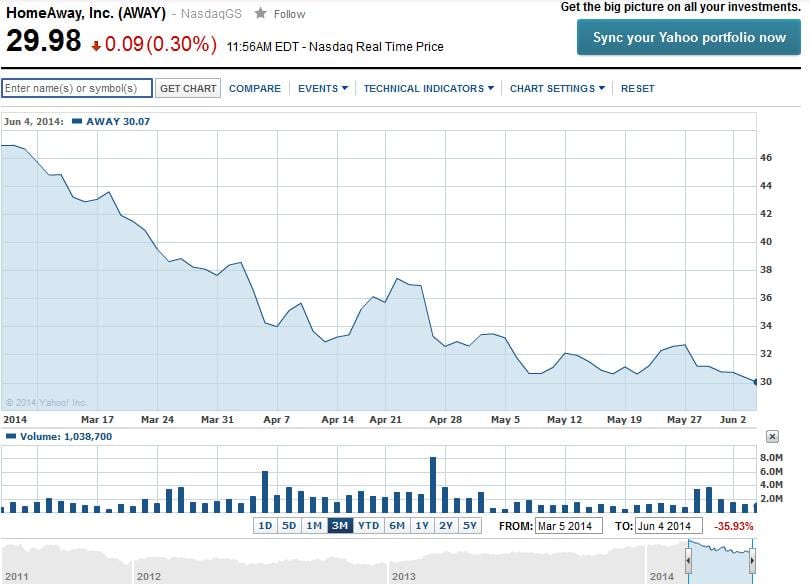
HomeAway (NASDAQ: AWAY) stock is currently trading under $29.00 Monday, down approximately 8% since Friday and down close to 38% in 90 days.
In a report published Thursday, JP Morgan downgraded shares of HomeAway from Overweight to Neutral saying, that the downgrade is “based on increased likelihood of greater marketing spend and downward guidance revision during the upcoming Q2 earnings conference call.”
HomeAway has seen additional insider selling with over $2 million shares sold by HomeAway’s C-Team since the last update in the article “Over $40M Sold.”
“Vacation Rental Housekeeping Professionals is a national organization built on the best and most efficient ways for housekeeping services in a vacation rental,” said Joe Refosco, co-owner at Taylor-Made Deep Creek Vacations and VRHP president. “This organization is made up of some of the brightest and most innovative professionally managed vacation rental companies from across the country that are dedicated to quality housekeeping.”
Jill Hatfield at Bald Head Island Limited serves as Administrative Director for VRHP and has been working to make this year’s conference a success. “One of the most empowering events of the year, the national conference with VRHP helps our team immensely,” said Hatfield. “The opportunity to learn from the best in the nation and having the time to network with your peers, pumps you up! Throughout the year, it’s great to stay in touch with who you have met and hear how what they learned through VRHP is changing their company for the better.”
Michelle Layne, General Manager at Carolina Designs, says their company has reaped enormous rewards from their involvement with VRHP. “Our company has been a member of VRHP since 2000,” said Layne. “The information learned from the seminars and newsletters over the years has been invaluable. VRHP has been a significant influence in ensuring the professionalism of our department and daily operations.”
To learn more about the benefits, membership and sponsorship opportunities with VRHP email Jill Hatfield at director@VRHP.org.
Event:
2014 VRHP National Conference November 10-12 Charleston
When:
Monday, Nov 10, 2014, 4:00 PM until Wednesday, Nov 12, 2014
Where:
Charleston Double Tree by Hilton
181 Church Street
Charleston, SC
Vacation rental software provider Rent One Online announced to customers this week they are discontinuing their web-based property management software service. Vacation rental managers were given until September 1, 2014 to move off of the platform.
Customers are feeling the frustration. “Rent One Online, owned by TravelGuard, sprung surprise news on all of their customers this week,” said Sarah Bradford, founder and President of Winter Park Lodging Company. “They are ‘decommissioning’ their system on Sept 1st. Needless to say, we’re all scrambling and frustrated. I, for one, will never use Travel Guard products in any way. It was disloyal and unprofessional to do this to so many customers in their busy season.”
The decision-making process in purchasing software in the vacation rental industry is complex with varied considerations such as accounting, owner relations, housekeeping, maintenance, reporting, reservations, calendar management, guest communications, website integration, channel distribution, keyless lock integration, security, pricing and much more.
In addition, implementing new software systems and training employees requires a significant investment of time and money, and even in the off-season, 90 days is a tight window in which to accomplish such a transition.
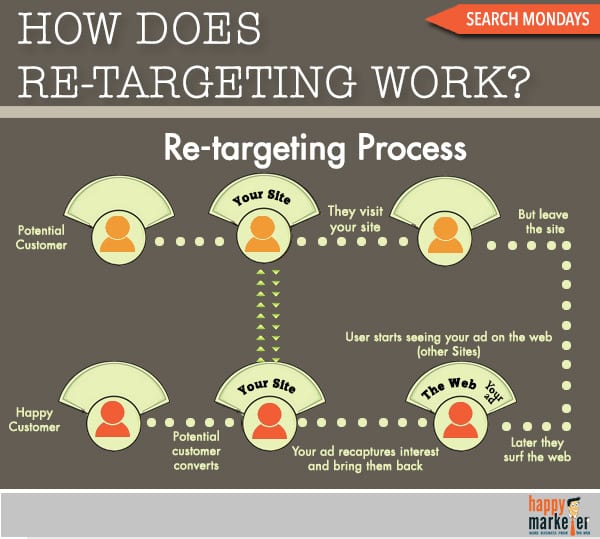
That’s when website owners show you ads only if you’ve already visited their website. It can also be described as remarketing. They typically work better than other forms of display ads because the person seeing the ad has already seen some of your message, brand or company.
Retargeting has taken paid display media placement by storm. Where, general display targeting has its merits, there’s something that’s crazy-effective about retargeting visitors of your website who didn’t convert.
It’s a powerful tool for internet marketers, but it must be carefully balanced to avoid annoying your potential guests.
As a “power” internet user as well as an internet marketing professional, I’m on both sides of this coin. I create ads that target those who’ve visited my website, and I also get targeted by them. Therefore, I’m always on the lookout for companies that do retargeting well versus those that are heavy-handed.
When it comes to vacation rentals, the bigger players in the space use retargeting fairly frequently. If you leave any of the larger websites in the vacation rental and hotel industry, you’re likely to see their ads on Facebook, Twitter and throughout the web.
The first few times, you expect it. Remarketing ads can delight users because the users are seeing ads that are more relevant and targeted to them than general display ads. But with poor management, you can upset potential guests and customers with over-aggressive targeting. Here are some quick tips for both sides to better manage retargeting:
1. Include Offers
A great way to kick-start a good click-through-rate on your retargeting ads is to include an offer in your creative ad. It’s a bonus for both the customer (an enticing offer always appeals to me!) and the results of the display campaign. I will caution businesses here: always including offers could create bad scenarios where your shoppers always expect a deal and therefore never actually convert into a booking on your website the first time.
2. Limit Frequency
Every ad platform has a method for showing you what your display ad frequency is. Google even has a dedicated setting to limit this for fear of over-targeting customers. My general rule of thumb is to target people no more than 15 impressions per day and for no longer than a month. Depending on the lifecycle of your average booking, you may want to tweak these numbers. Having longer sales processes can be tricky, but adjusting these numbers with testing will likely show you the best settings for you.
We’ve probably all been on the wrong side of a web advertiser who has gone a bit overboard with retargeting. It can cause people to get annoyed by your brand so much that they’ll vow never to return for fear of being targeted too aggressively again.
3. Rotate Creative
Perhaps the most common way I get frustrated at display ads is the same creative over and over. Companies like Perfect Audience retarget heavily if you visit their site, but I see several different ad creatives. If you’re going to show your ad more than a few times per day to customers, have different creatives in your ad account to limit the amount of “Ugh, I’ve seen that so many times before!” reactions.
4. Test, Test, Test
To sum it up, ABT: Always Be Testing.
You never know what’s going to click with your audience or entice the consumer. Perhaps an ad that worked very well with vacation rentals in Florida doesn’t resonate with your customers in Colorado.
When you’re always testing, everyone wins.
Potential guests win because they are seeing more relevant ads in their web browsing experience, which is a win for publishers and readers. If readers click through more often on ads, the publishers or ad networks make more money, allowing them to be profitable and maintain the content they provide to you.
Advertisers win because they see greater ROI from their display advertising budgets by bringing back lost customers. It’s always great to bring amazing retargeting ad results to your boss and show them the concrete value of investment in advertising.
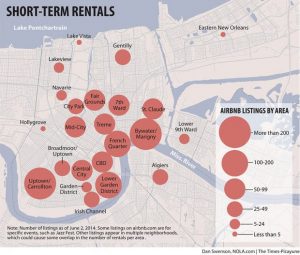
The New Orleans City Council on Thursday could consider a tweak to regulations governing short-term vacation rentals. Officials say it would make it easier for the city to control them.
But what are the rules? And further more, what exactly is a short-term rental?
According to the city’s zoning ordinance, which regulates what people can do on their property, a short-term rental is, essentially, any kind of lodging for a period of 30-days or less.
That’s part of the problem. When people talk about short-term rentals, they are usually talking about informal operations — apartments and houses rented by property owners or tenants directly to tourists, who usually find them through websites like Airbnb or VRBO (Vacation Rentals By Owner). Those are the kind of short-term rentals that some advocacy groups and locals think are ruining he city’s historic core by displacing actual residents in favor of tourists.
However, the current rules lump in all short-term lodging, including hotels and licensed bed and breakfasts.
For example, the current rule bars only short-term rentals to “nonresidents over the course of one or more years with a duration of occupancy of less than 30 days.”
The proposed rule changes would do away with the “one or more years” requirement, more clearly define short-term rentals so as to eliminate traditional lodging businesses such as hotels and the like.
Advertising short term rentals is technically a criminal offense, subject to fines and even jail time, but few if any have every been successfully prosecuted.
Licensed bed and breakfasts, on the other hand, are subject to several restrictions. They are required to submit to an inspection from the fire marshal and aren’t allowed have more than one kitchen, a major draw from many tourists.
They are also required to buy a permit, the price of which ranges from $200-$600 depending on how many rooms the operation has. Bed and breakfasts with three units or more have to pay an occupancy tax of .50 cent per night per room.
Yahoo and Tnooz team up to reveal research + innovative marketing tactics.
What are key data insights behind online booking conversions? How can new digital advertising solutions like native advertising and content marketing drive travel consumers through the purchase funnel?
Join Tnooz and Yahoo Travel for our FREE webinar and learn the details.
During this 60-minute session, Yahoo research and media product experts will share consumer travel research conducted in partnership with Compete, plus innovative media tactics based on those findings, including:
● Online behavior of travel bookers prior to purchase that can inform travel brands’ marketing strategies
● Consumer activity through the purchase funnel when shopping for top airline and hotel brands
● Digital advertising, especially native advertising and content marketing, on sites such as the new Yahoo Travel digital magazine
Do you have Chesky’s secret one page memo to take over the travel industry? Neither does Katie Couric, but she does get Chesky to give so insight into where Airbnb is headed. “What if we could design the entire trip? We could offer the entire trip from the time you leave your home to the time you come back to your home, said Chesky. “We are definitely going to become much more than a place to stay in the future.”
About recent legal issues, “A lot of these laws are 20th century laws, and sometimes even 19th century laws, in a 21st century world, and the core problem comes back to the idea that these cities want to view everything as a person or a business,” said Chesky. “If you have people in your home, you’re a person. The second you charge one person, one weekend you’re a business, and therefore you should be regulated like these huge institutions. We actually think there should be a third category created, and what we are doing is -city by city around the world -we are starting to create model legislation.”
Couric asked, “But are you worried about how this can potentially impact your business?”
“It is a huge risk for the company it we can’t manage it, but I am incredibly confident we can,” said Chesky.
Read the full story and watch the entire Katie Couric World 3.0 interview here.
HomeAway’s Q3 2014 report disclosed more details about the agreement reached in the acquisition of mobile app provider Glad To Have You, including the purchase price of approximately $16,791,000
In March 2014, the Company acquired Glad To Have You, Inc. (“Glad To Have You”), a United States company that is the creator of a mobile guest management solution for the vacation rental industry, for cash consideration of approximately $16,791,000. The direct acquisition costs incurred by the Company were not significant to the Company’s operating results, and all such costs were expensed as incurred and included in general and administrative expenses in the consolidated statement of operations.
Of the total consideration paid, $250,000 of the cash consideration was deposited in escrow as security for the benefit of the Company against breaches of representations and warranties, covenants and certain other expressly enumerated matters by the sellers. The escrow funds not used to satisfy such seller obligations will be released to the sellers two business days following the first anniversary date of the acquisition. In addition, $250,000 of the total cash consideration was deposited in escrow as security and pending final net working capital related purchase price adjustments. These amounts are expected to be paid within 120 days after acquisition.
The acquired goodwill primarily represents synergies associated with adding Glad To Have You’s mobile applications to the Company’s marketplace of websites to provide property owners and managers with an additional way to manage and communicate with guests during their stay. Goodwill is not deductible for tax purposes. The acquired trade name has an estimated useful life of 10 years from the date of acquisition, the developed technology has an estimated useful life of 5 years from the date of acquisition and the customer relationships have an estimated useful life of 10 years from the date of acquisition. Non-compete agreements have an estimated useful life of 3 years. The total weighted average amortization period for the intangibles acquired is 7 years.
The results of Glad To Have You have been included in the Company’s consolidated results since the acquisition date in March 2014. Pro forma results of operations related to this acquisition have not been presented since Glad To Have You’s operating results up to the date of acquisition were not material to the Company’s consolidated financial statements.
The following table summarizes the Company’s acquisition during the three months ended March 31, 2014, with amounts shown below as fair values at the acquisition date (in thousands):
Glad to Have You, Inc.
Net tangible assets (liabilities) acquired
Cash
$
25
Deferred revenue
(65
)
Other
17
Total net tangible assets (liabilities) acquired
(23
)
Deferred tax liabilities
(1,653
)
Trade name
1,177
Developed technology
3,760
Customer relationships
1,643
Goodwill
11,647
Non-competition agreements
240
Purchase price
16,791
Less: Cash acquired
(25
)
Net purchase price
$
16,766
Tangible net assets (liabilities) were valued at their respective carrying amounts, which the Company believes approximate their current fair values at the respective acquisition dates.
The valuation of identifiable intangible assets acquired reflects management’s estimates based on, among other factors, use of established valuation methods. The value of the acquired trade names was determined using a relief from royalty method. Developed technology was valued on a combination of the income and market approach. Customer relationships were valued by projecting the estimated cash flow from the Company’s existing customer relationships. Non-competition agreements have been valued based on the present value of estimated future cash flows with and without this asset. Identifiable intangible assets with definite lives are amortized over the period of estimated benefit using the straight-line method and the estimated useful lives of three to ten years. The straight-line method of amortization represents the Company’s best estimate of the distribution of the economic value of the identifiable intangible assets. Goodwill represents the excess of the purchase price over the fair value of the net tangible and identifiable intangible assets acquired.
NeedMoreRentals released the results of their independent surveys of vacation rental home owners and managers relating to their use of listings sites titled Listings Sites, The Good, The Bad & The Ugly. The survey was designed to discover what owners/managers believe about using listing sites/booking portals to market their rental properties to prospective guests. The survey included 648 respondents in 47 countries and took place in April and May 2014.
The sites least likely to be recommended are AlwaysOnVacation, HomeAway, Airbnb, SunnyRentals, FlipKey, CraigsList, OwnersDirect, HolidayLettings, VacationHomeRentals and VRBO.
Reasons are widespread but include aggressive sales calls, no inquiries or bookings, guest booking fees, hidden guest details and inflexible cancellation policies.
What are the biggest concerns about listings sites?
The most common concerns owners and managers have with listings sites are spiraling cost, lack of inquiries, hidden guest details, payment not being received until after the guests’ arrival and the listing process being too time-consuming.
Which listings sites’ mobile apps are being used?
The leading mobile apps currently used by survey respondents were Airbnb, HolidayLettings, HomeAway, FlipKey, VRBO and HouseTrip.
343 respondents (majority) do not use any mobile apps due to confusion, frustration with login and perceived limitations.
LiveRez and PointCental began a partnership this spring to bring fully integrated smart home technology to 60,000 vacation homes utlizing LiveRez’s cloud-based vacation rental software and -today -launched the platform which enables users to lock and unlock doors, control house and pool temperature, monitor security and more directly from their LiveRez software. The technology also will empower these managers to track the execution of their vacation rental operations in real time.
“Without a doubt, smart home control is the next big innovation in the vacation rental industry,” said LiveRez Founder and CEO Tracy Lotz. “Our partnership with PointCentral will position our partners at the forefront of this new revolution and give them a significant competitive advantage in their respective markets.”
PointCentral will continue to offer a reservation system interface for those organizations not using LiveRez, but its high-level vacation rental software integration will remain exclusive to LiveRez.
Cindy Murdoch of Seabrook Cottage Rentals was an early adopter of the PointCentral integration. She said the PointCentral technology is expected to have a significant impact on their bottom line. “This integration will completely streamline our operations,” Murdoch said. “With LiveRez and PointCentral, I will know – to the second – when one of my houses is being cleaned or inspected and when my guests check in or check out. I could be on vacation a thousand miles away and unlock the front door for a guest. This technology is a real game changer.”
Steve Trover – who plays a dual role as Chief Strategy Officer for LiveRez and CEO of All Star Vacation Homes – was an early proponent of the integration, being one of PointCentral’s first customers. Trover, who manages more than 300 luxury homes across three states, said that the PointCentral technology has had a huge impact on his operations. “This technology will completely change the vacation rental industry,” said Trover. “From the moment I first saw this technology, I knew we needed to integrate it into the LiveRez software.”
Lotz said the fact that PointCentral is cellular powered made a big impact on his decision to integrate, as cellular connectivity ensures a level of reliability not provided by broadband / Wi-Fi offerings.
“There were other solutions in the marketplace, but none of them offered our partners a proven and reliable connection to the home,” Lotz said. “PointCentral’s cellular technology and unique offering led to our exclusive relationship.”
Burge, a pioneer in commercial home security and automation, is confident that introducing the PointCentral technology to LiveRez’s vast network of managers will speed the industry’s adoption of smart home control. “In the vacation rental industry, mechanical keys will soon go the way of the horse and buggy,” Burge said. “Five years from now, vacation rental managers will look back and ask themselves: ‘Did we really do business that way?’”
For the past several years, the Vacation Rental Managers Association (VRMA) has been involved in the development and production of the PBS television program Getting Away Together. The show followed groups of families and friends as they explored destinations utilizing vacation rentals which were managed exclusively by VRMA members.
In an recent email to its membership the VRMA announced it will no longer be affiliated with the series and has “transferred ownership and all future rights of the program to PineRidge Film & Television effective immediately. This transfer will allow the VRMA to focus its resources on membership and the association itself.”
“These resources may now be more effectively allocated toward the areas identified in VRMA’s strategic plan as most critical to our members and the overall industry we represent.”
According to the email, the show will continue with PineRidge Film & Television, who will be able to invest their resources and expertise into production and greater distribution of future seasons of the show.
“The world is filled with danger, things that are trying to frustrate our lives or reduce our success, reduce our opportunity for success…. We have no control over these forces. These are a constant, and they’re not going away. The only variable are the conditions inside the organization, and that’s where leadership matters, because it’s the leader that sets the tone.” –Simon Sinek
Simon Sinek explores how leaders can inspire cooperation, trust and change. He’s the author of the classic “Start With Why”; his latest book is “Leaders Eat Last.” Full bio
How does the use of pay per click (PPC) for vacation rental managers compare and contrast to that of hotels? With the proliferation by OTA’s using PPC to attract visitors searching for vacation rentals, the difference in strategy between vacation rental managers and hotels is decreasing.
The following article is written by hotel marketing expert Vikram Singh, who specializes in booking engines, search engine marketing, and online distribution strategy. The article outlines why PPC is important as a component of the overall search engine marketing strategy for hotels and provides vacation rental managers advice for their own PPC strategy.
I have had a front row seat to the hotel pay per click (PPC) world for the past decade. PPC is not new, but it’s rapidly changing. One thing that hasn’t changed: hotel marketers and owners are still caught up in debates about its effectiveness and viability. As a result, a lot of hotels are still not embracing the power of pay per click.
Google’s Golden Goose
Time for a reality check: Since its inception in October 2000, pay per click advertising, aka Google Adwords, has been Google’s nonstop money-making Golden Goose. Here are some powerful statistics highlighting its power:
In 2013, Google officially surpassed $50 billion in total advertising revenue. This comprised 85% of their total revenues for 2013.
Google reported $12.9 billion in net income for 2013.
Total paid clicks on Google and Google Display Network sites were up 31% over the prior year, and up 13% over the third quarter of 2013.
All the actions (algorithm updates, layout changes, etc.) that Google implements every few months have a clear goal, which is to make sure that Google can sell more ads. Google cares very much about pay per click, because billions in revenue depends on it. They need it to work for you.
Hotel marketers and owners simply cannot overlook or ignore PPC. Unscrupulous marketing “experts” love to trash PPC as a waste of funds. You should run from those who advise using search engine optimization (SEO) as a replacement for PPC. SEO is important, but only PPC can explicitly guarantee you placement in exchange for your investment. Every time someone starts talking about how they are not doing pay per click marketing because they are focusing on SEO, an angel in revenue heaven dies.
Brand Name PPC Is Not Optional
There are a lot of things that your hotel can save money on. Opting out of PPC is an axe to the foot, which you do not need. PPC is exponentially important when it comes to someone looking for your brand name on Google, i.e., someone “googling” your hotel by name. Look at this example:
When someone looks for you by name, one of these three things might have happened:
They researched you on any of the hundreds of travel sites (TripAdvisor, Booking.com, Expedia, etc.) and are now ready to have a direct conversation with you.
They received a personal recommendation from a friend.
They saw your offline marketing somewhere, and now they want to learn more.
These are the searchers that are lowest on the conversion funnel. In simpler terms, they are the people who are most likely to buy something from you right now.
There are only two scenarios that happen when people look for you by name:
You are showing an PPC ad for your hotel along the lines of “Official Site, Book Direct, Learn More.” You get the click and convert them on your site.
The OTAs and resellers have no competition from you (woohoo!) for their ads offering “Best Rate Guaranteed, No Cancellation Fee, Learn more!” They get the click and sell your room, making a handsome 10-20% commission.
It does not take rocket science to figure out that hotels participating in PPC for their brand name terms are harvesting those clicks into direct revenue, instead of giving them away to the OTAs. Please keep this in mind when the next budget meeting comes around. Pay per click can always be beefed up and fine tuned.
Pro tip: Do not waste time hating on OTAs. In the world of Google, it definitely takes money to make money. Own your brand on Google.
Be There or… Lose Revenue
I often observe a clear and present disconnect between hotel marketing/revenue goals, and setting budgets for PPC advertising. It’s strictly a pay to play party. Budget is generally a function of your location and how much competition there is in your market. You should spend enough to get optimal ROI. This amount will be different for each hotel.
Brand Name Keywords
You must aggressively bid on your brand name. This might run you anywhere from $100 to $300 per month. You can quote me when I say, “it will be the best money you have ever spent on online marketing.” As I mentioned earlier, these searchers are specifically looking for you. Make sure they find you.
Pro Tip: No matter how many OTAs are bidding on your brand name, you as the hotel will always get preferential placement, a lower cost per click, and higher conversion from these keywords.
Location Keywords
Once you are doing a smashing job of showing up and converting for your brand name, it’s time to take your campaign to the next level. This is where you target broader location-based keywords like “hotels near Wrigley Field,” and “hotels in downtown Chicago.” These keywords are much more expensive than buying your brand name, so you have to make sure you are paying close attention to your website and conversions. Quality counts. The quality of your website and booking engine can make all the difference is conversions. The quality of your PPC advertising team affects your placement and cost per click.
Pro Tip: Avoid automation at this level of spending. See below.
Look Beyond Automation
Automation is one of the key differentiators between hotels running effective PPC and those who are struggling. If you’re using a big agency, your campaign is probably automated. Once an agency has signed up hundreds of clients, its biggest goal becomes creating efficiency for its own department. Your hotel campaign’s performance is not top of mind for an intern clicking away on software that manages hundreds of hotels without any unique strategy.
Using automated software is so 2005. Active management, such as testing ads, running specials, and adjusting bid strategy, is what makes a campaign successful. If you’re worried about overspending on PPC, put some thought into who you are hiring to spend money on your behalf in Google. A slightly higher management fee can often result in thousands more dollars in revenue.
Pro Tip: It’s not the cost that matters; it’s the revenue. Getting a “great deal” on PPC management isn’t always such a great deal.
Conclusion
Don’t trust your most powerful marketing channel to automated software or an overworked/underpaid project manager at an agency with several hundred clients. There are no shortcuts or discounts on the road to hotel pay per click success. But you can tremendously increase your odds of success (and your PPC revenue) by working with the right team.
About Vikram Singh
Vikram is an expert in hotel-specific technology and marketing, with a strong focus on booking engines, search engine marketing, and online distribution strategy. His latest venture, madbooker.com, focuses on the current ecommerce challenges facing the travel and hospitality industry today. His strategies have helped power some of the biggest and most successful hotel equity turnaround deals in the last decade. A thought leader in the hotel/tech realm, Vikram is a frequently requested speaker at industry conferences worldwide. Former hosts include the US Department of Commerce, Travel Distribution World Asia, Arabian Travel Market, and HSMAI. He is a perennial favorite of audience members everywhere because he emphasizes action-oriented strategies. Vikram also writes the popular hotel and travel marketing strategy blog: www.wordsofvikram.com.
HGTV’s “Power Broker” and long time TruPlace client Mike Aubrey appeared on the Today Show this morning to discuss the importance of using quality photo tours to display properties.
Each year TripAdvisor releases results from its annual summer travel survey which measures travel intentions for Memorial Day weekend and the upcoming summer. We pulled the last 5 years of summer travel surveys from the TripAdvisor archives to explore shifts in traveler behavior.
Summer Leisure Travel
The number of respondents who intend to take a leisure trip this summer:
2010
2011
2012
2013
2014
91%
86%
86%
86%
89%
Memorial Day Travel
According to the 2010-2014 summer travel surveys, 34% of travelers plan to take a trip over Memorial Day weekend, up from 20% in 2010.
Of those, 74% say they will drive, and 31% say they will fly.
2010
2011
2012
2013
2014
Driving
70%
66%
70%
56%
74%
Flying
29%
35%
N/A
36%
31%
Hotels vs. Family/Friends vs. Vacation Rentals
Data wasn’t provided in the 2010 survey, but from 2011-2014 the following chart shows the percentage of travelers planning to stay in hotels, with friends or family, and in vacation rentals.
2011
2012
2013
2014
Stay in a hotel
66%
70%
70%
69%
Stay with friends
28%
31%
27%
26%
Stay in a vacation rental
18%
20%
20%
22%
Type of Destination
In 2010-2012 the number one choice for destination type was a city. That shifted in 2013 when a beach vacation claimed the number one spot.
2010
2011
2012
2013
2014
City
53%
50%
58%
50%
42%
Ocean
45%
40%
41%
51%
45%
National Park
N/A
18%
20%
23%
21%
Lake
N/A
16%
18%
17%
17%
Spending Levels
More than a third of travelers surveyed (36%) said they will spend more on leisure travel this summer than last, up from 25% in 2013.
2010
2011
2012
2013
2014
Spend more than last year
31%
26%
27%
25%
36%
Spend same as last year
42%
42%
47%
53%
N/A
Note: According to TripAdvisor, the number of respondents varied from 2010 through 2014 with a high this year at 2,500 and a low in 2013 of 1,200.
Articles are popping up in news media across the world about the general benefits of choosing a vacation rental, along with related issues involving rental scams and legal issues. With increased awareness of vacation rentals as a mainstream lodging alternative comes an increased need to differentiate professionally managed vacation rentals from individually owned homes.
Time, Inc. owned Sunset Magazine recently published “Homes Away from Home” in their May 2014 issue in which they provided “a playbook for finding your ideal escape.” The article highlights distribution channels (HomeAway, Airbnb, TripAdvisor/FlipKey) and says:
“What is the difference between these rentals (on HomeAway) and those run by an agency? Personal attention. Take the Hilo house that Cooper rented: Owners Jack and Jane Stevenson live nearby to maintain the house for guests. ‘We want visitors to walk through the door and feel like no one’s ever been there before,’ Jack says.”
Betsy LaBarge, owner of Mt. Hood Vacation Rentals in Oregon and former VRMA board member, felt compelled to respond with a letter to the editor (below) and encourages other vacation rental managers to do the same when they see articles highlighting owner managed properties over professionally managed vacation rentals. “If they (authors and publications) heard from several VRMs (vacation rental managers), they might pay attention.,” said LaBarge. “If we can encourage VRMs to write letters, this could make an impression.”
Alan Hammond, founder and Managing Director of Holiday Vacation Rentals in Northern Michigan, agrees. “We need to continue to get the word out about the value of professional managers,” said Hammond. “It is unfortunate, when writers do research for articles, they are not finding and reporting on the important role and benefit of professionally managed rentals.”
Letter to the Editor of Sunset Magazine by Betsy LaBarge, Mt. Hood Vacation Rentals
Dear Sirs & Madams:
As the owner of a vacation rental management company for over 22 years, I was very excited to read your article “Homes Away from Home” in the May 2014 issue. While travelers have been staying in vacation rentals for decades, the popularity of this lodging alternative to hotels has doubled in the past 5 years. (According to PhoCus Wright research in 2013 and backed up by HomeAway research as well.)
However, I was disappointed in your comment that homeowners who rent their vacation homes themselves provide more “personal attention” than professional property managers or rental agencies. Our company’s business model has always been centered around providing personal, friendly and professional customer service to our guests. In your example, the homeowner lives near the vacation rental which allows them the opportunity to personalize the visit for their guests. In our case, our office is centrally located to the vacation homes we manage, which makes it easy for our staff to be available 24/7/365 for guest needs. We share local information including the most popular places and the less “touristy” spots to visit when our guests have questions about things to do, where to eat, where to shop and so on in the area. We are also available to quickly resolve any issues our guests might be having in the home (cannot connect to the wifi, requesting more firewood, etc.).
Secondly, while HomeAway, VRBO, Flipkey and AirBnB are the largest third party distribution websites for vacation rentals, guests who prefer working with a professional property manager can find their company websites, by searching on “name of place you want to visit vacation rentals”. Additionally, you might be surprised to learn that many of the listings on these distribution channels are via property managers. In my state of Oregon, 44% of the VRBO listings are from vacation rental managers and 45% of the HomeAway listings are from property managers. Flipkey originated as a site for professional property managers, but now accepts private owner listings. For Mt. Hood where my vacation rental business is located, 76% of the Flipkey listings are from vacation rental managers. Because AirBnB represents the “shared housing” model (although there are lots of vacation rentals now being listed there), you will not find very many professional managers listing their homes on this site. (AirBnB does not distinguish private owners vs. property managers on their website, however I am familiar with the vacation rental inventory at Mt. Hood and did not find any professionally managed listings there.)
Thank you for spreading the word about vacation rentals as an alternative to hotels for leisure and business travelers. As you mentioned in your article, staying in vacation homes offers privacy and space, opportunities for connecting with friends and family, full kitchens for preparing meals, private hot tubs and swimming pools, in-house theatre rooms and gorgeous settings as well as many more features not found in hotels all at an excellent value for the price.
If you would like to talk more about the variety and options available in vacation rentals and the reasons why many travelers prefer to do business with a professional property manager, please feel free to contact me at betsy@mthoodrentals.com or 866-794-6813.
The Malibu City Council voted unanimously on Monday to execute subpoenas to vacation rental websites that may not be paying a 12% occupancy tax.
Despite some trepidation, the Malibu City Council voted unanimously on Monday night to subpoena vacation rental websites that may not be collecting transient occupancy tax (TOT), or have listed properties that are not registered to pay the tax.
Vacation rental subpoenas
Monday’s 5-0 vote paves the way for the city to crack down on rental sites posting short-term rentals whose owners have failed to register and pay a TOT.
Although council members mentioned that the 12% tax is a lower burden than neighboring cities levy on their residents, staff believes Malibu stands to collect hundreds of thousands of dollars in unpaid tax revenue.
“I’m not thrilled with the idea of creating subpoenas and doing it that way, but I understand why we need this,” Mayor Pro Tem John Sibert said during Monday’s meeting.
Councilwoman Laura Rosenthal echoed Sibert, maintaining that issuing subpoenas was not the ideal solution.
“I don’t like to go the subpoena route, but these websites, like Airbnb, aren’t going to give us the information without it, unfortunately,” she said.
As a possible alternative, Sibert suggested contacting websites for homeowner information without issuing subpoenas.
“We don’t even know if Airbnb would give us this information unless we ask them,” said Sibert, who eventually voted with the rest of council to issue subpoenas.
Blair Pettigrew, representing a Malibu Colony property owner, requested the council investigate the nuisance of vacation rentals in residential areas of the city and to propose an ordinance against these types of rentals.
Council members agreed that the noise and disruption in neighborhoods was a major concern.
“This is not a revenue-generating item. The reason we’re doing this, the genesis of this, was we’ve been getting a tremendous amount of complaints from residents throughout all areas of the city,” said Councilman Lou La Monte.
“We definitely need to start finding out more information about it, and I think this is one of the few ways I think that we have the power to do that,” he added.
Councilwoman Joan House also weighed in, stating that issuing these subpoenas will level the playing field.
“Right now we’ve got all the hotels and the motels and a lot of people in compliance, and this is just creating a fair and equal playing field,” she said. “I will support this, basically, because it’s a fair thing to do.”
The council did not discuss whether the city would get bogged down in legal fees or lengthy court proceedings.
“The advantage of a subpoena is that it’s enforceable by a court,” said City Attorney Christi Hogin, adding, “so if one of the websites refuses to comply with the accusation, we can go to a court to enforce it, and they of course have consent powers.”
“So you’re going to send out subpoenas, and you’re going to have to go to court for 400 different fees?” asked Mayor Peak.
“We’re going to send out subpoenas and the websites are going to comply with them, that’s the plan,” responded Hogin.
By Emily Sawicki / emily@malibutimes.com | Updated 6 days ago
SAN FRANCISCO, May 20, 2014 —Tripping, which lets you search through thousands of vacation rental sites, has announced its Series A funding round.
The company isn’t disclosing the exact amount raised, but sources tell Business Insider it’s in the $5 million to $10 million range. This investment is one of the largest in the travel space this year.
Tripping can best be described as the Kayak of vacation rentals. It uses metadata to scrub millions of listings on other sites — such as HomeAway, Booking.com, and Wimdu — and surfaces listings that most closely match your search criteria.
You can then compare the listings by price, reviews, star ratings, and locations. It’s one of the first players to use metasearch in the $100 billion vacation rental industry.
Tripping launched in 2010 at TechCrunch’s Disrupt. Before this round of funding, it raised $1 million in seed funding.
The round was co-led by Recruit Holdings and Quest Venture Partners. Tokyo-based Recruit Holdings is one of the largest privately held companies in Asia, which has built several travel businesses, including one of Japan’s largest online-booking sites. They’re also known for having acquired Indeed.com for roughly $1 billion and being an LP behind several notable VC firms on Sand Hill Road.
“This is still a new concept, so the fact that Recruit wanted to co-lead the round shows that we’re onto something,” O’Neal told Business Insider in an interview. “We’re going after an area in the travel space that isn’t completely saturated, so there is huge opportunity for growth.”
Also joining the round are Erik Blachford (former Expedia CEO), Fritz Demopoulos (founder of metasearch giant Qunar), and Shawntae Spencer (an NFL athlete), among others.
“This new capital will enable us to innovate quickly on the product, expand strategically into new markets, and fulfill our mission to help travelers find the perfect place to stay on their next trip,” O’Neal says. “We’re grateful to our Seed investors for letting us take a chance on an unproven concept. Now we’re ready to scale.”
Earlier this month Priceline-owned Booking.com launched Villas.com, a stand-alone vacation rental distribution website with a little over 150,000 listings.
How will Villas.com affect vacation rental managers, and where will it fit in with HomeAway,Airbnb, and other marketing channels?
Part 1: Vacation Rental Distribution Background & Current Landscape
Below is a brief summary of the vacation rental activity of distribution channels.
1. Booking.com
Priceline purchased Booking.com in 2005 for $135 million, a little over a year before HomeAway raised $160 million and acquired vacation rental website VRBO.com (at a rumored purchase price of $100M-$120M), which had 65,000 listings at the time of purchase.
Booking.com, which now has over 150,000 vacation home listings worldwide, has encountered challenges with 1.) providing vacation rentals without cannibalizing its hotel business, and 2.) handling complex fee/cancellation policies in a way which is consistent with its hotel policies. Launching stand-alone vacation rental website Villas.com could potentially serve to lessen the problems of conflicting priorities and consistent policy offerings to consumers.
2. HomeAway
While Booking.com and other companies were experimenting with vacation rentals, HomeAway, with its acquisition of VRBO along with approximately 21 other vacation rental websites, became the largest online vacation rental marketplace in the world and -according to their 2014 Q1 report – currently provides 952,000 vacation property listings and has attracted 245 million visits last quarter (compared to an estimated 150,00 listings and 100,000 annual visits in 2007).
3. Airbnb
Airbnb was founded in 2008 but did not begin gaining traction until receiving a few rounds of funding in 2010-2011. In April 2014 after gaining popularity, marketshare and media attention, Airbnb closed $450M in funding at a $10 billion valuation.
Airbnb has now raised $826M and advertises over 600,000 short term rental listings.
4. TripAdvisor
TripAdvisor’s first vacation rental acquisition came in August 2008 (while it was still owned by Expedia) when it purchased FlipKey with 50,000 vacation rentals. Less than two years after acquiring FlipKey, Expedia purchased U.K. based HolidayLettings, adding 40,000 vacation properties. In 2011 Expedia spun off TripAdvisor, but TripAdvisor still prioritized its presence in the vacation rental industry with several acquisitions. After its most recent purchase of VacationHomeRentals.com, TripAdvisor now has 550,000 rental listings worldwide.
5. Orbitz
In 2008, Orbitz announced they were “giving its customers access to the largest portfolio of vacation homes that can be booked instantly online through a major online travel company” with a partnership with Zonder. However, Zonder’s relatively low inventory and technology issues appear to have conflicted with Orbitz’s long-term objectives. Zonder shut its doors, and vacation rentals disappeared from the Orbitz marketplace.
6. Expedia
Expedia entered the vacation rental space while TripAdvisor was still a part of the Expedia family. After Expedia spun off TripAdvisor in 2011, Expedia shifted focus away from vacation rentals until 2013 when it announced a partnership with HomeAway, TripAdvisor’s largest vacation rental competitor.
According to Skift’s Dennis Schaal in his article Here’s a First Look at the Expedia-HomeAway Vacation Rental Experiment , “This current version of the Expedia-HomeAway vacation rental beta functions more like an advertising relationship would than a tightly integrated booking process. These are very early days for the partnership, and what you see undoubtedly won’t be the finished product.”
In a recent HomeAway Q1 2914 earnings call, Brian Sharples gave an update on the Expedia partnership saying, “Both HomeAway and Expedia would like to add greater volume of listings to this program, so we are accelerating internal development work to enable this sooner than we had originally planned and outside of Expedia we continue to make product investments to enable broader distribution of our listings in the future.”
7. Metasearch
A few metasearch platforms (similar to a Kayak model for vacation rentals) were also created over the last few years. Otalo.com was founded in 2009, former Google engineer Mark Crady started Rentmix.com in 2009, and Tripping.com was founded by ex-StubHub exec Jen O’Neal in 2010. However, these sites have been slow to gain any real traction among consumers. This may be about to change. San Francisco based Tripping.com recently closed its Series A funding round. Although the amount hasn’t been disclosed, it is rumored in the $5M-$10M range.
Vacation rental listing representation:
Booking.com/Villas.com -150,000 listings
HomeAway -952,000 listings
Airbnb -600,000 listings
TripAdvisor -550,000 listings
Orbitz -0 Lisitings
Expedia -Beta
Metasearch -aggregated >1 million
(By comparison, the VRMA represents companies who manage approximately 70,000 properties)
Part 2: Professionally managed vacation rentals and distribution (coming soon)
I think every vacation rental Executive Housekeeper should be licensed.
First of all…
They are responsible for multi-million dollar properties that could be easily damaged or destroyed if the products they issue or the cleaning methods they teach are flawed.
They issue oftentimes extremely harsh chemicals to their employees and are not even remotely aware of hazardous chemical laws.
ANYBODY can be made an Executive Housekeeper!
If Executive Housekeepers were required to be licensed there would have to be some kind of training established for them (next issue of VR View). Those who got the license would be in greater demand in the marketplace and compensation would increase across the board.
What other jobs are required to have a license?
Hairdressers in 50 states
Interior decorators in 6
Painters in 22
Building contractors in 50
Security guards in 37
Makeup artists in 17
And you don’t think an Executive Housekeeper has a greater responsibility than most of them?
Steve Craig is the recognized national authority on Vacation Rental Housekeeping. After working as systems manager for a division of the American Hospital Supply Corporation Steve started his adventure in housekeeping with his own cleaning company in 1984. Craig Services Management was actively servicing 17 resorts throughout the state of Florida by the time Steve sold it in 1985 and started his consulting business ProResort Housekeeping in 1986.
Since this time Steve has: consulted with over 200 vacation rental, vacation ownership, and destination resorts throughout the US, Canada, the Caribbean and Mexico; published over 300 articles and newsletters, including the Vacation Rental Housekeeping Professionals (VRHP) newsletter where he served as founder and Director for the past 13 years; spoken at numerous industry conferences by NTC, ARDA, VRMA , FVRMA, CFRMA, Colorado Lodging Association, California Lodging Association and VRHP seminars; and designed and overseen installation of 13 on-premise laundries across the country.
Throughout his entire career Steve has stayed abreast of cutting edge technologies, legal, and operational changes in the vacation rental housekeeping industry. Steve has worked directly with numerous product manufacturers to test their products and share his findings. From new product evaluations, to labor laws, to the latest software programs Steve has recognized, monitored, evaluated, and shared their impacts on the Vacation Rental Housekeeping industry.