- Advertisement -
Home Blog Page 554

New Orleans to review vacation rental regulations

0
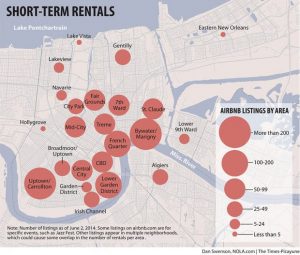
New Orleans vacation rental map

The New Orleans City Council on Thursday could consider a tweak to regulations governing short-term vacation rentals. Officials say it would make it easier for the city to control them.

But what are the rules? And further more, what exactly is a short-term rental?

According to the city’s zoning ordinance, which regulates what people can do on their property, a short-term rental is, essentially, any kind of lodging for a period of 30-days or less.


New Orleans vacation rental map


That’s part of the problem. When people talk about short-term rentals, they are usually talking about informal operations — apartments and houses rented by property owners or tenants directly to tourists, who usually find them through websites like Airbnb or VRBO (Vacation Rentals By Owner). Those are the kind of short-term rentals that some advocacy groups and locals think are ruining he city’s historic core by displacing actual residents in favor of tourists.

However, the current rules lump in all short-term lodging, including hotels and licensed bed and breakfasts.

The rules also make it hard to crack down on illegal short-term rentals, according to Mayor Mitch Landrieu’s administration, which has done little to enforce them.

For example, the current rule bars only short-term rentals to  “nonresidents over the course of one or more years with a duration of occupancy of less than 30 days.”

The proposed rule changes would do away with the “one or more years” requirement, more clearly define short-term rentals so as to eliminate traditional lodging businesses such as hotels and the like.

Advertising short term rentals is technically a criminal offense, subject to fines and even jail time, but few if any have every been successfully prosecuted.

Licensed bed and breakfasts, on the other hand, are subject to several restrictions. They are required to submit to an inspection from the fire marshal and aren’t allowed have more than one kitchen, a major draw from many tourists.

They are also required to buy a permit, the price of which ranges from $200-$600 depending on how many rooms the operation has. Bed and breakfasts with three units or more have to pay an occupancy tax of .50 cent per night per room.


By Robert McClendon, NOLA.com | The Times-Picayune
Email the author | Follow on Twitter

Free Webinar June 5 -Drive Travel Bookings with Yahoo Travel and Tnooz

0

Yahoo and Tnooz team up to reveal research + innovative marketing tactics.

What are key data insights behind online booking conversions? How can new digital advertising solutions like native advertising and content marketing drive travel consumers through the purchase funnel?

Join Tnooz and Yahoo Travel for our FREE webinar and learn the details.

Thursday, June 5 –11 ET-12ET
 

Related: Free webinar on content marketing June 13 and more upcoming free online education opportunities for vacation rental managers


During this 60-minute session, Yahoo research and media product experts will share consumer travel research conducted in partnership with Compete, plus innovative media tactics based on those findings, including:

● Online behavior of travel bookers prior to purchase that can inform travel brands’ marketing strategies
● Consumer activity through the purchase funnel when shopping for top airline and hotel brands
● Digital advertising, especially native advertising and content marketing, on sites such as the new Yahoo Travel digital magazine

Panelists for the webinar are:

● Melissa Bahadur, Yahoo, senior manager, strategic research & insights
● Tenni Theurer, Yahoo, senior director, product management for commerce
● Kevin May, Tnooz, editor & moderator
● Gene Quinn, Tnooz, CEO & producer

Register for the webinar at https://www4.gotomeeting.com/register/154122759

Airbnb CEO discusses future plans with Katie Couric

0
Airbnb CEO Chesky's memo

Do you have Chesky’s secret one page memo to take over the travel industry? Neither does Katie Couric, but she does get Chesky to give so insight into where Airbnb is headed. “What if we could design the entire trip? We could offer the entire trip from the time you leave your home to the time you come back to your home, said Chesky. “We are definitely going to become much more than a place to stay in the future.”

About recent legal issues, “A lot of these laws are 20th century laws, and sometimes even 19th century laws, in a 21st century world, and the core problem comes back to the idea that these cities want to view everything as a person or a business,” said Chesky. “If you have people in your home, you’re a person. The second you charge one person, one weekend you’re a business, and therefore you should be regulated like these huge institutions. We actually think there should be a third category created, and what we are doing is -city by city around the world  -we are starting to create model legislation.”

Airbnb CEO Chesky's memo


Couric asked, “But are you worried about how this can potentially impact your business?”

“It is a huge risk for the company it we can’t manage it, but I am incredibly confident we can,” said Chesky.


Read the full story and watch the entire Katie Couric World 3.0 interview here.

Glad To Have You acquisition details disclosed in financials

0
Glad to Have You acquired by HomeAway What this startup did right

HomeAway’s Q3 2014 report disclosed more details about the agreement reached in the acquisition of mobile app provider Glad To Have You, including the purchase price of approximately $16,791,000

Related articles:


Excerpt from HomeAway Inc. for the Quarterly Report ended March 31, 2014

In March 2014, the Company acquired Glad To Have You, Inc. (“Glad To Have You”), a United States company that is the creator of a mobile guest management solution for the vacation rental industry, for cash consideration of approximately $16,791,000. The direct acquisition costs incurred by the Company were not significant to the Company’s operating results, and all such costs were expensed as incurred and included in general and administrative expenses in the consolidated statement of operations.

Of the total consideration paid, $250,000 of the cash consideration was deposited in escrow as security for the benefit of the Company against breaches of representations and warranties, covenants and certain other expressly enumerated matters by the sellers. The escrow funds not used to satisfy such seller obligations will be released to the sellers two business days following the first anniversary date of the acquisition. In addition, $250,000 of the total cash consideration was deposited in escrow as security and pending final net working capital related purchase price adjustments. These amounts are expected to be paid within 120 days after acquisition.

The acquired goodwill primarily represents synergies associated with adding Glad To Have You’s mobile applications to the Company’s marketplace of websites to provide property owners and managers with an additional way to manage and communicate with guests during their stay. Goodwill is not deductible for tax purposes. The acquired trade name has an estimated useful life of 10 years from the date of acquisition, the developed technology has an estimated useful life of 5 years from the date of acquisition and the customer relationships have an estimated useful life of 10 years from the date of acquisition. Non-compete agreements have an estimated useful life of 3 years. The total weighted average amortization period for the intangibles acquired is 7 years.

The results of Glad To Have You have been included in the Company’s consolidated results since the acquisition date in March 2014. Pro forma results of operations related to this acquisition have not been presented since Glad To Have You’s operating results up to the date of acquisition were not material to the Company’s consolidated financial statements.

The following table summarizes the Company’s acquisition during the three months ended March 31, 2014, with amounts shown below as fair values at the acquisition date (in thousands):


Glad to Have You, Inc.

Net tangible assets (liabilities) acquired
Cash $

25

Deferred revenue

(65

)
Other

17


Total net tangible assets (liabilities) acquired

(23

)
Deferred tax liabilities

(1,653

)
Trade name

1,177

Developed technology

3,760

Customer relationships

1,643

Goodwill

11,647

Non-competition agreements

240


Purchase price

16,791

Less: Cash acquired

(25

)


Net purchase price $

16,766


Tangible net assets (liabilities) were valued at their respective carrying amounts, which the Company believes approximate their current fair values at the respective acquisition dates.

The valuation of identifiable intangible assets acquired reflects management’s estimates based on, among other factors, use of established valuation methods. The value of the acquired trade names was determined using a relief from royalty method. Developed technology was valued on a combination of the income and market approach. Customer relationships were valued by projecting the estimated cash flow from the Company’s existing customer relationships. Non-competition agreements have been valued based on the present value of estimated future cash flows with and without this asset. Identifiable intangible assets with definite lives are amortized over the period of estimated benefit using the straight-line method and the estimated useful lives of three to ten years. The straight-line method of amortization represents the Company’s best estimate of the distribution of the economic value of the identifiable intangible assets. Goodwill represents the excess of the purchase price over the fair value of the net tangible and identifiable intangible assets acquired.

Survey results capture sentiment towards listing sites

0
NeedMoreRentals

NeedMoreRentals released the results of their independent surveys of vacation rental home owners and managers relating to their use of listings sites titled Listings Sites, The Good, The Bad & The Ugly. The survey was designed to discover what owners/managers believe about using listing sites/booking portals to market their rental properties to prospective guests. The survey included 648 respondents in 47 countries and took place in April and May 2014.


Takeaways

The survey results are interesting and are posted on NeedMoreRentals’s website. Here are a few key takeaways:

Which listings sites produce the most leads?

  • The most productive sites for inquiries and bookings were HomeAway, VRBO, FlipKey, Airbnb, HolidayLettings, Booking.com, OwnersDirect.

1. HomeAway – 177
2. VRBO – 169
3. FlipKey – 92
4. Airbnb – 78
5. HolidayLettings – 62
6. Booking.com – 38
7. OwnersDirect – 33

See more

Which listings sites are not recommended?

  • The sites least likely to be recommended are AlwaysOnVacation, HomeAway, Airbnb, SunnyRentals, FlipKey, CraigsList, OwnersDirect, HolidayLettings, VacationHomeRentals and VRBO.
  • Reasons are widespread but include aggressive sales calls, no inquiries or bookings, guest booking fees, hidden guest details and inflexible cancellation policies.

What are the biggest concerns about listings sites?

  • The most common concerns owners and managers have with listings sites are spiraling cost, lack of inquiries, hidden guest details, payment not being received until after the guests’ arrival and the listing process being too time-consuming.

Which listings sites’ mobile apps are being used?

  • The leading mobile apps currently used by survey respondents were Airbnb, HolidayLettings, HomeAway, FlipKey, VRBO and HouseTrip.
  • 343 respondents (majority) do not use any mobile apps due to confusion, frustration with login and perceived limitations.

LiveRez and PointCentral launch cell-based smart home technology for vacation rentals

0
PointCentral and LiveRez partner for vacation rental smart home control

LiveRez and PointCental began a partnership this spring to bring fully integrated smart home technology to 60,000 vacation homes utlizing LiveRez’s cloud-based vacation rental software and -today -launched the platform which enables users to lock and unlock doors, control house and pool temperature, monitor security and more directly from their LiveRez software. The technology also will empower these managers to track the execution of their vacation rental operations in real time.

“Without a doubt, smart home control is the next big innovation in the vacation rental industry,” said LiveRez Founder and CEO Tracy Lotz. “Our partnership with PointCentral will position our partners at the forefront of this new revolution and give them a significant competitive advantage in their respective markets.”

PointCentral will continue to offer a reservation system interface for those organizations not using LiveRez, but its high-level vacation rental software integration will remain exclusive to LiveRez.

Cindy Murdoch of Seabrook Cottage Rentals was an early adopter of the PointCentral integration. She said the PointCentral technology is expected to have a significant impact on their bottom line. “This integration will completely streamline our operations,” Murdoch said. “With LiveRez and PointCentral, I will know – to the second – when one of my houses is being cleaned or inspected and when my guests check in or check out. I could be on vacation a thousand miles away and unlock the front door for a guest. This technology is a real game changer.”

Steve Trover – who plays a dual role as Chief Strategy Officer for LiveRez and CEO of All Star Vacation Homes – was an early proponent of the integration, being one of PointCentral’s first customers. Trover, who manages more than 300 luxury homes across three states, said that the PointCentral technology has had a huge impact on his operations.   “This technology will completely change the vacation rental industry,” said Trover. “From the moment I first saw this technology, I knew we needed to integrate it into the LiveRez software.”

Lotz said the fact that PointCentral is cellular powered made a big impact on his decision to integrate, as cellular connectivity ensures a level of reliability not provided by broadband / Wi-Fi offerings.

“There were other solutions in the marketplace, but none of them offered our partners a proven and reliable connection to the home,” Lotz said. “PointCentral’s cellular technology and unique offering led to our exclusive relationship.”

Burge, a pioneer in commercial home security and automation, is confident that introducing the PointCentral technology to LiveRez’s vast network of managers will speed the industry’s adoption of smart home control. “In the vacation rental industry, mechanical keys will soon go the way of the horse and buggy,” Burge said. “Five years from now, vacation rental managers will look back and ask themselves: ‘Did we really do business that way?’”

To learn more about LiveRez’s integration with PointCentral, visit LiveRez.com/PointCentral.


VRMA breaks ties with PBS series Getting Away Together

0
PBS Getting Away Together

For the past several years, the Vacation Rental Managers Association (VRMA) has been involved in the development and production of the PBS television program Getting Away Together. The show followed groups of families and friends as they explored destinations utilizing vacation rentals which were managed exclusively by VRMA members.

In an recent email to its membership the VRMA announced it will no longer be affiliated with the series and has “transferred ownership and all future rights of the program to PineRidge Film & Television effective immediately. This transfer will allow the VRMA to focus its resources on membership and the association itself.”

“These resources may now be more effectively allocated toward the areas identified in VRMA’s strategic plan as most critical to our members and the overall industry we represent.”

According to the email, the show will continue with PineRidge Film & Television, who will be able to invest their resources and expertise into production and greater distribution of future seasons of the show.

Leadership: Making employees feel secure and trusting with Simon Sinek

0
Leadership and management for vacation rental companies Simon Sinek

“The world is filled with danger, things that are trying to frustrate our lives or reduce our success, reduce our opportunity for success…. We have no control over these forces. These are a constant, and they’re not going away. The only variable are the conditions inside the organization, and that’s where leadership matters, because it’s the leader that sets the tone.” –Simon Sinek

Simon Sinek explores how leaders can inspire cooperation, trust and change. He’s the author of the classic “Start with Why: How Great Leaders Inspire Everyone to Take Action By Simon Sinek“; his latest book is “Leaders Eat Last: Why Some Teams Pull Together and Others Don’t.”


Leadership and management for vacation rental companies Simon Sinek


Interactive transcript

Simon Sinek, Leadership expert

Simon Sinek explores how leaders can inspire cooperation, trust and change. He’s the author of the classic “Start With Why”; his latest book is “Leaders Eat Last.” Full bio

A lesson in pay per click from a hotel marketer

0
PPC for vacation rentals, timeshares and hotels

How does the use of pay per click (PPC) for vacation rental managers compare and contrast to that of hotels? With the proliferation by OTA’s using PPC to attract visitors searching for vacation rentals, the difference in strategy between vacation rental managers and hotels is decreasing.

The following article is written by hotel marketing expert Vikram Singh, who specializes in booking engines, search engine marketing, and online distribution strategy. The article outlines why PPC is important as a component of the overall search engine marketing strategy for hotels and provides vacation rental managers advice for their own PPC strategy.


by Vikram Singh

I have had a front row seat to the hotel pay per click (PPC) world for the past decade. PPC is not new, but it’s rapidly changing. One thing that hasn’t changed: hotel marketers and owners are still caught up in debates about its effectiveness and viability. As a result, a lot of hotels are still not embracing the power of pay per click.


Google’s Golden Goose

Time for a reality check: Since its inception in October 2000, pay per click advertising, aka Google Adwords, has been Google’s nonstop money-making Golden Goose. Here are some powerful statistics highlighting its power:

  • In 2013, Google officially surpassed $50 billion in total advertising revenue. This comprised 85% of their total revenues for 2013.
  • Google reported $12.9 billion in net income for 2013.
  • Total paid clicks on Google and Google Display Network sites were up 31% over the prior year, and up 13% over the third quarter of 2013.

All the actions (algorithm updates, layout changes, etc.) that Google implements every few months have a clear goal, which is to make sure that Google can sell more ads. Google cares very much about pay per click, because billions in revenue depends on it. They need it to work for you.

Hotel marketers and owners simply cannot overlook or ignore PPC. Unscrupulous marketing “experts” love to trash PPC as a waste of funds. You should run from those who advise using search engine optimization (SEO) as a replacement for PPC. SEO is important, but only PPC can explicitly guarantee you placement in exchange for your investment. Every time someone starts talking about how they are not doing pay per click marketing because they are focusing on SEO, an angel in revenue heaven dies.


Brand Name PPC Is Not Optional

There are a lot of things that your hotel can save money on. Opting out of PPC is an axe to the foot, which you do not need. PPC is exponentially important when it comes to someone looking for your brand name on Google, i.e., someone “googling” your hotel by name. Look at this example:


When someone looks for you by name, one of these three things might have happened:

  • They researched you on any of the hundreds of travel sites (TripAdvisor, Booking.com, Expedia, etc.) and are now ready to have a direct conversation with you.
  • They received a personal recommendation from a friend.
  • They saw your offline marketing somewhere, and now they want to learn more.

These are the searchers that are lowest on the conversion funnel. In simpler terms, they are the people who are most likely to buy something from you right now.


There are only two scenarios that happen when people look for you by name:

  • You are showing an PPC ad for your hotel along the lines of “Official Site, Book Direct, Learn More.” You get the click and convert them on your site.
  • The OTAs and resellers have no competition from you (woohoo!) for their ads offering “Best Rate Guaranteed, No Cancellation Fee, Learn more!” They get the click and sell your room, making a handsome 10-20% commission.


It does not take rocket science to figure out that hotels participating in PPC for their brand name terms are harvesting those clicks into direct revenue, instead of giving them away to the OTAs. Please keep this in mind when the next budget meeting comes around. Pay per click can always be beefed up and fine tuned.

Pro tip: Do not waste time hating on OTAs. In the world of Google, it definitely takes money to make money. Own your brand on Google.


Be There or… Lose Revenue

I often observe a clear and present disconnect between hotel marketing/revenue goals, and setting budgets for PPC advertising. It’s strictly a pay to play party. Budget is generally a function of your location and how much competition there is in your market. You should spend enough to get optimal ROI. This amount will be different for each hotel.


Brand Name Keywords

You must aggressively bid on your brand name. This might run you anywhere from $100 to $300 per month. You can quote me when I say, “it will be the best money you have ever spent on online marketing.” As I mentioned earlier, these searchers are specifically looking for you. Make sure they find you.

Pro Tip: No matter how many OTAs are bidding on your brand name, you as the hotel will always get preferential placement, a lower cost per click, and higher conversion from these keywords.


Location Keywords

Once you are doing a smashing job of showing up and converting for your brand name, it’s time to take your campaign to the next level. This is where you target broader location-based keywords like “hotels near Wrigley Field,” and “hotels in downtown Chicago.” These keywords are much more expensive than buying your brand name, so you have to make sure you are paying close attention to your website and conversions. Quality counts. The quality of your website and booking engine can make all the difference is conversions. The quality of your PPC advertising team affects your placement and cost per click.

Pro Tip: Avoid automation at this level of spending. See below.


Look Beyond Automation

Automation is one of the key differentiators between hotels running effective PPC and those who are struggling. If you’re using a big agency, your campaign is probably automated. Once an agency has signed up hundreds of clients, its biggest goal becomes creating efficiency for its own department. Your hotel campaign’s performance is not top of mind for an intern clicking away on software that manages hundreds of hotels without any unique strategy.

Using automated software is so 2005. Active management, such as testing ads, running specials, and adjusting bid strategy, is what makes a campaign successful. If you’re worried about overspending on PPC, put some thought into who you are hiring to spend money on your behalf in Google. A slightly higher management fee can often result in thousands more dollars in revenue.

Pro Tip: It’s not the cost that matters; it’s the revenue. Getting a “great deal” on PPC management isn’t always such a great deal.


Conclusion

Don’t trust your most powerful marketing channel to automated software or an overworked/underpaid project manager at an agency with several hundred clients. There are no shortcuts or discounts on the road to hotel pay per click success. But you can tremendously increase your odds of success (and your PPC revenue) by working with the right team.


About Vikram Singh


Vikram Singh

Vikram is an expert in hotel-specific technology and marketing, with a strong focus on booking engines, search engine marketing, and online distribution strategy. His latest venture, madbooker.com, focuses on the current ecommerce challenges facing the travel and hospitality industry today. His strategies have helped power some of the biggest and most successful hotel equity turnaround deals in the last decade. A thought leader in the hotel/tech realm, Vikram is a frequently requested speaker at industry conferences worldwide. Former hosts include the US Department of Commerce, Travel Distribution World Asia, Arabian Travel Market, and HSMAI. He is a perennial favorite of audience members everywhere because he emphasizes action-oriented strategies. Vikram also writes the popular hotel and travel marketing strategy blog: www.wordsofvikram.com.

Contact: Vikram Singh vikram@wordsofvikram.com

TruPlace virtual tours featured on Today Show

0
TruPlace Floor Plan Tours on the Today Show

HGTV’s  “Power Broker” and long time TruPlace client Mike Aubrey appeared on the Today Show this morning to discuss the importance of using quality photo tours to display properties.


Visit NBCNews.com for breaking news, world news, and news about the economy


This is the second time TruPlace’s photos have been featured on the Today Show this year, as Mike Aubrey sat down with Hoda and Kathie Lee on April 22.

5 year trends in Memorial Day/summer travel

0
Memorial Day Travel

Each year TripAdvisor releases results from its annual summer travel survey which measures travel intentions for Memorial Day weekend and the upcoming summer. We pulled the last 5 years of summer travel surveys from the TripAdvisor archives to explore shifts in traveler behavior.


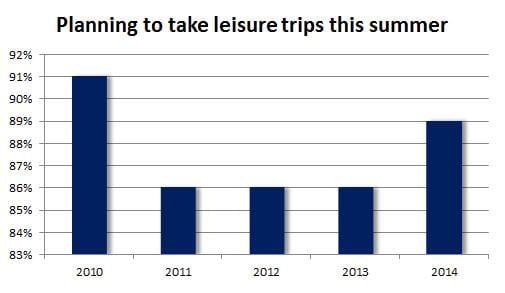
Summer Leisure Travel

The number of respondents who intend to take a leisure trip this summer:

2010 2011 2012 2013 2014
91% 86% 86% 86% 89%


Summer Travel Trends Leisure


Memorial Day Travel

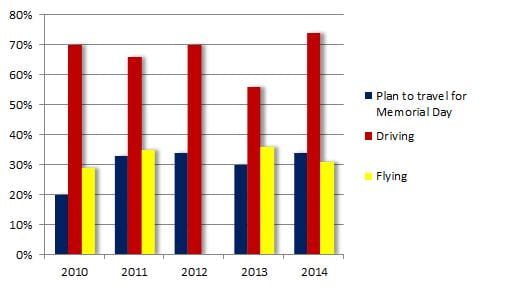
According to the 2010-2014 summer travel surveys, 34% of travelers plan to take a trip over Memorial Day weekend, up from 20% in 2010.

Of those, 74% say they will drive, and 31% say they will fly.


  2010 2011 2012 2013 2014
Driving 70% 66% 70% 56% 74%
Flying 29% 35% N/A 36% 31%


Summer Travel Trends Memorial Day


Hotels vs. Family/Friends vs. Vacation Rentals

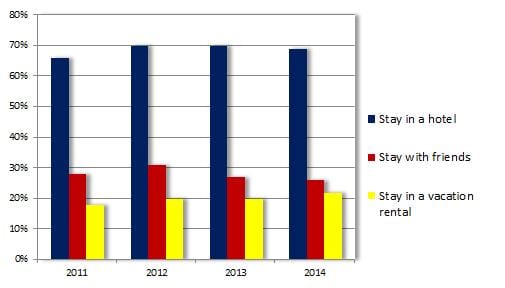
Data wasn’t provided in the 2010 survey, but from 2011-2014 the following chart shows the percentage of travelers planning to stay in hotels, with friends or family, and in vacation rentals.


2011 2012 2013 2014
Stay in a hotel 66% 70% 70% 69%
Stay with friends 28% 31% 27% 26%
Stay in a vacation rental 18% 20% 20% 22%


Summer Travel Trends Accommodations


Type of Destination

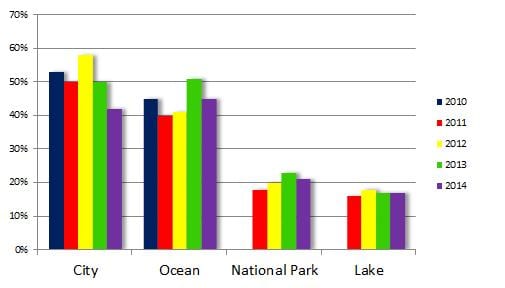
In 2010-2012 the number one choice for destination type was a city. That shifted in 2013 when a beach vacation claimed the number one spot.

2010 2011 2012 2013 2014
City 53% 50% 58% 50% 42%
Ocean 45% 40% 41% 51% 45%
National Park N/A 18% 20% 23% 21%
Lake N/A 16% 18% 17% 17%


Summer Travel Trends Type


Spending Levels

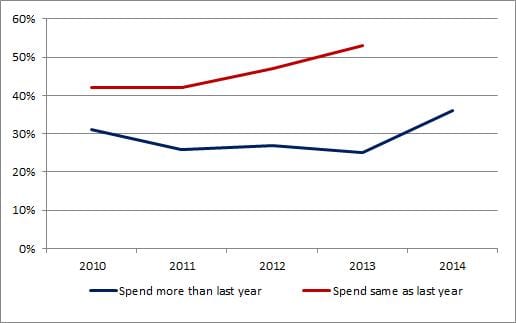
More than a third of travelers surveyed (36%) said they will spend more on leisure travel this summer than last, up from 25% in 2013.


2010 2011 2012 2013 2014
Spend more than last year 31% 26% 27% 25% 36%
Spend same as last year 42% 42% 47% 53%  N/A


Summer Travel Trends Spending


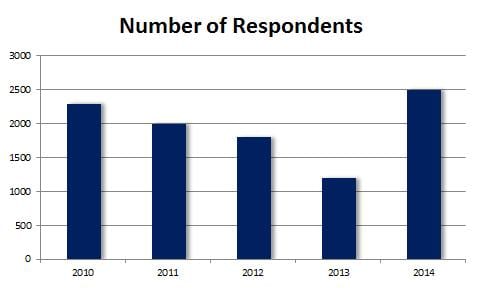
Note: According to TripAdvisor, the number of respondents varied from 2010 through 2014 with a high this year at 2,500 and a low in 2013 of 1,200.

Summer Travel Trends Respondents


By Amy Hinote, VRM Intel

Article Compels Vacation Rental Manager Response

0
Vacation Rental Pros Beach Bella Vista Mansion

Articles are popping up in news media across the world about the general benefits of choosing a vacation rental, along with related issues involving rental scams and legal issues. With increased awareness of vacation rentals as a mainstream lodging alternative comes an increased need to differentiate professionally managed vacation rentals from individually owned homes.

Sunset Magazine Homes Away from HomeTime, Inc. owned Sunset Magazine recently published “Homes Away from Home” in their May 2014 issue in which they provided “a playbook for finding your ideal escape.” The article highlights distribution channels (HomeAway, Airbnb, TripAdvisor/FlipKey) and says:

“What is the difference between these rentals (on HomeAway) and those run by an agency? Personal attention. Take the Hilo house that Cooper rented: Owners Jack and Jane Stevenson live nearby to maintain the house for guests. ‘We want visitors to walk through the door and feel like no one’s ever been there before,’ Jack says.”

Betsy LaBarge, owner of Mt. Hood Vacation Rentals in Oregon and former VRMA board member, felt compelled to respond with a letter to the editor (below) and encourages other vacation rental managers to do the same when they see articles highlighting owner managed properties over professionally managed vacation rentals. “If they (authors and publications) heard from several VRMs (vacation rental managers), they might pay attention.,” said LaBarge. “If we can encourage VRMs to write letters, this could make an impression.”

Alan Hammond, founder and Managing Director of Holiday Vacation Rentals in Northern Michigan, agrees. “We need to continue to get the word out about the value of  professional managers,” said Hammond. “It is unfortunate, when writers do research for articles, they are not finding and reporting on the important role and benefit of professionally managed rentals.”


Letter to the Editor of Sunset Magazine by Betsy LaBarge, Mt. Hood Vacation Rentals


Dear Sirs & Madams:

As the owner of a vacation rental management company for over 22 years, I was very excited to read your article “Homes Away from Home” in the May 2014 issue.  While travelers have been staying in vacation rentals for decades, the popularity of this lodging alternative to hotels has doubled in the past 5 years.  (According to PhoCus Wright research in 2013 and backed up by HomeAway research as well.)

However, I was disappointed in your comment that homeowners who rent their vacation homes themselves provide more “personal attention” than professional property managers or rental agencies.  Our company’s business model has always been centered around providing personal, friendly and professional customer service to our guests.  In your example, the homeowner lives near the vacation rental which allows them the opportunity to personalize the visit for their guests.  In our case, our office is centrally located to the vacation homes we manage, which makes it easy for our staff to be available 24/7/365 for guest needs.  We share local information including the most popular places and the less “touristy” spots to visit when our guests have questions about things to do, where to eat, where to shop and so on in the area. We are also available to quickly resolve any issues our guests might be having in the home (cannot connect to the wifi, requesting more firewood, etc.).

Secondly, while HomeAway, VRBO, Flipkey and AirBnB are the largest third party distribution websites for vacation rentals, guests who prefer working with a professional property manager can find their company websites, by searching on “name of place you want to visit vacation rentals”.  Additionally, you might be surprised to learn that many of the listings on these distribution channels are via property managers.  In my state of Oregon, 44% of the VRBO listings are from vacation rental managers and 45% of the HomeAway listings are from property managers.  Flipkey originated as a site for professional property managers, but now accepts private owner listings.  For Mt. Hood where my vacation rental business is located, 76% of the Flipkey listings are from vacation rental managers.  Because AirBnB represents the “shared housing” model (although there are lots of vacation rentals now being listed there), you will not find very many professional managers listing their homes on this site.  (AirBnB does not distinguish private owners vs. property managers on their website, however I am familiar with the vacation rental inventory at Mt. Hood and did not find any professionally managed listings there.)

Thank you for spreading the word about vacation rentals as an alternative to hotels for leisure and business travelers.  As you mentioned in your article, staying in vacation homes offers privacy and space, opportunities for connecting with friends and family, full kitchens for preparing meals, private hot tubs and swimming pools, in-house theatre rooms and gorgeous settings as well as many more features not found in hotels all at an excellent value for the price.

If you would like to talk more about the variety and options available in vacation rentals and the reasons why many travelers prefer to do business with a professional property manager, please feel free to contact me at betsy@mthoodrentals.com or 866-794-6813.

Mailbu votes to subpoena vacation rental websites

0

The Malibu City Council voted unanimously on Monday to execute subpoenas to vacation rental websites that may not be paying a 12% occupancy tax.

Despite some trepidation, the Malibu City Council voted unanimously on Monday night to subpoena vacation rental websites that may not be collecting transient occupancy tax (TOT), or have listed properties that are not registered to pay the tax.


Vacation rental subpoenas 

Monday’s 5-0 vote paves the way for the city to crack down on rental sites posting short-term rentals whose owners have failed to register and pay a TOT.

Although council members mentioned that the 12% tax is a lower burden than neighboring cities levy on their residents, staff believes Malibu stands to collect hundreds of thousands of dollars in unpaid tax revenue.

“I’m not thrilled with the idea of creating subpoenas and doing it that way, but I understand why we need this,” Mayor Pro Tem John Sibert said during Monday’s meeting.

Councilwoman Laura Rosenthal echoed Sibert, maintaining that issuing subpoenas was not the ideal solution.

“I don’t like to go the subpoena route, but these websites, like Airbnb, aren’t going to give us the information without it, unfortunately,” she said.

As a possible alternative, Sibert suggested contacting websites for homeowner information without issuing subpoenas.

“We don’t even know if Airbnb would give us this information unless we ask them,” said Sibert, who eventually voted with the rest of council to issue subpoenas.

Blair Pettigrew, representing a Malibu Colony property owner, requested the council investigate the nuisance of vacation rentals in residential areas of the city and to propose an ordinance against these types of rentals.

Council members agreed that the noise and disruption in neighborhoods was a major concern.

“This is not a revenue-generating item. The reason we’re doing this, the genesis of this, was we’ve been getting a tremendous amount of complaints from residents throughout all areas of the city,” said Councilman Lou La Monte.

“We definitely need to start finding out more information about it, and I think this is one of the few ways I think that we have the power to do that,” he added.

Councilwoman Joan House also weighed in, stating that issuing these subpoenas will level the playing field.

“Right now we’ve got all the hotels and the motels and a lot of people in compliance, and this is just creating a fair and equal playing field,” she said. “I will support this, basically, because it’s a fair thing to do.”

The council did not discuss whether the city would get bogged down in legal fees or lengthy court proceedings.

“The advantage of a subpoena is that it’s enforceable by a court,” said City Attorney Christi Hogin, adding, “so if one of the websites refuses to comply with the accusation, we can go to a court to enforce it, and they of course have consent powers.”

“So you’re going to send out subpoenas, and you’re going to have to go to court for 400 different fees?” asked Mayor Peak.

“We’re going to send out subpoenas and the websites are going to comply with them, that’s the plan,” responded Hogin.

By Emily Sawicki / emily@malibutimes.com | Updated 6 days ago

Vacation rental metasearch platform gets funding

0
Tripping.com

SAN FRANCISCO, May 20, 2014 —Tripping, which lets you search through thousands of vacation rental sites, has announced its Series A funding round.

The company isn’t disclosing the exact amount raised, but sources tell Business Insider it’s in the $5 million to $10 million range. This investment is one of the largest in the travel space this year.

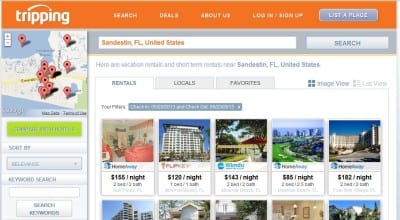
Tripping can best be described as the Kayak of vacation rentals. It uses metadata to scrub millions of listings on other sites — such as HomeAway, Booking.com, and Wimdu — and surfaces listings that most closely match your search criteria.

You can then compare the listings by price, reviews, star ratings, and locations. It’s one of the first players to use metasearch in the $100 billion vacation rental industry.

Tripping launched in 2010 at TechCrunch’s Disrupt. Before this round of funding, it raised $1 million in seed funding.

The deal was led by Tripping’s female CEO, Jen O’Neal. Only between 4% and 7% VC funding goes to women-led businesses.

The round was co-led by Recruit Holdings and Quest Venture Partners. Tokyo-based Recruit Holdings is one of the largest privately held companies in Asia, which has built several travel businesses, including one of Japan’s largest online-booking sites. They’re also known for having acquired Indeed.com for roughly $1 billion and being an LP behind several notable VC firms on Sand Hill Road.

“This is still a new concept, so the fact that Recruit wanted to co-lead the round shows that we’re onto something,” O’Neal told Business Insider in an interview. “We’re going after an area in the travel space that isn’t completely saturated, so there is huge opportunity for growth.”

Also joining the round are Erik Blachford (former Expedia CEO), Fritz Demopoulos (founder of metasearch giant Qunar), and Shawntae Spencer (an NFL athlete), among others.

“This new capital will enable us to innovate quickly on the product, expand strategically into new markets, and fulfill our mission to help travelers find the perfect place to stay on their next trip,” O’Neal says. “We’re grateful to our Seed investors for letting us take a chance on an unproven concept. Now we’re ready to scale.”

Read more: http://www.businessinsider.com/tripping-closes-funding-round-2014-5#ixzz32Gcl1E1F

Will Villas.com affect the vacation rental distribution landscape? Part 1 -Background

0
Villas-com vacation rental distibution

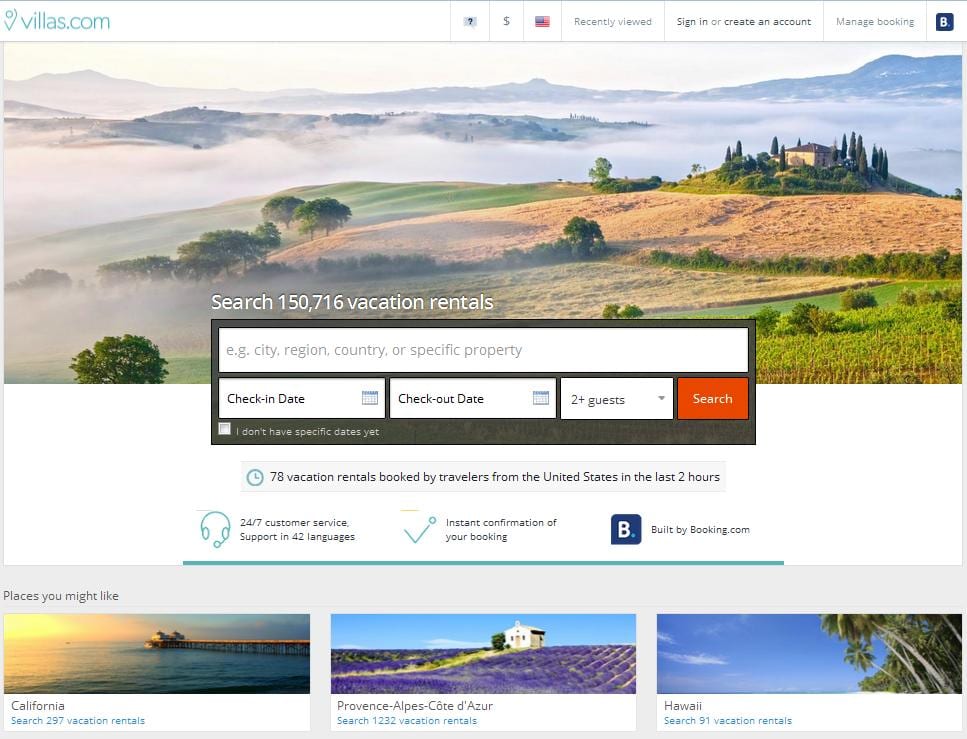
Earlier this month Priceline-owned Booking.com launched Villas.com, a stand-alone vacation rental distribution website with a little over 150,000 listings.

How will Villas.com affect vacation rental managers, and where will it fit in with HomeAway, Airbnb, and other marketing channels?


Part 1: Vacation Rental Distribution Background & Current Landscape

Below is a brief summary of the vacation rental activity of distribution channels.


1. Booking.com

Priceline purchased Booking.com in 2005 for $135 million, a little over a year before HomeAway raised $160 million and acquired vacation rental website VRBO.com (at a rumored purchase price of $100M-$120M), which had 65,000 listings at the time of purchase.

Booking.com began including vacation rentals on its site in late 2012 and added Interhome’s inventory of 32,000 rentals in early 2013. However, Interhome has been casting a wide net with distribution partnerships with TripAdvisor (2011), HomeAway (2013), Pathway GDS,  and vacation rental metasearch website Tripping.com (2014).

Booking.com, which now has over 150,000 vacation home listings worldwide, has encountered challenges with 1.) providing vacation rentals without cannibalizing its hotel business, and 2.) handling complex fee/cancellation policies in a way which is consistent with its hotel policies. Launching stand-alone vacation rental website Villas.com could potentially serve to lessen the problems of conflicting priorities and consistent policy offerings to consumers.


2. HomeAway

While Booking.com and other companies were experimenting with vacation rentals, HomeAway, with its acquisition of VRBO along with approximately 21 other vacation rental websites, became the largest online vacation rental marketplace in the world and -according to their 2014 Q1 report – currently provides 952,000 vacation property listings and has attracted 245 million visits last quarter (compared to an estimated 150,00 listings and 100,000 annual visits in 2007).


3. Airbnb

Airbnb CEO InterviewAirbnb was founded in 2008 but did not begin gaining traction until receiving a few rounds of funding in 2010-2011. In April 2014 after gaining popularity, marketshare and media attention, Airbnb closed $450M in funding at a $10 billion valuation.

Airbnb has now raised $826M and advertises over 600,000 short term rental listings.


4. TripAdvisor

TripAdvisor’s first vacation rental acquisition came in August 2008 (while it was still owned by Expedia) when it purchased FlipKey with 50,000 vacation rentals. Less than two years after acquiring FlipKey, Expedia purchased U.K. based HolidayLettings, adding 40,000 vacation properties. In 2011 Expedia spun off TripAdvisor, but TripAdvisor still prioritized its presence in the vacation rental industry with several acquisitions. After its most recent purchase of VacationHomeRentals.com, TripAdvisor now has 550,000 rental listings worldwide.


5. Orbitz

In 2008, Orbitz announced they were “giving its customers access to the largest portfolio of vacation homes that can be booked instantly online through a major online travel company” with a partnership with Zonder. However, Zonder’s relatively low inventory and technology issues appear to have conflicted with Orbitz’s long-term objectives. Zonder shut its doors, and vacation rentals disappeared from the Orbitz marketplace.


6. Expedia

Expedia entered the vacation rental space while TripAdvisor was still a part of the Expedia family. After Expedia spun off TripAdvisor in 2011, Expedia shifted focus away from vacation rentals until 2013 when it announced a partnership with HomeAway, TripAdvisor’s largest vacation rental competitor.

According to Skift’s Dennis Schaal in his article Here’s a First Look at the Expedia-HomeAway Vacation Rental Experiment , “This current version of the Expedia-HomeAway vacation rental beta functions more like an advertising relationship would than a tightly integrated booking process. These are very early days for the partnership, and what you see undoubtedly won’t be the finished product.”

In a recent HomeAway Q1 2914 earnings call, Brian Sharples gave an update on the Expedia partnership saying, “Both HomeAway and Expedia would like to add greater volume of listings to this program, so we are accelerating internal development work to enable this sooner than we had originally planned and outside of Expedia we continue to make product investments to enable broader distribution of our listings in the future.”


7. Metasearch

A few metasearch platforms (similar to a Kayak model for vacation rentals) were also created over the last few years. Otalo.com was founded in 2009, former Google engineer Mark Crady started Rentmix.com in 2009, and Tripping.com was founded by ex-StubHub exec Jen O’Neal in 2010. However, these sites have been slow to gain any real traction among consumers. This may be about to change. San Francisco based Tripping.com recently closed its Series A funding round. Although the amount hasn’t been disclosed, it is rumored in the $5M-$10M range.


Vacation rental listing representation:

  • Booking.com/Villas.com -150,000 listings
  • HomeAway  -952,000 listings
  • Airbnb -600,000 listings
  • TripAdvisor -550,000 listings
  • Orbitz -0 Lisitings
  • Expedia -Beta
  • Metasearch -aggregated >1 million
  • (By comparison, the VRMA represents companies who manage approximately 70,000 properties)


Part 2: Professionally managed vacation rentals and distribution (coming soon)


By Amy Hinote


Should Executive Housekeepers Be Licensed? with Pro Resort’s Steve Craig

0
Get more homeowner inventory for vacation rental managers

By Steve CraigProResort Housekeeping

I think every vacation rental Executive Housekeeper should be licensed.

First of all…

  • They are responsible for multi-million dollar properties that could be easily damaged or destroyed if the products they issue or the cleaning methods they teach are flawed.
  • They issue oftentimes extremely harsh chemicals to their employees and are not even remotely aware of hazardous chemical laws.
  • ANYBODY can be made an Executive Housekeeper!


If Executive Housekeepers were required to be licensed there would have to be some kind of training established for them (next issue of VR View). Those who got the license would be in greater demand in the marketplace and compensation would increase across the board.

What other jobs are required to have a license?

  • Hairdressers in 50 states
  • Interior decorators in 6
  • Painters in 22
  • Building contractors in 50
  • Security guards in 37
  • Makeup artists in 17

And you don’t think an Executive Housekeeper has a greater responsibility than most of them?


Click here to subscribe to the ProResort Housekeeping Blog


Stephen R. Craig - Pro Resort HousekeepingSteve Craig is the recognized national authority on Vacation Rental Housekeeping. After working as systems manager for a division of the American Hospital Supply Corporation Steve started his adventure in housekeeping with his own cleaning company in 1984. Craig Services Management was actively servicing 17 resorts throughout the state of Florida by the time Steve sold it in 1985 and started his consulting business ProResort Housekeeping in 1986.

Since this time Steve has: consulted with over 200 vacation rental, vacation ownership, and destination resorts throughout the US, Canada, the Caribbean and Mexico; published over 300 articles and newsletters, including the Vacation Rental Housekeeping Professionals (VRHP) newsletter where he served as founder and Director for the past 13 years; spoken at numerous industry conferences by NTC, ARDA, VRMA , FVRMA, CFRMA, Colorado Lodging Association, California Lodging Association and VRHP seminars; and designed and overseen installation of 13 on-premise laundries across the country.

Throughout his entire career Steve has stayed abreast of cutting edge technologies, legal, and operational changes in the vacation rental housekeeping industry. Steve has worked directly with numerous product manufacturers to test their products and share his findings. From new product evaluations, to labor laws, to the latest software programs Steve has recognized, monitored, evaluated, and shared their impacts on the Vacation Rental Housekeeping industry.


Reservation agents are your front line: How to coach a winning team with Michelle Marquis

0
Coaching for reservations

By Michelle Marquis, NAVIS VP Marketing and Strategic Initiatives

Good coaching brings out the best in your “players.” I revealed NAVIS’ BIG THREE secrets to supercharged call conversions last month. Even with these proven strategies, you need an inspired team to carry them out successfully. How can you motivate reservation agents to aim high every time they take a potential guest’s call?


Commit to coaching rather than training.

training session gives your team a shot in the arm, but it’s a short-term learning experience. Coaching provides ongoing feedback for a constant improvement process. It means you set goals, monitor progress, and adjust according to trends. Then you’re ready for…


5 Best Practices for Coaching Success


1.  Outline specific expectations.
Coach to call mechanics (The 7 Non-Negotiables) rather than results (increased call conversion).  Do your agents position product before price?  Do your agents give personal recommendations?  Do they ask for the sale?  These are the activities that agents can control and choose to perform.


2.  Monitor an agent’s progress by listening to calls.
NAVIS recommends five calls per coaching session, with two sessions per month.  This gives you enough data to know what your agents need coaching on and where they are having success, as well as enables you to see what changes have been made.


3.  Collect accurate, real-time data on agent performance.
This goes beyond call conversion figures to encompass how often the agent complies with call mechanics. 80% compliance is the NAVIS gold standard.


4.  “Keep, Stop, Start”
In other words, reinforce your agents’ strengths, identify and eliminate undesirable actions, and set new goals. This is especially important once an agent hits the 80% mark on a particular activity.


5.  Find what works to inspire team members.

  • A coaching session with role play and/or scripts can clarify how to apply solutions in the real world.
  • Peer-to-peer coaching can be less intimidating.
  • Self-scoring and brainstorming can encourage agents more than one-way sessions.


Of course, coaching requires reliable, up-to-date data. NAVIS’ Reservation Sales System and the NAVIS Marketing Automation Platform (MAP) create the hospitality industry’s most robust and most complete solution to optimize your sales and marketing, backed by our Client Advocate Consulting Team. We help you coach reservation agents to capture bookings that drive your leisure revenue.

Once you’ve coached that team into top form, what’s the next step in encouraging maximum performance? Check in next month for fresh ideas on incentives that support success.


Michelle Marquis, NAVIS VP Marketing and Strategic Initiatives


Turnkey Vacation Rentals makes Austin’s A-List of the Hottest Startups

0

Austin, TX –Last week at the 2014 State of Innovation event, Turnkey Vacation Rentals, an Austin-based vacation rental marketing and management company, was recognized as one of the top startups on the Austin A-List by the Greater Austin Chamber of Commerce and South by Southwest.

The A-List recognizes 12 of the most promising Austin-area startup companies in the key sectors of enterprise data, entertainment, health, social, wearable tech, innovative world tech, and CPG. With over 250 nominated companies, the A-List selection process was particularly competitive this spring. The prestigious A-List recognizes Austin’s most innovative and scalable emerging, growth, and scale stage startups.

Turnkey Vacation Rentals Makes Austin A-ListThe primary goal of the A-List is to increase visibility of Austin’s hottest innovators to help recruit additional venture capital investment and top talent to Austin. To date, there has been a combined $348,720,000 million in investment for all A-List honorees since the inception of the awards program in 2011.

“In a city with such a great startup scene, it is a tremendous honor for everyone at TurnKey to be picked among the hottest startups,” said Turnkey founder and CEO John Banczak. “The previous Austin A-list companies have gone on to do great things and we hope to continue that tradition as we expand.”

TurnKey is a marketing and professional-management solution for individual vacation rental owners.  Located in Austin, TX, founded by former HomeAway, Expedia, BedandBreakfast.com and Limos.com executives, and funded by an all-star cast of angel investors, including the CEOs of Orbitz, and Zillow, and the founders or co-founders of TripIt, Hotwire, Expedia, Zillow and Glassdoor.

VDS launches loyalty program for vacation rentals

0
Rewards program for vacation rentals

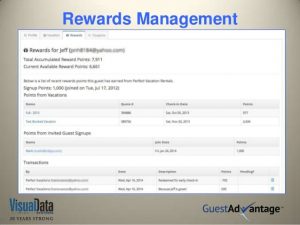
For years other industries including hotels/resorts, rental car companies, airlines, supermarkets and restaurants have implemented loyalty and guest retention programs while the vacation rental industry has lagged behind. That appears to be changing. Visual Data Systems (VDS) recently launched GuestAdVantage, which provides the ability to manage the complete guest lifecycle from inquiry, to booking, to stay, and to their eventual return. It is designed to help vacation rental companies maximize their loyalty and guest retention while also improving efficiencies for staff and guests.

For an exclusive look at the features of the new program, click on this link and use the password: VRMintel (Password is case-sensitive).

Rewards Program for Vacation Rentals
Password: VRMintel


According to the VDS website, some of the components of this loyalty marketing tool are:

  • Members-only portal where members can plan and manage their entire vacation experience.
  • The ability for vacationers to invite other members of their party to join in on the planning of their vacation. Now you can capture information from everyone staying in the property and not just the reservation owner.
  • Saved shopping carts and searches for easy access.
  • Vacation planning tools such as shared calendar, tasks, and to-do lists. All customized specifically for your company.
  • Automated Emails: Pre-stay, post-stay, abandoned shopping cart, reminders.
  • Custom coupon development to provide members with exclusive offers. Save them to their smartphone directly or print it out and use traditionally.
  • Rewards program – Set your business apart from your competitors by giving your guests the ability to earn points to be cashed in for Vacation Rewards. The Guest Advantage interface automates this procedure to keep it simple and easy to manage.

    Rewards Program Management for Vacation Rentals
    Password: VRMintel (case-sensitive)
  • Communication tools – Following the social communication model, allow everyone in your party the ability to comment on their favorite properties, share task lists, pay as a group and much more.
  • Custom Reporting
  • Ongoing consultation and a Pay-For-Performance pricing model


In the near future we can also expect to see:

  • Mobile Website Integration
  • iOS and Android APPS
  • Concierge Integration
  • SMS Texting Capabilities


The vacation rental industry has been slow to embrace loyalty marketing. For many years, vacation rental managers assumed that people would come back to them year after year. With increased online competition and rising marketing costs, vacation rental managers are more likely to explore the implementation of loyalty programs as a way to differentiate themselves from the competition.


Resort Realty acquires Hatteras Island’s Colony Realty VR operations

0
Vacation Rental Vacation Guides and Travel Planners

When Resort Realty’s CEO Mike Harrington expanded operations to Hatteras Island in February of this year, he recognized the opportunity saying, “We feel there is a growing demand for an owner-centric property management program on Hatteras Island, and that is our business.”

Resort Realty OBX Expands to Hatteras IslandLast Friday, we learned that Resort Realty has further increased its presence in the Hatteras community with its acquisition of the vacation rental operations of Colony Realty, adding approximately 70 vacation properties to its inventory.

With this recent additional expansion into Hatteras Island, Resort Realty currently operates six offices and manages approximately 600 properties in Corolla, Duck, Kitty Hawk, Nags Head and Hatteras.

What is a virtual tour, floor plan tour, 360 tour, etc.?

0
websites for vacation and holiday rentals

Virtual tours, 360’s, Panoramas, floor plan tours…the terminology used to describe ways to showcase properties online can be unclear and confusing. VRM Intel decided to investigate the options, figure out the differences and look at examples so you can decide which option works for your vacation rental or real estate listings.

What is a Virtual Tour?

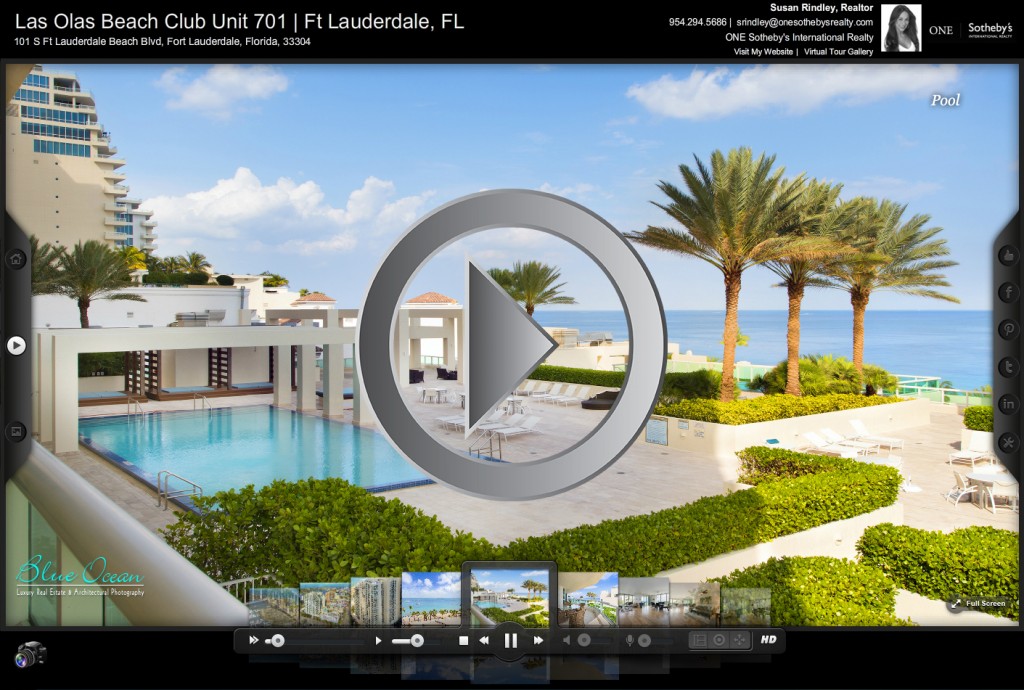
Technically, a virtual tour is any simulation of an existing location, usually composed of a sequence of videos or still images. It may also use other multimedia elements such as floor plans, sound effects, music, narration, and text. To simplify the definition for accommodations and real estate industries: a virtual tour is an online tour of a property. There are several types of virtual tours which are popular ways to showcase properties:

  • 360/Panoramic Tours
  • Video Tours
  • Floor Plan Tours
  • Still Photo Tours


360 or Panoramic Tours

Panorama indicates an unbroken view, since a panorama can be either a series of photographs or panning video footage. However, the phrases “panoramic tour” and “360 virtual tour” have mostly been associated with virtual tours created using still cameras. The Panoramic virtual tours are made up of a number of shots taken from a single vantage point. The camera and lens are rotated around what is referred to as a no parallax point (the exact point at the back of the lens where the light converges). Key Advantages: Shows the entire 360 view of the area Key Disadvantages: Slow load time, ineffective on mobile devices, lack of viewing control The following example added music overlay which can also be distracting to the visitor.   360 Virtual Tour

Interactive Floor Plan Tour

An interactive floor plan tour combines still photography with an architectural floor plan of the entire property so that the visitor can have a high level view and navigate through the home. Key advantages: Fast load time, viewer control, gives visitor overall feel for size and layout of the property, mobile friendly Key disadvantages: Doesn’t give a 360 view of each room The following is a link to examples of interactive floor plan tours.   Interactive Floor Plan Tour

Video Tours

A video tour is a full motion video of a location. Unlike the 360 virtual tour’s static wrap-around feel, a video tour is as if you were walking through a location. Using a video camera, the location is filmed while moving from place to place. Video tours are continuous movement taken at a walking pace. Most video tours also include music, narration, and/or text overlay. Key advantages: Mobile friendly Key disadvantages: Load time, lack of viewing control Here is example of a video tour.


Still Photo Tour, aka Photo Gallery

The most common way people choose to display their properties is through a Still Photo Tour or a Photo Gallery like those used on VRBO.com. Key advantages: Fast load time, viewer control Key disadvantages: One dimensional view, doesn’t give the visitor a feel of the property, lacks an overall view of room size and layout Here is a link to a VRBO.com photo gallery.

Conclusion

To optimize your rental or real estate listings it is important to provide a way for your customers to tour your properties online. When making a decision about how to best display your homes, here are a few considerations.

  • What information does your customer need to make a faster decision about buying from you?
  • What are common questions your agents get via phone calls which could be answered by an online tour?
  • Which type of tour works best on your website?
  • Is your customer likely to use a mobile device in their search?

Related articles: Do Interactive Floor Plan Tour Increase Bookings Surf or Sound Realty Launches New Vacation Rental Website   By Amy Hinote

Employee IT Use & Abuse Policy – Retain Control, Reduce Liability

0

By Tom K

Your IT Resources are valuable tools used to operate and propel your business. If you want these tools to be respected, you need to ensure your employees understand “Acceptable Use” and sign off on this understanding. Unacceptable use can lead to wasted resources, reduced productivity and, if no Use and Abuse Policy is in place, lawsuits directed towards you and your business.

I just returned from a road trip where I found that a large number of businesses I visited had no IT Use and Abuse Policy in place. Like bad passwords, this is so important, so dangerous, and so easy to correct, I’m pushing IT Use & Abuse Policies ahead of this month’s scheduled topic.

In this month’s newsletter I discuss why an IT Use and Abuse Policy is so important, what the policy needs to include, and how to insure your staff acknowledges they have read and understand the policy.


Why you need an IT Use and Abuse Policy

The first purpose of the IT Use and Abuse Policy is to educate your staff as to what constitutes Acceptable Use of company IT resources, as well as what is considered Unacceptable. You can have no compliance expectations if you don’t educate.

The second purpose of the IT Use and Abuse Policy, once you have established companywide understanding, is to make the best, most efficient use of your IT Resources. If your staff complies with the policy you’ll be able to stretch your resources (no server storage wasted on iTunes and personal photos), reduce your expenses (no need to increase your Internet bandwidth if they stop downloading movies and stop streaming radio), and increase productivity (eliminate non-company emails, facebook, and twitter).

The third purpose of the IT Use and Abuse Policy is to provide the basis to be able to discipline staff who refuse to comply, and to protect your business from lawsuits arising from illegal or immoral activity originating from within your business IT environment. You effectively eliminate the “I didn’t know… I wasn’t allowed to send out 40,000 pieces of sexist emails” defense, and you protect your business from the liability associated with 40,000 unacceptable emails leaving your mail server.


What your IT Use and Abuse Policy should include

The policy should begin with an introduction describing the purpose of the policy, and the employees’ responsibility to comply with the policy.

The policy body should specifically state what is acceptable use of your company’s IT Resources, as well as what is unacceptable, in easily understandable and unambiguous language. It should also discuss the user’s expectation of privacy (there is none) and explicitly state your rights as the owner of the resources. It should close with a clear message that non-compliance is not tolerated and will result in disciplinary action.

Topics that should be discussed in terms of both acceptable and unacceptable use include:

  • Company email
  • Personal email
  • Facebook and Twitter
  • Instant Messaging
  • Internet browsing
  • Internet downloads
  • Internet streaming (audio and video)
  • Using a Secure Password
  • Divulging network credentials
  • Installing unauthorized applications on computers
  • Installing remote access applications on computers
  • Storing personal data (pictures, music, etc) on PCs or Servers
  • Downloading software
  • Connecting any personal device (Laptop, PC, Tablet, Phone) to the Private Business Network
  • Connecting any device (Laptop, PC, Tablet, Phone) to the Private Wireless Network
  • Unauthorized transfer or copying company proprietary or confidential information
  • Connecting any personal storage device (USB Drive, Thumb Drive) to a company computer
  • Copyright infringement
  • Manner and content of all communications originating on company devices
  • Running, authorizing, or assisting with security scans on the infrastructure
  • Any form of harassment
  • Any illegal activity

The policy should also include the very clear statement that all IT Resources are the property of the company, and everything stored, processed, transferred, received, or transmitted by these resources are the property of the company. The company reserves the rights to access, inspect, and monitor all information stored or processed by their resources. As such, an employee should have no expectation to privacy regarding this information.

Additionally, the policy should clearly state that all company data and information is the exclusive property of the company and is considered very confidential. Copying it, removing it from the premises, or divulging it in any way to non-company persons is strictly prohibited. This should be reinforced through the use of Non-Disclosure Agreements (NDAs), signed by every employee.

Finally, the policy should highlight that all IDs, Passwords, electronic Keys, and codes are business confidential and must be kept private. Divulging any of these to unauthorized persons is strictly prohibited and will result in immediate termination.


All employees must sign off on the IT Use and Abuse Policy

I strongly recommend that you have all employees sign a statement that they have read and understand the company’s published IT Use and Abuse Policy every year, and that this statement be filed in each employee’s Personnel folder. Annual signing precludes the “I didn’t know you added THAT!” defense.

We advise our clients to include the IT Use and Abuse Policy as part of their Employee Handbook, and have every employee sign off on reading the handbook as part of the annual review process.

This is also a good time to have the employee sign and review their annual NDA, which also goes in their Personnel folder.


The Extras

While not directly associated with company IT Resources, this is a good platform to discuss use of personal smart phones while on the clock. Many of our clients now prohibit personal tweets, email, texting, phone calls, and facebook interaction during working hours, so we discuss this in an addendum to the IT Use and Abuse Policy.

We’ll often add a Frequently Asked Questions (FAQ) section to the end of the policy to clarify the topics, and to help simplify the topics. One really nice thing about the FAQ – it is a simple matter to add new questions and answers as your staff presents them.


If you have any questions or comments concerning this article, or would like assistance developing an IT Use and Abuse Policy for your company, I’d be happy to discuss this with you at your convenience. Feel free to contact me at TomK@TomKConsulting.com, or via my cell 443.310.5110.


About Tom K

Tom K has spent the last 28 years working with company leaders to develop their technology strategies and create IT environments that will best serve their business goals, optimize the use of their computing resources, maximize their systems up-time, and get the most out of their IT investment.

Tom K’s experience was developed as a Director and lead consultant with three respected technology firms, one servicing Vacation Rental Management companies across the country, and two servicing NYC Clients in the banking, finance, and manufacturing industries. Tom also served as CTO for an e-Commerce Web Consultation firm and as IT Director for an international consumer testing company. He holds senior technical certifications from Cisco, Microsoft, Citrix, HP, and Intel.

Tom K brought his expertise from Wall St. to the Vacation Rental and Real Estate industry in 2003. Through his technical skills and business acumen, Tom has helped numerous companies effectively utilize technology to realize their business goals, increase productivity, and improve their bottom line.

Tom K’s extensive experience as both consultant and IT Director provides him with an in-depth understanding of the needs and expectations of his Clients, from both the business and the technical prospective. This knowledge allows Tom to consistently provide the solutions and exceptional levels of service required to exceed those expectations.


 

Tom K technology consulting for vacation rental managers


RateCoaster releases dynamic rate tool for the vacation rental industry

0
Rate parity for vacation rentals

RateCoaster produces Demand-Driven Pricing that automatically updates suppliers’ management systems and in turn publishes to their own website and channels like Airbnb and Homeaway, generating substantial new revenues for owners, managers and channels.

Seattle, WA and Denver, CO (PRWEB) May 07, 2014 –“At RateCoaster, we are focused on helping the entire Vacation Rental ecosystem perform better,” stated Eric Mason, co founder. RateCoaster analyzes market conditions including demand trends in a particular destination or a specific region then calculates new retail pricing based on those trends. The result is managers and suppliers get the highest rate possible for their highly perishable product while converting a prospect into a coveted guest. “RateCoaster has revolutionized the pricing process for Vacation Rental Managers,” Mason adds.

Jordan Allen, president of Stay Alfred Vacation Rentals stated, “As a vacation rental management company, we had looked for a solution for a long time to help us adjust rates to capture the highest possible rate for our products. Since we implemented RateCoaster, we have generated an extra $150,000 in revenue since December alone. We’ve been blown away by it.”

Micah C. Berg, CEO, RealJoy Vacations, stated, “I absolutely love RateCoaster! It has finally created a way to almost completely automate rate adjustments and rate management. We’ve seen an incredible incremental $400,000 in gross rental income since starting to use RateCoaster in December. It’s the easiest ROI story of any platform we’ve seen.”

RateCoaster has offices located in Seattle, WA and Denver, CO. Mason stated, “RateCoaster has had clients using the platform since December of last year and there are more than 2,000 properties using it today. We’ve already successfully established several interfaces with industry leading Property Management Systems including Bookt/InstaManagerCiirusReservationSoftware,WebChalet and many others following shortly. It’s really a platform developed by the industry, for the industry.”

RateCoaster is led by a group of serial entrepreneurs focused on the development and delivery of business changing solutions and services.

Please visit us at http://www.ratecoaster.com and see what managers are saying. Or call us at 866-570-9973 or email us at sales@ratecoaster.com.

Turnkey Vacation Rentals acquires Coastline Adventures

1
Turnkey acquires Coastline in Port Aransas

AUSTIN, TX, May 5, 2014 — TurnKey Vacation Rentals today announced its acquisition of Coastline Adventures, a long-time Port Aransas, TX-based vacation rental manager.

With this acquisition, TurnKey continues to expand its market offering of better, smarter vacation rental management. “We’re dedicated to building the largest and most geographically diverse vacation rental management company,” says John Banczak, Executive Chairman of TurnKey, “and the acquisition of Coastline Adventures enables us to expand our tech-enabled management solution more quickly to Port Aransas owners who are interested in higher revenue, lower costs, and a better management service.”

TurnKey Vacation Rentals was founded by an experienced Internet travel team based in Austin, TX. TurnKey currently serves the Austin, Port Aransas, TX and Santa Barbara, CA areas with plans to expand into several more markets in 2014. TurnKey was founded with the belief that the experience of booking and staying at a short-term rental should be better than a hotel.

TurnKey aims to grow the vacation rental market by improving homeowner and guest experience with better, less expensive management tools for owners, and a more consistent, easier to use vacation rental experience for consumers.

Coastline Adventures was founded by Beverly Gilbreath, an experienced vacation rental manager and long-time resident of the Port Aransas area. She will continue to be head of TurnKey’s operations in Port A bringing with her a great portfolio of properties and a tremendous amount of vacation rental operations experience. “The transition into TurnKey has been seamless for employees, owners, and guests. TurnKey’s model has enormous benefits for owners – from day one my previous owners were amazed how much TurnKey invested into their properties – new photo’s, new electronic locks, a Samsung table in every home, extensive website advertising and promotion, 24/7 email and phone support – all at lower commissions!”

With the increased exposure, refreshed listings and photos and guest experience, reservations have already jumped. “The TurnKey team told me they were going to impress me by increasing revenue – and they have delivered. Our homes have never produced so much revenue.”

Prior to the acquisition, TurnKey had built out an advanced platform for tech-enabled vacation rental management and had already begun to grow the Austin and Santa Barbara markets. Moving forward TurnKey will continue to actively seek additional market-based acquisitions and launch new markets on their own. The TurnKey platform enables more exposure and higher income to owners at lower commissions, and uses advanced logistics and dispatch to enable a smoother owner and enhanced guest experience. Terms of the deal were not disclosed.


About TurnKey:
TurnKey is a marketing and professional-management solution for individual vacation rental owners. Located in Austin, TX, founded by former HomeAway, Expedia, BedandBreakfast.com and Limos.com executives, and funded by an all-star cast of angel investors, including the CEOs of Orbitz, and Zillow, and the founders or co-founders of TripIt, Hotwire, Expedia, Zillow and Glassdoor.

http://turnkeyvr.com/aboutus.