

(And why the ones that work are chemically engineered, not cleverly worded.)
Let’s start with the uncomfortable truth: Tourists don’t care about your slogan because the human brain doesn’t process slogans; it processes signals.
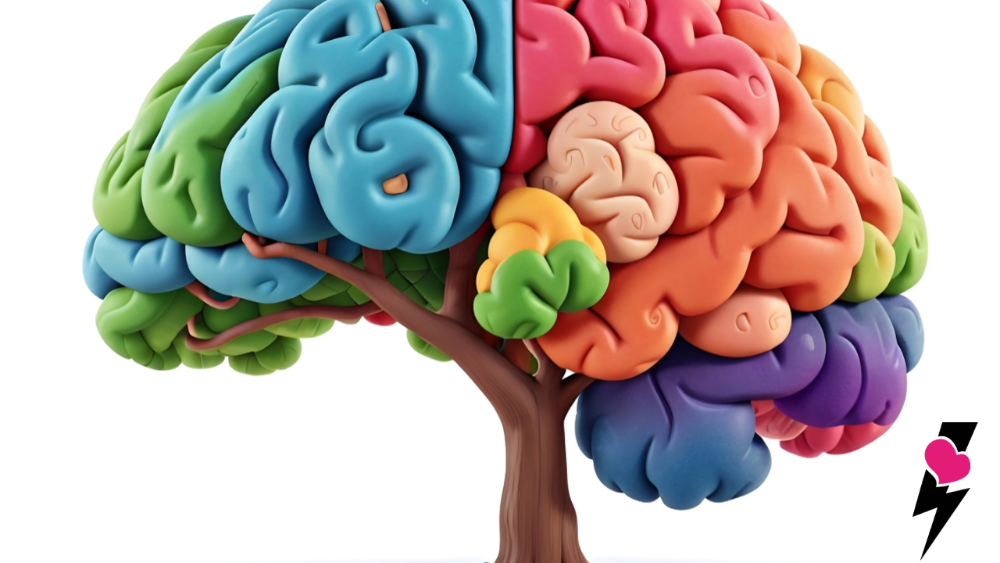
Every piece of marketing your DMO or STR creates enters a neurological obstacle course called the Limbic Loop, where emotion decides everything long before logic ever arrives.
Here’s how it works:
- The amygdala scans for emotional relevance.
- The ventral striatum lights up if something promises reward or novelty.
- The prefrontal cortex (the rational part) only joins the chat after emotion gives permission.
So when your campaign says, “Discover what makes us unique,” the amygdala yawns. There’s no emotional stimulus. No spark. No risk.
Your audience isn’t rejecting your destination; their neurochemistry is.
What Happens in Vegas, Stays in Vegas
(Yes, I was on that ad team.)
That line bypassed rational thought entirely. It activated the brain’s mesolimbic dopamine pathway, the same system triggered by risk, secrecy, and reward.
It didn’t describe a trip. It licensed transgression.
People didn’t travel to Vegas. They traveled as Vegas, a temporary version of themselves unburdened by consequence.
That’s not a campaign. That’s limbic engineering ruined by smartphones.
Virginia Is for Lovers
This slogan works because it triggers identity congruence, a cognitive bias where humans prefer messages that align with their self-concept.
It doesn’t define what kind of “lover.” That ambiguity invites projection. The mirror neuron system fires up, allowing each audience segment to fill in their own definition of love: food, outdoors, heritage, people.
That’s why it lasted over 50 years. It’s cognitive elasticity.
I ❤️ NY
The genius here is tribal signaling. This line hit the medial prefrontal cortex, the part responsible for social identity and in-group recognition.
It wasn’t about tourism; it was about belonging to a story bigger than yourself. To wear that logo was to declare loyalty. To buy it was to buy meaning.
That’s what marketers mean when they say “cultural imprinting.” It literally rewired the city’s reputation at a neurological level.
Meanwhile… in 90% of DMO current Taglines
We get:
“Explore More.” “Experience the Difference.” “Your Adventure Awaits.”
These are linguistic nulls; grammatically fine, chemically inert. They activate neither the nucleus accumbens (anticipation) nor the insula (emotional empathy). They just slide through the brain like tofu in a rainstorm.
No wonder no one remembers them.
What DMOs & STRs Keep Getting Wrong
DMOs: You build destination identity, but too often through institutional language designed to appease boards, not brains.
STRs: You inherit that identity, but most of you just slap it on your Airbnb listing and call it alignment.
Both sides forget the fundamental rule of neurobranding:
People don’t buy where you are. They buy how it feels to imagine being there.
A slogan only works if every sensory cue — copy, imagery, tone, on-site experience — delivers the same emotional payload. That’s neural coherence, and it’s rare as hell in tourism.
Three Ways to Test Your Tagline (Scientifically)
1. The Dopamine Test: Read it aloud. Does it create anticipation or possibility? Dopamine spikes when people imagine themselves rewarded. If it sounds like work, it’s dead on arrival.
2. The Mirror Test: Ask, “Who does this let the traveler become?” The mirror neurons respond to self-recognition — they literally light up when people see themselves reflected in the message. If they can’t see themselves, they won’t see your ad.
3. The Tattoo Test: Would someone wear it? Post it? Repeat it without attribution? That’s semantic anchoring when a phrase becomes shorthand for identity. If it can’t live beyond your campaign, it’s not branding; it’s busywork.
🖤 Destruptor Takeaway
Slogans aren’t copywriting. They’re neural triggers.
When you understand the psychology, not just the politics, of place marketing, everything changes. DMOs stop chasing cleverness. STRs stop echoing slogans. And together, they start crafting emotional architecture that holds.
Because the slogans that survive don’t just describe destinations. They reprogram behavior.
If you’re new here, I’m Jenn Barbee: tourism strategist, speaker, and industry heretic. I translate neuroscience into marketing that actually works (and occasionally burns a few bridges).
Call me when you want to make something that matters.

