- Advertisement -
Home Blog Page 529

Follow the Wall: Vacation Rental Housekeeping Tips

0

One of the foundational pieces of an outstanding housekeeping routine is the discipline to follow the wall. When I learned this principle it was a professional life changing experience and I encourage you to follow it as well for ultimate success in your turnovers.

This principle has served me well when I clean and when I inspect during a changeover. Essentially, it is just using the wall as the roadmap for the cleaning practice by literally touching the wall as you move through the property. It ensures that every part of the property is looked at in a systematic and orderly way, including the closets, cabinets, under furniture, and behind doors.

In the hospitality industry, both the housekeeper and then the inspector practice following the wall. When following the wall, either to clean the property or to inspect it, there are several things to remember.

1. Scan from top to bottom as you move through the property.

In other words look start looking at the top corner of the wall and continue all the way to the bottom of the base board.

2. Use furniture, counters, or differences in flooring to create invisible walls.

This ensures you check every part of the property. (If you don’t do this you risk missing kitchen islands or the furniture in the middle of the room.

3. When checking dressers or cabinets, start scanning at the bottom and work your way up.

This allows for a more efficient flow around the property.

4. If there are multiple levels to a property work on each floor as its own section.


5. Finish the route in the kitchen (or at least have the kitchen as close to the end as possible).

The location of the kitchen which is where you will be finishing shall determine which hand you will follow the wall with.

Following this pattern creates a repeatable process that allows for quality and speed to follow as the work is completed.


Durk Johnson has over 15 years experience as leading authority in the vacation rental housekeeping industry. Currently he serves as the executive director of Vacation Rental Housekeeping Professionals (VRHP), a national organization that specializes in housekeeping principles and procedures. To learn more about VRHP visit www.vrhp.org.

Before VRHP, Durk worked with vacation rental companies from the snow capped mountains of Park City, Utah to the sugar white sand beaches of Gulf Shores, Alabama to the countries of New Zealand, Spain, Chile, and Italy. You can read more of Durks’s cleaning and housekeeping posts on his bi-weekly column on the Properly blog.

A Newcomer’s Top Takeaways from VRM Intel Live Portland

0

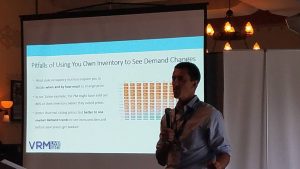
On a recent June afternoon, I attended my first VRM Intel Live conference. The location couldn’t have been more bucolic: the McMenamin’s Edgefield, a historic 74-acre wonderland just east of Portland, Oregon.

During my 7+ years at Expedia, I had the chance to attend a number of domestic travel trade shows like Phocuswright and EyeForTravel. I even attended a few overseas, like ITB in Berlin and the World Travel Market (WTM) in London. This was my first experience at a Vacation Rental Managers (VRM) conference, and over the next eight hours, I wore my pen out taking notes.

There are over six thousand VRMs in the U.S. All of us are trying to find better ways to serve our homeowners, take care of our employees and grow revenues.

And we’re doing it in a vibrant, rapidly evolving space, with shifting regulatory environments, digital marketing acronyms and a constant influx of new technologies to absorb. There are now drone tours of properties. Seriously. Drone tours!

I’m not sure what your first VRM conference was like, but mine was an incredibly valuable opportunity to learn, drink good coffee and make connections. Also, one of the vendors was giving away free pens…

What did I learn? Great question. Here are my top 7 takeaways from VRM Intel Live Portland:

  1. Housekeepers are the heroes. Successful VRMs seem to all have one thing in common: They take care of their staff. This doesn’t happen by accident. It takes hard work and managerial chops. Nurturing those environments is a competitive advantage. Heart matters.

  1. This is a rapidly growing industry, but longevity matters. As Amy Hinote, the powerhouse organizer behind these events noted in the Spring 2017 edition of VRM Intel magazine, outside of AirBnB, $1.46B has been invested into this space since 2011, but the companies that received that capital haven’t all fared well. Ten companies that received funding ($78.1M) have shut down operations. Another nine companies ($94.2M) have rebranded or pivoted business models. The recurring message: pick strategic partnerships wisely.

  1. For all of us, it makes sense to focus on what you’re great at — whether it’s taking care of guests or online marketing — and find partners to help with the rest. Jim Collins, author of Good to Great, called this the Hedgehog principle. Not a particularly attractive animal, but… the concept makes sense in the vacation rental management space.

  1. Over and over I heard attendees talking about how important it was to execute on the basics. “You can’t know everything…You have to focus on your properties and guests.” I know that Vacasa spends a lot of effort focusing on customer review scores. If we don’t execute we can ruin someone’s vacation, a vacation they may have spent months saving for. And if we do our jobs, we’re all helping make awesome memories that last a lifetime. Family reunions, old friends finally finding the time to get together, saying goodbye to kids going off to college…we’re doing work that really matters. And that’s pretty great.

  1. Lots of speakers talked about the importance of data: Track everything! But it seems like data only goes so far. Data is useless — worse than useless — if you don’t turn it into actionable insights. Data can overwhelm. So it makes sense to focus. Identify your ecommerce funnel’s leakage points. Where are you losing shoppers? Are you pricing your units optimally to match supply and demand? Are your photos and copy compelling? There are a lot of mustard brands in the display aisle. You only get a second to distinguish yours. Make it count.

  1. We need to do a great job delivering VALUE to our homeowners. Only 35% of vacation homes in the USA are professionally managed. Self-management is the norm.

  1. Finally, change is constant in the travel industry. That’s exciting. Or paralyzingly scary. And it seems like the VRMs that are succeeding are engaging, learning, testing, experimenting and maybe failing some. (It’s not a test if there isn’t the possibility of failure.) It’s the engagement and learning that’s critical. There’s a science to this. A method. Test. Measure. Learn. Repeat.

All in all, a great day at the Edgefield. Great people. Great speakers. And a ridiculous amount of knowledge sharing.

Next time, I’ll bring more pens.

By Thaddeus Hanscom, Director of Partnerships at Vacasa

Asked and Answered: Am I Too Dependent on Listing Sites?

0

I learned this new phrase a few weeks ago when one of my beautiful daughters was driving me crazy by asking over and over the same question, hoping, of course, that the “no” would somehow magically turn into a “yes”. Like many, sounding like my own mom was a road I was not ready to travel down. So, when my daughter asked again, I would have the original conversation with her (again), and then remind her that we had already discussed this.

Then one day a magical phrase was introduced to me: “asked and answered.” Short, to the point, easy to understand, and it WORKED!

Last month I wrote an article for the LiveRez Blog based on partner feedback from all over our partner base. And, although each partner has specific needs and concerns, the most common concern has been changes in distribution channels.

Hoping to answer the concern that a lot of partners share in navigating the changing vacation rental space, I challenged professional property managers to start by gathering data. But, I quickly realized that although I may have given partners a place to start, the answer to the actual question still remained: How specifically can we understand if we are “dependent” or “independent”?

So, while Part 1 of my blog dealt with the “asked” part, today I need to follow-through with the “answered” part.

Let’s start by diving deeper into the specific data you need to collect. Then, we can move on to how to use this data to answer the dependance question. And finally,  we can go over some ways to start addressing the issues.

Here goes…

Step 1: Institute Tracking

If you’re not already tracking your marketing data, you should start right away. Running a LiveRez sales cycle report with the “How Heard” option checked can give you a good start, but you’ll need to add some additional information to see the whole picture.  The final report needs to include:

  • The marketing source of every reservation
  • The total dollar amount of every reservation
  • The amount of commission you earned
  • Profit from any fees and mark-ups
  • Cost of every one of your marketing channels
  • BONUS: If you know approximately how much overhead is involved in providing the reservation

Here are some tools and processes you can use to find that information:

  • Google Analytics / Google Search Console (Tracking Web Reservations)
  • LiveRez’s “How Heard” Field (Tracking both Web & Phone Reservations)
  • LiveRez CRM+ Campaigns (Tracking Inquiries from Listing Sites)
  • Integration (Direct Bookings from Channel Partners – Tracked in LiveRez)
  • Whatever method you want to use to track marketing costs (spreadsheet works well)

If you have this data, you have the building blocks for the next two formulas we’re going to look at. If you don’t have this data, start tracking it right away.

Step 2: Calculate Your Customer Acquisition Cost (CAC)

Also known as marketing acquisition cost (MAC), this metric will weigh the efficiency of your marketing efforts by channel. It will show you which channels are proportionally the most expensive compared to other channels.

Start by creating a spreadsheet that has the following data PER MARKETING CHANNEL:

  • Total Money Spent
  • Total Revenue Generated
  • Your Share of the Revenue (commission, fees, etc.)
  • CAC – This is calculated by dividing your marketing spend per channel by the revenue earned from that channel (either the total revenue or your share of the revenue, depending on who pays the marketing costs, you or the owner)

When converted to percentages, your CAC numbers should probably be in the general range of what you’d see a football team score in a game. If you’re running in the soccer/baseball score range, you’re killing it. And, I don’t care how good a golfer you are, if it’s anywhere close to your strokes for 18 holes, you’re overspending.

Step 3: Calculate the Diversity of Your Marketing Portfolio

This is going to show you what percentage of your revenue each channel is bringing you.

Start by creating a spreadsheet that has the following data PER MARKETING CHANNEL:

  • Total Revenue From Channel / Total Revenue from All Channels

This will let you know how much each of your marketing channels is contributing to your total revenue. Go ahead and put this data in a graph, so you can see a visual representation of it.

If your pie chart looks like Pac Man, you’ve got some work to do. If it looks like a pizza, you’re in good shape. The idea here is to not be too dependent on any one channel.

Step 4: Create a Game Plan for Fixing the Issues

Now that you know what you’re dealing with, you can set goals and make a game plan for how to accomplish those goals. Start by asking yourself these questions:

  • Is your marketing portfolio lacking diversity? Are you too dependent on any one channel?
  • Are your customer acquisition costs (CAC) too high?

Other than finding ways to increase your overall revenue and profitability, these should be your two biggest concerns. Both of these issues can lead you down an unsustainable path and put you in a poor position to navigate any changes in the distribution landscape.

Ultimately, you want to start investing in your own brand (your own website, your own marketing database, your own following). Building your own brand will allow you to generate more direct bookings, create long-term sustainability, and give you more flexibility in choosing where to spend to marketing budget.

In short, it puts YOU in control.

What’s In Your Vacation Rental Tech Toolbox? 

0

Chances are, you have a toolbox at home. It’s full of tools, some loose screws, and maybe even safety glasses for when things get a little crazy. At first glance, your trusty toolbox may not appear to be a cohesive assembly of items, but you know it has everything you need for quick DIY projects or larger, more urgent fixes.

Your vacation property management business also has a box of tools you need to keep on hand. This toolbox includes all the technology you use in your day-to-day operations, some of which you use regularly (like a hammer or screwdriver) and some that are a little more specialized (like a stud finder or putty knife). Both regular and specialized tools contribute to the success of your business, and, if you have the right tools for the job, they help you keep things running smoothly.


What Tools Go In Your Toolbox? 


Everyday Tools

The must-have, everyday tools you use to run your business are the ones you couldn’t get by without. As a vacation rental manager, your basic tech toolbox includes a robust property management system that integrates with your website and distribution partners to take online bookings. Your toolbox also needs solutions for managing leads, planning and adjusting rates in bulk, and handling complex accounting. The more integrated these solutions are, the more efficiently your business will run.

Can you imagine running your business without property management software? It would be like trying to hang a picture without a hammer and nail or drill and screws; you could probably find a way to hang it, but it would most likely fall down. And if the picture is heavy enough—or your property management business is large enough—it may crash to the floor as soon as you turn your back.


Specialized Tools

The specialized technology tools you use to run your business are ones that perform very specific functions but are still invaluable to smooth operations. These solutions help you differentiate your company and rise above your competition. In your tech toolbox, specialized tools could include smart-home technology, website platforms, blogging tools, email marketing software, electronic contract solutions, reporting tools and dashboards, and inventory management.


Building Your Toolbox

A complete toolbox should include both everyday and specialized technologies that work together efficiently, saving you time and money.

But what’s the best way to curate and select the right solutions that will work together efficiently and effectively? A bare-bones software with a hodgepodge of different systems may save on costs but will likely cause headaches in the long term as you try to scale your business.

It’s best to look first for core functionality when building your toolbox. Does this technology solution already include the most critical features for your business? Will it continue to perform as your company grows? Does the company have a highly rated support team in case you don’t know all the answers?

Then, think about how your core technology will integrate with reliable companies you may want to work with in the future, such as smart-home technology providers, website platforms and blogging tools, and mobile guest management apps. Even if you don’t think these integrations are immediate needs, they’ll become increasingly critical as your business grows and you need tools to do some of the heavy lifting for you.


Replacing Old Tools

If your technology isn’t working to help you smooth your operations, make a change. It’s possible that you need to replace an old tool or even add in a new one. It could be that your business has outgrown a current technology solution, and you may need one that offers more functionality, or you may need a solution that will scale as you expand your business.

The goal of strategically planning your technology toolbox is to simplify processes and make sure you’re spending money on tools that actually contribute to your success while making it easier for your team to deliver great guest experiences.

When you use the right tools and everything is running smoothly, all the hard work looks easy. Your guests don’t see all the moving parts behind the scenes; they just see their great vacations. Your owners don’t see all the work that goes into renting out their properties; they just see their statements, checks, and glowing property reviews.

When was the last time you reorganized your toolbox?

Certification and Accreditation: The Opportunity for Guest Assurance

0

The Internet reset the Vacation Rental (VR) market’s product life cycle as it took what was once a simple cottage  industry and exploded it into a multibillion -dollar business that spans the globe. A guest in Peoria, Illinois, can now rent a private home in Stockholm, Sweden—in minutes. The advantages that technology has brought to the VR industry are incalculable, but one of the most glaring shortfalls has been in Guest Assurance.

In an interview earlier this year, I was asked, “What real assurance do guests have that the vacation rental they are renting is real and that the amenities advertised are accurate?”

I had only one answer: “None.”

This problem could easily be laid at the feet of the Online Travel Agencies (OTAs), and if you read the terms and conditions that guests automatically—and most likely unwittingly—agree to, you will find something like the following:

The  site is a venue, and we are not a party to any rental agreement or other transaction between users of the site. While we do take certain measures with a goal to assist users to avoid potentially fraudulent or other illegal activity of which we become aware, we assume no liability or obligation to take any such measures or actions.

While  many people believe that OTAs should play a larger role in Guest Assurance, I think  they are not well-suited for the job. Inevitably, the pursuit of investor profit will conflict with any effort to manage standards of practice, which is why I am such a strong believer in the role of associations. When managed correctly, trade associations raise the level of professionalism, increase profits, and improve  customer satisfaction, no matter what industry they serve.

A Practical Approach  to Raising Guest Assurance: Certification and Accreditation

  1. Certification: Protecting Our Industry’s Brand

Certification is the process of documenting that the Owner, Manager, and Property are real and setting standards of truth in advertising. In an age of social media, the growing awareness of VR  scams is a threat to our guests’ perception of the VR industry’s integrity, and we need to have a response to it.

Vacation rental scams work two ways: either a new, fictitious listing is created or an existing listing’s information is copied and the payments are directed to a different place. The reason  scams are possible today is because, even with all the advantages the Internet has brought to the VR industry, we have lost things, one being a physical place of business.

Before the Internet, establishing Guest Assurance was easier. Guests could contact owners and managers directly by calling them or walking into their places of business. Guests could see credentials hanging on the wall or confirm where they were calling. With the advent of Book It Now , guests no longer have these luxuries. So the question is, how do we make this information available to our guests on the Internet?

The Association of Vacation Rental Operators &  Affiliates (AVROA) has been doing work in the area of Certification and Truth in Advertising. According to AVROA, Certification is a two-step process:

Step 1 :  Give owners and managers a place to display their credentials on a dedicated certification web page.

Step 2: Create a uniquely numbered certification seal that refers to that page.

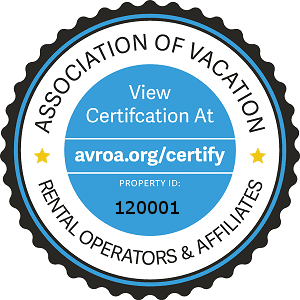
Quality seals  are recognized and relied on by millions of consumers for other products, and guests readily recognize the concept of a quality seal on a property listing or website  (see Figure 1.). The concept of certification seals is a powerful branding tool that can distinguish certified properties from uncertified  properties on the Internet and build sales.

Figure 1. Above is the seal from the AVROA—a good example of a quality seal.

Managing Truth in Advertising is part of the Certification process. It is not possible to inspect every vacation rental and verify that its advertising is accurate, but it is possible to enforce a “Code of Ethics” that mandates Truth in Advertising. Mandating that Certification requires adopting association policy  on Truth in Advertising as the final step in Certification.

Because  associations are more recognized  for their ability to generate benefits members could never achieve on their own, associations will also gain more leverage to manage relations between members and their guests. Establishing standards of practice, along with methods of confirming and enforcing compliance, will be an ongoing task of all associations.

  1. Accreditation: The Role of Education

Accreditation  is the final step in building a robust VR industry brand. But it is impossible to enforce standards of practice without offering ongoing education. Granted, as an industry, we are a long way from a comprehensive Accreditation program. We need to define areas of concentration and offer owners and managers the opportunity to receive education and earn Accreditation in those areas. But there are also hopeful signs.

Just as the Internet cobbled together thousands of individual rental platforms into a global tapestry, it has also brought visibility to the educational efforts of associations and entrepreneurs around the world. These early efforts represent the industry’s first step in defining what our industry’s standards of practice should be.

I applaud these early efforts. Every day a new summit is offered or an online education platform emerges, we learn a little more about our industry’s education needs, but ultimately, education and Accreditation can only be effectively delivered through the collaboration of our industry’s associations with experts from higher education.

I predict that you will be seeing more involvement by higher education. The VR industry is a great opportunity for study and for MBA or PhD candidates to do capstone pieces on setting standards of practice. I am sure it’s coming, and the sooner the better.

The Opportunity of Guest Assurance and the VR Industry Brand

When the Internet reset the VR industry’s product life cycle, it not only changed the way we do business, but it gave us the opportunity and responsibility to redefine ourselves in the eyes of our guests. Until now, the majority of the VR industry’s effort  has been in developing ease of use and awareness. Mysteriously, guests have been willing to send money to people they do not know and to rent properties they have no assurance are being advertised accurately, but that does not mean they wouldn’t prefer to reduce their risk or that they will continue to give the VR industry a pass.  As the media continues to cover the growing problem of vacation rental scams, VR guests will gravitate to those platforms that do the best job of making them feel safe.

You may have developed your brand  over the years so that it represents the quality and assurance that you have built into your company, but there is another brand level—the VR industry’s brand that drives guests’ perception of the VR industry as a whole. There is an old saying that “rising tides lift all ships.” We all need to work together to define and promote the VR industry brand we want because regardless of how much we invest in our individual brands, our futures are inexorably tied to our industry’s image. All you have to do is bring to mind any industry with a poor reputation and imagine working with that type of disadvantage.

The need for quality branding and Guest Assurance is going to continue to grow, and it represents a huge opportunity for those who are the first to embrace it.

In Memory of Vacation Rental Industry Sales Veteran, Brian Buck, 1963–2017

0

Brian Buck served the property management community for 20 years by bringing new technology products to market which have shaped the growth and performance of the vacation rental industry.

His sudden passing on January 2, 2017, was shocking news to all of us who worked so closely with him—and there were many of us. There are few vacation rental managers and vendors who did not have some interaction with Brian, or “Bri,” as many of his friends called him. He began his career in the vacation rental industry working for Milton Buehner at NAVIS, formerly known as Buehner-Fry. Brian traveled all over the US introducing new NAVIS technology products to property managers from Florida to Hawaii. He manned every booth at every industry conference and became widely known and respected for his sincerity, warmth, and integrity.

“Brian was a good friend, a dedicated father and an overall great guy,” said Kyle Buehner, CEO at NAVIS. “He was involved and engaged in our industry and with the VRMA for 20 years. He created many, many friendships over that time and he will be greatly missed by all of us who knew him.”

Ben Edwards, president of Weatherby Consulting and former president of the VRMA, echoed the sentiment, “He represented the best of our industry, continually advocating on the behalf of vacation rental managers while always operating with honesty and integrity.”

Brian developed very close friendships with co-workers and colleagues. In the vendor community, teams have a way of getting to know each other extremely well, as we often get together to let off steam after grueling conferences. Brian excelled at bringing a calm and a fun-loving outlook to highly stressful situations and environments.

Dawn Yeskulsky, vice president of business development and partner programs for Ascent Processing, said, “I was lucky to call Brian an industry associate, but more importantly, I was blessed to get to call him my friend, always there with a warm hug, a smile and some advice when you needed it.”

Yeskulsky added, “He was a kind soul that genuinely cared for the people he worked with and the industry we all care so much about. True friends are the ones who never leave your heart, even if they leave your life. We will miss Brian.

In 2012, Brian joined the Glad to Have You startup team, and helped to rapidly establish the company as a major industry player by selling the platform to hundreds of VRMs. Glad to Have You sold to HomeAway in 2014, and Brian stayed on with HomeAway during the transition.

Regina Ebert, CEO at Ascent Processing said, “Although we never worked together directly, I never hesitated in recommending an account or lead to contact Brian. I was absolutely confident [that] his honesty, integrity, and expertise would provide them with the strongest solution available.”

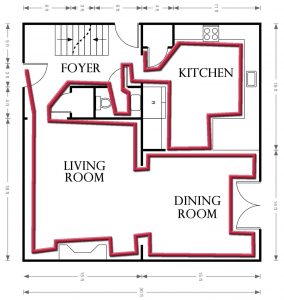
In 2015, Brian and his close colleague (and known partner in crime), Rob Johnson, joined the TruPlace team to bring its interactive floor plan system to the vacation rental industry.

Suzi Cusack, CEO at TruPlace, was excited to add Brian to her sales team in 2015. “It was such a pleasure working with Brian because he was always so positive, calm, and genuine. He had a true passion for the industry and the relationships he built over the years,” said Suzi.

Brian Buck understood the importance of relationships, and he built and maintained them with all of his heart.

“Bri was not only a colleague, but a friend, and more importantly, a true brother to me,” said Rob Johnson. “We shared so much together in the industry we both loved over the 27 years we knew each other. We have lost a great man way too early in life. It has been hard to comprehend his passing, and I think of him every day. To lose someone you were so close with over so many years is devastating. But knowing Bri the way I do, I know he is looking down on us and telling us to move forward with life and to remember the fun, the memories, and the successes we shared in our 27-year journey.”

“I miss Bri and know many of you do as well,” added Johnson. “Let’s carry our memories of Bri forward and look back on those times we shared together and smile with a heavy heart.”

Vacation Rental Managers and Owners: The Tipping Point Has Arrived

0


The Rise of Collaborative Communities

For the past 24 months we have weathered endless policy changes, deceptive practices and poor performance by what continues to be an adversarial relationship with the big listing sites.  The latest salvo came a few days ago with  VRBO’s major announcement to no longer allow you to have external links to your site. Despite what you read in some media, our brands continue to perform amid this continued chaos.  Some realities are coming into play:

  • The big sites continue in their attempts to strip away your brand in order to control as much supply as possible.  Hiding your property names and mandating OLB are just some of the recent actions that are forcing change in our industry.  Here is the latest example:
  • Owners and Managers are getting wiser by pulling back on valuable inventory and investing in themselves by diversifying their inventory across different mediums and regional opportunities.  As a countermeasure, VRBO is now looking to disaggregate us from our owners by pointing them to “select” property management vendors.  This represents the biggest threat to our industry.  Imagine, if you are operating on HomeAway software….you are pinned in while they recommend your owners to competitors. Read more

“It’s the Relationship, Stupid”

0

With election season finally over, TV commercials have returned to advertising things like beer, drugs, and cars, but I still can’t seem to get a particular political phrase out of my head: “It’s the economy, stupid.”

When Bill Clinton was running against George H. W. Bush in the 1992 election, Clinton’s campaign phrase “It’s the economy, stupid” stands out as the single byline that encapsulated the fundamental difference between the two candidates’ campaigns. The fact that one candidate was able to tune in to the mood of the electorate, while the other seemed completely oblivious to what people were feeling, has some fairly poignant parallels to recent events. This is not a political article, but there is an interesting parallel between the 1992 presidential election to the current state of the vacation rental industry.

Back in 1995, I had the opportunity to visit two property management companies in Kissimmee, Florida that were both managing approximately one hundred homes and made their money by providing management services rather than rentals. Reservations came from either owner bookings or from wholesalers. Commissions were minimal, and the bulk of these companies’ income came from property management and owner services.

“This is an industry ripe for consolidation,” I thought.

Twenty years later, I was speaking with an owner of another technology company who said exactly the same thing. I simply smiled and remembered my thoughts from two decades before, but knew that it probably wouldn’t change in the next two decades either.

There have been a number of players that have attempted to disrupt the vacation rental industry in the last two decades. A few succeeded, but many either failed or had mediocre success. I would suggest that those in the latter category could find their answer in this adaptation of the infamous phrase: “It’s the relationship, stupid.”

We are an industry based on relationships. It doesn’t matter who the relationship is between, whether it’s between managers and guests, managers and homeowners, managers and vendors, or anyone else. Let’s explore this a little further by segment.

Managers and Guests

When I first traveled to the Delaware shore in 1999, I was astonished to learn that in many vacation rental agencies, guest loyalty was actually toward an individual rental manager. The value of the relationship with the guest was the top priority. In the traditional markets within the vacation rental industry, loyalty to a particular company is often strong, and repeat guests value these personal relationships, so they continue to stay with the same manager year after year when returning to an area to vacation.

Although it is still true that repeat business accounts for more than 50 percent of reservations in certain areas, this could easily be threatened by not focusing on the relationship. The success of third-party distribution companies in providing reservations for managers has increased significantly over the last ten years; HomeAway and Flipkey were the first major players in this space, although Flipkey has been eclipsed by Booking.com, Airbnb, and others in recent years.

The more enlightened VRMs use these channels as a way to acquire a new renter and then do everything in their power to convert the renter into a repeat guest—cutting out the middleman—for future stays. Many VRMs now offer loyalty programs to further secure the repeat guest relationship. However, with Airbnb now providing Delta SkyMiles on all stays, VRMs may have to up their game in the years to come.

I do not see Online Travel Agencies (OTAs) as an imminent threat to the guest relationship. If used correctly, OTAs are a source of new client acquisition.

Additionally, consolidation is also not a significant threat. Remote, uneducated call centers, lack of front desk services, and insufficient boots-on-the-ground presence in local areas have not proven to be significant threats to well-established markets. The new companies in these spaces have not had the growth or penetration that they would have wished, and I question if their business models actually have a future.

Managers and Owners

To describe the relationship between a VRM and their property owners as complex would be a massive understatement. VRMs provide both income and expenses through reservations and work orders, and they are the guardians of the asset by looking after the home. VRMs also must walk the fine line by serving as advocate for the homeowner and taking ownership of the relationship with the guests.

This relationship is the one with the largest history of attempted consolidation. About fifteen years ago, ResortQuest pioneered consolidation in the US with mixed success. Their model was acquisition and centralization, which was not popular with many homeowners who valued their long-standing relationships with their local property managers. In response, individual managers within the acquired companies left and started their own companies by leveraging their relationships with these individual owners to bring them over to the new company. Was ResortQuest somewhat naïve by not foreseeing and preventing this? As an outsider, I would suggest yes, but to be fair this is how the industry has grown over the last forty years.

Wyndham, who ultimately purchased ResortQuest back in 2010, and Vacation Rental Pros, owned and operated by Steve Milo, seem to have gotten much better at managing the acquisition model, but at the moment, the pace is not a threat to the wider market.

Vacasa is a bit of a hybrid. They are actively acquiring VRMs, aided by their $40 million in funding during 2016. However, they also have an aggressive homeowner acquisition program and are leveraging their technology to provide more reservations to homeowners.

TurnKey uses a homeowner acquisition model based on lower owner commissions and technology to provide more reservations. They look for significant cost reductions to support this aggressive approach, and they do so by not maintaining full-service premises in the locations. This is not consolidation per se, but it is an attempt to disrupt the conventional model of local companies servicing owners and guests in the destinations.

My opinion is that companies that maintain and support local relationships are the ones that succeed. They can leverage resources much more effectively in times when in short supply, and this makes a big difference to the owners.

Managers and Vendors and Everyone Else

It is this category that has the greatest impact on both the guest and owner relationships. By cultivating relationships with the best vendors in an area, local managers have the ability to develop a reliable support system. New companies that use bidding systems to distribute work do not foster loyalty. When there are more vendors than work, bidding systems may be fine, but try using this system after a hurricane hits.

Local managers typically develop community relationships. They serve on local councils, and many even run for city, county, and state offices. They participate on CVB and tourist boards and generally do their best to enhance the local community. In many parts of the country, they are also active in local and state real estate associations.

By being able to get things done well and in a timely manner, local property managers tend to be appreciated by both guests and owners alike, and that is something that is invaluable to their success.

I am not suggesting that the new disruptors will not have an impact, but until they can develop and nurture the local relationships that are imperative to succeed in the community, they will be marginal.

My Own Experience

One of the most successful things about Instant Software was the Client Relationship Management Team. Their job was to develop and maintain relationships with all clients and be the go-to people to get issues resolved.

They reported directly to the CEO and had the power to cut through all of the departmental red tape and get things done—and they frequently exercised this power. They were not on commission, and their only job was maintaining relationships.

It was the key to client retention.

I firmly believe that you can excuse an inferior product with an exceptional service, but the reverse is not true. It doesn’t matter if you have the best thing since sliced bread, if you cannot deliver and support it, you might as well not have it.

By investing in the maintenance of the client relationship, Instant Software has been able to retain existing clients and grow. Through a combination of our products and our reputation, we have been able to add value to our clients and make money for ourselves. In our minds, it’s all about the relationship, stupid!

Organizational Structure: Is Your Business Structured for Optimal Performance?

0

Every business has an organizational structure. Sometimes it evolves haphazardly, and sometimes you design it deliberately. However, most of the time structure is a blend of the two. Regardless of how your structure came to be, its effect on your business is huge. At every stage, your organization’s structure will either enhance or hinder your business’s movement forward. Well-designed organizations foster communication, improve productivity, encourage innovation, and create environments where people can work effectively.

Many productivity and performance issues can be traced back to poor organizational design. A company can have a great mission, great people, and great leadership, yet still not perform well because of poor organizational design. So how do you know if your organizational structure is working?

It is easy to identify an “out-of-whack” organizational structure when you know what to look for. Misalignment leads to confusion. There isn’t a clear sense of direction or focus; there is a lack of authority and accountability; and employees display doubt, frustration, and a lack of confidence and become disengaged. The causes are many. Some of the more common red flags that indicate misalignment include the following:

Inertia

The strategy is clear, yet the company gets set in its ways. This is the most common indication of misalignment. People settle into their roles, grow accustomed to procedures over time, and ask fewer questions because “it is just how we do things around here.”

Confusion

When there is no clarity of individual responsibilities or the types of decisions employees are allowed to make, confusion arises about roles, responsibilities, and authority. This leads to misunderstandings, duplication of efforts, and a lack of efficiency.

Turnover

When new hires repeatedly fail, it is often a sign of structural imbalance rather than poor hiring decisions. If you have a high turnover rate, then it is time to look at your organizational structure and identify how the structure can better support new hires.

Organizational design is the process of aligning your organization’s structure with your company’s mission. This means looking at the relationships among individual tasks, processes, accountability, and levels of decision-making and making sure that they each support the objectives and goals of your business. How closely are the following five areas aligned with your business strategy?

  1. Business Functions
  2. Job Tasks
  3. Workflow Processes
  4. Position Responsibility
  5. Position Authority

If you want to improve your organization’s performance, change your design. How your organization is designed determines how it performs. Think about a flock of geese. What happens when they need a course change or when a goose falls behind? They adjust and course correct, just as you should. When your business strategy changes, your organizational design should change as well so that functions and positions align with your new goals and objectives.

Designing an organizational structure is much the same for buildings, clothing, and vehicles—it involves a plan. A good design takes inventory of all the tasks, functions, and goals of a business and then develops groupings of positions, departments, and individuals to best and most efficiently achieve those ends.

Once you understand what functions need to be performed by your business and where authority will reside in these functions, you can work on an organizational chart for your business. When creating your structure, start with a blank piece of paper. Try to ignore naming the people involved but rather identify the core business functions.

As you create your organizational chart, it is important not only to identify a position’s key responsibilities and tasks but the types of decisions the person in the position has the authority to make. Be clear and intentional with your team about the types of decisions you expect them to make. Here are five types of business decisions you can use to further clarify your positions’ responsibilities:

  1. Programmed Decisions: Standard decisions that always follow the same routine.
  2. Non-Programmed Decisions: Non-standard and non-routine decisions. Each decision is different from any previous decision.
  3. Strategic Decisions: Decisions that affect the long-term direction of the business.
  4. Tactical Decisions: Medium-term decisions about how to implement strategy (e.g., what style of marketing to use or how many extra staff members to recruit).
  5. Operational Decisions: Short-term decisions involving day-to-day operations.

Finally, it is important to identify key metrics that are tied to performance for each position. This provides a clear line of sight on the outcomes the position is responsible for achieving and how the individual is performing toward those goals.

As you create or restructure an organization, be aware of the following mistakes that commonly lead to a structural misalignment that will impede business performance:

  • The strategy changes, but the structure does not. Your organizational structure must support your strategy. Different strategies require the use of different structures. Closely align strategy, structure, and the environment; otherwise, your organizational performance will suffer.
  • The organization is structured around people. Structure the principle first, then add people. Start with a blank sheet of paper—focus on functions, roles, and responsibilities. Design the organization as if you had no people currently involved in the business. Once you arrive at the right structure, then, and only then, start placing people.
  • Avoid shared seats/responsibilities. Shared accountability never works. Always place a single name in each seat: one seat, one title. When an issue arises, there should be one individual who calls the shots. The buck must stop at one single seat.
  • Don’t hang onto the past. Focus on functions, roles, and responsibilities. Go back to your blank sheet of paper. Bottom line: if nothing changes, nothing changes. Resistance is often minimal if the team sharply focuses on functions, roles, and responsibilities.
  • The right seats need the right people. Assess employees’ knowledge, skills, and abilities. Evaluate and assess your employees’ skill sets and competencies for positions. Place the right people in the right seats. Gracefully exit the wrong people. Some people are like clouds; when they disappear the day becomes brighter.

Great Expectations Require Efficient Operations

0

Vacation rental management is a complicated business. Managers need to excel across a wide range of skills and initiatives: hospitality provider, social marketer, asset manager, trust accountant, maintenance department manager, and more. While one foot walks a fine line as both a partner and competitor to OTAs to acquire new guests, the other builds the company’s brand presence online. At the same time, one hand prepares individual homes for a turn day and delivers a guest experience that competes with hotels while the other manages owner relationships. Managers play a game of Twister that stretches and contorts their workflow.

In the past, managers could “get by” with doing business the way they always did. Times have changed. Now, with hypercompetition in the vacation rental market and nearly impossible consumer expectations, success or failure depends on using the right technology to drive efficient operations in each part of the business.

Successful managers have always prioritized efficiency and technology by using a host of software solutions to run their businesses. Friendly competition with long-time managers in local markets still exists, but today, managers must also compete with OTAs, Airbnb, and hotels, all of which are pushing further into the vacation rental market. At the same time, tech-forward companies with national footprints (e.g., TurnKey, Evolve, Vacasa, and Vacation Rental Pros) are focused on efficiently delivering exceptional service at lower costs. Further, these companies have the capital to fund their technology and growth.

The “Amazon Effect” and Vacation Rentals

To keep pace with innovations and investments in the vacation rental market and to remain competitive, managers need to modernize their property care operations and programs. This need for efficient and purposeful operations is multiplied by the phenomenon of ever-increasing consumer expectations, which is often referred to as the “Amazon Effect.” The more consumers interact with on-demand apps, “smart” devices, and seemingly impossible logistics, such as two-hour shipping, the more these consumers come to expect these same standards of service from all providers. Consumers have become so spoiled that according to a recent IBM survey, 76 percent of consumers “expect businesses to understand their individual needs.” These consumers are the guests many rental managers are trying to acquire, satisfy, and bring back. They are also the property owners who are becoming harder to impress.

For guests, this means delivering a property that not only meets the manager’s standards for cleanliness and property appearance but is also exactly as consumers expect from the high-resolution photos and floorplans they’ve seen online. As a rental manager noted in a recent conversation, “People spend a lot of time researching a property; they envision themselves and their family in these homes before they book. If they arrive and it doesn’t look exactly like they expected, they’re upset.”

Unfortunately, consumer patience and tolerance for mistakes is near zero, so rental managers cannot afford to make mistakes. Every unit needs to be accurately prepared and on time, without exception. The cost of acquiring a traveler and the consequences of negative reviews and refunds are too high. Only by meeting consumer expectations can rental managers drive repeat bookings, extract the full value of their marketing dollars, and deliver rental revenue to owners.

New Technology for VR Operations

Managers should utilize new technologies to provide their field staff with the tools they need to perform. The operational workflow for cleaners, inspectors, and maintenance personnel must be optimized, just as managers optimize their search engine marketing campaigns and dynamic pricing. As staff shift to cover a particularly busy turnover, everyone must easily access and reference standard property appearance photos to deliver consistently, reliably clean, and guest-ready properties.

Back-office staff deserve modern tools and software to complete their jobs and represent the brand and hospitality standards of the company. Breezeway is helping rental managers meet these challenges with intelligent software that coordinates every step of a property turn day, including cleaning, property inspection, and follow-up tasks. No longer will managers be forced to use typical offline processes, paper checklists, calls, and separate calendars for internal teams and service partners.

Increased competition has forced managers to concentrate on the winning of new guests, channel management, and the development of sophisticated marketing strategies. Most managers have done little to improve the services that they provide to their property owners. As more options become available for owners to market their rentals themselves, and commissions are squeezed by new managers in every market, it’s time to refocus on the owner experience and deliver elevated service.

Monthly owner statements are no longer sufficient to demonstrate how well a manager is taking care of the property. These income statements, which demonstrate limited context and lack visuals, do not tell the whole story. In fact, they often create more questions and confusion. Managers instead need to showcase the amount of time and energy they spend caring for and protecting the owner’s most valuable asset while demonstrating their knowledge of the property.

At Breezeway, empowering managers to demonstrate how well they care for their owners’ properties is our core mission. Our mobile app enables managers to collect and organize information about the property, including the make and model of the dishwasher, the location of the hot water heater, the number of windows, and the length of the driveway. Robust, organized, and actionable data not only create better records but allow rental managers to be more effective at their job and give homeowners complete insight into their homes.

A Better Way

Property management services have traditionally been reactionary—something breaks and the manager fixes it. This happens for several reasons. First, it is difficult for managers to stay in front of preventative maintenance. Second, many owners question the need for maintenance and repairs, not only because they want to avoid expenses but because they don’t understand why the repair is needed. By improving the way rental managers communicate their work to owners and helping owners understand the full picture of their property, the conversation changes, trust is established, and their dynamic improves dramatically. This also opens the door to offering ancillary services to owners and helping them feel confident about the management services for which they are paying.

Before I cofounded and launched FlipKey in 2007, managers struggled to differentiate their brands, particularly on third-party distribution websites. Rental managers had limited tools beyond the testimonials on their websites to showcase their professionalism and the great experiences of their guests. Ahead of the channel distribution trend, FlipKey offered the first verified guest review platform for vacation rentals and helped managers collect and leverage guest reviews to increase consumer confidence and close more bookings. Today, with consumer awareness of the vacation rental industry three times what it was ten years ago, there is tremendous opportunity.

Companies that leverage technology to drive efficiency, improve operations, and elevate consumer experiences will capitalize on the growth of the vacation rental industry and dictate new standards of service. Forward-thinking, optimized workflow and intelligent property care programs will allow smart rental managers to deliver more value to their customers. This will make the difference between managers who meet the high expectations of their customers, both guests and owners, and outperform the competition and those who go out of business.

The Seven Habits of Super Successful Salespeople 

0

I love vacation rentals. I love that we deliver twice the living space for half the price of hotels. I love being part of something that makes people happy. I love being involved in a growing market with expanding opportunities for everyone. I love sharing it with, well, just about everyone. Sales is simply about convincing others of your point of view, right? So by that definition, we’re all in sales.

For more than four decades of selling everything from butter toffee peanuts and Christmas trees for the YMCA to mainframe computers for IBM and selling my wife on marrying me thirty-one years ago—the greatest sale of my life—I’ve known many successes and failures. I’ve seen dreams achieved and nightmares unleashed. I’ve explored what works and what doesn’t and participated in thousands of sales calls. I’ve met folks who could sell ice to Eskimos, and others who couldn’t sell water to a fish. And through it all, the differences always came down to one thing: the great salespeople have great habits. I call them the Seven Habits of Super Successful Salespeople.


Super Sales Habit #1: Study Sales

Remarkably few business people actually study sales. Most believe they already know everything about it. After all, it’s simply about making people like you because people buy from people they like, right? Perhaps that attitude is why most business people don’t study sales, even though it’s one of the most critical parts of their business. The best property managers (PMs) I know are insatiable students of sales, constantly seeking new ways to generate more sales. They are experts at networking with other smart and successful PMs and applying what they learn to their own businesses. They understand that the art of sales is as dynamic as changes in technology and the human condition. Be curious. Have fun. Learn sales.

Super Sales Habit #2: Be a Hero

Being a hero is something that happens millions of times a day, usually with simple acts of kindness that make you a hero to those you serve and with whom you come into contact. In sales, I call it the Golden Rule Plus: treat others better than you wish to be treated. In my humble opinion, this is especially easy to do in our business. Why? Because we’re all in the business of vacations and making people happy! The best PMs are constantly trying to figure out how to delight every guest. Beachfront Only asks its guests to paint a picture of their perfect vacation. They then document the answers in their lead management systems and get busy being a hero to their guests throughout the entire guest experience that, in many ways, can last a lifetime. The good news is that being a hero doesn’t have to be hard—you just have to care enough to be one.

Super Sales Habit #3: Leverage New Tools and Technology

Moore’s Law suggests that technology doubles every year. Over the last twelve years, I’ve personally been involved with introducing “new” technologies to the vacation rental industry, including web-based software, online bookings, yield management, guest reviews, and integrated third-party bookings. Every step was met with varying degrees of resistance, but today almost every PM I know uses those tools or is thinking about using them. Because our industry is now online and technology driven, it is important to stay current with your own company’s technology for your direct business. Companies like HomeAway and Expedia continue to develop tools that are unprecedented in our industry. I believe PMs who embrace the tools of the future will experience unprecedented success. At minimum, I would suggest staying current with the kinds of things we’re doing on our web sites. After all, we spend millions of research dollars on behalf of our clients to help everyone make more money. So if something makes sense to you, use it. But remember that technology is like a fast-moving train: you can get on and ride it, or it can run you over.

Super Sales Habit #4: Deserve Every Penny

Amazingly, the best PMs I know never focus on the money. They know that as long as they focus on delivering fantastic experiences and value to their guests, the rewards will follow. They constantly look for ways to reinvest their success to improve value to their clients. Conversely, when you focus on the money—and not on earning it—it evades you. Why? Because most people are smart enough to run away when they smell a skunk. The really cool part of all this is that when done right, we all have the opportunity to receive tremendous rewards by adding value and creating lifetime memories one vacation at a time. Don’t chase the money. Focus on value, and the money will find you.

Super Sales Habit #5: If It Ain’t Broke, Improve It

Albert Einstein once said, “The definition of insanity is doing the same thing over and over again and expecting a different result.” My personal update is “doing the same thing over and over again and expecting the same result.” Why? Because it’s not only about changing ourselves anymore; it’s about the world changing around us. Remember printed catalogs? Even though they never “broke,” I bet you wouldn’t get the same results today that you did ten years ago. Our industry has changed more over the last ten years than during any prior ten-year period. It’s Moore’s Law again; with technology doubling every year, change happens all the time. PMs with the best sales not only understand that, they embrace it. For example, it used to be that the way to grow revenue was to increase inventory. Today, companies are using revenue management tools to manage rates better and increase the revenue per home, and that enables them to grow revenue even if their inventory shrinks. Companies like HomeAway continue to drive change in our industry by bringing vacation rentals into the travel mainstream. So today, change is constant. Stay current and updated and get used to the idea of updating something all the time.

Super Sales Habit #6: Lose Sleep

Remember this: they don’t care how much you know until they know how much you care. Ever notice how nice people are when they want to sell you something and how quickly they forget you once you’ve bought it? Don’t be one of them! Consider this: the only communication guests often receive from the time they book to the time they check in is about when a payment is due. Worse, with the wide acceptance of keyless locks, some PMs prefer to avoid contact with their guests altogether. PMs who feel that way clearly do not understand a client’s lifetime value. Otherwise, they’d lose sleep realizing that every client could represent ten or more bookings over a lifetime, not to mention the social networking multiplier. The best PMs I know bend over backward to serve and delight their guests from the day they book to the day they come back as a returning guest. That’s why the top companies in our industry are the top companies: they constantly think about how to do better and improve their clients’ experiences, even when they sleep.

Super Sales Habit #7: Love Your Guests

One of the lines in an old favorite song of mine says, “When you’re smiling, when you’re smiling, the whole world smiles with you.” It’s so true. I’ve also learned that when you truly love those you serve, they will love you back. The best salespeople truly believe in the goodness of people, and they work hard to delight each and every one of them. So check this out: When I was seven, I saw a bumper sticker that I remember to this day: “SMILE! It’s not going to break your face!” Over the years I’ve realized that smiling is much more fun than all other options combined, so I smile all the time. And you know what? I’ve also learned that smiling can be contagious. Try it sometime on someone who seems like they can use some love—even on the phone. (You do know that your smile can be heard over the phone, right?) You may be pleasantly surprised when they smile back. And that’s when the love connection can happen! You know the best part? We’re in an industry that pays us for loving people.

About John J.Suzuki

As HomeAway’s evangelist, John shares the big picture on industry trends, addresses what HomeAway is doing to benefit property managers, and provides feedback to enhance HomeAway’s products and services. John is known for his broad understanding of technology in the vacation rental industry and his strong moral compass. He has been a trusted advocate for vacation rental property managers for over a decade.

Mother-Daughter Teams in the Vacation Rental Industry Who are Leading the Way

0

In honor of Mother’s Day, we reached out to three vacation rental management companies owned and operated by mother-daughter teams who are helping to lead the industry. Each of these companies — Sand ‘N Sea Properties in Galveston, Texas, Seaside Vacation Rentals in York, Maine, and Meyer Vacation Rentals in Gulf Shores, Alabama — are undisputed market leaders and manage a substantial share of their area’s rental inventory.

While located in very different destinations around the country, we found much in common between these companies. For example, each one of these companies was founded over 25 years ago (in fact, Meyer is celebrating their 50th anniversary this year), and each of the daughters worked their way from the ground up into leadership roles. In addition, these mother-daughter teams operate incredibly disciplined businesses, are influential in their communities, and demonstrate a remarkable level of trust and respect for each other.

Working on this article was an enormous privilege, and I am grateful to these amazing, strong women for the opportunity to share their stories and insight into managing properties in the ever-changing vacation rental industry. These leaders were extremely generous with the information and industry perspectives revealed in these interviews. So read closely and take note. There are many lessons on leadership, operations, and marketing throughout the following article. Take your time, and buckle up. These Mother-Daughter teams have a lot to teach you!

Under the Hood: Meyer Vacation Rentals in Gulf Shores, Alabama

0

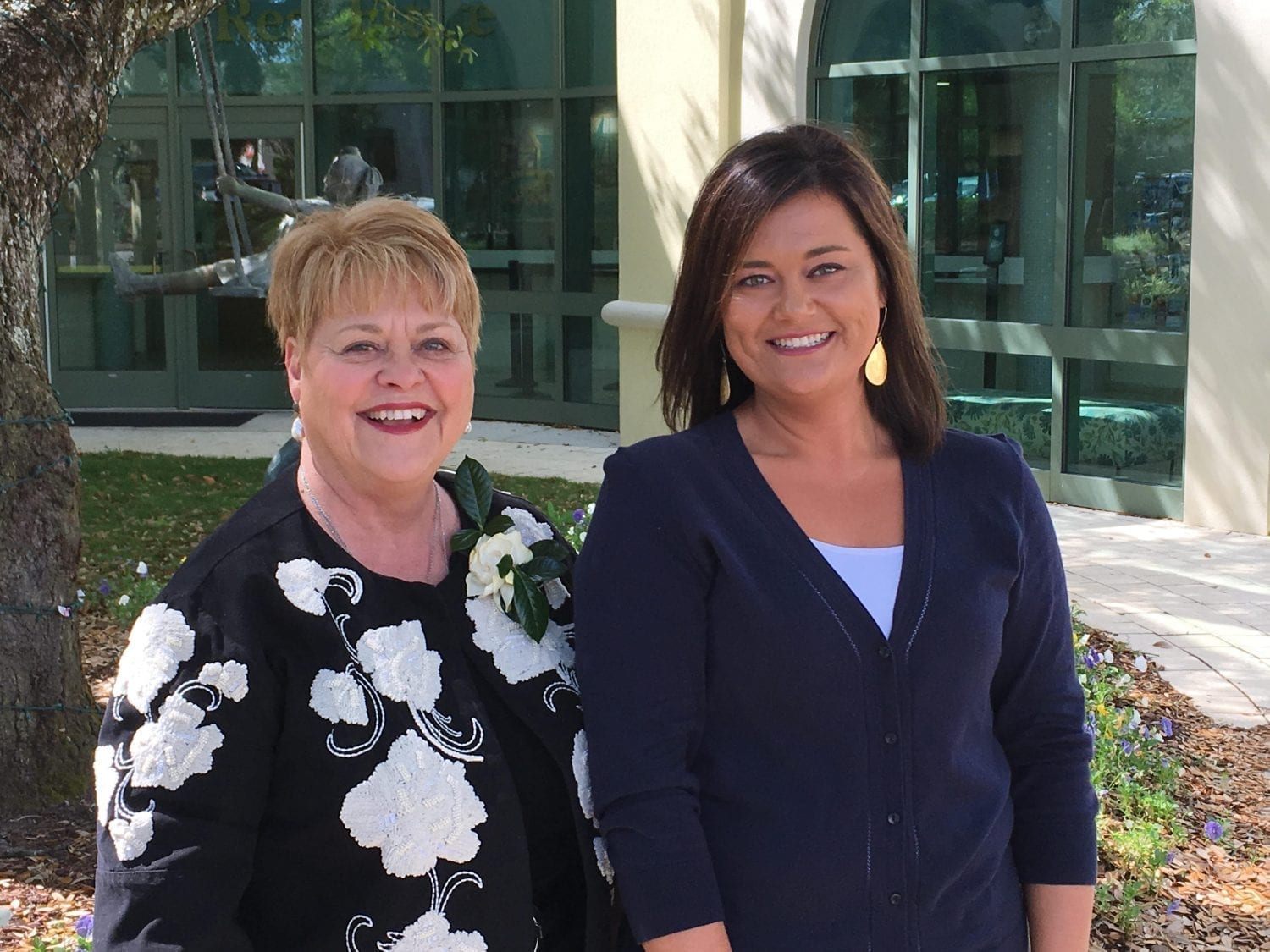
Meyer Real Estate and Vacation Rentals is celebrating its 50th anniversary this year, and Sheila Hodges and her daughter Michelle have built one of the Gulf Coast’s largest and most respected vacation rental management companies with determination, professionalism and an ongoing focus on innovation.


Sheila, it looks like you became the broker in 1980 but acquired 100 percent of Meyer in 1995. How did that come to be?

Sheila Hodges (SH): The quote “From crisis comes opportunity,” truly describes what happened. In 1982, the partners at Meyer decided to split, and one bought out the other. The sole owner was what we described as the “back office” owner. In other words, he didn’t interact with sales agents but dealt in finance and the legal holdings of Mrs. Erie Meyer. Therefore, we had no idea who, how, or what in sales. I’m sure the sole owner of Meyer was also wondering who, how, and what. As it turned out, he optioned half of the company to a large firm in Mobile, Alabama to manage sales and vacation rentals here at Meyer. Although this was a large, successful brokerage firm, it had neither been in vacation rentals nor in a dominant second home market. Factoring those two learning curves in, along with not being able to be present every day, meant things did not go smoothly. I often pitched in to give my two cents’ worth to whatever situation needed it. After almost two years the Mobile firm opted not to exercise its option to purchase half of the company.

So in 1984, I was offered half of the company at a cost that would empty my savings and put all I had on the line. But at the same time I was assured I would be the “driver” with assurance my new partner would support, counsel, or stand back as needed. So after much deliberation I took the plunge.


What were some of the early successes and challenges?

SH: Now I have to trust my memory, but the first big challenge was to take the rental department from paper to computer. From the beginning, all reservations were kept on a calendar spreadsheet in pencil. You know, reservations get changed or canceled, so all was done by pencil. So if you grow the number of properties you manage, the paper spreadsheets grow also. It was obvious we had to go computer. Today, in our computer world, we still struggle with keeping up with technology or technology keeping up with us.

I remember the first time we went from six phone lines to a switchboard. We were told repeatedly by distributors that we were overreaching ourselves on switchboard requirements; any company our size requires a much smaller system—but we insisted. As all that technical equipment was being installed, the supplier said it had no idea we had so many calls in one day. All I could do was smile and say, “Now you know why we were insistent!”

That was a simple success, but there have been failures. Not once, but twice, I tried mortgage lending—both times were a dismal failure. This example could imply that I’m a bit stubborn.

I would be remiss if I didn’t touch on natural crises. Those huge tropical occurrences! (Author’s Note: No one along the Gulf Coast uses H-word). After a few storms you have a good plan for pre-storm preparedness and post-storm recovery. But never in history have there been two back to back, as in one each year. There were lessons learned in that, and one that sticks out is bandwidth. We had purchased dozens of cameras for staff to get out and photograph each property as soon as possible. We had so many photos on our website that we were getting as many or more views than CNN! In the middle of the day we got shut down for exceeding bandwidth. Thank goodness I was present in our off-site “warm site” to give them my American Express card to increase bandwidth.

Then there was the BP oil spill. I won’t go down that horrid rabbit trail, but yeah, we survived that too.


When did Michelle join the company and what prompted her to make that decision?

Michelle Hodges (MH): I’m probably no different than most eighteen-year-olds who have spent their entire lives in the same city. As I took off for college, I saw my future leading me away from Coastal Alabama and into a large, vibrant city where I could start my career and pave my own path.

Growing up, my mother was such a known businesswoman in our community, so the idea of escaping her shadow and building my own reputation was appealing to me as a teenager and young twenty-something. By my mid-twenties, I had completed a few internships, graduated from college with a degree in international relations and a minor in Latin American and Caribbean affairs, studied abroad, and traveled to nearly twenty different countries. It was tremendous fun, but as I seriously started considering a career, I couldn’t shake the connection I felt to the hospitality industry.

In 2006, I joined the Meyer team as a guest relations representative working at the front desk. In 2007, we switched computer systems from RMS to PropertyPlus, and each department assigned a team member to represent its needs in the conversion, which I had an opportunity to do. That opportunity greatly expanded my scope of understanding of each of our departments and how our operational processes were intertwined. One thing led to another, and I ended up in a full-time training position where I conducted everything from new hire orientation to customer service training and departmental training. The 2010 BP oil spill catapulted my career in yet another direction. I focused on a role with the Coastal Resiliency Coalition (CRC)—a group representing the communities of Foley, Gulf Shores, Orange Beach; our two local chambers; The Alabama Gulf Coast Convention and Visitors Bureau; and our community college. As a community, the events of 2010 created an “all hands on deck” atmosphere where we were all united toward not only surviving the crisis but also coming out of it stronger. While the CRC still exists today, and I am a board member, I refocused my attention on Meyer in the fall of 2011, and today I serve as president.


What differentiates Meyer from its competitors?

MH: This is actually a topic that our team spends quite a bit of time discussing. Change in our industry is increasing at an incredible pace. It is exciting to watch awareness of the industry expand and the ensuing “disruptive innovation” that follows such expansive growth. Renters’ expectations of a vacation rental are not uniform, and depending on their objectives, owners may also have a different set of expectations.

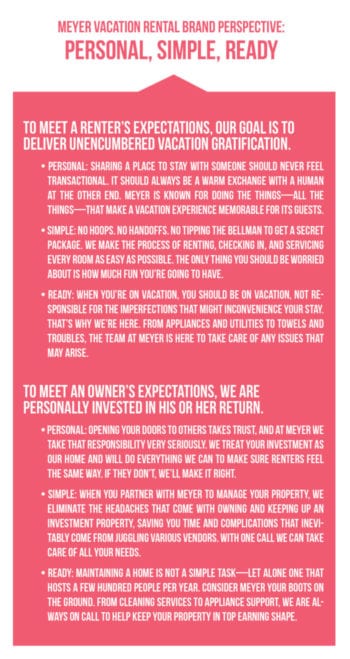
At Meyer, we make every effort to ensure our brand objectives are clear to not only those who do business with us but also our team members, who carry our core brand values. Some brands are niche oriented, and others are mass oriented; some are value driven, and others service driven. If you imagine an x and y axis with those focal points, there is a place in the industry for brands that are plotted in various places in each quadrant.

Wherever your brand value proposition is plotted, the important thing is to be aware of where you stand so your marketing efforts accurately reflect your value proposition. At the end of the day, we want those who choose to do business with Meyer to be brand advocates, and the best way to build such a relationship is by clearly setting and exceeding expectations. From the renters’ perspective and the owners’ perspective, our core brand values are characterized in the following words: personal, simple, and ready.

A lot has changed in the vacation rental industry. What steps do you take to address advancements and obstacles while keeping your core values?

MH: Much like our brand values serve as a reminder of our value proposition, our core values ensure that no matter what initiative or opportunity presents itself for our organization, we always maintain alignment with who we are and what we represent as a company.

At Meyer we believe in serving with integrity; conducting ourselves and our business in an honest, ethical, and trustworthy manner; treating everyone with care, respect, and fairness; providing financial stewardship; and growing through innovation and creativity. We believe our core values are timeless—they have served us well since they were created nearly three decades ago, and they are going to continue to serve as our road map into the future. Of course, we adapt to changes in the industry and world around us to help us maintain relevancy with each of our core values.

For example, over the past ten years, Alabama’s and Florida’s Gulf Coast tourism and the vacation rental industry experienced several challenges that impacted Meyer. In 2004, Hurricane Ivan hit Alabama’s coast and caused damage to many beach properties, resulting in lower bookings and revenues to the company. The economic recession naturally resulted in an increase of foreclosed rental properties and travelers substituting staycations instead of their traditional beach vacations. To make matters worse, the 2010 BP Deepwater Horizon oil spill reduced the number of vacationers to the Gulf Coast and the number of Meyer bookings by 50 percent nearly overnight. While these external events were occurring, competition for property management services and vacation guests increased on several fronts as well. First, the number of property management companies competing with Meyer along the Gulf Coast increased as small boutique management companies emerged that undercut the market’s traditional commission and service structure. Second, with the rise of the Internet and new business models, many beach property owners began renting their units themselves to deal-seeking vacationers, rather than contracting with professionally managed companies.

These changes in the industry landscape challenged Meyer’s position as an industry leader and created the need for the company to incorporate its core value of growing through innovation and creativity into its strategy map.

In 2013, Meyer engaged the Alabama Technology Network’s (ATN’s) Mobile and Auburn University Centers to help address its innovation and growth challenges through the implementation of a year-long Innovation Engineering Management System (IEMS) project. Innovation Engineering is a systems-thinking approach to innovation with a methodology that teaches individuals and companies how to create and test meaningfully unique ideas using a Fail Fast, Fail Cheap approach to reduce risk and increase speed to market and to create a system and culture of never-ending innovation. The system fit into our company culture so well that with ATN’s assistance, we decided to bring Innovation Engineering in-house and maintain the system to both encourage and manage meaningfully unique ideas into implementation. Two years into the program, IEMS became the catalyst for shifting our entire organizational structure to remain competitive in a changing market and better serve our property owners.

The changes enabled Meyer to manage like a small property management company while also leveraging the tremendous resources and expertise of a large property management company. Throughout the concept testing, Meyer measured success factors, including average time to complete work orders, owner hotline answer rates, and employee satisfaction, to gauge the impact of the change before fully implementing. Meyer’s “big personalization” concept resulted in a reduction in the average length of open work orders by 73 percent. An employee satisfaction survey measuring effectiveness, consistency, timeliness, empowerment, and teamwork showed an almost 100 percent improvement over pre-test results—up from 41 percent to 80 percent. Our core values were at work in a big way!


At Meyer, you are heavily involved in the community. How has this commitment benefited your business?

MH: We could talk about the numerous reasons community involvement is smart business. For us in Coastal Alabama, workforce development is a significant issue, and the future shift in a quality professional workforce starts today with the emphasis we place on education and our ability to create partners in education with local business leaders. We could discuss the merits of economic diversification, maintaining quality of life, driving public policy, or business advocacy all as drivers for involvement at a larger level. But, for me, it really does boil down to the fact that this is my forever home.

I was beyond blessed to be raised in the same community from birth to graduation. I have a passion for the community that helped develop me into the adult I am today, and I consider it a true privilege to be a part of ensuring the strength and resiliency of this community endure for the next generation.


As we celebrate Mother’s Day, what have you learned from each other and about working with family?

MH: My mom loves to share stories of me as a little girl—maybe not into kindergarten quite yet—asking her if one day she would let me be the boss. From an early age, I always admired the way her confident, professional attitude resonated when she left for the office. I often tried duplicating the feeling by dressing up in her suits and heels. But realization kicked in at some point in the teen years that the responsibilities she carried went far beyond her diverse closet. In addition to being a wife and a mother to four kids, she was paving the way for people to have a career—not just a job—in an up-and-coming industry where they could actually feel they were making a contribution. My biggest barrier to working for Meyer was the concern that my mother’s reputation was so great that I would spend my career in her shadows.

As I reflect on my last eleven years at Meyer, I recognize the tremendous guidance my mother provided me in those first years getting my feet in the water and, as I began to find my own contribution, how much autonomy to learn—whether through failure or success—she allowed me to have. At the end of the day, the success of our organization is an inside job and is dependent on each and every team member embracing our brand and core values and supporting each other with their own unique strengths and talents. It is truly a team effort.


What trends and opportunities are you seeing in vacation rentals today?

MH: There is obviously a significant amount of conversation taking place around the impact of a sharing economy in the vacation rental industry. We are in a unique position in Alabama because vacation rentals fall under the governance of the Alabama Real Estate Commission, which requires we maintain status as the merchant of record from the time of booking forward and that any guest deposits be escrowed into a state financial institution.

Although this may prevent certain partnerships from forming with us, it also protects the consumer from fraud and allows Meyer to remain in control of future charging needs or chargeback issues. In Alabama, the Real Estate Commission also requires that anyone managing a vacation rental property on behalf of the owner be a licensed real estate broker. This means that while individual owners may utilize third-party listing services and accept guest money directly, any non-owner managing a property on behalf of another individual must obtain a broker’s license to avoid breaking the law.

It is also interesting to look at vacation trends following an election year! National politics may be a surprise factor in planning a beach vacation, but local politics are proving to have a significant impact as well. For most Americans, vacation and holiday decisions are based on the security of their income and whether their outlook on their personal financial and job security is optimistic for the foreseeable future. Despite where you land on the political pendulum, with a new administration in the Oval Office, it seems nearly everyone is experiencing some level of a political honeymoon period.

A significant benefit of our gorgeous Gulf Coast area is that we are predominately a drive-to destination. This makes us an incredibly attractive option for both value-driven vacationers and last-minute destination seekers.

In local politics, the Gulf Shores City Council voted unanimously last December to renew the “no alcohol ban” during the 2017 Spring Break months. You may recall that in 2016, the city took fast and decisive action to avoid any potential transition of the Panama City Spring Break crowds that wreaked havoc on the reputation and safety of that destination through alarming media stories and an increase in criminal offenses. This has proved to be a pivotal season along our stretch of coast to unite in our message. Certainly, we welcome college-aged students who abide by our rental agreements and choose to spend their Spring Break with us to enjoy all our wonderful area has to offer—from our beautiful beaches to our diverse selection of attractions. But we are also committed to protecting the experience that all our visitors have come to expect—young and old, couples traveling solo, and parents traveling with children and grandparents.


What advice do you have for other companies working closely with family members?

SH: If you are the parent, step out of the picture. By that I mean you have a successful business because there are some things you are really good at, and those areas you are lacking you have managed to overcome by various means. Allow your children the same luxury no matter how painful. We often inflict upon our children the dreams that belong to us, and we never hear or view their dreams. We must allow the next generation to take the business to the next level if that is their dream. If that is not their dream then you do both the business and them a grave disservice.

I have four grown children, and only one had an interest in what I was doing and saw or felt inclined to follow. Yes, they held summer jobs around this industry but I waited through four college educations for there to be any interest in my career. I am ever so grateful for all four and their endeavors, but I will admit there is comfort in the fact that one knows and loves the business. But if it had turned out that none had an interest, then I am confident the good Lord would have sent just the right person to move us forward and upward.

Under the Hood: Seaside Vacation Rentals in York, Maine

0

Founded in York, Maine in 1983, Maureen Regan and her daughter Jennifer Thibodeau are leading the way with high quality service for homeowners, guests, and their community.


How did you decide to start Seaside Vacation Rentals?

Maureen Regan (MR): I came to York, Maine, in 1981 from NYC where I sold surgical supplies. I was recovering from cancer. I fell in love with the area and felt I needed to make a lifestyle choice, so I took various part-time jobs—one of which was working with the York Harbor Inn and the other with a real estate company that was struggling. I saw a need for a vacation rental company and started my company after leaving the real estate company.


Where did the name originate?

MR: The name was originally Regan Real Estate and Rentals. We still have a separate company called Regan Real Estate (RRE).

Jen Thibodeau (JT): As the business began to grow, and we were getting inquiries about rentals for kayaks, party tents, and everything in between, we had a family meeting and decided to make Seaside Vacation Rentals a new company separate from RRE. We have kept the real estate company because it generates business through our guests and homeowners who are looking for their second home or selling.


What were some of the early successes and challenges?

MR: The real estate market was really crazy in the early 1980s. It was booming in our area. All the real estate companies in this area had a few rentals but much preferred doing sales. I asked them for their rentals, and they just gave them to me. Of course, they regretted it when the real estate bubble burst in the mid- to late 1980s!

Also, there were two people who did rentals (one from a general store and one from a souvenir gift shop) who both retired and were happy to give me all their rentals! It seems crazy when looking at this today. The challenges were that many of the properties we took on were not well maintained, and everyone who was renting properties was doing it differently. For example, exit cleaning was asked of the guests, but it was never checked. The elderly couple who rented from the general store actually gave people their money back if it rained all week during their vacation stay. Imagine my surprise when the first family came to me expecting that!


Maureen, you wrote a fantastic book titled The Rental Game: Winning with a Professional Vacation Rental Team. What motivated you to write the book and what did you learn in the process?

MR: It was a very impulsive decision. I went to a bookstore looking for a book on vacation rentals for a new homeowner, and all I could find was a series of books written by someone who bad-mouthed management companies and said how easy it was to do the renting yourself. I thought this was ridiculous because I knew how hard we all worked and the value we added to the process. So I decided to write the book, The Rental Game: Winning with a Professional Vacation Rental Team. Primarily, I learned that it was a whole lot harder than I thought it would be and took a whole lot more time than originally planned. But I also interviewed and learned a lot more about vacation rental management from meetings with industry leaders—all of whom were incredibly generous with their time and information.


Are you looking at writing another book?

MR: Yes, I have started thinking of another book dealing with the history and key people who have changed this industry over the years.


When and why did Jen take the leap and join the company?

JT: When my mother started the business, I began working on projects, such as our printed catalogues, booking properties, and cleaning in the summer. When we opened up a position for a reservationist, because I was only interested in helping out from time to time, one of my best friends enthusiastically interviewed and got the job. It wasn’t until years later, after having worked in other industries and for other people, that I decided to return to Seaside full-time (and permanently). I chose to return after having realized that I really did enjoy all those family conversations revolving around Seaside and that the industry itself was so fun, challenging, and rewarding that I wanted to be part of the evolution of vacation rentals—and work with my mother, of course!


What differentiates Seaside from your competitors?

MR: Most of our competitors are still real estate companies with a sideline of renting.

JT: There are a few who are doing a lot of rentals but have not kept up with trends, like online booking, 24/7 maintenance, and cleaning services. Also, we are committed to providing the best service possible to our guests and homeowners, resulting in return rental rates of over 60 percent.


Since 1983, a lot has changed in the vacation rental industry. How do you work together to address advancements and issues while keeping your core values?

MR: Having two and now three generations working in the business helps us keep up with advancements in technology and keep those old-fashioned customer service ideals. Our multi-generation family mirrors who are guests are, so when Jen’s millennial children talk about the importance of social media or adventure vacationing, we listen. Being a part of VRMA has also helped us tremendously to keep on the cutting edge of what is happening.

We saw early on that doing the right thing paid off in the long run even if it wasn’t always easy. One of the first years we were in business, we had an owner who canceled all his rentals at the beginning of the season. We hustled and found everyone a new place, except for one holdout who didn’t want to move even though our policy was to upgrade every one of those folks. Finally, we found just the right house on the water, which he accepted and cost us a bundle. It was difficult for us, but he and his family came back to rent with us for over twenty years after that.

JT: One of the main reasons we developed a new position within Seaside—homeowner liaison—and beefed up our customer service was a direct result of the implementation of the Internet. As more and more communications moved online, our owners were initially flustered and scared, and guests felt neglected. Even today, we have some homeowners and guests who prefer to be called, rather than emailed, who we send holiday greeting cards to and accept cookies from in the mail.


You are heavily involved in the community and in the industry. What motivated you to become so involved, and how has your commitment to the community and the industry benefited your business?

MR: Since the beginning, we have always been involved. I think the motivation probably came from my mom, Annette, who helped with the business in the very beginning. She would bring big pitchers of lemonade to the volunteers at the information center and always attended every chamber event. We still are very involved. Jen is on the board of our regional group, the Maine Beaches Association, which is composed of seven seacoast chambers, and she just stepped down from the presidency of the York chamber. I served on these as well at one point, and I am currently serving as president at the Vacation Rental Management Association (VRMA). The bottom line is that these are our neighbors, colleagues, and friends, and by being involved we are all working together for the betterment of our community and industry.

JT: Also, with our connections, we have more knowledge of what is going on in the area (to share with our guests through our concierge), we get a bird’s-eye view of the state’s marketing plans, we obtain information regarding statistics and trends within our state and nationally, and we make new connections that are infinitely helpful.

MR: And when a potential customer of ours goes to one of those connections looking to rent his or her vacation home or find a weekly rental, we are that customer’s first source of referral. It’s a nice feeling.


As we celebrate Mother’s Day, what have you learned from each other and about working with family?

MR: I feel immensely fortunate to be working with my daughter, Jen. We can laugh, enjoy each other’s company, and share a hug when the day is not going so well. I also look forward to Jack and Aidan, my grandchildren, working more and more in the company.

JT: They’ve been coming to work after school for a few hours now that our season is beginning to rev up, and it is wonderful for both Mom and me to witness them being part of this business and the industry too. I have to say that I couldn’t have asked for a better mentor. In all the years of working together, traveling for work together, and pushing each other to be the best we can be—as well as the business—we have cultivated a relationship that we couldn’t have dreamed of.


What advice do you have for other companies working closely with family members?

MR: I would say don’t try to force your children into the business or into a particular management slot. Let them find their way and do what they love within the company if they choose to work with you. Don’t expect it always to be perfect. The big downside is that every family gathering is a company board meeting.

JT: It is important for me to have some clarity and comfort with the distinction between my “Seaside” mom and my regular mom. We respect each other’s ideas and knowledge, we give each other space when it’s needed, and most important, we can see each other as valuable and viable business partners. This has created a harmonious relationship at work for us—most all of the time.


What trends and opportunities are you seeing in vacation rentals today?

MR: Trends I see are the greater acceptance of the vacationing public to use vacation rental homes, the homogenization of the industry, the buying up of small vacation rental companies by large companies—often with no vacation rental experience—and much more.

Opportunities are also great. I think that those small companies who focus on core values while incorporating newer ideas in travel and still hang on to what makes them unique have a great potential right now to stand out in a business that is becoming increasingly more mainstream and cookie cutter. Trample that cookie cutter, and be proud of what makes your company different and cool!

JT: I see the world expanding. People are traveling more and discovering neighborhoods and exploring towns. They are traveling closer to home or just venturing outside of what they never really considered before in planning a vacation. I see immense growth with the building and buying of properties, specifically catering to this industry. I see the uniqueness of this industry eroding somewhat, but I know that there are many opportunities that are bound to reveal themselves soon—looking forward to it!

Under the Hood: Sand ‘N Sea, Galveston, Texas

0

Sand ‘N Sea, based in Galveston, TX, was founded in 1974 by Bert Feinman and is now operated by her two daughters, Anne and Claire Reiswerg. Built on trust in each other, this Galvestonian family’s market-leading company is focused on exceeding customer’s expectations and giving back to the community.


How did you decide to start Sand ’N Sea?

Bert Feinman (BF): My husband, David Feinman, was a builder and developer on the West End of Galveston Island. He was building houses, and one day in 1974, he was in the process of selling three houses in Sea Isle when he turned to me and said, “The only way the buyer will purchase the houses is if you rent them out for him.” I told him I would, and we started a vacation rental business that day. There was another company down here that had everything tied up, and as he kept building and selling houses, we had to rent them. We struggled along for years, but we went on to sell and rent quite a few homes.

At the time we started, our name was David R. Feinman and Associates, and when we incorporated, we decided we would change it to a name that reflected Galveston. We had an agent, Dorothy, who came up with the name Sand ’N Sea.


When did your daughter, Anne Reiswerg, join the company?

BF: In the beginning, we had a bookkeeper and that was it. In 1982, Anne joined the company as our receptionist.

Anne Reiswerg (AR): To be honest, at that time, I was right out of school and probably wasn’t even thinking about having a career. When I came on board, if they asked me to do something, I did it. Back then, I had to go into town, which was half an hour away, to go to the bank and the post office, and as a result, I spent a lot of time running back and forth. I also ran items to all our houses. I did it all.

BF: My first husband had worked with his father on the family business, and their relationship was so terrible that I never wanted any of my children in the business. So when Anne came to work at Sand ’N Sea, I thought it would be temporary. I didn’t know whether I wanted her to work at the company because of the problems I’d seen in a family business. But it ended up working out very well for us.


In the beginning, how did you market your rentals?

BF: We were doing everything back then. We tried an ad in the Houston Chronicle—it didn’t work at all, so we put signs on the houses. No one in our area had done that before. We also placed some advertising on the radio in Houston. This helped, and then word of mouth spread. To be honest, I didn’t know what I was doing. We tried many different things.

AR: In the Eighties, we started printing house lists that included the house name, bedrooms, baths, the subdivision, and amenities. Back then, the big amenity was a microwave! We didn’t even have cable TV down here—it was very rural. And having a microwave was a big thing, along with washers and dryers. We would print these lists, staple them together, and mail them. Finally, we began printing a brochure, and that came with its own hassles—taking pictures, dealing with negatives, and getting those pictures into the brochure. The good ol’ days!


What were some of the early challenges in running your vacation rental business?

AR: Maintenance is always a challenge, but because David owned a building company, maintenance was easy to get done on these houses, and it was done quickly. He could send someone over and get any kind of problem taken care of. Most of the men who worked for him lived on the West End so it helped. In 1983, we faced Hurricane Alicia. The storm came over the West End and knocked down a lot of houses. After that, the area experienced significant growth, and we began to grow and see more competition. When David passed away in 1996, we decided to concentrate on vacation rentals and real estate sales.

BF: For the first fifteen years, all our reservation activity was done with pencil and paper, and we were still using paper when Anne came on board. One day, I decided that there must be a better way of doing this, and in the back of a real estate magazine, there was a tiny little ad for vacation rental software. I called them, and John V. Kjellman came down to Galveston to meet with us. In our meeting, he asked us, “Have you heard about the Vacation Rental Managers Association (VRMA)?”

At that point, I contacted VRMA and found out it was having its national convention in Cape Cod. I went by myself and had to get there on a tiny plane. That was the year of the big San Francisco earthquake (1989), and it was early days for VRMA. I ended up receiving a lot of help through VRMA, and there we connected with First Resort, which was our first vacation rental software provider. I went to every meeting, and I was even on the VRMA board for a year. We got a lot of information and a lot of help from VRMA members all over the country. I credit VRMA for a lot of our success—business models, processes, services, consultants, everything. I was the only one to join from our area. We didn’t talk to our competitors then.

AR: Being a 24-7 business was another one of our biggest challenges. We didn’t have cell phones then, and taking calls and communicating with one another was difficult. However, if you think about it, we had fewer fires to put out than we do today. Back then, our calls were about water pressure, plumbing problems, or air conditioners not working. We weren’t dealing with a TV not working or the Wi-Fi being out. Now, many of our calls are technology related.

Claire Reiswerg (CR): Even today, our biggest challenge is being a 24-7 business because we have to staff, make sure the technology is running, and ensure everyone in our houses is safe and enjoying their stay.


In Sand ‘N Sea’s growth path, what was one of biggest milestones along the way?

BF: Sand ’N Sea experienced a big growth spurt when we acquired another rental company on the island. There was a large developer here in Galveston who didn’t enjoy the rental part of the business. He thought it took up too much time, so he called me and asked me out to dinner. Over dinner, he asked, “We want to get rid of the rental business—would you buy it?” My answer was, “Of course!” I didn’t even have to stop and think about it. Six months after that, he sold me the sales part as well. It was difficult in the beginning, but it made all the difference in the world.

AR: It was a sought-after location and company. When everyone got wind that the developer had approached us, all the other companies in the area started calling him and expressing their interest, but we had an agreement in place, so we were able to complete the purchase. As a result, we got sixty new houses in the area on the West End.

CR: It was a smart move on Anne and Mom’s part, and it undoubtedly contributed a large part to our success because—even to this day—no one has a comparable location. The office is located at the entrance to the best subdivision in West Galveston Island, and it is a good, solid office. Even during Hurricane Ike, we had no damage. It’s a great location.


When and how did your other daughter, Claire, decide to join the company?

BF: Claire was living in California, and she had saved up her money to take three years off to travel around the world. Throughout her travels, I would often ask for her help in writing letters and writing anything we needed for the office. I kept sending her more and more to do and reeled her in.

CR: While traveling, I bought a tiny laptop in Hong Kong. Now they’re everywhere, but back then, this was cutting-edge, and I would connect to the landline in hotels. In 2002, I remember Mom sending me a homeowner newsletter to write, and while I was sitting in Istanbul in this beautiful, historic hotel across from a mosque, listening to the call for prayer, I was writing, “Remember to let us know when you are coming to your beach house because we are getting a lot of walk-ins.” I had been listening to Mom and Anne talk for so long about rentals, homeowners, and maintenance issues that writing about it came naturally! In 2003, after completing my travels, I officially joined Sand ’N Sea.


Claire, at Sand ’N Sea, you are very involved in your community. What motivated this passion? And how has your commitment to the community and the industry benefited your business?

CR: I remember my mom saying that my primary assignment is to make sure that they know that we are out here on the West End of Galveston Island doing vacation rentals, and that we do pay hotel taxes. At the time, we didn’t realize we were one of the biggest contributors in hotel taxes. Working with the community suited my background doing documentaries and civic outreach around films and social issues, and I enjoyed it. We’ve expanded the sales department as a result of our community activity, and now we have a seat at the table on local issues—tourism, the lodging industry, vacation rental regulations, beach maintenance, etc.

In the early 2000s, when vacation rental restrictions were first being discussed, we heard from Rosemary and Michael Sarka at VRMA that we should be proactive in our area and start a local group of property managers. Anne and I took their advice, and in 2004, we hosted all the companies in our lobby along with eight other vacation rental companies. Together, we started GARM, the Galveston Association of Rental Managers. We took a proactive, “neighborhood friendly” approach, and to this day, we have a great relationship with our 41 West End subdivisions. When short-term rental regulations arose, we worked along with the City Council, tourism officials, and neighborhood groups on an ordinance and land use regulations—very simple, very enforceable solutions—and most important, it works well for both residents and the tourism industry.

When you have a seat at the table, when you are involved with your community, you’re able to influence the decisions that are made and the policies that need to be championed. And it helps that we grew up here. We see companies that are mainly marketing platforms and are not on the ground here on the island. They just come into town and try to do business here. I think that’s the part they miss—the community connection that Sand ’N Sea has. We will always have a special, vested connection to the community because we live here, we shop here, we go to church here, we serve on boards and participate in civic groups, we support local causes, and we know our neighbors.


How are the roles separated among you?

BF: I’ve stepped back from the business. I still watch all the emails that go back and forth, and I come into the office each week for a Monday meeting. It was a little difficult to step away in the beginning, but Anne and Claire are doing such a good job, and we trust one another. I come back into the office when Claire or Anne is out of town.

CR: Anne handles all the operations—homeowners, houses, maintenance, housekeeping, and inspectors—and I take care of administration, marketing, technology, the laundry and oversee the Realtors. We are very structured. My mother put together an amazing organization; we are careful about our books and our processes, and we have a quarterly meeting with our CPA. We regularly review and are highly disciplined with our financials.

We trust one another. I can’t emphasize enough how important this is. We trust one another with what we do with money and the decisions we make—for the company, for our guests, for our employees. If we didn’t trust one another, we couldn’t work together as a family.


As we celebrate Mother’s Day, what have you learned from one another and about working with family?

BF: I’ve learned that both of my daughters are very smart, and I’m surprised that I was able to raise such bright women!

CR: I’ve learned that my mother is an incredibly talented businesswoman. She created processes that Anne and I follow to this day. I’ve also learned that Anne is very good at operations and taking care of houses and homeowners. I have a lot of respect for both of them and what they’ve created here. And I’m always in awe of their institutional knowledge about the island.


What advice would you give to companies building their businesses today?

CR: Make decisions consciously. We have made the decision not to utilize large OTAs. Way back when distribution channels were becoming the norm, I remember Anne asking, “Why are we going to give money to somebody else when we’re the ones working the reservations, cleaning the houses, and going out in the middle of the night to fix any issues that arise?”

So instead—and I give credit to Kelly Hurley at Visual Data Systems for this—we learned that the secret was to build up our own database of leads and guests. Consequently, in 2004, we began capturing all those leads using our own website, software, and call center, and we now have a large database that is the basis of our marketing. We placed a few listings on HomeAway for a few years, but we’ve made the conscious business decision to spend our marketing dollars building our company database and mining, collecting, and nurturing information from our leads and guests.

With all of these changes, George Volsky correctly said that this business is still about “cleaning the toilets and taking care of the screaming guests.” The on-the-ground touchpoints are the most important factors in staying aligned with our customers, many of whom have been repeat guests many times over. As a result, at Sand ’N Sea, we have not moved to a fully automated business model through which we never see or talk to our customers.

BF: Our market is largely a drive-to market, with our guests coming in from a city an hour away. We are always conscious of the ongoing challenge of keeping up with what guests are expecting of a vacation rental in 2017 and beyond. We all travel a lot and learn about hospitality from that, too.

Our guests’ expectations are very different today: forty years ago, everything was much more basic. Now, they want everything right away. Even if we have people at their homes responding to their calls within an hour, it isn’t soon enough. People are much more impatient, and also guests are more able to shop around to get a better rate.

AR: Vacation rental management is a great way to make a living, but you have to be hands-on. You have to be on the ground, working the business every day and paying attention, and you have to care about it to sustain it.

VRM Intel Live! Oregon and VRHP Seminar for June 7-8 at Historic Edgefield

0

We are packing an entire conference into a full day of education, networking and industry updates that help your company leverage changes in the marketplace to gain a competitive edge and increase long term profitability.

Agenda

GENERAL SESSIONS 

  • The Evolution of the Vacation Rental Industry and the Growing Need for Revenue Management with Ian McHenry, CEO and Founder, Beyond Pricing
  • Single Destination Companies vs Multi Destination Companies: Finding Your Competitive Advantage with Panel of Vacation Rental Managers
  • Regulatory Updates
  • What VRMs Can Learn from the Hotel Industry’s Distribution Woes


SALES AND MARKETING TRACK

  • Get More Bookings: Website Design & Usability Tactics That Drive Conversions with Brandon Sauls, CEO, ICND
  • Taking Control of Local & National SEO with Amber Mayer, VP Product Solutions, NAVIS
  • The Universe of Property Display: Matterport, Floor Plans, Drones, Photo Resolution, Image Storage and More with Suzi Cusack, CEO, TruPlace
  • Utilizing Transparency & Trust to Manage the Guest Experience, Increase Repeat Stays, & Obtain Listing Site Independence, Vince Perez, Founder, Beach House Rentals and Fetch My Guest


MANAGEMENT AND OPERATIONS TRACK

  • People Analytics: Making Hiring and Retention Decisions Based on Facts and Figures with Sue Jones, Founder, KLS Group
  • Creating and Coaching a Sales Culture in Your Vacation Rental Management Company, Ali Cammelletti, Founder, Cammelletti Consulting
  • Creating and Sustaining Consistent Performance with Dore Jean, President, Kaizen
  • Managing Housekeeping Performance with Changing Guest Expectations, Durk Johnson, Executive Director, VRHP and Meredith Lodging

We will have some kind of get together on the night before and the night after at Edgefield. We already know that Spud and TheSnakeskinners are playing at the Little Red Shed for Irish Night on Tue night, and Moody Little Sister is playing at the Winery Tasting Room on Wed night. There is also a spa, movie theater, golf, pool and outdoor activities on the property. This is going to be a fun retreat!

 Register For VRM Intel Live! Oregon


VRM Intel Magazine’s 2017 Spring Issue is Here

0

VRM Intel Magazine’s Spring issue is here with over 25 original articles designed to provide news, information and education to vacation rental professionals.


Mammoth Resorts acquired by Aspen Skiing Co.-KSL Capital Alliance

0

Deal gives new Aspen Skiing Co.-KSL Capital Partners alliance more than 6,000 acres of southern California ski terrain and challenges Vail Resorts’ dominance in season pass sales.

By | jblevins@denverpost.com | The Denver Post

The new Aspen Skiing Co.-KSL Capital Partners alliance is buying the Eastern Sierra’s Mammoth Mountain, June Mountain, Snow Summit and Bear Mountain, giving the nascent partnership more than 6,000 acres of southern California ski terrain across four resorts that host more than 2 million visits a year. No price was announced, but in 2005 the resort traded hands for $365 million.

Rusty Gregory, the longtime manager and chief executive of Mammoth Resorts, in a statement called the move “the next logical chapter in the story of Mammoth.”

“This new platform, built around a collective passion for the mountains and our commitment to the people who visit, work and live there, is exactly what the ski resort business needs,” Gregory said.

Dropping a mere two days after Aspen Skiing and Denver private equity firm KSL Capital Partners announced they were partnering on a $1.5 billion deal for Intrawest Resort Holdings‘ six ski areas — including Winter Park and Steamboat — Wednesday’s news is nothing short of a shot across the bow of industry giant Vail Resorts.

It was no secret that Vail chief Rob Katz had long pined for Mammoth, with its drive-up proximity to southern California’s more than 23 million residents promising to turbo-charge sales of his company’s popular Epic Pass. It is almost inevitable that the new, yet unnamed partnership between KSL Capital Partners, which owns California’s Squaw Valley Alpine Meadows ski area, and Aspen Skiing, which owns four ski areas in Colorado’s Roaring Fork Valley, will be offering a season pass that will include Aspen Snowmass, Squaw Alpine, Steamboat, Winter Park, Quebec’s Mont Tremblant, Vermont’s Stratton, Ontario’s Blue Mountain and West Virginia’s Snowshoe ski areas.

Maybe not for 2017-18, but a pass rivaling the $869 Epic Pass for 2018-19 seems certain, according to sources close to the deal. In a resort industry that is swiftly abandoning a reliance on real estate sales, season pass revenue is the proven financial engine, as shown by Vail Resorts.

But the previously undisputed dominance of Vail Resorts is threatened with this upstart union of industry veterans. In two days time, Vail Resorts went from virtually invincible in the season pass game — with its newly acquired Whistler Blackcomb and Stowe ski areas opening up new geographic markets on both coasts to grow Epic Pass sales beyond last season’s 650,000 — to nearly matched in a pass battle that will define the rapidly consolidating resort industry. The rivalry between Aspen Skiing-KSL Capital Partners and Vail Resorts will sculpt the industry’s development for decades.

Vail Resorts’ Epic Pass offers unlimited skiing at more than 40,000 acres spread across 11 major resorts in British Columbia, California, Colorado, Utah and Vermont, not counting three urban resorts in the Midwest. A pass offered by Aspen Skiing-KSL Capital Partners would deliver skiing on more than 25,500 acres spread across 15 resorts in four states and Canada.

Aspen Snowmass said earlier this week it was retaining separate operations, while the Intrawest resorts would be folded into the new company. KSL Capital’s Squaw Valley Alpine Meadows resort in the Lake Tahoe region will remain under existing management but will be part of the new partnership with Aspen Skiing.

Read More…

TowneBank acquires Railey Mountain Lakes Vacations

0

Virginia-based TowneBank has acquired Railey Mountain Lake Vacations in McHenry, Maryland. Railey Mountain Lake Vacations manages 280 vacation homes and 2 hotels in the Deep Creek Lake area.

According to Lakefront Magazine, “After graduating from Garrett College, Nancy Railey planted roots and began a family in Garrett County, Maryland in the 1980s. Nancy took $300 and an idea for renting family cabins, and turned it into a family business that later became Railey Mountain Lake Vacations, one of the largest vacation rental home companies in Garrett County.”

Nancy became sole owner of Railey Mountain Lake Vacations in 2007.

This is not TowneBank’s first venture into the vacation rental industry. In 2008, TowneBank acquired Corolla Classic’s property management and real estate businesses for $7.2 million, and in 2014, the company purchased Beach Properties of Hilton Head for $8.60 million in cash and stock.

In 2015, TowneBank sold its Corolla vacation rental business to Wyndham, and –  in 2016 – TowneBank acquired Oak Island Accommodations for a purchase price of $5.52 million in cash.

Like Beach Properties of Hilton Head and Oak Island Accommodations, Railey Mountain Lake Vacations will operate as a subsidiary of TowneBank.

Vacation Home Sales Drop in 2016, Down 21.6% from 2015

0

Last year’s strongest pace of home sales in a decade included a sizeable drop in activity from vacation buyers and a jump from individual investors, according to an annual second-home survey released today by the National Association of Realtors®.

The survey additionally found that vacation and investment buyers in 2016 were more likely to take out a mortgage and use their property as a short-term rental.

NAR’s 2017 Investment and Vacation Home Buyers Survey, covering existing – and new – home transactions in 2016, revealed that vacation home purchases last year descended to an estimated 721,000, down 21.6 percent from 2015 (920,000) and the lowest since 2013 (717,000).

Lawrence Yun, NAR chief economist, says vacation sales in 2016 tumbled for the second consecutive year and have fallen 36 percent from their recent peak high in 2014 (1.13 million). “In several markets in the South and West – the two most popular destinations for vacation buyers – home prices have soared in recent years because substantial buyer demand from strong job growth continues to outstrip the supply of homes for sale,” he said. “With fewer bargain-priced properties to choose from and a growing number of traditional buyers, finding a home for vacation purposes became more difficult and less affordable last year.”

Added Yun, “The volatility seen in the financial markets in late 2015 through the early part of last year also put a dent in sales as some affluent households with money in stocks likely refrained from buying or delayed plans until after the election.”

Tight inventory conditions pushed the median sales price of both vacation and investment homes last year to levels not seen in roughly a decade.

  • Median vacation home price was $200,000, up 4.2% from 2015 ($192,000) and the highest since 2006 (also $200,000).
  • Median investment-home sales price was $155,000, up 8% from 2015 ($143,500) and the highest since 2005 ($183,500).
  • Vacation sales accounted for 12% of all transactions in 2016, which was the lowest share since 2012 (11%) and down from 16%t in 2015.
  • The portion of investment sales remained unchanged for the third consecutive year at 19%, and owner-occupied purchases increased to 70% (65% in 2015).
  • Investment-home sales in 2016 rose 4.5% to 1.14 million from 1.09 million in 2015.

“Sales to individual investors reached their highest level since 2012 (1.20 million) as investors took advantage of record low mortgage rates and recognized the sizeable demand for renting in their market as renters struggle to become homeowners,” said Yun.

“The ability to generate rental income or remodel a home to put back on a market with tight inventory is giving investors increased confidence in their ability to see strong returns in their home purchase.”


Greater interest in short-term rentals; South most popular destination 

Given the rising popularity of short-term rentals in locales throughout the country, it’s no surprise there were slightly more investment and vacation buyers renting their property for less than 30 days.


  • 44% of investors (42% in 2015) and 29% of vacation buyers (24% in 2015) did or tried to rent their property last year and plan to do so in 2017.
  • 21% of investment buyers and 15% of vacation buyers did not rent their home for short-term purposes last year but plan to try it in 2017.

Vacation buyers’ typically earned $89,900 ($103,700 in 2015), while investment buyers had a household income of $82,000 ($95,800 in 2015). Both were most likely to purchase a single-family home in the South, with vacation buyers preferring a beach location and investors choosing a suburban area.

The top two reasons for buying a vacation home were to use for vacations or as a family retreat (42%) and for future retirement (18%), while investors mostly bought to generate income through renting (42%) and for potential price appreciation (16%).

NAR’s 2017 Investment and Vacation Home Buyers Survey, conducted in March 2017, surveyed a sample of households that had purchased any type of residential real estate during 2016. The survey sample was drawn from an online panel of U.S. adults monitored and maintained by an established survey research firm. A total of 2,099 qualified adults responded to the survey.


Intrawest acquired for $1.5 billion by Aspen Skiing and private equity firm KSL Capital Partners

0

Ski resorts operator Aspen Skiing and private equity firm KSL Capital Partners will buy Intrawest Resorts Holdings for about $1.5 billion, including debt, Intrawest said on Monday.

Aspen Skiing and KSL Capital’s offer of $23.75 per share in cash, represents a discount of 6.1 percent to Intrawest’s Friday close. Intrawest’s shares were down 8 percent at $23.27 in premarket trading on Monday.

Up to Friday’s close, Intrawest’s shares had risen 49 percent since Jan. 12, the day before Reuters reported that it was working with investment banks on a possible sale. Intrawest — best known for ski properties include Stratton Mountain in Vermont, Mont Tremblant in Quebec and Steamboat in Colorado — had total long-term debt of $536.8 million as of Dec. 31, according to the latest quarterly filing. It also owns mountain resorts, adventure retreats and real estate across the United States and Canada.

Aspen Skiing owns and operates four mountains in a winter resort complex in Colorado.

Under the terms, Intrawest will be bought by a newly-formed entity controlled by affiliates of Aspen Skiing and KSL Capital.

Deutsche Bank Securities, Moelis and Houlihan Lokey were Intrawest’s financial advisers for the deal, while Goldman Sachs advised Aspen Skiing and KSL.

The deal is expected to close by the end of the third quarter of 2017.

For more: http://www.cnbc.com/2017/04/10/aspen-skiing-ksl-capital-to-buy-intrawest.html

Tansler suspends operations for its reverse auction marketplace for vacation rentals

0

Tansler, one of the vacation rental industry’s most promising startups has suspended operations. TANSLER, an anagram of RENTALS, was the closest to succeeding with a vacation rental bid-based marketplace allowing renters to “name their price” for vacation rentals. Property managers participate in a 24-hour Reverse Auction, and the first manager to accept the offer ends the auction and confirms the reservation.

Tansler was founded in 2013 by Jeremy Bernard, an entrepreneur and internet veteran who teamed up with other industry veterans, such as Ken Hamlet, ex-CEO of Holiday Inn Worldwide, an early investor in Tansler and Walter Buschta, former CMO of the vacation rental giant Interhome, who served as COO and who brought a beta release of Tansler online in the end of 2013. This triggered an overwhelmingly positive response in the marketplace and significant press.

Encouraged by this feedback, Tansler hired PayPal’s number two engineer, Troy Saxton, as the new CTO to elevate the product to a market-ready and scalable level. Previously, Saxton was head of payments and credit engineering at PayPal.

A month before the planned relaunch of the Tansler platform in 2014, Troy tragically passed away in a plane crash.

For the team at Tansler, it was a huge challenge to move on after this tragic loss, pick up the pieces and start all over again. But after persisting through several ups and downs, Tansler finally relaunched in the Fall of 2015 and raised $1.3 million in Series A funding to be applied to demand generation, product development and acquisition of supply.

Last year, VRM Intel interviewed CEO Bernard about the platform. “We have been conservative on our marketing spend and believe that a number of startups have been far too dependent on venture funded marketing budgets,” said Bernard. “Having built a startup during the first tech bubble, I understand that capital is not unlimited and you need to employ out-of-the-box techniques to build your brand.”

At the time, we asked Bernard about the challenges they faced. “For us, it was a ‘chicken and the egg’ issue,” said Bernard. “We strongly rely on user feedback, reviews and word of mouth. Naturally, that only grows over time. This also applies to data and our focus on improving the experience for both renters and PMs. That means bringing quality offers to property managers based on their occupancy and revenue expectations and guiding renters to creating “smarter” offers that are likely to be accepted. We had the primary objective of building awareness. Travel startups are always challenged by marketing as a result of the advertising goliaths like Priceline, Expedia and, of course, Airbnb. Additionally, hotels are now dipping their toes into the industry which brings more advertising dollars to compete against but also creates new opportunities for partnerships.”

Connectivity to property management software was also a challenge for Tansler at the time. Bernard said, “In my opinion, the real owner of the data (the property manager) should have the right to decide if the content should be shared, not intermediaries such as listing sites or PMS (property management systems), which merely serve as a platform for maintaining the data but have no right of the intellectual property.”

“We also needed to familiarize PMs with the product,” added Bernard. “Although Tansler is very simple to use and has been created to improve the booking process, the ‘reverse auction’ feature is somewhat foreign to many travelers that are familiar with traditional OTAs and vacation rental booking sites.”

Use Airbnb and VRBO.com to Look – But Not to Book – a Vacation Home

22

One in three US vacationers are choosing vacation rentals over hotels for their leisure travel, up from one in ten just five years ago, according to a recent study released by travel research authority Phocuswright. However, while increasing numbers of travelers are choosing vacation homes, shopping for a vacation rental isn’t easy. Unlike hotels, each vacation home is different. As a result, vacationers can spend an enormous amount of time and energy sifting through all the different options for the perfect rental.

Airbnb and Expedia-owned VRBO.com advertise extensively to vacation rental shoppers, but savvy long-term vacation rental consumers know that, while it is great to look for rentals on these sites, it is not always the best idea to book using them.

Here are 3 reasons not to use Airbnb and VRBO.com to book a vacation rental:


1. Consumers pay additional fees to book on Airbnb and VRBO.com

Airbnb and VRBO.com both earn a large portion of their revenue from service fees or traveler fees that are paid by you, the consumer.

Airbnb, for example, charges an additional 6–12 percent of the cost of the rental. On VRBO.com, that same fee can be even higher. According to VRBO.com, “The service fee is between 5–12 percent for most bookings but can be above or below, based on the reservation.”


2. The best vacation homes aren’t on Airbnb and VRBO

In a world where marketplaces such as Expedia, Priceline, and Airbnb reign supreme in the eyes of travelers, it is easy to assume that all the vacation rentals available can be found on these major marketplace websites. However, this assumption is not true. In fact, at most traditional vacation destinations such as North Carolina’s beaches, Cape Cod, Destin, Myrtle Beach, Key West, the Gulf Coast, and in major ski destinations, less than half of the available vacation rentals are listed on these major websites.

Vacation rentals do not have to be listed on major marketplace websites. The most desirable homes, cabins, chalets, and condos book easily, so the property managers and homeowners do not need to incur the high expense of listing these vacation rentals on channels such as Airbnb and VRBO.com.


3. Booking directly with the property manager or homeowner has additional benefits

Consumers who book directly with the property manager or homeowner are likely to receive additional benefits including special rates, onsite services, and increased customer support. When you contact the property management company or owner directly, they have intimate knowledge about the destination and can show you the best rental for your needs. Plus, they can direct you to activities, restaurants, and area service providers. During non-peak travel times, they often have special offers available.

In addition, professional vacation rental management companies have other benefits you can take advantage of, such as grocery delivery, beach or ski equipment rentals, and event passes.

When shopping for a vacation rental online, here are some tips to locating the home’s original property manager or homeowner:

  • Look at the photos and description for clues that mention the name of the property management company or the homeowner.
  • Copy and paste the description of the property into your search engine to see other sites where the home is listed. Often the property you are interested in is also publicized by its property management company or homeowner directly.
  • Conduct a Google image search with the photos of the home as another method of locating the primary source of the rental.

Although large travel websites can provide lots of information, you can save hundreds of dollars and ensure a better vacation experience with just a little extra investigative work.

Is HomeAway Quietly Increasing Their “Service Fee” for Travelers?

34

Homeowners and managers are reporting that HomeAway has been quietly inching up the service fee, in some cases over 12%.

“Since price is an important factor in determining whether a traveler books a property, it’s natural to optimize and adjust the exact amount of the service fee,” stated HomeAway’s Community Forum. “This means the service fee amount will change from time-to-time, based on different factors…Communication with you is important to us – but we don’t communicate all of the tests we run due to the frequency of the tests we run.”

While HomeAway tests their optimal “service fee” for travelers, property managers and homeowners face consequential challenges. For example, guests do not understand the fee and frequently blame the manager or homeowner for the increased cost. The fee is often non-refundable, causing additional friction between the guest and manager/owner.

In addition, HomeAway is now requiring all of their listings to enable online booking.

According to Jason Sprenkle, co-owner at 360 Blue in the Florida panhandle:

“At this point you have to determine whether you should continue to invest in building the VRBO brand, or use those same funds to begin investing further in your own brand. That question will depend on the strength of your current brand, your market’s dependence on VRBO, and your relative market share.”


Diane Smith, owner at Bearfoot by Owner Luxury Rentals in Myrtle Beach added:

“We have over 20 properties listed on VRBO/HomeAway. We are losing bookings because of the Service Fee. We take credits cards through our office, and we try to explain to the potential travelers to book directly through us to avoid the service fees. Often they do, but then others think it is some sort of a scam. We fought the new service fee as did many other property managers but to no avail. Our rates are competitive and under some, but then the service fees drives them higher! Very annoying.”

The increase in fees also generates an overall price increase to the consumer which potentially drives travelers back to hotels and other lodging alternatives. As one homeowner wrote:

“Here is the rub as I see it with HA incessant testing of an ‘optimal’ service fee – When the fee is deemed excessive we lose a booking. When the fee is acceptable or low we MAY gain a booking we would probably have received prior to the fee. HA (Expedia) is running the test at very little or no cost to them but potentially a high cost to the people who make their business possible (at least in the vacation rental world). To me this is blatant greed and disregard for the owners of the ‘inventory.'”

Evolution of HomeAway’s “Service Fee”

2014

In 2014, HomeAway was committed to not charging travelers a fee. “We are going to be free to travelers,” said Brian Sharples, co-founder and CEO of HomeAway, to shareholders in November of 2014. “TripAdvisor and Airbnb have chosen to charge big fees to travelers,” Sharples continued. “Well, we’re going to have a pretty sizeable marketing budget in the next few years. And we’re going to be letting everybody know, when you come to our platform, you don’t pay a fee, and we think that’s a big deal because if you look historically at the travel industry, those competitors who adopted no traveler fees first are the ones that ended up being the big winners in that business.”

2015

In November 2015, when HomeAway announced that the company was being acquired by Expedia, Brian Sharples surprised its suppliers by revealing the addition of a traveler service fee, which would be based on a sliding scale and would begin rolling out in Q2 of 2016. Sharples said the fee was expected to “add an average of roughly 6% to most transactions that run through its online shopping cart.”

2016

In March of 2016, HomeAway disclosed the amount it would be charging consumers. “The service fee is a fee charged to the traveler and is calculated on a sliding scale of 4% to 9% of the rental amount, excluding the deposit or taxes. The charge applies to the cost of the rental and will not exceed $499. The service fee helps cover the cost of running the HomeAway websites, including features such as 24/7 customer support and marketing efforts to ensure a quality experience on our sites for both travelers and owners.”

2017

Last month, HomeAway changed its policy, increased the range of the fee, and began testing even higher percentages. According to HomeAway, “The service fee is between 5-12% for most bookings but can be above or below, based on the reservation.”

In addition, HomeAway is now requiring all listings on their channels to enable online booking. On March 28, 2017, HomeAway sent the following message to property managers and owners who list on their sites:

Dear HomeAway Partners,

For some time, online booking enrollment has been a requirement for new and pay-per-booking listings, and our Partners are already benefitting from the value and convenience it offers. As part of an effort to help boost your earning potential and create a more consistent site experience, online booking will now be required to renew all subscriptions.

As the vacation rental industry continues to become increasingly competitive, it’s more important than ever for property owners and managers to keep up with new developments. During the past few years, one clear trend has been dominating the industry: Travelers prefer having the option to book online. My support team hears this every day, often from first-time vacation rental travelers that HomeAway continues to draw.

Throughout my six years at HomeAway, we have managed many product and industry changes together. Based on our shared growth and your feedback during that time, we’ve expanded to 24/7 support (including all holidays) and walked thousands of Partners through the details of both adding online booking and managing it day-to-day. We are talking to you about how to adjust your listing to be successful in best match, and helping you view your listing from the lens of the conversations we have with travelers. I’ve spoken with many of you personally; my team and I are here to support you during your online booking transition.       

While HomeAway works to meet our shared travelers’ preferences, we want to make sure you’ve got plenty of flexibility and control over how you manage your bookings. When you enroll in online booking, we’ll ask you to choose the option that works best for you: 24-Hour Review or Instant Booking. You can read more about online booking here.

Regardless of which online booking option you choose, you’ll still have the same control over your rates, your property availability, and the ability to contact your guests. You’ll also have the benefit of recent enhancements to your house rules concerning items like pets, events, smoking, etc.

If you currently have a subscription listing and don’t have online booking, you can add it by logging into your dashboard and view your listing:

If you choose to wait until your next renewal date, we’ll send an email containing more information about your options closer to that time.

Thank you for using HomeAway to manage your vacation rental business. We’re looking forward to another year of working together.

At your service,

Valerie Pearcy

Vice President, Customer Experience, Americas