COVID-19’s impact on the travel industry will be analyzed, studied, and debated for years to come. Several sectors, like cruise travel, business travel, and experiences, were almost decimated. In contrast, the leisure-based, whole-home, short-term rental (aka, vacation rental) sector quickly rebounded in areas that were able to reopen.
Vacation rentals performed better, year over year, than other accommodation types as a whole. However, success varied greatly from one destination to another. There is nothing average about our national average statistics.
Throughout last year, we heard much anecdotal analysis about how vacation rental destinations were reacting, but how did the year turn out? Now that the book on 2020 has closed, we’re able to examine how the year actually played out.
Below, we examine 2020 performance by month for eight destinations that Key Data’sMelanie Brown and I have been tracking since 2018 and first reported on in the Fall 2019 article, “18-Months in Review.” In particular, we’ve been monitoring occupancy, average length of stay (ALOS), average daily rate (ADR), and average booking window (ABW) for each of these regions.
A Tale of Two Leisure Cities: Charleston and Orlando Areas, 2020 vs 2019
Urban markets such as New York and Chicago suffered greatly as travelers fled crowded areas; however, leisure-oriented city markets were difficult to predict. Charleston, for example, quickly rebounded and began exceeding 2019’s occupancy in May, while Orlando is only beginning to see occupancy rates normalize.
Click on the graphs below to enlarge.
A Stark Comparison: NC’s Outer Banks and Hawaiian Islands, 2020 vs 2019
In comparing vacation rental markets, perhaps the starkest contrast is found when looking at the Outer Banks and the HawaiianIslands. Hawaii made the decision to protect its population by enforcing strict travel restrictions throughout 2020. In contrast, after a short period of denying access to nonresidents, the Outer Banks—with its large inventory of spacious luxury homes—became the beach escape of choice for city dwellers from several large urban markets and began outperforming 2019 in June.
Click on the graphs below to enlarge.
Southeast Beaches: Hilton Head and AL-FL Panhandle, 2020 vs 2019
As we discovered in a VRM Intel study, consumers in the southeastern United States were more likely to travel than those from other areas of the country, benefiting well-known southern beach destinations. With few travel restrictions and short periods of travel restrictions, these destinations ended up following similar trend patterns as 2019.
Click on the graphs below to enlarge.
Ski Destinations Began to Bounce Back in August: Park City and Telluride, 2020 vs 2019
Even though ski markets were able to complete a successful January and February, 2020’s Spring Break was essentially destroyed. Although it took some time, these markets began to exceed 2019 performance by the latter part of 2020, but the jury is still out on how the ski season will conclude.
Click on the graphs below to enlarge.
Year-Round Mountain Markets Pulled Ahead in May: Lake Tahoe Area and TN Mountains, 2020 vs 2019
With reliable drive-to feeder markets and strong fall traffic, year-round mountain markets realized some of the travel industry’s biggest gains in occupancy, ADR, and RevPAR. As you will see, by July, these markets were soaring.
For vacation rental executives and marketers, we suggest looking at these same metrics in your own market and identifying like-markets, or markets that perform similarly to your own. Looking forward, monitoring like-markets will help determine whether a trend is market-specific or indicates potential change in consumer behavior.
House Bill 219 is in committee this week, and the Senate version (522) is going before the Regulated Industries committee on February 16.
The bills will likely face six committees before the floor of each chamber.
The current bills are almost identical to last year’s bills, which made it to the last hearing before they were temporarily postponed due to COVID-19 and other natural disasters that disrupted the 2020 session.
Known as the “Vacation Rentals” bills, they “preempt regulation of vacation rentals to state; prohibits local law, ordinance, or regulation from allowing or requiring inspections or licensing of public lodging establishments, including vacation rentals, or public food service establishments; requires licenses issued by Division of Hotels & Restaurants of Department of Business and Professional Regulation (DBPR) to be displayed conspicuously to the public inside the licensed establishment.”
Simply put, they help regulate and professionalize vacation rental management companies fairly.
Why do we need them?
According to Denis Hanks, executive director of Florida Vacation Rentals Management Association (FVRMA) since 2014, “This legislation is extremely important to Florida’s vacation rental industry because it standardizes compliance on many different levels.”
Why would the vacation rental industry want to put more regulations upon itself?
For Hanks, it’s simple: “To be the most outstanding professional vacation rental industry in the USA and lead by example since Florida has 26 percent of the US market.”
FVRMA supports these bills though they “realize some areas within the bills still need tweaking to make them better.” Hanks is confident this will happen while the bill is going through committees and sessions.
Hanks defends FVRMA’s position with these points:
When we talk about competition for today’s professional owner/manager? Imagine that in any part of the Florida market the greatest competitor of any professional operator is actually the vacation rental operator that does not obtain a license or pay its required taxes. They undercut their competitors pricing, operate less professionally and many times lack the experience and knowledge to provide the utmost in guest experiences. With this bill, every listing statewide must list a verified license number and tax ID number or risk being removed from a platform.
Under this bill, all OTAs and advertising platforms will be regulated by the state. This includes platforms that have emerged with yet more vacation rental listings, such as Facebook Marketplace and Craigslist. It is estimated that Florida has more than 20,000 listings on those two sites alone and listings have almost no oversight or protections for guest bookings. Our members, as well as the Florida DBPR and law enforcement agencies, have expressed concerns about listings being cloned and other related scams on the less regulated platforms.
This bill also allows for one inspection and license scheme controlled by the state and not at three levels as we see in many local jurisdictions. In some cases, operators have city, county, and state hoops of license and registration to go through with fees at each level.
It also allows local governments to make current ordinances less restrictive if they choose.
It protects the private property rights of vacation rental owners while also regulating the industry to protect the neighbors and their private property rights.
The bills do have some well-funded opposition.
Namely, the hotel industry, which Hanks says, “continues to push more and more poison language into the bills to stifle their competition and push more regulations on vacation rentals that they themselves don’t even have to deal with.”
And local government officials and their lobbyists at the Florida League of Cities and Counties.
The claim?
The bills remove all of their ability to regulate vacation rentals.
Hanks pushes back on this notion arguing that “big three” complaints of every city: noise parking and trash are issues irrespective of the vacation rental industry.
“Each city and county already have noise, parking, and trash ordinances established, yet they want to create a new level of regulations just for vacation rentals,” he says.
Bill 519 says that you can create new ordinances to regulate these nuisances, but vacation rental homes can’t be singled out. They must apply these regulations to all residential homes in a community. In addition, the bill removes all local ordinances that have overreached with regulations and those that have singled out vacation rentals since 2011.
Hanks says some cities have imposed multiple layers of inspections with enormous fees and stringent requirements and timelines to get homes approved to operate under new local rules.
“Many rules are implemented to curb the vacation rental activity and prohibit the use of homes for vacation rentals, which violates state statutes,” he says.
What can vacation rental property managers do?
Like Lino Maldonado, president of BeHome247 and former chair of VISIT FLORIDA (2018-2019), they can share their voice. He is traveling to Tallahassee today to address the Florida House Regulatory Reform Subcommittee officials.
“I am speaking in support of FL-HB 219 on behalf of the short-term rental industry as a previous operator and now a supplier to the industry,” he says. “We want to accomplish a few things. One is to preempt any further restrictions on the industry to the state level so that operators in multiple counties don’t have to manage to a different and ever-changing set of rules to run their businesses.
“Secondly, we believe that a certification program in some form would be a good way to delineate professional operators from the ‘fly by night managers’ that do not typically follow city/county or even state regulations involving collecting and/or paying sales and bed taxes and other negative impacts to communities such as ‘party houses.'”
Maldonado describes FL-HB 219 as “a good start” and, like Hanks, agrees that it “doesn’t circumvent local rule as current “legal” rules are grandfathered in and local governments still have full control over nuisances such as noise, parking, trash, etc.”
Hanks encourages others to follow Maldonado’s lead.
“We need managers and owners to start getting involved in the process. Sign our petition, email the elected officials and also call when needed. Testimony is difficult with COVID-19 protocols, but it is happening. Property managers should engage their homeowners and tell them to help support these bills. A larger voice is needed,” says Hanks.
Entertainer Steve Allen said, “Radio is the theater of the mind.” If that’s true, then Sarah Bradford and Tim Cafferty have a Broadway hit on their hands with their vacation rental podcast, Sarah and T.
Seasoned vacation rental professionals—Sarah Bradford owns Winter Park Lodging Company and Steamboat Lodging Company in Colorado and Tim Cafferty owns Outer Banks Blue in North Carolina and Sandbridge Blue in Virginia—deftly leverage and lace their industry expertise into each show. Now in their fifth season, this dynamic duo has recorded 89 episodes ranging from trending topics such as COVID-19 concerns to providing industry insight into a range of issues from OTA independence to vacation rental décor.
Each episode is filled with friendly banter and packed with what Sarah and T call “pull over moments”—industry insights so meaningful a listener will pull the car over to take it all in and jot it down.
In this episode, Sarah and Tim provide property managers a glimpse into the decision-making process of property owners with a role reversal. They tee up and talk through 13 potential questions an owner will likely ask when “shopping” for a property management company.
Sarah and T encourage property managers to use these Q&As to market and position their businesses. But before they launch into a baker’s dozen questions, Sarah urges one caveat: “If you use these questions, be sure to have a good answer!”
Listen to Sarah and T – The Professional Vacation Rental Manager’s Podcast
13 questions an owner might ask a prospective vacation rental management company:
1. What will you do differently than others when it comes to marketing my property?
This is a chance to show owners how you differentiate your company.
2. I see your commission is X%. What are the other fees I’ll incur, if any? What does your average owner end up paying per month when fees are added? How much are you going to get me for my property in a year?
If you (as on owner) ask for a commission rate and they (property management company) go lower, that’s a red flag! Giving a commission rate without seeing the property is another red flag.
3. Tell me how you handle (fill in the blank). Example, billing for changing a lightbulb, plumbing issue, shoveling snow.
Detailed questions are a way to understand what is important to owners. Their questions are how they learn about your company. Layout your baggage, and don’t sugar coat it.
4. Tell me about your employees. Are they located here in town? What are your hours?
Whom you deal with daily to manage your property does matter. Turn it into a strength and put it out there.
5. What do you take care of in-house, and what do you contract out?
Be prepared to explain how you handle housekeeping, maintenance, landscaping, and whether you use employees or contractors.
6. Do you inspect my home after every clean? What is done during the inspection?
This may be a question to answer with a question to understand their expectations like: Why is this important to you? What kinds of things are you thinking about regarding an inspection? Housekeeping is one thing, but a full-blown home inspection is another.
7. Why would a guest book with you versus another company or a private owner? What do you do that they don’t?
This is where property managers can explain how they’re different. They should have a spark when they answer this one.
8. Do you know what your return guest percentage is and what would your goal be for my house in the first year and up to five years, and why it should matter to me as a property owner?
The answer is you care because those are return guests. That allows the management company to push rates up for your house, because there is less they have to fill.
9. How do you set rates and change rates based on market conditions?
When you ask this question, there should be a strategy revealed. If a company acts defensive, they are acting like they may not be flexible.
10. What is your involvement in the local community?
It is important to be super involved, to be a leader, to know the regulators, and the town officials, and to understand how much influence you can have and how much you can change the course of your company and brand by being involved.
11. How do you get guests to book again?
When asked how I compare to a large company across many destinations and many states, I explain that a guest may book your house today, but the next time they book, that company may not care if they rebook, whereas a local company is trying to get them to come back at least to the destination again if not that same house.
12. What is your growth strategy? If so, what type of properties? If not, why not?
Are you associating with a large firm that wants to dominate the market? Or a smaller company with a personal touch? As for the type of properties, see if they can explain their brand, or are they taking all that comes?
13. How do you handle light night emergencies?
Do they leave a message? Is someone on call? Think about the guest experience. You want the guest to have an incredible time and come back to your house and back to this company, so that’s why you need to ask about the culture of the company and how it handles services.
Property managers beware: Once they have a management company in mind, Sarah encourages property owners listening to continue their vetting process by acting like a guest.
“Search them on Google. Do they come up on the first page? Go to their website and pretend you are a guest. Do they seem professional? Do they present properties beautifully? I think you should secretly call them, too. It doesn’t hurt to secret shop them a little bit,” she says.
The member driven marketplace is part of the largest cooperative network of independent vacation rental brands working together to drive the book direct initiatives that lead to more direct bookings and eliminating traveler fees. The SoutheastStays marketplace will cover Florida, Alabama, Tennessee, Georgia, South Carolina and North Carolina.
“With the rapid changes in the OTA world, now is the time to lay the foundation for becoming less dependent on those platforms. The Stays Group marketplace allows me to drive more direct bookings by leveraging the connections with trusted operators like ourselves.” said Michael James, Owner of Paradise Beach Rentals in Florida.
The Stays Group network of independent brands understand the value of partnering with quality operators that have demonstrated service excellence in their respective communities. The membership operates in complete transparency and meets on a weekly basis to strengthen their respective markets, learn from their colleagues on what works and to form partnerships that extend the value of their respective brands.
“What a great way for our members to celebrate the 4th anniversary of #BookDirect Guest Education Day! What started as a vision to connect members of the Northwest Vacation Rental Professionals (NWVRP) to vacation rental travelers based on quality, transparency and trust has grown into a nationwide effort of independent brands realizing strength in numbers. We welcome Michael and Debbie at Paradise Beach Rentals to our network and look forward to the continued growth of these well respected independent brands” said Vince Perez, CEO of Fetch My Guest, Partner, Beach House Rentals and NWVRP Member.
The Stays Group Marketplace membership is comprised of independent vacation rental operators who recognize value and how partnerships with peers strengthens their respective brands. Schedule a call to learn more about our exclusive membership!
In an exclusive interview with VRM Intel Magazine, Glen Kaiser announced today that he and his brother, Leonard Kaiser, are founding partners of Kaiser Vacation Rentals, Inc. in Gulf Shores, Alabama.
Though a CEO has not yet been named, Marcy Kichler joins Kaiser Vacation Rentals as COO.
“This has come about after decades of involvement in the industry, and because of relationships we have with owners, buyers, and sellers in Kaiser Sotheby’s International Realty,” says Glen Kaiser. “When we handle transactions for those owners, sellers, and, in some cases, new developments, they ask for recommendations for vacation rentals. It is a natural progression for us to go back into the business to recommend an alternative—and that is us.”
The Kaiser family legacy dates back to 1980 when Leonard, one of eight children, formed Kaiser Realty Inc. In 1999, after a 15-year career in business development with United Parcel Service, Glen joined the family business in real estate sales. Three years later, he shifted to the vacation rentals serving as assistant general manager for the Orange Beach operation. When Wyndham Vacation Rentals acquired Kaiser in 2013, Glen was promoted to executive general manager over Gulf Shores and Orange Beach, a role he held for six years. He left Kaiser by Wyndham Vacation Rentals before Vacasa closed on its acquisition of the company in October 2019.
Kaiser Vacation Rentals, Inc. will focus primarily on high-end beach houses and provide referrals for condo owners seeking vacation rental management.
“We have relationships we’re marketing through [Kaiser] Sotheby’s. We’re managing a development with 60-plus prime vacation rental properties, we’re marketing another development with 15 homes, and through existing clients who already own properties, our hope is they’ll be interested in our services when their properties are available,” Glen says.
While at Kaiser, Glen operated 494 properties. In his new venture, he says he’ll take a different approach.
“Our strategy is more about revenue than it is numbers or properties, which will allow us to be more focused on the owner and guest and not dealing with numbers….It’s more about the revenue portfolio than it is about the number of properties. That’s the major shift in strategy. It’s about quality and not quantity,” he says.
But first, the company must be established.
“We are building this from scratch—banking, phone systems, email—all of it has to be developed,” Glen says. “The intention is to be as much of a virtual company as possible while maintaining and providing personal relationship service.”
Glen suspects his tech stack may be new to many in the industry.
The PMS system will be by LMPM (Lightmaker Property Manager), founded by Adrian Barrett and co-chaired by Park Brady.
For workflow status management, guest communications, home automation, and linen inventory control, he’ll use BeHome247, a property care company founded by Joseph Morris and operated by Lino Maldonado, who currently serves as president (Maldonado also served as vice president at Wyndham Vacation Rentals until Vacasa’s acquisition).
“These systems will allow us to be much more efficient in providing information they want when they want it in a format that is convenient for them—that goes for owners, guests and staff,” he says.
Having a “brick and mortar” building is essential to Kaiser Vacation Rentals’ mission to deliver “personal relationship service.”
“The heart of our company will be about relationships. Hopefully, we’ll cultivate these relationships through these systems, but we’ll also be here, present, for owners and guests should they wish to talk with us in person,” he says.
Though he will office in the same Kaiser Realty building he has been going to for the past 22 years, this time, Glen says things will be different.
“We will not be going after numbers,” he says. “We’ll go after properties that offer revenue potential. You can then give more personal, individual service. That’s where all of the benefits come from . . . quality of life for me and anyone in our organization, as well as our owners and the guests that choose to stay in our vacation rentals. Sotheby’s has this phrase: “Luxury is not about price, it’s about the experience.” We’ll follow this same philosophy at Kaiser Vacation Rentals.”
As for service standards, a Kaiser clean program tops the list. “One advantage of starting new is not having to convert anything. So, we intend to start right off the bat with the clean bed program,” he says. “We will have triple sheeting replaced with clean bedding after every stay.”
Glen’s priority list includes providing management services without additional fees and being flexible with owner payments.
Central to Kaiser’s company culture are two pillars: people and community.
“We want to create a company that offers opportunities for people now, and into the future, Glen says. “Leonard and I have long been engaged in community activities and will continue with Kaiser Vacation Rentals. We feel it’s necessary to be good corporate citizens, and we plan to be an asset to our community.”
Specifically, Glen envisions partnering with the hospitality program at Coastal Alabama Community College to develop scholarships and internships. He also hopes to collaborate with the Gulf State Park Learning Center on education programs, saying, “It could potentially be a wildlife version of Space Camp [in Huntsville, Alabama].”
As a former Wyndham veteran, Glen may be one of the latest to open a business, but he isn’t the first. Pedro Mandoki (Mandoki Hospitality, Inc. in Gulf Shores, Alabama) and Doug Brindley (Brindley Beach Vacations & Sales in the Outer Banks, North Carolina) are other operators who sold to ResortQuest (then Gaylord, then Wyndham, and now Vacasa), but then restarted their businesses.
And Glen Kaiser won’t be the last.
He points to two Northwest Florida companies as examples. Scenic Stays 30A, LLC [managed by former Vacasa executive general manager Ron Whitfield], and Wendy Glover, formerly of Vacasa, now the principal consultant for 30A Vacation Rental Consulting.
“First and foremost, people gravitate towards these startups by former colleagues because of relationships that they enjoyed when they were with the same company. The second thing is how those colleagues approached the business versus where they are now, and they hunger for going back to when there was still the proper kind of relationships. So, will you see more people take opportunities? Yes, absolutely,” he says.
Occurring every other year, the Vacation Rental Women’s Summit is designed to celebrate the accomplishments of women in the vacation rental industry, provide targeted motivational and educational sessions, and to build and encourage participants to grow as thought leaders in the fastest-growing and most exciting sector in travel.
Rae Sloane Cox, one of three inaugural Women’s Summit Pioneer Award recipients, with her family
“I know firsthand the kind of assumptions that can be made about the positions women are expected to hold in our field,” said Rented CFO Karen Fleck. “It can sometimes feel like an uphill climb for our talented female leaders to stake their claim as trusted authorities in this industry. And, as is almost always the case, doubly so for women of color. It can be frustrating, because we have so many amazing women in our industry, with so much wisdom to share. That’s precisely why I’m thrilled that Rented has partnered with VRM Intel to sponsor this year’s Vacation Rental Women’s Summit!”
“It’s hard to put into words how incredibly grateful we are for the HUGE support and resources these companies are committing to help bring this very special event back,” said VRM Intel founder, Amy Hinote, who launched this event in 2019. “For both women and men in our industry, you don’t want to miss this epic holiday celebration of the women in our industry. It’s going to be something we’ll remember and talk about for decades.”
Eat, Pray, Love and Big Magic author and speaker Elizabeth Gilbert
Hinote added, “To the men in our industry, I also want to extend an invitation to you. This event is designed to celebrate and promote the women in our industry, but it is not exclusively for women. We’re encouraging our industry’s men to join us in New Orleans to build these women up and share in celebrating their accomplishments and contributions to the industry. Last year, Tim Cafferty, Steve Milo, Matt Landau, Ben Edwards, Laird Sager, Brett Parry, Joel Inman, Colin Morrison, Vincent Rosan, the CiiRUS executive team, Sascha Hausmann, and Cliff Johnson, among others, joined us to support this effort—and I think I can speak for them that they are glad they did. So please come. I promise it will be worth it!”
Tickets are $849 (with early rates still available through February) and include a welcome meet-and-greet party the night before the conference, our French Quarter brunch, a special Holiday High Tea, Red Sky’s Mardi Gras Party at the famous Red Fish Grill, the Canal Street Breakfast Extravaganza, the Pioneer Award Luncheon sponsored by IMEG, the keynote awards reception sponsored by TRACK, and our champagne closing . . . plus live music, special keynote speakers that we cannot yet announce, and many holiday surprises throughout the event.
Last week, VRM Intel conducted a consumer survey through Google to get an idea about how many people traveled in 2020 after March (After COVID-19 hit) and where they stayed.
With 1,860 respondents, the survey showed that 21.5 percent said they had traveled since March 2020. In contrast, 78.5 percent said they had not taken a vacation or business trip since March 2020.
Of those that did travel, 31.2 percent stayed in a short-term or vacation rental. 53.3 percent stayed in a hotel, while 9.9 percent camped out (followed by 6.1 percent traveling in an RV).
Key Findings
The 35 – 44 age group traveled the most (24.5 percent), and consumers 65+ traveled the least (17.7 percent).
When analyzing accommodation type by age group, we were surprised to find that:
Travelers 65+ chose short-term/vacation rentals least often, with only 21.1 percent staying in a rental (compared with 57 percent staying in a hotel and 8.8 percent choosing a B&B).
The age group that most often chose short-term/vacation rentals in 2020 was the 25 – 34 range (39.4 percent)
The only age group that took a cruise after March 2020 was 18 – 24.
The 35 – 44 age group was the most likely to stay in a hotel (over 59 percent). This same 35 – 44 age group was also the group that traveled the most.
The 45 – 54 age group was the most likely to choose an RV (11 Percent).
Rented, a widely-used revenue management partner for vacation rental professionals, today announced the launch of Art, an Automated Rate Tool that helps property managers set competitive nightly rates for every property.
Art provides market-driven pricing recommendations along with a simple interface so vacation rental managers can make adjustments based on their expert insights. Rates are then synced directly to reservation software and marketing channels.
Initially conceived as an internal product, Art was intended to support the work of Rented’s team of revenue managers who, since 2019, have provided hundreds of vacation rental firms with end-to-end revenue management as a service.
“We’ve always believed that vacation rental pricing requires a blend of art and science,” said Rented founder and CEO Andrew McConnell. “Our full-service clients have hired us because set-it-and-forget-it pricing tools don’t typically work for destination markets, where most properties are unique and relevant pricing data is hard to surface.”
McConnell continued, “As we built out Art to increase our own revenue managers’ efficiency and performance, we quickly realized there was an opportunity to deliver that same capability to a much wider audience.”
PMI Summit Colorado signed on as an early customer, using Art to set rates for 20+ properties. “Thus far, it has been one of the best pricing tools I have used, and I’ve played with a lot of them,” said Shana Lewis, PMI Summit Colorado’s vice president. “The product data being produced and used to generate pricing is more realistic—it doesn’t just bottom-out at the lowest dollar.”
Art uses pricing models built around demand and availability, not just historical reservation data, which has proven unexpectedly essential after the global pandemic brought leisure travel to a halt in the spring of 2019—making pricing based on historic data more challenging going forward.
“The last year has been a rough one for our industry, but the silver lining is that more travelers are turning to private, professionally managed vacation rentals than ever before,” said McConnell. “It’s our great hope that Art empowers more vacation rental managers to optimize their pricing, deliver the best possible return to their homeowners, and see their business flourish in 2021 and beyond.”
Note: Click on the images below to enlarge.
About Rented
Rented provides technology, tools, and services to help vacation rental pros optimize their portfolio of properties.
Art, the Automated Rate Tool, is the only dynamic pricing software built for and by professional short-term rental revenue managers. With Art, in-house specialists are empowered to set the right price for every property, with intelligent rate recommendations and easy custom adjustments. For companies that need hands-on support, Rented’s Revenue Management Service provides a dedicated revenue manager that specializes in handling every detail: setting prices, monitoring performance, and making custom adjustments.
Is Airbnb the top booking source for vacation rental managers? Not by a long shot.
Looking at $2.4 billion in 2020 rental revenue received by US vacation rental management companies, Vrbo outperformed Airbnb as a booking source by more than double (Key Data, 2021).
What might surprise Airbnb’s pundits is that 55 percent of rental revenue is coming directly though managers’ own websites and call centers.
Rental Revenue per Booking
The research also shows that the rental revenue per booking differed significantly across channels for vacation rental managers. In 2020, the average booking coming from Vrbo was $1,505, while the average booking coming from Airbnb was $941. Booking.com was even lower at $695.
Direct bookings were more valuable than those coming from channels with $1,813 in average rental revenue per direct reservation.
In an upcoming article in VRM Intel Magazine’s winter issue, Key Data CEO Jason Sprenkle writes, “VRBO is steady throughout the year. Airbnb performs poorly in the summer months and stronger in the winter months, and direct bookings capture the largest share in peak summer months.”
Why are Direct Bookings So Strong for Vacation Rental Management Companies?
In spite of billions in marketing spend from OTAs, there are several reasons that direct bookings still account for over 55 percent of rental revenue for management companies:
Repeat guests
Higher conversion rates with better, more personalized customer service
Travelers who are familiar with the destination and coming from drive-to feeder markets
Building a brand that is known nationwide is near impossible for local vacation rental management companies. However, developing a recognizable brand within their main drive-to feeder markets and with their core demographic is doable. Guests who are familiar with the destination know the area in which they want to stay; often they know the exact community, street, or condo building they want. Local companies not only have developed strong in-market and feeder-market branding, they also better optimize for specific areas and communities in search engines.
Warning: The Percentage of Direct Bookings is Slowly Decreasing
Although direct revenue activity is strong, Key Data’s research shows the percentage is decreasing.
For vacation rental marketers, this is not good news. Rental revenue per direct booking almost doubles that of bookings from Airbnb.
However, when we look at the number of reservations, Airbnb gained ground in 2020, while the percentage of direct reservations decreased.
To be fair to Airbnb, the company was clear in its pre-IPO S-1 filing that it is not looking to grow its business from professional vacation rental managers. Instead, the company says it is focused on the individual host. Moreover, Airbnb’s S-1 did not use the term vacation rental at all, labeling the decades-old sector as rural rentals.
When considering expanding presence on Airbnb, vacation rental companies have additional considerations. Dozens of managers are reporting more problems with Airbnb guests than those coming through Vrbo or direct channels. Further, Airbnb holds the power to override providers’ cancellation policies, causing headaches for managers. As you will read in Sprenkle’s article in VRM Intel Magazine Winter 2021, the average booking window for professional vacation rentals in the US is 212 days for stays between March and July. In 2020, Airbnb made several unilateral decisions to cancel reservations with short notice, and most properties were unable to rebook in that time frame without significant rate reductions.
Over the past several years, we’ve seen vacation rental management companies evolve into two general camps in their marketing paradigms:
Those who mainly rely on OTAs for bookings (Large national companies that master distribution optimization and small local companies that don’t wish to compete with larger local brands for awareness)
Those building a recognizable consumer brand (Primarily local management companies with strong destination awareness, drive-to feeder markets, repeat guests, and high levels of participation in the community.)
It is worth noting that the first group is dependent on—and rides the coattails of—the second group which works within the community to build and maintain a viable, sustainable tourism destination for everyone else . . . but that’s a story for another day.
The Fourth Annual #BookDirect Guest Education Day, recurring on the first Wednesday in February, is coming soon. On February 3, 2021, short-term and vacation rental providers and independent hotels will join forces with a singular message: There are many advantages to bypassing third-party channels/OTAs (i.e. Airbnb, Vrbo, Booking.com, and Expedia) and booking directly.
2020 brought with it a multitude of new travelers searching for vacation rentals, but many of these guests don’t yet know that the best prices, the best properties, and the best experiences aren’t found on the OTAs; they are found by booking direct and booking local.
WHAT IS #BOOKDIRECT GUEST EDUCATION DAY?
The idea for the campaign originated four years ago in a discussion with several large vacation rental management companies exploring ways to educate consumers about the value of booking vacation homes directly instead of on third-party channels. The urgency for education increased as guest/traveler fees increased—along with the consequential confusion among guests—on Vrbo, Airbnb, and TripAdvisor.
We wondered:
What if hundreds of vacation rental providers sent out the same message on the same day about the benefits of booking direct?
As a result, #BookDirect Guest Education Day was born.
The campaign’s goal is for vacation rental shoppers to see multiple messages across social and email channels on the same day promoting the many reasons to book their vacations directly with managers or homeowners.
With frequency as a driver, providers can educate guests about why they should #BookDirect. On social channels, it only takes a few thousand mentions on a single day to create a “trend.” In email, vacation rental travelers often have stayed in several vacation rentals in the past and would likely receive similar email messages from multiple VRMs in a short amount of time when a large number of VRMs send #BookDirect email messaging on the same day
HOW TO PARTICIPATE
This only works if we all participate, and all you have to do on Feb. 3, 2021, is:
Use the hashtag #BookDirect on Facebook, Twitter, Instagram, and/or LinkedIn to bring attention to the many advantages of booking vacation rentals directly with managers or homeowners instead of on third-party channels. (Bonus points for TikTok videos!)
Send out an email campaign to past and prospective guests with a message about the value of booking direct, booking local, and booking smart.
#BookDirect Guest Education Day is a collective education effort, and VRMs are encouraged to leverage their own brands in communications. This day is for you. The idea is to use your own graphics, customer list, and benefits and to direct people directly to your company’s website and/or social pages.
“I think the timing of this campaign is impeccable,” said Tim Cafferty, president at Sandbridge Blue Realty Services and Outer Banks Blue Realty Services and cofounder of the popular podcast Sarah and T. “The message has resonated with consumers and vacation rental managers alike.”
April Salter, chair of the Association of Vacation Rental Operators and Affiliates said, “[Vacation home owners and managers] are a creative and determined group, and they’re excited about putting advocacy into action. #BookDirect Guest Education Day is a chance to shout out to the world that booking direct is better for owners and managers and for guests. This is a chance to work together to get out the message.”
Other ideas to Leverage #BookDirect Day
Create a #BookDirect special or promotion.
Create a landing page on your website about the value of booking direct and instructing guests how to book direct.
Work with local and feeder-market media sources to educate consumers about the best ways to book vacation rentals.
Encourage local destination marketing organizations (i.e., CVBs, chambers of commerce, and state tourism organizations) to join in promoting their direct connections to lodging providers.
Share your campaign with us at VRM Intel, and we’ll help spread the word.
Use this initiative as a launchpad internally to brainstorm about ways 1) to convert guests that come to you from an OTA into direct bookers in the future, and 2) add breadcrumbs to your OTA listings to help guests find you directly.
Does is work?
Using Keyhole for tracking, last year’s performance was strong with 78,532 posts and over 166 million impressions on Twitter and Instagram alone. Besides educating guests about the value of booking direct, the campaign has the additional benefit of reaching millions of consumers to get them to start thinking about booking their next vacation. With visual images and spotlighted properties, guests start dreaming about their 2021 travels.
Messaging Ideas
For most vacation rental managers and owners, the #BookDirect movement is not a one-time pitch. Instead, it is a launchpad for an ongoing campaign to let travelers know the following:
When travelers book on large vacation rental websites (like Airbnb, Vrbo.com, and TripAdvisor), they are paying substantial fees to use these sites.
Many of the best homes are not listed on these third-party websites.
Local managers and homeowners know the properties and the area better than anyone and can better match travelers to homes and help plan better vacation experiences.
Travelers can find out about special offers that cannot be found on the big websites.
Managers and owners can better help guests optimize dates and budgets to fit their needs.
Travelers with special needs and requests can work directly with owners and managers in a much more personalized way to guarantee an amazing vacation for their family or group.
According to Vince Perez, vacation homeowner, property manager and founder of Fetch My Guest, “Guest education is important because travelers appreciate and expect transparency when making important vacation decisions.”
Perez added, “We believe it is important that travelers get the best value for their vacation dollars. We don’t believe charging them hidden fees on vacation rentals that will drive up their cost by hundreds of dollars is the answer. This effort gives the vacation rental professional community a voice in educating the travelers on what is taking place and how it impacts the market—and their pocketbooks.”
Heather Bayer added, “Demand for vacation rentals is rising as this type of accommodation becomes a mainstream choice. Supply is critical to this trend, so it’s important for travelers to know that the OTAs don’t show the entire inventory. Giving them the information on where to find the best accommodation at the best prices and with the best people—the owners and managers—is what they need to create the best vacation experience.”
As investors and analysts examine the vacation rental industry, it is worth noting that the supply is controlled by individuals and local, independent property managers who are capable of and accustomed to voting with their feet.
“It’s been exciting to see the newsletters, posts, images, and tweets that they’ve developed and are sharing across their networks,” Salter said. “I think the message to OTAs is that vacation rental owners and managers have a voice, and they intend to play a major role in shaping the future.”
The reopening of the federal government’s Payroll Protection Program (PPP) is great news for the vacation rental industry. Although vacation rentals have fared better in some cases than might have been expected last spring, many vacation rental managers and their employees are still hurting after months of uncertain business. The PPP offers financial assistance that in may cases does not need to be repaid.
The program offers up to $659 billion in federally guaranteed loans that can be forgiven if the borrower meets certain criteria, including maintaining employee and compensation levels and spending loan proceeds on payroll costs and other eligible expenses.
PPP loans are available for businesses with 500 or fewer employees that were operating as of February 15, 2020. Borrowers are required to certify that they need the loan to support business operations and will use the funds only for eligible expenses. Vacation rental managers can apply for the latest round of loans until March 31, 2021.
Higher loan limits for second-time accommodations industry borrowers
Recognizing that travel and hospitality businesses have been especially hard hit during the pandemic, the government is allowing second-time PPP borrowers in food services or accommodations to borrow 3.5 months’ worth of payroll costs. Second-draw borrowers in other industries may only borrow an amount equal to 2.5 months of payroll. All loans are capped at $2 million.
Second-draw PPP borrowers must have:
Fewer than 300 employees.
Experienced a reduction of at least 25% in gross receipts during a quarter of 2020 compared with the same quarter in 2019.
More highlights
While many aspects of the PPP remain the same as the original incarnation, some elements have been updated. Here are a few worth noting:
Borrowers can choose a loan length between eight weeks and 24 weeks.
Borrowers who receive PPP loans under the original or renewed program may take tax deductions for expenses paid for with PPP loan funds.
The latest rules expand the list of expenses eligible for forgiveness. These include mortgage interest, rent, utilities, costs related to COVID-19 safety and compliance, property damage caused by looting or vandalism during 2020 that is not covered by insurance, and certain supplier costs and expenses for operations.
Existing PPP borrowers whose loans were not forgiven by December 27, 2020, may reapply for a first draw PPP loan if they previously returned some or all of their first draw PPP loan funds.
Existing PPP borrowers whose loans were not forgiven by December 27, 2020, may in some cases apply for more funds if they did not previously accept the full amount for which they are eligible.
How to apply
As in the first round of the PPP, loans are available through SBA 7(a) certified lenders, including banks, credit unions, and other financial institutions.
With the rollout of COVID-19 vaccines, there is light at the end of the tunnel of this time that has been so tumultuous for the vacation rental industry. PPP loans have the potential to help many vacation rental managers make it through.
This is what is available currently, but we do expect to see an additional package.
It’s easy to make blanket statements about vacation rental performance. Throughout this year, we’ve heard many of them:
“Vacation rentals are doing well.”
“Beach markets are thriving.”
“No one wants to stay in condos.”
These statements have been widespread as the industry has scrambled to react to the COVID-19 pandemic, Understandably so, but not always rightfully so.
The wide-ranging performance of markets in the Southeastern United States is an excellent example of why overarching statements can be misleading. On the extreme ends, the average vacation rental in Nashville, TN, saw a 60% decline in revenue per available rental (RevPAR) this year, while Galveston Island, TX, saw a 31% increase.
There are many potential explanations for this variation. For example, travelers do seem to be favoring houses over condos. This helps explain the decline in Myrtle Beach, where 94% of units are condos, but it doesn’t explain the increase in South Padre Island, TX, where 84% of units are condos.
While disparities such as condos vs. houses, urban vs. leisure, and luxury vs. budget contribute to the annual performance of southeast destinations, growth or decline in revenue for the spring and fall had a much larger and more reliable impact on destinations’ 2020 performance compared to 2019.
The sweeping shutdowns that went into effect during the early stages of the pandemic were in place from mid-March to late-May or June in most states. This left markets that depend heavily on spring break revenue in a precarious situation. As the graph above shows, markets with a larger reliance on March and April revenue were less likely to fully recover by the end of the year. Florida’s St. Augustine Beaches were a notable exception, as rentals there received 23% of their 2019 revenue during March and April, but 2020 RevPAR exceeded 2019.
Strong revenue growth during the fall was instrumental to full recovery from the pandemic. The St. Augustine Beaches were able to exceed 2019 RevPAR despite a heavy reliance on spring travelers because their revenue during September and October was 157% higher than last year.
The relationship between fall performance and annual revenue was the most significant and strongest we explored.
Travelers seemed to take advantage of remote working/learning to take an extra fall getaway. This led to significant year-over-year growth for the fall seasons in many destinations, which—in turn—contributed to annual revenue growth.
The year-over-year (YOY) change in year-to-date (YTD) RevPAR by month, as seen in the graph below, further shows the importance of fall revenue to annual vacation rental destination performance.
Markets such as Orlando, Panama City Beach, and Myrtle Beach, where annual RevPAR never returned to last year’s value, plateaued during the fall. Increases in September and October revenue provided the boost that areas in Florida such as St. Pete-Clearwater and 30A (South Walton) needed to make up for lost spring revenue to nearly break even.
The middle category of destinations, including the Outer Banks of North Carolina, several mountain regions, and other beach destinations, had a strong enough summer to catch up to last year’s revenue by August despite declines during the spring. However, many of these destinations plateaued close to last year after July, and the real year-over-year growth occurred during September.
For the final category, which includes Boone, N.C., Charleston, S.C., Gulf Shores, AL, and the St. Augustine, FL area beaches, the fall months were the boost they needed to fully catch up to 2019 revenue numbers. After October, their annual values slightly exceeded last year.
The importance of shoulder seasons for annual performance was proven during 2020.
Reliance on spring revenue was a vulnerability, while being able to capitalize on fall travel was a major strength. Property managers and destinations should no longer overlook the fall season—off-peak travel is crucial to strong annual performance and may even prove to be a more enjoyable experience for travelers.
Meredith Oskenholt and her son, E.J., at their property X on the Oregon shore.
Meredith Oksenholt and son, EJ, keeping an eye out for passing whales in the Bella Beach community of Depoe Bay.
As with many vacation rental business owners, 40-somethings Jon and Meredith Oksenholt didn’t set out to build one of Oregon’s fastest growing, full-service, 700-unit vacation rental businesses operated by upwards of 200 staff members. It started with one thoughtful decision, marshalling the talents of good people and … some chutzpa.
After graduating from Walla Walla University in Washington with a degree in business management, Jon headed to the University of Washington School of Law. But instead of taking the bar exam, he opted for the Oregon Construction Contractor’s Board (CCB) exam.
“Everybody thought I was crazy,” he said.
Maybe crazy as a red fox, because this go-getter has been successfully investing in real estate ever since. Yet, this entrepreneur’s success in vacation rental management, goes back even further to his hands-on housekeeping days as an office janitor.
“I was 18 years-old when I was able to purchase my first piece of property and I did that with income from being a janitor and moving my way up to running a crew of janitors who were older than I was,” he explains.
Jon has come a long way since that time.
While he was still in law school, he became a partner in the development of seaside resort community Bella Beach. After school, he returned to Lincoln City, where he was born and raised and began applying his management and leadership skills to local real estate development opportunities.
Not long after, he met Meredith while she was on a vacation with her family who owned a beach home in the Salishan Resort development near Gleneden Beach. When they met, Meredith, who earned a degree in early childhood education from Oregon State University, was gaining hands-on managerial experience successfully running her own business—a day school for toddlers in Portland.
After developing and building some projects together, Jon and Meredith saw and seized on business opportunities and through their partnership, the business began to grow. In 2012, the owners of homes they had developed and built approached them and asked them to manage them as vacation rentals, and the business that became Meredith Lodging was born. Currently, Jon is CEO and Meredith is president and chief branding officer.
Today, despite a year of enduring the global pandemic, raging forest fires and personal family challenges, by operating under the same enduring guiding principles, like a phoenix, Meredith Lodging has literally risen from the ashes (at least a lot of smoke) to see the light of brighter days ahead.
With Meredith tending to their 13-year-old son, E.J., who is recovering from an autoimmune illness, we caught up with Jon on a sunny winter afternoon after he just returned from the mountain community of Bend, Oregon (Meredith Lodging has regional headquarters offices in both Bend and Lincoln City). Here are highlights from our conversation.
Meredith and Jon Oksenholt, co-founders, Meredith Lodging
VRMI: How did Meredith Lodging begin?
Oksenholt: I recognized that many folks in the secondary home markets want to be able to afford to at least offset a portion of their mortgage, use the home on occasion, and rent it out. After selling a number of homes, homeowners would call Meredith and me and say they wish they had a different management company, because their home wasn’t properly cared for, and they weren’t getting the income they wanted. We had a group of homeowners within a neighborhood that came to us and asked us to manage their homes, and that’s how we started.
VRMI: How does being born and raised in the area play into your company?
Oksenholt: Certainly, the fact that we’re known where we started really helped get things started. And we’re still a family-owned, locally-based company to this day. To their credit, a lot of the owners in our program care about the roots of the businesses they trust to manage their home, where that business is headquartered, whether the business is a national operator with remote personnel working out of the region or out of the state. We keep physical offices in the locations we serve and that is a big deal to the homeowners in our program. It matters to our homeowners that we are local, that we have deep, family roots along the coast and in Central Oregon and that a lot of our employees do, too. We are less corporate, more of a family business, and our owners like that; they relate. And many of our employees who have been with us since the beginning—including our first employee ever—are still with us to this day. They too have become a part of the Meredith Lodging brand, because our homeowners know them and relate to them.
Meredith Lodging guests enjoy both mountain and oceanfront stays like these Bella Beach homes in Depoe Bay, Oregon.
VRMI: Is it possible to define your customer or does it depend on if you are speaking of the coast or the mountains?
Oksenholt: Actually, in Oregon, there’s a big crossover of owners that own in both markets, but certainly on the on the guest side, sometimes they want to go to the mountains, and they want to go to the beach. And the great thing about Oregon is that our beach and mountain markets are not that far apart. So, you can spend time in both easily.
We predominantly attract families, and when kids are out of school, occupancy is always higher. Currently, with the pandemic and other recent events, it’s predominantly families looking to vacation in a way that feels safe, families who are taking their daily routine of work-from-home/online school on the road—or remote workers looking for a change of scenery.
VRMI: What is your secret to such successful employee retention?
Oksenholt: I think when you assemble a good group of people that have the qualities that I always look for, which are adaptability and loyalty, they attract additional folks that are likeminded. And over time, it comes to what Meredith talks about all the time, which is to say it becomes a work family. You form these bonds and relationships, and you try to build off that.
On the employee side, it really does matter how you pay and how you treat your employees. My philosophy has always been, pay the best, and you get the best. A number of years ago, I set everything at a minimum of $15 an hour and other companies followed suit. Since then, we have always paid the highest rates for seasonal workers in the industry in Oregon. Last summer, when everyone was laying folks off and things were bad, I said, ‘Look, we’re going to take a high season rate and instead of reducing wages during a pandemic we’re going to make our minimum wage $19.19 per hour.’
Beyond pay and benefits, the work environment and our headquarters offices matter. We have places where people can bring their dogs and their kids. We have a whole game room set up at the Oregon coast as well as one in Bend. People like all those things. It’s a different world today right now because of the coronavirus, but those little things can sometimes make big differences.
Also, on the heels of my son’s illness, and understanding firsthand what it’s like when an employee is sick or has a sick family member, we have formed an employee giving fund. We gave our first grant to help an employee who is going through an autoimmune condition. So, we’re constantly trying to get better and grow and adapt ourselves.
VRMI: Share an example of where Meredith Lodging excels.
Oksenholt: We are flexible in our thinking and we are constantly finding better ways to do things in terms of our service to owners and guests. Because we are a local, family-owned business, we are able to move more quickly and nimbly than the national businesses we compete with. If we have something that we’ve done for a long time, and all of a sudden, somebody says, ‘Hey, I think this is a better way to do it,’ whether it’s an internal innovation or something that we hear from another company, we’re very good at implementing it and trying it right away without a lot of red tape. We’re good at adapting quickly, experimenting and testing.
Mt. Bachelor Village Resort in Bend, Oregon.
VRMI: Has it been a challenge to keep your culture sound as you grow?
Oksenholt: It is challenging. That’s exactly why we’ve intentionally grown. Everyone asks, ‘How’d you grow so fast? You were the 29th fastest in Oregon, again [on The Portland Business Journal’s list of Top 100 Fastest-Growing Private Companies in Oregon].’ But actually, we could grow much more quickly. But we don’t want to lose who we are, and so for us, growing intentionally is key.
VRMI: I understand your governor shut down the state for six weeks. How did COVID impact Meredith Lodging?
Oksenholt: I like to think I’m pretty good at forecasting things, but no one saw that coming. So, when it happened, just out of the blue, and very quickly, it was an immediate and huge challenge. We saw a competitor, the largest hospitality employer in the state of Oregon, laying off 2,000 of their employees and we braced ourselves for a similar blow. But we were very slow to lay off what was a small fraction of our workforce. It’s the toughest thing, but actually, by the time we implemented layoffs, they passed the CARES Act and…we started rehiring and returned to our pre-pandemic employment numbers as quickly as possible.
VRMI: Did you have to pivot and, if so, how?
Oksenholt: I would say we were very quick in adapting—to give one small example, buying extra toilet paper, because there were toilet paper shortages and we needed to be able to supply it in all of our rentals—and the team was very good at complying with everything that came down in terms of market-specific travel policies and buying the best of technology. But we certainly did bleed. We lost a lot of money in a four-week period.
No doubt, economically and morale-wise it’s a challenging time, no question. And on the personal side, despite my son’s illness, I had to get a little more involved and we had to swiftly make certain decisions. What we didn’t do is we didn’t have knee-jerk reactions. We really discussed, we huddled together as a team. Over the phone, we got everyone involved. The most important thing was the communication piece because everyone’s scared, no one knows what’s happening or what to do next with certainty. What I made sure of is we had real honest communication, so that everyone’s hearing the same thing at the same time, and then sharing that with their teams.
We rolled up our sleeves, we needed to do things like try to keep our employees busy, even as cancellations increased and reservations dwindled. We kept our folks busy doing deep cleans and even offering it for free in some cases, if necessary. The one thing I knew is that it would not last forever. I think our homeowners appreciated that we stayed in touch communicating with them also, checking on their homes. And then on the heels of the shut-downs, we had the fires.
VRMI: Yes, the fires started in mid-August. How did that impact you?
Oksenholt: Actually, one of the pictures that was going around the internet was a piece of land I own burning. No one could get anywhere. There was a lot of smoke. Close to half of our portfolio was impacted. We had several employees who had to flee their homes with nothing more than the clothes on their backs, and many more who couldn’t return to their homes for days after. Along with our owners, we switched gears quickly to focus on humanitarian efforts. We reached out to our amazing, generous, and kind homeowners and, thanks to them offering up their homes, we were able to offer housing and a warm, safe place to go to many who had had been displaced. We were able to provide transitional housing in available vacation rentals at no charge to those impacted.
In terms of the impact of the fires on our day-today, we were in the middle of one of our busiest times of year when the fires hit…and we went from fully booked to emergency evacuations to zero in many markets. In terms of dollars lost to the business, the number was astronomical, I’d say seven digits.
Oceanfront homes like Sand Dollar on Roads End Beach in Lincoln City, Oregon, afford stunning seaside views.
VRMI: What did you learn?
Oksenholt: The pandemic and the Oregon wildfires taught us a lot. More than anything, I think those events taught us to follow our instincts. We kept more people on than we were advised to, first and foremost because these employees feel like family—and our gut feeling was that once people are able to travel, our homes are going to be a highly desirable option.
You could argue that we could have hurt less financially, because we could have laid everyone off. But, when you have a massive payroll, and you keep a high percentage of that, and factor in loss of revenue, it is what it is. Now that it’s been done, I will say any loss or struggle has been well worth it, because of the way we were able to scale back up so quickly and be fully operational, we have seen, on the positive side, demand like we’ve never seen it. People want to travel closer to home, they want to be in wide open and beautiful spaces, and they are looking to travel. There was a pivot to this and a clear demand for this.
VRMI: What was the biggest challenge?
Oksenholt: Every market has different regulations, and they are dynamic, which is a lot to track when you’re in so many markets, so the learning curve this year has been constant as there were spikes up and spikes down. On the positive side, the season was longer and has continued beyond the time when folks go back to school. Instead, demand increased into October and people were working remotely on Flexcations … that was a positive for us.
VRMI: Do you think that’s a trend that will continue?
Oksenholt: I know a lot of people are going to want to continue to work remotely and companies like it. I do believe that there will be some continued increase in demand for this product from folks that normally would be looking at hotels. And with flex scheduling, online school and working remotely, I do expect there will be some uplift in demand for vacation rentals coming out of this. It has increased the appetite for vacation rentals more than I’ve ever seen.
Photo credits: Emily Castleberry and Kim Holloway Kripalani
Beyond the powerful professional development and non-stop networking, New Orleans during the holiday season is truly special, and the Ritz-Carltongoes above and beyond with their decorations. Plus, there are so many festive things we can do with food, fun, music and education in December.
Can you tell we’re already in the spirit?
This 2021 Vacation Rental Women’s Summit will be the premier VIP event for women in the hospitality industry. We must limit it to 350 people, so do not delay your registration, because this event will sell out.
Full registration is $849 per person. If you already have made your fully paid, refundable ticket, great! If not, no worries, there is still time to purchase a Non-refundable Installment-Payment Ticket.
Because you were so good in 2020, we are extending a limited time special. Now through Feb. 1, 2021, we are offering a Refundable Prepaid Ticket for just $749 per person. That is a $100 savings!
What’s more, with our convenient Payment Installment plan, you can save your seat and pay later. That’s right. Simply pay the discounted registration over nine monthly automated installments of $74.90 after your initial deposit of $84.89. It’s so easy, you can just set it and forget it. As long as you are paid in full 30 business days prior to the event start date, December 1, 2021, you are good to go.
And … wait for it … if you purchase three or more tickets, you receive a 20 percent discount. That is at least a $500 savings off the full registration price! So, gather your industry friends and colleagues (gents welcome, too), get registered for the 2021 Vacation Rental Women’s Summit, and share the joy of saving.
Happy New Year is probably the most underrated three words of the year, maybe the decade, okay, the century.
Everyone embraced 2020 with high hopes. No one expected such tumultuous politics and a global pandemic would force all of us to collectively redefine, reimagine and reset ostensibly everything in both our personal and professional lives.
Still, this industry is nothing if not resilient. And, as they say, hindsight is 20/20. One thing we’re certain of for 2021, is the Vacation Rental industry will quickly embrace all possible lessons to be learned and emerge better and stronger.
As we happily turn the calendar page on this year, we bring you some of our favorite Top Stories of 2020. But first, on behalf of our entire VRM Intel team, our boundless gratitude to our loyal readers, our generous sponsorship partners and our talented contributing writers. We appreciate you all, thank you for everything you have done for VRM Intel in 2020, and wish you all better and brighter days ahead.
First things first. Taking care of No. 1 should always be No. 1 on the list.
It’s not our fault 2020 made ‘new normal’ well, normalized.
Technically, this story was first published in 2019, but with 2020 downright weird, we’re okay with keeping it on the list. It is, after all, a battle cry that we cannot possibly say or hear enough: ‘Don’t Give Up!’
Inhabit IQ, the collective of proptech companies serving the vacation, residential and commercial rental management industries, today announced the completion of a “significant investment” by the Goldman Sachs Merchant Banking Division in the company. Goldman Sachs will join existing investors Insight Partners, Greater Sum Ventures and PSG as institutional shareholders in Inhabit IQ.
While the amount was not disclosed, the funding will be used for additional acquisitions, investment in innovation, and to “accelerate its growth.” Lisa Stinnett will remain in her role as CEO.
Anthony Arnold, Managing Director at Goldman Sachs, said in the company’s release, “Inhabit IQ is a leader in the fast-growing property management software market, and we have been very impressed with the platform that Lisa and the Inhabit IQ management team have built. We look forward to supporting the management team in the next phase of their evolution.”
“We’re gratified by Goldman Sachs’ show of confidence and look forward to working with this experienced team to grow our solutions portfolio,” said Lisa Stinnett, Inhabit CEO, in the company’s release. “Inhabit continues its track record of strong performance even amid today’s uncertain environment. We believe in the future of the property and vacation management industries and will help these businesses thrive by addressing their critical technology needs.”
According to Crunchbase, “Goldman Sachs Merchant Banking Division is a private equity and venture capital firm that provides equity and credit investment. It is a subsidiary of Goldman Sachs Group, Investment Banking and Securities Investments. It is focused on providing private equity, mezzanine debt, senior secured loans and distressed debt securities. It manages private capital globally and offers expertise to companies, investors, entrepreneurs, and financial intermediaries around the globe. It also invests in equity and credit across corporate, real estate and infrastructure strategies. Goldman Sachs Merchant Banking Division began operation in 1869, with its headquarters in New York.”
Enrolling her audience in “You University” for the day, author/speaker/consultant Amber Hurdle urges nearly 300 attendees to self-reflect, saying, “Today, I want you to find your grit. Today, I want you to say, ‘This isn’t about self-promotion it is about stepping more into who I already am.’”
Her reason is simple: “The more people understand what you’re about and the value you add, the more opportunity you have to serve other people,” she explained.
The series of three consecutive 30-minute weekly sessions entitled Growing as a Thought Leader is now available on video.
• What is your story?
• What do you do?
• Who do you do it for?
• And how do you do it uniquely?
In answering, vacation rental industry professionals can polish up their personal brands with pointers from Hurdle who challenges the group to unleash their “limitless female energy” in all they do.
Because she says, female silence speaks volumes.
“It’s quite a shame that most Thought Leadership is consequently male,” she taunts.
Before passing out “homework” and detailing how to create content in 24 hours, the author of The Bombshell Business Woman: How to Become a Bold, Brave Female Entrepreneur insisted there is one label more women should own — that of an expert.
“You have experience and I want you to bring that to the table,” she coaches.
“Only when we understand ourselves can we see and harvest the greatness in others,” she explains.
Hurdle centers this session around the stages of The Change Cycle®. The brainchild of Ann Salerno and Lillie Brock, The Change Cycle™ model depicts the six predictable and sequential stages of change.
She contends that understanding where we and our staff members are in the cycle says a lot about the strength of our businesses.
Hurdle shares ways to increase agility and flexibility to set us up for success (and sanity), saying, “Sisters, we need to buckle up for 2021 … COVID is still a thing and there are still economic conditions that shift things without notice.”
In this session, she provides tips to help us find the time to invest in our thought leadership without stressing other obligations. To become known as an expert by carefully curating a body of work that supports your expertise, just follow Hurdle’s three-step process:
“For each topic, state your expert opinion, back it up with three key relevant data and storytelling case studies and wrap up with a call to action,” she advises.
VRM Intel founder Amy Hinote, who launched the industry’s inaugural Vacation Rental Women’s Summit in 2019, developed the Thought Leadership series to create yet another forum to give voice to women in the vacation rental industry.
Plan to learn more from Hurdle (and other industry Thought Leaders) at the 2021 VRM Intel Women’s Conference Dec. 1-2, 2021 in New Orleans.
Hinote points to VRM Intel Magazine, VRMintel.com, SecondHomeHQ.com, and VRM Intel events, as “outlets for women in the industry to start sharing their experiences, show others how to avoid pitfalls, and provide information and insights that can help others improve their businesses and services.”
Are you interested in sharing your unique voice and experience with VRM Intel? Contact us at info@vrmintel.com.
Knowledge of supply and demand is critical to any business. It determines nightly pricing, minimum stays, marketing, and so much more. It is so important that there are companies that solely do research and studies to provide tourism-based business insights on supply and demand.
I was astounded by the amounts research firms charged the first time I worked with them. I witnessed $80,000 being spent on research, even though 90 percent of the information could have been found for free or a much lower cost. While these firms can provide some clarity, for most small businesses, the hefty price tag is not an option.
So, how do we gather insights? My goal in this article is to give you some advice on how to use the data you already have, or data that is easy to access, to gauge demand in your market.
Search Volume
How do you find out how many people are looking for vacation rentals?
For an example, let’s use Destin, FL. To see historical data for who is looking for “Destin FL vacation rentals,” you can use Google Trends, a free tool that shows the search volume over time in specific cities and states. You can even compare various destinations to see how this search phrase’s volume is growing or declining compared to that of others. Although you can think through similar terms or searches to narrow your results, such as “2 bedroom Destin, FL vacation rentals,” “Condos Destin, FL,” and so on, in Google Trends, I recommend using KeywordTool.io instead. It lets you search for a topic and quickly find related searches as well as see the demand for those searches as well. Overall, there is much less effort involved.
The KeywordTool.io tool allows you to see related searches that are trending up and down. Therefore, you would be able to see, for example, that the search volume for “7 bedroom vacation rentals in Destin” was trending up, while that for “2 bedroom condo rentals in Destin” was trending down. This will help you think a little differently about your rates or specials.
Custom Alerts in Google Analytics
Now, let’s talk about the people who are almost ready to make a decision to book. Assuming you use Google Analytics to monitor your website’s performance, you can set up custom alerts in Google Analytics by bedroom level and other highly searched pages on the website.
For example, let’s say we have a page that shows all the two-bedroom vacation rentals on our website. Set an alert in Google Analytics to let you know if traffic to that page is up or down >10 percent so you can make adjustments to capture that traffic as bookings if traffic is up or make adjustments to improve traffic if traffic is down.
This is huge if you are spending money on OTAs or Google Ads. For example, if you are seeing a huge organic traffic spike in Google, you would look at your pace and occupancy reports. If your pace is doing well, you could potentially pull back on Google AdWords spending or OTA inventory to avoid paying fees and focus on booking direct reservations for free through organic traffic.
However, if your pace starts to decline or the organic traffic decreases, you can increase your Google AdWords or OTA inventory to keep pace and overall occupancy high for your owners. Google Analytics custom alerts allow you to have a 24/7/365 system in place to monitor things in nearly real-time.
Here are some tools we highly recommend for research on demand or supply in your market:
I hope this article helps to get you thinking about ways to improve your direct bookings. The power of the vast amount of data you already have could be incredible for your bottom line.
If you have any questions, you can always email me directly at justin@imegonline.com. I would be happy to answer any questions you have. I offer a free 30-minute call to all VRM Intel readers where I make myself available to help you with any problem you may have in your vacation rental business. I love to solve problems! I know I can point you in the right direction, but if you feel that you would like a team of experts to consistently implement strategies and more, we would be excited for the opportunity to work with you.
Property detail pages (PDPs) on your website, as well as the vacation property’s assets you provide to your channel partners, are crucial aspects for a renter’s shopping and booking experience. Potential guests scour these pages one by one seeking the perfect lodging accommodations for their vacation destination.
These pages serve as the fulcrum point between completing bookings and losing visitors altogether.
Key elements need to be in place. These elements are what either convert a looker to a booker or cause frustration and send them instead to an OTA listing or a competitor’s website.
Mobile-First Design and Avoiding Tension Points on All Layouts
Whether you encompass all possible features or create a lean, mean PDP machine, the focus should be on how this looks and works on both mobile and desktop devices. Pay particular attention to each must-have and feature functionality on all devices, such as calendars, photo galleries, and so on. For example:
• If the calendar is small and hard to use on a mobile device because of “fat finger syndrome,” you’re creating higher exit rates (visitors leaving the site) on your PDPs (as well as anywhere else calendars are utilized).
• If your filtering mechanism is clunky and makes it hard to refine the results, you are losing people.
• Is your pricing structure transparently stated? Are you showing the full price versus the base rates?
• Do you have a gallery player on your website that is unique to mobile use? Do your gallery images on the PDPs open and cascade down the page to allow users to easily thumb through (literally, with their thumbs)? Sounds neat, and it’s possible too!
A Mobile-First Design Mindset should govern your creation of an effective PDP. If you make it a priority while evaluating your website, you will discover any tension points in your existing site or in one you hope to develop. Although users are not yet booking as often on mobile compared to desktop, the mobile experience is your first touchpoint as a company. Do not blow it.
The Must-Haves of a Property Detail Page (PDP)
There is not one solution to the perfect PDP, and there’s plenty of opportunities to differentiate your PDPs from your competition’s. However, there are some cornerstone facets of a well-done PDP you should not ignore.
Quick Availability Search
Your website should function at or above the level of an OTA website. This means the PDPs should allow for date selection, showing available dates and providing instant quotes. Calendars are one of the main tension points for website visitors using the website. Do not overlook this crucial aspect.
This client’s turn days are Friday, Saturday, or Sunday, and the calendar reflects that, with an inability to even select Monday to Thursday.
If you have specific turn days and length-of-stay requirements, make sure the calendar handles these aspects in a clear and user-friendly way that guides potential guests toward meeting those requirements.
If user inputs are not providing quotes, but instead are yielding errors, you need to revise your calendar functionality or at least have your website development team program in specific text to appear near the calendar to explain the policy.
Don’t forget, we are trying to convert the millennials who are using Airbnb into becoming direct bookers on our websites. They are generally searching for weekend stays, shorter stays, and even mid-week stays. If your calendar gives them free range to pick any dates at will, and they are being hit with error messages of no availability, they will go elsewhere.
In this example, the message is vague. “Why do I have to call? Why can’t I book this online? Is it not available? Are they going to try to upsell me? The office is closed right now, so I can’t call. Looks like I’m heading to Airbnb.”
Clear Pricing Breakdowns
The quotes you provide on PDPs should provide the actual total of the rental for the selected rental period. Itemizing the different costs can potentially further achieve some pricing transparency, but too much itemizing can also be a deterrent. The main point here is that if you’re holding extra fees until a checkout page (the next step after the PDP), and if those fees are substantial, the guest may feel you are running a bait-and-switch scheme.
In this example, notice how the total price changes between the PDP page and the Checkout page? Yes, there is an additional pet fee; however, the potential guest must go back and forth to see the total prices. Move those checkboxes to the PDP!
Not only that, you are forcing users to go back and forth constantly (on their phones, no less—remember that) to compare.
Leave the checkout page as a checkout page, not a “price check” page. Provide the final price (without optional fees) on your PDP. No one likes to see an acceptable rate or even a good offer only to have their good find turn into a fleecing during checkout.
You may disagree with this proposed scenario, but your conversion rates on your website will speak for themselves. Try A/B testing of your setup with your web developer or marketing company if you don’t agree. For the best results, indicate the true total, whatever that may be, including optional add-ons with checkboxes that change the total in real-time.
Property Names
Property managers typically use the owner’s house name in a listing. Having a unique property name helps create a brand for the rental property. The more unique and appealing this name is, the more memorable (and able to be referenced).
“Yeah, we stayed at The Painted Lady last summer! It was awesome! Ask for it!”
“Yeah, we stayed at … I dunno… RD720 last summer. I think.”
Give your properties names.
Most channel partners are not utilizing these names because they do not want to battle with property managers (we don’t have to wonder why). If the name appears physically on the home too, it could mean guests will seek the home directly rather than through a third party.
Property descriptions will be utilized on your website along with your channel partners. To some, it may be a daunting task to create great property descriptions, but think about it as another opportunity to set yourself apart from the competition.
Rather than regurgitating the vacation rental’s amenities, try to bring out some authenticity and uniqueness to your descriptions. What’s the best part of staying at this vacation rental that only someone who’s spent an evening watching the sunset knows? What do the kids immediately gravitate to when they arrive? Each vacation rental is going to have that special something—make it known here; it might tip the scales toward more bookings.
Property Images
Perhaps the most important parts of a PDP are property images that stand out above the rest and can make the ultimate difference.
Property photos are so important that you could devote an entire article about the dos and don’ts of vacation rental property photography, but let’s touch on some key aspects.
The vacation rental’s leading image needs to be one that entices guests because it is not merely found on the PDP but also on the search results pages along with all other vacation rentals. Make this image a showstopper!
The leading image should capture the soul of the property.
If it is the view from the vacation home, have an image that places both the home and the view within the image. If it is the architecture of the home, make sure the photographer knows how to shoot the perspective that best sets it off. If you are photographing an oceanfront condo, you will want that perfect shot from within the rental peering through the home with the view clearly visible. Believe it or not, we still see cell phone photos on websites these days.
The above image invokes much more emotion than the bottom, especially if a majority of rentals in the area have the same “view” up from the beach. Furthermore, a house with a distinctive name is more appealing than one with simply a generic identifier like Oceanfront House.
In addition to the quality of images themselves will be how your website handles the images. The file size of these images is sometimes determined by your property management system (PMS) or your website. Either way, they need to be optimized so that your PDPs load quickly. There are lots of ways to ensure this happens— perhaps your PMS can do this, or you can work with your webmaster to find alternative solutions. Slow-loading PDPs can mean the end of your visitors’ interaction with the website, especially on mobile. Your mobile appearance can draw in even smaller images too because the mobile phone display is smaller.
Last, ensure that the galleries on your website are easy to use and are intuitive on both desktop and mobile devices. There are many examples where website developers have crafted well-thought-out ways for website visitors to browse images. Whether it is a car dealer website, real estate website, or another vacation rental website, there are some excellent ones. Your visitors will have experienced these optimal picture galleries, and if yours are outdated and hard to use, the visitor will lose some confidence in your website.
Features That Help Seal the Deal (Use features that drive guests to your site.)
Now that we have got the must-haves of any PDP, what more can a great website provide to help drive home the booking? How about virtual tours, videos, availability calendars for the entire year, sharing links for social media users, map views, amenities, and more!
This is where you can endear a website to your user and ensure they book. Remember, booking a vacation rental home isn’t a decision always made alone, and it isn’t made lightly. Your visitors are going to want to know what and where the amenities are, where the property is located, what the nearby attractions are, how bedrooms are furnished, what the view is like, and plenty more. The PDPs are the most shared pages among family and friends.
Map View
You will have more success with a vacation rental property if there is a map view showing the location of the property. This is a standard in today’s online world, so it is not even thought of as a feature: it’s a must-have. Consider how your website visitors are able to interact with this feature. Does it display after the photo gallery, is it a tiny button obscured by many other features, or is it placed prominently for ease of use? Does the map show area restaurants, shopping, and activities?
Virtual Tours and Videos
These two aspects of a finely tuned PDP are also becoming more common in today’s vacation-rental online landscape. Providing professional walk-throughs or third-party virtual tours is an investment that can make the difference. Whether you have one or both features on your website means you will stand out among the best competition. Well-done videos can do what pictures cannot and help seal the deal. Likewise, virtual tours can help visitors get a sense of multiple-family vacation homes for those considering a larger property.
Sharing
A visitor seeking a vacation rental may be taking the lead in finding their choice vacation accommodations, and they’re going to want to see what their family and friends think about it. Certainly, they can use any website URL of a PDP (I bet many of you today don’t even share by copying and pasting the URL), but if you include noticeable social media-sharing buttons, they may get used. Apart from the convenience in bringing your visitor to your site, these sharing capabilities take your website into social media sandboxes. You may be helping provide some free organic advertising if, for example, they post these homes publicly and their friends see what they’re considering.
Cancellation Policy
A sign of the times perhaps, but detailing any seasonal or rigorous cancellation policies is helpful on the PDPs. Tie these into your travel insurance provider information to show a transparent attitude.
Nearby Attractions
There is a myriad of ways to promote a vacation rental’s proximity to fun things to do. Perhaps it’s linking to a “things to do” page or specifying exact walking or driving distances to nearby places of interest. Potential guests will appreciate this kind of information.
Reviews
Should reviews be a must-have? Likely. Authentic reviews are helpful, and incredibly helpful in setting guest’s expectations, as their peers can say things about the property that you will not say in the description. There are now tools that aggregate reviews from multiple sources. You’ll want to control which reviews appear on your site, so a content management system that works for you will make this easy. You’ll be able to post those authentic reviews and be alerted when new ones come in. Moreover, responding to reviews provides an additional layer of trust.
Save This Property (Favorites)
If you’ve managed to provide such a user-friendly platform that visitors feel comfortable navigating your site, a subset of these potential guests will want to save their favorites for later review. You may accomplish this by allowing visitors to create accounts and save multiple properties. You can then make their favorites shareable or enable them to tie the accounts to their Google or social media accounts.
Remind Me to Book
Don’t lose your potential guests due to distraction or hesitation; don’t miss an opportunity for lead capture. A “remind me to book” feature works by providing an opportunity for your visitors to send themselves a reminder about the property and dates they were interested in. They can have an email sent to them with the PDP of the rental they have chosen, allowing them to return to book more easily it later. This is especially helpful these days when so much shopping is done on mobile devices, but with a big-ticket item like a vacation rental, the visitor may feel more comfortable finalizing their decision later.
Urgency Features
There are a host of ways to create some sense of urgency on your PDPs. Choose a tasteful way that reflects the fact that certain rental dates are in high demand. Include dynamic features like informing the visitor how many times a property was visited lately for those dates or stating the percentage of rentals available for specific dates.
Split Cost Calculator
Once the price is displayed, having a way to allow potential guests to split the cost among families may be a welcome feature. It is the little endearing features like this that make your brand stand out among the sites they are looking at.
Your Marketing Attitude
“We’re marketing our rentals in a destination where there’s more inventory than demand, and we must showcase our listings better than the competition if we’re to going to get the bookings. We’re not only going to be a rate hawk, but we also deeply care about separating our rentals from the competition.”
If this is the mindset you take in evaluating not only your PDPs but every aspect of your guests’ online experience, you will certainly move the needle on your online conversion rates.
The day is finally here. Airbnb begins a new chapter in its story with today’s Wall Street debut. Priced at $68 with a $47B valuation, Airbnb will trade on the Nasdaq exchange under the ticker symbol “ABNB.” CNBC is predicting an indicated price of $154, more than double, and could be the biggest IPO surge since 1988.
“The biggest risk is—where does growth come from?” said Mark Shmulik, an analyst at Bernstein, in an interview today with CNBC. “Are they going to be able to crack the experiences bucket and build a real revenue stream there? Can they grow into the hotel space and continue to take share away from the larger lodging revenue pool? Can they get deeper in the long-term rentals and really build out a sustainable business there? Once we look past the reopening and recovery, when we do see that pent up demand coming back into the lodging sector, where does incremental growth come from? Because there is a dream that sits behind Airbnb, and can they unlock that dream is certainly the biggest risk attached.”
Earlier today, Airbnb CEO and cofounder Brian Chesky appeared on CNBC to discuss Airbnb’s future plans. Here are some key quotes.
“You can be a host in 5 minutes”
“We provide tools and services to allow anyone to be a host. You can be a host in 5 minutes on your phone. And we want to continue to dev and unlock new tools and services to bring millions of people onto the platform to be hosts.”
Long-term stays up more that 50%
“On the guest side we think there are a lot of opportunities as well. For example, something a lot of people don’t know—last year 14% of our business were for stays over 28 days. That’s now growing more than 50%. What’s happening is traveling and living are starting to blur together in this world of flexibly. People aren’t just going to the same 20 cities. They are not just traveling for business and staying for 2 nights. They are actually starting to live all over the world and they’re doing it on Airbnb. And that opens the door to so many possibilities in these services and offerings that we can now do because people really want to feel grounded in where they’re living.”
Chesky says he’s prepared to make tough decisions
“I think I have shown and we’ve shown that we are prepared to make tough decisions when we need to. We are prepared. If you look at the last 8 months, every step of the way, we’ve tried to do our very best to take care of our stakeholders, our guests, our hosts, our communities, and always decide to not just make a business decision but do a principled decision even when you’re not quite sure what the outcome is going to look like. And I think if you do that kind of stuff and you act in that way, the business eventually turns itself around.”
Expects COVID to reset regulatory angst
“I think that in some ways, COVID has offered a little bit of a reset because cities certainly need economic assistance, and I think Airbnb could be a solution to some of the challenges. But our principle is to be transparent and be good partners, and we know that we are afforded the right to exist and we appreciate that.”
“Travel is never going to look like it did in January”
“If our IPO represents anything, it represents that our hosts are coming back and that travel is coming back. But to be very clear, travel is never going to look like it did in January because the world is never going to look like it did in January. And I think what it’s going to mean is travel is going to get redistributed to thousands of cities and people are going to stay longer and are going to be looking for more intimate, authentic experiences, and anyone that provides that is going to be part of this bright future for travel.”
Here are just some of the things we learned and heard from some of the industry’s established and emerging experts.
Vacation Rentals Outperform in 2020
During the first panel moderated by VRM Intel founder Amy Hinote, Jeff Hurst (Vrbo president) and Matt Roberts (Vacasa CEO) discussed How Family Travel Saved the Industry in 2020. With such a broad umbrella encompassing so many product types in the Short-Term Rental (STR) industry, Hurst pointed out that “the whole home was the winner this year.”
Though STRs performed better than hotels overall, understandably, people kept their 2020 adventures close to home. “Whether 20 miles or 200 miles, travelers want to be safe, experience diversity, have a yard, be outdoors. It’s important for our mental health,” Hurst said.
That said, Roberts contends a silver lining of the pandemic is family travel. A Vacasa survey of 1,000 guests revealed 43% opted for “drive to” stays, family flexcation stays increased 15%, and guests traveling with pets rose 50%.
Looking ahead to 2022, Roberts sees more blue sky for STRs.
“(Vacation rentals) offer unique value and attractiveness as an alternative option. There was much already in place, but the pandemic accelerated things . . . I expect to see overall adoption that will support us not just in 2022, but into the future,” he said.
Cities more open to working with Short-Term Rentals
For a relatively young industry in urban markets, the panel agrees there is much work to be done. With Seattle as a case study example of a city with regulations now in place, it serves to look at how they navigated their path and juggled the agenda of both the municipality and the industry. Burgess has one word for how it worked: compromise.
But don’t look to Seattle for a roadmap without some bumps along the way.
As Pedigo has experienced over the last decade in various markets on behalf of Expedia, “developing the rules of the road” is imperative, but cities are not “one size fits all.”
“Every community is different and each has different needs,” she said.
Clarence Anthony (NLC) agreed and underscored the need for perspective. “The industry needs to have a strategy in place as you try to develop a welcome mat,” he said. “Industry came in and we weren’t ready, but now we’re ready . . . and excited. It’s about public-private partnerships.”
The wheels in the STR industry may turn slowly, but they do turn. Seattle adopted regulations. Pedigo assures San Diego has a Memorandum of Understanding in the works, and statewide pre-emptive laws are being introduced in upcoming legislative sessions in multiple states.
Other topics discussed
In addition to the previously mentioned Vrbo, Vacasa and Expedia, leaders from Sonder, Beyond Pricing, Evolve, Futurestay, Casai, Marriott International, OYO, Oasis and Rented, Inc. and other key industry players tackled topics such as Building Trust and Brand Loyalty Around the Rental Experience, A View on Europe’s Complex Vacation Rental Market, Bringing the Short-Term Rental Ecosystem into the Mainstream, Democratizing Tech to Reach the Single Owner, Why Cities and Business Travel Are Still Viable Markets.
The conference continues tomorrow at 10am EST with a focus on Outdoor Travel, as RV travel and camping have also seen increased popularity in 2020. We are seeing a number of parallels between the short-term rental and outdoor travel industries.
Quotable Predictions and Lessons Learned
It was a fast-moving day, and VRM Intel will be taking a deeper dive into all we learned at Skift’s summit once we get the videos. But here are some stand-out quotes we were able to capture from today’s jam-packed discussions.
Chip Conley, Airbnb Strategic Advisor/Modern Elder Academy Founder
“What I appreciated about Brian [Chesky, CEO and cofounder of Airbnb] is that he didn’t act like he knew it all.”
“To call Airbnb just an OTA is like calling Apple a computer company in 2007. They were just . . . Apple.”
Wouter Geerts, Senior Research Analyst, Skift
“A paradox of Airbnb is how they will scale their uniqueness. To use an analogy, are they a Mac or a PC?”
Jeff Hurst, President Vrbo/Expedia Group
“One, vacation rentals are about connection, they allow moments when people can reconnect; two, it’s about dynamics, about vacation rental owners acting quickly as entrepreneurs.”
Jennifer Hsieh, VP Homes & Villas, Marriott International
“Airbnb is a tech company . . . Marriott is a hospitality company.”
“Post-pandemic home rentals will continue to have demand. Travelers will continue to look for homes nearby. I’m very bullish about this business for the foreseeable future.”
Philip Kennard, Co-founder/CEO Futurestay
“We don’t like to be called traditional anything . . . we really celebrate entrepreneurs at Futurestay.”
“I challenge the concept that individuals cannot be professionalized. With smaller numbers, come higher reviews.”
Brian Egan, Founder/CEO Evolve
“It never feels that tech is developing as fast as it should, but if you pull back and look at the last 10 years, Airbnb was not relevant, Booking.com was within 10 feet of a vacation rental, Expedia was not in the game and HomeAway owned Vrbo . . . today, we [Evolve] redistribute pricing for 14,000 [owners in 500 markets] every day. We’ve come a long way, but we have a way to go.”
Clarence Anthony, CEO, National League of Cities
“The industry came in, and we weren’t ready as municipalities. Now we’re ready for those conversations, and I’m excited about them,”
“I want to see more people get jobs out of the industry. Covid has unveiled that people of color are struggling, and I want the industry to reach out and be good neighbors in that way as well. We need to wake up and say we have a role in the industry to play as well.”
“When we talk about affordable housing and building wealth, for people of color, specifically, this could be a major opportunity to create business opportunities from all kinds of services […]. I don’t think that was the conversation initially.”
Amanda Pedigo, VP, Government Affairs, Expedia Group
The industry now has a unique opportunity to “set the rules of the road for the sector, and I think those rules of the road can only be accomplished via collaborative partnership between the industry, elected officials, and people from throughout the sector.”
“Life moves pretty fast. If you don’t stop and look around once in a while, you could miss it.” – Ferris Bueller
Classic movie. Basic concept. When it comes to short-term and vacation rentals, one of the most basic and important concepts is the price. Of course, elements of operational excellence, like cleanliness and safety, are a necessity, and having good content and images is a fundamental best practice. But pricing accuracy is what can take rental income from good to great.
Why is pricing accuracy so hard? We live in a fast-paced, on-demand, instant-gratification consumer world. As additional demand floods the short-term rental segment and shifts away from hotels, the revenue risk and reward is high, and we have to keep up. But how do we do it?
I was so intrigued by why vacation rental revenue management was so behind compared to the maturity of this discipline for the hotel, airline, cruise, and car rental industries, and I did some research to connect the dots. By looking at the history of pricing technology and capabilities between vacation rentals and hotels, we can learn a lot about why revenue management is evolving as a new discipline and is still in its infancy.
This timeline is a brief review of the lodging industry booking technology evolution. (HINT: Pay special attention to Instant Book.)
What we do know is that Instant Book has been the only way to book a hotel for over 20 years, and similar to airlines, hotel rates can change from minute to minute. Instant Book powers faster results, speeds up the guests’ expectations, and powers more dynamic market pricing power. It can move so fast that it becomes impossible for a human to keep up with all optimal rate changes for the next 365 days. As you look at your market, is most of the inventory Instant Book? If your market is mostly operating at instant booking speed, you may be more likely to leave money on the table if you are not practicing dynamic, daily rate updates. The 10-minute, $10,000 mistake is no joke.
Whether you choose to update rates manually or use a revenue management pricing system to help you, the daily review of rates for the next 365 days can be a critical best practice to achieving your optimum revenue potential.
To expand on this further, we can share some real-life examples.
A Quick Case Study with Coachella: Though many concerts have been canceled, rescheduled, and canceled again throughout 2020, the demand impact of Coachella on the Palm Springs market has proven an exceptional story. In March, the original show dates in April were rescheduled to October. Most tantalizing about the announcement is that it wasn’t initially even posted on the official Coachella website!
The day that the announcement was leaked on social, the market saw a massive booking volume spike for the new October dates. Because it wasn’t even official, and there was no warning, these dates were not priced correctly for any home in the market. Within 24 hours, there was a backlash of complaints and a desire to reject these bookings. There was A LOT of money left on the table, and nobody saw it coming.
Not every revenue management system is created equal, but a solid revenue management system could detect a burst of demand into a market and immediately trigger a price update or even a stop sell if it were better simply to hit the pause button for 24 hours. With many hotel reservation management software providers, these types of immediate optimizations are possible. Though we may have to wait for an overnight update to the current short-term rental PMS providers—I’m not aware of any that have developed a configuration for automated optimization based on real-time demand shifts—it’s still better than having days go by before reacting.
There are so many more examples of a 10-minute, $10,000 mistake, but you can easily see how Instant Book is a game-changer, and our revenue management savvy and technology need to evolve to achieve optimal performance. Rates move pretty fast. If you don’t stop and review your rates daily, you could miss an opportunity to make some big bucks.
If there was a bright spot for travel in 2020, it was found in the vacation rental industry.
US performance data provided today by Key Data shows that professionally managed vacation rentals are having a better year than was expected when COVID-19 transformed our way of life, but the narrative has been a story of haves and have nots.
In the United States, overall average daily rates (ADRs), revenue per property, and adjusted paid occupancy improved in 2020, year to date (YTD), over 2019.
Consumers continued to travel in 2020, but they opted for drive-to locations, leisure destinations, and whole-home vacation rentals. However, these were not the only factors that contributed to success; government mandates and travel restrictions also drove their decisions.
Destinations that prohibited or restricted travel in home rentals for long periods of time (Hawaii), or even for shorter periods (Florida through Memorial Day), were not able to fully recover from COVID-19’s initial hit. Further, hurricanes and wildfires in 2020 negatively impacted performance in key leisure markets.
Note: Paid Occupancy is calculated by dividing the number of paid guest nights by total nights (365 per property). In contrast, Adjusted Paid Occupancy is calculated by dividing the number of paid guest nights by the total nights available to rent. In the vacation rental industry, Adjusted Paid Occupancy is more often used than Paid Occupancy since homeowners often “block” nights from being available for rent for personal use or home improvement projects. With the pandemic, for example, many homeowners used their second homes as retreats to get away from the cities in which they have primary residences, taking their second homes out of the rental pool.
The resilience of vacation home rentals as accommodation alternatives during difficult times has been proven over multiple crisis events, including recession periods and after 9/11.
In addition, the percentage of direct bookings with local rental management companies increased as guests in drive-to feeder markets are more familiar with local brands and do not need aggregators, like Airbnb and Vrbo, to find rentals. However, Airbnb and Vrbo benefitted from new vacation rental travelers who are were more likely to stay in hotels under normal circumstances.
As Clark Twiddy, president at North Carolina’s Twiddy & Co., wrote in a recent article about forecasting, “2021 will most likely be another strong year for many vacation domestic home rental operators as traveling confidence will be slow to return. It’s 2022 that is the big question mark.”
Vrbo has released its annual Trend Report using travel demand data to identify trends shaping travel for the upcoming year.
Said Vrbo president Jeff Hurst, “In my 10 years in the vacation rental industry, I’ve never experienced a year quite like 2020. The COVID-19 pandemic had a profound impact on our family lives, social lives, home lives and, of course, travel plans.”
In addition to analyzing data from its own global vacation rental marketplace, Vrbo invited family travelers around the world to participate in a first-of-its-kind consumer survey to help uncover what to expect for family travel in 2021. Vrbo’s report is based on U.S. survey results from 8,000-plus people from eight countries, as well as Vrbo travel demand for the 12-month period ending August 31, 2020.
1. Travel slowed, but travel planning didn’t
Even though most families had to cancel a trip due to COVID-19 this year, Vrbo reports travel is still top of mind for 82% of families who already making plans for 2021.
2. Pandemic travel habits may be hard to break
Some pandemic-era travel habits show no signs of slowing down. Of families surveyed, 59% say they are more likely to drive instead of fly on their next trip, 61% are more likely to visit an “outdoorsy” destination rather than an urban one and 67% of travelers who took a Flexcation—booking trips in the off-season and staying longer to mix work and play—said they would do it again.
3. Just add water . . . interest in U.S. destinations near lakes and rivers rise
Rural vacation destinations near lakes and rivers saw an uptick in popularity, especially in areas across the south, Midwest and eastern regions of the U.S., where families can fish, camp and hike. An example is Emory, Texas, located about an hour’s drive from Dallas. Other small towns topping Vrbo’s emerging destination list are Smithville, Missouri; Slade, Kentucky; Mannford, Oklahoma and The Outer Banks in North Carolina.
4. Cue the cabin fever
Somewhat ironic that quarantined travelers with “cabin fever” are yearning for stays in cabins and chalets. Vrbo reports demand for cabins increased nearly 25%, while chalets were up almost 20% year-over-year. Perhaps these cozy accommodations are the “comfort food” of the accommodations. That said, with the increased interest in destinations near lakes and rivers, it does make sense.
5. Bring on the “Bucket List” trips
Canceled 2020 vacations has created pent up demand. Vrbo predicts that once travel returns to pre-COVID levels, travelers plan to go all out. Survey responders indicate that 65% plan on traveling more frequently than they did pre-COVID, and 54% say they are more likely to finally taking that “bucket list” trip, and 33% are willing to spend more than they usually would.
6. Everyone wants a vacation do-over and more family time
Travel FOMO (fear of missing out) was at an all-time high in 2020. Rather than scrapping a canceled trip completely, families want to make up for lost time. According to Vrbo, 54% want to redo their canceled vacation plans. Of those who had a trip canceled due to COVID-19, 44% are rescheduling, and 31% say the main reason they want to travel is to spend quality time with family.














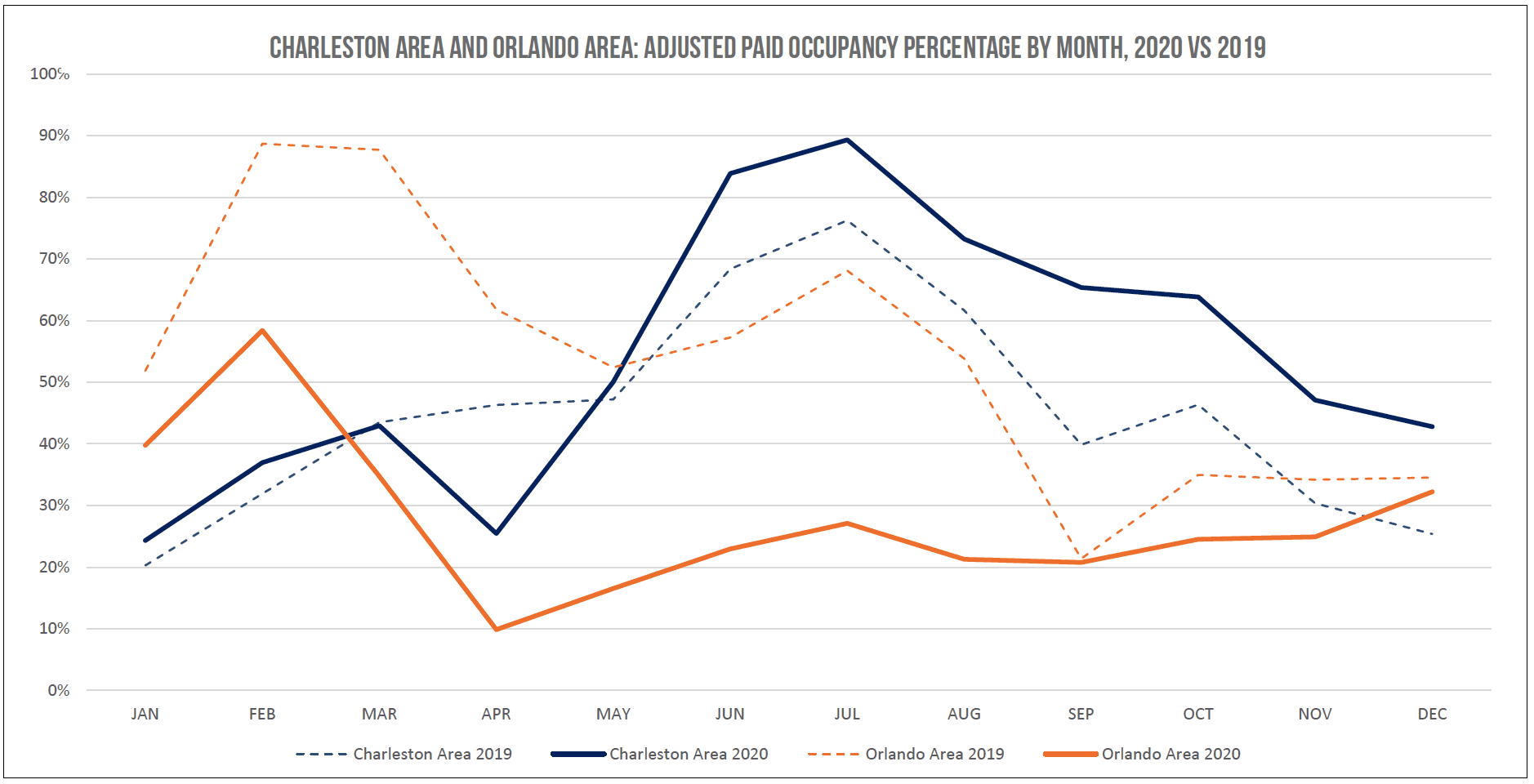
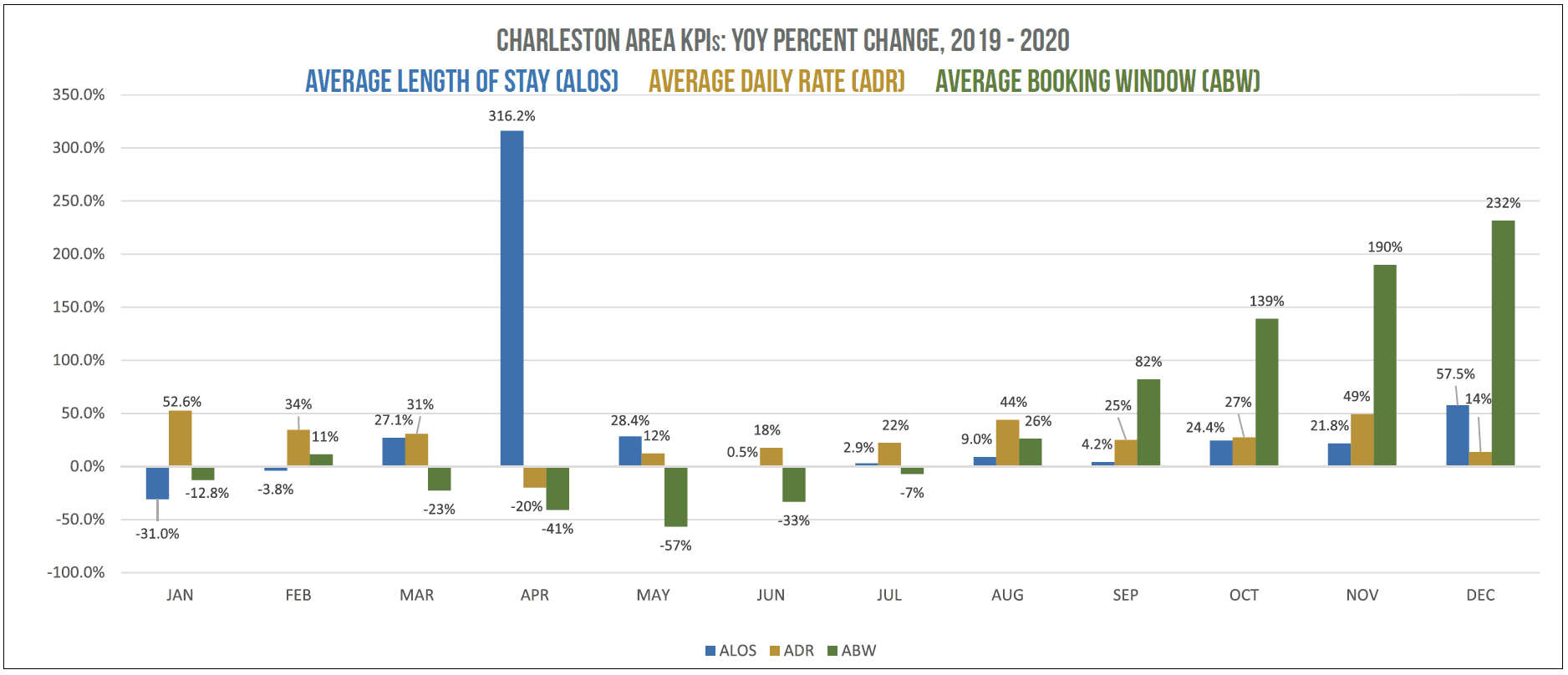
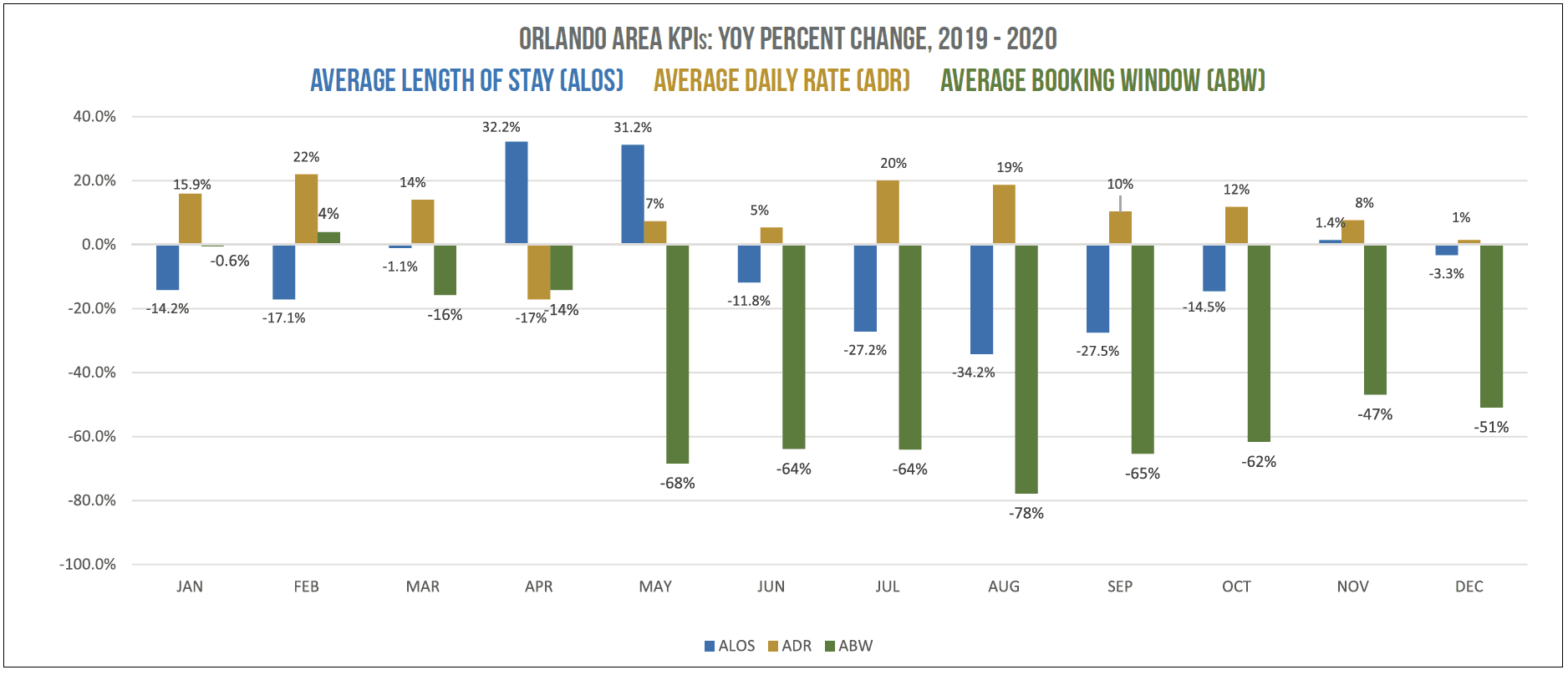
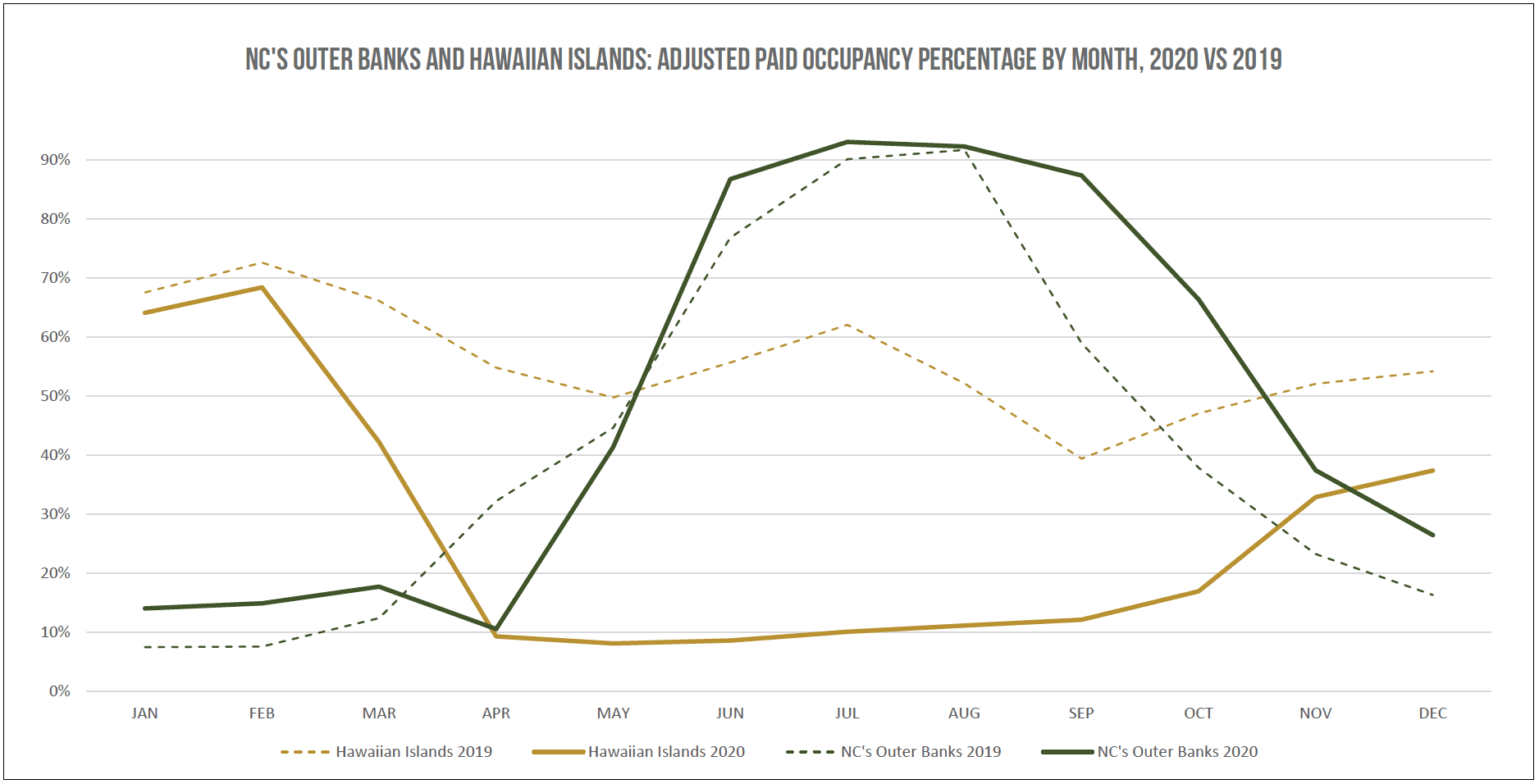
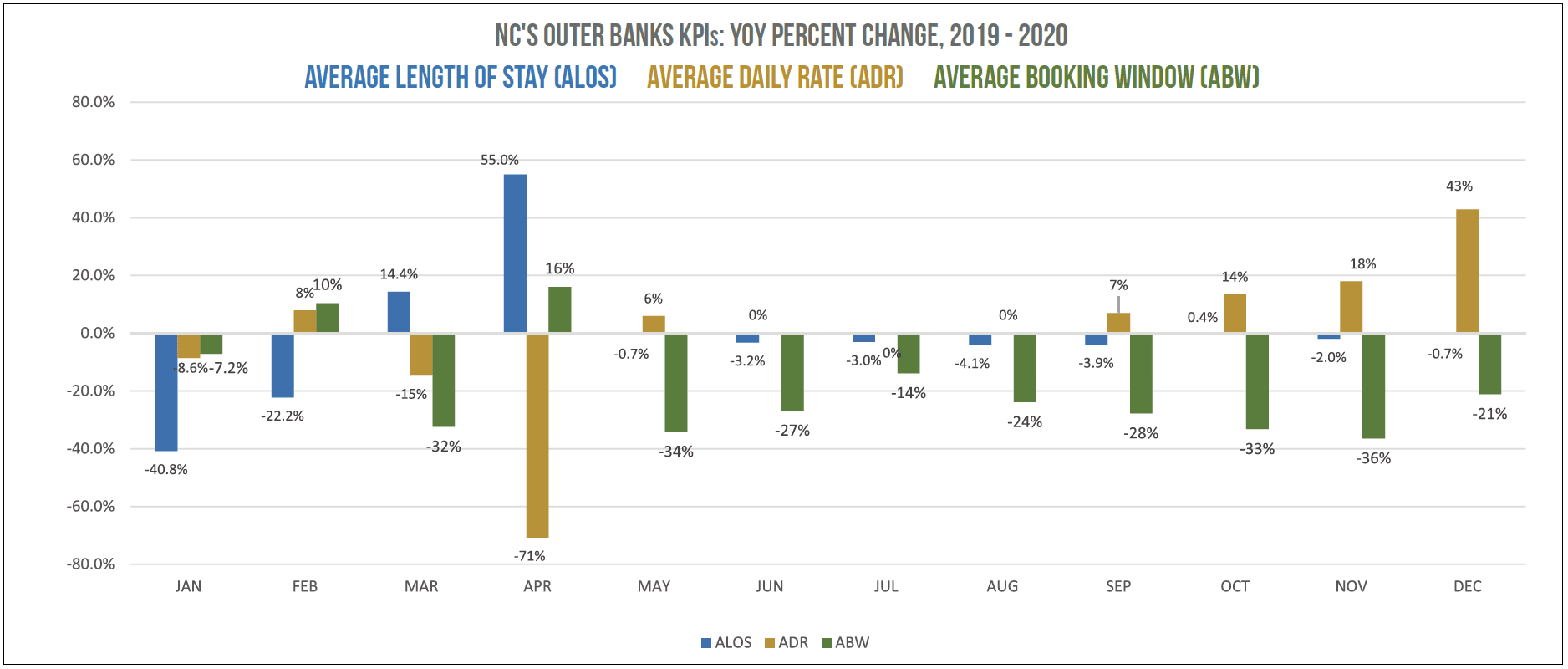
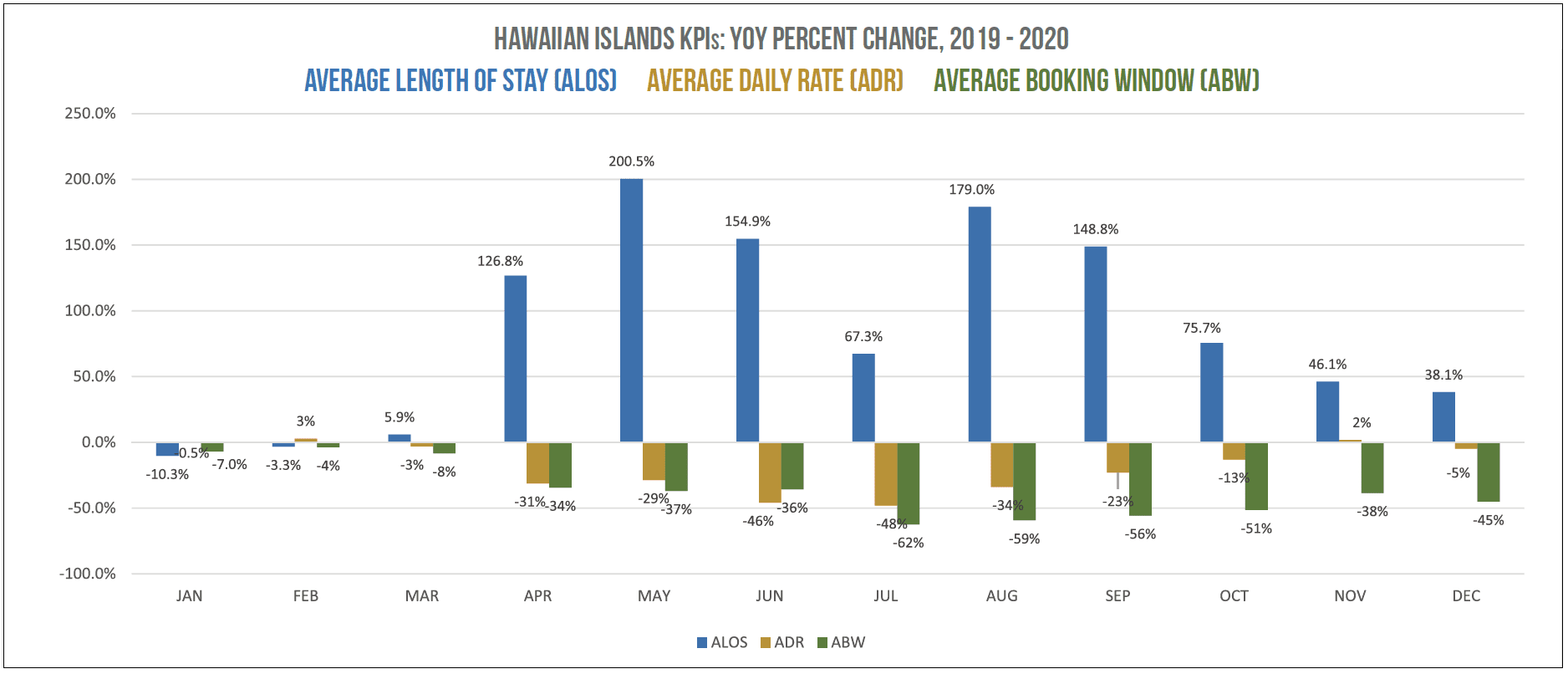
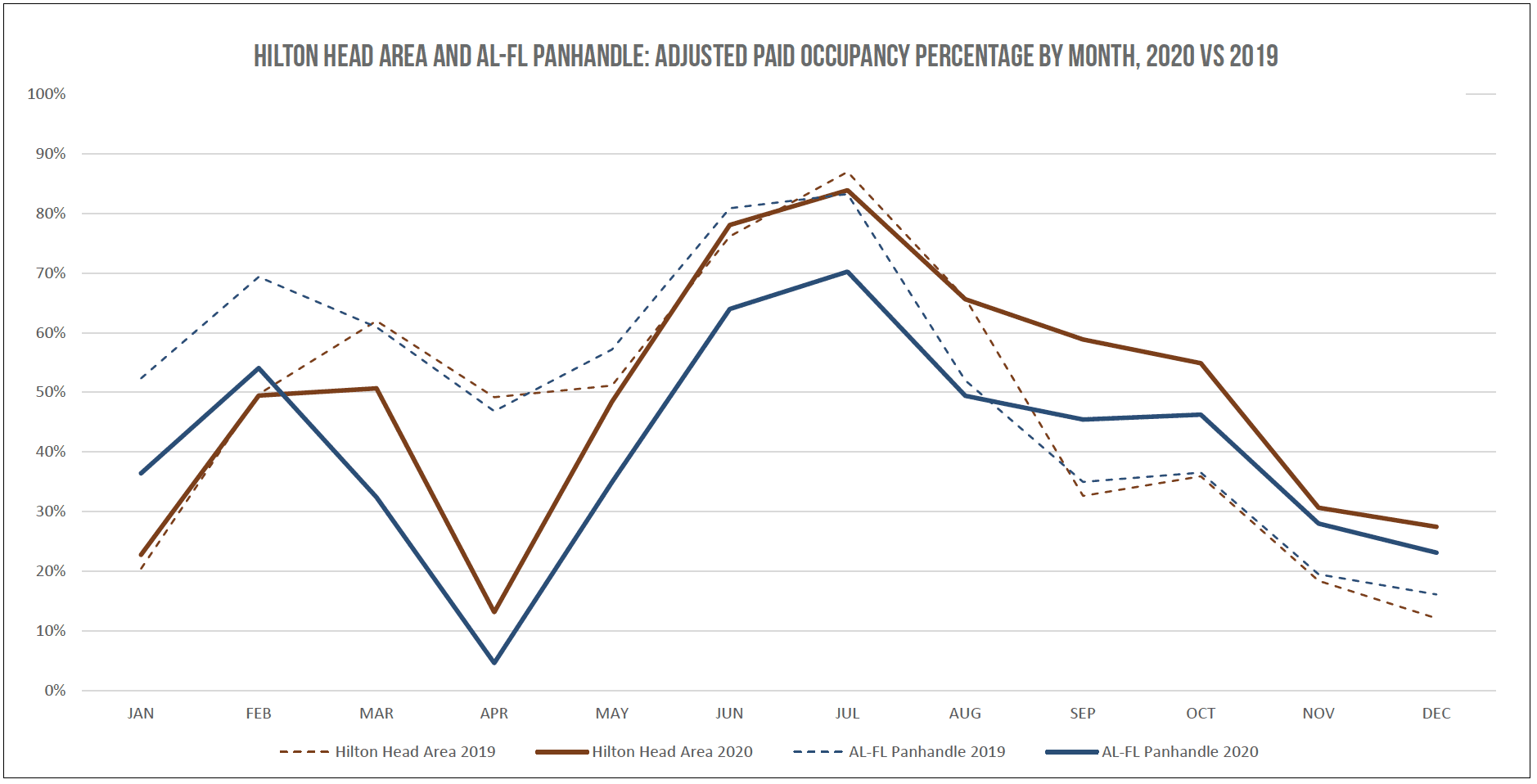


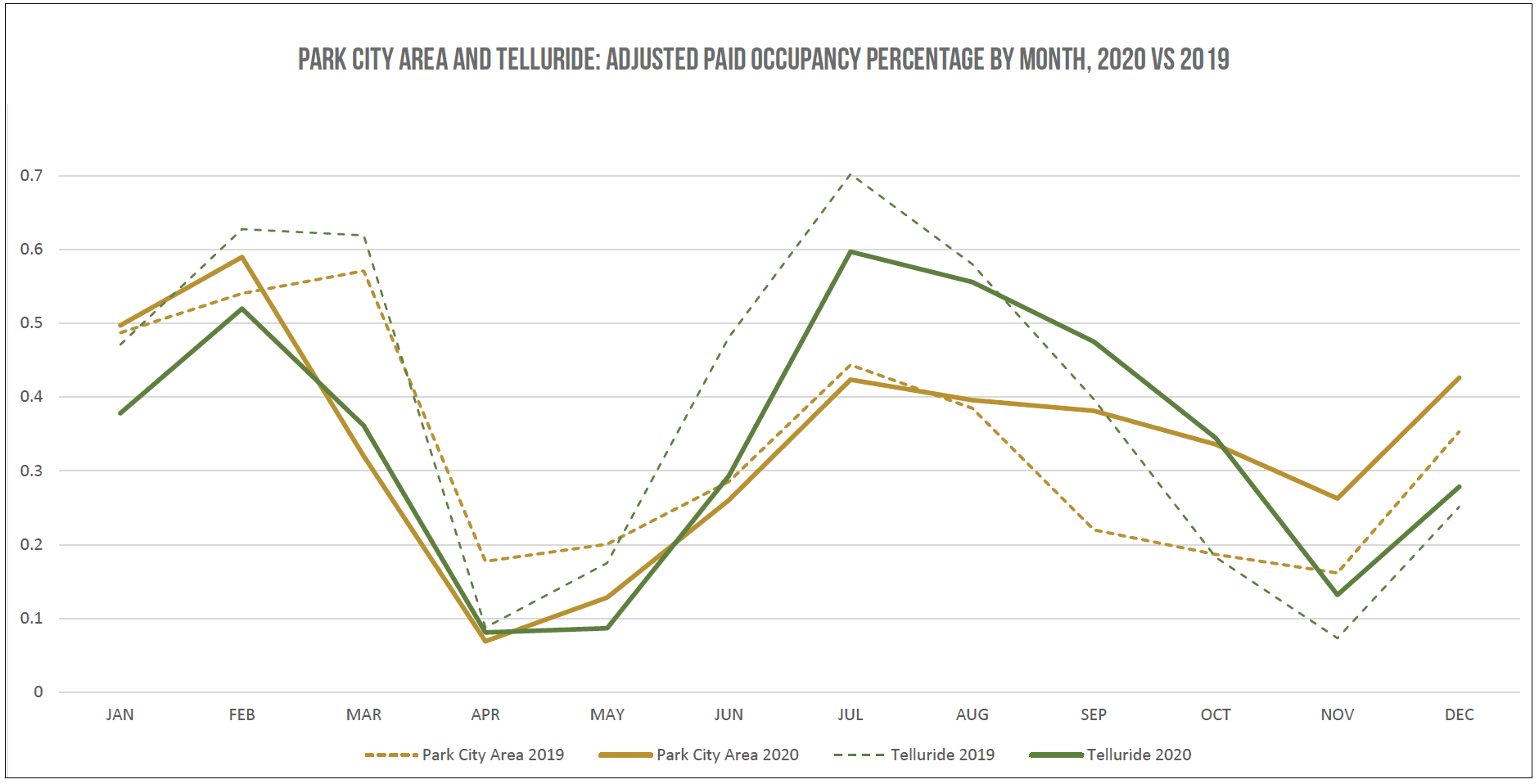
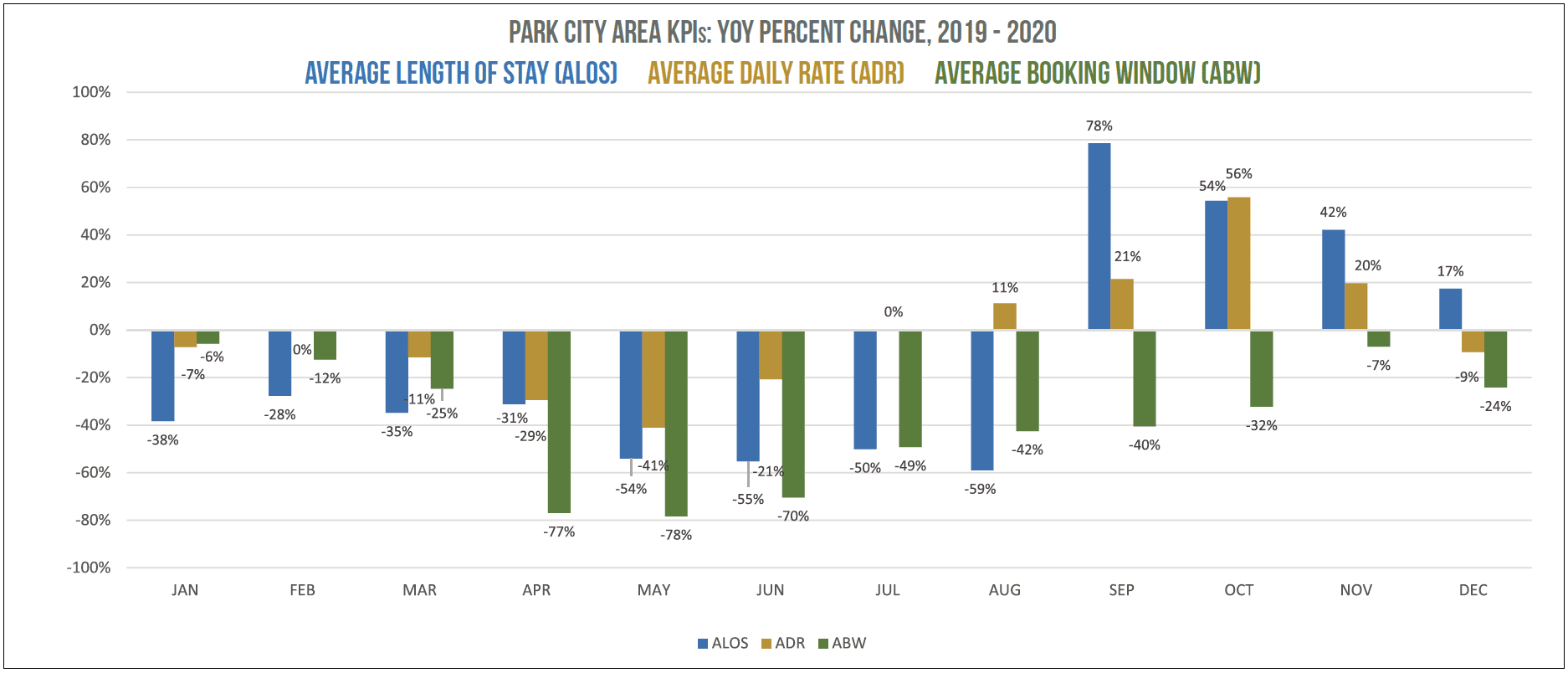
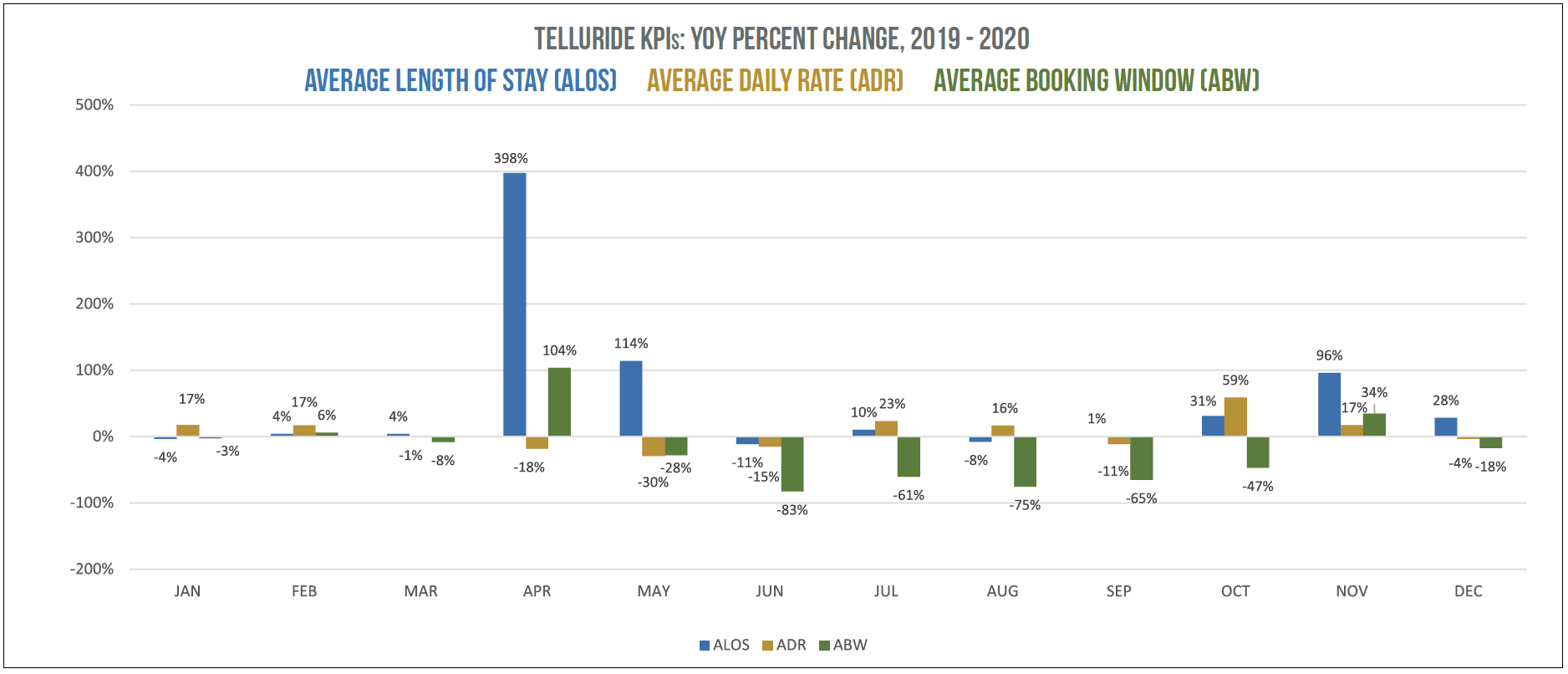
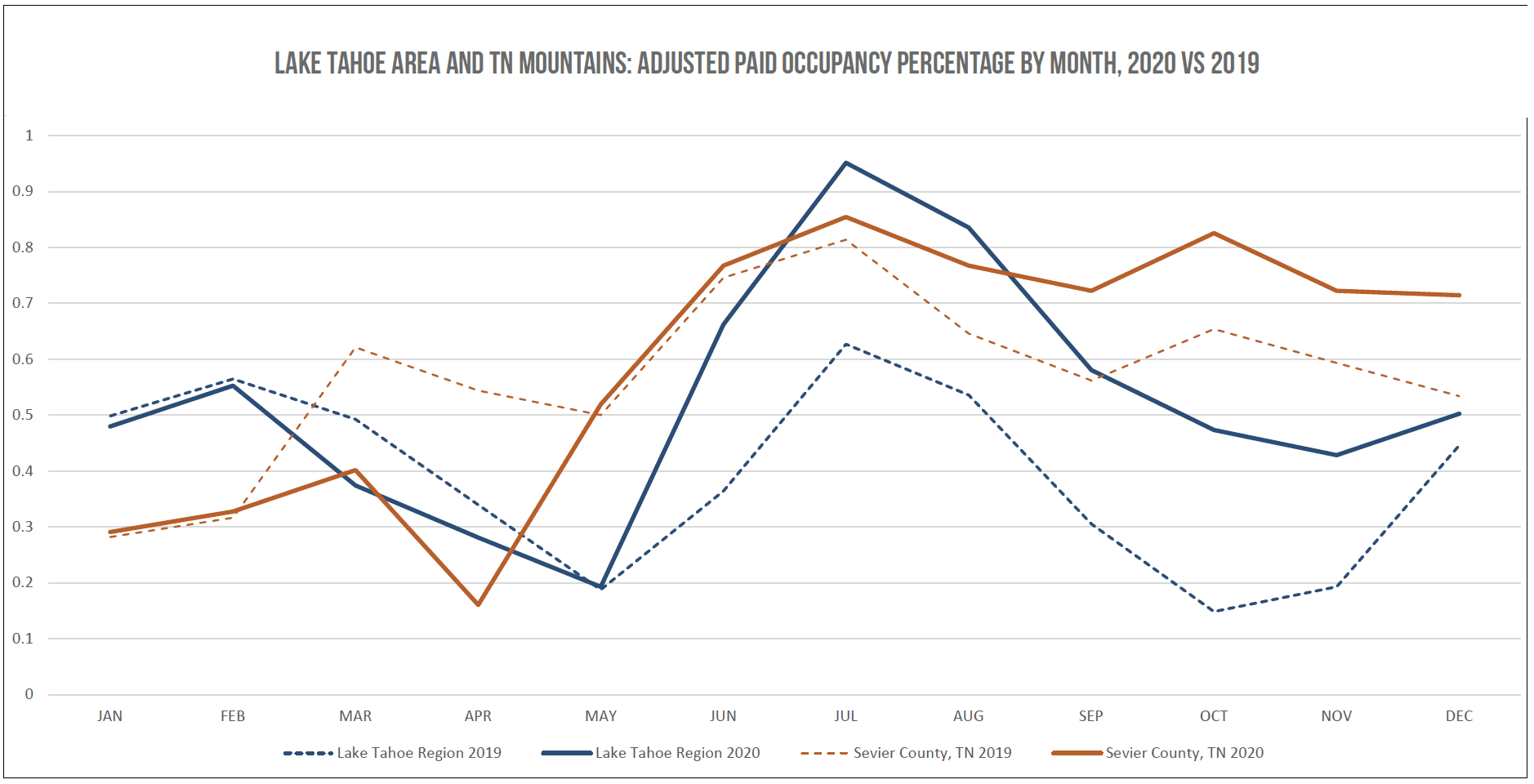
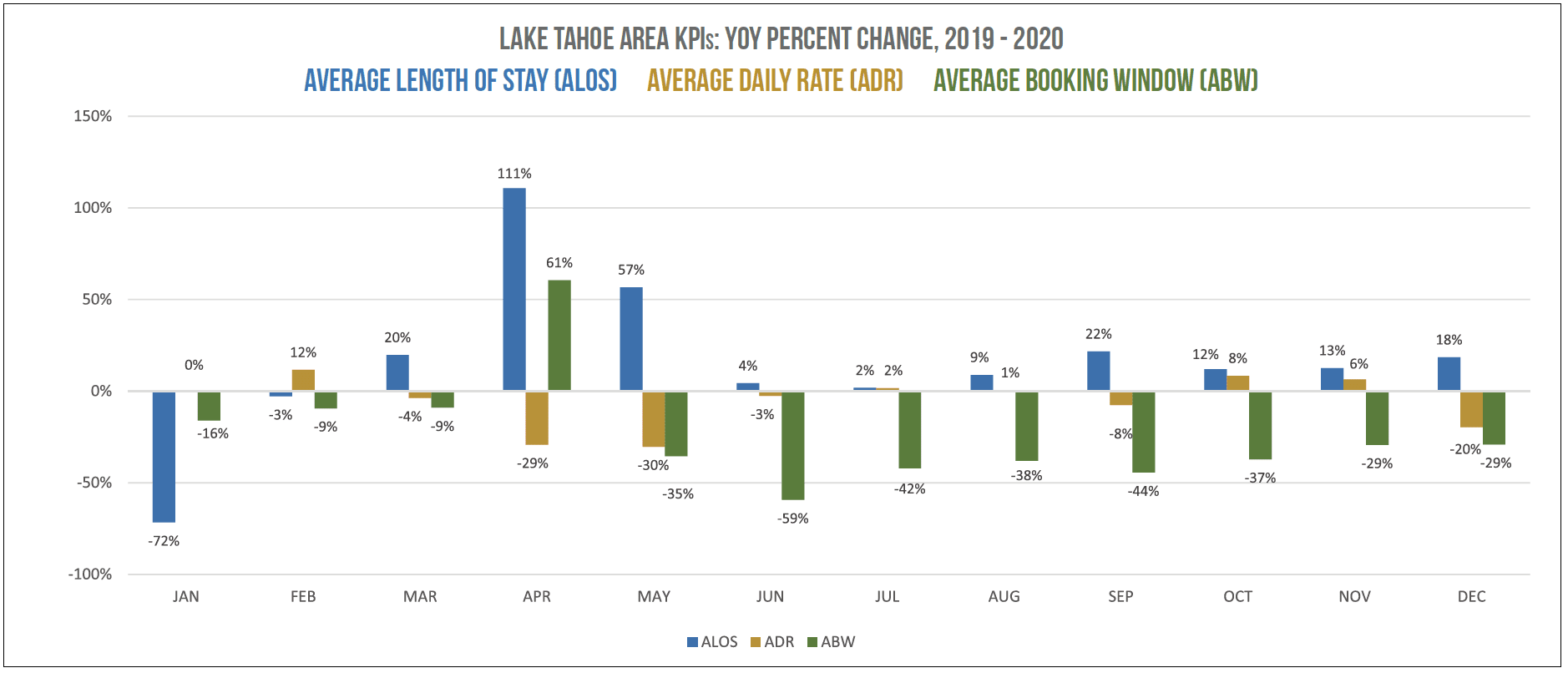
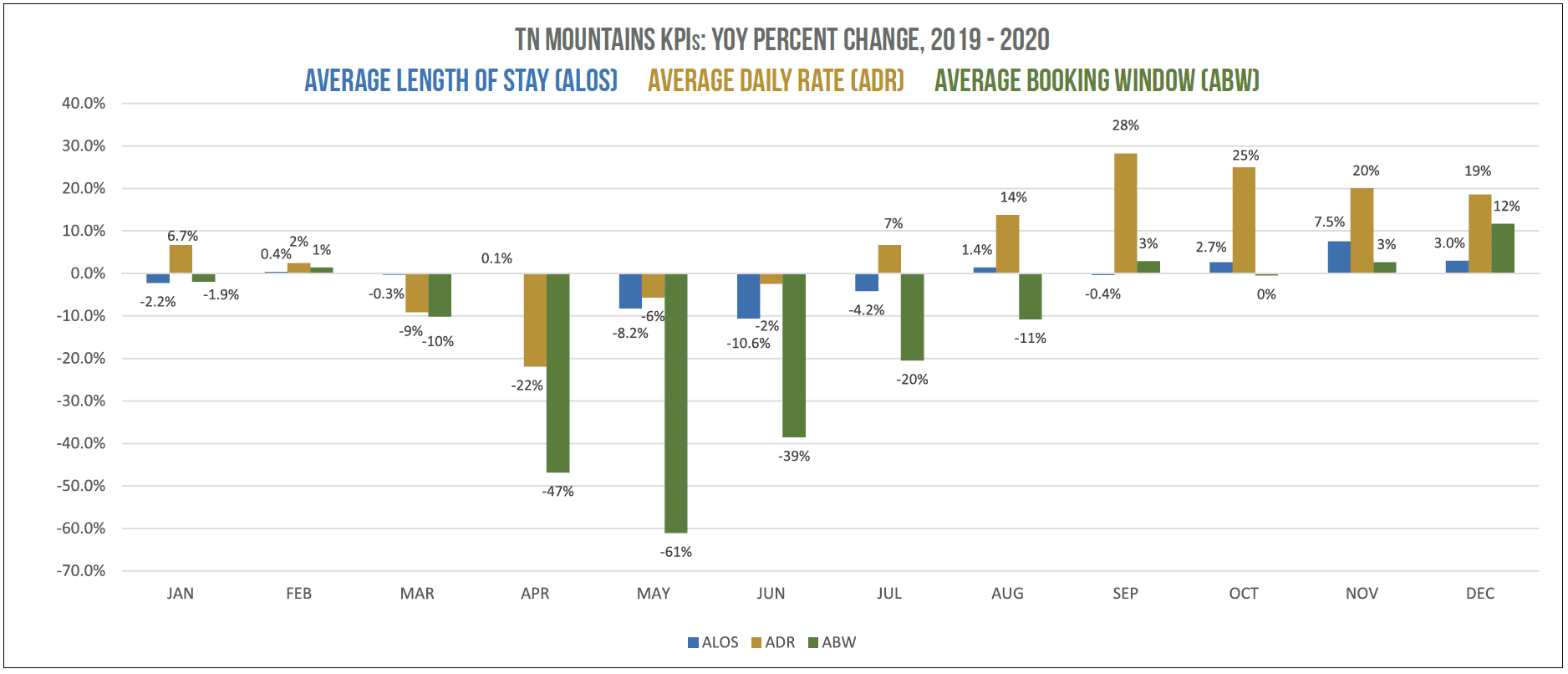
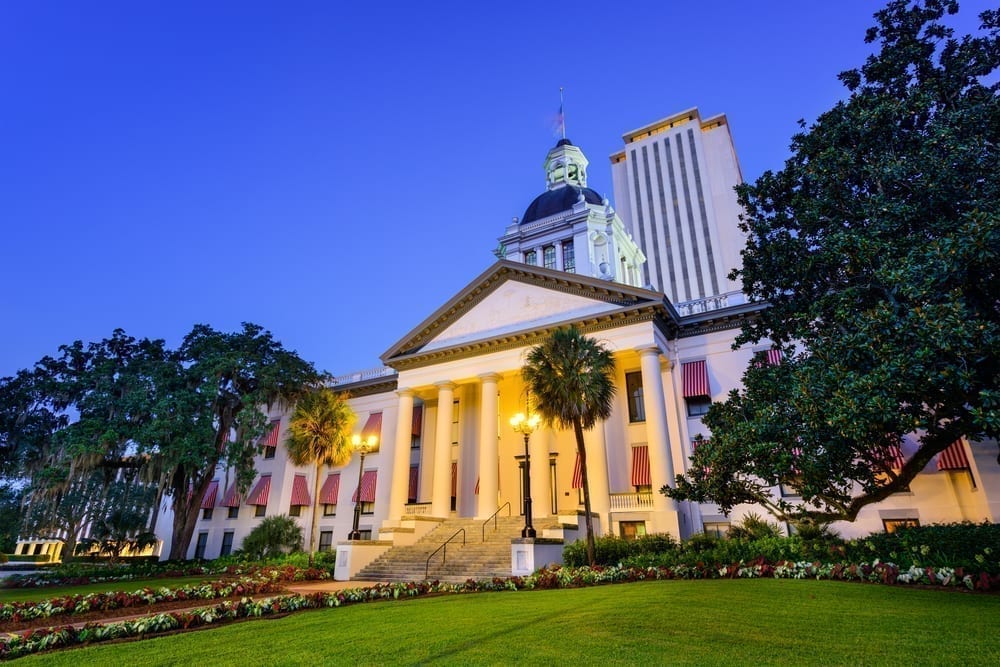
 According to Denis Hanks, executive director of


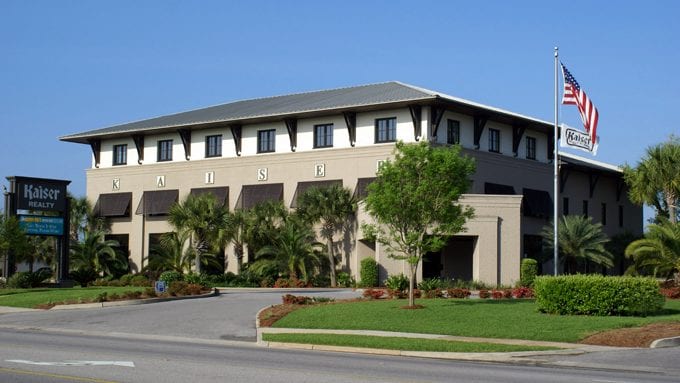
 “This has come about after decades of involvement in the industry, and because of relationships we have with owners, buyers, and sellers in Kaiser Sotheby’s International Realty,” says Glen Kaiser. “When we handle transactions for those owners, sellers, and, in some cases, new developments, they ask for recommendations for vacation rentals. It is a natural progression for us to go back into the business to recommend an alternative—and that is us.”



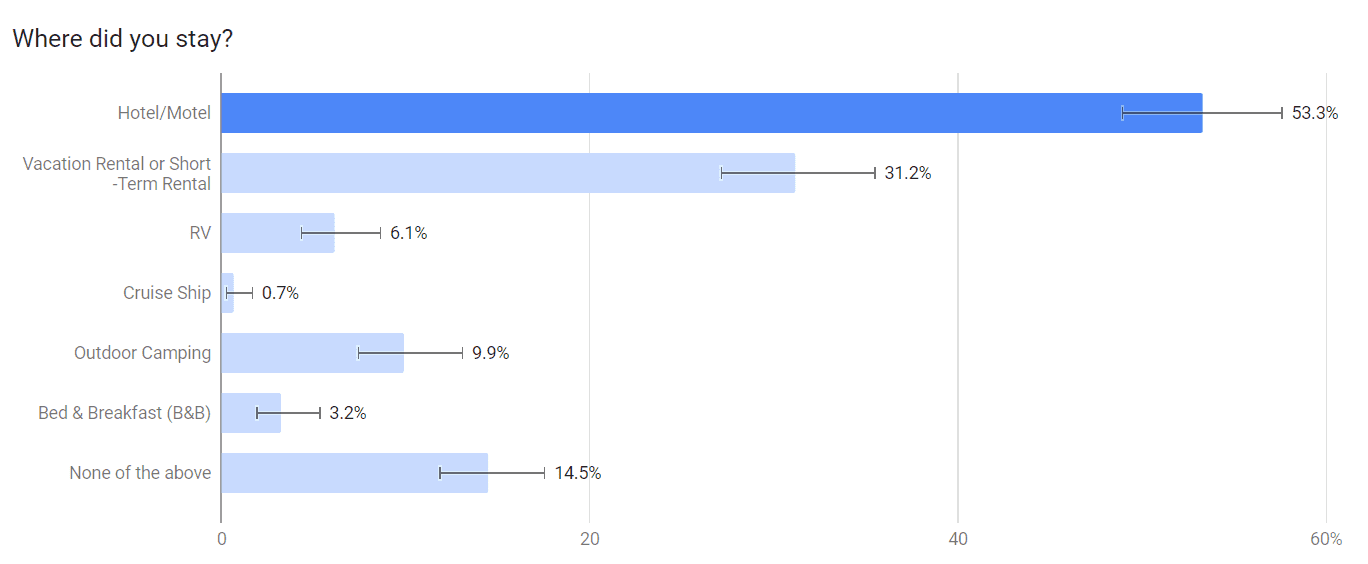
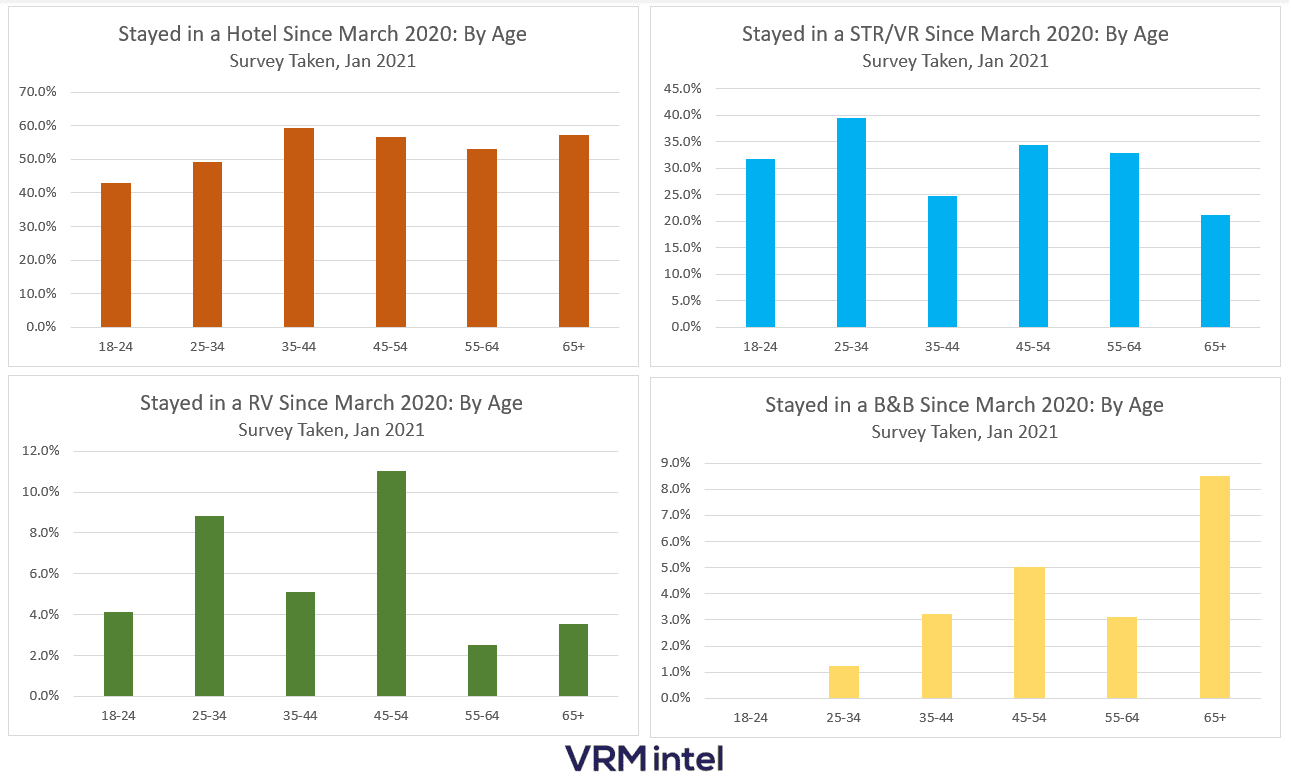


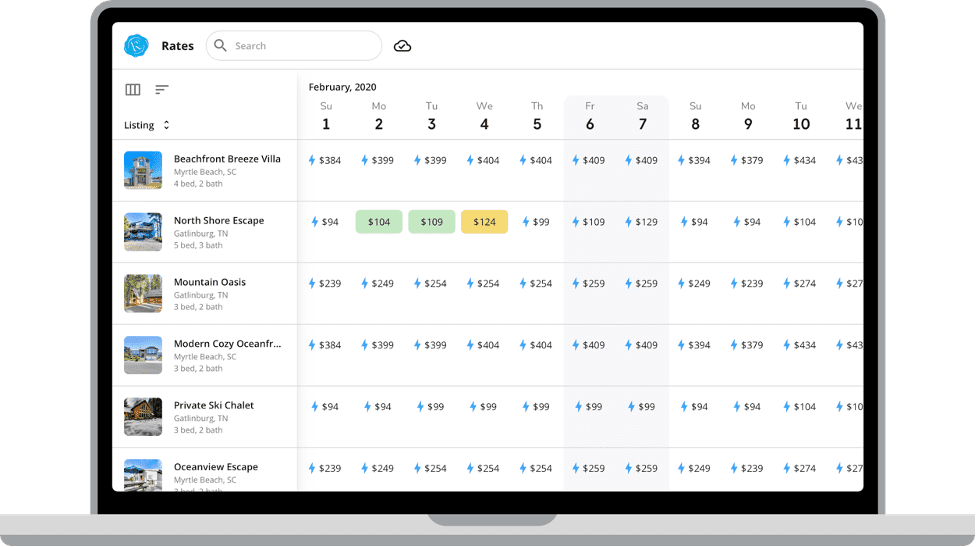
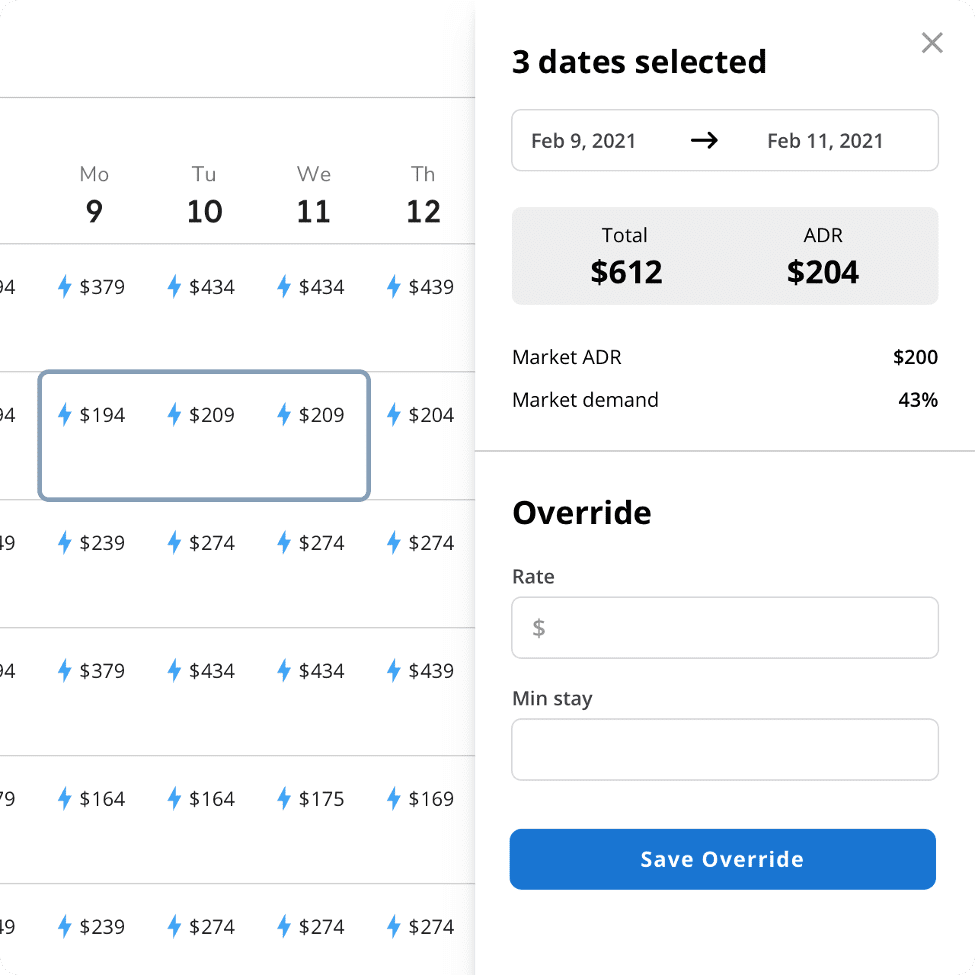
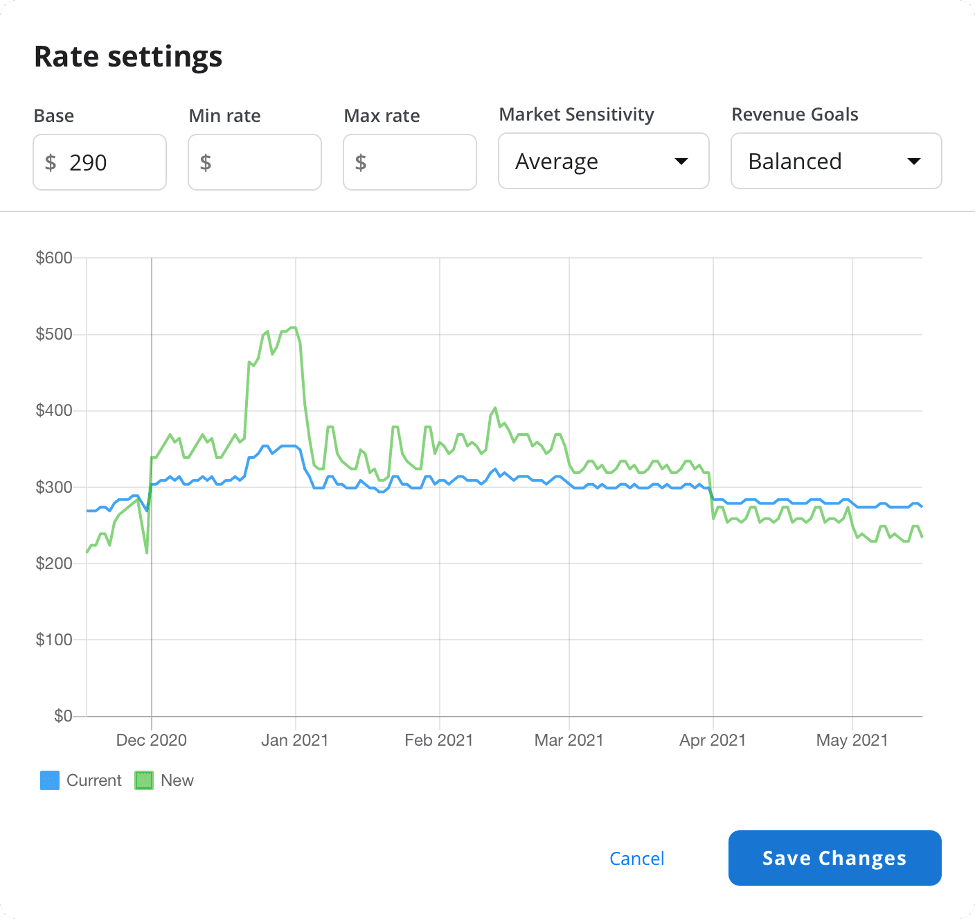

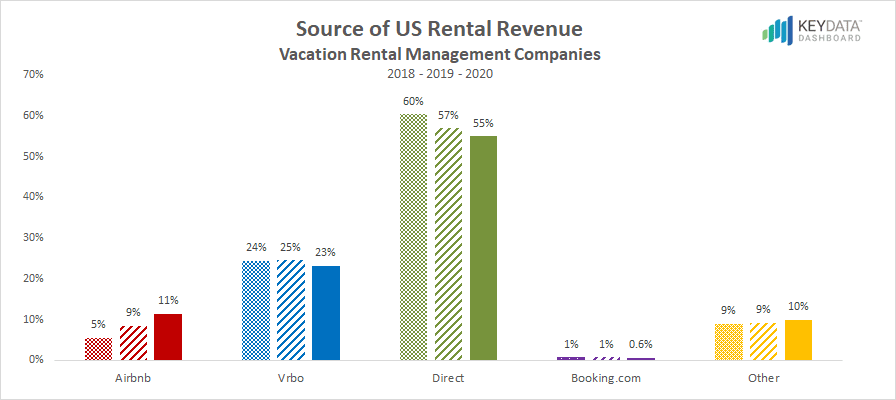
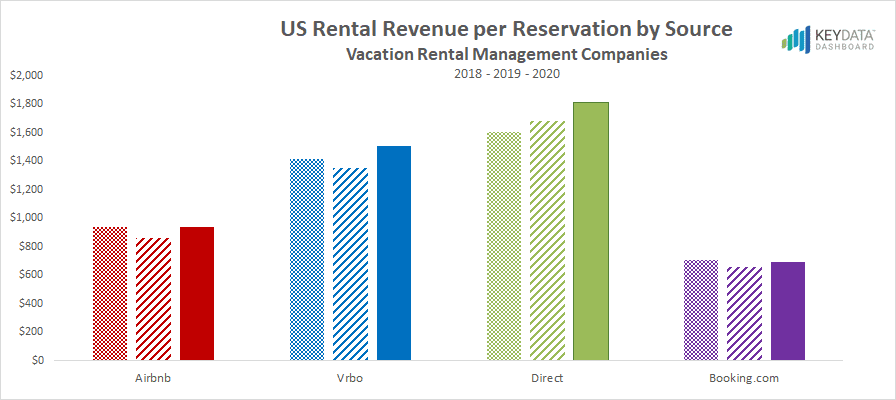
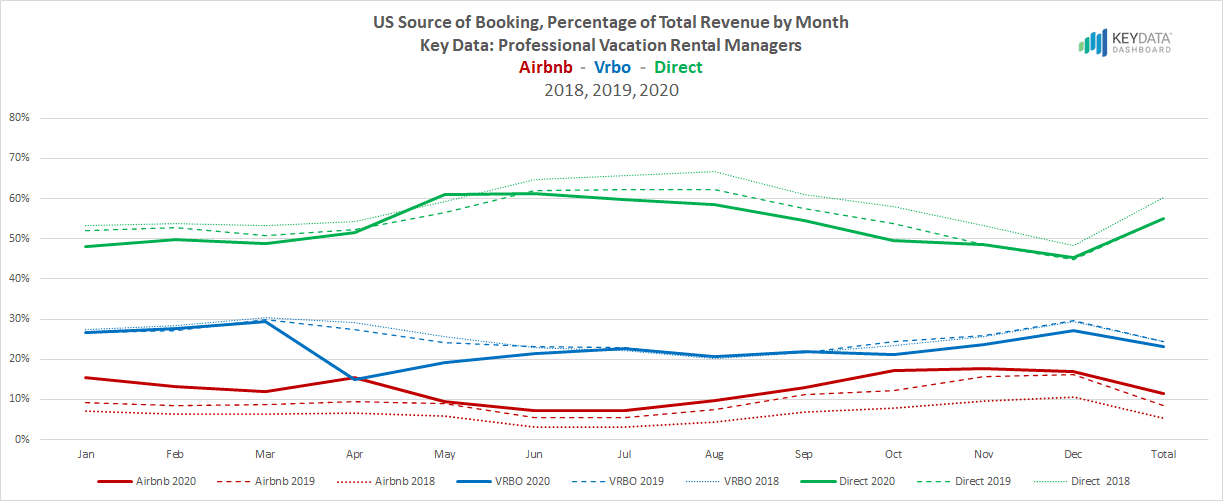

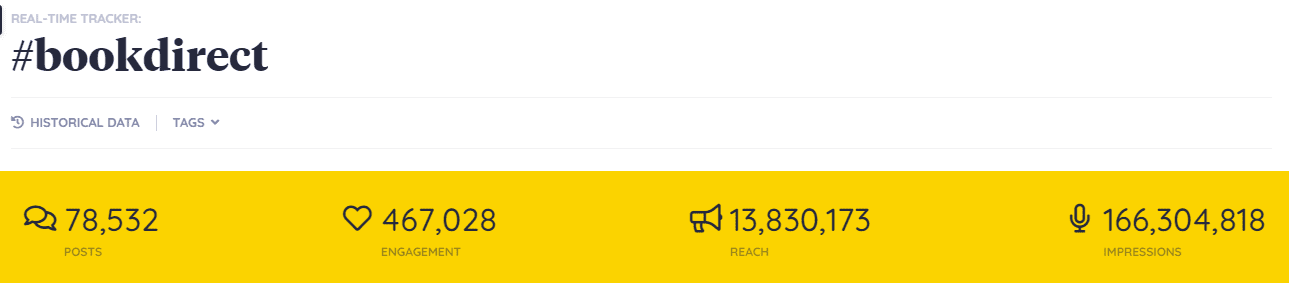


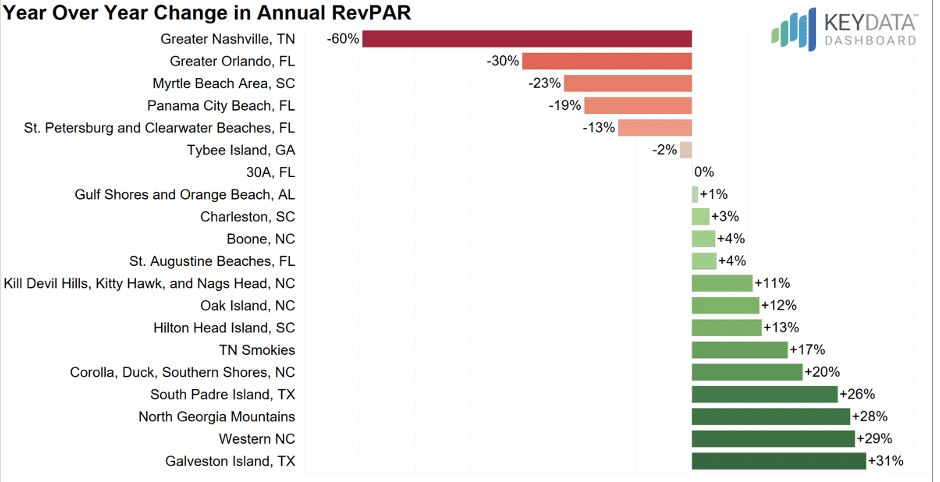
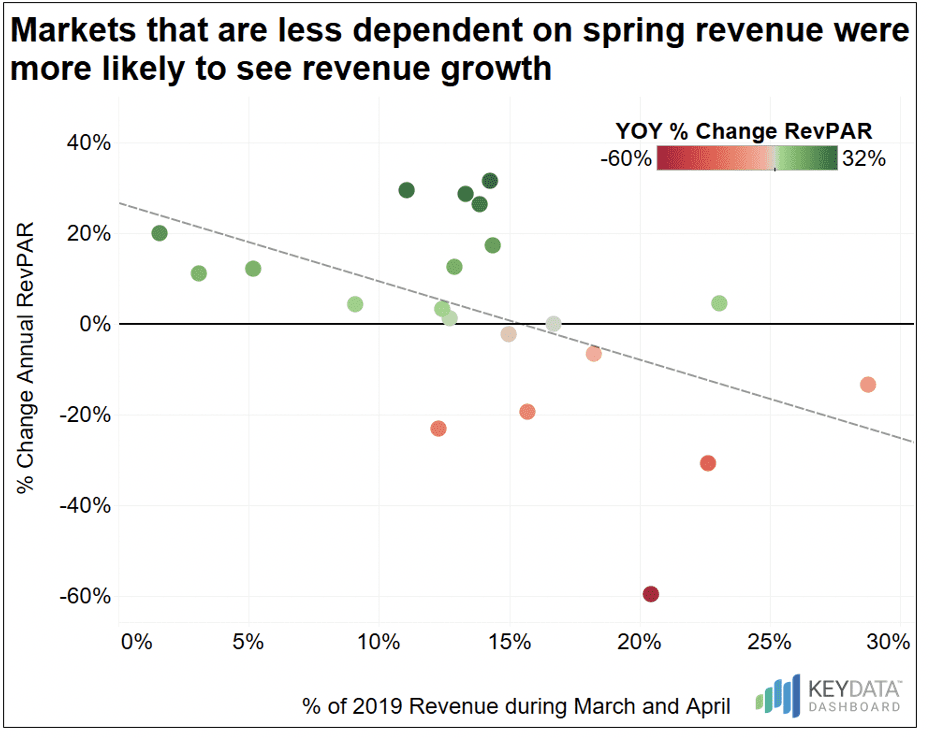
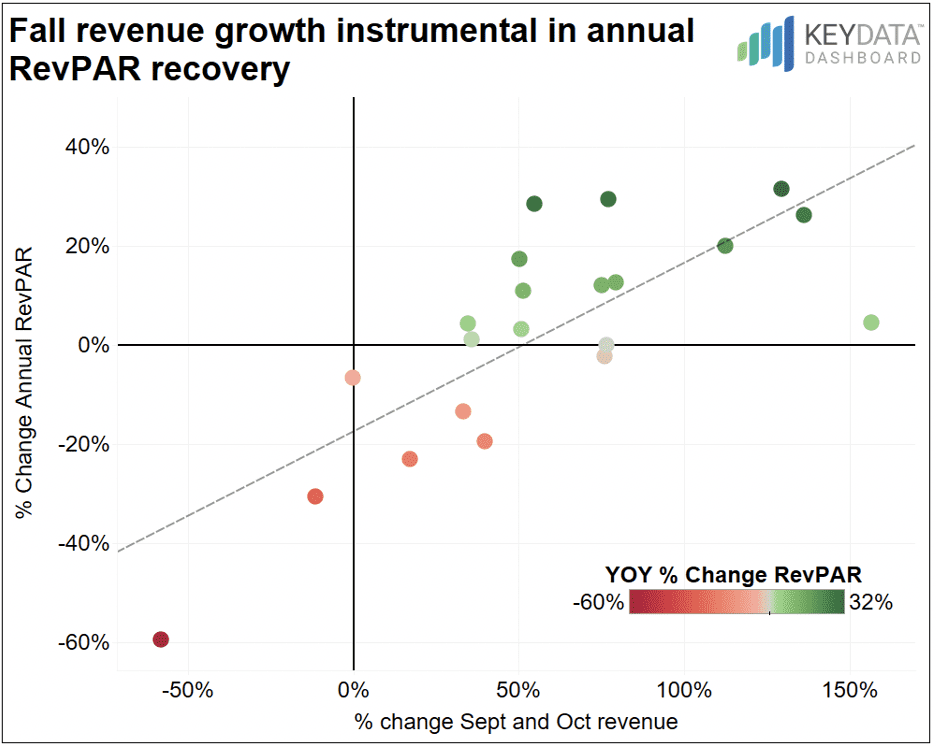
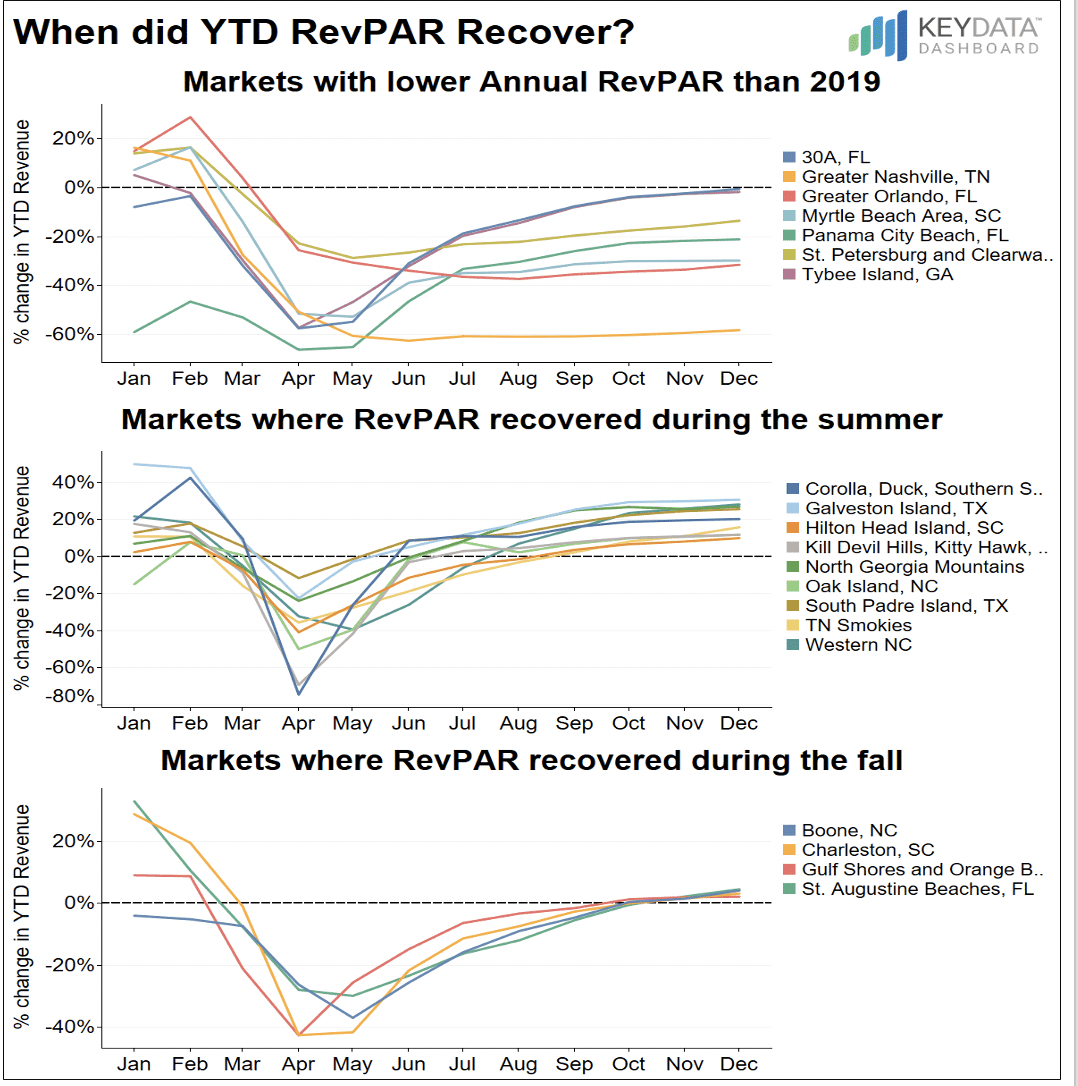
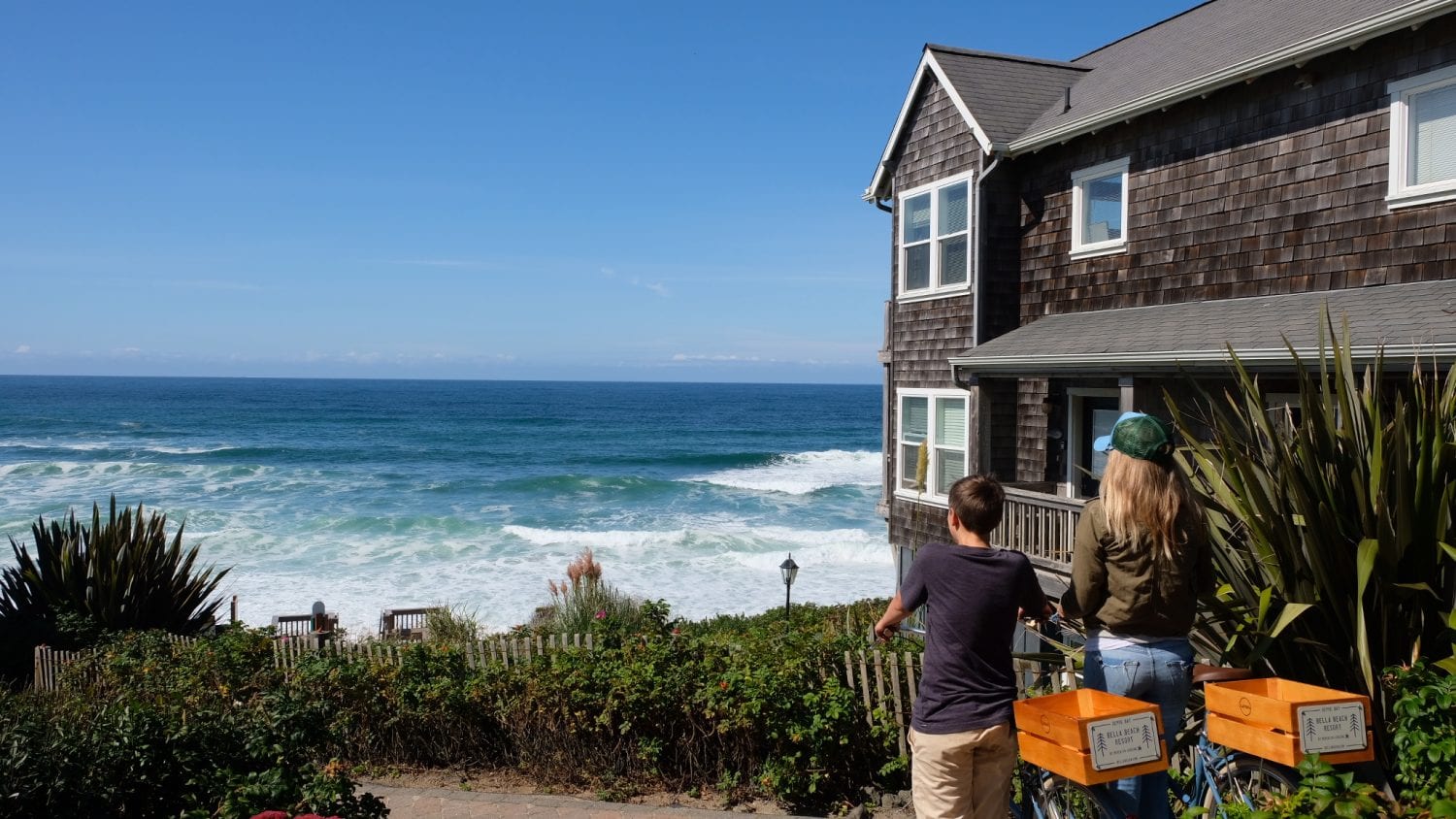

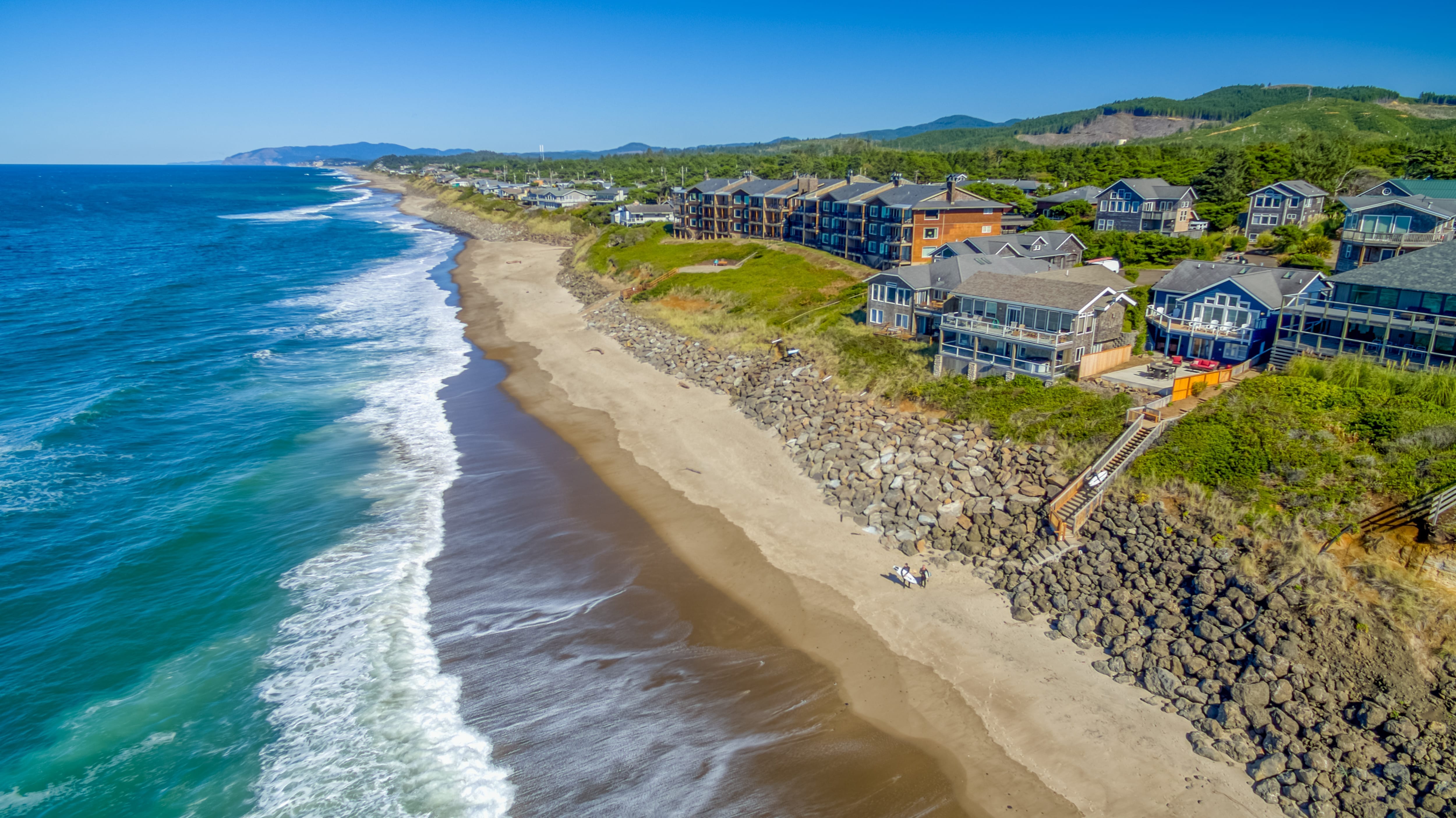

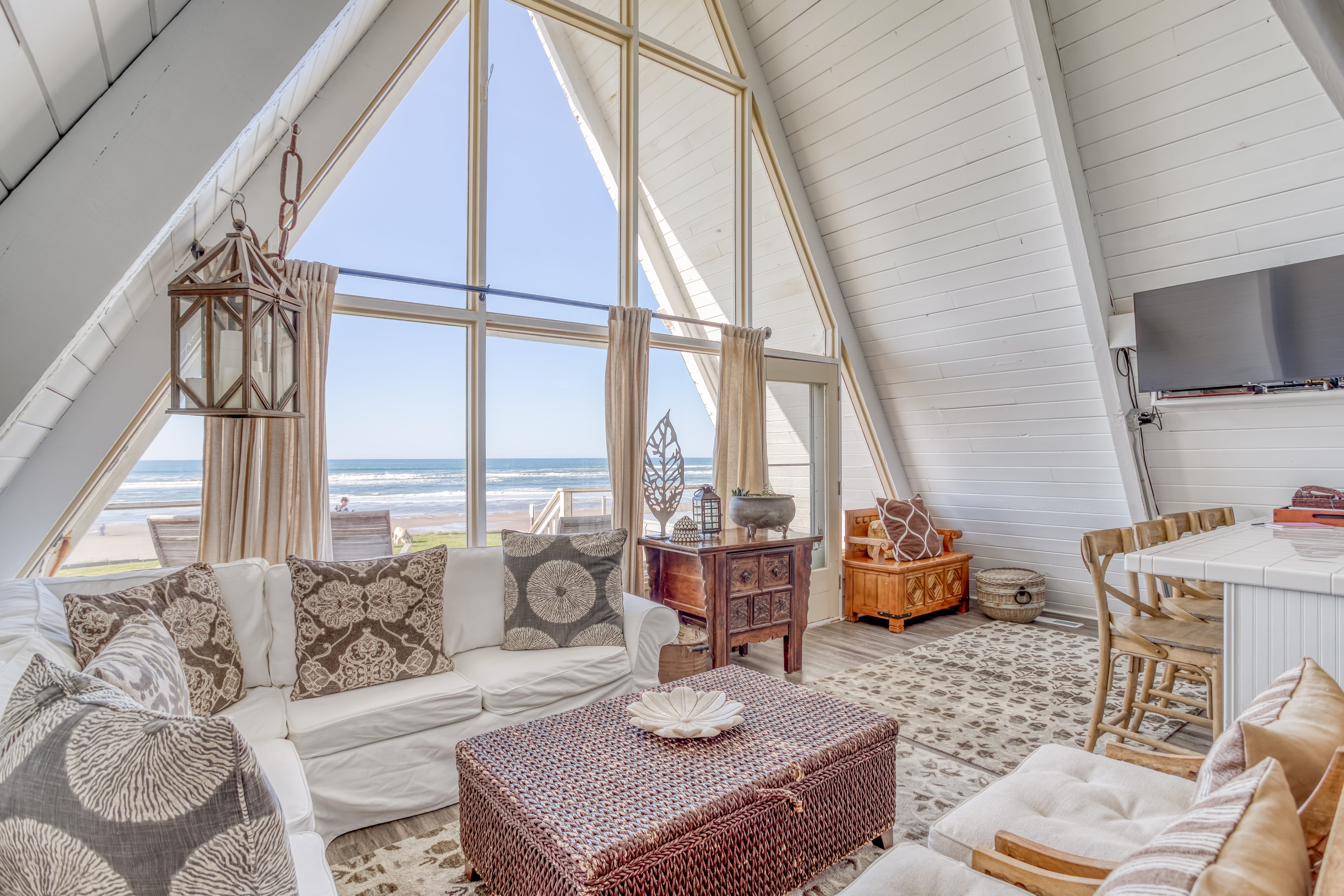



 While the amount was not disclosed, the funding will be used for additional acquisitions, investment in innovation, and to “accelerate its growth.” Lisa Stinnett will remain in her role as CEO.
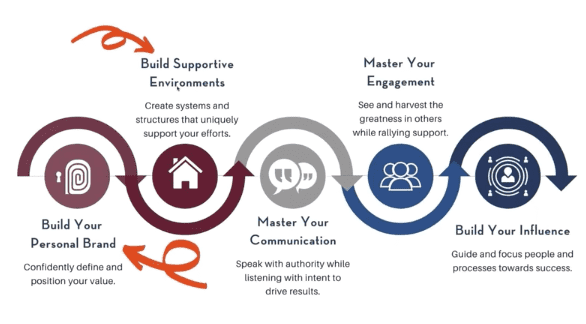 Because she says, female silence speaks volumes.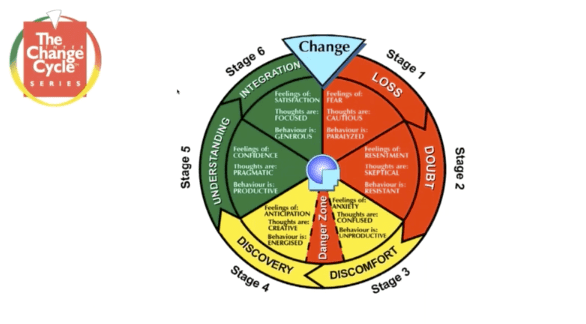
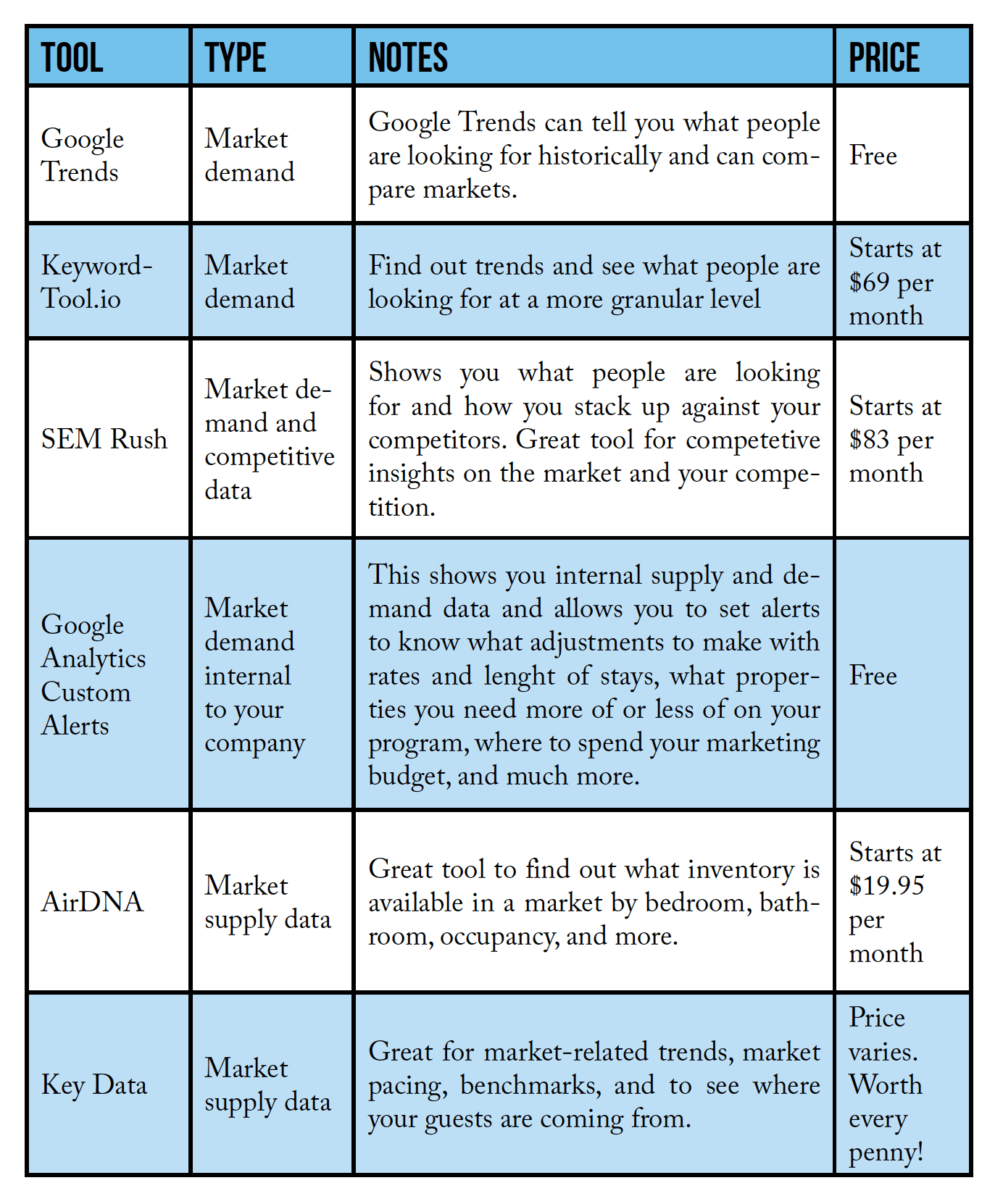

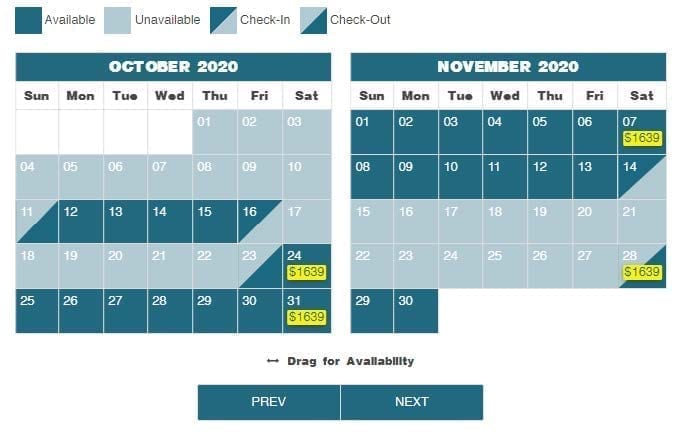 This client’s turn days are Friday, Saturday, or Sunday, and the calendar reflects that, with an inability to even select Monday to Thursday.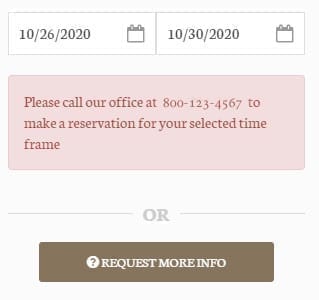
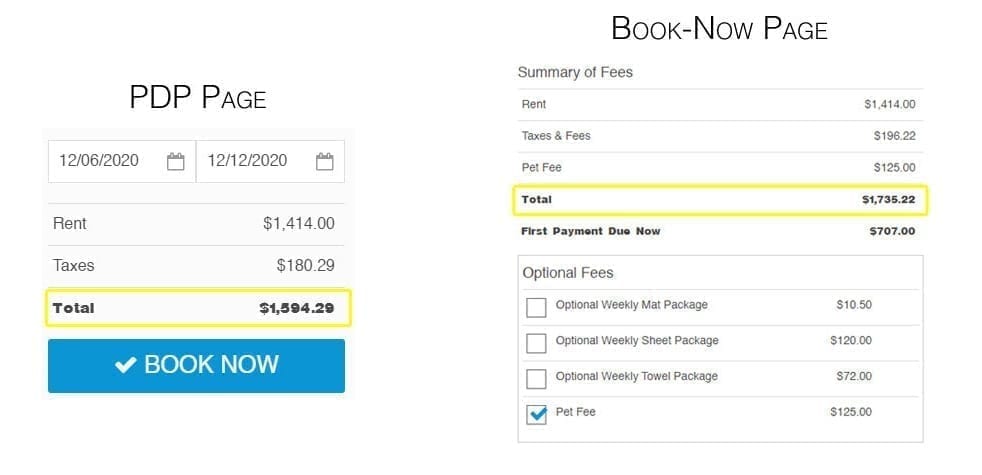
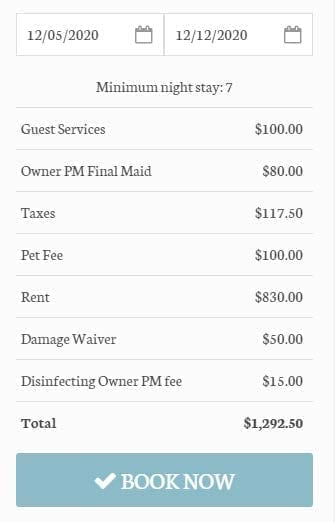
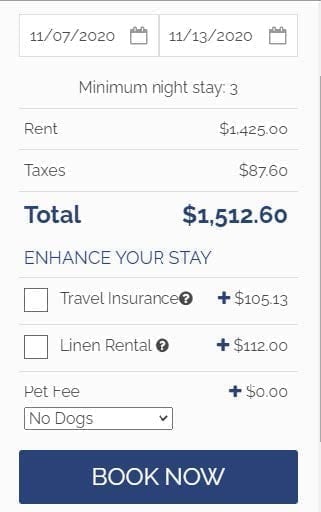
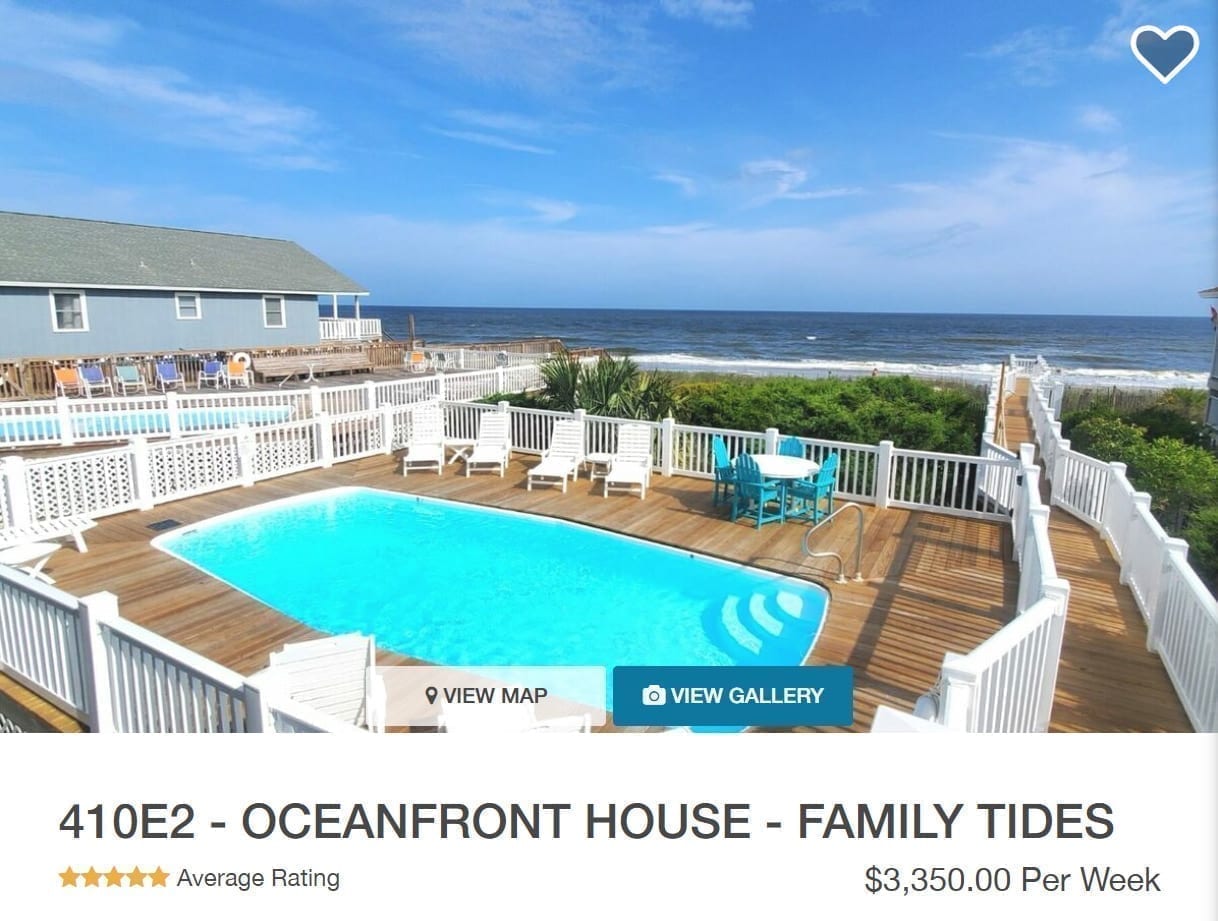 In addition to the quality of images themselves will be how your website handles the images. The file size of these images is sometimes determined by your property management system (PMS) or your website. Either way, they need to be optimized so that your PDPs load quickly. There are lots of ways to ensure this happens— perhaps your PMS can do this, or you can work with your webmaster to find alternative solutions. Slow-loading PDPs can mean the end of your visitors’ interaction with the website, especially on mobile. Your mobile appearance can draw in even smaller images too because the mobile phone display is smaller.
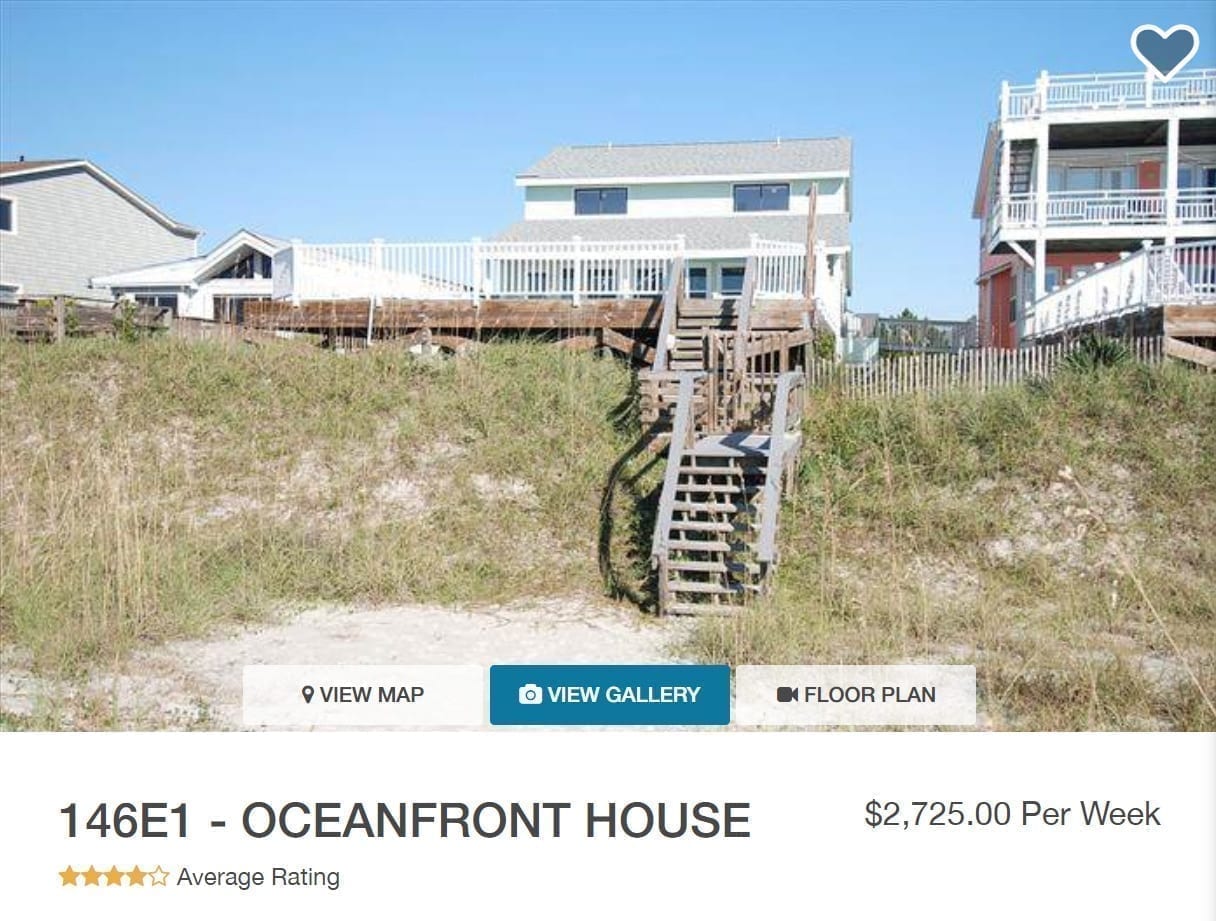 Last, ensure that the galleries on your website are easy to use and are intuitive on both desktop and mobile devices. There are many examples where website developers have crafted well-thought-out ways for website visitors to browse images. Whether it is a car dealer website, real estate website, or another vacation rental website, there are some excellent ones. Your visitors will have experienced these optimal picture galleries, and if yours are outdated and hard to use, the visitor will lose some confidence in your website.
 These two aspects of a finely tuned PDP are also becoming more common in today’s vacation-rental online landscape. Providing professional walk-throughs or third-party virtual tours is an investment that can make the difference. Whether you have one or both features on your website means you will stand out among the best competition. Well-done videos can do what pictures cannot and help seal the deal. Likewise, virtual tours can help visitors get a sense of multiple-family vacation homes for those considering a larger property.
 A visitor seeking a vacation rental may be taking the lead in finding their choice vacation accommodations, and they’re going to want to see what their family and friends think about it. Certainly, they can use any website URL of a PDP (I bet many of you today don’t even share by copying and pasting the URL), but if you include noticeable social media-sharing buttons, they may get used. Apart from the convenience in bringing your visitor to your site, these sharing capabilities take your website into social media sandboxes. You may be helping provide some free organic advertising if, for example, they post these homes publicly and their friends see what they’re considering.
 Don’t lose your potential guests due to distraction or hesitation; don’t miss an opportunity for lead capture. A “remind me to book” feature works by providing an opportunity for your visitors to send themselves a reminder about the property and dates they were interested in. They can have an email sent to them with the PDP of the rental they have chosen, allowing them to return to book more easily it later. This is especially helpful these days when so much shopping is done on mobile devices, but with a big-ticket item like a vacation rental, the visitor may feel more comfortable finalizing their decision later.
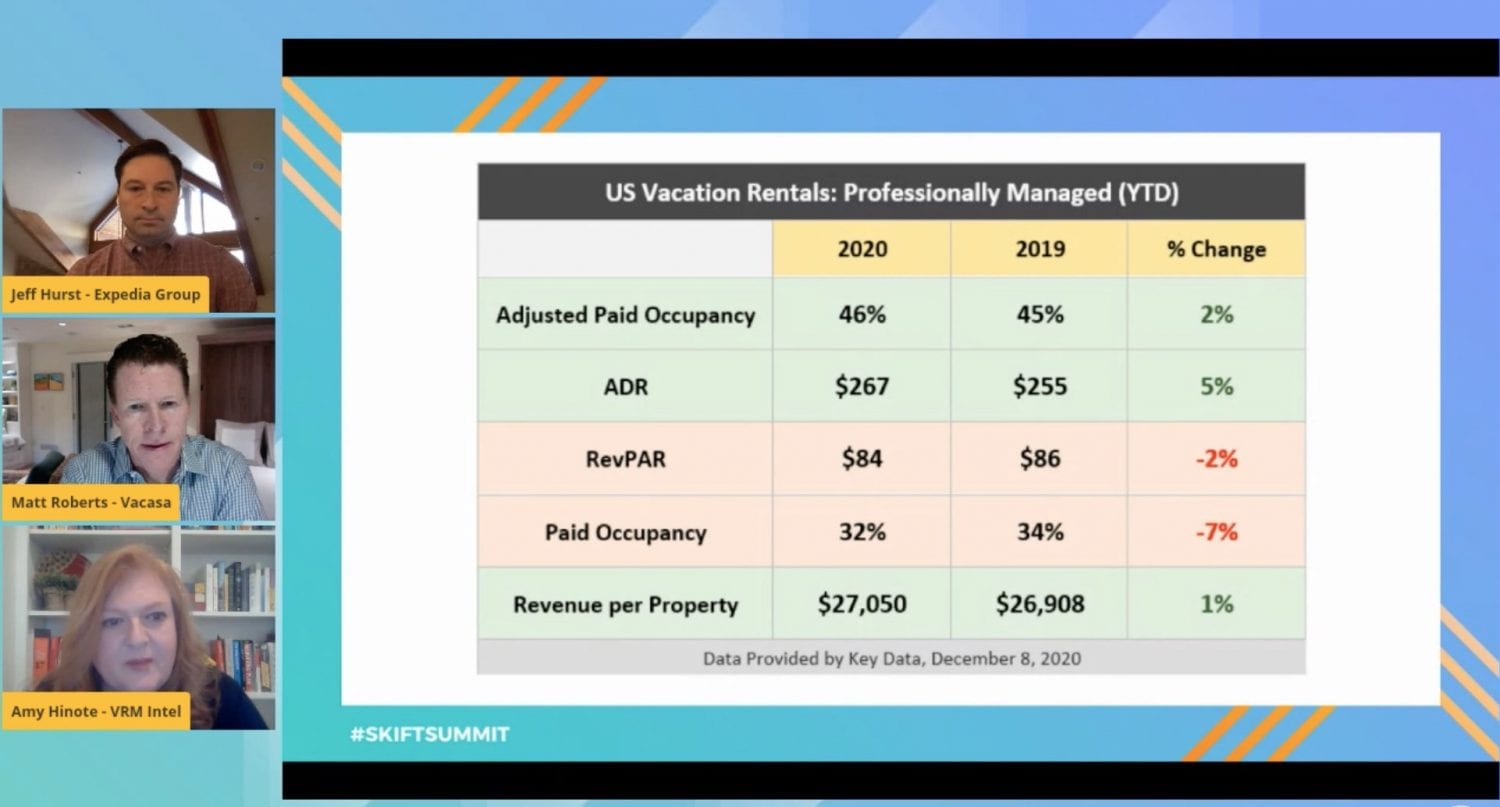
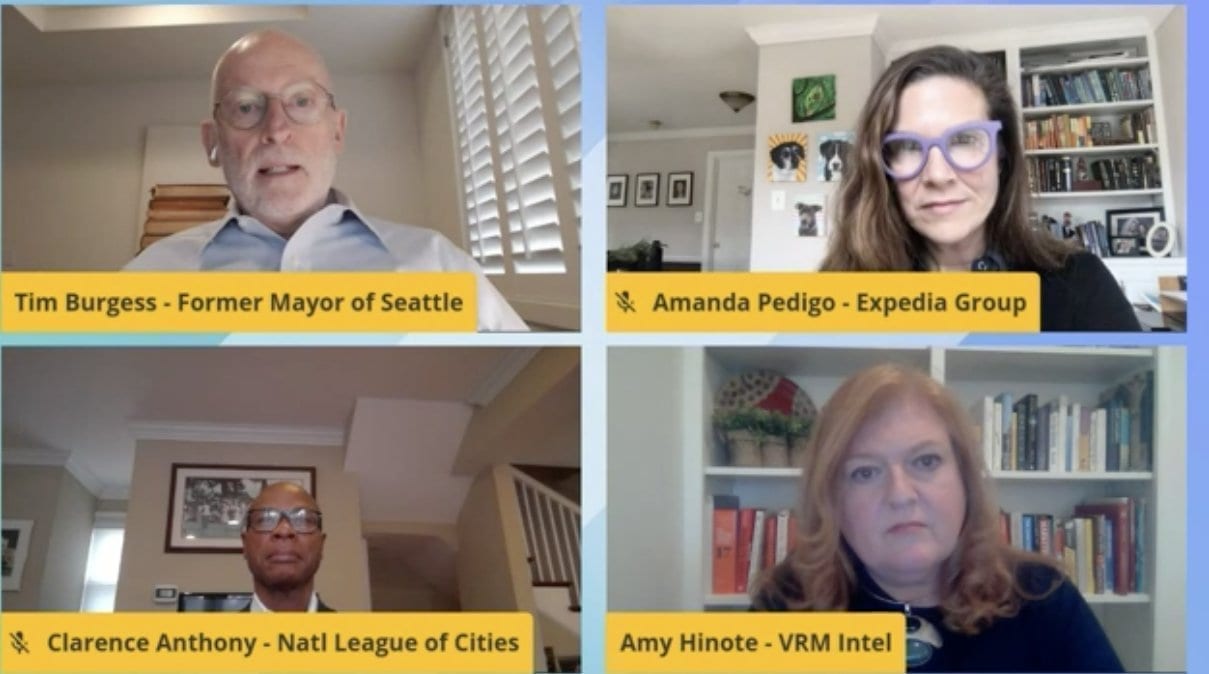

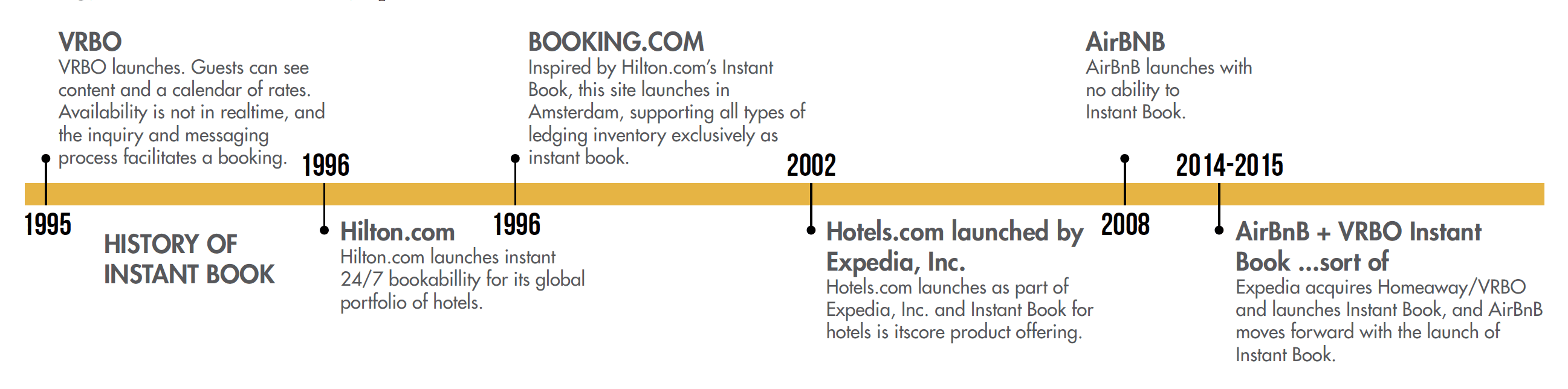
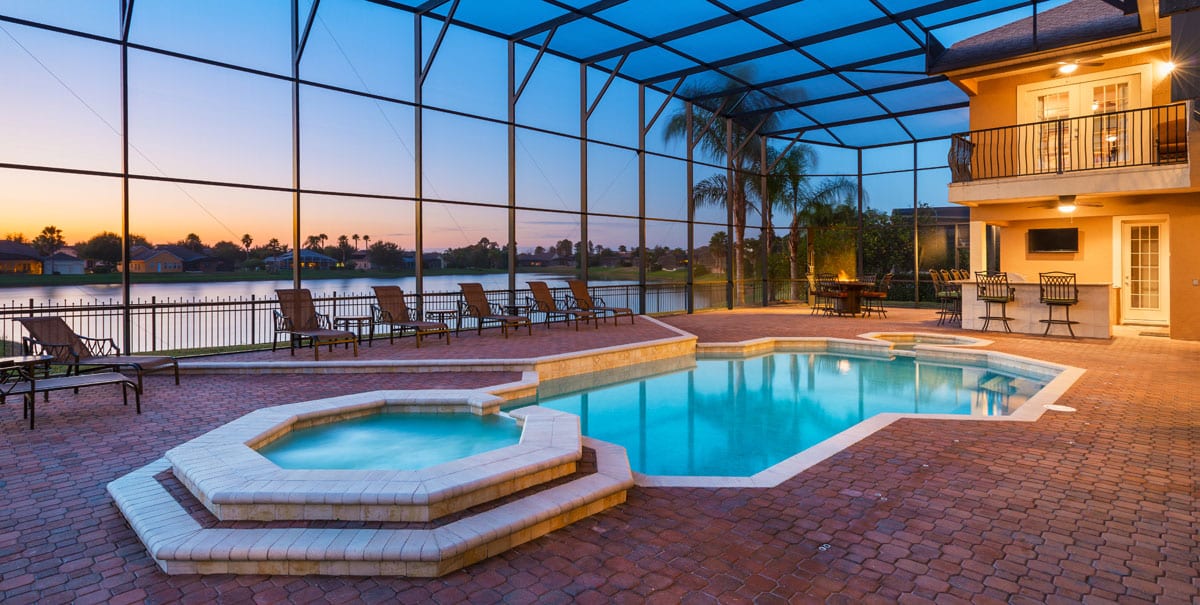
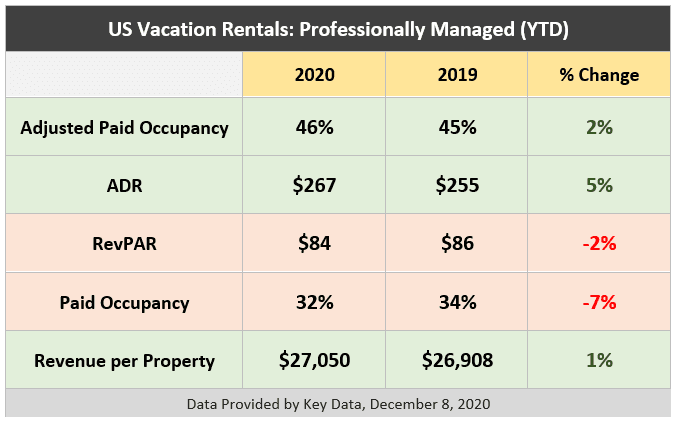
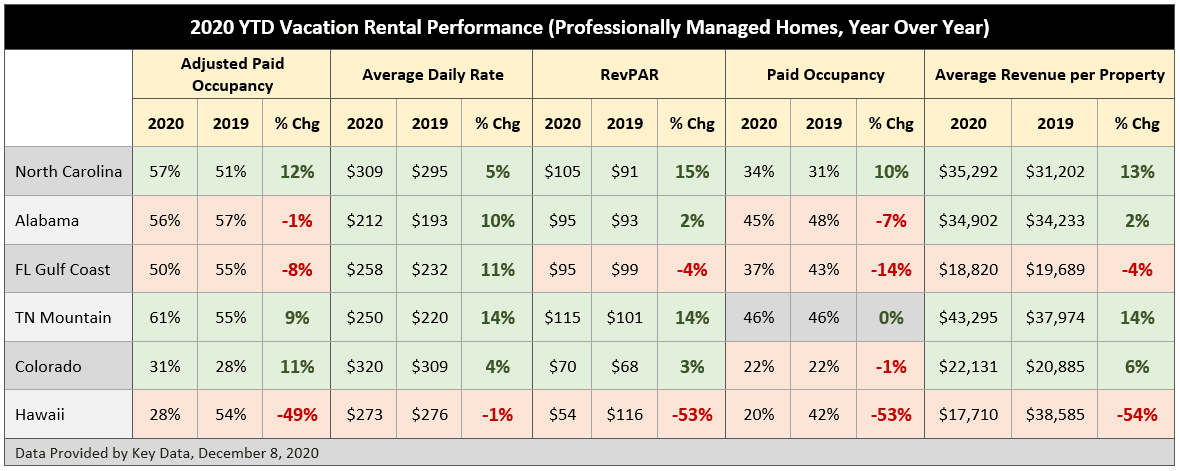
 Said Vrbo president Jeff Hurst, “In my 10 years in the vacation rental industry, I’ve never experienced a year quite like 2020. The COVID-19 pandemic had a profound impact on our family lives, social lives, home lives and, of course, travel plans.”
 Somewhat ironic that quarantined travelers with “cabin fever” are yearning for stays in cabins and chalets. Vrbo reports demand for cabins increased nearly 25%, while chalets were up almost 20% year-over-year. Perhaps these cozy accommodations are the “comfort food” of the accommodations. That said, with the increased interest in destinations near lakes and rivers, it does make sense.