- Advertisement -
Home Blog Page 36

RedAwning CEO Tim Choate on $40 million raise: “The market opportunity is essentially unlimited”

4

RedAwning recently announced it has secured $40 million in a Series A funding round led by Boston-based growth equity firm Silversmith Capital Partners.

RedAwning primarily offers “channel management” software that allows professional vacation rental managers to list properties on channels, such as Airbnb, Expedia, Booking.com, and more, by facilitating a fully integrated connection between the vacation rental manager’s software system and the channel. As part of its distribution and channel management services, RedAwning offers 24/7 reservation and guest support service for listings and bookings on major online travel sites, payment processing, standardized contracts, and according to their website, the “industry’s largest data analytics engine to competitively rank your properties on major travel sites.”

The company currently has 100,000 properties in its network, half of which are in Europe. RedAwning also has a model for individual homeowners that offers the ability to list vacation homes on the major channels for a 3 percent transactional fee. In addition, RedAwning has a channel of its own and recently resurrected VacayHero to further extend its presence as a single marketing hub for vacation properties listed within the RedAwning network.

While its direct competitors have historically struggled in the channel management space, RedAwning maintains that the company is profitable and says it will use funding to double its staff, secure a larger office space, expand into existing markets in the Americas, Europe and Asia, and into new global territories. According to its press release, “Funds will also be used to accelerate development of its innovative technology platform which enables property managers to consistently beat competitive property booking results through a combination of listing optimization, marketing algorithms, dynamic analytics, and targeted distribution.”

We reached out to CEO Tim Choate to learn more about RedAwning’s models and plans for the future.


Amy Hinote (AH): This level of funding is much larger than we normally see for a technology provider for the proffessionally managed vacation rental industry. Is the professionally managed vacation rental channel distribution space large enough to warrant the kind of returns VCs like to see? Are you expanding into additional or supplemental verticals and offerings?

Tim Choate (TC): We are profitable and already growing at a 300 percent annual rate. With this funding, we plan to grow even faster, and the market opportunity is essentially unlimited given the $100 billion vacation rental industry.


AH: What does Red Awning do differently than other companies that allows you to be profitable where others have failed (i.e. LeisureLink)? Are there mistakes that you see that were made that RedAwning has either learned from or avoided?

TC: Yes, we have a business model, and most players in vacation rental channel management do not, which is why even LeisureLink failed. If you think about it, earning 1 percent or even 3 percent of bookings as one’s revenues would never translate into a company that thrives. Even at $100MM in bookings, that’s only $1 to $3 million in revenue. $1 billion in bookings gets you $10 to $30 million in revenue.  This simply does not work. We do more work for property managers and earn more than any channel manager does. As a result, our profits exceed the revenues of most vacation rental channel managers.

Our offering for property managers and guests is much broader and more robust.  In our view, connectivity is only an access point and, especially these days, connectivity does not equal success. The real work comes after you are connected, in terms of optimizing ads, serving guests better, developing new marketing approaches, and more. For our property managers, we do the connectivity like everyone else, plus contracts and payment processing and guest services and full damage claim support and listing optimization and exclusive marketing techniques and so much more.


AH: What do you see as the long-term vision for PMs for channel distribution?

TC: We see the guest world gravitating to online and mobile booking, and the channels dominate the customer base, so we see channel distribution as fundamental to success and survival of most property managers. The old model where guests went back to the same destination each year is rapidly fading as consumers desire new destinations and experiences, and they mostly turn to the large channels to find their next destination.


AH: In your press release, you mentioned recent innovations in “marketing algorithms, dynamic analytics, and targeted distribution.” Can you expand on these innovations you will be rolling out?

TC: Given our scale in properties on each channel, we already run a lot more tests than anyone else and know how to perform better. In addition, we are working on new strategies related to yield and last minute bookings that can be distributed to channels that do not do “live quote” for bookings, which includes today’s largest channels. We also have additional exciting technology projects in development that we will announce in the future.


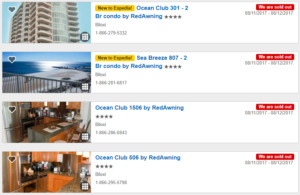
AH: We’ve noticed on certain channels that we see a “by Red Awning” tag in the property titles. What is RedAwning’s position on branding?

TC: Yes. We do branding differently in each channel based on the channel requirements. Our view is the “by RedAwning” approach adds value to each of our listings as guests like the added services we include in each stay.  Trust also remains the most important factor in vacation rental booking for consumers so our view is that when you see 10,000+ properties on a website labeled as “by RedAwning” you will have greater confidence that there is a strong company behind those listings increasing your likelihood to book.


Join VRM Intel and RedAwning at VRHP + VRM Intel Combined! in Gatlinburg, November 6-8, 2017.

NAVIS Introduces First-to-Market Solution to Recent Vacation Rental Listing Site Changes

0

BEND, Ore. (August 10, 2017) – NAVIS, the No. 1 reservation sales and marketing technology provider for the hospitality industry, this week revealed the first-to-market solution in response to the recent HomeAway changes that have created concern and uncertainty for many vacation rental owners and property managers.

On June 21st of this year, HomeAway announced that they would no longer distribute booking lead email addresses and phone numbers, creating concerns about the changing algorithms and policies of listing sites. The NAVIS product and engineering teams rolled up their sleeves and began working on a solution that would enable property managers to maintain their ability to service and nurture rental demand given these new listing site realities. This important product update will allow NAVIS clients’ inquiry data to still be captured and consolidated into one lead with Narrowcast.

“We are extremely pleased to announce to the vacation rental industry that as of August 7, we’ve launched and rolled-out a technology update for our popular NAVIS Narrowcast and NAVIS Reach solutions,” said NAVIS president and CEO Kyle Buehner. This innovation helps property managers maintain control of their rental reservation pipeline generated by HomeAway listing sites.”

NAVIS’ innovative update is the industry’s first solution developed among technology providers who serve property managers. Buehner added, “We were able to move swiftly and help our clients quickly adapt because of our technical integration with HomeAway’s listing site. We’ve also been through this before, helping hoteliers deal with these same challenges for years.”

Listing sites have been inching their way toward more involvement in the booking process for a long time and hotels have been dealing with this same third-party encroachment for many years, investing millions to encourage guests to book with them. Vacation rentals are in a similar, but not new position. Until now, the industry has simply enjoyed more access to the guest, which has, in turn, created greater dependency on listing sites. Brise Carpenter, Vice President of Client Success at NAVIS explains, ”Vacation rentals can leverage this inevitable evolution as an opportunity to re-evaluate how they use listing sites going forward. The most profitable paths have always led back to direct bookings and it’s a great chance to prioritize, strategize, and reinvigorate them. This doesn’t mean listing sites don’t matter because we all know they do, but there needs to be a balanced strategy in place.”

NAVIS is the only company that has the ability to capture HomeAway guest inquiry details and integrate them into one lead so that property managers can clearly see the path to purchase, avoid duplicating responses, and continue to track not-booked leads. With NAVIS software every lead can be tracked, from their Google search term to a phone call back to a website and beyond, so it is clear where the conversion initiated not just where it ended.

”This is an excellent time to remind everyone of HomeAway’s research from a few years ago that found 71 percent of vacation rental shoppers would book online only after speaking with the property manager by phone,” continues Carpenter. ”We strongly suggest property managers review the visibility and accessibility of reservation phone numbers on all of their marketing communications, particularly the mobile, tablet and desktop formats of their website. Remember, we sell vacation experiences that are meaningful to travelers, and a majority of potential guests will call to ensure they find the home that’s perfect for their vacation.”

For best practices and strategies that Vacation Rental Managers should be employing amongst these changes and future evolutions of listing sites, see NAVIS’ latest article ”10 Ways to Survive the New Reality of Vacation Rental Listing Sites.”

To explore the latest solutions and marketing strategies that deliver the highest ROI, visit The NavisWay.com or call 1 800-777-1864.

About NAVIS

NAVIS is the No. 1 reservation sales and marketing platform for the hospitality industry. Because we believe technology should make you money, not cost you money, we developed our game-changing Revenue Performance Platform™ to transform teams into revenue makers, enabling them to drive, capture and convert more direct bookings. We deliver actionable guest insights so departments can seamlessly sell and market together. The result is always a dramatic increase in direct sales and profit. We guarantee it.

Founded in 1987, NAVIS is a privately held company with headquarters in Bend, Ore., and growing offices in Orlando, Fla. and Reno, Nev. The company has been awarded Top Workplaces by The Oregonian for four consecutive years, one of the 2016 Top 100 Workplaces in Central Florida, and one of the Northern Nevada Human Resources Association’s 2017 Best Places to Work.

To learn more visit www.TheNavisWay.com.

Contact:
NAVIS
Kelsie Skinner
541-330-3503
kskinner@thenavisway.com

Media Contact:
PUZZLE PARTNER
Ivana Johnston
ivana@puzzlepartner.ca

Kelsie Skinner: “Time to re-evaluate your listing site dependency.” 10 Ways to Adapt to the New Reality of Vacation Rental Listing Sites

2
Mobile Hospitality Marketing for Short Term Rentals

Listing sites have been hard at work this year implementing changes that have far reaching effects for vacation rental managers, namely withholding contact information until much later in the booking process.

As much conversation as there is in the industry about the shifts in policy, this isn’t a new problem. Listing sites have been inching their way toward more involvement in the booking process for a long time, and this is just one more step in that direction. Consider it an emergency smoke signal that it’s time to re-evaluate your listing site dependency if you have one. This direction is the likely future of listing site evolution and even more changes are coming down the pike. But for vacation rental managers, all profitable paths have always led back to direct bookings. It’s time to prioritize, strategize, and reinvigorate them. This doesn’t mean listing sites don’t matter because we all know they do, but there needs to be a balanced strategy in place in how they handle distribution.


The Impact of the Changes

According to HomeAway, 71% of guests will call before they book online to ask questions and confirm their choice, and Phocuswright reports that 34% of travelers used the phone to book their last stay in a private accommodation.[1]

When tracked by property managers, high consideration stays—and most vacation rental reservations are—typically generate at least one phone call and multiple inquiries across channels before the reservation is confirmed.

However, with listing sites withholding guest information from the property manager, phone calls will necessarily decrease. Notably, they won’t be able to call the property to ask questions beforehand which can have a ripple effect in guest satisfaction. This means the opportunity to build a relationship with the guest and create brand trust, one that persuades them to book, diminishes. For instance, NAVIS clients know that having an agent call the potential guest as quickly as possible after an inquiry arrives is essential to achieving the reservation (and it opens the door to email follow up.) This critical touch point is lost with most listing sites at this point.

A 5% decrease in call volume means that you must convert 2% more from the remaining call demand in order to stabilize revenue.

You must do better with the demand you already have in order to maintain your bookings and revenue when calls decline.

Other problems arise, too. For instance:

  • Data flatline. For some, that is. When property managers have access to guest data at the inquiry stage, valuable data for not-booked guests can be captured. While this was a big threat even just a week ago, NAVIS has been the first to engineer an update in response to Homeaway’s changes that allows for property managers to capture data from inquiring guests and merge it into one lead.
  • Without the ability to reach out to the guest right away, vacation rental managers have less influence over the sale, they also have less ability to deliver a superior guest experience.
  • Inability to vet guests yet still accountable to owners for ensuring the right guests reserve.
  • Listing sites now own the guest.
  • Property managers must log in to three or four different dashboards to manage guests now.
  • Brand identity on listing sites will be lost.

Until now, the industry has simply enjoyed more access to the guest, which has in turn created greater dependency on listing sites. Brise Carpenter, Director of Client Success at NAVIS explains, ”Vacation rentals can leverage this inevitable evolution as an opportunity to re-evaluate how they use listing sites going forward. All profitable paths have always led back to direct bookings and it’s a great time to prioritize, strategize, and reinvigorate them. This doesn’t mean listing sites don’t matter because we all know they do, but there needs to be a balanced strategy in place in how they handle distribution.”


How to Survive & Thrive

Though the listing site changes elicit groans, it’s where we’ve all known the industry would go eventually. It doesn’t change your goals. Instead, it should change your strategy. The best strategy for dealing with this situation is the one you needed all along in order to be more profitable. Here are some tactical steps for navigating this situation quickly.


1. Let smart data control your business

Are you going to let the listing sites and their ever-changing algorithms and policies control your business? Or will you, instead, choose a tool that isolates the avenues that are actually producing revenue, and follow up by building a strategy that puts your money where it will bring the greatest return?


2. Use a prospect database; upload to a CRM to make it actionable

NAVIS has the ability to capture HomeAway guest inquiry details and integrate into them one lead so that property managers can clearly see the path to purchase, avoid duplicating responses, and continue to track not-booked leads. Consider the ramifications of not doing this. If you spend $100,000 on marketing and you are converting at 20%, then $20,000 of that budget goes toward acquiring guests. This means you’ve spent $80,000 on those that did not book. This $80,000 is mostly wasted if you don’t capture that not-booked guest data, but it doesn’t have to be. That $80,000 can, instead, become actionable when it is captured by software like NAVIS’s and a remarketing plan is put in place. Start capturing not-booked data immediately while it’s still available so that those not-booked guests eventually become your guests instead of the customer of the listing site.


3. Use past guest database

Put your precious past guest database to good use. Create an outbound program that includes phone calls and email in order to bring guests back. It’s much less difficult to sell a vacation rental guest the second time around and consider it prevention against listing sites snatching up a guest that’s rightly yours.


4. Increase reservation inquiry conversions both online and offline

The idea that direct bookings are website bookings is a misunderstanding promoted heavily by marketing firms and digital media. It can also be a crutch for your marketing team who think it’s the only trackable channel. Direct bookings come from both online and offline sources—and often guests are bouncing back and forth between them on their path to purchase. To understand your revenues, you must calculate both conversions and booking ratios, and this must include online and offline sources. You must be able to see clearly that a guest did research online before calling to book or, alternatively, called to inquire before booking on your website. This is a true picture of your business—and it’s available.


5. Master the basics first

You must level the playing field. Be more competitive by being the best you can be at email, as fast as you can be at all types of follow-up, and consistently focusing on service in order to encourage repeat guests. Make it your mission to capture and own every guest.


6. Diversify your marketing: PPC, website, offsite listings, SEO

The online and offline world are merging and diversifying your marketing is as important as ever. Evaluate your marketing plan to ensure you are doing all you can to boost your presence both offline and online, and be sure to include your phone number prominently in all marketing materials to drive profitable phone calls.


7. Consider listing sites a marketing tool in your arsenal

Third parties are not out of the picture. We’re advocating for being smarter and more in control of your business, your data, and your guests. That said, listing sites bring new eyeballs and credibility to the vacation rental industry, which is still in its mainstream infancy. We need this to grow, not decrease… and listing sites are definitely a part of the program.


8. Optimize your listing site marketing investment

Review the segmented performance of different homes and amenities on the listing sites and put in the effort to adjust the listing level or add on marketing services to appropriate homes. If you have homes that just aren’t performing (maybe low-quality amenities or bad reviews), don’t waste your money. Instead, take them off the listing site and find another way to promote.


9. Homeowner education

Homeowners expect to see their homes on all of the listing sites so vacation rental managers will need to educate owners about the value of moving the marketing budget to more profitable outlets. Data analytics is the first step in explaining why there are better ways to represent the property. Also key is proactively communicating value and performance to owners.


10. Monetize

Evaluate your marketing spend and monetize its performance. Many vacation rental managers track only where the bookings came from without tracking conversion rates. Being smarter at marketing spend—spending on the highest ROI outlets instead of booking volume—means tracking the lead to booking and determining which channel has the highest conversion rate for the lowest dollar. With NAVIS software, for instance, every lead can be tracked, from their Google search term to a phone call back to a website and beyond, so you can see where the conversion initiated, not just where it ended.


Hotels have been dealing with third-party encroachment for many years. It has created an all-out “war” with millions spent educating guests to book directly. Vacation rentals are in a similar, but not new, position. Vacation rentals must use listing sites more wisely going forward in order to stay profitable while gaining exposure.

Local planning board OKs short-term Savannah, GA vacation rental restrictions

0
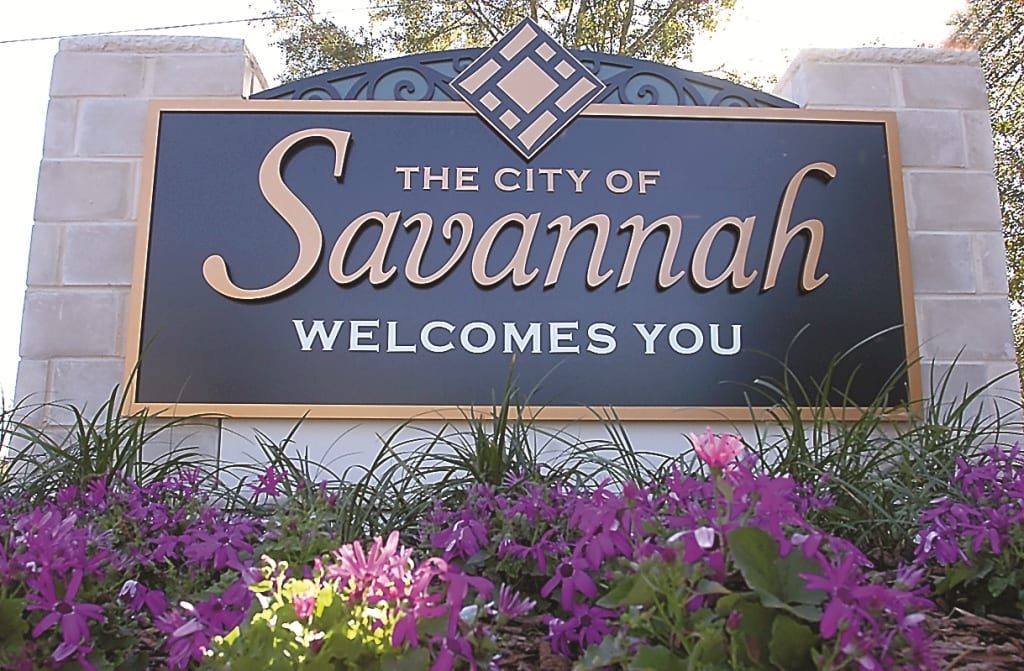
The City of Savannah Gateway Welcome sign was unveiled on Friday at the 37th Street & Ogeechee Road. Joshua Crawford/Savannah Morning News

Despite some misgivings, the Chatham County-Savannah Metropolitan Planning Commission on Tuesday voted in support of new short-term vacation rental restrictions.

The revisions were developed by city staffers, residents and industry representatives in response to concerns of the Savannah City Council and community members about the growing number of rentals operating in the city and their impact on the amount of long-term residential properties available. There were also concerns about quality-of-life issues related to trash, noise and parking.

“We tried to work together with both entities to find out what a middle-of-the-road solution is,” said Bridget Lidy, director of Savannah’s Tourism Management and Ambassadorship Department.

The proposed changes limit the amount of vacation rentals to 20 percent of the residential parcels in a ward. Vacation rentals that are owner occupied or located in commercial districts are exempt from the cap.

In addition, the updated ordinance reduces the amount of visitors that can stay in the rentals and shortens the period in which a new owner can renew a property’s vacation rental permit from 12 to six months.

Some commissioners questioned the effectiveness of the 20-percent limit, which Lidy acknowledged may already be exceeded in some wards. There have been more than 300 applications submitted during the past three months and any of the subsequent permitted properties, as well as existing rentals, would be allowed to operate after the cap is put in place, she said.

Commissioner Joseph Ervin, who cast the sole vote against the changes, said he would like more time to look the revised ordinance over.

“It sounds extremely cumbersome,” Ervin said.

And Commissioner Lacy Manigault described the ordinance as “clumsy,” but ended up voting in support of the changes.

“I understand you have to have something,” Manigault said.

Attorney Robert McCorkle III, who was representing a group of rental management companies, and Melinda Allen, Downtown Neighborhood Association president, both spoke up in favor of the changes.

The development of the revisions was a long process that concluded with all parties making concessions, Allen said.

“It is not ideal for residents, but like I said it is a compromise,” she said. “Moving forward we will stem the tide.”

The Savannah City Council had voted in July to submit the revisions to the planning commission for review and the updated ordinance must return to the mayor and aldermen for approval before the changes can be adopted.

The current ordinance implemented in January 2015 defines short-term vacation rentals as the rental of an entire dwelling unit for 30 days or less and limits operations mostly to downtown, where lodging operations are also permitted. The ordinance also established a certification process and method for taxing and licensing the rentals.

As of June 22, there were 759 certified vacation rentals in the city and 380 applications under review, with 82 percent of the properties located in the downtown Historic District, 16 percent in the Victorian District and the remainder in the Mid-City districts, according to a city staff report.

3 Step Strategy to Protecting Your Vacation Rental Brand

1

I will preface that there is no “silver bullet” to brand independence,  It takes a combination of hard work, ability to adapt to new challenges and using every available tool that benefits your brand.

We get asked often what strategies should be implemented today given the latest policy changes to HomeAway.  Your brand, and the associated investments are being completely cut off to the traveler in mid August.  We took steps years ago preparing for this day.  These steps we used years ago still apply today.  I would submit that they are critical to the long term success of your business.

Decouple Marketing

Our marketing and brand are the two single biggest assets to our business.  The single biggest “technical”change we made to our business was moving to an “open” system that gave us complete control of our guest communications and marketing.  We immediately had flexibility to market the unique aspects of our business to the travelers.  We were also able to find the right partnerships for our business.  There are many systems that claim to be “open”.  Here is a list of those that we work with that are truly open and giving vacation rental professionals the flexibility they deserve.

Please let us know if we missed any other open system vendors and we will add to the list.

Invest

The decision to decouple allowed us to invest in marketing efforts that built brand awareness, solid traveler-to-guest communications and dramatically improved our repeat business over a short period of time. This included investments in social media, content development and offline campaigns that continue producing value to our business today. Many of you have compiled an email list for years….that is a great place to start.

Retain

The first two strategies will not do you any good if you don’t retain the data collected. Implementing a system that collects the data and intelligently communicates messages to all guest in all phases of the pre and post booking cycle.  Having the proper retention strategy will deliver a predictable path to profitability and growth.  Once you get them in…provide the customer excellence they deserve.

Early Registration is now open for VRM Intel Live! in Gatlinburg, TN!!

0

VRM Intel Live! & VRHP Annual Conference – Combined!

4 Educational Tracks – 32 Sessions
Plus.. The Rebuilding of a Destination, One Year After the Fire: Gatlinburg’s Success Story
Mark Adams, President & CEO, Gatlinburg Convention & Visitors Bureau

The Vacation Rental Housekeeping Professionals’ Annual Conference and VRM Intel Live! have joined together in Gatlinburg to create a special vacation rental community event like none other. With a high-level educational lineup that includes industry leaders, operational experts, this is one of the vacation rental industry’s can’t-miss events of 2017.

VRHP’s 2017 Executive Housekeeping of the Year and VRM Intel’s 2017 Best VRM Website Award Presentation.

November 6 – 8, 2017
Gatlinburg Convention Center
$329 Early Registration Through September 15, 2017

Clear here to register!

Hotel and Conference Agenda Information coming soon.

Mendocino County, CA adopts temporary ban on new vacation rentals

1

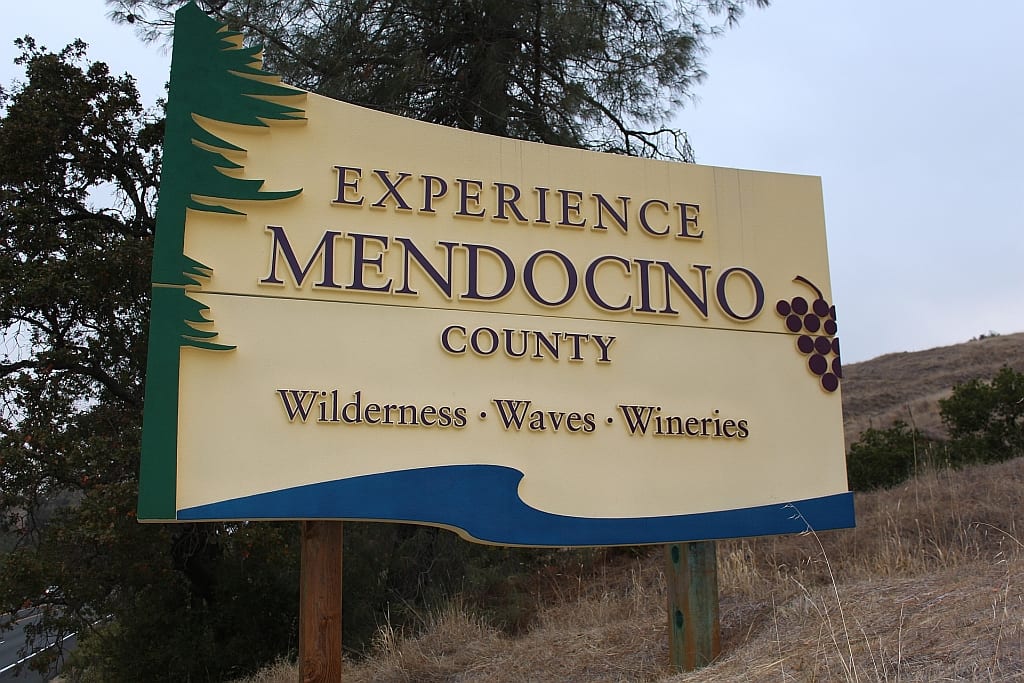
Mendocino County supervisors on Tuesday unanimously imposed a temporary ban on new vacation rentals in residential areas outside city limits, saying stronger regulations were needed to contain impacts on the housing supply and govern the burgeoning business.

The 45-day ban is aimed at preventing further erosion of the county’s limited housing stock and controlling potential impacts of traffic, noise and visitors in rural neighborhoods, supervisors said.

“Increasingly, housing stock has been converted to short-term rentals” in Mendocino County, said John McCowen, chairman of the Board of Supervisors.

The sharp growth in people renting out all or part of their homes — as advertised on sites like Airbnb — has triggered neighborhood complaints and stronger regulatory moves in communities across Sonoma County, which also imposed a temporary ban while it considered how to regulate the sector. It later carved out wide swaths of the county where such rentals are now banned, following the lead of cities like Healdsburg, where vacation rentals are prohibited in residential areas.

As they wrestle with the dilemma, Mendocino County officials are lacking for some key details. They can’t say how many vacation rentals exist in the region. But a new computer program being utilized by the county now makes it easier to find people renting homes without obtaining business licenses or paying taxes to the county.

“It’s not the Wild West the way it was,” Supervisor Dan Hamburg said.

The computer program recently counted 169 people believed to be renting out part or all of their homes in the unincorporated county without the required business licenses, said Treasurer-Tax Collector Shari Schapmire. A few years ago, her office tracked down 100 such businesses, ultimately adding some $240,000 to the county’s hotel-bed tax revenue, she said.

The cities of Ukiah and Willits periodically monitor short-term rental sites for scofflaws but it’s not been a huge problem, city officials said. Both cities require business licenses and tax payments.

Fort Bragg prohibits such rentals, said city Manager Linda Ruffing. Code enforcement staff monitors the rental websites to identify potential violators, she said.

Under the Mendocino County moratorium, existing short-term rentals will be allowed while supervisors mull new rules. The town of Mendocino, which is governed by the county but has its own set of rules on vacation rentals, is exempt.

Proposed changes under consideration include limiting each property owner to one vacation rental permit, McCowen said.

Supervisors also are seeking to lessen some of the regulatory burden on those homeowners; some say they need the income to help pay their mortgages.

County regulations currently require people with property fronting shared, private roads to obtain a major use permit, which triggers public review and the ability of neighbors to voice concerns. But it can be prohibitively expensive to get those permits, which cost more than $6,000.

Supervisors on Tuesday directed staff to alter the ordinance to include a provision that only minor use permits be required. The cost of those permits was not available Tuesday.

The ban will be revisited and reconsidered at the end of the initial 45-day period.

LiveRez Teams Up with Blizzard Internet Marketing

1

LiveRez Teams Up with Blizzard Internet Marketing to Offer Wider Range of Services to its Property Manager Partners

The partnership will allow the vacation rental software leader to quickly scale services to meet increasing demand

Eagle, ID – LiveRez.com, the most widely used cloud-based software for professional vacation rental managers, today announced that it has signed an agreement with Blizzard Internet Marketing to provide LiveRez’s customers with a wide range of digital marketing services.

Based in Glenwood Springs, CO, Blizzard is a leading provider of online marketing services for professional vacation rental managers. As a preferred LiveRez industry partner, the company will become LiveRez’s go-to recommendation for online marketing services for its rapidly growing base of customers (called partners).

“We carefully vet every single one of our preferred partners, and over the years we’ve seen Blizzard’s commitment to the long-term, sustainable success of professional managers,” said Tina Upson, LiveRez’s VP of Operations. “As we’ve continued to grow, we’ve had a huge influx of our property manager partners requesting additional online marketing services. Partnering with Blizzard will allow us to provide our users with these services at scale.”

Traditionally, LiveRez has accomodated its partners’ needs with its own in-house professional services team, but due to the increasing interest in additional marketing services Upson said the company knew it would need to find an industry partner to help meet the demand.

“With all the recent changes to the marketing landscape in our industry, we’ve witnessed a fundamental shift in our partners’ marketing strategies, trending toward online marketing services focused on building a manager’s brand and helping them secure more direct bookings,” Upson said. “But, as a company hyper-focused on our users’ long-term success, we had to find a provider that shared our values.”

Upson noted the work that Blizzard has done for some of LiveRez’s current partners as a big factor in the company’s decision, as well as Blizzard’s ability to offer LiveRez partners a wide variety of services, including search engine optimization (“SEO”), paid ad management, email marketing, social media, and content writing.

“LiveRez is committed to the success of the professional managers using their property management software,” said Susan Blizzard, CEO of Blizzard Internet Marketing. “That means having a solid online marketing presence. SEO and all other digital marketing strategies are constantly changing, and they are evolving even more rapidly now because of mobile devices. Blizzard has a team of experts specializing in each major area of online marketing, and we’re excited for the opportunity to help LiveRez’s partners further diversify their marketing portfolios and take their businesses to new levels.”

About LiveRez.com
LiveRez is the world’s most widely used software platform for marketing and managing vacation rental homes online. The LiveRez solution offers professional property managers all the tools they need to run their business in a single, cloud-based platform. And, the company’s unique “pay-as-you-book” business model creates a mutually beneficial partnership between LiveRez and its vacation rental manager partners. This partnership fuels the company’s mission of continually developing and supporting cutting-edge solutions that empower independent property managers to compete in the rapidly evolving vacation rental space.

About Blizzard Internet Marketing
Specializing in the Vacation Rental Management industry, Blizzard Internet Marketing provides comprehensive online marketing services, employing a group of in-house experts in all areas of online marketing, including SEO, Pay-Per-Click, Email Marketing, Social Media, Local Search, Analytics, Usability and Website Services. Our experts regularly attend online marketing symposiums, ongoing education courses, and subscribe to all of the most highly relevant blogs for their area of expertise. In addition, we offer training and consultation to our clients through our services as well as holding in person Blizzard University Workshops about digital marketing techniques.

Contact:
Rob Holderness
Director of Marketing
(208) 639-6108
r.holderness@LiveRez.com

Former Wyndham Vacation Rentals President Bob Milne Joins Vacasa as COO

1

With 1,400 employees, Vacasa has been making headlines as the fastest-growing full-service property management company in the vacation rental industry. Currently the second-largest vacation rental management company behind Wyndham Vacation Rentals, Vacasa has raised $40 million, manages 5,300 vacation rental units across 150 markets in ten countries, and is projected to have an inventory of 8,000 units in fifteen countries within the next year.

Today, Vacasa announced another significant milestone in its trajectory with the addition of Bob Milne to the team to head up operations. In his new role as COO, Milne will oversee Vacasa’s field operations to ensure that the company is delivering high levels of service for its guests and homeowners and to support the company’s growth strategy.

As a thirty year veteran in the vacation rental industry, Milne began his career in the sales and marketing department with Steamboat Resorts in 1985. Over the next ten years, Milne held several positions before becoming president and ultimately buying The Resort Company. In 2007, Milne sold The Resort Company, stayed on after the sale as a minority owner and the company’s CEO, and helped grow The Resort Company into a leading vacation rental and property management company with a portfolio of approximately 1,000 rental units. In 2011, Milne led the sale of The Resort Company to Wyndham Worldwide Corp (NYSE:WYN) and joined the Wyndham leadership team as president of Wyndham Vacation Rentals, North America.

According to an internal announcement, CEO Eric Breon said, “As we look to continue to enhance the operational side of our business, we’re honored to bring on Bob Milne, a well-respected and knowledgeable industry veteran in the vacation rental space as our COO.

“I have been following Vacasa’s growth path over the last several years,” Milne said. “I’ve learned that Vacasa has done a fantastic job of leveraging technology and analytics to grow revenue for its homeowners and expand into new markets.”

Milne continued, “I wanted to be somewhere I could fill a role that provides the team value and helps them reach their goals. Vacasa has a vision for expanding into new markets and utilizing technology in every aspect of the business. In getting to know Eric and the team, I’ve been impressed with the collaborative, energetic culture they’ve built here.”

“Bob’s strong industry acumen and proven leadership skills will undoubtedly strengthen our operations helping Vacasa be the most trusted vacation rental company in the industry,” Breon said. “We have ambitious plans for Vacasa and Bob’s contributions will help us get there.”

Milne will be based out of Steamboat, Colorado.

Beyond Pricing Acquires Smart Host

0

Vacation rental revenue management software provider, Beyond Pricing, today announced the acquisition of Smart Host, a Techstars alum which provides vacation rental owners and managers with pricing intelligence and recommendations based on competitive sets.

As the industry grows in both size and sophistication, revenue management and dynamic pricing that was once only available to large hotels and airlines is an increasingly vital part of the vacation rental technology stack. Smart Host and Beyond Pricing share a common vision of bringing more sophistication to pricing in the vacation rental market. Beyond Pricing has combined Smart Host’s technology with their proprietary Health Score listing rating system to power a new Nearby Listings feature, launching today.

“With the acquisition, we’ve leveraged some of the Smart Host technology to launch our new Nearby Listings product, which shows you similar listings near your listing, filtered and sorted by our proprietary Health Score, which helps identified well-priced listings,” said Ian McHenry, Beyond Pricing founder and CEO.

According to Smart Host founder, Evan Hammer, “Beyond Pricing and Smart Host’s offerings have always complemented each other. As Beyond Pricing was looking to add a comps feature to their product, it seemed like a great time to partner up.”

“Beyond Pricing was the first automated, predictive dynamic pricing software in the space, when we launched early in 2014,” added McHenry. “We saw a flurry of competitors pop up over the next year.  However, we’re seeing more and more consolidation, as evidenced by our acquisition of Smart Host and Everbooked shutting down their automated pricing solution. Integration into PMS systems was the biggest barrier for us when we launched, as most PMS systems didn’t have ways to push prices into their software from an external system, the way hotels do.  Over the last two years, we worked with the majority of the top PMS systems to help them open up APIs to be able to that.”

McHenry continued, “What is exciting is that interest in pricing, revenue management, and big data analytics is skyrocketing in ways it wasn’t even three years ago. Over the next two years, we expect to see the majority of managers using something like Beyond Pricing to help with pricing, in combination with some form of market intelligence tool to better arm their reservationists and revenue managers with the data and sophistication to compete in an increasingly sophisticated market.”

A Commercial Insurance Requirement is Good for the VR Industry

10
vacation house home commercial liability insurance

On October 22, 2015, Airbnb announced its Host Protection Insurance that provides $1 million in commercial liability insurance to all US hosts and owners who book through the Airbnb site. The coverage applies during the booked period, and it’s free of charge. 

Nearly two years later, on May 8, 2017, HomeAway announced its $1 million commercial liability insurance program for owners who book through the HomeAway sites. The coverage applies during the booked period, and it’s also free of charge. 

What exactly is going on here? My entire professional career is in the insurance industry, and as a salesman, I can only make a professional assumption. It’s one part great marketing, and one part incredible industry intuition. 

From a marketing standpoint, both Airbnb and HomeAway understand insurance is historically slow to adapt to new and emerging markets, and insurance is a barrier to entry for both because many large domestic insurance carriers do not insure short-term vacation rentals. So why not provide free liability insurance for everyone? It makes sense when revenue comes from bookings and both are competing for the same bookings.   

The business industry taught me that nothing in life is free. Under closer examination, there does appear to be major gaps in coverage such as no property coverage, no personal and advertising injury, no assault and battery, no liquor, and much more. Only owners can decide whether to rely on the free liability insurance or to purchase a policy with their name on it. Being on the insurance side of this industry, we see the things most do not. Such events as the Gatlinburg, Tennessee, fires that burned more than one thousand vacation rentals last December, hail storms, theft, burglary, party destruction, or falls on the winter ice in the Sierras guarantee that you want insurance with your name on it. 

As far as intuition, maybe Airbnb anticipated the regulation side of the industry and knew a commercial liability insurance requirement was inevitable. Granted, cities like Nashville that have a $1 million dollar insurance requirement do not accept the Host Protection as evidence of insurance for a permit. Perhaps Airbnb was onto something. 

In 1946 the LaSalle Hotel in Chicago, the Canfield Hotel in Iowa, and the Baker Hotel in Dallas all caught fire within sixteen days and claimed the lives of ninety people. Those fires changed the national attitude about the government’s authority to regulate public safety and, ultimately, set a precedent for the different hospitality laws we have today. 

Hospitality Law is the body of law relating to the foodservice, travel, and lodging industries. That is, it is the body of law governing the specific nuances of hotels, restaurants, bars, spas, country clubs, meeting and convention planners, and more. Hospitality law does not involve only one area of law. It encompasses a wide variety of practice areas including contracts, antitrust, tort law, and more. 

Our industry needs to understand that when an owner of a property allows someone to stay on a property for a short period in exchange for money, the owner is subject to the hospitality laws. Vacation rentals are no different than hotels in that the hospitality laws include requirements to provide for privacy and for safe premises. 

The Duty of a Hotel is to provide safe premises. This concept is based on the common law duty owed to business and social invitees of an establishment. Under common law, hotels must exercise reasonable care for the safety of their guests. Hotels owners may be found negligent if they knew, or should have known upon reasonable inspection, of the existence of a danger or hazard and failed to take action to correct it and/or warn guests about it.  

Accordingly, hotels have an affirmative duty to inspect and seek out hazards that may not be readily apparent, seen, or appreciated by patrons and guests. In addition, hotels may have an affirmative duty to warn guests of dangers or hazards. If the risk of harm or damage was foreseeable and the hotel failed to exercise reasonable care to either eliminate the risk or warn guests of its existence, the hotel may be liable for any resulting harm or damage caused by its negligence (“proximate cause”). 

(This duty is the reason Proper Insurance requires our insureds to display a “Swim at own risk sign” if they have a pool, to provide helmets if they offer bicycles, and to perform a post-stay inspection, and so on.)

One of the first regulations for hotels was commercial liability insurance and, in my opinion, it should be a requirement for vacation rentals as well. It is good for the city, good for the owners, good for the neighbors, and good for the industry. 

Commercial liability is readily available to vacation rental owners and is reasonably priced. Not only does it cover the owner, but it extends coverage to property managers as well. 

When owners purchase commercial liability they will go through underwriting of the property as every insurance carrier has different requirements and standards for purchase. Some of these underwriting requirements may include wiring inspections for older properties, fire extinguishers in kitchens, and depth markers for swimming pools. By its very nature, insurance underwriting will suffice for much of the hospitality laws. 

A commercial liability requirement also gives the vacation rental industry political capital when arguing against bans and other unrealistic regulations. As the industry continues to mature, proper insurance simply makes sense. 


Vacation Rental Managers and Owners: HomeAway Chaos – Round 3

7


“What is next?”  This is the burning question we get from clients who are frustrated with the continued policy changes that are negatively impacting our industry. If you have not visited your HomeAway listing lately, do so, it is an eye opener.  We always urge our new clients to take a moment to review one of their listings on each site they use, including calling the 1 800 number next to the listings.  See how your “booking” process goes.  Make sure it works.

The latest salvo is the announcement that HomeAway will hide the travelers emails and phone numbers from you until you achieve the booking.  It’s sad to see from a once great and valued company.  It also brings opportunity.  To quote Winston Churchill:

“This is not the end, it is not even the beginning of the end, but it is perhaps the end of the beginning”

 The Perfect Storm

Property managers are no longer listing all their properties on one listing site.  Many are diversifying their inventory and looking at alternative routes to distribution. On the traveler side, they are pushing back on fees and are confused when contacting the 1-800 numbers on the listing site to speak with a person on the other end who knows nothing about the vacation rental they are calling about.  This confusion is causing travelers to look beyond the listing sites to find their vacation rentals…..this is “leakage”HomeAway can’t afford.

Marketplace Impact

I have always maintained that the best source for industry data comes from the owner/managers who are in the trenches on a daily basis having these conversations with their guests.  In 2016, Grassroots Research interviewed 40 property management companies and confirmed what we already knew….travelers are not happy.

Here are some of the key findings:

  • 23 out of 40 (58%) said customers’ reaction to HomeAway’s (Expedia’s) traveler service fee, introduced in February 2016, either has been somewhat (16 [40%]) or very (7 [18%]) negative, while 17 (43%) said their customers either did not know or did not care about the fee
  • 34 out of 40 (85%) have seen renters getting around HomeAway’s traveler service fee by booking directly with property managers or owners, and 8 of these (20%) actively encourage renters to book directly for this reason
  • 17 out of 40 sources (43%) have not enabled HomeAway’s online booking features, with 15 of these (38%) not intending to do so in the near future.

This negative impact has consequences for the marketplace and directly impacts each individual owner/manager.  As uncomfortable as these conversation are to have with our guests, we view it as an opportunity to educate the traveler and help them understand the value of booking direct ….with us.

Travelers are Pushing Back

Overall our business has increased year-to-date. What is significant for us is many of our bookings are coming in directly through our Brand. Travelers expect transparency and are looking for the best value. Our biggest advantage is our DNA.  It is very difficult to replicate the kind of dedication to service that are associated with our Brands.  These are the memories our guests take with them when they leave…..and keeps them coming back.

What are Travelers Telling You?

Please take a moment to share your experiences through this survey. We will distribute the final results on August 15th.  We encourage you to share this post with your colleagues to achieve a sample size we can all benefit from.

The Summer Issue of VRM Intel Magazine is Headed Your Way

0

The Summer Issue of VRM Intel Magazine is out the door and headed your way. But if you’re like us and can’t wait, here is the digital version.

In this issue, we interviewed the founders at Vacasa and Stay Alfred to take a deeper look at their business models. We also wanted to know what makes a “tech-enabled” vacation rental manager and looked at all the types of technology available for VRMs today in the article “Are You a Tech-Enabled VRM?” In addition, Clark Twiddy, Matt Landau, Matt Curtis, Jeremiah Gall, Jim Olin, Matt Renner, Amber Mayer, Doug Kennedy, Sue Jones, Ali Cammelletti, John Dalton, Alexa Nota, and many more industry experts provided insight into this ever-changing industry. As always, we love your feedback, so let us know what you think.

Thank you for reading!


[Infographic] Debunking the Myth: Airbnb is for Backpackers and Partiers

0

Airbnb is often believed to serve only partiers, backpackers, and budget-conscious couch surfers, but the truth is, they have captured the interest and loyalty of tech-savvy travelers through an easy interface, authentic experiences, and affordable lodging. With more than 60% of their users of the millennial generation, it’s important to understand these users and how they continue to evolve in regards to their income levels, familial statuses, and travel preferences.

View or download our infographic for stats about this generation’s evolution.

Hotels Plan Lobbying Push Over Priceline-Expedia “Monopoly”

0

The U.S. hotel industry plans to step up a lobbying and public relations attack on Expedia Inc. and Priceline Group Inc., hoping to convince consumers and members of the Trump administration that the travel-booking giants are monopolistic.

The American Hotel & Lodging Association, an industry group whose membership includes Marriott International Inc.Hyatt Hotels Corp. and Hilton Worldwide Holdings Inc., devised plans for a campaign saying the online travel companies use unfair practices in their search businesses, according to board meeting documents seen by Bloomberg. The trade group intends to lobby Federal Trade Commission officials on the issue and try to ensure that new members picked by President Donald Trump are friendly to hotels, according to the documents prepared for a January meeting of the group’s board.

A proposed marketing campaign aims to portray online travel companies as monopolistic by highlighting that different booking sites like Booking.com, Hotwire.com, Kayak.com and Travelocity all fall within the empires of Priceline and Expedia. “The rollout will play off the Monopoly board game to better underscore that the individual companies are really owned only by two major players,” the documents said.

“There is nothing surprising about AHLA’s efforts to educate government officials and consumers about the negative consequences of increased consolidation within the online travel agency marketplace,” Rosanna Maietta, senior vice president of communications for the AHLA, said in an email.


Struggling to Compete

“The Expedia and Priceline duopoly hurts consumer choice and the small businesses in our industry, which represent some 60 percent of all hotels in the U.S., who are struggling to compete as a result of the gouging commission rates” charged by the online travel agencies, she said.

A spokeswoman for Expedia said travel is a competitive industry and that the company plays a small part. A spokeswoman for Priceline said listing on the company’s sites is optional, and millions of properties do so to increase their business.

Commissions charged to hotels can range from 10 percent to 20 percent, more than airlines pay for flights booked through these sites.

Expedia shares fell 1.3 percent to $139.24 at 1:24 p.m. in New York. Priceline fell less than 1 percent to $1,905.97. Hyatt rose 1.3 percent to $58.13, while Marriott and Hilton both gained less than 1 percent. Accor rose as much as 1 percent to 42.43 euros.

Hotels may be feeling some jealousy toward tech-enabled travel companies. Priceline and Expedia have grown into behemoths during their 20-year histories, with Priceline’s $94 billion market cap far outstripping Marriott, the world’s largest hotel operator, at $37 billion. Even Airbnb Inc., which doesn’t own its own properties, has a private valuation of about $31 billion.

“Priceline and Expedia, they just have so much scale,” said Douglas Quinby, vice president of research at travel analyst firm Phocuswright. “What they’re investing in technology on an annual basis dwarfs the valuations of most hotel companies.”

Tech Savvy

The documents also outline plans to re-brand the hotel industry as tech-savvy and innovative. The group wants to get more hotel executives speaking at technology conferences and is planning “field trips” for political staff to visit hotel “innovation labs,” according to the documents. “We want to create an environment where the hotel industry is thought of inside the Beltway as an innovator with an important voice in technology policy discussions.”

Hotels are making an effort to catch up with the times by adopting, for example, smartphone apps that let customers get into their rooms without a key card, Quinby said. They’re also spending money on acquiring stakes in tech startups, though at a much slower pace than Priceline and Expedia. Accor SA, Europe’s largest hotel operator, spent $168 million last year to acquire Onefinestay, an alternative to Airbnb.

The hotel industry is also trying to thwart Airbnb. Last month, The New York Times reported the trade group’s plans to stifle the home-booking startup by lobbying politicians and funding studies to show Airbnb hosts harm local neighborhoods by dodging taxes and ignoring safety regulations required of hotels. Bloomberg verified the documents. Chris Lehane, Airbnb’s head of global policy, told reporters this week that the hotel association has been struggling to slow the upstart’s growth for years and called the industry a “cartel.”

Whereas hotel chiefs insist publicly that they’re not worried about Airbnb, they have groused openly for years about how online booking platforms display search results and how much hotels should pay for access to customers booking through these sites. Hotel giants need Expedia and Priceline to help fill their rooms every night, and the online bookers rely on lodging for the bulk of their revenue.

Their disputes peaked last year as the major hotel chains stepped up their efforts to get customers to book directly on their websites by offering special deals and expanding loyalty programs. Hilton even ran an advertising campaign called “Stop Clicking Around” that called on consumers to book directly on its website instead of trolling through online booking sites.

Part of the rationale behind Marriott’s roughly $14 billion takeover of Starwood Hotelsand Resorts is that the combined group could have a larger loyalty program and more heft when it comes to negotiating fees with Expedia and Priceline. Starwood hotels now command lower commissions from Expedia and Priceline, Marriott Chief Executive Officer Arne Sorenson said at an investor meeting in March.

Be Wise and Optimize!

4

We all know how powerful images and rich media are for travel and hospitality marketing. Website visitors should emotionally connect with your brand and stay there long enough to book their reservation. Compelling imagery creates an experience for the travelers and engages them with your brand, location, rentals, and team. There are a few things to know and understand before you upload a photo onto your website. You must first, optimize!

An optimized image is a rich image that holds the highest quality for the viewing on any device. It shouldn’t be too big that it slows down the site load time, but at the same time, it shouldn’t bee too small where it looks pixelated and unclear.

What are the optimal sizes for images?

Full-Width Images
Minimum Image resolution:  2650 x 900    
Max. File Size:  10mb
Aspect ratio:  3 : 1  

These are your most important photos that live on your homepage, and the ones you’ll need in the highest resolution. They should be spectacular, for instance, panoramic shots of sunsets on iconic beaches, bluebird powder ski days, awesome food, families having fun, and/or events in your area. In addition, consider adding 1 or 2 photos of your finest properties, shown in a way the person feels like they’re right there in the picture.

Banner images
Minimum image resolution
1000 x 350
Aspect ratio  3 : 1

Being able to add banner images on your site is an excellent way to spice up your pages and create an immersive experience for your future guests. Banner images work great on pages such as check-in procedures, rental policies, the “About Us” or Directions pages and so on.  The subject of the photos here depend on the theme of your pages; however, you can also incorporate landscape view, sunrises, local activities and cuisine, and other beautiful photos that represent your brand.

Snippet, Thumbnail, and Teaser Images
Minimum image resolution:
500 x 750 to 350 x 270

One of the best ways to rank well in search engines, like Google, is to have a lot of local information on your site — a “local’s guide”. You can incorporate some fun images on your “Things to Do” or “Events” pages. These pictures generally depend on your site layout and what ratio and size work best for your needs and website section. These teasers and snippets are smaller than featured images, so it’s not vital to have a stunning resolution. Most content strategists take photos of storefronts and locations with their phones or ask store owners for a photo to use.

How do I find great images to use?

Finding the best images is a whole challenge of its own, but don’t fret, there are many different resources to collect amazing images for your site. Below are lists of both free and subscription-based resources. Make sure always to read the fine print, as some images may have copyright requests.

Free

Ideal for generic lifestyle shots, pools and jacuzzis, beach gear, sand and shells, activities, and other travel related images.

Name URL Notes
Gratisography http://www.gratisography.com/
Makerbook http://makerbook.net/photography Collection of 5-10 different sites that offer free images
Unsplash https://unsplash.com/
Pixabay https://pixabay.com/
Pexels https://www.pexels.com


Subscription

Usually have a higher inventory of specific areas and locations.


iStock www.istock.com Monthly or Credit pricing model, depending on volume
(see image following page)
Shutterstock www.shutterstock.com $229.00 for 25 images
Fotolia https://www.fotolia.com/Info/Images/FreePicsOfTheWeek $1.00 – $5.00 / image based on volume commitment


Another great idea that we have seen success with is to host a photo contest and enable your guests and team members to be the photographer! Afterall, you are the local expert, and you know the best spots to soak in a beautiful sunset, you know where the sandpiper birds linger, running in and out of the water, capture those moments and utilized them. Ask your guests to do the same; they are sure to get excited when they see their photo featured on your website! You could also use local amateur photographers or hire a college intern to capture some great images to use. The options are endless.

Reminder: Always be sure to get written permission to use photographs on your site.

How do you optimize?

Many different programs and products can help with optimizing your media correctly, here are a few of our favorites.

Canva – Canva is a fantastic tool, there are free versions along with monthly and individual fee options. The free version even comes with free photos, graphics, and icons, but as you explore you will also see there are some that have a one-time fee (usually around $1). What’s great about this site is they offer tutorials along with insightful marketing tips, the perfect resource for creating images for blog posts, social posts, infographics, flyers, and even brochures.

Another noteworthy point is you don’t have to build images and graphics from scratch, although this is an option as well, you get to chose from a multitude of already created designs from professionals. Another thing, once you create your account, it saves all your creations within your account. You can go back in, make edits, implement changes, and share with other members of the team so they can edits. When you explore your design, you can choose jpg, png, and pdf print. It seems the options in Canva are endless!

Pixrl Editor – Pixlr resembles a free online Photoshop. When going to the homepage, it will prompt you on how to create an image and start to make edits. You will need the basic knowledge of working with layers and use the tools appropriately. There are a few tutorial videos on their blog as well as Pixlr’s Vimeo page. These videos will help you to understand better how to resize, crop, and work within this program.

JPGmini – Easy as pie! If you just have an image and want it resized, this program makes that process extremely easy! You can try a free trial, but once that wraps up, you will need to consider a pricing structure option. JPGmini allows for you to upload an image, and reduce the size by up to 80%, without compromising quality.

And finally, if you have a budget to buy and own a software, Photoshop or Lightroom are both great options. Photoshop contains a variety of tools that allow users to manipulate images and is more in depth, which can be confusing if you aren’t tech savvy. Lightroom is more for image management and editing with basic edit options similar to Photoshop.

How To Do “Retargeting” The Right Way

0

Retargeting (otherwise referred to as Remarketing) has been a very popular topic among Bluetent’s clients lately, and I was happy to see the same interest in the industry as a whole at the PPC Hero Conference (the largest Digital Advertising Conference in the world ), which I recently attended in Los Angeles.

First things first, what is the difference between Retargeting and Remarketing? If you ask an expert in the field, there is a difference and it pertains to the channel that is used to follow your prospect past first interaction with the brand. Since most people use the naming convention interchangeably I’d rather not bore you with this topic. Feel free to use whichever one appeals to you – we’ll understand what you mean.

Now onto the point of this blog – How To Do Retargeting Right? Here are a few rules of thumb to abide by:


Choose Your Audience Right

Building Audience Lists

Before using Remarketing, you will have to identify the audiences you’d like to reach and build the lists. You can do that in Google Analytics (GA) the moment you launch your new website or in any moment afterwards. You can also do it with a pixel from AdWords/Facebook/etc. if creating audiences in GA is not your forte.

Another approach for offline data is to upload a static list from an Excel spreadsheet or even  from your Email platform. (Maybe you have customers purchasing via phone who you’d like to serve certain messages online.) Each Online Advertising platform has a minimum number of list subscribers that must be reached before we can start serving Remarketing Ads, so the earlier you build your lists, the better.


Duration of Website Visit

A question to ask yourself when building lists and is “How long of a site visit is long enough to be added to a retargeting list?” Any visit? Over 30sec? Over 60sec? There is no right or wrong answer here, but this will likely vary depending on the industry, the website, and the target audience.


Positive and Negative Audiences

In addition to the audiences you’d like to include in your Remarketing strategy, you’ll want to identify users and interactions to exclude. Is Digital Advertising the best channel to reach the visitors who have already converted? Maybe you are already using auxiliary messages via Email, or Social media, or Internal Sales for that. If someone visits your Careers Page, do you want to send them “Purchase our product” Banner Ads or would it be more appropriate to add them to a Facebook Likes or LinkedIn Follow Company campaign?

What Lists to Build for the Vacation Rental Industry

  • All Site Visitors – this would be for brand awareness, if you are a new brand or if you plan on repositioning the brand in the future
  • Visitors of VR subpages – prospective customers, goal is online transactions
  • Visitors of Property Management subpages – prospective owners, goal is a completed inquiry form
  • Visitors of Things To Do / Activities subpages – lookalike audience, they would have to decide on destination first and then select VR property, however, brand awareness can be used to stay top of mind. Expect a longer sales cycle than the typical VR subpages visitor.


Whether or Not to Use Bid Modifiers

Should you use bid modifiers for different lists? Sure, you can try and see, it won’t hurt your performance, and the best case scenario is that it will help.

  • Repeat vs New site visitor
  • Length of site visit
  • Channel where the visitor came from

Remember, before implementing this idea, you would have to create the lists and wait for them to reach the minimum list size for various platforms.


How About Frequency

How many times per day would you like to reach your prospect? What channels are you using and at how many impressions have you capped them? We usually recommend a cap at 5 times per day for Display Remarketing and 3 times per day for Social Ads. That number would go down if you have a Prospect Email Nurture campaign in place.


What is Your Sales Cycle?

Based on how long your typical sales cycle is, determine what conversion target window to set up. 30, 60, 90 days? B2C generally behaves differently than B2B, so don’t be surprised if different lists have different conversion windows. E.g. 30 days for Vacation Rentals bookings and 90 days for Owner Acquisition inquiry form fill outs.


Tracking Conversions

Identify what a conversion is for your business and ensure you track these actions in GA. Then exclude the converters from your general Remarketing efforts. These visitors already did what you asked them to, so no need to remarket to them.

  • Online transaction
  • Cart abandonment
  • Inquiry form fill out
  • Email subscription

Then make sure all conversions have a follow-up strategy in place – think about what touch points are necessary for these conversions. If you are remarketing to the same customer via more than one channel, ensure that you are using different messages for each of these communications. The suggested actions of Facebook Ads should be different than what you are asking the customer to do via Email or Display Banner Ads. In terms of Cart Abandonment, email is the most successful way to complete these conversions, so make sure you utilize the automated tool that Bluetent’s Email team offers for Cart Abandonment.

E.g. If your goal is to have more site visitors convert, then you shouldn’t use Remarketing via Display Network or Social Media for people who have already submitted a form or made an online transaction. (I hope your internal Sales Team follows up on all Inquiry Forms.) You can follow them around with Facebook Like Ads or Display Banners for other products/services you offer.

Petition Requesting Investigation of Expedia and Trip Advisor Circulates Among Homeowners

7

“We urge you to hold hearings on the duopolistic practices of Expedia and Trip Advisor,” states the petition. “Since Expedia bought the host of vacation home rental website of Vacation Rentals by Owners (VRBO), they have bullied the small businesses of vacation home renters. They have sought to take over the control of our properties, and they have imposed a 9% to 12% booking fee on our renters.”

The petition was initiated by a group of vacation home owners who list on Expedia-owned HomeAway and TripAdvisor Vacation Rental sites and is led by Bunnie Riedel who wrote, “Not only does the petition call for the treatment of homeowners to be investigated but also the treatment of travelers.”

Directed at the Senate Judiciary Committee and its Chair, Iowa Senator Chuck Grassley, the petition urges the committee to hold hearings on the issue of collusion, bullying and antitrust tactics of these two companies toward vacation home owners.

Airbnb was not included in the petition, even though its fees and policies mirror TripAdvisor and Expedia.

Read the entire petition here.

HomeAway Hides Traveler’s Emails Until After After Booking is Confirmed

11

HomeAway announced this week that it is no longer sharing traveler email addresses with homeowners and property managers until after the booking is confirmed.

According to a HomeAway email to property managers, “Traveler email and phone number are removed from the inquiry and inquiry service. Email ‘From’ and ‘Reply To’ is sender@messages.homeaway.com.”

In addition, “Property Manager phone number and email is removed from the response. The message content will have redacted phone number, email address, and any non-HomeAway URL. The traveler can respond to this email. ‘Book Now’ is the prominent call to action which includes a link back to the property.”

HomeAway also added the following updates guidelines for responding to inquires:

  • Create a text-only response template for HomeAway inquiries;
  • Update verbiage that directs travelers back to website and/or special offers;
  • Update responses to remove: URLs, email addresses, phone numbers, attachments, embedded images, including logos.

In its explanation of the change to suppliers, HomeAway’s chief product officer, Tina Weyand, cited trust as the reason for masking emails in the inquiry process. “Protecting your and the travelers’ contact information prior to a confirmed booking helps build trust,” wrote Weyand. “It also helps us better protect you and travelers against fraudsters — who, unfortunately, are always hard at work. Starting this month, pre-booking conversations will be facilitated through our secure messaging system.  You and the traveler will be able to see each other’s contact details after a booking is confirmed.”

The change is in line with HomeAway’s larger objective of eliminating “leakage” on their family of sites.

According to Expedia CFO Mark D. Okerstrom in the company’s last earnings call, “We know that there are transactions that are happening off-platform, and the team is really focused on really developing reasons why both on the traveler side and on the property owner side or property manager side, reasons for people to stick with the platform. You’ve seen it on the consumer side where they’ve introduced the Book with Confidence Guarantee increasingly. You’ll see HomeAway willing to step in front of a traveler, and if they’ve got a bad experience, help them move to a new property or help solve their problem.”

Okerstrom continued, “They are working on various series of, what I’d call, carrots and sticks on the owner and the supplier side to incent the right behavior and put more bookings on the platform. They’re early on that side. They’ve got a number of supplier-facing data and tools that they’re building out dashboarding, et cetera. As Dara mentioned, they’re experimenting with sort, and these are the types of factors around on-platform versus off-platform that can start to influence sort order. And there’s a number of other, call it, goodies that HomeAway is looking at rolling out across the platform to incent the right behavior. So it’s relatively early. It’s a really high priority for that team, and we’re very optimistic that they’re going to be able to increasingly just drive much more on-platform adoption because it’s going to be something that both travelers and suppliers want to do.”

One supplier said, “HomeAway gives the impression that ‘leakage’ and ‘owner choices’ and workarounds are hurting their bottom line, but…if guests and owners are made unhappy, they will simply google and engage directly, or on a platform that makes them feel better about the transaction.  They systemically overlook the fact that they bring guests and owners together briefly, and then drive them from the platform, apparently at a greater rate than their hotel listings drive travelers to book directly with the hotels.”

Read the enitre HomeAway letter below.

Dear HomeAway Partners,

Travelers have repeatedly told us that they expect a more convenient booking experience, and that trust is a critical factor in their decision to book a vacation rental.  Our user research also shows that travelers who are new to vacation rentals expect a secure messaging, booking, and payment experience. 

As you know from our post a few months ago, we took an important step in our transition to a booking platform.  Online booking is now required when you register or renew on HomeAway.

Protecting your and the travelers’ contact information prior to a confirmed booking helps build trust. It also helps us better protect you and travelers against fraudsters — who, unfortunately, are always hard at work.

Starting this month, pre-booking conversations will be facilitated through our secure messaging system.  You and the traveler will be able to see each other’s contact details after a booking is confirmed.

Also, we have heard your feedback, and we are working on enhancing traveler profiles to make sure you have more information about prospective travelers.  For example, you may notice the number of trips a traveler has taken with HomeAway is displayed more prominently and in more places.  Through your Monthly Statement and Dashboard, as well as our Discovery Hub, we will continue to let you know about the additional improvements we make as they become available.

I am hosting a Town Hall in a few weeks to talk about our changes and answer questions. To attend the Town Hall, click here and register.

Kind regards,

Tina Weyand

Chief Product Officer

July 25-26, VRM Intel Live! Denver: “The Tech-Enabled Vacation Rental Manager”

0

VRM Intel Live! is heading to Denver with an exanded agenda and a new theme: “The Tech-Enabled VRM.”

VRM Intel Live! Denver includes 1 and 1/2 days of education and discussion with vacation rental industry thought leaders designed to provide VRMs with the latest tactics in tech-enabled operations, marketing, and management to grow business and create a sustainable competitive advantage. The event starts at 1:00 pm on Tuesday, July 25, and goes through 5:30 on July 26.

July 25 (1:00 pm) – July 26 (5:30 pm)
Hilton Inverness Hotel, Englewood, CO, Rate Code “7VRM
Early Registration $149 per Person
18 Sessions

Click here to see the full agenda.

Quick Link to Register

What if the industry assumptions about OTAs are wrong?

10
Dempster desert house in Palm Springs

OTAs are forming a consensus on how vacation rental managers should operate, but what if they are wrong?

The vacation rental industry is finding itself at yet another turning point in its history. Online distribution channels have consolidated, with four major players taking the lead: Airbnb, Priceline-owned Booking.com, Expedia-owned HomeAway (and VRBO.com), and TripAdvisor. Phocuswright’s 2016 study “A Market Transformed: Private Accommodation in the U.S.” reported that “while property management websites held the advantage as recently as 2013 [just under 60 percent], online intermediaries will capture 63 percent of the online market in 2016, rising to 70 percent by 2018.”

These consolidated OTAs are testing and adapting policies that seek to transform the way vacation rental managers (VRMs) market and book rental properties, and they are developing a consensus on how vacation rentals will be booked in the months and years to come. Their decisions are based on market assumptions they have developed from their vast experience in the hotel industry and their need to integrate rental and hotel inventory into a comprehensive lodging marketplace.

Consequently, VRMs are being told that OTAs are quickly becoming travelers’ chosen channel for booking vacation rentals and that VRMs need to adapt to the policies that these mammoth marketplaces dictate.

But what if they are wrong?  

At this crucial stage, it is worth challenging the assumptions that are the foundations of OTA policies. Even if these assumptions prove to be true, suppliers of the core vacation rental sector have an obligation to ask this important question: “What if these assumptions are not accurate?”


Foundational Assumptions Supporting an OTA-Driven Vacation Rental Marketplace


Assumption #1: Travelers search for and book vacation rentals in the same way they search for and book hotels.

Large OTAs preach to rental home suppliers that the vacation rental industry needs to shift its booking model to more closely match that of hotels. These distribution channels have implemented changes to policies, sorting algorithms, and booking flow to mirror those of the hotel industry.

However, what if they are wrong?

For example, what if the booking paths that vacation rental travelers take more closely resemble how they book long-term rentals? Or how they buy real estate? Or even how they decide on summer camps? Is there another booking path that works better for vacation rental travelers?

OTAs perform an astonishing number of tests on their websites to optimize the booking path. However, they are limited by the constraints inherent in their websites and integrated platforms—constraints created on the premise that the vacation-rental-booking flow should align with that of hotels. As a result, the foundation of the OTAs’ testing is based on assumptions that have not been adequately challenged.

One practice not often seen utilized in vacation rentals is the use of focus groups. Focus groups are diverse groups of people put together in a room to participate in a guided discussion to gain understanding about products or processes or to provide ongoing feedback.

What if vacation rental and website development companies joined together to set up and observe focus groups as they navigated their way through the 1.4 million vacation rentals in the United States alone to try to book their perfect annual family vacations?


Assumption #2: Less restrictive cancellation policies lead to an increase in bookings.

OTAs are in the process of evaluating cancellation policies put in place by owners and managers. The OTAs are also looking for ways to encourage owners and managers to relax cancellation policies to more closely align with hotel policies.

But what if loosening cancellation policies does not generate more revenue?

“The supply and demand of economics of hotels and vacation rentals are quite different,” said TripAdvisor Vacation Rentals Spokesperson Laurel Greatrix in an interview with U.S. News in the article “Why You Should Start Your Summer Vacation Rental Search Now.”

Each vacation rental market has its own seasonal booking window. For many markets, bookings for the most desirable homes are made a year in advance. In the article, Jon Gray, then chief revenue officer for HomeAway, said, “The booking window for vacation rentals is typically ninety days.”

If Gray’s analysis is accurate, copying the hotel industry’s twenty-four-hour booking policy would be a mistake. For example, in vacation rental markets where bookings are made an average of ninety days in advance, rebooking a vacant period caused by a cancellation made a week before the guest’s check-in day is nearly impossible without offering potential guests heavy discounts and paying the high marketing cost of advertising that discount.

Is getting a booking from a channel that promotes and rewards twenty-four-hour cancellation policies for dates that cannot be filled if the cancellation occurs a good thing for a VRM? As OTAs begin to shift their stance toward vacation rental cancellation policies, VRMs may find it advantageous to push back.


Assumption #3: Travelers prefer to book on OTAs and will pay 6 to 15 percent more to do so.

Airbnb, HomeAway, and TripAdvisor have implemented service fees for travelers looking to book on their websites. As a result, repeat vacationers are now seeing a 6 to 15 percent increase in the cost of their vacation rentals on these channels. Phocuswright and Expedia recently published a whitepaper entitled “Where Consumers Shop for Online Travel,” which features ten reasons that travelers choose to book through OTAs. The list included the following reasons: travelers trust the OTA brands, OTAs have the best prices, and websites have the most selections.

What if vacation rental travelers would rather book directly with the manager or owner?

Do travelers want to pay 6 to 15 percent more to book through OTAs? Perhaps not. Consumers are smart. In the case of vacation rentals, OTAs often do not offer travelers the best prices, and in most traditional vacation rental markets (e.g., beach, mountain, lake, and attraction-based destinations), OTAs do not have the best selections. In traditional markets, the best inventory is not even listed on OTAs. Premium properties are booked directly with such frequency that VRMs do not list them on the channels.

In Skift’s article “Why Wyndham Is Going After Urban Rentals,” Gail Mandel, CEO of Wyndham Distribution Network, the world’s largest vacation rental management company, said, “We’ve been consistently able to generate about 85 percent of our revenue through our proprietary distribution channels . . . While the remaining 15 percent of revenue comes from third-party platforms.”

Skift also posted an interview with Eric Breon, CEO of Vacasa, an emerging company that has quickly become the second-largest vacation rental provider in the United States and one of HomeAway’s largest suppliers of inventory. Breon said, “About half of our bookings come through our own website, and about half come through third-party channels.”

OTAs’ success in vacation rentals, unlike hotels, is dependent on their ability to continually generate new demand because vacationers quickly find that they receive more value, lower prices and higher quality choices if they book directly with property managers or owners.


What if the decision of whether OTAs succeed in becoming the primary source of vacation rental bookings were up to the owners and managers of the inventory?

The hotel industry gave up control to OTAs post-9/11 as travel came to an unprecedented halt. Hotels rely on a 60 percent occupancy rate to function, and the discounted bookings OTAs captured were a necessity, not an option. However, travel rebounded, and sixteen years later, hotels are still frantically looking for ways to lessen their dependence on OTA channels and drive direct bookings back to their properties.

In contrast, traditional vacation rental markets are not experiencing the same dire circumstances. Vacation rental travel is strong, and VRMs are not desperate to take discounted bookings in order to fill their properties. For example, Wyndham and Vacasa, vacation rental companies are utilizing distribution channels to the fullest, reported that 50 to 85 percent of bookings are still done directly through their own websites and call centers. And dozens of market-leading vacation rental management companies have reported this year that they have removed all or most of their listings from OTAs.

“At this point you have to determine whether you should continue to invest in building the [OTA] brand, or use those same funds to begin investing further in your own brand,” said Jason Sprenkle, co-owner at 360 Blue in the Florida panhandle. “That question will depend on the strength of your current brand, your market’s dependence on VRBO, and your relative market share.”

The success of these OTAs is dependent on supply. Without aggregated vacation rental supply, these OTAs cannot dominate the industry.

Growth in the sector is slowing. As we read in VRM Intel’s Report, “Over $5 Billion Raised,” the short-term rental industry has experienced less than 15 percent growth in revenue since 2012, excluding newly added owner-occupied rentals. According to the National Association of Realtors, second home sales are down 21.6 percent from 2015 (920,000) and are at their lowest since 2013 (717,000).

With maturing growth rates, the modest incremental demand these OTAs are driving to VRMs may not be worth giving up the control that the hotel industry fights daily to reclaim.

Pay-Per-Click Marketing: How to Know If It’s Right for Your VRM Business

0

So you’re thinking about entering the world of pay-per-click (PPC) marketing. You’ve talked to friends, fellow vacation rental professionals, and maybe even some marketers, but you’re still not sold. “Do people really click on paid Internet ads?” you may ask. “Will it really be worth the time and money?” Those are typical questions to ask before you enter the vast and confusing world of paid search marketing.


What is PPC?

In a nutshell, PPC marketing is exactly what its acronym stands for: pay-per-click marketing. You put ads on the Internet and pay each time an ad generates a click. The most common PPC platform is Google AdWords, consisting of both the Google Search Network, where you serve ads to people searching for your keywords on Google, and the Google Display Network, which is a network of millions of websites that allows you to serve ads to users as they navigate the rest of the Web and that is commonly used for remarketing. In addition to Google, PPC also includes Bing Ads, Facebook ads, Instagram ads, and more.

There is no denying that PPC is becoming more popular. Google now devotes the top four spots in its search results to ads. With 75 percent of Google’s revenue coming from ads (and AdWords in particular), it has a huge incentive to continue to improve its platform and place the right ads in front of the right people.


Benefits

PPC marketing can be your best friend or your worst enemy, depending on how you approach it. If done correctly (i.e., if it’s done by people who know what they’re doing), the list of benefits can be long:

  • Immediate Results: The beauty of PPC is that you know exactly what you’re getting for your money—and you know it immediately. You know the number of clicks, leads, bookings, and calls, and you know the average time on site, bounce rate, and more. It’s all set out in front of you.
  • Flexible Budget: Another benefit of PPC is that your budget can be flexible on a daily, weekly, and monthly basis. If things are working well, there’s almost always room to increase spending and increase bookings in return; and if things are slow, you can temporarily spend less and focus on your top-performing campaigns.
  • Increased Brand Awareness: Even if you don’t generate a click, you enjoy free branding for your company because your ads will be seen by relevant searchers.
  • Rewards for Being a Good Site: As I mentioned earlier, Google has a huge incentive to place the right ads in front of the right people. As a result, if you can establish yourself as a “quality” ad in Google’s eyes, then you will decrease your cost per click and make your ads more efficient.
  • Protecting Your Brand: If users search for your brand on Google, it is beneficial to show them an ad before your organic results. One reason is because it assures searchers that your brand is legitimate while eliminating any chance of a competitor jumping your organic result with one of its ads and potentially stealing your business.
  • Increasing Pressure on Competitors: In contrast, if some of your competitors aren’t bidding on their branded keywords, you can attempt to jump their organic results and “steal” their clicks. Competitor campaigns have proven to be successful in generating cost-efficient bookings.
  • Increasing Inventory: That’s right—PPC isn’t merely for increasing bookings. You can also target homeowners looking to add their homes to the rental pool, thus strengthening your business for the long term.
  • Knowing Your ROI: With all the data you collect from each click, it’s easy to determine how much money PPC has brought in. It has been said, “You have to spend money to make money.” With PPC, you know exactly how much you spend and exactly how much you make.


 Who’s It For?

With all those benefits, PPC must be for everyone, right? Wrong. There are many factors to consider when determining if PPC is right for you, and as noted earlier, it’s not for everyone. Here are five key points to consider:

  • Do you have enough inventory? Do you typically sell out without the help of PPC marketing? If so, then it may be difficult to generate a positive ROI with such limited inventory. Instead, it may make sense to begin with a property management campaign to acquire new homeowners.
  • Does your location receive enough traffic? PPC succeeds when people are searching for your specific product. If not enough people are searching, it becomes tough to get your ads in front of the right potential customers. But for most vacation destinations, this isn’t a problem.
  • Are you investing in other marketing strategies? PPC works best when paired with other digital marketing strategies. You will need a solid SEO plan as well as an optimized website that’s set up for success.
  • Are you willing to spend money to make money? There’s no way around the fact that PPC requires a budget. If you’re strapped for cash, then the PPC investment may be too big of a pill to swallow.
  • Do you trust your PPC manager? All of the aforementioned becomes moot if the person managing the PPC account isn’t an expert. PPC is a competitive game, and if the person managing the account isn’t adept at the intricacies involved, it becomes easy to waste a lot of money—and fast.


Keys to Success

Still interested? Want to know exactly what it takes to build a successful PPC campaign? When it comes down to it, there are three distinct phases of creating and maintaining a well-run PPC account: the build-out, ongoing management and optimizations, and reporting.

The build-out of the account is the first step when starting/reworking a PPC account. The process starts with using any existing data and keyword research to create a list of keywords that you think will put your ads in front of the right eyes. From there, it all comes down to one word: organization. You want to organize your keywords into appropriate ad groups and campaigns so you know exactly where to find each keyword. A best practice is to organize campaigns by locations people may search for and organize ad groups within those campaigns by key features of the properties in question. For example, if someone were to google “Mission Beach San Diego beachfront home rentals,” I’d know the ad is coming from the “Mission Beach” campaign in the “Beachfront Homes” ad group.

There are many reasons proper organization is important to the initial build. For one, it allows you to tailor your ad copy specifically to what individual users are searching for. You can customize location (because you know exactly what location they are searching for), and you also can customize specific wording in the ad and what landing pages users are sent to based on the more specific details included in their searches. In addition, proper organization will make optimization of the account much easier moving forward. You will know exactly how “beachfront” searches perform in comparison to “ocean view,” and it will be easy to allocate budget based on that information.

Other important parts of the initial building phase include making sure your conversions are being tracked properly, that you’re utilizing as many ad extensions as possible, that your remarketing lists and remarketing campaigns are set up correctly, and that your ads look professional and, therefore, will result in clicks.

Once the initial build is approved and running, the next step is the ongoing management and optimization of the account. The goal is to have the account running like a fine-tuned, well-oiled machine. With all the pieces in their correct places and conversion tracking working correctly, accurate data will begin to funnel in immediately. After you’ve compiled enough data you can begin to act based on those results. You can adjust bids so that you’re spending more for top-performing keywords and less on the ones that are lagging; you can add negative keywords to the account to ensure that you’re eliminating as much wasted spend as possible; you can adjust ad copy so that you’re focusing on the messaging that resonates most with searchers; you can make time-of-day and day-of-week bid adjustments so that you’re bidding most when users are most likely to book and bidding less during down times; and you can adjust bids on devices, ensuring that mobile performance is being maximized as opposed to being grouped with desktop. There are unlimited ways to optimize an account, which is why ongoing management is so important for success.

The last step in a creating successful PPC campaign is accurate, reliable reporting. By reporting on your results on a weekly or bi-weekly basis, you can better understand how the account is performing and spot any trends. It also makes it easier to pinpoint any issues with the account. By laying out the data in a consistent, easy-to-understand way, you can see if the account is headed in the right direction. The following are the best ways to set up campaign reporting:

  • Dynamic Call Tracking: The phone number will pivot based on the origin of the user. This is critical for tracking inbound calls. Simply run a report and pair the phone numbers with guest reservation folios.
  • CallRail.com
  • Calltrackingmetrics.com
  • NAVIS
  • Google Analytics Ecommerce: Echoing values into Google Analytics is critical to determine true ROI via online booking. It’s best to organize values by room rent/taxes/fees—all by order IDs. Then you can take total room rent minus management fee percentage and PPC expenses for ROI.
  • Generic Goals: A few things you might consider creating include total reservations, property inquiries, “Contact Us” page form fills, and “Property Management” page form fills (assuming you want more inventory).


Conclusion

The choice of whether to enter the PPC world is yours. For some, it’s a huge boon to their business, helping to sell out during busy periods and increase bookings during slower periods. Some of our biggest property managers spend upward of $500,000 on PPC ads yearly, bringing in thousands of bookings and millions more in revenue. Others spend as little as $1,000 per month, yet they still receive a boost in bookings and dozens of monthly property management leads.

As long as you keep your expectations in check and the account is properly managed, PPC can be one of the best ways to generate additional bookings and improve your company’s bottom line.

5 Pro Tips to Maximize Your Email Marketing

0

Effective email marketing is a cash machine that can help you print money at the precise moment your company most needs it. However, for many companies, the email marketing machine is broken, in need of maintenance, or doesn’t even exist.

Investing time and resources into email marketing in an effective manner is something most successful businesses do. Why? On average, a company produces $38 for every dollar invested in email marketing.

If you are looking to reduce your dependency on third-party listing sites and paid ads, you owe it to yourself to start implementing these tips today!

1. Gather Emails

No matter how good your offer is, you must have a list of potential customers or the offer will fall flat. The first step of successful email marketing is developing a large database of targeted leads.

If you are new to email marketing, a good starting point is to create a spreadsheet with all of your past and potential guests (recent inquiries). The sheer number of people that you have already interacted with will likely surprise you!

Although you already have enough email addresses to get started, you need to employ proven strategies to grow your list. One great strategy is to use the combination punch of an impossible-to-miss opt-in form with an ethical and attractive bribe.

Does this sound too complicated? It’s not. All you have to do is create a simple pop-up ad on your website using a service like Sumo that encourages your website visitors to provide their email addresses in exchange for something of value. Once they provide an email address, you will automatically send them an insider guide to your destination, property discount, or something else of value.

Now that you have a list of emails, it’s time to turn that list into real reservations and cash.


2. Warm up Your Email List Using Facebook Ads

Most businesses don’t immediately nurture each email they collect. Instead, the list of email addresses sits in a spreadsheet gathering virtual dust. Then, out of the blue, a bored marketing manager decides to send a one-off email six months later.

See the problem with this approach? If you have not communicated consistently (see tip #5), your recipient may be confused as to why you are emailing them and mark this as spam. If too many people do this, you may get banned by your email provider and the majority of your emails will land in spam folders.

The good news is you can leverage a cheap Facebook ad and exponentially multiply the effectiveness of your email campaign. This is especially relevant with a “cold” list that you warm up.

First, create a custom audience by uploading your email list. Now, you have an ultra-relevant Facebook ad group that you can target with the accuracy of a sniper. Next, create an ad that takes the user to an incredible piece of noncommercial content that sells the idea of a vacation with you. Finally, after they have been exposed to your branding, ads, and content for several days, send your email.

Practical Example:
A potential guest opted in over six months ago, but has not received a single email from a Kauai property management company. When this potential guest is on Facebook, she begins to see the brand’s logo and various pieces of content. A few days later, she clicks on an ad that takes her to a beautiful piece of content about several hidden beaches near Kauai’s north shore. Finally, she gets an email from the management company, which now seems familiar. Even though she was initially a cold lead, Facebook targeting warmed her up, and she now recognizes the brand.


3. Use Persona-Based Email Marketing to Increase Effectiveness

The majority of companies use terms like “email blast,” “hit the list,” or “spray and pray.” Instead of using the precision of a scalpel, this is the marketing equivalent of bringing a chainsaw into the operating room.

Each email address represents a person with individual characteristics and needs. If you choose to treat all of your email addresses identically, you choose to have lower conversion rates and profits.

The first baby-step toward persona-based marketing is segmenting your list by major attributes. Here are a few of the major attributes that you should consider segmenting by:

  • Property Size
  • Property Value
  • Visit Season
  • Pet Ownership
  • Visit Purpose

Imagine Linda Triche is the lead-traveler for a 40-person family reunion at the beach every July. This is a high-value, large-property lead that has specific needs. Do you want to diminish the value of your emails and product by sending emails with winter specials? Probably not.

Now that you have segmented your list, your chances of converting Linda are exponentially higher than before. Through some basic list segmentation, you can present her with a guide to planning a family reunion at the beach that features several large properties that meet her needs.

This takes work to set up and automate, but when fine-tuned, it will produce conversion rates 50 percent higher than the industry standard!

Don’t operate with a chainsaw. Instead, use persona-based marketing for scalpel-like precision.


4. Help Your Customers

The purpose of email marketing is to sell. We all want to make money. Unfortunately, most marketers stick out their greedy hands begging for money without understanding how to effectively sell to someone.

According to Google’s research, there is a precise moment that a person is researching a product AND is simultaneously ready to purchase it. Oftentimes, the individual was not even planning on purchasing a product, but the brand effectively transitions the consumer from knowledge-seeker to purchasers by educating them.

To more effectively accomplish this, you must understand the consumer’s pain point and solve it. This can be achieved by combining your intimate knowledge of your destination and properties with your understanding of the traveler’s attributes (see point #3 above).

Although they may look very personal, we must create templates that solve the needs of our common personas. The templates should feature custom-crafted pieces of content that solve common problems for that demographic.

Imagine anticipating a customer’s needs before they do! If John mentions bringing his pet in an inquiry or email, we can be pretty certain he is much more likely to book a pet-friendly rental than one that prohibits pets. However, merely including pet-friendly rentals in our response is not enough.

Instead of in-your-face selling tactics, we need to help John by providing hyper-relevant content based on his needs. We can provide a list of dog-friendly restaurants, give him a recommendation for a doggie day care, or tell him about a local dog park. In this manner, we have solved his problems and established our company as an area expert.

To positively influence your customers’ buying decisions, you must provide selfless help. Remember, the brand that helps the consumer most effectively is likely to gain the customer.


5. Stay Consistent

When a brand sends emails sporadically and infrequently, the subscribers are less likely to

convert and often have a lower lifetime value. In addition, the subscribers are more likely to unsubscribe, complain, or identify it as spam. This combination both proves and accelerates a negative trend that can stall your email marketing efforts permanently.

How often should you send email? The ideal frequency varies based on the list demographics and needs, but two to three emails per month is a great starting point for most companies. However, remember that your emails should not be self-serving; instead, they must provide value to the end-user.

Consistency takes work; however, the cost of inconsistent and low-quality marketing with less-than-optimal results is something none of us can afford!


Final Thoughts

Per world-renowned marketing and business development expert Jay Abraham, there are only three ways that a business can experience growth:

  1. Increase the number of customers – turn prospects into profit
  2. Increase the value of each purchase – maximize the profits per transaction
  3. Increase the buying frequency – convince customers to purchase more often

By making small gains in each of these three areas, your business will experience impressive growth! The email marketing strategies outlined above are guaranteed to maximize the business growth methods and drive results.


About David Angotti

David Angotti is a serial entrepreneur who founded and exited an EdTech startup, consulted with Fortune 100 brands, wrote for Search Engine Journal, and recently sold one of the fastest growing property management brands in the country. He is laser-focused on developing SmokyMountains.com into the premier niche listing site in the country.


David’s primary strengths include business development, branding, high-level marketing, search engine optimization, and public relations. In addition to his business background, he was a commercial pilot and is certified to fly the fastest passenger jet in the world.

Hotels Work to Regain Business Lost to OTAs

1

Major hotel chains are engaging in an online turf war with the very travel sites that have helped drive their businesses.

Marriott International Inc., Hilton Worldwide Holdings Inc. and InterContinental Hotels Group are using extensive marketing campaigns to claw back business from Expedia Inc., Priceline Group Inc. and other travel-booking sites, which steer customers to hotel properties but also take commissions of up to 30% for each reservation. The chains are starting to treat these sites less as valuable business partners and more as gatekeepers standing between them and their customers.

Many large hotel brands are offering lower nightly rates and other perks to loyalty members who book directly through their sites instead of online travel agencies.

The industry effort faces an uphill climb, however, as travel portals have become ubiquitous tools for planning a trip. Online travel agencies were responsible for $99 billion worth of world-wide hotel bookings last year, according to travel industry-research group Phocuswright.

A survey conducted by travel-data firm Adara Inc. showed that 52% of U.S. travelers between the ages of 18 and 34 prefer booking hotels through online search engines as opposed to brand websites, compared with 37% age 35 and older. Younger travelers are also less likely to participate in hotel-rewards programs, the survey found, raising questions about how much brand loyalty matters to price-sensitive customers. Many prefer third-party sites because they show an array of options and allow customers to package airfare or car rentals.

“I always want to find the good deal, and see what all my options are first,” said Nicole Leffew, 28 years old, a bartender and fashion blogger from Ohio. She said she rarely consults the hotels’ websites because she feels “they don’t have that much.”

The new battle is the latest episode in a two-decade “frenemy”-style relationship between online travel agencies and the hotel industry. Sites such as Expedia and Priceline were crucial for hotels during down periods such as after 9/11, but they have gradually eaten into the share of overall bookings ever since.

For major airlines, the battle with booking portals isn’t as pronounced since there are far fewer airlines than hotel chains. But hotels are facing a conundrum that frustrates many industries in the internet age, from Hollywood to the music industry: Online middlemen deliver a vital stream of customers, but end up taking a cut of profit. The 10% to 30% commissions that online travel agencies charge for each night represent an expensive customer pipeline for hotel owners who already pay fees to major brands such as Hilton and Marriott.

Commissions associated with online travel agencies cost the U.S. hotel industry an estimated $4.5 billion for the 12 months ending last June, according to research from hotel industry consultant Kalibri Labs.

“It’s always been a thorn in our side,” said Mark Ricketts, president and chief operating officer of McNeill Hotel Co., which owns and operates more than a dozen Hilton- and Marriott-affiliated hotels in seven states.

Chris Silcock, Hilton’s executive vice president and chief commercial officer, said a goal has been “educating customers” and changing their behavior. “There had been this perception that to get the best price, you book through a different channel than going direct,” he said. “That’s never actually been the case.”

Hotel bookings are the biggest source of growth for online travel agencies. Last year, the value of hotel bookings through third-party travel agencies in the U.S. grew to $31.4 billion, surpassing direct hotel online bookings for the first time since the data was tracked beginning in 1998, according to Phocuswright. The sites spend heavily on marketing: The more than $8.5 billion spent globally on sales and marketing by Expedia and Priceline Group alone last year is likely on par with the entire world-wide hotel industry, the group estimated.

Hotels have responded with advertising campaigns such as “Stop Clicking Around,” Hilton’s largest-ever marketing effort, and Choice Hotels International Inc.’s “Badda Book. Badda Boom” effort.

Brands have been tweaking their loyalty programs to extend immediate benefits to casual travelers, not just frequent business travelers.

Hilton earlier this year began allowing its points to be used toward Amazon.com Inc. purchases, and Choice Hotels, which operates the Comfort Inn and Quality Inn chains, allows customers to redeem points for Starbucks gift cards and gas discounts. Brands are also offering certain services, such as free Wi-Fi or the ability to choose a room, only to customers who book direct.

Brian King, global sales officer at Marriott International, said the goal is to convert casual customers into loyal guests who “stay the most, and they pay the most.”

Online travel agency executives said their platforms draw customers who might not otherwise think to book with a particular chain.

“Free is best. Everyone would like people to come direct to their business,” said Glenn Fogel, chief executive of Priceline Group. “That’s not the way the world works, though.”

Expedia CEO Dara Khosrowshahi added: “We just want to get you to the right hotel, whereas the chain wants to get you to their hotel.”

Kerry Ranson, chief development officer of HP Hotels, which manages more than 40 hotels for Hilton and others, said the biggest unknown is whether new loyalty members actually return. “Do those become truly active members, or are they one and done? They did it just to get the cheap rate,” he said. “That’s what’s still left to be played out.”

Write to Chris Kirkham at chris.kirkham@wsj.com