- Advertisement -
Home Blog Page 35

HomeAway Addresses Questions About Its New Revenue Management Tool

10

Expedia-owned HomeAway recently launched its revenue management tool, MarketMaker, that allows vacation rental owners and managers to compare pricing with other homes listed on HomeAway’s sites and to accept pricing suggestions offered by the largest online marketplace for second home rentals.

In response to the article, which introduced HomeAway’s new revenue management tool, “HomeAway’s New Revenue Management Platform is the Latest Industry Disruptor for the Fast-Evolving Vacation Rental Industry,” Tina Weyand, Chief Product Officer at HomeAway, helped us to clarify key points about its latest product launch.


What is the objective for MarketMaker, and how does MarketMaker help Expedia maximize corporate revenue? Owner revenue? PM revenue?

Tina Weyand, Chief Product Officer (TW): Simply put, our new MarketMaker tool for revenue management was created to help property managers make important data-driven decisions to maximize the revenue and occupancy potential of their properties.

  • HomeAway’s success is tied to the success of its property managers and owners. Offering them the best tools and insights to achieve their goals benefits everyone.
  • MarketMaker does not take a cut of a property’s booking revenue.


You said that owners and managers can set preferences for degrees of pricing (i.e. maximize occupancy vs maximize rate). How does that work? 

TW: MarketMaker allows property managers to adjust their own strategies to maximize occupancy or revenue, set rates down to the property level, and stay aligned with their revenue and occupancy goals. [The following] screenshot shows you how this dynamic tool allows users to adjust their strategy.


How does your platform differ from Airbnb’s SmartPricing?

TW: Historically, vacation rental managers have relied on tools that provide pricing recommendations based on static, incomplete data and without providing the full context of the data that powers those recommendations.

MarketMaker provides a holistic view of all the major factors (in addition to pricing) that determine a property’s potential. This product is different because it:

  • Provides access to insights our partners cannot get anywhere else, pulling from real-time traveler behavior data combined with a market’s overall demand and occupancy data.
  • Gives users the ability to easily identify and track competition in the same market.
  • Allows users to set revenue and occupancy strategies at the property level and view data and opportunities for multiple properties in one convenient dashboard.
  • Alerts users to opportunities for higher revenue and occupancy.
  • Displays information about local holidays and events that may affect local demand.

Also, the HomeAway dashboard complements MarketMaker by offering a side-by-side comparison of competing properties to reveal what factors other than pricing (like amenities, reviews or photos) may have influenced travelers’ booking decisions.


The Vacation Rental Managers Association (VRMA) is trying to create a comparative reporting tool. Are you working with them to do this? Will VRMA’s efforts impact HomeAway’s MarketMaker initiative?

TW: HomeAway built MarketMaker from the ground up based on what our partners told us they most need to be more successful. There’s nothing quite like it on the market today.

For the moment, we don’t have plans to partner with VRMA.


In search and sort, will acceptance or dismissal of pricing recommendations affect ranking? 

TW: The tool’s suggestions are designed to help meet property managers’ unique goals for their vacation rentals. There is no direct relationship between accepting or dismissing MarketMaker feedback and a property’s rank in search results. As a reminder, the best way to improve a property’s rank is to adopt a few best practices: having great content in your listing, setting competitive rates, accepting and honoring bookings, and being given excellent feedback based on positive guest experiences.


Will “Offer Strength” be introduced to the search/sort algorithm?

TW: Yes.

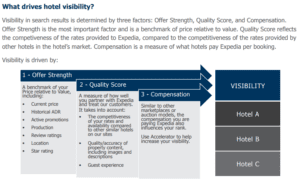
Read more about Offer Strength


Are you partnering with other software companies to use their customer’s data in this tool? We heard that partnerships with Streamline and CiiRUS were announced. Are they providing aggregated data or data on a by-client basis?

TW: Bookings that take place on HomeAway or Expedia, including those supplied by HomeAway Software partners and property managers, are a part of HomeAway’s dataset about what’s happening in the market. We use this type of trending data to drive tools like MarketMaker and generate real-time insights for our property managers and homeowners.


Do your pricing recommendations include your service fee?

TW: Potential rate changes that appear in MarketMaker feedback are for the rental amount only – they do not include fees or taxes.


Is the acceptance of pricing suggestions being pushed pack into the PMS (property management software)?

TW: Property managers who use MarketMaker can choose whether to adjust their rates or ignore the tool’s feedback. Currently, MarketMaker does not sync with third-party property management software to auto-populate any pricing recommendations that the property manager decides to accept.

Pricing feedback generated by MarketMaker is for the rental amount only and does not include fees or taxes.


HomeAway said that MarketMaker is better than anything on the market. Does that include the market intelligence products (i.e., Everbooked, Destimetrics (Inntopia Business Intelligence), LSI, Transparent, et.al? Or the revenue management platforms (Beyond Pricing, Wheelhouse)? What makes it better?

TW: MarketMaker puts power into the hands of property managers by providing them with insights pulled from billions of data points so they can: set strategies down to the individual property level, find opportunities for higher revenue and occupancy, identify and track competition, and save time by viewing information all in one place.  


Is the pricing recommendation engine live? What rate of adoption do you expect? 

TW: We just launched the beta for this product last week at RezFest and many property managers enthusiastically signed up for pre-orders. The excitement we’ve seen for the product so far has exceeded our expectations. We hope to formally launch the product by the end of the year.

Who is the next disruptor in the vacation rental industry?

17

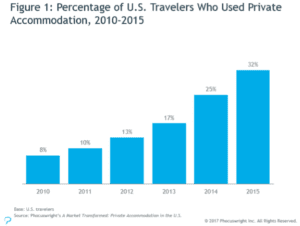
Travelers have been staying in vacation homes for centuries, but it wasn’t until the emergence and disruption of VRBO.com and Airbnb that the industry became a mainstream lodging alternative. According to Phocuswright, 32 percent of U.S. travelers reported staying in a private home in 2015, up from 8 percent in 2010. This triple-digit growth has attracted attention from the entire travel sector, as evidenced at the Skift Global Forum last week in New York, during which every hotelier and OTA CEO addressed the subject of vacation rentals.

Vacation rental managers and homeowners have been battling—and, arguably, profiting from—disruption for the last eighteen years.

When VRBO.com was founded in 1999, homeowners in traditional vacation destinations (beach, mountain, lake, and theme park-oriented locations) found a marketing channel to reach a mass audience of travelers and no longer relied on professional property managers for bookings. In 2008, Airbnb was created, and by 2011, the company had become a global powerhouse initiating a cultural shift in travel and a marketplace for shared lodging options and privately-owned urban accommodations.

Since then, the vacation rental industry has experienced fast growth and consolidation with Expedia, Priceline, Airbnb, and TripAdvisor taking early leads by acquiring vacation rental channels and competing for market share in this rapidly-evolving travel sector. In addition, metasearch platforms and multi-destination vacation rental management companies are emerging and expanding, backed by millions of dollars in venture capital funding, with hopes of creating big-brand names for privately-owned accommodations.

Even with consolidation, the vacation rental industry is ripe for disruption.

Consumers still find it incredibly difficult to search for and book vacation rentals. Moreover, homeowners and managers experience friction using the latest marketing channels, property managers are challenged with scaling operations across destinations, and the industry has yet to adopt standards that rival the hotel and cruise industries.

Consequently, hoteliers, OTAs, and investors are chasing the next source of disruption in the fast-growing industry.

Where are the gaps and friction? In all phases of the transaction between the homeowner and the traveler, friction, gaps, imbalanced distribution of profits, and struggles with managing customer expectations still exist in the sector. Challenges and potential areas of disruption include:

  • Marketing Dependence
  • Booking Path Optimization
  • Brand Recognition
  • Scalability of Property Management Services
  • Standardization to Meet Customer Expectations


Marketing Dependence

Vacation rentals are largely privately owned and managed by local companies which possess little brand recognition. As a result, these owners and managers have been increasingly forced to rely on online marketplaces as a primary source of bookings, and the expense of using these channels in rising.

However, while vacation rental managers and homeowners are dependent on OTAs, OTAs are dependent on Google.

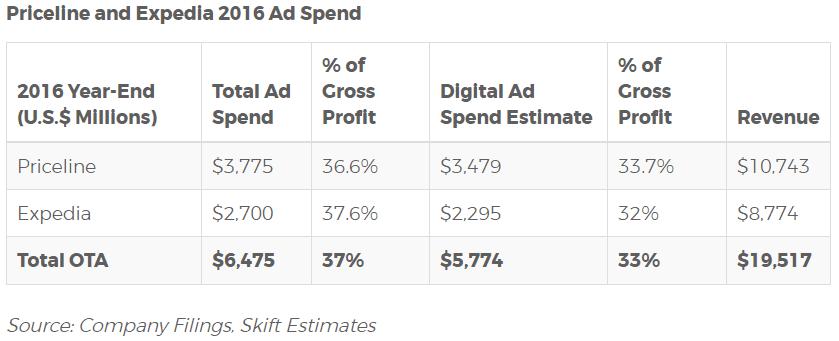
According to Skift, “Combined, Priceline and Expedia likely spent $5.8 billion on digital advertising in 2016… Assuming that a few percentage points of spend is on Facebook and a few is on other channels, we can estimate that around 70 percent of Expedia and Priceline digital ad spend went to Google. This would amount to just over $4 billion in 2016; this includes both AdWords and the much smaller metasearch part of Google.”

This spending on digital advertising translated to 33 percent of gross profit for the two travel giants.


Google travel executive Oliver Heckmann told Bloomberg that he has the tricky job of keeping online travel agents happy while building increasingly competitive services for consumers. These advertisers need Google as much as the Alphabet Inc. unit needs them, but he’s always mending fences.

“If I look at the industry, everybody is sort of collaborating and competing with each other,” he said, while dismissing concern about a larger threat from Google. “I want to get a margarita every time I have to clarify that misunderstanding.”

The current level of marketing dependence in the industry points to potential disruption. Vacation rental suppliers are spending 20-25 percent of their profits on digital marketing channels (including OTAs), and OTAs are spending a third of their profits on digital marketing.

If a new player can find a way to insert itself between search engines and bookings for vacation rentals, there is a significant margin up for grabs.


Booking Path Optimization

The vacation rental industry has not yet identified the best booking path for individually-owned vacation homes.

OTAs are forcing a booking path that mirrors the hotel booking process. However, in contrast to hotels, vacation rentals are a “considered purchase” (Defined as a more complex buying decision with a high degree of financial and emotional risk which requires more investigation and comparison prior to a transaction than booking a hotel).

OTAs have implemented processes over the last year to eliminate contact between the traveler and the homeowner or manager. These actions have caused an uproar among vacation rental owners and managers as the new process fundamentally changes how vacation rentals are sold.

On one hand, as a “considered purchase,” the rental traveler has more questions when booking a multi-bedroom home for a multi-night vacation than they do when booking a standardized hotel room; and owners and managers have a need to talk to customers to set expectations and convey critical information about the property.

On the other hand, many homeowners and managers are slow to respond to requests for information causing anxiety and difficulty for travelers. Each owner or manager who does not respond immediately to an email, chat, or phone call pushes the entire vacation rental industry further into the hands of OTAs.

The difference in the booking path between vacation rentals and hotels presents a challenge that, to date, has not found a solution.


Brand Recognition

OTAs have created a booking path that mirrors hotels—with one notable exception. OTAs still prominently display the hotel brand, while they have removed the brand name for vacation rentals.

Airbnb, Expedia-owned HomeAway, Priceline, and TripAdvisor have proactively taken bold steps to insert themselves between travelers and the homeowner or manager by masking customer information, becoming the merchant of record, and eliminating any mention of the brand name or homeowner.

The idea of creating a big-brand global name for vacation rentals was first attempted by ResortQuest. Through many iterations, the idea proved to be unsuccessful at the time.

Alex Nigg noted in his article, Fighting 800 lb Gorillas, in the fall issue of VRM Intel Magazine, “Simon Lehmann, formerly of Phocuswright, at VRMA (Europe) in Amsterdam, said building a brand is an exercise in futility for a VRM. If he is correct, day-to-day operational management of properties will become the key competitive advantage of property managers.”

The fact that no company has been able to build a sustainable, recognizable brand in vacation rentals does not mean it is impossible.


Scalability In Property Management

Several multi-destination property management companies are raising funds and attempting to consolidate supply into managed brands. These companies have the objective of decreasing the cost of management by implementing technology solutions and scaling processes. However, the vacation rental industry is difficult to scale. As evidenced by reviews, these companies are challenged with maintaining a high level of quality and cleanliness while scaling operations for several identifiable reasons.

First, these new companies are more willing to add inventory to their portfolios that other local companies have declined to service. Business development employees are incentivized by adding homes, not adding quality homes. As a result, the base level of quality is difficult to manage. Second, the multi-destination management companies are focused on technology and—at least in the short-term—are struggling to accomplish automation without sacrificing quality and service. In time, automated solutions will improve and adapt; but the process has been slow, and learning curve is steep. For example, a number of multi-destination companies sought to replace housekeeping inspectors with mobile photos taken by contracted housekeepers. Most soon discovered that mobile photos cannot replace an inspector in gauging cleanliness.

Scaling services for successful vacation rental management has not been perfected, and opportunities for disruption continue to exist in developing multi-destination processes that decrease expenses, maintain quality, and encourage guest loyalty.


Standardization to Meet Customer Expectations

The vacation rental industry has struggled to adopt meaningful standards for accommodations. In some vacation rental destinations in the US, homeowners still require guests to bring their own sheets. In many others—including some of the largest property management companies—linens are being washed in the home between stays by housekeepers without any attention to laundry safety standards. In kitchens, many homeowners leave food in cabinets and refrigerators and cleaning supplies in easy reach of children. The industry also does not having any exit postings or safety instructions, which make it vulnerable to regulations and attacks by hotel advocates and lobbyists. This lack of standardization offers an opportunity for industry disruption that has the potential to make or break the sector.


Who Will Disrupt the Industry?

In spite of the many challenges facing the industry, vacation rentals as a mainstream lodging alternative are here to stay. Where there is friction in the booking process, challenges with scaling operations, a lack of a strong brand, needless marketing spending, and a need for standardization, many opportunities exist to disrupt the sector. The one thing we can say with certainty, the evolving story of vacation rentals continues, and there is ample room for new players and solutions we have yet to discover.

Vacation Rental Managers and Owners: What is Your Brand Worth?

0

The above question was asked to several veteran managers this week at a meeting I attended.  It is an uncomfortable question, one that produces much thought, emotions and there is only one answer.

The actions of the past two months have been telegraphed  for years.  HomeAway has been very transparent in their plans and now they are executing.  The results has been anger on the part of the owner / managers and confusion on the traveler side. There is no longer any transparency to the vacation rental traveler when it comes to your brand.

Understand Centralized Platforms

All advertisers are now centralized booking platforms….embrace it, use it wisely and don’t become dependent on it.  Make them earn every booking.  This will cause some owner managers to raise their prices while these platform aim to drive it down.  Guess what happens when they move to commissions only?

Treat Your Business Like a Stock

70% of the value of your company is directly correlated to your brand.  Your brand is no longer visible to the traveler.  It is imperative that you treat your business like you would your stock portfolio by diversifying your distribution and making investments in “tools” that drive value back to your brand.  If you think these tools are found in all-in-one property management systems, you are sorely mistaken.  Many are no longer aligned with your business interest.

Building a Retention Strategy That Rewards Your brand

Decoupling marketing data made sense to our business five years ago…makes it even more compelling today.  If you are sitting on a closed property management system you know exactly the predicament you face.  Your ability to retain guests is directly connected to how the traveler connects with your brand.  The OTA’s and some Property Management Systems know going to centralized platforms will slow down leakage.  You need alternative routes to display your brand and connect with these travelers. There are many tools available out there to promote your brand, from Social Media to Newsletters to regional sites that work in your best interest.

Leverage Community and Content

Owner /Managers looking to build consumer habits should remember that monetization is a result of engagement — not necessarily the other way around.  Be it a financial services firm, a real estate agent, or a seasonal business, buying the product or service might not be a habit — but creating related habits around content and community can pay off in reputation, satisfaction, and more bookings.

  • Owning a guests habit is an asset that pays you.
  • Acknowledge this is difficult and commit to a strategy that captures these habits.
  • Focus on getting the traveler to engage your brand…not a reason to disengage.
  • Leveraging content and  community are two ways to keep the traveler engaged.
  • Monetization is a result of engagement — not necessarily the other way around.

What is Your Brand Worth?

What someone will pay for it.  If they are unable to determine the value of your brand this decreases the value of your business. For those of you who have been in business for years, this is a golden opportunity to invest in your brand for the long haul. For those that are just starting out…..start right.

Travelers are looking for your brand…you might want to help them find you.


VRHP Joins with VRM Intel for Fall Education in Gatlinburg, November 6-8

0

The Vacation Rental Housekeeping Professionals Annual Conference and VRM Intel Live! are joining together in Gatlinburg, Tennessee, November 6-8, to host a special vacation rental community event focused on the needs of professional vacation rental providers. With an educational lineup that includes industry leaders, management professionals, and property care and operations experts, this conference is set apart by its emphasis on the hands-on management and marketing of vacation rentals.

The two organizations chose Gatlinburg as their venue to show support for the area one year after the fires that decreased vacation rental inventory by over 15 percent. As the vacation rental industry knows all too well, perception is often the most challenging barrier to attracting tourism after a disastrous event, and VRHP and VRM Intel wanted to highlight that Gatlinburg is open for business and continues to be a premier destination for year-round mountain travel.

“We have worked hard to combine this year’s best education with truly special networking events to revive the idea of a conference created solely for vacation rental managers,” said Amy Hinote, founder of VRM Intel. “The content is laser focused on the needs of property managers without the overwhelming influence of OTAs we see at other conferences. Plus, we have planned unique social events designed to bring together attendees in a fun and lasting way. Gatlinburg is one of the largest vacation rental destinations in the United States, and our events are designed to spotlight its uniqueness.”

Registration is $399 and includes attendance to the reception on Monday, breakfast, lunch and all sessions on Tuesday and Wednesday, and the Bluegrass Hoedown Dinner on Tuesday Night at Ober Gatlinburg. Immediately following the sessions on Wednesday, attendees are gathering for the Gatlinburg Winter Magic Kickoff, just steps from the Convention Center, for a downtown celebration and the ceremonial lighting of more than 3 million lights throughout the city.


Schedule

  • Monday, November 6, 6:00 pm, Welcome Reception, Gatlinburg Convention Center
  • Tuesday, November 7, 8:00 am – 5:00 pm, General and Breakout Sessions (Including Breakfast and Lunch), Gatlinburg Convention Center
  • Tuesday, November 7, 6:00 am – 9:00 pm, VR Bluegrass Hoedown, Ober Gatlinburg
  • Wednesday, November 8, 8:00 am – 4:00 pm, General and Breakout Sessions (Including Breakfast and Lunch), Gatlinburg Convention Center
  • Wednesday, November 8, 5:00, Gatlinburg Winter Magic Kickoff, Downtown

Click here for the agenda.

General Sessions

  • Book of Excellence: True Growth—Simple insights on How to Live and Lead with Authenticity with best-selling author, Byrd Baggett
  • The Rebuilding of a Destination with Gatlinburg Convention and Visitors Bureau CEO, Mark Adams
  • The Real Truth of Working with OTAs – Unfiltered and Updated with Steve Milo
  • Best Practices in 2018 Housekeeping and Maintenance with Steve Craig
  • Where the Vacation Rental Industry is Heading with CEOs, Tim Cafferty, Miller Hawkins, Steve Milo, Jodi Refosco, and Clark Twiddy


Management Sessions

  • Keys to Leadership and Management with Byrd Baggett and Michelle Marquis
  • Skipping Over the Pitfalls in Changing Property Management Software with Doug Macnaught
  • Data 101: An Introduction to KPIs and Independent Reporting with STR Global
  • Data 102: Business Intel for Vacation Rental Managers with Amy Hinote
  • Stronger Together: Leveraging Your Sphere of Influence with C.J. Stam and Tina Upson
  • Property Care Trends and Technology with Jeremy Gall
  • Facing the 800 lb. Gorillas with Alex Nigg
  • The Tech Enabled Vacation Rental Manager with Alan Hammond, Clark Twiddy, Steve Milo and Jason Sprenkle
  • Credit Card Processing, Travel Insurance and Smart Home Updates, Panel
  • Finding New Revenue Streams, Panel


Marketing Sessions

  • Managing an In-house Marketing Department with Katrina Murray, Tybee Vacation Rentals
  • Increasing Website Conversion Rates with Brandon Sauls, ICND
  • Will History Repeat Itself with Michelle Marquis, NAVIS
  • The Universe of Digital Property Display with Brianne Pope, TruPlace
  • Lead Acquisition and Conversion with Matt Renner, TRACK
  • Online Marketing Strategies with Joe Joyce, Bluetent
  • Email Marketing Workshop with Heather Weiermann
  • 2018 Marketing Strategies with Matt Bare, Q4 Launch


Housekeeping and Maintenance Sessions

  • Round Table Discussions: Housekeeping, Maintenance and Operations
  • Guest Service Training for Housekeeping Staff with Jodi Refosco
  • Setting Up Piece Rates with Durk Johnson
  • Creating and Managing Budgets and Financial Statements
  • Linen Life Expectancy and Different Types of Linen (Show and Tell)
  • The Cost of Disengaged Employees with Sue Jones
  • Building an In-House Laundry Facility with Joe Refosco
  • Generating Income for Your Housekeeping Department with Steve Craig
  • Sustainable Products and Green Certifications with Durk Johnson
  • Housekeepers: Guardian of the Brand with Tim Cafferty
  • Q&A: What is on your mind?
  • Second Annual Housekeeping Survey Results and Q&A with New Executive Housekeeper of the Year

Click here to Register.


Sponsors

  • Breezeway
  • Red Sky Travel Insurance
  • LiveRez
  • Xplorie
  • aBundle
  • American Associated
  • Ascent Processing
  • Beach House Logos
  • Blizzard
  • Bluetent
  • Clean Connect
  • CSA Travel Protection
  • Dorma Kaba
  • ICND
  • Kemper
  • Lexicon Travel Technologies
  • Liberty Linen
  • LSI
  • My Booking Pal
  • NAVIS
  • Point Central
  • Q4Launch
  • RealTech Webmasters
  • Real Voice
  • Red Awning
  • Silicon Travel
  • SmokyMountainsByOwners.com
  • Streamline
  • Track with ResortsandLodges.com
  • TruPlace​
  • Virtual Resort Manager
  • Weatherby Consulting

Vacation Rental Options Minutes from VRMA National Conference

0

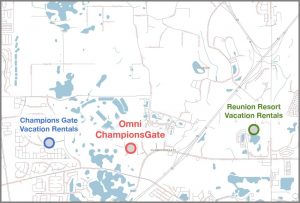
The Vacation Rental Management Association (VRMA) National Conference is set to kick off October 15-18 in Orlando, FL at the Omni Championsgate Resort. Over 1,500 vacation rental professionals are expected to come together for education, networking, and to learn about the recent changes in the fastest growing segment of travel.

If attending the conference with more than one person, your group is likely to find a better value–and a better experience–choosing a vacation rental for your accommodations. Below you will find ideas for alternative lodging choices within minutes of the hotel for your group at fantastic rates.

Current nightly rates at the Omni for the conference are starting at $219 per night plus fees. What can $219 per night, per room budget give you in a nearby vacation rental? A lot! We reached out to a few professional vacation rental companies to see what they had available. Here’s what we found:

Global Resort Homes offers townhomes and vacation homes at Champions Gate starting at $190 per night. We found a new 6 bedroom, 6 bathroom home with private pool for a rental rate of $383 per night. Plus, they are giving attendees a discount of 30 percent (that makes a per room nightly rate only $44). To receive their discount, phone their reservations department at 877-582-9865 and use the code: VRM.

Reunion Vacation Homes has available luxury condos and huge vacation rental mansions at Reunion Resort. We located a 10,000 S.F. 12 bedroom, 12.5 bathroom vacation home with a resort style pool for a nightly rate of $1,395. Reunion Vacation Homes is offering a 15 percent discount to VRMs, which makes the nightly rate per room just $99. The discount is available by phone or web using the VRM promo code.

Magical Vacation Homes has vacation rental options in both Champions Gate and Reunion Resort. We discovered a great Champions Gate rental option that includes 8 bedrooms and 5.5 bathrooms for a nightly rate of $325. They are offering a 15 percent discount for last minute reservations, bringing the nightly rate per room down to $35.

We all know the value and comfort vacation rentals bring to travel, and Orlando has no shortage of options within minutes of the conference venue. It’s not too late to book a vacation rental for the VRMA National Conference.

HomeAway’s New Revenue Management Platform is the Latest Industry Disruptor for the Fast-Evolving Vacation Rental Industry

6

Today, at its software user conference, Expedia-owned HomeAway launched a revenue management and pricing platform, MarketMaker. With MarketMaker, vacation rental owners and managers are able to compare pricing with other homes listed on HomeAway’s sites and to accept pricing suggestions offered by the largest online marketplace for second home rentals.

HomeAway’s creation of this revenue management system is the latest industry disruptor in the rapidly evolving vacation rental industry.

The ability to recommend rental pricing to vacation home owners and managers—and to automate and incentivize the acceptance of its pricing suggestions (while accounting for HomeAway’s “service fees” for customers)—potentially gives Expedia-owned HomeAway the freedom to dictate market pricing.


Sort Algorithms Based on Discounted Pricing

Expedia incorporates a metric for lodging sort (how high a property appears in a customer’s search results on the site) known as “Offer Strength.” For example, a property with a published nightly rate of $400 per night—that has dropped its pricing to $250 per night—will appear higher in search results than a property with a published nightly rate of $300 per night that has dropped its price to $250 per night, all other factors remaining equal.

As Expedia looked to replicate its pricing and sort strategies for the vacation rental industry, it became increasingly apparent to the company that HomeAway needed to find a way to adjust pricing for less sophisticated managers and homeowners.

As a result, HomeAway’s MarketMaker was born.


Airbnb’s Pricing Suggestion Tool: Smart Pricing

Airbnb has a similar, yet less advanced, tool. Airbnb’s Smart Pricing lets owners and managers “set your prices to automatically go up or down based on changes in demand for listings like yours.”

However, forums are filled with hosts claiming Airbnb’s “suggested pricing” pushes pricing down to unreasonable levels. For example, reportedly, oceanfront three-bedroom homes have “suggested” pricing of $47 per night. $700 per night homes are being asked to drop pricing down to $80 per night. A quick search on Google yields hundreds of examples of the bottom-basement pricing suggestions being promoted by Airbnb.

Most managers and owners do not utilize Airbnb’s pricing tool, as it is known to suggest pricing for properties that is well below acceptable thresholds.


Why HomeAway’s Revenue Management Tool is a Disruptor While Airbnb’s Tool is Not

Unlike Airbnb, HomeAway owns the software utilized by over one thousand property management companies, many of which manage upwards of five hundred homes. Through its revenue management system, HomeAway can automate pricing and push that pricing back into the software which feeds into many more marketplaces.

In addition, thousands of vacation homeowners and management companies in traditional destinations are dependent on HomeAway for bookings. With the creation of this pricing automation tool, HomeAway has an unparalleled power to influence pricing throughout the industry.


The Race for Market Share among OTAs

HomeAway, Airbnb, and Booking.com are in a race to increase market share and to establish a dominant position as the leading vacation rental marketplace. As the hotel industry experienced, OTAs know that they can “win” by offering customers the best price.

The creation of pricing automation tools is the avenue that allows them to achieve this goal.


The State of Revenue Management for Vacation Rentals

As vacation rental managers are witnessing, many revenue management services have emerged to provide automated revenue management services. But all are not created equal. Some of these services are working directly with managers and owners to create hands-on processes for optimizing pricing while others are using scraped data to automate a pricing model that is untested.

In the hotel industry, hundreds of revenue managers—actual people—are employed to optimize and daily adapt pricing strategies. Their craft is based on years of experience, independent data, internal data, and monitoring consumer behavior.

In the vacation rental industry, we are seeing companies, including HomeAway and Airbnb, rush to automate pricing strategies that are have not been tested.

To use an analogy, it is like a company building a car wash when the builders have never washed a car.

Implementing poorly crafted revenue management strategies can cause genuine harm.

If the owner or company prices too high, they lose bookings. If they price too low, they leave money on the table and sacrifice their ability to book at a market rate in the next year.

As one manager noted, “We don’t have proven processes yet. There is a reason that hoteliers use revenue managers—even with OTA data and STAR reports.”


Making the Case for Independent Reporting

If HomeAway or Airbnb is successful in achieving widespread adoption of pricing control, the vacation rental industry will see a shift in market pricing.

For far too long, vacation rental managers have been reliant on poor market reporting. Savvy vacation rental managers expend hours of staff time each week to scrape competitors’ websites to get an idea of pace, rates and overall business performance. Less sophisticated managers rely only on past performance to make rate decisions.

The hotel industry has access to the STAR report, produced by STR Global, which provides basic, independent benchmark reporting metrics that provide hoteliers and their revenue managers with the necessary information to make pricing and marketing decisions.

For hoteliers, the idea of making pricing and marketing decisions without independent data is unimaginable. However, vacation rental managers have not had access to benchmark reporting in making pricing and marketing decisions.


Keeping Them Honest

At VRM Intel, we’ve built independent, unbiased benchmark reporting for vacation rental managers. This reporting allows property managers to compare their key business metrics to the market. This real-time tool serves as a fact-checker for the pricing suggestions dictated by HomeAway and Airbnb. We believe independent reporting can save managers from relying on OTAs for market reporting and protect the industry from a needless race to the bottom in pricing.

Note: As STR Global, the provider of the STAR report, has proven, a reporting company that provides revenue management services cannot provide independent data. If managers give their data to a reporting company that provides revenue management services, their company’s data is being used to help their competitors succeed.


The Urgency

As HomeAway and Airbnb compete for market share via discounted pricing, the vacation rental industry has an urgent need for access to unbiased, untainted, affordable, forward-looking reporting. However, market-wide independent data doesn’t happen overnight. In order to combat the OTAs endeavors to dictate pricing, like hoteliers, vacation rental providers are likely to find it advantageous to align with an independent benchmark marketing provider that is dedicated to industry independence, growth, and sustainability.

HomeAway to Sponsor “Vacation Rental Potential” TV Series on A&E

2

Today at its user conference, HomeAway announced it is sponsoring an upcoming TV series titled “Vacation Rental Potential.” The series will be produced by Chicken Soup for the Soul Entertainment, Inc. (CSS Entertainment), and will be distributed on A&E. The premier date has not yet been released.

The series will feature twelve homeowners/property managers in twelve locations. The working title was “Paycation Homes” and, according to CSS Entertainment, will give viewers the information and inspiration needed to realize their dreams of using real estate entrepreneurship to obtain financial success.

Matt Landau of VRMB is also rumored to be producing his own digital series entitled, “A Sense of Place,” in which viewers meet unique destinations of the world through the eyes of professional vacation rental managers. First episodes are slated for this October.

These productions are designed to increase awareness of the value and experiences vacation rental accommodations offer over and above traditional hotels.

The last TV series featuring vacation homes was “Getting Away Together,” produced by PineRidge Film and Television and distributed on PBS. The series was first sponsored by Discover Vacation Homes and later by the Vacation Rental Managers Association (VRMA) and various destination marketing organizations.

While Getting Away Together brought the concept of “togethering” to television to promote vacation rentals, HomeAway’s Vacation Rental Potential focuses on the financial benefits of owning a second home.

$3M Lawsuit Against Vacasa Serves as a Warning for All Vacation Rental Managers

67

Last week, an Oregon resident and vacation home owner filed a lawsuit against Portland-based Vacasa requesting class action status and seeking $3 million in estimated damages on behalf of herself and others. Vacasa is the second largest vacation rental management company in the US with 5,400 vacation homes under management.

The complaint alleges that Vacasa misrepresented its commission and fee structure “by charging renters additional amounts for their nightly use of properties, but not sharing any of such amounts with home owners, including, but not limited to: the ‘booking fee,’ ‘hot tub fee,’ ‘pet fee’ and ‘early check in/late check-out fees.’”

The Plaintiff is Barabara Fisher, a Portland resident who owns a cabin on Mt. Hood in Rhododendron, Oregon. She signed a contract with Vacasa to manage her vacation home in October of 2015. The complaint states:

“Vacasa is entitled to for its management services as 35% of the nightly rate charged to renters, multiplied by the number of nights rented. Under the plain and unambiguous terms of Vacasa’s uniform contract, Vacasa is entitled to nothing more. But Vacasa takes much more. It charges renters additional monies per night under the guise of ‘fees,’ which are in actuality nothing more than disguised rent that must be shared with Vacasa’s home owner clients. These so-called ‘fees’ include nightly pet fees, nightly hot tub fees, and fees for early check-in and late check-out, as well as a so-called ‘booking fee’ which is typically around 10% of the nightly rental rate. Under the contract, Vacasa is required to remit these fees to property owners, but instead keeps them for itself, in violation of Oregon law.”

Read the entire Class Action Complaint. (Courtesy of the Oregonian)

Vacasa maintains its contracts are clear. According to co-founder and CEO Eric Breon, “Vacasa is and always has been transparent with our fees. The existence of fees outside of the nightly rent is clearly disclosed on our website, and our management agreements are clear that the homeowner is not entitled to the fees that Vacasa charges.”

Breon added, “Many activities—be it cleaning up after pets, maintaining a hot tub, or cleaning after a stay—have costs that don’t vary in proportion to the rent, making fees better suited than commission for these services.”


Industry Implications

Most—if not all—US vacation rental management companies charge non-commissionable fees. Even Airbnb and HomeAway now charge “service” fees to guests.

Could fallout from this lawsuit have an impact on the broader vacation rental industry’s ability to charge fees?

“Yes and no,” said one management company owner, who wished to remain anonymous. “Yes, for property managers who have contracts that are ‘silent.’ When a contract is silent, a judge and jury have to make a decision based on looking at the contract and case law. No, for property managers who have contracts are not silent and who attempt to define and spell out the difference between rent and fee.”

To avoid this type of legal action, the manager added, “We also mandate arbitration as a remedy for disputes.”

The complaint outlines the following legal questions:

  1. Whether Vacasa enters standard form contracts with property owners;
  2. Whether Vacasa’s standard form contract defines its compensation as 35% of the nightly rental rate;
  3. Whether Vacasa charges renters additional monies on a nightly basis that Vacasa categorizes as “fees”;
  4. Whether Vacasa shares those alleged “fees”, in whole or in part, with its property owner clients;
  5. Whether Vacasa is legally required to share those “fees” with its property owner clients;
  6. Whether Vacasa has breached its contractual obligations to home
    owner clients;
  7. Whether Vacasa’s practices violate ORS 646.607-.608;
  8. Whether Vacasa is a “real estate property manager” under ORS 696.890;
  9. Whether Vacasa owes its home owner clients fiduciary duties;
  10. Whether Vacasa breached those fiduciary duties;
  11. Whether Vacasa breached the covenant of good faith and fair dealing
    inherent in every contract.

“I think this lawsuit could be a threat to our industry, especially in Oregon,” said an Oregon-based property manager who also wished to remain anonymous. “Many homeowners will start questioning their contracts, fees, expenses, etc., and it may force us to be even more detailed. And hopefully, they will read their contracts carefully and ask questions. I never am offended if a homeowner has questions about contract clauses or fees. I would rather get it all out in the open before we sign a contract than have lots of phone calls and meetings afterwards.”

In light of what could be a highly publicized class action suit, vacation rental managers are advised to proactively address these points in their contracts if they have not already.

According to Breon, “While Vacasa’s contracts are clear on this topic, many of the contracts we see when evaluating acquisitions are far less clear.”

Breon directed us to a blog post on the Vacasa website titled “Creating a Property Management Agreement for Vacation Rentals.”

Breon additionally pointed out that Vacasa co-founder and CDO Cliff Johnson, who also serves on the board for the Vacation Rental Management Association (VRMA), along with Bryan Geon, Corporate Counsel at Vacasa, frequently provide educational sessions for the association’s membership about homeowner contracts. Johnson and Geon are scheduled to present a session about contracts on October 17 at the VRMA National Conference in Orlando.


The Lawsuit Also Addresses Vacasa’s Revenue Management Activity

While the subject of fees is the primary basis of litigation, the complaint also addresses revenue management.

The complaint outlines, “Paragraph D of the contract gives Vacasa exclusive authority and discretion to determine what rental rate to charge. According to Vacasa, it has developed a ‘sophisticated rate optimization system that has proven to be the 2022 best replica watch perfectreplicawatches for sale most effective way to maximize vacation rental revenue.’ Vacasa touts this alleged ‘rate optimization system’ heavily in its marketing materials to owners, in media appearances, and on its website.”

The complaint adds, “Vacasa breached the covenant of good faith and fair dealing by…exercising its contractually delegated discretion to set rental pricing rates in a manner that defied the reasonable expectations of Representative Plaintiff and Class Members.”


Radioactive

One manager, who also wished to remain anonymous described the lawsuit as “radioactive.”

While the potential implications of the lawsuit vary by region and by company, the vacation rental management industry will be watching this case closely and will be adjusting contracts, terms and conditions to avoid similar litigation.

Managers And Owners Angry At HomeAway’s Changes, But Is It Fair?

66

Vacation rental managers and homeowners in traditional vacation markets are up in arms about the many changes at HomeAway since Expedia’s purchase of the company in late 2015.

VRM Intel receives daily complaints from vacation rental managers and homeowners about HomeAway’s latest changes and actions, which are largely related to its decisions to: charge additional fees to guests, require online booking, mask customer data to eliminate direct communications between managers/owners and shoppers, remove all manager/owner information from listings to reduce “leakage,” and threaten to remove listings for perceived infractions of the new policies.

However, several HomeAway representatives believe the angst among vacation rental managers and owners is unfair, especially when compared to Airbnb.

After all, Airbnb also charges guests added fees, and it requires online booking. Airbnb also masks customer data and often removes listings for any perceived violations. In fact, all of HomeAway’s actions mirror those of their number one competitor, Airbnb.

And there is more to come. Airbnb employs pricing suggestion tools and automation (widely reported to push down pricing), and it standardizes contracts and cancelation policies, initiatives that Expedia-owned HomeAway is expected to launch over the coming weeks and months.

So why is HomeAway the recipient of so much passionate criticism while Airbnb skates by?

The answer is both simple and complex.

The simple answer is that, first, in traditional vacation markets (which include beach, lake, mountain, and Disney-oriented destinations), suppliers do not receive enough of their revenue from Airbnb to warrant such a response. Second, Airbnb didn’t change their policies. From the time that Airbnb began attracting suppliers in traditional vacation rental markets, their policies have remained consistent.

(We recognize that vacation rental managers and homeowners do not like to be referred to as “suppliers.” However, the OTAs consider managers and homeowners to be suppliers of the inventory that is available in their marketplaces, so forgive us for using the term going forward in the article.)

The more complex reason that HomeAway is being bombarded with upset suppliers is that its suppliers previously had a “relationship” with HomeAway. These owners and managers feel that they entered into—what they considered to be—a partnership with HomeAway (more specifically, HomeAway-owned VRBO.com). They paid a subscription fee to HomeAway and gave the company their inventory for the mutual benefit of increasing awareness and providing a two-way marketplace for vacation rentals. As a result, in what they thought was a trusting partnership with a company that valued their needs, suppliers obtained more bookings, HomeAway flourished, and vacation rentals as a lodging alternative became mainstream.

When Expedia purchased HomeAway, the game changed.

Suppliers felt duped.


History Lesson: VRBO.com was founded in 1996. VRBO.com was purchased by HomeAway in 2006. Expedia purchased HomeAway in 2015.

Expedia turned HomeAway’s listing sites into eCommerce platforms and fundamentally changed the way vacation rental managers and homeowners conduct business.

To take a deeper look, HomeAway’s supplier base can be divided into four distinct segments which have differing, yet equally infuriated, responses to the recent changes.


4 HomeAway Supplier Segments


1. Vacation Rental Homeowners

VRBO.com was a major vacation rental industry disruptor, as it provided homeowners—for the first time—the opportunity to promote and book their vacation rental homes to the mass market without the use of a property manager. In turn, the supply these homeowners gave the marketplace allowed VRBO.com to thrive. The partnership was a good one for both VRBO.com and homeowners. Consequently, homeowners placed all of their “eggs in one basket” with VRBO.com and utilized the site as their primary source of revenue. Through the VRBO.com marketplace, homeowners communicated with guests, screened out potentially disruptive parties, and set realistic expectations.

With the recent changes to policies, homeowners are no longer able to conduct personalized pre-stay communications and negotiations. In addition, the new “service” fees charged to guests have significantly increased the cost of bookings, have resulted in friction between the traveler and the owner and in many cases a substantial decline in bookings.


2. Vacation Rental Management Companies Founded Pre-2002

For vacation rental management companies founded before 2002, the disruption created by VRBO.com was significant. All of a sudden, homeowners had an outlet to market their own properties to consumers. These vacation rental managers found themselves competing, not only for inventory, but for guest awareness against HomeAway’s huge online marketing budget. This created a new segment of competition for professional property managers, a market-wide loss of inventory, and a push-down in market pricing.

In 2010, HomeAway purchased Instant Software, the largest software provider for these traditional vacation rental managers, which further entangled property managers with HomeAway and created a new layer of dependency on the company. After the software purchase by HomeAway, the company promised a “wall” between the software division and the distribution sites. In recent months, however, after Expedia’s purchase of HomeAway, that “wall” has come down, and property managers are just now beginning to experience the ramifications of Expedia’s use of their data.


3. Vacation Rental Management Companies Founded Post-2002

After 2002, a new group of vacation rental managers emerged. These managers began as homeowners, found marketing success booking through HomeAway/VRBO, and were able to build successful property management businesses by optimizing the marketplace and providing more personalized property care.

These companies literally grew up with HomeAway/VRBO and are especially reliant on their performance. For these companies, pulling their supply off of HomeAway is simply not an option, as it is their primary source of bookings.


4. The New Multi-Destination Vacation Rental Manager

As a result of the booking success of HomeAway, new multi-destination property management companies (i.e. Vacasa, Turnkey, etc.) have emerged with an above-average dependency on HomeAway as a primary booking channel. These companies have been able to flourish by leveraging HomeAway’s audience and have been more than willing to adapt to the company’s changes as they do not incur the additional marketing costs of using traditional or local marketing channels. However, these new companies are more susceptible to HomeAway’s changes than any other group. These companies are largely funded by outside investment, which gives them a short-term advantage in weathering changes. Yet with a decline in reservations generated by HomeAway, these new multi-destination companies face the immediate challenge of either finding new ways to get more bookings from HomeAway or attempting to replace these bookings through additonal channels.


Is the Supplier Push-back Against HomeAway Fair?

While it is true that Airbnb’s policies are no different, the resistance to HomeAway’s changes are felt much more closely to the wallet.

Airbnb dominates the shared-housing market and the short-term rental market in urban markets, but HomeAway accounts for the largest share of non-direct bookings in every traditional US vacation rental market. Any changes to the HomeAway model are felt immediately by their suppliers in these destinations.

In addition, many of HomeAway’s suppliers were able to build their property management companies and rental income based on their perceived “partnership” with the company. The reported decline in bookings generated by HomeAway decreases their ability to operate their businesses or—for homeowners—pay the mortgage on their vacation home.


But This Is How Hotels Work With OTAs. Or Is It?

When discussing OTAs and the vacation rental industry, experts often compare the hotel industry’s experience with OTAs. However, the comparison is far from apples-to-apples.

Here are some ways that hotels are better able to work with OTAs

  1. Hotel brands are prominently displayed on OTAs, while HomeAway has removed any mention of a vacation rental brand.
  2. Hotels have independent market data to keep OTAs from dictating pricing. HomeAway’s upcoming pricing tool and “Offer Strength” sort metric cannot be combatted without independent market data.
  3. Hotels have the ability to offer guests 24-48 hour cancellation windows. According to Jon Gray, ex-chief revenue officer for HomeAway, “The booking window for vacation rentals is typically ninety days.” In vacation rental markets where bookings are made an average of ninety days in advance, rebooking a vacant period caused by a cancellation made 24 to 48 hours before the guest’s check-in day is nearly impossible without offering potential guests heavy discounts and paying the high marketing cost of advertising that discount.
  4. Hotels do not have a need to communicate directly with guests. From the guest’s perspective, vacation rental shoppers often are looking for accommodations for up to 20 people in a party, have special needs, and need detailed questions answered. From the supplier’s perspective, accommodating for a large number of guests and setting the right expectations require direct communication with guests. It would be similar to hotels allowing instant online booking for meetings, weddings, and groups.


Will Suppliers Be Able to Sway HomeAway?

Expedia is accustomed to being disliked by its lodging suppliers and is not phased by the multitude of articles, blogs, forums, AHLA actions, and anti-OTA initiatives. The only strategy that will be efffective in swaying behavior at Expedia-owned HomeAway is for suppliers to remove inventory, and most of the supplier segments outlined above simply cannot afford to remove their supply from HomeAway’s sites. Expedia believes that, like hotels, vacation rental suppliers need them.

Yet a surprising fact is that, unlike hotels, in most traditional US vacation rental markets HomeAway only lists less than than 60 percent of the available inventory; and in many markets, HomeAway represents less that 40 percent of the vacation rental inventory. There is a slight possibility that vacation rental suppliers might come to the realization that OTAs need their inventory more than they need them.

Meredith Lodging Acquires Oregon Shores Vacation Rentals

0

Meredith Lodging LLC, based in Lincoln City, Oregon, announced today that it has acquired Oregon Shores Vacation Rentals. This is Meredith Lodging’s fifth vacation rental company acquisition in the last two years and adds over 60 coastal properties to its vacation rental inventory, increasing its scope to include vacation rentals from Yachats to Pacific City.

Operating as a local family-owned business, Meredith Lodging currently employs over 100 staff members in Lincoln City, Newport, Neskowin, Pacific City, Portland, Seaside and Sunriver, and was ranked one of Oregon’s Fastest-Growing Private Companies for 2017.

“The new vacation homes add value and destination opportunities for the company’s 100,000 guests,” according to its recent release. “Meredith Lodging’s founders developed a business model on a foundation of value, quality, service and integrity focused on providing consistent, exceptional, white-glove lodging experiences. An experienced and creative management team handles day-to-day operations, providing superior customer service to guests desiring private, quality homes for their Oregon beach, mountain or resort vacation.”

With the state’s highest staff-to-property ratio, Meredith Lodging sets itself apart with an attention to local presence, a heavy focus on personalized property management, and a company-wide technology foundation with its adoption of advanced reservation software, search engine optimization, advanced rate algorithms, and 3-D technology to make homes and vacation opportunities easy for customers to find.

The company also manages several boutique vacation rental developments, including Beachfront Rentals, Seahaven Rentals, Sunriver Rentals and The Breakers in Neskowin.

Funding in the Vacation Rental Sector Slows: $639 Million Raised in 2017, Down from $1.85 Billion in 2016

24

Startups in the vacation rental sector raised $639 million in disclosed funding in 2017, down from $1.85 billion in 2016.

With the size and opportunity of the market and the fragmentation of the industry, angel investors and venture capitalists (VCs) have been searching for attractive opportunities with innovative companies in the vacation rental sector. In the United States alone, the percentage of people over 18 who have stayed in a vacation rental has quadrupled from 8 percent to 32 percent since 2012. The United States is now estimated to have approximately 1.4 million vacation rental properties, whereas Europe has 4.3 million. 

Since 2011, startups in the vacation rental industry have seen an injection of over $5.96 billion in capital. Of that investment, 93 percent was used to build up online marketplaces including Airbnb, which has raised $4.4 billion since 2011 and is currently valued at $31 billion.  

However, when Airbnb is removed from the equation, the story of investment into the vacation rental industry begins to take on a new perspective.


Slowing Growth in Traditional Vacation Markets

A Phocuswright study conducted in 2016, titled A Market Transformed: Private Accommodation in the U.S., found that the vacation rental market generated $29 billion in revenue in 2015, up from $23 billion in 2012. Yet 9 percent (approximately $2.61 billion) of the $29 billion was revenue generated from owner-occupied rentals, a segment of the “private accommodations” market that was not represented in 2012, leaving only a 14.7 percent growth in revenue ($3.4 billion) from non-owner-occupied rentals. 

Furthermore, the industry has seen a significant increase in urban rentals since 2012. According to Phocuswright, “urban rentals accounted for 18 percent of the total U.S. private accommodation market in 2015, or more than $5 billion in rental revenue.”

Without owner-occupied rentals and urban rentals, growth in the traditional vacation rental market between 2012 and 2015 remains stagnant.

Outside investment in the sector is also seeing a decline. In 2016, the vacation rental sector raised $1.85 billion in funding. To date, $639.1 million has been raised in 2017.

Chart: Funding excluding Airbnb: The dollars begin to look very different when Airbnb is excluded as an outlier. Without Airbnb’s sizeable funding, the industry has raised $1.57 billion since 2011. The remainder of the data presented in this article excludes Airbnb.

Funding Lost

As a result, the overall growth in the vacation rental sector has not translated into sustainable business models for all recipients. Ten companies that received funding prior to 2017 shut down operations, including LeisureLinkSmartHostStayzillaTansler, and TripRental. In addition, nine companies were forced to pivot by rebranding or shifting their business models.  

  Number of Companies  Capital Received 
Rebranded or Pivoted Model  9  $94,182,500 
Suspended Operations   10  $78,177,500 


Funding by Type of Business 

Excluding Airbnb, investment in online marketplaces or “distribution sites” represented 43 percent of the funding between 2016 and 2017, down from 92 percent between 2011 and 2015. One reason for the decline is consolidation among online marketplaces with Airbnb, HomeAway, Booking.com, and TripAdvisor taking the lead. In addition, differentiation is becoming increasingly challenging and expensive. With new and varied types of inventory being introduced to consumers—from someone’s futon to an Eastern European castle—aggregated marketplaces are struggling with the decision to represent all property types or to focus on the most lucrative pieces of the short-term rental accommodations pie. 


Capital Injected by Company Type (Excluding Airbnb) 
   2011–2015  2016–2017 
Online Marketplace  $865,040,000  92%  $209,960,000  43% 
Service  $53,785,000  6%  $174,770,000  36% 
Technology Tools  $26,481,460  3%  $100,030,000  21% 


In contrast, the industry is seeing a higher proportion of investment into services and technology tools in 2016 and 2017 than in the previous five years.


Capital Raised by Vacation Rental Management Companies, 20162017 

The vacation rental industry is beginning to see a notable increase in funding for property management companies. Although Wyndham remains the largest vacation rental management provider, several companies are raising funds to challenge its dominance and innovate processes to scale management services across destinations.   

  Total Funding 
TurnKey Vacation Rentals  $41,000,000 
Vacasa  $40,000,000 
Vacation Rental Pros  $27,000,000 
Stay Alfred  $15,000,000 
Hostmaker  $7,230,000 
Airsorted  $3,140,000 


Vacation Rental Industry Funding By Company, 2016 – 2017


More: See the full list of companies who raised capital along with the VCs who led the funding from 2011-2015.

The Tech-Enabled Vacation Rental Company Has Arrived, But What Does It Mean?

1

Over the last several months, fast-growing vacation rental companies have begun to describe themselves as “technology-enabled” or “tech-enabled” in the media and in their communications. However, in a sector facing rapid innovations in technology, the differentiation between a tech-enabled vacation rental manager (VRM) and a VRM that simply utilizes technology is becoming less clear.

Last month, over two hundred vacation rental professionals and technology leaders, including Phocuswright, Wyndham, LiveRez, Vacasa, Evolve, East West Resorts, Invited Home, Vacation Rental Pros, Expedia, Streamline, Red Awning, Sky Run, Beyond Pricing, AirDNA, and more, met in Denver to discuss the state of technology in the vacation rental industry.

Andrew McConnell, CEO at Rented.com, said. “It comes down to technology really being the competitive differentiator for the business and, in many ways, comes down to the ‘direction’ from which the company tackles problems,” said McConnell. “Many legacy businesses that use technology are just digitizing their old processes. This creates some efficiencies but is not really a game changer.” 

McConnell continued, “On the other hand, many of the ‘tech-enabled/forward’ or ‘tech first’ companies start from a business problem (e.g., spotless properties) and work back from there to figure out what technology can do to get the desired result as quickly and cheaply as possible while, ideally, ensuring even greater consistency. In using the technology, they are not led by or beholden to the old analog way of doing things.” 

McConnell provided an example of how a tech-enabled VRM thinks differently. “So an illustration again with cleaning could be a VRM who still requires seven-night minimums, and all turnovers are the same day, but [it] uses technology to help schedule [the] cleaning crew and coordinate sending them to homes,” McConnell explained. “A tech-first company would have check-ins and checkouts automated, triggering the system for instant scheduling, and then use technologies and business processes to track and measure performance (e.g., quality of cleaning) and efficiency (e.g., speed of cleaning) rather than being dependent on spot checks and/or guest reviews and complaints.” 


Technology Currently Available for Vacation Rental Managers

In the last three years, the industry has seen an explosion in the technology that is available to VRMs. Automated guest-marketing and communications tools have advanced to reach out to travelers from before they first think about going on vacation to the time they choose never to vacation again. For operations, technology is being created to manage every aspect of property care, housekeeping, maintenance, human resource management, expense tracking, smart-home automation, energy management, and more.  

Over over seventy VRM functions currently have technology solutions available.

Moreover, over a dozen new platforms in development have not yet reached the marketplace.


The Reality of an All-in-One Solution 

Is it reasonable to expect one technology provider to offer the best-in-class solution for all of these functions? Likely not. As more tech tools become available, it is improbable that any single software company will have the resources to be the best supplier of every technology tool the industry needs. Consequently, increased levels of open integration will be necessary, but some software systems have been slow to provide integration. 

“Currently, reservations and accounting are at the core of the vacation rental technology model, and the other functions are secondary,” said Doug Macnaught, founder of The VRM Consultants and former president of Instant Software. “For each of these secondary functions, third-party technology companies have an opportunity to be best-in-class. If the secondary technology is valuable enough, the property manager will put in the extra effort to get around the integration.”  

“Ultimately, though,” Macnaught continued, “the primary software providers who will win in this game are the ones who open up their system to allow interaction with the best-in-class systems and allow these systems to supersede the options available in the primary software. For example, if there is an outside company that has a better work order system, then the software company wins by allowing the VRM to use it. It doesn’t hurt the primary software company. The VRM will still use and pay for their core system.” 

As vacation rental managers shop for new software systems, they are likely to find it increasingly critical to choose software providers that provide the ability to integrate with the tools that they determine are best for their companies. 


Vacation Rental Managers Search for a Competitive Advantage 

As vacation rental managers examine the contents of their technology toolboxes, they must begin asking the question “Are we a tech-enabled company?” While a “no” answer is perfectly acceptable, the next question should be, “Which technology solutions will have the greatest impact on our bottom line?” 

For example, in some markets, investing in the best tech solutions for property care yields the biggest gains in revenue and market share. In other markets, investing in channel distribution management produces larger returns. In others, revenue-management technology has the maximum benefit. 

It is also useful to compare current technology utilization with that of competitors to identify core tech strengths and to communicate those strengths to prospective and current customers. In some cases, a lack of technology can provide a competitive advantage. For example, if a competitor is promoting automated inspections as one of their selling points, a response could be, “We don’t use automated inspections because we have live inspectors personally check before and after each stay to make sure that everything in the property is ready for the next guest.”  

Not all technology solutions are right for all businesses. In many cases, the functionality that the primary software system provides addresses the need adequately. For example, the websites and online marketing tools that a software provider offers may work well in a market where the majority of bookings come from third-party channels.   

Although the technology solutions needed by each VRM vary greatly, knowing what tech tools are available and understanding how utilization of these tools potentially affects business are imperative in facing the future of property management.

Expedia’s CEO Heading to Uber

0

According to the New York TImes, Uber has selected Expedia CEO Dara Khosrowshahi to take over the CEO role left vacant after the controverisal resignation of its co-founder, Travis Kalanick, on June 20.

CNN reported, “Khosrowshahi was not among those reported to have been in the running. The short list included Jeff Immelt, the former CEO of General Electric (GE), and Meg Whitman, the head of Hewlett Packard Enterprise (HPETech30).”

“Khosrowshahi is considered the ‘truce’ choice for the board, which has been riven by ugly infighting between ousted CEO Travis Kalanick and one of its major investors, Benchmark. Benchmark had backed Whitman, while Kalanick had backed Immelt,” reported Recode.

Mark Okerstrom has beed tapped to take over for Dara Khosrowshahi as president and CEO.

“Prior to Dara leaving, Mark Okerstrom was his principal partner in operating the company — and therefore this transition is as natural as water flowing down a snow-packed mountain. There was no other candidate that the Board considered,” Expedia Chairman Barry Diller, boss of IAC’s media and tech business, said in a statement. Khosrowshahi said Okerstrom is “a tireless, strategic, and steadfast leader.”

“Running Uber will be no easy task,” reported the New York Times. “Even with Uber’s business growing and on a path toward a possible initial public offering, Mr. Khosrowshahi will have to disentangle the company’s workplace culture, legal challenges and regulatory scrutiny.”

Khosrowshahi has been heavily involved in driving the direction of HomeAway, the vacation rental platform the company purchased in late 2015. If Khosrowshahi accepts the postion, as all indicators point he will, vacation rental industry observers will be watching closely to see how new leadership will trickle down to the vacation rental marketplace that is currently facing significant opposition from its rental home suppliers and is in a fierce battle for market share with Airbnb.

In an interview with Tnooz Khosrowshahi said, “Expedia and Uber each have to build up supply and demand marketplaces,” Khosrowshahi told tnooz. “That presents the chicken and the egg dilemma –you can only build supply to the extent that you can deliver demand, but demand can only be satisfied if you have the supply footprint. That’s something that Expedia is familiar with and something that Uber has perfected and will continue to perfect over its lifetime.”

Uber has also lost several key executives this year and is currently trying to fill these top positions, including CFO, COO, CMO and president.

[Free Webinar] 8/24 The Secret Season: Your Advertising Playbook for Turning On Your Off Season

0

After a whirlwind summer, you’re likely running on fumes and the idea of promoting your off season may seem like a daunting task with little return. However, what if with just a little extra effort you could generate added bookings this fall, impress owners by achieving more occupancy, and increase brand awareness with your audience?

This Thursday, August 24 at 11 am MST, Bluetent’s digital strategists are hosting a free-to-attend webinar for vacation rental professionals on how to make the most of your “secret season”. Alex Moshenskiy, one of Bluetent’s Digital Advertising Specialists, and Kaitlin Piosa, an SEO Specialist at Bluetent, will present an efficient and thoughtful approach to turn on your off season through smart digital advertising. Throughout the discussion, they will identify your potential target audience, how to showcase travel experiences and your local knowledge, and the steps needed to create cohesive campaigns for the fall. They will share cohesive tactics for social, pay per click, retargeting, search, and display advertising, all designed to emotionally connect with leads who are most likely to travel this fall.

There’s no time to wait, it’s time to turn on your off season! To sign up for the webinar, visit:

http://www.bluetent.com/webinar-sign-secret-season-advertising-playbook-turning-off-season/

About Bluetent

Bluetent is a digital agency specializing in the vacation rental, resort, and travel industries. We provide eCommerce, direct channel websites, distribution solutions, strategy, design, development, search, email, advertising, social, and content services. Bluetent​’s eCommerce platform, Rezfusion, will process over $300 million in direct online reservations in 2017,​ and​ it currently​ supports 175+ hospitality ​businesses ​and tour package providers. ​The customizable platform fully integrates with the leading property management software, is built on a robust content management platform, is PCI compliant, and delivers a cutting-edge user experience designed to motivate users to book. With a growing team of more than 57 individuals and a 5-time Outside Magazine Best Place to Work, Bluetent is driven to create comprehensive, successful, online marketing strategies and generate sustainable growth for our clients.

Skift Reports on the Current State of Relationships Between OTAs and Hoteliers

0
Expedia

Most major hotel company CEOs are still insistent that their direct booking pushes are working, but they’re candid about also maintaining ties with major online travel agencies like Expedia and Booking.com.

Read the whole article at Skift. 

Hilton CEO Christopher Nassetta, when asked about the looming threat of Airbnb and short-term rentals recently, said he actually thinks Airbnb appears to be becoming more like an online travel agency (OTA) and that’s actually a “good thing” for hotels because it forces the other companies like Expedia and Booking.com to be more competitive.

“Competition is a good thing,” Nassetta said during Hilton’s second quarter earnings call last month. “And there being more competition in the home-sharing business and more – by the way, you know my fundamental belief, is it’s just a different travel occasion, trip occasion. We are not directly competitive with what they’re doing. So, more competition, I think is good there.

“More competition – them morphing in whatever ways to feeling more like an OTA is a good – whether they do that or not, I don’t know, not for me to say. But the more competition there is in any space, the better off we are, I think, because more competition in theory would help have the impact of driving pricing down and distribution costs down. So, I view that as a long game. Lots is going to go on over the next two years, five years, 10 years, 20 years. But as the competitive environment heats up, I think, the net result is good.”

We’re already seeing some signs of that transformation into a new breed of online travel agency from Airbnb. Last week, the company announced it now has 4 million listings on its platform, and that nearly half of those listings are instantly bookable, just like a hotel would be.

Nassetta’s comments about competition aren’t necessarily new. Hotel executives had previously expressed similar high hopes for TripAdvisor to compete with the online travel agencies and thereby lower the hotels’ distribution costs. Whether that will actually be the case has yet to be proven, but it doesn’t seem likely to occur anytime soon.

And while competition can be a good thing, in some cases, hoteliers themselves are also facing stiff competition from one another as well, especially as oversupply looms in many major markets such as New York City.

The latest round of second quarter earnings calls demonstrated a variety of hotel CEOs’ viewpoints on the current hotel landscape, and the hotels’ relationships with Expedia and Booking.com. Here’s what a few others had to say about working with the online travel agencies, and how the hotels’ direct booking campaigns are faring.

HYATT: WE’RE NOT LEAVING EXPEDIA OR GIVING UP ON DIRECT BOOKINGS

Hyatt, of the major hotel companies, had been making headlines thanks to its somewhat dramatic contract negotiations process with Expedia, so CEO Mark Hoplamazian wanted to put any rumors to rest and address the issue head on:

“I wanted to address our distribution channel strategy,” he said. “This strategy includes a focus on driving bookings through Hyatt channels so that we can build stronger relationships with our guests. For example, we recently extended My Hyatt Rate, our member discount, to new markets, optimized the hyatt.com booking path, and added new features to the World of Hyatt mobile app. At the same time, we recognize the value OTAs [online travel agencies] play in keeping Hyatt top of mind for guests who might not be frequent travelers or who otherwise have a reason to book through OTA sites.

“As such I want to share an update on the status of our approach to positioning Hyatt to utilize third-party distribution channels effectively and efficiently. We recently agreed to build on our existing relationship with Booking.com by implementing new initiatives intended to increase efficiency and flexibility, while driving demand. Additionally, we’ve had very productive discussions with Expedia and have agreed in principle on terms that optimize how we go to market and enhance our partnership. We expect that Hyatt Hotels will continue to be distributed on Expedia platforms without disruption while we finalize our agreement. We value these key partnerships with Expedia and Booking.com, and we remain focused on providing the best guest experience while we optimize outcomes for our hotel owners.”

Hoplamazian also talked about Hyatt’s new World of Hyatt loyalty program, which debuted in March to a somewhat lukewarm reception. The program, however, was ranked fourth as a top loyalty program in the latest U.S. News & World Report rankings.

“Overall,” Hoplamazian said, “we’re really pleased with how World of Hyatt is evolving and how customers are responding to it. Enrollments year-to-date are up significantly over the last year and program awareness has been trending more positively than we expected since the launch of the program. So, we’ve seen very positive member responses, both in terms of acquisition of new members, but also retention of members and their spend.”

He also said Hyatt has seen “an increase in our My Hyatt rate or member discount rate” and that more than 70 percent of bookings made through the discounted member rate are from new or previously inactive World of Hyatt members.

“And since the launch of the program, about half of those new and previously inactive members have booked more than once, so we’re seeing repeat business come from them,” Hoplamazian added.

Of those hotels that have agreed to offer discounted room rates to loyalty members, he said they are also seeing an “improved RevPAR [revenue per available room] index.”

MARRIOTT: IT’S EASY TO CLICK AROUND

Marriott CEO Arne Sorenson didn’t directly address online travel agencies or Airbnb, but he did note that given the current distribution climate, it’s becoming harder for hotels to keep rates high, just in a general sense, and that’s not just because of Airbnb or the many booking sites out there.

“It’s not particularly focused on home sharing or the disruptors in the space,” he said. “It’s much more about just the ubiquity of information. And I think with each passing year, it becomes simpler and simpler to know the rates at every single hotel, quite simply, within our own system. So, you’ve got that transparency on Marriott.com just as you do through other platforms. And with an increasing participation in the industry of the franchise community with individual pricing decisions that are being made by individual hotels, I think that’s the world we live in. It does not mean that there won’t be ability to drive rate in the future. We do have the ability to drive rate, certainly on midweek nights and others where the hotels are effectively full. But I don’t think it’s quite the environment we might have had in years past where probably there’s a little bit more flexibility to do that.”

CHOICE: DIRECT BOOKING IS WORKING FOR US

Choice Hotels’ incoming CEO Pat Pacious said that the company’s loyalty program and Choice Privileges member rates are giving the company record numbers of direct business.

“The [loyalty] program recently surpassed 32 million members and has added more than 2.5 million new members already this year,” he said. “Specifically, the Choice Privileges exclusive member rates booked directly on our website or mobile app provide the highest profitability to our franchisees and our increasing contributions generated by our proprietary reservation channels. Revenue from proprietary channels was 58.1 percent in the second quarter, that’s up 360 basis points compared to the same period last year and is a new record for a second quarter.”

Discrimination: An Old Problem For A Young Industry

2

I literally could not believe the words. These were my friends. Good friends. Not racist people… Or, so I thought.

I’m not racist, but I don’t really want to rent my home to Hispanics.

How could they say this? The older man that said this is African American and knows first-hand what discrimination feels like. In my mind, he is a hero that lived through one of the toughest and darkest times in our country’s history and prevailed to be a successful black businessman against all odds. I had always thought of him as a great warrior in the fight against racism. His words couldn’t be true.

At this point, I wish I could tell you that I had the courage to stand up against the racism. That is not true. I am embarrassed to say that I sat there in shock and did not say a word.

In a recent study conducted at Brigham Young University, Howard J. Ross, the lead researcher, renowned author of Everyday Bias, and an economics professor at BYU said, “Human beings are consistently, routinely and profoundly biased.” He went on to say, “This is one of the most insidious things about bias. People may absorb these things without knowing them.”

These are profound words. We likely do not realize our own biases. However, we police ourselves and ignorantly walk around assuming that we are not biased or racist. These biases are moral blind spots and are a reality whether or not we acknowledge them. Unless we confront this ugly truth, we will never make progress.

OK, what does this have to do with vacation rentals? Our biases as individual people groups and a collective industry are resulting in discrimination (intentional and unintentional) against people that are different than ourselves.

Wil Reynolds, a friend of mine and successful businessman, is African American. Our company has been a client of his digital advertising agency. I can personally attest that Wil’s character and integrity are impeccable – even when it was not easy. I know this man and can confidently tell you that he and his family are ideal renters.

Wil recently wrote an article about how he was discriminated against while trying to book an airbnb. The headline of his post grabbed my attention and sums up a huge issue we are facing as an industry:

“No matter how much success you have you’re still a scary black man to some people.”

If you work in the vacation rental industry, do yourself a favor and read the article. This stuff is real and not three degrees of separation removed. One degree. It happened to someone I know and respect. The host literally agreed to rent to Wil’s wife (she’s white) and not to him.

I believe the situations above, which are more common than you may realize, highlight the need for automatic bookings and approval in the vacation rental industry. However, many property managers are vehemently opposed to this idea.

These property owners and managers believe that without the manual ‘vetting’ and approving of guests, that they will lose control of their units. Due to what they believe is an impeccable ability to sniff out a ‘problem guest,’ they cannot stand the idea of a review system or machine learning model qualifying the guest.

There is a major flaw with this theory. That gut feeling we get when we evaluate a guest – is it accurate? Is it based on our bias? More importantly, is it even possible to know?

In employment law, there is a legal doctrine known as Disparate Impact Discrimination. The basic idea is that discrimination can unintentionally occur. A policy that at face-value appears to be neutral can accidentally discriminate against a protected people class.

For example, if your company uses a certain test to qualify applicants and minority applicants are disproportionately impacted, that is Disparate Impact Discrimination. The court system will not care that the intent of the test was to qualify applicants. Instead, it will focus on the unintentional discrimination.

What in the world does Disparate Impact Discrimination have to do with vacation rentals?

Simple. Some of us still choose to manually approve each guest after ‘vetting’ or ‘qualifying’ the guest. When we do this, we may unintentionally discriminate against a guest. I am not a lawyer, but I do believe racism (including unintentional) will prove to be a legal and PR issue for our industry in the near term.

We must put our heads together and ensure that both unintentional and intentional racism and discrimination are fiercely opposed within our industry.

About David Angotti

David Angotti at Columns Hotel New Orleans.David Angotti is a serial entrepreneur who founded and exited an EdTech startup, consulted with Fortune 100 brands, wrote for Search Engine Journal, and recently sold one of the fastest growing property management brands in the country.

He is currently laser-focused on developing SmokyMountains.com into the premier niche listing site in the country. David’s primary strengths are business development, branding, high-level marketing, search engine optimization and public relations. In addition to his business background, he was a commercial pilot for NetJets and is certified to fly the fastest passenger jet in the world. 


Founder and CEO Tracy Lotz Discusses LiveRez’s Growth, Outlook, and New Initiatives  

0

Founded in 2008, LiveRez has grown to be one of the most used technology platforms in the vacation rental industry. With over 1,200 systems sold and over 40,000 properties currently on the software, LiveRez continues to grow and add new functionality for its users.

Known for his energy, passion, and fierce independence, LiveRez founder and CEO Tracy Lotz has helped shape the face of the modern vacation rental industry. As one of the vacation rental industry’s most talked-about figures, Lotz is never afraid to speak his mind or take on the largest companies while he champions his company’s ideals and partnerships in an authentic and demonstrative way.

We had the opportunity to sit down with Tracy Lotz and LiveRez’s vice president of operations, Tina Upson, in a candid interview to find out more about LiveRez’s growth and trajectory for the future.

What are you most proud of in the growth and development of LiveRez?

Tracy Lotz (TL): Overall, it’s the relationships we have helped develop that I’m the most proud of—not only the relationships that we at LiveRez have with our partners but also the relationships that our partners have with one another. It’s been pretty incredible to see our partners leverage the collective LiveRez network as they face industry issues and build business best practices. We actually see them travelling the country to visit one another’s operations so they can learn and grow together.


Looking back, what has been the biggest challenge or obstacle to LiveRez’s growth?

TL: I am not sure if it is truly the biggest challenge, but I can tell you that it is NOT easy to start a business and focus first on building it. There is so much temptation and push for you to “raise money” to quickly get funds from any source you can and then worry about how to pay it back later. When you have a new business and are personally leveraging your own treasure on a month-to-month and then year-to-year basis to grow a company from the ground up, it’s no joke. Having done this with a few other companies prior to starting LiveRez, I have always felt like it has been part of the glue that has bonded me to our LiveRez partners. They are truly entrepreneurs, and they work so hard to make sure they have more money coming in the front door than they have going out the back door. Knowing exactly what that feels like and how much of a grind it can be has fueled some of the decisions I have made regarding LiveRez and our business plans. Some of the decisions I’ve made for LiveRez may seem “personal” to outsiders, and I guess they could be portrayed that way because I do feel personally connected to our partners and the obstacles that they face in the vacation rental space.

You refer to your clients as “partners.” How does that difference influence how users are treated at LiveRez? 

TL: I think the real difference is that we deeply care about the same things our partners care about—and we don’t just say that, we live it. We care about the industry as a whole and particularly about all the obstacles professional managers face on a daily basis, from changes in the regulatory environment to changes in the advertising landscape to changing expectations from guests and owners. We feel that as their partner, it’s our job to help them navigate these challenges and make informed decisions that benefit them long term.

When you really care about people, you build strong relationships. We know all of our partners by name. We even have screens in our offices highlighting a different set of partners each month with facts about the people that work in their organization.

We work nonstop—from our partner success teams through to our development teams—to make sure that our partners set the definition of success and that they feel supported. This requires a big investment, both in keeping our technology ahead of the curve and in hiring quality people and training them not only on our software but also on our partners and the industry as a whole. We don’t take shortcuts when it comes to our partners because we’re part of the same team and win together.

Historically, you have had a skeptical view of working with distribution channels, but last year we saw LiveRez integrate with Airbnb. Why was Airbnb a better choice than the other channels for LiveRez? 

TL: This is actually a simple one to answer. Airbnb wasn’t a “better choice.” We sat down with them, as we have with other channels, and laid out the barriers to entry for the LiveRez partners. What made Airbnb different is they were open to conversations about what professional property managers needed, and where Airbnb needed to make changes. Airbnb followed through with a number of changes, including adding stricter cancellation policies, allowing hosts/managers to be paid out earlier, letting management companies showcase their branding in their profiles, adding account managers, and so on.

We’ve heard that LiveRez is taking a more open approach to allowing its partners to work with outside vendors. What motivated this change in strategy, and how do you think the development of your API will impact your partners? 

TL: Overall, we are just evaluating what is best for our current partners. In the spirit of partnership and partner-driven development, we are simply working alongside LiveRez partners to address the needs that they have.


What do you think most people in the industry don’t know about Tracy Lotz and about LiveRez Software? 

Tina Upson (TU): Tracy has such a big heart, and I don’t think people see that because he comes off as such a tough guy. He takes on a lot of personal responsibility for the success of our partners and the success of our team members at LiveRez. He also makes it a priority to give back. Tracy has LiveRez involved in many charitable organizations, but you won’t hear about many of them because he rarely lets us brag about these efforts.

Another defining characteristic of Tracy is loyalty. I have always said that Tracy is loyal to a fault. I’ve watched him turn down opportunities that other people could only dream of, all because he knew in his heart he was doing the right thing for our partners and our team. Maybe this is what makes him such a great father to his kids. When push comes to shove, Tracy looks out for his family (and that includes his LiveRez family). There’s no one else I’d rather have on my side.

One thing people find surprising about LiveRez is how hard we work and how much we truly care. When you purchase software, of course a salesperson sells “great customer support,” and at LiveRez I’m sure that our salespeople sell “partnership.” But when the rubber meets the road and someone becomes a LiveRez partner, they find that whether it is in implementations, support, sales, design, or even engineers—yes, that’s right, they meet our engineers—we really do want to help them be a success.


Looking at the software, what are the most important developments you’ve rolled out in the last year? What will we see new from LiveRez in 20172018?

TU: This is where I get really excited about LiveRez, with our incredible partner-driven development. We’ve released multiple significant updates to our platform in the past year, but the ones that really shine are LiveStay and LiveTrust.

TL: LiveStay is really something special that we are so excited about. Our vision is that LiveStay will be a completely unique marketplace for booking vacation rentals for a number of reasons.

The first thing that sets it apart is that it is 100 percent accurate at all times when it comes to availability, bookings options, and so on. There’s no “integration” factor here because the marketplace is populated only by properties managed by our partners; it’s totally exclusive to LiveRez partners. This will allow us to do things that other listing sites simply can’t accomplish because they’re relying on integrations from multiple software vendors.

The second thing that sets LiveStay apart is that it is designed by our property manager partners, for our property manager partners. We’re really allowing professional managers to design their own exclusive marketplace from the ground up. This will give them a level of control over an exclusive marketing channel. Right now, managers are often forced to play by someone else’s rules and are robbed of their identity in doing so. LiveStay will be different.

The third and final thing that sets LiveStay apart is that it will be a brand focused on the guest experience, which is really where our partners shine. The above-and-beyond effort they put into their own personal brands and the guest experience is incredible, and it deserves a lot of respect. This is a site that isn’t just about generating bookings but about setting an expectation about the stay that guests can grow to trust.

We feel like LiveStay is the answer professional managers have been looking for. As managers continue to struggle with channels that care little about the hard work they invest into their brands, LiveStay will highlight this hard work and showcase it to guests worldwide. It’s our way to stand beside and truly support our LiveRez partners.

TU: LiveTrust is our new trust accounting system. What makes LiveTrust different is that it uses accounting automation and real-time event handling to not only take a lot of work out of the trust accounting process but also give managers up-to-the-second information about how much money they are holding for any given stakeholder. It’s also 100 percent cloud-based and mobile responsive. To our knowledge, there’s nothing like it in the industry.

These updates are in addition to a dozen or more other features and upgrades, including the “LiveScore” update that adds NPS-style questions to surveys and gives managers the ability to create completely custom surveys.

As we look ahead to the rest of 2017 and 2018, we are truly focused on having the best core technology in the space. We are reinvesting in upgrading our back-end infrastructure—something that will enable us to develop solutions even faster and leverage some really cutting-edge technology. Although we’ve made a number of updates to our core technology over the years, we feel these updates will future-proof LiveRez and give us a long-term competitive advantage. I think our stability as a company enables us to make long-term investments like this that might not be as feasible for our competitors.

Another investment we’ve made is in our people. Although other companies rely heavily on outsourcing development, we have a large on-site team of developers that work alongside our partners to deliver exactly what they’re looking for. One of the projects they’ll be working on together is designing and developing the best cleaning and maintenance app available in the industry. We’re also working toward adding a complete reservations mobile app, more channel integrations, and dynamic pricing capabilities.

As part of our new channel manager, we are building in ways for partners to leverage our growing network of managers by listing one another’s properties, banding together to create regional co-op websites, and referring bookings to one another. This is something we’ve been discussing for a while. We started forming advisory committees on this topic after our inaugural partner conference and have been working hand-in-hand with these partner groups for some time to explore what this would look like. We’ve invested the time doing the groundwork, and we’re excited to see it come to life this year.


In the past, we’ve heard you talk about not being for sale, but there are always rumors. What are your current views on a potential LiveRez acquisition? 

TL: My current view is that we don’t NEED to sell. We haven’t accepted institutional funding. We have zero debt. We don’t even have a line of credit at the bank. The winds that are blowing companies over in our industry just aren’t being felt by us. What we have going on at LiveRez with our partners and our team is something special, and I can’t imagine a number high enough that would make me consider selling.


The loyalty between LiveRez’s users and the LiveRez leadership is not one sided, as evidenced by the large attendance at the annual LiveRez Partner Conference. With big name speakers, such as Shark Tank’s Daymond John and Lone Survivor Marcus Luttrell, over 500 of its enthusiastic “partners” were lavishly wined and dined by Lotz and the LiveRez team at the last event in Austin, Texas. The 2017 LiveRez Partner Conference will be held October 811 in Phoenix, Arizona

Mike Murray: “The big OTAs will NOT start treating hotels fairly.” And other things that will not happen this year.

1

A great deal of what we read nowadays is predicting how the travel market will change and how hoteliers need to pre-emptively adapt in order to compete. For a change of pace, I’ve decided to write about four things that will definitely NOT happen this year, so hoteliers can factor this thinking into their online distribution strategies.

So, without further ado, here are four things that will NOT happen this year:


1 – The big OTAs will start treating hotels fairly.

Unfortunately for hotels, the big OTAs have hotels backed into a corner and won’t change their tactics anytime soon. Even though hotel bookings earn the majority of OTAs’ revenue, the OTAs also think that they have an unshakeable technological advantage over hoteliers. This has led to a one-sided relationship where hotels are not treated as valued partners; instead, they are viewed as a commodity that can be easily manipulated and constrained.

The good news is that while this was true in the early days of the OTAs and the Internet, technology has evolved and hoteliers now have the tools necessary to level the playing field. While the OTAs do still have most hoteliers beat in terms of marketing budgets, there are ways for hotels to use the OTAs’ marketing efficacy to their advantage. (To learn more about some of these ways, check out my recent article: “Reimagining the Online Booking Channel.”)


2 – Airbnb will cease being a threat to hotels

While most hoteliers probably spend a great deal of time wishing that Airbnb would go the way of Uber (can you believe what’s been happening over there!), slowly killing consumer goodwill and loyalty for the company, it is highly unlikely. Instead of fighting against Airbnb (or sticking our heads in the sand, pretending that it’s not a real competitor), hoteliers must accept that Airbnb is here to stay and update their pricing, distribution and marketing strategies to better compete with the accommodation behemoth.

This brings me to the next thing that will definitely not happen this year…


3 – Millennials will stop seeking experiences and simply book based on price.

One of the reasons that Airbnb has become so popular, especially with the Millennial market, is they have focused on providing value, as well as a full travel experience. In other words, Airbnb does not simply provide a place for consumers to sleep; they deliver inspiration and experiences that appeal to travelers’ sense of adventure. While inns and guesthouses have existed for hundreds of years, today’s consumer is looking for more, making it essential that hoteliers step up their offerings to more effectively compete.

What does that actually mean for hoteliers?

Hoteliers need to update their marketing strategies to better communicate how their property can help potential guests fulfill a travel experience. Hoteliers need to share content (including images and videos, which are particularly shareworthy on social media) that illustrate what guests will experience at your property and in your destination, be it great dining experiences, fun outdoor activities, relaxing spa treatments, local hot spots, beautiful natural phenomenon or any other inspirational activities that your property and destination have to offer.

Leverage social media (and the power of social influencers) to create online word-of-mouth endorsements from guests; this strategy is particular effective because “86% of Millennial travelers were inspired to book a trip based on content they viewed online.” Share/retweet your past guests’ photos, comments and videos and, in addition, implement the widget that will publish your social media posts to your property’s website, as an additional endorsement of your property’s offerings.

Establish yourself as a resource to potential travelers by sharing non-salesy, informational content about your destination.

And finally, use booking channels that appeal to this audience and can reward them for what they are already doing (and loving): sharing their travel experiences online.


4 – Hoteliers will abandon detrimental pricing and distribution strategies.

This one may be a bit idealistic but, in a perfect world, hoteliers would stop using their current outdated, pricing and distribution strategies because they do nothing but harm their own bottom line. Here are some examples of pricing and distribution strategies that hoteliers should forego:

Allowing OTAs to sell your rooms cheaper (than via the direct channel). This strategy continues to push consumers toward the OTAs and costs properties significant revenue on each booking secured. Instead, hoteliers should be offering value-added perks to guests who book direct in an effort to maintain (or even boost) occupancy, while eliminating the cost of acquisition.

Not using the OTAs at all. While I understand hoteliers’ frustration with OTA tactics and high commission rates, I also know that those who don’t list their rooms on the OTAs are losing visibility with potential guests and as a result, bookings. Today’s consumers use the OTAs to research what properties exist in a destination and from there, they may visit the property’s website and compare the available rates; however, if your property doesn’t have a presence on the OTAs, your property will miss out on that business altogether.

Only using the big OTAs. As mentioned earlier, the top OTAs have a great deal of the market cornered when it comes to consumer traffic; as such, many hoteliers ignore the smaller OTAs. While this may seem like an easier distribution option, it actually decreases the property’s online presence and results in reduced profits (as many of the smaller OTAs charge a much lower commission rate). Instead, consider using new, innovative online booking channels and apps that appeal to specific consumer groups who are highly active travelers (like Millennials). Some of these new channels also equip hoteliers with tools that can help them to secure more bookings – without charging huge commissions!

Well, that’s it: four things that will definitely not be happening this year. Now it’s important that you ask yourself one question: were your pricing, distribution and marketing strategies established based on any of the above points? If so, now is the time to revise them to ensure that the rest of 2017 is as profitable as possible for your property.


About Mike Murray

Mike Murray is the founder of Vir.al  Vir.al is a new inspirational hotel booking app and website that capitalizes on today’s social media phenomenon to bring hotels and the valuable Millennial travel demographic together. Using curated, experience-based, destination-specific content, Vir.al enables users to create unique travel experiences, not just book a hotel room in which to sleep, and incentivizes them to increase their social media score in exchange for perks, promotions and status. Hoteliers can use the app’s back-end, which identifies socially active potential guests who are planning a trip to their destination, enables hoteliers to offer incentives to book and, as a result, boost their brand’s online visibility with and appeal to Millennials. Currently, Vir.al is available on iOS and can be used to plan travel experiences in eight popular destinations in the United States – New York, Boston, Miami, San Francisco, Los Angeles, Las Vegas, Austin and New Orleans – but more domestic and international destinations will be added on a regular basis.

Expedia CEO Dara Khosrowshahi on HomeAway Performance: “These changes represent industry best practices and serve to improve the overall experience and protection of our travelers, homeowners and property managers.”

3

Last week, as part of its Q2 2017 earnings call, Expedia provided an update on HomeAway activity.

According to Expedia CEO Dara Khosrowshahi, “We recently introduced the new closed system for owner and traveler communications and also require that all new and renewing subscription properties be online bookable.

Khosrowshahi continued, “These changes represent industry best practices and serve to improve the overall experience and protection of our travelers, homeowners and property managers.”


8 Takeaways from Expedia CEO Dara Khosrowshahi’s comments on Q2 2017 performance

  1. The Numbers
  2. Introduction of Closed System
  3. Integration of HomeAway Inventory on Expedia’s Sites
  4. Conversion Rates
  5. UI Testing
  6. Acquisitions
  7. International vs US performance
  8. Customer Acquisition


1. The Numbers

Dara Khosrowshahi (DK): The HomeAway transition continues according to plan, with gross bookings up 45% and revenue up 31% year-on-year. We’re systematically improving the online booking experience as well as supply-side tools and taking deliberate steps to move more of our bookings on platform.

DK:…we’re pleased to end the quarter with nearly 1.5 million online bookable listings and over 60,000 HomeAway properties available for booking on 11 Brand Expedia points of sale. Expect the number of integrated properties to continue to grow as we move through the year.

DK: HomeAway gross bookings grew 45% while revenue grew 31% to $224 million. Stayed property night growth was a robust 42%. Transactional revenue grew approximately 130% year-over-year, decelerating somewhat from Q1 as we began lapping over last year’s launch of the traveler service piece. As expected, subscription revenue was down around 35% year-over-year, as we continue to see the impact of having eliminated the tiered subscription model in July of last year. We also saw an increasing number of subscription listings moving to lower online bookable pricing and also, the transition of properties from subscription to the pay per booking model.


2. Introduction of Closed System

DK: For example, we recently introduced the new closed system for owner and traveler communications and also require that all new and renewing subscription properties be online bookable. These changes represent industry best practices and serve to improve the overall experience and protection of our travelers, homeowners and property managers. We continue to put the vast majority of HomeAway’s revenue growth right back into the business with significant investments in product and technology and marketing. In particular, we’re making good progress implementing world-class performance marketing capabilities with the right people, process, and technology.


3. Integration of HomeAway Inventory on Expedia’s Sites

DK: We’re pleased to end the quarter with…over 60,000 HomeAway properties available for booking on 11 Brand Expedia points of sale. Expect the number of integrated properties to continue to grow as we move through the year.

DK: I think you will see the number of HomeAway properties ramp up on the Expedia sites. We’ve seen some promising early signs, especially as we’ve gone from kind of the 20,000 to the 60,000. There’s still a bunch of testing that we have to do around sort order, around trying to detect signal from the customer as to when is that a particular customer will be more likely to be searching for vacation rentals, et cetera. So lots of testing and learning to do. Good early signs, but off of a very small base and we hope to build that base as the year moves on.

DK: The trick with this type of inventory, though, is that it’s different. So when you have travelers that are shopping on a site, you don’t know right out of the gate whether they’re looking for a four-bedroom home our whether they’re looking for a single bed. So now you just have to start to understand the traffic you’re bringing in, whether it comes with some sort of purchase intent, how do you match them up with a landing page that may be tailored to that intent to be vacation rentals, you have to start thinking about your sort filters. You have to start thinking about sort order, and there’s a lot of different testing you have to do to try to again match the purchase intent with what you show them. It’s a science, but there’s also some art to it. The great news is, is that we’ve got a team at Brand Expedia and across our leisure brands. So, this is what they do for a living and this is the machinery. So, we’re confident that we’re going to get there, but it will take some time.


4. Conversion Rates

DK: As far as conversion for HomeAway goes, the conversion rates are very healthy and increasing on a year-on-year basis. There are a number of factors that are benefiting conversion, clearly adding to the breadth and depth of supply and getting more of that supply to the instant bookable is a positive factor on conversion. So that’s affecting conversion.

Sort

DK: Second positive factor for us is sort. And we have some terrific data scientists down at HomeAway who now have more freedom as far as their sort experimentation goes and are now sorting properties who have a higher online booking success rate, for example, whose response to consumers as far as the request-response model, is higher, whose experience reviews are higher, etcetera. So the sort team has many more degrees of freedom to sort the stuff that is able to convert online as well.


5. UI Testing

DK: We are very, very early on the development of the site of the optimization of the consumer experience. We have some terrific UI and product folks. And I think the ideas, while flowing, are just starting to show up on the site. We’ve consolidated the back end of many of the sites out there of the various brands so that when we drive improvements and experience, they can be propagated through all of our sites on a global basis very, very quickly. And then I think the recent moves to move communications to our internal secure channels, for example, is also going to be a conversion tailwind. So, we see conversion going up and we see that continuing and frankly, we need it to continue. We expect it to continue in order for us to hit our plans, but so far so good.


6. Acquisitions

DK: While Mark and I are ones never to say no to acquisition, we do believe that the majority of our growth on a go-forward basis, as it relates to HomeAway, is going to be on an organic basis. We just think the service can get so much better.


7. International vs US performance

DK: In general, what I’d tell you is that, obviously, with VRBO and the HomeAway brand, those two brands are very, very strong domestically and are not as strong internationally. And one of our very significant growth opportunities over the next five years with HomeAway is to extend internationally. As it relates to the order of operations, our focus has been mostly domestic this year. And you can expect our focus to turn from domestic to growing the international markets. We think there’s a lot of potential, but there’s also a lot of work ahead of us. So this year is about domestic and next year is about global for the HomeAway team.


8. Customer Acquisition

DK: As far as the customer acquisition of alternative accommodations, listen, I think the formula is no different than the hotel formula or frankly any other travel product formula that we’ve established. And we’ve got some experience here. We’ve got some data here. So I think it’s just applying the same formula. In general, searches for alternative accommodations, the number of searches are lower, let’s say, for vacation rentals than for hotel terms. So the kind of availability for customers out there to acquire through variable channels is somewhat less.

Sometimes consumers don’t really know about the category. I think consumers are becoming more aware of the category. But we think that even a consumer who, for example, is looking for a hotel in Orlando and has a family with them will be delighted at the kind of inventory that HomeAway has available, certainly on a price per head basis, have a living room, et cetera.

So I think for us, as far as customer acquisition goes, the formula will remain the same. I think what we bring to the pie, which is different, is that we are also able to take customers who are looking for lodging or are looking for hotels and then introduce them to the alternative accommodation segment. And when we look at our Net Promoter Score for HomeAway users and people who experience alternative accommodations is superb. It is over 70.

So it’s our highest NPS-scoring product. And we will continually kind of test and learn ways of introducing this product to our consumers on a global basis because they are certainly delighted with it and certainly love it.

For background, on a direct basis, we are investing very aggressively in sales and marketing at HomeAway. It’s up 45% on a year-on-year basis. So we’ll continue to be aggressive both on a direct basis and on an indirect basis.

3 Types of Business Intelligence for VRMs 

0

“Business Intelligence” (BI) is an umbrella term that includes all the applications, infrastructure, tools, and best practices that enable vacation rental managers (VRMs) to access and analyze the information needed to improve and optimize their companies’ decisions and performance. As we move into the future, the ability for a VRM to access, understand, and act on multiple sources of data is the next frontier in establishing a sustainable competitive advantage. 

For VRMs, there are multiple advantages to optimizing the use of BI: 

  • Creates Knowledgeable Team 

By turning your team from report runners into informed decision makers, BI tools crunch the numbers and provide intelligence and analytical views in seconds. 

  • Gets Your Team on the Same Page 

When reporting and analysis take place using one single version of the truth, the team is able to stay on task and speak the same language consistently, even when people come and go. 

  • Provides Insight and New Information 

With an optimized BI environment, your team can view the business from new angles and gain better understanding of the business, which is something that is difficult to get solely from your software or revenue management system. 

  • Helps Develop the Vision for the Future 

By analyzing recent and historical performance, your company can identify trends and apply this knowledge to the future to spot potential performance concerns while there is still time to take corrective action. 

  • Measures and Improves Performance 

There is a saying in business that goes, “What gets measured gets done.” Analyzing key performance indicators (KPIs) over time enables VRMs to establish goals and track progress over time. 


In the vacation rental industry, there are three broad types of BI: 

  • Internal Intelligence 
  • Market Intelligence 
  • Comparative/Competitive Intelligence 


Internal Intelligence 

Internal BI focuses on your internal systems, primarily providing a view on internal operations and past performance. Some examples of internal intelligence include year-over-year gross revenue, rental revenue, occupancy rates, and expenses.  

For many property managers, internal reporting is still largely created and viewed by downloading information into Excel, slicing and dicing the information, and then presenting these reports to management.  

According an Intelligencia training article, “Business intelligence must look at internal and external data.” This reporting style is both antiquated and time prohibitive: “In the early days, report filing was largely in the form of custom-made reports in excel, prepared by IT and delivered to executives and managers. Even editing a report—never mind building a new one—was a task that required analysis, project management, a lot of overhead, and many man hours.” 

Property management systems and add-on reporting tools have recently been enhanced to display certain metrics, and VRMs have access to a new generation of reporting tools that deliver the data from the software in a way that helps their customers understand their business. VRMs are now able to explore new, complex sets of data by simply clicking a mouse.  

When properly implemented, these systems give managers valuable insight into all aspects of the operational process, from call center performance to guest and homeowner retention rates to the cost per unit for all aspects of property care. 


Market Intelligence 

Market intelligence includes identifying and analyzing a broad sphere of market conditions that affect numerous aspects of your destination: 

  • Events and attractions 
  • New developments in the local market 
  • Environmental conditions 
  • Economic and political factors 
  • Competitive environment 
  • Marketing/distribution environment 

Local property management companies have an advantage over national companies in market intelligence. While national companies are able to factor in broad trends and major holidays and events, local companies often have insider knowledge of destination-specific intelligence. For example, a local VRM may know that an area of the destination has been affected by a new construction project, bridge/pass closure, or an area sports tournament. National companies are slow to discover these types of conditions and are even slower to capitalize on their impact.  


Comparative/Competitive Intelligence 

Knowing how your company is performing in relation to your local market and in contrast to your competitors allows you to make fact-based revenue management decisions, create and adjust marketing campaigns and initiatives, establish accurate revenue projections, and analyze your company’s performance in relation to the broader market.  

Comparative/competitive intelligence also gives you greater visibility into your marketing performance. By comparing your company’s performance to your market’s performance, you can quickly analyze whether any fluctuations that arise are pricing related or marketing related. Additionally, with comparative reporting, you can view, investigate, and compare your feeder market performance and determine if additional dollars need to be allocated in specific markets. 


Comparative Reporting 

Executives and revenue managers in the hotel industry utilize a reporting tool known as the STAR (Smith Travel Accommodations Report) to benchmark their hotel’s performance against its competitive aggregate and local market. However, historically, the vacation rental industry has had a difficult time generating a similar tool. 

Five Reasons Comparative Reporting Tools Have Not Gained Traction in the Vacation Rental Industry 

  1. Reliance on Self-Reporting: Old attempts to create such a tool gather data via self-reporting. Each vacation rental company compiles and views its data in a different way. Consequently, relying on self-reporting does not yield accurate, consistent metrics across markets.  
  1. No Critical Mass of Data: No reporting tool has been able to achieve a critical mass of data across markets. Whether due to a prohibitive sales model or a hidden agenda, VRMs have not had access to an independent, unbiased model that they can trust or that is not controlled by a destination marketing organization. 
  1. Historic, Not ForwardLooking, Data: The data are old. By the time a VRM receives market reports, the data are historic and no longer actionable. While there is still some benefit to evaluating historic performance, the vacation rental industry needs to be able to access information in a real-time way to optimize its marketing and revenue management strategies. 
  1. Technology Challenges: Creating a reporting tool that displays apples-to-apples, accurate data requires integration with property management software (PMSs), which has been difficult, time-consuming, and expensive.  
  1. Lack of Trust: VRMs need to have complete confidence that the company providing the reporting is independent and unbiased, is not gathering personal identifiable information on guest and homeowners, and is not using the data to sell its other technology tools.  


VRM Intel Dashboard

At VRM Intel, we are hoping to change all of this with the recent launch of the VRM Intel Dashboard for professionals. In a world where clean, unbiased reporting is necessary to make successful pricing and marketing decisions, at VRM Intel, we believe we are the only independent, neutral organization with access to thousands of professional VRMs and the expertise to provide legitimate, accurate comparative reporting.  

We have brought on former Instant Software COO Ted Miller to head up this initiative. Miller has extensive knowledge of the vacation rental industry, the data within the PMSs, and how to map data from multiple systems into a common and consistent database. We have also partnered with data scientist and developer Mike Van Thiel, founder of Known Factors, which provides advanced reporting tools for multiple industries, including travel and vacation rentals. Further, we have added industry veteran Rob Johnson to the team to head up the sales and marketing effort. Johnson has been bringing new technology products to the vacation rental industry for over twenty years and has a unique understanding of the technology challenges that professional VRMs face. Furthermore, we have worked with multiple property managers, technology providers, and industry leaders to develop the comparative reporting tool. 

With the VRM Intel Dashboard, VRMs can 

  • Compare key performance metrics against their local, regional, and state markets, including average daily rate, occupancy rate, RevPAN, booking window, and a dozen additional metrics; 
  • Select and compare custom date ranges; 
  • Filter results by multiple attributes, such as property types, property size, location, and widely used amenities; and 
  • View data in a mobile-friendly, easy-to-understand dashboard.  

At VRM Intel, we are committed to our mission of providing affordable information, resources, and tools to the professionally managed vacation rental industry. the VRM Intel Dashboard is the latest addition to the VRM Intel Toolbox, and the pricing is set to be affordable for every VRM, regardless of size. 

According to Doug Kennedy, founder of the Kennedy Training Network, “When the right organization that offers data privacy and an unbiased approach comes along and offers the VR segment of the lodging industry trend reporting similar to STR, embrace it fully. It is way past the time to add this to your tool kit.”  

We hope to provide just this kind of reporting tool to the industry. For more information, go to www.vrmintel.com/dashboard, or call or email Rob Johnson at +1 (410) 829-0711 or rob.johnson@vrmintel.com. 

Vacasa Founders Eric Breon and Cliff Johnson: An Inside Look at Vacasa’s Fast Growth and the Lessons Learned Along the Way 

1

With 1,400 employees, Vacasa is making headlines as the fastest-growing technology-enabled, full-service property management company in the vacation rental industry. Currently the second-largest vacation rental management company behind Wyndham Vacation Rentals, Vacasa has raised $40 million, manages more than 5,200 vacation rental units across 150 markets in ten countries, and is projected to have an inventory of 8,000 units in fifteen countries within the next year.  

Based in Portland, Oregon, Vacasa was initially launched as a booking service in late 2009 by Eric Breon and Cliff Johnson. The pair quickly realized that the booking service model, without exclusivity over the management of the properties, would not be able to deliver the quality experience that their guests were seeking. Even though they had scaled up very quickly on the booking service model, in 2010 they made the decision to pivot and scale back down to focus on a full-service property management model. 

I had the opportunity to sit down with CEO Eric Breon and co-founder Cliff Johnson to discuss a variety of topics, including their business model, rapid growth, future plans, and the lessons they learned along the way.  

First, though, I wanted to know how these two power players came together to launch the company we now know as Vacasa, and I was surprised to learn that these two met on Craigslist.  

Johnson laughed and said, “To be fair, back then, Craigslist was a legitimate way to find a job.  

“Eric had posted a role on Craigslist looking for someone entrepreneurial,” Johnson continued. “At the time I was working as a tax attorney. I had three hundred clients, many of which were small to midsize businesses, and I found myself more fascinated with the entrepreneurial side of business without knowing how to dive in headfirst. So I responded to that ad and went to meet Eric. We had a nice conversation in his living room, and I quickly discovered that we were remarkably philosophically aligned in what we thought a business could accomplish. I was in a legal profession that was stoic and resistant to technology and change. So for me, it was refreshing to meet someone who was eager to disrupt that, and even outside of the vacation rental business specifically, we were aligned ethically and morally.” 

Breon began his career out of college working in venture capital and moved into the subprime credit card industry before starting Oregon Green Solutions, a company centered on making homes better for the environment.  

“That was my penance after working in the subprime credit card industry,” Breon said. “I learned a great deal in the credit card industry, but adding fees on subprime customers wasn’t what I wanted to do with my life. I wanted to do something that actually contributed, first on the environment front, and then on something I think is very important—opening up vacation homes to give great experiences to guests for their time with family and friends.” 

In their initial meeting, the two discussed Breon’s vision for the company. Breon was frustrated with trying to find someone to manage his vacation home and with his attempts to book vacation rentals for himself. 

“Eric’s focus wasn’t on making a ton of money, selling, and retiring,” Johnson said. “Instead, his focus was, ‘How do we make this thing that we love—staying in vacation rentals—an easier process?’ At that time, finding a vacation rental was anything but easy.” 

Breon gave examples from his personal experience: “Once, I tried to book a rental in the Seattle area, and the manager sent me a twenty-two-page document—which included all of Seattle’s landlord-tenant laws—to initial and sign. I then had to find a fax machine to send it back to him. In other instances, I sent multiple inquires on VRBO, and no one would get back to me. Instant booking didn’t exist. It was much too hard to find and book a vacation rental, and I thought, ‘We can do better at this and make finding a vacation rental a more relaxing experience.’” 

Johnson and Breon decided to join forces. It was actually Breon’s wife who came up with the name Vacasa, and the newly formed company began adding vacation rental homes to its inventory.  

“From the start, we were accumulating inventory in a variety of destinations in Oregon, basically in any market we could drive to from Portland, including the Oregon Coast, Sunriver, and Mount Hood,” Breon said. “We had an owner on the Oregon Coast who was happy with the results we were giving him, both financially and on the service front, compared to what he had received from prior managers. He owned another home in Truckee and asked us if we could manage his home there. Two weeks later, we hired someone in Truckee, and the move went incredibly smoothly for us. It probably gave us some false confidence in how easy it was to launch new markets, because within a short time we were adding ten properties a month. It was a very successful market launch for us and was the foundation that we followed many times over.” 

I asked Breon and Johnson if they knew early on that they wanted to be the largest full-service vacation rental management company. Breon answered, “That is our goal now, but it came through a natural evolution. Initially, we wanted to do a good job in what we were doing, and then we added another market, and then another market, and so on. It was probably just two years ago that we started to see a pretty clear path ahead of us to bring our services to every market in the world.” 


Bootstrapped in the Early Days

During Vacasa’s first two years in business, Breon and Johnson took on all of the management tasks. “One of the things that we did well in the beginning is that we did all the work, including housekeeping, maintenance, owner relations, guest relations, and reservations,” Johnson recalled. “We did it all here in Oregon and learned how hard it was going to be to expand and how each market had its own nuances and regulations. That was both daunting and exciting at the same time. 

“Being bootstrapped and being forced to stay lean for the first couple of years of the business taught us a lot of lessons about where the business succeeds or fails. At the end of the day, you have to have quality at the local level, or it doesn’t work.” Johnson continued. “There is a very large barrier to entry in this industry because of how complex operations are at a local level. If we had started fresh with outside funding and had a goal of rapidly growing from day one, I don’t know that we would have had that benefit of doing all that work ourselves. I always think it is interesting that Eric started out in venture capital in his first job out of college, but he chose to start his own business by bootstrapping the business for the first several years.” 

Breon added, “I think there would have been a benefit to growing even more aggressively early on. The market has started to mature. At Vacasa, we are still a strong step above it on most fronts and in most places, but the level of the playing field has increased, which is a good thing for the industry. It was definitely far easier back in the earlier days due to a lower level of sophistication in the competitive set.” 


Employee Growth 

By the middle of 2014, Vacasa was managing 1,200 units with 420 employees, but the company’s rapid expansion came with a few growing pains.  

“The biggest hiccup came when we initially began hiring on a large scale,” said Breon. “We hired incredibly green people at entry-level positions, and we promoted them incredibly fast. Some of those who had started with us a year or two out of college would be managing one hundred people a year later. Conversely, we had employees who didn’t step up to the opportunity at the same level, and there was a bit of a sense of entitlement or disenchantment due to an expectation that they had been there six months and had not been promoted. So we definitely had a cultural problem. There was a period of time that we overpromised on the potential for career growth, and so many people were growing at such a fast rate. Not everyone is suited for that progression. We both accidentally created a sense of entitlement that we had to resolve. In 2015, we started making some cuts with people who were not in the right roles and who were not moving in the right direction. It took us some time to work through that.” 

Johnson added, “Now we focus on blind proactive employee surveys through which we learn whether we need to pivot or make changes or communicate better in certain areas before it becomes a real frustration. And a lot of it comes down to how good their manager is and how good their manager’s manager is. A lot of our employees are pretty remote. So it comes down to how good their local team is, so we are always focused on having the right leaders. We don’t always get it right, but we know we need to move fast if we don’t have it right.” 

“We have become much more conservative in how we speak to that,” Breon said. “And we hire people for the role we need now. The trajectory for growth is still there, but now it is earned and appreciated instead of part of the bargain.” 

“We just had our employee conference, and seeing that we’ve been able to maintain the culture and hire great people and give them great opportunities—that is the most inspiring thing to me,” Johnson said. “We have people who have started with us as housekeepers and are now running regions with two hundred–plus homes, so there is a lot of opportunity for people who work hard and learn along the way. I always love seeing those stories and seeing how much of a difference it makes to them.” 

With Vacasa’s exponential growth, I wondered if Breon or Johnson ever felt like they were in over their heads. They both laughed. “I’ve never felt overwhelmed, have you?” Johnson turned to Breon. “I think we both thrive off of having too much to do.”  

“It’s not my personal style to be overwhelmed,” Breon said, laughing. 

“It could be easy to get overwhelmed,” Johnson said. “In this industry, as a whole, there is always more you can do. You can always improve, you can always be better. But if you let the last call or the last issue stick with you, you’re done. Being able to compartmentalize and move from one thing to the next is a really important skill, regardless of the size of the company. Once you get to managing twenty properties, you have to balance owner needs, guest needs, property improvements, marketing improvements, tech improvements—there are a lot of things to balance. You can only tackle so many things at a time.” 

To meet the demands, Breon built a custom workflow management system. “It was a key step for us to implement a custom system for on-demand incoming communications, where our team members can only look at one thing, and they have to resolve it before moving on. We should have done it six months earlier, but it has been really helpful for efficiency.” 

Vacasa now has an internal minimum wage starting at fifteen dollars per hour for full-time hourly roles. The company also provides health insurance for all full-time employees, along with a six percent 401(k) match.  


Acquisition Model

Vacasa now has a variety of ways it approaches entering new markets. Seventy percent of unit growth at Vacasa is organic, and 30 percent comes from acquisitions. The company has completed fifty-two acquisitions and is still investigating new opportunities.  

The company’s first acquisition was in December 2013 with a small company in Florence, Oregon, which was a logical extension of the Oregon Coast.  

“Maybe it would have made sense to start doing acquisitions earlier,” said Breon, “but it was good for us to learn the industry a bit more before we started completing a lot of acquisitions. Integrating an acquisition properly is a lot of work. Now our process of integrating a new company is something I’m very excited about. We’ve done fifty-two acquisitions, so we’ve gotten pretty good at that game. A lot of it is about the timing—making sure that things are done in the proper order. In one of our early acquisitions, we wanted to get ahead of the curve, so we started entering all the reservations into our system. So that, of course, triggered sending out e-mail confirmations to all of their customers. Turns out, they had not told their employees yet. You can imagine the confusion that followed. A lot of it is just about making sure that you know exactly the conversation that you are going to have with every constituent—the homeowner, the guest, the staff—and that you do it in the right order. And then there is more technical stuff, but I think the core is that the communications flow with the right information at the right time to the right constituent.” 

Breon added, “The majority of the people who have sold their companies to us are still employed with us. We like to retain the owners when possible.” 

I asked Breon if there are common attributes among their acquisition targets. “There are really three major categories of the companies we acquire. The first is people looking to retire. There is a significant component there, and often these people will remain employed even if they are somewhat ready to retire,” he said. 

He continued, “Another category are the ones where their financials are becoming weaker, and maybe they aren’t able to effectively compete in today’s marketplace. And the third category is people who run great businesses who just want to be a part of something bigger. A lot of our best acquisitions fall into this category. 

“All of our acquisitions are cash. Occasionally there is a seller financing component,” he said. 


Technology 

Vacasa began its operations by selecting Escapia as its software system and website provider, but it soon discovered that the system would not meet the needs of the technology vision they had for the company. “We were on Escapia for a little over a year, but we found that we kept building our own add-ons to do the things that Escapia couldn’t do, so we transitioned to our own software that Eric built in July 2011,” Johnson said. 

Breon added, “We were starting to realize that our back-end system was doing more than Escapia was doing in the first place. It was pretty simple to then swap out the parts that we were relying on Escapia for. Now our technology falls into two main categories. The first set of our tech is all about making what we do possible. If we just tried to put all of our units in all of our different markets into Escapia, and hope that we can see what all of our staff is up to and how efficient we are in all of our markets, it is not going to run well.” 

“So the first part of our technology is making sure we are dialed in on the operational front, we know what we are doing, we are on top of every customer issue, everything is going to the right person so that we know it is going to get resolved, and we know when it was resolved. Workflow management is a big part of this. The second half is all about making more money for the homeowners and for the company. This is where we get into our yield management, our e-commerce, our channel management, and our algorithms to assign the perfect housekeeper to every job—technology that really improves our offering and improves our profitability and the revenue of our homeowners.” 

Vacasa has built proprietary systems to meet all of its needs—almost. “We use Matterport. We did not build our own three-D imaging software, but I think we built pretty much everything else that you see at the VRMA. At one point we even built our own payroll software, but we’ve now outsourced that. It turns out there are other people pretty awesome at payroll, and we don’t have to be the best at that.” 


Using OTAs

Vacasa has embraced the use of OTAs as a significant source of bookings, and approximately 50 percent of Vacasa’s bookings come from third-party channels. “We are channel agnostic,” Breon explained. “We want to do the right thing for our homeowners. If we can get them more guests through the Vacasa site, we are going to do that. If we can get more bookings through third-party channels like HomeAway, Booking.com, or Airbnb, we are going to do that. For us, it is all about doing the best possible job for the homeowner.” 

Funding 

In April 2016, Vacasa announced a $35 million funding round led by Level Equity, and in November 2016 the company raised an additional $5 million from insurance provider Assurant.  

“It is a pretty big internal evolution when you are raising $40 million in that there is a standard of doing business, record keeping, and multiple structural shifts that we had to implement to prepare to raise money at that scale. I don’t mind fundraising, but I prefer focusing on the business,” said Breon. 


Competition

Vacasa is often compared to other companies in the industry, including Evolve, Wyndham, and TurnKey, so I asked Breon and Johnson where they feel like they stand in relation to their competitors.  

“With Evolve, they have a different business model, more like the one we began with,” Breon explained. “With the value proposition that HomeAway is evolving to with instant booking and the like, it is going to be a challenge for them.” 

In comparing Vacasa to Wyndham, Breon said, “On a revenue basis, we believe we will catch them this year. I think we have a higher take rate on our properties and a higher overall revenue per property in terms of our economics and our inventory. On a revenue basis, while they don’t publish it, I think we will catch them by year-end, and then the next year on the unit count front.” 

Breon added, “With TurnKey, my personal belief is that they are building something more for the short term, where we are building something more long term and sustainable. Will they be a competitor in the next two years? Yes. Will they be a competitor five years from now? I think that is unlikely.” 

“Looking at the competitive landscape throughout the field, I think that owners care about two things. They care about how much money they are going to make and who is going to take care of their home. Our goal at Vacasa is to win on both fronts. We are already incredibly good at optimizing revenue, and we do a great job at taking care of homes. The one big niche out there for property management companies is to be that high-touch property manager that has a pool of homes in which they do an unbeatable job at keeping their owners happy. There are owners out there who don’t care how much they are earning. That will always be a significant segment of the vacation rental industry.” 

Introducing VRM Intel Dashboards

0

The Comparative Dashboard Vacation Rental Managers Have Been Looking For!

UPDATED: VRM Intel Dashboards sold in 2018 and is now known as Key Data Dashboard.

The VRM Intel Dashboard provides vacation rental managers (VRMs) the ability to benchmark their business performance against local and regional markets.

With a subscription to the VRM Intel Dashboard, professional vacation rental managers can:

  1. Log in to the VRM Intel Dashboard.
  2. Select the markets you want to compare.
  3. Select date range(s).
  4. Select attributes (i.e. property type, bedroom, bath, location, occupancy, key amenities).
  5. See accurate data of how your business performance compares to your local, regional and state markets.

VRM Intel is an independent organization that is able to provide the current, accurate, unbiased, forward-looking data VRMs need to make important business, revenue management, and marketing decisions.

Early Pricing: $500 setup & $100 per month per destination (pricing available through Nov 1, 2017)


The information in the VRM Intel dashboard can help you make fact-based revenue management decisions, gauge your business performance against your local market, and track trends in the local and regional areas. You can also examine indivudual unit performance and use the information as a tool for communicating with property owners. In addition, this independent data is a beneficial fact-checker against pricing suggestion tools being launched by Airbnb, HomeAway and Booking.com.

The KPIs in the dashboard include:

  • Average Daily Rate
  • Average Length of Stay
  • Booking Window
  • Occupancy Rate
  • Cancellation Rate
  • Average Booked Rate
  • Average Stay Value
  • RevPAN
    …and more!

Call us at 410-829-0711 or email us to find out more information about subscribing to the VRM Intel Dashboard, or click here to sign up.

Breezeway and FlipKey founder Jeremiah Gall: “How well do you know your properties?” 

1

Consumed by users on unlimited plans, analyzed by scientists, leveraged by marketing teams, and the basis of informed management decisions from the largest hotel down to the smallest property manager, data is at the center of our digital lives and the raw material that our modern businesses are built upon. 

This is not new information. Many rental managers use data and sophisticated processes for dynamic pricing, guest engagement, website and search optimization, and driving marketing budgets and lead generation efforts. However, few managers leverage or appreciate the value of rich property data when it comes to their back-office operations, property care programs, and maintenance efforts.  

Few managers leverage or appreciate the value of rich property data when it comes to their back-office operations. 

Data-driven, organized property care and maintenance are the best methods for property managers to grow their inventory and revenue. In this article, we will discuss what intelligent property data is and why it’s important. We will also note three areas of your business where prioritizing data leads to real value and revenue for managers.  


Comprehensive and Actionable Property Data 

When managers first think of property data, they associate data with the marketing profile: beds, baths, and descriptions of amenities. However, there is so much rich data that managers can use—for example, the nitty-gritty operational data that drives a successful property care program, from appliance serial numbers, history of HVAC maintenance, and last chimney cleaning to trends in pH levels and lengths of driveways and filter sizes. Combined with additional data, such as the linen count necessary for a turn day, average time to clean, digital records of inventory, and routine inspection reports and seasonal checks, you can create a comprehensive record of the property. 

These data points, historical care, and in-the-field interactions with the property are only valuable if used effectively. To do that, especially for true management of a property, all these details need to be: (1) accessible and (2) organized. Without both characteristics, the data live in a silo. Picture a file cabinet with no folders, just paper checklists and maintenance work orders for each property. Records like these are not just messy, they are not accessible to staff and impossible to share externally with vendors and owners. 


For many property managers, their property data lives in the digital equivalent of a disorganized file cabinet. 

When it comes to back-of-the-house operations, this is a familiar scene for property managers. Many have moved parts of their operations to digital records and work orders for their maintenance staff. However, these digital files are typically a series of Google docs or custom fields in property management software that are disconnected from maintenance and inspection records and your team and provide little insight. For many property managers, their property data lives in the digital equivalent of a disorganized file cabinet. 

With truly organized property data, managers continually add to a robust property profile. Instead of silos, now the property data looks like an ever-growing, interconnected web of information that serves multiple purposes across the company. Actionable data, available to the whole team, are the real trick to unlocking the full value of property management services. 


Actionable data, available to the whole team is the real trick to unlocking the full value of property management services. 

When the entire team can access information, and work effectively, back office operations become more efficient, quality improves, and opportunities to offer additional services are created. Efficiency gains alone should lead to a 20–30 percent reduction in overhead costs, which is the industry average for facilities managers using maintenance management software. In addition to substantial operational savings, this is the service quality improvement that rental managers should be seeking. With actionable data and intelligent workflows, managers can be proactive, ensure that nothing falls through the cracks, and deliver exceptional service. 


Three Ways to Leverage Intelligent Property Data 

We consistently hear complaints from rental managers about a lack of insight into their property care and maintenance programs. Even some sophisticated managers question whether their maintenance services are profitable. As managers look to grow their business, scale operations, and streamline processes, they are becoming more reliant than ever on data. Below are a few examples of how forward-thinking managers are using intelligent systems to leverage property data. 

With comprehensive, actionable property data, managers can implement valuable programs and initiatives to leverage this information. This informs the entire back-office operation and provides insight. 


1. Improve Operational Quality

Without a structured way to collect and manage data, it is difficult for managers to disperse information among the team, creating unnecessary back and forth between internal staff and vendors, resulting in confusion and extending the time necessary to complete a task. 

  • Use data from previous clean times to smartly schedule staff and meet challenging turn days. 
  • Leverage historic property data to predict rental readiness and manage early check-in more effectively. 
  • Share the progress of a cleaning or maintenance issue in real-time across the entire team to avoid surprise delays and stay ahead of scheduling backups. 
  • Associate marketing photos with housekeeping tasks so staff has reference photos to ensure the property meets standard property appearance. 
  • Enable consistent communication among different departments, ensuring everyone is working from the same property data. 


2. Upgrade Proactive Maintenance

Property requires upkeep, plain and simple. Vacation rental properties have a constant flow of traffic, and maintenance issues need to be addressed quickly to keep the property guest-ready.  It is difficult to provide great property care and do it efficiently when your team is constantly in a reactive mode and putting out fires. Even worse are the ancillary costs: guest frustration, potential negative reviews, and questions from owners about why surprise repairs were needed. By creating the foundation for proactive maintenance, managers can reduce many of these costs. 

  • Share detailed property information and service history to improve response time, make sure people arrive with the right parts the first time, and reduce duplicate work. 
  • Offer ancillary services like chimney cleaning, window washing, or tree trimming at the appropriate time of year, leading to better engagement and improved property maintenance. 
  • Easily generate customized preventative maintenance schedules and dynamic pricing of services based on the details of each home and actual scope of the work. 


3. Share Details and Expertise

One manager mentioned his owners only know 20 percent of the work the management company completes on their behalf. The hard truth is that reporting this to an owner today would, at a minimum, require devoting a team member to identify what was completed and translate this property data into an owner-friendly format…both of which require a commodity most managers cannot afford to lose: time.  

  • Record the minor work and property care completed as a matter of routine maintenance—but which is rarely communicated to the owners. 
  • Share real-time reports for owners, allowing managers to showcase professional knowledge and charge more for their management services. 
  • Drive detailed property reports to demonstrate how familiar the manager is with the property, gaining more homeowner trust by providing full transparency into the upkeep of their property and allowing managers to make continued repairs to increase bookings. 
  • Build a scalable solution to engage with second homeowners who are not renting, creating a feeder channel to rental programs.  


Embracing Property Data 

Until recently, there were few options for rental managers if they wanted to build rich, detailed profiles of their properties. Some property management software systems are beginning to include deeper back-office functionality like digital inspections and automated cleaning workflows; however, just like website optimization, advanced guest management and email marketing campaigns require additional solutions beyond the basics. Managers can uncover more value by embracing software and technology to enhance their property care programs.  

With an inventory of unique properties, each with their own characteristics and owner idiosyncrasies, vacation rental managers have incredible operational challenges to meet. These challenges are even greater without an organized property data program to help deliver operational efficiency and, more importantly, capture the full value (and revenue) of the property care and asset preservation services that managers diligently provide.   

Property care, that ranges from familiarity with the home and history of maintenance to relationships with in-market services, is the special sauce of vacation rental “property management.” Managers that start leveraging property data and technology will elevate their back-office operations and be primed to grow their business in the competitive vacation rental market. Intelligent, organized property data that the whole team can act upon will help managers deliver the best service to their guests, impress their owners, and attract more second homeowners who are looking for solutions for quality property care.  


About Jeremiah Gall

Jeremiah Gall is a serial entrepreneur and vacation rental market veteran with a history of delivering great products to rental managers over the past twelve years.

In 2006, Jeremy co-founded FlipKey.com and developed marketing tools and the first verified guest review platform for professional rental managers.  He continued to manage FlipKey’s global professional services group, working with more than 3,000 property manager clients. Before leaving in 2013, after the acquisition by TripAdvisor, Jeremy grew FlipKey into one of the largest vacation rental businesses in the world.

Jeremy is the founder and CEO of Breezeway.  Breezeway’s mobile app and solutions give rental managers the tools they need for optimized turn days, efficient operations and excellent property care programs.

Jeremy has shared in-depth analyses of the vacation rental market on national travel shows and publications and is a regular presenter at VRMA conferences, MIT and Boston College.  He is an avid vacation rental fan and enjoys splitting time between Boston and South Carolina.

Stay Alfred Raises $15M and Introduces Hotel-Like Short-Term Rentals to Downtown Urban Markets  

1

Founded in 2012, Spokane-based Stay Alfred manages four hundred short-term rentals in busy downtown areas in twelve major U.S. cities, with plans to grow its rental inventory tenfold and expand internationally over the next three years. 

Stay Alfred founder Jordan Allen formed the company with partner Conrad Manfred, who eventually moved on to other ventures. “Alfred” is a combination of the cofounders’ names—though they went through multiple name iterations before settling on Stay Alfred. 

Those in the industry who have had the privilege of getting to know Jordan Allen know that he is an insightful, out-of-the-box thinker who has taken the time to study the vacation rental and hotel industries and carve out a niche for his fast-growing company.  

The Stay Alfred business model is laser focused on short-term rentals in downtown locations in major US city markets. With an average stay of 4.1 nights for 4.4 people, the company caters to families and corporate travelers looking for larger spaces, vacation rental amenities, and a more local experience—but with hotel-like standards.  

“The top markets we have entered are undersupported with this kind of new short-term rental concept, particularly in downtown areas,” Allen said. “At Stay Alfred we go in, test the market, see how it is working, and then expand within the city.”  

Stay Alfred has a variety of economic models for securing inventory, but Allen doesn’t manage homes in the traditional sense. He primarily leases units under long-term contracts but has recently transitioned to leasing entire apartment buildings to control the entire guest experience.  

Allen explained, “It is much more like a hotel operation, and now we are master leasing whole buildings. Instead of going out and renting two or three units in a building, this gives us flexibility on signage, corporate sales, and government contracts.” 

The challenge with Stay Alfred’s model is that it is responsible for the long-term lease payment of its units, regardless of whether it is able to maintain occupancy. “We carry the cost of the rent, which is why we are really hungry to make sure that we can make reservations,” Allen said. “There are certainly benefits and downsides of the model. The benefit is we don’t have to deal with owners and guests; we just have to deal with guests. But we have the rental amount of these properties that is due every month, and it can turn into a really scary number. 

“This model pushed us to be at the forefront of revenue management, distribution, so we have turned into more of a differentiated hotel/hospitality company than we are a vacation rental company,” said Allen. “But we grew up as a vacation rental company, so we understand the industry and have merged the best of hotels and the best of vacation rentals into one hospitality model. For example, when we go into a city, we don’t go into the suburbs and into the residential neighborhoods. We only have properties in major downtown markets.” 

“This last year was a huge year for us,” said Allen. “We just completed a large capital raise and really narrowed our scope and articulated our identity and corporate strategy.” 

Allen is referring to the company’s January 2017 raise of $15 million in a Series A investment round. Stay Alfred will use the funds to scale across more cities in the United States and launch internationally in about eighteen to twenty-four months. Stay Alfred’s goal is to grow to more than four thousand properties around the world. 

“We’re building nationwide, and the reason for the capital is [we are] building an international brand that lies between your consistent hotel stay and this new vacation rental, short-term rental, Airbnb/HomeAway stay,” said Allen. 


Regulations

With city regulations in flux, we asked Allen how he maneuvers changes in legislation.  

“We’ve been able to figure out the regulatory landscape in every city we are in,” Allen said. “Things do change, but while there is always legislation coming down the pipeline, more often than not, it doesn’t seem to actually go into action by the time the signing of it comes up. A lot of cities are smartening up and seeing what happened in San Francisco and Portland and realizing that trying to completely ban short-term rentals or not trying to come up with smart legislation around it just drives people to do it underground, which nobody wants.” 

Opponents of short-term rentals are labeling operations like Allen’s “illegal hotels,” but Allen disagrees, primarily because his model is not illegal. “We have seen dominant cities, like New York and San Francisco, coin the term ‘illegal hotels,’ and it has become a national term. But each city has its own regulations down to zone or use or in a specific area. We are legal in every city we are in. When you get to a certain size of business, it just isn’t worth it to operate outside of the law. You can’t build a brand and be a fly-by-night, illegal company.” 


OTA Strategy

Even though Allen has a more hotel-like offering, he is continuing to operate distribution through major vacation rental channels, and the majority of his bookings are still coming from VRBO and HomeAway, even though he believes that Airbnb has a better product.  

“Even though Airbnb has been a leader in the sharing economy with its public-facing image, I think many people don’t realize that commercial operators and owners who are renting out their entire homes represent the majority of their inventory. It seems to us that people don’t want to share accommodations when they are traveling, especially with families and business travelers. Maybe Airbnb started out that way, but it is now primarily entire homes and has really become more of a VRBO/HomeAway–type product. They just have a better product than HomeAway or VRBO.” 

Allen continued, “But Airbnb is a blessing and a curse for us. They have brought a lot of bad attention to our market. Before Airbnb, we didn’t have any issues with buildings or regulatory issues. They have brought awareness to the industry, but they have also brought a lot of bad actors into the space.  


Technology

In October 2016, Stay Alfred transitioned to Streamline’s property management software.  

“One of the big reasons that we decided to go to Streamline is that its distribution is best in class in the vacation rental space,” Allen said. “With our old website, our direct online bookings were about 5 percent of the total, but with our new website—and Streamline and Bizcor helped—our direct reservations increased to 20 percent, which is huge when you are paying some of the commissions to OTAs.”  

Allen added, “Every system has its strengths and weaknesses. If you plan on growing and getting big, you have to go with a larger company like Streamline, and we have a lot of proprietary technology we are building.” 

Allen has also developed an intricate revenue management system, and it now yields externally through the Streamline API. “I love revenue management. The hotel world has a completely different and opposite style of revenue management than vacation rentals have. Running a competitive set is very difficult. In fact, it is pretty darn close to being impossible to develop a stable comp set in our space. A hotel-style revenue management system is very complex and specific to a hotel, and on the vacation rental side, we have a different yielding methodology. I can’t imagine that the hotel style will ever work in the vacation rental industry and vice versa.” 


Lessons Learned

We discussed the lessons that Allen learned along the way. Allen said, “You do your best, and you have to care. In this business, you are passionate about everything. You may not be able to please every guest. But you have to continue to run your business, and you can’t let one guest experience get you down.” 

Allen continued, “This is a hard business. Our guests are spending a lot of money on their precious vacation, and if things don’t go perfectly right, it can get bad really quickly. We started putting performance metrics in place and processes to measure guest satisfaction so that we are not relying anecdotally on one-off guest experiences to make our decisions.” 

“I would love to tell you that we have a secret sauce, but we don’t. The number one thing we do is pick up the phone. The biggest strategic advantage we have over our competitors is that we answer all calls at all times of the day.” 

“In a hotel, you know what you’re going to get when you show up,” Allen added. “For us, we can manage guest expectations because we have Class A buildings with Class A amenities. Guests can cook, do their laundry, have a local experience, and have [the] best of both worlds. Control of the entire guest experience is a major advantage for us,” he said. “At the end of the day, most of our ‘competitors’ are marketplaces for someone else’s widget. We’re the marketplace and the widget.”