- Advertisement -
Home Blog Page 64

Property Rights Are Human Rights

0
Property rights and the ability to rent home as a vacation rental

Today, the VRMA is launching its Eastern Seminar in Orlando, FL with a general session about government regulation of vacation rentals and the pending legislation in the state of Florida. The recent increase in proposed legislation, in Florida and around the U.S., attempting to restrict the ability for a homeowner to rent his home as a vacation rental is centered around the issue of basic property rights for Americans and the government’s ability to dictate use.

“One of the most fundamental requirements of a capitalist economic system—and one of the most misunderstood concepts—is a strong system of property rights. For decades social critics in the United States and throughout the Western world have complained that “property” rights too often take precedence over “human” rights, with the result that people are treated unequally and have unequal opportunities. Inequality exists in any society. But the purported conflict between property rights and human rights is a mirage. Property rights are human rights.”–Property Rights, Library of Economics and Liberty, by Armen A. Alchian

Armen Alchian, who is a member of the majority of economists who have determined that the economy improves when property rights are guaranteed and published multiple studies about the positive economic impact of an environment which supports property rights, points out that – although resolving the protection of property rights is complex – it must be done in a way which ensures the property owner’s undisputed freedom to have exclusive use to his property and the ability to use his property has a resource.

From Property Rights, Armen Alchian

“For example, the owner of an apartment with complete property rights to the apartment has the right to determine whether to rent it out and, if so, which tenant to rent to; to live in it himself; or to use it in any other peaceful way,” said Alchian.”That is the right to determine the use. If the owner rents out the apartment, he also has the right to all the rental income from the property. That is the right to the services of the resources (the rent).”

Finally, a private property right includes the right to delegate, rent, or sell any portion of the rights by exchange or gift at whatever price the owner determines (provided someone is willing to pay that price). If I am not allowed to buy some rights from you and you therefore are not allowed to sell rights to me, private property rights are reduced. Thus, the three basic elements of private property are (1) exclusivity of rights to choose the use of a resource, (2) exclusivity of rights to the services of a resource, and (3) rights to exchange the resource at mutually agreeable terms.

The U.S. Supreme Court has vacillated about this third aspect of property rights. But no matter what words the justices use to rationalize such decisions, the fact is that such limitations as price controls and restrictions on the right to sell at mutually agreeable terms are reductions of private property rights. Many economists (myself included) believe that most such restrictions on property rights are detrimental to society. Here are some of the reasons why.

Under a private property system the market values of property reflect the preferences and demands of the rest of society. No matter who the owner is, the use of the resource is influenced by what the rest of the public thinks is the most valuable use. The reason is that an owner who chooses some other use must forsake that highest-valued use—and the price others would pay him for the resource or for the use of it. This creates an interesting paradox: although property is called “private,” private decisions are based on public, or social, evaluation.

The fundamental purpose of property rights, and their fundamental accomplishment, is that they eliminate destructive competition for control of economic resources. Well-defined and well-protected property rights replace competition by violence with competition by peaceful means.

The extent and degree of private property rights fundamentally affect the ways people compete for control of resources. With more complete private property rights, market exchange values become more influential. The personal status and personal attributes of people competing for a resource matter less because their influence can be offset by adjusting the price. In other words, more complete property rights make discrimination more costly. Consider the case of a black woman who wants to rent an apartment from a white landlord. She is better able to do so when the landlord has the right to set the rent at whatever level he wants. Even if the landlord would prefer a white tenant, the black woman can offset her disadvantage by offering a higher rent. A landlord who takes the white tenant at a lower rent anyway pays for discriminating.

But if the government imposes rent controls that keep the rent below the free-market level, the price the landlord pays to discriminate falls, possibly to zero. The rent control does not magically reduce the demand for apartments. Instead, it reduces every potential tenant’s ability to compete by offering more money. The landlord, now unable to receive the full money price, will discriminate in favor of tenants whose personal characteristics—such as age, sex, ethnicity, and religion—he favors. Now the black woman seeking an apartment cannot offset the disadvantage of her skin color by offering to pay a higher rent.

Competition for apartments is not eliminated by rent controls. What changes is the “coinage” of competition. The restriction on private property rights reduces competition based on monetary exchanges for goods and services and increases competition based on personal characteristics. More generally, weakening private property rights increases the role of personal characteristics in inducing sellers to discriminate among competing buyers and buyers to discriminate among sellers.

The two extremes in weakened private property rights are socialism and “commonly owned” resources. Under socialism, government agents—those whom the government assigns—exercise control over resources. The rights of these agents to make decisions about the property they control are highly restricted. People who think they can put the resources to more valuable uses cannot do so by purchasing the rights because the rights are not for sale at any price. Because socialist managers do not gain when the values of the resources they manage increase, and do not lose when the values fall, they have little incentive to heed changes in market-revealed values. The uses of resources are therefore more influenced by the personal characteristics and features of the officials who control them. Consider the socialist manager of a collective farm under the old Soviet communist system. By working every night for one week, he could have made, say, one million rubles of additional profit for the farm by arranging to transport the farm’s wheat to Moscow before it rotted. But because neither the manager nor those who worked on the farm were entitled to keep even a portion of this additional profit, the manager was more likely than the manager of a capitalist farm to go home early and let the crops rot.

Similarly, common ownership of resources—whether in the former Soviet Union or in the United States—gives no one a strong incentive to preserve the resource. A fishery that no one owns, for example, will be overfished. The reason is that a fisherman who throws back small fish to wait until they grow is unlikely to get any benefit from his waiting. Instead, some other fisherman will catch the fish. The same holds true for other common resources whether they be herds of buffalo, oil in the ground, or clean air. All will be overused.

Indeed, a main reason for the spectacular failure of the 1980s and early 1990s economic reforms in the former Soviet Union is that resources were shifted from ownership by government to de facto common ownership. How? By making the Soviet government’s revenues de facto into a common resource. Harvard economist Jeffrey Sachs, who advised the Soviet government, once pointed out that when Soviet managers of socialist enterprises were allowed to open their own businesses but still were left as managers of the government’s businesses, they siphoned out the profits of the government’s business into their private corporations. Thousands of managers doing this caused a large budget deficit for the Soviet government. In this case the resource that no manager had an incentive to conserve was the Soviet government’s revenues. Similarly, improperly set premiums for U.S. deposit insurance gave banks and S&Ls (see savings and loan crisis) an incentive to make excessively risky loans and to treat the deposit insurance fund as a “common” resource.

Private property rights to a resource need not be held by a single person. They can be shared, with each person sharing in a specified fraction of the market value while decisions about uses are made in whatever process the sharing group deems desirable. A major example of such shared property rights is the corporation. In a limited liability corporation, shares are specified and the rights to decide how to use the corporation’s resources are delegated to its management. Each shareholder has the unrestrained right to sell his or her share. Limited liability insulates each shareholder’s wealth from the liabilities of other shareholders, and thereby facilitates anonymous sale and purchase of shares.

In other types of enterprises, especially where each member’s wealth will become uniquely dependent on each other member’s behavior, property rights in the group endeavor are usually salable only if existing members approve of the buyer. This is typical for what are often called joint ventures, “mutuals,” and partnerships.

While more complete property rights are preferable to less complete rights, any system of property rights entails considerable complexity and many issues that are difficult to resolve. If I operate a factory that emits smoke, foul smells, or airborne acids over your land, am I using your land without your permission? This is difficult to answer.

The cost of establishing private property rights—so that I could pay you a mutually agreeable price to pollute your air—may be too high. Air, underground water, and electromagnetic radiation, for example, are expensive to monitor and control. Therefore, a person does not effectively have enforceable private property rights to the quality and condition of some parcel of air. The inability to cost-effectively monitor and police uses of your resources means “your” property rights over “your” land are not as extensive and strong as they are over some other resources such as furniture, shoes, or automobiles. When private property rights are unavailable or too costly to establish and enforce, substitute means of control are sought. Government authority, expressed by government agents, is one very common such means. Hence the creation of environmental laws.

Depending on circumstances, certain actions may be considered invasions of privacy, trespass, or torts. If I seek refuge and safety for my boat at your dock during a sudden severe storm on a lake, have I invaded “your” property rights, or do your rights not include the right to prevent that use? The complexities and varieties of circumstances render impossible a bright-line definition of a person’s set of property rights with respect to resources.

Similarly, the set of resources over which property rights may be held is not well defined and demarcated. Ideas, melodies, and procedures, for example, are almost costless to replicate explicitly (near-zero cost of production) and implicitly (no forsaken other uses of the inputs). As a result, they typically are not protected as private property except for a fixed term of years under a patent or copyright.

Private property rights are not absolute. The rule against the “dead hand,” or perpetuities, is an example. I cannot specify how resources that I own will be used in the indefinitely distant future. Under our legal system, I can specify the use only for a limited number of years after my death or the deaths of currently living people. I cannot insulate a resource’s use from the influence of market values of all future generations. Society recognizes market prices as measures of the relative desirability of resource uses. Only to the extent that rights are salable are those values most fully revealed.

Accompanying and conflicting with the desire to secure private property rights for oneself is the desire to acquire more wealth by “taking” from others. This is done by military conquest and by forcible reallocation of rights to resources (also known as stealing). But such coercion is antithetical to—rather than characteristic of—a system of private property rights. Forcible reallocation means that the existing rights have not been adequately protected.

Private property rights do not conflict with human rights. They are human rights. Private property rights are the rights of humans to use specified goods and to exchange them. Any restraint on private property rights shifts the balance of power from impersonal attributes toward personal attributes and toward behavior that political authorities approve. That is a fundamental reason for preference of a system of strong private property rights: private property rights protect individual liberty.


Myrtle Beach vacation rentals generated $200M + 2,500 jobs

0
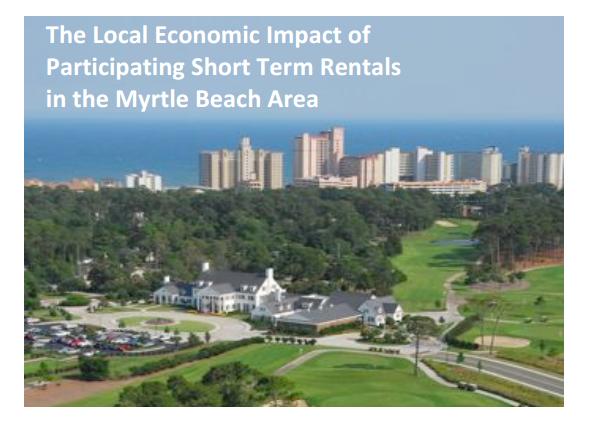
Myrtle Beach Economic Impact Study

Last year, short-term rentals in Myrtle Beach generated an economic output of $200.7 million and supported 2,587 jobs.

Residents and the local tourism industry of Myrtle Beach, S.C. are enjoying enormous economic benefits from short-term rentals, according to a new study commissioned by the Short Term Rental Advocacy Center (STRAC).

In 2013, short-term rentals generated $200.7 million in total economic activity, with $168.6 million directly attributable to visitor spending on short-term rentals and related food, retail, recreation, transportation and other expenses, according to the study conducted by TXP, Inc. For every $100 a traveler spent on lodging, they spent an additional $69 on food, $24 on local transportation, $48 on arts, entertainment, and recreation activities, and $59 on retail shopping.

 Myrtle Beach Economic Impact of Vacation Rentals

The study also found short-term rental activity created 2,587 local jobs, primarily in restaurants and bars and in the arts, entertainment, retail and recreation sectors throughout Horry County. Beyond the $56.3 million in direct spending on short-term rentals, visitors spend money elsewhere in the local economy, which in turn has a ripple, or multiplier, effect.

TXP’s study looked at short-term rental listings of Airbnb, HomeAway and FlipKey in Myrtle Beach and surrounding Horry County. In 2013, the participating short-term rental companies had more than 300,000 nights booked in the 7,745 properties listed in the Myrtle Beach area. Short-term rental users visited Myrtle Beach for an average of 5.6 nights with an average of 4.9 people travelling together.

“Myrtle Beach is recognized as one the nation’s leading beach and golf vacation destinations and tourism is a key component of the local economy,” said Jon Hockenyos, president of TXP and an economist that has conducted scores of local economic impact studies. “Visitor spending is an important generator of local employment and economic activity, as well as state and local tax revenue. And short-term rentals have become a highly valuable asset in Myrtle Beach’s tourism portfolio.”

Tourism is a highly valuable sector in Horry County’s economy. Though the county is home to just less than 6 percent of South Carolina’s population, it accounted for 36 percent of the accommodation taxes collected in the state. Tourism accounts for one in every five jobs in the Myrtle Beach area, a rate that grew from 18.8 percent in 2007 to 21.2 percent in 2012.

To learn more about the local STRAC group in Myrtle Beach, visit https://www.facebook.com/groups/1479797578900224/.

To download the full report, click here.

About the Short Term Rental Advocacy Center (STRAC):

STRAC was formed in early 2013 by a coalition of short-term rental marketplace stakeholders, working with local residents and short-term rental providers to share information, establish best practices and advance smart short-term rental regulation that safeguards travelers, alleviates neighborhood concerns and provides a framework for ensuring compliance. With more than 35 local groups across the country, STRAC is facilitating local advocacy efforts aimed at fair and reasonable regulations benefiting all stakeholders. Learn more and sign up for our monthly newsletter at www.stradvocacy.org. Media Contactinfo@stradvocacy.org or Audrey Cooling at 571-243-1188.

OTA’s aren’t the enemy

0
OTA's for Vacation Rentals

There are multiple opinion pieces pushing ways in which hoteliers can free themselves from online travel agencies and increase their own direct bookings.

NB: This is an analysis by Sabrina Lugo at Ice Portal.

Even though most of these suggestions seem wonderful, it is not how the real world ACTUALLY works. Many hotels don’t have the budget to beat OTAs marketing efforts, and quite honestly, this is the most important thing of all.

If your hotel is not front and center after a Google search query, it will not be looked at. So basically, you hate them but can’t live without them.

However, there is one important thing that you need to understand: without OTAs, you would be lost in a pool of competitors and subsequently customers will have little access to you website, because it is impossible to find! They do not hurt your hotel.

Here are the most common misconceptions we believe hoteliers have in regards to the OTAs.


1. OTAs work against me

If anything, you try to work against OTAs, because all you can think of if the outrageous commission percentage they take from each room sold on their site.

The best way to make the most out of OTAs is to work with them towards the common goal, which is to increase overall bookings! Would you rather give 10-25% commission rate or for that particular consumer to book elsewhere and lose that sale completely?


2. Do not provide me direct bookings

Well, according to a WIHP study – a 3 year survey on the billboard effect- 20% of your direct bookings come from people who discovered your hotel on an OTA.

In addition to that, a Google study says 52% of travelers will visit your hotel’s website after seeing you on an OTA.


3. They’re only used for price comparison

Many believe that consumers only look at prices whenever they are on OTAs, and that is why they don’t really care on the way their listing is displayed on these channels.

This is a major mistake! In order to receive the desired results, you need to optimize your OTA listing and fill it with other features that consumers also take into consideration when navigating through these sites, such as reviews, photos, and hotel descriptions.


4. They don’t benefit my company

Even though they’re all over the place, holding bells and covering your hotel’s site on Google, thanks to them you got thousands of clients prospectively looking at your hotel.

Furthermore, 52% of them end up coming to your website, representing a fresh new batch of prospective customers to your front door.


Summing up

Seriously, it is time to stop the nonsense. Quite frankly, in a couple of years (if not months) metasearch sites will be the next thing you will have to worry about –when in reality you should be thankful for them.

According to MMGY Global’s 2013 Portrait of American travelers, 28% of travelers head to a metasearch site when looking for accommodations, and I would expect that number to increase rapidly within the next year.

These sites are becoming extremely helpful and popular for travel consumers, simply because metasearch compiles the best results for a specific travel request, thus saving the consumer loads of time and providing them with valuable information; and you can’t forget that within these results consumers will inevitably find the OTAs.

Just on Kayak hotel queries accounted for 14% of its travel searches (eMarketer).

In addition to that, for metasearch being a relatively “new” thing, 6% of US traffic into OTAs comes to them from metasearch sites (eMarketer).

In this cluster of worldwide hotels, OTAs are the ones that know how to reach out to people. Like it or not there is no way of competing against them, and doing so may only hurt your brand. It boils down to the fact that these giant companies have invaluable resources, strategies, reach and audience to market themselves and your property much better than you could probably do so in the online travel search market. So, how are you going to make the most out of them?


NB: This is an analysis by Sabrina Lugo at Ice Portal

Google AdWords Strategy: Using Competitors’ Brand Names to Drive Traffic

0
PPC for vacation rentals, timeshares and hotels

Is using your competitors’ brand name unacceptable in your Google AdWords strategy? Airbnb doesn’t think so, and Google agrees. According to Google’s current policy bidding on competitor’s brand names is perfectly legal and accepted.

“Google will not investigate or restrict the use of trademark terms in keywords, even if a trademark complaint is received.”

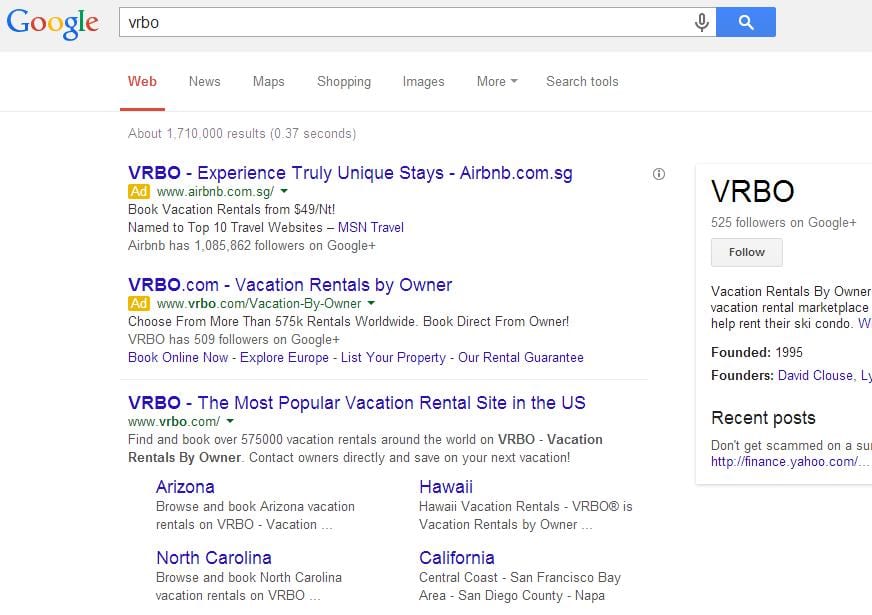
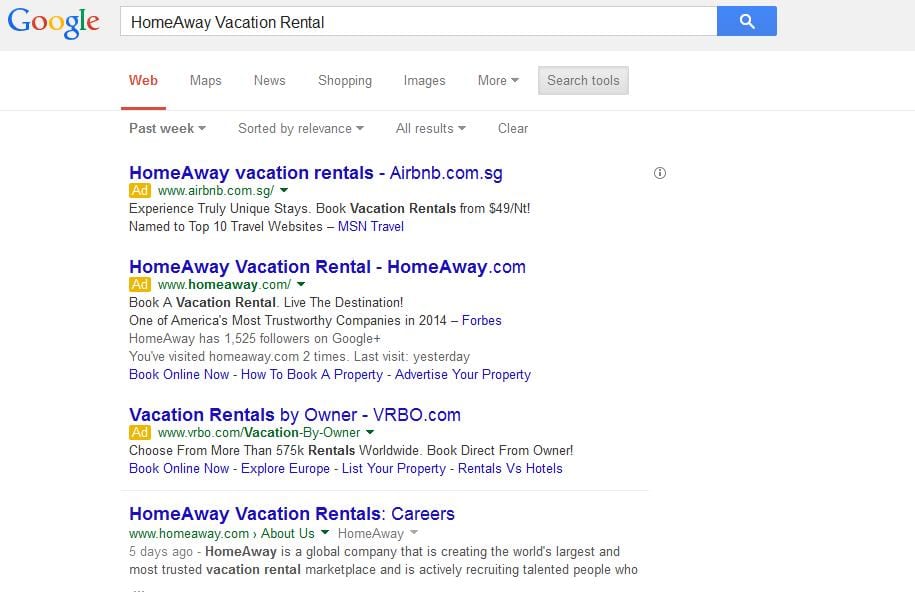
In the examples below, Airbnb has blantantly incorporated “HomeAway” and “VRBO” into their Google AdWords keyword strategy.

Crappy AdWords Strategy 

According to White Shark Media, using competitor’s names in your ads isn’t advisable. “Keep in mind that you don’t want to give your competitor’s brand name more publicity than what they are already getting, and that you certainly don’t want to get into a legal fight over brand names and trademarks,” said Carlos Rodriguez.

“On the headline of your ad you could either use your own brand name or a generic description of your competitor’s brand products. In a worst-case scenario, you could end up in trial due to manipulative marketing if you use another brand name in your ads. This can be perceived as you trying to trick the user into thinking that your website is your competitor’s website.”

For example, if you are using VRBO as a keyword and writing VRBO in your ad headline, visitors might think that you’re actually VRBO.com. In the example below, Airbnb has used VRBO as a keyword and written VRBO in the headline. In the example above, Airbnb used the same strategy with the keyword HomeAway.  This tactic can be perceived as manipulative and is against the law in many countries.

Airbnb adwords strategy


The idea of using competitors’ brand names in your AdWords strategy is considered by many to be questionable. If you decide to use your competitors’ names as keywords do not use them in your headlines or with Dynamic Keyword Insertion (DKI).

DKI takes any of your keywords matching the search query and dynamically fits the 25-character limit of the headline in your ad. As in the Airbnb examples, if you’re using DKI, the headline of your ads could be showing your competitors’ brand names and that could be a big potential problem.

Worst-case scenario, you could be involved in a lawsuit. So, it’s never a good idea to use DKI for your ad groups with competitors’ names or brands included as keywords.


By Amy Hinote


Study Finds Short-Term Rentals Bring Enormous Economic Benefits to Coachella Valley

0
Economic Impact of California Vacation Rentals

Last year, short-term rentals in Coachella Valley generated $272 million in overall economic activity and supported 2,539 jobs.


COACHELLA VALLEY, Calif. – March 27 – In California’s Coachella Valley, residents and local tourism economies are enjoying the enormous economic benefits of short-term rentals, according to a new study commissioned by the Short Term Rental Advocacy Center (STRAC).


Economic Impact of California Vacation Rentals


In the Coachella Valley, short-term rentals generated $272 million in total economic activity in 2013, with $216.5 directly attributable to visitor spending on short-term rentals and related food, retail, recreation, transportation, and other expenses, according to the study by TXP, Inc. For every $100 a traveler spent on lodging, they spent an additional $69 on food, $24 on local transportation, $48 on arts, entertainment, and recreation activities, and $59 on retail shopping.


The study also found short-term rental activity created 2,539 local jobs, primarily in restaurants and bars and in the arts, entertainment, retail and recreation sectors throughout Riverside County. Beyond the $72.2 million in direct spending on short-term rentals, visitors spend money elsewhere in the local economy, which in turn has a ripple, or multiplier, effect.


TXP’s study looked at short-term rental listings of Airbnb, HomeAway and FlipKey in the Coachella Valley and surrounding Riverside County. In 2013, those companies had a combined 265,000 nights booked across 7,754 properties listed in the area. The average Coachella Valley short-term rental user visited the area for 9.1 nights per stay, with an average of 4.4 people in their party.


“With its natural beauty, chic boutiques, luxury spas and rocking music festivals, California’s Coachella Valley attracts a wide range of visitors with diverse interests and budgets,” said Jon Hockenyos, president of TXP and an economist that has conducted scores of local economic impact studies. “Short-term rentals are a valuable asset in the Coachella Valley’s tourism portfolio, providing diversity in accommodations and ultimately creating thousands of jobs and millions of dollars of tax revenue in a community where tourism is an increasingly important driver of the local economy.”


The region has become a popular travel destination due to its annual Coachella Valley Music and Arts Festival, which attracted nearly 300,000 visitors in 2013, more than ten times the attendance in 1999. Due to quickly increasing demand, the study concluded that short-term rentals are a valuable part of the accommodations market in the Coachella Valley.


To download the full report, click here.


About the Short Term Rental Advocacy Center (STRAC)

STRAC was formed in early 2013 by a coalition of short-term rental marketplace stakeholders, working with local residents and short-term rental providers to share information, establish best practices and advance smart short-term rental regulation that safeguards travelers, alleviates neighborhood concerns and provides a framework for ensuring compliance. With 35 local groups across the country, STRAC is facilitating local advocacy efforts aimed at fair and reasonable regulations benefiting all stakeholders. Learn more and sign up for our monthly newsletter at www.stradvocacy.org.


Media Contactinfo@stradvocacy.org or Megan Grant at 202-295-0159.

Vacation rentals at center of Asheville, NC dispute

0
Vacation Rental Restrictions in Asheville
ASHEVILLE, N.C. (AP) — Officials in Asheville have three months to come up with rules and regulations regarding short-term vacation rentals after property owners pushed for change despite criticism from others who consider the practice a nuisance.
The Times reports city staffers plan to bring options to a City Council committee. The city also is considering easing rules for people who rent out a room in their home on a short-term basis. A full City Council vote would be required to make changes.
City Planning Director Judy Daniel said dramatic growth in short-term rentals prompted City Council members to ask city staffers to look into the issue.
Dozens of Asheville homes rent for as short as a night or two despite zoning rules prohibiting the practice in most residential neighborhoods.

FL Amendment to Vacation Rental Bill Moves Closer to Governor’s Desk…With Limits

0
Rick Scott revuews HB 883 regulating vacation rentals

Facing opposition from property rights advocates and the vacation rental industry, state lawmakers in both the House and Senate took a step back from their push to hand full control over short-term rentals back to local governments.

Elected officials in some Southwest Florida beach towns have been calling for a complete repeal of a 2011 law that prohibited cities and counties from enacting any restrictions on vacation rentals.

But that now seems out of the question. A compromise protecting certain short-term rentals may be the only way to keep the legislation moving.

Still, there is significant disagreement over the bill, with the House and Senate adopting different amendments.

The House bill goes further to shield vacation rental owners from local regulations. The House Local & Federal Affairs Committee approved an amendment Thursday that addresses the main concerns of vacation rental companies: That communities not be allowed to ban rentals outright or inhibit nightly or weekly rentals.

Rep. Ray Pilon, R-Sarasota, voted against the amendment, which passed 11-7. Pilon wants to repeal the 2011 law and allow communities to have full control of vacation rentals. “I just in general think it should be a local choice and local elected officials should respond to their constituents on this issue,” he said.

But the bill, which ultimately cleared the committee 18-0, may not have advanced without the amendment, which was supported by the vacation rental industry.

“I believe ultimately this bill now protects those people so their private property rights are not impeded on,” said amendment sponsor Mike La Rosa, R-St. Cloud.

There was no debate over the Senate bill, which was amended Thursday and set up for final passage through the full chamber next week.

Vacation rental companies oppose the amended Senate bill because it does not protect nightly rentals and does not have language preventing communities from banning vacation rentals altogether. The bill does bar local ordinances from outlawing weekly rentals, which have become a major source of contention in some beach communities.

Sen. Bill Galvano, R-Bradenton, sponsored the amendment. He does not believe the bill needs to specify that local governments cannot enact a complete ban on vacation rentals because of state law protecting property rights from being taken through government regulation.

“I’m not convinced that they can do that now without having to do it against the backdrop of regulatory takings that already exists,” Galvano said.

On the issue of nightly rentals, Galvano said cities and counties should be able to restrict them. But he wants to protect weekly rentals, which also have sparked controversy over noise, parking, trash and other concerns in communities ranging from Venice to Anna Maria and Holmes Beach.  Galvano said nightly rentals are akin to “a hotel.”

“The traditional vacation rental in a residential community is a weekly rental,” he said, adding “that’s where I have drawn the line.” Galvano’s amendment is generating strong opposition from the vacation rental industry and mixed reviews from local government officials in beach communities.

The Florida Vacation Rental Managers Association said in a statement that the Senate bill still “offers too much opportunity for vacation rental property owners to be unfairly targeted and even banned. This is a clear threat to the property rights of these individuals.”

Holmes Beach City Commissioner Jean Peelen called the bill “half a loaf.”

“It’s better than nothing but not what we wanted,” she said, adding that a full repeal of the 2011 law is the only way to rectify “an unconstitutional taking of the rights of cities to govern” themselves.

Whether the House and Senate can reach a compromise on the bill remains unclear.

“This is a delicate issue on both sides,” said House bill sponsor Rep. Travis Hutson, R-Elkton. “We have sides on either side of the fence here and I’m trying to bring them closer to the middle.”

Since then, communities in Manatee and elsewhere have experienced an influx of mini-hotels in residential neighborhoods, which neighbors complain cause parking, noise and trash headaches their local governments are


By Zac Anderson , Herald-Tribune

Does Airbnb’s $10 Billion Valuation Size Up?

1
Airbnb luxury vacation rentals

By Scott Austin, WSJ

Airbnb is in advanced talks to raise funds that would value the home-sharing company at more than $10 billion, according to several people familiar with the process.

It wasn’t all that long ago that Airbnb’s co-founder and CEO Brian Chesky left his apartment to become “homeless,” renting out other people’s apartments in San Francisco to get to know his customers.  That was in the summer of 2010, when Chesky was a 20-something running a fledgling couch-surfing startup backed by $600,000.

Less than four years later, hundreds of millions of dollars in capital, several rental-horror stories and scrutiny by regulators, Airbnb is now in 160 countries, lists more than 600,000 short-term rentals and is now one of the most valuable companies backed by venture capitalists in the world.

Here’s a look at the 10 most valuable startups, according to Dow Jones VentureSource. Airbnb is now tied with Chinese smartphone maker Xiaomi and cloud-storage company Dropbox for the highest valuation. Click on the chart to get the full interactive of the Billion-Dollar Startup Club:


At a $10 billion valuation, Airbnb would be valued at more than some of the hotel chains it is increasingly competing against. Wyndham, which manages 7,500 hotels under brands like Wyndham, Ramada and Days Inn, had $5 billion in revenue last year and is valued at $9.4 billion. Hyatt Hotels, with more than $4 billion in revenue, is worth $8.4 billion.

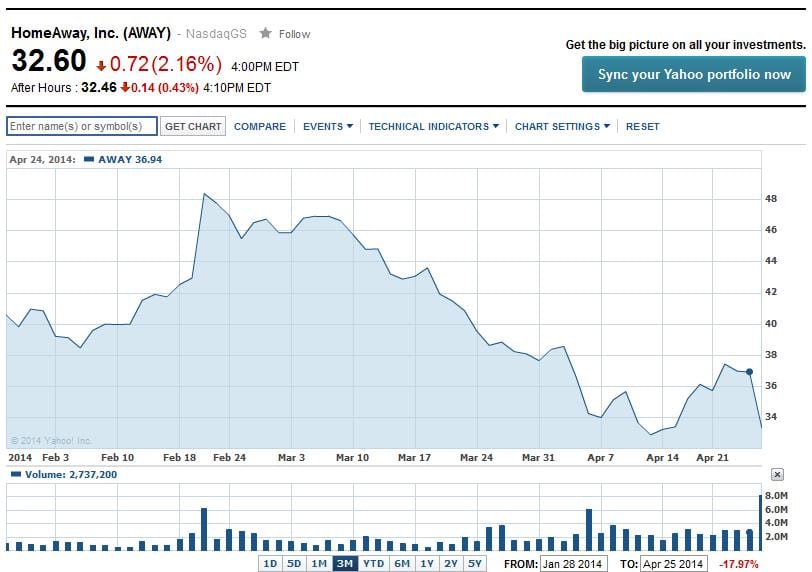
Then there’s HomeAway, the vacation-rental site which went public in 2011 and whose listed properties are beginning to overlap. Airbnb would be worth more than twice its market value of $3.9 billion — HomeAway had revenue of about $346 million last year.

It’s not clear where Airbnb’s revenue stands at the moment — the site has more than 600,000 listings, and collects a 3% cut of the booking from hosts and a 6% to 12% fee from guests.

Engaging Guests In “Emotionally Valuable Moments”

0
Professionally managed vacation rentals

by Doug Kennedy

Hospitality marketing professionals recognize that today’s consumers are increasingly looking for genuine and authentic interactions with those they do business with. That is why smart companies from all service industries recognize that we have entered the era of “hyper-personalization.”

When it comes to marketing, the evidence is everywhere. Just look inside your snail-mail inbox. Instead of receiving promotional letters and postcards that read “Dear Valued Client” or “Dear Honda Owner,” if you are like me you are probably receiving mailings starting with “Dear Doug.” Just recently I received a mailing from Jiffy Lube, almost to the day I was thinking it was getting time to change my oil. The postcard not only read “Dear Doug,” but also specifically referenced my 2013 Honda Odyssey Minivan being in need service.

Evidence also abounds when we turn on the television; some of today’s top advertising campaigns speak to “you” the consumer. One such example is the commercial series for TD Bank, which uses the tagline “It’s time to bank human again” in a series of hilarious commercials that juxtaposition the dehumanized, impersonal service experiences that “big box” banks are known for against the friendly, customer-focused TD Banks offer. Other examples include the Discover Card campaign using the phrase “We treat you like you’d treat you,” and showing distressed credit card holders phoning in with a problem and reaching an empathetic customer service agent who turns out to be another version of themselves, another version of themselves. Then there’s my personal favorite hotel industry commercial, which is for Shangri La Hotels & Resorts, using the phrase “There’s no greater act of hospitality than to embrace a stranger as one’s own.” (All of these commercial campaigns are posted for public viewing on YouTube.)

There is also evidence that the hotel industry is starting to adapt to these personalization-seeking consumers, perhaps being nudged forward by hotel inspection companies. Traditionally hotel inspectors focused mostly on the mechanics of interactions, such as if the front desk receptionist used your name a total of three times, or if they handed you your key card instead of sliding it across the desk. Now most seem to have added a criteria along the lines of “Overall, did you feel welcomed upon arrival?” Many of my own prospective hotel training clients are asking our KTN team for training that helps the frontline colleagues deliver what we refer to as “Emotionally Valuable Moments.”

However based on my own experiences as a frequent business traveler, most hotels are not addressing this topic nor providing their frontline colleagues with the tools they need to deliver this experience. Here are some examples:


As a conference speaker, I arrived at a large hotel in Dallas flying the flag of one of the top four hotel chains. Although plenty of staff were there at the door – all wearing finely appointed uniforms – the doorman was engaged in a personal call on his cell phone when he opened my door, and continued the conversation when he got my luggage out of the trunk of my taxi. He only interrupted the call long enough to say “Hold on… ‘Sir, did you need help with your bags from here?’ as he was obviously soliciting a gratuity.

At another stop along the speaking tour for the same series, all of which were held at hotels that were part of major brands, I tried to strike-up a conversation with my room service waiter as he set-up my dinner. When I asked, “Didn’t this used to be a (name of another brand) hotel? I think I stayed here before…” he responded gruffly, “It might have been, but that was a long time ago. Is your tray okay sir?” quickly ending the conversation and making me feel old.

While staying at a large, remote four star resort as part of a difference conference I found myself with a unique need for assistance. As many writers do, I prefer to use the “old school” instrument of a freshly sharpened pencil to formulate my initial ideas into outline form before typing. Having finished doing this upon landing at the airport I hurriedly placed the pencil in my pants pocket, then later inadvertently stabbed myself, lodging the pencil tip into the center of my right-hand index finger. Have you ever tried to remove a splinter from your own (dominate) hand? After several attempts with my left hand, I went down to ask the guest services staff if someone could please assist. They then called their safety officer (security), and reported back that they could not assist as it was an insurance liability issue and suggested that I visit an E.R. for my splinter. Now I’m not a hospitality law expert, but I could not see why their safety officer could not put on some latex gloves and simply pluck the splinter out with tweezers, as it was very near the surface. I cannot imagine this simple first aid request ending up in front of a jury especially since I had provided “Expressed Consent.”


There are many more such examples of times where I feel like I have interacted with a robot not a person. I don’t think I am alone, either. How many times have you been greeted by a service provider who says “May I help the next customer in line?” when you are the only customer in sight? How often have you been served a meal that did not taste good so you did not eat much, and then have a food server who says “How was everything, good?” with a nod, and you just nod back and say “Yes, it was good” intending never to return?

Yet this is not always the case. Oftentimes I do receive authentic, genuine service as I have frequently written about too.

Here is a link to one such article entitled “Stories of Genuine and Authentic Hospitality From The Choice Hotels 2013 Regional Conferences.

So the question then becomes “What can we do to help our team provide personalized, authentic guest service experiences?” Many hotel companies focus on the mechanics, such as the scripting and communications techniques. Yet we can have a service provider say all of the right things but still come across as being impersonal . This is why we have to train guest service in a new way – to teach our staff to understand what it is like to be on the other side of the front desk, the other end of the phone line, or the other side of that guest room door.

Here are some training tips

  • Talk about the demographics of the guests you are hosting. What are some of the main reasons why guests stay at your hotel?
  • Are you near a major medical center where they might be going for treatments or to visit family? Discuss how this might cause stress or create special needs.
  • Are you near a university or college? What might it be like for a parent who is traveling with their high school senior who is thinking of relocating to the area?
  • Do you host business travelers? What are their experiences like? What pressures do they encounter to perform while on the road?
  • Do you host leisure guests? Families? What events might happen to these gets while on their way that could cause them to be feeling stress, especially upon arrival?

The more we talk about guest experiences with our frontline colleagues, the more they will understand what guests are going through. From there it will be much easier for them to provide a more personalized style of service that will bring out the best in others they encounter.


About Doug Kennedy

Doug Kennedy

Doug Kennedy is President of the Kennedy Training Network, Inc. a leading provider of customized training programs and telephone mystery shopping services for the lodging and hospitality industry. Doug continues to be a fixture on the industry’s conference circuit for hotel companies, brands and associations, as he been for over two decades. Since 1996, Doug’s monthly hotel industry training articles have been published worldwide, making him one of the most widely read hotel industry training authors in the world. He is the author of Still On The Road to Sales and Guest Service Excellence. Visit KTN at:www.kennedytrainingnetwork.com or email him directly at  doug@kennedytrainingnetwork.com

Contact: Doug Kennedy

doug@kennedytrainingnetwork.com / Office: 954.981.7689; Mobile: 954.558.4777

Florida: Economic Impact of Vacation Rentals

0
Flordia Vacation Rentals economic study

The Florida Vacation Rental Managers Association (FVRMA) recently sponsored an economic impact study of the financial benefits to the State of Florida provided by the vacation rental industry. The report was created in response to pending legislation which potentially has adverse affects on this sector. However, the report also serves as a template for all counties, regions and states that see gains in revenue and employment from vacation rentals.

Florida Vacation Rental Economic Impact Study


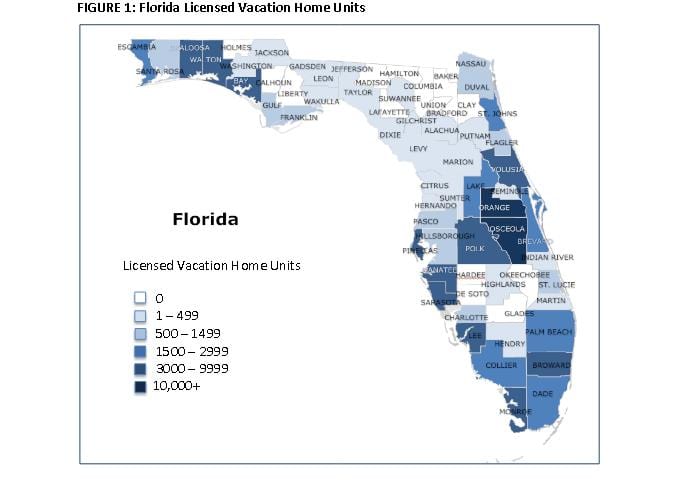
According to the Florida Department of Business & Professional Regulation (DBPR), in 2013 there were a total of 120,291 licensed vacation home rental units in Florida.

This study should be of particular interest to industry stakeholders as it represents the first attempt to assess the impact of the vacation rental industry on a statewide basis. It sets the stage for subsequent investigations into the industry’s economic impact on individual counties or regional groupings within the state.


Fortune Looks at HomeAway and Airbnb

0
Difference between HomeAway and Airbnb

On March 12, 2014, an interesting article released by Fortune titled Quietly Growing Up in Airbnb’s Shadow, provides a unique perspective on the similarities and differences between HomeAway and Airbnb.


FORTUNE — In this day of flashy, modern web design, Brian Sharples runs a site that is decidedly antiquated, and well, kind of ugly. But every time he tries to spiff up VRBO.com, the vacation rentals site, something confounding happens: Customers book fewer properties.

“The uglier it is, the better it converts,” says Sharples, who is CEO of HomeAway, the parent company of VRBO, VacationRentals.com, and about a dozen other sites that offer vacation homes around the world. That’s why, Sharples says, VRBO has introduced design changes very gradually. “If we did it overnight, it would crush the business.”

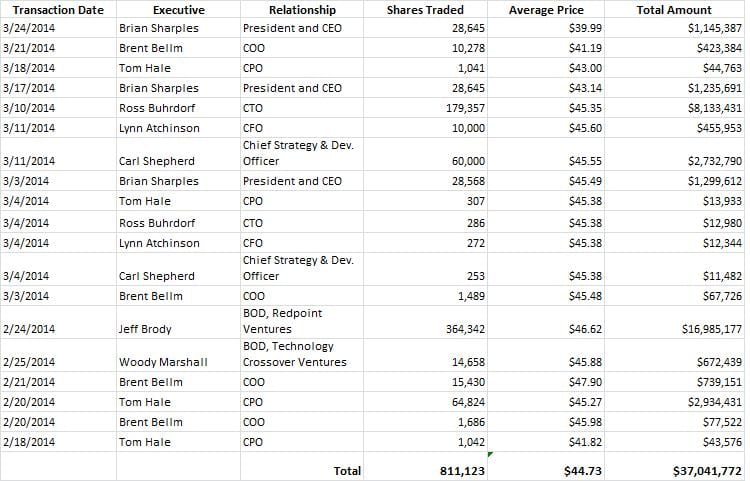
Neither the dated look nor the buzz surrounding one of its competitors — media darling Airbnb — seems to be holding back the company. Following HomeAway’s (AWAY) most recent earnings report, the company’s shares soared more than 12% in a single day to an all-time-high of nearly $50, giving the company a market value of more than $4.2 billion. Last week, HomeAway acquired Glad To Have You, which makes mobile apps that help property owners communicate with renters, for an undisclosed sum.

The HomeAway earnings report came as a relief to investors and as a validation to Sharples. HomeAway earns the majority of its revenue from fees that property owners pay to list their rentals. But late last year, HomeAway introduced a new option that allowed owners to list properties for free and pay only when they book a rental, like they do on Airbnb. Investors had feared that the free listings could hurt HomeAway’s core business. But paid listings continued to grow at a healthy pace, even as the site added some 71,000 new free listings. In a report to investors, Doug Anmuth, an analyst with J.P. Morgan, wrote that the results indicated that so far “there is no cannibalization of existing products.”

The free listings “opened up a new market for people renting their properties who were afraid to pay up front,” Sharples says. For most of his customers, who earn $28,000 a year in rentals on average, paying up front remains a better deal. The company says it has some 890,000 paid listings worldwide, which in 2013 generated $346 million in revenue, a 24% rise from a year earlier, and $18 million in net income.

Sharples, who founded HomeAway in 2005 and has since expanded it into a global enterprise in part through the acquisition of 17 rival sites, often bristles at the buzz around Airbnb and other poster children of the so-called sharing economy.

MORE: Airbnb goes mobile with new apps

“HomeAway is an example of an industry where people have been sharing stuff for a long time,” Sharples says. “HomeAway makes money. That’s the difference between us and Airbnb.”

Airbnb declined to comment.

Airbnb and HomeAway may be in different businesses, but they appear to be on something of a collision course. While Airbnb got its start with shared rentals, people close to the company say that about two-thirds of its listings now are for entire properties. The company still focuses primarily on urban markets like San Francisco, New York, or Berlin. In contrast, HomeAway is dedicated to renting entire homes or condos and most of its listings are in vacation destinations like Hawaii or Lake Tahoe. Nearly 40% of HomeAway’s properties are listed by management companies, not by homeowners.

Sharples says that the overlap between the two sites has grown recently, but remains small. Roughly 6% of HomeAway’s properties are also listed on Airbnb, he says, up from about 2% a couple of years ago. The markets with the most overlap are those close to Airbnb’s San Francisco headquarters, like Napa and Sonoma, and those close to HomeAway’s headquarters in Austin.

Other than putting up with the publicity surrounding his upstart competitor, one of Sharples’ biggest challenges is working to increase free listings without upsetting the balance between the supply of properties and the demand from potential renters on the HomeAway websites. A team of mathematicians at the company is working on a related problem: making sure the free listings appear prominently enough so that they generate bookings, all the while not hurting those who are paying to list on the site.

“It appears to be working pretty well so far, but it’s new,” says Sharples. “And when anything is new you worry about it.” Then he adds: “I worry about that far more than about competition.”

Studies Find Short-Term Rentals Bring Enormous Economic Benefits to Chicago, St. Joseph, Michigan

0
Chicago Vacation Rentals

Last year, short-term rentals in Chicago generated $108 million in overall economic activity and created 920 jobs; $24 million in overall economic activity and 300 jobs in St. Joseph


March 13 – In the Lake Michigan hamlet of St. Joseph, Mich. and Chicago—America’s third largest city—residents and local tourism economies are enjoying the enormous economic benefits of short-term rentals, according to two economic studies commissioned by the Short Term Rental Advocacy Center (STRAC).


In Chicago, short-term rentals generated $108 million in overall economic activity in 2013 with $70.6 million of that activity attributable to visitor spending on short-term rentals and related on food, recreation, transportation and other expenses,according to the study by TXP Inc. For every $100 a traveler spent on short-term rentals, they spent an additional $69 on food, $24 on transportation, $59 on shopping, and $48 on arts, entertainment and recreational activities.


The study also found short-term rental activity created 920 local jobs, primarily in restaurants and bars and in the arts, entertainment and recreation sectors. Beyond the $70.6 million in direct and indirect spending on short-term rentals, that activity has a multiplying effect on the local economy in the form of increased wages, which are spent in those local communities.


TXP’s study looked at short-term rental listings of Airbnb, HomeAway and FlipKey in Chicago. Those companies had a combined 171,000 nights booked in Chicago and surrounding Cook County in 2013 across 3,620 properties. While the average visitor stays in Chicago 2.4 nights, short-term renters stayed an average of 4.5 nights and had an average party of 2.5 people. Those figures, coupled with an all-time high hotel revenue and occupancy rate last year, suggest short-term rentals address a different market segment than traditional lodging options.


“Chicago’s hundreds of events, unique attractions, vibrant culture and nightlife attract a range of visitors with diverse interests and budgets,” said Jon Hockenyos, president of TXP and an economist that has conducted dozens and dozens of local economic impact studies. “While the number of short-term rentals pale in comparison to the number of hotel rooms and overall housing stock, short-term rentals provide important variety to visitors and play a key role in the future of Chicago’s future tourism growth.”


St. Joseph

While the Lake Michigan destination of St. Joseph, Mich. has a population of just 8,311 compared to the 2.7 million residents of Chicago, its residents are nonetheless enjoying the benefits of short-term rentals.


According to a separate study conducted by TXP, an Austin, Tex.-based economic analysis firm, St. Joseph and the surrounding Berrien County experienced $24 million in overall economic impact from short-term rentals in 2013. Visitor spending on short-term rentals and related activities amounted to $22.2 million and supported 300 jobs. The higher overall economic impact figure reflects the multiplying effect short-term rental spending in the local economy, namely in the form of increased wages.


“Like in Chicago, short-term rentals in St. Joseph provide much needed diversity to visitor housing options and are key to the continued growth of St. Joseph’s tourism economy,” Hockenyos said.


Short Term Rental Advocacy Center member companies—Airbnb, HomeAway and FlipKey—listed in 695 properties on its sites, leading to 18,000 nights booked last year. This data also revealed that the average short-term rental party size was 5.7 people staying an average of 3.3 nights. Those figures, rising hotel occupancy rates and hotel revenue suggest that short-term rentals and traditional lodging sources are not in conflict with one another.


“Tourism is very important to St. Joseph and Southwestern Michigan. Visitors spend money at restaurants and they shop at our local stores thereby strengthening our local economy,” said Torrence Moore, a local homeowner who is part of a local group advocating for fair and reasonable regulations. Last year, the city passed a restrictive measure to forbid new short-term rentals in residential neighborhoods.


“St. Joseph needs to have an adequate number of housing options to meet the demand from families coming to St. Joseph,” Moore added. “Currently there are only two hotels in downtown St. Joseph, and short-term rentals offer a solution. However, we risk losing the strong economic benefits of short-term rentals and families will choose surrounding towns with good, fair and responsible short-term rental policies. We believe there’s a better solution for regulating short-term rentals in St. Joseph.”


The Short Term Rental Advocacy Center commissioned TXP to assess the economic impacts of short-term rentals attributable to STRAC members’ customers (termed “participating short term rentals” in the reports) in St. Joseph, Mich. and Chicago. The reports capture visitors spending on short-term rentals in those markets, as well as related spending and the broader implications on those economies, but not necessarily all short-term rentals.


About the Short Term Rental Advocacy Center (STRAC):

STRAC was formed in early 2013 by a coalition of short-term rental marketplace stakeholders, working with local residents and short-term rental providers to share information, establish best practices and advance smart short-term rental regulation that safeguards travelers, alleviates neighborhood concerns and provides a framework for ensuring compliance. With 35 local groups across the country, STRAC is facilitating local advocacy efforts aimed at fair and reasonable regulations benefiting all stakeholders. Learn more and sign up for our monthly newsletter at www.stradvocacy.org.

Florida Legislature Hates Regulation … Except as It Applies to Vacation Rentals

0
Vacation Rental ban in Florida

from : http://www.sunshinestatenews.com/story/florida-legislature-hates-regulation-except-vacation-rentals

In the current mood of the regulation-busting Florida Legislature, it’s puzzling — and, frankly, a little disturbing — to see legislation that invites local officials to run all over one of the state’s most robust economic engines.

Two measures, Senate Bill 356 and House Bill 307, basically eliminate a provision in a 2011 law prohibiting local governments from imposing rules and regulations that restrict short-term vacation rentals.

The bills would wipe out their protections. They would allow locals to zone these popular tourist accommodations out of existence if they wanted, literally stripping them of their property rights and opening the door to litigation.

Short-term vacation rentals offered over the Internet and listed by owners can be as much as 50 percent cheaper than hotels. They are growing in popularity. But the numbers of cities trying to curb the trend are growing, too.

SB 356 and HB 307 come just as an economic study of the vacation rental industry has been released. The study concludes that vacation rentals played a critical role in the state’s economic recovery, sheltering more than 17 million tourists during 2013.

Consider that in 2013 they generated a total annual economic impact of $31.1 billion.

Nancy SmithNancy SmithHide

Whatever are we doing messing with a number like that?

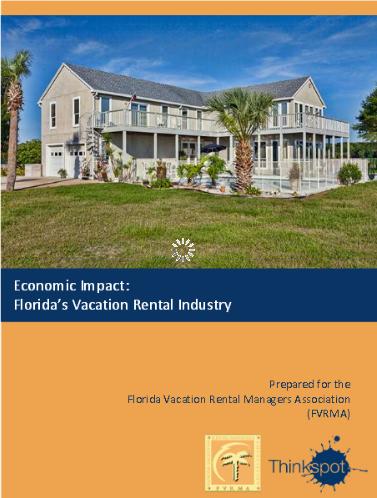
Have a look at the report, “Economic Impact: Florida’s Vacation Rental Industry,” prepared for the Florida Vacation Rental Managers Association by a group called Thinkspot.

“The vacation rental industry is a contributor to Florida’s economy whose impact until now has been largely overlooked,” said Dale Brill, founder of Thinkspot, the primary investigator conducting the study.

“Like any business sector competing in a global market, changes to the regulatory environment can have devastating results,” he said. “Regulatory burdens intentionally created by state or local governments negatively impact the full spectrum of job creators who also generate more than one out of every five total taxable sales dollars collected in the Sunshine State.”

The Florida League of Cities supports the bill, and has said, ”Cities mentioned that too little oversight could expose guests to dangerous situations, create unfair competition in the tourism industry, and rob the state and local governments of tax dollars.”

That statement is code for “we want to decide if they stay or go, they hurt our hotel business because they’re cheaper, and we can’t tax them to the hilt like we do businesses.”

Short-term rental properties generally are larger single-family homes popular for family reunions, for people who don’t like structured vacations in hotels or motels and who like to be slightly outside the hustle and bustle of Tourist Attraction Central.

The study integrated expenditure data compiled from more than 11,000 individual rental units in the state with 2012 visitor spending estimates recently published by Visit Florida, the state’s official tourism marketing corporation.

Here’s a breadkdown of the impact of the vacation rental industry, as shown in the study:

— Florida’s vacation rental industry directly or indirectly supports a total of 322,032 jobs in Florida annually.

— The total labor income generated by those 322,032 jobs is approximately $12.64 billion per year.

— The total estimated spending by visitors staying in vacation rental units is $13.43 billion.

— Total owner-management spending across all licensed rental units in Florida is $3.3 billion.

— For owner/managers, “maintenance on existing units” and “services to units” reflect the two largest categories of owner/management spending with $6,465 and $5,516 average annual expenditures, respectively.

It’s idiocy for lawmakers to ignore the central role the vacation rental industry plays in the Florida economy and  instead work to kill the golden goose. Senate Bill 356 is sponsored by John Thrasher, R-St. Augustine; House Bill 307 by Travis Hutson, R-Elkton, and Daphne Campbell, D-Miami.

“It’s hard to imagine why any lawmaker would support a bill that would harm such a vital economic engine,” said Paul Hayes, President of the Florida Vacation Rental Managers Association. “Vacation rentals provide meaningful work for a variety of other industries, including fishing charters, cleaning and maintenance crews, and jobs at local entertainment and dining establishments around the state. It’s mind-boggling that lawmakers would turn their backs on so many hard-working Floridians. ”

Tim Doyle, spokesman for the Short-term Rental Advocacy Center, which works with stakeholders and policymakers to create fair and reasonable short-term rental regulations, told Florida Watchdog regulations on the industry aren’t good for the economy.

Doyle said he wants “fair and reasonable, simple registration systems.” He said that if the legislation is approved, local municipalities will impose onerous rules and exorbitant fees.

Short-term rentals, by driving down the cost of visiting a destination and increasing the supply of accommodations, can boost tourism and contribute millions to the local economy. In Orange County, room-tax collections soared to $15.2 million in July. Okaloosa County got a similar boost and used the windfall to fund tourism and restore its beaches, Doyle said.

Hopefully, Visit Florida will be in every pertinent committee meeting waving the economic impact study and flying the flag for Florida tourism. This legislation is an affront to private property rights and a painful blow to a strengthening state economy.

Reach Nancy Smith at nsmith@sunshinestatenews.com or at 228-282-2423.


For FL Property Managers: Upcoming Conference

0

For property managers in the state of Florida, VRMA (Vacation Rental Manager Association) is holding a 2 day educational and networking conference on April 7 and 8 in Orlando.These shows are usually not in Florida, so this is a great chance for Property Managers and their staffs to attend.

AND, the opening session on April 7 will feature Dale Brill from Visit Florida and author of the Florida Economic Survey, Lori Killinger the Florida Lobbyist, and maybe a surprise political figure who has been fighting for our industry if it is possible (the Florida Legislature is in session, so it is tentative).

To register to attend, click here.


Rel=”Canonical” Tags: Saving SEO for Vacation Rental Managers?

0
Rel canonical tags for vacation rental websites

Rel=”canonical” tags are used when duplicate content is present to let search engines (e.g. Google) know that the content on a page is not original by referencing the location of the original content.


Definition: A rel=”canonical” tag is a special tag that is inserted into the header of your HTML that tell the search engine bots which pieces of content are the original or primary ones and which are duplicates. This way the bot will pass over the duplicates and only index and give link credit to the primary piece.


In short, a re=”canonical” tag is used to tell Google that the content on a page is not original…it is copied from another source.


To be more specific, a cross domain re=”canonical” tag tells  the search engine that the content on the page is from another website entirely.
 
Jeremy Koch, founder at Pertnear, launched TravelTell, a social media driven website which promotes vacation rental and real estate properties. TravelTell uses cross domain rel =”canonical” tags to protect the originality of the vacation rental manager’s (VRM) or real estate agent’s content, thereby giving credit for the content to the company who created it.
 
“The way we built our canonical tags is, after we add the link to the original property page to the listing, we automatically generate a rel=”canonical” tag giving credit to the original content,” said Koch. “So our content can be identical to the property management company without hurting their rankings.”


Most property management software systems include a field in the property screen for the property URL, In theory, any distribution outlet could use that URL in a rel=”canonical” tag to let Google know where the original content is located.
 

<link rel="canonical" href="http://www.https://www.sunrealtync.com/house/75-l"/>


If a VRM is pushing property descriptions from the software to a channel through an integration, then it is feasible that the distribution channel (e.g. FlipKey, HomeAway, etc.) could programmatically generate a rel=”canonical” tag so that the VRM’s website is credited for being the origin of the content. If channels chose to implement these tags, then the VRM’s search engine rankings would not be diminished by choosing to utilize distribution options.


Currently, most property management systems do not pass this information to a distribution channel (e.g. HomeAway, FlipKey) through their API.

 
To learn more:
 

Wistia


By Amy Hinote

Under the Hood with Resort Realty

0
Resort Realty Luxury Rentals in Outer Banks

This article is part of the Under the Hood Series in which we interviewed executives from on-the-grow vacation rental management companies to discuss everything from growth strategies to company culture, technology and marketing to future predictions for the industry.

By Amy Hinote
 

Resort Realty, Outer Banks
Michael Harrington, CEO


Resort Realty began in 1987 as a small independent real estate and rental management company. In 1999, Resort Realty joined the Prudential Real Estate network as a franchisee to grow the real estate side of the business. CEO Michael Harrington joined the Resort Realty team in 2007 and was instrumental in transforming Resort Realty’s identity back into a thriving top Independent Real Estate firm. In 2008, Resort Realty was granted membership into the most prestigious independent Real Estate Network in the world, Leading Real Estate Companies of the World, allowing Resort Realty to expand their brand beyond the Outer Banks to fellow independents from all over the country.

Resort Realty OBX Expands to Hatteras IslandIn addition, Harrington set out to rebuild and modernize Resort’s Vacation Rental Management program from the ground up. This included processes for better overall owner and guest service, introducing new online and social media marketing strategies for the company’s managed Vacation Rental inventory, and increasing Resort’s market share of real estate assets under management.

As a result, Resort Realty was able to gain substantial market share in this highly competitive destination. With its recent expansion into Hatteras Island, Resort Realty currently operates five offices and manages more than 500 properties in Corolla, Duck, Kitty Hawk, Nags Head and Hatteras.


Owner-Centric Approach

Resort Realty puts an all-in focus on meeting the goals and objectives of each of its owners. “Our owners are the heart of what we do,” said Harrington. “We are owner-centric. We design all of our programs with the owner at the center and are focused on increasing their short term –and long term –revenue and protecting their property value.”

Resort Realty has a Rental Manager in each of its offices who serves as a personal point of contact for each of its owners. The Rental Managers report to the Director of Rental Management, who oversees owner relations, retention, and recruitment, and provides homeowners with management-level responsiveness.

In addition, Resort Realty provides bi-weekly email communications to homeowners, addresses owner requests immediately, and has created a web-based owner portal which allows owners to manage their accounts, view bookings, schedule personal time in their property, and track any maintenance issues.

“We want our homeowners to feel good about our services and confident that their investment is getting highly personalized attention,” said Harrington. “We have seen a lot of vacation rental management companies moving towards a more guest-centric approach.  Guest are important, and we’ll bend over backwards to make sure they have a great experience, but every program has a cost.  Who is paying for that? Ultimately, the homeowners are paying for it.”


Company Culture

“We’re a corporate company without acting corporate,” said Harrington. “We try to operate in a professional, corporate way in structure, but we are a local, fun team who supports the community.”

Resort Realty’s vision statement is more than words to their management, part of which is to provide professional, innovative and friendly atmosphere that fosters admiration & respect among our peers and loyalty to our customers and employees.

“We are in the business of accumulating talent and have built an awesome team,” said Harrington. “With our mission and vision, we have created a unique value proposition for our team members in that we are in it to grow, and here is how we grow together.”


Marketing

Vacation Rental Vacation Guides and Travel PlannersAs part of their marketing strategy Resort Realty continues to create and print an annual vacation guide which displays property information and area activities. “We’ve crafted this piece as more Magazine in style.  It is hard to put a value on having a the coffee table book  effect this mailing piece has for our guests,” said Harrington. “We mail it out by request only now and to immediate repeat guests.”

Additionally, Resort Realty does not try to mass market their properties as if they were a commodity.  “That may be the case in other markets where there are thousands of the same types of condo units, but in our area, each home has its own distinct features,” said Harrington. “We will market the brand of Resort Realty to get potential guests to our website via search, online, and social mediums, but from there each home is presented uniquely.  There are some basics like location, bedrooms, if it has a private pool, that are more heavily searched to filter down results, but our goal is to get the guests to the Property details pages of our website so we can highlight that particular homes best features.  Due to supply and demand we are normally booked up during the Summer season, but we have to remember each home that is open counts.  Our homeowners are not concerned with overall occupancy of the company, they are worried about their house, and only their house.”


Operations and Technology

Michael Harrington Resort Realty Outer BanksSince Harrington joined the company, Resort Realty has placed a significant focus on operational efficiency. “We latched on to newer technologies to make operations simpler for our team,” said Harrington. “Using tools like those provided by LSI, we’ve automated email messaging, transactional emails and provided our guests a full lease management system. By automating the majority of our guest communications we have been able to go from ten full time reservation agents to five or six.”

“We also look for tools and technology outside the vacation rental industry and see what we can pull from those to increase our efficiency,” said Harrington. “My advice is, if you see a technology platform you think might work for your company, don’t be afraid to ask if they will tweak it to accommodate the needs of vacation rentals. We are in a high-growth industry, and many technology companies are looking for a way to get into the industry.”

As a result of using technology to implement automation and create operational efficiencies, Resort Realty is able to maintain a low ratio of employees to inventory. “It is a whole lot easier not to hire than to fire,” said Harrington. “Sit back, see what your needs are, and use the tools that are currently available to you to their maximum capacity.”


Expansion and Acquisition

Stuart Pack joined Resort Realty as COO in May 2011 and brought with him nearly ten years management experience in the vacation rental and real estate sales industry. As Resort continues to steadily grow and increase market share on the Outer Banks, the decision to open on Hatteras Island and offer property management services to Hatteras owners was inevitable. Harrington and Pack began their property management careers on Hatteras, and were eager to begin working in the area again.

Regarding future acquisitions, Harrington pointed to Wyndham’s recent acquisition of Hatteras Realty. “Everyone wants to be in the Outer Banks,” said Harrington. “And now we are starting to see national companies entering our market. We are not interested in being a national company, but we would like to be a North Carolina company.”

“We are always looking to do deals, but we are more interested in establishing high standards in our homes and in our services.”


By Amy Hinote

Part 1: A Look Under the Hood at Vacation Rental Pros

Part 2: A Look Under the Hood at Kokopelli Property Management

Part 3: A Look Under the Hood at Elliott Beach Rentals

Part 4: A Look Under the Hood at Winter Park Lodging Company

Part 5: A Look Under the Hood at Tybee Vacation Rentals

Industry Leaders Weigh In On Recent Acquisitions

0
HomeAway, RealPage, VacationRoost acquire in Vacation Rental Industry

In the last month, the vacation rental industry has seen several acquisitions of technology companies:

RealPage acquired Bookt/Instamanager
VacationRoost acquired LeisureLink
HomeAway acquired Glad to Have You

Each of the transactions has its own character and importance to the professionally managed vacation rental industry, but first we asked industry veterans to weigh in on the general significance of these acquisitions as a whole.

Their responses are followed by a more in-depth look into the individual purchases, along with interviews with executives involved in the transactions.


Significance of Recent Vacation Rental Technology Acquisitions

We asked the question, “What is the significance of these transactions and how the acquisitions affect professional vacation rental managers?”


Ben Edwards Weatherby ConsultingBen Edwards
President, Vacation Rental Managers Association

“The recent trend of acquisitions in the industry is encouraging on many levels, and speaks to the dynamic growth occurring in the vacation rental industry as a whole. These acquisitions illustrate the value in professionally managed vacation rentals. Through these investments, we are seeing increased interest by outside players, the ability of companies to increase the level of service and professionalism to vacation rental guests, and the ability for vacation rentals to capture travelers who have not stayed in vacation rentals in the past. From VRMA’s perspective, these are all wins for the industry. Ultimately, this growth is healthy for professional vacation rental managers as this helps vacation rentals become more mainstream and stay top-of-mind for travelers.”


Carl Shepherd Founder HomeAwayCarl Shepherd
Co Founder and Chief Strategy and Development Officer, HomeAway, Inc.

“The recent acquisitions are investments in the vacation rental industry, which shows confidence and bullishness on the industry’s future. Also, as the vacation rental industry has matured, there has been a resurgence of the professional side of the market.”


Steve Milo, Founder Vacation Rental ProsSteve Milo
Founder and Managing Director, Vacation Rental Pros Property Management

“It is an exciting time for the vacation rental industry as capital is entering the market,” said Steve Milo, founder and Managing Director for Vacation Rental Pros. “The primary focus of the capital has been on the portal and technology companies entering the vacation rental space. As the portals drive more and more consumer eyeballs, it will allow property managers more options for generating bookings. Property Managers must embrace these changes and focus their resources on becoming best of breed within these new consumer portals. If not, they risk losing market share to competitors and technologically savvy rent by owners. Above all, property managers need to keep open minds to these portal opportunities as they can rapidly change the dynamics of a marketplace. As George Martin wrote in Game of Thrones, “Chaos isn’t a pit. Chaos is a ladder.”


Ed Ulmer Barefoot TechnologiesEd Ulmer
CEO, Barefoot Technologies

“Vacation rentals is a huge market opportunity, that is mostly untapped by the hospitality and real estate industry. These acquisitions highlight  that the vacation rental industry continues to mature.  We will continue to see outside companies like RealPage invest into the market to try and catch up and existing industry players look for additional niches and revenue sources.   Those in the industry need to be diligent to these new forces entering the industry and can benefit if they are ahead of the market.”


Acquisitions Jamie Clymer RealPageJamie Clymer
Executive Vice President, Marketing Solutions & Propertyware, RealPage, Inc. 

“These acquisitions speak to the larger industry need for data standardization. To bring vacation rentals to the forefront of travel accommodations, supply must meet the demand of travelers worldwide, where booking a vacation rental is as straightforward as making a purchase on Amazon. With an influx of capital from existing players like HomeAway or new entrants such as RealPage this industry can expect to see an increase in marketplace innovation in the near future.”


George Volsky on Vacation Rental Acquisitions George Volsky
Strategic Consultant

“In my view, the combination of web-based technology and the billions of dollars in vacation rentals is attracting big-dollar investors on three fronts, all tied to evolving trends: 1) Distribution solutions that put vacation rental homes (managed or rent-by-owner) together with renters, 2) Booking and resource solutions that help homeowners bypass vacation rental managers, and 3) Acquisitions of vacation rental managers.” Read more as Volsky weighs in on acquisitions.


Matt Hoffman leads Instamanager to succesful acquisition by RealPageMatthew Hoffman
Sales & Business Development Manager, InstaManager

“The recent acquisitions of best-in-breed SaaS providers, like InstaManager and Leisure Link, prove that technology is the catalyst for expansion in the vacation rental sector. With these added resources, it expands the possibilities for new technology research and development and decreases the barriers around marketing and technology. This is great news for vacation rental managers because it levels the playing field for vacation rental managers around the globe, both large and small. Vacation rental property managers are the driving force of our industry and without them, the benefits of technology would be lost.”


Eric Mason
Vacation Rental Expert

“Acquisitions do indeed continue at somewhat a breakneck pace in the Vacation Rental industry compared to other industries. I believe acquisitions can generally be a good thing as they typically bring with them a renewed focus on the client and market but there are also potential pitfalls with an acquisition, depending on how the acquisition and the ensuing transition is managed. If the transition points are managed tightly, they can be seamless to customers where the customer sees no difference in the service and over time can enjoy a higher level of response, engagement from the company increasing the overall value of the service. In these cases managers will continue to enjoy the service they have come to rely on.”


RealPage and Instamanager

The RealPage, Inc. purchase stands apart from the other acquisitions because it involves an acquiring company from outside of the vacation rental industry. “RealPage entered the vacation rental market because of the opportunity for significant revenue growth,” said Jamie Clymer, Executive Vice President, Marketing Solutions & Propertyware, RealPage. “Just two years ago, the industry generated $85B in bookings. This natural shift from our single-family rental solution allows us to fully address the long-tail rental space.

InstaManagerAs our single-family rental solution continues to experience impressive growth, we will apply key learnings to help us expand aggressively in the vacation space. In addition, vacation rentals places us in foreign markets, as two-thirds of bookings occur in Europe, Asia and South America.”

Julian Castelli, CEO at VacationRoost, sees significant opportunities for growth for vacation rental software providers. “We believe the opporunities are pretty exciting.  We work with over 1,000 VRMs today and we understand their challenges and needs, said Castelli. “We believe that software solutions that help VRMs manage their inventory better, facilitate distribution, organize promotions, and enhance e-commerce are all good opportunities given the need we have seen in the marketplace.”

“Maximizing industry growth is a collaborative effort,” said Matthew Hoffman, Sales & Business Development Manager, InstaManager. “With the recent acquisition of InstaManager by property management software company RealPage, we can expand on our commitment to education, technology innovation and advancing the vacation rental industry. ”


VacationRoost and LeisureLink


Interview with Julian Castelli VacationRoostWe talked to Julian Castelli, CEO at VacationRoost, to learn more about their acquisition of LeisureLink and how it directly affects vacation rental managers. “We believe the acquisition and the combined company will represent a major opportunity for vacation rental managers,” said Castelli.

“The combined company will offer everything that a vacation rental manager (VRM) needs to drive bookings to their properties, including many new services and channels not previously available to VRMs.“

The combined company will offer VRMs:

Distribution Services
The ability to connect to all of the major online travel agencies (OTAs), global distribution services (GDSs), tour operators and traditional travel sellers. “Our product – Marketspan, not only provides these connections, but provides a state of the art software platform that VRMs can utilize to manage their inventory across the distribution channels and a revenue management tool with competitive rate intelligence,” said Castelli.

Technology Services
The ability to have a state of the art online booking engine that optimizes booking conversion and features online packaging of vacation rentals with other travel services.

Reservations Services
The ability to have on-demand, industry leading call center services to maximize the conversion of phone calls to bookings and to provide world class customer service.

“VacationRoost has been helping vacation rental managers (VRMs) increase occupancy and ADR for over 12 years by delivering bookings from new customers that become loyal repeat customers,” said Castell. “By focusing on the vacation rental lodging category, we took the time to learn the unique characteristics of this lodging type and the needs of VRMs and their owner clients, and created a distribution channel to provide customers and bookings in a way that accommodate the unique needs of VRMs. With the acquisition of LeisureLink, we plan to apply these learnings to allow VRMs to achieve strong revenue and booking results from the traditional travel channels.”

We asked Castelli if he believed the distribution space for vacation rentals is saturated. He laughed, “No, if anything we think the opposite.”

“Just seven years ago, there were no national distribution channels for vacation rentals,” Castelli explained. “The traditional travel distribution industry has all but ignored vacation rentals. As a result, innovative new companies like HomeAway, Airbnb, TripAdvisor/Flipkey and VacationRoost emerged to help fill the gap and provide consumers with a way to find vacation homes and to provide suppliers of vacation homes a way to find new customers.  Each of these companies has a different model and a different approach to the challenge, but none can claim close to full market share of the supply base.”

Castelli continued, “Just as importantly, we only started working with the traditional travel distribution channels (i.e., Expedia, Orbitz, etc…) through LeisureLink a few years ago.  For the most part, these channels are still learning how to sell vacation rentals.  They are used to selling hotels, and have historically sold LeisureLink’s inventory the same way they sell and merchandise hotels.  Now with the combination (of VacationRoost and LeisureLink), we have the opportunity to educate these channels regarding how to sell individual homes and ‘key-level’ inventory.”

“We think that will be when the real impact to the industry starts happening, as all VRMs will have the ability to reach the millions of consumers who shop for travel in these channels.  We think it will do great things for industry awareness, occupancy and ADR.”


HomeAway and Glad to Have You

Glad to Have You“Regarding HomeAway’s acquisition of Glad to Have You, by acquiring best of breed technology HomeAway will bring a great product to a much bigger audience and create more value for customers faster than an independent company could achieve as a standalone product,” said Shepherd.

Tracy Lotz, CEO at LiveRez, said, “The HomeAway acquisition of Glad to Have You was pretty easy to predict. I’m sure it will be a good deal for HomeAway and Glad to Have You. Only time will tell if it is a good deal for the vacation rental managers using it. Only about 15 LiveRez partners adopted the GTHY technology, and LiveRez never integrated with them.  The overarching reason being that all of our partners are very protective of their data, especially guest data and it was obvious to most of them what the end game was. ”

Overall property managers are responding favorably to the purchase with high hopes for the acquisition creating efficiencies to ease the pain they have experience due to lack of technology integration.

Are property managers concerned about HomeAway offering the Glad to Have You product to rent by owners for free? According to Amy Gaster, President and founder of Tybee Vacation Rentals, the answer is “no.” “No individual owner will ever have the quality of area information and content that a professional property manager has. They don’t have the resources,” said Gaster

We asked Shepherd if home automation software was on his radar for a product offering. “By enabling owners and property managers to easily manage a home regardless of how far away they are, smart home technology is certainly proving to be valuable to those in the vacation rental industry,” said Shepherd. “In fact, HomeAway has worked with home automation companies (locks, etc.) at industry events as sponsors, enabling them to connect with our owners and property managers.”

Looking to the future, Shepherd said, “HomeAway remains focused on its mission to make finding and booking a vacation rental as easy as booking a hotel, so we’ll continue to stay tuned in to any technologies or services that might help us achieve our goal.”


Conclusion

The investment and dedication to the vacation rental industry represented in these transactions validates the ongoing maturation of the industry. For vacation rental managers, this injection of technology resources promises to provide more efficiencies, integration and marketing opportunities. How costs, customer support and branding and will be affected is still an unknown.

“As property managers, we are always looking for the ability to do things we have not previously been able to do, the ability to do things better, and the ability to enhance the guest experience, said Amy Gaster, founder of Tybee Vacation Rentals. “We, as property managers, have to do our due diligence, know what products are available, know what is going on in our industry, and make the right decisions for our individual businesses.”


By Amy Hinote

Related Article:

Startup Success: What Glad To Have You Did Right

Technology Survey Results from Vacation Rental Managers

Over $530 Million Invested in Vacation Rental Startups


Startup Success: What Glad to Have You Did Right

0
Glad to Have You acquired by HomeAway What this startup did right

HomeAway, Inc’s recent acquisition of the two year old startup Glad to Have You for some technology entrepreneurs is a Cinderella story, but Glad to Have You’s success wasn’t the result of a magical fairy godmother.

In the vacation rental industry, we have seen several technology startups with promising pedigrees and exciting business models see the opportunity in this high growth marketplace and launch products only to siphon investment capital with minimal market penetration to show for it.

Glad to Have You made several specific, intentional, strategic decisions in their short history which accelerated their success story.

For startup companies looking to enter the vacation rental management industry, here are 9 things Glad to Have You did to fast-track their exit.


1. Identified a Need from a Place of Experience

The company started as the result of a guy with a need partnering with a guy who could meet it. Jason Sprenkle, CEO at vacation rental management company 360 Blue, wanted a mobile app which provided industry-specific functionality. He reached out to mobile app developer and IT business guru Keith Landers, and Glad to Have You (GTHY) was born. As co-founders, Sprenkle and Landers served as co-CEO’s, adding Sprenkle’s long time business partner Patrick McCarthy as COO, until the acquisition was finalized in March 2014.


2. Seriously Invested in Development

Seriously. GTHY’s C suite never collected a paycheck. “If you don’t have strong development in the software industry, you don’t have much,” said Landers. “Often you see many startups undershoot development. 90% of our expenses were in development. We didn’t take a dime.”

Their investment in development paid off. Unlike many tech startups that launch vaporware into the marketplace, the GTHY product worked well, worked consistently and provided vacation rental managers functionality which met their specialized business needs.


3. Hired and Incentivized an Outstanding Sales Team

Sprenkle and Landers recruited and incentivized a recognized, likeable and knowledgeable industry-specific sales team who had substantial sales experience, a unique understanding of the industry and built-in relationships.


4. Committed Fully to the Vacation Rental Industry

To use a football analogy, the GTHY team dressed out and showed up. In 2012, seven 6’+ GTHY execs dressed in blue stole the show at the VRMA Eastern Regional Seminar with their commanding presence, friendly demeanor and obvious commitment to the vacation rental industry.

Their conference presence mirrored their view of the vacation rental management industry. “We had a full-focus, all-in approach,” said Sprenkle. “We committed fully to the VR space.”


5. Sold Face-to-Face

Another example of their commitment to the vacation rental industry was their sales strategy. Through industry experience and a unique understanding of the market, GTHY decided to sell face-to-face. “The vacation rental industry is not made up of corporate followers,” said Sprenkle. “Our customers are the kind of people who want to know who they are doing business with and want to see your face. 90%+ of our sales happened in person or on the road.”


6. Listened to Customers and Reacted Quickly

One of the key reasons for GTHY’s success was that they let customer needs lead product development. “We decided early on to listen to what our customers wanted and build that,” said COO Patrick McCarthy.

With industry knowledge and strong internal communications and between sales, support, operations and development, the GTHY team was able to quickly assess customer needs and rapidly implement new features and functionality which the customers wanted.


7. Proactively Reached out to Customers to Provide Support and Service

GTHY was able to convert new sales into loyal customers by proactively reaching out to their customers. “We called our clients even when they didn’t want us to,” said Sprenkle. GTHY’s service oriented culture along customer-focused development allowed them to build a foundation of happy customers and raving fans.


8. Partnered with Everybody

GTHY was willing and able (due to their investment in product development) to integrate with any technology partners who would allow it. Their relational approach was extremely attractive to property managers who run into integration obstacles on a regular basis.


9. Developed More

GTHY didn’t stop with development of a mobile app. They used the foundational database structure to build a full guest relationship management system with automated communications, data mining, and additional features and functionality which we can expect to see from HomeAway in the near future.


By


Related Articles:

Over $530 Million Invested in Vacation Rental Startups

3 Reasons HomeAway is not ready to be acquired …yet

PointCentral already implementing 9 steps to VRM Tech Success


Volsky Weighs in on Recent Acquisitions in the Vacation Rental Industry

0
Vacation rental startup acquisition

By George Volsky

In my view, the combination of web-based technology and the billions of dollars in vacation rentals is attracting big-dollar investors on three fronts, all tied to evolving trends:

1. Distribution solutions that put vacation rental homes (managed or rent-by-owner) together with renters.

2. Booking and resource solutions that help homeowners bypass vacation rental managers, and

3. Acquisitions of vacation rental managers.


Related article: Industry Leaders weigh in on recent acquisitions

Distribution solutions that put vacation rental homes (managed or rent-by-owner) together with renters

The first category, which includes HomeAway, is harnessing the appeal of online shopping. It provides value to renters, who love one-stop shopping with convenient research and booking options–this category can prosper even if it brings no value to rental managers or homeowners. Behind the dominant players in this category, there are niche players with specialties, such as TripAdvisor who is known for reviews, or LeisureLink, whose interfaces have allowed condo rentals to conform to the standardized requirements of on-line travel agents. Of course, the specialists have to worry about HomeAway expansion into their space.


Booking and resource solutions that help homeowners bypass vacation rental managers

The second category is riding a trend where homeowners, who tried rent-by-owner to survive the crash of housing and financing, are weary of self-management and are experimenting with half-way options that appear less expensive than mainstream rental managers. To achieve sustainable business, this category will always battle a formidable constraint: the heart of vacation rentals is–and will always be–something that technology cannot do, “clean the home, fix it, and take care of the screaming guests.” If rent-by-owners start paying the true (and fair) price of having others do these services reliably, it may not be possible for homeowners to pay the fees being sought by large or public half-way solutions without exceeding the cost of mainstream management. The legacy of this category may not be to displace rental managers but to force rental managers to offer an unbundled array of service options (as real estate brokers were forced to do in response to FSBO (for sale by owners).


Acquisitions of vacation rental managers

The final category reflects the attraction by large companies to a lodging segment that is owned by investors (homeowners) who don’t expect ROI from lodging revenues, let alone positive cash flow. This category’s ultimate role in the vacation rental industry depends on the answer to a simple question: does the vacation rental industry have economies of scale to offset the very substantial cost, growth, and profit requirements that large or public companies are obligated to maintain?

George Volsky will be sharing more insight at a seminar in Kitty Hawk on March 25.
George Volsky is a thought leader and respected consultant in the Vacation Rental industry. He has spent years as a vacation rental manager on the Outer Banks of North Carolina, worked with multiple property management technology organizations and served 12 years as an independent consultant to vacation rental managers. He is a leading anaylyst of the vacation rental industry with an extensive background in revenue management, finance and travel economics as a transportation industry analyst and aviation attorney.

Under the Hood: Tybee Vacation Rentals

0
Tybee Vacation Rentals Website

This is part 5 in the Under the Hood Series in which we interviewed executives from seven on-the-grow vacation rental management companies to discuss everything from growth strategies to company culture, technology and marketing to future predictions for the industry. 

Part 1: A Look Under the Hood at Vacation Rental Pros

Part 2: A Look Under the Hood at Kokopelli Property Management

Part 3: A Look Under the Hood at Elliott Beach Rentals

Part 4: A Look Under the Hood at Winter Park Lodging Company
 

Amy Gaster, Tybee Vacation Rentals
Tybee Island, GA

Fresh from a visit to Europe, Amy Gaster thought it would be fun to welcome travelers into her home and decided to turn their downstairs into an apartment-sized vacation rental. At the time, other than a handful of realtors offering rental services to their clients, there was not an established vacation rental presence on Tybee Island. Amy used local online marketing to list the property. Before the renovations were complete, the new apartment was booked for the entire summer. Amy continued to receive calls and quickly recognized the opportunity before her. She contacted her sister Carrie who agreed to come on board.

After earning their real estate licenses in 2000, the sister-team mailed introduction letters to local property owners announcing they were the new “rental girls” in town who planned to do things differently. To set themselves apart, the Gasters also “invested in bright pink, fun and friendly signage to identify houses in the program.”

With high quality service and all-online marketing, they began signing homeowners. They now manage over 200 vacation homes.


Division of Labor

Amy and Carrie GasterFor several years, Amy and Carrie Gaster ran Tybee Vacation Rentals by themselves. Amy handled the legal and financial side of the business, plus marketing and sales functions. Carrie was responsible for day-to-day operations, housekeeping and linens, guest packets and design services.

“We were the only two employees for a number of years,” says Amy. “We continued to add properties, and Carrie would plead, ‘I can’t take on one more toilet!’ Once we had 50 properties in our inventory, we began to hire. We knew it was time to bring others on board.”

Today Tybee Vacation Rentals has the largest market share on the island and is home to a full-time staff of 50, plus 50 additional seasonal employees.


Getting Connected

Shortly after launching Tybee Vacation Rentals, Amy and Carrie Gaster began networking with other vacation rental managers. They did their homework and discovered the Vacation Rental Managers Association (VRMA).

“We went to our first VRMA Eastern Seminar with three main goals:  making contacts, studying technology options, and obtaining information on contracts and rental agreements,” says Gaster. “One of the first people we met was Linda Hess, currently at HomeAway Software for Professionals, but at the time with Sun Realty in the Outer Banks. She was a big help to us in getting started.”

“We continued to network with people at VRMA. We met individuals like Claire Reiswerg with Sand N Sea in Galveston, TX who gave us a ton of help,” adds Gaster. “Claire even shared documents like her housekeeping manual, her storm plan, and her local rental association documents! Because of the knowledgeable, experienced individuals we met through VRMA, we didn’t have to reinvent the wheel. In return we trade our documents and ideas as we update our rental program.  We share open collaboration and a great friendship with a colleague and always look forward to seeing each other face to face at conferences.”

Gaster emphasizes, “Making connections with other managers in non-competitive destinations can provide you with a free-flow of information which will make things easier and your business more effective.”


Customer Service

From its beginning, Tybee Vacation Rentals was structured with the goal of providing friendly, personalized service to guests and owners. “As we grew, our front desk became a triage center. It was command central. We opened an office with a full-service welcome center focused on guest services. We hired a concierge and partnered with local businesses to invest in a modern office that provided a one-stop shop for guests to gather area information, print boarding passes, check email, and make arrangements for their vacation activities.”

Tybee Vacation Rentals also set out to raise the industry standard for area vacation rentals. “We have improved the quality of rentals in the area dramatically to meet and exceed guest expectations,” says Gaster. “We provide TV’s in every room, internet, 24/7 customer service, and welcome gifts for our guests.”

In keeping with their mission to provide exceptional service, the Gasters have their own in-house housekeeping services. “We work with Steve Craig at Pro Resort Housekeeping who helps with our housekeeping and linen service, and we utilize Status Tracker’s housekeeping software for scheduling and managing our housekeeping department.”

Gaster adds, “We are intentional in providing personalized service and interaction with our guests and owners. We understand that not all guests are going to be easy, so we train our staff to stay prepared to serve customers and their individual needs.”


Company Culture

To maintain their friendly, service-oriented company culture, the Gasters focus on hiring and empowering capable team members:  “My advice is to grow a competent core staff,” says Amy. “It’s important to Carrie and me that we invest in (the way) our organization is growing. We make sure everyone is communicating, and we implement shared systems to keep our people connected. We train and empower our team to ensure they portray our vision to guests and owners. The end goal is for everyone to be confident in what the company stands for, and to be able to speak in the same voice when interacting with guests, property owners, and co-workers.”

Tybee Vacation Rental Team

Technology

“Everything we do at TVR is technology focused,” stresses Gaster. Tybee Vacation Rentals implemented web-based software early. “We began with a windows-based application but we quickly identified the need for a web-based solution. It was our number one goal when we attended our first VRMA conference.”

Amy Gaster prioritizes their rental website. “We started with a good website, improved it, and continue to find ways to make it better for our guests. It’s also important to remember that many potential owners make decisions regarding the company they chose to manage their property based on online presence and the functionality of a website.”

The TVR marketing team puts significant energy into making sure properties are displayed well on the website. “We do all our professional photography in-house. It is one of our selling points. We also create robust descriptions for each of our properties, and engage in rate/yield management to maximize occupancy and revenue for our owners.”

In addition, Tybee Vacation Rentals utilizes Kaba’s keyless locks on 30% of their properties, and is currently working to implement keyless locks on all properties. “We still have all of our guests check into our office but we have remote expedited check-out on most properties,” says Gaster.


Marketing

“Our focus on technology sets us apart in our marketing efforts. From the beginning we used email to engage our guests. We place a priority on collecting guest information and building our database so that we could provide segmented and targeted marketing communications to prospects and repeat guests.”

In addition to technology, branding and social media are important components in the TVR marketing strategy. “Online reviews and social media are a big part of our strategy. It is important to us to know how we are perceived by our guests, and it is important how guests perceive us and relay their Tybee vacation experience online,” explains Gaster.  TVR is the number one rated company in the state of GA on FlipKey/TripAdvisor with over 3100 online guest reviews – the most of any manager in the state.


Ancillary Revenue Opportunities

Like many vacation rental managers, the Gasters have added services to provide additional revenue streams. “For example, we started a design services program,” explains Amy. “Carrie flags properties which are not meeting standards and works directly with owners to improve the marketability of each home. This provides our owners with much more than a simple “fix-up” list. It is a very personalized service; we work with each owner to help improve his/her property.”


Owner Relations

Like all of the executives interviewed in this series, the Gasters agree that standards for properties accepted into the Tybee inventory have increased. “There was a time we would take just about any kind of property as long as we didn’t have that gut feeling that working with the owner might be a challenge. As we’ve grown we’re certainly more selective, and our onboarding of owners is much more quality-focused. We require that they meet minimum standards in order to become part of our rental program.”

In keeping with their mission to provide personalized service, the team at Tybee Vacation Rentals is always available to property owners. “We send newsletters and use OwnerNet for communications, but we also ensure that our owners can always speak to an individual.”


Community Involvement

The entire team at Tybee Vacation Rentals is active in the Tybee Island community. “Community events are very important to us,” Gaster stresses. “We donate to, sponsor, and support nonprofit organizations in our area and we participate in all the community activities.”

TVR is also active and involved in destination marketing and the Tybee Island Tourism Council. Amy Gaster served as chairman of the organization from 2010 to 2012. “We work very closely with the Tourism Council. I have served on the board for over ten years which has directly impacted the success of Tybee Tourism and our business by association. Side by side with other area businesses, we work to build awareness of Tybee Island and contribute to the overall marketing of our area as a vacation destination.”

According to Gaster, “In our market we focus on three primary factors:  1) awareness of the destination itself so that TVR marketing is aligned with destination marketing, 2) awareness that vacation rental properties are the preferred lodging option in our area, and 3) awareness of our company  as the premier  vacation rental company in the area.”

Today on Tybee Island, vacation rentals outnumber hotel rooms 2:1, and they outnumber capacity 3:1. “We’ve seen consistent 6-10% per year growth in our destination’s tourism revenue for the past ten years, which is great especially since other destinations have really struggled to keep pace” adds Gaster.


Government Regulations

According to Amy Gaster, “In keeping with the growth of the vacation rental industry on Tybee Island, and in consideration of several proposed rental restriction ordinances, we added two vacation rental managers to the Tourism Council. We were able to demonstrate to the officials, and to the community, that 68% of revenue and local employment is derived from vacation rentals. We assured them that we want to be good neighbors. We were able to demonstrate the value of tourism and, more specifically, the value that vacation rentals add to the community. We knew it was necessary to balance the quality of life issues with residents and we figured out ways to coexist.”

According to Amy Gaster, Tybee Vacation Rentals remains active in local government affairs. “There’s always a risk that more regulations and restrictions will be created. We’re in the process of compiling an official economic impact study, and we continue to communicate with the city and its residents as needed in order to be more proactive. We have partnered with other rental companies to form a local Vacation Rental Managers Association called TIARA (Tybee Island Association of Rental Agents), and we work together to maintain a code of conduct and to enforce “good neighbor” policies in order to preserve the peace in our neighborhoods and to protect our businesses from avoidable complaints.”

Amy and Carrie have recently expanded their business into the Historic Savannah market and they are currently working with the City of Savannah and the Tourism Leadership Council to help Savannah draft their own Short Term Rental ordinance.  Currently Savannah does not have codes that allow for vacation rentals – they have been treated as “Inns” in the codes, so now is an important time to make sure the City incorporates smart ordinances that will allow and protect this use in designated zoning districts.  The primary focus is on enforcing hotel tax compliance and on creating conditions that are fair and reasonable without being overly regulative on the industry.

“Savannah is a young market in the Vacation Rental department, and we bring 14 years of experience to help set the stage for the next decade as the popularity of vacation rentals grows in historic Savannah.”

By Amy Hinote

Related articles:

Part 1: A Look Under the Hood at Vacation Rental Pros

Part 2: A Look Under the Hood at Kokopelli Property Management

Part 3: A Look Under the Hood at Elliott Beach Rentals

Part 4: A Look Under the Hood at Winter Park Lodging Company

VacationRoost Acquires LeisureLink

0
VacationRoost Acquires LeisureLink

VacationRoost Group Inc. (“VR”) today announced a substantial expansion of their Vacation Home Reservation Network with the acquisition of LeisureLink Inc.  (www.Leisurelink.com). The combined company will offer travel sellers the largest collection of bookable and commissionable vacation rentals and will offer suppliers of vacation rentals the largest distribution network in the vacation rental industry.

The vacation rental market has been growing rapidly and has attracted many new entrants who are helping grow awareness for this category of lodging.  As more consumers recognize the benefits of staying in a vacation rental, traditional travel distributors and online travel agents have grown more interested in offering vacation rentals to their consumers but have been deterred by the difficulty of aggregating supply.  Unlike other travel categories that are easily consolidated and contracted through the Global Distribution Systems, vacation rentals remain hugely fragmented and largely offline. LeisureLink and VacationRoost have been working to consolidate vacation rental inventory, standardize the offering and bring it online since 2001.  Today, the combined company offers travel distributors over 200,000 bookable, commissionable vacation rental units that can be contracted and accessed through one single supplier.

Vacation Home Reservation Network

The combined company’s Vacation Home Reservation Network is currently generating over $130M in annual vacation rental bookings through its owned and operated travel brands and through its channel partners that include leading online travel agencies: Booking.com, Expedia, Orbitz, Priceline, and Travelocity as well as leading GDS players:  Sabre, Worldspan, Amadeus, Pegasus and over 30 other channel partners.  VacationRoost supplier partners will now be able to gain access to the millions of customers who shop on these well-known travel brands through their existing partnership with VacationRoost, and be able to manage their inventory, availability and specials through a single point of distribution.

“Today is a very exciting day for VacationRoost and LeisureLink, said Julian Castelli, chief executive officer (CEO) of VacationRoost.  Both of our companies have been working hard to help make booking vacation rentals easier for the consumer.  LeisureLink has focused on making vacation rentals available to traditional travel sellers and VacationRoost has focused on perfecting the reservations process on its own brands.  The combined company will have the benefit of both areas of expertise and will have one of the largest collections of bookable vacation rentals in the industry.”

“Joining with VacationRoost makes a lot of sense for LeisureLink” explained Tom Lamb, chief executive officer (CEO) of LeisureLink, “As a specialty Online Travel Agent focusing on the Vacation Rental sector, VacationRoost knows what our channel and supplier partners need to effectively market vacation rentals.  We look forward to the combined company building on the strong foundation we have created in the world of vacation rental distribution.”

The combined company will be led from VacationRoost’s Salt Lake City headquarters and consist of two divisions: The VacationRoost family of travel brands and The LeisureLink Partner Services Group.

The VacationRoost travel brands are driving the charge to make booking vacation rentals as easy as booking a hotel room.  Through travel brands like VacationRoost.com, MountainReservations.com, Hawaiianbeachrentals.com and Mexicandestinations.com, VacationRoost’s platform allows customers to shop for and book vacation rentals online with all the comfort and security that they are used to having when shopping for a hotel through a traditional online travel agent (OTA). In addition to booking vacation rentals online, customers can also package vacation homes with cars, airline tickets, ground transportation, and local activities. This premium online experience is supplemented with VacationRoost’s Destination Experts, who are available to help customers find the perfect vacation rental for their vacation and to offer local expertise on the best activities, restaurants, and places to visit in each destination.

The LeisureLink Partner Services Group will offer vacation rental suppliers everything they need to maximize the booking of their units, including:

Marketspan Distribution Services:  Marketspan allows vacation rental suppliers to reach all points of distribution, including online travel agencies like Expedia and Booking.com and offline travel agencies via the GDS, through one consolidated channel management dashboard.  Suppliers are able to allocate inventory to one system and have it distributed to all points of distribution.  Marketspan also includes sophisticated yield management and competitive pricing tools to help suppliers maximize their overall revenue across the entire distribution landscape.

Reservation Services:  LeisureLink Reservation Services provides resorts, resort destinations and vacation rental suppliers with world class reservations capability that allows them to staff appropriately to maximize their bookings at a more efficient cost than they could do internally.

Technology Services:  LeisureLink Technology Services provides resorts, resort destinations and vacation rental suppliers with online booking and travel packaging engines that allow them to seamlessly offer their vacation rentals online alongside other travel products like air, car and destination services that their customers are looking for.  By offering all travel products conveniently together, partners are able to provide their customers with a one stop shop, improving conversion and earning valuable commission dollars on third party travel products.

The acquisition represents a major step towards VacationRoost’s goal of being the leading vacation rental reservation company. Following major investments to optimize its technology and service delivery platform and perfecting it in its core ski and mountain markets, the company has recently made investments to expand its presence in warm-weather destinations such as Hawaii, Florida and Mexico. With the acquisition of LeisureLink,

VacationRoost is now one of the top booking generators for vacation rentals across North America and represents the largest consolidated supply of bookable and commissionable vacation rental properties to the traditional travel industry.

The combined company will be led from the VacationRoost headquarters in Salt Lake City, UT.  Former LeisureLink board members Rishi Nigam, SVP of Wyndham Vacation Exchange and Rentals and Jim Armstrong, Managing Director of Clearstone Ventures will join the VacationRoost board of directors that currently includes Michael Sands, former COO-Orbitz, Elan Blutinger, founder of one of North America’s largest vacation rental management companies-ResortQuest, Rob Michalik and Corwynne Carruthers, Kinderhook Industries, and Julian Castelli, VacationRoost.


About LeisureLink
LeisureLink provides integrated distribution, revenue management and competitive intelligence solutions that simplify processes and drive more bookings, all from one platform.  Over 1,000 vacation rental properties, timeshare resorts, condo hotels and boutique resorts throughout North America, Asia and Europe trust LeisureLink to maximize profitability and increase efficiency of their online performance. Headquartered in Pasadena, California, LeisureLink is funded by leading Southern California venture capital firms Clearstone Venture Partners and Mission Ventures, with a strategic investment from Wyndham Worldwide. For more information, visit www.leisurelink.com.


About VacationRoost  
With more than 150,000 vacation rentals in 150 beach and ski destinations across North and South America, VacationRoost offers the largest selection of professionally managed vacation homes and condos throughout its network of websites and affiliate partners. Travelers can search, compare, and book their vacation rental online or work with an experienced Destination Expert to find the perfect spot for their vacation. Based in Salt Lake City, Utah, VacationRoost’s team of experienced travel professionals is committed to making booking a vacation rental as easy as booking a hotel room online. For more information, visit www.vacationroost.com.

4 Easy, Inexpensive Marketing Tactics to Help Gain a Competitive Advantage in 2014

0
Get more vacation rental guests and owners

It’s a game of inches. It’s an industry of pennies. These are two comments often made by professional vacation rental managers, who recognize that many times the best solutions to gain a competitive advantage in the market are inexpensive or -in some cases- free. Here are 4 inexpensive (or free), not-so-widely-adopted tactics which can help vacation rental managers increase revenue, jump the competition and stay within their budget.


1. Add analytics to your homepage search widget.

Quick search for vacation rentalsThrough Google Premium (free tool), vacation rental managers can monitor and measure what/how many searches are being performed on their website and identify which searches are providing “No Results” messages for their vacation rental guests. This provides visibility into exactly when visitors to their website are not finding what they are searching for. With this information, property managers can:

  • Offer prospective guests an alternative (different location, larger home, different property type).
  • Make rate adjustments on properties which have high demand or low demand.
  • Identify ways the properties can display in search results better.
  • Show prospective owners how in-demand their property type is and how many searches the company is getting for similar properties.
  • Take a lesson from the eCommerce market and create an online strategy to remarket to prospective guests with relevant messaging.


2. Use “not-booked” data.

Like monitoring the searches on your site, professional property managers can gain a competitive advantage by monitoring, measuring and analyzing information from calls and inquiries which did not result in bookings.

Vacation rental managers who have implemented a process to follow up and reach out to customers who have inquired through a call, a distribution site or the company website and have not yet booked have reaped enormous rewards in direct revenue and have seen conversion rates skyrocket.

Another lesson from eCommerce is to have a strategy to market to the customer who abandons the shopping cart, or in this case, leaves the site during the booking process.

There may be legitimate reasons a prospect did not book, but vacation rental managers can find actionable data there, as well. For example, if a booking is lost due to a lack of inventory, the VRM knows to adjust rates and proactively market to owners of similar properties to increase inventory. If the reason is price, the VRM can promote off-season inventory, alternative locations (e.g. beach view instead of beach front), or last minute offers to the prospect.


3. Use interactive floor plans.

The ultimate goal of eCommerce is to get the customer to the cash register as quickly as possible, and interactive floor plans help to accomplish this goal for vacation rentals.

Interactive Floor Plans for Vacation RentalsAccording to Brian Sharples, CEO for HomeAway, “Many families and groups prefer the value, space and comfort of vacation rentals. Our research indicates vacation rental travelers, predominantly families and groups, are seeking togetherness with the ones they love, and having a kitchen and living room to return to after the day’s activities is often preferred over retiring to separate hotel rooms.”

With interactive floor plans, guests can quickly envision how their family/group will “fit” and interact in the space. This eliminates many questions and reduces the time spent in the search process.

An added bonus is that floor plans help reservation agents talk about properties they may not be familiar with. They can easily tell a guest where the laundry room is, where the bunk beds are, which rooms have a balcony, etc.


4. Try Airbnb (Especially if feeder markets include a major U.S. city or international visitors.)

There is false perception in the marketplace that Airbnb only provides “couch” rentals. Airbnb actually sells a large amount of inventory in the luxury rental space and has a significant amount of name recognition and traffic from large cities in the U.S. and international markets. However, the professionally managed vacation rental industry has been slow to try out this mammoth traffic generator.

Airbnb luxury vacation rentals

Try it out. In most cases, your competitors are not there yet.


By Amy Hinote


HomeAway Acquires Glad to Have You

0
HomeAway Acquires Glad to Have You

HomeAway, Inc. (NASDAQ: AWAY), the world’s leading online marketplace for vacation rentals, today announced that, through an all cash transaction, it has acquired Glad to Have You, Inc., the creator of the vacation rental industry’s leading mobile guest management solution designed specifically for property managers and homeowners to improve the way they manage and communicate with guests during their stay.

HomeAway(R) plans to make Glad to Have You(TM) mobile applications available to its property managers and owners, enabling travelers to have detailed property information at their fingertips, while helping to maximize the enjoyment of their vacations.

Glad to Have You( comes in two versions: GladOwners(TM)and GladProfessional(TM). Both versions provide travelers with crucial information about the vacation rental and its amenities in the palm of their hands, including:

— Detailed Rental Logistics: Prior to their trip, guests receive all of the details they need for their stay, such as check-in/out instructions, important phone numbers, property access information, Wi-Fi passwords, and instructions for using AV equipment and other electronics.

— Nearby Activities: Guests receive customized recommendations for nearby restaurants and attractions as well as a map of the area.

— Digital Guestbook: Guests have the opportunity to leave reviews and include photos of their stay through the application — which is expected to lead to a significant increase in both number and relevance of property reviews on HomeAway sites.

The existing GladOwners(TM) product is available to HomeAway customers for free by clicking here. Any owner that is not a HomeAway customer may purchase GladOwners(TM) for $9.99 per month or $99.99 per year.

Users of GladProfessional(TM) (for property managers) receive the same benefits as GladOwners(TM) but with additional scale to help manage a large inventory of properties. They also enjoy additional features such as:

— Guest Communication: Guests can receive push notifications before and throughout their stay, such as a notification about early check-in opportunities, and have instant communications with the property manager 24/7.

— Service Requests: Guests can submit cleaning and maintenance requests with a push of a button.

— Guest Analytics: Property managers can capture and learn guests’ dining or activity preferences and send special offers.

— Software Integration: Integrates easily with the most widely used property management software products in the industry.

— Property Manager Branding: The application allows property management companies to brand the mobile interface.

Given the added features of the GladProfessional(TM) product, it is not offered free of charge — pricing for existing customers will not change. Currently, it is in use by more than 300 property management companies in the United States, with travelers using the application more than 15 times during an average stay.

“We believe the Glad to Have You( solution is by far the best example we’ve seen of utilizing mobile technology to significantly enhance the experience of staying in vacation rentals,” says Brian Sharples, CEO and cofounder of HomeAway. “The Glad to Have You( team has created a hit product that has received rave reviews from both suppliers and travelers, and we expect it to have a meaningful impact on HomeAway’s customer experience by bringing an even higher level of hospitality and professionalism to our existing mobile product suite.”

Founded in 2012 by co-CEOs, Keith Landers and Jason Sprenkle, Glad to Have You( has grown quickly by focusing efforts on building a better experience for travelers by leveraging the smartphone platform. The business will join HomeAway and be managed by HomeAway Software Vice President Bill Furlong. Keith Landers and Jason Sprenkle will stay on as consultants during the transition.

“We’ve worked tirelessly to create and optimize the best mobile management system and experience for Glad to Have You users and we can’t be more thrilled to share our product with the rest of the vacation rental world through HomeAway’s leading distribution platform,” says Jason Sprenkle, co-CEO of Glad to Have You(.

About Glad to Have You

Glad to Have You’s mobile platform and overall Guest Management System(TM) provides hospitality management companies around the world with an elegant, customized mobile solution for guests driven by an easy to use cloud based content management portal. The solution allows companies to provide guests with an easier, more informed and overall more enjoyable travel experience. Each guest receives the pre-arrival, property, and area information they need automatically, along with all of the details they need for their specific stay — when to arrive, where to park, auto-generated check-in info and lock codes. Guests even receive specific details unique to each guest like wireless codes, television instructions, etc. The platform also provides instant two-way communications with guests, detailed analytics, and a robust and fully integrated marketing platform to increase guest loyalty. It’s a concept based on giving guests what they need, when they need it, and how they want it. For more information visit: Glad to Have You.

About HomeAway

HomeAway, Inc., based in Austin, Texas, is the world’s leading online marketplace for the vacation rental industry, with sites representing over 890,000 paid listings of vacation rental homes in 190 countries. Through HomeAway, owners and property managers offer an extensive selection of vacation homes that provide travelers with memorable experiences and benefits, including more room to relax and added privacy, for less than the cost of traditional hotel accommodations. The company also makes it easy for vacation rental owners and property managers to advertise their properties and manage bookings online. The HomeAway portfolio includes the leading vacation rental websites HomeAway.com, VRBO.com and VacationRentals.com in the United States; HomeAway.co.uk and OwnersDirect.co.uk in the United Kingdom; HomeAway.de in Germany; Abritel.fr and Homelidays.com in France; HomeAway.es and Toprural.es in Spain; AlugueTemporada.com.br in Brazil; HomeAway.com.au in Australia; and Bookabach.co.nz in New Zealand. Asia Pacific short-term rental site, travelmob.com, is also owned by HomeAway.

HomeAway also operates BedandBreakfast.com, the most comprehensive global site for finding bed-and-breakfast properties, providing travelers with another source for unique lodging alternatives to chain hotels. For more information about HomeAway, please visit www.HomeAway.com.

Any thoughts on how this acquisition affects professional property managers? Email info@vrmintel.com or amy.hinote@gmail.com

Why professional photos of your vacation rental are worth every penny

0
Professional photos for vacation rentals

It is said a picture is worth a thousand words. Most people are drawn to pictures and will judge their rental prospects predominantly on what they see as opposed to what they read. Flipkey, a vacation rental search platform purchased by TripAdvisor, completed a study revealing HD photography increased bookings by 98%.

BY A.J. Mudford, Barefoot Technologies

Professional photography adds credibility and will make your listings more trusted by potential customers. It shows that time has be taken to present your homes in the best possible way, and that you care and take pride in your properties. There is only a brief moment to grab peoples’ attention so standing out in a crowd is vital for your photos. Here are a few numbers and tips to ensure your return on investment.

Kokopelli Property Management Focuses on Owners

Watermark your photos

A watermark will mean your photos cannot be stolen and it will give your company extra exposure if the photos are shared around the web, with your company name across the front. A watermark gives you more security and is an extra form of advertising. Simply adding a photo to Facebook will increase the opportunities for your rental property to attract more guests as Facebook photos generate 53% more likes than the average post as well as 104% more comments.


Detailed Photos

Make sure there are photos of each room, the exterior and the view. If guests can see where they will be cooking, sleeping and relaxing they will be more comfortable to make a booking. The view is a major draw card so showcasing what you have to offer will help attract customers.


Proper Resolution

The ways your photos are displayed on your website is very important. They should be in high resolution and in full screen with relevant captions. The best time to take exterior photos is just after sundown (no more than 20minutes after) and clouds will give you the best lighting for the house photos.


Tell the Story

Photos must show the experience the vacation rental home offers to the guest. Try to get at least 20 true and eye-catching shots with keywords and tags that will get you the most views. Vacation rental properties with more than four photos get twice as many inquiries as listings with four photos or fewer. Homeaway.com allows up to 24 images to be posted with a listing so don’t limit yourself to any less. Additionally, be sure to have images that include more than just the walls and furniture of your homes. Be sure to have images of people enjoying their experience at your vacation rentals.


Set the Scene

Stage your home to reflect the homely comforts to give people an alternative to a hotel. There are no restrictions on props or staging so make the most of the opportunity to style your home in the most appealing manner.


There is a high return on investment for professional photographs that will trigger more guests to vacation at your rental home. It could make or break your business. 84% of travelers want photos of rooms and facilities on a website. So what are you waiting for? If you haven’t had professional photographs taken recently, get onto it!

Courtesy of Barefoot Technologies