- Advertisement -
Home Blog Page 21

Sea to Sky’s Heidi Stuber is Running for Seattle City Council

1

Heidi Stuber has officially thrown her hat in the ring for a position on Seattle’s City Council. Stuber is the strategic director at Sea to Sky Rentals in Seattle, Washington, where she oversees strategic planning, finance, and acquisitions. She has over 15 years’ experience in business leadership with a focus on organizational change, as well as an MBA from Seattle University.


Amy Hinote (AH): Why did you decide to run for City Council?
Heidi Stuber (HS): I’m running for City Council because I believe in the future of Seattle. Over the last several years, I’ve watched City Council lose its way and become disconnected from the needs of everyday Seattleites. We need a strong voice at City Hall to speak for regular Seattleites: families, students, small businesses, and someone who has the ability to stand up to the ideological agendas that don’t represent the majority of Seattle. What colleagues in our industry may not know is I started my career as an educator and I’ve been very involved with advocacy for education and Autism awareness, outside of my work in our industry to advocate for small business rights. So I bring a diverse background in education, advocacy, and business leadership to this campaign. As the only mom of school-aged children in the race, the only businesswoman in the race, and the only candidate with both a deep, personal understanding of social justice and advocacy combined with the working experience to know how to get things done, I am uniquely qualified to bring a balanced, action-oriented approach to City Hall.


AH: In Seattle, what is the state of the regulatory environment for short-term rentals?
HS: In 2017, Seattle passed common-sense short-term rental regulations that go into effect this year. I was very involved with the Seattle Short-Term Rental Alliance to influence this legislation to be fair and balanced for all parties. Because of our advocacy, City Council rewrote the legislation to ensure small businesses weren’t shut down, and we are proud that our work created an additional revenue stream for affordable housing which enables the short-term rental industry to be a part of the solution to affordability in Seattle. Actually, my work as a member of the Seattle Short-Term Rental Alliance was a big part of what motivated me to run for office. I saw that city government works when the needs of individuals and small businesses are taken into account and considered along with the long-term strategic plan for the city. We got to a reasonable regulation because the city listened to individuals and small businesses, was willing to rewrite the legislation based on feedback, and multiple stakeholders came together to identify shared values. It is a model for the sort of collaborative, balanced, and strategic approach I would take in office.


AH: We hear so much about owner-occupied properties versus second home/investment homes. Why are so many cities favoring owner-occupied homes over professionally managed second home rentals?

HS: I think there’s a misunderstanding both about how short-term rentals are managed and about secondary home owners. First, many cities think only owners living on property can ensure short-term rentals will be well managed. This leaves out the role of professional, local property managers who work very hard to maintain high-quality homes on behalf of owners, communicate clear expectations to guests, and do everything possible to be great neighbors in the community. Regulations need to focus on removing the occasional bad apple, rather than assume only owner-occupied homes can be well managed. Further, secondary home owners are often members of the community where they own a second house. There are many reasons to maintain a second home in a city you care about such as having children and grandchildren in the area, moving away for a job and keeping the home you plan to move back to, or purchasing a home for your future retirement. Most homeowners are neighbors too and rather than leave houses empty when they are not there, it is safer and more sustainable to fully utilize these homes in the downtime when the owner is not onsite.


AH: Outside of vacation rentals, what are the other big issues you are hoping to address if you are elected?
HS: In Seattle, our number one need right now is an action-oriented approach to reduce the homelessness crisis. That is the most pressing issue to my constituents and creating one, coordinated city organization that emphasizes transitioning people into housing will be my top priority in office. Cost of living is on the rise in Seattle, so we have to address affordability both in terms of thoughtful housing density and expanding resources like low-cost Orca cards for middle class families and individuals.

As a Mom, I care deeply about the health and education of the next generation and will focus on ways city government can support students and teachers by providing wrap-around services in schools, improving our mental health care system, and insisting our state legislature fully fund education. Finally, traffic and carbon emissions are intrinsically linked in Seattle, and I will be looking at transportation and clean energy solutions that help protect our environment and create a more livable city.


AH: For others in the industry considering running for a municipal office, what advice can you offer?
HS: If you want to run for office, get involved with your local civic organizations early, well before you plan to run. Join your local party, attend City Council meetings, volunteer on someone else’s campaign, and network with other people that care deeply about your city or town the way you do. There is no substitute for knowing the history and key players in your local political arena. Before a formal run for office, make sure you have volunteers, donors, and campaign staff ready to jump in so you can hit the ground running. It’s harder to learn on the job and takes precious time away from raising money and knocking on doors. And don’t forget to make sure you have a plan to balance your job and personal life with your campaign. When it’s all over, you may be elected or not, but your friends, your family, and your dog will all still be a part of your life—don’t neglect them along the way.


AH: How can your vacation rental family support you in this election?
HS: It’s a great act of bravery to run for office, especially in our industry, which is not always understood, and also for a working, single mom with a special needs child like me. All the hard work, dedication, and strong advocate’s voice I’ve put into this industry is exactly the tenacious, brass-tacks approach I will bring to office as an elected leader. Having a businesswoman with a common-sense approach in office in Seattle has a ripple effect on other municipalities that look to the big cities for ideas on how to lead, so my election benefits those outside Seattle as well. Running a successful campaign takes money and it takes volunteer time and our vacation rental family can support me in both ways. Online donations help me access the resources I need to run a great campaign and be successful in being the first vacation rental pioneer in office in Washington State. I would also love to hear from members of our community in Seattle: you can send me your Democracy Vouchers and introduce me to others in your community who share our values.

To be support Heidi Stuber’s campaign, sign up and donate now at electheidistuber.com.

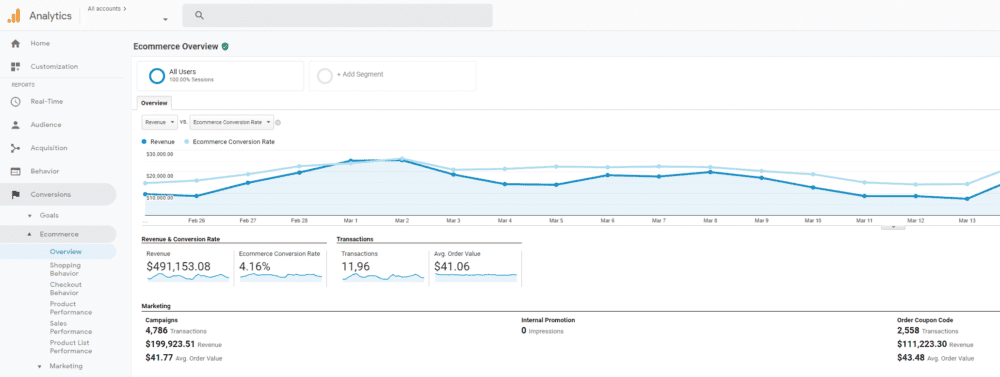
Online ROI Rescue: Using Google Analytics for Greater Success

0

Data. Analytics. Conversions. Oh My!

If you are walking precariously along the yellow brick road of vacation rental marketing, these words are as scary as the unseen dangers hidden in the woods of Oz.

Data, analytics, and conversions require forethought, measurement, analysis, and strategy.

These concepts are probably more important to your vacation rental business than any other—except of course, the number: How much am I making?

And, just like in The Wizard of Oz, once you get to know what’s hiding in the trees, it’s much easier to navigate knowing that on the other side lie sunny skies, rainbow ponies, and a full rental calendar.    

To put it more clearly, when you start to set marketing goals based on data and make marketing decisions based on trends in your data, you’ll see an improvement in the numbers you care about—bookings and revenue.

You may already be thinking, “This is too much for me,” but it isn’t, I promise! Just a little knowledge goes a long way, and sometimes just seeing what is hidden in the numbers is enough to give you an idea of some simple changes that could make big improvements. Using data tools such as Google Analytics, you can get a snapshot of key data points today and then watch over time as you make changes to your website and marketing efforts.

If you are like most online business owners, when your website is ready, you have your website person set up your Google Analytics account. You log in once or twice. Look at it. Click a tab or two. Close it. And forget all about it. 

Or, you may find a couple of reports you feel are useful, like traffic channels, and you watch the numbers go up and down.  

However, there are a few Google Analytics reports that can give you actionable information to help you quickly and easily see problems.  

Be sure to look at these reports over a longer time frame by changing the date range in the upper-right-hand corner of your screen. Look at three or six months, or more if this is your first time viewing the data. After you start making changes, you’ll want to look at more recent time periods.


1. Audience Report —> Mobile Overview

This report shows you the number of users who used various devices to view your site and, overall, how they behaved on your site on each device. The bounce rate indicates what percentage of users left your site without any further action. A high bounce rate means a higher percentage of your users leave your site without engaging with your content.

Action items:  

If your bounce rate is higher on mobile than on desktop devices, you need to determine why and make changes to your site now to help your users consume the content more easily on mobile. Use Google’s mobile-first tool and check a few pages; check your site speed via Pingdom, and learn more about how to segment traffic by device in Google Analytics so you can dive into how specific pages are performing.


2. Acquisition Reports —> Search Console  

If you are working hard at ensuring your site is optimized for search engines or if you want to start implementing an SEO plan, you will definitely want to view this report and keep track of your performance. Note that if you do not see any data here, you need to add your Google Search Console data to the Google Analytics property.  If you already have the search console, this is easy to do. If not, you will need to sign up for it first. The data will take a while to populate.

This report shows you which pages of your website are getting the most views from Google’s organic search. You can see how many times each page was included in the search results for the terms, how many times your page was clicked on, and the average results position (rank) at which your page is located for the search term. The report also shows your bounce rate and pages per session as well as goal completions if you have conversion goals set up. 

You then can drop to the queries report, just three tabs lower in the acquisition report, to see some of the top queries through which users are finding your site. 

In the example above, you can see that the top landing page (a blog post) received 455 page views and had a very low bounce rate. An average of 4.2 pages were viewed per session.


Action items:

To rise in Google’s rankings, you need to have great content that engages your users, so bounce rate is important. Work on making the content on your top pages more engaging so that people will read it and scroll down to look at images or videos. You also want to make sure the content on the page reflects what users are searching for.  

If your property or booking pages are getting a high click-through rate but have a high bounce rate, this will directly affect revenue. Investigate to see what issues could be causing the problem. Is the page taking too long to load? Does your booking form load properly? Does your page’s meta description (Google Snippet) match the content on the page? 

If bounce rate is low and page views per session are also low, you need to look at changing your navigation on your website or creating more links to additional content on the site to encourage visitors to investigate further. In the example above, 4.2 pages per session is great. This page actually leads people to additional resources on the site, including a booking page. It is responsible for nearly half of this client’s direct bookings per year.  


3. Acquisition Reports All Traffic —> Channels & Source/Medium

The channels and source/medium reports are good overview reports on how your marketing efforts are working to bring traffic to your website. As you look at these reports over time, you need to watch how your traffic increases in relation to your bookings. If your site is working to convert bookings, as your traffic increases, your bookings should increase, too. If that is not the case, there are most likely issues on your website that need to be addressed before you start changing marketing tactics, because the point of marketing is to bring more visitors to your site.

The channels give you an overview of the sources of traffic to your site. You can create your own channels to add to this list and see them in your reports. Be sure and click on each to see a breakdown of social media and referrals. Note that there could be a bit of fake data in the referrals report unless you have set up filters, so don’t be alarmed if you see weird websites sending you a few users.

Questions to ask:  

  • What is your biggest source of traffic right now?  
  • What is the bounce rate, page view figures, and time on page for each source of traffic?  
  • From what social media sites are you getting traffic? Any surprises?
  • Are you getting referrals from the listing sites or CVB sites on which you are paying to appear?
  • If you have set up goals, how do conversion rates differ among the channels?

The source medium report breaks down the channels report and is especially useful for comparing all sources of traffic at once.

As you get more experienced at tracking your traffic and start using many different sources to get traffic to your site, you may want to use UTMs to tag your traffic from each specific ad, post, email, and so on. A UTM code is a simple code that you can attach to a custom URL in order to track a source, medium, and campaign name. This enables Google Analytics to tell you where searchers came from as well as what campaign directed them to you. I encourage you to learn more about UTMs, especially if you are using any type of external advertising.  


4. Google Analytics Behavior Reports

Another report you’ll want to look at is the behavior report. This section of Google Analytics will show you what your users are doing on your site. If you have a lot of traffic but few conversions, this is where you can break down each page of content and really dive deep into the problems your site might be having.

Check the “All Pages” report to check which pages have the highest page views, bounce rates, and exit rates.  

You can use the search bar to type in the URL extension to check individual pages or groups of pages.  

Examine conversions (bookings) on the individual property pages. If you don’t have good conversion rates now, you should be testing the site design, listing descriptions, images, and more.


Using Your Data

As you start looking at these different numbers and familiarizing yourself with the various reports and ways to filter data, you will discover many ways in which you can use the data to make changes.  

The biggest mistakes people make at this time are making the wrong changes and making too many changes at once.

  • If your traffic is high, but you have high bounce rates and low page views, you probably have a website problem. In this case, you may need to look at page speed and mobile views or get a website review, but first, try to rewrite some content or get better images.
  • If your organic search traffic is low and your site is at least a few months old, you should make sure your site is listed with Google’s Search Console and look at your meta descriptions and meta keywords.
  • If you don’t have much traffic at all from any sources, you have a marketing problem. Learn the different marketing strategies that work best for you and your audience. Social media ads, especially on Pinterest and Facebook, can work quickly to get you some traffic.
  • If you have high traffic and engaging content and still have low booking rates, look at your property-specific pages. Do you have well-placed booking forms and calls to action? Are your images professional? Do your booking forms work? Is there a way for visitors to easily find your contact info? Does your listing copy entice them to book your property?

As you can see, there are a lot of details to be found within your Google Analytics dashboard, and it should be clear that this is a tool you need to use to learn more about what is going on with your website. The keys to making money in any online business are to learn how to use different strategies and marketing tactics correctly to bring more traffic to your website and to use the data you see to make informed decisions that work for you and your business.

Asset Management vs Property Management for Second Homes

0

Are You an Asset Manager, a Property Manager, or Both?

We often think of real estate asset managers as managing commercial real estate portfolios. However, the true definition of asset management is not a profession but rather a process that refers to managing investments on behalf of others with the dual objective of appreciation of the client’s assets over time while mitigating risk.

The functions performed by real estate asset managers are looking increasingly similar to the services provided by professional second-home property managers (PMs), especially those with real estate offerings and a deep understanding of market and economic dynamics.

“In the past decade, the property management profession has made some remarkable developments,” says Michael T. Lanning, CPM, senior vice president at Cushman and Wakefield. “Property managers today do more than manage tenant relationships. They take a holistic approach to managing an asset, including the operations, financials, and tenant engagement. A number of external factors have influenced this change, and as a result there is a greater alignment of the property and asset management disciplines than ever before.”


Asset Management versus Property Management


Source: “Asset Management v Property Management,” Cushman and Wakefield

Asset management professionals do not readily admit it, but the lines that divide asset and property management are blurring, and there is an undefined, detailed description of a true real estate asset manager.

This void is creating an opportunity for real estate-oriented vacation rental managers to market the asset management services they are already providing to second-home owners.


Second-Home Investor Profile

While investor profiles differ among second-home owners, they are generally motivated by the following:

  1. Realizing an appreciation in the value of the home as an asset
  2. Maximizing short-term cash flow through rental income and cost management
  3. Managing risk
  4. Maintaining the property to enjoy as a vacation home for personal use

Professional PMs are well-versed in maximizing short-term cash flow, managing risks associated with vacation rentals, and servicing owner stays, so let’s look at several of the functions of increasing the value of the home.


Increasing the Value of a Vacation Property

When examining an asset manager’s role in increasing the value of the home, according to Sean Ross, founder of Free Lances Ltd. in his article “The Role of an Asset Manager in the Real Estate Market”: “Asset managers tend to specialize in particular types of property, regions or operations. A very large role of the asset manager consists of market research, data analysis, and revenue forecasting.”

PMs who view the vacation rental property as an investment are performing asset management analysis, forecasting, and reporting, and they are proactively working to increase the value of the home. They are able to set themselves apart from management companies that are solely focused on maximizing rental income in the home.

Looking solely at increasing the selling price of the home, there are many PMs who are already proactively working to:

  • Increase the popularity of the destination among buyers most likely to invest in area homes
  • Increase the value of the neighborhood or complex community within the destination
  • Increase the value of the home within the community


Destination Appreciation

Leisure destinations go in and out of favor with travelers. Asset-management minded PMs are proactive in finding ways to ensure real estate values and guest activity steadily grow in the destination.

Here are some examples of initiatives that engaged PMs support:

  • Improved airports and more direct flights
  • Sustainable and smart growth, development, and city planning
  • Year-round activities
  • Government policies and regulations that are pro-real estate, pro-business, pro-guest, and pro-destination
  • Traffic solutions that meet the needs of the destination at its peak visitor times
  • Public transportation, available taxis, and ride-sharing
  • Safety and security
  • Multigenerational appeal
  • Optimal mix of accommodation types and full-time versus part-time visitors
  • Shopping and dining development, acquisition, and retention
  • Events, conventions, festivals, and groups in shoulder seasons

Pro Tip: Communicate what you are doing to ensure destination appreciation to owners, and find ways to engage them in your programs and activities to promote the relationship.


Neighborhood and Complex Community Appreciation

In resort destinations, many vacation homes are located in neighborhoods and complexes which improve the value of these communities as a key factor in increasing the value of the home. Providing association management services is one way that PMs work to grow the value of neighborhoods and condominium communities. By managing the association, PMs have an increased ability to control and improve:

  • Financial management
  • On-site amenities
  • Security and safety
  • Common areas


Increasing the Value of the Individual Home

The objective in increasing the value of the home is to create a property value that is at the top of the market in a community that is also at the top of the market in a destination that is at the top of the market among competitive destinations.

Having a strong rental history is important, but implementing systems that provide professional financial reporting and property history can increase the speed of a sale. In addition, using comparative data tools and reporting that show how the property is performing in relation to the market can also help a buyer complete a quick transaction. Investing in a process to provide fast, professional, easy-to-read buyer packages, complete with reports, forecasts, and area trends, demonstrates to buyers that the PM is a savvy asset manager and is an effective tool in persuading a new buyer to allow the management company to continue to manage the property after a sale.

Moreover, property care is expected to make up a much larger part of the PM’s role in the months to come, and technology products are being developed to help facilitate proactive home care and preventative maintenance. Offering design services and uniform, upgraded kitchen packages are also ways to impress buyers (and guests). Smart home automation can help in security and managing costs, and having a process to vet and manage guests and provide 24/7 response is also a service that improves the value of the home.

An enormous opportunity exists for real estate–minded property management companies that view vacation homes as investments, are functioning as asset managers, and are concerned with both increasing the long-term value of the property and maximizing short-term income to differentiate themselves from the competition. Second-home owners/investors are seeking—and are willing to pay a premium for—these services.

Vacasa Acquires Sterling Resorts

2

Vacasa has acquired Sterling Resorts, one of the largest vacation rental management companies on the Florida Gulf Coast. Previously purchased by Pacifica Companies in 2015, Sterling Resorts now manages 450 units in destinations along the Gulf Coast of Northwest Florida down from 585 units in 2015.

With the acquisition, Vacasa now manages 13,000 exclusive vacation rentals and is the largest vacation rental management company in North America.

Vacasa has raised over $207 million in outside funding and, with this purchase, is taking another significant step in purchasing established vacation rental management companies in traditional leisure destinations, including South Carolina, Colorado, Alabama, and Florida. The company that was once considered a newcomer has quickly crossed over into mainstream, traditional vacation rentals.

Sterling’s largest area competitors include Southern Resorts (which has been expanding regionally) and Wyndham Vacation Rentals. Wyndham Destinations recently announced that it is exploring strategic alternatives for its North American vacation rentals businesses, including its locations in Northwest Florida. 

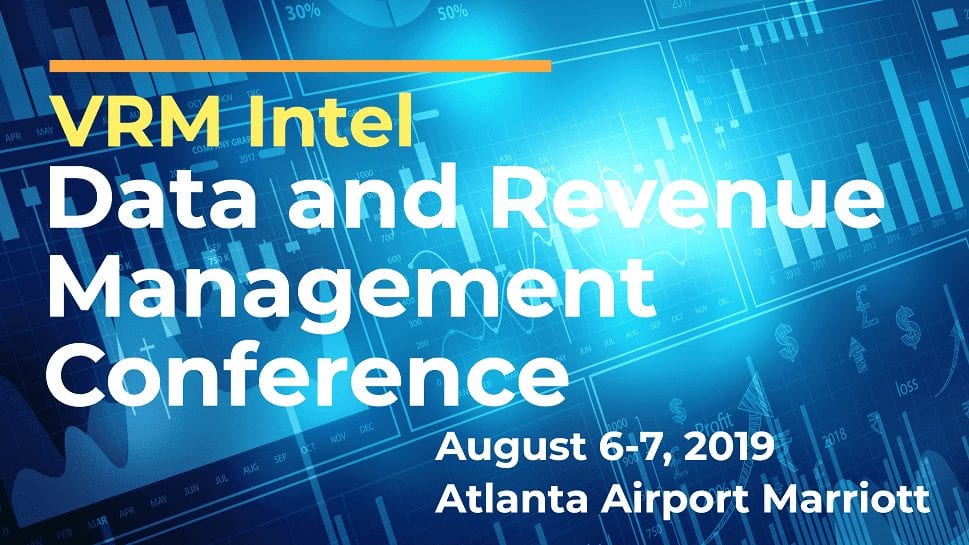
First Vacation Rental Data and Revenue Management Conference to be held in Atlanta, August 6-7

0

With the creation of comparative data and pricing tools, the science of revenue management for the vacation rental industry is quickly evolving and has become a hot-button topic for VRMs in 2019. As a result, VRM Intel is bringing together revenue management experts, vacation rental professionals, and technology providers for a two-day educational conference designed to identify best practices and professionalize the industry’s understanding of comparative data and revenue management strategies. 

VRM Intel’s Data and Revenue Management Conference will be held August 6-7 at the Atlanta Airport Marriott, and is being supported by leading sponsors, Key Data, AirDNA, Rented.com, PriceLabs, C2G Advisors, Streamline, Beyond Pricing, RedAwning, and LSI

“While vacation rental professionals are extremely interested in implementing revenue management strategies, there is little information or education offered in the marketplace specific to short-term rentals; and we are finding that hotel strategies do not necessarily apply to leisure-oriented vacation rentals,” said Amy Hinote, founder of VRM Intel. “There are new technology, data, and pricing tools available and new terms, KPIs, theories, and practices emerging. With this conference, we hope to bring the smartest people in this space together to help VRMs make sense of this new playing field.”

Quick Links:

Conference Objectives

The Data and Revenue Management Conference is an educational conference with classroom sessions, panel discussions, product demonstrations, and key data findings with the following objectives:

  1. Bring together industry experts and VRMs who are looking to understand and implement data-oriented revenue management strategies.
  2. Provide a foundation for industry understanding of market-driven data analytics and the role that revenue management plays in profitability and asset management. 
  3. Discuss fundamentals, key glossary terms, metrics, and KPIs.
  4. Identify and articulate revenue management strategies.
  5. Examine existing data tools, pricing tools, and how they work with PMSs.
  6. Compare and contrast hotel and VR revenue management. 
  7. Demonstrate how to implement pricing strategies—internally and across channels.
  8. Take a first step toward helping VRMs identify best practices and professionalizing understanding of the value of comparative data and revenue management strategies. 

Northeast Vacation Rental Professionals (NEVRP) partners with Fetch My Guest to launch NorthEastStays.com

1

NorthEastStays.com Released at Annual Conference on April 2nd.  Member companies can now advertise their properties directly to vacation rental travelers to drive more direct bookings.

NEVRP created the marketplace to address the challenges travelers face during the booking process, one of the biggest being communication issues. “The NorthEastStays marketplace will allow our customers to #bookdirect. This opens the doors of communication and builds a connection between the guests and the vacation professional manager. The guest will be free of excessive booking fees coming from OTAs, while the vacation rental professional will once again have open access to their customer’s information so that they are able to connect with them directly and share their local expertise.” said Heather Allen, President of Northeast Vacation Rental Professionals.

“We are proud to have NorthEastStays join our growing network of independent vacation rental professionals who service the needs of vacation rental travelers from coast to coast. We are actively launching other regional and global networks that will continue to provide value to the independent vacation rental professionals while giving the traveler the best overall vacation rental experience and value”  said, Vince Perez, CEO of Fetch My Guest.

Listing on the NorthEastStays marketplace costs $65 per property per year. The site, which launched on April 2, 2019, already has close to 300 properties listed and growing daily.  Vacation rental managers must be NEVRP members in order to list their properties on NorthEestStays.com to ensure that its listings are managed by companies that adhere to the NEVRP code of ethics, and standard practices. Each member company is also evaluated on its guest service and commitment to high-quality homes that are clean, well maintained, and safe.  

NEVRP welcomes vacation rental companies from Maine, New Hampshire, Massachusetts, Vermont, Connecticut, New York, New Jersey, Pennsylvania, Rhode Island, Delaware, Maryland, and Washington D.C. If you would like to learn more about NorthEastStays.com we will be offering informational webinars twice a week. We are eager to grow our marketplace, and expand to the rest of the Northeast! Membership enrollment is now open!


The Transformation of Today’s Vacation Rental Industry: What is going on out there? By Simon Lehmann

0

If you can keep track of everything that is happening in our fast-transforming vacation rental industry, then you are a genius.

Let’s face it, for all of us in the industry, staying abreast of all the changes and keeping current with innovation and technology solutions entering the ecosystem has become a huge challenge. It is a good challenge to have, but a challenge nonetheless.

The big question for us to ask ourselves is whether we even know anymore how to differentiate our product from all the other different hospitality products out there. Are we still confident about what makes vacation rentals unique and what sets our offering apart from other lodging options?

Concurrent with all the wider industry transformations, property managers still need to run property management businesses. We are challenged daily to deliver the best possible guest experience and, at the same time, to look after our hosts and owners by ensuring we deliver the best possible service and returns.

Outside of individual property management businesses, looking at the wider picture, we are being confronted with a convergence in hospitality. All products have become one. The OTAs have mastered the distribution of our products, and consumers can choose, at any time, the kind of accommodation they want, expecting to book it instantly.

Along with the challenge of convergence, the industry is facing margin compression and increased competition. For property managers, it is getting harder and harder to make a reasonable margin.

Although we are trying to find solutions and remedies for our challenges, we are increasingly exposed to more complex circumstances, requiring us to make choices and decisions that are not part of our core business.

However, to succeed, it is vital that we keep in mind what our core business is. Our core business is to deliver the best possible guest experience and to provide exceptional service for our owners. Our business rests on making sure that the guests coming into our homes have the time of their lives and enjoy their holiday or business trip with the least amount of friction.

Our business also depends on ensuring that our owners and hosts are satisfied with the services we provide, that their properties are being looked after, that occupancy is at its maximum, and that the delivered rent is the best achievable.

While not forgoing our core business, we are also challenged by increased distribution costs and have become more and more dependent on third-party channels for leads. At the same time, the brand equity we once built is diminishing. Repeat customers are slowing down; booking windows are getting shorter; and our guests are demanding more choices, greater freedom, and better value for their money. These are tough realities to accept, but accept them we must.

Being faced with operational issues on a daily basis and being pressured to deliver a superb guest experience, while also making sure your owners are happy, means vacation rental management businesses barely have the time to come up for air, let alone think strategically about what is next on the horizon or how to improve their business by making things easier for everybody involved.

Perhaps it’s time for a collective step back and some reflection on the questions around what is happening in the industry—what is now expected of us, and what can we do in the professional vacation rental property management industry to ease our worries and make improvements that are not just knee-jerk reactions?

There are, of course, many solutions out there to support the transformation of a property management business. But we do need to be incredibly smart about our choices.

Our first priority must be to create the best possible hospitality experience for our guests—making sure that everything, from searching to booking to paying and having a great time while enjoying a vacation rental, is as seamless as possible.

This we can do. We are professionals, and we know exactly what our guests want and how we can make their stay an incredible and unforgettable experience.

It’s time to stop talking about blunt knives and insufficient basic accoutrements while staying away from home. (Stay a night or two in one of your own properties, and you will quickly understand what needs improvement.)

Whether we like it or not, or whether we think this is important or not, every property manager needs to master these basics and improve at communicating our value proposition. There is still a massive pool of potential customers who have never stayed in a rental, who are used to the conveniences of hotels, and who we could potentially convert to our offering.

Besides investing in branding on the property level and making sure to have the right mix of distribution channels, today’s property manager needs to think about the future.

What is the next opportunity to make choosing a vacation rental an even better experience for the guest, as well as putting our hosts at ease, knowing everything is okay with the property?

From both an industry perspective and an individual business perspective, the next big thing to transform our offering is home automation. Being able to deliver the very best experience to our guests when they stay in our properties is the core solution of home automation.

We are all consumers; we all want choice and we all want convenience. Home automation, a seamless booking process, and, above all, free choice can deliver the right results for the guest and host of tomorrow.

Automated locks are a small start. Not everybody wants to be greeted by the host and have their ears chewed off about the latest fishing trip they went on! Many guests just want to get into their properties, relax, and make them their own. Aside from locks, home automation offers much more opportunity for transformation.

Although as an industry we are facing massive challenges to maintain our margins and are under high expectations to deliver best-in-class products to our stakeholders, we are also under the pressure of operational and distribution costs that are killing us.

It is imperative that we look for alternatives for maintenance of our operational profitability as well as make sure our guests are satisfied and our hosts are getting maximum occupancy.

Adaptation to future technologies will enable us to circumvent many of these real and present challenges. However, we need to be ready for this transformation and be open to the opportunity of being the first adopters. But if we do, home automation will be transformative both at an industry level and at an individual operational level.

Applying smart home technology will enable forward-thinking property managers to handle all processes around each property simultaneously. This will inevitably result in a better guest experience, lower operating costs, and more data to run your business even more efficiently. And this will lead to better and more profitable businesses!

Vacation Rental Tax Guide from Vacasa

0

It’s officially nine days until tax day in the U.S.; and while many might be ahead of the curve, there are millions of Americans who will wait until the last week to file or request an extension.

One of the main reasons people procrastinate is due to complexities with their taxes, and owning a vacation rental only adds to an already complicated ball of wax.

While nothing replaces the need for a knowledgeable CPA, Vacasa created a vacation rental tax guide that can be useful when advising homeowners on taxes. 


The Right Form Matters

First and foremost, there are two forms that are applicable to vacation rentals: an IRS Schedule E and an IRS Schedule C. When considering which is the correct form, it’s easiest to think about the income being generated by the property. If the property is generating supplemental income to the homeowner, Schedule E is likely the way to go. If it’s a primary business and high-grossing unit (i.e., considered more as a business), Schedule C should be used to file vacation rental taxes.

For either document, homeowners need to have a list of documented expenses, all 1099s filed reporting contractor payments, property usage schedule, and gross rental income.


The 14-Day Rule Applies

Second, the amount the homeowner uses the property will have an impact on what they can write off. In simplest terms, the 14-day rental rule means you don’t pay taxes on the income you receive from your short-term rental if BOTH of the following are true: A) you rent out the property for less than 14 days and B) you use the property for 14 days or more. However, if you rent the property out for more than 14  days and use it yourself for less than 14 days, taxes can become more complex.

Homeowners should keep a log of each day the property was in use, and include a breakdown of vacation rental days, personal use days and days used for repairs and property maintenance. This will help the IRS determine whether the property is rented for more than 14 days per year, and thus, how much the homeowner is able to write off. Another important note: tax deductions vary by state, but in all cases require a receipt for each expense deducted, so homeowners should make sure they have a file – preferably digital – to keep track.

Download the tax guide. 


Repairs vs. Improvements

A lot goes into maintaining a property and while it may seem that all upkeep is assigned to one category, there are actually two when it comes to your taxes: improvements and repairs. Repairs, like fixing loose banister or a broken window, can be written off, however, improvements to the home, like updating an old bathroom, are handled differently. Instead of being written off in the year of the expense, they are deducted over the use of their lifetime. While this may sound complicated, homeowners should still include when filing as it is indeed tax-free income.

Sharing these tips with homeowners can alleviate potential headaches and help familiarize vacation rental tax laws, especially if they are down to the wire.


Five Essential Tools for Vacation Rental Taxes

  1. Usage log: detail personal, rental and maintenance/repair days. Note: donated stays count toward personal use days.
  2. Digital folder: retain, organize and back up photos of receipts and cross-reference with accounts used for supplies (Amazon, Costco, etc.)
  3. Financial log: Track payments for property taxes and mortgage.
  4. Updates log: Document expenses and generally describe all repairs, maintenance and improvements.  
  5. Depreciable assets schedule: show reduced value of assets as it may be an expense you are able to write off.


Disclaimer:  This is designed to provide general information regarding the subject matter covered. It is not intended to serve as legal, tax, or other financial advice related to individual situations. Because each individual’s legal, tax, and financial situation is different, specific advice should be tailored to the particular circumstances. For this reason, you are advised to consult with your own attorney, CPA, and/or other advisor regarding your specific situation. The information provided here is for your use and convenience only. We have taken reasonable precautions in the preparation of this material and believe that the information presented in this material is accurate as of the date it was written. However, we will assume no responsibility for any errors or omissions. We specifically disclaim any liability resulting from the use or application of the information contained in this publication.

Content provided by Vacasa. 

VRM Intel’s Spring Issue is Heading Your Way

0


The latest issue of VRM Intel Magazine is at the printer and heading your way soon, and here is a link to the digital version of the magazine for those who are ready to dive right in. 

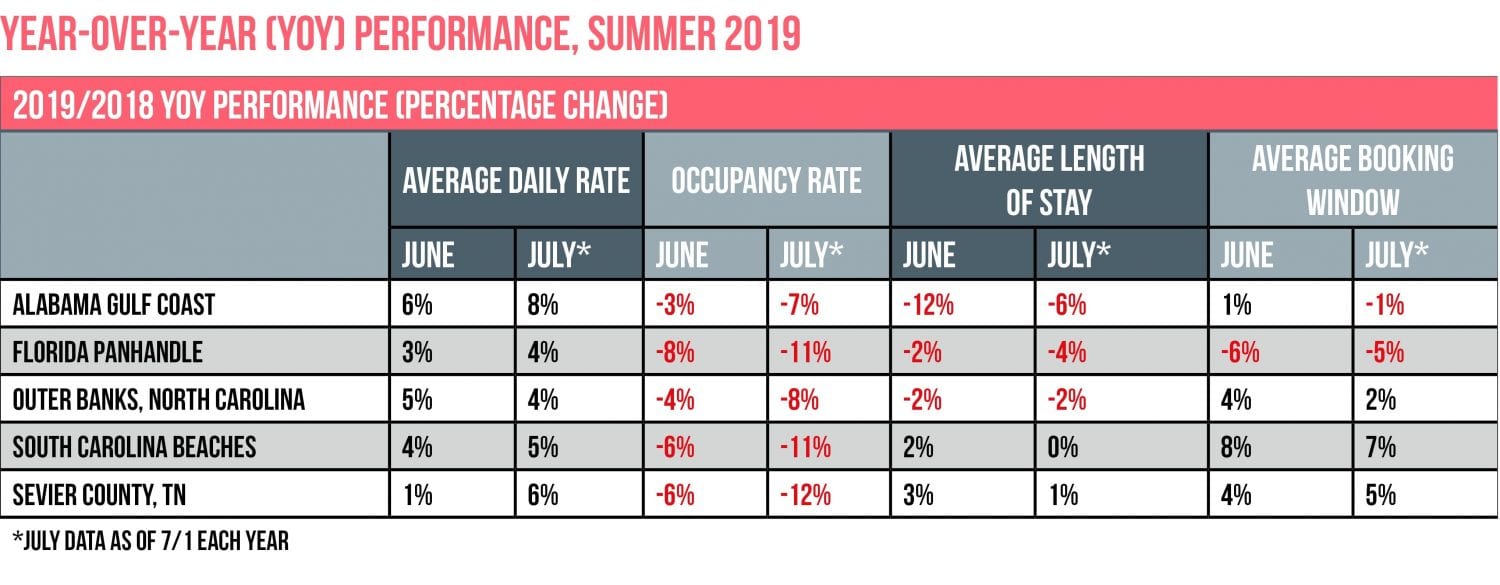
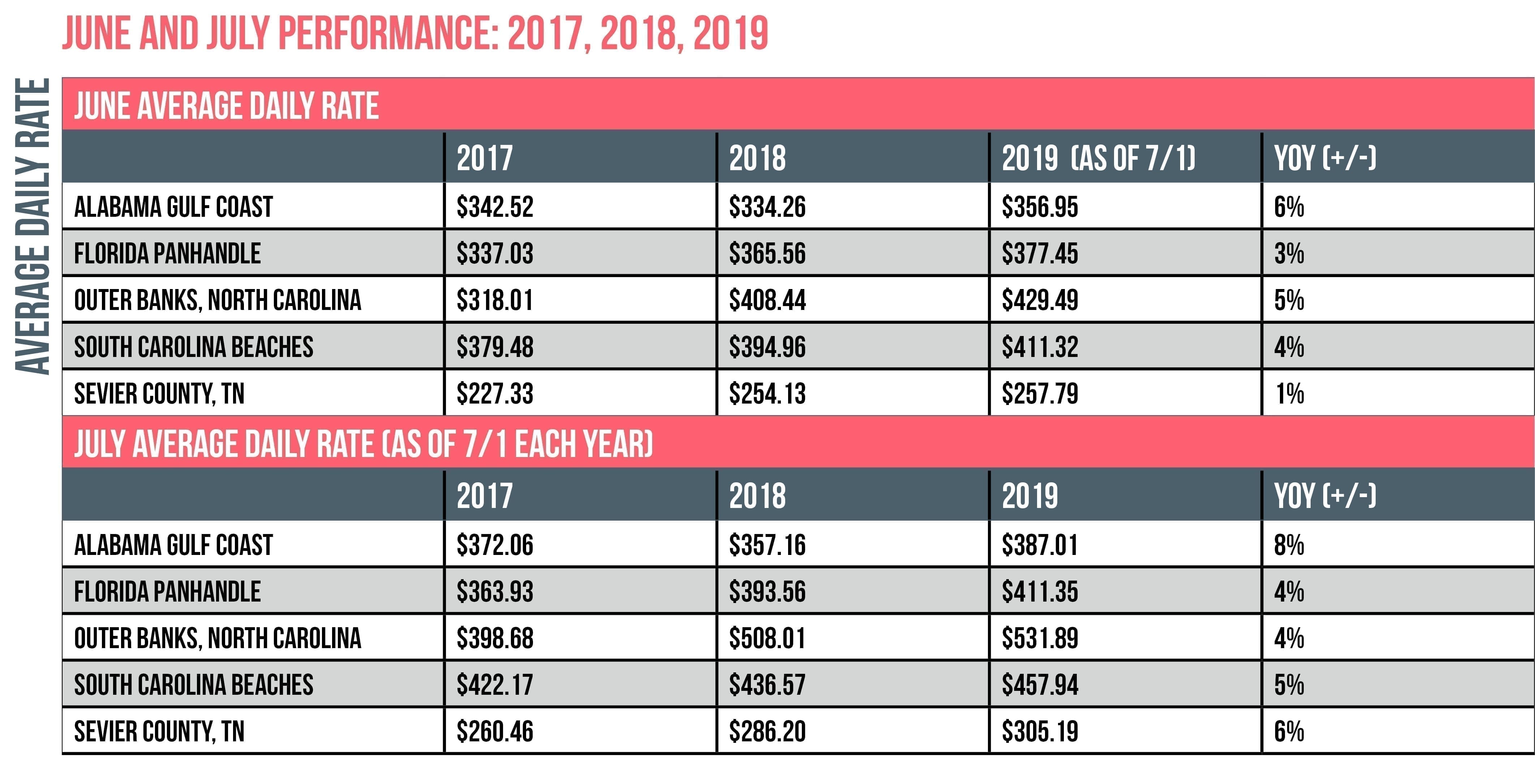
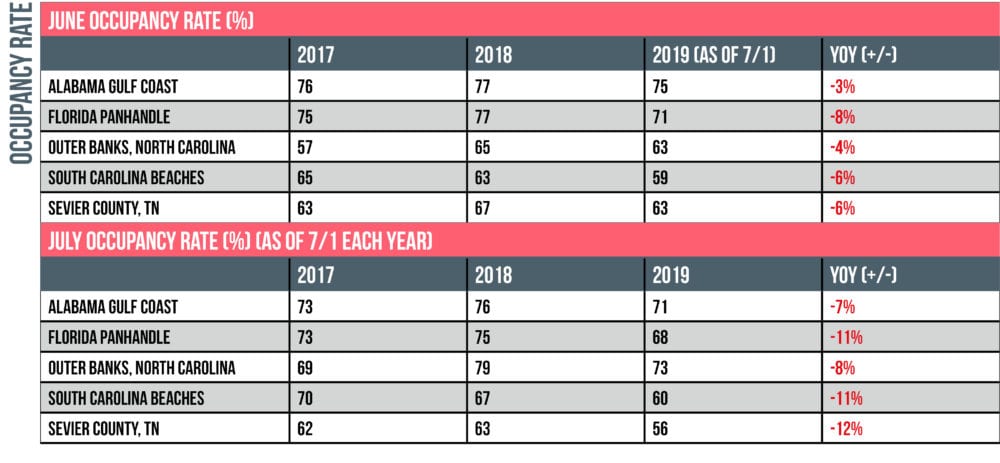
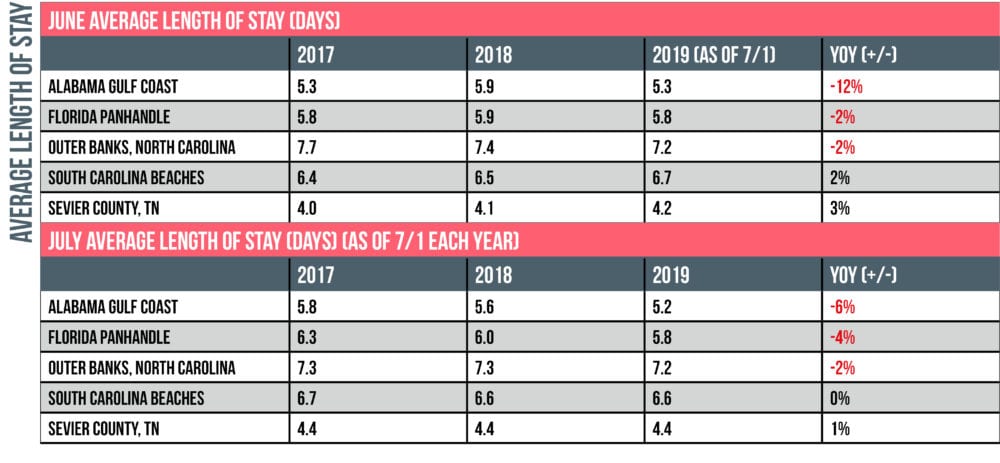
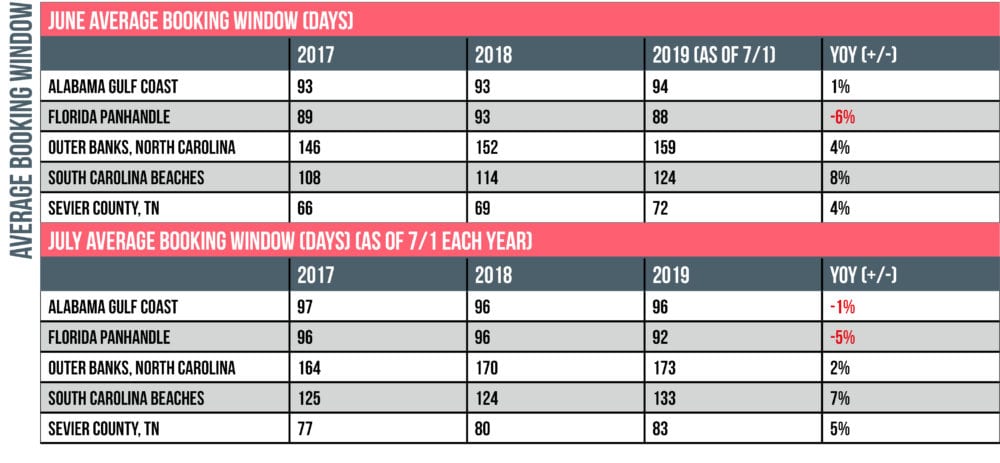
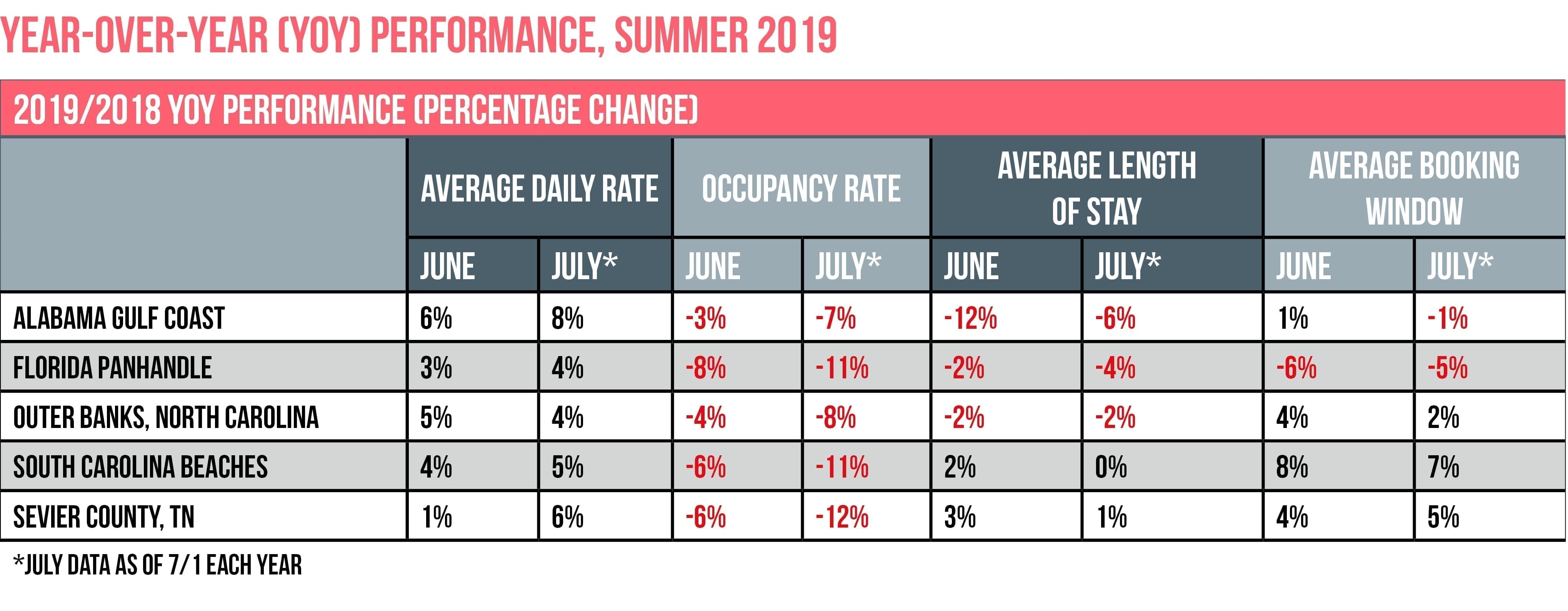
This Spring 2019 issue is full of articles that discuss the “why” behind industry dynamics and market changes. There is a lot of information in these pages, so I recommend taking some time on this one and sharing what you learn with your team. There are also several how-to articles that are pretty creative. As we move forward in 2019, one of the things we will look for in this second quarter will be booking pace for the summer. Last year saw mixed results with some destinations, like the Florida panhandle, which was really struggling to fill in its peak season. Will we see a rebound, or more evidence of a change in consumer behavior? It will also be interesting to watch revenue managers in action during the high season and see how their activity will affect overall ADR and stay value. And now we have comparative data sources that enable us to see a much broader picture of what is going on in the industry across destinations.

There are a lot of conferences this spring, so I look forward to seeing many of you over the next few weeks.

Thank you again for reading and hope to see you soon.

UK’s Sykes Holiday Cottages Acquires Major Stake in New Zealand’s Bachcare

0

UK holiday rental firm Sykes Holiday Cottages acquired a major stake in Bachcare, New Zealand’s largest vacation rental management company.

Since 2003, Bachcare has been helping holiday homeowners and travelers “find your happy place,” the company’s tagline and mission. Bachcare manages over 2,000 holiday homes across 150 locations and welcomes over 150,000 guests to its properties every year. The company employs 50 people at its support office near Auckland and works with approximately 100 contracted holiday managers across the North and South Islands. They hosted their one millionth guest in 2018 and have seen holiday homeowner inquiries about their full-service management grow by 25 percent in the last year.

Sykes Holiday Cottages employs more than 500 people and last year served more than 1.5 million guests from its head office in Chester. Sykes is the six-time winner of the British Travel Awards’ Best Large Cottage Company (2013 through to 2018).

Graham Donoghue, chief executive of Sykes Holiday Cottages, said, “It has always been our ambition to scale into new markets, and working together with Bachcare will enable us to take our first step toward further international growth. There is huge respect for the business Leslie has built over the past 15 years, and by learning from each other’s expertise, we are confident that Sykes Holiday Cottages can continue growing in the UK, that Bachcare will maintain its growth in New Zealand, and that together, we can enter other new markets around the world.”

“Competing with large multinational companies has helped make Bachcare what and who we are—an honest, independent business that is absolutely committed to giving our holiday homeowners and guests the best, full-service experience possible,” said Leslie Preston, the chief executive officer of Bachcare Holiday Homes, who will remain at Bachcare’s helm. “Having Sykes with their shareholding is great for our business, as it ensures our interests are aligned. They are making their 25 years of experience, people, intellectual property, processes, and technology available for Bachcare. They will be a true partner for Bachcare, something that was not accessible to us in New Zealand, and for that, we are very fortunate to have them on the team with us.”

“It will undoubtedly take our guest and holiday homeowner experience to a level never seen before here in New Zealand,” Preston added.


Preston Offers Insight into Her Decision to Partner with Sykes

Those who have attended any of the recent conferences in which Leslie Preston has presented, including the 2019 Vacation Rental Women’s Summit, are likely as surprised as we were by this move. Preston runs a successful business that is experiencing high growth. The company has a great brand, supportive shareholders, and strong projections.

“So why take on the Sykes investment and take on Sykes as a shareholder?” Preston asked, echoing our question. “There are so many reasons why it’s such an awesome idea! As the majority shareholder of a family-owned business, you make decisions with a conservative lens. While growing to managing 2,000 houses over 15 years is great, what could be possible if you took a less emotive frame of reference and a more unattached independent decision-making framework of a bigger company? Handbrakes get taken off and the rocket ship goes faster!”


The Importance of Scale

“The holiday home industry has become global and uber large scale, yet property managers have yet to follow suit,” said Preston. “This is not sustainable if you want to remain masters of your own destiny. With Expedia/HomeAway, Airbnb, and Booking.com each listing millions of properties, there is a growing imbalance with the highly fragmented nature of holiday home managers. We believe in controlling our own destiny and not being reliant on anyone. And we believe scale at the property management layer will ultimately win.”

Preston continued, “It’s crucial that you have enough scale at the local level, national level, regional level, and global level to be masters of your own future and drivers of your own ambitions and drivers of your own economic success. Bachcare has always believed in scale and has always believed in the benefits scale brings to our owners, our guests, and our teams. We absolutely have achieved our own scale, and quite successfully. But it’s no longer just about local scale or national scale to remain relevant. It’s about global scale. Partnering two best in class very strong and successful national scale organizations brings exponential possibilities and exponential outcomes.

“Great is good, but amazing is even better! Why settle for being great when you can be amazing?” Preston asked. “Having an external perspective outside of just our New Zealand lens brings new insights, new approaches, new ideas, and access to alternative perspectives. I have always strived to be the best we can be, and given our current scale and size, bringing in a larger company that operates with the same ethos and ethics with the same focus on amazing owner and guest experiences was too good an opportunity to pass up. We still remain and will remain the largest scale player in our region, and we will only go from strength to strength, getting better and delivering more value to our owners, our guests, and our teams along the way—all while still having a heap of fun.”

“We have so much opportunity in front of us, just in New Zealand. Removing the family-owned capital structure frees us up to grow even faster and bring more value to our ecosystem.”


What Changes Can We Expect to See at Bachcare?

The move gives Bachcare access to the technology, tools, people, and insights of Sykes, one of the UK’s largest independent holiday rental agencies, with almost 14,000 properties across the UK and Ireland. It also supports Sykes’s ambitions to grow internationally, with this being its first investment outside of the UK and Ireland. Bachcare will continue to target the domestic New Zealand market, operating under its existing brand.

“Nothing changes in what we are doing, and we will stay true to who we are,” said Preston. “Our brand DNA is such a part of who we are, and how we do what we do. In Sykes, we have a partner who is very culturally aligned and supports our way of being.”

Bachcare is a significant scale player in its own right, as the largest full-service management company in New Zealand, Australia, and the South Pacific.

“We are a fully integrated company, with all core functions in-house, and we don’t see any of that changing,” said Preston. “There is no need to; what we already have works really well for us. But we are thrilled that we will now have access to the resources, IP, knowledge, and decades of experience of Sykes to apply to Bachcare as we feel appropriate to enable Bachcare to deliver even more for our owners, our guests, our holiday managers, our employees, and the communities in which we operate.”

Preston added, “Sykes is best in class in our industry with respect to a number of key metrics, such as guest NPS, owner NPS, and a number of other core operating metrics. While we think Bachcare is pretty good in key metrics, it’s fantastic to have access to industry leaders to take our great performance to best in class. We look forward to learning more about their secret sauce that we can apply to our business in New Zealand.”


What’s Next for Leslie Preston?

“I remain as fully committed as ever to Bachcare, am full of passion and commitment for our next phase, and am firmly leading this business now and into the future,” said Preston. “There is no way that I would be leaving now, just as we are about to get started on this exciting journey! I remain the CEO, I remain on the board, and I remain a shareholder. My leadership team remains in place. I’m only just getting started! I am so thrilled to have this amazing opportunity to lead Bachcare to even greater heights.”

 “We all knew consolidation was happening, and we’re glad to be at the forefront paving the way! The strong align with the strong and get even better!”

Working with Housekeeping Subcontractors for Vacation Rental Property Managers

0

Setting Expectations and Ensuring Subcontractors Meet Brand Standards

Contracting out your cleaning can be a daunting task. An individual or company is essentially handing over their brand to a third party. The third party is responsible for how the property looks when the cleaning is completed. The amount of trust placed in contract cleaners is immense! They have the company brand in their hands.

To ensure the subcontractors are performing to the company’s standards, there are specific documents that must be in place for the contractors to succeed and for the business relationship to flourish. The documents are an agreement or contract articulating standard property appearance and service standards.


Agreement or Contract

The agreement or contract outlines how the two companies will interact. The agreement should include the following information:

  • When invoices are due
  • When payments can be expected
  • What happens if there is a cleaning deficiency
  • If applicable, what the workers’ compensation insurance minimums are
  • That the cleaners are responsible for providing their own equipment
  • Reference to Standard Property Appearance
  • Reference to Service Standards


Standard Property Appearance

This document shows and articulates how the property will be left when the cleaning is completed. Here is a short list of what the document includes:

  • Pictures of where the remote controls go
  • How and where the guest amenities are placed
  • How the towels are hung
  • How the beds are made

This document is all about the details. The more pictures with explanations, the better. This document sets the standards the cleaners are held to. Without accountability, they will do what they feel is best—and that is not always best.


Service Standards

This document outlines the different services performed by the contractor. There is a difference between a deep clean, mini deep clean, and a departure clean. Service Standards outlines these differences.With these documents in hand, the next step is to help the contract cleaner know and understand your standards. The best way to accomplish this is by meeting with them at a property.


Stage a Property or Properties

Stage a property or properties exactly the way you want them when the contract cleaner has finished their cleaning assignment. Include a mix of properties, such as an older property, a middle-aged property, and a brand new property.


Meeting at the Staged Properties

Meet the contract cleaner owner or designee at each staged property. Provide a copy of the Standard Property Appearance if they didn’t bring it. Then, go from room to room and talk about how the room should look. Point out trouble areas and encourage the contract cleaner to make notes on the Standard Property Appearance and to take additional pictures to train their staff.

When working with contract cleaners, it is important that the contract cleaner is never, ever, construed as an employee. This means the contract cleaner never wears the property manager’s uniform, the property manager never dictates what cleaning products to use, and the property manager never dictates how the property will be cleaned. The only thing the property manager can do is say how the property should look when the contractor finishes cleaning.

Working with contract cleaners can be the best of times and the worst of times. Following the recommendations outlined above will move you toward the best of times.

Carolina Retreats Embraces Smart Home Technology

0

Q & A with PointCentral’s Mike Harrington

We asked PointCentral customer Mike Harrington, CEO at Carolina Retreats and past president of VRMA, about his experience with smart home technology and PointCentral. Mike’s candid responses are both informative and enlightening and should help other vacation rental managers who are investigating smart home technology. We thank Mike and the team at Carolina Retreats for their cooperation in the development of this article.


What Was Your Motivation to Look at Smart Home?

Mike Harrington (MH): “It was really sort of a no-brainer on our part. I saw things progressing from lockboxes with a physical key to the keyless locks, which were more analog. When PointCentral came out, there had been some Wi-Fi-enabled systems before that, but in these vacation rental homes, Wi-Fi can be very spotty. I knew that was a problem from the very beginning. With PointCentral, I was really intrigued with the mobile operating system that works on cellular technology—which was way more reliable from the get-go.”


No Key?

MH: “I’ll never forget my first summer as the new owner and president of the company. I got a call at 11 o’clock at night—someone can’t get in. I drove 30 minutes to the office to meet the people. I get into the office, go to the key box and it’s locked, and I don’t have the key. I eventually was able to unlock the box and give them their key, then drive all the way home. I told myself, I’m never doing this again. We immediately started the process of implementing smart home technology.”


No Problem.

MH: “Our Topsail operation is now 100 percent on the PointCentral system,” added Mike. “We’re getting ready to convert our Carolina Beach operation to PointCentral as well. It took very little convincing for homeowners, and our staff were elated, as were guests. We fund the hardware costs, and we pass along the software costs to our guests, which made it a lot more manageable for everyone to accept.”


How Has Going Keyless Impacted Your Operations?

MH: “From a sheer efficiency standpoint, we’ve basically cut out check-ins at the office,” proclaimed Mike. “Everything is handled pre-arrival. Nobody wants to come to an office and stand in a lobby to get a key. We know when the home is clean and ready. We know when the property is ready for occupancy and when the guests check in and check out.”


Did You Integrate Smart Home with Your Work Orders?

MH: “Absolutely! We rely on multiple vendors who have their own codes. We know when they enter the home and when they leave. For example, Hurricane Florence was a very big problem for us. Smart home allowed us to better prepare our homes before and after the storm—which was just awesome! We didn’t have to deal with keys. It was so much more efficient and really helped to make our jobs easier.”


Did You Position Smart Home as a Guest Amenity?

MH: “In the beginning we highlighted smart home in all of our marketing. I think now it’s become an expectation and less of a competitive advantage. If you don’t have smart homes, it’s a bit of a letdown for the guests; it’s so prevalent now.”


Regarding ROI, Where Have You Seen Your Biggest Returns, and Did Any of Those Surprise You?

MH: “The biggest return is on the operations side for us—reacting faster when things come up, not having to go to a home late at night, etc. I refuse to put our people in that position. It’s a safety concern. If we didn’t have smart home, our jobs would be immensely harder.”

“One of the surprises was that it was easier to implement than I thought. We had about 150 homes that we wanted to implement out of the gate, and I thought that might be too many. But it was a very smooth and seamless process converting those homes. It was a lot easier than I expected.”


What Guidance Would You Offer to Other VR Managers?

MH: “I wouldn’t get too hung up on the upfront cost. There are lots of ways to defer those costs. I would advise contacting people who have done this in the past, and get their take on how they did it.”

“And don’t get too caught up on a few of your homeowners who may not like it. You shouldn’t let a small percentage of your homeowners dictate what the large percentage want to do. I would just do it and ask forgiveness later. We just told our homeowners this is what we’re going to do. There were a few who didn’t want to do it, but by the second year, they had all signed up—100 percent.”

Guest-Centric Digital Strategies for 2019

0

Spring is a time for renewal, and there’s no better time to freshen up your digital strategy. Tom Kenyon, Vice President of Product at Bluetent, has words of advice to help focus your strategic efforts. “2019 is the year for guest-centric features, not bells and whistles. Reviews, reviews, reviews, and some fresh photos. It’s ironic [that] with so much talk around cutting-edge technology and features, reviews and photos are still what matter most to your guests.”

With that in mind, here are five areas of digital strategy you might consider refreshing this season. Providing your guests with a better brand experience builds traveler loyalty and ultimately increases bookings.

Photos

As you’ve likely heard over and over again, you only have one opportunity to make a first impression. Your photos do the bulk of the heavy lifting in this regard, so a professional photo portfolio is a must.

A good photo not only introduces travelers to your destination, but it also lets travelers imagine themselves in the scene. You can use simple staging techniques to create scenes that invite viewers in. It’s as easy as placing a glass of wine and an open book next to a chaise lounge. Close-ups and detail shots are also important, so be sure to highlight the special details of your property that will make a traveler choose your rental over another.

Reviews

TripAdvisor found that 53 percent of travelers won’t commit to booking until they’ve read reviews, and that 80 percent read between 6 and 12 reviews before booking. Simply put, it pays to have good reviews.

If you’re not getting enough reviews, try automating your review-generation process with email. The benefit is twofold: you show your guests that you care about their experiences, and you get reviews that help generate more bookings.

Once the positive reviews start rolling in, leverage them! Highlight them on your blog and share them on social media—even build a landing page around them. Use reviews to build loyalty and generate interest with potential guests.

Another way to build confidence in your brand is to quickly and thoughtfully respond to all reviews. Responding to the good, the bad, and the ugly shows guests that you are genuinely concerned about their experiences.

Security and Accessibility

Two ways to continue building trust with travelers are to address security concerns and accessibility issues. If your goal is to generate more direct bookings through your website, make sure your website is secure. Give guests the confidence they need. For example, include a PCI-compliance badge on your checkout page, as well as any other security logos or badges you’ve earned. This will help travelers feel confident about the safety of their data.

Just like brick-and-mortar businesses offer their customers ADA-compliant experiences, online storefronts should try to do the same. You can increase your audience by providing text alternatives for any non-text content, allowing that content to be changed into forms such as braille. Using high-contrast images and text can also make a positive difference in a viewer’s experience with your site.

Mobile Booking

Google Consumer Insights found that 48 percent of smartphone users are comfortable booking on a mobile device. Thus, it’s more important than ever to make sure that your site is ready for mobile booking. A mobile website without a mobile checkout process leads to cart abandonment at worst and decreased trust in your brand at best. Increase your conversions with mobile-booking functionality.

Content

Your successful digital strategy depends on content. Content communicates your unique strengths in an increasingly competitive market and is the foundation of your marketing efforts. Leverage the fact that you are the expert when it comes to your destination. Become your guests’ trusted advisor. Think about creating content that travelers will want to consume—the kind that makes them want to dive further into your website. Make time to add content on a regular basis. Consistently creating high-quality content increases your visibility in search engines and helps drive qualified traffic to your website.


For 16 years, Bluetent has provided digital solutions to vacation rental companies of all sizes. From our suite of direct-booking Rezfusion websites—designed specifically for the needs of vacation rental professionals—to digital marketing and channel management, we assist vacation rental managers in developing well-rounded digital presences that inspire travelers, build emotional loyalty, and accelerate reservations and revenue. To speak with Bluetent about guest-centric digital strategy, contact us at 970-704-3240 or visit www.bluetent.com.


Expedia’s rebrand of VRBO to Vrbo leads to feedback and questions about the HomeAway brand

8

Today, Expedia announced that it has rebranded VRBO.com to Vrbo.com and asks consumers to pronounce the marketplace name going forward as “ver-boh” instead of the acronym, V-R-B-O.

According to the Wall Street Journal, “Vrbo executives said they had been hearing the alternative pronunciation for a long time. Recent tests showed that it was more memorable and easier to say in more languages. Investing in the old acronym was just ‘fighting the tide,’ said Vrbo President John Kim.”

“The effort to refresh the brand is meant to build on Vrbo ads last year as well an earlier strategic shift to earning revenue from travelers instead of solely from property owners, said Judy Kay, chief strategy officer. ‘A few years ago it just wouldn’t have been as relevant,’ she said.”

While Forbes laid out the company’s rationale regarding the brand adaptation, the move forces a question, “What is to become of the HomeAway brand?” 

Related: Pentagram has rebranded Expedia Group to “better unite” the family of travel brands. 

HomeAway vs. Vrbo

Vrbo.com historically has performed better for website traffic and bookings than HomeAway.com; and with the rebrand, the HomeAway brand seems to be disappearing in the cleavage between Vrbo and Expedia.

Both Forbes and the Wall Street Journal list John Kim’s title as “president of Vrbo” instead of “president of HomeAway,” and TV advertising campaigns have shifted to marketing Vrbo instead of HomeAway.

Comparing the two sites’ performance against Airbnb (and Expedia), HomeAway’s site performance hasn’t measured up to its competitors over the last three years in spite of considerable investment into the HomeAway brand, according to Amazon’s Alexa.com.

As Expedia looks to compete with Airbnb, the renewed attention to Vrbo indicates a move away from the HomeAway brand, in recognition that the Vrbo brand resonates more with vacation rental consumers than HomeAway. By consolidating vacation rental shoppers into one leading marketplace, and redirecting advertising dollars to promote that brand, Expedia has a significantly larger opportunity to compete against Airbnb with consumers and suppliers. 

Vrbo executives declined to disclose how much they will spend on the campaign.


Other announcements with the Vrbo rebrand

In addition to the new logo and pronunciation, Vrbo announced it is adding shareable TripBoards and Virtual Tour to make shopping easier for consumers. 

According to a press release, “Travelers can create custom Vrbo Trip Boards to like and save their favorite properties in one place, then share their Trip Boards with everyone in their travel group and invite them to add comments and vote on their favorites. With app push notifications, each person can choose to be notified about votes or comments right away, making it easier and faster to choose the best place for everyone. Virtual tours are another way technology helps Vrbo customers find a perfect match. Currently,15,000 360-degree virtual walkthroughs bring homes to life for travelers before they book, with more tours quickly being added.”


Vrbo shares new logo on social networks

On Instagram, Vrbo’s posted: “Our new logo symbolizes everything we love about travel. It tells a story of bringing people together. The lines parallel then converge — finding their way back to one another. The adaptable colors represent different people, countries and causes.”

And: “Our new pronunciation is ‘Ver-boh.’ Our name had to be easier to pronounce and more memorable globally. Luckily, our most passionate travelers and partners showed us the way. Many already pronounced our name as ‘Ver-boh.’ That just sounded right to us. VRBO is now Vrbo.”


Social Reaction to Vrbo’s New Look

 
As one would expect, the internet responded quickly to the change.


5 Ways Vacation Rental Managers Can Increase Direct Bookings

1
vacation rental direct bookings

On the second #BookDirect Day in 2019, over 5 million travelers received emails with a social reach of 50 million+. about the advantages of booking vacation rentals directly with an owner or manager instead of through a third-party channel. As awareness increases among consumers about the advantages of booking direct, it is well worth your time to invest in assets that drive more bookings to your site.

1. Accept direct bookings on your website

Many vacation rental companies have websites, but they lack the capability to accept direct bookings or inquiries on their site. In 2019, consumers expect frictionless transactions online across all device types, including mobile and tablet. Building a website with these features on your own is a costly endeavor, and thankfully, there are plenty of out-of-the-box solutions to easily launch your own branded booking site.

Most of these solutions are part of a larger vacation rental property management system, so your inventory, pricing, photos, availability etc. are already available when you launch your own branded site. 

Tip: I’d recommend to speaking to several before moving forward with a provider.

For more reviews and comparisons of these options, Capterra has a comprehensive list of vacation rental software providers.

2. Search engine optimization (SEO)

Search engine optimization (SEO) is the practice of increasing traffic to your website from search engines, primarily Google. SEO is a long-term investment, and it takes time to improve your rankings in organic search. In the vacation rental space, the large OTAs dominate search traffic; however, there are independent brands that have broken through.

In Savannah, for instance, Googling “Savannah Vacation Rental,” two of the top five organic results are local players Southern Belle Vacation Rentals and Lucky Savannah. These sites employ two of the top strategies we see have the most success for increasing search rankings:

  • Increasing the number of high-quality backlinks to your site.
  • Frequently updating your site with new content.

High-quality backlinks are when websites with authority in the relevant space and a good amount of traffic link to your site. Publishing content that links to your site on these websites increases the number of backlinks on your “SEO score.” Some of the ways you can generate quality links to your vacation rental site include:

  • Partner with local events like marathons, conferences, and music festivals to get listed on their site as a provider of accommodations.
  • Reach out to the local tourism authority to get listed on their site.
  • Work with local bloggers and publications to get reviewed on their site or to exchange guest posts.

In addition, search engines favor sites that constantly have new content added. Two of the best ways to keep adding fresh new content on your site are:

  • Allow guest reviews on your site.
  • Start a blog or newsletter and update it at least once a week.

SEO is a long-tail strategy, and you can’t expect results overnight. Build a few hours into your week to reach out to sites that will link to your site and to write a blog post.

Tip: If you don’t have time, use a site like Upwork to find a freelancer that can help execute these SEO tactics.

3. Build an email marketing list

A robust email list is one of the most valuable assets you can leverage to drive more direct bookings. Unfortunately, many of the OTAs make it complicated for vacation rental managers to collect emails from the booker of their properties. Furthermore, getting access to the names and emails of the other guests in the home can be nearly impossible.

An easy first step to start collecting emails is to add email collection to your website. This can be especially effective if you provide a discount code in return for signing up for your email newsletters.

It is more challenging to do this for guests coming from third-party channels. StayFi offers a unique and seamless solution to collect contact information from all your guests during their stay. They set up a branded WiFi splash page that guests use to access the WiFi system with their name and email. This solution not only solves the issue of collecting emails, but also is an easy way to increase your brand awareness to guests whenever they log on to the WiFi in your homes.

They also offer marketing services to help you build/manage your email list and scale your marketing campaigns.

Tip: You can eventually generate additional revenue through affiliate networks like VigLink by building a valuable email list.

4. Deploy email marketing automation

“Marketing automation” is industry jargon for having a series of automated messages sent without human intervention. With the right email service provider, setting up marketing automation is easier than ever. Providers like MailChimp and Constant Contact have tools to set up different types of automated campaigns without any special technical skills.

The most basic type of campaign is a welcome series that sends out a series of emails spaced out over a set time-frame after an individual joins your email list. For instance, if someone joins your email list in exchange for a 10 percent discount, you can set up a welcome series email campaign with the following logic:

Time Action
Immediately Send a welcome email with the 10% discount code and brief introduction to your brand.
+2 Hours If the previous email was not opened, send a similar one.
+2 Days Send an email with highlights of your top six homes.
+14 Days Send an email with the top three reasons to visit one of your destinations.
Every 30 Days Send an email about your homes, destinations, or brand that reminds the email subscriber about their 10% discount code.

Tip: The more you can personalize and customize these emails based on how and when you collected the email, the better results you will achieve.

5. Include your brand on OTAs

It may seem like a simple idea, but you would be surprised about how many vacation rental managers aren’t doing it. Sites like HomeAway allow rental managers to list their brand under the property manager section. Consumers like to comparison shop on the web and don’t be surprised if they Google your company name once they see it on an OTA.

Offering a discount in exchange for signing up for your email list on your website may be just what you need to convert this traffic into a direct booking.

3 Building Blocks for Creating a Sustainable Business

0

We arrived at the Vacation Rental Women’s Summit (VRWS) with a clear goal: to give people our perspective on the right way to build a sustainable business. The alternative accommodations space has dozens of conferences per year and we didn’t think this one would be particularly different. However, to our surprise, it was. The VRWS was a conference focused on inclusion and collaboration which are two ideals that set it apart from other conferences and can make your business just as unique.

Creating any successful venture requires coordination. A conference is an endeavor which is built almost entirely on logistics. People come from far off places to network and hear speakers who must also travel from somewhere, so it becomes a question of foundation. Do you have all the proper pieces in place to allow your conference to flourish?

A sustainable business works the same way. At Rented.com, we believe there are three core principles that serve as the building blocks for a business to have sustained growth: alignment, articulation, and assessment.

  • The idea behind alignment is simple.When every person and every process in your business is moving in the same direction, you’ll spend far less effort to get where you want to be. Define your big picture goal, your “North Star”. 
  • Now comes articulation. The definition of the goal is useless if your team doesn’t understand it. Clearly explain how each segment of your business contributes to the overall vision.
  • Lastly, there’s assessment. Analyze what strengths and weaknesses your business already has then hire based on your assessment. If you hire the right people and build the right environment, you’ll be held accountable for the other building blocks we’ve previously defined.

Hiring well and building a community that fosters diverse ideation is an investment in human capital. It’s you, as a business owner, committing yourself to the team primarily and being confident in that team’s ability to steer the ship where you want it to go. This investment is, in many ways, the very same one made by the VRWS. From our perspective, the VRWS committed to inclusion, engagement, and empowerment. Like many vacation rental conferences, it was a great place to network and meet new people, but it stands out due to its collaborative environment. It felt comfortable to chat with others and the conversation was always uplifting without any power struggles.

The environment also pushed us towards looking into how interpersonal relationships are paramount in business, especially vacation rentals. After all, this is, first and foremost, a hospitality industry. We’re here to create lasting experiences for guests, and the first step toward that goal is interpersonal connection. That commitment to connection is the breeding ground for collaboration. We experienced this phenomenon at the VRWS and you can experience it in your business too.

We came with the goal of doing what we do at every conference: learn, teach, buy, sell, network, repeat. But we received so much more from 2019’s Vacation Rental Women’s Summit. We’re now recommitted to focusing on interpersonal relationships in business and otherwise. If you missed the summit this time, have no fear. You can still dedicate yourself to building a successful business that’s bedrocked in strong relationships. Remember to align, articulate, and assess. Build a community that values inclusion and empowers people to push forward and speak their minds. Follow all of these steps and you’ll be well on your way toward a sustainable business.


This article is also written by Amber Knight, Sr. Sales Operations Manager, Rented.com. 


Amber is an award-winning, results-driven Growth Leader with success in building cohesive, high-performing sales teams that drive explosive revenue growth through channel partnerships. She is highly skilled in managing pipeline, forecasting sales, and increasing operations in non-traditional markets, and she has a proven track record of maximizing acquisition revenue while minimizing downtime.

Making the case for Condo Hotels: Condo Hotels Seek Their Own Category

2
condo hotel

By John Dalton

Only a small percentage of the traveling public knows condo hotels exist. Many tourism insiders are unaware of the category, while others seem to totally ignore it or group it with hotels, condos, or vacation rentals.

That is why our group, the Onsite Property Management Association (OPMA), and its membership are knocking on as many doors as possible to show everyone why condo hotels should be recognized as an individual category.

The objective is twofold:

  1. To reduce the confusion experienced by travelers seeking condo-type accommodations with onsite hotel-like service
  2. To level the playing field for condo hotel management companies listing on online travel agencies (OTAs)

The Definition of a Condo Hotel

A condo hotel is defined as a multiunit property legally classified as a condominium, in which each unit is individually deeded.

Generally, units are collectively placed into transient hotel rental operations, offering most of the services of a hotel, such as front desk operations and maid service. Condominium units are usually larger than hotel rooms, ranging in size from studios to four bedrooms, with fully equipped kitchens and laundry facilities. They are geared for transient use of thirty days or less.

What makes condo hotels different? And why should they have their own category?

  • They provide the spaciousness of vacation rental condos or homes with full kitchens and separate bedrooms and bathrooms.
  • They provide an onsite 24/7 service on behalf of unit owners to serve the guests.
  • They provide the onsite amenities and operating functions of hotels.
  • When checking in, guests experience the convenience of a front desk on the property.

This offers the best of both lodging worlds. Furthermore:

  • Condo hotel properties average 1,105 units—far more than the average number of rooms in a hotel.
  • Hotels are limited in their ability to expand to multiple rooms. Space is limited.
  • Condos do not have the managerial ability and resources within their properties to offer guests a wide variety of amenities and services onsite.
  • In the most frequently visited vacation destinations in North America, there are more condo units than hotel rooms.
  • Condo management companies create jobs in these destinations.
  • In the market, condo hotels generate more taxes than other lodging companies to support the local economy.
  • Condo hotels abide by the safety standards established within each community.

Playing such a leadership role in the most-visited markets differentiates the condo business model from almost every other type of lodging offered. The management companies’ contributions need to be recognized by all stakeholders in the communities where condo hotels operate.

Advertising Condo Hotels

There is another major concern: condo hotels are not being advertised to the traveling public as much as other accommodations.

When travelers go online to seek accommodations, there are a variety of categories from which to choose. They may select one of the following, each having its own definition: hotels, motels, homes, condos, timeshares, cottages, lodges, cabins, townhouses, RV parks, bed-and-breakfasts, apartments, and, yes, even single rooms. Condo hotels are rarely identified in the accommodation options.

In a Google search for “types of accommodations” or any other search that does not mention a specific type, you will find results that exclude condo hotels. Veesko lists fifty-seven types of accommodation, and condo hotels are not among them. Vacayholics shares definitions for fifteen types and makes no reference to condo hotels. A search for “vacation rentals” yields several types, but condo hotels are nowhere to be found. Keep searching, and you will see how many sites do not consider condo hotels a category. This is why OPMA wants to help the tens of millions of vacationers annually who already stay at condo hotel properties and the millions who are still seeking the best of both worlds.

Without using the words “condo hotel,” these consumers are finding it very difficult or almost impossible to book the accommodations that best suit their lifestyles. This leads me to another Google search. If I enter “condo hotel accommodations Myrtle Beach, SC” and then select the list “The 10 Best Condo Hotels in Myrtle Beach,” I find that Sleep Inn, Quality Inn, Fairfield Inn, Red Roof Inn, Courtyard by Marriott, and even Super 8 and Knight’s Inn are masquerading as condo hotels. In fact, the list contains more than 200 properties, and only a handful are true condo hotels. This is only one example of why vacationers and condo hotel companies are frustrated by not having a specific condo hotel category.

Whose site did I access in that web search? TripAdvisor’s. As you know, it provides reviews along with its listings. The reviews next to several of the hotels listed under “The 10 Best Condo Hotels in Myrtle Beach” were anything but complimentary. This leads consumers to believe condo hotels are not providing the services they promise. Nor do the hotels provide the spaciousness, kitchens with full-size refrigerators, and multiple TVs that condo hotels do, which is what the prospective vacationers are seeking.

Condo Hotels and OTAs

Which leads me to the second objective OPMA needs to achieve: leveling the playing field for condo hotel management companies in OTA listings.

Annually, OTAs spend millions of dollars on marketing to attract travelers to their sites. The marketing messages are focused on providing the lowest price. The moment prospective travelers touch a mouse and begin to browse, they are preconditioned to seek those prices.

Not having their own category, condo hotels are lumped in with hotel listings on one side and vacation rentals on the other. As consumers scroll through the hotel listings, the condo hotel rates are higher than the hotels. Few consumers realize that the hotel price is based on one room, while the condo hotel price is based on a studio or two bedrooms with a full kitchen and multiple TVs.

On the vacation rental side, the condo hotel rates are higher than those of off-site condos and other properties. Most consumers have no idea that the condo hotels rates include front desk check-in, 24/7 onsite maintenance and security, housekeeping, and other amenities not provided by facilities in many of the other categories.

There is no “apples to apples” comparison. It is more like “oranges to bananas” and “figs to grapefruits.” Now is the time to start making it easier for people to book vacation rentals by being more specific in the online listings. No wonder so many people are saying they spend endless hours online planning their vacations.

Condo hotel pricing is all about value. The pricing represents management teams that have combined the hotel and condo operations into one. That is why we say that OPMA is more than a collection of properties—it is a collection of minds.

The management teams at condo hotels have mastered the complexities that both hotel and off-site companies encounter. The onsite services delivered each day are self-contained and not outsourced, providing a more immediate response to guests’ requests. This justifies the higher rates they charge and explains why condo hotel guests say the rates are worth it.

Choosing Cleaning Products for Vacation Rentals

3
cleaning products vacation rental homes

A housekeeper’s world is a dangerous world! There are all sorts of nasty microbes that need to be eradicated from the property as it is cleaned. Having the most effective cleaning products is imperative to the effectiveness and speed of the cleaning professional. When choosing cleaning products, I consider the following items:

No rinsing required

The products should only need to be wiped off the surface. A product that needs to be rinsed off before the surface is dried takes extra housekeeper time.

Dwell time

The product should be doing all the “heavy lifting” so to speak. As the product is sitting on the surface, it should be breaking down the soap scum, hard water deposits, and oils. There should be very little elbow grease required from the cleaning professional.

Deadly to microbes

Not all cleaning products kill all microbes or kill them quickly. Some products can take up to 10 minutes to kill Staph, which is unacceptable! When evaluating a product, ask for a list of microbes the product kills and how long it takes to kill them. The product should kill the microbes in a short dwell time, if not instantly.

Sustainable

The product must be sustainable. Many natural cleaners are not effective at killing microbes and breaking down soap scum and body oils.

Easily delivered

Not all products can be delivered easily. Make sure the vendor or supplier can handle your volume and delivery requirements.

Bottle labels

Labels must be provided for free to you as a purchaser of the product; you should not have to purchase labels. Every bottle must have a label on the outside of the bottle that matches the product on the inside.

Number of products

Cleaning professionals have enough to lug around without being required to carry an absurd number of products with them as they clean. Four or five cleaning agents are generally enough to clean all the surfaces they will encounter.

Concentrates

With very few exceptions, products should be available as concentrates. This allows the vendor to ship more product with less water, bringing down the shipping cost and reducing the cost per ounce needed create the correct dilution ratio. The dispensing system or product makeup needs to be able to handle different water chemistry to be effective and create the desired result. Not all water is created equal.

Section 8 of the SDS

Section 8 of the Safety Data Sheet describes the personal protective equipment (PPE) needed to use the product. If the SDS says you need chemical-resistant impervious gloves and a face shield, cease using the product immediately! Many products are available that will do the job without cumbersome PPE.

Everyday use or deep clean

What is the primary purpose of the product? Is it designated only for everyday use, or is it to be used on a deep clean? Furniture polish is a product that, in general terms, is only needed when deep cleans are performed. If it is a deep-clean-only item, it is important to consider how it will be stored and who will receive training on how to use the product.

Always be testing

New products and dispensing systems come out all the time. Every department should be testing new products to see how they work and whether they make the cleaning process faster.

Choosing the correct cleaning products is vital to the success of the cleaning professional. Ensuring that they are cost effective, safe, and sustainable and require little elbow grease to be effective is the responsibility of the department manager.

Using the right cleaning products will improve productivity, efficiency, and cleanliness of the property.


Distribution Strategies—The Big Picture

0
house stand out vacation rental merchandising

I once spoke at VRMA conferences about the changes, expense, and reality of OTAs coming into the vacation rental industry. Now we look back and ask what happened to the good ole days of having the same guests year after year, printing a brochure, and waiting for people to call. Property managers now have to think about distribution. What has the vacation rental industry become? A product sitting on a shelf? Well, unfortunately in some instances, yes. The way you merchandise the product is key to having a well-rounded distribution strategy. This does not mean your business cannot stand apart both from a merchandising and service point of view, but the ways guests find their vacation rentals have changed in a big way.

For those new to the vacation industry, we now need to consider distribution as how to get the “product” in front of more eyeballs.

Distribution strategies are complicated. If you think about it, you are merchandising and distributing your product across many different platforms and reaching many different possible guests—it’s important to get the product in front of the right person at the right price at the right time.

The hotel industry has been doing this for years and frankly still struggles a bit in deciding how to allocate its business mix.

Focusing on overall distribution strategies, property managers will want to plan in advance which distribution avenues are right for the business and then be strategic about implementing the strategy. For example, one might target the following channel mix:

When it is time to write the budget, managers need to plan how much of each channel they wish to target. Each has a different acquisition cost, so everything must be taken into consideration.

The different channels for bookings are:

  • OTAs: OTAs can bring a lot of value to the booking mix. Although they tend to have higher outright commissions, they also bring several key benefits, such as the widest traveler reach, improved low-season occupancy, synergies with air travel, and, last but not least, the billboard effect.
  • Website: How many bookings do you want from your website? How many lookers (unique sessions) does it take to get a booking? Measure this now, holding your web provider responsible for measuring and improving on this metric.
  • Voice: True, voice has gone down, but it will never be reduced like it was in the hotel industry. Why? Because a vacation rental stay is a high consideration purchase. This means it is important, complicated, and expensive. Converting by voice is also the highest converting marketing avenue, and normally the booking value is higher as well.
  • Listing Sites (HomeAway, VRBO, Airbnb, and other listings): As with OTAs, you need to evaluate the cost of doing business on this channel. These are fantastic channels as far as eyeballs go, but because of their opaque model (the consumer does not have the ability to see who the accommodation is being booked with), the consumer will never know it is you. Additionally, many of these sites have introduced service fees directly to the guest that effectively increase the overall price of the booking. When comparing channel commission costs, be careful to compare apples to apples, factoring in traveler-direct service fees for those channels that include or exclude this concept.

Each of these channels has a different strategy to make it as effective as possible. Don’t play hide and seek. If you decide to use a channel, do it with the full intention of maximizing your strategy.

OTA Channels

The number of channels one’s inventory is listed on is not as important as performance on the preferred channels. Establishing preferred channels would be a great way to start. This can be discussed with the account manager at the channel partner.

We believe focusing on all electronic channels at once is a spray-and-pray strategy—being jack of all trades and master of none. If every channel a property is displayed on has a mediocre listing, every guest who views the properties will see something mediocre, and no one wants a mediocre vacation. Conversion matters. It’s better to do one channel in an excellent fashion than to do 20 in a mediocre way, even though it may sound counterintuitive from someone in the channel management business to say “less is more.”

How to have the BEST listings

  • Photos: The old adage “a picture says a thousand words” is really true in our industry. Quality, high-resolution photos form the number-one factor that will make a home or condo stand out. Hiring a professional to take the photos will really make a difference in quality. Focusing on good photos helps with listing quality and lets you take advantage of the algorithms the OTAs use, which boosts rankings. People want to see the inside of the home or condo to see how it is decorated, and they want to make sure they have their own private bathroom and that the kitchen looks big enough for the entire family. High-quality photos of amenities, such as the pool, will help guests envision themselves there, enjoying it.
  • Know yourself and know your competition: Use competitive analysis tools to understand the market around you and to make sure the price is right. If you have better reviews than your competitors and lower pricing, you could use that information to increase your rates.
  • Bird in the hand: Resist the temptation to mark up rates based on channel commission. There is a simple economic law, similar to the law of gravity, called the law of one price, that states that one product should have one price in the marketplace to optimize supply and demand. Marking up inventory by 10 percent for OTA X and seven percent for OTA Y or 12 percent for a listing site causes price confusion in the marketplace and ultimately reduces the demand for a property. If you believe your product could stand an increase, increase your rack rate—then you can discount for direct bookings. This takes solid homeowner agreements and communication about rate strategies in today’s market. And inconsistent rates hurt the brand in general—imagine how you would feel if you booked on Airbnb and then found out that you would have paid $100 less had you booked direct. Who would you be mad at? The property manager, that’s who. This can affect reviews as well.
  • Stay on top of your listings!
    • Availability: When availability is not up to date, you can end up with an overbooking or miss out on bookings during a much-needed period. This may seem obvious, but many people fail to stay on top of availability, whether because of attempts to allocate inventory strategically, forgotten blackouts that never get lifted, or accidentally leaving a long minimum length of stay on a listing. This is an ongoing process that needs to be reviewed every few days.
    • Fees and taxes: Update and double-check fees and taxes regularly. Sometimes there may be a listed cleaning fee of $100 that has since increased to $150 in the PMS. There is no faster way to lose a possible repeat customer than by charging a higher fee than expected when they booked or by having higher costs on a direct channel. The hotel industry does this all the time.
    • Policies: When you change a check-in or cancellation policy, make sure you follow through on all the channels so guests aren’t waiting for hours in the lobby when they thought they could check in.
    • Reviews: Guests are constantly leaving reviews. Not responding to a review makes it look like you don’t care about the guests, and you are also punished on your OTA rankings for not responding. Compare your reviews to those of your competitive set. Higher review rankings equal higher rates.
  • Merchandising:
    • Airbnb, Expedia, HomeAway, and Booking are retailers, just as there is a difference between shopping at Walmart and Nieman Marcus. Check your listings like you would if you were a consumer. Make sure the listing you see is what you are hoping the guest will see. Not all channel managers deliver the same quality content on the distribution sites.
    • Quality content: Quality content means the right description in the right area, such as the right photos where it makes sense to have photos. Not all PMS data tiles are the same, so working with a channel manager who does good quality content management is key to having a well-placed product.
    • Slow is fast: Many players succumb to the idea of a landgrab. But a property manager’s job is to protect the sanctity of the property and its identity, so don’t allow your inventory to become a zombie listing with no effectiveness.
  • Prune the tree: Get rid of or update and clean up underperforming listings.
  • Embrace the operational: Do not enter into any OTA or channel management relationship imagining that it won’t require manual and operational work. Overlooking the impact of this channel’s operational cost is setting the organization up for failure.

By Michelle Marquis, Chief Revenue Officer at Lexicon: Michelle Marquis is a leader in innovation, strategy, and best practices surrounding the vacation rental industry. She has been instrumental in successfully building other innovative technology-related businesses in this industry for well over a decade. 

Safety in Vacation Rentals Should be an Expectation, Not an Option

3

When it comes to accommodations options, vacation rentals lag behind hotels in one important area: safety.

Based on our recent research, over two-thirds of private accommodations still use traditional keys in order to grant access to a property, while hotels moved to disposable key cards decades ago, and many even allow guests to unlock their rooms with a smartphone app. In addition, hotels commonly use exterior cameras, which help guests feel more comfortable when entering the property and leaving their cars overnight.

The lack of such safety features in private rentals is not lost on travelers. According to new research from Morgan Stanley, 13 percent of people who do not use Airbnb cite safety as their primary reason for avoiding that accommodations service. Teresa, a private accommodation traveler I talked to for this piece, put it this way:

“That property I recently stayed at used an old lockbox with the same code for everyone to get the key out of. Mortified by how many people had access to—and could have potentially copied—the same key, I asked [the owner] if she ever thought of switching to a smart lock. She almost bit my head off because, apparently, sharing a lockbox code to a key that can be copied is much safer than a ‘smart lock that can be hacked.’ I truly was mortified to hear that.”

Until the recent gains in awareness of rentable private accommodations, driven primarily by Airbnb and online travel agencies, this niche industry didn’t consider itself to be in direct competition with hotels. That mindset is changing. Travelers today view private accommodations in the same search sessions as chain hotels, and they expect certain features, like safety, to be standard in both types of lodging. Even in standing out from hotels, vacation rentals need to offer a comparable level of security.

If you think online travel agencies and rental platforms will cover any safety-related claims, you may be in for a shock. Properties are independent of the platforms, and thus the latter can avoid liability claims related to safety breaches.

Thus far, many property owners and managers have swept safety concerns under the rug, calling them unavoidable or too costly to correct. But with the growth in safety awareness among guests, that attitude is changing. Fortunately, property managers and owners can put consumers’ minds at ease without introducing new problems such as hacking.

Install Keyless Locks

To create more secure properties, start with the easiest step: installing keyless locks. The right locks should only allow the right person to enter the right property at the right time. They also give the property manager the ability to revoke or grant access at a moment’s notice. Deadbolts carry a slight advantage over lever locks, given lever locks’ greater vulnerability to forced break-ins.

Proper keyless locks should enable control of the lock in a secure, encrypted manner, which provides a far more secure experience than a lockbox and a mechanical key. Customers are assured that no one with a copied key will break in while they occupy the property. At the same time, property managers are spared the hefty cost (around $150 per instance) of rekeying the lock every time the property turns over.

Increase Visibility

Exterior cameras, such as driveway and doorbell cameras, are another feature that can add extra security to your property. These devices notify you when someone arrives at a property that should be unoccupied, thereby helping to deter theft. In addition, visible cameras—outside only, of course—provide more cautious guests with a sense of comfort.

You can also use plug-in modules and light switches to simulate occupancy in an unoccupied residence by having lights turn on and off automatically. Door and window sensors can ensure that entryways aren’t left open when guests leave.

Smart home devices like these are rapidly becoming more common, so guests will continue to grow more comfortable with their presence. Coldwell Banker reports that the implementation of smart home tech increased by 33 percent in 2017, and more growth is on the way. If the vacation rental industry intends to survive in a more competitive vacationer market, property owners must adopt more secure technology to assure travelers that their hosts take safety seriously.


Sean Miller is president of PointCentral, a subsidiary of Alarm.com and the leader in smart home automation solutions for long-term and short-term managers of single-family and multifamily rental properties. Outside of having a lifelong passion for technology, Mr. Miller has almost ten years of professional experience with B2B and B2C IoT/home automation technology, having previously led global sales and business development for Wemo, Belkin’s home automation business unit, and launched Mobile Link, a cellular-based internet connectivity service for generators, at Generac Power Systems.


Maximize Revenue with Transactional Content

0
maximize revenue transactional content

Content can often feel overwhelming to produce, but when written with intent, vacation rental managers have the incredible opportunity to boost their brand, integrate their marketing efforts, and grow their businesses.

When planning and creating content, you may feel like you’re already behind. Instead, take a step back and focus on serving a purpose. To do that, consider why you’re writing a particular piece. Are you trying to generate reservations, attract new travelers who may not know your brand, or connect with past guests? Once you decide on the goals, consider how travelers will find your website on search engines and then tailor content to achieve this goal and appeal to searching travelers.

There are three types of queries travelers may use to find your website on Google and Bing, and you have the opportunity to structure your strategy around each:

  1. Transactional Queries drive direct-bookings, so they are the most important. For example, when people search, “cape cod beachfront rentals,” they are looking to rent a home on Cape Cod. Because transactional queries are vital to your business, you’ll want to focus your efforts first and foremost on creating content for these types of queries: your homepage, property category pages, specials, etc.
  2. Informational Queries connect with potential guests when they are looking for things to do in the area. A traveler might search, “Cape Cod Labor Day.” By creating content that connects with their search, you are broadening the amount of exposure for your brand.
  3. Navigational Queries are branded queries. If travelers already know who you are, they will type your business name into Google. In this case, your Google My Business page, your site links, your title, and your meta descriptions are places where navigational queries can have an impact. A lot of search queries on Google are navigational and they develop brand recognition.

Writing with Intent Case Study: Martha Murray Real Estate and Vacation Rentals has been independent and locally owned for 35+ years with over 300 properties on Cape Cod. This past year, they have revamped their content strategy and aimed at transactional and informational search queries to drive reservations. They chose to create clear and concise landing pages, including one for beachfront properties, that are true to their brand while also focusing on their goals.

By the end of the year, they were the second listing when users searched “Cape Cod Beachfront Rentals” on Google and their beachfront page became one of their highest volume pages with a 600 percent increase in new users year over year.

Additionally, they created “Martha Murray’s Beachfront Events Pages.” Over the course of the year, there have been 17,000 page views from the search query, “Cape Cod Events,” a great example of increasing results with quality content. Events pages made for informational content can lead to transactions, yet events are interesting because they are timely when travelers are often visiting your destination for concerts, festivals, sports, holidays, etc.

For example, Martha Murray’s landing page for “Cape Cod Labor Day” ranks number two in Google search. This page goes the extra mile by providing the schedule of events and useful information for travelers. Another example is the search query, “Cape Cod Barnstable Fair 2018,” which is a large event located right near Dennis, MA. Martha Murray created a page for this event and it ranks number one in Google search with valuable information like a schedule for travelers.

Summary: Focus on building content with three considerations in mind, to reach travelers searching for lodging, those searching for experiences, and those who know your brand. Initially create content that drives reservations, such as homepage, property category pages, specials and promotions, or other landing pages that promote specific properties. From there, expand the strategy to include informational content based on search queries for activities, events, and things to do in your area. This strategy will accelerate year-over-year website traffic, conversions, and revenue. In the competitive vacation rental landscape, it can be challenging to compete against OTAs and their enormous budgets, yet vacation rental managers can extend their presence, leverage their local expertise, and grow their brand with qualified content.

About Bluetent:
Bluetent is a digital agency with a passion for reaching travelers, inspiring guests, and attracting owners. Our team firmly believes in providing vacation rental managers with effective online marketing strategies to elevate their businesses. Rezfusion, our eCommerce platform, delivers a seamless user experience with direct-booking websites, distribution solutions, guest experience tools, and marketing services. The robust platform currently supports 250+ vacation rental providers and generates $400 million in annual online reservations. Rezfusion fully integrates with leading property management software, is PCI-compliant, and is designed to motivate travelers to book. With a growing team of 80+ individuals who inspire our culture, we’re  Outside Magazine’s “Best Place to Work” seven  years running and we strive to efficiently evolve travel and hospitality businesses to generate sustainable growth for our clients.

Unlocking Travel for All: How VillaKey is Making Vacations Accessible for Families with Autism

1
villakey autism accessible travel

“I got an opportunity just a couple weeks ago to spend some time with one of our families in Orlando,” said Alice Horn, founder and CEO of Miami-based VillaKey. “It was really kind of emotional for me. The mom was walking around telling me how much it had meant to her son and her whole family to have a vacation experience and make vacation memories just like any other family. The little boy was over-the-moon excited that there was a Mickey-themed room and a movie theater.”

While this may seem like an average vacation rental guest story, this experience was special: the little boy, Jason Lanza, has autism spectrum disorder (ASD). ASD is a developmental disability that encompasses a range of conditions that can cause behavioral, social, and communication challenges. A report published last year by the Centers for Disease Control found that the prevalence of autism in children is about one in 59.

According to the Autism Society, more than 3.5 million Americans live with an autism spectrum disorder. Travel is particularly difficult for many families with autistic children because they may have trouble adapting to change in their surroundings and routines, can become quickly overwhelmed by sensory input, can wander off in an unfamiliar location, and experience other issues.

Lanza and his family stayed in one of VillaKey’s Orlando homes specially designed to help address these challenges and to make travel easier for families like his. The home is a part of VillaKey’s autism-friendly collection, a selection of 200 properties and growing.

The company works with homeowners and property managers to identify and upgrade homes with the following criteria:

  • Quiet location
  • Soft lighting, soft or neutral colors, soft sheets, and fragrance-free cleaning products to minimize stimulation
  • Pet-friendliness is strongly recommended because many kids with ASD have service pets
  • Alarms on exit doors to alert caregivers if a family member with ASD wanders off
  • Security fence around a pool
  • Full kitchens so parents can cook specialized meals because kids with ASD often have allergies and other dietary sensitivities

Although it manages a small number of properties, VillaKey is primarily a marketing platform and currently lists about 1,000 total properties across Orlando, Miami, and Colorado. The company is working with professional property managers to expand its autism-friendly collection and its wider portfolio in clusters around attractions and destinations that are appealing to families with ASD, including additional Florida beach communities, San Diego, Pigeon Forge, and Myrtle Beach.

Vacation rentals, private homes by nature, also add a layer of comfort for guests. “In the vacation rental industry, we have the opportunity to control the environment for a family much more so than in a hotel,” Horn said. “When you walk into a crowded hotel lobby, there’s a lot of people, noise, stimulation, and sensory input for a family and a child, and that can be a tough start to a vacation,” she said. “But when you walk into a home, its welcoming, calm, and familiar. A lot of kids have trouble with change, but a home environment makes it much easier for the whole family.”

Many of the families who VillaKey staff members speak with have never traveled before because of how difficult travel can be, and one of the biggest challenges is trust. “It’s really important for them to know that this is a solid opportunity and that the team behind VillaKey cares enough to learn about their needs, and part of that means certification,” Horn said.

Last fall, VillaKey became the first vacation rental company to become certified in autism travel by the International Board of Credentialing and Continuing Education Standards (IBCCES). The company is now a Certified Autism Center (CAC), and its staff are Certified Autism Travel Professionals (CATP), both of which enable the company to adequately serve the needs of families with autistic travelers young and old.

“Our program competencies are based on the training content as it relates to various settings, so applicants have a broad-based view of not only what autism is, some common signs or needs individuals on the spectrum have, and ways they can enhance the travel experience,” said Meredith Tekin, president of IBCCES. “We want our professionals to understand their clients’ needs and follow an evidence-based program so that they can use their existing knowledge of the travel industry along with their new autism-specific training to ensure an amazing experience for all families.”

IBCCES helps promote its Certified Autism Centers to a market it values at $262 billion. Certified companies receive badges, press releases, and listings on IBCCES’s online directory and AutismTravel.com, which reaches 5.6 million parents, therapists, and teachers globally. VillaKey is now featured among 36 certified autism centers around the world, including zoos, resorts, schools, hair salons, and other businesses.

Additionally, VillaKey helps extend a comfort level and trust well before guests arrive. The company partnered with the University of Miami – Nova Southeastern University Center for Autism and Related Disabilities, to develop pre-arrival materials to help educate parents and children. One is a checklist with things such as test runs to practice what it will be like to stay in a vacation rental and packing reminders for autism-specific items, including sensory-friendly toys and the child’s favorite sheets. Another is an e-book about going on a trip and staying in a vacation home that parents and kids can read together to familiarize themselves with the journey.

Another barrier to travel for autism families is cost. According to Autism Speaks, care for a child with autism costs an estimated $60,000 per year through childhood. Care for a person with an intellectual disability costs on average $2.3 million over a lifetime, compared to $1.4 million for someone without an intellectual disability. Vacations aren’t always in the financial cards.

VillaKey embraced this market by helping to break down this barrier too. Last April, it launched VillaKey Cares, a program that donates 10 percent of net profits from every reservation to help support travel expenses for families affected by autism who have limited resources. The Lanzas were the first family hosted through this program.

“As a team, we all believe that it’s important for any business to have a social component and a mission beyond the bottom line,” Horn said. Because the number of kids with ASD is growing so rapidly, “It’s going to be incredibly important, not just for the travel industry but for all industries and business, to adapt and think about how to take care of the needs of this population,” she said.

Beyond all the social good VillaKey is doing for an underserved traveler segment, pursuing niche markets is simply savvy business. “We all need to find some way to set ourselves apart with commodification of the industry . . . Having some kind of uniqueness is incredibly important,” Horn said. “To be able to do that in a way that’s benefiting families and society is an added bonus.”

Related Article: VillaKey Becomes First Certified Autism Center VR Company

Related Article: The Opportunities In Between: Capturing the Niche Markets Others Don’t


Fireside Chat: Breezeway and Durk Johnson

0
fireside chat breezeway ben firn durk johnson vrhp

After nearly 20 years in the vacation rental industry, Durk Johnson has seen it all. From his accidental transition into the business with Deer Valley Lodging in 2001 to his executive roles at the Housekeeping Solutions Team and Vacation Rental Housekeeping Professionals (VRHP), Durk has cemented himself as a leading figure within the industry. Durk may not be in the nitty-gritty of managing physical properties anymore, but he spends his days giving property managers the secret sauce for better property operations.

That is why Ben Firn, head of marketing at Breezeway, asked Durk to stop by the headquarters in Boston. What transpired was an enlightening chat about the shifting landscape of housekeeping in the vacation rental industry.


Ben: Why do you think quality property care has become a focal point for vacation rental property managers?

Durk: Vacation rentals are more mainstream than they were a decade ago. Airbnb, VRBO, and HomeAway catapulted the industry forward and empowered guests to demand more. Quality property care is critical to the short-term rental business because if a guest has an issue due to housekeeping or maintenance, their stay is practically ruined. In fact, the guest could have an excellent reservation experience and a great front desk experience, but they could show up and find hair in the bathroom or dried spaghetti sauce on the kitchen ceiling, and at that point, the property manager has lost that customer’s loyalty.

Ben: Today, it only takes one cleanliness or housekeeping issue to ruin the guest experience, which leads to bad reviews, decreased referral business, and no return stays.

Durk: Absolutely. These vacation rental guests are time impoverished. When they finally get a chance to relax at a great location that they’ve been looking forward to, their expectations are high. If their first impression of a vacation rental doesn’t meet these expectations, guest complaints start to flow from there.

Ben: Time on vacation is precious, so guests expect an impeccable experience. Let’s not forget that travelers are younger and more demanding than prior generations were, which leads to higher expectations about the physical space—not only its cleanliness but also its intangibles like thoughtfully arranged décor, character, and concierge services.

Durk: People are starting to care more and more about the character of vacation rentals. Guests want to stay at a home away from home and want to feel completely comfortable during the stay.

Vacation rentals were chasing hotels for the longest time, but now, the luxury and amenities of the two hospitality types are almost on par. Ten years ago, guests would call down and tell the hotel front desk that someone left a bathrobe in their room (the response was “no sir or ma’am, we left that for you to use”). Now, guests call down and demand extra bathrobes. And these types of amenities are in vacation rentals too.

 Ben: And have you seen higher expectations from property owners too?

Durk: Absolutely. I think it’s great to have educated owners as long as they aren’t misinformed. But even though expectations are higher, it’s difficult for the property manager to educate the owner with respect to the things he or she does for the guest and the property. This is where platforms like Breezeway come in so that the property manager can easily share reports that detail all the attention they’ve given to each property. I think it’s a good thing that owner expectations are rising because now everybody can elevate the standard of property care.

Ben: Which should lead to changes in property operations.

Durk: I think it already has. I look at how companies are now operating, and it’s much more efficient than it was 15 years ago.

I read an article recently that compared hotels to vacation rentals. When hotels miss a revenue number, they’ve got 52 weeks to catch up to their number. But when a vacation rental misses their weekly number during busy season, there’s no catching up. Vacation rental managers must be on their A game to make sure everything is accurate and running smoothly—staffing, housekeeping, maintenance, and much more.

Ben: This push for quality is real, and it’s putting pressure on vacation rental managers to acquire and maintain better inventory.

Durk: Therein lies one of the big issues for the property manager. Regardless of who you are—whether you own the property yourself or you’re managing it for someone else—people often delay upgrading inventory. Sometimes the owner is unwilling to spend money renovating or replacing furniture, and sometimes he or she holds too much sentiment. Either way, an unwillingness to upgrade quality is disadvantageous to business growth.

I think failing to replace an old mattress is a major taboo in the hospitality world. The industry cares about two things: safety and a good night’s rest. If your mattress is 20 years old, then that good night’s rest left the building 15 years ago.

Ben: What do you think matters more: condition or cleanliness?

Durk: Some people don’t care whether the property’s condition feels or looks old. These folks are after a nice cheap rate in the location they want. For most people though, cleanliness always matters.

That said, if you’re looking to maximize occupancy and revenue, then renovating becomes necessary. Most guests are looking for cutting-edge technology in the homes they spend time in. I always recommend that vacation rental management companies flush out a bottom-end property for every high-end property they add to their portfolio. This way, property managers continually improve the quality of their brand. This is akin to renovating your inventory—mini upgrades every year.

Ben: But it’s not just about the physical rental itself, right? Dependability and service can be a big part of a vacation rental manager’s brand.

Durk: The role a property manager plays is very much tied to the company’s brand. Think of the phone call that happens at two in the morning when an inebriated guest is locked out. The property owner is six hours away from the property and now needs to unlock it through smart home technology or assistance from a local housekeeper or caretaker. The property manager exists to work through these problems and to ensure that the guest and the property are taken care of.

I know many industry professionals think branding is slowly dying, but I couldn’t disagree more. I think companies that make the effort to get to know and connect with the guest will see their brands thrive. For companies that rely on OTAs for reservations and never connect with guests, their brands will slowly deteriorate.

Ben: Because back-office operations play such an outsized role in property management, managerial strategy is a key piece of running a great housekeeping operation. In your experience, what is the biggest mistake that rental managers make in their approach to managing their housekeeping department?

Durk: That’s a great question. I would say their biggest mistake is undervaluing the housekeeper and how he or she contributes to their operation.

Most management companies spend their disposable income on things like a new website or marketing campaign. And yet the housekeeping department is still working on computers that are 15 years old. They’re driving the rust buckets of vehicles, and they’re tucked back in the corner where nobody can see them. But at the end of the day, the housekeeping department has an enormous role in shaping the brand because it’s the housekeeper that cleans the interior, leaves the brochures and pens, and stages the property.

If you’re an owner who is disgruntled with your current management company and you keep seeing this housekeeper next door show up in a clean shirt and with a bucket of cleaning products, you’re going to want to know what’s going on and compare notes with your neighbor. In this case, your housekeeping operation serves as an additional tool for owner acquisition.

Ben: Parting shot—are smart home devices overhyped or are they the future of housekeeping and guest concierge?

Durk: Whether they are the future of guest concierge, I don’t know. There’s a place for them, and in fact, I’m looking at installing several devices in my own house to control light switches and outlets from my smartphone. Not an Amazon Echo; I have one of those, and I hate it—sorry, Amazon! I’ve also heard of a device that can detect and stop water leaks in a house. There are some cool gadgets out there that I think will be involved in the future of property management.

Vacation Rental Professionals of Maine Select Fetch My Guest to Power NortheastStays.com

0
Vacation Rentals Northeast

Coming off of the successful launch of the NorthwestStays Marketplace for professional vacation rental hosts, Fetch My Guest and the Vacation Rental Professionals of Maine (VRPOMe) are pleased to announce the pre-launch of NortheastStays.com.

NortheastStays.com will be the premier marketplace where travelers can engage professional vacation rental brands in Maine, New Hampshire, Rhode Island, Massachusetts, Connecticut, Vermont and Maryland.

“Our VRPOMe mission from the beginning has been to provide support and leadership for the Maine vacation rental industry, as well as the rest of the Northeast, through effective collaborative influence in the marketplace while promoting professional standards for our members. One of our guiding principles is a promise to our guests to deliver quality service and value to the public. By creating the NortheastStays Marketplace, powered by Fetch My Guest, we will be able to promote our individual vacation rental brands while still working together to promote our unique destination and professional expertise.

The NortheastStays marketplace will allow our customers to #bookdirect. This opens the doors of communication and connection between the guests and the vacation professional manager. The guest will be free of excessive booking fees coming from OTAs, while the vacation rental professional will once again have open access to their customer’s information so that they are able to connect with them directly and share their local expertise.” said Heather Allen, President of Vacation Rental Professionals of Maine.

“Fetch My Guest is pleased to be partnering with VRPOMe in amplifying our network of professional brands to the vacation rental traveler community who are searching for a clear alternative to the OTAs.  Extending marketplaces, such as NortheastStays, NorthwestStays and CaliStays throughout North America is an important step in the continued efforts to educate and encourage the traveler to always #bookdirect with the professional host for the best rate and service..” said, Vince Perez, Fetch My Guest.