- Advertisement -
Home Blog Page 568

Using Storytelling as a Key To Reservations Sales Success for Vacation Rentals

0

By Doug Kennedy — As marketing professionals across all industries know, the concept of storytelling is an integral component for success in today’s environment. You can see this approach playing out across all mediums from print to web to radio and television. Car ads are no longer about the features and benefits of the car, but rather about all of the places that car can take you. Soda ads are not so much about the taste, but about how happy you will be by sharing it with friends and family, showing bottles labeled with real names or “dad” and “grad.”

Maybe the best example is the new Liberty Mutual Insurance advertising campaign where various spokespersons speak to you directly to tell a story about what happens when “you” have your first accident and the rates go up or when your current company says they will only replace ¾ of your car. Smart marketers know that storytelling is a great way to grab the attention of multi-tasking viewers, readers or listeners.

Similarly, vacation rental reservations sales agents should also incorporate storytelling into their toolbox of both written and verbal presentation techniques. As the reservations rate inquiry process has become increasingly automated, it is more important than ever to connect with the callers and email senders when there is an opportunity to do so.

Being in the telephone mystery shopping business, I often hear recordings of reservations agents speaking with our KTN callers. Too many agents sound as if they think of their job as being a “technical support” role of simply helping the caller find out what rentals are available.

Reservations for Vacation RentalsAs addressed in a previous article, it is important for agents to use a more conversational and less transactional sales approach.

These days many reservations inquiries are coming in via email. Likewise, more often than not, today’s agents simply respond by sending back a list of links to the properties that are available that fit the sender’s dates and specifications. If anything, the response includes a template of standard copy, such as:

“Thank you for your inquiry regarding (insert name of property and/or dates requested.) Below are links to the properties that are currently available. You can book these online or call us directly…”  

If your vacation rental sales team responds in the same way as everyone else does, they are ensured only of getting their “fair share” of the business in the market. As I often say in my workshops, “If you want to get the same results as everyone else gets, just do the same things everyone else does.” If your goal is to get more than your fair share of results, you have to find ways to stand out from the competition.

Providing a laundry list of what is available and sending the inquirer back online to continue their research will not help you increase conversions. Instead, make sure your agents are using an investigative sales process to engage the caller and “unmask” their story whether asking during phone conversations or when responding via email. Train them to ask the single most important question circa 2016: “As I’m checking availability, are there any questions I can answer for you such as about the location or amenities?”

Thereafter, make sure your agents respond to the caller’s questions and that they sell to any comments, remarks and “clues” to what they are looking for by using a storytelling approach to selling the overall vacation experience and to not just be a “unit renter.” Here are five training tips:

1. Engage callers (and senders) by beginning benefit statements with wording such as “Imagine sitting out on your balcony in the evenings and seeing…” Or “Imagine your family/participants enjoying…” thus grabbing their attention as you take them along for the ride.

2. Lead sentences with “you” as in “you will enjoy…” or “your family will experience…” instead of the normal tendency to lead with “we have” or “we offer” or worse yet – “it offers.”  (Vacation rental homes should never be referred to as “it.”)

3. Use these techniques to highlight the most relevant offerings. Of course it is easier to focus on relevant benefits if you have taken time to connect with the caller or email sender and to investigate and discover their needs and preferences.

4. Tell real-world stories about the past experiences of similar guests you have hosted such as “This is one of our most popular homes/locations for families like yours because…” Or “Our romance couples always comment about the (privacy, view, etc…)

5. Paraphrase and restate in writing what you have discovered about their needs to lead into the stories of personalized benefits. “Since you had mentioned… your (family or party) will find this convenient because…


Doug KennedyDoug Kennedy is President of the Kennedy Training Network, Inc. a leading provider of customized training programs and telephone mystery shopping services for the lodging and hospitality industry. Doug continues to be a fixture on the industry’s conference circuit for hotel companies, brands and associations, as he been for over two decades. Since 1996, Doug’s monthly hotel industry training articles have been published worldwide, making him one of the most widely read hotel industry training writers. Visit KTN at www.kennedytrainingnetwork.com or email him directly. doug@kennedytrainingnetwork.com


Maidbot: Housekeeping robot does floors and makes beds. Available Jan 2017

2

A small company in Ithaca, led by a 19-year-old entrepreneur, has a robot they say can clean floors and will make beds. The robot is still in prototype stage, but the team behind Maidbot is hoping to bring the “Rosie” from The Jetsons-type machine onto the market within the next year.

Maidbot CEO Micah Green’s mother works in the hospitality industry, and he decided to follow suit and attend the Cornell School of Hotel Administration. A short stint in the field as a room attendant while taking a hotel operations class showed Green first-hand what the work was like. The apprentice paid close attention to each task, and he couldn’t help but notice the constant repetition.

“Vacuuming, reaching out and wiping mirrors or picking up a big king-sized mattress to stuff sheets under it…” says Green.
 

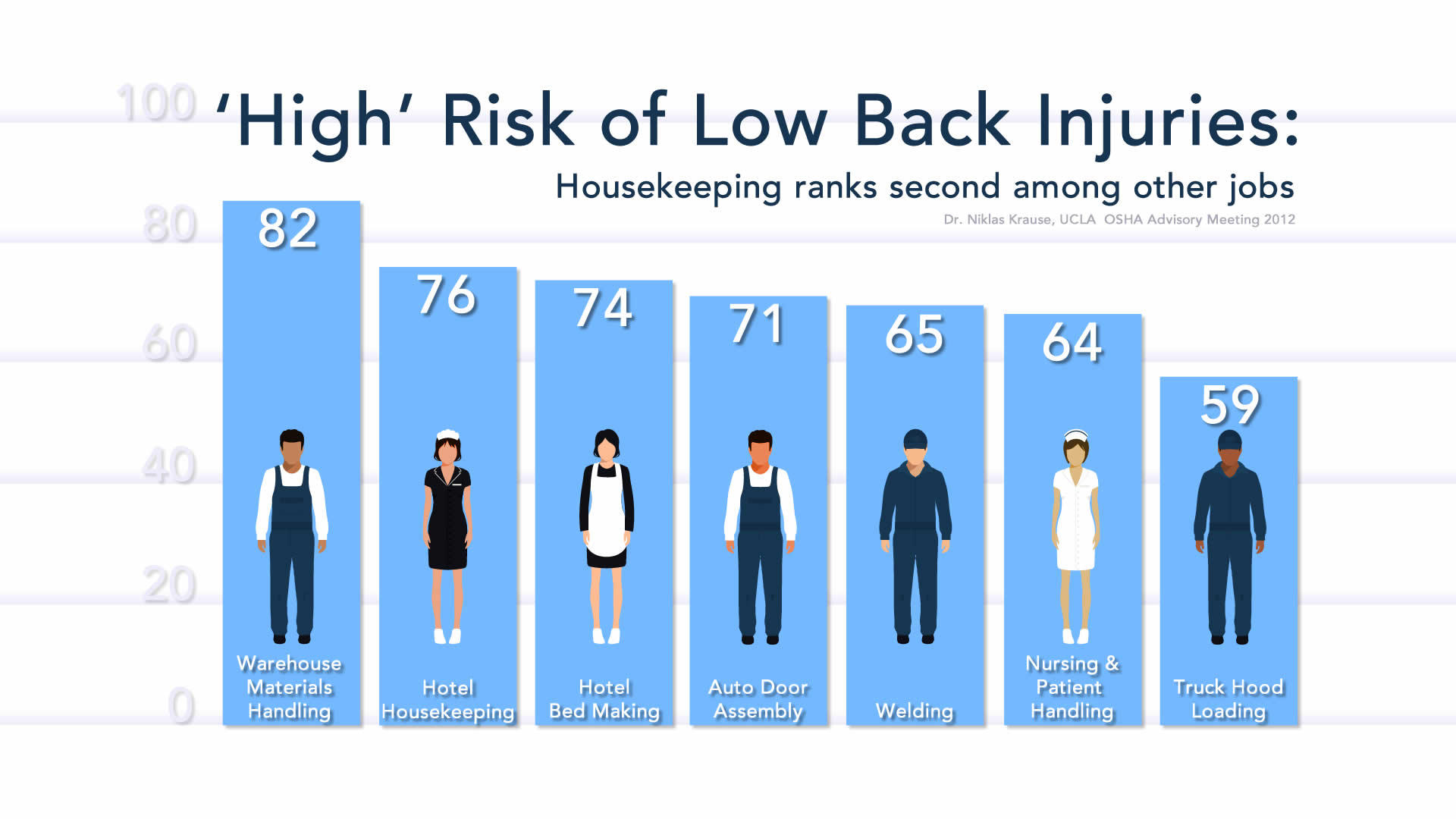
Maids and housekeepers have one of the highest injury rates in the hotel industry and in the entire private sector, according to a 2012 report by UCLA. Green immediately thought the workers could use some relief.

“Robotics in general focuses on dull, dirty or dangerous tasks. Housekeeping encompasses all of those,” says Green.

Over the last 10 months, Green and his team of seven have mapped out an extensive plan for the look, feel and launch of Maidbot. He says the first edition of the machine will focus on cleaning hotel floors, from the bedrooms to ballrooms and meeting spaces. Green chose not to disclose how much money has been put into the invention so far. He was, however, happy to finally have a prototype to show off.

“We have a [rotor that propels things] and an actual intake that we designed and created. And then we have the base plate that will have all of the wheels together. We have these really cool Omni wheels, so they’re multi-directional,” says Green.

 CREDIT UCLA

Injuries and Illnesses Underreported

Housekeepers are exposed to known risk factors for musculoskeletal pain and injury, such as awkward postures, forceful movements, heavy pushing and pulling, heavy lifting, and frequent bending. Coming in at around 40 per cent, back injuries are the most commonly reported, followed by pains in the hand and wrist, and shoulder.

“As many as 69 per cent of injuries and illnesses are not reported. Ergonomic injuries are more subject to underreporting because they’re not as obvious,” says Grant Esler, a lecturer of occupational safety and health at Rochester Institute of Technology.

But musculoskeletal injuries are difficult to identify as work related, since they can happen while doing everyday tasks at home.

“Workers are reluctant to apply for workers comp. The musculoskeletal disorder column has been taken off the OSHA log, so it’s not called out specifically any longer like it was for a few years,” adds Esler.


Forward Thinking

Aside from injury prevention, the Maidbot team believes the hospitality industry is long overdue for some internal adjustments.

“It’s been the same for over 100 years. The biggest innovation in housekeeping has been an electric vacuum which came out in 1905,” says Green.

The team is working towards a version of the product that they can begin to test, which is expected to be ready by late spring 2016, and then begin a pilot program with hotels. Maidbot plans to send its machine to different hotel chains and ask for feedback. The housekeeping robot is anticipated to hit store shelves in January 2017.

“We’re not just trying to sell robots; we’re trying to sell time. If you just imagine the time that we could save by creating a product that does it for you, completely autonomously, to me that’s amazing,” says Green.

CREDIT SASHA-ANN SIMONS/WXXI NEWS

RedAwning launches VR rez platform for travel agents

0

RedAwning.com announced that it has introduced a new reservations platform for travel agents and tour operators to book vacation rentals. TravelProRentals.com by RedAwning is a onestop reservation portal for travel professionals to browse, search, and view vacation homes, condos and apartments around the world; get realtime quotes and availability; and to book instantly for their clients by credit card. Agents can store credit cards securely, track bookings and payments in one place, and choose to earn net or commissionable rates for bookings.

In addition, the new portal provides features for personalized, white-labeled client service. Agents will be able to market selected homes professionally to their clients by creating agency-branded emails, printouts and brochures, and they will be able to save, store and keep properties with notes in client-specific or property folders for efficient service and proactive business development.

The travel industry has seen a surge in the popularity of vacation rentals as an accommodation choice in recent years and it is now estimated to be at least an $85 billion dollar industry worldwide. But the lack of a B2B ecosystem for vacation rentals has limited vacation rental bookings to a fraction of their potential.

TravelProRentals.com by RedAwning seeks to become the leading B2B supplier of vacation rental inventory to travel professionals worldwide says RedAwning Chief Business Development Officer and TravelProRentals.com cofounder, Rick Haggart. “Tour Operators and Travel Agencies have generated billions in hotel bookings due to a mature B2B ecosystem of hotel suppliers and platforms, and now TravelProRentals.com enables travel professionals to market and book vacation rentals in a way that supports their existing business models and booking processes.”

RedAwning CEO Tim Choate agrees. “TravelProRentals.com by RedAwning empowers travel agents to be more nimble and professional than ever before in this booming sector. By giving agents instant access to a huge inventory of vacation rentals they can trust, we enable them to take advantage of the vacation rental trend and substantially grow their businesses.”

The original TravelProRentals.com was acquired by RedAwning along with PerfectPlaces.com in April 2015. Initially serving a s a custom B2B product for tour operators working on net rates, it has since been adapted to include commissionable bookings for travel agents, and it now hosts all RedAwning.com inventory on the platform.

TravelProRentals.com by RedAwning will give agents and tour operators the ability to book vacation homes instantly with a credit card, with standardized terms and cancellation policies. In addition, there are no security deposits, a $3000 damage waiver is included, and businesses and end-user customers alike can receive 24×7 customer support by email, chat or
phone.

“The new reservation platform is going to be a welcome tool for the leisure travel market and a great source of extra income for the travel agent industry,” says New York travel agent Frank Borrelli CTC, past chair of the Travel and Tourism program at John Fisher College in Rochester, New York. Borelli has been in the travel business for over forty years and is already an active
user of TravelProRentals by RedAwning which he calls “excellent” and “a snap to use.” “It’s also good to know that you have 24×7 support if needed.”

TravelProRentals.com by RedAwning is free to use, but requires registration and is only available to approved travel professionals. It can be accessed at TravelProRentals.com. Travel professionals can choose net rates or earn a 10% commission from the rental fee, payable by RedAwning after each guest’s stay.

Fetch My Guest helps rental managers automate their marketing

0

Fetch My Guest is a California startup with a marketing automation platform for vacation rental managers that’s on a software-as-a-service model.

By Sean O’Neill, Tnooz

If you run a vacation rental management company, and you want to reduce your dependence on lead-generation sources like Airbnb, Flipkey, and Homeaway, and you want to view all of your digital marketing efforts in one place, than the premise behind Fetch My Guest must seem appealing.

It’s created by people who have been in the vacation rental business and who have an eye toward analyzing lead-generation patterns, discovering more efficient marketing processes, and boosting repeat direct bookings.

It works in conjunction with a vacation rental manager’s property management system (PMS) or alongside one if the manager’s PMS isn’t compatible with it.


Tell us how you founded the company, why and what made you decide to jump in and create the business.

Fetch My Guest started as an internal business problem that needed be solved. Our vacation rental management company was too dependent on listing sites that were not working in our best interest.

We needed to find a way to lessen our dependence on these sites by communicating directly with guest through our brand and building stronger relationships.

Within a few months our business saw dramatic improvement in booking performance and office productivity. We decided to build a community around a service-oriented platform that rewards the efforts of professional host.


Size of the team, names of founders, management roles and key personnel?

Our team is comprised of respected industry contributors in hotel management, vacation rental management and technology. The team is lead by co founders, Vince Perez and Dede Harrington, with advisors from Yahoo! and the Blackstone Group.


Funding arrangements?

Fetch My Guest has raised an initial round of funding lead by a former Blackstone Group executive in the hospitality division.


Estimation of market size?

Fetch My Guest is targeting the professional market segment that represents 43% of the $100B vacation rental market spend. Professional market segment is defined as two or more properties.


Competition?

Direct competitors in the marketplace include Homeaway (Expedia), Flipkey (TripAdvisor), and Airbnb.


Revenue model and strategy for profitability?

Fetch My Guest current revenue model is a subscription model that gives access to the platform and branded meta site. As Fetch My Guest expands the business offerings we anticipate multiple revenue streams as we deliver on customer success.


What problem does the business solve?

The current listing site model is fundamentally broken. The incumbents continue to alienate the vacation rental professionals through aggressive attempts to monopolize their inventory. The end results are ever increased costs and loss of brand recognition.

Fetch My Guest Provides an “intelligent” integrated marketing platform that gives the professional manager complete control of the guest experience, resulting in more direct bookings — while dramatically reducing marketing costs.


How did the initial idea evolve and were there changes/any pivots along the way in the early stages?

The idea evolved organically. As we saw our performance improvements, we understood that we needed to make the platform easy to consume. The important decision we made early on was to partner with API-focused booking systems.


Why should people or companies use the business?

Fetch My Guest provides professional vacation rental hosts a platform to showcase their respective brands to vacation rental travelers resulting in stronger relationships and more direct bookings. Professional hosts have been looking for an alternative to the incumbents for years. Fetch My Guest is that alternative!


What is the strategy for raising awareness and the customer/user acquisition (apart from PR)?

Fetch My Guest promotes our clients destination through social media channels, unique content, local perspectives and stories on the professionals that will be servicing them during their stay.

We are also engaged with key industry thought leaders who are introducing our platform to their respective communities as viable alternative to the incumbents.


Where do you see the company in three years time and what specific challenges do you anticipate having to overcome?

We believe that 2016 is a pivotal year for our industry. In three years from now, Fetch My Guest will be the premier platform for the “service-oriented” professional. Some of the challenges we anticipate are traveler FUD from the incumbents, the continued push to commoditize, continued consolidation, and local regulatory issues.


What is wrong with the travel, tourism and hospitality industry that it requires a startup like yours to help it out?

In the case of vacation rentals, there was never an emphasis on lead performance as it relates to repeat bookings. Established professionals are now understanding the consequences of not being able to control the guest experience.

The results are too much inventory in the hands of the OTAs…and subsequently, higher marketing and operating costs. The hotels have a marketing infrastructure in place….we are now providing that same infrastructure to the vacation rental professional.


What other technology company (in or outside of travel) would you consider yourselves most closely aligned to in terms of culture and style… and why?

37Signals. We appreciate the focus on simplicity and value presented by their products. They are very focused on the customer experience.


Which company would be the best fit to buy your startup?

Several companies would find interests in what Fetch provides. Ranging from large travel concerns (distributors, travel agencies, booking sys) to CRM focused companies looking to add a highly focused vertical to their model.


Describe your startup in three words?
Disruptive. Focused. Motivated.

Fetch My Guest has create a Vine to illustrate its pitch.


Tnooz view:

We’re not vacation rental managers who can take the product out for a test spin with real data, so it’s difficult for us to judge how well Fetch My Guest has executed on its vision.

But we wanted to highlight it as an example of a likely growing industry.

Just as a variety of companies have sprung up to help hotels try to manage their marketing spends, reduce a dependence on third-party booking and lead-generation sites, and increase the number of direct and repeat bookings, it seems likely that the vacation rental sector will also encourage the rise of companies like Fetch My Guest.

There’s a problem here waiting to be solved, and eager customers willing to pay for a quality solution that’s well priced. We’re eager to see if Fetch My Guest is the one that breaks through.

About the Writer :: Sean O’Neill

Sean O’Neill is Editor-in-Chief of Tnooz. Before joining Tnooz, Sean was the future of travel columnist at BBC Travel, senior editor of BudgetTravel.com, and an associate editor at Kiplinger’s. He now lives in New Jersey, after having worked in London for four years. He’s on Twitter and is excited for #Rio2016.

Working With Your CVB/DMO: A Partnership With Benefits

0

By Gary Ellis, Compass Media — The goal of a Destination Marketing Organization (DMO) or a Convention and Visitors Bureau (CVB) is to increase vacation and business visitors by promoting a town, city, region, or country. According to Destination Marking Association International (DMAI), DMOs are responsible for supporting the long-term development of communities through travel and tourism strategies. Even over the last 20 years, while helping many in the professional vacation rental industry with their marketing and promotional efforts, I’ve observed the benefits of partnering with local DMOs/CVBs. Following are some benefits that Vacation Rental Managers (VRMs) can derive from building relationships with DMOs.


5 ways to get the most benefit from your DMO/CVB


1. Expand ways for potential guests to find you.

DMOs work with local and national organizations to drive visitor awareness in what a specific area has to offer. Alastair Morrison explained, in his 2013 book, Marketing and Managing Tourism Destinations, “A DMO has many potential partners that it can call upon for collaboration and cooperation.” Often you can find complimentary or low fee services to list your accommodations in various online and print publications that reach a variety of audiences through DMOs. You can also meet and build relationships with fellow industry partners that can benefit from discounts or referrals between your vacation rentals and local attractions.


2. Make strategic decisions for your marketing and outreach plans.

Understanding the hopes, trends, and attitudes of visitors coming to your area can help you make decisions that drive your business. DMOs often provide statistical data on their websites which can be a valuable resource to VRMs including: destination growth indicators, visitor profiles, annual reports, economic updates, presentations, tourism summit results, lodging studies, and other research. Such data can help you focus and describe your offerings that would most likely appeal to visitors when developing marketing materials. For example, on the Gulf Shores and Orange Beach Tourism website you can find the “Summer 2014 Visitor Profile Report” which vacation rental professionals can use to learn the average household income of visitors, top origin states, percent of pet owners, average number of people in travel parties, and other useful visitor demographic information. Contact your local DMO to find out what is available in your area.


3. Stay informed of local economic development plans.

Take on a holistic view in what is occurring in your area and consider how this might change your business strategies. For example, are sports complexes in the plans for your local area, if so, how will this affect the demographics of your target audience? In a recent interview, Joanie Flynn, Vice President of Marketing for Gulf Shores & Orange Beach Tourism explained that the number one industry in the southern Alabama area is tourism, so those in the vacation rental industry can work together with their local DMO, chamber of commerce, and economic development agencies to ensure the local economy is healthy, expanding, and growing.


4. Dive into using social media.

To stay on top in the vacation rental business you must learn to transact digitally with your customers. Flynn revealed that over 60% of user traffic on the GulfShores.com website is currently from smart phones and mobile devices; therefore, her organization started a social media university to help educate industry partners in the area on best practices for using social media and responsive web design. “People can come and have a great experience with what we offer on our website, and as they click on our industry partners that same experience needs to carry over,” explained Flynn. The trend in the field is moving toward having a responsive website for cell phone users and effective social media campaigns. It is important to be up to speed with how technology is used by visitors and how audiences are changing. Such progressive initiatives offered by this CVB can benefit local rental companies by keeping them in the know on the positive impact social and digital media can have on their businesses.


5. Provide current information and get involved.

Be sure to talk with your local DMO to find out what they need from your company. “Consider what you offer to visitors to enrich their stay and get involved with meetings and events such as showcasing programs and educational opportunities outside of the main seasons,” said Flynn. Attend meetings and question DMO representatives to discover how your niche could be useful to visitors both on and off-season. I have personally observed the benefits that professionally managed vacation rental companies can offer DMOs such as timely responses in communications, increased security and safety, and fraud protection for visitors. As you connect with your local DMO/CVB, be sure to highlight such benefits and others your company offers to make your guests’ vacations more memorable.


Gone are the days of throwing ideas at the wall and hoping something sticks to bring in guests. Now, VRMs can make data driven decisions in marketing and guest service initiatives by using demographics, lifestyle factors, media habits, and visitor trends provided by DMOs. Times are changing in the vacation rental industry. To stay current, partner with your local DMO for insight into making your vacation rental business strong for the future.

Gary picCompass Media has been practicing leisure travel marketing for almost 30 years by helping clients tell their stories with innovative marketing and promotional materials including website design and development, search engine optimization, digital and print advertising, documentaries, and vacation guides.

By J. Gary Ellis, CEO of Compass Media, Inc.


VRM Intel Magazine Winter Issue Online Version

1

The new issue of VRM Intel is here! We’ve worked hard to provide vacation rental professionals like you with the news, information, education and analysis to help grow your business — and we want your feedback. Take a look at the issue below and let us know what you think.

Thank you for reading,
Amy Hinote, Editor-in-Chief

FVRMA Members: Free Subscription to VRM Intel Magazine

0

Florida Vacation Rental Managers AssociationAttn FVRMA Members:

A a FVRMA member, we want to give you first access to the Winter issue of VRM Intel Magazine and – if you haven’t already – invite you to subscribe to receive future issues mailed directly to you. And it is free! Our goal is to provide vacation rental professionals like you with the news, information, education and analysis to help grow your business. Also, we want your feedback. Take a look at the issue below, and let us know what you think.

[vfb id=1]

Vortex acquires Vacation House Destinations

0

Vacation House Destinations, which provides hand-picked vacation rental homes to guests around the Northwest United States, has been acquired by the Vortex Organization to add more homes for its members.

The company’s unique Club membership system requires property owner members to maintain homes to high standards and pass in-person inspections by VHD leaders. Guest Members join in order to access such homes and treat the homes as if they owned them.

The business was started in 2004 by Tony Bacso, who will remain an advisor to the company during transition.

“Running VHD has been a wonderful journey with benefits and owners alike because they get to know and trust one another. Joining it to Vortex will provide more properties and services for our members.” said Bacso.

Unlike Global so-called Luxury Destinations Clubs which feature very expensive homes in exotic locations, Vacation House Destinations primarily features homes in the regional areas of Washington, Oregon, Idaho and British Columbia.

Bacso added, “Our guest members begin to feel as if each home in the club is their own and want to be able to easily drive to their ‘houses’ which is why we prefer operating in the Northwest.”

“Our organization is the only one in this area that specializes in handling properties in many markets where we already have onsite personnel to provide personal service to Owner Member properties,” noted Penny Taylor of Vortex.

“Plus Vortex sales office is open longer hours for our members, and provide 24/7 phone, email and onsite services, which our members will .” notes Bacso.

The club will add properties from those operated by Vortex Property Managers as well as new homes that meet club standards. Interested homeowners should email Owners@VacationHouseDestinations.com.

Guests are invited to join the club for access to a wide ranging list of properties, for early booking opportunities and best rates.

– – – – – – – – – – – – – – – – – – – – –

Vacation House Destinations is a club offering vacation rental homes hand-picked by club leaders. Members chose homes of their liking and book stays through the club. Visit VacationHouseDestinations.com to join. Email Info@VacationHouseDestinations.com. Phone 425-440-0229.

The Vortex Organization provides back-office reservations, advertising, marketing and accounting services for properties all around the Pacific Northwest. See VortexManagers.com or contact Info@VortexManagers.com, phone 866-925-5188

Contact:

Josh Dettwiller
Vortex Managers
PO Box 22987
Seattle WA 98122 USA
Phone : 866-925-5188 Fax : 888-628-0-839

Info@VacationHouseDestinations.com
VacationHouseDestinations.com

Get the New VRM Intel Magazine

5

Sign up to get the new VRM Intel Magazine! With articles on Distribution, Marketing, Customer Service, Reservations, Regulations, Housekeeping, HR, Business Management and Industry Trends, our goal is to provide vacation rental professionals with timely and relevant news and information to grow their business.

VRM Intel Issue 2 CoverThe magazine is free for U.S. subscribers, and the digital version will be sent to those outside of the U.S. Just fill out the form below to get your free subscription to this quarterly publication.

We want your feedback, so email your thoughts and suggestions to amy.hinote@vrmintel.com.

The Winter issue feature articles are:

  • A Deeper Look into Expedia’s Purchase of HomeAway
  • Vacation Rental Managers Win with Traveler Fees
  • Learning from the rocky relationship between Hotels and OTAs
  • Building a National Brand in Vacation Rentals
  • Vacation Rental CRM 101
  • Evaluating your property management software

Plus the following articles:

  • Brand Marketing
  • Bring in the New Year with Great Hires
  • Building a National Brand for Vacation Rentals
  • Building a New Company in the Vacation Rental Market
  • Converting Web Traffic Into Results For Your Property Management Company
  • How to Attract Families with Small Children
  • Imagine This… Storytelling is Key to Reservation Sales Success
  • Latest Innovations in HomeAway’s Software Support
  • Microbes: Unseen Dangers in Vacation Rental Housekeeping
  • NAVIS Releases 2016 Vacation Rental Trends
  • New Developments in Housekeeping Technology for Vacation Rental Professionals
  • Online Marketing Components You Should Re-evaluate Each Year
  • Policymakers Urged Not to “Commercialize” Short-term Rentals
  • RealTimeRental’s Tenant Portal Offers CRM Functionality, Integrated Trust Accounting, and Increased Distribution
  • Technology: Reshaping Vacation Rentals
  • The 7 Deadly Sins of Distribution for Vacation Rental Managers and How to Avoid Them
  • The Best Property Management System For Your Company: Do You Already Have It?
  • The Smart Home Tug-of-War Between the Property Manager and the Homeowner
  • Utilizing Search Engine Marketing for Homeowner Acquisition
  • Vacation Rental Management Company Acquisitions
  • VRM Calendar of Events


[vfb id=1]

Trip Insurance: To Offer or Not to Offer?

0
beach front vacation rental news

“Offering trip insurance protects your guests, safeguards your homeowners, and increases your bottom line.”

Vacation rental property managers who offer trip cancellation insurance to their guests understand its value in more ways than one. Most have become keenly aware that insurance sales can also be a meaningful source of income. Some companies offset operating expenses, pay employee bonuses, and fund other costs with income generated by the sale of trip insurance.

Everyone in the vacation rental industry takes revenue increases seriously. It pays to increase the percentage of reservations that include the purchase of trip insurance. Pay close attention to the often overlooked detail of selling insurance. If your business does not yet provide this significant product, consider adding it to your total package. Number one, it affords protection for your guests when cancellation cannot be avoided due to unforeseen events. In addition, it generates added income. We can all use some of that!

Consider the following scenarios: You have guests scheduled to stay in one of your properties; their reservation is paid in full. Two days before check-in, they call to cancel. A family member has been hospitalized, or there’s been a death. The bread-winner just lost his/her job. The children’s school year has been extended. Inclement weather caused a flight cancellation and your guests are unable to re-book at this late date. All are life events that vacation rental managers hear about on a regular basis. When events like these occur during a high-rental time of year, the manager may have no trouble re-booking the property. But consider the result when a last-minute cancellation comes at a slow-rental time. The chance of re-booking drastically decreases and the likelihood of your satisfying property owners, guests, and your own company goes downhill quickly. During peak season or off-season, you do not need this problem.

Trip cancellation insurance not only protects you and your valued guests, it safeguards your homeowners by providing further assurance their investment is secure. Those homeowners look to you to provide income and to keep their homes rented. When a last-minute cancellation occurs they still look to you to bring in the money. An added bonus: When a guest purchases trip insurance for a small percentage of the reservation fee, the insurance company works directly with the renter, further minimizing time you and your staff work to satisfy both guests and homeowners.

Insurance not only protects everyone’s monetary investments when a guest cannot avoid a last-minute cancellation, it becomes paramount when unforeseen events interrupt a long-awaited vacation after it is underway.

Your guests have checked in; everyone in the family is happy and enjoying a great week. Suddenly, Dad cuts his foot on a piece of glass while playing with the kids on the beach, or he twists his ankle showing off on the slopes after a fifteen-year hiatus from skiing. The family has health insurance through Dad’s employer, but it carries a $3000 deductible with a non-payment penalty of being dropped from the health plan network. Bad news for everyone!

Dad now has an injured foot and spends the rest of an expensive vacation day at the local emergency care center. Mom and the kids forfeit a perfect beach or snow day to stay with him. Both parents are worried about how they will pay the unexpected medical expenses. After all, they just spent their savings on this vacation.

In most cases, if the guests are covered by trip cancellation insurance, they are covered for this type of emergency. An added plus: Paperwork is handled by the insurance provider, not the property manager.

Trip insurance can also cover more serious medical conditions, as well as dangers associated with natural disasters like hurricanes and earthquakes. It can help in the case of delayed flights and lost or stolen items. It provides peace of mind for everyone involved. Vacation rental managers who explain the key benefits of coverage at the time a guest is considering a reservation can help turn a less-than-great situation into an acceptable one for all involved.

Today the vacation rental market is experiencing a boost in several ways. The interest level of travelers seeking vacation rentals is on the rise. There is unprecedented growth in the industry itself, and companies are committed to serving both the guest and the homeowner. It’s thrilling to watch this growth occur and to be a part of the excitement.

At the same time, success breeds imitation. More and more large companies want a piece of the pie. Many property managers are beginning to feel a strain on their profits. Since most managers keep only a small portion of the rental reservation amount, it becomes more important to look for additional ways to increase profit. Trip insurance can provide a welcome answer. It becomes part of the revenue your company keeps, revenue that is not shared with a distribution site, another property manager, or the homeowner.

As our industry becomes increasingly global and attracts more and more international guests, it is a fact that everyone in the industry has an opportunity to profit by providing vacation rental homes. In turn, U.S.-based companies that manage global inventory are seeing more and more U.S. citizens traveling abroad.

If travel insurance, along with close attention being paid to the value insurance brings your guests, is not already a vital part of your vacation rental business, then it should become an important element in your revenue growth plans for the future.

By Carie Leyden

Heart Versus Technology in the Vacation Rental Business

0

I’ve been thinking about this topic for a couple of weeks and wanted to share it with you. As a service provider in the Vacation Rental Management industry, I have the opportunity to have lots of conversations with employees and owners of vacation rental management companies and other providers in the industry.

One thing that always strikes me about this industry is how friendly (well for the most part) everyone is. This isn’t surprising given how most vacation rental businesses are started. Someone lives or visits a beautiful vacation location. They decide that they want to buy a second home or they meet a friend that has a second home and suddenly find themselves doing property management and taking reservations. The next thing they know, they are employing 20 people annually and opening a laundry division, or they are passing the baton to their children to run the business or even their grandchildren.

For these folks, and there are so many of you out there, HEART is the center of your business. It is how you understand the difference between providing more than just a home. You are motivated every day to help people come and enjoy the beautiful place where you live and work with hospitality. This is so different from so many other industries. When you do your job well, you are offering one of the most important things that people have – their memories. The time that is shared with friends and family cannot be replaced.

That’s why I find it so interesting that so many service providers in this industry don’t understand this perspective. Of course they see the potential money to be made in the industry and they run to throw up a shop in a tech hot spot, like Austin. They bring in a few software familiar folks who have been around in Silicon Valley (see a hilarious description of this type in the article “7 Signs Your CEO Needs to Grow Up” from entrepreneur.com from someone who has worked in the valley before). Next, they start to taut the latest and greatest product. They may end up delivering a product or they may just keep delivering the promise of the product. Either way, this isn’t the worst of this scenario.

What really ends up missing here is the lack of understanding about the HEART of the vacation rental industry. They don’t delve down into the very real needs of what you have to deal with day in and day out. For example, I recently hosted a breakfast meeting for folks to understand how to get to Airbnb through one of our partners My Booking Pal. A very nice representative from AirBnB delivered an engaging presentation about AirBnB, their intention for how they will work with professional property managers, and the benefits of doing so. The only problem is that the way they structure their payments put them in direct conflict with the real estate law of North Carolina. As one attendee pointed out, “this all sounds great until you are headed for jail because of trust fraud.”

To AirBnB’s credit, they understand that they are going to have a learning curve about the vacation rental industry and have devoted a team to figuring out these issues. As our representative put it, “we’ve handled governmental regulations around the world, we have the resources to take care of these issues.” Fair enough. Also, in the case of AirBnB, the principals of what the company was founded upon – local hospitality – does more frequently align with those of the vacation rental management companies.

My point here is to be wary of “bleeding edge” solutions and to some extent industry providers who haven’t been in the industry for some reasonable period of time. Because you are a unique tribe, you deserve the in-depth understanding of the heart in this industry. I am not suggesting that innovation shouldn’t be a top priority, just that there is great value in finding good relationships and partnerships with the vendors that should be helping you.

Claiborne Yarbrough
Director of Customer Engagement
Barefoot Technologies
claiborne@barefoot.com
Claiborne has been in the software industry for over 25 years primarily focused on marketing. Her favorite thing about the vacation rental industry is getting to make so many friends.

Vacation Rental Road Trip: 12 Months: 12 Fabulous Homes-Away-from-Home

0
DCIM105GOPRO

Halloween 2014, an early Chicago snow left powdery flakes on my Hyundai as I packed to leave on a year-long Vacation Rental Road Trip. Career goals in flux and a bucket list of places to see, I set out to explore vacation rentals around the country and to learn as much as possible about our fast-growing industry. Harboring an admitted aversion to crowds and conscious of budget constraints, I hopped off-seasons and was able to visit twelve great locations during the year. From one destination to the next, I encountered a level of professionalism I did not expect. A few of the many discoveries: superior housekeeping, keyless entry, and 24/7 customer service. What was the most important payoff of the entire road trip? A network of amazing, lifelong friends I cannot wait to see again.

1

712 W Johanna St Unit A-print-004-4-Exterior Front 073-4200x2803-300dpi 712 W Johanna St Unit A-print-011-11-Family 134-4200x2802-300dpi

Austin, Texas

Austin, chock-full of top-notch music and culinary creativity, is a vibrant, eclectic mecca for free spirits. While I didn’t think of it as a traditional vacation rental destination, Austin-based TurnKey Vacation Rentals has found a highly lucrative, short-term rental business there. My Austin home was a clean, cozy cottage off South 1st in what I later learned was the highly esteemed “78704 district.” From there I could easily access the downtown area, South 1st, Lamar and South Congress. From 6th Street’s hipster-meets-Bourbon-Street flair to amazing restaurants, live music, and funky shops in the SoCo area…from bats under the Congress Avenue Bridge to the food trucks’ gastronomic artistry, Austin is never boring. And staying in a vacation rental makes it all the easier. If you don’t have a car or don’t want to risk driving, both Uber and Lyft are inexpensive and fast in Austin, and there is never a lack of things to do. Hands-down, Austin has the friendliest population I’ve found. The most difficult thing to work into your Austin plans – time to sleep!

2

_DSC1334 shutterstock_246493693

Bethany Beach, Delaware

Located just a few miles north of Ocean City, Maryland, Bethany Beach provides a safe, traditional, family-friendly, beach destination within a four-hour drive of some of the largest cities in the country. I stayed across the street from the beach at Sea Pines Village, in a townhouse managed by Sandcastle Realty. The centrally located destination made it a snap to explore areas near Bethany Beach, Ocean City to the south and Lewes, Delaware to the north – then drive home to enjoy the pool, patio, grilling area, and super-clean accommodations. The rental was a short walk from the Bethany Beach boardwalk and only a block away from Mickey’s Family Crab House where I can vouch for the crab dip, crab cakes, steamed crabs and snow crab. When in Rome…

3

DCIM100MEDIAvrm_intel

Deep Creek, Maryland

Was I the only one who didn’t know how amazingly beautiful Deep Creek is? I stayed in a very private townhouse aptly named Amazing Views, managed by Taylor-Made Deep Creek Vacations. My intent was to accomplish much work in the serene environment. But the falling November temperatures added to the temptation of a private hot tub overlooking the lake, plus two fireplace levels forced work to take a back seat to relaxation. Taylor-Made owners Joe and Jodi Refosco were wonderful hosts and made time to show me the area, talk over drinks/dinners about the way they built their business, and what the area means to them. I followed their recommendation to hike Swallow Falls. It was, without a doubt, one of the highlights of my trip to the Deep Creek area. If my schedule hadn’t forced me to move on, I might still be in Deep Creek today!

4

20150530_170710 Country Star Fayetterville, TX

Fayetteville, Texas

Fayetteville was an unplanned offshoot of my trip to Austin and turned out to be one of the most special getaways of the entire journey. Located in central Texas between Austin and Houston, Fayetteville was settled in 1844 and is known for the biannual antique shows held in nearby Round Top. Visiting Fayetteville is a trip back in time. It’s a unique Texas town complete with an ice cream parlor, a diner, a corner market, a tavern, and a courthouse centered on the town square. I stayed in a private home owned by Sand ‘N Sea’s Claire Reiswerg and managed by Country Butler. The historic farmhouse was charming! A few of the perks: original hardwood floors, high ceilings, and deep, inviting porches. For a girl raised in a small town in Mississippi, Fayetteville was a great place to rediscover the charm of roots. When the road trip began I had not considered including a small town snapshot of Americana, but I am so glad I did. 

5

Gulf Shores, AL - Collonades Gulf Shores Colonnades

Gulf Shores, Alabama

Gulf Shores, with its 32 miles of breathtaking beaches, is home base for me. It’s where I got my start in the vacation rental industry and most of my family lives nearby. Spending the holidays at a condo at The Colonnades Condominiums, managed by Meyer Vacation Rentals, was truly going home. The Colonnades is located right on the Gulf of Mexico at the east end of Gulf Shores. It is surrounded by two miles of uninhabited, sugar white beaches – total relaxation to savor and enjoy! Ground-floor facilities include in- and outdoor pools, solarium, gym, private theater, library, grilling area, and plenty of private beachfront. Another plus: The Colonnades is within walking distance of several good restaurants. While there in December, I was treated to a meteor shower. I grabbed a bottle of wine, a quilt, and headed to the beach where I sat undisturbed for hours, entertained by a natural fireworks show. The sky was alive with shooting stars and their reflection in the gulf waters sparkled like diamonds. Sweet Home Alabama! 

6

20150827_113402

OLYMPUS DIGITAL CAMERA

Harbor Springs, Michigan

If you’re in the market for a waterfront escape from the summer’s heat, North Michigan is the ideal. I invited a couple of Chicago friends to join me on the trip to Harbor Springs for some peaceful R&R on Lake Michigan. Our cooler stocked with meats and veggies for grilling and wine for drinking, we headed for the lake. Our destination: Eagle View, a large, 3-bedroom, private, lakefront home rental, managed by Holiday Vacation Rentals. Located along the road known as the “Tunnel of Trees,” the house was well equipped, quiet, and serene. Holiday Vacation Rentals owner Alan Hammond and his wife Kathie went to dinner with us at Legs Inn, a Polish restaurant a couple of miles further down the Tunnel of Trees. There I heard the personal story of their experiences in the vacation rental business. We also had a lively discussion regarding the next direction the industry is taking. During the next few days we explored nearby Harbor Springs, relaxed on the shores of Lake Michigan, grilled our meals under the stars, and read by the fire. My hope is to one day add an annual vacation in North Michigan to my August calendar!

7

20150213_170157 20150216_173625

Nenagh, Co. Tipperary, Ireland

As a presenter at the VRMA 2015 European Seminar in Dublin, I had the grand experience of staying in several Irish vacation rentals. The first was Ashley Park House in County Tipperary, just a wee bit north of Ardcroney. I discovered Ashley Park through hiddenireland.com and treasure making the acquaintance of 93-year old owner, Sean Mounsey, during my stay. A narrow lane winds from the gatekeeper’s cottage, beneath an archway of trees. Suddenly, the limbs part and an enchanting country home emerges, complete with white-washed stone walls, mullioned bay windows, a green tile roof, two sections of which are turrets, and verandahs reminiscent of Savannah’s. In addition to sightseeing green Irish hillsides, thatched-roof villages, castles and abbeys, hill-loads of sheep, and sampling crisp fish ‘n chips in a variety of pubs, daily activities also included morning walks on the 90 acre estate, afternoons spent rowing peaceful Lough Orna, and tea in the parlor by a welcome fire. Evenings brought luscious meals, a local play, wine, and international conversation around the fireplace. My ancestors were from Ireland – is that why I feel so at home there?

8

20150219_111311 20150219_114512

Dromoland Castle, Newmarket-on-Fergus, Co. Clare, Ireland

One of the most famous baronial castles in Ireland, Dromoland doesn’t actually fall into the category of a vacation rental, but my experience there was just too good to leave out. Arriving at the castle, I felt like a 21st century Cinderella. Ancient blue limestone with chiseled workmanship, heavy wooden doors, ornamental grounds, gardens and woods extending over 1500 acres of land, and panoramic views of two rivers – the Shannon and the Fergus, are just a few of the delights. A castle stay is not cheap by any means, but there are off season deals to be found on the website. My room was huge with a 15’ ceiling and crystal chandelier, a lovely sitting area with fireplace, and a huge bay window overlooking the castle entrance. The dressing room/bath was spacious; marble and decorative tile appointments functioned as well as they looked. All drapes and furnishings in the castle were upholstered in designer fabrics. Morning coffee in the gallery, afternoon tea in the drawing room, wine and hors d’oeuvres in a cozy, fire lit pub, and five-course meals in the dining room. Even in February the grounds were immaculate. I enjoyed a horse-drawn buggy ride, strolls by the lake and in the ancient walled gardens, and watched as the crows made their daily sunset flight, returning to the rookery beside the lake. What was the toughest aspect of staying at Dromoland Castle? Stepping back into reality when I had to leave. 

9

FullSizeRender (1)

DCIM105GOPRO

North Myrtle Beach, South Carolina

Following the VRHP National Conference in Charleston, I drove to North Myrtle Beach and stayed at Ocean Bay Club, managed by Elliott Vacation Rentals. The beachfront condo had all the bells and whistles: indoor and outdoor pools, fitness room, grilling area, private balcony, jetted tub, and walking proximity to the downtown area. From sunrises over the Atlantic (worthy of a top-notch artist) to high-energy shag competitions downtown, North Myrtle Beach proved to be a great beach getaway from morning till night. Owner Rick Elliott and GM Brandon Cox met us for a fabulous dinner at Joe’s Bar and Grill where we talked about Rick’s father, Senator Dick Elliott, who started the company and marveled at the way Elliott Vacation Rentals has grown to become one of the top ten largest vacation rental management companies in the USA. This was another place I could have stayed longer.

10

20150110_114547 20150127_154217

Orange Beach, Alabama

By January, I was ready for an off-season blend of wide-open Gulf front beaches and proximity to restaurants and nightlife. I found both at Regency Isle Condominiums, managed by Meyer Vacation Rentals. The large, 3-bedroom condo boasted a fabulous Gulf front and a corner balcony with amazing sunset views. The sugar sand beaches in Orange Beach are expansive and Regency Isle is located next to a state park with a mile of unspoiled coastline to the west. I stayed for a month and enjoyed every moment. Meyer offers renter-pleasing, weekly housekeeping services in which they clean, change sheets, and replace towels. Hotel services with all the perks of a vacation rental. It didn’t hurt at all that the condo was within a quick walk of the legendary Flora-Bama Lounge!

11

San Destin, FL Bahia Penthouse Sandestin

Sandestin, Florida

The Sandestin trip was all work…well, mostly work. Several colleagues and I had planned a meeting in the Destin area. We opted to rent a 4-bedroom, penthouse condo at Sandestin’s Baytowne Wharf. The condo, located in the Bahia building, proved to be pure luxury with rooftop balconies, resort amenities, plus all the activities and fun Baytowne has to offer. Downtown Baytowne is an enticing combo of upscale shops and restaurants, including the Marlin Grill, the Funky Blues Shack, Hammerhead’s, Lumpy’s Wine Bar, Poppy’s Seafood Factory, and the Village Door Smokehouse. The huge dining table in our penthouse easily transformed into a boardroom table for our meetings and the balconies offered great areas for entertaining after hours.

12

Amy and Rachel Winter Park- small Amenity Zephyr Riverside Front Elevation

Winter Park, Colorado

March in Winter Park is pure magic. I stayed at the Zephyr Mountain Lodge condos in Winter Park Resort, managed by Winter Park Lodging Company. Zephyr offers easy access to one of Colorado’s most popular ski destinations. Being a less than Olympic skier myself, I looked for a way to enjoy the area without breaking a leg. Snowmobiling fit the bill! At Winter Park’s Grand Adventures I was able to ride the Continental Divide on Colorado snowmobiling trails that top out at nearly 12,000 feet. Panoramic views of the entire Winter Park ski area and Fraser Valley were spectacular. I loved it so much I made the trip three times and can’t wait to go back on a future vacation. Winter Park Lodging Company has the friendliest, most cohesive team I encountered in my travels. They all genuinely care about each other and their guests, and it shows in everything they do. From special flower arrangements to team get-togethers, WPLCO operates in a team environment and ensure their owners and guests are part of that team.

Coaching Staff: A Lesson from Vince Lombardi

0

One of the greatest NFL football coaches is Vince Lombardi. At the beginning of each season he would take grown men, some of whom had played football for decades, and hold up a football and say “Gentlemen, this is a football.” He would then explain the basics of the game. After a while they would move to the football field and the explanation of how the game is played and the objective of the game would be explained.*

As leaders and managers we need to do the same thing with returning seasonal staff and fulltime year round staff. We need to cover the basics of what we do and why we do them.

Here are a few housekeeping basics to cover:

Housekeeping Kit: Discuss how and why each chemical or tool is to be used. Take the time to do demonstrations of proper ways and improper ways, so they can see how it is to be used. The basic housekeeping kit should have:

  • rags (microfiber are the best ones to use)
  • bathroom disinfectant cleaner
  • all purpose disinfectant cleaner
  • a room deodorizer
  • a mild wood floor cleaner
  • razor bladders for smooth top cook stoves
  • oven cleaner
  • pumice stone
  • magic eraser
  • gloves
  • trash bags
  • doodle bug
  • a large lint roller

Inspection Kit: Talk about the necessity of the inspection kit and how it can help them be effective at doing their inspections. What is inside the kit is going to vary on what guest amenities are provided and what expectations you have for your inspectors? Some of what should be included would be:

  • toilet paper
  • paper towels
  • guest amenities (if provided)
  • batteries
  • multi tool
  • laundry soap
  • dishwasher soap
  • any guest specific items that your company provides

Specialty Cleaning Products: I call them specialty cleaning products because only certain people have access to them and are trained to use them. There are two types of products I would like to highlight today:

  • an enzyme product that eats proteins, such as urine, blood, vomit, and beer just to name a few
  • a product to address mold and mildew that includes Australian Tea Tree Oil

Piece Rate: All housekeepers should be paid piece rate. This motivates the housekeeper to clean with speed and quality.

Inspections: Every arrival must be inspected for housekeeping quality and guest readiness. This inspection allows the inspector to make sure all is in order in the home. Some items include:

  • pillows are staged right
  • blinds are set appropriately
  • thermostats are double checked and temperature is set correctly for the time of year
  • doors and windows locked
  • kitchen pots/pans, plates, cups, utensils, and all other items placed neatly in the cabinets
  • correct number of hangers in closets and placed in the correct location on rod
  • appropriate number of towels in each bathroom

Standard Property Appearance (SPA): Every company should have a document that illustrates and explains how the property is to be left when the housekeeper and inspector have completed their work. This document is not easy to create. It takes a lot of thought and work, with many people and departments collaborating for the final product. Once complete, everyone knows how the property is to look when the housekeeping staff have completed their work. Follow the wall – this procedure is a foundational housekeeping principle and every housekeeper and inspector should use it every time they clean, inspect, or check a property.

Some of the items this document addresses are:

  • how the towels are hung and where
  • how many rolls of toilet paper are left and where
  • how many paper towels are left and where
  • how the blinds are set for an arrival or departure

One last item for you to consider, every housekeeper is a memory maker. Every time a housekeeper or inspector does work in a property they are a part of memories made in the property. We need to remind our staff of this.

If you have any questions you can visit www.VRHP.org or reach out to me for more information.

* Vince Lombardi, in Donald T. Phillips, Run to Win: Vince Lombardi on Coaching and Leadership (2001), 92.

By Durk Johnson

Third Party Distribution Channels: The Changing Landscape of Third Party Booking Channels

0

Love them or hate them, third party distribution channels have fundamentally changed the way consumers shop for vacation rentals and the way property managers find new guests. When HomeAway purchased VRBO.com in 2006, the idea of paying a third party to market homes to guests seemed like a feasible idea to boost shoulder season bookings and fill hard-to-sell inventory. But paying a third party channel for peak season bookings seemed…well…foolish.

But in 2006 listing a home on VRBO.com was cheap. At $299 per listing, it only took a handful of bookings to produce an acceptable return on investment, and VRBO.com had traffic from guests looking for a deal. As a result, HomeAway continued to sign up properties by the hundreds and then by the thousands, and when possible, HomeAway acquired other third party websites with thousands of properties. As Amazon and others have proven, consumers like to shop where there is the most selection, and with increased supply came more guests which further increased supply, and so on.

In 2007 another third party channel launched which initially focused solely on professionally managed vacation rentals with an added element of reviews. This distribution channel was called FlipKey, and it attracted investment from TripAdvisor in 2008 – in the same year that Brian Chesky and his roommate Joe Gebbia were selling “Obama O’s” and “Cap’n McCains” cereal to raise enough money to get their idea off the ground for a company called Airbnb.

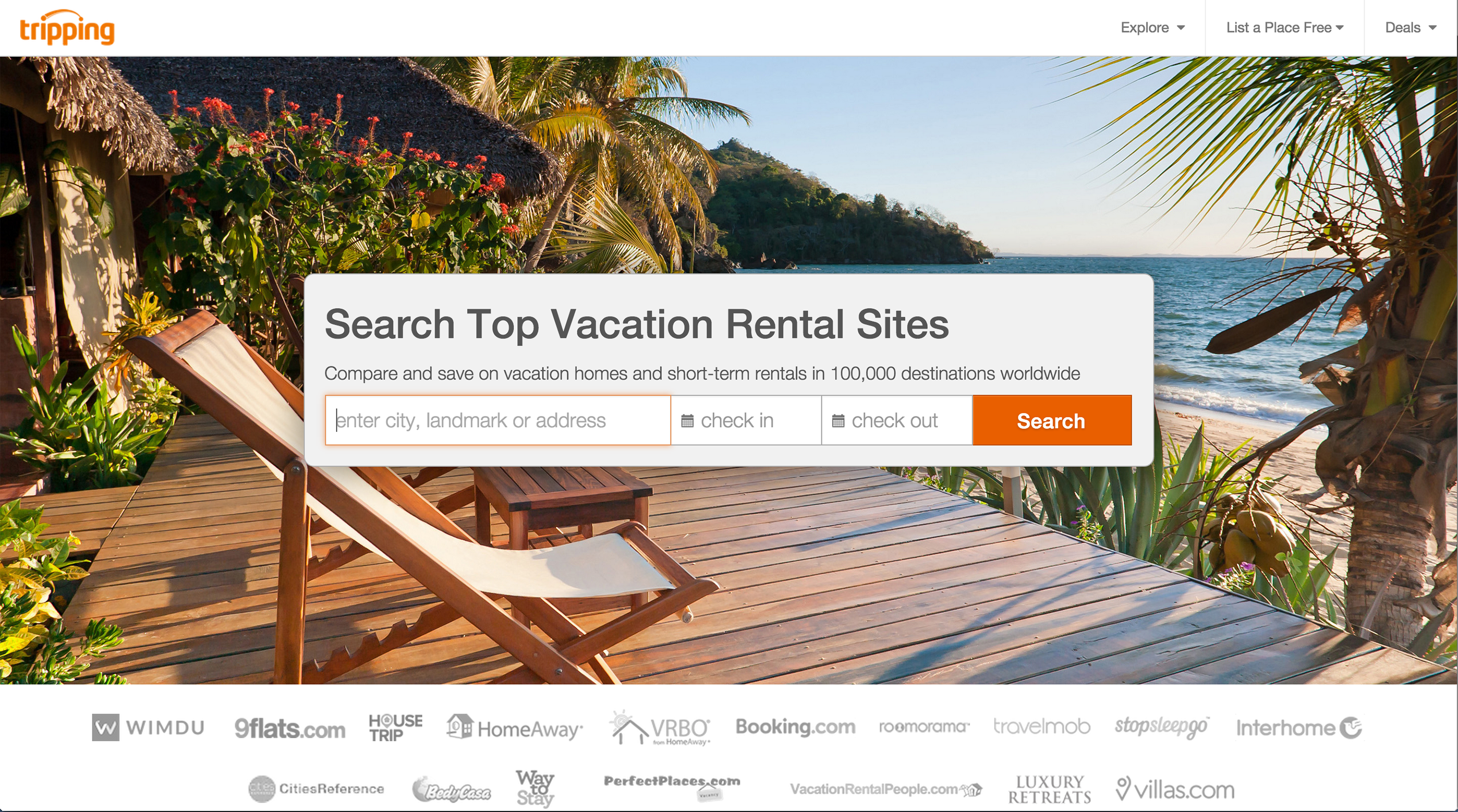
Fast forward through a plethora of fundraising, acquisitions, successes, and failures including: Orbitz’s failed entry into vacation rentals via a partnership with Zonder, HomeAway’s transition into a publicly traded company, Expedia’s spin-off of TripAdvisor, the VRMA’s defunct Switch initiative, TripAdvisor’s purchase of FlipKey, Booking.com’s 2012 introduction of vacation rentals, Expedia’s 2013 slow-moving partnership with HomeAway, the launch of metasearch via Tripping.com, HomeAway’s partnership with Kayak, Airbnb’s steady and uninhibited ability to raise capital, and Expedia’s purchase of HomeAway. Now we find ourselves in present-day 2016 with third party channels that are almost essential in attracting new guests to vacation rental properties.


Listing Growth of Third Party Channels


While there are hundreds of third party channels for vacation rentals, the market is becoming slightly less fragmented with four major channels taking the lead: Airbnb, Booking.com, HomeAway, and TripAdvisor.

When TripAdvisor entered the vacation rental industry with FlipKey in 2008, FlipKey had 50,000 professionally managed listings. By 2011, they had opened up their model to owner managed homes and had grown to over 160,000 listings. This year the company began adding shared accommodations and increased inventory to a reported 720,000 listings by the middle of 2015.

HomeAway purchased VRBO.com in 2006 with 65,000 listings. In 2011, HomeAway took the company public and expanded to 641,000 listings by the end of the year. With a steady flow of market-leading acquisitions and growth in inventory, HomeAway reported 1,185,000 listings in the second quarter of 2015.

Founded in 2008, Airbnb fought their way into the short term rental market game. With small funds and big ideas, the founders joined Y Combinator’s winter incubator session in 2009 for three months of training. In 2010, they raised $7.2 million and in 2011, actor and partner at A-Grade Investments Ashton Kutcher announced a significant investment in Airbnb. in 2015, Airbnb reported 1.5 million listings, is the third most valuable venture capital-backed company in the world, and is currently valued at $25.5 billion.

Booking.com entered the vacation market in late 2012 and by the end of 2013 had accumulated over 100,000 listings. Their model requires “instantly bookable” vacation homes. In 2014, they launched Villas.com, which has grown to over 350,000 listings as of August 2015, proving to the industry that an online marketplace can build a large supply of verified, instantly bookable vacation rentals.


Pricing Models

A variety of pricing models exist among the four major vacation rental marketplaces. Airbnb charges a 3-5% transaction fee to owners/hosts/managers and a 6-12% fee to the traveler. Airbnb collects money from the guest upfront and released payment to the “host” 24 hours after check-in. Booking.com also operates solely on a performance-based pricing model with owner/manager fees of up to 15% of the transaction.

HomeAway and TripAdvisor offer both subscription and performance-based pricing to vacation rental managers, and as of August 2015, TripAdvisor also still offered a Pay-Per-Lead Model, a model HomeAway phased out earlier this year.


Trust


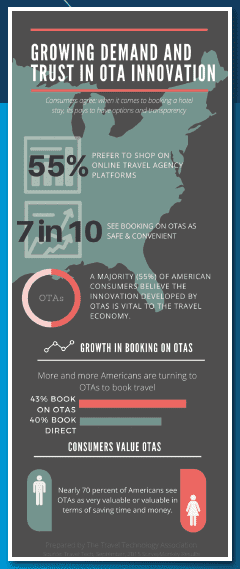
Growing Demand and trust in OTA innovation

“By offering side-by-side comparisons, access to the growing array of travel options and competitive prices, online travel companies have empowered travelers to search, compare, and book from the palm of their hand from anywhere in the world,” said Steve Shur, President of the Travel Technology Association. “It is clear the American public not only relies on the convenience of shopping across multiple travel brands in a single place, but they continue to trust online travel companies with their vacation and business travel itineraries.”

Third party channels have been able to gain trust in the vacation rental marketplace by focusing on and continuing to improve the following components: selection, reviews, professional site design, advanced search capabilities, high quality images, updated availability calendars, accurate property information, mapping, easy online booking, and instant confirmation of transactions.

Building a marketplace with these elements requires an increasing amount of time, money, and expertise. As a result, the industry is seeing a consolidation among the third party channels and an expanding barrier to entry for new players in maturing markets such as the U.S. and Europe. For the first time in ten years, in 2015 no disclosed seed funding was raised by a new U.S. third party channel. Furthermore, every U.S. channel that received funding in 2015 has been around since at least 2010. 


How much are property managers willing to spend on third party channels? 

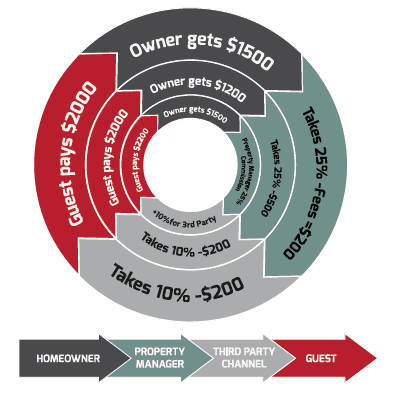
As business models transition and these online marketplaces evolve, investors almost unanimously believe vacation rental owners and managers are willing to spend 10-15% to secure a booking. As a result, the industry can expect to see distribution costs creep upward over the next few years.

Today’s property managers are faced with the decision to: 1) absorb the third party fees, 2) pass the fees on to the owner, or 3) pass the fees on to the guests by raising prices on channels.Infographic: How much are property managers willing to spend on third party channels?

However, the third option of passing the costs of distribution on to the guests may not be sustainable. With the introduction of metasearch, the industry is likely to see rate parity become more encouraged and enforceable by the channels in the future. At least one channel (Booking.com) has already included rate parity requirements in their user agreements.

To determine how much to spend on third party channels, vacation rental managers should calculate their cost of acquisition of a new customer.

“I use my PPC costs as a gauge for what I am willing to spend on a third party channel, said Steve Milo, Founder and Managing Director at Florida based Vacation Rental Pros. “If we are spending 7% or 10% in a market, we consider that our cost of acquisition. In some markets it is higher because of the increased competition.”

Milo added, “It is also important to determine your true cost of using the channels. Some channels are easy to work with while others require an enormous about of time and manual effort.”


Maximizing the Use of Third Party Channels

With the rising costs of listing on third party channels, it is critical that vacation rental managers formulate a solid plan for making the most out using these middle-man marketplaces. A successful strategy for the use of third parties for bookings involves maximizing the use of the channel, implementing a plan for lead capture, and retaining guests obtained through the channel.

  1. Partner with the channels that appeal most to your target audience. It is not necessary to list on every channel in order to be successful.
  2. Find ways to maximize your presence on the channel with upgraded listings, promotions, advertising, and deals.
  3. Promote your individual properties. Invest heavily in high quality photos and outstanding content. Make sure all of your amenities are being attributed to the property, and test listing titles frequently and seasonally.
  4. Monitor the channel’s ranking criteria and your individual rankings. Most channels in the vacation rental industry publicly list and update their ranking factors. Think of optimizing your listings on channels in the same way you optimize your web pages for SEO.
  5. Capture and retain lead information whenever and wherever possible.
  6. Acquire guest emails and find ways to capture the names and emails once a guest books with you. For example, require wifi sign-in access or collect emails to send keycodes.
  7. Send special offers, promotions, and event announcements to leads and guests.
  8. Create an automated communications plan based on the guest/lead’s first contact with you, the booking date, and dates of the stay.

by Amy Hinote

A Conversation with Jim Olin

0

A leader in the vacation rental industry for close to 30 years, Jim is the former CEO of Abbott Resorts, ResortQuest, and Sterling Resorts. He has overseen as many as 20,000 vacation rental units, 250 resort real estate agents, and 200 homeowner associations. Jim has also been involved in more acquisitions within the vacation rental space than anyone else in the history of the industry. A Broker in four states, Jim is one of only eight real estate professionals in the entire United States that is simultaneously an invited member of the Counselors of Real Estate (CRE) and the Council of Real Estate Broker Managers (CRB).

What got you interested in the vacation rental industry?

In 1989, as I was working in the tourism industry, my wife June and I decided I would go to law school. We had three kids already, but she pushed me to go, saying we would live like hippies for three years as I went. I asked Bill Abbott, owner of Abbott Resorts and a friend, to write a letter of recommendation for me for law school, and he immediately said, “I am saving you from being a lawyer.” He hired me as CEO, but made me go undercover and work in every facet of the company first (laundry, housekeeping, reservations, mowing yards, etc). I was truly the first Undercover Boss. It was the greatest experience and I highly recommend it. Bill and his brother Steve taught me everything about this industry. They were way way ahead of their time.

You have been CEO of some of the largest vacation rental companies in the industry, and were CEO when ResortQuest had over 20,000 units. How have you seen the industry change over the years?

Obviously, the self-management fad has further fragmented our industry, when we were already very fragmented. It made us adjust our service offerings and in many occasions squeezed our margins and profits. On a more positive note, I have seen the management companies become much more professional, doing a much better job keeping up with all the technological changes that have occurred. I am bullish that this self-management fad will slowly die down, as governments start to regulate these activities in a manner that is proper to put everyone on a level playing field.

If you owned a vacation rental company right now, what would you be doing to prepare for the next big wave of changes?

First and foremost, never stop learning. Don’t trust that you know everything. You don’t. Also, embrace hiring consultants and advisors when you start to feel you may be lagging the competition. Many national consultants are seeing things that you may not hear about until it is in your market. And there are plenty of great ones out there to tap into. Just ask around.

What is the Biggest Threat to the “Mom and Pop” vacation rental company right now?

The “threat” of consolidation. Everyone is concerned when a “Big Boy” national vacation rental brand comes to town. Local companies start looking over their shoulder so much that they stop focusing on their customers. This is not a “Walmart coming to town” scenario. We are in the relationship business. Maintain
your relationships, do the best job you can, keep up with the changes in the industry, and you will do great.

You have completed more buy/sell transactions than anyone else in the industry. How have the transactions changed over the years?

They have become much more technical in nature than before. While lawyers and CPA’s have always been part of the process, they are more involved now due to the plethora of tax changes and ways in which a deal can be structured. I actually work a lot harder on each deal nowadays than in the days when we were closing two deals a month at ResortQuest. Every deal seems to have to be changed midway through, as we discover some tax law or corporation structure that makes it better to close the deal a little different than planned. One deal I did recently ended up closing as three separate deals, with two being 1031 tax free exchanges and the third as a stock transaction. 

As someone who tends to represent buyers more than sellers in a transaction, what do you look for initially when assessing a potential company to buy?

My first look at a company obviously involves combing through the financials. I like to look at 3-12 month periods. From there, I look at how “together” the company is. Are they organized? Do they have their contracts, leases, and other agreements in one location (hard copy or cloud based)? Have they kept up with the changes in technology and marketing? These all give me an idea of what is in store for me as I proceed with a possible acquisition.

Is it a Sellers market right now?

In terms of the number of potential buyers out there, yes. In terms of the price points and “multiples” used to determine value, not really. There is a lot of activity, but I have not seen a huge increase at all in prices buyers are paying. Still, if a company is thinking of selling, this is a good time to at least test the waters.

Besides the Financial Performance of a company, what other factors make the company worth more to you?

I like to see loyalty of homeowners. For instance, how many of your homeowners have been on your program for more than three years? Even if you are growing, are you adding five and losing three, or are you keeping owners on your program? I also like companies who do not have one person controlling all the action. A company that empowers their employees is more attractive to me. As I stated previously, I like a company that is organized and has their act together.

Two final questions – your use of Gumby as your “mascot”, and the name C2G. How did both come about? 

The Gumby came about after I endured a 3-day HOA Board meeting in Destin one fall. We adjourned only to go home and sleep. We were the management company and we were getting beat up. At the end of three days, I felt like I had been twisted every different way, and all I could think of is the toy Gumby I played with when I was a kid. I keep a Gumby doll on my desk to always remind me of how much we all must adjust in our industry, and how we are always pulled by our two customers who want opposite results – our owners and our guests! Owners want us to charge high rates and allow 2 people in their 5 bedroom house. Guests want us to charge low rates and want to stuff 10 people in a 1 bedroom!

The C2G name was given to me by a client. After I worked on a very complicated transaction for many months, the client complimented me for sticking to it, and he told me that I worked his deal from “Cradle to Grave”, which was a huge complement. I was in the midst of renaming my company, and decided on C2G because of it. These acquisition deals are all different and can be exhausting to get closed, but I feel blessed to be part of this industry and helping entrepreneurs achieve their dreams.

For more information on Jim Olin, go to www.C2GAdvisors.com.

Jim Olin


Travel Tech Addresses Austin City Council About Pending Legislations

0

Today the Austin City Council will debate an initiative that potentially phases out short term rentals. The Travel Technology Association (Travel Tech), the trade association for the travel technology industry, representing the leading online travel companies, travel technology solutions providers (GDSs), and short term rental companies, Airbnb, HomeAway, and FlipKey, sent the following letter to the City of Austin addressing proposals before the city council that would effectively ban Austin’s thriving short-term rental ecosystem.

“Short-term renting is a part of Austin’s DNA,” said Steve Shur, president of Travel Tech. “The ability to eat, drink, and stay local has become a large part of what draws nearly 23 million domestic visitors each year to Austin festivals, events, and destinations. Unfortunately, the proposals currently before the city council could rob travelers of the chance to live like a local.”

“These proposals do not represent smart short-term rental regulations,” said Mr. Shur. “As we’ve seen in other cities that have turned to such heavy-handed provisions, these types of regulations are almost impossible for short-term rental operators to understand and comply with – ultimately pushing the practice underground.”


Travel Tech Letter to Austin City Council

January 27th, 2016

Dear Mayor and Austin City Council Members:

The Travel Technology Association (Travel Tech), whose membership includes short-term rental companies such as HomeAway/VRBO, TripAdvisor, and Airbnb, would like to reemphasis its concern with proposed amendments to the city code related to short-term rentals. Over the past few months the Austin City Council has heard from a number of stakeholders on this issue, and we would strongly urge the Council to reconsider any action at the upcoming January 28th City Council meeting.

As presently proposed, the controversial measures scheduled for a vote will do irreparable harm to the overwhelming number of responsible short-term rental providers in Austin. Today, Austin has one of the most sound and reasonable short-term rental ordinances in the country, so it should come as no surprise that it also enjoys one of the highest compliance rates of any municipality. Unfortunately, the proposed measures are unnecessarily onerous to owners, operators, hosts, and the industry platforms they utilize. And we have seen time and time again, that similar regulations undermine compliance, drive short-term rental activity underground, and deprive municipalities of the corresponding tax and revenue benefits.

The Travel Technology Association believes in fair and reasonable regulations for short-term rentals, and has long viewed the Austin ordinance as a success story, and a best practice model for other cities around the country. As is so often the case, the proposed measures have been drafted in response to a small fraction of the city’s short-term rental community that is not in compliance with the existing city ordinance. Fortunately for the city and its residents, Austin’s current short-term rental law provides for the opportunity to simply enforce the existing code and remove the registration of a small number of problem properties. This is a simple solution already provided for in the existing law. A wholesale rewrite of the existing city ordinance is simply the creation of new governance for governance’s sake. The City should refrain from a full overhaul that includes the phasing out of Type 2 rentals until another year’s worth of short-term rental data can be collected and audited. In the meantime, addressing the problem properties under the current code is in the best interest of resident, providers, and travelers. With fair and reasonable short-term rental laws already in place in Austin, city residents and taxpayers deserve a sincere effort by the city to enforce the existing codes before creating new ones.

Thank you in advance for your consideration of our request to continue to allow for a discussion of these proposed amendments. The Travel Technology Association, and our member companies including Austin-based HomeAway, is available to the city of Austin as a resource and we look forward to having the opportunity to work with you.

Sincerely,


Steve Shur, President
The Travel Technology Association
sshur@traveltech.org
www.TravelTech.org
@TravelTech

HomeAway, TurnKey leaders pen open letter to Austin City Council to protect vacation rentals

0

This week the Austin City Council once again tackles the issue of short term rentals, and leaders from HomeAway, TurnKey Vacation Rentals, BedandBreakfast.com, OnceThere, and KeyToAnywhere joined together to address the Austin City Council regarding the crippling legislation on the table.

In 2013, Austin led the U.S. in adopting a balanced urban plan for short-term rentals that allowed Austin homeowners to offer short-term rentals to visitors. Unfortunately, the proposed City Code 25 ordinance would neuter the rights of homeownership while offering no real benefits to the city.


AN OPEN LETTER TO AUSTIN CITY COUNCIL

January 27, 2015

Dear Mayor and Council,

Companies in Austin, and Austin’s overall economic vitality, will be impacted by your decision on short-term rentals.

You have seen an economic impact study which shows more than 2,500 jobs in Austin are supported by short-term rental activity and that the Austin area receives $234 million dollars per year in economic impact.

This does not include the innovative technology companies that choose to make Austin their home, including; HomeAway, TurnKey Vacation Rentals and many more. These companies employ more than 2,000 locals and are growing.

Austin has become a travel technology hub in part because of the success of HomeAway, which was recently acquired by Expedia. Because of homegrown innovators like HomeAway, other startups have moved here, or launched here such as KeyToAnywhere, BedandBreakfast.com, OnceThere, TurnKey, RideScout and Departure Lounge to name a few.

The technology eco-system which these companies created have the potential to turn Austin into a “Silicon Valley for Short-Term Rental Innovation” which will benefit tourists, homeowners, neighborhoods and businesses, both here in Austin and globally.

Your decision to turn an ordinance which was effective into an industry-killing regulation because of a small handful of problem operators will have a much larger effect; it will touch off a series of events causing employers to look elsewhere to locate, bringing their innovations, jobs and economic impact with them. You will effectively throw away the industry-leading legislative framework which the Council put in place over three years ago.

Please take time and consider the greater impact this decision will have on our community. Austin should not take our technology leadership status for granted. We are only here because our community draws great talent, and your decision will push talent and innovative businesses away.

Respectfully,

Brent Bellm, Former President & COO HomeAway

Carl Shepherd, Co-Founder HomeAway

Chris Loughlin, Former CEO Travelzoo

Eric Goldreyer, Founder BedandBreakfast.com

John Banczak, Co-Founder TurnKey Vacation Rentals

John Weimer, Founder OnceThere

Kim Shrum, Founder KeyToAnywhere

T.J. Clark, Co-Founder TurnKey Vacation Rentals

Got Interfaces?

0

Integrating your technology

Several years back, when I opened my Twitter account this was my first tweet, “Don’t let software vendors hold your data hostage!” It was seen by all four of my followers worldwide. As you can tell, this is a subject I am very passionate about, and my tweet was an indication of my frustration with cloud-based software providers. Not so long ago, we all ran software systems that resided on servers and networks in our own offices. While this meant we had to purchase and maintain equipment, apply updates regularly, and have the local IT shop on speed dial, it did have its advantages.

Vacation Rental Managers (VRMs) often have to run 10 – 20 different pieces of software to effectively and efficiently run their businesses. There may be vendors claiming to do it all, but rarely is this the case. Accounting, payroll, reservation software, lead management, call tracking, distribution channel management, marketing automation, business intelligence, website design, and booking engines are just a few of the tools needed to run a successful Vacation Rental Management Company. Having all of these different systems running creates data silos and can make it nearly impossible to get the information you need to make good, data-driven decisions.

When we housed all these systems in our own environments, it was easier for one vendor to create custom extractions of another vendor’s data. The other vendor may not have liked that, but it was the way to quickly create interfaces. This made integration simpler in most cases and meant that the originating vendor of the system, whose data was being extracted, didn’t have to spend time creating and integrating Application Programming Interfaces (APIs) for other vendors and could focus on enhancements to their core product.

The World Wide Web has changed all of that. Most of today’s systems that we use to run a vacation rental management company are cloud-based. Cloud-based software has some very distinct advantages over on-premise software, which I won’t go into here; however, there is a down side. The data captured by cloud based software is also stored somewhere in the cloud. While this also has some appealing advantages, such as better security and hopefully good backups, it means that third party vendors cannot get to your data without the original software vendor creating an API to access the data.

Over the last 17 years that I have been a part of this industry, I have seen most software vendors create APIs to easily access the data in their systems. Yet, there are a few who lock this data away as if it were their own and refuse to let you use your data as you see fit. I think we can all understand not letting your competitor have access to your client’s data, and I certainly think it’s fair to charge a fee for custom interfaces. Nevertheless, vendors should view the data in their cloud based systems as belonging to you to do with as you see fit.

How can we to avoid getting our data trapped in the cloud? Following are some things you need to ask before buying software to help ensure you have access to YOUR data.

  • Does the software vendor have published interfaces? If so, ask for specific documentation.
  • Will the software vendor share your data with whomever you choose at your direction?
  • Is there a fee associated with another vendor gaining access to your data that is charged either to the other vendor or to you?
  • Does the software vendor require data sharing agreements with third party vendors that assures the security of your data?
  • Does the software vendor charge for custom interfaces? If so, how much do they charge and what is the time estimate for completion?
  • Will the software vendor supply relevant data to any industry organizations you belong to at no charge?
  • Does the software vendor currently have interfaces to other software vendors and partners?
  • Does the software vendor have a list of competitors they refuse to interface or provide access to? If so, who are they?
  • Will the vendor export your data and give it to you if you decide to stop using a current software system?

These are just a few questions you should be asking current or future software vendors to verify that you can use all the data that you have spent days, months, and years gathering in a manner that you see fit. If your vendor answers “NO” to any of these questions, I suggest you keep looking for the best open solution to drive your business in the future.

Cloud based systems bring many advantages over traditional, on premise solutions. The key for VRMs and cloud vendors is to confirm that interfaces exist between all these disparate systems. This will ensure VRMs have access to all of the relevant data to make solid, timely business decisions.

By Mike Hollibaugh

MIke Hollibaugh

NAVIS | Hospitality Sales and Marketing Optimization
T: 1-541-617-2930 M: 1-541-410-0870
www.TheNavisWay.com

From Small Beginnings…Developing an Owner Acquisition Strategy

0
SONY DSC

Growing a small property management company in a crowded market can be tough. There’s competition from other agencies as well as the ease in which independent owners can market and manage their own reservations. The cost of marketing is rising as the jostling to gain exposure comes at a higher price, and on top of that, navigating the onslaught of restrictions and potential rental bans can take a toll on all but the most persistent and optimistic managers.

But here’s the good news. More and more second home owners are appreciating the opportunity to gain income in renting out those homes instead of letting them sit empty. Just as guests look for uniqueness in a rental house and want to avoid sterile, cookie-cutter options, so owners are seeking management companies that will treat them as individuals and create a relationship with them. You just need to find them.


Build Your Base

Given the growth of the vacation rental business, homeowners have more choice than ever before in the ways they can promote their properties. They are courted by listing sites, other boutique agencies, and the mega-property management companies, so to get in amongst the contenders requires a solid base. It’s not enough to be enthusiastic and motivated; you need to demonstrate a strong knowledge of the local business and the strategies involved in marketing to a wider audience. You also need the foundation of a great website (that’s mobile responsive), a robust reservation system, and a commitment to serving client needs proactively and responsively.


Your Email List

With a wealth of choices, prospective owners are looking for companies that can do much more than just deliver bookings. They want value for the commission they are paying and want to see that up front – not have to push for the details of how the Property Manager (PM) will manage the rental of their pride and joy.

It’s surprising how many vacation rental websites pay scant attention to owners with poorly presented information and little encouragement for them to ask for more. Motivating a new owner to sign up for more information should be a primary goal in an acquisition strategy. Following are some ideas to help you make your vacation rental website more appealing to this target audience:

  • Enhance the owner landing page. This is the page on your website that delivers the key benefits you are offering, your unique selling points, and what makes you different from the competition. It should intrigue them enough to ask for more. In order to encourage this, you need to create a great lead magnet, a system to allow the download of your giveaway, and a series of follow-up emails.
  • Sign up for an auto-responder/email marketing service. A resource such as Aweber or Mailchimp will allow you to create an opt-in box on your landing page so that prospective owners can give their email address in exchange for additional information.
  • Create a must-have giveaway. Most owners have little knowledge of the business of vacation rentals, and the more help and knowledge you can share will create a foundation of trust. It doesn’t need to be a 100 page e-book. A simple list of resources and local information would be a great offer, as would a start-up checklist or a spreadsheet on projected expenses and cash flow.
  • Build a follow-up sequence. The biggest mistake a new PM company can make is failing to follow-up after an initial inquiry. That email address is valuable, so use it well and respectfully by building a follow-up email sequence that provides additional information, not only on your services, but with useful knowledge that can help owners make a decision on which company is best for them. Once you have hooked them in with the value of information you are providing, it’s a much easier task to move them to a commitment to you.


Using Video

There is no doubting the power of video in building trust and confidence. Create video testimonials from your current clients, a walkthrough of your office to introduce your staff, and a series of educational videos showing how to set a property up for rental. You can even use this medium to create digital handshakes. These are short 30-second videos that take the place of a written email response to an enquiry. They can be produced quickly and easily and embedded into an email to thank the owner for their interest in your company and to introduce yourself. It is a powerful strategy that requires minimal time and equipment yet will set you apart from the competition.


Referrals

Smaller companies rarely have the budget for the wider marketing campaigns to attract new owners, so they need to find creative ways of getting the message out. Offering a referral program to your current clients is an effective method. Provide them with an incentive to refer you to their friends, family, and network who may also have second homes. This might be a cash incentive, a commission reduction, or other give-away. What works for an agency in one area might not be as effective elsewhere, so give some thought to a motivating offer. Make it easy for them by providing a physical folder they can share for personal referrals or a page on the owner section of your website (not public) that describes your referral program.


Develop Strategic Partnerships

The relationships you develop with local vendors and suppliers can often result in the best referrals. Realtors, insurance agents, plumbers, electricians, and independent cleaning companies are all people who can carry your business card and recommend your services, so work on creating great relationships with them. This should be symbiotic, so you should also recommend their services to your new owners verbally or via your website.

Knowing who your ideal clients are and what they want from you, then showing how you can deliver outstanding results is the key to developing a powerful owner acquisition strategy. You cannot be all things to all people and won’t convert every prospective owner who comes your way, but by exploring every marketing opportunity you’ll have a much better chance of doing so.


By Heather Bayer

Heather Bayer is CEO of Ontario based CottageLINK Rental Management with 190 registered properties. She is an independent consultant to vacation rental owners and agencies, the host of the Vacation Rental Success podcast and founder of Cottage Blogger, an information site hosting over 375 VR-related articles and downloads at www.cottageblogger.com

Jen O’Neal Takes the Vacation Rental Industry Tripping

0


If you haven’t heard of Tripping.com before, you will very soon. Founded by Jen O’Neal in 2009, Tripping.com has become the world’s largest metasearch platform for vacation rentals.

Partnering with major vacation rental sites such as HomeAway, Wimdu, VRBO, FlipKey, HousetripInterhomeRoomoramaBooking.com, and more. Tripping.com aggregates over five million listings in more than 100,000 cities into a Kayak-like model and allows travelers to easily compare vacation rentals across providers.

Jen O'NealCo-Founder, Jen O’Neal knows a little about building up online marketplaces. O’Neal was one of the first employees at StubHub, which was acquired by eBay for $310 million. After spending a year in Costa Rica launching the North American Marketing Division for ParadisePoker, O’Neal was invited by StubHub’s Co-Founder to head up marketing efforts for Viagogo. While living abroad, she developed a passion for the industry while hosting well over a hundred travelers through various hospitality exchanges.
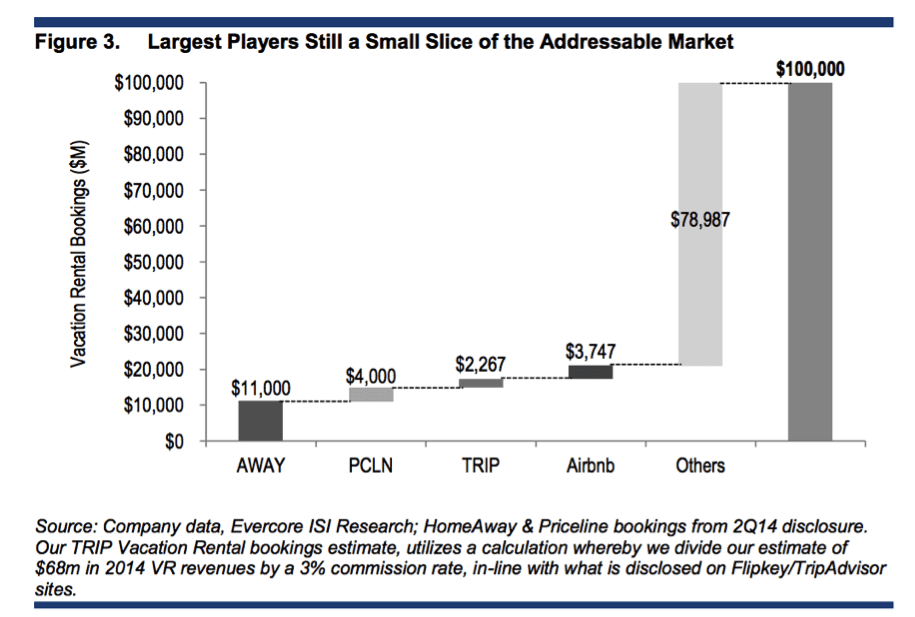

We reached out to Jen O’Neal to find out more about her motivation to start Tripping.com, where the company is heading, what challenges are present for online distribution, and what opportunities she sees in the future for the vacation rental industry.

 Q: What motivated you to start Tripping.com in 2009?

J.O.: The original concept for Tripping.com was a social network for travelers. I’d been a fan of sites like CouchSurfing, but I felt there was room for improvement on both the technology and safety fronts. Travelers seemed to agree. When we launched the company from TechCrunch Disrupt in 2010, we grew rapidly and had users in 175 countries within the first 30 days.

In addition to the viral nature of Tripping.com, our growth strategy centered around creating partnerships with organizations such as travel groups and study abroad programs. Soon after launching, we had over 40 partners including Ivy League schools, the Peace Corps, AmeriCorps, AARP, and more. Those partnerships enabled us to not only grow at breakneck speed, but they also gave us a highly vetted, high quality userbase.

Although we pivoted a year later, our new model resonated with our original users and they continued to engage with the site. Those early users formed the core of our current user base, which helped us transition into our new business model.

Q: How has the idea behind Tripping.com evolved over the last 6 years?

J.O.: We made a major pivot in 2011. At the time, the vacation rental industry was catching fire thanks to the growing buzz around Airbnb and HomeAway. My cofounder and I are data-driven people, so we did an analysis on the market. Three things jumped out to us immediately: the market was enormous, the existing VR technology was easily 10 years behind hotels, and the entire space was intensely fragmented.

The fragmentation caught our attention more than anything. We reasoned that building a metasearch site would solve fragmentation, both giving consumers an easy way to find vacation rentals and giving rental sites additional traffic. In late 2011, just 30 days after reviewing our initial data findings, we relaunched Tripping.com as a metasearch site for vacation rentals.

The only problem was that we were three years too early.

The market wasn’t ready for metasearch, but Jeff and I could clearly see where everything was heading. We pushed forward. Our cash was limited (most investors weren’t willing to fund an unproven model), which made us scrappy and creative. By the time the market was ripe for a metasearch player, we were perfectly positioned to capture the opportunity.

Q: Is the market still fragmented?

J.O.: Yes! A report published by Evercore (see chart) earlier this year shows that there is still intense fragmentation in the vacation rental industry. To point, the top four players – HomeAway, Priceline, TripAdvisor, and Airbnb still only have about 22% market share. This underscores the value of metasearch and what we’re building at Tripping.com:

FIGURE 3

Q: How did your experience with StubHub and Viagogo help in your vision for Tripping.com?

J.O.: As an early employee at StubHub and Viagogo, I developed a love of marketplace businesses. I also got to see exactly what it takes to build billion-dollar companies both in the US and internationally, which has proven to be a solid blueprint for what we’re building at Tripping.com.

Q: With your experience in aggregating the eccentricities of the vacation rental industry, what strikes you as being the biggest challenge facing the industry?

J.O.: The shift towards instant bookings is a major challenge for the industry right now. This isn’t just from a technological standpoint. While users seem ready to whip out their credit cards and book rentals, we still see a significant amount of resistance on the part of property owners and managers. Major brands are trying to push hard for online bookings, which will ultimately advance the industry. With that said, it will still be a few years before the vast majority of properties can be booked with a click of a button.

Another challenge centers around calendar availability. In aggregating data from top rental suppliers, we often see inconsistencies in rates and availability. We work closely with our partners to solve these issues and we reward properties with updated availability data by moving them up in Tripping.com’s search results. That’s the beauty of a search engine; we can ensure that the best properties always go to the top of our results.

Q: To add to the question of aggregating vacation rental data, what – if anything – was easier than you expected?

J.O.: We only had a handful of partners for the first three years. This is because rental sites either didn’t have the capability to build feeds or they weren’t interested in working with us. Now we have a growing queue of over 200 rental sites that are waiting to get on Tripping.com. This has been a really nice surprise and it makes building partnerships easier than ever before.

Q: What does having a successful metasearch platform mean for vacation rental managers?

J.O.: Vacation rental managers who list on sites like VRBO and Booking.com (among our other great partners) are getting more bookings thanks to Tripping.com. We’ve really nailed the marketing side of the equation, which means that we’re sending highly qualified traffic to our partners. This traffic converts into bookings, which means that managers are filling up their calendars and making more money.

One important distinction is that metasearch increases the quality of users. This is because users can do an initial comparison on Tripping.com, find the property they want, and then click over to our partner’s site to book it. Since they’ve already done their research up front, they’re more likely to convert once they hit our partners’ sites. And of course this translates into more bookings for vacation rental managers.

Q: (In the preceding “funding” article, I am reporting on your Series B raise of $16M) Tripping recently raised $16M bringing your total to over $21M. What are your plans for the company over the next 12-24 months?

J.O.: We were excited to announce our Series B earlier this summer. The round was led by Steadfast Venture Capital out of New York and other investors including: 7 Seas Venture Partners (founded by Jeff Xiong, former Tencent CTO), Enspire Capital out of Asia, Fritz Demopoulos (Qunar founder), Erik Blachford (former Expedia CEO), Monte Koch (board member at Choice Hotels), and Drew Goldman (Head of Real Estate Investing for Deutsche Bank), among others. We’re also happy to have the continued support of Recruit Holdings in Tokyo and Quest Venture Partners, a Silicon Valley firm that led our Seed round.

We’re using this funding to fuel our growth, enhance our product, and aggressively expand into international markets. Since closing the round, we’ve substantially grown our teams in both San Francisco and Europe.

Q: How does Tripping.com fit in the overall vacation rental marketplace in relation to HomeAway, Airbnb and other distribution channels?

J.O.: An investor recently compared us to a spoke in a wheel. As the top metasearch site for vacation rentals, we sit in the middle of the industry by sending bookings to rental sites such as HomeAway and Villas.com. Though there is always a natural tension between metasearch sites and their partners (as we’ve all seen with Kayak, Trivago, and Expedia), our team is ruthlessly focused on helping our partners grow. We work closely with them to optimize conversion funnels and ensure that travelers have a great experience booking vacation rentals.

Q: Looking at the industry from your unique perspective, what do vacation rental managers need to do in order to be successful in marketing their properties online in 2016/2017?

J.O.: Great question. Based on what we can see, this is what I’d recommend for vacation rental managers who want to increase their bookings:

  • Update your calendars to show when your property is available. Properties with fresh availability get higher placement in search results on com and other sites, so you’ll be rewarded with more bookings.
  • Use data to price your listings competitively. Before setting your nightly rate, do some research to see how other owners are pricing their listings. You can also look at nearby hotel rates to get a wider view of the accommodations market. Additionally, be aware of big events and conferences that could positively affect the price of your listing: if the area is sold out, you should be able to charge a premium for those dates. Strategic pricing will help increase your bookings and revenues.
  • Show high-resolution photos to increase conversation. Our data consistently shows that property listings with many high-res photos are far more likely to convert into bookings.
  • Be open to taking online bookings. It could save you a lot of time and hassle. Given that most rental sites now offer insurance, the risk is pretty low.
  • List your property on multiple rental sites. Ensure you have the bandwidth to update multiple calendars. This will immediately increase your exposure to potential guests and enable you to test things like pricing.

Managers often approach us directly, asking if we can help them price their listings to make sure they’re getting the most money for their properties. Our team is always happy to help with this, since our data enables us to actively and simultaneously increase revenues for both managers and our partners.

Q&A

by Amy Hinote

How to Shop for a Supplier: Pain vs. Opportunity

0

You have decided to find new software, a new marketing agency, a new travel insurance solution, or whatever the case may be. Maybe a company has approached you with a new idea, service, or offering. How do you go about making a decision?  Is the best solution the cheapest or most expensive? Is it best to go with what everyone else is doing? Following are some suggestions on how to proceed based on what I’ve seen by being on both sides of the equation.

While running a sales and marketing division, I typically ran into two scenarios: we either needed to find a better way of doing what we were doing (pain) or someone introduced us to an entirely new concept (opportunity). Identifying and understanding which scenario we were dealing with was step one due to a variety of factors, but either one usually boils down to a cost/benefit or return on investment (ROI) analysis. Let’s take an in-depth look at the two scenarios – pain and opportunity – and discuss some possible approaches to each.


Scenario One – Pain

We’ve all been there – something about a product, service or technology no longer works. While on the surface it can often seem to be the actual deliverable, many times there are more subtle instances that cause us to seek alternatives. These instances can be personalities, response times, or increasing costs. The bottom line is that there is pain associated with this supplier, so the replacement process goes into motion.

This scenario is usually the easier of the two – you know what you’re currently getting (or not), what you’re paying, and the specific things you are unhappy with. The way to approach it is to define the list of pain and seek other potential suppliers about those specific things. Ask open questions, but stay focused. This will enable you to shorten the list based on the supplier’s responses, without getting into a full blown “THIS IS EVERYTHING WE CAN DO FOR YOU FOR HALF THE COST” discussion. Be wary of those suppliers that only want to introduce anything and everything, unless they specifically address the pain that is causing you to seek a better solution. This keeps emotion down and critical thinking involved.


Scenario Two – Opportunity

As vacation rental managers, we’re often introduced to cool, new, shiny things at conferences, through direct marketing and by word of mouth. The conversation in your head typically goes something like, “COOL. WE HAVE TO HAVE THAT. Wait, how much is it?” You then begin the internal debate that includes questions such as: Is it worth it? Do I have the budget set aside (usually not)? How can I justify it?

This scenario typically requires more openness than Scenario One. Let’s say there are two companies that provide similar whiz bangs, and you set up a conversation with each. Look for two distinct approaches – the first one focuses on you and your business, how you do things, and looks for opportunities where either their product or service will drive value. Let them ask questions and answer honestly and you’ll quickly gain a sense for how much they care. The opposite approach is similar to the Scenario One conversation and is sometimes known as the “show up and throw up” approach. This supplier has gone to great lengths to make sure they have all of the latest and greatest features, that they know and understand what is best for you, without asking a single question. They simply don’t need to.


Making a Decision

So how do you make a decision? In my experience, you stop looking for a supplier and instead focus on creating a relationship where everyone has a vested interest in the success of each other. In Scenario One, if a supplier will honestly and openly answer the questions that address the pain, I’m more apt to trust them. In Scenario Two, they demonstrate they care by showing that they are interested in my business and how we do things. They care enough to make sure that their whiz bang will provide value to my business by asking intelligent questions. Care and trust are two foundations of a great relationship, and that’s where the focus should be. Rather like dating, no?

Adrew VickBy: Andrew Vick, President, Vick and Company


970.319.7614
andrew.vick@gmail.com


The Smart Home Wave and the Impact on the Vacation Rental Industry

0

Smart Tech is in the House

Greg Burge, President
PointCentral

There is a significant technology trend occurring in the U.S. and other countries that is having a major impact on the vacation rental market – the adoption of Smart Home technologies by homeowners and Vacation Rental Managers (VRMs). This article examines the growth in the sector, the benefits and risks to homeowners and VRMs, and the best course of action for all.

Here are some stats to get started:

  • Approximately 81% of home buyers prefer smart homes over non-smart homes.
  • More than 10% of U.S. broadband households are planning to buy a smart thermostat over the next 12 months.
  • Nearly 75% of current smart thermostat owners report reduced electric bills.
  • Global smart home connected appliances are projected to grow from fewer than 1 million units shipped in 2014 to more than 223 million units by 2020
  • Worldwide the 13.4 billion internet-connected devices in 2015 are projected to grow to 38.5 billion in 2020 – a 285% increase (Juniper Research).
  • The home automation market in the U.S. is estimated to reach more than $5.5 billion in 2016.

Explosive Growth

Yes, you read that right. Smart Home growth is expected to rival mobile phone growth. Fueling much of this is the growth in consumer awareness of the technology. Giants like Apple, Google, Samsung, LG and others are committing huge resources to the category and have invested hundreds of millions in marketing to shine a very bright light on Smart Home. Google’s purchase of Nest and Apple’s launch of HomeKit have brought more attention to the category and opened the eyes of many consumers to the advantages of Smart Home technology.

The Smart Home Pull

For the homeowner, Smart Home provides peace of mind knowing they have more control over their property, from remotely controlling locks and thermostats to being alerted when someone enters their home. Plus, there are significant cost savings that come from automating energy usage and controlling min/max temperatures. This is especially critical for vacation rental properties that often see guests leave the air conditioning on high after they check out. Smart Home automation provides alerts when thresholds are exceeded so that temperatures can be remotely adjusted.

Vacation Rental Managers are able to significantly reduce their risk and liability with Smart Home since they can eliminate hard keys, which are often lost, copied or stolen. The news is filled with terrible stories of vacationers experiencing theft and violence during their stay because of so many keys unaccounted for. Smart Home not only provides new lock codes for each guest, it provides the VRM with the ability to monitor and remotely control access and temperature for ALL their properties. Not having to send someone out to a property to let someone in or change the thermostat saves operational costs for VRMs.

The Market Push

In addition to Apple and Google bringing attention to the category, Samsung, LG and others are shifting their focus from mobile and TV to Smart Home devices. The result of all of this is that homeowners are increasingly eager for the added security and convenience, as well as the energy savings that Smart Home provides.

For VRMs, this has both good and bad ramifications. On the bad side, the more control homeowners have over their locks and thermostats, the less control this gives the VRM. There have been many reports from VRMs of homeowners changing the temperature of their home while a guest was occupying their property. That’s right – while the guest was there.

Of course, one of the positive aspects of the Smart Home wave is that homeowners are much more open to the technology and can thus be more easily convinced to go with a solution offered by the VRM.

Consumer vs. Enterprise

It’s important to point out here that the market push by the major players is focused on the DIY/Consumer-Grade technologies. These are self-contained solutions that give the homeowner control of access and temperature for just their property, usually from their smart phone or other mobile device.

VRMs, on the other hand, require an enterprise solution that provides centralized control of multiple properties, something a consumer-grade solution cannot provide. It’s this enterprise class system that gives the VRM the type of property intelligence they need to see a complete picture of property status. This real-time information helps them to streamline turn days, improve operational efficiencies, and provide a better guest experience – things that every VRM wants.

Win-Win-Win

So what should a VRM do? What’s the best course of action? As with any major trend, especially one that is changing the market in so many ways, VRMs need to get in front of the wave or they will find themselves struggling to catch up. If homeowners adopt Smart Home, which we know is already happening, VRMs will be relinquishing control of access and temperature. Once a homeowner has installed Smart Home, they will be reluctant to uninstall it.

VRMs should talk to their homeowners now and show them the advantages of an enterprise system that provides centralized control of all their properties. PointCentral, the leading provider of enterprise Smart Home solutions in the vacation rental market, has found that the large majority of homeowners are not only eager to adopt Smart Home, they are very open to covering the cost since they will be reaping many of the security and energy benefits.

The Smart Home wave is here and it is good for homeowners, VRMs and guests.

The Smart Move

VRMs have a remarkable opportunity to help their homeowners, their guests, and themselves – by implementing Smart Home technology.

The key to this opportunity is to implement it before your homeowners. VRMs across the U.S. report that many of their homeowners are installing Smart Home because it provides better security and saves on energy costs.

But homeowners are installing consumer-grade systems that will give control of access and temperature to the homeowner, not the VRM.

VRMs need to install a commercial-grade solution that provides centralized control of ALL their properties.

Snaptrip raises $2.2M for last minute vacation rental marketplace

0

Tnooz – Even as vacation rentals draw the scrutiny of regulators worldwide, investors continue to see enormous potential in the fast-growing industry.

Today, the last-minute marketplace for holiday rentals Snaptrip received a $2.2 million Series A capital injection from a group of investors, led by Bestport Ventures, which follows Forward Partners as the second venture capital firm to invest — in the latest affirmation of vacation rental bookings as an industry.

Based in London, Snaptrip has raised $3.25 million to date. It did not disclose what valuation was placed on it by the investors.

The startup said that it booked 30,000 customers last year. It claims to have have more British properties in its inventory than AirBnb, the vacation rental giant, which recently raised $1.5 billion.

About 18 months old, Snaptrip aims to distinguish itself from its better known rivals by focusing on offering what it calls exclusive discounts at the last-minute on selected breaks. Unlike some (though far larger) rivals, like Airbnb Homeaway, it claims 100% instantly bookable inventory with live rates.

In exchange for a person’s email address, it offers access to discounted rates on more than half of its listed cottages, the company said.

Snaptrip CEO Matt Fox said in a statement that the company will use the money to invest in marketing, product development, and hiring.

The funding round comes as regulators in Europe and elsewhere look to legally define parameters for the self-catering sector.


Sean O'Neill

About the Writer :: Sean O’Neill

Sean O’Neill is Editor-in-Chief of Tnooz.
Before joining us, Sean was tech columnist at BBC Travel, senior editor at BudgetTravel.com, and associate editor at Kiplinger’s. He lives in New Jersey and on Twitter.

The Important Role of Owner Service Providers in the Sharing Economy

0

Editorial by John Banczak, Co-founder and Chairman, TurnKey Vacation Rentals

It would be virtually impossible for anyone involved in the sharing economy or vacation rental industry to be unaware of the increasingly complex and growing body of government regulations. Short-term rentals are a very attractive lodging solution for families and groups, and improvements in both the ease of finding and booking them over the past several years have enabled more and more travelers to take advantage of them. The increase in popularity has come with increased scrutiny from local governments as well as from lodging alternatives like hotels or B&B’s which view vacation rentals as competition.

Local governments and the American Hotel and Lodging Association (AHLA) presented recently at the FTC Sharing Economy Workshop made fair points that virtually all professional vacation rental property managers agree with:

·       Vacation rentals should be a positive influence in the community

·       They should pay the same type of taxes any lodging provider pays

·       They should be licensed and regulated to promote these goals.

What Are Illegal Hotels?

The AHLA uses the phrase “illegal hotels” in a lot of situations. The origin of this phrase seems to stem from large apartment buildings in major metro areas that have been converted to handle short-term rentals. They often resemble hotels in just about every way – multi-story buildings with multiple units per floor, elevators, and a single investor/owner. The AHLA defined them as “individuals or companies operating multiple properties as a business.” While we believe the AHLA understands the difference between a true “illegal hotel” and a traditional vacation rental manager like Wyndham for example, there is some concern that the general public does not.

The “illegal hotel” definition more and more often is starting to be loosely applied to the traditional vacation rental management industry, which is entirely different from a metro-area illegal hotel. Unlike an illegal hotel operator, traditional vacation rental managers do not own units at all – they provide services to individual home owners much like any local service provider.

The decades-old vacation rental management business can be thought of as having two broad categories. The first are Resort Managers (RMs) – folks like Wyndham, Marriott, Westin for example that might manage a vacation rental structure that resembles a resort or hotel, and may have individually or corporate-owned units. The second category are Owner Service Providers (OSPs) – folks like TrueGreen, Lawnlove, America’s Swimming Pool Co, Merry Maids, TurnKey Vacation Rentals, Evolve, Handy, ARS, Paypal, Square, HotSpot Tax, even Wyndham in many areas, and thousands of small business across the country that provide some type of service for an individually owned primary or secondary home. OSPs help most vacation rental owners in some aspect of the process (such as a housekeeper, electrician or lawn service).

Should an individually-owned, single-story, single-family home rented for part of the year be required to have the same type of sprinkler-system, earthquake reinforcements, and health-code inspections as a thirty-story hotel in downtown San Francisco that has multiple restaurants and event catering? Few would agree. But should it pay the same taxes and not be a nuisance to neighbors? Absolutely.

Does a two-hundred unit, twenty-five story apartment building in Manhattan owned by a REIT seem more similar to the twenty-five story hotel across the street than it does a stand-alone single-family home in Austin, TX? It sure does, and the AHLA would have a good argument that that the fire code of the hotel and the apartment building in Manhattan should be similar, while the fire code on the single family home should not.

Do Resort Managers with multi-floor/multi-unit structures seem a lot like hotels? They sure do – many are owned by the same hotel companies represented by the AHLA. Does an OSP that helps an individual home owner take care of their property in some way resemble an illegal hotel? No, individually owned homes whether rentals or not hire all sorts of OSPs to help maintain their property.

Professional Vacation Rental Managers are Owner Service Providers (OSP), not Illegal Hotels

A traditional, professional property manager doesn’t run illegal hotels, they are an OSP that may provide a few focused services to owners, or they may provide a wide range enabling an owner a single point of contact for most of their needs. The easiest way to understand what traditional managers is to compare three examples of similar properties in an average coastal community. The first owner does everything on his own, the second owner uses a couple different OSPs, and the third has hired a full-service professional property manager to be their single point of contact. Each home is a single family residence, should have the proper permit to be a vacation rental and should pay all transient occupancy taxes due.

Our first example owner – Joe – owns a three bedroom home a couple blocks from the beach. Joe is retired and spends about four months a year at his vacation home. His primary residence is a three hour drive away. Joe manages most everything on his own – he has listed his home on VRBO since 1999, handles all of his email inquiries, phone calls, takes payment in the mail by check or online through Paypal, and serves as the guests only contact point. He contracts out to local cleaners or course, has a local lawn service, a pool service, a plumber and electrician he uses, and a contractor for larger repairs. He runs his own finances and is responsible for paying his own local taxes each month. He keeps things like spare sheets on site, extra lightbulbs, and has guests bring their own amenities like toilet paper, shampoo, etc. For the most part the rental runs smoothly, save for the occasional instances when Joe’s not available to answer the phone in an emergency, or there is a problem with the quality of housekeeping or pool service. Joe has plenty of time on his hand to handle all of the scheduling and has always been more of a do-it-yourselfer.

The second owner – Susan – owns a three bedroom home right next door to Joe. Susan spends less time at the home as Joe, living a couple hours flight away. Susan is an EMT and cannot be reliably available to answer emails or phone calls so he contracted with Evolve Vacation Rentals – a professional service that lists his property on VRBO, provides 24/7 phone and email support, and handles payments from guests. Susan likes that guests always can reach someone and he doesn’t have to worry about sleepless nights. She also contracts with Hotspot Tax to handle all of her tax filings. She’s always used H&R Block to do her taxes, and he likes the idea of a professional filing each month so it is accurate and verifiable. Susan uses the same local lawn service and pool company as Joe, but has a different housekeeper that she schedules himself, and her own plumber and electrician. She’s looking for a new general contractor as his recently moved out of town. The rental runs smoothly, save for the occasional issues that arise when the plumber is busy or the old general contractor couldn’t be found. Susan doesn’t mind doing a little work now and then, but feels that paying for phone, email and tax service is well worth-it.

The third owner – Fred – owns a three bedroom right next door to Joe. Fred uses the home just as much as Susan, and lives in the same hometown as Joe. He plans on retiring there to live full-time eventually. Fred used to manage his home on his own, but got promoted to a regional sales rep and is on the road most of the week with no time to schedule any of the services. Fred started using Beachwise Vacation Rentals as his OSP. Beachwise acts as a single contact for owners, providing a VRBO listing, phone and email services, and payment handling like Evolve does. Beachwise uses the same housekeeping company, electricians, and plumbers as Joe, but does all the scheduling of them so Fred doesn’t have to. Beachwise also provides regular inspections of the home and keeps basic supplies on hand for renters like toilet paper, shampoo, garbage bags and paper towels. Beachwise handles things like tax payments, they even verify each guest’s photo ID, put digital locks on the doors for added security, and hire a local private security patrol on weekends and during big events. Fred likes having one local point of contact – he is busy at work, and feels better having someone manage all aspects of his home – after all, he spent years saving enough money to afford a second home and wants to make sure it is well looked after.

Each of these home owners has chosen a set of OSPs that work best for their own situation. Whether a home owner is the do-it-yourself type, or they want to have one single point of contact – the combination of OSPs doesn’t change the characteristics of their homes in the community. The homes are identical, all providing the same type of rental to guests. Each home owner is free to switch their plumber, housekeeper or electrician if a newer, better, or less expensive provider comes along. Competition among service providers is strong in the USA and owners benefit from that competition. Beachwise, a single point of contact OSP simply bundles up services for owners that need more convenience.

The mere bundling of services however doesn’t change the home itself, nor does this bundling of services imply that full-service managers like Beachwise are running illegal hotels in their area.

OSPs vs Illegal Hotels

We doubt that the AHLA’s intention is to group traditional full-service professional managers into the same category as illegal hotels. We would urge them to clarify this position. Making it difficult to bundle services for home owners, or reducing competition among service providers wouldn’t do anything to curb the type of illegal hotels mentioned in the larger metro areas. It would only serve to hurt the hundreds of thousands of second home owners.

Professional property managers have been providing bundled owner services to individual owners for decades in a thriving, competitive local marketplace serving as a valuable OSP to almost half of all vacation rental home owners. We hope that the all of those discussing the issues in the sharing economy make it a point to fully understand that traditional vacation rental managers are not running illegal hotels, and to further define the type of lodging that has become problematic.