













- Advertisement -
Home Blog Page 55

HomeAway Survey: Strong Influence of Kids on Family Travel Plans

0

Findings show what “kidfluencers” – and their parents – really want in a whole vacation: adventure, family bonding and a pool.

HomeAway, the world’s leading online vacation rental marketplace, has found that kids, or “kidfluencers,” wield a growing influence on vacation planning. In partnership with independent market research firm YouGov, HomeAway surveyed more than 2,800 kids (ages six to 18) and parents in the U.S. and Europe and found that when it comes to family vacation planning, children have significant decision-making power and a strong point of view on where to go, what to do and who to bring.

According to the HomeAway Kidfluencer Survey, kids are speaking up, and parents are listening – millennial* parents even let the kids get the last word:

  • The vast majority of parents (85 percent U.S., 76 percent U.K., 86 percent France, 95 percent Germany, 94 percent Spain) give their children some say in deciding where they want to go on vacation.
  • Millennial parents in the U.S. are most likely to give kids full control of where they want to go on vacation (19 percent versus two percent of parents over the age of 55).
  • One in three millennial parents in the U.S. (34 percent) allow children to make the final decision on where to go on vacation; this compares with eight percent of parents aged 55 and over in the U.S.
  • The majority (60 percent) of parents in the U.S. view kids’ input as a way to ensure the kids get more out of the vacation. More than half (53 percent) involve their kids in the planning process to get them excited about the trip, 42 percent say they involve their kids so they can learn about new things and nearly one-quarter (24 percent) use vacation planning as an educational opportunity.

The survey finds that a majority of parents in the U.S. say they let their kids make decisions on the vacation activities (77 percent), the itinerary (53 percent) and even the type of destination itself (49 percent).

“We are surprised the survey shows kids have such an extreme influence on family travel decisions,” said Brian Sharples, HomeAway co-founder and CEO. “The whole family is now invested in the experience, with kids bringing their own travel preferences to the table.”

Who’s invited: grandparents, friends, and pets among top picks in the U.S.

  • 41 percent of parents identify the most important part of a family vacation as spending quality time together over creating lasting memories (27 percent), exploring new places and cultures (15 percent), relaxing (10 percent) and disconnecting (six percent).
  • Togetherness is also important to kids, with 50 percent citing it as a top priority for vacation travel.
  • Parents and kids agree they want extended family and friends on their ideal vacation, with parents wishing to include relatives like their children’s grandparents (38 percent) and kids wanting to invite their friends along (55 percent).
  • 30 percent of parents would choose only to include immediate family, pointing to their desire to spend quality time on vacation.
  • Nearly one-third of kids would like to bring their pet (32 percent) on their ideal vacation while 22 percent say that leaving their family pet at home during vacation has annoyed them.

U.S. kids want adventure and an exciting place to stay

  • In identifying what they want most on vacation, kids enjoy experiencing new adventures (60 percent) and doing things they wouldn’t be able to do at home (63 percent) while on vacation.
  • Children want to stay in unique accommodations, with a castle (37 percent) or tree house (29 percent) rising to the top, among other choices such as an airplane, boat and train.
  • The most important accommodation feature is a pool (37 percent of kids, 75 percent of parents in the U.S.), and 21 percent of kids want more than just a pool – they want a water slide.

Among younger kids in the U.S., theme parks reign supreme, but older kids are more likely to choose international travel for their next family vacation

  • Double the number of children ages six to 12 (54 percent) versus teens ages 13 to 18 (27 percent) would choose a theme park whereas teens are almost three times as likely to choose another country as their destination preference.
  • After theme parks, a trip to the beach was the second choice among kids, with nearly one-fifth (19 percent) of kids wanting to head for the coast.
  • Among other destination choices, twice as many teens ages 13 to 18 (10 percent) versus children six to 12 (5 percent) would choose big city travel.

“Since HomeAway’s inception, Orlando, Florida with easy access to Disney and Universal Studios has been the top market for U.S. bookings, so the popularity of theme park focused trips is not surprising,” says Sharples. “However, we weren’t expecting to see such a high enthusiasm from kids for traveling internationally. Fortunately, due to the strength of the U.S. dollar, now is a great time to pack-up the family for a European vacation that won’t break the bank.”

While both U.S. kids and parents want to be together, they also want their space

  • 72 percent of parents reported the size of the room/home on vacation was an important feature when deciding where to stay.
  • 59 percent of parents say an important factor is having plenty of beds, so the family doesn’t have to share.
  • Popular accommodation choices for kids seemed to rank in order of space for the family, with a vacation rental as first choice (36 percent) among kids, followed by a hotel (29 percent) and a cruise ship (23 percent).
  • Kids say the best part of staying in a whole house is getting their own room or their own bed (39 percent).
  • Maybe this desire for space has emerged because kids frequently find themselves sleeping in uncomfortable situations when on vacation:
  • 44 percent spent the night on a couch; 43 percent have slept on an air mattress and 22 percent have slept on the floor during their stay.
  • 19 percent of parents report that their child(ren) have slept crowded in a hotel room with too many people.
  • No surface is off limits: four percent of parents have reported that their children have slept in a bathtub, and three percent have reported that their kids have slept in a closet.

U.S. kids notice their parents seem happier on vacation and aren’t spending too much time on their devices, but everyone wants the option to stay connected

  • 54 percent of kids report that their parents seem happier on family vacations.
  • 70 percent of kids say their parents don’t spend too much time on their gadgets while on vacation.

The state of the treasured summer family vacation continues to bring families together. Fortunately, 66 percent of kids report that their parents don’t wear any embarrassing things on vacation. But some parents need to leave the swimsuit at home. Parents’ bathing suits rank tops as the clothing item kids are most embarrassed by, as 12 percent of U.S. kids over age 12 report, followed by fanny packs (nine percent) and T-shirts from where they are visiting, like “I LOVE NEW YORK” (nine percent).


*Millennials are those respondents aged 18-34 (with Gen Xers making up the 35-54 group, and Baby Boomers those 55+).


Win a $5,000 Stay with the HomeAway Kidfluencers Contest

This summer, HomeAway is empowering kidfluencers by giving them even more control over their family’s travel plans with a chance to win a $5,000 vacation rental stay to anywhere in the United States in 2015. To enter, travelers just need to create a 15 to 60-second video of their kids describing why their family should win a vacation from HomeAway. Upload the video to Instagram, YouTube or Vimeo, using the hashtag #HomeAwayVacation and complete the entry form at http://a.pgtb.me/TxF29N, before May 29, 2015. HomeAway will select 10 finalists that will be voted on by the public from June 8 to 12 to determine the winner. For more details on the contest, visithttp://a.pgtb.me/TxF29N.


Survey Methodology 

YouGov, on behalf of HomeAway, conducted an online survey of 2,813 kids (ages six to 18) and parents based in the U.S., U.K., France, Germany, and Spain. All figures, unless otherwise stated, are from YouGov Plc. Fieldwork was undertaken between April 20-30, 2015.

All figures refer to results from the U.S., unless otherwise stated.


About HomeAway

HomeAway, Inc. based in Austin, Texas, is the world’s leading online marketplace for the vacation rental industry, with sites representing over one million paid listings of vacation rental homes in 190 countries. Through HomeAway, owners and property managers offer an extensive selection of vacation homes that provide travelers with memorable experiences and benefits, including more room to relax and added privacy, for less than the cost of traditional hotel accommodations. The company also makes it easy for vacation rental owners and property managers to advertise their properties and manage bookings online. The HomeAway portfolio includes the leading vacation rental websites HomeAway.com, VRBO.com and VacationRentals.com in the United States; HomeAway.co.uk and OwnersDirect.co.uk in the United Kingdom; HomeAway.de in Germany; Abritel.fr and Homelidays.com in France; HomeAway.es and Toprural.es in Spain; AlugueTemporada.com.br in Brazil; HomeAway.com.au and Stayz.com.au in Australia; and Bookabach.co.nz in New Zealand. Asia Pacific short-term rental site, travelmob.com, is also owned by HomeAway.

LiveRez wins 2015 Travel Industry Excellence Award in Boise

0

LiveRez won the Boise Metro Chamber of Commerce‘s 2015 Travel Industry Excellence Award.

This is the second year in a row the company has been a finalist for the award, which is given to a chamber member company that “has made significant contributions in enhancing Idaho’s travel industry through recreational opportunities, transportation, lodging options, tourism, or other means.”

Other finalists this year were AAA of Idaho and Enterprise Holdings (the parent of Enterprise and National rental car companies).

LiveRez CEO Tracy Lotz accepted the award and gave a rousing speech, explaining how the company has grown over the years and at one point calling LiveRez the “honey badger” of the vacation rental industry. You can watch his speech below.


Urban Vacation Rentals on the Rise: Data from Beyond Pricing

0
VRMA Marketing Plan and Budget Workshop

By Nick Wallace –Since it began operating in 2008, Airbnb has shaken up the hospitality industry, and reports are that it could soon be valued at over $20 billion. That’s nearly as much as Marriot International. With that much capital behind the Airbnb platform, it stands to reason that Airbnb hosts are cashing in as well. On the other hand, many of the most popular Airbnb destinations are also among the least affordable cities in the U.S.So how much money is it possible to make by listing a room or full home on Airbnb?


Find out now: Is it better to rent or buy?

Using data provided by Beyond Pricing, a service that optimizes pricing for short-term rental owners and Airbnb hosts, SmartAsset analyzed the profit potential of rentals in 15 of the largest Airbnb markets in the U.S.

First, we calculated expected revenue of private-room Airbnb rentals in each city.We wanted to know if it’s possible to pay the rent on a two bedroom home by listing one of the rooms on Airbnb. Then, we calculated expected net profits (after average rent, utilities and internet) for full-home rentals in each city. You can read more about our methodology below.
 

Key Findings

  • $20,619. That’s the average expected annual profit of Airbnb hosts renting out a full two bedroom apartment or house in the 15 cities SmartAsset examined. While it’s not chump change, it also isn’t enough to live off of—which is why many “professional” Airbnb hosts rent multiple properties.
  • 81% of your rent. On average, that’s what you could expect to pay by listing one room in a two-bedroom home on Airbnb. That’s a lot more than a roommate would chip in, but it also requires a lot more work. (Well, depending on your roommate.)
  • Miami and San Diego are the most profitable cities for Airbnb hosts. The combination of warm weather and (relatively) affordable housing make these two cities a better bet for full-apartment listings than popular but expensive destinations like New York and San Francisco. By the same token, private-room listings fare best in low-rent cities like Houston and Philadelphia.

airbnb 1 1 Where Do Airbnb Hosts Make the Most Money?


Takeaways: Airbnb Private-Room Listings

Renting out a single bedroom in a two bedroom apartment can serve as a good source of supplemental income in most of the cities SmartAsset examined. In half of the cities in our analysis, an “Airbnb roommate” would, on average, pay at least 80% of an apartment’s total rent. In Miami, San Diego, Chicago and Philadelphia, it would pay over 90%. In Houston, an Airbnb private-room listing would be enough to pay the entire rent on a two bedroom at the average occupancy rate of 64%.

In many cities, it may be possible to pay the entire rent on a two-bedroom apartment with around 20 days of bookings per month. In Miami and Philadelphia, for example, an Airbnb host could pay the full rent on a two bedroom apartment by filling one of the rooms for 21 days a month. In San Diego, 24 days of bookings a month would pay the rent. Achieving those numbers, however, would require beating the average occupancy rates listed above.

So, before you kick out your roommate and list the spare room on Airbnb, keep in mind the time commitment involved. Earning money on Airbnb requires careful management and active involvement. In general, “hands-off” Airbnb hosts can expect occupancy rates (and revenue) at least 15% lower than those listed.

airbnb 2 Where Do Airbnb Hosts Make the Most Money?


Takeaways: Airbnb Full-Apartment Listings

For Airbnb hosts looking to make a living on the hospitality platform, full apartment rentals are the way to go. Rates for full apartments are significantly higher than those for single rooms and income after expenses ranged from $15,000 to $31,000 in our analysis. The top cities were both beach towns: San Diego and Miami.

On the other hand, while San Francisco and New York capture the highest average Airbnb nightly prices, at $247 and $233 respectively, the exorbitant rents in those cities wipe out the additional income. That means there is an opportunity for renters or homeowners in those cities who have annual rent (or mortgage payments) lower than the amounts listed above.


Austin Keeps it Weird

The Texas capital is one of the hottest Airbnb markets around. It has a nationally-renowned music and art scene, terrific food and four seasons of warm weather. On top of all that, festivals like SXSW and Austin City Limits periodically draw massive crowds from across the country.

In fact, a significant number of Airbnb hosts in Austin only rent their rooms and apartments during festivals and rates during festivals can be several times what is normally charged. Some residents collect over $1,000 a night during SXSW, which attracts over 130,000 attendees in a city with just 30,000 hotel rooms (and only 7,000 in the downtown area).

That’s a big money-making opportunity. However, it also skews the data. Because of Airbnb accounts that are specifically set up for Austin’s festivals, the Texas state capital has the highest average rental rate in the U.S. ($277 per night for a two bedroom) and the lowest occupancy rate (around 60%, and far lower than that in festival-free months, when accounts targeted toward festival-goers are dormant). Active hosts can expect a much better occupancy rate than that, but a lower price for most of the year.


Legal Issues

In some of the cities SmartAsset examined, hosting guests through Airbnb may be illegal, and in many apartment buildings it could constitute a breach of contract. In New York City, for example, the Department of Buildings has hit at least one Airbnb host with thousands of dollars for renting out his place while he was out for the weekend. Likewise, after an investigation by the New York Attorney General, Airbnb revoked thousands of New York hosts’ accounts for misuse.

This is something to keep in mind wherever you are. How will your landlord feel about your Airbnb use? Will it bother your neighbors? Are there business or hotel taxes you may be required to pay once you start earning money? In some cities, including Portland and San Francisco, Airbnb has already started collecting these taxes. The same treatment may be on the way in other places.


Methodology

To calculate the monthly rent percentage, SmartAsset used average Airbnb private-room price, average Airbnb occupancy rates and average monthly rent for each city. We first calculated expected monthly revenue by multiplying the average Airbnb occupancy rate by the number of days per month, for an expected number of bookings per month. We then multiplied the expected bookings by the nightly price to arrive at expected revenue.

Lastly, to arrive at the monthly rent percentage, we divided each city’s expected monthly revenue by the average monthly rent. The percentage yielded is an average across all 12 months. Note however, that it will be higher in long months, like January and lower in short months, like February. Those extra days are extra opportunities for revenue!

SmartAsset used a similar formula to calculate expected profits from full-home rentals, but we added expenses into our analysis in order to capture the full costs of maintaining the home. First, we multiplied each city’s Airbnb occupancy rate by 365 to arrive at bookings per year.

We then multiplied bookings per year by nightly Airbnb full-home price to reach expected annual revenue. From that we subtracted total annual expenses, which was equal to twelve times the sum of each city’s average monthly rent, utilities cost and internet rate.

The key point for both of these methodologies is that they give expected revenue and profits based on averages. Individual apartments and individual Airbnb hosts can (and do) over- or under-perform these numbers. Hosts who actively manage their listing on a daily basis by keeping their property in good shape, adjusting prices to market conditions and being friendly and helpful to guests (which often leads to more and higher reviews) could earn more.


Sources

Data on average Airbnb prices and occupancy rates came from Beyond Pricing, which tracks thousands of listings in each of the cities we analyzed. Data on average rental rates came from MyApartmentMap.com. Data on average utilities rates came from the Council for Community and Economic Research. Data on average monthly internet came from Numbeo.com.

 Photo credit: ©iStock.com/Christian Wheatley


1. We excluded Portland, Oregon from this portion of the analysis because of a lack of reliable data for the private room market in that city.

Myrtle Beach: 37% decrease in Spring weekly vacation rentals

0

Study shows 37% decrease in weekly Myrtle Beach vacation rentals in Spring 2015.

A new study shows weekly vacation rentals on the Grand Strand are down compared to the same time last year. The Coastal Carolina University Clay Brittain Jr. Center for Resort and Tourism analyzed occupancy rates over a six week period.

According to Brittain Center Director Dr. Taylor Damonte, the group took a voluntary sample of hotels, condos and campgrounds along the Grand Strand and found the nightly occupancy rate was down 3.6%, but up during 10.9% during the weekend.

Results also show the number weekly vacation rentals are 37% less than last year. Damonte said Tropical storm Ana could be the reason why.

“Named storms do tend to have an impact on occupancy,” he said.

Dunes Realty General Manager Ryan Swaim blames timing. Last year, Easter fell on April 20. This year, the holiday fell on April 5.

“When Easter is earlier in Myrtle Beach, it tends to be less crowded,” stated Swaim.

Vacation homes also primarily rent to families, according to Swaim.

“We’re busy when kids are out of school,” he said.

Damonte said the numbers indicate a trend in tourism. Instead of staying a full week, he said visitors will stay a few days or over the weekend. Swaim said hotels and condos often have an advantage over rentals in the off season.

“Hotels have a lot more flexibility as far as offering two and three night stays on a weekend,” said Swaim.

He expects the Summer to look a lot different. Swaim told News 13, June looks fantastic.

By Brennan McDavid

Airbnb annihilates vacation rentals…again…in Santa Monica

0

Led by Airbnb, Santa Monica banned vacation rentals for less than 30 days, but legalized “home-sharing” — in which the occupant rents a couch, spare bedroom or backyard unit.

The Santa Monica City Council has passed some of the region’s toughest regulations on the booming short-term rental industry.

In a unanimous vote Tuesday, the council approved rules that will ban most short-term rentals in the city by prohibiting the rental of an entire unit for less than 30 days, the Los Angeles Times reported. The rules legalize “home-sharing” — in which the occupant rents a couch, spare bedroom or backyard unit — but require hosts to obtain a business license and pay Santa Monica’s 14 percent hotel tax.

The vote was taken over moments and with no debate despite a protest held outside Santa Monica City Hall Tuesday afternoon by more than 100 short- term rental hosts and supporters. Several people there said they worried that other Southern California cities might adopt similar rules on short-term rentals.

Thoughts?

Why Attracting Millennials and Generation C Will Mean Big Business for Vacation Rental Industry

0

By Julian Castelli, CEO LeisureLink

Millennials are a powerful segment of today’s travelers, and their preferences and habits will help shape the future of travel preferences going forward. They are proving to be always connected, cost-conscious travelers that expect better access to online content, pricing information, along with quick response times to booking requests. In 2014 mobile and tablet devices generated nearly 40 percent of page views, and approximately 20 percent of bookings and room nights. This means vacation rental and resort property managers are faced with the new challenge of integrating a brand story across desktop, mobile, and tablet platforms – all while guiding mobile-savvy millennial users seamlessly through the booking funnel. Here are three tips for vacation rental suppliers to maximize engagement with these users, and translating that engagement into increased revenue.


Optimize the online experience

Studies reveal that millennials are a tech savvy group who place a premium on convenience. If your rental property’s online strategy doesn’t support dynamic content personalization, merchandising, and reservation abandonment prevention, you’re losing ground with this profitable market segment. It’s no longer a viable option for most property managers or owners to manage everything manually or with fragmented systems. Upgrading to an integrated, full-service distribution solution will enable you to manage and maximize all your distribution, as well as to optimize rates, availability, specials, and even content changes to increase exposure in less time, with less effort. What’s more, a system like this will give you full control not only over content, but also over the ways in which elements like rates, images, and merchandising options adapt dynamically to each user’s preferences and interests. Adaptive rate offerings, for example, can help maximize RevPAR; while adaptive brand storytelling can boost user engagement, and a solid reservation abandonment prevention system can make sure bookings don’t slip away.


Integrate an authentic social media story

Millennials and today’s tech-savvy travelers can be aptly dubbed as a demographic called “Generation C” – consumers who are “always connected” to online resources via their mobile and tablet devices. Social media represents a full 28 percent of time spent online for Generation C, which means that a multi-channel campaign integrating social media is a powerful tool for driving conversions across multiple platforms. Rich imagery can introduce users to your rental property’s story – and concrete offers during the planning and booking stages can reinforce that story throughout the booking funnel. Millennial users are known for sharing interesting vacation experiences and deals when they find them – which means that competitive rates and rate parity are both crucial for generating leads from this demographic. With a system that tracks the pricing changes in your market, aligns your pricing accordingly across your full range of online channels, and allocates your rental inventory as needed, you’ll be able to close each deal at a price point that maximizes your ROI.


Be responsive in every way

Millennials’ multi-device browsing habits make it necessary to track their behavior across multiple platforms and channels, and adapt each component of the campaign in order meet traveler expectations for convenience and speed of communication. Since members of Generation C handle almost all their business online, it’s essential to be visible on as many channels as possible, and also to be available 24/7 to close the deal. That means making sure you’re telling your property’s story on every online distribution channel you can, from websites of OTAs and tour operators to niche vacation review sites to all-purpose social media channels – across desktop, mobile, and tablet platforms. If millennial users get hit with that story across every platform they’re using – and can confirm bookings at any time, any place, from any device – that’s a major step toward increasing direct bookings, and maximizing the number of engaged users you can convert into sales.


Conclusion

Millennials’ booking habits have disrupted vacation rental industry in all three of these ways – in the ways users search and shop online, in the ways they share content on social media, and in the ways they move between sites and platforms as they plan their bookings. In order to maximize occupancy and RevPAR for your vacation rental property, it’s necessary to develop adaptive content, and to distribute that content on the fly in response to the emerging demands and trends. With the right technology and tools to implement a dynamic distribution and marketing strategy, though, it’s possible to attract this profitable generation of users and guide them smoothly to a finalized booking, no matter which screen – or screens – that process takes place on.

Vacation rental suppliers interested in learning more about expanding their distribution reach are encouraged to schedule a demo of LeisureLink suite of solutions at http://content.leisurelink.com/demo-land-page.

Travel Trends Position Vacation Rental Operators to Increase Revenue with a Personalized Guest Experience

0
Turnkey acquires Coastline in Port Aransas

May 5, 2015 – Today’s travel trends put vacation rental (VR) professionals in an enviable position–they are in the right place at the right time. Guest demands, expectations and market trends are bringing many opportunities for revenue gains. What can VR operators do to leverage the trends? This:

  • Focus on the personalized travel experience that guests are demanding in increasing numbers.
  • Take the opportunity to turn OTA-caused “distribution disruption” on its head. As online travel agencies (OTAs) compete for booking dominance, vacation rental operators can leverage technology to capture OTA-sourced bookings and transform them into loyal guests for life.


As savvy vacation rental managers know, it takes more than good luck to succeed. The right place/right time advantage only translates into increased revenue with the right strategy executed. In the words of a leading vacation rental manager, “We have to make our brand stand out on all levels if we want to compete.”

Technology and best practices help VR operators do that. For example, NAVIS gives VRs effective customer relationship management (CRM) tools that:


  • Collect and centralize guest data across all distribution channels (including OTAs) for fast, simplified responses that increase conversion.
  • Identify the hottest leads among multi-channel inquiries for single-point replies.
  • Create relevant, personalized one-to-one messaging for each point of guest contact.


With the right tools, vacation rental operators of all sizes can personalize interactions with their prospects from the very first inquiry. Operators can launch effective 1-to-1 email messages to guests based on when they prefer to travel, where they like to stay, and their preferred activities.


It’s all about them, not you!

Led by Millennials, the vast majority of today’s travelers (66%) are between 18-48, according to Hudson Crossing. Baby Boomers make up another 29%. Their stated preferences make them prime VR prospects:


  • They seek to explore their destination and soak up local ambience.
  • They often combine business and pleasure, commonly referred to as bleisure.
  • They frequently travel with multigenerational friends and family, often called framily travel.
  • Most of all, they want a personalized experience that caters to their individual tastes and interests.


VRs are perfectly positioned to deliver an experience that reflects trending tastes, such as homes and condos nestled in neighborhoods; properties that encourage exploration of local venues; and a warmer, more personal ambiance than a transient hotel stay.


Mt Hood Vacation Rental converts increased OTA competition to repeat business using NAVIS lead management

“OTA reservation growth has been scary in our markets,” admits Betsy LaBarge, president and CEO of Mt. Hood Vacation Rentals (MHVR). “Many vacation rental operators in our area feel they do not have the brand awareness necessary to compete, so they rely completely on OTAs.”


LaBarge oversees 30 units at Mt. Hood, located 50 miles southeast of Portland, Oregon. Her company has been a NAVIS customer for 15 years. Mt. Hood Vacation Rentals is in growth mode and competition has heated up in the past year. The local market’s vacation rental supply has tripled due to growing popularity and the past economic downturn that prompted more owners to rent out their vacation homes.


Like many VR operators, LaBarge works with a few specific OTAs to meet the competitive challenge, although many OTAs compete in her market. “One online site targets budget traveler. This is not a fit for our $500/night units, so we list a handful of our most popular, lower priced rental homes here. We hand pick individual units to list on our OTA sites, then convert the guests to Mt. Hood Vacation Rental clients for repeat business. We do this during their stay by delivering a personalized local experience they value. They remember us, not the OTA.”


Vacation rental industry leader Alan Hammond recently confirmed the market trend. “In the race for a competitive edge, control of the marketplace, and profit from vacation rentals, OTAs, rather than promoting management brands, often seem to undervalue or ignore…guest services.” In place of personal service, they offer volume business to vacation rental operators. But once they are established in an industry like vacation rental, OTAs often increase subscription fees, add transaction charges, and consolidate their power as large companies swallow up competitors.


Vacation rental operators are countering OTA competitors with tools that help them automate and strengthen what they do best – create a personalized experience from the first inquiry contact.


Intracoastal Rentals is known for its attractive units along North Carolina’s beaches. Luke A. Waddell, Operations Manager for Intracoastal said, “We list units online with VRBO and several other channels. We use NAVIS’ Listing Lead Management solution to consolidate incoming leads from the various web sources. The online leads come directly into our NAVIS reservation system, which indicates the unit, date, and other details important to the booking. This helps us respond to leads much more quickly. Our faster lead response increases our conversions. With NAVIS’ technology and coaching, our inbound call conversions increased from 20 percent to 43 percent.”


Automated email response boosts conversion rate – ‘We do not miss leads’

Mt. Hood’s LaBarge implemented NAVIS personalized lead response solutions to take back control of Mt. Hood Vacation Rentals’ guest data and respond to inquiries faster for a higher conversion rate:


  • NAVIS’ Listing Lead Management (LLM) system captures information from OTA inquiries in NAVIS’ Narrowcast reservation sales system. Inquiries are color-coded to identify the source of the lead for fast, single point response to increase conversions.
  • LLM consolidates data from multiple inquiries into one “household persona” to identify preferences for personalized communications.
  • LLM alerts reservation staff to new inquiries on the NAVIS Narrowcast Dashboard with a real-time summary of the prospect’s information and inquiry details.
  • When staff are unavailable, NAVIS’ Auto Agent auto response system generates an attractive, personalized email based on the requested date, unit, and property detail. NAVIS Narrowcast tracks whether the prospect opened or forwarded the email.
  • Unlike responses generated by OTA sites, “Auto Agent responds with an email bearing our logo, our branding, and our units only,” explains LaBarge. “If the requested property is not available, Auto Agent sends a response with photos and descriptions of similar units. If we’re sold out, the email offers an apology and alternate dates.”


“We do not miss leads with LLM,” continues LaBarge. “The consolidated information allows us to understand the prospect’s style and needs. OTAs can’t match this. We respond faster and that equates to more business.” Numbers tell the story. OTAs generally log a 6% conversion rate. LaBarge reports a 10% conversion rate with her Auto Agent responder.


Personalized service = loyalty: ‘People want to be recognized and valued’

NAVIS Reach real-time CRM tracks and responds to specific guest preferences. Effective Reach CRM data collection from multiple third-party sources–whether online or over the phone—builds a close relationship based on guest history so that communications from LaBarge and her team always reflect 1-to-1 messaging based on each person’s preferences.


Tracking guest preferences is especially important when a VR’s “season” is scattered throughout the year. That’s the challenge for Joyce Warwick, reservation manager for Georgia Mountain Rentals, north of Atlanta. She handles 90 privately held homes and has been a NAVIS customer since August 2014.


“Summer is high season,” Warwick says. “We’re also busy in October and early November during the local Oktoberfest. Our larger homes fill during winter holidays and the 1-2 bedroom units are popular for Valentine’s Day. Although some units are good year round, we have a very slow winter period.” Under those circumstances, guest preferences and loyalty are crucial. “We have lots of repeat business,” she says. “Creating a personal, local guest experience sets us apart. Even if guests find us through an OTA, they enjoy their stay and often book directly with us for the following year while they are here.”


Mt. Hood’s LaBarge says that “NAVIS Reach helps us gather guest data so we can track why they came to us. When a guest calls, we can see that person’s lead form with information about past stays. We understand a guest’s needs based on what they did their last time with us. This strengthens the relationship. People want to be recognized and valued.”


Waddell at Intracoastal Rentals agrees, “We rely on NAVIS’ systems to help us recognize our repeat guests the moment they call in to ask about availability. Our inventory is unique, each unit is different. The NAVIS system communicates with our phone system to recognize a caller’s phone number and instantly display their stay history, preferences, and units.  Our agents are well trained and coached by NAVIS, but having caller information in front of our staff establishes instant recognition and makes their contact with us more personal. NAVIS is important to our high conversion rate.”


NAVIS Reach boosts VR’s conversion rate to 25-60%

NAVIS’ Reach CRM also supercharges Mt. Hood Vacation Rentals’ marketing operations. “We used to use Excel and crunch the past stay data and numbers ourselves,” says LaBarge. “Now we store guest attributes in our NAVIS Reach database. We know what our guests like.” She and her team fine-tune email marketing to touch each guest based on factors such as special events, leisure activities, or favorite season.


“We have 150 campaigns, each with a unique toll-free number generated by Narrowcast to track reservations and the revenue they generate,” explains LaBarge. “That includes specific numbers on Facebook to track social media promotions. Imagine knowing how much a Facebook posting is worth. These leads are recorded in NAVIS Reach to measure each campaign’s success, and for future marketing.” NAVIS Reach makes small, targeted campaigns an efficient marketing option. “I may have emails going to only 100 people,” she says, “but my campaign makes them think of us and they do come back.”


This type of revenue measurement is key to guest-centric email marketing, according to Jason Ring, NAVIS Data Marketing System Consultant. “Old email functionality does not trace money,” he explains. “Today we measure each campaign’s revenue, open rates, and click-throughs. Operators can invest their marketing budget in the most profitable channels.”


Mt. Hood Vacation Rentals also learned from NAVIS, and internally trains new hires and coaches its reservation team on best practices to book prospects. Again, conversion numbers tell the story. “Most team members start out with a 25-30% conversion rate,” according to LaBarge.  “But since March 2015, April inbound conversion for the team through today is 47.9%.   I can tell you our average is 46.7%. One team member converted at 70% and paid her entire rent with her bonus. The NAVIS system absolutely works for us.”


With an effective strategy and the tools to implement it, vacation rental operators are making the most of their right place/right time advantage in the evolving travel market. They prove the adage that the difference between challenge and opportunity is a shift in perception.

7 takeaways from the NAR Vacation Home and Investment Property Report

0
What we can confidently say about second-home buyers

With the release of the National Association of Realtors’ annual report on vacation home and investment property activity comes confirmation that the second-home market is booming while the rate of investment property purchase is declining.

The report touches on many areas that show a drive toward investment in short-term rental by three specific groups — affluent families, pre-retiree baby boomers, and investors who traditionally bought into residential rental properties.

This development is exciting for real estate agents who are looking for a new niche. Demand for short-term rentals is on the rise, as growth of the major players continues to reach new heights, and the strength of this market shows no evidence of a slowdown.


1. Second-home investment is on the rise.

According to the report, vacation-home sales accounted for 21 percent of all real estate transactions in 2014 — the highest since the survey began in 2003.

Despite arguments that the running costs of a vacation home cannot be fully met by short-term rental, many buyers are now factoring the potential of this income in their decision-making process

Takeaway: The growth in these sales coupled with the rise in demand for vacation rentals as evidenced by the runaway success of companies such as Airbnb and HomeAway creates the potential for a highly profitable niche business.


2. Interest in investment properties is slowing.

The NAR report shows a decline in the sale of residential properties purchased primarily to produce rental income, or for potential price appreciation, for the fourth straight year.

NAR Chief Economist Lawrence Yun attributed this to the decrease in distressed properties coming onto the market thereby reducing the number of bargains available to turn into profitable rentals.

Takeaway: Whereas traditional investors had a wide knowledge of their market with substantial online content available to them, the short-term rental model is vastly different and creates opportunities for real estate agents to become the go-to expert. Those who master the niche are likely to have buyers (who need the specialist information that is not as easy to obtain from online resources) seek them out.


3. Vacation-home owners live 200 miles away.

Vacation-home owners typically live over 100 miles from the property, which means if they plan to rent it out, they will need property management options in place before they buy. Property management companies differ widely, so it’s important to research what is available for a range of scenarios.

Takeaway: Referring your buyers to a list of suppliers will boost their confidence in you, particularly if you can explain the different property management options to them. Many new owners will be foreign investors who need more support than typical residential buyers, and they will find your expertise helpful.


4. Boomers are buying for later retirement.

Of vacation-home buyers, 19 percent plan to convert the property into their primary residence in the future. To fund those plans, buyers will be looking for properties that will meet their retirement needs, but they will also look for features that will create an income from rental in the interim period.

Takeaway: Beyond understanding the specific needs of the retirement market, a good knowledge of short-term rental demand, an understanding of occupancy rates and seasonality might make the difference between boomers choosing you as their buyer’s agent or choosing your competition.


5. There are more affluent families.

The typical vacation-home buyer in 2014 had a median household income of $94,380, and 54 percent of them bought a single-family home with a third of all buyers using the property for vacations or as a family retreat.

This stat shows that second-home purchase for the purpose of a family holiday is not slowing down. Typically they bought in the South and beach locations, so if that is where you are, these buyers could be your new market.

Takeaway: Become familiar with the inbound tourism demographics for your location. Collect information on how many people come for vacations in the area and for what type of accommodation they are searching. Prepare a fact sheet that you can share on your website. The prospect of being able to rent instead of leaving the property empty might encourage buyers to look at higher-value properties.


6. City locations list bolsters credibility.

Vacation homes are not all located in the traditional beach/mountain/lake regions, and those buyers who might have bought investment properties in cities purely for residential rental are now turning to the short-term market as a more lucrative model.

Airbnb has changed the landscape for city dwellers, particularly those who travel frequently. The option to rent their space while away, thereby creating an income flow, is attractive. In addition, the advent of Airbnb add-ons that coordinate cleaning and maintenance, bookings and other peripheral services, such as key management, concierge and even dining experiences, has made purchase of a city apartment or condo an option to strongly consider.

Takeaway: Creating a list of city locations where short-term rentals are popular such as theater districts, convention centers and sports arenas, will help to bolster your credibility when dealing with millennial buyers and first-time investors.


7. Regulations could trip you up.

The final takeaway is not so much from the NAR report, but rather it comes from an increasing movement in many areas to regulate the short-term rental industry. From outright bans to licensing systems and the collection of transient hotel taxes, the range of legislation at every level is becoming more complicated.

Takeaway: If you plan on diving into this niche and increasing your knowledge base, make sure you understand the current regulations and any pending legislation in your location. Selling a property to a buyer who intends to create income from short-term rental, only to come up against a wall of restrictions, does not contribute to a good relationship. And considering that most vacation-home investors plan to buy again in the next two years, this is a relationship you want to nurture.

In closing, the NAR Vacation Home and Property Investment Report gives a very clear indication that the second-home market is flourishing. With it comes great potential to share your knowledge of the vacation rental market, and help buyers make great decisions.


Heather Bayer is a vacation-home investor and the co-founder of REALforVR. You can reach her on Twitter at @realforvr.

Email Heather Bayer.

Shakeup at HomeAway: Shepherd to Retire, Bellm leaving, Hale moved to COO

1

HomeAway made several announcements in yesterday’s Q1 2015 earnings call that turned the heads of industry observers.

First, CEO Brian Sharples announced that Co-founder and Chief Strategy Officer Carl Shepherd is retiring in the second half of 2015 and that Brent Bellm is stepping down as President and COO.

Next, HomeAway announced an internal moving around of the C-team:

  • Brian Sharples is remaining as CEO and resuming the role as President.
  • Tom Hale is moving into the COO role and expanding his role to include product marketing and customer service.
  • Jon Gray moves to Chief Revenue Officer.
  • Jeff Hurst joins the C-suite as Chief Strategy Officer.
  • Jeff Mosler moves to Chief Service Officer.


Here are some additional key takeaways regarding HomeAway’s direction with their business model:


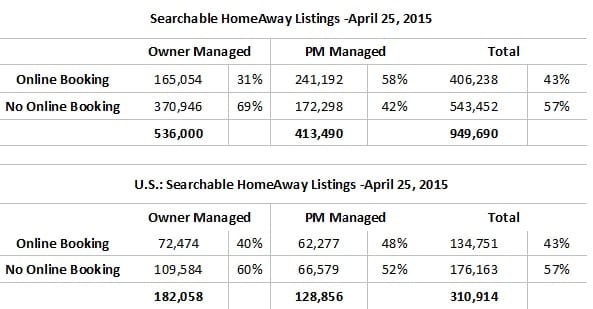
Listings that have online booking enabled are ranking higher in search results.

“One of the advantages of online booking is that it’s considered in sort. And so even though it’s not tied so you will get X number of bookings to be online bookable you will definitely be higher in store within your Tier and category,” said Jen Ford.

“What we’re really trying with this strategy by 2016 is get as much of it (online booking enabled properties) naturally if you will between now and the second half of the 2015. And then by the end of 2015, it won’t be that big deal for us to enforce in certain ways. And so we will have much tougher penalties for people who don’t play in the online booking roles, towards the end of 2016,” said Sharples.


HomeAway is looking to increase the take-rate per booking.

“Probably the one disadvantage we have versus competitors who are pure bookings base in take rate because there is a segment of our listings -and it happens to be the biggest segment of our other listings -that has a lower take rate than 10% or 15% that other people drive through that. So it is still very much the strategic objective of this team to get that take rate up…If we were earning 10% on all the listings in this company we’ll be doing about $1.2 billion in revenue I mean that’s just the reality of it. And so there is a big-big opportunity so far to the company, and again, pricing is heading in the right direction. Maybe there are other things that we can do to have that happen quicker, and obviously the team will be looking at that as we go forward,” said Sharples.


How is HomeAway driving traffic to their sites?

“60% all of our traffic comes from a combination of SEO and Direct (traffic) … The rest of our traffic comes from a combination of SEM, display, e-mail marketing, affiliate programs, a lot of other things that we do. So we’ve got a great base to work from as we grow. And we know that will change over the years, and we’re adapting our muscles and marketing, the things that we’re doing in CRM and all that should adapt to the changing marketplace,” said Lynn Atchison.


An update on the relationship with Expedia and other channels

Sharples said, “There is not a lot of new news since last quarter. It’s fairly still status quo. We’re not exposed on the majority of the searches on Expedia still…Relative to others we call EEN  -or electronic distribution network -deals we don’t have anything announce able today on this call. But we continue to work on that.”

by Amy Hinote


Snapshot of searchable listings on HomeAway by online booking status:


Searchable Listings on HomeAway by Online Booking Status

George Volsky: New Business Models: Next-Gen VRMs

0

By George Volsky –Evolution is spawning next-generation VRM business models and changing the face of vacation rentals.

Note: The blog below comes from the standing-room-only session “Retooling for Survival” presented by George Volsky at the 2015 VRMA Western Seminar in Portland, Oregon. For additional insight on this subject, join us for the 2015 VRMA Eastern Seminar in Norfolk, Virginia, April 27-28.

First, the Internet allowed homeowners to market directly to renters, bypassing VRMs.

Then the 2008 PhocusWright study tagged the vacation rental industry as a high-growth market, luring millions of dollars in new tech-based investment. (I was the industry consultant for that survey.)

Finally, investors are marrying smart home and mobile communication products to overcome constraints that historically tied VRMs to small geographic regions, unleashing new scale economies.


Next-Gen VRM Business Models

Online listing sites whetted consumers’ appetite for mega-sites that show available peer-reviewed rentals, diluting ROI on VRM websites, brands and advertising.

 
Vacation Rental Pros created a business model that manages homes across a 400 mile stretch of Florida. It has grown from 3 to 800 units in eight years, raising rents 10% yearly.

Vacasa, founded in 2009, has grown 16,000% in three years, managing 1,200 homes in seven states. Online research suggests it is well-managed and an expert in innovative tech-based services.

Wyndham seeks to expand its excellent hotel brand into vacation rentals. It brings state-of-the art data management, reservation systems and marketing to VRM acquisitions in key markets.

TurnKey is a startup with 500 rental homes in 12 featured cities and 16 listed markets. It leverages mobile technology and leading-edge technology to offer better rate making and service at lower fees.

Natural Retreats, which provides luxury accommodations and guest service internationally, has 150 U.S. homes in 14 locations and is believed to target 5,000 U.S. homes over five years.

AirBnB allows homeowners in any city (or anywhere) to rent out a single room, or to rent their residence for a week or two. It helps homeowners apply technology to improve the experience.


These Next-Gen VRMs (and others like them) are growth-motivated, impatient to perfect their models and move into traditional markets. They are eliminating expenses associated with home visits and marrying smart home and mobile technology to reduce cost and stress for cleaners, inspectors, dispatch, and check-ins. They are also investing heavily in rate making and marketing strategies.

The new business models are breaking through old boundaries, extending the geographic coverage of rental programs and eliminating expenses associated with check-in offices and regional service buildings.
 
Next-Gen VRMs reduce costs by:

  • Eliminating brick and mortar, key handling and boots on the ground;
  • Centralizing front- and back-end administration;
  • Growing by extending maintenance and housekeeping over broader geographical areas;
  • Reducing homeowner energy costs and complaints (HVAC, pool/hot tub heat);
  • Reducing legal exposure through improved key management and security;

 
Next-Gen VRMs will be positioned to increase market share by:

  • Passing savings back to homeowners, giving them more revenue;
  • Applying the savings to buy more services (increasing value proposition); or
  • Lowering rents, to generate more bookings than competitors.

 
Smart Home Technology at the Epicenter

Smart Home technology is at the core of Next-Gen revolution that may render old-school VRM business models outdated, inefficient and geographically constrained.

Hotels are embracing smart home technology, though they can benefit less from this than VRMs.

 
Three Categories of Smart Home Technology

 
Smart home technology falls into three buckets:

1. Algorithmic locks that do not embody real-time communications with the VRM;

2. Do-it-yourself (DIY) systems that have been upgraded to communicate with the VRM;

3. Enterprise systems designed from the ground up as a hospitality tech platform.


Which is Right for Legacy VRMs?

 
This depends on your preference.

Non-communicating locks improve key management and security. But these are just two of many functions that will streamline new-generation VRMs.

DIY systems are designed for individual homeowners. A few vendors have hotrodded DIY systems to report and respond to a manager, creating rudimentary Enterprise solutions. These offer expanded but limited functionality. They are more temperamental and operationally less flexible but cheap.

Enterprise systems are designed specifically to allow a single manager to manage an ever growing number of products. They offer dashboards that track and summarize the status of home devices, flexibility to add or delete new products, professional quality and reliability required for a next-gen business model.

There are thus two categories of Enterprise systems:

1. Those built over DIY technology that offer low-cost functionality and low- to mid-range functionality, and

2. Those originally designed as enterprise platforms to generate the reliability, flexibility and convenience required for streamlined operations.


Which is better? 

Think of the difference between Enterprise systems in terms of the differences between professional vs. consumer grade products: power tools, drink blenders, lawn mowers, cameras. Consumer grade is fine for limited use. Pro-grade is critical for businesses whose business depends on the product.


A Footrace between Homeowners and VRMs

It is certain that homeowners will deploy Smart Home products if VRMs do not lead the charge.

Almost half of consumers think the smart home will be main stream in five years.

They will use smart phones to shut down HVAC and pool heat when renters depart, keep pipes from freezing, install low-cost real-time security systems, check for open windows, and control entertainment systems or  mood lighting.

Homeowners will be lured to DIY products by business giants Google, Apple, Lowes and Home Depot, who know that smart home products are projected to generate $50 million in annual spending by 2020. For context, the live music industry (pianos, organs, DJ equipment, PA systems) generates $6 billion.

VRMs will need to get on the smart home bandwagon before their homeowners do. If homeowners get there first, at least some homeowners–outraged about renter energy usage–will monitor and manipulate thermostats while the guest is there. Not good.

Plus homeowners will push back when VRMs later try to jettison homeowner systems (and homeowner investments) to install systems that enable VRMs to compete with Next-Gen VRMs.


Food for Thought

Until recently, vacation rentals was one of the few industries where size does not matter. ResortQuest demonstrated that there were few economies of scale.

But technology is creating lower cost business models. When an industry evolves, profits and market share shift from slow-responding incumbent to early adaptors.
 

Conclusion

Legacy VRMs face a dilemma in two conflicting needs: risk management and survival.

In a stable competitive environment, no business wants to change the systems that made it successful. Changing a business models pulls staff away from their normal jobs and is both expensive and risky.

But no mainstream manager can ignore investor-backed next-gen companies whose sole mandate is to grow, and who can outspend smaller competitors for paid search marketing or data harvesting/analysis.

Smart-home technology offers a defensive starting point.  As a platform for more efficient business models it offers managers an opportunity to break through old geographic boundaries.

VRMs who embrace smart home technology will have to decide whether to go low-cost or invest in enterprise caliber solutions.

Those who do buy smart home technology should look beyond price and vendor assurances to look more carefully at differences in features, flexibility and dependability. They should only invest in enterprise technology systems that are robust, expandable and feature-rich.

It is important to keep pace here because Next-Gen VRMs will also focus on expensive yield management processes.

This is a critical time. We all need more information. My next goal is to visit VRMs to do an in-depth review of how smart-home technology has fared in various VRM operations and how this technology is being (and can be) leveraged to create lower cost, centralized management of rental homes.

I’ll keep you posted.

Kitchen inventory cost for vacation rentals

0

We recently furnished a vacation rental kitchen with the kitchen inventory recommended by Pro Housekeeping’s Steve Craig and the Vacation Rental Housekeeping Professionals and documented the cost below. In summary, we checked off the entire inventory for under $450.


Category Type Quantity Price
Dishes (Matching, 1.5 x occupancy)
Dinner Plate 12 $59.68
Salad Plate 12
Soup Bowl 12
Fruit Bowl (optional) 12
Coffee Cup 12
Glasses (Matching, 1.5 x occupancy)
Water 12 $11.82
Rocks 8 $11.82
Wine 8 $17.94
Flatware (Matching, 1.5 x occupancy)
Dinner Fork 12 $38.91
Salad Fork 12
Soup Spoon 12
Tea Spoon 12
Dinner Knife 12
Pots and Pans (Stainless Steel)
Large Skillet with Lid 1 $39.95
Small Skillet with Lid 1
2-4 Saucepans with Lids 2
Soup/Boiler Pot wth Lid 1
Large Non-stick Skillet 1 $5.00
Ovenware
Cookie Sheet 1 $6.88
Boiler Pan 1 $12.94
2-3 Casserole Glass Dishes with Lids 3 $19.97
Appliances
Blender 1 $19.77
4 Slot Toaster 1 $10.00
Drip coffeemaker with auto timer and auto shutoff, minimum 12 cups. Two if occupancy exceeds 10 1 $17.88
Tea Kettle 1 $6.96
Knives
Steak Knives 8 $19.97
Various Cutting Knives 9
Kitchen Scissors 1
Food Storage (Tupperware with Lids) 7 $4.97
Other
Mesh liner 1 $4.94
Cutting Board (Lexan) 2 $3.76
Mixing Bowls with Lids 3 $11.97
Colander 1 $1.97
Wooded Spoons 2 $3.34
2 Cup Glass Measuring 1 $3.77
Kitchen Towels 3 $2.91
Dish Drainer 1 $9.97
Drying Mat 1 $3.97
Non Stick Utensils (Spatulas, Spoons) 8 $4.64
Utensil Holder 1 $6.97
Corkscrew/Bottle Opener 1 $7.97
Can Opener 1 $7.97
2 Qt Pitcher 1 $2.36
Measuring Spoons 5 $2.97
Pot Holders 2 $2.99
Placemats 8 $15.92
Broom/Dust Pan/Mop $17.94
Total $420.79

By Amy Hinote

Bluetent Acquires MyVRMS

0

Bluetent, the premier digital agency for the vacation rental industry, recently announced that it has acquired MyVRMS, the vacation rental software that automates responses to inquiries from all major listing sites.

Bluetent plans to offer the MyVRMS platform to all vacation rental management companies as a way to increase conversions, drive more direct online bookings, and strengthen brand awareness. MyVRMS integrates with leading property management software systems to reflect real-time availability and rate results as well as detailed property information. Additionally, the MyVRMS software allows vacation rental managers to craft creative, customized messages designed to drive online conversions.

“We are thrilled to provide immediate replies to online inquiries for our clients in the vacation rental space,” says Peter Scott, President of Bluetent. “This is just one more area for travel companies to continue improving customer service and ultimately increase their bottom line.”

Founder of MyVRMS, Dava Trusner, will continue to lead the platform as part of the Bluetent team. Together along with Bluetent’s development, creative, and email teams, she will enhance the platform with new innovations in technology, design, and strategy.

“I’m very excited about joining the Bluetent team and being able to blend our services and offer Property Managers a full suite of digital marketing.”


About Bluetent: Bluetent is a digital agency located in the heart of the Rocky Mountains, specializing in the vacation rental, resort, and tourism industries. Bluetent provides strategic consulting, brand design, web development, email marketing, social media, and search / inbound marketing services. With a growing team of more than 40 employees, Bluetent offers a unique blend of products and services that create comprehensive, successful, online marketing strategies.


About MyVRMS: Founded by Dava Trusner, MyVRMS is an online vacation rental software that automates the response to all of your request-for-quote inquiries from major sites such as VRBO, HomeAway, VacationHomeRentals.com, FlipKey and more.

Airbnb doesn’t fight against PMs, they fight against second home owners

0

Facing an initial public offering, Airbnb’s overwhelming problem is that their business is illegal in the majority of the large cities in which they do business. Their attempt to enter the publicly traded arena requires changing existing legislation, and they have chosen to lobby against second home owners in favor of primary residents to accomplish their goal.


In a bizarre move, Airbnb told professional vacation rental management companies in Los Angeles they could no longer list homes on the site.

Last week, an Airbnb representative notified Sebastian de Kleer, President of Globe Homes and Condos, and Ari Eryorulmaz, CEO at AE Hospitality, along with at least 10 other professional property management companies in Los Angeles, that Airbnb was removing their vacation rental listings and canceling reservations for stays after April 15.

“What really bothers me is that Airbnb could have honored the reservations made on their site,” said de Kleer. “They even sent a notice to their customers who booked these reservations that ‘Globe Homes and Condos has canceled your reservation.’ They put it on us. For a company who is dedicated to customer service, they couldn’t have handled it worse.

According to de Kleer, Airbnb canceled an estimated $250,000 in reservations.


Mixed Messages

As Airbnb marches closer to launching an initial public offering for their $20 billion short-term rental marketplace, industry analysts are questioning inconsistent policies and direction regarding who has the right to add accommodations on the site.

In contrast to their activities which ban listings by property managers in Los Angeles, Airbnb has simultaneously initiated efforts that embrace the professionally managed vacation rental industry. Airbnb is currently in talks with property management software providers, including RealPage (NASDAQ:RP), Barefoot Technologies, and LiveRez, to integrate technology for vacation rental managers with real-time calendar, pricing and data updates on the site.

Airbnb’s actions in Los Angeles and their conflicting technology pursuits sparked questions about their intentions regarding professionally managed rentals.

According to Wyndham Worldwide (NYSE: WYN), there are approximately 1.3 million vacation rental properties in the U.S. and 4.3 million properties in Europe. A 2014 PhocusWright study showed that 44 percent of those vacation rentals are professionally managed. It appears Airbnb seeks to capitalize on the revenue from vacation rental managers in some municipalities while lobbying against them in others.

Proponents for the vacation rental management industry argue that property managers represent homeowners, work in tandem with cities, and provide beneficial professional services including around-the-clock customer service, professional housekeeping, maintenance, reservations and tax remittance.

Ben Edwards Transaction Advisor“We work with these cities,” said de Kleer. “For example, we worked hand-in-hand with the city council in Palm Springs to put legislation in place. Together we established a toll-free hotline for complaints, a city registration requirement, and a ‘Good Neighbor’ initiative which provides safeguards for both travelers and long-term residents.”

According to Ben Edwards, President of the Vacation Rental Managers Association (VRMA), “It is disappointing that professionally managed listings have been removed in this case. Our members are best served when the distribution options they choose to pursue are fair, clearly articulated and mutually beneficial.”

Both Globe Homes and Condos and AE Hospitality are members of the VRMA.


Airbnb lobbies against second homeowners, not property managers

Airbnb stats primary home ownersFacing an initial public offering, Airbnb’s overwhelming problem is that their business is illegal in the majority of the large cities in which they do business. Their attempt to enter the publicly traded arena requires changing existing legislation.

However, a closer look shows Airbnb’s lobbying efforts are designed to differentiate on the basis of ownership not management.

When faced with legislative conflict, Airbnb has gravitated to their message that the company helps primary residents pay their bills via a benevolent shared economy, and their lobbyists aim to rescind the property rights of non-resident homeowners.

For example, Airbnb advocates for laws articulating that a homeowner who owns a home in San Francisco and lives in New York cannot legally rent his home as a short term rental while his long-term renter has the right to do so.

“FromCarl Shepherd Founder HomeAway what we have observed, Airbnb’s choice to pull the listings from Professional Managers is not a change in policy,” said HomeAway co-founder and CSO Carl Shepherd. “Airbnb has actively lobbied against the rights of second home owners in cities and for the rights of ‘permanent residents.’”

Shepherd said, “It is the observable basis for their extensive government relations program. Their focus has been on making Airbnb legal, not in what is best for the vacation rental industry as a whole.  That single minded focus has resulted in the laws in San Francisco and Portland, which they are now supporting in Los Angeles.  Because PM’s (property managers) represent second homeowners, it is logical that they would remove them from their L.A. listings making their Government Relations strategy consistent with their product.”

Shepherd added, “The result of this effort in San Francisco is that while a second home owner (or her property manager) is prohibited by law from renting short term, the tenant of a second home owner is empowered to do just that.”

While analysts and investors seek to determine the long-term sustainability of Airbnb’s business model, property managers -which represent 44 percent of the global market -are learning not to rely on Airbnb as a source of revenue.


What should professional vacation rental managers do?

“From a business perspective, it is critical that professional vacation rental managers diversify their marketing strategies so they are not over-reliant on any one distribution channel for their revenue,” said Edwards. “It’s also critical that they align themselves with others in this industry who share an interest in preserving the traditional professionally-managed vacation rental industry. New business models and disruptors will continue to evolve, but it’s important to safeguard your business and navigate these changes.”

Globe Homes president De Kleer agrees, “We’ve been around longer than Airbnb, and we will be fine without them. However my advice to other property managers doing business with Airbnb is to be careful and prepared. Don’t put all your eggs in this basket.”


By Amy Hinote

Job opportunities in the vacation rental industry

0
Jobs in the vacation rental industry

They’re hiring! Vacation rental industry leaders are hiring positions and are looking for talented, driven team members with vacation rental experience.


B2B Sales Executive, Vacation Rental Industry

Ascent Processing, Inc.

Job Description:

We are seeking a self-motivated individual with strong analytical capabilities, customer service, and a commitment to excellence to generate revenue by developing market potential through forecasting, lead generation, qualification, and closing sales for the Ascent Processing Solution.

The Sales Account Executive should be competitive and driven, with a strong work ethic and have experience in sales or consulting in the hospitality industry. It is also vital that the candidate display exceptional communication and interpersonal skills along with the ability to connect and establish rapport easily with a wide variety of potential clients.

Read more.


See more at VRM Intel’s Job Board ProVRM.com


Do You Have The Right Call Monitoring Scoring Criteria?

0
Over the years an increasing number of vacation rental clients are discovering the value of having a system for monitoring and scoring real-world reservations inquiries. Numerous VRMA member vendors are now providing these call monitoring / lead tracking systems and, increasingly, at more affordable price points.  
That being said, even the best call monitoring system is only as good as how a vacation rental manager uses it. Of course you have to be prepared to invest the time in listening to and scoring calls, but as importantly, you need to make sure that you have the right scoring model and criteria in place.  


By: Doug Kennedy


As a hospitality sales trainer, I often get to listen-in on the real-world calls captured by our vacation rental and other lodging clients and all too many have the wrong scoring model in place. Here are tips for reviewing and updating your criteria:

Don’t start the call with an interrogation. Many of my vacation rental clients have been told by their providers to start off the call by asking for too many details. Here is an example:

“Good afternoon, thanks for calling Kennedy Vacation Rentals, this is Doug, may I have your first and last name please? And what is your call back number in case we get disconnected?  And may I also have your email address?” 
The problem here is that most callers find this very annoying. It sets the call off on a “transactional” tone rather than starting with a friendly and personalized conversation. Strangely, most agents already have caller ID and can see the number calling. Yet they are told you need to ask for a call back number and extension in case the person is calling while at work at a company. Yet how many dropped calls are there from landlines? Further, if the person is calling from a mobile and the number drops, they have probably gone out of range and will not answer when you call back.

Also, because so many people have hard to understand email addresses, it becomes frustrating for the caller to have to give this before they even have had a conversation and made a connection with the agent. 

Instead, here are the best practices for opening a call:
  • Use a positive opening greeting including the company name and your name. Then wait for the caller to respond. Many callers (about 1/3) provide their names. If they do not, then ask for the name conversationally by saying “Certainly I can assist you with that, may I ask who I am speaking with?” The caller will then identify by first name if they want to be more casual, or by their full name in which case you can address them as “Mr. Kennedy.” 
  • Wait to get the email later in the call such as when they make the reservation, or if they do not book, then ask at that time for the email so that you can “…send links to what we have discussed.”  
  • Avoid scripted welcoming statements at the start of the call such as “Have you stayed before? No, well let me be the first to welcome you.” This seems like a good idea but when agents are forced to say it 30 times a shift it ends up sounding disingenuous. Of course agents should ask if the caller has stayed before, so that they can:
    • a) look them up in history; and
    • b) re-sell the same accommodation as most guests want to rebook what they had or something similar.
  • Add the most important criteria question for today’s over-informed callers who have probably already been online prior to calling: “As I’m checking availability, are there any questions I can answer such as about the location or amenities?” This question helps “un-mask” the caller’s story and agents then find out where they are at in their buying decision.  Are they ready to book and have no questions? Do they have questions about what part of the destination is best? Have they decided on a place to rent but want to talk price? 
  • Add a criteria for using visually and emotionally descriptive language. In the past we trained agents to briefly describe the rental property. However now most have already seen it; some are viewing pictures while on the phone. Today it is more important to “narrate the pictures” with words that evoke visual imagery and/or evoke the emotional experiences to be derived.  
  • Add a specific criteria for recommending, suggesting and/or endorsing the accommodations. This really helps callers overcome what psychologists say is the “choice overwhelm problem” we have as consumers these days. They can say something like “Now there are three accommodations I can recommend and any of these would be great choices for a family such as yours.” 
  • Make sure the criteria requires them to try to get the caller to book now before offering to email options. I have found that many agents of my clients who have invested in call and lead tracking systems move too often to offering to email a list of the available options before they try to convince the caller to decide. Instead, make sure your criteria encourages them to first try to secure the sale, and then if not to say something like, “Why don’t we put this one on hold for 48 hours and then I can email you a list of the others we have discussed. This way you at least have something locked-in.”
By updating your criteria, you will ensure that your agents are being asked to use a process that makes sense circa 2015 for the real-world callers contacting you daily.  


Want more insight from Doug Kennedy? Doug will be presenting keynote speeches at the 2015 VRMA Western Seminar (April 13-14 in Portland, Oregon) and 2015 VRMA Eastern Seminar (April 27-28 in Norfolk, Virginia). 

Is Airbnb Saying NO to Professionally Managed Vacation Rentals?

0

Airbnb recently removed listings posted by professional vacation rental management companies in Los Angeles, sparking questions about the company’s direction as they move towards their IPO roadshow.

Globe Homes and Condos and AE Hospitality saw their Airbnb listings disappear last week. The presidents of Globe Homes and Condos in Venice and AE Hospitality in downtown L.A. both said they received phone calls from Airbnb on Tuesday, telling them that their listings would be removed from the site and bookings after April 15 would be canceled.

“The rep who called us mentioned the growth plans of Airbnb conflicts with us listing on their website,” AE Hospitality president Ari Eryorulmaz wrote in an email. “No explicit reason was given.”

The LA Times reported that “An analysis of Airbnb listings for The Times by Tom Slee, an independent researcher working on a book on the sharing economy, found that 10 of the 13 hosts with the most local listings on the site in October no longer had any on Friday. Globe Homes, the biggest, had only a handful of houses listed in Palm Springs, instead of the dozens of units it typically lists in tourist-friendly parts of L.A.”

According to the LA Times, “Amid mounting pressure from housing advocates and community groups, Airbnb is cutting ties with some of its biggest money-makers.”

A 2014 PhocusWright study showed that 44% of the vacation rentals in the US are managed professionally by vacation rental management companies.


It looked like it was going to go a different way

Airbnb recently began working with vacation rental software providers LiveRez, Kigo and Barefoot, along with intermediary BookingPal, to provide software integrations allowing real time bookings and calendar management for professional property management companies.

Interestingly, AE Hospitality and Globe Homes both are members of the Vacation Rental Managers Association (VRMA) and both use HomeAway’s Escapia for their property management software.

According to the LA Times, Airbnb had little to say about the moves, issuing a brief statement that said its “mission is to connect hosts with guests and provide a quality, local and authentic experience. We routinely review our platform for market quality and adherence to this mission.” A spokesman said he couldn’t comment on specific hosts. There is no sign of similar moves in other big Airbnb markets, such as San Francisco and New York.


Backlash from Hosts

At the 2015 SXSW Interactive Conference in Austin, there was backlash from independent Airbnb hosts about the inclusion of property management companies, saying that Airbnb’s message of “connection” and “community” was not aligned with the services offered by professional vacation rental management companies.

Airbnb’s response was that their goal was to provide non-hotel alternative accommodations that provided travelers with a safe, local experience in a destination, whether or not the home was professionally managed or owner managed.


Is Airbnb Swiping Left or Right on Professionally Managed Vacation Rentals?

The move by Airbnb is possibly triggered by legality concerns in the municipalities in question, but their direction remains unclear.

The LA Times reported:

The episode highlights the tension between Airbnb’s “sharing economy” ethos of regular people renting out spare rooms, and the professional operators who are attracted to it, said Ian McHenry, president of Beyond Pricing, a firm that provides market data to Airbnb hosts.

“They’ve always had the tenuous relationship with property managers and vacation rentals in general,” said McHenry said. “Whenever there’s kind of an outrage, they’ll retreat to a position of, ‘Hey, we’re just trying to help people pay the rent.’ Professional property managers fly in the face of that.”

It also comes as many analysts expect Airbnb, whose most recent round of investment valued the company at $13 billion, to launch an initial public offering, perhaps later this year. If it plans to do so, the company needs to make sure it’s in the clear with local regulations and not triggering protests in the streets, said Sam Hamedah, managing director at PrivCo, a research firm that tracks private companies.

“One of the things that IPO investors hate most is legal and regulatory risk,” he said. “There’s no question that Airbnb has to clean up those issues if it’s going to go public. But doing that is not going to be easy.”

In L.A., big hosts such as de Kleer and Eryorulmaz, who are co-founders of the Los Angeles Short-Term Rental Alliance, have also played a big role in the discussions, pitching City Council members and defending their business model.

But on Friday, both said that they were around long before Airbnb, and could well be around long after. For a while, though, de Kleer said, Airbnb made a lot of money off of them.

“But it doesn’t match their PR story to have professionals on their platform,” he said. “Their goal is to go public, so they took this drastic step.”


By Amy Hinote

Wyndham Acquires Corolla Classic Vacations in North Carolina’s Outer Banks

0

Wyndham Worldwide (NYSE: WYN) acquired Corolla Classic Vacations in Corolla, NC, effective April 1, 2015.

The purchase of this prominent Outer Banks company adds over 200 vacation homes to the Wyndham Vacation Rental inventory and is the first acquisition of a US vacation rental management company by Wyndham in over a year.  In January of 2014, Wyndham purchased Hatteras Realty with over 500 vacation rentals.

According to Wyndham’s 2014 Annual Report, “We currently transact approximately 1.5 million vacation rental weeks per year…Wyndham currently manages approximately 9,000 vacation rental units in the U.S. and reports more than 100,000 properties in over 600 unique destinations.”

The report adds, “Wyndham Vacation Rentals primarily derives its revenues from fees, which generally average between 20% and 50% of the gross booking fees,” and assesses, “The global demand per year for vacation rentals is approximately 76 million vacation weeks, 57 million of which are rented by leisure travelers from Europe.

Wyndham Worldwide entered the US vacation rental space in 2010 with its purchase of ResortQuest from Leucadia.

Since 2010, Wyndham has grown through acquisition with purchases in Gatlinburg, Myrtle Beach, Gulf Shores and North Carolina’s Outer Banks. However, their organic growth in the US vacation rental market has been a question mark for Wyndham observers.

In September 2014, Wyndham named Marriott’s Mary Lynn Clark as President, Wyndham Vacation Rentals North America, following the resignation of industry veteran Bob Milne.

By Amy Hinote

Housetrip founder: 3 things all first time entrepreneurs should know

0

Arnaud Bertrand founded Housetrip, a UK-based online vacation rental marketplace, in 2009 and served as CEO until he stepped down in 2014. During his tenure as CEO, Housetrip raised $60 million and grew to 300,000 listings. Bertrand recently wrote an article for Hot Topics, which they dubbed “amazingly honest,” in which he discussed what he learned from both his successes and failures. Bertrand is currently writing a book about his experience with HouseTrip.


Housetrip BertrandWhen I founded HouseTrip seven years ago I had the naivety that many first time entrepreneurs experience.

I thought that armed with a good idea and a great deal of confidence, the world would be mine.

Today writing a book about the whole experience enables me to see how comically deluded I was: what I thought would be a hard but relatively straightforward journey ended up being an experience so exacting that even today, months after I left the management of the business, I still go to sleep every night thinking about stressful episodes from my time at HouseTrip.

I consider myself extremely lucky to have gone through such a formative experience and if anything it reinforced my desire to be a life-long entrepreneur but I know now that founding a company is anything but straightforward.

The funny thing is that if today’s me told past me about the challenges I was going to encounter at HouseTrip I don’t think I’d have listened to a word of it.

Most first time entrepreneurs seem to be victims of the Dunning–Kruger effect (which states that the more useless you are at something, the better you think you are) and I was far from spared: “sure they’ll be some challenges along the way but I’ll deal with them when they arise, no big deal” was my frivolous thinking. In a way this might be a good thing: if everybody understood how punishing the journey of a first time entrepreneur is, only fools would start companies.

And after all, doesn’t good judgment come from experience and experience from bad judgment?

Nonetheless I still hope that you, dear reader, will be open to some hard-earned lessons from years of managing a business through some incredible ups (HouseTrip employed hundreds of people and raised $60 million from Europe’s top venture capitalists) and some very low downs.

For you I have compiled the three biggest lessons I wish the past me had listened to.


1. Succeeding at building a good business is first and foremost succeeding in the art of hiring and managing people.

There is this mystique out there of CEOs being greater-than-life individuals who, alone, give every last bit of direction in an organization (propagated in large parts by the numerous hagiographic portraits of CEOs in the media): I think that managing people this way only leads to demotivated employees who lack initiative and a CEO who’s so embroiled in the foliage of the business that she cannot see the forest.

If your company has any ambition the only way to manage your people is to do so in a way where they have a healthy amount of freedom and empowerment (while of course remaining accountable for the outcome of their work).

Being a good leader isn’t only about a group of people putting their faith in you but it also depends on you putting your faith in them.

There is no silver bullet to achieve this – there never is – but organizing your business in a way where you have “companies within the company” typically helps.

The idea is to divide things in a way where as many people in your company as possible end up being individually in charge of all aspects of their own business unit and accountable for the profit (or other important KPIs) that it is supposed to generate.

That’s the way some of the world’s most successful companies are set up and there are many great entrepreneurs who state that this empowering organizational design was the single greatest factor behind their success.

The key for this to work for first time entrepreneurs, is to hire the right people in the first place and I cannot understate the importance of having an extremely rigorous interview process from day one.

For each new role (and especially the most senior ones) you need to ask yourself – and then ask yourself again –whether you really need the role and then you need to devise a recruitment process which only the right person for the role can nail.


2. Having a differentiated product or service is far from being enough to capture your market.

If we are to take a military metaphor, to win the war you need to first secure your beachhead and then progress battle after battle.

And in the world of business securing beachheads and winning battles means becoming the solution of choice for coherent segments of customers.

Our example at HouseTrip is quite telling: I think that our failure to go for a sensible market capture strategy is the single greatest reason behind the lead that Airbnb has on us today.

When we were focusing on tactics (namely trying to be present in Google’s paid search results for all keywords relevant to us) they were ruthlessly applying their market capture strategy: before we knew it they’d established a very strong brand among key segments in our market and that was extremely difficult for us to counter.

They started, very sensibly, with a small (but very strategic) beachhead fit for the startup with limited means that they were at their beginnings: young American budget travelers.

Once they’d captured it they went for the same segment in other countries around the world and progressively expanded their offering to appeal to a larger public.

We at first grew very fast thanks to our Google tactics, but we progressively found ourselves in a situation where everyone started to know about Airbnb and our own customers were simply saying “I booked my flat from a website I found on Google.”

From that point on it was very difficult to compete with them. They were the brand everyone knew and told their friends about.

Our respective products, in all honesty, weren’t all that different (I’d actually argue that ours is in many ways better) but because they approached the whole thing strategically by winning hearts segment after segment, whilst we focused on tactics, they’re the leader today.


3. Founding a company and seeing it to success is winning a whole lot of fights against yourself.

We humans have a natural tendency to create our own Truman Show, our own cell of comfort: entrepreneurship is really hard because it’s about constantly forcing ourselves outside this cell.

First time entrepreneurs need to do things that feel deeply unnatural.

For instance for me the hardest thing was not to lie to myself.

Often when I was faced with bad news I’d simply bury them in a deep corner of my mind and choose to focus on more positive thoughts. Worse still, I’d not share them with others in the team thinking that they were my burden to carry and that my role as a leader was to give a positive impression about the direction of the business.

This of course meant that too often bad news weren’t acted upon: not surprising if I didn’t face it and didn’t ensure that those who were part of the solution knew about the problems.

Personally that was my biggest fight but all first time entrepreneurs are different, the only certainty is that you’ll fight yourself in some way.

For instance I know many first time entrepreneurs who struggle with their ego (entrepreneurs are after all not the most ego-free bunch) and who as such tend to do things motivated by the image of themselves that they want to project to others (be it the public, their employees, their investors, etc.).

If you are this way you need to be cognizant of the danger: this isn’t about you but about your business succeeding and the right decisions are sometimes bound to be unpopular.

Re-reading myself I realize that these three lessons might not give the first time entrepreneurs among you the most motivational image of entrepreneurship, so let me counterbalance this with a rather fitting quote from Winston Churchill.

Right before the start of WW2 he wrote: “The odds were great; our margins small; the stakes infinite”.

In entrepreneurship too the stakes are infinite – in many more ways that you might imagine – and this my dear reader is why, despite the hardship you’ll inevitably face, you shouldn’t hesitate to act on your great startup idea.

After all, to quote Churchill again you don’t want to become “the old man who said on his deathbed that he had had a lot of trouble in his life, most of which had never happened”: you want to experience what life has to offer, hopefully see your bet yield those infinite returns and if not, still get a return by emerging from your extraordinary experience a stronger, prouder and wiser person.

Kaba

0
Kaba Keyless Locks

Kaba Smart Home Keyless Locks

OPMA

0

Onsite Property Management Association

Weatherby Consulting

0

Buy and Sell Vacation Rental Companies with Weatherby Consulting

PMT

0

Revenue Management for Vacation Rentals

LiveRez

0
Vacation rental software

LiveRez Software