- Advertisement -
Home Blog Page 44

All short-term rentals banned in Anaheim by City Council

0

By Joseph Pimentel – After a five-and-half hour special meeting Wednesday, the Anaheim City Council voted to ban the operation of short-term rentals.

The owners of the 363 permitted short-term rentals will have 18 months to stop operating. (HomeAway has over 1,500 listings, half of which are property managed).

Mayor Tom Tait and Councilmen James Vanderbilt and Jordan Brandman voted for the ban. Councilwomen Kris Murray and Lucille Kring voted against it.

“The sharing economy is exciting and something that gives people a chance to earn extra income but this is not really the sharing economy,”Tait said. “These are motels in residential neighborhoods.”

The meeting capped off years of debate between residents, who claimed that the steady stream of vacationers in their neighborhoods ruined their quality of life, and vacation rental owners, who say they invested heavily in turning eyesore properties into beautiful income homes.

An overflow crowd of residents lined up to take the podium Wednesday evening as the council weighed whether it would have a ban or impose stricter regulations on short-term rentals.

Wearing white T-shirts and holding up signs with “Ban STRs,” opponents packed City Hall for an indoor rally and picketed outside before the meeting started.

Organizers riled up a crowd of more than 150 people inside the chamber with chants of “Si Se Puede!” (Spanish for “Yes, we can!”) and yelled that these “businesses don’t belong in our residential neighborhoods.”

With popular destinations such as Disneyland, the Anaheim Convention Center, Angel Stadium and Honda Center, Anaheim has become a hot spot in the “sharing economy” as families look to websites such as Airbnb, VRBO and HomeAway for ways to shave their vacation expenses.

Residents have pushed the city to step up enforcement, complaining that vacationers are staying in “mini-hotels” and holding rowdy all-night parties, littering the streets and taking up parking spots.

STRs are a cancer, and they need to be banned,” said Peter Page, adding that the $200,000 enforcement cost the city pays overseeing the homes is not worth the $3 million they’ve brought into the city since July 2014. “This does not help the community.”

“For the past several years, Anaheim residents have suffered,” said Martin Lopez, a resident of Sherwood Village, where he says 50 of the 211 town homes are operated as short-term rentals. “I urge you to ban STRs, current and future.”

Short-term rental owners argue that they fix up properties that enhance the look of the neighborhoods, help surrounding home values and bring in much-needed revenue for the city.

“Before my husband and I moved into our home, some of the homes in our neighborhood were not kept up. Some were abandoned,” said resident Beth Farnell. “Ever since STRs became more prevalent, those unsightly homes have become some of the most beautiful homes in our neighborhood.”

The council weighed two options:

A complete ban of short-term rentals, with current permits phased out in three years, which was later changed to 18 months.

Or enhanced regulations to limit the number of people staying at a home; extended “quiet time” hours; providing neighbors with a contact who responds “around the clock,” and increasing the age of renters to 21. Owners would also lose a permit if they are cited for two major violations in a 12-month period.

City officials also said they would enhance its current regulations. Anyone caught operating an unpermitted short-term rental would have their home’s power and water turned off. Anaheim runs its own electric and water systems.

Anaheim began handing out permits to operate homes as short-term lodgings in 2014. Operators pay an annual $250 registration fee, and guests pay a 15 percent tax on their bill, the same as those staying at a local hotel. After the number of permits doubled to 400 within a year, the city in 2015 issued an emergency moratorium on more permits.

After the vote, several short-term rental owners cried and stood, stunned, outside the council chamber.

“The sad thing is we worked so hard to do the right thing,” said Valerie Van De Zilver, who represents 23 short-term rental owners. “We’ve taken care of our properties … it’s tough to lose when you’re doing the right things.”


LeisureLink® Releases New Guide to Help Vacation Rental Property Management Companies Make More Money

0

In their continuing effort to give Property Management Companies (PMCs) the tools they need to successfully market their vacation rentals online, LeisureLink has published a free guide titled “Make More Money: Turning Your Property Management Company into a Revenue Generating Machine”. LeisureLink has been the global leader in innovative vacation rental technology and distribution since 2007 and has delivered over $1 billion in bookings to its clients.

LeisureLinkPMCs are responsible for marketing rentals, serving guests and satisfying owners, often with minimal staff and strict budgetary constraints. At the end of the day, these efforts must result in profits. To do this, PMCs have to stay competitive to increase revenue in all possible ways. The 19-page eBook is available for free download at leisurelink.com/make-more-money-ebook and explores the most effective strategies to make more money in the following chapters:

  1. Making the Most Out of Mobile
  2. The Value of Data and Consolidated Reporting
  3. Understanding True Competition to Increase Vacation Rental Revenue and Profitability
  4. What Hospitality and Channel Management Technology Have in Common
  5. LeisureLink FastPay: Increasing Profitability in the Midst of Unpredictable OTAs
  6. A Deep Dive into Single Contracts & OTA Performance: Precious Time, Pooled Inventory, and Preventative Maintenance
  7. Ancillary Services: Essential in the 2016 Hospitality Industry

According to LeisureLink CEO, Julian Castelli, the emerging nature of the vacation rental market has provided unparalleled growth opportunities for PMCs. “Online marketing, distribution, and mobile are proving to be the wave of the future as it is significantly impacting the vacation rental industry today. We are excited to have the opportunity to help PMCs discover how the latest trends and technologies align with their critical business objectives and driving revenue.”

As the preferred choice for top performing vacation rental suppliers, LeisureLink offers three main products to help grow revenue for hotels, vacation rentals, timeshares, and resorts: Managed Distribution, Reservation Services, and Booking Engine Technology. In addition to providing access to the industry’s largest distribution network, LeisureLink owns a family of consumer brands including VacationRoost, Mountain Reservations, Mexican Destinations and Hawaiian Beach Rentals.

“We’ve learned a lot working with hundreds of PMCs over the years, so it was a pure pleasure for us to compile highlights of our revenue enhancing expertise into this book,” Castelli adds. “We encourage all PMCs to download a copy today.”

The complimentary guide filled with actionable tips and strategies is available at www.leisurelink.com/make-more-money-ebook/. To learn more or request a live demo of the LeisureLink suite of solutions, please visit www.leisurelink.com/schedule-a-demo/ or call 800-976-4925.

ABOUT LEISURELINK
LeisureLink helps vacation rental companies maximize bookings online, offline, anywhere. Through industry leading online connectivity tools, such as distribution, yield management, and booking engines, LeisureLink drives better lead conversion without the time-consuming work of managing multiple extranets. With the industry”s largest distribution network, vacation properties have the opportunity to connect to top online travel channels like Expedia, Booking.com, Airbnb, HomeAway, all the major GDS players and travel sites. Suppliers can manage all of their listings from one platform – optimizing rates, availability, specials, and content changes. LeisureLink consolidates all accounting, payables, and receivables with a single, source of payment, providing clarity to the often-complex accounting issues. Founded in 2007, LeisureLink is a privately held company and headquartered in Salt Lake City, UT. For more information, please call 800-976-4925 or visit leisurelink.com.

Unless indicated otherwise, all trademarks and service marks herein are trademarks of LeisureLink or an affiliate thereof.

Airbnb’s Michael Endelman Joins LiveRez Partner Conference as Key Instructor

0

LiveRez.com, today announced that Airbnb’s Michael Endelman will join its growing roster of instructors at the company’s annual Partner Conference October 10 through October 13 at the Lost Pines Resort and Spa in Austin, TX.

Endelman, a content and experience strategist for Airbnb, is a highly-regarded expert in using content to engage travelers. His past experience includes a stint as a senior content strategist for Google, as well as editor gigs at Rolling Stone Magazine, Food & Wine Magazine and Spin Magazine.

Michael-Endelman“Securing Michael as an instructor was a huge goal for us,” said LiveRez VP of Operations Tina Upson. “Not only does he have deep experience in writing and editing content that engages travelers, but he’s tuned in on a daily basis to what’s helping hosts get more bookings on Airbnb.”


In 2015, LiveRez was selected by Airbnb as the first North American property management software it would integrate with. This came after Airbnb Head of Global Vacation Rentals Shaun Stewart met with 87 different software providers worldwide.

In the past year, hundreds of professional property managers using LiveRez (called partners) have found success advertising their properties on Airbnb through LiveRez’s real-time integration with the global leader. In addition to the convenience and cost savings of the integration, LiveRez partners are also seeing an uptick in revenue.

At the 2016 LiveRez Partner Conference, Endelman will teach a variety of classes on how managers can further optimize their properties listings on Airbnb and elsewhere, and use this content to better engage travelers and earn more bookings.

Endelman joins a stacked lineup of instructors at this year’s conference. In fact, he’s the second high-profile instructor LiveRez has announced in just the past week. On Thursday, the company released the news that it had secured vacation rental marketing expert Matt Landau as a key instructor for its marketing classes.

To learn more about the 2016 LiveRez Partner Conference, visit Conference.LiveRez.com.


About LiveRez.com

LiveRez.com is a complete, online, vacation rental property management solution, focused on making vacation rental property managers fully operational online and thereby increasing bookings. LiveRez.com offers an all-in-one cloud-based platform, featuring best-in-class websites optimized for online bookings, a full-featured reservation and property management system, a robust CRM system, an exclusive connection to QuickBooks for trust accounting, and a unique “Pay-for-Performance” approach, which provides a mutually beneficial partnership between LiveRez.com and its vacation rental manager partners. The company’s largest competitor is HomeAway Software for Professionals.


NEW VRM Intel Live! Coming to Wilmington and Sandestin

0

VRM Intel Live! is coming this fall to Wilmington and Sandestin, and you are invited to see some of your favorite writers LIVE and in person.

With a high-level agenda designed to provide top-tier education about the issues that professional property managers care about in today’s vacation rental marketplace. VRM Intel Live! is designed with three educational tracks to give your team a full day of information and intel for vacation rental managers.

Click here to view the Live! full agenda with sessions such as:

  • Toppling the Competition with Park Brady
  • Company-Wide Customer Service Goals with Doug Kennedy
  • Listing Site Optimization and Independence with Amber Mayer
  • 2017 Marketing Plans with Amy Hinote
  • Cutting Costs and Increasing Profitability with Ben Edwards
  • SEO/SEM with a panel of top online marketers in the vacation rental industry
  • Compensation, Subcontractors and Overtime with Sue Jones
  • and Revenue Management, Marketing Automation, Q&A with Experts, Live Product Demos and much more!

Plus Breakfast, Lunch, Friends and Networking!

View the full agenda.

The cost is $79 per attendee. Bring four or more attendees and receive 25% off.

Register for Wilmington

Click here to register for VRM Intel Live! in Wilmington

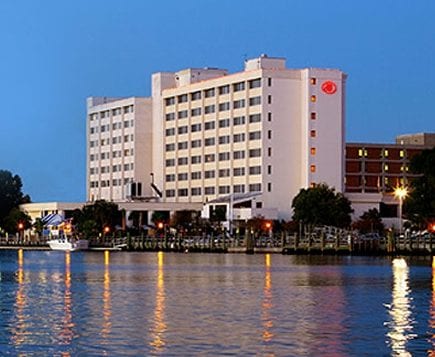
The Hilton Wilmington Riverside is offering a group rate of $139 per night. Use VRMintel when making your reservation at 910-763-5900.


Registration for Sandestin is opening soon!

Making the Most of Off-Season Business

0

By Josh Guerra, Bizcor – Vacation off-season can be one of the most frustrating times for rental owners, especially if their property isn’t in a year-long destination, such as somewhere tropical. Vacation rentals tend to sit vacant more than you’d think, actually: up to 85% of the year for most properties. When you include the nearly six million vacation homes throughout the country, that adds up to an incredible amount of vacancy. While this is completely normal throughout the vacation rental business, that doesn’t mean you have to accept it!

Every vacation rental owner and property manager knows to plan for the off-season, but often, this just consists of gritting their teeth and bearing the slow period. For those of you who are tired of staring at an empty booking schedule, it’s time for a new plan! Wherever there are people, there are bound to be attractions; it’s all in how you highlight them. Read on for a list of our top tips and tricks that can help you draw in customers to your property during the off-season!

Bring Back Previous Guests

The first and most lucrative pool for you to tap into to help improve your off-season rental rates are your previous guests. Because they have already seen (and most likely enjoyed) how nice your property and the surrounding area are, they don’t have to be convinced that they will have a good time; your goal here is to draw them in with a convincing deal. There are a few ways you can do this, such as:

  • Personal Calls – If you have plenty of information collected from previous guests—put it to good use! A personalized call to ask how they enjoyed their stay is a great opportunity for you to ask them to come back—with an incentive, of course! Sweeten the deal with a limited time customer appreciation rate or added amenities.
  • Email Specials – A monthly email newsletter is one of the best ways to get guests back to your property during the off-season. You can include and highlight the interesting activities available during these off-season months, as well as include special deals and packages that will draw anyone’s interest.


Highlight Off-Season Draws

Despite it being the off-season, there are still bound to be plenty of things to do and see nearby your vacation rental. After all, locals are there all year long, and they don’t want to be bored, either! Find those interesting things to do and places to visit, and then promote them to your potential guests relentlessly. Local museums, theaters, or concert venues make great highlights for indoor activities, while hiking trails, swimming pools, or skiing opportunities are good points to sell for outdoor enthusiasts.

No matter what you choose to promote, keep one thing in mind: Off-season is still the off-season. Even the most amazing marketing can’t completely counteract the fact that there’s a reason for a lull in business. Temper your expectations, but set yourself up for success anyway!


Utilizing Paid Search Ads to the Fullest

Online marketing through the use of paid search can be extremely effective at generating traffic for your property, especially if used correctly. Sure, there is something to be said for high saturation advertising, but in order to truly maximize the effectiveness of your ads, you’ll need to target the proper demographics—those who will convert on your site. For off-season vacations, you should target your ads towards people looking for special rates and cheap deals.

By letting people haggle and “name their price,” a popular method recently, you can attract deal hunters and other guests you may not have previously converted. Since the rooms you will be filling would have been empty otherwise, you aren’t really losing money by offering cheaper rates. The most important thing is to drum up new business and fill your rentals!


Charity Auction Demand – Geronimo

The final tip for filling your rentals during off-season involves something you may have never considered: charity auctions. In fact, charity auctions and fundraisers frequently raffle off vacations as prizes; they happen to be the most popular prize! This enormous market is just waiting for you to dip your toes into its waters, but how do you get started?

Services such as Geronimo.com are the perfect way for you to get into the charity auction game. You can promote your off-season properties to non-profits for both profit and visibility. Thousands of organizations will be able to see your property, including through slideshows and video footage promoting your property at these auctions, giving you significantly more chances to fill vacancies in your bookings calendar.

Through Geronimo’s vacation certificate platform, your property will be marketed to non-profits across the country, creating an entirely new market for your rentals. With easy setup and integration (you will receive calls from certificate holders to book your property) there’s nothing but upside to using this type of marketing system.

Charleston officials starting short-term rental task force

0
VRHP Annual Conference Charleston

To Lauren Packert, the charm of Charleston is mostly meant for people who live in the Holy City.But she’s torn, when it comes to whether short-term rentals websites, like Airbnb and VRBO, are good or bad.”If you’re bringing in more visitors and tourists, it might take away from the charm of Charleston.

But then again, it could bring in tourists to bring in more revenue for the city,” she said.

A task force is now studying this issue at city hall; do short-term rentals push out people who live in the Lowcountry to make room for visitors?Planning director Jacob Lindsey admits the task force’s mission is vague for a reason.”We don’t really understand the effects of short-term rentals or residential hotels on the city. So this process of studying how they work will give us better insight about effects on quality of life,” he said.

He said 18 people appointed by city council and the mayor would comprise the task force. The mayor will appoint six members while council members appoint the rest.

“The most important thing for us is the quality of life for residents who live here. So we want to make sure that our neighborhoods are protected, that city doesn’t become one giant hotel,” he said.

Right now, short-term rentals for less than a month are not allowed in most of the city, except for the Cannonborough-Elliotborough neighborhood. But the president of the S.C. Vacation Rental Managers Association hoped the task force would find a way to accommodate its members.

Charleston chapter president Denise Holtz released a statement Thursday:

Making short-term rentals a legal and effectively regulated travel option is a win-win for everyone. It addresses the concerns of the community, protects local homeowners looking to make ends meet, and it preserves a critical lodging option for travelers. Charleston short-term rental operators want to pay taxes, follow the rules, improve our neighborhoods, and continue to offer travelers the unique opportunity to stay local. We look forward to continuing our conversations with the city and working with the Task Force to craft an ordinance that protects local property rights and preserves the long-standing vacation rental industry here in Charleston.

The task force will start meeting in about a week, Lindsey said. He did not know how long the work would last.

Vacation Rental Pros Rapidly Expanding with Acquisition of Waterfront Vacation Rentals

0

Vacation Rental Pros, LLC, one of the fastest growing vacation rental management companies in North America, reached an agreement to acquire Waterfront Vacation Rentals, based in St Petersburg, Florida.

The move adds an additional 185 St Petersburg Beach-area vacation rental properties to the management portfolio of Vacation Rental Pros, giving the company over 1,650 total properties under exclusive management contract.

“We are thrilled to expand our existing presence in the Tampa/St Petersburg market, which plays host to more than 21 million travelers per year,” said Steve Milo, founder and owner of Vacation Rental Pros. “In addition to Waterfront’s existing client base, their top-notch management team brings a wealth of experience in new and growing markets of St Petersburg Beach, Clearwater Beach, Madiera Beach and Indian Shores, and puts us in an excellent position for even more growth in the near future in Southwest Florida.”

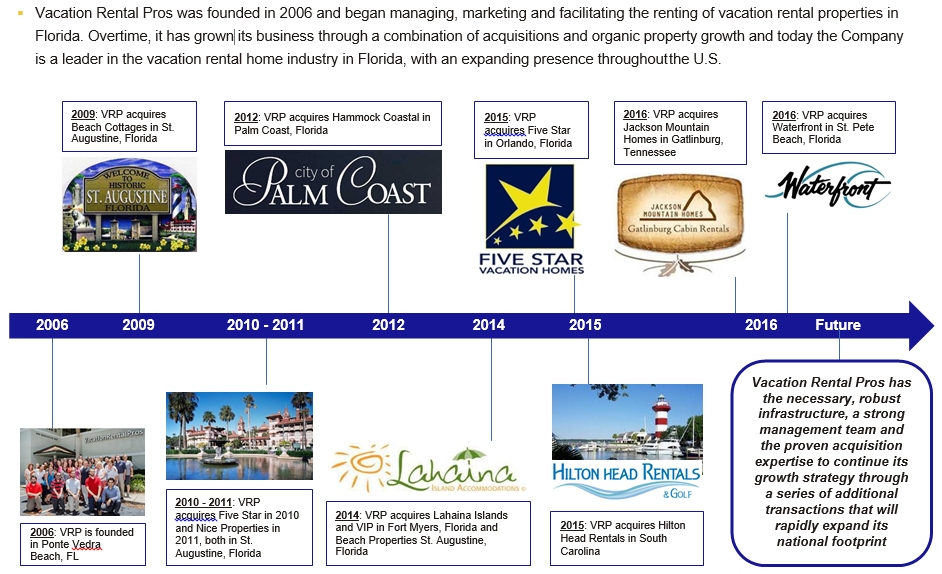
Prior to the acquisition of Waterfront, Vacation Rental Pros had expanded into Gatlinburg, Tennessee in the Smoky Mountains with the acquisition Jackson Mountain Homes in March 2016, and into Hilton Head Island, South Carolina with the purchase of Hilton Head Rentals and Golf in December 2015.

Vacation Rental Pros is a growing and innovative property management and rental reservation system which leverages a proprietary technology platform to maximize occupancy and revenue. As a result of the Company’s integration platform and marketing expertise, the company is successfully expanding through both acquisition and organic growth into its new markets. The Waterfront Vacation Rental deal is the fourth major acquisition in 12 months for Milo’s company which forecast’s growth of 60% in 2016.
 
Vacation Rental Pros Acquisitions 2009 to 2016

 
According to Steve Milo, there will be several additional acquisitions in 2016 with more in the 4th quarter which is the off season for many property management companies in North America.

“Vacation Rental Pros is getting approached by more and more sellers as the vacation rental market gets more and more complex due to technology and the significant changing business models with online travel sites,” said Milo. “The recent major changes at HomeAway with their business model as well as ongoing negative performance with TripAdvisor’s/Flipkey’s vacation rental platform have caused severe disruption in traditional relied upon marketing channels. A growing segment of vacation rental management companies and owners are becoming concerned that they are unable to navigate this disruption which has caused traditional revenue sources to decline, and which many fear will only continue to change at a pace that will be difficult for them to keep up. Many of the sellers we talk to started out when there was little technology, and advertising channels did not change their business models on the fly with little or no notice to their client.”

“Sellers are approaching Vacation Rental Pros because we have an exceptional reputation in understanding how to manage a vacation rental business that business owners worked so hard to build,” said Milo. “We know how to keep the property owners happy, and we are keeping their brands active in each market. Plus, we know how to leverage our technology platform in each market to increase revenue.”

Milo added, “And, when they talk to me, they are talking to the principle. I have built this business without venture capital partners or other outside equity partners. I am the decision maker.”

According to Milo, “Vacation Rental Pros has built the best technology platform model in the industry to expand in both a scaleable and sustainable manner. We have built this platform through a focus on technical efficiency which translates nicely to expanding incremental profitability. We have a powerful mix of robust growth, profit and no dilution of equity.”

Vacation Rental Marketing Expert Matt Landau Joins LiveRez Partner Conference as Key Instructor

0

LiveRez.com, the most widely used cloud-based software for professional vacation rental managers, today announced that Matt Landau will join its growing roster of instructors at the company’s annual Partner Conference October 10 through October 13 at the Lost Pines Resort and Spa in Austin, TX.

Landau’s Vacation Rental Marketing Blog (VRMB) is one of the top blogs in the vacation rental industry. Each month the publication attracts more than 15,000 visitors and its Inner Circle (a private community that financially supports the free blog) has grown to nearly 800 members.

“Matt is widely regarded as one of the world’s top experts in vacation rental marketing,” said LiveRez VP of Operations Tina Upson. “And, we’re thrilled to have him join the LiveRez community as a key instructor at our 2016 Partner Conference.”

This year LiveRez is splitting the conference into two different training tracks, a “Coaches Track” intended for company leaders that focuses on growing your business, and an “Athletes Track” that focuses on intensive system training and is designed for team members that are executing a company’s daily operations.

The instructors in the Coaches Track will be made up primarily of the industry’s top experts in different subject areas, whereas the Athletes Track will feature a mix of LiveRez software experts, ranging from LiveRez team members to professional property managers using LiveRez (called partners).

Landau will teach two classes in the “Coaches Track.” The first class will focus on creating a balanced marketing portfolio, with an emphasis on building your own brand. The second class will walk professional managers through the process of building their 2017 marketing plan.

“The definition of what it means to be a successful property manager today is dramatically different than what it meant only 10 years back,” Landau said. “Industry events like these are vital to the well-being and sustainability of the vacation rental industry as a whole because they bring progressive thinkers together under one roof, and they prove that you don’t have to run your business the way big corporations expect.”

In addition to two separate training tracks, the conference will also include a big reveal of new technology, as well as exciting keynote speakers, which the company will begin to announce in the coming weeks.

To learn more about the 2016 LiveRez Partner Conference, visit Conference.LiveRez.com.

About LiveRez.com

LiveRez.com is a complete, online, vacation rental property management solution, focused on making vacation rental property managers fully operational online and thereby increasing bookings. LiveRez.com offers an all-in-one, cloud-based platform, featuring best-in-class websites optimized for online bookings, a full-featured reservation and property management system, a robust CRM system, an exclusive connection to QuickBooks for trust accounting, and a unique “Pay-for-Performance” approach, which provides a mutually beneficial partnership between LiveRez.com and its vacation rental manager partners. The company’s largest competitor is HomeAway Software for Professionals.


Hey, Chicago: Here Come The Airbnb Regulations

0
airbnb: regulations come to chicago

Airbnb will be allowed to operate in Chicago after the city council passed two measures on Wednesday that allow short-term rentals, but there will be a few restrictions on that process.

Under the new rules, there’s a cap on how many listings are allowed in each building, the Chicago Tribune reports: buildings with fewer than five units will be allowed only one unit listed online at a time, while buildings larger than that will be limited to six units or 35% of the total number of units, whichever is less.

If you think you’re suffering “an extraordinary burden” by not being allowed to exceed the limit in smaller buildings, you can try to convince the city Department of Business Affairs and Consumer Protection to make an exception.

In certain neighborhoods with single-family homes, individuals can also petition the city to either ban new Airbnb listings in the area outright, or allow them only in the “primary residences” of the people listing the properties. That process can be challenged, however, as the new ordinance lets residents within the precinct to get their own signatures on a petition to overturn it.

Airbnb will also have to pay fees to the city, including a $10,000 license the company will have to buy to operate in Chicago, and a 4% tax on each rental that will go toward providing services for homeless people. Each Chicago address listed on the site comes with a $60 charge as well, which the city says it will use to help cover the cost of enforcing the rules.

Airbnb rules easily pass Chicago City Council despite vocal opposition [Chicago Tribune]

InvitedHome Hires Head of Revenue Management

0

InvitedHome, one of the country’s growing multi-destination vacation home rental brands, announces that travel industry expert Owen Miller has been hired as Head of Revenue Management. The role will focus acutely on maximizing revenue for owners, refining rental processes, and delivering the best possible rates to vacationers all around the country.

Owner Miller Revenue Management Director InvitedHomeMiller comes to InvitedHome from the airline industry, where he most recently headed revenue management and pricing for Frontier Airlines in Denver. There, his team was responsible for establishing pricing strategies, managing seat inventory, and initiating sales for the $1.6+ billion revenue airline. Prior to that role, Miller was part of Seabury Group in New York, where he spent five years as a management consultant working directly with airlines around the globe. He began his storied career working in revenue management at Continental Airlines in Houston, and has been building travel industry-related skills and experience ever since.

“Owen comes to us with a great deal of education and experience related to our industry,” said InvitedHome CEO, Michael Joseph. “We’re excited for him to lead our team in increasing revenue, optimizing calendars, and increasing efficiencies for our owners, our guests, and InvitedHome.” Miller holds a Master’s in Transportation from the Massachusetts Institute of Technology, and graduated Magna Cum Laude from Rice University.

An avid traveler, Miller has made good use of his airline flight benefits and business travels to see different corners of the world, and will bring a unique perspective to the already well-traveled InvitedHome team.

LockState/Airbnb Partnership Featured on Denver’s Tech Tuesday

0

KUSA – This week, Scott Yates and Gregg Moss sat down for the regular Tech Tuesday to discuss a Denver startup that aims to make rental properties both safer and smarter.

RemoteLock from LockState has developed keyless entry door locks and safes since 2004, but began to focus its efforts on WiFi systems in 2011. In 2013, it developed its first internet-connected building access management system, a completely cloud-based network allowing anyone with a need to keep a door or area safe to do so remotely and via the Internet.

Among the many current technology trends, short-term rentals and locks may not seem to have much in common, but LockState is connecting the two, allowing homeowners, resorts, and short-term landlords alike to use WiFi-enabled locks.

The concept is simple: install a lock on your door or safe, and program a keycode for access. But unlike traditional keyless locks, LockState enables you to remotely access and change your door from any computer, smartphone, or tablet, thanks to WiFi capability.


The technology has become particularly useful for vacation resorts and short-term rentals. In November, LockState announced that it had struck a partnership with Airbnb, enabling hosts using the app to easily integrate the technology into their rentals.And this is a successful tech company that’s breaking with some traditions of tech companies. For example, it’s not located in Boulder or the LoDo neighborhood, but on Colorado Blvd. Regardless of location, it’s clear that this company has figured out a way to merge the old world of locks with the new world of Airbnb and other new-tech companies.

LSI Taps Industry Veteran Scott Leggat As New CEO

0
Tyler Hurst VRMA Board of Directors

Today, LSI announced that industry veteran Scott Leggatt has been named CEO.

Leggat has more than 20 years of hands-on experience in the vacation rental industry as a key member of senior management at Outer Beaches Realty and Seaside Vacations.

Scott Leggat new CEO LSI“Leggat worked hard at both companies to develop a deep culture of trust, hard work and high standards – which are very much in line with the values here at LSI,” said Sean Stallings, LSI founding principal. “Scott is an accomplished leader with a proven track record, has been involved in the vacation rental management industry for more than 20 years, and is regarded by many to be one of the foremost experts in our industry.”

Leggat is presently a real estate broker in North Carolina and has participated on many committees and boards, including serving as President of the North Carolina Vacation Rental Managers Association, chairman of the Outer Banks Chamber of Commerce, the Outer Banks Visitors Bureau and the Hatteras Island Council of the Chamber of Commerce. He currently serves on the Outer Banks Community Foundation and the National Vacation Rental Managers Association boards. Scott is a graduate of the University of Hawaii and did his post-graduate work at the University of Virginia.

“Scott’s diplomacy and ability to bring clarity to deep and complex issues are second to none,” added Stallings. “He brings a deep mix of leadership, inspiration, operational experience and passion for client care. One of LSI’s primary goals is to become the most client focused company in our industry – and Scott is just the person to help LSI execute on those opportunities. Having Scott will allow me to singularly focus on the tech – and I can tell you that we have some incredible offerings coming!”

Nomadness Rentals Takes on Airbnb with Brilliant Press Release

3

Nomadness Rentals in Mammoth Lakes recently issued a noteworthy press release outlining the struggles hundreds of professional vacation rental management companies have been experiencing as a result of Airbnb’s reckless push into the regulatory environment in cities and destinations around the world.

Vacation rental management companies have been working hand-in-hand with municipalities for decades to grow destination awareness, remit lodging taxes, comply with safety standards, and implement good-neighbor policies.

However, Airbnb, in its rush to legalize its home-sharing platform, has upended the regulatory environment for traditional second home vacation rentals. Consequently, this year alone, Austin and Denver city councils voted to phase in a ban for second home vacation rentals while upholding the right of primary residents to rent rooms in their homes.

And they are not alone.

The precedent being set by these city officials will take years to reverse, and Airbnb is entirely at fault for pushing the agenda of primary residents renting rooms in their homes over second-home owners renting professionally managed, licensed, tax-paying, safety-compliant whole homes.

Editor’s Note: As founder and editor of VRM Intel, I argue that Airbnb is doing so at the detriment of their own long term sustainability. I also argue that professionally managed second home rentals do not have a negative impact on affordable housing. However, denying the ability for second home owners to rent their homes as vacation rentals does have an overall negative impact on the real estate market and on tax revenues from property taxes, lodging taxes, and sales taxes from businesses and employees related to a tourism economy. 

Below is the press release, in full, from Nomadness Rentals. Vacation rental managers who are facing battles with Airbnb in the marketplace might consider crafting a similar announcement in their local and state media to create awareness about the issue and differentiate professionally managed vacation rentals from unregulated room sharing.


The Truth Behind Airbnb and Other Vacation Rental Giants

Massive companies like Airbnb are trying to evade rental requirements put in place by local towns like Mammoth, while local companies like Nomadness Rentals advocate for renter rights.

LOS ANGELES – June 10, 2016 – As vacation rental giants like Airbnb continue to grow in size, they begin to wreak havoc on local rental companies that have dedicated a lifetime’s worth of hard work to being honest, loyal, and cooperative with the towns and areas they represent. Airbnb’s latest controversial move involves using scare tactics to trick small towns like Mammoth Lakes into allowing them to bypass town ordinances, regulations, and guidelines in order to conduct business.

Local, long-time companies like Nomadness Rentals must mandatorily abide by all town ordinances, and for good reason. These ordinances are present to ensure the security and well-being of guests and local residents, ensuring that all vacation rentals are properly equipped, meet all safety regulations, and are up to renting standards.

In May, Airbnb approached – and was subsequently denied by – the town of Mammoth Lakes with a proposition to offer short-term rentals in the area without meeting ordinance requirements such as paying TBIDs (Mammoth Lakes Tourism Business Improvement District fees), conducting inspections, or providing documentation in case an audit is required. For those unfamiliar with TBIDs, these are small fees that fund marketing and promotion efforts for local businesses. The element of waiving inspection requirements is self-explanatory – without Airbnb conducting inspections and reporting to the town, guests don’t receive the assurance they need that their rental is up to par.

Additionally, Airbnb’s format of being homeowner-operated means guests may not receive all the services they’d otherwise get with a rental management company like Nomadness Rentals. Where Nomadness Rentals offers 24-hour emergency line services, licensed/insured housekeepers, pre-approved repairmen, and professional/experienced customer service representatives, Airbnb offers a user-generated contract that does not pre-approve the services promised by those homeowners.

Mammoth Lakes refused the requests made by Airbnb and is working to further spread the word as these attempts by Airbnb are being made in many other small tourism-oriented towns also. This begs the question: If Airbnb is making underhanded requests to small towns and cities, what might they be doing with the millions of renter/homeowner accounts on their platform? Nomadness Rentals and similar vacation rental companies offer complete transparency, doing their best to ensure all their units and guest experiences are up to par.

This latest development is just one peg in the ongoing controversy surrounding Airbnb, who take away from the hard work of hotel owners, small-scale lodging providers, and local property management companies – all of which dedicate themselves to every aspect of quality assurance, from repairs and cleaning to customer satisfaction. These things are not a guarantee with the rental giants that tend to abandon their users once the booking process is complete, leaving them wondering what to do when they arrive to their rental.

In a letter from the Mammoth Lakes Town Council, it is stated that “this document [from Airbnb] would have other agencies lining up at our door to get the same sort of ‘waiver'”. If more and more unfamiliar companies began asking for waivers on town taxes, requirements, etc. – what would happen to the quality of vacation rentals in Mammoth Lakes? This is a pressing question that we ask our renters to ask themselves before choosing rental companies like Airbnb for their next vacation. When it comes to quality and professionalism, we ask our guests to consider certified and upright vacation rental companies like Nomadness Rentals for their next trip instead of settling for their more large-scale, unregulated counterparts.

Media Contact
Nomadness Rentals
888-472-5777
info@nomadnessrentals.com


Well said, Nomadness Rentals…Well said.

By Amy Hinote

Pennsylvania to receive hotel occupancy tax from Airbnb hosts

0

Pennsylvania’s Department of Revenue has reached an agreement Airbnb for the online home rental service to begin collecting and paying the state’s 6 percent hotel occupancy tax.

Starting on July 1, Airbnb’s hosts in Pennsylvania will begin paying the tax to the company, which will then remit it to the state in an agreement expected to generate nearly $1 million each year.

The Pennsylvania Department of Revenue announced the new agreement and expects it will help level the playing field with the hotel industry in the state that already pays the tax.

The tax applies when renting out a house, room or apartment to a guest for less than 30 days.

A quick browse of Airbnb.com indicates there are more than 300 home rentals available through the service in the Pittsburgh area.

Evolve Vacation Rentals Raises $5.5 Million Led by T. Rowe Price

0

Evolve Vacation Rental Network, a Denver-based vacation rental management company, announced today a $5.5 million investment led by funds and accounts advised by T. Rowe Price Associates, Inc. The round brought the company’s total funding to $12 million, and included participation from Annox Capital and Allen & Company. Evolve plans to use the investment to expand its team and fuel marketing to the 10 million vacation homeowners in North America.

“The vacation rental industry is becoming mainstream. This is creating an opportunity to build a business that helps homeowners serve the consumer in a high-quality fashion,” said Henry Ellenbogen, portfolio manager of T. Rowe Price New Horizons Fund, Inc. “We believe that Evolve is uniquely positioned to elevate the booking experience in a flexible, cost-effective manner.”

Evolve’s vacation rental management owner-facing service assists homeowners with every aspect of generating rental income: creating listings optimized for online booking performance, promoting them on the major vacation rental marketplaces as well as its own site, responding to traveler inquiries seven days a week, securing bookings online and offline, and handling all pre- and post-stay guest communication.

The company features owner-friendly policies like no term commitments or limits on personal stays, and offers homeowners the option of coordinating on-the-ground services through a provider of their choosing, or by accessing its network of vetted local partners. There are no upfront costs and homeowners pay 10 percent per booking.

Founded in 2011 by Brian Egan and Adam Sherry, Evolve services more than 2,000 vacation rental properties throughout North America and has booked more than 55,000 trips since its launch. The company also benefits from the extensive experience of Bob Mylod, founder and managing partner of Annox Capital Management and former vice chairman and CFO of Priceline.com, who serves on Evolve’s board of directors along with Egan and Sherry.

“The vacation rental marketplaces are transitioning from travelers inquiring online to travelers booking online,” said Mylod. “With this shift, the market has grown increasingly complex and competitive. I see Evolve playing a cornerstone role in helping vacation rental owners succeed in this new environment.”

New Technology to Optimize VR Listings and Measure Performance Across Channels

0

BookingPal is announcing the launch of myOptimize. myOptimize is the Vacation Rental industry’s first platform that consolidates the ranking requirements of dozens of the world’s leading consumer travel websites into one proprietary algorithm to provide clients with real time analysis and suggestions for better product merchandising and engaging product content.

“We are incredibly excited and proud of myOptimize,” says Alex Aydin, CEO and Founder of BookingPal. “This is a game changing solution that allows us to really leverage the power of the connections that we have created between property management software systems, consumer travel websites and property managers to create a better experience for travelers worldwide and more revenue opportunities for all parties involved.”

myOptimize from BookingPalThe myOptimize algorithm utilizes more than a dozen metrics to score and calculate the propensity of individual rental properties to perform via distribution channels and then provides contextual notification if there are issues with a listing as well as guidelines and suggestions for improvement. Each listing will benefit from a myOptimize report that will provide suggested updates to merchandize the property better and ultimately lead to higher conversion rates.

“The preliminary analysis shows that our properties that score at least an 80% or above in myOptimize have twice the conversion rate of those that score lower. The results are very dramatic” says Alex.

“myOptimize overcomes a lot of hurdles that our property management and distribution partners have been facing, “adds Brian Brown, BookingPal Vice President of Sales. “The goal is not to just distribute a lot of inventory, but to distribute incredible rentals that perform well across our marketing channels. If our property managers use these same suggested changes and feedback on their own websites their direct revenue should also benefit.”

Property Managers can begin to take advantage of the myOptimize platform by the end of June. To get added to the integration list, please contact sales@mybookingpal.com or visit www.mybookingpal.com.


About BookingPal

BookingPal is a cloud-based travel technology company providing the vacation rental and holiday letting industry with a global distribution platform that features real-time connectivity between the leading property management software systems and top consumer travel websites in the world.

The BookingPal platform offers Vacation Rental Managers and Property Owners superior revenue opportunities by utilizing proprietary products to optimize distribution capabilities including myOptimize which calculates listing quality and provides key feedback to achieve optimal channel placement and conversion and myInquiry which provides a qualified team of reservation agents to handle guest reservation communications.

Founded in 2013 and headquartered in Irvine, California, BookingPal seamlessly connects over 180,000 rentals located on 5 continents, from 28 different property management software systems to over 35 online global consumer travel websites and the travel agent industry.

VRM Intel Live! Events

0

Coming Soon:

Save the date for VRM Intel Live! Events

October 26, Wilmington, NC

November 30, Sandestin, FL


Webinar: Biggest Change to Wage-and-Hour-Law in Decades. Are you Ready?

0

The DOL’s new rules raising the salary threshold to $47,476 have small business owners facing difficult decisions.  The decisions you make not only impact the financial aspects of your business, they also have a direct impact your employee morale, engagement and productivity.

Are you prepared for the unintended consequences of this new ruling?


Attend the KLS Group Webinar to learn more about:

  • What the rule is and how it impacts your business
  • What it means to be “Exempt” and paid a salary
  • Best practices related to pay and communication
  • Next steps to take to comply by 12/1/2016

Webinar details:

Date: Thursday, June 9th at 11:00 AM PDT

Cost: $99.00 (includes a 30-minute one-to-one consulting session)

Register Now!


About the Presenter

Sue Jones, Founder and Managing Director of KLS Group holds a Master’s Degree in Business Administration from Northeastern University, is both SHRM-SCP and SPHR certified and is a Veteran of the US Navy.

Airbnb’s Discrimination Issues Not Going Away

0

Airbnb has been all over the news lately, but this time not because of their high valuations, disruptive platform, uninhibited ability to raise capital, or even their regulatory battles.

This time Airbnb’s headlines are about discriminatory actions by “hosts” when deciding if a renter is “suitable” to stay in their short term rental property.

Editor Note: It is important to distinguish between Airbnb’s “hosts” and the professionally managed listings on the site, Professional Vacation Rental Management Companies operate as lodging providers and do not deny bookings based on race, religion, gender or sexual preference. It is simply against vacation rental management best practices to do so, and if they did, they would be sued immediately.

In doing research for the upcoming 2016 Summer Issue, we reached out to vacation rental homeowners who choose to self-manage their homes instead of using a professional management company, and the top two reasons homeowners gave for self-managing are the cost and “Knowing who is staying in my home.”

In case you’ve missed the headlines referencing Airbnb’s problems with discrimination, here is a recap followed by how the discriminatory actions of homeowners might lead to industry-wide instant booking on Airbnb and its competition.


1. Study Released Showing Discrimination by Airbnb Hosts

In December 2015, a working paper by three Harvard Business School researchers found “widespread discrimination” by hosts against people with black-sounding names seeking rentals. Fictional guests set up by the researchers with names like Lakisha or Rasheed were roughly 16 percent less likely to be accepted than identical guests with names like Brent or Kristen.

Researchers set up 6,400 fake profiles of Airbnb guests and assigned them stereotypically white or black names, based on Massachusetts birth certificate data from the 1970s. None of the guest profiles had identifying pictures. They used the accounts to request bookings with hosts in five cities: Baltimore, Dallas, Los Angeles, St. Louis, and Washington, D.C. Airbnb hosts decide whom they want to rent to; requests from white guests got “yes” responses 50 percent of the time, vs. 42 percent for black applicants. The researchers controlled for a variety of factors, such as the host’s gender and ratings, and the “race effect,” as the paper described it, persisted.


2. #AirbnbWhileBlack

As awareness of the problem increased, Tweets with the hashtag #AirbnbWhileBlack gained in popularity with users sharing their personal stories of discrimination.


3. Lawsuit Filed By User Accuses Airbnb of Discriminatory Housing Practices

In May, Gregory Selden, a 25-year-old African American, filed a complaint against the startup on Tuesday in Washington, D.C. He claims that an Airbnb host denied him accommodations when he requested a booking under his personal profile, which included a photo, but accepted the booking when he applied using two fake profiles of white men. Selden went to Airbnb with the issue, but he claims the company ignored him.

When Selden questioned the host, he told a local NBC station that he received this response: “It’s a disappointment people like you always victimize yourselves solely on the basis of skin color.”

Selden’s suit seeks class action status, and he doesn’t appear to be alone in his claims.


4. And then this…


5. Airbnb responds

Airbnb banned the host referenced in the Tweet above.

“We were horrified when we read these messages,” Airbnb spokesman Nick Papas said in a statement, USA Today reported. “The language and conduct are unacceptable and violate both our policies and everything we believe in. This host has been removed from Airbnb and we’ve reached out to the guest to offer our full and complete support, including ensuring the guest has a safe place to stay.”


6. Hotel Organization Uses Airbnb’s Discrimination Troubles in Ongoing Battle Between Hotels and NYC Short Term Rentals

The New York Hotel Trades Council quickly capitalized on Airbnb’s woes in the ongoing battle between hotels and short term rentals. A new ad, launched earlier this week by ShareBetter, a nationwide organization reportedly funded by the New York Hotel Trades Council, paints Airbnb as unfair and discriminatory to guests but could ultimately cast a long shadow across the entire lodging industry.

The ad tells the story of a guest who claims the sharing site routinely discriminates against her because of her skin color.

“I am a black woman,” she says in the 30-second spot. “I get declined all the time on Airbnb.”


7. Will This Lead to Instant Book on All Listings?

With Airbnb hosts abusing the process of accepting a booking, Airbnb and other sites have the opportunity to use the discrimination issues as leverage to move all listings to “Instant Book” or “Book It Now.”

Since 1) Instant online booking is the best way to increase transactional revenue, and 2) The awareness of discrimination issues is increasing, Airbnb and its competitors now have a paved avenue to move their platforms forward. If they get backlash from the homeowner community, Airbnb can simply say they are battling racism and discrimination. Hard to argue.


If Airbnb moves all the inventory on its platform to “Instant Book,” HomeAway and TripAdvisor are likely to emulate the model as they have recently done with with service fees, cancellation policies, two-way reviews and site design.


By Amy Hinote

Vacasa Acquires TPW Vacation Rental Management Operations

0

Vacasa today announced its partnership with TPW Vacation Rentals of Bondville, VT. The company will assume management of more than 80 short term vacation homes in the Killington, Stratton, Mt. Snow and Okemo markets, where TPW will continue to provide their association management services.

Following a $35 million Series A deal last month, Vacasa is on track to become the largest player in the vacation rental industry, which is predicted to reach 169.7 billion by 2019.

Over the past three years, Vacasa has fueled growth through heavy investment in acquisitions and since then has closed 29 deals.

“This deal is really a result of a shared vision between TPW and Vacasa,” says Paul Carroccio, CEO of TPW. “We endeavor to provide TPW clients with the best customized service possible, and we feel confident that our vacation rental customers can continue to expect the same and more from Vacasa.”

Currently, TPW manages thousands of homes in the New England market and has expanded its Vermont and New Hampshire footprint every year since its inception. According to Vacasa, the partnership is an opportunity to gain market share in Vermont and the larger New England region, where it currently manages 211 properties. The company manages thousands of vacation
rentals on the west coast, and now plans to increase inventory in east coast vacation markets.

”This deal enables Vacasa to increase our market share in a desirable area with a strong winter market, and provide guests with another destination option when booking with Vacasa,” says the company’s founder and CEO Eric Breon. “We are proud to now provide TPW owners with top of the line resources to optimize booking processes, including yield management technology, improved marketing, and SEO.”

In 2016 alone, Vacasa has acquired nine companies, including Black Diamond in Sun Valley, ID, All Seasons Collection Fredricksburg, TX, MiaVac in South Beach, FL, Island Escapes in Naples, FL. and Discover Sunriver in Sunriver, OR, adding over 500 properties to their inventory.

Transform Your Business and Face the Competition Head On

0
Sunrise sailing offshore from Miami to Bimini, Bahamas on the Jeanneau 509.

By Ben Edwards  — The vacation rental landscape is changing as multi-billion dollar investments into the industry illuminate our profession. For years now, operating a vacation rental company has been a rewarding experience and profitable business investment. I continue to believe that the industry will always be rewarding, but this year, the way in which you manage your business should change in an effort to ensure your business remains a profitable venture for years to come. This is the year to transform your operation into a more profitable, effective and determined company.

Why is this year any different than years past?

Here are four reasons that underscore the need to transform your business:

1. Increasing competition
2. Increased expenses
3. Lack of financial oversight
4. Lack of process


1. Increased Competition

I often joke that as you cross the state line into Florida these days, there is someone standing there with a login to your new listing site and a “how to” guide for starting your own vacation rental business. While that is not the case, I know each of us feels the increased competition (old and new) in our respective markets. Frankly, I’m glad to see new entrants in the market, that’s not the issue. It is the establishment of a vacation rental company or a current operating company without a focus on standards, ethical operations and financial management that causes concern. I realize there are a number of start-ups and long-standing companies that are grounded in strong business practices, but the majority are not properly focused. By not being properly focused, the operations of that company adversely affect the vacation rental marketplace in a number of ways.

Primarily, profit margins decrease as a result of commission negotiation. Inevitably, companies immediately reduce commission. It’s easy to do, which is why it’s offered first when a prospective owner questions it. Imagine if each operation decided to more clearly articulate the services offered and explain the need to make a reasonable commission and ultimately a reasonable profit to have a sustainable business model. Collectively, the market or the industry could begin to focus on service as opposed to cutting commission and further highlight the attributes of a professional vacation rental manager.

Secondarily, there doesn’t seem to be a boundary anymore relative to solicitation. The competitive environment has changed and will probably never return to the days of old. In years past, general solicitations were sent to prospective owners articulating the value proposition of a company. Now days, reduced pricing and revenue guarantees flood an owner’s mailbox.

As it relates to guaranteed revenue, in certain cases, this is tantamount to gambling. I would submit that if a company does not have the financial reserve to effectively guarantee future revenue, then it is considered gambling on the outcome of the property. Of course, the vacation rental manager has the opportunity to make up the difference in what was produced and the guaranteed amount, but what does this say about the industry or the manager. This practice creates a more difficult marketplace in which to operate and may not be a sustainable business practice.

Becoming a member of the Vacation Rental Managers Association (VRMA) may be the best way to educate vacation rental management companies, new and old, on better and more sustainable business practices. The VRMA provides an environment of professional learning and a road map to creating a sustainable business through seminars, networking and access to ancillary vendors and skilled contractors.

Increased competition is good for the industry, provided its good competition. A focused and professional company will always outperform the market and operate sustainably for the benefit of employees, stakeholders, the community and the industry.


2. Increased Expenses

General operating expenses continue to increase, adversely impacting profit margins. From new “must-have” technology to increased booking fees from online travel agencies (OTAs) and distribution channels, vacation rental managers are forced to manage expenses more acutely.

It is important to understand the return on investment (ROI) of every initiative within the business, specifically marketing expenses. In year past, it may have been acceptable to float through the year managing macro cash-flows, but those days are over. Vacation rental managers are now being required to perform an ROI on every program in the business on a recurring basis. Vacation rental mangers not reviewing this information are simply going with the flow, and going with the flow will most certainly decrease profits.

Life was good. Utilize a few OTAs, produce some revenue and everyone was happy. Now that traveler fees have been implemented, margins are decreasing over night, forcing vacation rental managers to reassess their marketing plans. I have spoken with numerous vacation rental managers over the past month and all are concerned about the shift in traveler fees for a couple of reasons.

First, the obvious takeaway is that by adding an additional percentage to each reservation, general traffic and bookings will decrease. I think this is a genuine concern. Travelers, in the short-term, will attempt to book directly with the vacation rental manager utilizing certain listings sites as a billboard. This is what is known as the “billboard effect.” OTAs know that travelers will use their website to simply survey availability and pricing and will ultimately attempt to curtail that practice. As the billboard effect increases, OTAs will combat this traveler work around, historically, by raising fees, commissions and implementing more onerous restrictions and booking rules.

This brings to me to my second concern, associated with increasing expenses. There is a myriad of concerns aggregated into “what’s next” and how that will affect the industry. The next major issue I see is that vacation rental managers will not be able to control travelers booking directly with the OTA or distribution channel. That said, can you blame a traveler for not wanting to save ten percent? This loss of revenue will ultimately force OTAs and distribution channels to demand rate parity. Rate parity is generally a contractual request made by the OTAs or distribution channels to ensure that the rates presented are the same on both sites, providing an equal playing field of sorts for selling vacation rental inventory.

Until this happens, travelers will continue to work around the fee and book with the management company directly. The issue is that rate parity will come as an additional expense to the vacation rental manager. Obviously, managers are upset about the addition of new traveler fees, but this was a matter of time as corporations survive on profits. Until vacation rental managers create a multi-faceted marketing program and decrease their dependence on any one particular marketing channel, they will be susceptible to increases in marketing expenses.


3. Lack of Financial Oversight

Too many managers are going out of business, leaving guests displaced and owners owed money. These issues do not happen overnight and are a result of poor business practices, unsustainable business models and lack of financial oversight. The majority of the vacation rental industry does not have sound financial practices, much less oversight.

Many vacation rental managers focus on macro cash flow or gross revenue as an indicator of performance. In today’s marketplace, that’s not enough. I’m not saying that every vacation rental manager that has little to no financial oversight will go out of business, although there are plenty of examples. More importantly, fundamental financial oversight is needed to ensure sound business decisions are made and a material profit is generated within the business. Sound business decisions and reasonable profits create sustainable operations.

Assuming that financial reports are created on a monthly basis, a review is needed to ensure the company is on the right track. Reviewing revenues and expenses as compared to the prior year is a great start. This will provide a baseline of results in which to determine performance, provided the operations and property count are similar year over year.

Creating a budget will ultimately provide the best mechanism to manage profitability. Once created, managing budgeted versus actual results is the best way to ascertain the financial condition of the business and further fine-tune the profitability. Having a sound financial process that produces timely, consistent and accurate results will ensure that the business is run at an optimum level, and the lack of these processes remains a growing concern.


4. Lack of Process

Since starting out in the vacation rental business, I’ve always felt that if you cannot measure the business, you can’t effectively manage it. There is a tremendous opportunity in the industry to instill more effective business practices through proven processes. From reservations call conversion to housekeeping management, opportunities exist to further measure the business in a manner to glean more information about a particular practice and refine a process.

As an example, most vacation rental management companies review the revenue produced by reservation agents to determine individualized performance. A better approach would be to determine the number of qualified reservation calls taken and compare that to the number of reservations booked, providing a call conversion percentage. Comparing a call conversion percentage across reservationists will ensure an “apples to apples” comparison of production and staff. In the event conversion for a particular agent declines, certain coaching mechanisms can be implemented to increase performance.

Housekeeping inspection management is another process wrought with inefficiency. Each property on the rental program should have a specific inspection form to ensure that all pertinent areas of the property inspected. This can be done manually or electronically. Either way, these forms should be electronically filed within the property folder. Having this information for future reference is extremely helpful. Furthermore, taking pictures and having those filed electronically will remove all doubt in the event an issue arises.

Developing a review process as it relates to property rates is paramount in revenue management. There are number of tools available to vacation rental managers these days, such as Smart Host, which provides pricing recommendations designed to maximize a property’s revenue and reservation performance. Even without automated tools, vacation rental managers can perform a revenue and rate analysis manually. Monitoring occupancy for future months is crucial in determining whether to increase or decrease the rate. At any point in time, a vacation rental manager should be driving occupancy or rate. Because the two are tied to each other, slight decreases in rate should generally drive occupancy. Knowing this relationship, added to monitoring reservations and booking pace reports will certainly increase revenue.

Hoping that certain processes are operating effectively is no longer workable. Further measurement of certain processes across the business will create a more effective operation. Operating a more effective operation breeds efficiency and higher profits.


As you can see, the industry is changing. Margins are being attacked requiring vacation rental managers to operate with more purpose. This is the year vacation rental managers are being forced to step up and take hold of the business to safeguard their operations. Many vacation rental managers will take notice of these changes in the industry and chart a new course for their business. Those vacation rental managers will be the new pioneers of the industry, operating profitable and sustainable business operations. Flexibility for the future is vital, and being able to pivot using financial and operational data is imperative.

As always, please feel free to contact us directly, should you wish to discuss any of theses changes and how to chart a new path for your business. One constant in the vacation rental industry is change, and change always brings opportunity. Good luck charting a more effective pathway for your business in 2016.

By Ben Edwards, Weatherby Consulting

5 Ways to Leverage Service Fees to Drive Direct Bookings for Vacation Rentals

0

Airbnb established the service fee model as a way to monetize their marketplace in 2011. Using this pricing model, Airbnb charged vacation rental “hosts” (owners/managers) a 3 percent booking fee (which includes credit card fees) in addition to a 6 to 12 percent fee to travelers.

Fast forward to 2015: Both HomeAway and TripAdvisor made the decision to copycat the pricing model in hopes of increasing the “take rate” shareholders demanded.

While philosophically, at VRM Intel, we argue that this move was neither a necessary nor advantageous long term decision to accomplish sustainable profitability, it is nonetheless the current reality for vacation rental owners and managers.

Consequently, vacation rental managers around the country are finding ways to leverage the service fee…and they are doing so quite effectively.


5 ways to leverage the service fee to drive direct bookings


1.  Optimize listings with breadcrumbs leading consumers to your website

As an e-commerce rule, consumers would rather book direct unless it is cheaper to book through a third party. To accomplish this, your guests will look through your rental listings to find you.

Make it easy for them. 

As a VRM, you can optimize your listings to make it easy for listing-site-shoppers to find you.  (Disclaimer: While these strategies may be blocked by the listing sites in the future, they are still available to you today.)


Include your company name or signage in photos and photo captions.

Use a picture of your office or your signage on the home with a caption such as:

  • “Our team at XYZ Vacation Rentals is available to you 24/7.”
  • “Our professional 24/7 service team at XYZ is here to make sure your vacation is stress-free.”


Use breadcrumbs in your descriptions.

As a VRM, use language such as, “Plus, this is home is managed by XYZ Vacation Rentals which means you have 24/7 service for any emergencies which may arise during your stay.”

Also, you can add a paragraph at the end of each property listing saying why you are great.


Use descriptions to drive direct bookings to your vacation rental


Add language to your booking profile.

Using your booking profile to increase direct bookings


2. Communicate changes to owners, guests, and leads via email, blogs, direct mail, website

Use your marketing channels to let your guests know that if they book with certain distribution sites/OTAs, they will have to pay more.

And offer a Lowest Rate Guarantee.

Beat the vacation rental service fee with a Best Price Guarantee


3. Implement loyalty programs

While vacation rental industry technology providers have been slow to create solid loyalty programs, property managers are still finding way to provide loyalty offerings to customer who book direct.

Here are a few strategies being implemented are:

  • Early check-in
  • Late check-out
  • Office check-in bypass
  • Additional housekeeping visit(s)
  • Points for additional stays, or offerings such as, “For every 10 nights, get 2 free.”
  • Pet deposit waiver
  • Area attraction/restaurant gift cards


4. Collect data on every lead or guest received from distribution sites

You are paying distribution channels for leads, so do everything you can to collect lead information wherever and whenever possible.

The amount of data on leads varies by channel…and is decreasing. Leverage this window of transition to gain as much lead information you can for your future marketing efforts.


5. Contact your local media with a Press Release about the service fee.

Create a press release/media message about the service fee. For example:

Save money on your next vacation to XYZ. 

Avoid unnecessary fees on your next vacation to XYZ. 

As the summer season kicks into high gear, travelers can save money when vacationing to Panama City Beach. Airbnb, HomeAway and FlipKey have recently added traveler fees to bookings, adding as much as 12 percent to travelers who book on these sites. 

Quote…

Here are ways travelers can save when booking a vacation rental online:

  • Find a way to book direct.
  • Book with a professional. 
  • Look for specials, etc.

With a media release, you can gain exposure, promote your company, and educate consumers about the traveler fee.


Based on analysis provided by Kalibri Labs, direct brand.com bookings continue to be significantly more profitable than OTA bookings. In the hotel industry, findings showed that direct bookings remain more profitable — to the tune of 9 percent. In the vacation rental industry, with a higher average stay length and higher average stay value, the percentage is likely much higher.

With the increasing cost of distribution, a few tweaks to your sales and marketing plan can lead to a higher guest retention, more direct bookings and a significant increase to your bottom line.

By Amy Hinote

Booktari To Provide Booking Engine For FindRentals.com

0

Booktari, developers of the newest, most reliable distribution and booking platform for the vacation rental management industry, today announced a partnership agreement has been reached with Find Rentals, Inc., Buffalo, New York.

The Booktari partnership with Find Rentals provides vacation rental managers with access to a valuable distribution channel that exposes their properties to millions of potential guests and delivers bookings via Booktari’s secure and reliable booking engine.

“Prior to installing Booktari’s powerful booking engine, our customers would find the vacation rental property they wanted to rent and then would have to leave our site to book it,” said Anthony Vaarwerk, president of Find Rentals. “That extra step would sometimes result in us losing the potential guest. Booktari gives our website visitors the ability to book the property while they are on our site, which greatly improves our ability to convert them to customers.”

Booktari brings to FindRentals.com a powerful, secure, and very reliable booking engine that allows vacation rental guests to book their property of choice directly from within the FindRentals.com website. This opens an abundant source of vacation rental guests to professionally managed companies, and also provides a valuable new source of direct bookings.

About Booktari

Booktari, headquartered in Irvine, Calif., develops a highly scalable, secure, cloud-based distribution and booking platform for the vacation rental management market. Booktari was founded by two of the most successful and experienced SaaS software developers in the hospitality industry – Saeed Karim and Paul McGrath. Booktari is rapidly establishing a foothold in the vacation rental management market thanks to a solid foundation and skilled team of professionals.

NetRevPAR & Profitable Channel Strategies for Guest Acquisition

0

By Julian Castelli, CEO, LeisureLink — The cost of guest acquisition through direct bookings is rising.

Virtually every aspect of marketing for a direct booking is increasing in price. The above-the-fold results in Google have been continually monetized with price increases and competing ad models. As a result, the cost of a Google pay-per-click (PPC) conversion has grown by 130% (or more) since 2010, bringing direct acquisition costs as high as 15% for a PPC conversion.

This leaves Property Management Companies (PMCs) with organic rankings as their only remaining low cost acquisition path and this path is shrinking rapidly as organic results are pushed lower in Google search and smaller PMCs are consistently crowded out by powerful brands and online travel agencies (OTAs).

What is driving these increasing costs? Competition, growing awareness of vacation rentals by both customers and big travel brands, and online shopping habits. OTAs and intermediaries are gaining market share—with OTAs achieving a 108% increase in their share of room revenue for economy- and mid-scale hotels between 2011 and 2014.

By the end of 2016, Phocuswright predicts OTAs will account for 51% of online distribution.3 Though TripAdvisor and Google eschew OTA classification, each is in the process of monetizing its own instant booking programs. What some consider a “direct booking” from these intermediaries really has a price tag of 12-15% commission attached.

With the continued growth of OTAs and intermediaries, PMCs are wise to move away from an “us vs. them” mentality. Costs are increasing all around, and the opportunity for suppliers is in leveraging all sensible channels to their benefit in order to increase profitability.

Channels can be used to maintain and grow ADR, open up new market segments and acquire new customers, and maintain rate integrity and branding. This is all possible if suppliers reconsider the traditional approach to revenue, an approach that has valued revenue without appropriate consideration around profit, the latter being the more important of the two.


NetRevPAR: Understanding Profitability

Traditionally, lodging suppliers have used RevPAR as one essential marker of success. RevPAR can be calculated as (room revenue/total # rooms). RevPAR, however, only signifies revenue; it does not calculate profit, and until the cost of guest acquisition is factored in, true profitability is elusive, as are thoughtful strategies for maximizing profitability. At the end of the day without an intelligent consideration of costs, most suppliers will continue to bemoan commissions (all the while likely paying more of them) and assume their direct bookings are already as profitable as they can be—and profits will shrink.

Calculating NetRevPAR, on the other hand, incorporates the cost of achieving the booking. It is calculated as (revenue – cost to acquire/available rooms). It takes into consideration not only third party commissions but also transaction costs and indirect acquisition costs for direct bookings. These indirect costs are often hidden by the erroneous assumption that they are free. Really? Where did that repeat customer originally find you? An OTA? Google PPC? Word of mouth? Spreading acquisition costs across the multiple stays a repeat guest generates provides a much more accurate accounting of true acquisition costs.

The obvious benefit of calculating NetRevPAR is a better understanding of the cost of acquisition across channels. This enhances a PMCs ability to create strategies tailored to each channel that can optimize rate and increase profit. A simplified example: a PMC may find that the cost of achieving a booking via PPC, especially if it is reaching the 15% threshold, is more than that of a HomeAway booking, and HomeAway may provide more consistent and broad exposure that leads to direct inquiries and bookings because of the billboard effect. PPC may still serve a purpose, but this information may help the PMC determine to shift attention to better optimizing listings and placement on additional global vacation rental brand shelves like Airbnb, where they can enjoy the benefits of increased exposure to new customers. Contrary to popular belief, suppliers have the ability to create profitable booking preferences between virtually any channels while maintaining rate integrity, but the drive to do so begins with an honest assessment of each channel’s value.


The Gray Areas of Attribution

One among many reasons I advocate for inclusion of direct marketing costs in NetRevPAR is the dynamic guest path to purchase.

Last year, Google popularized the term “micro-moments,” reflecting the ways in which travelers will quickly, often in the middle of another task or while standing in line waiting, pick up a device, usually a smartphone, to do a minuscule amount of research toward a trip. As Google research has found, among leisure travelers that use smartphones, 69% search for travel ideas in random, spare moments and almost 50% of those go on to book through an entirely separate channel.5 Recent studies have shown that travelers may now visit hundreds of web pages during the course of researching and booking one trip. The booking journey is a collection of moments across brand.com, OTAs, tourism organizations, meta-search sites, sharing sites, and more.

While the idea of closely tracking attribution across all points in the purchase path is admirable, for most PMCs the reality is that it is far too complicated to accurately track at this point. An attainable solution is to incorporate marketing costs associated with direct bookings into a holistic picture of the cost of guest acquisition. As referenced above, a meaningful percentage of direct bookings are as a result of OTA exposure. According to a study by hotel agency WIHP, over 20% of direct bookings occurred after guests found a property on an OTA.6 Ultimately, the difference between marketing costs and commissions is becoming more muddled with the rise of micro-moments; however, if they are considered comprehensively using NetRevPAR as one tool, a more realistic view of acquisition costs emerges. This allows us suppliers to craft powerful strategies that will maximize profits.

Knowing channels, their costs, the ways in which they may be overlapping in the path to purchase, and some sense of attribution, PMCs can shift the conversation from the current emphasis on avoiding third-party commissions to a more proactive dialogue driven by optimizing true acquisition costs for each new guest and each stay they generate.
Channel Strategies to Maximize Profitability

Many suppliers continue to use OTAs as their last resort. The last stop for selling the lowest priced or distressed room. However, this approach compromises rate integrity by suppressing rates and driving down revenue on top of an already elevated cost of acquisition. (It has also been shown that when one property begins to drive rates down, others follow suit, and all properties lose revenue without any having gained a competitive edge.) A profitable approach is to consider the actual cost of achieving bookings and determine how to maintain rate integrity across all channels while creating a bias toward the most profitable channels—those that reap not just a lower cost of acquisition, but also a longer length of stay, higher realized ADR, more advanced bookings, and so forth.

To do so requires maintaining consistent availability and seasonally appropriate rates on direct channels as well as the broadest array of third-party channels. The OTA user experience gives PMCs a powerful opportunity to capture market share from neighboring competitors using enhanced reach and global visibility. In addition, suppliers can differentiate themselves on these channels through the strategic use of value adds. Creating a competitive advantage of this nature may also allow a PMC—especially one with a visually appealing presence and positive traveler ratings—to edge up rates against competitors and further increase profit because a higher rate has been shown to have a greater impact on the bottom line than the reduction of a fixed cost.

Value adds may include spa services, free Wi-Fi, a complimentary cocktail or dinner, offering complimentary amenities, or a unit upgrade. They can, and should, reflect the channel audience and property branding. Different, perhaps higher, levels of value may be created for direct channels to encourage repeat guest business.


Conclusion

Most operators and industry pundits understand that third-party channels have a higher cost of acquisition than direct bookings. The reality of the changing world of customer acquisition for vacation rentals is that these channels are also gaining an increasing share of customer searches and new customer acquisition opportunity. Accepting the cost and comparing it side by side with marketing, technology, and indirect costs for direct channel business has value as part of a NetRevPAR strategy.

The emphasis becomes, rather than OTAs as a discounting mechanism, OTAs as a productive channel for new customer acquisition that can be profitable when branding and rate integrity are preserved and repeat stays are generated from new customers. PMCs can use them to shift market share away from competitors while driving a higher level of property visibility, which is increasingly necessary given the increased cost of attaining that visibility through direct channels.


Sources:

1). The Cost of Pay-Per-Click Advertising. Hochman Consulting. November 2015.
2). Mayock, Patrick. Study: OTAs Continue to Steal Market Share. HotelNewsNow.com. July 2015.
3). Sileo, Lorraine. Intermediaries Stealing Larger Piece of Online Pie. Phocuswright. March 2016.
4). Should TripAdvisor Instant Booking Be Part of Your Direct Booking Strategy? HotelMarketing.com. January 14, 2015.

5). Sridhar Ramaswamy. How Micro-Moments are Changing the Rules. Think with Google. April 2015.
6). Finding the Balance Between OTAs and Direct Bookings. WIHP. Feb 2014.