- Advertisement -
Home Blog Page 24

Los Angeles City Council Bans Traditional Vacation Rentals      

3
los angeles homes short-term vacation rental house

On Tuesday, Los Angeles city council voted 12 – 0 to limit short-term rentals to primary residences for a maximum of 120 days per year, termed “home-sharing” by the city. Homes under the rent stabilization ordinance may not qualify for home-sharing. The ordinance will go into effect July 1, 2019.

Home-sharers must register with the city for $89 annually and display their city registration number in all advertisements. Home-sharers who have been registered for six months or hosted for at least 60 days may apply for extended home-sharing, an exception to allow them to rent their home for an unlimited number of days per year, for a fee of $850 per year. Fees for violations run as high as $2,000 per day.

Hosts must adhere to other rules around building codes, parking, and guest conduct. The city will also collect a per night fee on rentals to support enforcement.

“This outcome is the result of a lack of understanding of short-term rentals and series of disconnected efforts by industry stakeholders,” said Matt Curtis, founder of Smart City Policy Group. “The regulations strip the compliance that comes from professional property managers… In every studied market that bans professional property managers, we see compliance drop and individual owners operate second homes under the radar, without paying taxes.”

The vote comes after more than three years of debate between affordable housing advocates and the hotel industry lobby on one side and short-term rental advocates on the other.

“As we went through this process we have tried to find a way to make a distinction between good short-term rentals and bad short-term rentals,” said councilmember Mike Bonin, who co-introduced the bill, “Good short-term rentals being genuine home-sharing, people sharing their home to make their ends meet, bad short-term rentals being the rogue hotel operators who are robbing the residents of this city of rental housing and making gentrification worse and making the affordable housing crisis worse.”

“We full-heartedly endorse this ordinance,” Charlie Carnow, research analyst for hospitality labor union UNITE HERE Local 11, said in his testimony on Tuesday. “LA has lost over 10,000 units to short-term rentals, worsening our affordable housing crisis, which threatens to push even more people into homelessness.”

“Short-term rentals make up only 1 percent of the rental market,” said Heather Carson, a short-term rental host in the city. “If you eliminated every single one right now and turned it into long-term housing, it would be, by definition, unaffordable because it would be at market rate. You will not be solving anything. In fact, you would put more of your constituents into freefall and housing insecurity.”

According to AlltheRooms.com, there are as many as 16,000 whole-home short-term rentals in the city. According to Discover Los Angeles, 48.3 million travelers visited the city in 2017.

GoLocal Suites Turns VRs into Immersive Shop for American-Made Products

1
golocal suites northeast suites boston short-term vacation corporate rentals all-american us-made products

golocal suites northeast suites boston short-term vacation corporate rentals all-american us-made products


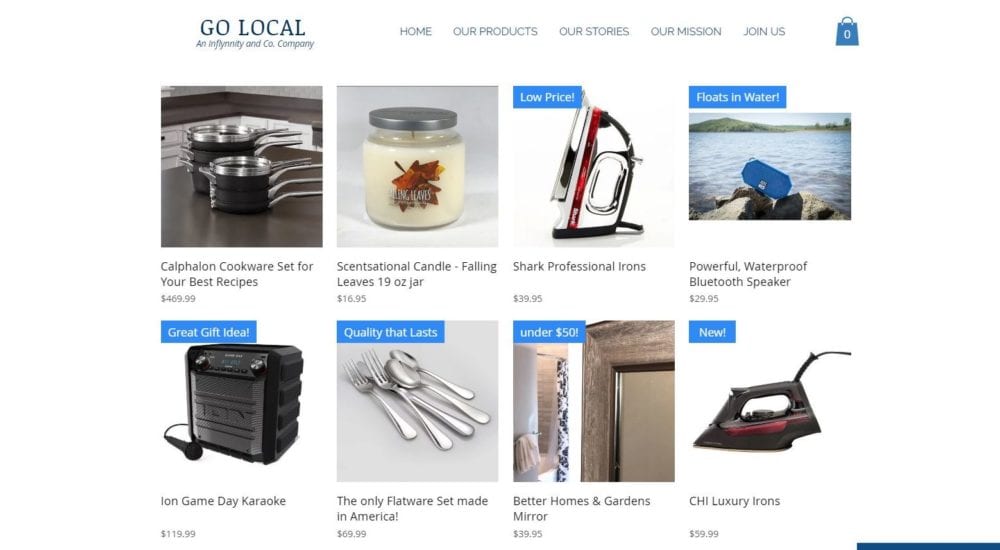
In June, vacation and short-term rental provider Northeast Suites launched GoLocal Suites, a line of properties in which every single item is made in America – and made available for sale. Guests can scan the products’ QR codes or browse the SkyMall-like GoLocal Magazine, read about the manufacturer, and purchase of anything from the dinnerware to the mattresses.

“We think there are so many marketing opportunities that haven’t been explored within the vacation rental industry, with unused square footage that was previously a sunk cost,” said Patrick Flynn, CEO of Northeast Suites. The Boston company has monetized that square footage, generating $10,000 in product sales from guests who have stayed in the suites since this summer.

Most products are sold through affiliation programs, and GoLocal earns between 4 and 7 percent in commissions. One product they were not able to find made in the US was a paper towel holder, so they make their own.

The 20 properties in the collection are currently a proof of concept for something much larger: GoLocal’s patent-pending technology that allows the demo and resale of items from rental spaces. One way the company plans to scale the concept is to partner with an e-commerce company to fulfill the orders and provide the products to properties. (Flynn’s four-person team currently fulfills the orders from their Boston office.)

GoLocal has been in discussion with Walmart and designed the concept in part to align with the retail giant’s initiatives to support American jobs and manufacturing. Its product selection includes some familiar names, like Libman and Walmart’s own Mainstays brand. The company also sources from smaller providers, and dozens more have applied to be supplier partners, including local artists.

“At the heart of it, that’s what our initial main goal was, to bring attention to local manufacturers because we think that can be replicated in hospitality sectors throughout the world,” Flynn said. He envisions packages of items curated specifically for vacation rental hosts, such as a set of small items for the kitchen – like a “big Birchbox,” as he calls it.

Right now, anyone can purchase single goods (including the paper towel holder) through GoLocal’s website or app. Among several standard product categories, one selection jumps out: the “Endangered List.” Items in this category had only a single manufacturer in the US, making them in danger of being outsourced should domestic demand decline, Flynn said. “We think people will buy these more consistently and the impact is greater.”

At least two of the products on the endangered list are some of the most popular sold: Bunn coffee makers and a flatware set from Liberty Tabletop. Other best-sellers include blankets, candles, pots and pans, and mattresses. Flynn said the suites acting as a showroom is a great way for guests to try out products in a way they might not otherwise be able to, like actually sleep on a mattress they may want to buy. Most guest purchases are made on the last day of their stay.

Beyond the competitive advantages and additional revenue, stocking its properties with American-made goods yields a significant operational benefit: fewer calls for repairs and item turnover. “These are much higher quality for sure,” Flynn said. “You can feel it as soon as you pick them up.”

Even more so, GoLocal has indirectly created a bigger sense of pride in the office. “Everyone here more and more feels that American pride and wants to build the company up for that reason.”

New Orleans Councilmember Palmer Proposes Vacation Rental Ban

0
new orleans short-term vacation rental regulations

Update 12/18/18: Councilmember Palmer has delayed the preliminary vote on this measure to January.

Today, New Orleans city councilmember Kristin Gisleson Palmer released details of her proposal to ban non owner-occupied short-term rentals outside of commercial zones, among other restrictions. The city council will hold a preliminary vote on the draft in their December 20 council meeting. If passed, the ordinance could wipe out nearly half of the existing permitted rentals in the city.

The following is the licensing structure detailed in the city council’s post on nola.gov:

Residential License Requirements:

– Homestead Exemption

– Owner must be on property during duration of STR rental

– Three license limit per property

Commercial Single Unit:

– Homestead Exemption

– One license per unit

Commercial Small Scale: (commercially zoned property with fewer than 5 residential units)

– Must reserve first floor for commercial use

– One license per residential unit

Commercial Large Scale: (commercially zoned property with 5 or more residential units)

– Must reserve first floor for commercial use

– 1 license per residential unit

– STRs cannot exceed 30 percent of residential units.

– Each STR unit must be matched with an affordable housing unit.

Philip Minardi, HomeAway’s director of policy communications, said in a statement that New Orleanians want a holistic approach that addresses community concerns and protects locals’ right to earn income through their vacation rentals. “Unfortunately, the extreme proposal released today does not reflect that widespread desire and takes the conversation around fair and effective policies in the wrong direction.”

“The Palmer Ban, if passed, would place New Orleans on a list of cities that have missed the mark when it comes to short-term rental rules,” he continued. “San Diego’s primary-only law was recently repealed following an outcry from local residents, and Palm Springs voters voted down their draconian primary-only law this summer. Palmer’s plan would place New Orleans at odds with forward-looking cities—like Seattle and San Antonio—that have recognized successful policies must include a legal pathway for all types of responsible short-term rentals to operate.”

Palmer’s proposal follows the September recommendation by the city planning commission based on a short-term rental study. The city council ordered the study in May and at the same time issued a moratorium on accepting new short-term rental permits to most non-owner-occupied properties in an “Interim Zoning District” for nine months. During that time, 471 permit applications have remained in limbo.

Under the current ordinance passed in April of 2017, short-term rentals with approved permits can operate in certain city zones based on rental type. Accessory short-term rentals in which the owner remains on site can operate in every zone (except the French Quarter) with no limit on the number of nights available to rent. Temporary short-term rentals in which the owner is not present may be rented for a total of 90 nights per year, can operate in most zones, and must have an in-town property manager available at all times. Commercial short-term rentals are allowed in nonresidential zones even if their owners are not present, and there is no limit to the number of nights that can be rented.

Of the 3,708 active permits listed in the city’s database, 1,217 are for accessory rentals, 1,087 are for commercial rentals, and 1,400 are for temporary rentals.


Read more:

HomeAway Proposes New Orleans Short-Term Rental Policy Amid Industry’s Uncertain Future in the City

NOLA Short-Term Rental Study Proposes Severe Restrictions

A Case for Vacation Rental Advocacy: The direct impact of local regulations


Airbnb’s acquisition of a property management company leads to concerns among property managers and hosts about Airbnb’s intentions

4

This week, Airbnb announced its acquisition of Luckey Homes, a property management company based in France. The news comes on the heels of Airbnb’s announcement a few weeks ago that it is looking at the home-building business through a new initiative called Backyard. Airbnb’s Backyard plans detail a specific intent to build “fully prefabricated homes.” The combination of announcements is causing both property managers and hosts who list their homes on Airbnb to question the company’s direction and motives.

Update: Airbnb clarified, “Backyard isn’t a home or a house, it’s an initiative from Samara to rethink the home from a systemic perspective. It’s in the prototyping and design phase, and the output or model is not yet confirmed. It is not confirmed if Airbnb will eventually sell homes or to whom they might be sold.”

As Airbnb moves toward an IPO in 2019, acquisitions are expected. However, acquisitions designed to compete directly with its core base of owners and property managers (PMs), whose home listings built the marketplace, are seemingly out-of-character for the company that touts its dedication to its community.

“As an Airbnb host, I think that’s crazy,” said one European Airbnb superhost. “I already feel there’s not much love left [from Airbnb], but once Airbnb starts buying PMs, good luck.”

Update: An Airbnb spokesperson provided the following statement about its acquisition of Luckey Homes:

“Property managers are an important part of our host community, and we’ll continue to invest in partnering with them to help grow their businesses. We’re working to build the right tools for the concierge services and property management ecosystems—to operate seamlessly through Airbnb and to provide the best experience to guests. Bringing in Luckey, and their expertise, as part of the Airbnb team increases our ability to test, learn more quickly, and build capabilities hosts need.”

According to Simon Lehmann, vacation rental industry expert, founder of AJL Consulting, and former president at Phocuswright, “This acquisition raises several questions. Urban PMs that depend on Airbnb-generated demand have to ask [themselves] the question about the future of their partnership. Does this acquisition cannibalize the marketplace, and if so, how? If I were an urban PM solely dependent on Airbnb for bookings, this would give me sleepless nights.”

Skift’s Deanna Ting reported on the acquisition, “Until now, Airbnb has largely acted as more of a platform by which professional property management companies and managers can market and distribute their listings . . . However, buying a concierge services provider/property management company like Luckey Homes suggests that, perhaps, Airbnb is considering a role that extends the company beyond simply being a marketplace, and more of an active provider of private accommodations.”


Turnkey’s John Banczak on Airbnb’s acquisition of Luckey Homes

We reached out to John Banczak, Turnkey Vacation Rentals co-founder and chairman, for his insight into Airbnb’s acquisition.

Are you surprised by this move?

John Banczak (JB): No, there is more money flowing through management companies than distributors like Airbnb or HomeAway. Management makes 2X the take rate of OTAs on 100 percent of the bookings. OTAs make half the take rate, only on the share they generate. To the degree “management” fits a certain mold, it was a matter of time before OTAs jumped in. What’s the mold? No inventory risk, management through technology (vs. armies of headcount), high take rate, scalable costs . . . Asset-light to use the over-used phrase. If it is no “harder” to provide management than just distribute, why not do both?

There are added benefits—by controlling the entire system, no one part is as likely to leave. You can deliver consistent hospitality without hoping someone else does it for you. The big question for your readers is likely what does this mean for small PMs around the world? Is Airbnb going to steal your business out from under you? If other OTAs follow suit, are the days of the small local PM over? I don’t think so. If I was a small PM providing bad service or charging a high commission I’d be nervous, but they should be already. It will always benefit OTAs to have a broad property selection, and local PMs with loyal owners will still get valuable distribution from these sites.

Will this make other PMs less likely to use OTAs to get business?

JB: Everyone wants more traffic to their own website. That won’t change. Dropping a distribution channel because they offer a service? It doesn’t make financial sense on either side. The fastest way for a PM to lose home owners is drop distribution channels. I would not want to be anywhere near Steve Milo right now, but I don’t expect any real fallout or loss of inventory for Airbnb.

OTAs have been providing more “management” style services for years, whether it is consumer awareness and marketing, payment processing, online reservation tools, tax remittance, damage policies, etc. Now they will schedule a housekeeper—why not?

Does it make Turnkey nervous?

JB: Not at all. We’ve built the better mousetrap. We’ve learned a lot and are years ahead with our platform. We’re fine-tuning an engine, not duct-taping wheels onto a prototype.


Does Airbnb understand property management?

Banczak’s point about “building a better mousetrap” is important. Providing consistent quality and management services for owners and guests is a very different undertaking than building a marketplace. Property management is a hands-on, service-based industry, and one in which Airbnb has little experience.


Trust is a Critical Component for a Vacation Rental Marketplace

The world of vacation rental marketplaces has not been a stable one for homeowners and property managers. TripAdvisor purchased market leader FlipKey and subsequently lost focus on technology and service leading to a substantial decline in both revenue and trust from its suppliers, leaving a hole that benefited Airbnb.

VRBO.com, once the go-to source for vacation rental reservations, sold to HomeAway, and then to Expedia. Under the Expedia umbrella, both managers and owners are reporting a substantial drop off of booking activity that even HomeAway’s most avid supporters are now openly discussing. (Tune into 32:00 in this video from the Phocuswright conference.)

What TripAdvisor, HomeAway—and now Airbnb—do not seem to fully grasp is that success in distributing vacation rentals is based on both bookings and trust.

When vacation home owners and managers trust and benefit from a marketplace, they choose to list their homes on the platform. And these listings are the sole reason that travelers use these sites . . . and the reason for the resulting high valuations of these companies. When a marketplace begins to erode that trust, inventory shifts to more trustworthy channels.


Takeaway and Beneficiaries

The overwhelming takeaway for managers and hosts? Do not put your eggs in one basket. Relying on one channel for bookings is both dangerous and irresponsible in a space that is rapidly changing.

The most likely beneficiaries of Airbnb’s move into property management and/or franchising of management services?

  1. HomeAway: Even though managers and owners are reporting a decline in bookings from HomeAway’s sites, HomeAway can now make a strong argument that at least it is not competing directly with vacation rental managers and owners. HomeAway could enter 2019 with a strong claim as the most trusted, consistent marketplace for vacation homes.
  2. Google: As Google is expected to launch the first iteration of its vacation rental booking platform in the first quarter of 2019, experts expect to see inventory move swiftly onto the Google marketplace, as managers already invest heavily in Google Adwords products. In addition, it’s price-compare feature will expose the guest fees being charged by other sites. Even though the take rate is expected to be high, Google has a history of transparency that resonates with inventory providers.
  3. A TBD Disruptor: Eroded trust in TripAdvisor, decreasing trust in an Expedia-owned HomeAway/VRBO, and concerns about Airbnb’s future as a long-term marketing partner are paving the way for a transparent guest-and-supply-friendly marketplace.


Potential Technology Play

It is possible that the acquisition of Luckey Homes is a technology play for Airbnb rather than an entry into property management.

According to Lehmann, “Interestingly, Luckey Homes built a proprietary property management software, which could be valuable to other urban property managers who currently use third-party technology. So maybe the focus [of the acquisition] is on technology and not actually on the property management piece.”

Lehmann added, “Is Airbnb becoming a property management company? I doubt it. It could just be a technology play to bring further value to its partners.”

Update: See comments below. 


As HomeAway evangelist, John Suzuki, famously preached: “Judge us not by our words, but our actions.”

As Airbnb moves toward its IPO, the vacation rental industry will be able to more adequately evaluate its intentions through its future acquisitions and new product launches than through its press releases.

Former Sabre CEO Sam Gilliland Joins BookingPal Board of Directors

2
sam gilliland former ceo sabre bookingpal board of directors

BookingPal is pleased to announce the addition of Sam Gilliland to its board of directors. Gilliland is the former chairman and CEO of travel industry technology giant Sabre Corporation and Travelocity.com, and currently the CEO of Colorado Springs-based IT service management company Cherwell Software.

While at the helm of Sabre, Gilliland led more than 10,000 employees in 60 countries, spanning all segments of the travel industry. In his decade-long service as the chief executive of Sabre, he pioneered the application of technology and customer service to help drive higher levels of productivity across organizations. Recently, Gilliland has served on several private and public company boards, including as lead director at Rackspace Hosting. He also served as an executive partner at Siris Capital, a technology-focused private equity firm. Gilliland was appointed by President Barack Obama to the President’s Management Advisory Board.

“Sam brings a deep industry experience of leading world-class travel technology organizations to BookingPal’s board of directors,” said Alex Aydin, BookingPal founder and CEO. “His leadership will add valuable expertise to the board and will help BookingPal drive innovation and continued growth as the vacation rental industry’s technology leader. I look forward to working with Sam to bring our visions to life.”

“BookingPal provides the most advanced and comprehensive vacation rental distribution technology in the industry to drive value and success for our customers,” said Gilliland. “I know first-hand the critical and growing role technology plays for our customers. It’s a critical solution for our property managers, and BookingPal certainly has un-matched capabilities.”

To find out more, please visit bookingpal.com.

About BookingPal: BookingPal is the leading provider of distribution technology solutions for the vacation rental industry. BookingPal helps property management companies increase revenue, occupancy, and efficiency through a fully managed distribution platform. The platform provides smooth, continuous, and real-time connectivity between the world’s leading property management software systems and consumer travel websites such as Airbnb, Booking.com, Expedia, Google, HomeAway/VRBO, and TripAdvisor.

VRMA: Working to Raise the Bar 

0
vrma working to raise the bar mike copps

It’s always great to have the opportunity to contribute to an issue of VRM Intel. The Vacation Rental Management Association (VRMA) is excited to be partnering with the VRM Intel team and serving as the presenting sponsor of the upcoming Vacation Rental Women’s Summit this coming February in New Orleans. Thanks to VRM Intel for this opportunity and for the continued support of VRMA. The more education we can help bring to the industry, the better. Education is the very foundation of VRMA.  

We are, after all, a trade association built and governed by vacation rental managers for vacation rental managers. Since 1985, and now more than ever, VRMA has been focused on raising the level of professionalism in the industry and distinguishing our core members—traditional professional vacation rental managers—from the bad actors and outliers who are drawing so much negative attention to our industry. Our education and advocacy efforts, driven by our board of directors, all have in mind the goals of raising the bar, elevating the industry, and advancing the great work this industry has been doing for decades. That’s central to our role in the Women’s Summit and of all that VRMA does.  

Another example of these efforts is our brand-new Vacation Rental Management Certificate program. Launched in July, this program provides vacation rental managers the opportunity to participate in a comprehensive online certificate program designed specifically to acknowledge and differentiate our professional membership.  

vrma certificate program

This assessment-based program provides a complete view of the roles and responsibilities of a vacation rental manager working in the industry today and is intended for managers (or above) who are in charge of multiple departments in their companies.  

This program is not a new concept; this version has been in development for some time. In 2016, the VRMA board of directors commissioned a study to perform research and analysis on implementing a professional certificate program in the vacation rental management industry. This research confirmed that there was and is a high demand for a professional program to designate vacation rental managers who have demonstrated a standard of industry expertise. The study found a high level of support for VRMA, as a nonprofit trade association, to provide this certificate program.  

That last point was key; as the only nonprofit industry association focused solely on vacation rental management, VRMA’s motives are clear. It is not a for-profit entity; there are no shareholders or principals. All proceeds from VRMA programs go right back into VRMA and its members. We want to provide more value to our membership through best-in-class programs like this and increased educational offerings both in person and online.  

VRMA then began developing the program; key to this process and to the program’s success was the participation of over twenty subject-matter experts in developing the content and assessment. VRMA arranged focus groups of successful and experienced vacation rental managers and industry experts to articulate the subject areas and competencies that should be covered in this program. VRMA subsequently sent a survey to its membership to validate the work of these experts. 

The industry experts worked closely with a VRMA staff certification specialist and an instructional design consultant to ensure that the content aligned with best practices in certificate development and principles of adult education. The VRMA board of directors reviewed the program’s content before finalizing it. 

The result is what is available right now: a high-value program for all stakeholders that raises the standard of awareness and professionalism in the vacation rental industry, delivered in an accessible online format to maximize engagement.  

The program contains five comprehensive online modules with information on topics ranging from accounting and finance to maintenance, marketing, and guest and owner relations. Critical components of the business, such as housekeeping safety standards, reservations and sales training best practices, compliance with employment laws and local and federal regulations, and management of dynamic relationships with owners and guests are just a few of the topics covered in this program.  

To receive the certificate, an applicant must complete all five modules and achieve a passing score on the subsequent skill assessment. Those who achieve a passing score on the assessment can utilize the designation Vacation Rental Management Professional (VRMP) after their names and signature blocks to proudly display their accomplishment to colleagues, clients, and potential owners and guests.  

Individuals don’t have to take the full exam to utilize these modules; they are also available for purchase on an individual module basis. Companies can also use these modules as part of their training and on-boarding.  

Initial feedback has been very positive across the board. In addition to the high value that our educational content is bringing, many of our members have already taken and completed the assessment and earned their VRMP designation. These individuals will be recognized at our fall conference in Las Vegas and throughout the year.  

We are very proud of this program and we are looking to use it as a building block for more to come. We’ll be announcing complementary educational offerings and programs in the very near future. Be sure to join VRMA if you haven’t already, or follow us on social media to stay up-to-date on our latest offerings.  

We look forward to helping you continue to grow your association. For more information on the Vacation Rental Management Certificate program, visit www.vrma.org/certificate 

PointCentral Sponsors Season 2 of Matt Landau’s Unlocked Podcast

0
unlocked podcast season 2 matt landau pointcentral

Matt Landau, vacation rental thought-leader and host of A Sense of Place, the world’s first vacation-rental themed travel show, today announced the launch of season two of his podcast series Unlocked. The 15-episode season, sponsored by PointCentral, takes listeners around the world, from hotel lobbies in Phoenix, Arizona to beachfront bungalows in Bali, Indonesia, to meet the minds of some of today’s most innovative vacation rental businesses.

Each episode introduces one vacation rental pioneer and aims to dive deep into one specific topic, best practice, or innovation that has altered their course for success, changing the playing field for listeners involved. Staying true to the diverse nature of the vacation rental movement, episode themes range from technology to regulation to marketing to cleaning, all structured around action items intended to be replicated by listeners and scaled.

“Since our inception over seven years ago, PointCentral has focused on how to bring IoT hardware and software together into a business-focused solution that allows vacation rental managers to both be more efficient and deliver the experience that guests want,” explains Sean Miller, president of PointCentral. “Matt has always been a champion of ‘collective wisdom’–that good information, when shared, creates better outcomes for us all–and we are excited to add our perspective to this collective wisdom in order to help vacation rental managers focus their limited resources on the high-value activities they need to do, and allowing automation to handle as many of the lower-value tasks as possible.”

According to Luis Gil, the podcast’s producer, season two of Unlocked builds on important lessons from season one. “When looking at our analytics, we noticed that the most popular episodes were shorter in length–likely because our listeners are busy running their small businesses. And when pouring over feedback and reviews, we observed that people loved actionable insight and things they could implement immediately. So together with Matt, we decided to double-down on both of those elements making for more pointed and impactful episodes. PointCentral is a company that unlocks things and makes vacation rental businesses better, so in this partnership, we are definitely both singing the same song.”

Unlocked season two episodes will be released weekly for 15 weeks. Below is a summary of the first two episodes this season.

Episode 1: Meet Bernardo Retana of Otium Residences in Marbella, Spain. With a background in hospitality and finance, Bernardo has impeccably high standards when it comes to customer service from the moment of contact through arrival, departure, and beyond. In this interview, Bernardo shares the powerful and perhaps limitless uses of a simple smartphone app his entire organization now uses to ensure every single guest has a VIP experience.

Episode 2: Lawrie Lawrence of Stay Lake Norman in North Carolina comes from the world of real estate, which explains why his vacation rentals are lake front and center. But everyone knows the value of location. In this episode, Lawrie shares a totally unexpected tactical investment in recreational amenities — one that floated his brand to the top of all lakefront competition.

To listen to Unlockedsimply subscribe or download on Apple Podcasts, or your favorite podcasting app. To learn more, please visit: vrmb.com/unlocked-podcast/ or pointcentral.com/vrmb/

About PointCentral

PointCentral, a subsidiary of Alarm.com (Nasdaq: ALRM), provides short and long-term property managers of single-family and multi-family assets with an enterprise-class solution that monitors and controls smart home technology across all properties in their inventory over a best-in-class secure and reliable cellular network – increasing property awareness, reducing operational costs and improving resident satisfaction. PointCentral’s solutions allow property managers to realize operational efficiencies, enhancing the asset for guests and residents.  For more information, please visit PointCentral.com.

The Power of “I” in the Vacation Rental Industry

0
streamline vacation rental software power i

By Brett Parry, CMO, Streamline Vacation Rental Software–Many of us have heard “Do what you love” or “Follow your passion.” For most people, these remarks represent a fantasy that is not achievable. This sudden realization can turn a smile into sour disappointment. One of the most striking things I have experienced over the past thirteen years in the vacation rental industry is that we are here because the industry stole our hearts, and we love what we do. It is an industry packed with growth, innovation, exploration, independence, opportunity, community, and more. As our industry evolves, it is important that we fight to protect it. Entrepreneurial spirit has been the fire igniting our success, and the same fire and sense of community can ensure this industry thrives.

Inspire

Our ultimate mission is to inspire people to travel and to book vacation rentals. We are changing travel around the world. We offer a new and valuable travel experience for many people, especially families and groups. The traditional hotel stay is great, but it is limiting, and it’s only one possibility within the entire travel sector. Over the past several years, vacation rentals have become mainstream. Our actual market size is expanding, but we need to continue spreading the word while elevating the guest experience.

Infrastructure

As with any sector, quality infrastructure can mean the difference between success or failure. In our industry, we need to identify the most effective organizational and community structure to combat current and future challenges. There are powerful, large-scale forces aligned with local grassroots movements that threaten the very existence of vacation rentals. This is a fight we should all be in together. Reversing legislation is more difficult than establishing favorable legislation. We need to form and support the appropriate networks and associations to protect the industry and to win local battles. The best possible approach is to be proactive instead of reactive. We need organized, coordinated efforts—both internally and in our communities—to take on this issue.

Influencers

It is time for our people to step up and lead. It is critical that industry voices collaborate to refine messaging and organization. Our ability to react and adapt to any situation needs to become more sophisticated, and that will only happen through proper leadership. The influential companies in our industry must align for the greater good. We compete on many levels within the industry, but we also compete against other industries and agendas.

Innovation

As the world progresses technologically and customer expectations increase, the vacation rental space must innovate at a rapid pace. We are competing for a larger market share of the overall travel segment. Technology is at the forefront of helping property managers stay efficient and provide an optimal experience to travelers. We can elevate the overall quality of a vacation rental stay through innovation. We must be diligent because competing against traditional travel accommodations requires a reconditioning of the traveler’s mind. Beyond technology, property managers need to be innovative in their overall offering and traveler experience.

Independence

At the heart of our industry is the professional property manager, and it is important they diversify and stay independent. While the OTAs provide our industry with excellent value, it’s important that we all place emphasis on the local property manager. Local companies are essential to building relationships with travelers and delivering a special vacation rental experience. On top of the booking experience, guest services, and general stay, there is the daunting task of on-site operations. Providing optimal housekeeping and timely maintenance is especially important to travelers choosing vacation rentals for their travel experience. We need companies to be healthy, sturdy, and valued. We encourage property managers to build their brands, build their guest and owner relationships, and evolve their brands in every way.

Information

In our industry, we are gaining access to usable data for statistical analysis like we never have before. Converting this data into usable information will become more important as we make decisions on how to communicate and move forward. There are entire companies that utilize, distribute, and interpret data. We should leverage this data influx to optimize the direction of our space and our businesses. It’s important that we be responsible with data and protect it in every way we can.

International

Among the many remarkable elements of our industry, its vastness is possibly the most exciting. Most of us in the vacation rental space love to travel, explore, and experience new things. Connecting to the world through travel is really something special, and we have the privilege to do so. Beyond this, the opportunity to expand our market size is virtually limitless. The global nature of our industry offers spatial, product, and technology expansion because every market has different demands. We have become more sophisticated, but as we continue to evolve, it will be interesting to speculate on how international markets, processes, and technologies will collide.

Integration

Consumers, especially the millennial group, are looking for instant gratification. Delivering real-time responses to every consumer is paramount. Integrating technology, from property management systems to the OTAs, distribution channels, CRM systems, and any ancillary service, is a big part of what will make us successful. This integration will help us become more efficient and will help companies stay lean and face upcoming challenges.

Inventory

Vacation rentals as an accommodations alternative are one of the most impressive products sold in the worldwide economy, including cars, clothing, technology, art, food and beverage, movies and more. There is something special about a vacation home. Home is where the heart is, and unlike other travel and accommodation options, you really do get to experience a home away from home in a vacation rental. This is true for condos, villas, and cabins alike. Being in a property with your family that was individually decorated by a private homeowner is something unique. Remember, the true keeper of the inventory is either a direct property owner or a professional property manager. Our product is unique, dynamic, and versatile.

Inflate

At the recent 2018 Streamline Summit, we used the hot air balloon to symbolize “rising up” as a metaphor to represent our market size. Everybody knows the industry is growing, but it may fly under the radar that our balloon (market) has a ton of room for expansion. The major brands in our industry have done a great job of increasing awareness, but the expansion has only just started. We are taking market share from the general travel space, and we are growing the market by attracting new travelers. Branding our industry is key to accomplishing this.

Investment

The last topic in this article is investment, because the amount of money pouring into the space is astronomical. We have seen many acquisitions over the years, and the trend is not slowing. We see the acquisition of property management and technology companies and a general movement toward consolidation. With the influx of capital, the level of sophistication in vacation rentals has potential to rise. This is excellent for the overall vacation rental experience, but it’s essential that companies keep up with technology while evolving internal processes and procedures.


Brett Parry Streamline VRS Chief Marketing Officer
Brett Parry, Streamline VRS chief marketing officer

About Streamline and the Power of “I”


Streamline is a visionary technology company revolving around people and their talents, needs, and passions. The power of “I” is our culture that brings individual talents, knowledge, and brilliance to the forefront in a dynamic collective setting. Every individual, whether a Streamline team member or a valued Streamline customer, is empowered to contribute to the evolution of its solution-focused technology.

Baltimore City Council Issues Final Vote to Pass Strict Short-Term Rental Limits

0
baltimore skyline

Baltimore city council voted 10 – 3 to issue final approval a bill limiting short-term rentals to primary residences. One additional dwelling unit per owner may be grandfathered under the new limitations only if it was purchased by December 31 and has successfully executed a booking transaction by the same date. Both will require licenses to operate.

The bill also includes the requirement that short-term rental operators and hosting platforms collect and remit the hotel room tax of 9.5 percent, which goes into effect on December 31, 2018.

All other license requirements will take effect on December 31, 2019. Licenses will cost $200 every two years and require that operators post their license numbers in advertisements, provide emergency contacts to guests, and other rules.

Hosting platforms must verify hosts have valid licenses before listing their properties on the platform and display the license numbers in listings.

Rachel Indek, owner of Bmore At Home Properties and founding member of the Baltimore Hosts Coalition, posted in the organization’s Facebook group after the vote, “It’s over… For now! We lost! It was a good run. We shall recoup and figure out our next step.”

“It’s disappointing that city council would pass legally unsound regulations that negatively impact Baltimore City residents,” an Airbnb representative said in a statement. “Home sharing is a financial lifeline that helps families pay their rent, mortgage, and other bills. This law will only take money out of the community and help hotel executives further take advantage of the city.”

Baltimore’s department of finance estimated that the primary plus one license limit would reduce short-term rentals in the city from 2,105 to 1,478 and that those remaining could generate between $587,000 and $1.01 million annually in hotel room tax revenue.

Council members Bill Henry, Zeke Cohen, and Isaac “Yitzy” Schleifer voted against the bill, and Shannon Sneed and Mary Pat Clarke abstained.

Las Vegas City Council Bans Vacation Rentals

1
las vegas short term vacation rental ban

Las Vegas city council voted 4 – 3 on Wednesday to ban non owner-occupied short-term rentals and limit hosted rentals to those that have no more than three bedrooms and are at least 660 feet away from nearby rentals, among other rules. The city will not accept requests for exemption.

Councilwoman Lois Tarkanian, whose term limits are up next year, sponsored the bill. Council members Cedric Crear, Michele Fiore, and Stavros Anthony opposed it.

“The vote was very disturbing,” said Julies Davies, a local short-term rental advocate, educator, and manager. “We had commitment from five council members to vote against the effectual ban (and full ban), but it shifted the night before the meeting.”

She cited political deal-making and unspoken rules in the city government, opposition from Culinary Workers Union Local 226, and negotiation derailments from outside advocates as contributors to the loss. “If the city were to simply meet with stakeholders and allow us to give input into the bill production and in a significant way, we could clear up misinformation, find common ground with the opponents, and stabilize the situation here,” she said.

Airbnb policy director Laura Spanjian submitted a letter and overview of Airbnb hosts in the city to the council ahead of the meeting. “We have observed in other cities that bans and partial restrictions result in exacerbated problems, and simply do not work. However, limits and strong enforcement, coupled with a robust partnership with platforms, do work,” she wrote.

The letter made recommendations including simplifying the rules, requirements, and registration process; creating a tiered system for owner-occupied and non owner-occupied homes with reasonable limits; and involving stakeholders in creating a compromise ordinance. The full letter and overview can be read here.

Philip Minardi, director of policy communications for HomeAway, said in a statement that the legislation was a step in the wrong direction for the city’s travel and tourism economy and called it “a dangerous ban over fair and effective policy.”

“Mayor Goodman stated that this is only a first step in the creation of a better ordinance. HomeAway remains at the table to help shape that ordinance,” Minardi said. He shared the company’s Whole-Home, Whole-Community policy recommendations it provided to the city council, which include a per-night fee to go toward a Las Vegas housing fund, a willingness of HomeAway to collect and remit room tax, and a limitation on the number of units in large multi-family buildings that can be rented out short term, among other stipulations. The full policy document can be read here.

Davies said other efforts to fight the regulations are being considered but may not take place until after the election in the spring.

Related Article: Las Vegas Planning Commission Sends Short-Term Rental Ban to City Council

Election Officials Confirm Vacation Rental Ban in South Lake Tahoe

0
vacation rentals south lake tahoe

On Tuesday, El Dorado County’s official election results confirmed that South Lake Tahoe’s Measure T has passed by just 58 votes, 3,517 to 3,459. The measure bans vacation rentals in residential areas, phasing out nearly 80 percent of the 1,800 short-term rentals in the city by 2021. The around 400 that remain in the tourist core will face harsher restrictions.

The vote margin is narrow enough to qualify for a recount, which must be requested within five days, but there has been no indication that that will occur. Stu Roberson, a partner at RnR Vacation Rentals, said local short-term rental advocates are considering other options to fight the regulations, but they are not yet announcing specific actions.

The city council is expected to accept the results at its meeting on December 10, and the ordinance will go into effect on December 20. The city estimated the ordinance will cost more than $4 million in lost revenue.

The day after the election when the margin was wider, Roberson said he wasn’t surprised about the results. “We could have done more sooner. That would be the advice I give to others: If there’s an inkling of something like this, it won’t go away. Deal with it sooner.”

Read More: 

Vacation Rental Industry Loses Ballot Initiatives Around the Country

South Lake Tahoe Resident Group Submits Petition to City Council to Ban 75% City’s Vacation Rentals

Airbnb Addresses Professional Vacation Rental Managers: “PMs are an indispensable part of Airbnb’s success.”

2

Airbnb wants professional property management companies to know its aim is to work more closely with the professionally managed community. Below is a message from the company to vacation rental managers:

As the travel industry has evolved, Airbnb has grown along with it. What began as a platform for individuals to share their homes has expanded into an inclusive hosting space that embraces property managers (PMs). Together, hosting experts and Airbnb created a dynamic vacation-rental landscape, following a journey from listening to conducting extensive research and working with the Vacation Rental Management Association (VRMA).

The ever-changing future of travel was on the minds of so many who attended VRMA International in October. At the conference, we hosted multiple conversations with PMs, and a handful of key observations came to the forefront. Here are our insights:

The industry is evolving — and quickly

We noticed the same thing PMs did at VRMA International: the growing presence of venture capital groups, private equity firms, online travel agencies, and global travel industry consultants, among the 1,700 attendees in Las Vegas. With so many new faces, PMs were curious to know what Airbnb’s intentions were: “What type of future are you thinking about? What are your motives behind where this is going?” one PM asked.

PMs have been in the vacation-rental business for generations and deserve to take part in shaping the industry for the future. Airbnb’s role is helping them do this, by sharing research and information the company has and providing insights on the shifting industry. We view the future as an opportunity to help PMs grow their businesses and partner directly to define this future together.


Property managers and OTAs

PMs have made it clear: online travel agencies (OTAs) have greatly impacted business — for better or worse. One PM described OTAs as a “necessary evil, in a way, but it’s part of business… we do see the benefit of guests booking directly through us, rather than an OTA, because we make more money that way.”

There’s a growing reliance on OTAs and third-party listing sites. On one hand, they help showcase properties to a larger audience. On the other hand, many take large commissions for doing so. Airbnb believes in strong, long-lasting partnerships, and that includes welcoming PMs into its global community. We strive to be a partner—not just a distribution channel—and to help PMs grow their businesses.


Trust is key

PMs want a trusted partner, not a boss. “We’re handing over, in a lot of ways, the keys to our business, and it’s an important partnership — we rely on your policies,” a PM told us. Many PMs shared stories of OTAs making changes without notifying them, and that influenced whether PMs would work with them again.

PMs are an indispensable part of Airbnb’s success. We have deferred to PMs’ expertise to evolve our platform and better support hosts with multiple listings. In every great partnership, communication is crucial. A PM at the conference said it best: “Don’t just roll out new terms and conditions, add a new little widget somewhere. Tell us, hey, you heard us… and then close the loop.” That’s good advice — and we plan to stick to it.


Growing concerns of commoditization

The vacation-rental industry was built on local expertise and unique experiences, but it can be difficult to stand out in an increasingly crowded space. “Help me set my properties apart from all the rest,” one PM told us.

Airbnb was built around properties with a point of view, design, and entrepreneurship — a natural fit for small businesses and PMs. Our shared passion and mission to provide distinct guest experiences make Airbnb all the more committed to help individual brands shine. We’ve launched programs like Airbnb Plus to showcase professional hosting amenities, created the ability for PMs to create customizable pages, and provided merchandising opportunities.


Technology can improve operations (if only it were easier to use!)

One PM told us that the main challenge with technology lies in “the amount of time it takes to integrate, and the amount of time it takes just for us to take advantage of some of the tools that are on Airbnb when you are an integrated manager.” We know PMs have multiple systems to connect, and so far there’s no one software that meets all of their complex business needs.

Airbnb is invested in developing a better solution: we have already created a suite of professional tools that integrate with a global network of software providers. And we’re focused on building more tools and features that are not only easy to use, but also meet the complex business needs of property managers.


What you can expect next from Airbnb

“I’ve watched you guys grow up; I’ve grown up with you. That has been a fairly recent shift, but I’ve noticed it, and I do appreciate that,” a PM said. As much progress as we’ve made towards understanding the industry and evolving our platform to better support the needs of PMs, we know there is more we can do to become even better partners.

Transparency and authenticity are important to us — and Airbnb will be sure to keep PMs in the loop, listen to concerns, and work with PMs to ensure Airbnb’s platform works for them. Together, Airbnb and PMs can build an ecosystem to adapt to growing businesses and evolve with the ever-changing travel industry.

Resort Realty Acquires Elan Vacations on NC’s Outer Banks

1

Resort Realty announced today that it has acquired Elan Vacations. Founded in 2001, Elan Vacations specializes in vacation rental management and is based in Powells Point, NC. Resort Realty was founded in 1987 and is based in Nags Head on North Carolina’s Outer Banks.

“Resort Realty’s business has seen tremendous growth over the last five years, and adding Elan’s inventory of Outer Banks vacation rental homes furthers our reach by providing Outer Banks vacation rental guests with a larger offering of vacation rental homes,” said Stuart Pack, CEO of Resort Realty. He said Resort will keep a majority of Elan’s full-time employees and offer employment to all seasonal staff.

The acquisition will add approximately 100 properties to Resort Realty’s portfolio, now totaling nearly 650 homes from Corolla to Hatteras Island. The acquisition is a part of Resort Realty’s long-term strategy for local growth by expanding its current portfolio.

VRM Platform Hostaway Raises $1.45 Million Seed Round

0
hostaway vacation rental property management software platform

Vacation rental software company Hostaway recently announced a seed funding round of $1.45 million. The round was led by Finland-based Vendep Capital Fund, which invests primarily in Finnish B2B software startups, with participation from Business Finland. The company provides management software for professional property managers with 20 to 5,000 properties.

Hostaway was founded three years ago by Finnish tech professionals CEO Marcus Räder, CTO Saber Kordenstanchi, and Mikko Nurminen, originally as channel management software. Based in Helsinki and operating from additional offices in Toronto and Barcelona, the company has since grown to a full-service management software platform that includes operations automation, payment processing, guest messaging, reporting, and other tools.

Hostaway’s goal is to become one of the largest software providers in the industry. “We want to be the Salesforce of property management software,” said Robert Hoogendam, VP of operations. One of the planned uses of the seed funding is to grow its team from 30 to 60 or more employees by early 2019. The company is looking for developers, sales staff, and others.

“Our focus on diversity and global culture as key values, is ultimately what has helped us achieve the success we have today,” Nurminen said in a release.

Hostaway will also use the funding for product development, both increasing the benefits of its current software and bringing new products to market, Hoogendam said. The team is working on improving its integrations with Airbnb, Booking.com, and others.

The company now has 10,000 properties in its portfolio. Most of them are in North America and Europe, but they are seeing a growth spurt globally in South America, India, Asia, and Australia, Hoogendam said. “What we want to focus on is the high end of that market, property managers who look for high-end delivery software.”

The company has raised a total of $2.7 million from private and institutional investors, including a $795,000 round in February. Hostaway is also supported by Toronto’s DMZ, a tech start-up accelerator where the company is currently headquartered.

Is Texting the New Email for Vacation Rental Managers? Giving Great Service While Texting 

0

Communication via texting is rapidly increasing as we all see every day. Now when I dine out at a restaurant and I am waiting for a table, no longer am I handed a device that buzzes when my table is ready; now I receive a text letting me know to be at the lobby in five minutes to be seated. I really like the additional five minutes, just in case I need to pay a beverage tab or use the restroom before going to the table. I also get texts letting me know when a pharmacy prescription is ready or when a prescription needs to be refilled, as well as reminder texts for dentist appointments and payment reminders from my cell phone provider.  

Texting is likely the most prevalent form of communication today and deserves a much more prominent role in business communications. For example, we can send mass texts to guests, such as those concerning weather disasters, but we can expand to handle other communications with the immediacy and personalized tone that we do with all relationship-focused communications. 

It is important to satisfy today’s experience-seeking customer. If you offer a better—and more immediate—experience than your competitor, consumers will buy from you. Texting is an easy way to give your customers the assurance they are seeking. Are you sending out a text when the home is ready for check-in, or are guests expected to call to see when it is ready? Texting is quick and convenient and can easily provide a high level of service if done correctly. Often, companies are not able to program a specific number that shows who the text is coming from and have a character limitation. Are you stating the company name first, so guests know who it is coming from? Are you using templates that are the correct number of characters and are still coming across as warm, allowing employees to make small changes to customize them? Maybe the notification that a home is ready states, “Hi, Smith Family! Your oceanfront home is ready at 200 Seaside Lane with a door lock code of 3333. Reminder that your sunset view this evening is 8 p.m. Amazing Rentals hopes you enjoy your time.” 

Statistics say that eight trillion texts are sent every year with an open rate of 99 percent, and a typical response time of less than three minutes; 33 percent of Americans prefer texting to any other form of communication. It is also the most used form of messaging for Americans under the age of fifty. As an industry, we have already experienced a huge increase in website bookings; for some companies, it has reached up to 70 percent of all bookings. Often, when rental agents ask customers to view the home together on their computer, callers say they will be able to when they are done with the call because they are on their phones. Consumers are not spending the time to open a computer to view the homes together because they rely on their phones so much for vacation rental searching and booking. I recently had a friend tell me she used VRBO for her European bookings because it was easy to access on her phone during travels. 

Now that we understand how popular texting is and why we should be using it in our businesses, let’s start off with some basic guidelines for how to text for business purposes. 

Spelling, Grammar, and Respect

Spell out words instead of abbreviating like you might when texting to a friend or family member. Even if the person you are texting with starts abbreviating, remain the professional service provider by spelling out your words and using correct spelling and punctuation. Just because they might not capitalize an “i” doesn’t mean you should do the same. Imagine that you are texting a colleague; it often helps to keep it professional. Part of being human is that we are often judged, and texting is another line of communication that guests will make judgments on. Keep in mind the Platinum Rule and treat others how they want to be treated. If I am moving fast when texting—as we all usually are—I might misspell or use the incorrect word, but that doesn’t mean that I am OK with a company doing the same when texting me.   

Tone

As with email, it is crucial to watch your tone while texting so that communication isn’t misinterpreted. Take time before responding so that you don’t come off as flippant or harsh. Entrepreneur.com recommends using polite touches like “please” and “thank you,” as well as rereading every message before sending it to help double-check your tone. 

When to Text and When to Call

Address serious topics with a phone call. If you are talking about cancellations of any kind, finances, or what might be interpreted as bad news, take the time to call. 

Building Trust

You can build trust with frequent communication, but if you overcommunicate via text, you could annoy someone. I recall the last time I was interviewing a renter for a studio we own, and we were texting about references and details. The renter filled my phone with long, detailed texts right up to 10 p.m. at night. I finally stopped responding. The next day, he said something about blowing up my phone and I responded with, “Yes, you did.” We both laughed about it, and he never did it again. 

Unplugging

On an internal business note, take breaks from technology occasionally. I hear about managers who are receiving texts on their days off and sometimes even owner-relations employees doing the same. I understand we are in the hospitality industry, and it is focused on pleasing people, but I spend a good amount of my coaching time helping people create healthy boundaries so they don’t become burned out or need a month off to rejuvenate. If we are going to give with all of our hearts and build healthy relationships in business, we need downtime so we don’t get snarky or annoyed. 

Communication Times

One of the bigger points that I find to be extremely important is to watch when you are sending texts. I recommend 9 a.m.–5 p.m. for business texts. With that said, if you are texting about an update on a maintenance issue that is pressing, I feel it is appropriate to text as late as 7 p.m., but I wouldn’t recommend any later. If you are communicating due to an after-hours call, ask permission for how late you can communicate via text or if the guest would prefer another form of communication. 

Inc.com wrote a great article about why texting increased Dirty Lemon’s revenue by 1,400 percent. The first reason was due to personal communication via SMS, which optimized the direct-to-consumer experience. I completely agree with this because I tend to make quite a few purchases through Facebook Marketplace, and I like the quick and easy transactions.  

It is said that understanding consumers drives smarter product development. The ability to track what consumers want and the areas that your company is not delivering in allows for business changes that meet and even exceed their needs. 

Texting speeds up consumer communication and eliminates lengthy phone calls or email queries that sometimes never get answered or mistakenly end up in the spam folder. 

It is time to embrace texting communication in business if you haven’t already.  

“If we’re growing, we’re always going to be out of our comfort zone.”

-John Maxwell 


HomeAway Software Has a New Interim GM: Ryan Hutchings

0

HomeAway Software announced today that it has named Ryan Hutchings as its new General Manager, replacing Cliff Vars. In this role, Hutchings will oversee support, technology, marketing, and integrations for HomeAway’s software products, including Escapia, V12, and Glad To Have You.

Hutchings joined HomeAway in 2015 to head up marketing for BedandBreakfast.com, and six months ago, he was promoted to GM of BedandBreakfast.com. Before joining HomeAway, Hutchings led marketing for VacationRoost and LeisureLink.

“I am very excited to step into this role and continue working in the software side of the business,” said Hutchings in HomeAway’s release. “It’s an exciting time for HomeAway Software; the company is committed to these solutions and delivering more to our valued customers. I have always felt that if we focus on the customer, we all win.”

Cliff Vars will remain at HomeAway and will manage the technology integration for Pillow and ApartmentJet, platforms which Expedia recently acquired to help grow into urban markets. According to HomeAway, “Pillow makes it easy for multifamily community owners to give residents the ability to list their apartment units as short-term rentals without violating their lease restrictions. Additionally, ApartmentJet enables owners to help visitors enjoy guest suites at their properties. Both solutions enable owners to know exactly who is staying in their buildings and to set limitations on short-term rentals in their buildings, such as limiting the number of total rental nights per year for units or for an entire building.”

“I am thrilled to remain a part of the HomeAway family, and I look forward to staying close to my HomeAway Software roots,” said Vars. “I’ve had the opportunity to work closely with Ryan over the past several months, and have full confidence in his ability to lead this incredible group moving forward. Ryan has the right combination of industry experience, software expertise, and is relentlessly focused on helping customers be successful and grow their businesses.”

2nd Annual #BookDirect Guest Education Day Set for February 6 — Let your guests know it pays to book direct, book smart, and book local

4

The Second Annual #BookDirect Guest Education Day, recurring on the first Wednesday in February, is set for February 6, 2019. With a multitude of new travelers searching for vacation rentals, vacation rental managers and homeowners will join forces for one day with a singular message to let travelers know that there are many advantages to bypassing third-party channels and booking directly with management companies and homeowners.

On February 6th’s Second Annual Guest Education Day, managers and owners are encouraged to:

  • Use the hashtag #bookdirect on Twitter, Facebook, Instagram, and LinkedIn to bring attention to the many advantages of booking vacation rentals directly with the manager or homeowner instead of on third-party channels.
  • Send out an email campaign to their past and prospective guests with a message about the value of booking direct, booking local, and booking smart.
  • Work with local and feeder-market media sources to educate consumers about the best ways to book a vacation rental.
  • Encourage local destination marketing organizations (i.e. CVBs, chambers, and state tourism organizations) to join in promoting their direct connections to lodging providers.

Last year, the inaugural #BookDirect Guest Education Day reached an estimated 3.5 million travelers with direct email campaigns and had a social reach of over 24 million consumers.

Some of last year’s messaging included:

  • When travelers book on large vacation rental websites like Airbnb, VRBO.com, and TripAdvisor, they are paying substantial fees to use these sites.
  • Many of the best vacation homes are not listed on these websites.
  • Managers and homeowners know the properties and the area better than anyone, can better match travelers to homes, and can help plan a better vacation experience.
  • Travelers can find out about special offers that can’t be found on the big websites.
  • Managers and owners can better help guests optimize dates and budgets to fit their needs.
  • Travelers with special needs and requests can work directly with owners and managers in a much more personal way to create a guaranteed amazing vacation for their family or group.

2018 #BookDirect email examples

Check out Outer Banks Blue’s video from 2018.


There is power in numbers, so join us as we provide valuable education to guests and promote the industry to a broad range of vacation rental travelers.

Instant Gratification and the Five-Minute Golden Window 

1
instant gratification five-minute golden window sales customer service response time

In 2007, Dr. James Oldroyd’s Lead Response Management Study found that agents who responded to a lead within five minutes of the inquiry submission were 100 times more likely to make a successful contact, and the lead was twenty-one times more likely to enter the sales process than if the agent had responded thirty minutes after the submission. Success rates further declined sharply when the response time lengthened from minutes to hours to days. These statistics have held steady over the past 11 years, and responding to a lead within five minutes is still a gold standard in the sales world.

Vacation rental guest leads are no different, and if you feel like guest impatience has gotten worse lately, you’re not imagining it. A 2017 YouGov study that Fetch Media commissioned found that 40 percent of UK and US consumers say they are more impatient than they were five years ago. It’s only going to get tougher from here—over half of 18- to 24-year-olds answered the same way.

It should come as no surprise because seemingly everything around us is increasingly designed for instant gratification: Netflix on-demand streaming, Amazon Prime and same-day delivery, digital voice assistants, Seamless and other food delivery services, subscriptions for everything from meals to wardrobes to cleaning supplies, or chatbots. Heck, some companies are built with bot-based assistants at their core, such as Trim and Cleo.

When it comes to general customer service needs, what customers say are acceptable response times varies by channel. The Social Habit research found that of the respondents “who have ever attempted to contact a brand, product, or company through social media for customer support, 32 percent expect a response within 30 minutes. Further, 42 percent expect a response within 60 minutes,” writes founder Jay Baer for Convince & Convert.

A Kissmetrics study found that 50 percent of respondents who submit their question via email expect a reply within a day. But given Oldroyd’s study and the ultra-competitive nature of the vacation rental industry, these “acceptable” response times don’t cut it.

“Nowadays a ‘real time’ response is not just a nice feature—it’s an expectation,” wrote Paul Comaroto in Glip’s blog post “How to Ace Customer Service in the Age of Immediacy.” “For many issues, there are plenty of fast and easy ways to access what we’re looking for, from a quick online search to AI, chatbots, and other automated responses. The point is speed, not nuanced customer service and niceties.”

Expediency is a nonnegotiable, especially for prebooking questions but also the in-home, I-can’t-work-the-toaster ones, as guests’ experiences during their stay are part of the sales process for future reservations. Property managers have no choice but to keep up on both sides to compete with each other and maintain a huge upper hand against the OTAs.

The Downside of Autoresponders

Autoresponders have helped alleviate some of this pressure, particularly with a first quick response. Many companies leave autoresponders at the “We’ve received your message and will respond to you as quickly as possible” default reply. Others may process the request or question through support software that routes the inquiry to the most appropriate person or department, sometimes pushing out status updates to the customer along the path to resolution. Some companies employ a chatbot to help with initial triage of a question and provide an immediate answer when possible.

These tactics are good for letting customers know they’ve been heard, but they do not meet the golden target of five minutes for a human response. Too often they are simply a stopgap between a question and its answer, akin to calling and being put on hold for hours at a time. The benefits of a quick first response are negated if it takes an unacceptably long time to get the answer, and the risk that the lead will abandon the company for its competitors increases dangerously with each minute that passes.

So, too, are automation and autoresponders ineffective when they attempt to find a solution and fail, such as the sites or chat tools that ask customers a series of questions to suggest an irrelevant FAQ article before connecting them with humans. Of course, even the best systems won’t be 100 percent accurate, but to improve overall service rather than add frustration, these must be deployed with extreme care and be better at finding answers than the customer is. I have yet to find a tool like this that supplies the answer I needed. That’s why I’m trying to connect to a live person—after all, I’ve already done the search myself and didn’t find the answer.

“Once the customer isn’t getting the answers he or she wants, the next step is to speak to a human being. And often, that customer is now frustrated not just with the problem but also with the time and effort it’s taking to find the solution,” wrote Comaroto.

Speed to the Right Answer to the Right Question

The key is that not only is speed important but also speed to the right answer to the right question is the ultimate objective: instant gratification. Speed and quality are not independent of each other. In fact, improving one by nature improves the other. The higher quality your support tools are, the faster a guest can get the answer he or she needs. The faster guests can get solutions, the higher quality the service is to them.

When property managers take a hard look at lead response times, conversion rates, and customer satisfaction data, and find a pattern of slow or ineffective service, it does not mean that all guests should call in for every question and that property managers should put all staff eggs in the call center basket. It may simply mean the tech + people + operations equation needs some rebalancing. Improvements will depend on what’s causing the problem.

Looking at the macro level, Ventana Research reported that the top customer service challenge is communication channels managed as silos. Vacation rental management is a prime environment for this to occur. Marketing handles social media messages, reviews, and comments; guest services or reservations take incoming calls, emails, and chat requests; maintenance and housekeeping receive requests and complaints in the field. Without a centralized system for managing all this, things can easily fall through the cracks. Shoring up these systems is a good place to start improving response speed and quality.

Reduce Stress on the System with Self-Service

A major benefit of successful self-service options is keeping non-sales inquiries from clogging sales channels. However, you should not design self-service support with your company’s efficiency in mind. Build it with guest satisfaction and convenience as the foundation, prioritizing both speed and effectiveness for them.

B2C self-service support takes the form of an FAQ section on a website, interactive voice response phone trees, messenger bots, or other tools that funnel a user to an answer without human intervention. The information they typically provide, however, only goes so far. “Do you have pet-friendly homes?” “Should I get travel insurance?” “Where is the nearest grocery store?” Sure, these FAQs are legitimate, but asking reservationists, housekeepers, and maintenance techs what else they answer on a regular basis can reveal a much deeper well of questions that can be answered with self-service tools.

In addition to building a helpful self-service information library, property managers will benefit from ensuring that guests who prefer to get help this way can do so—quickly and from a mobile device. Chances are guests and potential guests will be looking for information from a smartphone. Kissmetrics reported that 75 percent of customers ages 35 to 44 and 77 percent of those 18 to 25 use their mobile devices for customer support at least once a month. The company also reported the top challenges consumers encountered when doing so:

  • Incorrect displays or difficult navigation (90 percent)
  • Unhelpful search results (75 percent)
  • Slow load times (40 percent)

The mission here is to refine your system’s user-friendliness with a focus on mobile and easy navigation until most questions can be answered in two to three steps.

You can also leverage tech to prevent excess service volume by anticipating guests’ needs before they ask—send pre-arrival emails and social media to distribute area guides, how-to’s, checklists, and so on. Data dives may also reveal FAQs for specific homes or groups of properties. For example, if a condo complex has a tricky gate, or homes with a certain TV provider frequently have guests calling for help with channel listings, use targeted emails to just these guests with pertinent information.

Low-tech, in-home options can be ideal, too. For example, small signs above each sink and toilet informing guests of the delicacy of that neighborhood’s plumbing and septic systems and kindly asking them not to flush or drain food, paper towels, or other toiletries can cut down on calls for clogged toilets or worse.

The more effective self-service and preemptive support are for guests, the more efficient property managers’ overall customer response can be.

Make Five-Minute Agent Response Possible

Even with the most robust self-service tools and perfect automation, people will always need to talk to people. Kissmetrics found that 79 percent of customers still prefer to call when they need help, followed by 33 percent by email, and 12 percent by web chat.

Getting to a five-minute lead response time can feel like a herculean task, particularly when strapped for time, money, staff, or all the above.

An InsideSales study found that the most common barriers to address include the following:

  • Poor distribution of sales leads based on geography and “fairness”
  • Retrieval of leads from a CRM database daily, rather than continuously
  • Sales reps focus on generating their own leads rather than reacting quickly to demonstrated customer interest

Streamlining all pieces of the lead response process can help free up the necessary time agents need to provide solutions and get to the next lead faster. In addition to correcting the above problems if they exist, other strategies include these:

  • Studying incoming requests to see when and where people need to talk to a live person, and then schedule staff accordingly.
  • Giving reservationists a quick-reference information library to cut and paste (and personalize!) natural human responses to common questions in email and chat.
  • Automating CRM to instantly direct inbound leads to reservation staff; it’s even better if they can be directed to the first available person.
  • Outsourcing lead response during off hours or during the times reservations or guest services staff will be busy, such as the July 4th check-in weekend.
  • Assigning agents to channels based on strengths. For example, some agents may be better able to juggle multiple chat conversations than others, so put them on the live chat front lines rather than on the phones.

Responding to leads and requests in near-real time is no longer optional. Property managers can avoid being left in the dust in the race against each other and the OTAs with persistent, incremental steps toward the five-minute golden window. How will your team be first off the line?


VillaKey Becomes First Certified Autism Center VR Company

0
family travel mom son

Last month, VillaKey became the first vacation rental company to become certified in autism travel by the International Board of Credentialing and Continuing Education Standards (IBCCES). The company is now a certified autism center, and its staff members are certified autism travel professionals.

Earlier this year, the Centers for Disease Control published a report finding that about 1 in 59 children were found to identify with autism spectrum disorder (ASD), a range of developmental disabilities that can cause behavioral, social, and communication difficulties. Travel is particularly tough for many families with autistic children because they may have trouble adapting to change in their surroundings and routines, can become quickly overwhelmed by sensory input, could wander off in an unfamiliar location, and other challenges.

VillaKey is primarily a marketing platform with around 1,200 homes listed across Florida and Colorado. Over the next few months, it will expand inventory into additional vacation rental markets including San Diego, Pigeon Forge, and Myrtle Beach, areas with attractions that appeal to families with autistic children.

“One of the reasons I was so excited to take this certification is that it applies exceptionally well [to vacation rentals],” said Alice Horn, VillaKey founder and CEO. “In the vacation rental industry, we do have the opportunity to control the environment for a family with an autistic child much more so than in a hotel.”

Horn said many of the families VillaKey staff speak with have never traveled before because of these risks. “We felt that for the autism families one of the big issues is trust,” she said. “It’s really important for them to know that this is a solid opportunity and that the team behind VillaKey cares enough to learn about their needs, and part of that means certification.”

“Our program competencies are based on the training content as it relates to various settings, so applicants have a broad-based view of not only what autism is and some common signs or needs individuals on the spectrum have, but also ways they can enhance the travel experience,” said Meredith Tekin, president of IBCCES. “Organizations like VillaKey and our other certified destinations are going above and beyond to say ‘autism-friendly’ isn’t enough. They wanted an independent, evidence-based program and have made a commitment to serving guests with all needs.”

In addition to the autism travel certifications, VillaKey helps guests overcome their unique travel challenges with a growing collection of about 200 homes designated as autism-friendly. The company works with its homeowners and property managers to identify and upgrade homes with features like a quiet location, soft lighting and colors, alarms on exit doors, full kitchens for cooking specialized meals, and pet friendliness as many kids with ASD have service animals.

“When you walk into a home, its welcoming, it’s calm, it’s familiar,” Horn said. “A lot of kids have a challenge with change, but a home environment makes it much easier for the whole family.”

The company has further stamped its mark on autism travel with pre-arrival educational materials for parents and kids as well as VillaKey Cares, a program in which VillaKey donates 10 percent of net profits to help support travel expenses for families impacted by autism with limited resources.

According to a 2014 study “Costs of Autism Spectrum Disorders in the United Kingdom and the United States,” about 1 percent of the world population, including 3.5 million Americans, has ASD. Autism services cost US citizens $236-262 billion annually, or an average of $2.4 million per person with an intellectual disability over the course of his or her lifetime.

Read more about VillaKey, autism travel, and niche travel in the Winter 2019 issue of VRM Intel.

Hawaii County Passes Strict Short-Term Rental Limits

0
hawaii beach house

Last week, the Hawaii County council voted 6–1 to pass short-term rental regulation Bill 108, which blocks new non-owner-occupied short-term rentals, limits where they can operate, and requires registration with the planning department. The ordinance will go into effect on April 1, 2019.

The ordinance permits non-owner-occupied short-term rentals in only resort-hotel districts, general commercial districts, village commercial districts, residential and commercial districts within the general plan resort and resort node areas, and multifamily districts for multifamily dwellings within condominium properties. They are not permitted in most agricultural zones because of a state law regarding overnight accommodations in these areas.

Related article with more on this bill: Hawaii County Advances Short-Term Rental Bill

Hawaii County was the only county in the state that hadn’t adopted any regulations on short-term rentals. Council and planning commission members acknowledged Bill 108 is a framework and will need to be amended over time.

“Although it’s been a very long process, I believe we have come to a point where we’ve set up a very fair and balanced approached to provide visitors the opportunity to stay in this type of vacation rental while also, at the same time, preserving our residential neighborhoods and housing for the people who live and work on the island,” said council member Karen Eoff, who introduced this bill with council member Dru Mamo Kanuha.

Council member Eileen O’Hara was the only member to oppose the bill. “It’s hard for me to support this, especially since about 95 percent of the testimony coming through–my email, anyway–opposes this,” she said. O’Hara represents the eastern half of Puna where the Kīlauea volcano eruption and lava flow earlier this year wiped out many vacation rentals. Much of this region is also zoned for agricultural use.

Vacasa Adds Multifamily and Community Association Management Programs

0
mutifamily apartment buildings community association management

As Vacasa snaps up property management companies, it’s also creating an ecosystem of secondary service offerings that have come with the acquisitions, most recently launching multifamily management and community association management programs. These services follow the addition of a real estate arm this summer.

The company announced its community association management program earlier this month but has been building it since February following the acquisition of Accommodation Services and its two community management contracts in McCall, Idaho. Today, Vacasa manages 16 associations across Idaho, Utah, Colorado, and Costa Rica. The company also provides property management services for 66 short-term rentals within these associations.

Led by COO Bob Milne and Meghan Lutterman, director of homeowner associations, the program provides association boards of directors with governance and state and local law compliance, onsite management of community areas, and optional accounting services. They are looking to expand the program to communities around the country with high concentrations of short-term rentals, currently focusing most on the Florida Keys and Panhandle.

“Our goal is to support individual community association managers and homeowner associations by understanding the unique needs of having short-term rentals within communities,” Lutterman said. “Our hope is to become the short-term rental manager of choice for each association.”

Days after the community association management program announcement, Vacasa announced its multifamily program which partners with developers and multifamily property managers to fill vacant units with short-term rentals. The program marks further injection into urban markets following its high-profile October acquisition of Oasis Collections, an urban short-term rental company with previous investments from Hyatt and AccorHotels, as well as its 2017 purchase of apartment and condo rental complex Chicago Premier Suites and a similar company in Boston.

“Within [these acquisitions,] we realized we have a portfolio growing in urban markets that’s different in a number of subtle ways that requires its own management,” said Josh Viner, senior manager of multifamily for Vacasa. His team has to think differently about things like elevator access, building security, noise, and other good neighbor practices, and other factors determined by the units’ proximity to the community. Vacasa works with NoiseAware, Point Central, and Virtual Key in its multifamily properties.

The program currently operates in Boise, Chicago, Dallas, Houston, Portland, San Antonio, and Seattle with 150 total rental units. “There are a number of other markets we’re exploring, but [Vacasa founder and CEO Eric Breon] is hesitant to commit ourselves to new markets in the late stage of a bull market,” Viner said. “We’re taking a very measured approach to this segment.”

The program’s expansion will also be limited by regulations. The regulatory landscape around the US has been changing rapidly in recent years, most often with ordinances that severely restrict or ban short-term rentals in popular urban travel destinations. One such destination is Boston, where Vacasa is currently moving its multifamily operation out of the city.

“Regulations coming into play is something we take seriously,” Viner said. The company joined the National Multifamily Housing Council to work with them on creating sensible legislation for short-term rentals.

In cities and neighborhoods where regulations are favorable, Viner and his team look for buildings with a 6 to 8 percent vacancy range that allow corporate rentals and are interested in providing short-term rental opportunities to tenants and their families as well as Vacasa guests. The company also wants to partner with developers on purpose-built complexes.

“Our mark on this space is long-term stability,” said Colin Carvey, senior vice president of growth. He said the multifamily program will be only 5 to 10 percent of Vacasa’s total business, an augment to its core property management service and a diversification of the portfolio to reduce risk.

Adding so many programs in parallel to property management has some wondering if Vacasa can be all things to all people, particularly in community association management.

“It’s often times a thankless position and can be extremely difficult,” said Ben Edwards, president of Weatherby Consulting. Edwards owned and operated an association management company with more than 2,000 properties under management. “I see the opportunity that they do, but I am concerned that the investment may not generate the proper return.”

Jim Olin, CEO and founder of C2G Advisors, agreed. Olin has worked in community association management in various roles for decades. Vacasa is going into a whole other industry, a pretty significant strategic pivot for them, he said. The move will give them exposure to all owners in a development, which could present conflicts of interests and a risk of losing short-term rental units with a mistake at the association level. “They want to be careful not to boil the ocean,” he said.

How Georgia Mountain Cabin Rentals Founder Paul Gribble is Raising the Bar for the Mountains that Raised Him   

0
georgia mountain cabin rentals blue ridge

The phrase “born and raised” becomes less passive and more active and ongoing for Paul Gribble. Though he was born and raised in the traditional sense in the Blue Ridge Mountain area, he is now returning the favor to Blue Ridge, Georgia, bringing new life to its economy and raising its visitor experience.

Following successful stints in car dealerships and real estate practice taught by his father, Gribble started Georgia Mountain Cabin Rentals (GMCR) in 2004 in the vibrant mountain town of Blue Ridge. At the time, there were only a few property managers there, but he saw the potential for an emerging business and started GMCR, managing just one property. Today, his company manages about 50 homes with nine full-time staff and 11 independent contractor cleaners.

The homes they manage are primarily second homes for future retirees who “have their heart in Blue Ridge,” according to Gribble. The homes aren’t necessarily luxury properties, he said, but he and his team make sure guests get more value than they are paying for. They focus on customer service and delivering beyond expectations, including personal phone communication and attention to details such as pets’ names and special occasions. They often provide gift baskets, pet treats, and hand-signed thank-you notes from the entire staff. “It doesn’t take a lot of money but makes a big impression,” Gribble said.

And it works. GMCR has a 68 percent repeat guest rate and checks in nearly 10,000 guests annually—without the use of OTAs.

The company tested a small group of properties on different OTAs over the past two years but found that there were more instances of property damage among OTA guests, the reservations were mostly for peak times that would have booked anyway, and they lost the customer touch they are known for. To them and their homeowners, this wasn’t worth the commission rates. Instead, GMCR pushes the #bookdirect message in its marketing and works hard to make sure guests return.

Most of GMCR’s guests come from Atlanta and Florida where Blue Ridge is the first real mountain town they can get to coming north. Families come during summer and school vacations, and couples and small groups visit for Valentine’s Day, leaf peeping in the fall, and festivals throughout the year.

downtown blue ridge georgia

One of those festivals is the Blue Ridge Blues and BBQ Festival, a three-day weekend of music, food, and other celebrations of local culture. The Blue Ridge Lodging Association created the festival eight years ago in an effort to bring tourists to the otherwise quiet dip in the season. “You could shoot a cannon up our main street and not hit anything on that weekend,” Gribble said. Now, the third weekend of September every year is considered a holiday in the town because it’s as full as it is on the 4th of July. The annual event draws around $2 million to the area and raises tens of thousands of dollars for local children’s charities.

The lodging association itself serves as a strong model of collaboration for other vacation rental markets to follow. Among its members are vacation rental managers, B&Bs, and two hotels (including Gribble’s own Reid Ridge Hotel). Gribble was the association’s first nonfounder member, and he now serves as its president. Its goal is to set a high standard of achievement for providers with minimum membership requirements to make sure guests who come to Blue Ridge get the “good warm fuzzies” and want to come back, he said.

Inside and outside the organization, the lodging companies work alongside each other and with other industries, including restaurants and retail, to advance tourism and take care of the town’s guests collectively.

“We work together to make sure guests who come to Blue Ridge come back to Blue Ridge,” Gribble said. “As Matt Landau says, we are a young industry, and people coming together to work with each other makes us all stronger.”

The Blue Ridge Lodging Association has been held up in the industry as a model to follow not only because of its community-first nature but also because of its successful implementation of the blues and BBQ festival to enrich local tourism. Other markets have reached out to Gribble and the association for help starting their own organizations. His advice to property managers about working with their communities is, “Get out of your comfort zone, and stop thinking that you have the only trade secrets that work.”

But Gribble’s relationships with industry peers is more than a smart business tactic for him and the local economic ecosystem. “We’re competitors on paper but friends first,” he said. He and the leaders of other local property management companies go on vacation together, share ideas and procedures that can help each other make money, eat dinner together, and even have each other’s backs when guests try to play one off the other. “It’s a Blue Ridge family.”

georgia mountain cabin rentals blue ridge riverfront vacation rental

When he’s not running GMCR, the festival, his hotel, or the lodging association, Gribble consults for property managers outside of his market who want to grow and be more efficient but just aren’t 100 percent sure how, he said.  “Sometimes companies just need an experienced answer,” and he is happy to help.

If that weren’t enough, he is a real estate broker, leads a construction company that specializes in vacation cabins, sits on the board of directors for the Fannin County Chamber of Commerce (he was chairman last year), and chairs the chamber’s tourism board.

Oh, and somehow he finds time to travel occasionally with his fiancée, and the two blog about their trips on ShortTripSecrets.com.

In a world where business is often empty “busy-ness,” Gribble’s demanding schedule is anything but. His efforts in developing and raising the community that raised him represent the best of the vacation rental industry.

And he loves it all. “This is fun. I enjoy what I do, and there is something new every day,” he said. “Every day is like a different puzzle. Construction, hotel, property management—mixing it all together to do the best we can do.”

HomeAway Announces Virtual Tour Pilot

0
homeaway-virtualtour-demo

Last week, HomeAway announced its release of virtual tours for vacation rentals listed on HomeAway and VRBO. Currently being piloted in select markets, the tour simulates walking through a property with 360° images throughout the interior and exterior. The feature works with tours filmed on personal phones and cameras to professionally captured footage from companies like InsideMaps and TruPlace.

“The barriers to entry for virtual technology have never been lower,” said Ben James, senior product manager for HomeAway, said in a release. “Customers are hungry for this technology because research shows that properties with virtual tours generate more revenue. Given that each one of our vacation rentals is unique, being able to walk through a property before you book helps travelers make informed decisions.”

A recording of a virtual tour on VRBO.com. 

TruPlace is embracing 3D technology, said Suzi Cusack, vice president for TruPlace. “We recently launched our TruFusion 3D Tour which utilizes DSLR cameras to meet the demands for higher quality images in virtual tours which translates into revenue for property managers,” she said. The company is building an API to integrate 3D images into HomeAway’s virtual tour.

A HomeAway representative said the company is rolling out the feature in several local markets in Florida, Hawaii, California, Texas, Colorado, South Carolina, Tennessee, and Maryland. Virtual tours will be released to global markets in 2019.

Interested owners and property managers can contact virtualtours@homeaway.com.

Today’s Challenge: Staffing to Meet Business Needs 

7
staffing meet business needs sue jones hr4vr

For the first time ever, there are more job openings available than there are eligible people to fill them. It should come as no surprise that employers of all sizes are struggling to find qualified employees for more than 6.7 million job openings.

Oregon State University conducted a study to answer two questions about the hospitality industry labor shortage:

  1. Why is there is a labor shortage in the hospitality industry?
  2. What are some possible solutions to the labor shortage?

The study indicated that millennials are the primary reason for the labor shortage. The study found that they were the least satisfied with their jobs; most likely to leave the industry within a five-year period; and that they view compensation differently, placing value on workplace culture, professional growth, and task variety. The authors concluded that the issues are unlikely isolated to the millennial generation but are an emerging trend of the future workforce.

On the flip side, baby boomers, about a third of today’s workforce, are now working longer and staying in the workplace past retirement ages. Research from Gallup found that baby boomers, who strongly agree that they currently “have enough money to do everything [they] want to do,” expect to retire at age sixty-six. Baby boomers who strongly disagree with this statement predict they will retire significantly later, at age seventy-three.

Today it is critical to provide “reskilling” and “retraining” for your current workforce to meet future needs and to start thinking about the workforce you have today as your primary workforce of tomorrow. There is no “new wave” of talent entering the workplace to fill the 6.7 million job openings. You have to develop your own talent.

Consider your location and the affordability of the area so your employees can live close to where they work. An article in The Denver Post illustrates how a tight supply and high demand for housing makes it challenging for workers to find living arrangements in an area with lots of work available. The article states, “They are living in tents in Crested Butte. In Telluride, they could soon be squeezed into portable shelters. They are in motels not suited for ski vacationers in Steamboat Springs. And in Breckenridge, some locals are living in their cars.” This situation is becoming more prevalent in a vast majority of vacation destination markets throughout the United States.

Let’s not forget about the cost of childcare. According to the fifth annual Cost of Care Survey, childcare costs rose for the fifth year in a row. The survey found that childcare is less affordable for families than it was a year ago. One in three families (33 percent) spend 20 percent or more of their household income on childcare, 19 percent spend 25 percent or more, and a whopping 71 percent spend at least 10 percent of their annual income on childcare. For comparison, the U.S. Department of Health and Human Services defines affordable childcare as up to 7 percent of the household income.

Filling open positions requires a new way of thinking about recruitment, compensation, training, and other incentives you might not have in place. With multiple generations and different needs in the workplace, you need more than a “one size fits all” approach to attract, engage, motivate, and retain talent. ­

Additionally, companies are starting to relax their standards around education and experience requirements. There is a shift in relaxing preemployment drug testing to exclude marijuana as a way to attract candidates.

Finally, reassess your recruitment practices and procedures so that you are prepared to make offers in days versus weeks. Today’s applicants are typically juggling several job offers. Make sure your offer is the best and the one the most closely fits the individual’s needs.

All of these factors are challenging employers to think differently about the following:

  • Tapping into diverse recruitment pools
  • Buying talent through compensation
  • Recruiting at the speed of light
  • Retraining: developing your internal workforce

Tapping into Diverse Recruitment Pools

Employers can step up creativity with how and where to find new talent. Consider different demographics, such as veterans, military spouses, and nonviolent ex-convicts—three demographics to start with. Remote workers, disabled workers, and individuals reentering the workforce are additional recruitment pools.

Veterans

Looking for hardworking, motivated, and ethical employees? Veterans have the proven ability to learn new skills and concepts. They know and understand the dynamics of leadership, and they perform well under pressure. Veterans have a respect for procedures and know what it means to do “an honest day’s work.”

The Society for Human Resources Management stated in a recent article, “More veterans are college educated now than ever before with rates surpassing those of civilians. Because of a highly competitive military recruiting market and the implementation of the Post-9/11 GI Bill, we’ve seen a dramatic shift and significant increase in the level of education our service members have achieved before, during, and immediately following their time in service.”

Military Spouses

It is a major challenge for military spouses to find jobs and build a career while supporting their military service member. Military spouses often get overlooked as a strong recruitment source even though there are hundreds of military bases throughout the United States for employers to partner with.

Just like veterans, military spouses have diverse backgrounds. They tend to be more adaptable and are less likely to become overwhelmed in a stressful or changing environment. According to the Military Family Life Project, about 10 percent of military spouses have a master’s degree, MBA, or professional degree.

One of the greatest ROIs in hiring military spouses is retention. You can train them while they are stationed near your location and then continue to retain them as a remote employee when they transfer duty stations.

Nonviolent Ex-convicts

Instead of focusing on the perceived risks of hiring ex-convicts, hiring individuals with previous convictions can significantly expand your applicant pool. Ex-convicts are a disadvantaged recruitment pool and are often found to be incredibly hard working and grateful for the chance to excel with an employer.

This is a great time to reevaluate your current recruitment and hiring practices to ensure that you don’t automatically exclude ex-convicts from your applicant pools.

Remote Workers

You can fill workforce staffing and skills gaps by recruiting more remote workers. You will gain access to qualified applicants throughout the country (and internationally), and you open up another pool of individuals who prefer to work from home or have specific hours available to work.

While not all positions are suited to remote workers, there are several responsibilities that can be completed remotely as a full-time or part-time position. Effectively hiring and retaining remote workers requires a shift in the company culture as well as careful planning for the workflow, performance management, communication, and engagement of the remote employees.

Disabled Workers

It is a challenge for people with disabilities to get their foot in the door. Many employers don’t have procedures (or goals) to recruit from this demographic. Working with local, state, and federal agencies to create a plan to recruit, hire, and retain people with disabilities is a key step businesses can take to increase their workforce. This group is willing to work hard and is excited for an opportunity to contribute.

Individuals Reentering the Workplace

There are a significant number of family members reentering the workforce after raising children, taking care of elderly parents, or caring for a family member. Others who have owned a small business or who retired early are now reentering the workforce because they now need or want a job. This is a great resource for a part-time workforce.

Look for transferable skills and soft skills that identify what they have done, what they know, and how they can utilize their skills in your business. Individuals returning to work are an asset to businesses. The first step is to create training programs to reintroduce these individuals back into the workforce. Skill sets can change but aptitude rarely does.

Buying Talent through Compensation

It is now officially an employee market, which is especially brutal for businesses with fewer than fifty employees who can’t compete with the pay and benefits of larger firms. Buying talent means that you are going to be paying more in the form of higher wages, competitive benefits, paid time off, performance-based incentives, and other types of compensation outside of base wages. If you haven’t already done so, now is a great time to rethink your compensation and benefits strategy to address what is most important to the individual(s) you are looking to attract. Companies are starting to offer more fringe benefits, such as extra time off; time to volunteer or participate in children’s activities; training seminars and conferences; flexible work schedules (hours/days); and company-issued cell phones, tablets, and laptops.

Calculating the value of your employee’s total compensation package works as a recruitment and retention tool. Providing total compensation statements illustrates for applicants and current employees what their total compensation is, or will be, based on both actual wages and fringe benefits. For more information on marketing the value of total compensation statements, visit HR4VR.com/Media.

Recruiting at the Speed of Light

Applicants today are typically fielding several job opportunities. Putting applicants through long processes is no longer effective. You need to find ways to be more flexible, address things on the spot, and make hires within days, not weeks. Candidates who apply still need to be recruited. Listed below are some things that are becoming more mainstream when recruiting great hires during low unemployment.

  • Immediately start contacting qualified candidates and leads by texting them and asking when they can interview by phone or in person. Sending emails and waiting for a response or calling and leaving a voice message is less effective and wastes valuable time.
  • If your company uses an applicant tracking system, make sure that you are checking applications frequently, every couple of hours. I recommend removing filters for education, experience, and other criteria that restrict the resumes flowing to managers. Too often, great candidates can fall into a black hole and become lost because of unnecessary filters.
  • Be prepared with competitive compensation. Know what you are willing to offer the candidate and have it ready to go. Many states no longer allow you to ask about salary history. However, you can ask what the applicant is looking to earn. Too often, companies spend time finding the right person and then when they present an offer, the candidate is outside of the range, which wastes a lot of time and causes everyone involved angst.
  • Employee referral programs work and are typically a company’s best recruitment tool. In this economy, increasing your referral fee for hard-to-fill positions is a no brainer. For example, a $2,000 referral fee for a $40,000 salaried position may be easy to quantify given the cost of hiring and the lack of applicants.
  • In the past, the best practice was to “hire slow and fire fast.” Today, it is all about hiring fast. Take time to review your internal hiring process to find areas that you can eliminate and bottlenecks where you might be able to speed up the process. It is all about connecting with the individual as quickly as possible. Scheduling interviews when all the decision-makers are available is key so you don’t have to bring candidates back for additional interviews.
  • Make immediate employment offers. Being prepared to present qualified applicants with an offer the same day as the interview is critical in today’s low unemployment environment.

Retraining: Developing Your Internal Workforce

The Manpower Group conducted a survey of 2,000 employers and identified that the number one skill that is hard to find are skilled trades. Maintenance technicians, landscapers, electricians, plumbers, and other skilled trades positions are some of the most challenging positions to fill.

With soft skills, the number one skill gap is communication skills. Sixty-one percent of respondents cited written and verbal communication as the largest gap they see with applicants.

Here are some things trending with businesses today as they develop their workforce:

  • Companies are starting to identify new skills their employees might be interested in learning and are then providing them with the educational assistance and time to obtain the skills. Additionally, they are creating internal programs to develop the talent they can’t find.
  • Onboarding and orientation programs now include more than what is necessary to complete the employee’s job responsibilities. Companies are creating training programs around written and verbal communication, basic workplace professionalism and etiquette, and other core business practices to assist candidates with entering or reentering the workforce.
  • Work with baby boomers to create knowledge transfer programs for internal employees when they retire. Pairing millennials with baby boomers to teach them how to use technology more effectively in the workplace is another great retention strategy.

As you wind down from your summer, or wind up for your winter, thinking more broadly on how to recruit, compensate, train, and retain your workforce today and in the future will be time well spent.


Resources:

https://www.military.com/hiring-veterans/resources/10-reasons-to-hire-vets.html

https://www.shrm.org/resourcesandtools/hr-topics/talent-acquisition/pages/guide-to-veteran-hiring-8-facts-to-break-down-barriers-and-stereotypes.aspx

https://www.military.com/base-guide/browse-by-location

https://recruitmilitary.com/employers/resource/493-why-smart-employers-hire-and-retain-military-spouses