- Advertisement -
Home Blog Page 1318

Microbes: Unseen Dangers in Vacation Rental Housekeeping

0

A housekeeper’s world is more dangerous than it appears. In preparation for the next occupant’s arrival, housekeepers are the front-line defense to sanitizing and cleaning a rental after a previous guest’s visit. Some of the microbes that a housekeeper must kill and remove can create flu-like symptoms, while other types of microbes, in some cases, can be as life-threatening as HIV.

Here are several microbes that vacation rental housekeepers should be aware of:

Escherichia Coli Bacterium (E-Coli) 

  • E-coli currently exists in our intestines.
  • It comes from undercooked ground beef.
  • In ideal conditions, one cell can regenerate into one billion cells within ten hours.
  • Most strains are harmless.
  • Some strains can cause diarrhea, while others can cause urinary tract infections, respiratory illness, pneumonia and other illnesses. (1)

Salmonella 

  • Salmonella is transmitted through unclean surfaces.
  • Infections occur about 6-36 hours after ingestion.
  • It is very common.
  • Symptoms include diarrhea, fever and abdominal cramps. (2)

Staphylococcus Aureus (Staph) 

  • Staphylococcus lives on our skin and can enter through a cut, hair follicle or crack in the skin.
  • Washing with soap is generally sufficient to protect against staph.
  • Staphylococcus may cause “food poisoning” symptoms, Toxic Shock Syndrome (TSS) and pneumonia
  • 30 percent of people carry Staph in their noses. (3)

Multiple-Resistant Staphylococcus Aureus (MRSA) 

  • MRSA occurs naturally in the environment and is resistant to many antibiotics.
  • MRSA lives on the skin and can be prevented by good hygiene.
  • It is currently a major problem in the healthcare industry.
  • Most MRSA infections are skin infections. (4)

Hepatitis B or “The Housekeeper’s Disease” 

  • Hepatitis B infection is transmitted through exposure to blood and other potentially infectious materials (OPIM), as defined in the OSHA Bloodborne Pathogens standard, 29 CFR 1910.1030. Proper personal protection and cleaning products.
  • Hepatitis B can also be transmitted through needles and razors.
  • Symptoms include: fever, fatigue, jaundice, dark urine, vomiting and abdominal pain. (5)


The proper cleaning products must be used in order for our housekeepers to sanitize properties properly. If you are unsure about your cleaning products’ ability to neutralize certain microbes then ask your vendor for a list of what each product will terminate. If the cleaning products you are using do not serve their purpose then change your products immediately.

Also, please make sure that your housekeepers are utilizing their personal protective equipment (PPE). Disposable gloves are a housekeeper’s best friend. Consistent use of disposable gloves is imperative in creating a protective barrier so that microbes (transmitted by touch) do not make contact with the skin. Gloves should also be removed in a precise manner in order to abstain from potential contamination. For more information on proper glove removal, please visit www.youtube.com/watch?v=A9ikC338BJc.

A little knowledge goes a long way in establishing and maintaining a sanitized and protected environment for our housekeepers and guests.

Be Safe, Be Clean, Be Happy!


Sources: 

http://www.cdc.gov/ecoli/

2 http://www.cdc.gov/salmonella/

3 http://www.cdc.gov/HAI/organisms/staph.html

http://www.cdc.gov/mrsa/

http://www.cdc.gov/hepatitis/hbv/bfaq.htm#overview


By: Durk V. Johnson, Industry Consultant and Executive Director, Vacation Rental Housekeeping Professionals


Managing The Washing Machine For Vacation Rental Pros: Is it merely science or is it also an art?

0


By Durk Johnson — The best part about working in housekeeping and maintenance is being able to learn so many things. One of my favorite learned trades is in laundry chemistry, taught to me by a laundry soap vendor. He taught me that washing sheets and towels is as much science as it is art. While the chemistry portion is in how the time, water temperature, mechanical action and chemicals work together, the art comes into play when any of the four components are adjusted. Any slight change can create an imbalance that has to be leveled. Being able to properly correct the components becomes like an art form.

I won’t bring up the terrible memories of high school chemistry, but below is a general guide on each of the four factors that directly affect wash loads and cleaning linen. In order for linen to come clean, each one of these must be in balance.


Time

There are many steps that add to the total wash time. Each step has a specific purpose and may be used several times.

  • Initial Flush is used to wet and raise the temperature of the laundry load and rinse any loose soil from the drum.
  • Break (suds) are used to break soil from the fabric. Alkalies and/or detergents are added to loosen and suspend soil from the textile.
  • Carryover provides additional mechanical action.
  • Flush(es) are used to remove suspended soils and washing chemicals from the load.
  • Bleach removes stains, whitens and creates hygienically clean fabric, and is usually used when there is no loose soil in the drum.
  • Rinse(es) reduce drum temperature, remove residual chemicals and prepare the load for removal.
  • Antichlor is added to deactivate any residual chlorine bleach in the drum as to not damage the textile.
  • Sour is designed to neutralize alkalinity in the drum and leave the product slightly acidic, leaving the linen more compatible with the skin.


Temperature

When deciding which temperature is best to use in the wash cycle, the following items need to be taken into account.

  • Chemicals
  • Soil Type
  • Soil Quantity
  • Operation Type
  • Operation pH Levels
  • Operation Time
  • Fabric Care

For instance, if you are washing linen that has protein-based stains, the initial flush should be 95-105 degrees Fahrenheit (approximately body temperature) to help loosen the protein. Suggested temperature ranges include:

Sheets/Pillow Cases:  120-140 degrees

Towels/Wash Cloths:  120-140 degrees

Diapers:  160-170 degrees

Polyester/Cotton Uniforms:  140-150 degrees


Mechanical Action

This is performed by dropping the product in the drum, forcing the water and chemicals through the textile. There are several factors that affect the mechanical action:

  • If the water level is too high and there are too many suds then the linen will float and not have enough dropping action.
  • Loading the drum with too much linen will not allow the linen to drop because there is no room to do so. On the other hand, if the drum is under loaded then the product will not fall and stay against the wheel, reducing the mechanical action. Depending on drum size, there should be enough space (either the size of a football or basketball) to fit from the back to the front of the drum when it is fully loaded.
  • The drum design and number of ribs affects how the linen falls in the drum.
  • Rotational speed is how quickly the drum turns affect the dropping of the linen. Also, if the drum pauses between rotations then it will decrease the effectiveness of the mechanical action.


Chemical Action

This is the proper use of chemicals in each stage of the wash cycle. The wash cycle depends completely on what is being washed. Different fabrics have different chemical formulas. It is important to remember that chemical action is defined as the interrelation of the chemicals, time, temperature and other mechanical action and must be used in connection with each other in order for the chemical action to work. Here are two examples:

  • If the operation time is increased, the beating action will go up, increasing mechanical action.
  • If a cold water valve is stuck open, water will continue to fill the drum, diluting the chemical and reducing the water temperature which will reduce mechanical action.

Managing a washing machine and cleaning laundry is not only a science, but an art. It requires a certain skill set that can’t be found in just anyone. You must be able to not only have all the scientific facts of how and why these components work together, but you also have to have artful mind in order to be able to adjust what could be a disaster and create a perfect balance.

On The Road To Healthy Local Regulations for Short Term Rentals

1

By Matt Curtis — I used to weigh over 500 pounds. While my struggle with my weight was more extreme than most, there wasn’t anything overly complex about it. I simply craved food. So much so, however, that for many years I allowed my health to take a backseat my near-constant desire to chow down.

But as much as I craved food, there was something I craved just as much – travel. I yearned to see new places and experience new things. Unfortunately, my weight made flying a miserable experience, so instead, I drove. And drove and drove and drove, all over the United States.

Matt Curtis headshot leadership summit (1)Probably because I spent so much time just getting where I was going, when I arrived I always found that I was less interested in the traditional tourist routine than in really immersing myself in the place.

One of my heroes was Charles Kurault, the legendary CBS newsman who spent decades traveling across the country meeting the people and hearing the stories that made every little town special. And the key to having that kind of experience – a personal, intimate experience of America – was always skipping the hotel and staying instead in a vacation rental.

Vacation rentals not only made me feel more plugged in to the place I was visiting – waking up every day in a real neighborhood rather than along a highway or beside a shopping mall – they also almost always connected me with a friendly, knowledgeable property manager or owner who could point me in the direction of the authentic local experiences I was after.

But at the time – nearly 20 years ago – just finding a vacation rental was almost impossible. The Internet was still in its infancy. Trying to figure out where to stay usually required extensive research, phone calls, and even (gasp) mail to track down leads. Reviews were non-existent, and feeling secure with my rental was a constant concern.

But even in those days, there was a clear feeling among homeowners, travelers and locals that vacation rentals were a very good thing – that the entire community profited, even if the full scope of the upside was largely unknown.  As one of my more colorful local managers said, it was all “just kinda loosey goosey.”

But VRBO, HomeAway and others changed all that. The Internet and companies like ours brought vacation rentals to the world, and soon people in Saskatchewan could easily see photos and reviews of available properties in the Blue Ridge Mountains and choose the best option.

Fast forward to today, and millions of vacation rentals around the world now list on sites like ours, meeting the increasing demand of families, couples and groups looking for a memorable travel experience.

But just as my ravenous appetite put my personal health at risk all those years ago, the rapid expansion of vacation rental regulations is now impacting the health of our industry.

The truth is that our industry is now literally under assault on what seems like a daily basis, by an onslaught of new regulations that can be so confusing, duplicative and even outright absurd as to suggest that the real goal is to drive vacation rentals underground entirely. Property managers and owners could be fairly forgiven for believing that the intent of some of the more onerous regulations has been to drive them completely insane.

Fortunately, hard data, common sense and the demand of the traveler are on our side.

Initially, government regulation of vacation rentals seemed to be an issue of concern in only a few cities, but those early episodes sometimes had such extreme outcomes – including outright bans – that they got a lot of attention.

Quickly, more cities began to pass more regulations. Some cities were focused on tax remittance, others were focused on specific nuisance concerns, and some were beginning to talk about significant restrictions or even full bans.

In 2014, Galveston, Texas was one of those communities on the brink of banning vacation rentals. My phone began ringing off the hook. The people I was hearing from in Galveston simply couldn’t understand why the city council would want to shut down an industry that, they believed, delivered so much economic benefit.

I’ve loved Galveston since I was a kid. My family used to vacation there, and later in life I had good friends from the island who told me about the challenges the city faced after big storms including Hurricane Ike in 2008.

I made the decision to get personally involved in the Galveston debate and do my best to help the managers and owners make their case to the city. Together we looked at comparable communities, like St. Joseph, Michigan, where we found that vacation rentals had a local economic impact of $22.2 million per year. We also looked at Myrtle Beach, North Carolina, finding that vacation rentals helped support over 2,500 jobs and had a local economic impact of a whopping $200 million per year.

The Galveston owners and managers thought their community was certainly somewhere in-between little St. Joseph and more sizeable Myrtle Beach. An economic impact study was commissioned, and the Galveston debate came to a sudden, screeching halt when the results were announced: Vacation rentals supported more than 3,100 jobs, and had a local economic impact of more than $283.6 million per year.

But the owners and managers in Galveston also went a step further, commissioning a survey of local registered voters. They found that over 70 percent of the community supported vacation rentals and believed that operators should be allowed to register and pay taxes.

In the end, that’s exactly what the city council in Galveston decided to do.

The story of Galveston is like the story of so many other communities around the United States. Time and time again, groups of property managers, owners and other supporters have been able to come together, create a local alliance and advocate effectively for fair regulations.

Around the world we have seen organized groups of stakeholders advocate for common sense vacation rental regulations. Over the past several years, I have worked with groups in Spain, France, Germany, Portugal, the United Kingdom, Australia, New Zealand and Dubai who have organized themselves into local alliances and have communicated with governments and found positive results.

Some of these groups have used national policy suggestions and others have used best practices, studies or surveys to educate local officials.

In some communities, the policies suggested by the U.S. Conference of Mayors have helped guide local lawmakers: “…fair regulation of short-term rentals ensures greater compliance and greater receipt of local hotel taxes,” and “…onerous regulations of short-term rentals can drive the industry underground, thus evading local regulations and local hotel taxes.” Amen.

The U.S. Conference of Mayors also outlined the benefits for property owners, saying “short-term rental of homes can provide a flexible housing stock that allows family travelers spending longer periods of time in a community a safe accommodation while contributing to the local economy,” and “short-term rental of homes can provide homeowners an opportunity to hold property as an investment, for a better sales market, or for future planning”.

In fact, the U.S. Conference of Mayors went on to say: “…regulations of short-term rentals that establish a reliable way for a municipality to identify and contact the short-term rental owner, make the tax collection and remittance obligation clear, and treat the short-term rental owner the same as long-term rental owners can achieve the highest level of compliance”.

Another group, the American City-County Exchange has said: “Short-term rentals fall under residential activity. No additional laws or ordinances regarding neighborhood or nuisance issues are necessary. Policies should be developed through an open and transparent dialogue among policymakers, industry stakeholders, property owners and the public”.

Despite the regulatory challenges, the growth of the vacation rental industry remains robust and the demand is strong. Families and groups are traveling more often and for longer periods of time. Travelers know the great memories they create when they use vacation rentals, and they know the benefits. The experiences are life-changing.

Especially in urban areas, we hear about other types of experiences – for example, families who are traveling for medical stays or finding a respite from a home remodel, a divorce or another life-disrupting event. Various consultants and contract workers use urban vacation rentals, including employees of the film, music, digital media and technology industries. In Houston and other cities, we hear about oil industry workers, and in cities with nearby colleges we hear about academic professionals.

Obviously all of us involved in this industry want a healthy future for vacation rentals, and to get there I constantly encourage property managers and owners to gather supporters and organize a local alliance.  New regulations are continuing to move quickly across the country, and a patchwork of local rules in many states is causing confusion, lack of compliance and a lack of tax remittance. That’s not good for anyone.

I think it’s fair to say that the vacation rental industry is healthy today, but a healthy future demands fair and effective regulation.

And I’m healthy, too. I’ve lost almost half my weight, and now fly comfortably so don’t have to drive across the country (although sometimes I still channel my inner Charles Kurault and take to the road).

But wherever I go, you’ll still find me staying at vacation rentals, because it continues to be the best way to have a unique, authentic and memorable travel experience.

I’m also now married with a brand new baby girl. And I know that if our industry will simply work together to keep making our powerful case to regulators and other stakeholders, my daughter will one day be able to enjoy the same kinds of special travel experiences that we do today.


About Matt Curtis

Matt Curtis serves as Senior Director, Global Government Affairs and Public Policy for HomeAway/Expedia. There he works with governments and industry around the world to create best practices and effective policies. He sits on the United States Conference of Mayors Business Council, the National League of Cities Corporate Council, the Sharing Economy Advisory, the Travel Technology Association board and serves on the Vacation Rental Managers Association board. Curtis understands that communities can achieve fair and effective policies through effective stakeholder engagement.

VRM Intel’s Best 2016 Vacation Rental Websites — Submissions are Due September 6

4

It is time to select VRM Intel’s 2016 Best New Vacation Rental Website!

Does your vacation rental management company have a new website design and want to be considered for the the VRM Intel’s “Best Vacation Rental Websites in 2016“?

Submit your site here by Sep 6, and look for the 2016 Fall Issue of VRM Intel Magazine to see the results.

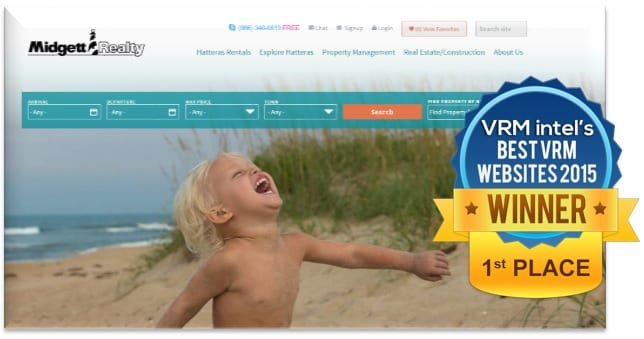
Midgett Realty by Bluetent Wins Best VRM Website 2015 -VRM IntelLast year’s winner was Midgett Realty! To see all the 2015 winners, click here.

Some of the considerations in judging include:

  • Overall site aesthetic appeal – Does it promote your brand, your destination, and your homes in a professional way?
  • Is it easy for your consumers to refine their search to find the right set of homes? Can you sort your search results in a logical way based on price, bedrooms, and occupancy?
  • Does the availability calendar on your property detail page allow you to choose dates that are not available resulting in an error?  Are your rates easy to understand with explanations for fees? Do you have an easy booking process?
  • Quality of photos, descriptions, amenities, and extras
  • Is your Website Responsive? How fast do your website pages load on a desktop? On mobile? On a tablet?
  • How do you rank in Google for the common search queries used for guests who visit your destination?
  • How easy is it for guests to sign up for your deals, promotions, or newsletters? Do you have several places to collect lead information?

Create your own user feedback survey

The Power of Lead Management and CRM for Vacation Rental Managers

0

As a property manager, chances are you’ve utilized a CRM system and lead management/marketing systems in the past. With mountains of past contacts, leads, emails and phone numbers amassed in your database and across the web, it’s only logical to use those that give you some type of advantage. However, one of the most difficult tasks that every property manager has to deal with is not just utilizing this information, but utilizing it correctly. Even if you are collecting emails, sending out correspondence and keeping tabs on your customers, it’s very easy to squander the potentially massive improvements that can be gained through properly managed leads, creative marketing and a powerful CRM.

By Carlos Corzo, CEO, Streamline Vacation Rental Software

Fortunately, with a few tips on how to harness as much information from your leads as possible, as well as an intimate understanding of what a lead is, you can take your lead management to a new level – and your business along with it.


Types of Leads


First, let’s start by examining the types of leads you will encounter and how each lead should be treated from a priority standpoint. For all intents and purposes, there are three major types of leads.


Leads Generated by Your Website

Leads generated by your website are the most direct leads you’ll receive and, thus, are potentially the most useful to you and your business. This is a person who found your website on a web search, went through your website and had an interest in your property; in other words, they are ready to talk and discuss the possible options for their vacation.

In most cases, leads generated from a first-party (i.e. your) website are approximately four to five times more likely to close when compared to external lead generation. That means, if you are treating these leads the same way as your other leads, then it’s time to make a change; this should be your number one priority.


Leads Generated by a Third-Party Website

Though integral to any property manager’s business model, leads generated by a third-party website are – in most cases – much less of a sure thing. An individual who has come across your property via a third-party site (such as Homeaway or VRBO) most often has requested information for other properties on that same website. And, like an online gold rush, the race is now on between you and other salesman to convert that potential lead.

In most cases, these are the worst converting leads that companies receive even though many companies put these above the inquires generated by their websites. With that in mind, make sure to look at your analytics before prioritizing these leads over the others in this list. Metrics will be your best friend in these cases.


Using Existing Reservations as Leads

Using existing reservations as leads are oftentimes going to be your highest converting leads. However, when you truly take a look at it, it’s not that surprising. If you pull out all the stops with your customers, make their stay memorable and mine your first-hand experiences with them, it’s easy to have a veritable gold mine on your hands.

With these customers, you know when they like to travel, you know how many days prior to their stay that they have booked their vacation, you know how long they stayed during previous visits and you know the prices they paid during previous stays. And, if you are personable and help them throughout their vacation experience, you may even know more personal characteristics on these existing guests (such as their hobbies or what activities they enjoy). With all this information at your fingertips, existing lead reservations are truly your golden goose – and should be treated as such.


Tips for Lead Conversion


Information Gathering

At the end of the day, having a lead and knowing where that lead came from is great, but making that lead convert is always going to be the main goal. Of course, maximizing your conversions isn’t always as easy as replying to an email or property inquiry (though we will go over that more in-depth a bit later). First, you need to lay the groundwork with analytics and trend spotting so you can truly begin to maximize your conversions. Fortunately, the leads via your website and other avenues have all the information you need to do precisely that.


User Interaction

Though many webmasters do not realize it, even users who haven’t contacted you can be considered leads, and watching how they interact on your site can be instrumental in making those leads convert.

With that in mind, it’s important to utilize your analytics software and site statistics to answer some very important questions: What are people searching when they are booking properties? What webpages are they landing on? How far are they searching in the future? And after what pages or actions are users leaving your website?

All of these questions can give you valuable insight into why people are using your website and even why they aren’t booking. For instance, if you find that users are converting more on last minute searches – when prices are down – or if you find that users are leaving once they see the costs, it might be a good time to look into possibly yielding your rates.


Trend Spotting

Another question that you must ask when looking at unconverted leads is what trends there are among your already converted ones. Are you having an unusually slow month? Why not create a special to send to guests that have stayed with you during that month in the previous years? Do you have active specials that seem to convert better than others? Even just noting the average length of stay that you book and how long it takes for you to convert a lead to a booking can be integral information that you can utilize to increase booking rates.

Just remember to take action as soon as possible with whatever information you glean from these trends and user interaction. The longer you wait to make the changes you need, the more likely your leads will become another company’s bookings. Time is of the essence and it is your company’s profits that hang in the balance.


Responding to Leads


Once you have the groundwork in place and your inquiries begin flooding in, your work is still not done. In fact, regardless if your lead is from your site, a third-party site or even a previous customer, one of the most important factors in improving your conversion rate is response time as well as how you respond. This brings up the famous debate of auto-responder versus no auto-responder. Do you want to be fast or do you want to be personable? Both have their pros and cons, however, I believe in taking a hybrid approach.

In other words, when your team is working and online, don’t use auto responders – this is the perfect time to ingratiate yourselves with incoming customers, and let’s face it, the in-person strategy is going to convert at a higher rate. However, there are going to be plenty of times when your team is swamped or simply not online or in the office (after hours, for example); it is these times you will need an auto-responder, as you never want a lead to wait too long.

The second part of this is doing what you can to make the auto-responder as personable as possible. For instance, program it with the standard response (“One of our agents will be with you shortly,” etc.), but then follow this with another auto-response that has some personality and an automated custom quote. Though you won’t be able to infuse all of the personality of a dedicated response team (and you are certainly losing that human interaction), this, at the very least, makes first contact and moves them further along the conversion chain. From there, you can answer any questions they may have while feeling confident they’ve been helped to the point where there is less of a chance for them to abandon ship.


Customer Service for Higher Conversion Rates


One of the best ways to improve your lead conversion rates is to simply offer the best customer service possible. Keep the people who are already staying with you happy and there’s always a good chance that they’ll use your services again. Fortunately, there are some simple tips to make this goal a reality and all of them involve active contact throughout your guest’s stay:


Tips for Turning Current Guests into Happy Guests (And Future Converters)

  • Always email guests a few days prior to arrival with four to five small things that they should remember to bring on their trip. Don’t use this as a sales email. You can include “review us” messages and links to items you want to sell in the footer of your email.
  • Automate a text message to let them know when the room is clean. For example, “Mr. Smith, your room is ready for check-in.”
  • Offer a courtesy call on the first day of their stay so you can give them all the care they desire.
  • Set up courtesy calls or emails during their stay so you can catch any potential problems before they’ve gone home and have let a festering issue ruin their trip.
  • On the afternoon of their last day with you (or the next morning) send one more text or email and ask them if there were any problems…can you imagine going on a vacation while knowing that you have someone there ready to help?


Unfortunately, not all of these calls can be automated – and they shouldn’t be – meaning providing this level of service will require a lot of overhead. To offset that, you may want to hire a specialized company like True Touch Solutions (www.truetouchsolutions.com) to take over these tasks. This boutique vacation rental services company can help you with focused retention, sales and even reputation management which can help you attract even more leads. Reviews are key to final booking decisions these days. Don’t let someone impact your reputation, be proactive with post visit follow-ups.

Of course, however you fill these needs, simply remember that when you go above and beyond the norm you make yourself stand out over your competition. Don’t let customer service hold you back. Improve what you offer and watch as your conversion rates begin to skyrocket.


How to Generate More Leads


At the end of the day, not all property management companies are made equal, and not everyone has a full stable of emails, phone numbers and past customers to reach out to (and even if you do, you always want more). But worry not. There are plenty of ways to improve your flow of leads, and they all start with three things: constant contact, a creative marketing strategy and true blue customer service. Here are just a few tips that you can use to turn your property and website into a lead building machine:

  • We all have our newsletters (and if you don’t, you definitely should), but make sure you make the commitment to send the newsletter regularly. Nobody likes a company that randomly comes out of nowhere when it is busy season. This is a relationship.
  • Create text campaigns to reach out to past consumers; remember, these will often provide you your highest conversion rates. Who doesn’t read their texts?
  • Fun competitions or games over social media can be a fantastic way to drum up engagement on your site and maybe even snag a few reservations along the way.
  • Did you know Instagram is one of the best converting social media platforms available? It’s cheap too.
  • Implement an SEO campaign to improve your site rankings and increase brand visibility.


Combine all of this with flawless customer service, a quality relationship with your owners and your guests and an intimate knowledge of where your leads come from and how they convert. You may find yourself on the fast track to the top of this competitive industry.

Catching the Traveler’s Eye: How to Set Your Vacation Rental Brand Apart With Great Content

0
Hands with mobile devices and mobile application icons floating in the air --- Image by © /TongRo Images/Corbis

By Brandon Zienowicz, Bluetent — There is a trend most of us in the vacation rental industry are intimately familiar with – OTAs and listing sites (HomeAway, VRBO, Airbnb, TripAdvisor, etc.) have an increasingly stronger presence in organic and paid search. Their inventory is extensive, marketing budgets massive, and they are well-established brands directly sought out by travelers.

The growing awareness and use of vacation rentals as alternatives to hotels has offered room for small property managers to continue to grow inventories and revenue. When it comes to ROI-centered marketing, focusing on the bottom of the funnel (when users are ready to book) has historically worked well and is where most hospitality companies spend marketing dollars.

However, as travelers continue to go straight to big name brands, search activity transitions more to mobile devices with less screen real estate and PPC competition increases. Focusing on the (less competitive) top and middle of the funnel may prove to be a long-term strategy that pays dividends. Creating high-quality content is the best way to bring users to your site at that stage of the lifecycle.


5 Reasons to Invest in Creating Excellent Content


  1. Travelers are spending increasingly more time researching and planning trips before booking.
  2. Content helps vacation rental managers digitally showcase local knowledge and convey the authentic concierge component that differentiates them from big listing sites.
  3. Content affects site performance on search engines as their algorithms are looking for content-based signals to determine the value a website/company can offer users, and thus how prominently the site should show in organic search results.
  4. High-quality content (that focuses on answering queries higher in the funnel) provides rental managers a chance to earn early brand awareness and affinity which can nurture travelers as they approach the booking phase of their planning.
  5. As rental managers continue to leverage more marketing channels, content can feed those channels (email, social media) and keep engagement high across all marketing initiatives.


Elements That Contribute to Strong Content


  • Unique information, tips, insights or perspectives that don’t exist anywhere else
  • Input from experts/authorities on the area
  • A level of detail for the given topic that doesn’t exist elsewhere
  • High-quality visuals (images, videos, maps, infographics, iconography)
  • Curation of only the best information from around the web for the given topic
  • Accurate data conveyed in a new and useful way that might not exist anywhere else


Tips for Creating Great Content


We get it. Resources are an issue when it comes to getting this stuff done. No one said content creation is easy, but for organizations who are creative and agile, it is possible to create great content.

Your Team: Assign roles/responsibilities, send internal surveys, employ interns or local college students and provide a budget for content creators to experience local events, restaurants, tours, etc.

Business Partners: Use your existing and new relationships (and build new ones) to gather unique insights, exclusive interviews and discounts that competitors won’t have.

Local Experts: Whether it is a local food writer, reporter, politician, real estate agent, tour guide or long-time resident, there are people with the information you need.

Guests: Have conversations with guests about their experience, send post-departure surveys, run contests/giveaways based on content or photo submissions and use your social channels to poll guests on questions that can drive content.

Digital Professionals: While the best content is going to come from those with feet on the ground in your destination, digital marketing professionals can help research, plan, organize, optimize, polish and promote your content for maximum impact.

Compelling content that targets the topics travelers are searching for has the potential to drive consistent organic traffic, feed your marketing channels, contribute to brand awareness and improve your perception in the eyes of search engines and travelers.


The time is now. Airbnb is tapping into homeowners and local photographers to create high-quality neighborhood pages and HomeAway made a $20 million investment in Gogobot in 2014 to scale area content across their destinations. That being said, it’s not too late to make an impact on your business and start building content equity now that can benefit you long into the future.

For more information, download The Case for Great Travel Content. To download the entire report, please visit www.bluetent.com/white-paper-download.


About Brandon Zienowicz

Brandon Zienowicz is an account manager at Bluetent, working remotely from Chattanooga, TN. With a depth of experience in SEO, he enjoys digging into the variety of pieces that are critical to modern day business success. From technical SEO to analytics, content strategy, user experience, conversion optimization and brand positioning, he is focused on helping clients grow and stay relevant in today’s fast-changing marketplace.

VRHP Announces Agenda for Annual Vacation Rental Housekeeping Professionals Conference in Las Vegas

0

Today, the Vacation Rental Housekeeping Professionals (VRHP) announced the agenda for their Annual Conference which is to be held at the Excalibur Hotel and Casino in Las Vegas on November 7-9, 2016.

Registration Info


VRHP 2016 Annual Conference Agenda

Monday, November 7th, 2016

6:30 to 8:00 pm – Opening Reception


Tuesday, November 8th, 2016

8:00 am to 8:30 am – Breakfast

8:30 am to 9:45 am – Welcome (networking and elections) and Opening Keynote: Dore Jean, Kaizen

10:15 am to 11:15 am – Round Table Discussions

11:30 am to 12:15 pm – Concurrent Sessions

  • Session 1: Compensation, Contractors, and Compliance – Sue Jones, KLS Group
  • Session 2: Housekeeping Fundamentals: Follow the wall, the cleaning process, and setting up piece rates – Joe Refosco, Taylor-Made Vacations

12:15 pm to 1:45 pm – Lunch

1:45 pm to 2:30 pm – Concurrent Sessions

  • Session 3: What Every Company Owner Wishes Their Housekeepers Knew 
  • Session 4: Getting Maintenance and Housekeeping to Work Together 

2:30 to 3:00 pm – Vendor Showcase

3:00 pm to 3:45 pm – Concurrent Sessions

  • Session 5: Revenue Generating Ideas For Your Housekeeping Department
  • Session 6: Using Technology to Facilitate the Back of the House Work

3:45 pm to 4:15 pm – Vendor Showcase

4:15 pm to 5:00 pm – Keynote: Industry Survey 

6:30 pm to 7:30 pm – Open bar

7:00 pm to 8:30 – Dinner, Executive Housekeeper of the Year Award


Wednesday, November 9th, 2016

8:15 am to 9:00 am – Breakfast

9:00 am to 9:20 am – Q&A with the 2016 Executive Housekeeper of the Year

9:20 am to 10:05 am – Keynote: TBD

10:05 am to 10:30 – Vendor Showcase

10:30 am to 11:15 am – Concurrent Sessions

  • Session 7: The Art of Delegation – Dore Jean, Kaizen
  • Session 8: Transitioning To and Managing an In-house Laundry – Joe Refosco, Taylor-Made Vacations

11:15 am to 11:30 am – Break

11:30 am to 12:15 pm – Concurrent Sessions

  • Session 9: The Science of Laundry Chemicals – Durk Johnson, VRHP
  • Session 10: Maintenance Tech Training 

12:15 pm to 1:30 pm – Lunch

1:30 pm to 2:15 pm – Concurrent session

  • Session 11: Looking to Save a Few Dollars in your Budget? Look at How You are Purchasing Supplies
  • Session 12: Helping Maintenance Techs and Housekeepers Provide Outstanding Customer Service

2:15 pm to 2:45 pm – Product Demonstration, Giveaways + a free vacation!

2:45 pm to 3:00 pm – Closing Session


Registration Cost

Member  – $330; After 9/30 – $380.00
Non-member – $410


Hotel Reservations

The host hotel, Excalibur, is ready for you to make reservations for the annual conference. We have been offered an exceptional rate of $40 {plus $18 resort fee and taxes} for our lodging while at the conference. There are also a handful of rooms available at this rate on Sunday. To book your room follow this link: Hotel Room Reservations. Also, by the time we arrive for our conference the hotel will have completed the renovation of all the hotel rooms, hotel hall ways, and the third floor food court.
For more information, contact info@vrhp.org.

Personalizing Reservations and Customer Service: Are You Renting Units or Selling Vacation Experiences? How to Make Sure Your Vacation Rental Homes Do Not Become a Commodity

0
Doug Kennedy - Kennedy Training Network

By Doug Kennedy – Like the lodging industry in general, the vacation rental business is facing disruption from all directions. Online travel agencies are working hard to insert themselves between you and your guests. Major hotel brands such as Choice and Wyndham are nudging their way into the marketplace. Airbnb continues to expand its presence by focusing heavily on training its “hosts” to deliver authentic, genuine hospitality and telling its customers, “Don’t just stay there, live there.”

Meanwhile, most vacation rental companies focus on automating the entire service cycle and eliminating traditional touch points. Too many reservations agents are saying, “Did you look online yet? Check it out and then call me back…” or, “What’s your email address? I’ll send you a list of what we have that is available.”

Some companies even hide their phone numbers in small font at the bottom of the page, discouraging phone calls and theoretically encouraging online bookings. The migration to keyless entry offered by electronic locks eliminates yet another vital touchpoint as guests are sent straight to their accommodations instead of the company welcome center. Also, rather than encouraging guests to stop by for suggestions on local area restaurants and attractions, companies are pushing guests to an app to find such services.

As a result, many guests these days have no idea who they rented from during their previous stay, even if it was just last year. This is even more likely to be the case if the guest initially inquired on a third-party website where one or more of your rental homes are listed.

Although the entire lodging industry is fighting hard to differentiate their brand from the others, the challenge is greater in the vacation rental space because the accommodations are spread throughout the destinations. Also, multiple companies have inventory in the same buildings and developments.

What can we as operations and marketing executives do to avoid having our rental “units” become commodities like seats on airplanes? We can start by finding ways to personalize the sales and service experiences at each and every touch point by what we at the Kennedy Training Network (KTN) call “The Customer Circle of Life.”

Certainly, we as an industry need to embrace automation and technology. Many guests prefer to shop online, and everyone likes the comfort of being able to take virtual tours, see photos and even see the new 3D floor plans of their actual rental home. Keyless entry and automated check-in is absolutely a convenience for companies where accommodations are located far from the reception office and also in “Saturday to Saturday” destinations where traffic from the office to the rental can be brutal.

The trick is to maximize the levels of personalization at each and every remaining touch point in the guest experience where we still have the chance to interact with and engage our guests. We also need to find ways to use “high tech methods” in order to be “high touch” in an “old school” way of relationship building.


9 Ways to Connect With Guests and Move From Renting Units to Selling the Vacation Experience


  1. Keep Shoppers on the Phone 

Rather than sending callers back online to look at homes or emailing them a list of what is available, have your agents walk callers through the website. Or even better…

  1. Use Screen Share

Utilize online meetings/screen sharing tools such as Join.me (which has a free version) or GoToMeeting.com.

  1. Personalize Responses

Personalize the response to all electronic inquiries including chat and email. Many inquirers who send emails take time to provide hints about “the story” behind their visit. Train agents to paraphrase and restate “the story” in their response in order to show interest.

  1. Dive Deep

When chatting, encourage agents to ask questions about the inquirer’s visit beyond just asking for their vacation dates and number in the party.

  1. Respond With a Call

For both email and chat inquiries, encourage your agents to offer to contact the guest by phone especially if questions become complicated. This can not only save time vs. going back and forth via chat or email, but also provide the opportunity to connect personally. In fact, respond to all email inquiries with a phone call when a phone number is provided. Even if your agent only leaves a voicemail, it will differentiate your company from most of the others who will probably only email their response.

  1. Consider Video Chat

Use Skype or FaceTime video calls. Ask the prospect to connect for a video chat. This is especially important for those who are planning more complicated vacations with larger parties, larger homes, longer stays or special needs.

  1. Send Photos

Take and send cell phone pictures. While it is nice to send and share stylized professional photographs, send cell phone pictures in response to specific questions especially for homes with higher rents or for guests looking for longer stays.

  1. Communicate Across Departments

Make sure your maintenance colleagues know that their job has little to do with fixing things and a lot to do with hospitality and relationship building. Often they spend more time interacting with guests than any other colleagues.

  1. Host Events

In destinations with longer stays (and higher rents), consider company hosted social events such as mid-week cookouts, local band jam sessions, children’s activities or craft fairs.


While the front desk provides a tangible opportunity to connect with guests, many vacation rental managers offer remote access to the home with keyless entry. Here are a few ideas for connecting with those bypassing your office check-in:

  • Send personal handwritten welcome notes on stationary with company logos.
  • Place logo signage encouraging guests to call with “concierge” type questions.
  • On heavy check-in days, have “greeters” stationed in each region to stop by and welcome guests upon arrival and to also explain the home’s features (such as how to work the thermostats, remote controls, kitchen appliances, hot tubs, etc.).

By Doug Kennedy

Independent Contractor Or Employee? The Department of Labor may consider an independent contractor to be an employee more often than you realize.

0

By Sue Jones — The Department of Labor (DOL) says that most independent contractors are actually employees and that reviewing an employer’s use of independent contractors is their number one enforcement priority. The vacation rental and hospitality industries regularly use contract workers to supplement and even outsource entire departments. In light of the DOL’s renewed emphasis on misclassification of independent contractors, it is more important than ever that you be proactive and take another look at your contractors. Particular positions such as housekeeping, maintenance, landscaping, grounds keeping, security and IT services are at high risk.

Consider the following scenarios:

  • Jessica stopped by the laundry facility to refill her housekeeping supplies on her way to clean the next property.
  • James finished up a work order and called in for his next scheduled maintenance job.
  • Cindy invoiced the company for the cost to launder her uniform.

Are these individuals classified as independent contractors or employees? How confident are you that your independent contractors are “truly” independent contractors?

While the vacation rental industry is well-suited for temporary or contract workers, there is a dangerously thin line between what differentiates an independent contractor from an employee. The Department of Labor says that most independent contractors are actually employees, and they are on a mission to ensure that workers get the wages, benefits and protections to which they are entitled.


Why Do Employers Misclassify Workers?

Independent contractors are a great resource to employers in the vacation rental and hospitality industries especially for short-term periods of time or specialized project work. There are considerable economic and business reasons to classify workers as independent contractors making them appealing for employers to use. Some of the advantages of using independent contractors include:

  • Reduced costs (including benefits, overtime, payroll and other taxes)
  • Greater flexibility
  • Greater job focus from workers
  • Supplementing workforce “as needed” during busy periods
  • Contractors are easier to dismiss from work duties

While there is a strong upside to using independent contractors, there is also significant risk when it comes to misclassification. Be aware that if you are audited and have misclassified independent contractors then there are a number of potential pitfalls and expensive consequences coming your way — even outside of the DOL’s arena. Some of the areas you may be held liable for include:

  • Income tax liability for employment taxes that should have been withheld from “wages”
  • Potential overtime pay and other wage claim liability
  • State unemployment insurance payments
  • Worker’s compensation insurance premiums (and potential liability for workplace injuries)
  • Benefits and coverage under existing employee benefit plans
  • Fines for failure to complete I-9 forms
  • Attorneys’ fees and costs
  • Other civil and criminal liability


The Department of Labor’s Increased Enforcement Priority

Independent contractor misclassification is the number one priority of the DOL Wage and Hour Division (WHD). In fact, they have set up a misclassification initiative and have agreements with 29 states to combat the ongoing issue of misclassification of employees as independent contractors. In Fiscal Year 2015, the DOL found over $246 million in back wages for more than 240,000 workers in janitorial, temporary help, food service, daycare, hospitality and similar industries. To make this a bit more real for you, here are some recent examples of companies fined for misclassification:

  • June 2, 2016: Allstars Staffing LLC, an agency providing workers to local resorts and hotels in Tempe, Arizona, will pay more than $151k in overtime back wages and damages after misclassifying 275 hotel employees as independent contractors.
  • May 23, 2016: Perfect Service Excellent Benefits Services, a staffing agency in Kissimmee, Florida, misclassified employees working as housekeepers, launderers, maintenance and front desk personnel as independent contractors instead of employees which resulted in the Staffing Agency paying nearly 25k in back wages to 15 employees.
  • April 6, 2016:Investigators with the WHD found that Elite Energy Efficiency, an Idaho home energy contractor, misclassified employees as independent contractors and will pay $41k in back wages to 44 employees.
  • March 16, 2016: Tampa District Office found that Toria’s Support Care Services misclassifiedone maintenance worker and one care provider as independent contractors instead of employees and failed to meet minimum wage requirements with several other employees resulting in more than $56k in back wages to nine employees.


It is important to understand that an investigation isn’t completely random and can occur based on any of the following:

  • An independent contractor files a claim to receive unemployment or workers compensation benefits from your company
  • Your company issues a W-2 and 1099 to the same worker in the same year
  • The IRS has an unmatched 1099 to an individual’s income tax report
  • A government tax audit
  • An I-9 audit
  • A formal review request initiated by the independent contractor for misclassification — the IRS has a form for this


What Should Business Owners Do Now?

Be proactive. Take time to compile a list of all the individuals you pay as individual contractors and for those whom you issue 1099’s to. For each individual on the list, you should review their working relationship and then evaluate the risk. In addition to your independent contractors, also review your outsourced vendors and examine each of these third-party relationships.

The best way to evaluate the risk for both independent contractors and third-party relationships is to review the working relationship based on the IRS Common Factor Test, the DOL’s Economic Reality Test and your state laws. Here are some key factors and information to get you started:

Internal Revenue Service Common Factor Test — The IRS uses a 20-factor test to determine independent contractor status based on:

  • Behavioral Control — These factors relate to how the employer directs or controls how the independent contractor does the work. For example, who sets the work schedule? The employer or the contractor?
  • Financial Control — These factors refer to facts that show whether or not the business has the right to control the economic aspects of the job. For example, does the worker have unreimbursed expenses that the employer pays?
  • Type of Relationship — These factors refer to facts that show how the worker and business perceive their relationship to each other. For example, what benefits are (if any) provided to the worker such as uniforms, supplies, keys, business cards, phones, computers, etc.?


It is important to note that no single factor automatically makes the worker an employee or an independent contractor. The IRS 20-factor test is only a set of guidelines.

Department of Labor — Economic Reality Test (FLSA) uses seven factors to determine whether workers are employees. The focus here is whether or not the worker is economically dependent on the business they are working for or if they are in business for themselves. For example, can the worker make more profit or lose money depending on how they do the job? Are they in business for themselves? Can they document other employers?

State Laws — Beware. Some state laws may trump federal law in determining employee status. Many states (such as California) have laws that more specifically define an independent contractor status.


Once you have reviewed and considered the risks associated with the classification of independent contractors, you should review and modify your contracts and agreements as appropriate. If you decide to continue the relationship with your contractors, consider including indemnification language and other provisions to protect your company from liability. Don’t forget to review contracts with your third-party vendors in the event that a government audit determines the contractor’s workers are actually your employees.


The Bottom Line

The DOL’s misclassification initiative is real. Don’t wait for an audit or an investigator to show up on your doorstep before you take action. Takes steps now to properly classify your workers.


Resources:

IRS Independent Contractor (Self-Employed) or Employee?  https://www.irs.gov/businesses/small-businesses-self-employed/independent-contractor-self-employed-or-employee

Employment Relationship Under the Fair Labor Standards Act (FLSA)

https://www.dol.gov/whd/regs/compliance/whdfs13.htm

Department of Labor Wage and Hour Misclassification Initiative https://www.dol.gov/whd/workers/misclassification/#stateDetails

The Wage and Hour Division Resources for Workers

https://www.dol.gov/whd/workers.htm


Revenge of the Property Manager

6
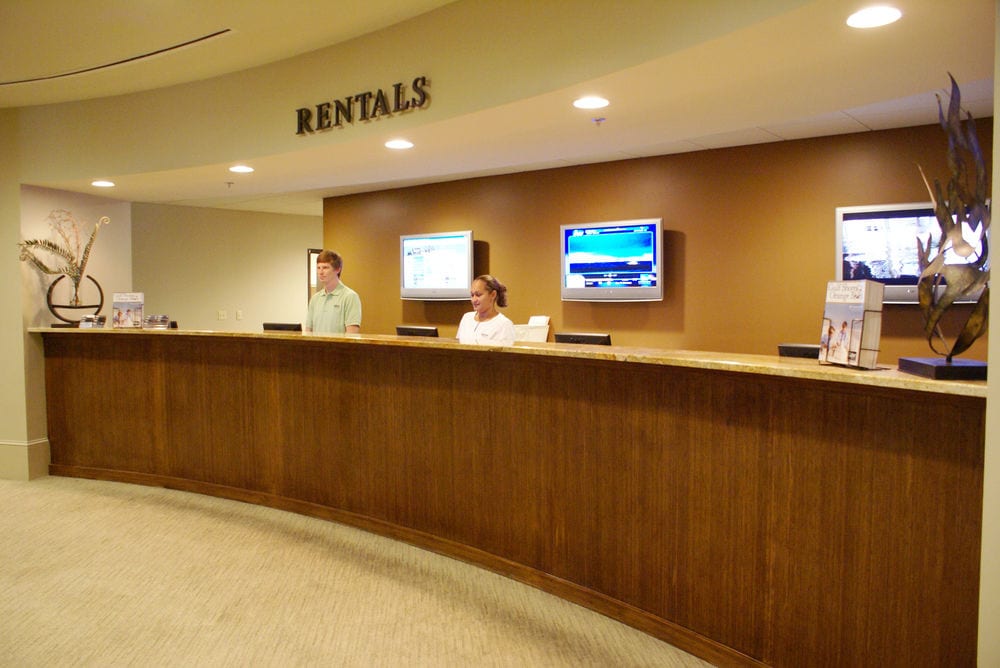
Kaiser by Wyndham Vacation Rentals Front Desk

“I predict what I call the Revenge of the Property Manager,” said Carl Shepherd, co-founder at HomeAway, in an interview with VRM Intel last September. “Over the next few years, we will see property managers, as we say in Texas, in the cat-bird seat.”

Did Shepherd have a crystal ball?

“Screening guests, managing credit card payments, arranging for housekeeping, differentiating properties…all the related tasks and services that travelers expect are getting harder and harder to manage for individual homeowners, right at the same time that new and progressive property managers are looking to re-invent the PM business model,” continued Shepherd.

In addition, 2016 had a few more surprises in store for the professional vacation rental manager:

  • HomeAway’s Best Match algorithm and their addition of the service fee sent homeowners reeling.
  • Google’s changes to search engine results pages took OTA marketers to the mat.
  • Regulations and tax compliance measures in multiple markets forced individual owners and “hosts” into unfamiliar territory.
  • Increasing awareness of vacation rentals as a lodging option brought new hotel customers to the vacation rental market…with hotel expectations.
  • Airbnb recognized the advantages of adding professionally managed inventory and launched integrations with property management software systems.


It’s Been a Long Time Coming

The professionally managed vacation rental industry has been waiting over a decade for the pendulum to swing back in their direction.

Before technology and communications allowed for remote management, vacation home owners were heavily reliant on VRMs to manage their properties. The full service approach was beneficial for property managers, homeowners and guests which made the relationship a win-win-win for all.

And then came VRBO.com.

As internet usage increased, VRBO.com, the listing site which allowed individual vacation home owners to effectively market their own properties, truly disrupted the vacation rental industry.

Learning to navigate a distribution strategy related to VRBO.com was faced by VRMs with varying levels of success and angst. Many chose to place their own professionally managed properties alongside for-rent-by-owner properties on VRBO.com, causing a consequential expansion of the source of competition.

Piggybacking on the success of VRBO.com, Christine Karpinski made Amazon’s Best Seller List with her book How to Rent Vacation Properties by Owner, which supplied owners with rental policy and confirmation templates, marketing strategies and instructions on maintenance and housekeeping.

When the real estate market collapsed, along with easy access to online marketing outlets and a how-to guide, the number of rent-by-owner properties grew exponentially, and with double digit industry growth, the investment community got on board. Consequently, Airbnb advanced on the scene, and media outlets latched on to the growth and success of the owner-managed sharing economy while professional managers struggled to differentiate their offerings.

But conditions are shifting.

With the rising cost of self-management, sky-rocketing marketing costs, more regulations, higher customer expectations and changing technology, professional VRMs are finding themselves, as Shepherd predicted, in the cat-bird seat.


Capitalizing on Market Conditions to Build Long Term Success

While things are finally looking up for professional vacation rental managers, success is never guaranteed. In order to leverage the changes in the marketplace, action is needed.

In the article “Winning with Google,” VRMs will find steps to take to jump ahead of OTAs in organic search results. In addition, here are suggestions to take advantage of current market conditions.


Optimize Listings on Channels and OTAs

In eCommerce, it has been widely proven that consumers would rather buy direct unless a third party channel provides significant advantages (i.e., Amazon Prime). As a VRM, there are several ways you can use channels to lead travelers directly your company. Besides using signage in photos, text can be added to photo captions and descriptions with verbiage like “Rest assured that when you rent with XYZ Vacation Rentals, you will have 24/7 service” or “Go straight to your rental with XYZ Vacation Rentals Keyless Locks”. There are many creative ways to add bread crumbs to your listings to steer travelers to your company.

The addition of traveler/service fees offers VRMs another advantage. Rate parity does not currently exist in a meaningful way in the vacation rental space, so you are able to offer Best Rate Guarantees to encourage guests to book directly with you.

Also, consider enhancing the descriptions on your own website with local information and extra content. Why should your best content be duplicated on channels and OTAs? Besides SEO advantages, by enriching your proprietary content, you can establish your company as a trusted thought leader.


Reach Out to New Homeowners

The owner managed vacation rental community is struggling with recent changes in the industry. A quick look at the HomeAway Community Forum or the many VRBO hate groups that have sprouted on social media will offer your team valuable insight into their angst.

Now is a great time to revamp your owner acquisition strategy. Rewrite marketing materials to reflect current market conditions and invest in a creative outreach initiative. New multi-destination companies, such as Vacasa, TurnKey, InvitedHome, and Evolve, are primarily acquiring inventory from homeowners who are self-managing and owners who are new to renting, instead of owners who are working with other PMs. Taking a fresh look at messaging and marketing programs for new inventory can help get a running start over your competition as FRBOs begin to move back under professional management.


Reinvent Customer Expectations

The increase in awareness of short term rentals has brought many first-time vacation rental guests into the market. These travelers approach vacation rentals with hotel expectations.

While individual owners and “hosts” are struggling to meet these expectations, VRMs are in a great position to convert these first timers into repeat vacation rental guests. From the time travelers click on your website or contact your call center to the time they check out of one of your rentals, you have many opportunities to convert new guests into repeat guests.

One of the most under-utilized opportunities is through education. By asking the simple question, Is this your first time staying in a vacation home?” you can take several key steps that will remove anxiety from the booking process and create a long-lasting relationship with the guest. By utilizing pre-stay communications letting guests know what to expect – and that you are available to them 24/7 – you can reform their expectations.

(See Doug Kennedy’s article for more customer service tips.)


Proactively Work with City, County and State Officials

If you are not already doing so, it should be a top priority in the coming months to take proactive steps towards working to preserve rental rights and develop regulations that are community-friendly, promote safety and provide revenue streams for the destination.

As we approach election season, take time to get to know the candidates. As a business owner, your opinion is valuable to people seeking city, county and state positions. Consider taking time to set up meetings to share information, such as the number of jobs you have created, the amount of tax revenue you generate, and your company’s contributions to the community.


Use Media Interest in the Industry to Your Advantage

The subject of vacation rentals and the shared economy is red hot in the media right now, providing your company an opportunity to promote your services and differentiate professionally managed vacation rentals.

Consider creating press releases and story pitches about regulations, new service fees, and the importance of renting through a professional. For example, Nomadness Rentals in Mammoth Lakes recently issued a noteworthy press release outlining the struggles hundreds of professional vacation rental management companies have been experiencing as a result of Airbnb’s reckless push into the regulatory environment in cities and destinations around the world.

If you are a member of an association, ask about ways to combine resources to create articles, solicit interviews and pitch stories that differentiate professionally managed vacation rentals.


While it is a huge relief to see favorable market conditions, as an industry, we need to capitalize on these changes to use channels to attract direct bookings, differentiate our services, deliver a better customer experience and work with government officials. We don’t know how long this will last, so now is the time to seize the comeback of the property manager.

By Amy Hinote

Is Your Marketing Strategy More Like Tinder or Match.Com?

1

By Cory Falter — The strategy for finding success in the hospitality industry and using online dating apps is strikingly similar (believe it or not). For example, when considering marketing strategies you want to attract, convert, delight, and ultimately have a customer forever, right? Well, the same can be said when you’re looking for love – maybe not the forever part, but we’ll get to that.

Whether in business or love – it all boils down to what your goals are. Do you want someone who is going to go the distance with you? Or, simply a passing fling? We’re thinking for business, you are looking for long term success. That’s why in this post, we are breaking down two popular marketing strategies and how one is like Tinder, while the other is like Match.com.


CONTENT MARKETING VS ADVERTISING

Advertising, in today’s comparison, is likened to Tinder. The goal is to blatantly promote and draw attention to the service(s) or good(s) one is selling – while it does have a fairly long and colorful history in our society. Advertising strategies are pulled-together and slick, essentially it’s your “magazine smile”. It’s can be hard to show how well-rounded you are through just an ad.

There’s always a time and place for advertising, but it’s not the only method to put your message out there. This is where content marketing comes into the picture.

Content marketing can be best compared to Match.com – it’s more than a fling. Content marketing is a marketing strategy that emphasizes building relationships through creating and distributing useful, relevant and valuable content. You’re using all you have (not just your looks) to develop a long-term relationship.

Definitions are vital, but let’s highlight some clear examples to further explain the main differences between content marketing and traditional advertising, and how they specifically pertain to the hospitality industry.


Show Not Tell

Advertising is about telling an audience a message. Content marketing is about showing audiences what your message means and how it will solve a problem or provide a needed service.

Any marketer in the hospitality industry can talk, talk, talk all day at its audiences, but the organizations that successfully show what they can do are the ones that ultimately win.

How often do you see, read or hear advertisements claiming to be “the best” at something? Claiming to have the “lowest rates,” “comfiest beds” or “most delicious food.” How often do you yourself believe that message? Right, not often.

Audiences have been saturated with those types of messages and many are no longer receptive to them.

Your messages have to be authentic, and they have to show. The content has to be relevant to your audience, and it has to come from the heart – seriously.

Audiences have become wise to the tricks that have been used the past few decades, and they no longer wish to receive those messages. A receptive audience is key for promoting any message, and the most receptive audiences will be those you are trying to genuinely help solve a problem for.

Show how you will solve a problem. For instance, many of your guests are vacationing families looking for a hotel that is close-by to all of the attractions, is kid-friendly and an expert in local tourism.

Rather than saying those things outright, your hotel’s content marketing team can post a blog on the website detailing the top 10 most underrated or unknown attractions in the area, and then promote the blog across social media channels. Each of the 10 attractions can be attractions kids love that are relatively close to the hotel. In one blog your hotel has displayed that it’s close by to the fun, aware of and knowledgeable about the interests of children, and a clear expert on local tourism.


Commitment Instead of a Fling

This is huge – content marketing requires relationship nurturing. Hoteliers and their respective teams are already aware of the importance of return customers and the impact they make on the bottom line. Well, content marketing helps attract, acquire and nurture those return customers. It’s all about building a relationship – which always takes time, but is very effective in developing deep and meaningful relationships with your guests and groups.

Advertising throws a message out there, or a one-liner shall we say, and hopes it sticks. Think back to the last time someone threw you a one-liner… did it stick? Maybe, maybe not. Works sometimes and not other times. Even if audiences go for the advertising bait, there’s a strong chance they won’t be return customers. Once the fling ends it’s simply over.

Content marketing utilizes tools such as social media to build relationships with the audience. Relationships are a two-way street, so rather than spitting out the sales message, content marketing seeks to listen, to ask questions, find out what problems the audience has so we can later solve it for them. Content marketers are showing their commitment to the audience, and when the audience feels that commitment they become return customers.


Personal Rather Than Impersonal

Typically speaking, advertising is a message meant for a huge audience. Unfortunately it’s not possible to adjust the big advertisement to suit the specific needs of the different people within the audience.

Which is exactly where content marketing comes in. Rather than deploying a picture of a generic white family of four at the beach across all of the advertising channels, content marketing gets more personal.

Early on in the content marketing process the hotel’s audiences have been clearly defined. Meaning there is a guest persona for each type of guest. Included with that persona are details on the types of messages that resonate with the persona, and the needs of each persona.

Armed with that crucial information, content marketers can curate the appropriate message for each individual persona, and deploy those message on the fitting channels.

Think about it, your hotel likely has a variety of guests – young couples, families, LGBT community, wedding parties, meeting business, staycationers, etc. etc. Each of those groups has different needs and it’s your job to discern the differences to host them as flawlessly as possible.

Even before you get to the hosting stage, it’s your job to discern what they need – need to know, need to decide, need to have, need to do – and how you can meet those needs for them.

Develop a downloadable guide that details the best strategies for hosting an engaging meeting experience, for example. Over time develop social media posts related to meeting business that will drive your meeting audiences to your site to check out the downloadable (free) offer. To get the offer, an email was entered. Now you have a high-quality lead you can nurture into eventually becoming a customer, and likely one that stays loyal for years to come.

This isn’t to say there’s no need for advertising. Advertising has a time and a place. As detailed throughout, content marketing works in more specific and detailed ways, and is crucial for asserting your property as the property who cares, listens and problem solves.

So, do you want your marketing to be more like Tinder or Match.com? Your value lies in your ability to make life easier for people. Do that, and you’ve won. Truly help and nurture your audience and your bottom line will thrive. Utilize content marketing to reach the fullest potential imaginable.


About Cory Falter

As Chief Creative Officer for Lure Agency, Cory has a motor that idles at full throttle. After spending the first half of his life professionally racing dirt bikes, he decided to take his obsession for competition to the most extreme sport of design and marketing. As Creative Director and Strategist, he has crafted award-winning campaigns for notable travel and hospitality brands including: Benchmark Resorts & Hotels, Personal Luxury Resorts & Hotels, Hilton Hotels and Ritz-Carlton. As a native San Diegan and San Diego State University alumni, he founded Lure Agency on the notion that life without passion, is shallow. It’s the agencies most valuable resource and it inspires them to dig deep for their team, partners and clients.

‘Fixer Upper’ houses turn into vacation rentals around Waco

0

By Carl Hoover — For devoted “Fixer Upper” fans planning a visit to Waco, it seems too good to be true: the chance to stay several nights in one of the homes that Waco home renovation/design couple Chip and Joanna Gaines fixed up for their HGTV cable television series.

It’s true, though, for nearly half a dozen “Fixer Upper” homes, whose owners have them listed on online property rental services VRBO (Vacation Rentals By Owner) and Airbnb. Those listings have drawn guests from coast to coast; expanded an aspect of Waco’s hospitality business; added destinations to the map for Waco and Magnolia Market visitors; and, in some cases, opened the door to new business opportunities.

The Gaineses themselves tapped into the potent combination of “Fixer Upper” popularity and the convenience of online booking when they renovated a McGregor house into a bed and breakfast named the Magnolia House. Mere hours after online reservations were made available to fans in February, the Magnolia House had booked customers throughout 2016.

At least six other “Fixer Upper” homes could be found listed on VRBO and Airbnb earlier this month, although the owners of one were in the process of downplaying its “Fixer Upper” connection:

  • The Gorman House (season 1, episode 2) – https://www.vrbo.com/763365
  • The Mailander House (season 1, episode 12) – https://www.vrbo.com/875028
  • The Shotgun House (season 3, episode 12) – https://www.airbnb.com/rooms/11692621
  • The Barndominium (season 3, episode 11) – https://www.vrbo.com/878965
  • The Chicken House (season 3, episode 18) – https://www.airbnb.com/rooms/12559252
  • The Mid-Mod House (season 2, episode 11).- https://www.airbnb.com/rooms/11364081
  • The Harp House (season 1, episode 11) will join that number next month.

Most were listed as renting from between $250 to $350 a night.

Although none of the homeowners contacted for this story had intentions of renting rooms or their houses for Airbnb or VRBO guests when they bought their homes, the prospect of a “Fixer Upper” client flipping a newly renovated home immediately into rentals is causing the Gaineses to consider changes for season 5 applicants.

“We have no problems with our clients’ interest in using sites like VRBO and Airbnb to rent out their homes. In fact, we get it. But we are going to be more strict with our contracts involving ‘Fixer Upper’ clients moving forward,” Magnolia spokesman Brock Murphy said in a statement.

“We want to honor our national viewing audience. We want to do remodels for clients’ homes. That’s the true intent of our show, and we want to ensure that does not get lost in this new vacation rental trend. What started off with perfectly understandable intentions could cast a shadow of a doubt on the much bigger picture, and we are going to do our best to protect that moving forward.”

Ironically, the popularity of “Fixer Upper” and the unexpected celebrity it brought to houses and homeowners led some to turn over their properties for vacation rentals and move to another house.

Three years ago, Dave Morrow left a career teaching civil and environmental engineering at California Polytechnic State University in San Luis Obispo, California, to move to Waco, where his bride, Dr. Marla Hendricks, had a successful veterinary practice at Crossroads Animal Clinic.


Unwanted attention

Mailander House Vacation Rental from Fixer UpperThey wanted a home close to Cameron Park and its mountain biking trails and found, with the Gaineses’ help, the Mailander House on North Fifth Street, built in 1910. But as the couple settled in, they found they weren’t alone. Cars with rubbernecking passengers would drive slowly by. Some would stop and people would get out for selfies with the house as backdrop. A few bold ones would come to the door and ask if they could look inside.

The polite, but unbidden attention led Morrow and his wife to renovate another house in Central Waco for their use and turn their Mailander House into a vacation rental. They’ve had guests from as far as California, New Jersey and Minnesota.
“They’re mostly women in their 50s and tend to be big ‘Fixer Upper’ fans or Baylor-oriented,” Morrow said. “(The home’s interior) is very Zen. We keep it like Joanna does — no clutter.”

Morrow also throws in, for those who are interested, a healthy dose of Waco history and information and Mailander House rentals come with use of mountain bikes for nearby Cameron Park. He often drops by Magnolia Market to chat with out-of-town visitors and sing the praises of his new hometown.

“Folks are nice here. People are respectful. It’s very easy to be accepted here,” he said. “I look at the Magnolia effort almost like Disneyland. It’s clean, a family place and where you can let your imagination go. . . . The Silos are providing a new vision of what Waco can be.”

Public attention to Clint and Kelly Harp’s “Fixer Upper” house on North 15th Street, and also to their Harp Design Co. shop next door, caused them to move their family of five (three children ages 3 to 9) to a house in another neighborhood after about a year in their “Fixer Upper.”

“We love that house. It’s such a great house. It’s not like we didn’t want to live in it,” said the 38-year-old Clint Harp, a frequent collaborator with Joanna Gaines on “Fixer Upper.”

Harp said he never felt “Fixer Upper” fans’ attention threatened their family’s safety, but the proximity of his shop kept his business always on his mind.

“I remember looking out the window on a Saturday in May, a great time to be playing with my kids, but I was worrying that there weren’t any cars in the (shop’s) parking lot,” he recalled.

Moving away has allowed some needed separation between work and home.

“I feel like (the Harp House) is not ours, but in a good way. I don’t want that to stop,” he said. “It’s such a fun thing. It’s brought joy to people and I love that.”

Converting the Harp House into use as a vacation rental has meant another round of home renovation for guest use and convenience — separating connected bedrooms and adding a hallway on the second floor, redoing a half-bath in the back of the first floor, and the like.

Future guests may be familiar with the Gaines’ work in the Harp House, but that only covered a few rooms. The Harps, as other “Fixer Upper” clients have too, finished out the balance of their five-bedroom, three-and-a-half bath house.


Change in plans

For Charmaine Hooper, who owns the Gorman House with her husband Chuck Codd, vacation rentals weren’t on the radar when their “Fixer Upper” transformation was complete. They had planned to lease space in their house for a day care, but nine months into the project, that plan changed, leaving them with an empty five-bedroom, three-bath house.

An acquaintance suggested listing it on VRBO, which Hooper did after a little investigation. Within a day, she had two customers and a new problem: 10 days to furnish the house before her first guests arrived. Since then, she’s fielded queries from as far as Belgium, England and her native Canada. With room for 12 adults, the Gorman House has hosted groups that come to Waco for weddings, family reunions, business meetings, shopping trips and Baylor University events.

“I’m blown away every time,” she said.

Interest in “Fixer Upper” and the Gaineses’ Magnolia Market, with its iconic twin silos, draws an estimated 20,000 visitors weekly to a downtown area that some city officials and businesspeople are calling the Silo District. It’s no surprise to Waco tourism manager Susan Morton that requests for a tour of Waco sights often include a “Fixer Upper” property.

Mindful of homeowners’ privacy, she limits her “Fixer Upper” stops to the outside of the Magnolia House and the vacated Harp House — pictures, but no trips inside — although the Gaineses’ 2016 purchase of the Elite Cafe and the Dossey mansion on Hillcrest Drive has given her other drive-bys with a Magnolia fingerprint.

In a city where tourist traffic typically swelled during football season and summertime, McLane Stadium, Magnolia Market and their surrounding development have evened the past ebb-and-flow to a higher level year-round, Morton said.

That increase in visitors translates into a rising demand for places to stay and while some may think the growth of Waco vacation rental spots might encroach on hotel and motel business, Morton says there’s room for both. Hotels and motels can handle large groups and travelers needing a place to spend a night; while bed and breakfasts and vacation rentals provide personal, individualized service with a homier atmosphere.

Waco’s hotel and motel occupancy rate presently averages about 70 percent, she said, among the highest in the state. The addition of four new hotels to the Waco area in recent years had little impact in lowering that rate, Morton noted, adding there’s still a need for more hotels.

“People are coming from farther away and staying longer,” she said. “Waco’s been a family destination for some time. It’s inexpensive, family-friendly, located in the middle of the state and without the big crowds and lines you see in other cities.”

Thanks to the relative ease and low cost in setting up a vacation rental property for Airbnb or VRBO, more Waco sites are popping up on those online listings, with “Fixer Upper” and Magnolia shopping joining Baylor football and graduation as selling points.

But would-be proprietors may not realize they need the city’s permission to operate legally. Vacation rental operators need a city permit, gained through a process of application to the Planning Services department, a public hearing, consideration by the Plan Commission and approval by the city council, Director of Planning Services Clint Peters said. Once approved, they also need to charge and collect a 7 percent hotel occupancy tax.

Peters estimated about a dozen bed and breakfasts and vacation rentals have the necessary permits, which are reviewed and renewed annually, with several presently in process.

“Honestly, I think the ones not operating with a permit don’t know they need one,” he said. “It’s a new frontier.”

In some cities such as Austin and San Francisco, the mushrooming growth of vacation rental properties has led to clashes between rental operators and neighborhood residents over issues such as noise, parking and property values.

But “we really haven’t received any complaints,” Peters said.

For one Waco “Fixer Upper” couple, their experience with VRBO and Airbnb rentals is leading them into an entrepreneurial move to more property rentals, even as they downplay their house’s “Fixer Upper” connection. Josh and Jill Mayborn Barrett, owners of the midcentury modern house the “Mid-Mod Home,” renovated in season 3, found new business opportunities.

An unexpected change in Josh Barrett’s job status shortly after the two moved in with their children led them to rent out their house on VRBO and Airbnb for the occasional weekend as a way to bring in some extra income.

The frequency of rentals increased as they discovered interest in their “Fixer Upper” extended to fans as far as California, Oregon, Chicago and New York City. It took work — picking up the family and staying at another Waco property to accommodate guests sometimes got “cray-cray,” Jill said.


‘Really weird’

But the personal encounters with guests proved rewarding if sometimes surprising. Josh recalled one man who treated his wife fighting cancer to a “Fixer Upper” stay, while another set of guests invited the Barretts to dinner — in their own house.

“It was really weird,” he said.

For Jill Barrett, who founded the Baylor-area coffeehouse Common Grounds and ran it for 19 years, attending to guests’ personal needs and interests opened her eyes to a business opportunity, what she calls boutique VRBOs.

In her eyes, creating a temporary home for visitors is part of a continuum that includes their love for their own home and family and their work with Hospitaller House, a transition residence for women trying to break out of addiction.

Josh Barrett now works in insurance and real estate and the couple plan to relocate to another Waco house, upgrading their Mid-Mod House, which sleeps eight to nine adults, for expanded vacation rental use.

They foresee adding other renovated properties as VRBOs as they can. At the same time, Jill Barrett is working to turn a warehouse in the Silo District into an antique market with home furnishings, vintage finds, antiques and possibly a beer and wine garden.

She has been friends with the Gaineses since her days with Common Grounds — a lawn service that Chip created once mowed her yard — and shares a love of design with Joanna, as well as their entrepreneurial sense.

Respect for the Gaineses’ work with Magnolia and a desire to protect their brand is leading the Barretts to downplay the “Fixer Upper” connection as they expand into more VRBOs, but Jill Barrett can’t help riffing on one of their phrases.

“We want to make Waco more hospitable, one house at a time.”

By CARL HOOVER choover@wacotrib.com

Taylor-Made Deep Creek Vacations & Sales Acquires Long & Foster Deep Creek Lake

0

Taylor-Made Deep Creek Vacations & Sales, today announced the acquisition of Long & Foster Vacation Rentals & Real Estate at Deep Creek Lake. This will increase the number of professionally managed vacation rentals they represent to over 350 along with an increased number of real estate listings.

Long & Foster Deep Creek Lake has a long history in the Deep Creek Lake area and has an excellent reputation in all aspects of their business in the area as well as their service to the local community. Those characteristics make them an excellent fit with the Taylor-Made family.

Deep Creek Vacation Rentals“It is an exciting time at Taylor-Made! We now have a larger selection of vacation homes to offer our guests, and this is also a great boost for our growing real estate division,” stated Jodi Taylor Refosco, Owner of Taylor-Made Deep Creek Vacations & Sales. “Our team looks forward to welcoming new home owners, employees, and guests to the Taylor-Made family.”



Taylor-Made is owned by Jodi Taylor Refosco, her husband, Joe Refosco, and her brother Chad Taylor. They are hands-on owners who are involved in the day-to-day aspects of running the company. Betsy Spiker Holcomb and Jay Ferguson are co-owners of the real estate agency.

Starting with just 1 property in 2008, Taylor-Made quickly earned notoriety for their rapid growth. By harnessing technology and combining it with exceptional customer service and years of vacation rental industry experience, they built a platform that proved successful in an area where real estate and family vacation rentals are a vital part of the economy. Adding the strengths of the knowledgeable Long & Foster team puts Taylor-Made in an excellent position for future growth.

“The acquisition gives us the inventory and resources to better serve all of our customers – homeowners and guests alike,” stated Joe Refosco, Owner.

Taylor Made acquired Long & Foster

The Do’s and Don’ts of Service Animals: How to Determine and Properly Accommodate ADA Approved Service Animals in the Vacation Industry

8


By Steve Craig — Many people in the vacation rental industry are confused and frustrated by the subject of service animals. I do not know of any company that has an issue dealing with a true service animal (like a trained guide dog for a blind person). However, confusion and frustration sets in when companies are forced to deal with guests who claim their pet is a “service animal” when it is not.

Issues occur when these abusers demand to rent “no pet” properties and refuse to pay pet fees. This causes companies to become frustrated because they feel they cannot question these claims for fear of potential lawsuit reprisals and subsequent bad publicity.

As you probably know, many people claim their pets are service animals because they provide emotional support, comfort and companionship. They can even go online and get documentation for an animal.

Try it.

Google the phrase “buy service animal documentation” and you will be stunned at the proliferation of sites selling vests, certificates and special leashes. You can get a service dog ID card for $55. You can register a “therapy” dog for $39.99 and can even get a “complete emotional dog kit” for $129. Banner ads claim, “Take your dog anywhere” and, “Never pay a pet deposit when renting.” Even the names of some of these agencies are quite impressive: Service Animal Registry of America (SARA), United Service Animal Register, National Association of Service Dogs, etc. None of these agencies are of any value. Just because these agencies may send a certificate saying that a dog is a service animal doesn’t mean that it is true.

Most of the rules surrounding service animals are based in the Americans with Disabilities Act (ADA). According to the ADA, “A service animal is defined as a dog that has been individually trained to perform tasks for an individual with a disability.” The dog must be trained to take a specific action when needed to assist the person with a disability. For example, a person with severe depression may have a dog that is trained to remind the individual to take his medicine. An epileptic may have a dog trained to detect the onset of a seizure. A diabetic may have a dog to alert the individual when his blood sugar levels reach extremes.

Emotional support, therapy, comfort or companion animals are not considered service animals under the ADA.

Here are answers to the questions that I have been asked most often when pertaining to service animal regulations:


  • Is the dog considered a service animal if it calms a person when he is having an anxiety attack? The key is whether or not the dog has received specific training. If the dog has been trained to sense an oncoming anxiety attack and is trained to take specific action, it is considered a service animal. However, if the dog’s presence is the sole provider of comfort then it is not considered a service animal under the ADA.


  • Can a guest with a service animal rent a property even if a “no pet” policy exists for the property? Yes. They cannot be restricted to solely “pet friendly” accommodations.


  • Can a pet cleaning fee be charged? No. A charge to clean pet hair or dander is not permissible. However, if the service animal causes damage to the accommodations, a fee can be charged as long as it is equal to damage fees charged for other guests.


  • Can the service animal be left alone in the accommodations? No. The dog must be under the handlers control at all times.


  • Must the service animal be on a leash? Yes, unless the leash hinders the service animal’s work.


  • What if the guest makes claims about his service animal based on the Fair Housing Amendments Act of 1988 (FHAA)? The FHAA only applies when a guest rents long-term. (In some cases emotional support animals are allowed.)


  • What questions can I ask as a company to prove the dog is a service animal? You can only ask two questions:
    • Is the service animal required because of a disability?
    • What work or task has the dog been trained to perform?


You cannot request any documentation for the dog or ask that the dog demonstrate its task. You also cannot inquire about the nature of the person’s disability.

Therein lies the rub.

If the person says the dog has been trained for a specific skill but the company is not allowed to pursue “proof” of that fact, then the claimant almost always gets his way.

I hope this article has been helpful in determining which pets are considered true service animals (as defined by the ADA) and which ones are not. The government has a detailed FAQ that is accessible on the U.S. Department of Justice’s website which can be found at www.ada.gov.

By Steve Craig, Pro Resort Housekeeing

Village Realty Transforms Business With Smart Home Integration

0

By Stan Earnshaw — Running a vacation rental management company is an operational challenge ̶ to put it mildly. For Village Realty, with 600 properties along 40 miles of beach on the Outer Banks, the challenges are greatly magnified, which is why they decided to look into Smart Home to see how it could help.

I spoke with Laik LePera, Director of Operations at Village Realty, who was intimately involved in their Smart Home project. I asked him why they decided to install Smart Home and what it has meant for Village Realty.


The Smart Home Vision

“Two years ago, Village Realty had a mix of keyed and keyless locks,” said LePera. “We saw the smart home movement on the horizon and decided we needed to have all of our property owners on a single platform for consistency and efficiency. As the management company, we needed to see all the locks and thermostats in real time so we could easily manage all of the properties we represent.”

LePera added, “Homeowners were starting to install smart thermostats, and we could see lots of potential for complications with 600 individuals controlling the locks and temperatures. We were aware of several keyless providers in the market, but saw that the keyless lock was just the tip of the spear leading to an enterprise Smart Home solution. When PointCentral introduced us to the possibility of energy management and real-time status information for every property, we could clearly see benefits for our owners, our guests and efficient operations.”


Moving to Smart Home

“Lower energy costs for our homeowners and more convenience for our guests were our goals. Asset management is an often overlooked part of a property manager’s responsibility and Smart Home gave us a platform to monitor and measure with future potential for a smarter house,” said LePera. “The tipping point in favor of PointCentral was their use of the robust cellular system as opposed to the home Wi-Fi.”

According to LePera, “Wi-Fi routers are a relatively frequent cause for a maintenance call. Connecting Smart Home technology to an unreliable device just didn’t make sense. Initially we thought we might be able to install everything ourselves, but we decided to bring in the PointCentral team to handle the install, and it was the right choice. PointCentral brought in a team for the north and one for the south and had over 550 properties up and running in two weeks.”


The Vision Takes Shape

Village Realty wanted to take advantage of the automated notifications such as guest departure, cleaning and inspection status and early arrival for the next guest. Village Realty has been a leader in the vacation rental industry in customer service and next generation technology improvements that benefit our owners and guests, and the Smart Home platform holds a bright future.


Guest and Homeowner Reaction

“Guests really enjoy keyless entry,” said LePera. “But the best feedback we’ve had is the automated notification when their home is ready early. Even if it’s just an hour, guests love being able to immediately go to the property and start their vacation because that’s what it’s all about.”

“Our homeowners enjoy the added security knowing there aren’t duplicate keys that haven’t been returned by vendors or guests. They love the online reports we give them that show who has been in their property and when. We really like how vendors and maintenance have their own closing codes so we can get a handle on how long work orders are taking and if the vendor really did go to the property. Our ability to measure energy savings for the property owner, along with providing convenience for the guest (and occasional owner) who is locked out of the home, is phenomenal.”


Real-Time Data Saves the Day

“I was at our reservation desk one day when a guest called in to let us know the air conditioning wasn’t cooling properly. So we went online to look,” said LePera. “This particular property has three thermostats. We could see that the downstairs thermostat was going up a degree every 30 seconds. The reservationist asked the guest to check the bottom level entry door. While they were on the phone, the guest went downstairs and discovered the door was wide open. Normally that would have resulted in a call to maintenance and a tech driving over there only to find the door open. But we were able to troubleshoot it over the phone, which wouldn’t have been possible without the real time data PointCentral provides.”


The Future Looks Smart

Bob Oakes, owner of Village Realty added, “By implementing PointCentral Smart Home, we are able to track access information much more efficiently and quickly, we’ve eliminated the potential liability of physical keys, and we think we can save significant energy dollars for our property owners. We look forward to further integration with our HomeAway V12 and Glad To Have You software and the continuing benefits of Smart Home for our owners and guests.”

“Shark Tank” Star Daymond John to Headline 2016 LiveRez Partner Conference

0

LiveRez.com today announced global marketing pioneer Daymond John as its featured keynote speaker at the company’s annual Partner Conference, October 10 through October 13 at the Lost Pines Resort and Spa in Austin, TX.

Best known for his starring role on ABC’s Emmy Award-winning business-reality series Shark Tank, John is a world-class entrepreneur and marketing expert, who built his lifestyle brand, FUBU, into a household name.

John has received a wide array of honors throughout his 25-year career. In May 2015, the White House appointed him Global Ambassador of Entrepreneurship, and he’s earned more than 35 prestigious awards, including Brandweek Marketer of the Year and Ernst & Young’s Master Entrepreneur of the Year.

He’s also penned three national best sellers. His most recent title, The Power of Broke, debuted at No. 2 on The New York Times Best-Seller list.

“Our professional manager partners come from a wide variety of backgrounds, but the common denominator among them all is a true entrepreneurial spirit,” said LiveRez VP of Operations Tina Upson. “Daymond’s story is a true example that the American dream is still alive and well. And, I know our partners will be inspired and empowered as he shares his deep expertise in building world-class brands.”

John came from humble beginnings to build a global empire. From the streets of Hollis, Queens, John started a global movement from the basement of his mother’s house by capitalizing on the then fledgling hip-hop culture. Today, the streetwear market that FUBU pioneered is a $20 billion dollar industry, with FUBU eclipsing more than $6 billion in global retail sales.

He now helps other entrepreneurs to achieve the American dream. Through his role as an early-stage investor on Shark Tank, John has invested millions of dollars to help more than 60 companies grow their businesses.

At the 2016 Partner Conference, John will empower LiveRez partners to grow their brands through sharing many of the key insights he’s learned over his decorated career.

In addition to John’s keynote address, the conference will feature a big unveiling of new technology, a stacked lineup of classes from industry and software experts, and much more!

To learn more about the 2016 LiveRez Partner Conference, visit Conference.LiveRez.com.

About LiveRez.com

LiveRez.com is a complete, online, vacation rental property management solution, focused on making vacation rental property managers fully operational online and thereby increasing bookings. LiveRez.com offers an all-in-one cloud-based platform, featuring best-in-class websites optimized for online bookings, a full-featured reservation and property management system, a robust CRM system, an exclusive connection to QuickBooks for trust accounting, and a unique “Pay-for-Performance” approach, which provides a mutually beneficial partnership between LiveRez.com and its vacation rental manager partners. The company’s largest competitor is HomeAway Software for Professionals.

ATTN: Florida Vacation Rental Professionals – Help Fight Crippling Regulations on Sep. 22 in Orlando

0

Florida’s Vacation Rental Industry is under attack by Local Governments. Ordinances that over-regulate our industry are being considered all over the state. Come help support the political activities that keep these burdensome regulations at bay.

Please join us in Orlando on September 22 for a cocktail reception & an evening of networking to benefit our industry’s political activities.


Thursday, September 22, 2016 — 6:00 PM

Discovery Ballroom, Renaissance Orlando
6677 Sea Harbor Dr.
Orlando, FL 32821


Minimum Donation $200 to Benefit The Florida Vacation Rental PC

Sponsorship Opportunities Available


Kindly RSVP at www.fvrpc.com or to Maggie Freedman at 1.850.222.5702 or mfreedman@llw-law.com (Please make checks payable to the Florida Vacation Rental Political Committee).


Florida Vacation Rental Political Committee


The Voice of Florida’s Vacation Rental Industry:
Since 2010, Florida VRMA and its affiliated political committee, the Florida Vacation Rental PC, have worked tirelessly to protect our members’ interests in the state legislature. From ensuring that state laws respect owner’s property rights to promoting our industry’s important place in the fabric of Florida Tourism, we are fighting for your interests every day.

Contributions to the Florida Vacation Rental Political Committee are voluntary and not deductible for federal income tax purposes. Paid for by the Contributions to the Florida Vacation Rental Political Committee.

Florida Vacation Rental Political Committee

Florida Vacation Rental Political Committee


Free VRM Intel Online Classes for Vacation Rental Professionals

0

Provide continuing education and training for your vacation rental team by registering for the free VRM Intel Webinar Series.

Start Off 2017 by Adding to Your Bottom Line

January 10, 2017, 2:00 ET/11:00 PT

Learn more about lowering your Payment Processing costs by reducing unnecessary losses and processing fees and add that savings to your bottom line. Presented by Dawn Yeskulsky, Director of Business Development & Partner Relations, Ascent Processing

Employee Handbooks: Key Changes for 2017

January 24, 2017, 2:00 ET/11:00 PT

If your handbook hasn’t been updated in the last 6 months, it is most likely out of date. For example, do you realize that you can’t prohibit discussions on pay and benefits and are you aware that recent changes to overtime may require changes on how you pay salaried employees? Creating or updating employee handbooks may be a daunting task, but it is a task that must be completed. Employee handbooks can be powerful tools for communicating policies, standards of conduct and values to employees and supervisors however, they also can be a source of employment law liability. This session will help participants get the most out of their employee handbook while avoiding liability. They will learn about common mistakes often made in drafting policies and important strategies to eliminate those errors. Presented by Sue Jones, President, KLS Group

Understanding the Buyer’s Journey

February 14, 2017, 2:00 ET/11:00 PT

This presentation will outline the typical buyer’s journey. Understanding how a traveler researchers and plans for vacations will ultimately help you find new channels for marketing and better assess the channels that you are currently utilizing. We will be discussing abandonment rates on your website, the purchase cycle of a traveler, understanding how this displays in your analytics, and ways to increase lead capture throughout the buyer’s journey.        Presented by Tim Schutts, Resorts and Lodges

How to Diversify your Online Distribution Strategy

February 28, 2017, 2:00 ET/11:00 PT

The Internet has deeply transformed the tourism industry and allowed big new companies such as OTAs to develop and grow quickly, making it difficult for small rentalpreneurs to stay visible to their customers. However, vacation rentals would be guaranteed a higher occupancy rate by diversifying their online distribution channels. Throughout this webinar, we will present you the unmissable platforms of the industry, and the characteristics of each of them. We will also focus on the different types of connection that Xotelia proposes for each of its partners. This is an opportunity for you to know more about the new certified connection with Airbnb. Presented by Silvia Escudero, Xotelia

The Basics of Professional Vacation Rental Housekeeping

March 14, 2017, 2:00 ET/11:00 PT

Housekeeping is the most labor intensive department of the vacation rental company. Having it run efficiently is not rocket science. There are several basic pieces of knowledge that when mastered will allow the department to run smoothly. Presented by Durk Johnson, Executive Director, Vacation Rental Housekeeping Professionals (VRHP)


Archives

Designing Your Website for More Bookings

Peter ScottWhile facing fierce competition on the digital front, it’s more important than ever to capture your audience on your website and focus on improving the user experience to increase your bottom line.

In video, Peter dove into specific tactics to generate more online bookings by optimizing your digital experience and creating an environment designed for long-term growth. While these adjustments may be small, optimizing will deliver an improved experience for your guests and increase your overall revenue. Presenters: Peter Scott, President, Bluetent

2017 Online Marketing Game Plan

How to create a complete digital marketing plan for 2017. SEO, PPC, Social, Email, UI/UX, Analytics.

By Brandon Sauls, President and Owner, ICND


Five Formulas to Audit Your Revenue Performance

Heather WeiermannIn today’s competitive industry, streamlining operational efficiencies to drive revenue performance is the key to more success. There are metrics within your data that can tell you which processes could be hiding higher profits and these formulas could be your key to optimizing your vacation rental company.

Find out these key formulas, how to identify the data, and learn those areas where you could improve revenue performance and get more out of your business! Speaker: Heather Weiermann, NAVIS


Intro to Dynamic Pricing and Yield Management for Vacation Rentals

Ian McHenryLearn how you can leverage data to make more money without spending a dime on marketing. We’ll cover the basics of predicting demand, analyzing supply and competitor pricing, analyzing hotel competition, and understanding booking curves. If you are in charge of setting rates at your company and want to become more sophisticated in your pricing either to ward off “next-generation” competitors or to make your owners happier, this is a great opportunity to learn and share strategies.

Presenter: Ian McHenry, Co-founder and President of Beyond Pricing


Online Strategies for Homeowner Acquisition 

Josh GuerraStrategies for landing homeowners. Combining your current tactics with online marketing for greater conversion.

Presenters: Joshua Guerra and Brian Selleck, Bizcor


Vacation Rental Software and Open APIs: What is an OPEN API and is it right for my business?

0

By Carlos Corzo, CEO — If you pay attention to technology news in our industry, it is likely you’ve heard plenty of talk concerning Open APIs and how critical they are to pretty much every vacation rental management company out there. And, if you are like some of the property managers I’ve talked to, chances are your reaction was something along the lines of this:

Huh?

Though crucial to the future of our industry, Open APIs are anything but a beginner’s level topic. Unfortunately, even the most seasoned of property managers may have a difficult time discerning what an Open API is and how it pertains to their business. Regardless of the fairly high level programming knowledge it takes to implement, Open APIs are not as hard as you may think to understand. In fact, with just a little bit of guidance – and a quality programmer at your disposal – your property management company can take advantage of this powerful tool and bring your business to new heights! All you need is just a little direction, and we’re here to give precisely that.


What is an Open API?

Before you run off and begin building business plans around this exciting technology, it is important to understand exactly what an Open API is.

At its core, an API is an Application Programming Interface that provides developers with access to the data housed in your vacation rental management software system. Even more importantly, however, Open APIs provide a secure communication stream to utilize any information you would like to share with third party vendors and often your internal programming staff.

In other words, it is a system that potentially allows you to share the information governed by your property management software – such as property information, amenities, inventory, calendars, reservations statistics, maintenance management info, etc. – with anyone that you desire in a safe and secure manner (programmatically, of course).

To break this down even further, let’s imagine that you have a black box filled with a handful of items. Normally, only you have access to this box. No one else can look inside unless they have the proper credentials to do so. However, because you want to show other people what your black box contains, you create a special language that allows outside parties to ask the box questions pertaining to the box’s contents. Now, people can ask questions about the contents of your box, so they may use that information to their advantage. For example, knowing that the black box contains shoes, they could ask questions such as:

  • What shoe brands are in the black box?
  • How many pairs of shoes are in the black box?
  • What are the shoe colors available?


Even though they were not able to go inside the black box, they were able to access critical information about the contents of the box.

At its most basic, this is what an API does – only the black box is your business’s data, and the outside parties are other technology providers, such as your website provider, BookingPal, LeisureLink, Homeaway.com, FlipKey.com, Booking.com, and any other tools that you might want to use in the future.


How can an Open API help your business?

The flexibility afforded by an Open API is crucial to a growing business, allowing you to reach new horizons with your technology capabilities, business and marketing efforts.

Here are just a few of the major benefits your company will experience when using an Open API platform:

  • Share your inventory data easily and quickly. In today’s industry, sharing your inventory with companies, like Homeaway, AirBnB, Flipkey, Booking.com, Expedia and many others, is critical to your success.
  • Expand your boundaries. No one knows your business better than you do. That’s why being restricted to your data due to a lack of an Open API can be frustrating. Having your data locked in a box is a thing of the past. After all, it is your data. Shouldn’t you have access for possibilities that could revolutionize your property management company? Whether it is reservations, maintenance, housekeeping, CRMs, revenue management tools or whatever category in which you need data to meet your objectives, Open APIs give you the access you need – and allow you to come up with the next groundbreaking idea that revolutionizes your business. At Streamline, even though we believe we have the best reservations technology in the industry, even we don’t know everything you might need to improve your business. However, we also believe by offering our software users an Open API, the road is paved for new innovation and free and creative thinking to transform your business and the industry as a whole.
  • Easily work with the developers of your choice. Do you have a favorite web development company? With search engine optimization becoming more challenging every day, you want to find an expert. An Open API gives you the flexibility to make a choice.
  • Open data for all. Historic data gives you the ability to analyze performance, identify methods of increasing revenue, and see trends in your business. But just being able to see that data yourself can be a hindrance that you need to avoid. Fortunately, Open APIs allow you to give access to your data to any third party company you wish (like VRM Intel’s Benchmark Reporting), making it easier than ever before to integrate with analytics – for goal and conversion tracking – or simply improve your marketing efforts. At the end of the day, the key to improving your marketing strategies is data, and having open access to it puts you one step closer to striking gold.


Is there a downside?

Though having an Open API is important, there is one major downside that you need to keep in mind…cost.

Yes, Open APIs are massively powerful platforms that can put your business on the fast track to success, but in many cases, access to an Open API can cost a pretty penny. There are vacation rental software providers that offer an extensive and advanced set of API functions at no cost. However, there are also software providers that have APIs, but they pick and choose which developers with whom they will work.

With that said, if you have your heart set on an Open API but you are restricted by API access cost, limitations or software companies that just don’t offer this fundamental feature, it might be time to start contemplating a more advanced software solution. Not having access to all of your data, all the time, is simply something you should not stand for in today’s technology environment. Pay the extra cost, if necessary, or move on to greener pastures.


The future is now.

At the end of the day, our industry is facing many changes, especially in technology. In fact, it is tough to speculate what will happen even six months from now. As a result, it is more important than ever to seize on any technology that will allow for ingenuity, creativity and fewer restrictions, and an Open API is precisely that. Allow your company to reach new heights by considering vacation rental software that offers an Open API.

Good luck, and see you at the VRMA!

By Carlos Corzo, CEO, Streamline Vacation Rental Software

Successful Software Implementation to Ensure a Smooth Transition

0
Webinars for vacation rentals

By Doug Macnaught – So you have bitten the bullet and decided which software you will be installing for your company; now comes the most important part – implementation.

There are many facets to the implementation process such as system setup, training, data entry and conversion and parallel running in order to go live. In this article, we will discuss some points to consider as you go through the transition.


Managing the Project

Having a project manager (PM) is key to the successful implementation of the software. The software vendor should assign someone from their team to be the PM, and you should do the same internally. When selecting your internal staff member, prior experience of managing a company-wide project is helpful, but not necessary. However, the PM should be involved in the selection process and be very familiar with the way your company works.

The most important thing to do for your internal PM is to empower him with the authority to get things done.


Creating an Implementation Timeline

The software company should provide a timeline for you including setup, training and data conversion target dates. By using this process, you can set your desired date for the new software to become your primary system and then work the dates backwards in order to generate a master timeline. Things to consider include: How much data entry will I need to do? How long will it take to have my website converted to get it up and running? What partner integrations will need to change and how long will they take

Once this has been established, you can set milestones within the timeline and measure your progress toward each one which will help configure your ultimate “go live” date.


System Setup

The setup process is normally where you configure the software business settings to match your company’s processes.

Unless you are a new company installing software for the first time, you will have to ignore the way you use your existing software. Remember why you are changing and consider adapting and evolving your practices to best fit the new system. This is a great time to change the convoluted procedures that you have been following forever even though you can’t remember why you began using these procedures in the first place.

Take your time with this process. Understand all the options that the new system will provide and make decisions based on what you want to achieve and not based on what you have done in the past.


Training

I am a great believer in on-site training where feasible. Often, this is not financially or logistically possible, but if you can get it and afford it, take it.

You can expect the training to be broken into logical modules and spread out over many sessions. It is imperative that all staff members are adequately trained and conversant with the new system before you go live. Data entry is often a good way to become familiar with parts of the system, but it is not enough to just be able to “hit the ground running” when the time comes. Ask for a training or test environment where your staff can practice and try out different scenarios. Run role-play sessions with your staff, using real world examples, and make sure to understand the process before you encounter pressure situations with real guests.

Training is a big part of the success and you should not skimp on it. Provide good staff cover to ensure a good learning environment and allocate practice and follow-up time to reinforce what they learn.


Data Entry and Conversion

There are four categories of data to consider when thinking about data conversion and data entry: static, dynamic, financial and historical. Each one has different elements when deciding whether or not to convert or enter the data.

• Static Data

This includes data such as unit information, owner details and information, vendor details, descriptions and images, unit features and marketing information, and your guest database.

To convert or enter? Typically, this information does not change frequently and you should look to convert as much of it as possible to help minimize time and potential errors. Most software companies have mechanisms to import this type of data (even if it is from spreadsheets populated from your old system).

• Dynamic Data

As its name suggests, this data is dynamic and changes regularly. Examples include reservations, work orders and leads.

To convert or enter? Ideally, the reservations (at a minimum) will be converted for you, although, do not expect more than the guest, unit, total charges, arrival and departure dates and status. You may get additional information, but you should plan on reviewing every reservation and adding charge and payment information to get the two systems balanced.

The timing of the reservation conversion is critical to the success of the transition between the old and the new system. Expect to hire extra staff and pay overtime to your existing team to verify and enter the missing data for each reservation. This can be a long and laborious process and is prone to human error, so checking one system against the other is critical.

• Financial Data

This includes data such as owner charges, vendor invoices, statement transactions and reservation payments, or to put it another way, the money in the system.

To convert or enter? Do not attempt to convert financial transactions. This is a nightmare and should not be considered. You should expect to enter this data when the time comes. Ideally, you will open a new bank account to handle the money in the new system and leave any unaudited money in the old one. This is the cleanest and safest way to handle the transition of financial data.

Note: If you are converting mid-year, you must bring in sufficient detail to be able to produce the end of year 1099’s for owners and vendors.

• Historical Data

This is historical reservation, work order and financial data. Not all companies have the capability to import this into your new system without impact on your other data, however, if it is possible to do so then it can be very useful to bring historical information, especially reservation data.


Parallel Running

Once your reservations have been converted, you are in the parallel running phase of the conversion process.

You will need to enter all new reservations in both systems. Start by putting them in the “Primary or Live System,” and then enter them into the secondary system.

All existing reservations will need to be reviewed. Post charges and payments and make any changes to notes or data that occurred during the conversion. Changes to existing reservations will also need to be duplicated in both systems. A daily change log report is a great way to track and verify them.

Ideally, you will be able to switch the primary systems over as soon as everything is verified and balanced. Double entry is a necessary component of any transition, but it can be very demoralizing to the staff who are having to pull double duty.


Go Live

So now you have switched the systems over and you are live. How long do you run your old systems in parallel?

Most issues don’t show up immediately. Instead, they are associated with weekly or monthly tasks that you haven’t yet practiced or reviewed.

Some companies decide to cut the cord immediately, while others like to run a month in both systems to make sure that the money is correct on owner statements, etc. Whatever you choose, be sure to have a contingency in place to handle problems. Pausing or going back is not an admission of defeat – it can be a wise, short-term strategy until you resolve the issues…then try again.


In summary, the process is a painful one. Expect issues and roadblocks throughout. Work with your software vendor; they want you to succeed and should be able to help you through the issues with guidance and additional resources where required.


Doug Macnaught, co-founder of Instant Software and creator of PropertyPlus software has worked in the vacation rental industry for decades to implement integrated technology solutions that allow large vacation rental management companies to operate efficiently and effectively. He is a founding member of The VRM Consultants.

Millennials, Mobile and Business Travelers: How Vacation Rental Managers Can Take Advantage of New Guest Trends

0
Summer vacations - Girls taking selfie on the beach

By Julian Castelli — Worldwide online travel sales are robust, with continued growth projected through 2019. For determined Property Management Companies (PMCs), striking while the iron is hot is imperative to take advantage of new guest opportunities. Emerging markets that could reap big profit rewards include Millenials and the mostly untapped business travel market. PMCs also need to gear their marketing strategies to a changing traveler mindset that includes mobile bookers and “Connected Travelers.”

Today’s fast-evolving vacation rental distribution landscape threatens laggard PMCs who are likely to lose owners to more dynamic PMCs who adopt new channels successfully. Many may lose owners to self-management with the growing ability to “go direct” with channels like VRBO. To combat this threat and tap into lucrative, new guest markets, LeisureLink offers PMCs the ability to provide state-of-the-art, integrated distribution programs to their property owners who cannot possibly replicate this on their own by using VRBO.

Here are some valuable insights to help management companies take advantage of new guest trends with a broader distribution strategy and optimized rate and inventory management.


Millennials

For all the attention Millennials receive in the travel industry, the generation is often undersold as wanting to travel often but not being especially big spenders. While they are still working on their full income potential, there are several reasons Millennials are more than worth targeting for PMCs. First, Millennials are the only generation increasing their budget this year. According to the 2016 TripAdvisor Travel Barometer, 40 percent of Millennials will spend more on travel this year than last. While Baby Boomers still have more buying power at this point, Millennials have some noteworthy, valuable characteristics. They have a distinct preference for experiential travel, which makes them especially well suited to vacation rentals, and though they are budget conscious, they are willing to spend on aspects of travel that support this endeavor.


What to Know About Millennials:

  • Three-quarters do their own travel planning.
  • 50 percent prefer booking on Online Travel Sites (OTAs).
  • Millennials are the most likely generation to extend a business trip into a personal vacation (62 percent did so last year).
  • Many will move to alternate accommodations to make it more affordable.


Business Travel

PMCs have traditionally given less consideration to business travelers than the leisure or group segment ̶ until now. Business travel expenditure is anticipated to grow 3.7 percent in 2016 and with the continued blurring of the lines between business and leisure, the opportunity for PMCs to capture business travelers has availed itself. Business travelers who use Airbnb, for instance, stay longer and spend 156 percent more than those staying at hotels. Some PMCs also note that business travelers are low maintenance and gentle on the property.

What to Know About Business Travelers:

  • Over 50 percent of travelers bring a family member or significant other with them.
  • Of business travelers who booked their own travel, 50 percent of business travelers ages 18-24 booked via OTA, and 45 percent of travelers ages 35-54 reserved on third-party sites.


Mobile

Though mobile is technically a sales avenue, it has an evolving demographic of its own and the potential to convert new guests is high among this segment. Mobile bookers are avid travelers, spanning multiple generations. 42 percent percent of travelers worldwide are what TripAdvisor calls “Connected Travelers” ̶ travelers who are twice as likely to book their accommodations on a smartphone.

What to Know About Mobile Travelers:

  • Mobile travelers are frequent travelers, taking 3+ trips annually.
  • 52 percent of luxury travelers are likely to book via mobile device versus the 29 percent average of other travel segments.

U.S. smartphone shoppers are three times more likely to shop for accommodations on an OTA rather than on a direct website.


For each of these travel segments, appealing to their quick pace, their desire for flexibility, and their movement across platforms during the planning and purchasing process is essential to capturing and converting their business. This requires a robust direct and third-party strategy, generous minimum stays and competitive (but not too low) pricing as well as an all-around mobile-friendly ethos.

“The best way to play these new opportunities is to be on the most cutting-edge distribution channels and partner with LeisureLink ̶ who delivers the tools to cater to the trends,” explains Julian Castelli, CEO of LeisureLink. “We offer solutions that drive bookings by providing integrated, easy-to-use access to all the key online distribution channels, so PMCs can increase revenue without increasing staff. The way many PMCs do this now ̶ managing siloed relationships with a variety of discrete online channel vendors manually or worse, with a tool designed for hotels ̶ is cumbersome and cost-prohibitive. LeisureLink offers a much better way with a more effective, more efficient approach to increase reservations, supported by industry experts, so managers can grow their business and deliver market-leading services to their property owners.”

Ski.com acquires VacationRoost from LeisureLink

0

LeisureLink today announced that it has reached an agreement to sell VacationRoost.com and its other mountain consumer brands and operations to Ski.com.

Ski.com is North America’s largest provider of mountain vacations and the addition of the new sites including MountainReservations.com, VacationRoost.com, ParkCityReservations.com, BreckenridgeDestinations.com and several others mountain travel sites will complement its strong consumer offering.

Interview with Julian Castelli VacationRoost“Though it is hard to let go of a business that we have grown and loved for 10-years, we know that our customers and destination experts will thrive in the Ski.com family,” said Julian Castelli, CEO of LeisureLink. “Going forward, this transaction will allow us to focus even more of our resources on our core business of vacation rental distribution. Our distribution platform will allow more vacation rental suppliers to connect with great travel brands like Ski.com, Airbnb, Booking.com and Expedia in the future.”



“We are very excited to bring VacationRoost and the websites under its umbrella into our portfolio of brands,” said Harry Peisach, Ski.com president and CEO. “We now have an even stronger relationship with LeisureLink, and we look forward to expanding our partnership with them to feed our websites with commerce-enabled vacation rental inventory in the future.”

Ski.com’s online reservations technology will be integrated into VacationRoost.com and other LeisureLink consumer websites, and Ski.com’s call center, manned by specialists who average more than two decades in the mountain-travel industry, will handle all calls starting August 10, 2016.


About LeisureLink

LeisureLink helps vacation rental companies maximize bookings online, offline, anywhere. Through industry leading online connectivity tools, such as distribution, yield management, and booking engines, LeisureLink drives better lead conversion without the time-consuming work of managing multiple extranets. With the industry’s largest distribution network, vacation properties have the opportunity to connect to top online travel channels like Expedia, Booking.com, Airbnb, HomeAway, all the major GDS players and travel sites. Suppliers can manage all of their listings from one platform – optimizing rates, availability, specials, and content changes. LeisureLink consolidates all accounting, payables, and receivables with a single, source of payment, providing clarity to the often-complex accounting issues. Founded in 2007, LeisureLink is a privately held company and headquartered in Salt Lake City, UT. For more information, please call 800-976-4925 or visit leisurelink.com.


About Ski.com

Founded in 1971 in the heart of Colorado Ski Country, Aspen-headquartered Ski.com is North America’s largest provider of mountain vacation packages and an industry leader in online travel technology. The company specializes in booking custom ski vacations at more than 120 of the most popular ski resorts and heli- and cat-skiing destinations in North America, Europe, Japan and South America and offers the largest collection of mountain lodging and ski-vacation components, including discounted lift tickets, flights, equipment rental, ski school, activities and more. Providing unsurpassed mountain-travel expertise, Ski.com’s 65+ Mountain Vacation Specialists average 26 years of experience in the ski travel industry.

NAVIS Taps Industry Expert Amber Mayer as Vice President of Product Solutions

0

NAVIS today announced a strategic new addition, Amber Mayer, to its executive team. As Vice President of Product Solutions, Amber will lead product strategy, product management, and all product launches as well as oversee the continued expansion of NAVIS Revenue Performance Solutions™ in response to the emerging demand for the company’s innovative solutions.

Amber has a proven expertise in product development in the hospitality space including telephony analytics, reservation booking engines, and CRMs. She has an impressive track record of success in online sales strategy and implementation, database marketing, digital marketing, email marketing and 3rd party channel distribution. Before joining NAVIS, Amber held executive leadership positions for such notable brands as Wyndham Vacation Rentals, Instant Software (now HomeAway), and TravelStorm. She also brings valuable hands-on experience, having served as Director of Rental Management for Seascape Resorts where she was directly responsible for the creation and growth of the Resort Vacation Rental Division.

“NAVIS is committed to providing powerfully integrated solutions that deliver profitability for our clients,” explains NAVIS CEO, Kyle Buehner. “Amber is joining as our VP of Product Solutions to help us better understand market/use trends and focus on defining the user experience and product requirements. Our NAVIS Revenue Performance Solutions™ have generated an incontrovertible ROI for our clients and with Amber on board, we will keep moving the needle to bring high-value solutions to the market. Our team and partners will benefit tremendously from her knowledge, keen market insights, and strategic approach and we are thrilled to have her on board.”

“NAVIS has a powerful platform that I used successfully for years as a former client and more recently as a consultant helping others to substantially increase revenue,” said Amber. “Using the latest technology and data-driven insights has become the only way to remain competitive in the hospitality industry. The more devices, channels, services, and applications that travelers are using, the greater the need to manage the complexity using automation, analytics, and engagement to create and convert more profitable direct demand. I’m honored and excited to play a role in helping NAVIS shape the future of hospitality marketing and guest experience.”

Increase conversions with NAVIS

Expedia CEO on HomeAway: “Results have been better than expected.” Takeaways from Q2 Earnings Call

10

Last week, as part of its Q2 2016 earnings call, Expedia provided an update on HomeAway activity.

According to CEO Dara Khosrowshahi, “The HomeAway transition continues to go very well. We have now implemented the traveler service fee in all major markets, allowing us to increase investments in technology and products as well as marketing in order to build our brand globally.”

Khosrowshahi continued, “HomeAway Q2 revenue grew 36% year on year on a pro forma basis, driven by strength in both subscription and transactional revenue. And based on current trends, we expect revenue growth to accelerate in the second half of the year.”


11 HomeAway Takeaways from Expedia’s Q2 2016 Earnings Call


1. Transition from Classified Advertising to a Travel Ecommerce Business

Dara Khosrowshahi: Although this transition is not easy, we believe the pivot from pure classified advertising to a travel e-commerce business is a winning plan that will allow us to create better products for consumers and drive more bookings through our homeowner and property manager partners. In addition, as we move more of HomeAway’s business to online bookable, we will be more aggressive in offering HomeAway inventory on our OTA brands which will drive even more bookings volume and will give our huge global customer base more places to stay.


2. Increase in Online Bookable Listings

Dara Khosrowshahi: The real focus for HomeAway right now is to build up the online bookable muscles. And we’re really, really pleased with the progress there, over 1 million online bookable listings, overall listings growing at 20% plus, actually accelerating versus how fast listings were growing there. That’s the focus right now is the HomeAway team and then taking some of that revenue and reinvesting in marketing to make sure that our homeowners and property managers get plenty of traffic.

Dara Khosrowshahi: When we look at HomeAway conversion versus, let’s say, Hotels.com or Expedia conversion in like destinations, HomeAway conversion is far lower. So, we think we’ve got plenty of work to do there. And we think that we have got plenty of upside there.


3. Impact of the Addition of Booking Fees

Dara Khosrowshahi: The reaction — when we did bring in the booking fees, etc. — we did see a conversion decrease initially. And the great news is that chain, the HomeAway technology team — now they have got traffic and they are able to optimize the site in a way that they were not able to. So conversion is actually up on a year on year basis, because of the optimization work and because of the feature work that the teams are embarking on. And I think that that momentum is going to continue for some period of time.


4. Subscription vs PPB Listings

Dara Khosrowshahi: The other factor that we want to look at is subscription renewals and subscription renewal rates. And again, things look good there. So I think, anytime you change your model you introduced some uncertainty into the marketplace. We’ve had to over-communicate to our homeowners and our workers, but I think now we’re settling down and we can both build a great business together.

Dara Khosrowshahi: As far as the HomeAway new subscriptions and the change between PPB and subscription, I think it remains to be seen. I do think that one way or the other, more and more players are going to come online and make their listings online bookable. Whether they want to go through subscription is — we’re fairly neutral to and really we just want to make it easier for our users to become online bookable. And then, once we have become online bookable for obviously over the long term, going to see the majority of demand in that marketplace because it’s clearly what our consumers want. And ultimately we think it’s going to be a win-win in this marketplace when consumer expectations are met with homeowners and property managers. That’s really what this model change is all about.


5. Growth in Professionally Managed Listings vs Owner Listings

Dara Khosrowshahi: I’d say that in general the professional managers group is probably engaged a little more quickly. They’ve got a bunch of volume and they are leaning forward into the traffic growth that HomeAway is delivering now. But we continue to work with our individual owners. They are an incredibly important component of our marketplace and we see excellent progress in bringing them online and making them online bookable. So it’s a process. It’s a communication and education process and I would say so far, so good.


6. Increase in Transactional Revenue

Dara Khosrowshahi: Last quarter we actually ordered a book to transactional revenue number, just to give you a sense of it. And what that represented is essentially the revenue that HomeAway derives from bookings that have been online, on a booked basis. Recognition happens on stay. That number this quarter was well north of 200% year over year. So we’re seeing really strong results there and we’re able to actually put that increased volume and increase revenue that HomeAway has back into the business.


7. Increased Marketing Spend

Dara Khosrowshahi: And one of the most significant investments that HomeAway has been making is not only in product and technology to make the experience better for both owners and managers as well as consumers, but they have put a significant amount of money back into sales and marketing.

Dara Khosrowshahi: In the first half of this year, direct sales and marketing spend up over 80% year over year. So we’re really creating this flywheel and it just seems the more volume we create, the more attractive online bookability becomes for owners and managers. And we’re starting to get real traction there that we’re very pleased to see.


8. Online Payments and Traveler Guarantee

Dara Khosrowshahi: We’re working to introduce more payment methods, online payment methods, especially on the international front — PayPal, all kinds of credit cards, etcetera.

And we’re also looking to build out products like the traveler guarantee for HomeAway that incents travelers to book essentially on system because there are some bookings, obviously, that go off system which is to people talking to each other and writing a check and hoping that the check lands someplace.

So we think that we can create a safe and cheap environment for consumers to come together with homeowners within the HomeAway platform and we will be looking to optimize that a go-forward basis.


9. Vacation Rental Regulatory Impact

Dara Khosrowshahi: From a HomeAway standpoint, we tend to have a more significant portion of our business today in destinations that are not urban destinations and destinations that are mountain/beach destinations. And these are destinations that had had this business around for a long time. The majority, the vast majority of HomeAway’s business are whole homes. All of HomeAway’s business is whole homes.

They are usually second homes and they are usually in destinations where the home rental, the seasonal home rental business has been around for a long time and is a very significant contributor to local economies, etcetera. So we’re watching with interest what’s going on. Every single municipality is looking at this issue in a different way. We’re working closely with those municipalities. And we think, in the end, this is a product that consumers want. It attracts travelers to destinations.

Travelers bring jobs, they bring money. And we think that in working with these local municipalities ultimately we will come up with the appropriate laws to protect consumers and homeowners and the residence of those municipalities as well. This is a process that’s going to take a long time. But we’re in for the long haul. And at this point, the activity that we see is affecting us less than, let’s say, some of the other players out there.


10. Addition of Urban Destinations

Dara Khosrowshahi: As far as HomeAway inventory adding urban inventory to the mix, we’re looking at adding to inventory all over. I do think that our strengths tend to be in the resource area as far as sun destinations, mountain destinations, etc. But we’re adding urban listings as well. And I think that as we integrate more fundamentally with Hotels.com, Expedia, Travelocity Orbitz, the pace of urban listing acquisition is going to increase.


11. Integration of HomeAway’s Inventory into Expedia’s Broader Network

Dara Khosrowshahi: We don’t have specific timing at this point on it…The thing that you should look for is a much deeper integration of the HomeAway inventory onto the Expedia platforms, in general. Prior, when we worked with HomeAway as partners before, the integration was more of a link-off experience.

It was a little bit of a shock for users. And this HomeAway inventory is going to be fundamental to our product on a long term basis. So we’re making the kinds of investments that we have to, to make sure that the integration is perfect and our clients who are online bookable and especially instant bookable get plenty more traffic the way they want that traffic.

We expected to be bringing in a really strong company and we wrote a big check to bring in HomeAway. And I’d say so far the results have been better than expected. So I think that this alternative lodging space is — it’s just a big space. And HomeAway is benefiting from that and obviously Airbnb which is the other player in the category, is clearly benefiting from it as well.