- Advertisement -
Home Blog Page 61

LiveRez Announces User Conference in Boise, Sept. 8-10

0
New LiveRez Offices

Scheduled for Sept. 8-10, the conference will offer hands-on system training, best practices and networking opportunities to the more than 800 companies using the LiveRez software.   

EAGLE, Id. –– LiveRez.com, the industry leader in cloud-based software for professional vacation rental managers, will hold its inaugural LiveRez Partner Conference Sept. 8-10, 2014 at the newly renovated Owyhee Conference Center, a historic landmark set in the heart of downtown Boise, ID.

The conference will include hands-on training of the LiveRez software, workshops about vacation rental management and software best practices, broad networking opportunities, and a vast array of entertainment options to enjoy in the conference after hours.

Key among the topics discussed will be business strategies to help professional managers decrease their dependence on listing sites, like HomeAway, VRBO and others.

Tracy Lotz hits another milestone wth LiveRez“This conference is all about helping our partners grow their businesses, their profitability and become more financially independent,” said Tracy Lotz, CEO of LiveRez.com. “One of the biggest concerns that managers have today centers both on their dependence on their listing sites for bookings and how their guest and owner data can be used.”

“During this year’s conference we’ll unveil multiple tactics to help our property manager partners move away from listing sites, take control of their marketing efforts and become independently successful. And, our new iVacationRental.com initiative will be a big part of that effort.”

The conference is spearheaded by eLearning expert Doug Covey, a former Blueprint Education CEO who recently joined LiveRez as its Vice President of Partner Education.

“In planning this conference, our goal is to provide our property manager partners with actionable training and advice that they can immediately incorporate into their operations,” Covey said. “As a result, this conference will empower our partners to become more successful and at the same time allow us to learn more about how we can help them accomplish that.”

The three-day conference will feature a full docket of hands-on training classes, keynote speakers, networking events and the opportunity to tour the LiveRez headquarters and meet its staff. In the days before and after the conference, and during the evening hours, attendees will have the freedom to experience Idaho’s legendary outdoor recreational activities, as well as enjoy Boise’s vibrant downtown.

“As much as this conference is about business strategy, it’s also about relationships,” Lotz said. “And getting out and enjoying all that Idaho offers is a perfect opportunity for team building and strengthening relationships among our network of partners. We want attendees to know that they’re not just one-to-one business partners, but crucial members of the larger LiveRez family.”


Full conference details can be found at LiveRez.com/conference. For more information on the 2014 LiveRez Partner Conference, please call (800) 343-2891 or email Conference@LiveRez.com.


About LiveRez.com

LiveRez.com is a complete, online, vacation rental property management solution, focused on making vacation rental property managers fully operational online and thereby increasing bookings. LiveRez.com offers an all-in-one cloud-based platform, featuring best-in-class websites optimized for online bookings, a full-featured reservation and property management system, a robust CRM system, an exclusive connection to QuickBooks for trust accounting, and a unique “Pay-for-Performance” approach, which provides a mutually beneficial partnership between LiveRez.com and its vacation rental manager partners. The company’s largest competitor is HomeAway Software for Professionals.

To learn more about LiveRez.com, please call (800) 343-2891 or visit LiveRez.com. And, to receive timely updates from the company, follow LiveRez.com on Facebook, Twitter (@LiveRez) and Google+, or visit the company’s vacation rental software blog. LiveRez.com is a proud Gold Sponsor of the Vacation Rental Manager’s Association (VRMA).


Onsite Property Management Association Holds First Advisory Board Meeting in Atlanta

0

On June 25, 2014, the OPMA (Onsite Property Management Association), the new national organization focused on short-term rental property management, held its first official advisory board meeting in Altanta.


The OPMA Advisory Board currently comprises the following council representatives:

  • OPMA’s president, Paul Wohlford, Resort Collection, Panama City Beach, FL
  • Brent Howie, Provident Hotels and Resorts, Clearwater, FL
  • Matthew Brittain, Brittain Resort Management in Myrtle Beach, SC
  • Marco Manzie, Paramount Hospitality Management, Orlando
  • Jim Olin, C2G Advisors, LLC
  • Tony Santilli, CSA Travel Protection
  • Steve Zimmerman, Beach House Logos
  • Larry Hall, PARS Springer-Miller
  • Rick Fisher, executive director of OPMA
  • Keith Wilt, OPMA’s treasurer


One of the association’s first orders of business was to approve a motion to further add three representatives from the on-site manager community, bringing the total number of advisory board representatives to eleven—seven on-site property managers and four suppliers.

OPMA


The full-day business agenda generated discussions around a number of growth initiatives. One major priority was to continue increasing the on-site manager member base, which is important for a lodging segment that contributes tourism tax revenue dollars on a local and regional market basis throughout the country.

According to Rick Fisher, executive director of OPMA, “What’s ironic is that OPMA represents what could be defined as one of the largest lodging sectors and yet, until the launch of OPMA back in March of this year, this lodging segment has had no real voice or representation in the hospitality marketplace. Quite frankly, there are a number of leisure destinations where on-site managed rental properties represent the dominant lodging segment for overall rental unit inventory.”

Paul Wohlford, president of OPMA, agrees that the organization remains focused and is on the right course. “OPMA continues to gain momentum and will diligently work to ensure the success of on-site rental management companies while setting the standards for unmatched guest service. We are also pleased to report that since our official launch just four months ago, our on-site manager member base already represents approximately 25,000 rental units of inventory and $8 billion in real estate assets.”

According to their press release, “There will be more announcements forthcoming from the OPMA Advisory Board meeting that the council attendees believe will reflect groundbreaking industry news and developments and will further position OPMA as the major voice and advocate for the short-term on-site property management community.”

Smart Home Spying: Is new technology giving vacation rental owners access to spy on guests?

1
Smart home cameras for vacation rentals

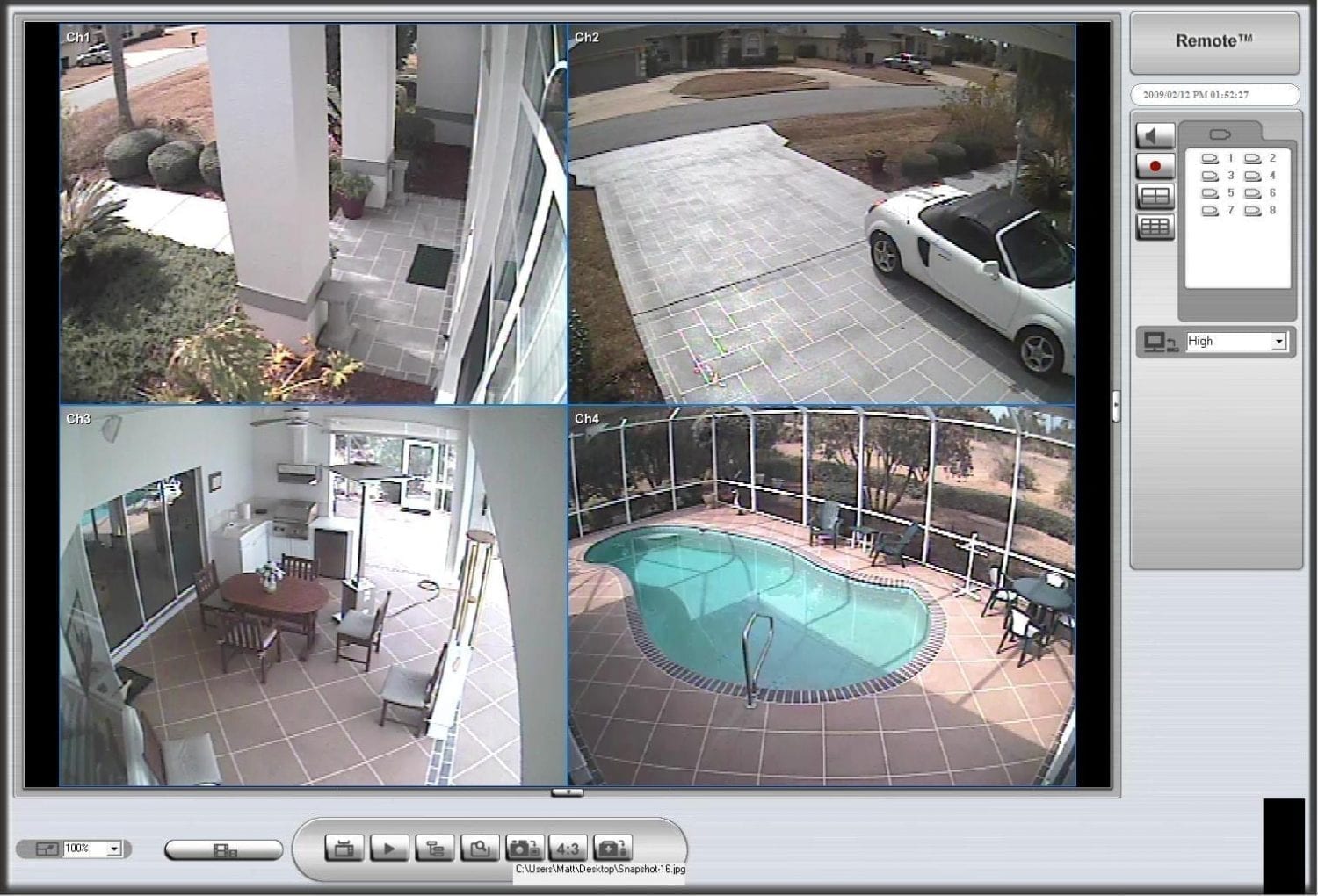
For the third time this year, in three states, vacation rental managers have discovered homeowners using smart home technology to spy on guests. With new technology, homeowners have increasing levels of access to monitoring activity in their homes, and a few are using it in ways which compromise guests’ privacy.

The property managers, who will remain unnamed, found hidden wifi-based cameras in their vacation homes and confronted the homeowner. In two cases the homes were removed from the rental program.

In Fort Meyers, FL, a man was charged after a video camera was found hidden in a clock inside a rental house. Police say the video clips they found contained over 4,000 video clips of unsuspecting renters – including video of them sleeping, showering and having sex.


The Good Part of Smart Home Technology

Smart home technology enables homeowners and managers to access, adjust and monitor various electronics and activity via cellular and wifi technology. Controlling thermostats and keyless locks are currently the top two uses by vacation rental managers, but security cameras, pool and hot tub control, energy efficiency and tv/cable control are areas of fast growth.


Hidden CamerasSmart home cameras for vacation rentals

Want to know what to look for? Most of these are cameras in clocksBlu Ray players, charging stations, clothing hooks, and power outlets. These cameras can easily be found on Amazon, but a quick Google search shows many more sites dedicated to new monitoring technology.

Your company can also purchase a hidden camera detector to make sure your short term rental homes do not have existing hidden cameras.


Owner Installed vs. VRM Installed

According to Greg Burge, president at PointCentral and past president at GE Security, America’s, vacation rental managers have an opportunity to establish primary control of installed smart home technology.

“These incidents reflect a growing trend by homeowners to independently install smart home products,” said Burge.  “Unlike ‘enterprise’ smart home solutions being implemented by leading VRM’s across the country, these owner installed ‘single property’ systems compromise guest security.”

Burge continued, “More and more VRM’s are taking a leadership role and moving in front of owners to deploy smart home solutions that improve guest, owner, and employee security; drive down owner energy costs; and provide significant VRM operational improvements and efficiencies. With the added benefit of a potential revenue source.”

New Policies

Some states currently have laws stating that video cameras can be used to protect the landlord’s property if the tenant is given fair warning, and only a few states have specific laws banning the unauthorized use of hidden cameras in private places. Of these, only a handful have classified video voyeurism as a felony. Everywhere else, it’s a misdemeanor.

In the coming months as use increases, vacation rental managers will begin to include smart home technology policies to protect their guests’ privacy.


By

PhoCusWright releases study on private residence rentals and the “New Gen” renter

0
Sharing economy and short term rentals

From PhoCusWright Within just a few short years, the remarkable growth of HomeAway and Airbnb has sparked nothing short of a global phenomenon, spawning myriad imitators, numerous legal actions and intense industry scrutiny.

Municipalities and traditional travel industry sectors are still coming to grips with the implications of private homeowners and even renters turning their abodes into part-time (or full-time) businesses.

PhoCusWright’s Share This! Private Accommodation & the Rise of the New Gen Renter, a new study surveying nearly 2,000 travelers, delves deeply into the use of private accommodation in travel and defines the new rental traveler.

Examining the attitudes, aspirations, expectations and behaviors of renters and non-renters alike, this report provides critical insights into how, when and why travelers do and do not choose rentals vs. hotels, what influences their decisions, where they shop and book, and what renters want.

“There is a new generation of renters who are a breed apart from the larger traveler population,” said Douglas Quinby, PhoCusWright’s vice president, research. “They are younger, extremely digitally engaged and have very distinct travel wants and aspirations that stand apart from hotel guests and older rental travelers. In short, it’s not your mom’s vacation rental anymore.”

Share This! Private Accommodation & the Rise of the New Gen Renter provides deep insight into the U.S. rental traveler. The study explains who they are, how they travel, what they want, and how they shop and book.

The report also delves into the competitive overlap with hotels, including the extent to which renters consider and stay in hotels, whether non-renters consider private accommodation, and the potential impact of rentals on the traditional hotel market.

Topics covered in this report include:

  • Historical context of the vacation rental and private accommodation markets
  • In-depth analysis of the rental traveler and New Gen Renter segments
  • Six key travel attitudes of the New Gen Renter
  • To rent or not to rent: traveler decision dynamics around private accommodations vs. hotels
  • How rental travelers shop and book accommodations

Understand the new rental traveler and explore emerging trends in terms of demographics, travel behavior and use of consumer technology with PhoCusWright’s Share This! Private Accommodation & the Rise of the New Gen Renter. Click HERE to read more.

PointCentral

0

Is Airbnb hurting or helping the vacation rental industry?

0
airbnb: regulations come to chicago

Airbnb is becoming a noun more than a brand name, but what does “Airbnb” mean to the average person, and is the definition they are creating helping or hurting the vacation rental industry?


Awareness

Airbnb has done a spectacular job of creating brand and category awareness. Their marketing efforts have increased both the knowledge and popularity of using residential short term rentals for lodging, especially in cities, where overall use and awareness of vacation rentals has been relatively low.

The Google Trends chart below demonstrates the volume of the following search terms since January 2012:


Grass Roots Efforts

Airbnb has effectively mobilized local “hosts” to show up at city council meetings to fight rental restrictions  The company hired spokesperson David Hantman in 2012, and Aibnb is currently in the news daily for their public stance in short term rental disputes.

Petitions have been created by Airbnb hosts in Portland, Seattle, New York, San Francisco, Los Angeles, Grand Rapids, Denver and many more cities around the world. These petitions are being generated using sites such as change. org and peers.org and are being passed around the Airbnb community using peer-to-peer social media. The Airbnb host community is active, engaged and connected, characteristics which prove beneficial when facing a city council or county commission.

“At the June 4 Portland City Council meeting, Airbnb had a brunch (before the meeting) for their Portland hosts where they coached them on their testimony and helped them write them,” said Betsy LaBarge, founder and president of Mt Hood Vacation Rentals. “We didn’t know that until we got to the Public Hearing and signed up -behind about 50+ Airbnb hosts. They also had a representative deliver testimony.”


Category Confusion

However, while these efforts have been effective in allowing primary homeowners/renters to rent out a portion of their residence, the movement has created confusion about the vacation rental industry as a whole.

According to Vacasa’s Cliff Johnson in an Oregonian Op-ed before the last Portland city council meeting, “the city is only looking at legalizing a very narrow profile of rentals – the short-term rental of rooms within a primary residence. In our experience, this represents an extreme minority in the world of vacation rentals, as it covers less than 5 percent of all vacation rentals.”

Had it not been for campaigning by LaBarge and Johnson, along with HomeAway’s Matt Curtis and Oregon vacation rental managers, the Portland City Council was ready to rule that short term rentals in primary residences would be allowed, but rentals in non-primary residences would have remained illegal until the city council could determine appropriate regulation.

And it is not just in Portland. Airbnb also was successful in pushing similar initiatives in other areas. In February, Amsterdam passed an “Airbnb-friendly law” which permits residents to rent out their primary homes to up to 4 people at a time for up to 60 day a year. Earlier this year a bill was also passed in France legalizing short term rentals of primary residences.


Primary Residence Short Term Rental vs. Second Home Vacation Rental

The concern is that these initiatives are encouraging lawmakers to decide, as long as an owner is present in a primary residence, the rental should be legal. But if an owner is not present or it is a second home, the rental should be illegal.

These rulings are harmful to professional vacation rental management. The vacation rental industry has a long history of providing safe, clean lodging to visitors, having managers available 24/7, working with existing laws (not underground), paying lodging/tourist/TOT taxes, promoting the area as a destination, and increasing revenue for local businesses.


Airbnb Going Forward

Airbnb CEO Brian Chesky told Katie Couric in a recent interview, “The core problem comes back to the idea that these cities want to view everything as a person or a business. If you have people in your home, you’re a person. The second you charge one person, one weekend you’re a business, and therefore you should be regulated like these huge institutions. We actually think there should be a third category created, and what we are doing is -city by city around the world  -we are starting to create model legislation.”

“It is a huge risk for the company it we can’t manage it, but I am incredibly confident we can,” said Chesky.

Airbnb has turned fighting municipal rental bans into a highly successful PR campaign. However, the traditional vacation rental industry should not assume that Airbnb is looking to protect their interests when facing rental restrictions. The “model legislation” they have been pushing through has not historically prioritized second home vacation rentals.

Fortunately, in Portland, LaBarge, Johnson, Curtis and others organized and showed up with solid, factual, data-driven information.

“The city council finally understands what traditional short term rentals – vacation rentals – are,” said LaBarge. “They also realize that they need to have a different permit license and regulation for them, and the mayor wants to fast track the process.  He agreed that he wanted the input of the experts in the room which included Cliff Johnson from Vacasa, Matt Curtis and myself.”


By

Editorial: Giving thanks for property rights, too

0
Vacation rental OTAs

As we celebrate U.S. independence today, I would like to give a quick thanks for the property rights most of us enjoy -property rights which allow the vacation rental industry to exist.

Yet, we should also be reminded that these property rights are being challenged at the city, county and state level across the country. One of the fundamental rights of owning property is the ability to use it as a resource, which would include the ability to rent the home, in whole or in part…short term or long term, to provide income to the property owner.

Opponents of short-term rentals and vacation rentals are typically not trying to abolish property rights altogether. These critics are not usually socialists who want the government to dictate what can and cannot be done in the home. Rental opponents are simply annoyed by noise, limited parking, excess garbage, and the discomfort of not knowing who is coming and going from the property on their street or in their building. What rental opponents don’t consider is that sacrificing property rights as a whole is a large price to pay because a few people are annoyed.

As we have seen in Portland this week, there is much education which needs to be provided to the government officials who are trying to sort out these issues to protect property rights while also providing safety and comfort for their constituents.

Many traditional vacation rental destinations do not currently struggle with a threat to property rights. Alabama and North Carolina, for example, with the help of very active vacation rental management companies, Chambers of Commerce, and Convention and Visitors Bureaus work hand in hand with cities, counties and the state to keep everyone informed of the positive economic impact and work together to confront existing and potential issues.

Active…hand-in hand…together. This is how vacation rental rights are protected.

These rights are currently being challenged at the city and state level and have not yet escalated to the federal level. Each municipal fight is a ground battle in a ground war against the fair use of residential property.

The entire vacation rental industry is dependent on the right of a homeowner to rent his/her property on a short term basis, and all of us who work in the industry can participate in a meaningful way to preserve it.

By Amy Hinote

Hurricane Arthur Triggers Travel Insurance Questions

0
Tropical Storm Arthur Threatens North Carolina's Outer Banks

As Hurricane Arthur makes its way northeast, hugging the U.S. coastline, vacation rental managers are assessing the potential economic impact of the event. As of Thursday afternoon, North Carolina’s Dare County ordered a mandatory evacuation of Hatteras Island and predictions show Arthur to peak at a Category 2 105 mph by the time it reaches the Outer Banks.


Economic impact of a July Hurricane

Looking at sample data, if a traditional East Coast vacation rental management company collects $10 million in annual rental revenue, depending on the number of days the storm impacts accessibility and utilities in the destination, the results in July could look something like the table below:

Number of reservations affected Total rental  revenue impacted % impact to annual rental revenue 15% commission on impacted revenue
7 days 227 $598,000.00 6% $89,700.00
14 days 406 $978,000.00 10% $146,700.00
21 days 596 $1,418,000.00 14% $212,700.00
28 days 819 $1,933,000.00 19% $289,950.00


As seen with Hurricanes Ivan, Katrina and Irene, these numbers continue to rise with increased intensity and longevity of the event’s impact. In these events, travel insurance provides protection for the guests, for the homeowners, and for the vacation rental management company.

North Carolina’s Vacation Rental Act, which directly addresses what will happen when mandatory evacuation orders affect the rental, says the guest is only entitled to a refund if the vacation rental company or homeowner does not provide travel insurance and offers it to all guests. If a guest is ordered to evacuate and was offered rental insurance when he signed the rental agreement and did not take it, then the owner/VRM is not required to refund money in case of a mandatory evacuation.

According to Laird Sager, President and CEO at Red Sky Travel Insurance, there are three outcomes which are addressed in travel insurance policies for storms:

1. Mandatory Evacuation: When a government municipality, county or state issues an order of evacuation.

2. Uninhabitability: When a property cannot be inhabited (due to safety or utility issues).

3. Inaccessibility: When a property cannot be accessed (due to road closures, flooded parking lots, etc).


Does the travel insurance policy meet the specific needs of the destination?

“There are major differences between travel insurance policies as they relate to these outcomes,” said Sager. “It is incredibly important when choosing an insurance provider that you look closely at your individual destination’s risks and specific needs.”

When Hurricane Irene occurred in the Outer Banks in 2011, the storm cut an inlet through the barrier island. About 900 feet of road was washed away, cutting off Cape Hatteras and several Outer Banks towns from the rest of the state.

“No one could access the island through the ‘traditional and anticipated route’, and we call that inaccessibility or road closure,” said Sager. “Some policies provide for road closure for 15 days from the event, and others provide for 30 days. Red Sky Travel Insurance provides coverage until accessibility has been restored.”

“In that case, we paid claims for 47 days,” added Sager.


When to buy travel insurance

If a guest is vacationing on the east coast or Gulf coast during hurricane season, they are strongly advised to purchase travel insurance. The guests can typically add travel insurance to a reservation up until the storm has been named.

“While it is a tropical storm, with Red Sky, you may still purchase travel insurance,” said Sager. The instant it becomes a named hurricane, the time has run out to purchase a policy.”

Bottom line…if guests did not purchase travel insurance from a North Carolina vacation rental management company that offers it before a hurricane is named, they are not entitled to a refund for their vacation rental accommodations.


Protecting your company and homeowners while maximizing the benefits from travel insurance 

Laird Sager says there are several important steps vacation rental managers can take in getting the most from their travel insurance.

1. Choose a policy that is relevant for your destination’s risk. It is important to do the research about policy specifics when choosing a provider, e.g. road inaccessibility, flooding, or payment timing and procedures.

2. Train your staff. “Many reservation agents are not adequately trained to talk to guests, which is why we provide in-person training on demand for VRMs,” said Sager. “One company increased its policy sales from $435k to $765k  with no inventory growth – just from training. With a 25%+ commission paid to the rental company, the increase added significantly to the company’s bottom line.”

3. Add the topic of travel insurance to weekly meeting agendas. “This allows people to share case studies and ask questions,” said Sager.

4. Follow up with guests making online reservations. This allows you to make personal contact, answer any questions, and address the risk of not purchasing travel insurance.


Opt-out

If the destination is at a high risk for events which cause disruption, having guests opt out of travel insurance instead of opting in helps protect the guests, homeowners and the VRM. “We’ve seen increases from 18% to 49% adoption just from changing to an opt-out model,” said Sager.

“Hurricanes aren’t the only events which require protection,” added Sager.”Sixty-five percent of cancellations were due to illness. Whether it is protecting against health issues, limited accessibility, road closure delays, or even lack of snow in ski destinations, make sure you choose a policy which addresses your company’s individual and specific needs.”

By


Vacation Rental Headline News: 2014, Jan-June

0
Vacation rental headline news

In case you missed the headlines of the first half of 2014, here is a fun video to catch you up. 6 months in 6 minutes.

 
2014 Vacation Rental Headline News by Amy on GoAnimate

Take the housekeeping survey for the VRHP Conference

0
Ocean front housekeeping services

As Vacation Rental Housekeeping Professionals (VRHP) is preparing for their annual conference, they are looking for your feedback about topics which interest you related to your housekeeping and maintenance needs. Please take a few minutes to take this quick survey and help VRHP create a conference which helps grow your business and improve the guest experience.

Take the VRHP Housekeeping Survey. 

Complete the survey by July 10th for the chance to win a $25 Amazon gift card.

If you haven’t joined VRHP, the cost is an annual fee of $250.

To sign up for the VRHP National Conference, Nov 10-12 in Charleston, click here. The cost is $325 for members and $400 for non-members.

To learn more about the conference…

Spirituality and vacation rental managers

0
Vacation rentals and spirituality

I started in the vacation rental industry working for Gary Ellis at Compass Media in Gulf Shores, Alabama (although I bartended while in college for Pedro Mandoki at the Gulf Shores Plantation cabana, and I think that counts!). I stayed in the vacation rental industry because of a fascination with the people who work in it, the destinations they promote, the idea of vacationing in homes around the globe, the risk and resiliency displayed in working with mother nature, and of course, the fun-to-watch high growth of the industry.

While observing this industry over the past 10 years, it is hard to ignore the above-average, beautiful spiritual awareness among people who represent the vacation rental marketplace. After getting to know many vacation rental managers, I believe there is a common thread of shared qualities which contributes to this:


1. Appreciation and respect for the beauty in nature

With all the activities and opportunities in a city (and much higher pay scales), it is a special type of person who chooses to live and raise a family in a vacation rental destination. This group of explorers chooses salt breezes or pure white powder or mountain lakes and streams and is undeterred by the high risk involved with facing forces of nature or the intense seasonal pressure in destinations which are only populated 10-20 weeks out of the year. This group shares an overwhelming love and gratitude for nature and an awareness that the world is bigger than themselves.


2. Spiritual gift of hospitality

Most belief systems recognize people possess varying spiritual gifts or aptitudes which help contribute to improving the lives of others. The Bible specifically calls out the gift of hospitality. People who possess the gift of hospitality:

“Provide an environment where people feel valued and cared for, meet new people and help them to feel welcome, create a safe and comfortable setting for others, look for ways to connect people, and set people at ease in unfamiliar surroundings.”

This definition reads much like a mission statement for a vacation rental management company, so it isn’t surprising to find many people in the vacation rental industry who possess this talent. And we know that when people do what they are gifted to do, it creates a workplace full of passion, purpose and fulfillment, which is a common trait I found while interviewing vacation rental managers for the Under the Hood series.


3. A strong sense of family

Vacation rental managers work tirelessly to provide a safe, secure, beautiful environment for family vacations, and this typically comes from a strong internal recognition of the importance of the connection between family and friends (the family we choose). In the 2014 Under the Hood series, six out of eight VRMs interviewed were built and/or managed with other family members, and all were managed with a strong sense of company culture, community and connectivity.

I was fortunate enough to have parents who saw the value in choosing vacation rentals for our family vacations when I was very young. We were able to have dozens of family vacations with board games, fireworks, exploring, crabbing, canoeing, bonfires and cookouts. These memories are the best I have of our family (and pretty much the only time I got along with my brothers).

And I am grateful to the vacation rental homeowners and managers who made it happen. Through your love for God’s creation, your talent for hospitality and your desire to create meaningful family vacation memories which last a lifetime, you made a difference in my life.      

By Amy Hinote

Four Seasons expands presence in the vacation rental industry

0

In spite of the recent American Hotel and Lodging Association announcement of its plan to disrupt the growing vacation rental industry, some hotel companies are looking to extend their presence in vacation rentals instead.

Four Seasons recently launched a vacation rental website with an inventory of properties which are vetted by Four Seasons, and are essentially extensions of the brand in that you can still get many of the amenities that you would at a hotel, including housekeeping, in-room (house) spa treatments, stocked fridge, etc.

Four Seasons Vacation Rentals

 
“We’re seeing a steady increase in multi-generational and small group travel – guests who want to get away with children, grandparents or groups of friends to celebrate holidays or mark special moments – and these guests are looking at residential options,” said Jose Soriano, vice president, residential operations, Four Seasons Hotels & Resorts. “Whether a pied-a-terre in the city or a holiday villa, our new website takes the guess work out of finding a Four Seasons vacation rental that offers the privacy, space and freedom of being at home with an ideal base from which to explore a new destination, relax or entertain – all while having full access to Four Seasons signature service and amenities to deliver every comfort and luxury.”

According to the Four Seasons website, guests staying at the “Residences” have access to all of the hotel/ resort’s services and amenities such as:

  • Concierge
  • Guest Services
  • Valet
  • Housekeeping
  • Room Service
  • Fitness facilities
  • Pools
  • Recreation areas
  • Charging privileges at all restaurants, dining outlets, spas and golf courses available on property.


Is this a game-changer for the vacation rental industry? Not today. Four Seasons currently has a very small inventory of rental residences located in their existing developments/resorts. Four Seasons has provided residential rental, real estate  and timeshare services for approximately 30 years in their developments. The newly launched website, at least in the short-term, is designed to promote vacation rentals to retain loyal customers and increase occupancy in their residences.

Long-term, it will be interesting to watch Four Seasons’s rental business -and the partnerships they create -and observe how they are using their website and vast data to expand further into the luxury vacation rental industry.


However, the ffering of many of the services is a draw to guests who are not comfortable with self-managed vacation rentals.


Long & Foster continues expansion in New Jersey

0

Long & Foster expands company’s presence in southern New Jersey

Long & Foster Real Estate, Inc., the largest independent residential real estate company in the U.S., announced it has joined forces with NJ Realty in Sea Isle City and Ocean City, N.J. NJ Realty is a boutique real estate brokerage and vacation rental firm, which is run by Andrew Fasy and Kevin Redmond, both longtime real estate professionals along the Jersey shore.

“The entire team at NJ Realty is thrilled to join the Long & Foster family, which shares our approach to doing business with honesty, integrity and good old-fashioned customer service,” said Fasy and Redmond. “Long & Foster not only maintains the same commitment to family values and independence as we do, but also offers tremendous training, marketing and technology resources to ensure we’re well positioned to exceed our clients’ expectations when it comes to buying, selling or renting vacation homes in southern New Jersey.”

Fasy and Redmond are co-owners of the Ocean City location of NJ Realty, which focuses on vacation and second home sales, and Fasy is the sole owner of the Sea Isle City facility, which specializes in residential sales and vacation rentals. Redmond leads the Ocean City office as its broker of record, and Fasy serves that role in Sea Isle City. Going forward, they will remain in their leadership positions as branch managers of their current offices, reporting to Terry Spahr, regional manager of Long & Foster’s Delaware, Eastern Shore and New Jersey region.

Because NJ Realty manages an extensive vacation rental business and the busy season is in full swing, they will continue to operate under their current name through the summer. In the fall, the two NJ Realty offices will transition to the Long & Foster brand.

“We’re pleased to welcome NJ Realty to Long & Foster and to expand our presence in the New Jersey market,” said Gary Scott, president of Long & Foster Real Estate. “Long & Foster strives to serve as the No. 1 choice for home buyers, sellers and vacationers in Mid-Atlantic and Northeast, and the addition of the NJ Realty team further enhances the high quality of service we offer to clients along the Jersey shore. Together, we will ensure that our combined real estate forces continue to uphold the strong tradition that has allowed our company to grow and succeed.”

Joe Amatangelo, president of Long & Foster Real Estate’s property management and vacation rental division, agreed. “The team at NJ Realty brings a wealth of knowledge in vacation and resort rentals that will further enhance the quality of service that Long & Foster already provides its clients, and with their knowledge of the shore, as well as our expert marketing, training and technology, we’re sure to achieve continued success in the region,” Amatangelo said.

Long & Foster’s partnership with NJ Realty aligns with the company’s overall growth strategy and expands its presence along the southern New Jersey shore. With the addition of NJ Realty, Long & Foster now has more than a dozen offices in New Jersey. The company also serves as the exclusive affiliate of Christie’s International Real Estate throughout the southern New Jersey market where NJ Realty is based.

Related article: Long & Foster chooses Barefoot Technologies as new vacation rental software provider

HomeAway hits unprecedented 1 million listings

0
HomeAway

With over 1 million listings, HomeAway has the most inventory of any vacation rental site worldwide.

By Faith Merino

As the mom of a two-year-old and another one due next month (!!), I’ve resigned myself to the fact that I won’t be traveling anywhere for a long ass time. Because you know what’s worse than jet lag, losing your bags, delayed flights, and food poisoning from crappy airport food courts? All of that with a toddler. Two kids? Pass.

But I still like to dream. A couple times a week, I like to go on HomeAway or Airbnb and browse around for mountain cabins, treehouses, or seaside cottages. And now, there are more listings than ever before. HomeAway announced Wednesday that it has reached one million listings. The company notes that that adds up to 2.8 million rooms, which is more than the four largest hotel companies in the world have combined.

That number is up from 952,000 listings as of last quarter. HomeAway launched in 2006 with vacation rentals in 90 countries. Today it has listings in 190 countries. Home owners who rented out their vacation rentals on HomeAway generated some $11 billion in revenue in 2013, and the vacation rental market overall is worth an estimated $85 billion in the U.S. and Europe.

By comparison, Airbnb launched in 2008 and has some 600,000 listings.

HomeAway generated $346.5 million in revenue in 2013, an increase of 23.6% from 2012. Net income for the year came in at $17.7 million, which is up from $15 million in 2012.

It seems likely that the new jump in inventory growth is the result of HomeAway’s recently added Pay Per Booking option.

While Airbnb makes its money by charging guests a 6-12% fee and taking a 3% cut from hosts, HomeAway has never charged guests. Hosts front the whole of the costs by either paying a subscription fee or handing over a cut of each booking.

Subscription fees range from $349 a year to $999 a year, and different packages offer different perks, such as better rankings in search results. The subscription feature is great for hosts who have properties they want to rent out year-round.

Last fall, however, HomeAway acknowledged that not everyone wants to make that kind of commitment, so the company launched another option: pay per booking. Now, owners have the option of handing over a cut of each booking rather than subscribing for a full year. It’s a lot higher than Airbnb’s 3%, though. HomeAway charges owners a minimum of 10% per booking, and up to 20% for those who want HomeAway to manage the whole listing.

The pay-per-booking option appears to be having a positive impact on HomeAway’s bottom line. Average revenue per listing in the fourth quarter rang in at $377, an 8% increase from $349 in Q4 2012.

The company has been on something of a buying spree in the last few months. Last March, HomeAway acquired customer hospitality company Glad to Have You, which allows owners and property managers to reach out, communicate with and keep track of their guests. And in December, the company bought Australian competitor Stayz for $198 million.

To celebrate the new milestone, HomeAway is launching a $10,000 giveaway to those who “like” HomeAway on Facebook. The contest will run from now until July 16.
Read entire article here.


Leisure travel intentions are rising, with millennials leading the way

0
Millennials and vacation rentals

ORLANDO, Fla. (June 23, 2014) – Millennials will be the driving force behind the continued recovery of the U.S. travel industry, according to the results of the newly-released 2014 Portrait of American Travelers®, an annual survey of the travel habits, preferences and intentions of Americans, authored by travel marketing services firm MMGY Global.  Millennials are also expected to spend incrementally more on travel services than any other age cohort during the next 12 months.

Fully 24% of Millennial travelers (between the ages of 18-35 in 2014) are planning to take more overnight trips for leisure purposes in the year ahead, versus 14% who are planning fewer trips, yielding a net positive difference of 10% in travel intentions.  This compares with a negative net difference of 1% for Boomers, and negative net differences of 3% and 6% for Matures and Xers, respectively.

Millennials also plan to spend significantly more on leisure travel services in the year ahead than any of the other generational cohorts:  an average of $887 on a previous-year base of $4,499.  Xers intend to spend the second highest increment: $666 on a previous-year base of $4,341.

Both trends are consistent with the manner in which Millennials view the sanctity of their vacation time, having taken an average of 4.6 overnight trips for leisure purposes last year, versus an average of 4.2 trips for all U.S. households with an annual income over $50,000.

“Six in ten Millennials would rather spend their money on experiences than material things,” said Steve Cohen, Vice President of Insights for MMGY Global. “This is presumably one of the reasons we’ve observed the spike in their intentions with respect to leisure travel in the year ahead.  The implications for destination and travel-service marketers are quite profound, as Millennials’ planning, booking and sharing habits are significantly different from those of older leisure travelers.”

Millennials’ sense of wanderlust doesn’t always extend to more distant destinations, as they are also more likely to have taken a “staycation” during the last 12 months than all other travelers. Fully 33 percent took at least one vacation within 50 miles of their home, versus 27 percent among all other leisure travelers. Their stated motivation?  One third indicated their choice was fueled by the desire to save money to take a more substantial vacation during the year ahead.

The MMGY Portrait of American Travelers provides an in-depth examination of the impact of the current economic environment, prevailing social values, and emerging media habits, on the travel behavior of Americans. The survey, now in its 24th year, reflects the lifestyles and travel behavior of approximately 57 million American households who spent an average of $4,429 on leisure travel in the last year. Collectively, they represent nearly $240 billion in U.S. travel spending.


Survey Methodology

The MMGY Global Portrait of American Travelers® is a national survey of 2,550 active leisure travelers who reside in households with an annual income of $50,000 or more and have taken at least one leisure trip of 75 miles or more from home during the previous 12 months on which they used overnight accommodations. The sample is balanced by statistical weighting to ensure the data are representative of all active leisure travelers in America who meet the target profile. For more information about these insights or other travel industry research from MMGY Global, visit MMGY Global Research.


About MMGY Global

MMGY Global is the world’s largest and most integrated travel marketing firm with more than 35 years of experience in the travel, hospitality and entertainment industries. The award-winning agency maintains a global communications practice in all marketing channels, serving many of the world’s premier travel and tourism brands. MMGY Global is author of acclaimed industry research (including the Portrait of American Travelers®) that identifies the habits and preferences of travelers – insights that serve as the foundation for its marketing strategy. For more information, visit MMGY Global.

Rental Places expands in several national and international markets

0

June 20, 2014 –  Performance Development Corporation (PDC), a Hilton Head Island –based marketing and software development firm, announced today the expansion of Rental Places and the launch of several local Rental Places sites. The Rental Places network currently covers over 70 markets in the U.S and over 385 destinations around the world. Their highly targeted localized online marketplace provides real time data allowing visitors to obtain the necessary information they need to confidently book their vacation rental. Visitors have the ability to browse vacation rentals from around the world, attain travel ideas and score incredible travel deals.

Rental Places was created in 2008 as the “go-to” site for professionally managed vacation rentals. Each local rental places site includes company branding with direct links to availability or the booking page on the rental management site as well as local events, festivals and things to do.  “Our growth has been pretty impressive and we continue to expand into national and international markets daily,” said Richard N. Neste, Chief Operating Officer.

Browse vacation rental around the world, attain travel ideas, search top vacation destinations, and save money through travel deals, all through Rental Places.   Whether the guest is searching by laptop or mobile device, Rental Places makes it easy and convenient for the traveler to begin their vacation search at any hour, anywhere around the world.

Expanding daily, Rental Places has just launched sites in Florida, North Carolina, California, Colorado, Massachusetts and British West Indies. Each destination includes information about local events, dining, shopping, activities and special deals offered to travelers. “Our goal is to provide vacationers with as much information as possible about each location, giving suggestions for family fun, attractions and happenings throughout the area,” said Neste.

Rental Places, a division of Performance Development Corporation, utilizes the latest technology to provide vacationers real-time availability to successfully reserve the vacation accommodation of their choice, 24 hours a day, 7 days a week.


About Performance Development Corporation (PDC)

Performance Development Corporation (PDC) is a specialized internet marketing and software development firm that excels in integrated web development, branding and organic search engine and digital asset optimization. Our efforts are focused on targeted national and global niche markets for our domestic and international clients in the resort, vacation rental and real estate industries.


Contact

Richard Nest
Rental Places
843.686.1001
Contact@RentalPlaces.com


The fabulous, comfortable shoe of customer experience!

0

by Valerie Welland

I should start by confessing that I have a *slight* affection for shoes. To be honest, I think I could give Carrie Bradshaw some serious competition. When I think of customer experience, I think of shoes.

Let me explain…. A few years back I purchased a pair of shoes. They were fabulous, comfortable shoes, until the sole of the shoe started to come apart. Normally, I would just throw them out and move on, but a friend told me to contact the company. So I did.

I wasn’t expecting much, most of the time companies tend to do very little to help the customers’ experience. I was so wrong. Barbara, a person who genuinely seemed to care about correcting the problem, was assisting me. She assured me they would stand behind their product, and send me out a new pair of shoes. Barbara told me to pick out a few pairs of shoes that were similar in style. She even helped me decide. The pair I liked was double the price of the original pair; I assumed that would be out of the question. Nope! She told me it was more important that I liked them and they “made it right.” While talking with Barbara, I noticed the fall boots (did I mention my shoe-addiction?), and told her how cute they were. Within a few days, I received my new shoes (new shoe smell) and a handwritten note from Barbara. The note simply stated:

marketing goal 1 - CX


“Thank you for being our customer, it was a pleasure to speak with you, and here is something to help you get those boots.” In the envelope was a coupon for 30% off.

The true test of any customer experience is how a company treats you when you really need them (when something is wrong). Clarks rose to the challenge and hit it out of the park to make my experience exceptional. Here we are many years later, I am still a loyal customer and still telling this story.

Read more at Working Smarter Cafe

Investment research firm comments on HomeAway

0
HomeAway and Priceline Lead the Market

By David N. Frazier

HomeAway (AWAY) is one of those small-cap, growth stocks that appreciated sharply during 2013, rising by 85.8 percent from Dec. 31, 2012 to Dec. 31, 2013. However, like numerous other momentum stocks, AWAY fell substantially during the first half of this year, declining by 36.6 percent from Feb. 20 to May 20.

After rallying by 6.8 percent from May 20 to May 27, AWAY declined further during the first two weeks of June, falling to an intra-day low of $27.95 on June 9.

Yet, price-momentum and volume statistics indicated on that day that AWAY had fallen to an oversold level and that it was due for a rebound. Sure enough, the stock did rebound considerably over the ensuing days, rising by 11.6 percent from June 10 to June 13, to close last Friday at $32.25. It closed Thursday at $33.56.

So, I felt that the time had come for me to take another look at HomeAway and its stock.

After all, subscribers to my financial market newsletter had made some good gains in AWAY during 2013.

Unfortunately, I was not impressed with my findings. Quite the contrary, my research indicates that financial market participants are still overvaluing HomeAway’s stock substantially and that AWAY will resume its February 21 to June 9 downturn within the next few days.

Before discussing the reasons that led me to that conclusion, let’s review some general information about HomeAway.


Business Description

HomeAway.com (AWAY) operates the world’s largest online marketplace for the vacation rental industry, with sites representing approximately 952,000 paid listings of vacation rental homes in 190 countries. As of Dec. 31, 2013, the Austin, Texas-based company operated its online marketplace through 50 websites in 21 languages.

HomeAway’s rental properties are fully furnished, privately-owned residential properties, including homes, condominiums, villas and cabins that can be rented on a nightly, weekly or monthly basis.

The company’s global marketplace brings together millions of travelers seeking vacation rentals online with hundreds of thousands of owners and managers of vacation rental properties located around the world.

Visitors to the company’s web sites can search and compare, at no charge, HomeAway’s extensive inventory of listings to find vacation rentals that meet their specific requirements.

In addition to its online listings of vacation rental properties, HomeAway operates BedandBreakfast.com, the most comprehensive global site for finding bed-and-breakfast properties.

During the year ended Dec. 31, 2013, the company’s web sites attracted approximately 750 million visits, as compared to approximately 600 million visits during 2012 and 500 million visits during 2011.

HomeAway’s ambition is to make every vacation rental in the world available to every traveler in the world through its online marketplace.


Why I think AWAY is Headed Lower

Although I expect the online vacation rental market to continue to grow at a fast pace over the next few years, HomeAway’s stock appears to be way overpriced, with my analysis indicating that AWAY is worth no more than $7 per share.

That $7 per share valuation estimate is based on an assumption that HomeAway will grow its net earnings per diluted share at an average annual rate of 30 percent over the next three years. Yet, that valuation estimate might still be too high, considering the following:

  • For the year ended Dec. 31, 2013, HomeAway grew its net income attributable to common stockholders by only 18.2 percent and its net earnings per diluted share by only 11.1 percent.
  • HomeAway announced on March 24 that its management team expects the company’s adjusted earnings before income taxes, depreciation and amortization expenses (“EBIDTA”) to rise to a range of range of $117.0 to $122.5 million for the year ending Dec. 31, 2014, from $96.7 million for the same period a year ago – by no more than 26.7 percent compared to the year ended Dec. 31, 2013. The company did not give any projections for its net earnings or net earnings per share.
  • HomeAway is likely to face an increasing degree of competition during the years ahead from other vacation and short-term rental listing websites such as TripAdvisor.com, Airbnb.com and HouseTrip.com, as well as from online travel websites, such Expedia.com, Hotels.com, Kayak.com, Booking.com, Orbitz.com, priceline.com and Travelocity.com. Any such increases in competition would likely reduce HomeAway’s revenue and earnings growth.
  • HomeAway’s stock closed Thursday at a price-to-earnings multiple of approximately 170 – at a P/E to earnings growth rate (“PEG”) ratio of approximately 5.7, based on an estimated average earnings growth rate of 30 percent for the next three years.


My Advice for Investors and Stock Market Speculators

As a result of my analysis of HomeAway, and the fact that the trading action in the company’s stock over the past three days suggests that it will turn lower within the next few days, I would advise investors to stay away from AWAY.

A much better alternative for investors seeking investments in companies that operate vacation rental listing websites would be TripAdvisor (TRIP), which I discussed in a previous article.

Separately, I would advise aggressive stock market speculators to consider selling AWAY short.


David N. Frazier has an extensive background in the investment securities industry and has invested in the financial markets for more than 25 years.

In addition to working as a business analyst, merchant banking analyst and equity research analyst, he’s held positions in sales and marketing at institutional investment firms, including William O’Neil & Co., TDAmeritrade, and Merrill Lynch.

David now serves as the President and Chief Market Strategist of Frazier & Mayer Research, LLC (dba www.TheMarketMonk.com), an independent investment research firm that provides research and analytical services to hedge funds, investment advisory firms, and other investment newsletters.

Free eCourse: “Managing Your Online Reputation with TripAdvisor”

0

“Managing Your Online Reputation with TripAdvisor” was co-developed by TripAdvisor and eCornell and leverages research from Cornell University’s world-renowned School of Hotel Administration and faculty insights.

In the free 3-hour course, property managers will receive guidance and learn best practices from Cornell and TripAdvisor industry leaders about how to monitor and improve their property’s online reputation.

The course focuses on building strategies and action plans for reputation management that ultimately drive bookings and revenue. The following topics are addressed in the curriculum:

  • Explain the importance of online reputation management to colleagues and peers
  • Take steps to assess your online reputation
  • Use methods for responding to online customer feedback
  • Understand the correlation between online reputation and revenue
  • Employ helpful tactics for incorporating customer feedback into day-to-day operations
  • Develop an action plan for managing your property’s online reputation based on best practices from Cornell and TripAdvisor

“As travel planning and booking become more dependent on online traveler reviews and opinions, online reputation management is paramount for property owners,” said Brian Payea, Head of Industry Relations, TripAdvisor. “We’re committed to helping businesses maximize their presence on TripAdvisor, which is why we partnered with eCornell to bring free, world-class educational content to hospitality professionals around the world.”

“Together, eCornell and the School of Hotel Administration have been providing professional development and training for hoteliers for more than a decade. Our courses in marketing, social media, brand management, and reputation management all enable hotels and travel organizations to drive more bookings and increase revenues,” says Chad Oliveiri, VP of Content and Partnerships at eCornell. “So this partnership with TripAdvisor is a natural fit.”

Course enrollment in “Managing Your Online Reputation with TripAdvisor” is free and available to hoteliers and B&Bs around the world. Click here to enroll in the course.

Vacation rental management companies for sale

4
Vacation rental business for sale

If you are looking to buy a vacation rental management company, check out MergerNetwork.com.

Below are four current listings from the site which give a company overview, a general location, gross sales, profits and asking price if available.

1. A Property Management Company

Business Summary

A property management company and franchisor that offers short-term vacation rentals in an international traveler’s hotspot.

Key Features:

  • Established in the vacation rental home market for over 16 years.
  • Facilitate the vacation home rental process by making options simple and affordable.
  • Currently have over 300 rental homes.
  • Profitable franchise system in place.
  • Lead vacation rental home providers in the desirable destination area and are properly zoned for short term rental purposes.
  • Received an A+ from the BBB.
  • Annual property management contracts are typically renewed.
  • Instant Internet Booking supports an easy to navigate website.
  • Strong management team and staff in place.

Industry

Sector: Real Estate
Industry: Property Management

Location

Classification: United States // Southeast States // Florida

Financials

Sales: $1MM – $2.5MM
Profits: $100K – $500K
Profit Type: Earnings Before Interest, Taxes & Depreciation (EBITDA)
Fiscal Year: 2012
Asking Price: Not Disclosed

Related Listings


2. 24 Yr Old Property & Vacation Management Company

Business Summary

Twenty Four Year Old Property Management and Vacation Rental Management Company. Same owners since inception. All services in house. Over 40 plus homes in the portfolio. Ideal visa business, add on, or business opportunity for those relocating to the Sun Shine State. Contact Agent and Fax NDA. Owner Financing available for qualified buyers. Please refer to listing #43927456 when inquiring. Thank you!


Industry

Sector: Real Estate
Industry: Property Management

Location

Classification: United States // Southeast States // Florida // Orlando
Location: Orange County

Financials

Sales: $100K – $500K   ($450,000)
Profits: $100K – $500K   ($160,000)
Profit Type: Not Disclosed
Fiscal Year: 2013
Asking Price: $100K – $500K   ($249,000)


3. Vacation Property Management For Sale

Business Summary

A well established true niche’ property management business focused solely on vacation rentals in scenic Northern Idaho. Long standing quality management has kept owners year after year. Current owner does very little marketing/advertising outside of web presence and referrals. Ex-potential growth for someone looking to expand the business with more properties –or maintain the current stable and consistent size as a side business.


Industry

Sector: Real Estate
Industry: Property Management

Location

Classification: United States // Mountain States // Idaho
Location: Kootenai County

Financials

Sales: Less Than $100K   ($51,617)
Profits: Under $100K   ($27,527)
Profit Type: Cash Flow
Asking Price: Less than $100K   ($74,999)


4. Home Vacation Rental Management & Property Service


Business Summary

60 Plus home vacation rental management company and property service company. Original seller, Ideal opportunity for Visa Buyers and Family Run Owners. Home Based, Strong Cash flow. Business comes with Dodge Pick Up truck. Best Developments make up the portfolio of properties. Limited inventory at this time makes this volume of homes a deal of a lifetime. Contact Agent and Fax NDA. Please refer to listing # 43930836 when inquiring. Thank you!


Industry

Sector: Real Estate
Industry: Property Management

Location

Classification: United States // Southeast States // Florida
Location: Four Corners Resort Area

Financials

Sales: $500K – $1MM   ($730,065)
Profits: Under $100K   ($90,436)
Profit Type: Seller’s Discretionary Cash Flow (SDCF)
Fiscal Year: 2013
Asking Price: $100K – $500K   ($199,000)

Owner Acquisition Strategy: B2B + B2C =B2O

0
Get more homeowner inventory for vacation rental managers

With so much emphasis placed on acquiring new guests, it is easy to overlook the importance of a strong homeowner acquisition strategy. If your Owner Acquisition Strategy (OAS) is not performing as well as you would like, it might be time for a fresh look.

When interviewing property managers in our Under the Hood series, we always ask about their homeowner acquisition and retention strategies. Understanding this information is highly confidential, we’ve pulled together tips and tactics utilized by property managers to grow inventory.


B2B + B2C =B2O


The relationship with the homeowner has both business and personal elements, so a healthy OAS combines B2B and B2C sales and marketing tactics to create a B2O (business to owner) plan.

The Agency Post article 10 Differences between B2B and B2C Marketing identifies how messaging to businesses and consumers differ.

Here are a couple of excerpts:

  • The B2B purchase process tends to be rationally and logically driven, while consumer choices are typically emotionally triggered.
  • B2B clientele want to be educated and provided with expertise. B2C customers just want to enjoy themselves, be happy with their purchase and have it adequately fulfill their needs.

For homeowners, choosing a property manager is both expertise-driven and emotionally driven. Therefore the strategy should connect on both levels.


Steps for creating a successful Owner Acquisition Strategy

There are 6 components to a successful OAS:

  • Analysis
  • Targeting
  • Messaging
  • Channel Identification
  • Implementation
  • Evaluation


1.       Analysis

The first step combines an analysis of the market/destination, owner acquisition strategies and programs utilized by the competition within the destination, the unique selling proposition of your homeowner program, and an in-depth look at your existing inventory (including any losses of inventory in the relevant past).


2.       Targeting

Based on the analysis and consultation with your rental team, identify a set of criteria used to target new inventory (e.g. property type, amenities, location, specific buildings or communities). DMB Realty Network in Scottsdale posted a whitepaper describing a Second Home Buyer Profile.


3.       Messaging

Working with homeowers is challenging because they view the relationship with the property management company (PMC) in both a business and personal way:

  • Business: The homeowner views himself as the CEO and wants the PMC as the manager to be fully accountable for increasing revenue, maintaining the quality and cleanliness of the property,  achieving maximum rental rates, providing top notch accounting/reporting services, etc.
  • Personal: The homeowner also wants the PMC to act as a babysitter, making sure nothing is broken, monitoring who is coming in and out of the home, staying in close communication, understanding the home’s uniqueness and personally and lovingly caring for the vacation home.

Design the messaging to highlight the advantages of your program and appeal to the homeowner in both a professional and personal way. (Tip: both B2B and B2C marketers utilize testimonials)

In a successful OAS, a portion of your B2O messaging will be directed to the VRBO market. Whether it is a chart showing how your services save time and money or an introductory program with scaled down services, tapping into the VRBO market in your destination is likely to be necessary to affect your market share in a material way.

New idea: Check out the Vacation Futures model which allows you to select inventory types and bid on contracts.


4.      Choose your marketing channels

You have several options in deciding how you are going to reach prospective owners. Direct mail, email, PPC, display advertising, social media, in-person marketing, events and more. You may also want to add typical B2B channels such as whitepapers, LinkedIn or SlideShare with content showing the effectiveness of your rental program, video testimonials, etc.

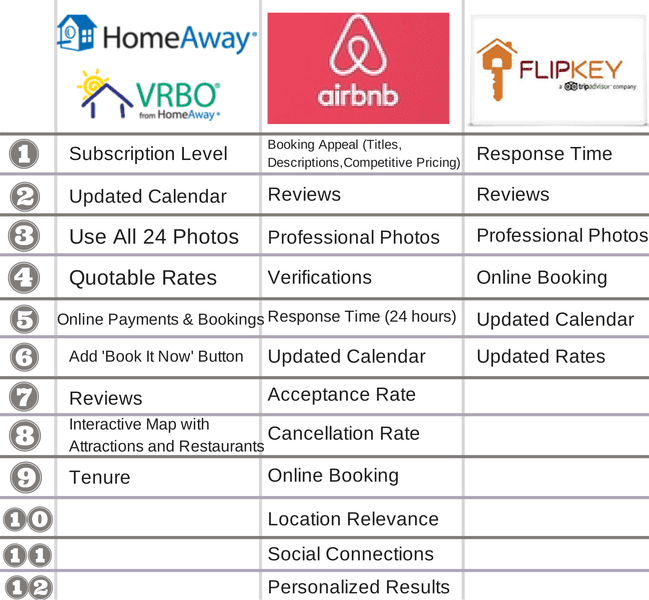
Here is a marketing chart to help generate ideas from B2B marketers:


5.      Implementation

Once the above elements are completed, articulate your strategy and identify tactics in a written plan. Include a budget and plan for evaluation. Get buy-in from stakeholders and begin to thoughtfully execute the plan.


6.       Evaluation

The OAS should be evaluated on an ongoing basis identifying the ROI for each marketing channel. Metrics vary based on the marketing channel, but full reporting is key to monitor performance and maintain momentum. If possible, provide incentives to your sales and marketing team.


Related Article:

Company Portraits: First-hand accounts from VR company owners on starting up and keeping up in this growing industry


VRMA starts new membership campaign

0
VRMA Seminars

The Vacation Rental Managers Association (VRMA) is offering a special promotion to any prospective vacation rental management member: Join by July 31 and pay just $300 for the remainder of 2014.

This offer is designed to attract new and former members and help grow the organization into a cohesive “voice” in the vacation rental industry. A unified VRMA which represents the interests of professional vacation rental managers serves to grow the industry, strengthen awareness, protect consumers and address the increasing number of challenges facing the industry.

In 2008, the VRMA changed their structure and increased dues to fund strategic initiatives such as DiscoverVacationHomes.com, a distribution technology “switch,” and the PBS series Getting Away Together. The increased dues significantly affected large property management companies and many of the larger companies did not renew their membership.

With many new challenges and opportunities facing professional vacation rental managers, it is critical to have a strong, vibrant trade association working to promote professional management, offer education, create networking opportunities and serve as an industry advocate.

VRM Intel is an active member in the VRMA, and we encourage participation in this organization.

Learn more about this special promotional offer.

Kigo acquired by RealPage…joins InstaManager in recent RealPage purchases

0
Acquisitions Jamie Clymer RealPage

Yesterday RealPage, Inc. (NASDAQ: RP )  announced it has bought Kigo, a European based vacation rental booking and channel management software platform headquartered in Barcelona. According to their press release, RealPage paid closing cash consideration of about $32 million along with a deferred cash payment of up to $5.5 million.

In January, RealPage acquired Bookt’s InstaManager, a similar vacation rental booking software for $14 million. With the acquisition of Kigo, RealPage further extends its vacation rental booking system internationally.

The acquisitions of Kigo and InstaManager demonstrate an increasing utilization of vacation rental software in Europe. However, the functionality in these platforms is still limited compared to the major software systems in the U.S.

By comparison, in 2010, HomeAway paid an estimated $27.1 million for Instant Software and an estimated $10.3 million for Escapia. Both acquisitions contributed to a synergy within the HomeAway business model. A $32+ million spend for Kigo following a $14 million purchase of Bookt’s InstaManager depicts an increased stand-alone valuation of software utilization in the global vacation rental marketplace.

Steve Winn, CEO of RealPage, commented, “We believe the vacation rental market offers significant growth for RealPage, and this acquisition helps expand our presence in Europe. Both Kigo and InstaManager offer tremendous opportunity by helping professional vacation rental managers increase the number of properties managed and the days per year utilized, resulting in revenue growth without adding to their staff.”


By Amy Hinote


NAVIS launches new products at HITEC

0
CRM and services for vacation rentals

Bend, OR – June 16, 2014 – NAVIS announced it will formally launch NAVIS Reach at HITEC June 24 – 26 in Los Angeles. NAVIS Reach is a CRM tool that allows operators to increase revenue through combining data from online and offline systems for automated, targeted email campaigns. Clients use NAVIS Reach to identify marketing strategies, create email campaigns based on guest interests, and track results in real-time.

“NAVIS Reach gives operators the ability to leverage online and offline data to create and execute highly effective email marketing campaigns,” said Michelle Marquis, vice president of marketing and strategic Initiatives. “We developed Reach from the ground up specifically for the hospitality industry, then tested it with more than 70 clients in the past 12 month. Campaigns using Reach averaged 350 percent higher open rates.” Marquis explained Reach’s increased open rates generated more reservations, greater revenue, and better customer relations. NAVIS Reach is integrated with NAVIS 360 CRM and is unique because it gives operators real-time access to data from multiple systems. “We will formally launch NAVIS Reach at HITEC for operators who want to communicate more successfully with guests.”


NAVIS Reach triples the amount of email opening rates

Marquis noted that independent operators must be more creative and nimble with their marketing programs than flagged properties. “Independents need to create guest loyalty themselves. They must be loyal to their guests and create recognition-based relationships with communication based on guest interests.” NAVIS Reach gathers information with specialized data mining programs that identify guest behaviors such as dates stayed, interests, activities, room preference, total spend per visit, overall guest value and even custom attributes.

NAVIS Reach gathers data based on specific configurable criteria, removes pre-bookings, eliminates duplicate names, and automatically groups people into the same households instantly. When this data is collected, Reach generates targeted lists that rank guests by interests or other factors. The system provides easy-to-use custom email templates. NAVIS Reach implements the email campaigns and tracks results to verify effectiveness. The system provides comprehensive oversight so operators can track revenue generated by each marketing campaign. Reach delivers more meaningful connections with guests and greater revenue for clients.


NAVIS provides ProServices professional turnkey marketing and email campaigns

NAVIS also now offers ProServices which leverages the NAVIS Reach data mining tools and a team of NAVIS marketing professionals. “ProServices is for operators who have limited time or resources,” Marquis said. “It is a turnkey email marketing campaign service that puts NAVIS’ marketing team at your service. NAVIS becomes a hotel company’s virtual marketing department with ProServices by handling all aspects of strategy, execution, and results measurement. Our team will find marketing opportunities in your customer information, create email strategies based off those trends for different customer groups, design the email templates, send them to customers, and report the program’s results. We also track how much revenue each email campaign generates so clients know which of their offerings are most valuable to guests.”