
















- Advertisement -
Home Blog Page 557

Converting Web Traffic Into Results for Your Property Management Company

0
Vacation Rental Management Company - Converting Web Traffic Into Results

By: Carlos Corzo, CEO, Streamline Vacation Rental Software

Over the last 20 years, human communication has undergone drastic changes. The explosion of the Internet has revolutionized the way we connect with friends, family and even potential business clients. Through sites such as Facebook and Twitter, people have access to worldwide social interaction, and through internet ready devices such as cellphones, tablets – even smartwatches and tvs – interconnectivity has never been higher. It’s becoming increasingly apparent that computer literacy is a necessity to business in the modern world.

For property managers, the internet provides the perfect way to market their company to potential customers and clients across the globe. Of course, the first step is to create a website that appeals to the right audience. In the world of vacation rental management, this means targeting to two distinct groups: guests and owners. Oftentimes, you will find that these two groups have different views on what makes a great, user-friendly website.

What Makes a Great Converting Website?

What qualities are users looking for in a website?  For guests, one thing stands above all else – speed. A little under 50 percent of users expect a website to load under two seconds. Even worse, according to statistical research, about 40 percent of them will leave the site if it hasn’t loaded in three seconds. Making sure all pages of your site run swiftly and smoothly helps you hold on to the traffic your site generates and boosts conversions (more on this later).

Another important factor, which might seem obvious, is the usability of the site. Guests expect your website to be easy to understand and navigate. Craigslist is a popular website that takes user functionality to the extreme; the site is designed around pure functionality, requiring only a couple of intuitive clicks to deliver precise results – even though there are thousands and thousands of links to click.

If guests can’t quickly figure out how to find something, search or book listings on your website, they will leave. Also, keep in mind, few people go to travel sites with dates set in stone.

On the other side of the coin, we have property owners. Your owners are very proud of their investments. When they look at your website and judge your business, they want to see cutting edge technology. Property owners expect the most beautiful website that they have ever seen, and want to see a website that shows their property in the most extravagant way possible.

Vacation rental property management sites must strike a balance between these two competing interests. Your website must deliver concise, intuitive information with a sleek, engaging design, and the site should be lightning fast and not rely on a high technical level to access results. And don’t scare away users with too many bells and whistles. We also want the site to be usable from a variety of mediums: desktop, mobile and Smart devices.

Turning Traffic Into Conversions

Now that we have a great website design, it’s time to talk conversions. On average, websites convert 2 percent of their first-time visitors. That means that 98 out of 100 people are using your website, but not engaging. We could have the highest traffic site in the business, but if your conversion rate is terrible we still end up with no customers.

Here are four techniques we can use to boost conversion rate:

  1. A/B Testing

Google provides a wonderful service called A/B testing. This lets you create two versions of your site, option A or option B, and when visitors load your site, Google will randomly load one of these options for them. A/B testing provides performance statistics for each option, allowing you to tell which changes boost conversion for your site. Compare designs, pick a winner and then rinse and repeat the process to find the perfect design.

  1. Conversion Funnel

Another great tool Google provides is the conversion funnel. Think of a funnel – it is big at the top and it gets skinnier as it goes down. Now, imagine the same process of someone doing a search, clicking on a unit, clicking “Book Now”, entering their information, entering their credit card and clicking complete. This is the funnel created by your website.

The Google Analytics conversion funnel gives statistics traffic in this website funnel, Using the analytics tool, you will actually see where people are leaving. It could reveal that everyone leaves on the “Click to Continue” button during the checkout because it is not working on Firefox browsers. The results will surprise you.

  1. Heatmaps

Heatmaps are a great way to see how visitors are engaging with your website. Heatmaps show where users are clicking, allowing you to make informed design decisions that direct their interactions on the site. You would not believe where some people click on websites – heatmaps are an entertaining way to gain optimization ideas. While it can slightly slow down your site to run a heatmap test, running one for a brief period can deliver tons of useful information.

  1. Focus Testing

Focus testing is used throughout the sciences, and it can be applied just as easily to website design. First, we want to find a group of testers who know nothing about your website or your business. These people should cover a wide range of ages, technical aptitudes, and travel experience. Once we have our test group, we give them a simple set of instructions. First, specifically ask them to enter your entire URL into the Google search bar. It is amazing how many people don’t enter your website in the address bar. They enter your domain into the Google search bar. Then make a selection. Oftentimes, the browsers make it very confusing. Some people don’t even know that they are truly doing a search, when they think they are entering a URL into what seems to be the address bar.

Entering your URL into Google search will give them other options of related websites. It provides for a great test, because they might choose another site. If you don’t show up #1 when entering your URL into the Google search box, you will need to just give them your full URL and ask them to enter that into the address bar. Finally, ask them to make a booking at one of your homes in a specific location.

Now, sit back and collect data. This testing will tell you a lot about how user friendly your site design is, as well as help you narrow in on any roadblocks or hiccups. Perhaps your test group can find your site and locate a listing, but they can’t figure out how to place their booking.

Armed with this information, you’re ready to make changes. User feedback is one of the most important aspects for improving quality in your business – both for your website and for your listings!

Good Web Design Is An Ongoing Process

Building a successful vacation rental property management business means constantly evolving and adapting to changes in the market, and the same can be said for web design. Your site should evolve with your business. Never settle for second rate. Continually optimize your site to increase speed, improve clarity and incorporate user feedback.

At Streamline, our clients – owners and guests alike – are our greatest resource. We provide opportunities for our clients to listen to their customer’s comments, learn from their criticisms, and above all, deliver an experience that is memorable.

From the time they first visit your site until they leave the vacation home and head back to their daily lives, their experience should be hassle-free and engaging. In vacation rentals, we’re in the business of making memories – make sure that memory is exceptional!

Carlos Corzo founded and currently serves as CEO at Streamline Vacation Rental Software. Corzo regularly provides his valuable insight into the inner workings of vacation rental marketing and technology at https://www.streamlinevrs.com/blogs/.


Vacation Rental Bootcamps: Distribution & Technology Trends

0

Bring your team for a free workshop on Vacation Rental Distribution and how to maximize your exposure and conversion rates.   Learn about the top 10 attributes that make the biggest impact on whether or not your inventory will do well on sites like Airbnb, Booking.com and Expedia.

Hear from the partners directly, other industry leaders and network with other vacation rental managers just like you to discuss the role of distribution in the vacation rental industry.

Eastern Coast Bootcamp
Ocean City, NJ
March 10, 2016
8:30am to 12:30pm

Register for the Eastern Coast Bootcamp

Southern California Bootcamp
Newport Beach, CA
March 21, 2016
8:30am to 12:30pm

Register for the Southern California Bootcamp


Online Marketing Components You Should Re-evaluate Each Year

0

By: Andrew Vick

On a personal level, the New Year often brings resolutions and promises to change, get better, do more of certain things like exercise and less of other things like eating cheeseburgers. From a marketing perspective, it is healthy to re-evaluate what is working and what is not. Here are a few tips and things to look for as we roll in to 2016:

Where To Start – Analytics

Evaluating where you’ve been and where you need to go has to start with Analytics. Hopefully your implementation of Google Analytics goes well beyond merely being able to see traffic and general trends, but if not, you still have something to start with. Is traffic up or down? Which sources are driving traffic to you? Paid or unpaid? Where are those sources geographically located? Does that align with where your guests are coming from? What percentage of your traffic comes from “mobile”? If you have a more advanced implementation, the questions become far more valuable – what sources of traffic are converting and at what rate? How does that compare to last year/season/month/week? Is my average online transaction up/down? Is the average stay longer/shorter? All these questions and so little time, but if you can glean some value from them, they will oftentimes lead you to focus on some key areas.

Below are what I see to be the key areas to make sure you have a handle on, or at the very least, a strategy for. Hope isn’t a good strategy.

  • Mobile Web Strategy

As of May 2015, Google reported that mobile has officially passed desktop browsing in terms of search queries and volume. What does that mean for you? You’ve been told this for a couple of years now – a mobile strategy is required. Responsive web design is the buzzword you’ve become accustomed to. It enables your brand and calls to action in order to work across multiple devices. The entry point into this technology is attainable at a wide variety of budget levels, so make it a priority in 2016 to create a plan and market strategy for your mobile presence. Give your guests the access they crave from whichever device they prefer.

  • Relationship Marketing

In my experience, this tends to be the most often overlooked, most cost effective way to drive cost effective bottom line revenue. Take a close look at your analytics and take note of those channels that are coming to your site because you have a relationship with them (email, social, etc.). Is that traffic staying on the site longer? Visiting more pages? Converting at a higher rate? Those channels should be performing at a higher level than those coming from general search, and if not, it’s time to take a look at the marketing initiatives that support those relationships. Are your emails relevant and segmented by audience? If not, work diligently to understand your audience and target appropriately. Are your posts on social media engaging and are you paying attention to your Weekly Page Update? Start there, and then consider the upgraded targeting ad features on Facebook. The retargeting and integrations within Facebook Ad Manager are powerful data driven features that typically drive great results. Serve ads based on retargeting, custom lists, actions, behaviors, page visits…the list goes on.

Instead of continuing to focus on quick, short-term and often expensive conversions, concentrate on long-lasting guest relationships.

  • Content

Many people have the impression that content is only used for search engine optimization. While that is one of the main reasons you should be creating regular, original, relevant and engaging content, the following points tell a compelling story about other important roles for content.

  • Relevant content builds trust and loyalty with your audience. If you can position your company either as the expert in your area, by types of accommodations or by any other defining aspect, you will win with both site visitors and search engines.
  • According to SmartBug Media, 90 percent of customers find custom content useful while 78 percent believe that companies with custom content are interested in building positive relationships.
  • Content marketing costs less than traditional marketing. According to Mashable, it is 62 percent less per lead.

While this is by no means an exhaustive list or comprehensive strategy outline, it should provide food for thought. Discuss these items with your internal team, set up a strategy outline with your marketing partner or reach out to a trusted advisor.

10 Things Vacation Rental Owners Look For In A Great Property Manager 

0

By: Alanna Schroeder

For most vacation rental owners, a vacation home is the largest, most high-maintenance investment they’ll ever make (aside from their primary residence, of course).

For that reason, property managers serve a vital function. They ensure the vacation homeowner’s investment is worth all that time, money and effort whether the owners are returns-focused and looking for a hefty profit or simply looking to cover costs when they’re not using the home themselves.

On top of that, the emerging vacation rental industry has seen a sharper focus on hospitality. “Customer service,” “guest relations” and “guest satisfaction” are the new buzzwords. For property owners who aren’t hospitality professionals, property managers bridge the gap.

And this is where it gets tricky for property managers. You represent both vacation rental guests and owners.

Complicating things even more, owners also have wildly different expectations when it comes to the level of involvement they want from you, their vacation rental manager. And vacation rental managers have expectations on levels of involvement with property owners.

How do we narrow that gap to create a more hospitable relationship between the owner and the manager?

As an active vacation homeowner myself, I wanted to share a few thoughts on what savvy owners are looking for in a great property manager. Hopefully this helps you see it from our side! 

10 Things Vacation Rental Owners Look for in a Great Property Manager

  • Customer Service

My number one focus as a vacation rental owner is customer service, and many of my fellow owners agree. We want to know that our manager is checking in with guests within 24 hours of arrival and departure. We’re also looking for a manager that will be there in our absence to address any issues in a timely, friendly and hospitable manner — no matter the request.

  • Housekeeping

A clean rental is a huge part of “hospitality.” It helps to know that our manager is contracting/employing top-notch cleaners and that these cleaners are experienced, honest, trustworthy, supervised and being held accountable. As markers of this, I personally look for training, regularly scheduled meetings and a consistent cleaning process for each stay.

  • Inspections/Maintenance

As a homeowner, it brings me a lot of comfort when I know a management representative has inspected my property after each guest. Priorities include checking for damage, confirming that the cleaners have satisfied their obligations, inspecting for maintenance issues and replacing batteries, light bulbs, air filters, etc. as needed before the next guests arrive.

  • Supplies

Owners love good quality supplies! This is not a place to try to save a few bucks. Leave a roll of garbage bags, a new sponge, dish soap, a few extra rolls of paper towels and other amenities. If you provide linens, give owners options from which to choose.

  • Listing Sites/Websites

We love options! If we can, we might love to keep our existing listings with VRBO/HomeAway, Flipkey and Airbnb. If you aren’t open to shared responsibility, we get it. But in that case, make sure the listing is high-quality with good copy and high-resolution pictures. We also want to be sure that you are following up quickly on inquiries and converting them.

  • Guest Screening

Owners want to know that there is a guest screening process in place. Please let us know if you have concerns about a potential guest. Drive-by’s during guest stays are also much appreciated!

  • Rate Management

It is essential for owners that a manager is keeping a watchful eye on market dynamics. For example, if a property is 90% leased, it is probably time to consider a rate increase. We will come to you with our thoughts, but we appreciate knowing you are watching the market and making educated recommendations.

  • Fees

Flat fees are a godsend. And no matter what, we are always looking at the absolute dollar amount of a management contract especially when it comes to percentage-based fees. Small and hidden fees lead owners to feel left in the dark and unhappy. We will also thank you for receipts for work that has been contracted or for supplies purchased as part of our monthly accounting package.

  • Neighborhood Relations

For properties in residential areas, maintaining good relationships with the neighbors is a high priority. Great property managers check in with those neighbors and keep communication lines open.

  • Steady Communication

All in all, communication is the key to any healthy relationship including the relationships between vacation owners and their property managers. That means a property manager should appreciate an owner’s goal for his vacation rental home, and the owner should appreciate his manager’s unique expertise. That way both parties can work to create a strategy that fits!

Alanna Schroeder owns and operates The Distinguished Guest, an online marketplace for vacation rental owners who wish to style their vacation rental with beautiful, simple, hotel-quality amenities and linens. Alanna and her family also own vacation rental properties in Lake Tahoe, California and Princeville, Hawaii. A special thank you to my vacation rental expert contributors Debi Hertert, owner of OregonShearwater and Donna Martinez, owner of  Abalone Bay.

Airbnb Host Refuses to Rent to Israeli Guest

0

An Israeli man said a British Airbnb host refused to rent an apartment to him because, the host said, Israelis don’t respect “basic human rights.”

Ben Kelmer, a Tel Aviv photographer, reserved a London apartment for a week in March through the online company, which has come under fire recently for listing properties in West Bank settlements. In some cases, the listings indicate that the properties are in Israel proper.

Ben Kelmer Israeli Guest Refused by Airbnb HostWhen Kelmer contacted the host with a question about public transportation, the host said he could not “even consider hosting you,” the U.K.’s Jewish News reported.


“This is how the world pictures you: aggressive settlers occupying land, destroying houses. In a few words: not respecting basic human rights,” the message said. “On that basis, I just cannot even consider hosting you, even if you pay me millions.”

Kelmer posted to Airbnb’s Facebook page: “We were served a healthy dose of Grade A, European bigotry and discrimination at its finest, poorly masked as so-called, socially-conscious political protest of the worst, most prejudiced kind, that is strictly reserved to Israelis.”

BY JTA, The Times of Israel

Cliff Vars to Head Up HomeAway Software

0

In an email to clients, HomeAway VP, North America Bill Furlong announced Cliff Vars as the new General Manager of HomeAway Software.

Cliff Vars“Cliff’s experience in enterprise software over the past 17 years and his recent involvement in the vacation rental industry makes him an ideal fit for the role,” said Furlong. “Cliff joined HomeAway Software in 2012 from IBM and previously served as the Director of Products, where he drove a strong set of products and features. I am happy to hand the General Management position over to someone with a proven track record who is already familiar with our industry, our products, and our passion for customer success.”


“This is a great appointment by HomeAway (Expedia) and the clients should be very pleased,” said Doug Macnaught, founding member of The VRM Consultants. “Cliff is passionate about the qualitative development of products that customers want, and he also shows a great understanding of the industry as a whole. The future of the software division is in safe hands.”

Technology – Can’t live with it, Can’t live without it!

0

By Michelle Marquis, NAVIS — Technology partnerships can be a love-hate relationship. When things are good, you think “WOW, how did I live my life without you?” But when things are bad, you think “Wow, why didn’t I think about that BEFORE I got into this relationship?”

Technology in the Vacation Rental industry has come a LONG WAY in the last 25 years!  In just the last two years, so many new technology providers have entered our space that I can’t count them on two hands and two feet.

With all of the changes in property management systems, distribution systems, cloud-based solutions, CRMs, lead management and pricing managers, there is much to be confused about. And much that unfortunately gets overlooked in the buying process.

Here are a few things to think about as you evaluate new technology partners that will certainly make your decision more sound. And steer you toward a new partner you can’t live without.

1. How are they funded?

What is their long-term plan?  There are a lot of entrepreneurs jumping into our space and you don’t want to end up with a partner who does not have the resources for continued investment and development.

2. Are they integrated with your other technology partners?

This is really important for any solution outside of your PMS. Having data in multiple silos creates tremendous operational process friction, and adding another layer of complexity only creates more inefficiency for your team.

3. Don’t sign a long-term contract.

This is not in your best interest nor is it consistent with the concept of partnership. With things changing so fast, you don’t want to find yourself in a situation where you cannot pivot in the best interest of your business.

4. Don’t pay ANY annual SAS fees up front.

What happens if your new partner falls short of their promises? You’re giving away your leverage and won’t be able to hold them accountable. If your new partner runs out of money in the midst of your contract year, you don’t want to be left holding the bag.

5. If a new technology’s price sounds too good to be true – it probably is.

Be sure you know exactly what you’re getting for your money. Ask about additional charges. And ask for references including those clients that have left. Be sure to get the full story before being “sold.”

6. Will they support you when your business might require it?

The hospitality business is a 24/7 business – are your technology partners there to support you? If not and you have a problem serving guests, who will be there to help you?

7. If they are cloud-based or use several technologies to pull together a point solution, make sure they have redundant partners.

What happens if something goes down?  Will you still keep running?  This is most critical when the technology you’re considering controls the cash register.

Michelle Marquis
A little dating and due diligence can save you from years of heartache.

By Michelle Marquis, NAVIS VP Marketing and Strategic Initiatives

Snapshot of NYSE and NASDAQ Companies in the Vacation Rental Industry: EXPE, PCLN, TRIP and WYN

0

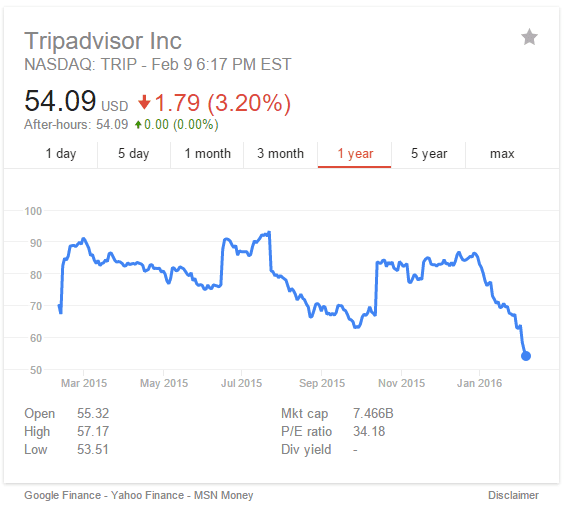
As volatility continues to affect U.S. markets, stocks swing on turbulent oil prices, concern over global growth hit banks, and tech stocks continue to drop. According to the New York Times article Tech Stocks Have Fallen Faster and Further Than Broader Market, “The Standard & Poor’s 500-stock index is down 9.4 percent this year. The index’s technology components are down about 12 percent, and the closely watched so-called FANG stocks — Facebook, Amazon, Netflix and Google — are down even further, falling 17 percent on average this year after an 83 percent rise in 2015.”

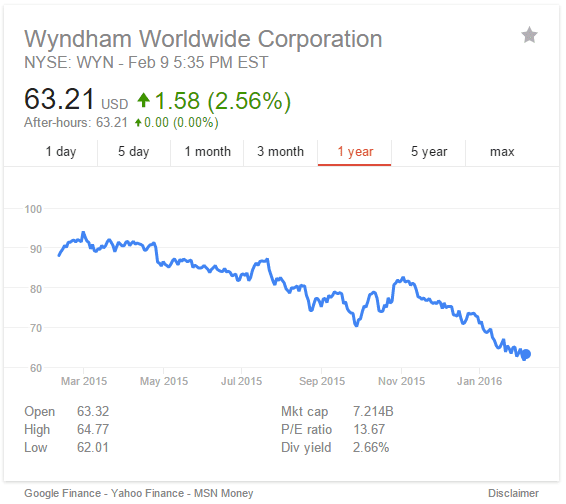
We decided to look at publicly traded companies in the vacation rental industry, which include Expedia (NASDAQ: EXPE), TripAdvisor (NASDAQ: Trip), Priceline (NASDAQ: PCLN), and Wyndham Worldwide (NYSE: WYN), to see a snapshot of how these stocks have performed over the trailing twelve months (TTM).


Expedia TTM Vacation Rental Stocks February 2016TripAdvisor TTM Vacation Rental Stocks Feb 2016

Priceline TTM Vacation Rental Stocks Feb 2016Wyndham TTM Vacation Rental Stocks Feb 2016


Vacation Rental Stocks Research Feb 2016


By Amy Hinote

Takeaways from Wyndham: CEO Steve Holmes Discusses Q4 Earnings

0

Wyndham Worldwide held its Fourth Quarter Earnings Conference Call Tuesday evening, and CEO Steve Holmes discussed the vacation rental business, working with HomeAway and Airbnb, and their new cohesive brand Wyndham Destination Network.


Vacation Rentals Revenue

We learned from Holmes that Wyndham’s vacation rentals revenue for the quarter “was up 8% in constant currency and excluding the impact of acquisitions in the Canvas divestiture. That increase reflects an 8.1% increase in transaction volume and flat average net price per rental.”

Holmes added, “We expect vacation rental transactions to grow 5% to 7% and average net price per rental to decline 1% to 3% primarily reflecting foreign exchange.”

Holmes also said, “We are moving to a more expensive vision of the business which combine offerings from our vacation rental and timeshare exchange brands to enable our Wyndham Worldwide customer base to experience vacation of their dreams. With rising awareness of the sharing economy and increasing consumer demand for unique places to stay, we believe this new strategy will drive higher customer engagement and higher growth in years to come.”

“Our portfolio of managed vacation rental brands posted great results in 2015. While some of our largest European vacation rental competitors had declines in vacation volume in 2015, all our brands both in Europe and the U.S. posted transaction increases enabling us to achieve transaction growth on organic basis of 7%.”


Wyndham Destinations Network, fka Wyndham Exchange & Rentals

Holmes: “Now turning to Wyndham Destination Network. As discussed on last quarter’s call, we changed the name from Wyndham Exchange & Rentals to reflect our standing as the world’s largest provider of professionally-managed unique vacation accommodations. Anything from cottages to castles to timeshare resorts.

“We continue to see momentum in our rental brands which strengthen our core customer source markets, which are the U.K., Denmark, the Netherlands, Germany and the U.S. Despite new entrants into the rental market, we’ve seen little impact in the competitive landscape. With the strength of our brands and the depth and breadth of our offerings, we provide a great value proposition to both homeowners and travelers. These attributes enables us to be largely insulated from economic as well as geopolitical risks and produce reliable consistent results.”


Working with HomeAway, Booking.com and Airbnb

According to Holmes, “Last year we bolstered our strong proprietary distribution network through global partnerships with online portal such as HomeAway and Booking.com. We’ll continue to pursue the strategy in 2016. We have local presence and global average, which provides strong advantages compared with the full rent by owner option in the same channels. Providing the wide distribution for a property owners has been a primary strategy for the Wyndham Destination Network and it’s working. For example, ‘Know This All’, our Danish brand now sources renters from over 80 countries, that’s up from 50 countries just 18 months ago.”

When asked whether Wyndham would consider working with Airbnb, Holmes responded, “As I commented, we are using Booking.com and HomeAway for some of our distribution. And HomeAway has been in this market for quite some time. This is not — they are not a new entrant and Airbnb has been there for a while.”

Holmes continued, “Airbnb’s systems do not accommodate our rental model as well as some of the others do. So as of right now, we’ve run some test that require a lot of manual effort to try to use Airbnb as a distribution channel force, because that’s really what they are. But we have not been able to find an automated way to do it. So I think it’s unlikely that they will be a big distribution avenue for us, but HomeAway and Booking.com will continue to be.”

Using Storytelling as a Key To Reservations Sales Success for Vacation Rentals

0

By Doug Kennedy — As marketing professionals across all industries know, the concept of storytelling is an integral component for success in today’s environment. You can see this approach playing out across all mediums from print to web to radio and television. Car ads are no longer about the features and benefits of the car, but rather about all of the places that car can take you. Soda ads are not so much about the taste, but about how happy you will be by sharing it with friends and family, showing bottles labeled with real names or “dad” and “grad.”

Maybe the best example is the new Liberty Mutual Insurance advertising campaign where various spokespersons speak to you directly to tell a story about what happens when “you” have your first accident and the rates go up or when your current company says they will only replace ¾ of your car. Smart marketers know that storytelling is a great way to grab the attention of multi-tasking viewers, readers or listeners.

Similarly, vacation rental reservations sales agents should also incorporate storytelling into their toolbox of both written and verbal presentation techniques. As the reservations rate inquiry process has become increasingly automated, it is more important than ever to connect with the callers and email senders when there is an opportunity to do so.

Being in the telephone mystery shopping business, I often hear recordings of reservations agents speaking with our KTN callers. Too many agents sound as if they think of their job as being a “technical support” role of simply helping the caller find out what rentals are available.

Reservations for Vacation RentalsAs addressed in a previous article, it is important for agents to use a more conversational and less transactional sales approach.

These days many reservations inquiries are coming in via email. Likewise, more often than not, today’s agents simply respond by sending back a list of links to the properties that are available that fit the sender’s dates and specifications. If anything, the response includes a template of standard copy, such as:

“Thank you for your inquiry regarding (insert name of property and/or dates requested.) Below are links to the properties that are currently available. You can book these online or call us directly…”  

If your vacation rental sales team responds in the same way as everyone else does, they are ensured only of getting their “fair share” of the business in the market. As I often say in my workshops, “If you want to get the same results as everyone else gets, just do the same things everyone else does.” If your goal is to get more than your fair share of results, you have to find ways to stand out from the competition.

Providing a laundry list of what is available and sending the inquirer back online to continue their research will not help you increase conversions. Instead, make sure your agents are using an investigative sales process to engage the caller and “unmask” their story whether asking during phone conversations or when responding via email. Train them to ask the single most important question circa 2016: “As I’m checking availability, are there any questions I can answer for you such as about the location or amenities?”

Thereafter, make sure your agents respond to the caller’s questions and that they sell to any comments, remarks and “clues” to what they are looking for by using a storytelling approach to selling the overall vacation experience and to not just be a “unit renter.” Here are five training tips:

1. Engage callers (and senders) by beginning benefit statements with wording such as “Imagine sitting out on your balcony in the evenings and seeing…” Or “Imagine your family/participants enjoying…” thus grabbing their attention as you take them along for the ride.

2. Lead sentences with “you” as in “you will enjoy…” or “your family will experience…” instead of the normal tendency to lead with “we have” or “we offer” or worse yet – “it offers.”  (Vacation rental homes should never be referred to as “it.”)

3. Use these techniques to highlight the most relevant offerings. Of course it is easier to focus on relevant benefits if you have taken time to connect with the caller or email sender and to investigate and discover their needs and preferences.

4. Tell real-world stories about the past experiences of similar guests you have hosted such as “This is one of our most popular homes/locations for families like yours because…” Or “Our romance couples always comment about the (privacy, view, etc…)

5. Paraphrase and restate in writing what you have discovered about their needs to lead into the stories of personalized benefits. “Since you had mentioned… your (family or party) will find this convenient because…


Doug KennedyDoug Kennedy is President of the Kennedy Training Network, Inc. a leading provider of customized training programs and telephone mystery shopping services for the lodging and hospitality industry. Doug continues to be a fixture on the industry’s conference circuit for hotel companies, brands and associations, as he been for over two decades. Since 1996, Doug’s monthly hotel industry training articles have been published worldwide, making him one of the most widely read hotel industry training writers. Visit KTN at www.kennedytrainingnetwork.com or email him directly. doug@kennedytrainingnetwork.com


Maidbot: Housekeeping robot does floors and makes beds. Available Jan 2017

2

A small company in Ithaca, led by a 19-year-old entrepreneur, has a robot they say can clean floors and will make beds. The robot is still in prototype stage, but the team behind Maidbot is hoping to bring the “Rosie” from The Jetsons-type machine onto the market within the next year.

Maidbot CEO Micah Green’s mother works in the hospitality industry, and he decided to follow suit and attend the Cornell School of Hotel Administration. A short stint in the field as a room attendant while taking a hotel operations class showed Green first-hand what the work was like. The apprentice paid close attention to each task, and he couldn’t help but notice the constant repetition.

“Vacuuming, reaching out and wiping mirrors or picking up a big king-sized mattress to stuff sheets under it…” says Green.
 

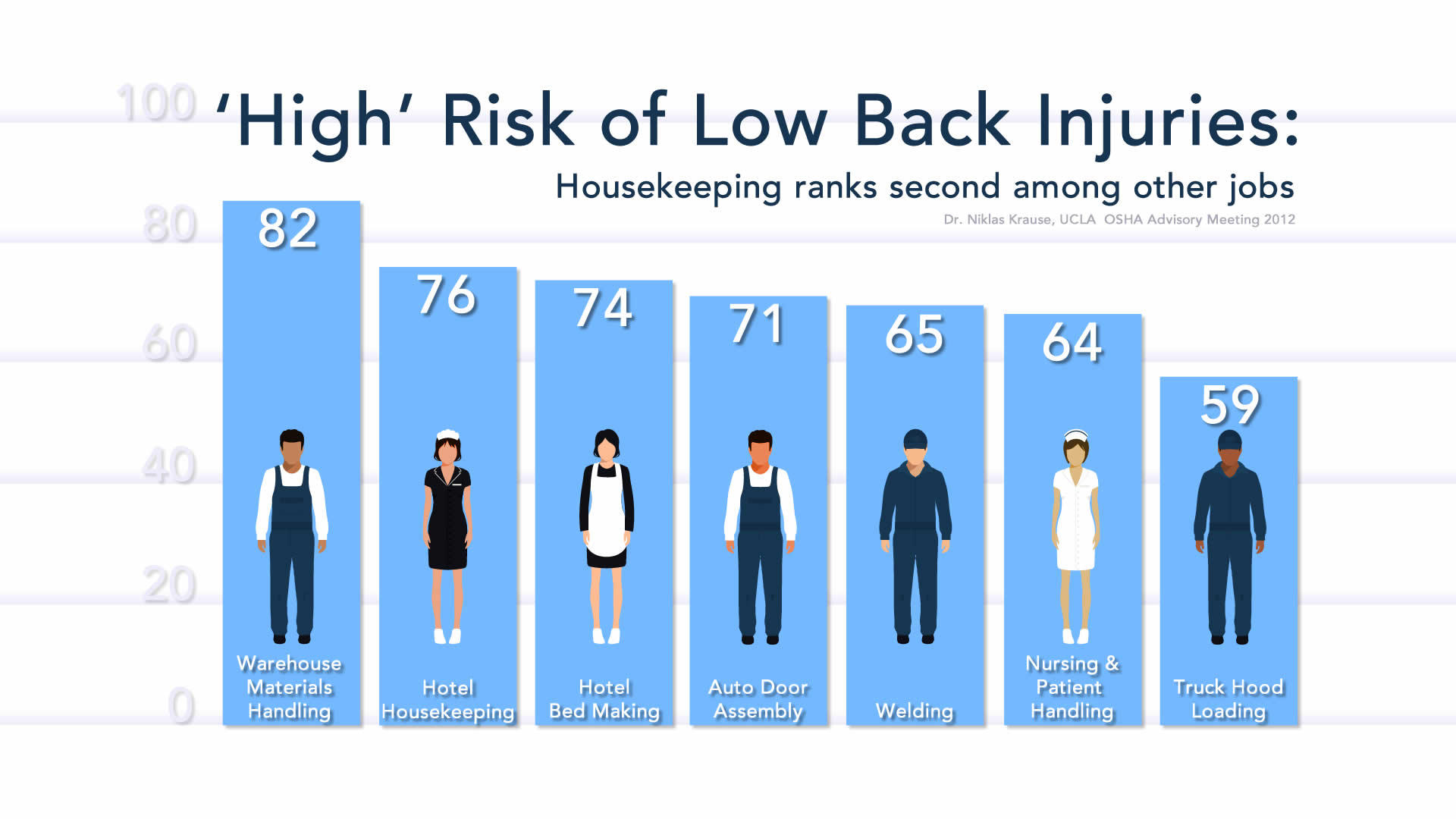
Maids and housekeepers have one of the highest injury rates in the hotel industry and in the entire private sector, according to a 2012 report by UCLA. Green immediately thought the workers could use some relief.

“Robotics in general focuses on dull, dirty or dangerous tasks. Housekeeping encompasses all of those,” says Green.

Over the last 10 months, Green and his team of seven have mapped out an extensive plan for the look, feel and launch of Maidbot. He says the first edition of the machine will focus on cleaning hotel floors, from the bedrooms to ballrooms and meeting spaces. Green chose not to disclose how much money has been put into the invention so far. He was, however, happy to finally have a prototype to show off.

“We have a [rotor that propels things] and an actual intake that we designed and created. And then we have the base plate that will have all of the wheels together. We have these really cool Omni wheels, so they’re multi-directional,” says Green.

 CREDIT UCLA

Injuries and Illnesses Underreported

Housekeepers are exposed to known risk factors for musculoskeletal pain and injury, such as awkward postures, forceful movements, heavy pushing and pulling, heavy lifting, and frequent bending. Coming in at around 40 per cent, back injuries are the most commonly reported, followed by pains in the hand and wrist, and shoulder.

“As many as 69 per cent of injuries and illnesses are not reported. Ergonomic injuries are more subject to underreporting because they’re not as obvious,” says Grant Esler, a lecturer of occupational safety and health at Rochester Institute of Technology.

But musculoskeletal injuries are difficult to identify as work related, since they can happen while doing everyday tasks at home.

“Workers are reluctant to apply for workers comp. The musculoskeletal disorder column has been taken off the OSHA log, so it’s not called out specifically any longer like it was for a few years,” adds Esler.


Forward Thinking

Aside from injury prevention, the Maidbot team believes the hospitality industry is long overdue for some internal adjustments.

“It’s been the same for over 100 years. The biggest innovation in housekeeping has been an electric vacuum which came out in 1905,” says Green.

The team is working towards a version of the product that they can begin to test, which is expected to be ready by late spring 2016, and then begin a pilot program with hotels. Maidbot plans to send its machine to different hotel chains and ask for feedback. The housekeeping robot is anticipated to hit store shelves in January 2017.

“We’re not just trying to sell robots; we’re trying to sell time. If you just imagine the time that we could save by creating a product that does it for you, completely autonomously, to me that’s amazing,” says Green.

CREDIT SASHA-ANN SIMONS/WXXI NEWS

RedAwning launches VR rez platform for travel agents

0

RedAwning.com announced that it has introduced a new reservations platform for travel agents and tour operators to book vacation rentals. TravelProRentals.com by RedAwning is a onestop reservation portal for travel professionals to browse, search, and view vacation homes, condos and apartments around the world; get realtime quotes and availability; and to book instantly for their clients by credit card. Agents can store credit cards securely, track bookings and payments in one place, and choose to earn net or commissionable rates for bookings.

In addition, the new portal provides features for personalized, white-labeled client service. Agents will be able to market selected homes professionally to their clients by creating agency-branded emails, printouts and brochures, and they will be able to save, store and keep properties with notes in client-specific or property folders for efficient service and proactive business development.

The travel industry has seen a surge in the popularity of vacation rentals as an accommodation choice in recent years and it is now estimated to be at least an $85 billion dollar industry worldwide. But the lack of a B2B ecosystem for vacation rentals has limited vacation rental bookings to a fraction of their potential.

TravelProRentals.com by RedAwning seeks to become the leading B2B supplier of vacation rental inventory to travel professionals worldwide says RedAwning Chief Business Development Officer and TravelProRentals.com cofounder, Rick Haggart. “Tour Operators and Travel Agencies have generated billions in hotel bookings due to a mature B2B ecosystem of hotel suppliers and platforms, and now TravelProRentals.com enables travel professionals to market and book vacation rentals in a way that supports their existing business models and booking processes.”

RedAwning CEO Tim Choate agrees. “TravelProRentals.com by RedAwning empowers travel agents to be more nimble and professional than ever before in this booming sector. By giving agents instant access to a huge inventory of vacation rentals they can trust, we enable them to take advantage of the vacation rental trend and substantially grow their businesses.”

The original TravelProRentals.com was acquired by RedAwning along with PerfectPlaces.com in April 2015. Initially serving a s a custom B2B product for tour operators working on net rates, it has since been adapted to include commissionable bookings for travel agents, and it now hosts all RedAwning.com inventory on the platform.

TravelProRentals.com by RedAwning will give agents and tour operators the ability to book vacation homes instantly with a credit card, with standardized terms and cancellation policies. In addition, there are no security deposits, a $3000 damage waiver is included, and businesses and end-user customers alike can receive 24×7 customer support by email, chat or
phone.

“The new reservation platform is going to be a welcome tool for the leisure travel market and a great source of extra income for the travel agent industry,” says New York travel agent Frank Borrelli CTC, past chair of the Travel and Tourism program at John Fisher College in Rochester, New York. Borelli has been in the travel business for over forty years and is already an active
user of TravelProRentals by RedAwning which he calls “excellent” and “a snap to use.” “It’s also good to know that you have 24×7 support if needed.”

TravelProRentals.com by RedAwning is free to use, but requires registration and is only available to approved travel professionals. It can be accessed at TravelProRentals.com. Travel professionals can choose net rates or earn a 10% commission from the rental fee, payable by RedAwning after each guest’s stay.

Fetch My Guest helps rental managers automate their marketing

0

Fetch My Guest is a California startup with a marketing automation platform for vacation rental managers that’s on a software-as-a-service model.

By Sean O’Neill, Tnooz

If you run a vacation rental management company, and you want to reduce your dependence on lead-generation sources like Airbnb, Flipkey, and Homeaway, and you want to view all of your digital marketing efforts in one place, than the premise behind Fetch My Guest must seem appealing.

It’s created by people who have been in the vacation rental business and who have an eye toward analyzing lead-generation patterns, discovering more efficient marketing processes, and boosting repeat direct bookings.

It works in conjunction with a vacation rental manager’s property management system (PMS) or alongside one if the manager’s PMS isn’t compatible with it.


Tell us how you founded the company, why and what made you decide to jump in and create the business.

Fetch My Guest started as an internal business problem that needed be solved. Our vacation rental management company was too dependent on listing sites that were not working in our best interest.

We needed to find a way to lessen our dependence on these sites by communicating directly with guest through our brand and building stronger relationships.

Within a few months our business saw dramatic improvement in booking performance and office productivity. We decided to build a community around a service-oriented platform that rewards the efforts of professional host.


Size of the team, names of founders, management roles and key personnel?

Our team is comprised of respected industry contributors in hotel management, vacation rental management and technology. The team is lead by co founders, Vince Perez and Dede Harrington, with advisors from Yahoo! and the Blackstone Group.


Funding arrangements?

Fetch My Guest has raised an initial round of funding lead by a former Blackstone Group executive in the hospitality division.


Estimation of market size?

Fetch My Guest is targeting the professional market segment that represents 43% of the $100B vacation rental market spend. Professional market segment is defined as two or more properties.


Competition?

Direct competitors in the marketplace include Homeaway (Expedia), Flipkey (TripAdvisor), and Airbnb.


Revenue model and strategy for profitability?

Fetch My Guest current revenue model is a subscription model that gives access to the platform and branded meta site. As Fetch My Guest expands the business offerings we anticipate multiple revenue streams as we deliver on customer success.


What problem does the business solve?

The current listing site model is fundamentally broken. The incumbents continue to alienate the vacation rental professionals through aggressive attempts to monopolize their inventory. The end results are ever increased costs and loss of brand recognition.

Fetch My Guest Provides an “intelligent” integrated marketing platform that gives the professional manager complete control of the guest experience, resulting in more direct bookings — while dramatically reducing marketing costs.


How did the initial idea evolve and were there changes/any pivots along the way in the early stages?

The idea evolved organically. As we saw our performance improvements, we understood that we needed to make the platform easy to consume. The important decision we made early on was to partner with API-focused booking systems.


Why should people or companies use the business?

Fetch My Guest provides professional vacation rental hosts a platform to showcase their respective brands to vacation rental travelers resulting in stronger relationships and more direct bookings. Professional hosts have been looking for an alternative to the incumbents for years. Fetch My Guest is that alternative!


What is the strategy for raising awareness and the customer/user acquisition (apart from PR)?

Fetch My Guest promotes our clients destination through social media channels, unique content, local perspectives and stories on the professionals that will be servicing them during their stay.

We are also engaged with key industry thought leaders who are introducing our platform to their respective communities as viable alternative to the incumbents.


Where do you see the company in three years time and what specific challenges do you anticipate having to overcome?

We believe that 2016 is a pivotal year for our industry. In three years from now, Fetch My Guest will be the premier platform for the “service-oriented” professional. Some of the challenges we anticipate are traveler FUD from the incumbents, the continued push to commoditize, continued consolidation, and local regulatory issues.


What is wrong with the travel, tourism and hospitality industry that it requires a startup like yours to help it out?

In the case of vacation rentals, there was never an emphasis on lead performance as it relates to repeat bookings. Established professionals are now understanding the consequences of not being able to control the guest experience.

The results are too much inventory in the hands of the OTAs…and subsequently, higher marketing and operating costs. The hotels have a marketing infrastructure in place….we are now providing that same infrastructure to the vacation rental professional.


What other technology company (in or outside of travel) would you consider yourselves most closely aligned to in terms of culture and style… and why?

37Signals. We appreciate the focus on simplicity and value presented by their products. They are very focused on the customer experience.


Which company would be the best fit to buy your startup?

Several companies would find interests in what Fetch provides. Ranging from large travel concerns (distributors, travel agencies, booking sys) to CRM focused companies looking to add a highly focused vertical to their model.


Describe your startup in three words?
Disruptive. Focused. Motivated.

Fetch My Guest has create a Vine to illustrate its pitch.


Tnooz view:

We’re not vacation rental managers who can take the product out for a test spin with real data, so it’s difficult for us to judge how well Fetch My Guest has executed on its vision.

But we wanted to highlight it as an example of a likely growing industry.

Just as a variety of companies have sprung up to help hotels try to manage their marketing spends, reduce a dependence on third-party booking and lead-generation sites, and increase the number of direct and repeat bookings, it seems likely that the vacation rental sector will also encourage the rise of companies like Fetch My Guest.

There’s a problem here waiting to be solved, and eager customers willing to pay for a quality solution that’s well priced. We’re eager to see if Fetch My Guest is the one that breaks through.

About the Writer :: Sean O’Neill

Sean O’Neill is Editor-in-Chief of Tnooz. Before joining Tnooz, Sean was the future of travel columnist at BBC Travel, senior editor of BudgetTravel.com, and an associate editor at Kiplinger’s. He now lives in New Jersey, after having worked in London for four years. He’s on Twitter and is excited for #Rio2016.

Working With Your CVB/DMO: A Partnership With Benefits

0

By Gary Ellis, Compass Media — The goal of a Destination Marketing Organization (DMO) or a Convention and Visitors Bureau (CVB) is to increase vacation and business visitors by promoting a town, city, region, or country. According to Destination Marking Association International (DMAI), DMOs are responsible for supporting the long-term development of communities through travel and tourism strategies. Even over the last 20 years, while helping many in the professional vacation rental industry with their marketing and promotional efforts, I’ve observed the benefits of partnering with local DMOs/CVBs. Following are some benefits that Vacation Rental Managers (VRMs) can derive from building relationships with DMOs.


5 ways to get the most benefit from your DMO/CVB


1. Expand ways for potential guests to find you.

DMOs work with local and national organizations to drive visitor awareness in what a specific area has to offer. Alastair Morrison explained, in his 2013 book, Marketing and Managing Tourism Destinations, “A DMO has many potential partners that it can call upon for collaboration and cooperation.” Often you can find complimentary or low fee services to list your accommodations in various online and print publications that reach a variety of audiences through DMOs. You can also meet and build relationships with fellow industry partners that can benefit from discounts or referrals between your vacation rentals and local attractions.


2. Make strategic decisions for your marketing and outreach plans.

Understanding the hopes, trends, and attitudes of visitors coming to your area can help you make decisions that drive your business. DMOs often provide statistical data on their websites which can be a valuable resource to VRMs including: destination growth indicators, visitor profiles, annual reports, economic updates, presentations, tourism summit results, lodging studies, and other research. Such data can help you focus and describe your offerings that would most likely appeal to visitors when developing marketing materials. For example, on the Gulf Shores and Orange Beach Tourism website you can find the “Summer 2014 Visitor Profile Report” which vacation rental professionals can use to learn the average household income of visitors, top origin states, percent of pet owners, average number of people in travel parties, and other useful visitor demographic information. Contact your local DMO to find out what is available in your area.


3. Stay informed of local economic development plans.

Take on a holistic view in what is occurring in your area and consider how this might change your business strategies. For example, are sports complexes in the plans for your local area, if so, how will this affect the demographics of your target audience? In a recent interview, Joanie Flynn, Vice President of Marketing for Gulf Shores & Orange Beach Tourism explained that the number one industry in the southern Alabama area is tourism, so those in the vacation rental industry can work together with their local DMO, chamber of commerce, and economic development agencies to ensure the local economy is healthy, expanding, and growing.


4. Dive into using social media.

To stay on top in the vacation rental business you must learn to transact digitally with your customers. Flynn revealed that over 60% of user traffic on the GulfShores.com website is currently from smart phones and mobile devices; therefore, her organization started a social media university to help educate industry partners in the area on best practices for using social media and responsive web design. “People can come and have a great experience with what we offer on our website, and as they click on our industry partners that same experience needs to carry over,” explained Flynn. The trend in the field is moving toward having a responsive website for cell phone users and effective social media campaigns. It is important to be up to speed with how technology is used by visitors and how audiences are changing. Such progressive initiatives offered by this CVB can benefit local rental companies by keeping them in the know on the positive impact social and digital media can have on their businesses.


5. Provide current information and get involved.

Be sure to talk with your local DMO to find out what they need from your company. “Consider what you offer to visitors to enrich their stay and get involved with meetings and events such as showcasing programs and educational opportunities outside of the main seasons,” said Flynn. Attend meetings and question DMO representatives to discover how your niche could be useful to visitors both on and off-season. I have personally observed the benefits that professionally managed vacation rental companies can offer DMOs such as timely responses in communications, increased security and safety, and fraud protection for visitors. As you connect with your local DMO/CVB, be sure to highlight such benefits and others your company offers to make your guests’ vacations more memorable.


Gone are the days of throwing ideas at the wall and hoping something sticks to bring in guests. Now, VRMs can make data driven decisions in marketing and guest service initiatives by using demographics, lifestyle factors, media habits, and visitor trends provided by DMOs. Times are changing in the vacation rental industry. To stay current, partner with your local DMO for insight into making your vacation rental business strong for the future.

Gary picCompass Media has been practicing leisure travel marketing for almost 30 years by helping clients tell their stories with innovative marketing and promotional materials including website design and development, search engine optimization, digital and print advertising, documentaries, and vacation guides.



By J. Gary Ellis, CEO of Compass Media, Inc.


VRM Intel Magazine Winter Issue Online Version

1

The new issue of VRM Intel is here! We’ve worked hard to provide vacation rental professionals like you with the news, information, education and analysis to help grow your business — and we want your feedback. Take a look at the issue below and let us know what you think.

Thank you for reading,
Amy Hinote, Editor-in-Chief

FVRMA Members: Free Subscription to VRM Intel Magazine

0

Florida Vacation Rental Managers AssociationAttn FVRMA Members:

A a FVRMA member, we want to give you first access to the Winter issue of VRM Intel Magazine and – if you haven’t already – invite you to subscribe to receive future issues mailed directly to you. And it is free! Our goal is to provide vacation rental professionals like you with the news, information, education and analysis to help grow your business. Also, we want your feedback. Take a look at the issue below, and let us know what you think.

[vfb id=1]

Vortex acquires Vacation House Destinations

0

Vacation House Destinations, which provides hand-picked vacation rental homes to guests around the Northwest United States, has been acquired by the Vortex Organization to add more homes for its members.

The company’s unique Club membership system requires property owner members to maintain homes to high standards and pass in-person inspections by VHD leaders. Guest Members join in order to access such homes and treat the homes as if they owned them.

The business was started in 2004 by Tony Bacso, who will remain an advisor to the company during transition.

“Running VHD has been a wonderful journey with benefits and owners alike because they get to know and trust one another. Joining it to Vortex will provide more properties and services for our members.” said Bacso.

Unlike Global so-called Luxury Destinations Clubs which feature very expensive homes in exotic locations, Vacation House Destinations primarily features homes in the regional areas of Washington, Oregon, Idaho and British Columbia.

Bacso added, “Our guest members begin to feel as if each home in the club is their own and want to be able to easily drive to their ‘houses’ which is why we prefer operating in the Northwest.”

“Our organization is the only one in this area that specializes in handling properties in many markets where we already have onsite personnel to provide personal service to Owner Member properties,” noted Penny Taylor of Vortex.

“Plus Vortex sales office is open longer hours for our members, and provide 24/7 phone, email and onsite services, which our members will .” notes Bacso.

The club will add properties from those operated by Vortex Property Managers as well as new homes that meet club standards. Interested homeowners should email Owners@VacationHouseDestinations.com.

Guests are invited to join the club for access to a wide ranging list of properties, for early booking opportunities and best rates.

– – – – – – – – – – – – – – – – – – – – –

Vacation House Destinations is a club offering vacation rental homes hand-picked by club leaders. Members chose homes of their liking and book stays through the club. Visit VacationHouseDestinations.com to join. Email Info@VacationHouseDestinations.com. Phone 425-440-0229.

The Vortex Organization provides back-office reservations, advertising, marketing and accounting services for properties all around the Pacific Northwest. See VortexManagers.com or contact Info@VortexManagers.com, phone 866-925-5188

Contact:

Josh Dettwiller
Vortex Managers
PO Box 22987
Seattle WA 98122 USA
Phone : 866-925-5188 Fax : 888-628-0-839

Info@VacationHouseDestinations.com
VacationHouseDestinations.com

Get the New VRM Intel Magazine

5

Sign up to get the new VRM Intel Magazine! With articles on Distribution, Marketing, Customer Service, Reservations, Regulations, Housekeeping, HR, Business Management and Industry Trends, our goal is to provide vacation rental professionals with timely and relevant news and information to grow their business.

VRM Intel Issue 2 CoverThe magazine is free for U.S. subscribers, and the digital version will be sent to those outside of the U.S. Just fill out the form below to get your free subscription to this quarterly publication.

We want your feedback, so email your thoughts and suggestions to amy.hinote@vrmintel.com.

The Winter issue feature articles are:

  • A Deeper Look into Expedia’s Purchase of HomeAway
  • Vacation Rental Managers Win with Traveler Fees
  • Learning from the rocky relationship between Hotels and OTAs
  • Building a National Brand in Vacation Rentals
  • Vacation Rental CRM 101
  • Evaluating your property management software

Plus the following articles:

  • Brand Marketing
  • Bring in the New Year with Great Hires
  • Building a National Brand for Vacation Rentals
  • Building a New Company in the Vacation Rental Market
  • Converting Web Traffic Into Results For Your Property Management Company
  • How to Attract Families with Small Children
  • Imagine This… Storytelling is Key to Reservation Sales Success
  • Latest Innovations in HomeAway’s Software Support
  • Microbes: Unseen Dangers in Vacation Rental Housekeeping
  • NAVIS Releases 2016 Vacation Rental Trends
  • New Developments in Housekeeping Technology for Vacation Rental Professionals
  • Online Marketing Components You Should Re-evaluate Each Year
  • Policymakers Urged Not to “Commercialize” Short-term Rentals
  • RealTimeRental’s Tenant Portal Offers CRM Functionality, Integrated Trust Accounting, and Increased Distribution
  • Technology: Reshaping Vacation Rentals
  • The 7 Deadly Sins of Distribution for Vacation Rental Managers and How to Avoid Them
  • The Best Property Management System For Your Company: Do You Already Have It?
  • The Smart Home Tug-of-War Between the Property Manager and the Homeowner
  • Utilizing Search Engine Marketing for Homeowner Acquisition
  • Vacation Rental Management Company Acquisitions
  • VRM Calendar of Events


[vfb id=1]

Trip Insurance: To Offer or Not to Offer?

0
beach front vacation rental news

“Offering trip insurance protects your guests, safeguards your homeowners, and increases your bottom line.”

Vacation rental property managers who offer trip cancellation insurance to their guests understand its value in more ways than one. Most have become keenly aware that insurance sales can also be a meaningful source of income. Some companies offset operating expenses, pay employee bonuses, and fund other costs with income generated by the sale of trip insurance.

Everyone in the vacation rental industry takes revenue increases seriously. It pays to increase the percentage of reservations that include the purchase of trip insurance. Pay close attention to the often overlooked detail of selling insurance. If your business does not yet provide this significant product, consider adding it to your total package. Number one, it affords protection for your guests when cancellation cannot be avoided due to unforeseen events. In addition, it generates added income. We can all use some of that!

Consider the following scenarios: You have guests scheduled to stay in one of your properties; their reservation is paid in full. Two days before check-in, they call to cancel. A family member has been hospitalized, or there’s been a death. The bread-winner just lost his/her job. The children’s school year has been extended. Inclement weather caused a flight cancellation and your guests are unable to re-book at this late date. All are life events that vacation rental managers hear about on a regular basis. When events like these occur during a high-rental time of year, the manager may have no trouble re-booking the property. But consider the result when a last-minute cancellation comes at a slow-rental time. The chance of re-booking drastically decreases and the likelihood of your satisfying property owners, guests, and your own company goes downhill quickly. During peak season or off-season, you do not need this problem.

Trip cancellation insurance not only protects you and your valued guests, it safeguards your homeowners by providing further assurance their investment is secure. Those homeowners look to you to provide income and to keep their homes rented. When a last-minute cancellation occurs they still look to you to bring in the money. An added bonus: When a guest purchases trip insurance for a small percentage of the reservation fee, the insurance company works directly with the renter, further minimizing time you and your staff work to satisfy both guests and homeowners.

Insurance not only protects everyone’s monetary investments when a guest cannot avoid a last-minute cancellation, it becomes paramount when unforeseen events interrupt a long-awaited vacation after it is underway.

Your guests have checked in; everyone in the family is happy and enjoying a great week. Suddenly, Dad cuts his foot on a piece of glass while playing with the kids on the beach, or he twists his ankle showing off on the slopes after a fifteen-year hiatus from skiing. The family has health insurance through Dad’s employer, but it carries a $3000 deductible with a non-payment penalty of being dropped from the health plan network. Bad news for everyone!

Dad now has an injured foot and spends the rest of an expensive vacation day at the local emergency care center. Mom and the kids forfeit a perfect beach or snow day to stay with him. Both parents are worried about how they will pay the unexpected medical expenses. After all, they just spent their savings on this vacation.

In most cases, if the guests are covered by trip cancellation insurance, they are covered for this type of emergency. An added plus: Paperwork is handled by the insurance provider, not the property manager.

Trip insurance can also cover more serious medical conditions, as well as dangers associated with natural disasters like hurricanes and earthquakes. It can help in the case of delayed flights and lost or stolen items. It provides peace of mind for everyone involved. Vacation rental managers who explain the key benefits of coverage at the time a guest is considering a reservation can help turn a less-than-great situation into an acceptable one for all involved.

Today the vacation rental market is experiencing a boost in several ways. The interest level of travelers seeking vacation rentals is on the rise. There is unprecedented growth in the industry itself, and companies are committed to serving both the guest and the homeowner. It’s thrilling to watch this growth occur and to be a part of the excitement.

At the same time, success breeds imitation. More and more large companies want a piece of the pie. Many property managers are beginning to feel a strain on their profits. Since most managers keep only a small portion of the rental reservation amount, it becomes more important to look for additional ways to increase profit. Trip insurance can provide a welcome answer. It becomes part of the revenue your company keeps, revenue that is not shared with a distribution site, another property manager, or the homeowner.

As our industry becomes increasingly global and attracts more and more international guests, it is a fact that everyone in the industry has an opportunity to profit by providing vacation rental homes. In turn, U.S.-based companies that manage global inventory are seeing more and more U.S. citizens traveling abroad.

If travel insurance, along with close attention being paid to the value insurance brings your guests, is not already a vital part of your vacation rental business, then it should become an important element in your revenue growth plans for the future.

By Carie Leyden

Heart Versus Technology in the Vacation Rental Business

0

I’ve been thinking about this topic for a couple of weeks and wanted to share it with you. As a service provider in the Vacation Rental Management industry, I have the opportunity to have lots of conversations with employees and owners of vacation rental management companies and other providers in the industry.

One thing that always strikes me about this industry is how friendly (well for the most part) everyone is. This isn’t surprising given how most vacation rental businesses are started. Someone lives or visits a beautiful vacation location. They decide that they want to buy a second home or they meet a friend that has a second home and suddenly find themselves doing property management and taking reservations. The next thing they know, they are employing 20 people annually and opening a laundry division, or they are passing the baton to their children to run the business or even their grandchildren.

For these folks, and there are so many of you out there, HEART is the center of your business. It is how you understand the difference between providing more than just a home. You are motivated every day to help people come and enjoy the beautiful place where you live and work with hospitality. This is so different from so many other industries. When you do your job well, you are offering one of the most important things that people have – their memories. The time that is shared with friends and family cannot be replaced.

That’s why I find it so interesting that so many service providers in this industry don’t understand this perspective. Of course they see the potential money to be made in the industry and they run to throw up a shop in a tech hot spot, like Austin. They bring in a few software familiar folks who have been around in Silicon Valley (see a hilarious description of this type in the article “7 Signs Your CEO Needs to Grow Up” from entrepreneur.com from someone who has worked in the valley before). Next, they start to taut the latest and greatest product. They may end up delivering a product or they may just keep delivering the promise of the product. Either way, this isn’t the worst of this scenario.

What really ends up missing here is the lack of understanding about the HEART of the vacation rental industry. They don’t delve down into the very real needs of what you have to deal with day in and day out. For example, I recently hosted a breakfast meeting for folks to understand how to get to Airbnb through one of our partners My Booking Pal. A very nice representative from AirBnB delivered an engaging presentation about AirBnB, their intention for how they will work with professional property managers, and the benefits of doing so. The only problem is that the way they structure their payments put them in direct conflict with the real estate law of North Carolina. As one attendee pointed out, “this all sounds great until you are headed for jail because of trust fraud.”

To AirBnB’s credit, they understand that they are going to have a learning curve about the vacation rental industry and have devoted a team to figuring out these issues. As our representative put it, “we’ve handled governmental regulations around the world, we have the resources to take care of these issues.” Fair enough. Also, in the case of AirBnB, the principals of what the company was founded upon – local hospitality – does more frequently align with those of the vacation rental management companies.

My point here is to be wary of “bleeding edge” solutions and to some extent industry providers who haven’t been in the industry for some reasonable period of time. Because you are a unique tribe, you deserve the in-depth understanding of the heart in this industry. I am not suggesting that innovation shouldn’t be a top priority, just that there is great value in finding good relationships and partnerships with the vendors that should be helping you.

Claiborne Yarbrough
Director of Customer Engagement
Barefoot Technologies
claiborne@barefoot.com
Claiborne has been in the software industry for over 25 years primarily focused on marketing. Her favorite thing about the vacation rental industry is getting to make so many friends.

Vacation Rental Road Trip: 12 Months: 12 Fabulous Homes-Away-from-Home

0
DCIM105GOPRO

Halloween 2014, an early Chicago snow left powdery flakes on my Hyundai as I packed to leave on a year-long Vacation Rental Road Trip. Career goals in flux and a bucket list of places to see, I set out to explore vacation rentals around the country and to learn as much as possible about our fast-growing industry. Harboring an admitted aversion to crowds and conscious of budget constraints, I hopped off-seasons and was able to visit twelve great locations during the year. From one destination to the next, I encountered a level of professionalism I did not expect. A few of the many discoveries: superior housekeeping, keyless entry, and 24/7 customer service. What was the most important payoff of the entire road trip? A network of amazing, lifelong friends I cannot wait to see again.

1

712 W Johanna St Unit A-print-004-4-Exterior Front 073-4200x2803-300dpi 712 W Johanna St Unit A-print-011-11-Family 134-4200x2802-300dpi

Austin, Texas

Austin, chock-full of top-notch music and culinary creativity, is a vibrant, eclectic mecca for free spirits. While I didn’t think of it as a traditional vacation rental destination, Austin-based TurnKey Vacation Rentals has found a highly lucrative, short-term rental business there. My Austin home was a clean, cozy cottage off South 1st in what I later learned was the highly esteemed “78704 district.” From there I could easily access the downtown area, South 1st, Lamar and South Congress. From 6th Street’s hipster-meets-Bourbon-Street flair to amazing restaurants, live music, and funky shops in the SoCo area…from bats under the Congress Avenue Bridge to the food trucks’ gastronomic artistry, Austin is never boring. And staying in a vacation rental makes it all the easier. If you don’t have a car or don’t want to risk driving, both Uber and Lyft are inexpensive and fast in Austin, and there is never a lack of things to do. Hands-down, Austin has the friendliest population I’ve found. The most difficult thing to work into your Austin plans – time to sleep!

2

_DSC1334 shutterstock_246493693

Bethany Beach, Delaware

Located just a few miles north of Ocean City, Maryland, Bethany Beach provides a safe, traditional, family-friendly, beach destination within a four-hour drive of some of the largest cities in the country. I stayed across the street from the beach at Sea Pines Village, in a townhouse managed by Sandcastle Realty. The centrally located destination made it a snap to explore areas near Bethany Beach, Ocean City to the south and Lewes, Delaware to the north – then drive home to enjoy the pool, patio, grilling area, and super-clean accommodations. The rental was a short walk from the Bethany Beach boardwalk and only a block away from Mickey’s Family Crab House where I can vouch for the crab dip, crab cakes, steamed crabs and snow crab. When in Rome…

3

DCIM100MEDIAvrm_intel

Deep Creek, Maryland

Was I the only one who didn’t know how amazingly beautiful Deep Creek is? I stayed in a very private townhouse aptly named Amazing Views, managed by Taylor-Made Deep Creek Vacations. My intent was to accomplish much work in the serene environment. But the falling November temperatures added to the temptation of a private hot tub overlooking the lake, plus two fireplace levels forced work to take a back seat to relaxation. Taylor-Made owners Joe and Jodi Refosco were wonderful hosts and made time to show me the area, talk over drinks/dinners about the way they built their business, and what the area means to them. I followed their recommendation to hike Swallow Falls. It was, without a doubt, one of the highlights of my trip to the Deep Creek area. If my schedule hadn’t forced me to move on, I might still be in Deep Creek today!

4

20150530_170710 Country Star Fayetterville, TX

Fayetteville, Texas

Fayetteville was an unplanned offshoot of my trip to Austin and turned out to be one of the most special getaways of the entire journey. Located in central Texas between Austin and Houston, Fayetteville was settled in 1844 and is known for the biannual antique shows held in nearby Round Top. Visiting Fayetteville is a trip back in time. It’s a unique Texas town complete with an ice cream parlor, a diner, a corner market, a tavern, and a courthouse centered on the town square. I stayed in a private home owned by Sand ‘N Sea’s Claire Reiswerg and managed by Country Butler. The historic farmhouse was charming! A few of the perks: original hardwood floors, high ceilings, and deep, inviting porches. For a girl raised in a small town in Mississippi, Fayetteville was a great place to rediscover the charm of roots. When the road trip began I had not considered including a small town snapshot of Americana, but I am so glad I did. 

5

Gulf Shores, AL - Collonades Gulf Shores Colonnades

Gulf Shores, Alabama

Gulf Shores, with its 32 miles of breathtaking beaches, is home base for me. It’s where I got my start in the vacation rental industry and most of my family lives nearby. Spending the holidays at a condo at The Colonnades Condominiums, managed by Meyer Vacation Rentals, was truly going home. The Colonnades is located right on the Gulf of Mexico at the east end of Gulf Shores. It is surrounded by two miles of uninhabited, sugar white beaches – total relaxation to savor and enjoy! Ground-floor facilities include in- and outdoor pools, solarium, gym, private theater, library, grilling area, and plenty of private beachfront. Another plus: The Colonnades is within walking distance of several good restaurants. While there in December, I was treated to a meteor shower. I grabbed a bottle of wine, a quilt, and headed to the beach where I sat undisturbed for hours, entertained by a natural fireworks show. The sky was alive with shooting stars and their reflection in the gulf waters sparkled like diamonds. Sweet Home Alabama! 

6

20150827_113402

OLYMPUS DIGITAL CAMERA

Harbor Springs, Michigan

If you’re in the market for a waterfront escape from the summer’s heat, North Michigan is the ideal. I invited a couple of Chicago friends to join me on the trip to Harbor Springs for some peaceful R&R on Lake Michigan. Our cooler stocked with meats and veggies for grilling and wine for drinking, we headed for the lake. Our destination: Eagle View, a large, 3-bedroom, private, lakefront home rental, managed by Holiday Vacation Rentals. Located along the road known as the “Tunnel of Trees,” the house was well equipped, quiet, and serene. Holiday Vacation Rentals owner Alan Hammond and his wife Kathie went to dinner with us at Legs Inn, a Polish restaurant a couple of miles further down the Tunnel of Trees. There I heard the personal story of their experiences in the vacation rental business. We also had a lively discussion regarding the next direction the industry is taking. During the next few days we explored nearby Harbor Springs, relaxed on the shores of Lake Michigan, grilled our meals under the stars, and read by the fire. My hope is to one day add an annual vacation in North Michigan to my August calendar!

7

20150213_170157 20150216_173625

Nenagh, Co. Tipperary, Ireland

As a presenter at the VRMA 2015 European Seminar in Dublin, I had the grand experience of staying in several Irish vacation rentals. The first was Ashley Park House in County Tipperary, just a wee bit north of Ardcroney. I discovered Ashley Park through hiddenireland.com and treasure making the acquaintance of 93-year old owner, Sean Mounsey, during my stay. A narrow lane winds from the gatekeeper’s cottage, beneath an archway of trees. Suddenly, the limbs part and an enchanting country home emerges, complete with white-washed stone walls, mullioned bay windows, a green tile roof, two sections of which are turrets, and verandahs reminiscent of Savannah’s. In addition to sightseeing green Irish hillsides, thatched-roof villages, castles and abbeys, hill-loads of sheep, and sampling crisp fish ‘n chips in a variety of pubs, daily activities also included morning walks on the 90 acre estate, afternoons spent rowing peaceful Lough Orna, and tea in the parlor by a welcome fire. Evenings brought luscious meals, a local play, wine, and international conversation around the fireplace. My ancestors were from Ireland – is that why I feel so at home there?

8

20150219_111311 20150219_114512

Dromoland Castle, Newmarket-on-Fergus, Co. Clare, Ireland

One of the most famous baronial castles in Ireland, Dromoland doesn’t actually fall into the category of a vacation rental, but my experience there was just too good to leave out. Arriving at the castle, I felt like a 21st century Cinderella. Ancient blue limestone with chiseled workmanship, heavy wooden doors, ornamental grounds, gardens and woods extending over 1500 acres of land, and panoramic views of two rivers – the Shannon and the Fergus, are just a few of the delights. A castle stay is not cheap by any means, but there are off season deals to be found on the website. My room was huge with a 15’ ceiling and crystal chandelier, a lovely sitting area with fireplace, and a huge bay window overlooking the castle entrance. The dressing room/bath was spacious; marble and decorative tile appointments functioned as well as they looked. All drapes and furnishings in the castle were upholstered in designer fabrics. Morning coffee in the gallery, afternoon tea in the drawing room, wine and hors d’oeuvres in a cozy, fire lit pub, and five-course meals in the dining room. Even in February the grounds were immaculate. I enjoyed a horse-drawn buggy ride, strolls by the lake and in the ancient walled gardens, and watched as the crows made their daily sunset flight, returning to the rookery beside the lake. What was the toughest aspect of staying at Dromoland Castle? Stepping back into reality when I had to leave. 

9

FullSizeRender (1)

DCIM105GOPRO

North Myrtle Beach, South Carolina

Following the VRHP National Conference in Charleston, I drove to North Myrtle Beach and stayed at Ocean Bay Club, managed by Elliott Vacation Rentals. The beachfront condo had all the bells and whistles: indoor and outdoor pools, fitness room, grilling area, private balcony, jetted tub, and walking proximity to the downtown area. From sunrises over the Atlantic (worthy of a top-notch artist) to high-energy shag competitions downtown, North Myrtle Beach proved to be a great beach getaway from morning till night. Owner Rick Elliott and GM Brandon Cox met us for a fabulous dinner at Joe’s Bar and Grill where we talked about Rick’s father, Senator Dick Elliott, who started the company and marveled at the way Elliott Vacation Rentals has grown to become one of the top ten largest vacation rental management companies in the USA. This was another place I could have stayed longer.

10

20150110_114547 20150127_154217

Orange Beach, Alabama

By January, I was ready for an off-season blend of wide-open Gulf front beaches and proximity to restaurants and nightlife. I found both at Regency Isle Condominiums, managed by Meyer Vacation Rentals. The large, 3-bedroom condo boasted a fabulous Gulf front and a corner balcony with amazing sunset views. The sugar sand beaches in Orange Beach are expansive and Regency Isle is located next to a state park with a mile of unspoiled coastline to the west. I stayed for a month and enjoyed every moment. Meyer offers renter-pleasing, weekly housekeeping services in which they clean, change sheets, and replace towels. Hotel services with all the perks of a vacation rental. It didn’t hurt at all that the condo was within a quick walk of the legendary Flora-Bama Lounge!

11

San Destin, FL Bahia Penthouse Sandestin

Sandestin, Florida

The Sandestin trip was all work…well, mostly work. Several colleagues and I had planned a meeting in the Destin area. We opted to rent a 4-bedroom, penthouse condo at Sandestin’s Baytowne Wharf. The condo, located in the Bahia building, proved to be pure luxury with rooftop balconies, resort amenities, plus all the activities and fun Baytowne has to offer. Downtown Baytowne is an enticing combo of upscale shops and restaurants, including the Marlin Grill, the Funky Blues Shack, Hammerhead’s, Lumpy’s Wine Bar, Poppy’s Seafood Factory, and the Village Door Smokehouse. The huge dining table in our penthouse easily transformed into a boardroom table for our meetings and the balconies offered great areas for entertaining after hours.

12

Amy and Rachel Winter Park- small Amenity Zephyr Riverside Front Elevation

Winter Park, Colorado

March in Winter Park is pure magic. I stayed at the Zephyr Mountain Lodge condos in Winter Park Resort, managed by Winter Park Lodging Company. Zephyr offers easy access to one of Colorado’s most popular ski destinations. Being a less than Olympic skier myself, I looked for a way to enjoy the area without breaking a leg. Snowmobiling fit the bill! At Winter Park’s Grand Adventures I was able to ride the Continental Divide on Colorado snowmobiling trails that top out at nearly 12,000 feet. Panoramic views of the entire Winter Park ski area and Fraser Valley were spectacular. I loved it so much I made the trip three times and can’t wait to go back on a future vacation. Winter Park Lodging Company has the friendliest, most cohesive team I encountered in my travels. They all genuinely care about each other and their guests, and it shows in everything they do. From special flower arrangements to team get-togethers, WPLCO operates in a team environment and ensure their owners and guests are part of that team.

Coaching Staff: A Lesson from Vince Lombardi

0

One of the greatest NFL football coaches is Vince Lombardi. At the beginning of each season he would take grown men, some of whom had played football for decades, and hold up a football and say “Gentlemen, this is a football.” He would then explain the basics of the game. After a while they would move to the football field and the explanation of how the game is played and the objective of the game would be explained.*

As leaders and managers we need to do the same thing with returning seasonal staff and fulltime year round staff. We need to cover the basics of what we do and why we do them.

Here are a few housekeeping basics to cover:

Housekeeping Kit: Discuss how and why each chemical or tool is to be used. Take the time to do demonstrations of proper ways and improper ways, so they can see how it is to be used. The basic housekeeping kit should have:

  • rags (microfiber are the best ones to use)
  • bathroom disinfectant cleaner
  • all purpose disinfectant cleaner
  • a room deodorizer
  • a mild wood floor cleaner
  • razor bladders for smooth top cook stoves
  • oven cleaner
  • pumice stone
  • magic eraser
  • gloves
  • trash bags
  • doodle bug
  • a large lint roller

Inspection Kit: Talk about the necessity of the inspection kit and how it can help them be effective at doing their inspections. What is inside the kit is going to vary on what guest amenities are provided and what expectations you have for your inspectors? Some of what should be included would be:

  • toilet paper
  • paper towels
  • guest amenities (if provided)
  • batteries
  • multi tool
  • laundry soap
  • dishwasher soap
  • any guest specific items that your company provides

Specialty Cleaning Products: I call them specialty cleaning products because only certain people have access to them and are trained to use them. There are two types of products I would like to highlight today:

  • an enzyme product that eats proteins, such as urine, blood, vomit, and beer just to name a few
  • a product to address mold and mildew that includes Australian Tea Tree Oil

Piece Rate: All housekeepers should be paid piece rate. This motivates the housekeeper to clean with speed and quality.

Inspections: Every arrival must be inspected for housekeeping quality and guest readiness. This inspection allows the inspector to make sure all is in order in the home. Some items include:

  • pillows are staged right
  • blinds are set appropriately
  • thermostats are double checked and temperature is set correctly for the time of year
  • doors and windows locked
  • kitchen pots/pans, plates, cups, utensils, and all other items placed neatly in the cabinets
  • correct number of hangers in closets and placed in the correct location on rod
  • appropriate number of towels in each bathroom

Standard Property Appearance (SPA): Every company should have a document that illustrates and explains how the property is to be left when the housekeeper and inspector have completed their work. This document is not easy to create. It takes a lot of thought and work, with many people and departments collaborating for the final product. Once complete, everyone knows how the property is to look when the housekeeping staff have completed their work. Follow the wall – this procedure is a foundational housekeeping principle and every housekeeper and inspector should use it every time they clean, inspect, or check a property.

Some of the items this document addresses are:

  • how the towels are hung and where
  • how many rolls of toilet paper are left and where
  • how many paper towels are left and where
  • how the blinds are set for an arrival or departure

One last item for you to consider, every housekeeper is a memory maker. Every time a housekeeper or inspector does work in a property they are a part of memories made in the property. We need to remind our staff of this.

If you have any questions you can visit www.VRHP.org or reach out to me for more information.

* Vince Lombardi, in Donald T. Phillips, Run to Win: Vince Lombardi on Coaching and Leadership (2001), 92.

By Durk Johnson

Third Party Distribution Channels: The Changing Landscape of Third Party Booking Channels

0

Love them or hate them, third party distribution channels have fundamentally changed the way consumers shop for vacation rentals and the way property managers find new guests. When HomeAway purchased VRBO.com in 2006, the idea of paying a third party to market homes to guests seemed like a feasible idea to boost shoulder season bookings and fill hard-to-sell inventory. But paying a third party channel for peak season bookings seemed…well…foolish.

But in 2006 listing a home on VRBO.com was cheap. At $299 per listing, it only took a handful of bookings to produce an acceptable return on investment, and VRBO.com had traffic from guests looking for a deal. As a result, HomeAway continued to sign up properties by the hundreds and then by the thousands, and when possible, HomeAway acquired other third party websites with thousands of properties. As Amazon and others have proven, consumers like to shop where there is the most selection, and with increased supply came more guests which further increased supply, and so on.

In 2007 another third party channel launched which initially focused solely on professionally managed vacation rentals with an added element of reviews. This distribution channel was called FlipKey, and it attracted investment from TripAdvisor in 2008 – in the same year that Brian Chesky and his roommate Joe Gebbia were selling “Obama O’s” and “Cap’n McCains” cereal to raise enough money to get their idea off the ground for a company called Airbnb.

Fast forward through a plethora of fundraising, acquisitions, successes, and failures including: Orbitz’s failed entry into vacation rentals via a partnership with Zonder, HomeAway’s transition into a publicly traded company, Expedia’s spin-off of TripAdvisor, the VRMA’s defunct Switch initiative, TripAdvisor’s purchase of FlipKey, Booking.com’s 2012 introduction of vacation rentals, Expedia’s 2013 slow-moving partnership with HomeAway, the launch of metasearch via Tripping.com, HomeAway’s partnership with Kayak, Airbnb’s steady and uninhibited ability to raise capital, and Expedia’s purchase of HomeAway. Now we find ourselves in present-day 2016 with third party channels that are almost essential in attracting new guests to vacation rental properties.


Listing Growth of Third Party Channels


While there are hundreds of third party channels for vacation rentals, the market is becoming slightly less fragmented with four major channels taking the lead: Airbnb, Booking.com, HomeAway, and TripAdvisor.

When TripAdvisor entered the vacation rental industry with FlipKey in 2008, FlipKey had 50,000 professionally managed listings. By 2011, they had opened up their model to owner managed homes and had grown to over 160,000 listings. This year the company began adding shared accommodations and increased inventory to a reported 720,000 listings by the middle of 2015.

HomeAway purchased VRBO.com in 2006 with 65,000 listings. In 2011, HomeAway took the company public and expanded to 641,000 listings by the end of the year. With a steady flow of market-leading acquisitions and growth in inventory, HomeAway reported 1,185,000 listings in the second quarter of 2015.

Founded in 2008, Airbnb fought their way into the short term rental market game. With small funds and big ideas, the founders joined Y Combinator’s winter incubator session in 2009 for three months of training. In 2010, they raised $7.2 million and in 2011, actor and partner at A-Grade Investments Ashton Kutcher announced a significant investment in Airbnb. in 2015, Airbnb reported 1.5 million listings, is the third most valuable venture capital-backed company in the world, and is currently valued at $25.5 billion.

Booking.com entered the vacation market in late 2012 and by the end of 2013 had accumulated over 100,000 listings. Their model requires “instantly bookable” vacation homes. In 2014, they launched Villas.com, which has grown to over 350,000 listings as of August 2015, proving to the industry that an online marketplace can build a large supply of verified, instantly bookable vacation rentals.


Pricing Models

A variety of pricing models exist among the four major vacation rental marketplaces. Airbnb charges a 3-5% transaction fee to owners/hosts/managers and a 6-12% fee to the traveler. Airbnb collects money from the guest upfront and released payment to the “host” 24 hours after check-in. Booking.com also operates solely on a performance-based pricing model with owner/manager fees of up to 15% of the transaction.

HomeAway and TripAdvisor offer both subscription and performance-based pricing to vacation rental managers, and as of August 2015, TripAdvisor also still offered a Pay-Per-Lead Model, a model HomeAway phased out earlier this year.


Trust


Growing Demand and trust in OTA innovation

“By offering side-by-side comparisons, access to the growing array of travel options and competitive prices, online travel companies have empowered travelers to search, compare, and book from the palm of their hand from anywhere in the world,” said Steve Shur, President of the Travel Technology Association. “It is clear the American public not only relies on the convenience of shopping across multiple travel brands in a single place, but they continue to trust online travel companies with their vacation and business travel itineraries.”

Third party channels have been able to gain trust in the vacation rental marketplace by focusing on and continuing to improve the following components: selection, reviews, professional site design, advanced search capabilities, high quality images, updated availability calendars, accurate property information, mapping, easy online booking, and instant confirmation of transactions.

Building a marketplace with these elements requires an increasing amount of time, money, and expertise. As a result, the industry is seeing a consolidation among the third party channels and an expanding barrier to entry for new players in maturing markets such as the U.S. and Europe. For the first time in ten years, in 2015 no disclosed seed funding was raised by a new U.S. third party channel. Furthermore, every U.S. channel that received funding in 2015 has been around since at least 2010. 
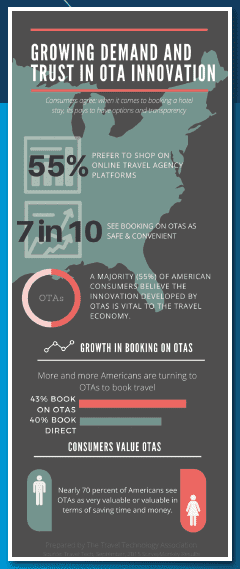

 

How much are property managers willing to spend on third party channels? 

As business models transition and these online marketplaces evolve, investors almost unanimously believe vacation rental owners and managers are willing to spend 10-15% to secure a booking. As a result, the industry can expect to see distribution costs creep upward over the next few years.

Today’s property managers are faced with the decision to: 1) absorb the third party fees, 2) pass the fees on to the owner, or 3) pass the fees on to the guests by raising prices on channels.Infographic: How much are property managers willing to spend on third party channels?

However, the third option of passing the costs of distribution on to the guests may not be sustainable. With the introduction of metasearch, the industry is likely to see rate parity become more encouraged and enforceable by the channels in the future. At least one channel (Booking.com) has already included rate parity requirements in their user agreements.

To determine how much to spend on third party channels, vacation rental managers should calculate their cost of acquisition of a new customer.

“I use my PPC costs as a gauge for what I am willing to spend on a third party channel, said Steve Milo, Founder and Managing Director at Florida based Vacation Rental Pros. “If we are spending 7% or 10% in a market, we consider that our cost of acquisition. In some markets it is higher because of the increased competition.”

Milo added, “It is also important to determine your true cost of using the channels. Some channels are easy to work with while others require an enormous about of time and manual effort.”


Maximizing the Use of Third Party Channels

With the rising costs of listing on third party channels, it is critical that vacation rental managers formulate a solid plan for making the most out using these middle-man marketplaces. A successful strategy for the use of third parties for bookings involves maximizing the use of the channel, implementing a plan for lead capture, and retaining guests obtained through the channel.

  1. Partner with the channels that appeal most to your target audience. It is not necessary to list on every channel in order to be successful.
  2. Find ways to maximize your presence on the channel with upgraded listings, promotions, advertising, and deals.
  3. Promote your individual properties. Invest heavily in high quality photos and outstanding content. Make sure all of your amenities are being attributed to the property, and test listing titles frequently and seasonally.
  4. Monitor the channel’s ranking criteria and your individual rankings. Most channels in the vacation rental industry publicly list and update their ranking factors. Think of optimizing your listings on channels in the same way you optimize your web pages for SEO.
  5. Capture and retain lead information whenever and wherever possible.
  6. Acquire guest emails and find ways to capture the names and emails once a guest books with you. For example, require wifi sign-in access or collect emails to send keycodes.
  7. Send special offers, promotions, and event announcements to leads and guests.
  8. Create an automated communications plan based on the guest/lead’s first contact with you, the booking date, and dates of the stay.

by Amy Hinote

A Conversation with Jim Olin

0

A leader in the vacation rental industry for close to 30 years, Jim is the former CEO of Abbott Resorts, ResortQuest, and Sterling Resorts. He has overseen as many as 20,000 vacation rental units, 250 resort real estate agents, and 200 homeowner associations. Jim has also been involved in more acquisitions within the vacation rental space than anyone else in the history of the industry. A Broker in four states, Jim is one of only eight real estate professionals in the entire United States that is simultaneously an invited member of the Counselors of Real Estate (CRE) and the Council of Real Estate Broker Managers (CRB).

What got you interested in the vacation rental industry?

In 1989, as I was working in the tourism industry, my wife June and I decided I would go to law school. We had three kids already, but she pushed me to go, saying we would live like hippies for three years as I went. I asked Bill Abbott, owner of Abbott Resorts and a friend, to write a letter of recommendation for me for law school, and he immediately said, “I am saving you from being a lawyer.” He hired me as CEO, but made me go undercover and work in every facet of the company first (laundry, housekeeping, reservations, mowing yards, etc). I was truly the first Undercover Boss. It was the greatest experience and I highly recommend it. Bill and his brother Steve taught me everything about this industry. They were way way ahead of their time.

You have been CEO of some of the largest vacation rental companies in the industry, and were CEO when ResortQuest had over 20,000 units. How have you seen the industry change over the years?

Obviously, the self-management fad has further fragmented our industry, when we were already very fragmented. It made us adjust our service offerings and in many occasions squeezed our margins and profits. On a more positive note, I have seen the management companies become much more professional, doing a much better job keeping up with all the technological changes that have occurred. I am bullish that this self-management fad will slowly die down, as governments start to regulate these activities in a manner that is proper to put everyone on a level playing field.

If you owned a vacation rental company right now, what would you be doing to prepare for the next big wave of changes?

First and foremost, never stop learning. Don’t trust that you know everything. You don’t. Also, embrace hiring consultants and advisors when you start to feel you may be lagging the competition. Many national consultants are seeing things that you may not hear about until it is in your market. And there are plenty of great ones out there to tap into. Just ask around.

What is the Biggest Threat to the “Mom and Pop” vacation rental company right now?

The “threat” of consolidation. Everyone is concerned when a “Big Boy” national vacation rental brand comes to town. Local companies start looking over their shoulder so much that they stop focusing on their customers. This is not a “Walmart coming to town” scenario. We are in the relationship business. Maintain
your relationships, do the best job you can, keep up with the changes in the industry, and you will do great.

You have completed more buy/sell transactions than anyone else in the industry. How have the transactions changed over the years?

They have become much more technical in nature than before. While lawyers and CPA’s have always been part of the process, they are more involved now due to the plethora of tax changes and ways in which a deal can be structured. I actually work a lot harder on each deal nowadays than in the days when we were closing two deals a month at ResortQuest. Every deal seems to have to be changed midway through, as we discover some tax law or corporation structure that makes it better to close the deal a little different than planned. One deal I did recently ended up closing as three separate deals, with two being 1031 tax free exchanges and the third as a stock transaction. 

As someone who tends to represent buyers more than sellers in a transaction, what do you look for initially when assessing a potential company to buy?

My first look at a company obviously involves combing through the financials. I like to look at 3-12 month periods. From there, I look at how “together” the company is. Are they organized? Do they have their contracts, leases, and other agreements in one location (hard copy or cloud based)? Have they kept up with the changes in technology and marketing? These all give me an idea of what is in store for me as I proceed with a possible acquisition.

Is it a Sellers market right now?

In terms of the number of potential buyers out there, yes. In terms of the price points and “multiples” used to determine value, not really. There is a lot of activity, but I have not seen a huge increase at all in prices buyers are paying. Still, if a company is thinking of selling, this is a good time to at least test the waters.

Besides the Financial Performance of a company, what other factors make the company worth more to you?

I like to see loyalty of homeowners. For instance, how many of your homeowners have been on your program for more than three years? Even if you are growing, are you adding five and losing three, or are you keeping owners on your program? I also like companies who do not have one person controlling all the action. A company that empowers their employees is more attractive to me. As I stated previously, I like a company that is organized and has their act together.

Two final questions – your use of Gumby as your “mascot”, and the name C2G. How did both come about? 

The Gumby came about after I endured a 3-day HOA Board meeting in Destin one fall. We adjourned only to go home and sleep. We were the management company and we were getting beat up. At the end of three days, I felt like I had been twisted every different way, and all I could think of is the toy Gumby I played with when I was a kid. I keep a Gumby doll on my desk to always remind me of how much we all must adjust in our industry, and how we are always pulled by our two customers who want opposite results – our owners and our guests! Owners want us to charge high rates and allow 2 people in their 5 bedroom house. Guests want us to charge low rates and want to stuff 10 people in a 1 bedroom!

The C2G name was given to me by a client. After I worked on a very complicated transaction for many months, the client complimented me for sticking to it, and he told me that I worked his deal from “Cradle to Grave”, which was a huge complement. I was in the midst of renaming my company, and decided on C2G because of it. These acquisition deals are all different and can be exhausting to get closed, but I feel blessed to be part of this industry and helping entrepreneurs achieve their dreams.

For more information on Jim Olin, go to www.C2GAdvisors.com.

Jim Olin