












- Advertisement -
Home Blog Page 26

Opinion: Why The Vacation Rental Industry Needs Ratings 

5
shooting for the stars why the vacation rental industry needs ratings

Consistency Drives Convergence

In a recent USA Today article on why Airbnb and similar sharing economy businesses are dwindling in popularity, this quote caught my eye: “Travelers say they’re tired of the unknown.”  

Why is it so difficult to determine what you’re getting in the short-term accommodations industry? It should be a straightforward equation: a good experience leads to good reviews, good reviews lead to better conversion, and better conversion leads to a higher average daily rate (ADR).  

The problem appears at the beginning of this chain of events: there’s no industry standard for a “good” experience at a vacation rental. Properties are wildly different, and expectations are different depending on the type of property rented and the temperament of the guest. One guest might love your rustic cabin and give it a 5-star review; another might call it dirty, complain about the proliferation of bugs on the porch, and leave a 1-star review.  

Neither of those reviews is helpful to the guest browsing a listing site trying to figure out whether the property is going to deliver the experience they personally want.  

How, then, can short-term accommodations set better expectations for the type of experience guests can expect from a given property?  

Our industry needs a rating system.   

Ratings Are Not Reviews

Reviews confirm whether a listing matches guests’ expectations. Ratings set those expectations, and setting expectations is essential if guests are to determine whether the experience they were promised matched the experience they had.  

If expectations are managed well, it should be possible for an older, unique property—priced well and described accurately—to receive an outstanding review. At the same time, a luxury property may end up with a mediocre review for not delivering against very high expectations.  

The rating, then, has to come before the review. Before the first guests stay at a property, a rating-setting body should explain what kind of property to expect so guests know whether the property lived up to their expectations. That is an important point in an industry where certain categories grow extremely quickly and up to half of all listings may not have existed a year earlier. 

Calibration is extremely important and can be accomplished by establishing guest expectations up front, transparently and honestly. Stand-alone reviews cannot set expectations as clearly as ratings, and although platforms like TripAdvisor or Airbnb have done well with such reviews, these published reviews might not be especially helpful. 

A 2015 study conducted at Boston University showed that almost 95 percent of Airbnb reviews showed 4.5 or 5 stars, confirming the study’s title, “A First Look at Online Reputation on Airbnb, Where Every Stay is Above Average.”  

Steve Milo, a prominent US property manager, has a radical approach to setting guest expectations accurately. His company, VTrips, has created its own rating system. Properties range from Bronze to Diamond and score 1 to 4 “suns” (more on that below). The lowest level, Bronze, corresponds to zero suns. When guests book at that level, they must specifically acknowledge that they understand what quality standard to expect—in this case, “dilapidated.” 

According to Milo, while his system leads to a higher initial cancellation rate, it also results in happier guests because they understand the situation and choose the price-quality trade-off at the outset.   

The Hotel View: Ratings vs. Consistency and Brands

While many European and Asian countries have formal hotel standard-setting bodies, there isn’t a single standard in the United States. Forbes (previously Mobil) and AAA are probably the best-known hospitality standard-setting and inspection bodies; both publish travel guides that rate hotels.  

However, with more than 50 percent of US hotels belonging to major chains, and with those chains offering highly uniform products, US hotel ratings are arguably secondary. Most consumers know what to expect when they book a Courtyard or Doubletree vs. a Marriott, Hilton, or Hyatt vs. a Ritz-Carlton, Fairmont, or Raffles Hotel. Few guests will ask whether a certain hotel is a 2-star or a 3-star; they already know the type of service that’s delivered and maintained by a particular brand and see no need for an external rating system.  

Ratings are much more important in Europe where there are more independent hotels. To set expectations for each one, guests need a rating system. While most European countries have national or regional standard-setting bodies, the German standard, Deutsche Hotelklassifizierung, has emerged as the standard-bearer of European harmonization efforts. This 300-point inspection program covers physical attributes, services offered, and quality-management systems that guarantee each hotel’s standard can be delivered consistently. 

Taking Ratings and Quality to Vacation Rentals

At the moment, vacation rentals don’t have a consistent rating system in any country. There have been a few attempts to set guest expectations in the United States and Europe through channels each one prefers. In the States you’ll find a brand approach, while in Europe you’ll see rating systems.  

The recent funding successes of Sonder and other fledgling alternative-accommodations brands shows an approach to quality that mimics the US hotel world: quality is delivered via (budding) brands and uniformity. Sonder and others are essentially mimicking what Ian Schrager and Chip Conley did for boutique hotels decades ago and are creating new boutique brands from scratch. Meanwhile, emerging US VR operators like Vacasa or Turnkey rely on reviews and overall consistency of services to tell guests what to expect.  

Europe’s more established vacation rental brands have taken a different route from the emerging US boutique brands: they deal almost exclusively with existing inventory and operate on a larger scale. NovasolInterhomeInterchaletBelvilla, and Sykes Cottages all offer unique inventory, and each has taken a page from the (European) hotel playbook and established its own five-level rating system. 

The last player worth mentioning is Airbnb. Airbnb introduced Airbnb Plus as a soft-brand approach that tries to combine elements of a review and a rating system. Similar to Forbes’ Travel Guide, it focuses on mid- to high-end properties and on inspection and uniform presentation. One interesting question is whether this soft brand will be allowed to live outside of Airbnb’s distribution platform. Will a time come when an Airbnb Plus property can advertise itself as such on Expedia or Booking.com? 

Simon Lehmann, former GM of Interhome, a major Swiss/German operator, shows the difficulty of rating unique homes, recounting an all-hands retreat with his European management team where they tested Interhome’s own ratings. His team assessed a formally 5-star-rated Tuscan villa with scores ranging from 1 to 5 stars. While one manager appreciated the 500-year-old open fireplace, another smelled 500 years of poorly vented smoke. 

A Flight to Quality: The Devil Is in the Details

The fact that it’s difficult for branding and rating systems to coexist may explain why it took so long for ratings to make an appearance in vacation rentals—at least on this side of the Atlantic. Ratings inspire confidence in guests, drive conversion, and raise the ADR for premium properties. However, creating a rating system that allows existing brands to confidently represent listings under their own brand is a tall order. 

At the same time, there is undeniable evidence that quality has become a major theme across the industry. Hotels (Accor, Hyatt), Airbnb (Luxury Retreats, Airbnb Plus), and private equity funds and VC investors (SonderStay Alfred, Lyric, Evolve, Vacasa) have put almost a billion dollars into this category in pursuit of branded, quality experiences. Rating systems are clearly a necessary next step in creating credibility for vacation rentals.  

So what would an industry-wide rating system look like, and how would it differ from what hotels have built over recent decades? 

A Blueprint for Quality Ratings

Let’s start with the objectives.  

First, quality ratings should give customers a clear, concrete idea of what to expect. That increased confidence should drive conversion and ADR. A good rating system would, therefore, show a clear correlation between ADR and quality. 

Second, quality ratings should allow brands to confidently select listings that they can distribute under their own brand or soft brand. Branded companies should be able to select from 10 million units to a few hundred or thousand that fit with their brand. Branded companies, then, would become a new high-value distribution channel for property managers. 

Third, ratings should allow branded collections and property managers to better sort listings in curated collections—family friendly, business ready, pet friendly—to match guests’ preferences and expectations. 

Hotel rating systems are a great place to start. A spot check of the German rating system shows that almost 80 percent of the 280 criteria used for hotels would apply to our industry. But there are important differences. As Simon Lehmann points out, equating hotels with private accommodations is tricky. A hotel’s basic asset lies in its uniformity while uniqueness is often the key draw for those seeking alternative accommodations.  

It follows that standard presentation would be a key requirement for an alternative accommodations rating system (e.g., having a photo for every room and a description that includes specifics about location attributes—hotels are often clustered in a few areas around town and the draw of alternative accommodations is living in a neighborhood, but those can be less well-known than tourist hot spots). 

Because hotel standards have a different focus, it might serve us well not to use stars. Steve Milo’s “suns” or Sykes Cottages’ “tick marks” help to establish clear differentiation from other systems.  

Hotels have relied on inspections to ensure their standards are upheld, but I don’t believe inspections are the answer to a quality rating system for vacation rentals because the economics are different. For starters, inspecting 200 rooms in a single hotel is a task that could be completed in an afternoon, but visiting 200 private accommodations across a city is a significantly different challenge that involves a far different cost structure.  

There must be some means of ensuring that alternative accommodations are providing the standard promised by the rating structure. Airbnb’s founder Brian Chesky recently told Fortune that he “wants Airbnb to guarantee to its growing number of users that their rentals meet hotel standards like clean beds and Wi-Fi so that customers avoid any surprises.” Unfortunately, whether the Wi-Fi works on any given stay cannot be ascertained by a one-time inspection.  

For example, in the last five Airbnbs I stayed in there was no Wi-Fi available. I concede that was an unusually bad string of luck, but there’s a reason it’s relevant to our need for quality processes: every property had a different reason for the Wi-Fi being down. In one, the router had reset after a storm. In another, the host had failed to provide the password and was unreachable by phone. In a third, the owner had forgotten to pay the bill.  

Could any of those incidents have been prevented with a one-time inspection that merely confirms the Wi-Fi is working? Of course not. The storm would still have taken out the router, the host would still be unreachable, and the owner would still have forgotten to pay the bill. Only an ongoing assessment would have caught all those problems and ensured that I would have had access to Wi-Fi upon my arrival.  

To ensure that every guest arrives to the same experience, vacation rental managers need to implement an ongoing assessment through quality processes. Self-inspections, standardized owner onboarding questionnaires, and remote photo verification would likely be key attributes of an effective rating system for our industry.  

In Summary

A significant development in vacation rentals in the last year has been a pronounced flight to quality. Quality can be guaranteed by brands or by ratings that set expectations in conjunction with reviews that confirm whether expectations were met. Our industry has been slow to introduce and communicate ratings; arguably, the United States has been a laggard while efforts in Europe have been fragmented and confined to the larger providers.  

Quality ratings for private accommodations can drive several principal industry developments, including (1) convergence with traditional lodging by increasing buying confidence and conversion as well as ADRs and (2) an acceleration of the entrance of traditional hotel brands that can serve as additional high-value distribution channels. 

Hotels have led the way in ratings, and hotel standards can be a great starting point for quality metrics for our industry. But there are important differences. Quality management platforms, supplemented by remote inspection networks of cost-effective, on-demand inspectors and used by brands to manage standards seamlessly across fragmented property managers and their service providers, herald a bold vision for our industry. 

If we can successfully inspire confidence as an industry, there’s no reason that private accommodations shouldn’t grow from 20 percent to 40 percent of the global lodging industry—and that’s a $100 billion prize well worth shooting for. 

San Antonio Passes Short-Term Rental Ordinance

3
san antonio texas

On November 1, the San Antonio city council voted 8 – 2 to pass regulations on short-term rentals in the city. The ordinance went into effect immediately and includes licensing, density limits, tax collection, and other rules.

Short-term rental (STR) properties will be permitted based on two types. Hosted rentals in which the owner or occupant remains on site during the guests’ stays are Type I, and un-hosted rentals are Type II. Both types are allowed in most zoning districts, including residential areas, but Type II STRs will be limited in density to one property per eight per block face. Multifamily properties can receive one Type II permit out of every eight units.

“The regulations that passed significantly restrict the total number of short-term rentals that can be present in a neighborhood,” said Matt Curtis, founder of Smart City Policy Group. “It would seem that vacation rental managers would shy away from using this as a model since it limits the density of inventory that is desired in so many destination markets.”

Philip Minardi, director of policy communications for Expedia Group, disagreed. “San Antonio worked with local property managers, homeowners, HomeAway, and the broader community for one and a half years on this compromise, and while it’s not perfect, it’s pretty close,” he said. “The ordinance legalizes and regulates all types of short-term rentals across the city. It grandfathered all legally operating vacation rentals. It limits non-owner occupied STRs, yes, but to a liberal 12.5 percent per block face/multiunit building, and establishes reasonable fees, fines, and penalties. The ordinance has very detailed but not overly restrictive requirements related to nuisance, health, and safety. In the final analysis—and looking at it through the lens of the current regulatory environment in Texas and the rest of the nation—this law is something the industry should—and does—support. If every city took the time, care, and effort that San Antonio did, we’d see less of a patchwork of negative policies across the state and country.”

David Krauss, co-founder of Noiseaware and vacation rental advocate, said he thinks the ordinance is fair and balanced. “I believe that San Antonio wanted to reach a middle-ground solution that respected property rights while also protecting neighbors and neighborhoods from over-clustering of short-term rentals,” he said. “Fundamentally, it seems the city went out of their way not to put too much complication into their ordinance which should lay the groundwork for compliance and hopefully effectiveness.”

STR operators will have three months to apply for permits, which cost $100 upon application and $100 to renew every three years. Fees will go toward application review and enforcement.

Operators must submit with their applications a contact person who can be reached 24/7 to handle any issues, self-certification that the property meets various codes and safety provisions, proof of insurance, and proof of registration with the city to collect and remit the hotel occupancy tax, among other items.

San Antonio’s hotel occupancy tax is 16.75 percent. Six percent goes to the state, 1.75 percent goes to Bexar County, 7 percent goes to the city, and 2 percent goes to the convention center.

The city estimated there are around 1,600 STR units operating in the city. Type II STRs operating at the time the ordinance went into effect are exempt from the density limits if they had been paying the hotel occupancy tax prior to the ordinance taking effect, but according to the city finance department, only 363 owners were.

According to Visit San Antonio’s 2016 annual report, the city hosts more than 20 million overnight visitors each year, generating more than $13 billion for the local economy. The hospitality industry as a whole generates nearly $350 million in tax revenue to all local governments.


10 Questions with Airbnb’s Head of Professional Hosting, Clara Liang 

0
interview airbnb head of professional hosting clara liang

Airbnb currently offers 5 million listings in 191 markets (compared to HomeAway, which lists 1.6 million properties). Growth rates at Airbnb have been extraordinary, as it has added tours and activities (“experiences”) and boutique hotels to the platform and is expected to add other travel verticals in the future. The company is now ten years old, valued at $35 billion, and likely to become publicly traded in the next 18 months.  

But the macro overview of the company is only part of the story for its professional suppliers, or as Airbnb refers them, “professional hosts.” 

While Airbnb has been extremely successful in many vacation markets, the company still represents a small share of supply in traditional US markets such as North Carolina, South Carolina, Alabama, and the Florida Panhandle. According to data provided exclusively to VRM Intel by Beyond Pricing, in May 2018, on the Alabama Gulf Coast, Airbnb listed 1,543 units on its site, while HomeAway listed 13,633. In the Florida panhandle, the story was similar. Airbnb listed 3,544 units on its site, while HomeAway offered 26,167.  

For professional vacation rental managers, the decision to list homes on Airbnb is multi-faceted, based on target demographics, feeder market types, percentage of direct/repeat bookings, connectivity, need for guest communication, and merchant of record requirements. In the winter issue of VRM Intel Magazine, we will take a deeper dive into these considerations across channels.  

airbnb head of professional hosting clara liang
Clara Liang, Airbnb head of professional hosting

We reached out to Clara Liang to find out more about how Airbnb is viewing working with “professional hosts.” Liang leads the Professional Hosting team for Airbnb’s Homes business, and is responsible for growth, retention, and success for professional hosts on Airbnb. She is a technology leader with over 15 years of experience across enterprise B2B and consumer technology companies. Prior to Airbnb, Liang served as chief product officer at Jive Software leading product management and design for Jive’s enterprise collaboration solutions. She has also held a number of leadership positions at IBM across product management, engineering, technical services, and design. Her educational background consists of a B.S. in Symbolic Systems and a minor in Chemistry from Stanford University, as well as an M.S. in Technology Commercialization from the University of Texas. 

Amy Hinote (AH): Why do property managers want to work with Airbnb? What are you hearing and learning from these hosts?

Clara Liang (CL): Property managers have told us that Airbnb brings them new guests from all over the world and helps them reach different demographics. Access to Airbnb’s massive, rapidly growing community is definitely a key motivation for working with us. Equally important is the inspiration we get from a property manager’s commitment to hospitality. We have shared goals in providing personalized, delightful guest experiences, and by partnering with property managers on providing this premier hospitality, we’re able to help them grow and scale their businesses.        

AH: To what do you attribute Airbnb’s consistent outpacing in vacation rental growth, and what do you see as Airbnb’s differentiators compared to competitors in this space?

CL: Our biggest differentiator is building and fostering relationships as a partner instead of as a channel. We’re working day in and day out to support the creation of new businesses, and we help current businesses deliver better, more unique, and more magical stays. Our number one goal is to support our partners in growing their businesses. We don’t want to commoditize them, we want to showcase, enable, and help them.  

AH: Are there particular emerging markets you see contributing significantly to inventory growth now and in the near future?

CL: With more than five million listings in over 191 countries, we’re focused on worldwide growth. For us, it’s less about a geographic focus and more about supporting partners everywhere and anywhere. We know some guests are looking to travel to traditional vacation markets, but more and more guests are looking for new and unique options, so our global approach helps us meet the needs of our partners’ guests.  

AH: Is there a difference in how Airbnb sells to and supports professionally managed inventory versus owner managed inventory?

CL: We look at this in three ways: tools, support and operations, and technology integration. Our platform was initially built for individuals who wanted to rent their primary home. As we’ve evolved and grown, we’ve invested in making sure our product does as well. We’ve adapted key elements from our consumer tools and created professional ones designed to enable hosts to manage inventory at scale. In the past year, we’ve released new features that make it easier than ever for partners to grow their businesses—for example, advanced pricing and availability rules and support for additional fees.  

On the support and operations side, we have a global team dedicated to property managers and hotels. This team supports professionals in growing their businesses and in responding to any issues that may arise. Our support team works closely with our technology team, so we are constantly adapting our tools based on host feedback. 

Last, in addition to building out our professional tools, we’ve built integration with leading software providers to make it easier than ever for hosts to list and manage their homes on Airbnb.  

AH: In terms of ranking, are there any changes to Airbnb’s search functionality that can help property managers improve their performance?

CL: The number one goal of the Airbnb search ranking algorithm is to help guests find the perfect listing for their trip and to help hosts find guests who are a great fit for their space. We look at nearly 100 different factors in every search, including guest preferences, pricing, length of stay, how quickly the host responds to guests, and, more specifically for property managers, we’ve created insights related to these search factors to help hosts optimize their listings to maximize conversion. You can think of these tips like SEO best practices that help improve your visibility and drive traffic to your listing. 

 AH: Are there any new technologies that Airbnb is adding to better serve suppliers? 

CL: Absolutely. We’ve rolled out a number of tools created specifically for hosts managing inventory at scale. For example, we’ve introduced the following: 

  • an improved listings page with search and sort and a feature that enables hosts to make updates across multiple listings for things like amenities, cancellation policies, and additional fees 
  • a multi-calendar that makes it easy for hosts to set advanced pricing and availability rules across all of their inventory 
  • dozens of improvements to our API to support hosts who manage inventory through other software systems 

These are just a few examples. There’s more to come, and you can learn more about our new technologies when Airbnb speaks at VRMA. 

AH: We have watched your fast progress in integrating with software systems, with over 100 integrations completed. How does this increase your ability to add more supply with property managers?

CL: We use technology to empower people, not replace them, so our integrations with software systems are focused on efficiency and conversion. We want to help property managers free up time so they can spend it on providing amazing hospitality. 

AH: Do you think metasearch has a future in the short-term rental industry?

CL: It’s certainly an interesting space we’re all keeping an eye on; however, at Airbnb, people come to us for differentiated experiences. The magic of travel is through people, and we know that’s what our guests are looking for. We’re committed to supporting hosts in providing magical experiences that extend across the end-to-end trip. 

AH: What are your priorities in 2019?

CL: We are focused on supporting our hosts in growing their businesses, and we’ll do this by providing ways to give guests the unique and differentiated travel experiences they’re looking for.  

This means acting on our vision of Airbnb for Everyone and making it easier for guests to find the perfect place to stay, every time. If I’m traveling with my husband, we prefer staying in a private room in a host’s home. We love connecting with the community and engaging with our host. When I’m traveling with friends or groups, we want a home all to ourselves. We have kids running around, and we want to cook and spend time with each other—a home to ourselves is perfect for that. I might want a boutique hotel if I’m on a quick trip where I land late at night and have to leave first thing the next morning. 

Guests are searching for all types of properties on Airbnb, including the three examples I just shared with you. They’re also searching for so much more, such as Airbnb Plus homes. This collection of curated and verified listings appeals to an even wider range of guests and gives guests more dependability and improved merchandising for hosts.   

AH: What can we expect from Airbnb in 2019?

CL: You can expect us to be laser focused on helping our partners grow their existing business and on the addition of new revenue streams. You can expect us to do this with Airbnb’s people-powered approach. We’re people first, supported through technology, and we will continue to bring that unique angle to our partnerships.  


Baltimore Set to Ban New Short-Term Rentals

3
baltimore homes houses residential neighborhood

Baltimore city council is likely to issue final approval of a short-term rental ordinance to ban new short-term rentals. Bill 18-0189 limits licenses for current short-term rental owners to one primary residence and one secondary dwelling, which must be purchased and have hosted a reservation prior to December 31. Licenses will not transfer with property sales.

Licenses will cost $200 every two years. The owner or hosting platform must also collect and remit the 9.5 percent hotel room tax from all transient guests, defined as guests staying less than 90 consecutive days.

The Baltimore Hosts Coalition has fought previous regulations attempts and has tried to work with the city council on the latest bill in an effort to craft regulations that work. The council removed the previous 90-night cap on rentals, but the coalition is still petitioning the council for the following amendments:

  • No cap on licenses and the ability of licenses to be extended to people and LLCs
  • Change the definition of short-term rental from stays of 90 nights or less to 30 nights or less
  • Representation with Visit Baltimore, which is funded by the hotel tax

The council voted 10 – 3 in favor of the bill as it is on October 29. Council members Bill Henry, Zeke Cohen, and Isaac “Yitzy” Schleifer voted against it. Council members Shannon Sneed and Mary Pat Clarke did not vote. Clarke owns short-term rentals with her husband.

“We’re happy that we have three council members that heard our call and listened to constituents and voted against bill,” said Rachel Indek, founding member of the coalition and owner of Bmore At Home Properties, “but this council has made it clear big money, big interests, and the hotel lobby are more important than the people of this city.”

Visit Baltimore, the Baltimore Development Corporation, the Baltimore department of housing and community development, and the local hospitality industry support the measure.

Baltimore’s department of finance estimated there are 2,105 rental units in the city, which would be reduced to 1,478 active rentals with the primary plus one license limit. It estimated those rentals could generate between $587,000 and $1.01 million annually in hotel room tax revenue.

If the bill passes its third reading, it will head to the mayor’s desk. Indek hopes the mayor will either veto the bill or abstain from voting on it, a small show of support for the short-term rental community, she said.

The third reader draft of the bill had been removed from BaltimoreCityCouncil.com at the time of this article’s publication but can be read here. The third reading and final vote are expected to take place at the next city council meeting on November 19.

Update 11/20/18: In yesterday’s meeting, council members delayed the third reading and final vote to the next city council meeting on December 3.

According to Visit Baltimore, the city hosted 26.2 million person trips in 2017, generating $5.7 billion in local spending and $717 million in city and state tax revenue. The local tourism industry supports or sustains 85,678 jobs.


Related article: Baltimore Considers Hotel Tax and Other Regulations for Short-Term Rentals

Simon Lehmann on Vacation Rental Software: The Good, the Bad, and the Ugly 

8

The vacation rental industry is booming. In the United States alone, there are an estimated 4,500 professional operators managing more than 600,000 units with a compound annual supply growth rate as high as 7 percent. When smaller operators with less than five units are thrown into the mix, the total number of operators increases to more than 20,000. And the United States represents only 25 percent of the global market. This space is massive! 

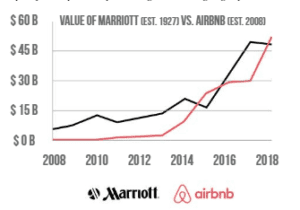
What about demand? Take one look at the growth of Airbnb’s valuation versus Marriott’s, and it is clear the vacation rental side of the hotel and lodging industry, which is expected to continue to grow by 10 percent year over year through 2022, isn’t going anywhere. 

To that end, although both supply and demand are growing, the ever-changing vacation rental industry we all know and love remains highly fragmented and outdated on the business-to-business (B2B) side (for more than just technology). I’m not going to beat around the bush . . . it’s a mess!  

Without naming names, it’s time we take an honest look at some of the core issues and inefficiencies on the software side of the space, which from a bird’s-eye view has remained largely unchanged for the past five-plus years (with the exception of revenue and yield management tools, which are frankly still maturing). 

I’d also like to nod to some of the promising new technologies and services along different parts of the value chain that I believe are helping move the industry forward. There is tremendous opportunity out there for the brave, the bold, and the innovative.  

Without further ado, I give you the good, the bad, and the ugly of the B2B side of our beloved vacation rental industry. 


First, the Ugly: Lack of Transparency, Price Gouging, and Dishonesty  

There exists, at this very moment, a thriving third-party distribution player that offers its paying customers zero visibility into reservations for the very units they manage. “You got a booking!” But from which channel? Not provided. Who is staying at our property? Sorry, but we mask the guest email address, and you can’t talk to them. How do I email my guests the check-in info or a survey after the stay? You can’t. Exactly how much are you making off of my inventory? Apologies, but we can’t tell you that.

Well, it turns out that this particular provider, which has substantial market share, is generating what are arguably exorbitant sums of money considering they don’t even have the keys to the properties. According to an anonymous but verified (and frustrated) customer, “After prodding one of their team members on a recent call he finally admitted to me that they always mark up the prices fed to channels like Airbnb, HomeAway, and Booking.com such that before paying the channel their company nets 23.5 percent in fees, at minimum, from each booking . . . for just channel management, which we already pay them 3–4 percent to handle.”  

This frustrated customer continued, “If inflating prices for entire markets isn’t bad enough, we also found out they are double dipping our damage waiver fees by lumping our $75 waiver into the ‘cleaning fee’ they serve up to the guest, then charging each guest a separate waiver of $39 to $99, which their company keeps. We’ve calculated that over the past 90 days they have raked in over $25,000 from our company off of only 80 reservations, $7,500 of which is from damage waiver fees alone.”  

Understandably, the aforementioned supplier has decided to pull its inventory from this service provider. 

Although generating revenue is critical for any business, are significant price markups and non-transparency with suppliers and consumers helping move our industry forward? Is it logical that the party on the ground managing the unit has zero control of its reservation data or communication with the guest? I think my five-year-old could answer that one. 


Next, the Bad: Lack of Innovation, Nickel and Diming, and Inertia

Although property management systems (PMS) and ancillary distribution tools are the backbone of the industry, there is a growing level of disdain among property managers for the software they depend on to run their businesses. Why?

The incumbents (several of whose tech platforms are between six to 10-plus years old) aren’t easy to use and simply aren’t innovating—not technologically, commercially, or in terms of customer success. Pricing models are old school, often involving thousands of dollars for setup with ongoing fee structures that are convoluted and really add up. Need to add a gateway? That’ll be $50 per month per bank account. Ready to add another property? First you have to buy the individual shell for $120, then pay $6.98 per month per unit (regardless as to whether it’s just an unused shell). Need to connect to our API? That’s $2.28 per month per unit. Oh, and we also charge you 1–5 percent per transaction.  

Furthermore, the systems—even the leading “all-in-ones”—are disconnected, often leaving managers with no choice but to pay for, and sign into, five to 10-plus separate providers. Need an invoicing tool? We don’t do that, but we integrate with a company that does for $4.00 per month per unit. Housekeeping task management? Can’t do that, but we integrate with a company that does for $3.00 per month per unit. Contracts? That’ll be $50 per month. Need to distribute to this or that channel? We don’t have an integration with them, but we have a partner that does for 2 percent (or more) of every transaction. 

Sound familiar?  

In the current ecosystem, the incumbent platforms aren’t user friendly, it’s costly to ultimately market and monetize inventory, and it isn’t a cinch to switch providers (three to six months to onboard on average). The result? Inertia. It’s no wonder vacation rental software has remained largely unchanged for more than five years.


Finally, the Good: Standardization, Growth, and Breakthrough Solutions

Of course it’s not all bad out there. Consumer adoption of vacation rentals continues to rise, and professional suppliers are getting savvier. But the market is ready for technology adoption and consolidation. Guest experience and hotel-like services are a major focus, and innovation is greatly needed.

Well, the cavalry is on the way.  

Thanks to smart home technology and the Internet of things, guests are now enjoying more automated and flexible check-in/check-out procedures and better service overall as property managers are able to shift their focus to guest experiences by automating control of locks, garage doors, thermostats, noise monitoring, and more. Property owners benefit from lower energy expenses, increased security and peace of mind, and ultimately more revenue generated. This is just the tip of the iceberg of what this technology will do for the industry.  

On the growth side of things, more and more we’re seeing national (and multinational) operators steadily increasing the size of their portfolios through acquisition of smaller suppliers in an effort to become a household name among the masses. The challenge in building a brand that to the consumer is as reliable as the best hotel brands is providing a consistent experience. Smart home integration is a core component, but the ones who will ultimately provide the best service and generate the most revenue aim to standardize all operations while still maintaining the charm inherent in vacation rentals: standardization of guest communication and in-destination experience, on-the-ground staff workflows, and onboarding of acquired property owner clients, to name a few. We are witnessing this progression at this very moment. 

There are also a growing number of urban, multi-family players who have moved from owning or leasing out individual spaces to working directly with developers to build new complexes or renovate vacant old spaces into apartment-style units they lease to the operator. Business travelers who appreciate the comforts of home and the reliability of hotels get the best of both worlds. This phenomenon is largely thanks to Airbnb’s model and technological advancements over the last decade. 

As we approach the new year, players will have greater access than ever before to near real-time market information for making better data-driven decisions. Operators large and small will have access to new educational tools, more growth capital, and new M&A opportunities.  

But what about the PMSs professional operators run on? Technologically speaking, we’ve already witnessed a few generations of players progress through the product life cycle. The incumbents are recognizing that change is afoot and, in response, are increasing the features and services they offer through acquisitions and integrations but often offering little innovation of their own.

To that end, I think we are about to witness the new generation of the all-in-one PMS. These providers are harnessing the latest web technology, ignoring the patterns that have led to the current fragmented space and instead innovating with game-changing features, best-in-class parity tools, and true end-to-end solutions.  

2019 is going to be an interesting year. 

Properly Raises $8.5M for Housekeeping and Inspection Tech Platform for Airbnb Hosts

0

2018’s third quarter already has been packed with venture capital and private equity funding news. In the latest of a series of announcements, San Francisco-based Properly, Inc., that provides a cleaning and quality management platform to Airbnb hosts and vacation rental managers, today announced a $8.5 million Series A led by Asset Management Ventures, with participation by AccorHotels and prominent travel investors, including Ev Williams, Simon Lehmann, Fabio Cannavale, Tobias Wann, and former HomeAway COO Tom Hale.

Guest concerns around quality and consistency are a central challenge for the short-term and vacation rental industry.  According to former Phocuswright CEO Simon Lehmann, “unpredictable quality” is the single largest concern of travelers with the industry. Properly’s management tools allow hospitality brands, property managers, and Airbnb hosts to ensure their quality standards are delivered for guests.

“Home sharing and vacation rentals have grown three times faster than traditional hotels over the last decade, but mass market travelers have been slow to embrace the category because they don’t trust what they’re getting,” says Alex Nigg, CEO and founder of Properly. “If vacation rentals are to become a real alternative to hotels, the industry needs to set a standard.  Properly helps ensure that guests arrive to a safe, clean property—every time.”


Properly allows hospitality brands and property managers to set quality standards for their team, manage their operation, and confirm that work meets their expectations. Photo-based checklists in Properly’s mobile app describe precisely how a task must be done; for example, cleaners see exactly how to stage a room or how to make a bed correctly.  Maintenance tasks, such as changing batteries on a smoke detector or fixing problems like furniture damaged by past guests, and other jobs are scheduled through Properly, ensuring these quality, health and safety requirements are fulfilled and documented.  And field staff document damage in the Properly app and take photos so property managers can inspect their work.

Properly is partnering with branded collections—such as AccorHotel’s Onefinestay—as the platform supports the management of stringent brand standards across hundreds of property managers or thousands of their service providers at a truly global scale.

Alongside its quality management tools, Properly provides hospitality brands, property managers and hosts with access to a global network of service providers, and over 10,000 service providers have already signed up.  The network offers local support, whether for brands that must inspect homes across dozens of markets, property managers staffing up for peak season, or an individual host that needs a cleaner to start listing her home.

“The home sharing and vacation rental industry is a massive, exciting market; just look at the level of investment and consumer interest in the space,” said Asset Management Ventures partner, Rich Simoni.  “Properly’s unique combination of quality management tools and a marketplace of service providers positions it to address the next wave of change – establishing brands and standards that attract and retain mass market travelers.”

Founded in 2014, according to its company release, Properly is currently used by over 20,000 hosts and property managers who represent 65,000 listings worldwide and is popular in North America, Australia, and Western Europe.

HomeAway Software is Getting Out of the Website-Building Business: Will Shut Down Escapia Web Services in May 2019

7

HomeAway Software has been providing and maintaining websites for hundreds of professional property management companies who use its market-leading Escapia software platform since purchasing the software company in 2010.

However, Expedia-owned HomeAway recently announced that property management clients who currently use HomeAway-provided websites will no longer be able to access their company websites as of May 2019.

“As of May 2019, we will no longer support Escapia Web or provide a HomeAway-powered website solution for Escapia customers,” a HomeAway spokesperson said. “We continue to support and offer all other Escapia features, including our Glad To Have You guest hospitality app and auto responder products, and our comprehensive Escapia lead management system.”

Update from HomeAway (10/24, 11:30 et): “Support for the current Escapia Web Portal will be discontinued on May 31, 2019, though HomeAway Software will continue to support the Escapia Booking Engine and all API integrations, as well as other HomeAway Software website partners and third-party solutions.”

“Escapia Web Portal was becoming outdated and there are many 3rd parties who provide state-of-the-art web capabilities, which we think is important for our customers. We are focusing on key initiatives around performance and pricing and decided to partner with a company that could bring value to our customers, ” he added. “Bluetent is our preferred partner, following an extensive RFP process. However, customers are free to use any website provider.”

The scale-back in HomeAway’s software division is not limited to websites. HomeAway Software is also retiring one of its software platforms, PropertyPlus, in 2019.

According to HomeAway, Escapia customers who are currently using its websites have until May 2019 to switch to one of the following options:

Option #1: Rezfusion Essential from Bluetent

As HomeAway’s preferred website provider, Bluetent provides full website solutions with top-tier designs, SEO functionality and exceptional security and PCI compliance. Bluetent created an integrated website platform with custom features and preferred pricing exclusively for HomeAway Software users called Rezfusion Essential.

Option #2: Full Website Solution from HomeAway Software Partners

Choose a full website solution from a HomeAway Software partner for a proven website solution designed for vacation rental property managers.

Option #3: Self-Managed Website with Escapia Booking Engine

This is the do-it-yourself option that lets you buy, build, manage and host your own website from hosting companies like GoDaddy, SiteGround, or HostGator. Once you build your website, you can plug in the Escapia Booking Engine to enable online reservations.

Option #4: Full Custom Website and API Booking Engine

This option gives you or a third party the option of a fully custom website, built just for you, and an online booking experience that is powered through integration to your HomeAway Software APIs. This option gives you the ultimate in flexibility, but may also be a more expensive solution.

VRM Intel Magazine’s 2018 Fall Issue is Here

1

The fall issue of VRM Intel Magazine is here. In 2015, when I started this magazine, Doug Macnaught, a close friend and mentor asked me, “Do you think you can come up with enough to write about this industry in a quarterly magazine?” 

I hesitated and replied, “I think so.” 

Who knew? 

In July 2015, things were changing rapidly, to be sure. But Expedia had not yet purchased HomeAway. Booking.com was just emerging as a viable channel with its launch of Villas.com, and Airbnb had just begun to promote and seek out professionally managed rentals in non-urban markets. Multi-destination managers were only beginning to pick up noteworthy market share. Since then, professional vacation rental managers have been on quite a roller coaster ride; however, in spite of margin compression, a whole new world of technology, industry consolidation, and ever-increasing customer expectations, the overall industry is thriving. That being said, not all individual destinations experienced the record-breaking year they hoped for. In the article “Economic Indicators and Changing Consumer Behavior,” we look at some summer results, the use of predictive economic indicators, and shifts in generational travel.  

There is a definite trend toward increased professionalism in property management. Best practices are being established, formal educational resources are emerging, and multiple multi-destination business models are being tested. There are rumors of further consolidation in vacation rental technology companies, and, soon, we may have news of a private-equity-funded rollup of tech providers. 

In addition, one of the most interesting changes we are seeing is that several large, market-leading vacation rental management companies have decided to no longer list their homes on OTAs. Although some destinations and new companies are necessarily reliant on these channels for bookings, established brands with identifiable drive-to markets are finding more success by redirecting marketing funds to core feeder markets instead of being lost in OTA listing algorithms and beholden to the terms and conditions of channels and channel managers. For these companies, the pushback from guest fees, merchant of record requirements, refund policies, inability to adequately set guest expectations, high cancellation rates, and inability to properly vet guests contributed to their decision. Most notably, these companies are not reporting a decrease in bookings as a result. Although becoming OTA-independent is not for every vacation rental manager, some companies are finding success by shifting marketing funds and efforts toward targeted geographic and demographic audiences.  

For property managers listing their homes alongside hotels on large OTAs, merchandising and providing hotel-like accommodations and service is another challenge. In this issue, Jeremiah Gall discusses how hotel convergence is affecting vacation rentals, and Alex Nigg talks about the need for a rating system. In contrast, Matt Landau’s has an article about how commoditization is not necessary and that identifying limited edition qualities can help set your company and properties apart.  

I believe the real story of our industry right now is being told on two fronts: global and local.

For those looking at the vacation rental industry from a global perspective, the influences of external funding, OTAs, multi-destination managers, hotelier interest, scalability, and sector growth are driving discussions and decisions. For local property management companies, owner relations and communication, regulations, property care, workforce development, brand awareness, changing consumer behavior, and marketing management are the factors moving the needle toward higher profitability. A business decision that is right for a company trying to raise funds or look for a buyer could be catastrophic for a company trying to operate in a profitable and sustainable way for years to come. 

My hope is that, whether your view is global or local, you will find useful and actionable information and insight in this issue. Oh, and please consider attending the first-ever Vacation Rental Women’s Summit on February 19–20 at the Ritz-Carlton in New Orleans 

San Diego City Council Rescinds Short-Term Rental Ordinance

0
san diego short term vacation rental homes

San Diego city council voted 8 – 1 today to rescind the short-term rental ordinance passed in July that banned second-home rentals in the city. The vote followed a referendum petition led by Share San Diego, HomeAway, and Airbnb that collected more than 62,000 signatures.

Among other requirements, the ordinance would have limited owners to one short-term residential occupancy license for the host’s primary residence and one additional license for an accessory dwelling unit on the same lot as the primary residence, effectively banning traditional second-home vacation rentals.

The successful petition forced the city council to either rescind the ordinance or place the measure on the ballot for a public vote in 2020 (or possibly as early as 2019 with an approved special election.) Ahead of the council vote, both opponents and proponents of the ordinance called for rescinding it and starting over.

In his testimony, Jonah Mechanic of SeaBreeze Vacation Rentals and president of Share San Diego shared the stories of second-home owners in his program, stressed that owning a vacation home is not a profit-generating endeavor, and echoed other speakers who pointed out that short-term rentals have been a part of the city since its beginning. “For the last 118 years, short-term rentals have been a foundation that our community has been built upon and have been woven into the fabric of our neighborhoods,” he said.

Proponents of the ordinance passed in July also called for rescinding it and instead enforcing the city’s zoning code, which does not permit short-term rentals in any zone.

Matt Valenti from Save San Diego Neighborhoods, which opposes short-term rentals in residential areas, was one such proponent. “You can’t operate a tannery in a cul de sac, you can’t start a macaroni factory next to my house, you can’t open a marijuana dispensary in a residential zone,” he said. “None of those things are listed in our code, but it’s very clear and it’s very common sense that you can’t operate a business like that in a residential zone.”

Valenti is running for the San Diego city council seat for district 6.

Councilmember Scott Sherman made the motion to rescind the ordinance. “What the council passed here a little while ago was obvious[ly] an overreach,” he said. “We also have to understand that a ban on one side isn’t going to work, and an unlimited wild, wild west on the other side isn’t going to work.”

Council president pro tem Barbara Bry, who proposed the July ordinance, issued a much sharper response, calling the vote a sad day for the city. “It was not a de-facto ban,” she repeated. “I am disappointed that a corporation reportedly valued at $31 billion descended upon our city with its unlimited millions of dollars and used deceptive tactics to force us to where we are today,” she said, referring to Airbnb and claims made that it, Share San Diego, and HomeAway were using paid signature gatherers who were misleading voters to get signatures.

She ultimately supported repealing the ordinance to prevent that corporation (Airbnb) from spending millions more leading up to a 2020 vote and freezing any progress. She then requested that the mayor enforce the existing code that does not allow short-term rentals.

Other councilmembers, including Chris Cate and David Alvarez, supported code enforcement as well but acknowledged that the city needed clarity on the rules from city attorney Mara Elliott and the mayor’s office.

Councilmember Lorie Zapf was the only councilmember to vote against rescinding the ordinance, expressing her frustration at reaching this point. “I’m not supporting rescinding today,” she said. “But I do want, whatever way this goes, for enforcement to begin robustly and in earnest immediately.”

LiveRez CEO Tracy Lotz Wins Idaho Innovator of the Year Award

0
Idaho Innovators Awards program's Innovator of the Year award presentation to Tracy Lotz, founder and CEO of LiveRez Vacation Rental Software
liverez vacation rental software founder ceo tracy lotz idaho innovator year award
Idaho Innovation Awards program’s Innovator of the Year award presentation to Tracy Lotz, founder and CEO of LiveRez Vacation Rental Software

Last week, LiveRez CEO Tracy Lotz received the 2018 innovator of the year award from the Idaho Innovation Awards. The award recognizes Idaho professionals who demonstrate innovative characteristics and thinking in their careers, accomplishments, and leadership.

Brian Larsen, attorney at Stoel Rives LLP and board member of the Idaho Innovations Awards, introduced Lotz in his award presentation. “He was one of the first people to provide a platform for vacation rental managers to advertise their properties online,” he said. “The two main qualities that make Tracy so innovative are his vision and discipline.”

Lotz was unable to attend the event but said in a statement, “Super honored and humbled last week to be named the Idaho innovator of the year by the Idaho Technology Council. While it is a great honor, there is no way that LiveRez would be what it is today without so many people involved: my nephew Jeremy Lotz, brother Bruce Lotz, Tina Upson, Rich Cook, David Worthley, Casey Riley, Mike Luna, the entire development team, my friends Kirk and Kathy Johnson, Mike Price, Chris and Lisa Hasvold, Craig and Laura Johnson, Matt Johnson, Brian Barsotti, Gary Gigot, Larry Schneider. Everyone who I currently work with at LiveRez, and even those who no longer do, contributed in so many ways.

And to all of our partners who use LiveRez, partners like Vacation Rent Payment, CSA Travel Insurance, Airbnb, without your support and input, we could never have built the platform LiveRez is today. As John Wooden used to say, ‘The star of the team is the team.’ This was a team effort. Nothing worth doing is easy, and this adventure certainly has been no exception.”

At the ceremony, Tina Upson, LiveRez’s vice president of operations, accepted the award on his behalf. She, too, credited the company’s success to its team members who execute on the “why” of their clients’ businesses. “At LiveRez we have a team that ruthlessly executes,” she said. “They completely take individual responsibility for their personal contribution to our brand.”

View the entire award presentation here.

The Idaho Innovation Awards was started in 2006 by Stoel Rives LLP, a US law firm. Start-up incubator and co-working space Trailhead and the Idaho Technology Council joined Stoel Rives in organizing and hosting the 2018 program.

Launched in 2008, LiveRez is a vacation rental software and services solution that includes a website, property management system, and online marketing services.


What Recent Hotel Industry Numbers Mean for Vacation Rentals

0
hotel industry us global demand travel data
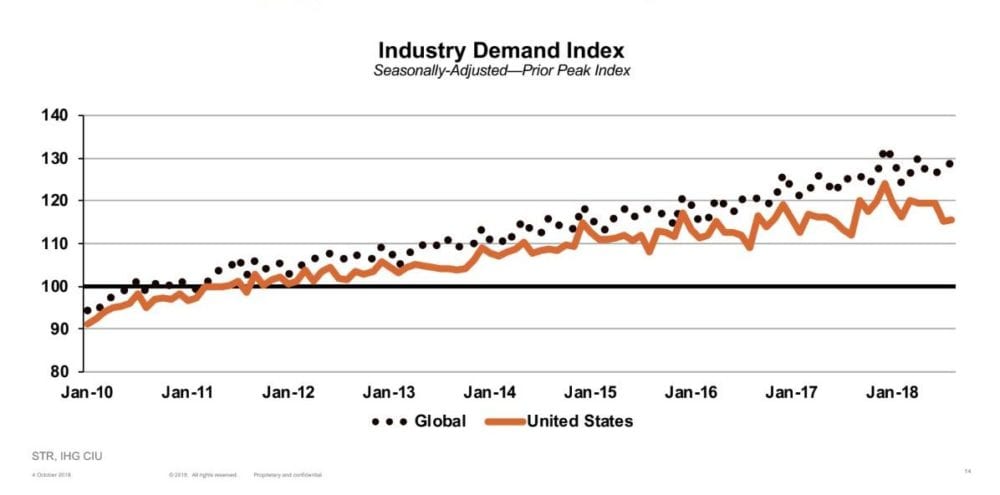
A slide from Isaac Collazo’s Direct Booking Summit presentation on hotel performance indicators.

At Triptease’s Direct Booking Summit for the hotel industry in early October, Isaac Collazo, vice president of competitive intelligence at IHG, shared several largely positive trends in the hotel industry. Digging into these statistics reveals key takeaways and reminders for the vacation rental sector.

US year-to-date demand is at its highest growth rate of the past four years. US hotels have set occupancy records the past three years, reaching nearly 66 percent on average in 2017. US year-to-date occupancy has reached as high as 67.6 percent.

Furthermore, hotels reached these records even with a 40 percent growth in inventory over the last 10 years.

But while these numbers were being shared at the Direct Booking Summit, VRM Intel editor Amy Hinote was hearing equally positive statistics for the vacation rental industry at the LiveRez Partner Conference. In former Airbnb executive Shaun Stewart’s presentation on the state of the vacation rental industry, he reported that demand for short-term rentals as a lodging alternative increased 81 percent between 2012 and 2017 and is predicted to increase 59 percent between 2017 and 2022. (See Hinote’s full recap here.)

The fact that both accommodations sectors are doing well points, in part, to the steady and improving economy supporting a healthy travel and lodging industry as a whole. “Beware of napping at the wheel,” said Charlie Osmond, chief tease at Triptease, “and be prepared for tougher times ahead.” His advice was for hoteliers, but it applies to all travel sectors.

Despite occupancy and supply growth, average daily rate (ADR) growth remains below prerecession levels.

Hotel ADR growth is rising at the same pace as inflation. In other words, real ADR growth hovers at 0 percent. Collazo said that one reason for this could be new construction leading existing hoteliers to cut prices in order to retain their market share.

It is possible that real ADR growth hovering at 0 percent is helping to fuel occupancy growth. The more the economy strengthens, and the longer real ADR growth stays at 0, the more accessible hotels become.

The opposite may be true in vacation rental destinations that have seen seasons soften lately. In the fight against margin compression, pushing rates up too quickly can outpace what the market can handle, and it can inadvertently make hotels more appealing.

Whether or not this is the case, margin compression is a real issue. In a separate discussion about how budget hotels and hostels can compete with luxury brands, John M. Scott, chairman of A&O Hotels and Hostels, illuminated a strategy to combat this. He pointed out that luxury hotels are always piling on new amenities and not getting rid of old ones. Budget properties can cut out the clutter and focus on only those things that are really important to their guests. The vacation rental industry may find that this concept works here too, as may many other strategies.

Corporate profits remain conducive for labor and travel growth, and IHG expects profits to continue increasing in 2019.

The topic of how to appeal to business travelers as a secondary or tertiary market has floated around the vacation rental industry for some time. With the rise of “bleisure” travel (tacking leisure days onto business trips) and the recent massive investments into hybrid business-leisure rental companies like Stay Alfred and Sonder, perhaps it’s time to deepen this conversation and think beyond Wi-Fi and desks.

Appealing to business travelers with more purpose-built offerings can serve as a hedge against less stable leisure travel seasons, like bonds to the vacationer stock market, particularly in vacation rental destinations near urban centers and major airports. Think shared spaces for meetings, small in-office cafés with work stations, or dry cleaning pickup and delivery.

Low unemployment is also a positive indicator for leisure travel.

Low unemployment is a double-edged sword. It helps get guests in the door, but if VRMs weren’t already feeling the labor pinch, they will soon. There’s no time like the present to reevaluate hiring strategies and compensation packages to recruit and retain good employees.

These hotel industry indicators are only one piece of the puzzle. Keep an eye out for Hinote’s discussion of hotel data in “Are Predictive Indicators Holding and Are Generational Changes in Consumer Behavior Affecting the Vacation Rental Industry?” in the VRM Intel fall 2018 issue. “Thankfully, the era of self-reported comparative data is coming to an end and is being replaced with real-time data that is integrated with property management software systems for apples-to-apples comparison,” she writes. “As the vacation rental industry matures, and comparative market data is available on a market basis, the correlation between economic conditions and actual performance will become rapidly clearer.”

Hinote’s pro tip on considering hotel performance indicators: Experienced vacation rental revenue managers take a deeper dive into leisure travel versus business travel and into related individual markets.

Vacasa Raises Additional $64 Million in Funding, Bringing Total to $207.5 Million

0

Vacasa today announced the company has closed on $64 million in a Series B-2 round led by existing investor Riverwood Capital with participation from its other current investors Level Equity, NewSpring and Assurant Growth Investing.

According to Vacasa CEO Eric Breon, “The funding was initiated by our investors who wanted to double down on their investment in Vacasa at a valuation proportionate to our growth.”

The news comes on the heels of the company’s recent purchase of Hyatt-backed Oasis Collections which, according to Breon, Vacasa purchased for unit acquisition and for its “expertise on the international side and the corporate stay side of the business.” The acquisition of Oasis Collections pushed Vacasa’s inventory to 10,600 units, making it the largest vacation rental management company in North America.

However, Breon pointed out that the company is not relying on acquisitions to grow its business.

“Out of our 10,600 units, 8,000 were acquired organically instead of through acquisitions,” Breon said. “Over the past four years, we’ve averaged 69 percent organic growth.”

The $64 million Series B-2 round brings Vacasa’s funding total to $207.5 million. We asked Breon if he was concerned it was too much capital as they move toward an IPO. He doesn’t believe so, especially looking at the investment “proportionally to the size of the business and the size of the opportunity ahead of us.”

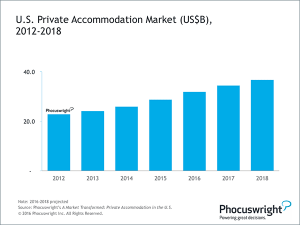
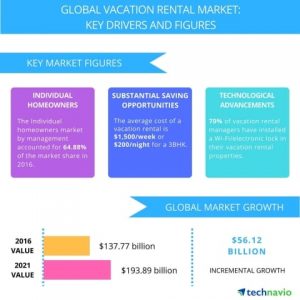
The current estimated size of the global vacation rental industry is $150 billion, with $35 billion in the U.S. “We only have 1-2 percent market penetration in the U.S.,” Breon said.


Vacasa is continuing to expand its footprint, and the industry can expect the company to move into new areas, including along the Atlantic seaboard, in the Midwest, and in new international markets.

“The additional funding from our investors is an endorsement that what we are doing is working and a testament to the results we are delivering,” Breon said. “We are continuing to launch into new markets. In any location the company isn’t currently doing business, we will be soon.”

“We are increasingly bullish on Vacasa’s ability to capitalize on the $32 billion market opportunity that exists within the vacation rental industry,” said Jeff Parks, managing partner at Riverwood Capital in the company release. “Vacasa has exceeded every key business metric since our first investment just over a year ago. Unit economics, customer retention, geographic footprint, homeowner and guest satisfaction, and both organic and acquisitive growth are on an accelerated trajectory.”

Parks continued, “This additional round will continue to fuel Vacasa’s domestic and international expansion while helping the company build the world-class team and technology to maintain its industry leadership position.”

With rapid expansion, Vacasa continues to actively move forward toward an IPO. “It is our expectation, and—with our current scale—we are large enough to operate as a publicly traded company,” Breon said.

There are no changes to Vacasa’s board or executive leadership announced with the funding.

DC Council Delays Final Vote on Short-Term Rental Bill

0
washington dc houses residential neighborhood

The DC council moved yesterday to delay its second reading and final vote on a short-term rental bill that includes a ban of second-home rentals and a 90-day limit on non-owner-occupied rentals of primary residences, among other regulations.

The postponement came after the Monday release of an updated fiscal impact statement from chief financial officer Jeffrey DeWitt. The statement increased its estimated cost of Bill 22-92 from $96 million over the next four years to $104.1 million. The revised estimate includes the administrative costs of enforcement by the department of consumer and regulatory affairs (DCRA) in addition to the $96 million in lost tax revenue.

Council chairman Phil Mendelson introduced an amendment ahead of the meeting to use surplus revenue to cover the costs. Council members Charles Allen, Brianne Nadeau, David Grosso, and Anita Bonds raised concerns with Mendelson’s amendment and how the CFO’s revenue loss estimate would impact future budgets.

DeWitt’s report cites one of the biggest reasons for the revenue loss is the bill’s limitation of short-term rentals to areas zoned for transient rentals. This excludes exclude short-term rentals located in residential areas, which make up 80 to 90 percent of all current short-term rentals in the District.

Mendelson argued that the costs of enforcing rules that were already in place (that short-term rentals are not allowed in residential zones) should not be charged against this bill. He contended that even if the bill did not pass and the mayor decided to start enforcing the zoning regulations that were already in place, that revenue would not be included in the CFO’s estimates.

Mendelson also said he would submit a letter to the DC zoning commission requesting that it relaxes its prohibition of short-term rentals in residential zones. “If we get the zoning commission to change the regulations over the next year, the chief financial officer’s argument largely goes away.”

Grosso, Allen, and Nadeau were still not comfortable moving forward. “There [is] a whole mess of very important programs that I’d like to see revised revenue go to,” Nadeau said.

Mendelson withdrew his amendment and moved to postpone the vote until the next legislative session on November 13 to give time for the council to thoroughly address the financial concerns.


Related Articles:

DC Second-Home Rental Ban Passes First Vote Unanimously

D.C. Council to Vote on Second-Home Rental Ban

Hawaii County Advances Short-Term Rental Bill

1
hilo hawaii map

The Hawaii County council planning committee voted 6–1 in favor of advancing short-term rental regulation Bill 108 to two final council votes. If passed in its current form, the bill will block new non-owner-occupied short-term rentals, limit where they can operate, and require registration with the planning department.

The state does not have local (city) governing bodies, so legislation effected by Hawaii County council governs the Island of Hawaii, also called the Big Island. The bill permits non-owner-occupied short-term rentals in resort-hotel districts, general commercial districts, village commercial districts, residential and commercial districts within the general plan resort and resort node areas, and multifamily districts for multifamily dwellings within condominium properties. Short-term rentals would not be permitted in agricultural zones due to an overriding state law regarding overnight accommodations in these areas.

An earlier draft of the bill also would have allowed short-term rentals in the downtown Hilo commercial district, but North Kona councilwoman Karen Eoff said this district was removed because of a legal language technicality, and the council will reintroduce it through later legislation.

The bill also calls for strict registration requirements, including that only those who operate a short-term rental on or before the effective date of the ordinance will be allowed to register, and they must initiate the registration within 180 days of the ordinance’s effective date. Registrants will be required to pay a one-time $500 registration fee.

For short-term rentals operating before the ordinance’s effective date in non-permitted zones, owners would be required to obtain a nonconforming use certificate (NUC) to continue operation. These applications would cost $250 and must also be submitted within 180 days of the ordinance’s effective date.

Other registration requirements include proof that all property taxes are paid in full, general excise and transient accommodations tax licenses, and a site plan showing rooms for rent and requisite parking available. Owners must adhere to good neighbor policies, be reachable (or appoint someone to be reachable) at all times and able to respond to an issue at the home within three hours, and include registration numbers in all advertising, among other requirements.

Prior to the vote, the council planning committee heard hours of public testimony. Proponents of the bill primarily cited noise, parking, and other guest nuisance issues.

Opponents called for economic impact studies by district and argued that the bill would hit the Kona and Puna districts the hardest, where much of the land is zoned for agriculture. Several noted the popularity of agritourism on the island. Opponents also noted the effect of the Kīlauea volcano eruption and lava flow earlier this year that wiped out many of the vacation rental homes in Puna and made much of the land zoned for agricultural use no longer usable as farmland.

Following testimony, Eoff said the bill was not a ban and stressed that it was only a starting point for legislation. “We are trying to protect neighborhoods and balance everybody’s needs,” she said.

The committee did not call for economic impact reports but did discuss how they may be able to address the agricultural zoning concerns and how to make accommodations for short-term rental owners affected by the lava flow.

Councilwoman Eileen O’Hara was the only committee member to vote against moving the bill forward, citing her concern with these issues. O’Hara represents the eastern side of Puna. “We need to come into modern times,” she said, referring to the 1976 state law barring overnight accommodations on farmland. “These laws were made for plantation days.” She called for change to the state law before supporting the bill moving forward, and she questioned how the county will address short-term rental properties following natural disasters.

Eoff noted that the bill includes the ability of owners with farmland properties to apply for an NUC if the lot was created prior to 1976.

Michael Yee, Hawaii County’s planning department director, discussed many of these variables with the committee. He acknowledged that the council and planning department will need to continue work on the regulations and address these concerns but advocated for moving the bill forward as a starting point.

“This is part one—there will need to be a part two,” Yee said. “We’re trying to bite off what we can at the county level for now. There are ag areas that should be considered—how we address that we’ll have to be careful about.”

Harry Kim, mayor, also testified in favor of moving the bill forward. “This is about zoning for the island, which is needed,” he said. “We cannot allow our businesses to go on without regulation.”

The bill is not listed on the agenda for the October 17 council meeting. The following council meeting is scheduled for November 2 in Hilo, and its agenda has not yet been published.

According to the Hawaii Tourism Authority, more than 1.7 million travelers visited the Island of Hawaii in 2017, a 13.6 percent increase over 2016, and spent $2.39 billion. More than 230,000 island visitors stayed in vacation rental homes and more than 304,000 stayed in condos. According to AlltheRooms.com, there are more than 600 short-term rentals on the island.

Phocuswright Conference to Address Alternative Accommodations

0
Alternative accommodations, short-term rentals, vacation rentals—however you label this fast-growing lodging sector—there’s no denying its impact on travel. The Phocuswright Conference, to be held in Los Angeles, November 13-15, will address the increasing interest in this industry with sessions with executives from Airbnb, Expedia Group, Booking Holdings, and more. While vacation rental marketing and distribution was at the forefront of discussions for the past several years, the conversation has shifted recently to the companies who control the supply: the management companies.


A DEEP DIVE INTO ALTERNATIVE ACCOMMODATIONS WITH THE LARGEST U.S. MANAGEMENT COMPANIES

At 1:45 PT on Wednesday, November 14, founders and executives from the four largest management companies in the U.S. will sit down to discuss the trajectory of the alternative accommodations industry and answer questions about its future. While much of what we read about the industry centers on OTAs, management companies—with more control over supply—are leading the pack in new VC and PE investment and interest from hoteliers. As a result, these executives will address profitability, consolidation, technology, scalability and evolving business models.


Northwest Vacation Rental Professionals Launch NorthwestStays.com

0
northwest stays direct booking vacation rental advertising marketplace

northwest stays website direct booking vacation rental advertising marketplace

Northwest Vacation Rental Professionals (NWVRP) has partnered with Fetch My Guest to launch NorthwestStays.com, a vacation rental marketplace for NWVRP’s 56 member companies to advertise their properties and generate direct bookings.

NWVRP created the marketplace to address challenges travelers face in the booking process, including communication issues, lack of guarantees about the condition of properties, and booking fees common among OTAs. “Travel and tourism are booming, and yet the market is more diverse and challenging than ever, particularly for individual property managers,” said Daniel Eby, president of NWVRP. “It’s our job as property managers to find new and innovative ways to showcase properties and support the industry as a whole.”

northwest stays website direct booking vacation rental advertising marketplace logo

Listing on the Northwest Stays marketplace costs $66 per property per year. The site currently lists around 900 properties across Washington, Oregon, Nevada, Idaho, Montana, Alaska, British Columbia, California, and Hawaii.

Vacation rental managers must be NWVRP members in order to list their properties on NorthwestStays.com to ensure that its listings are managed by companies that adhere to the NWVRP code of ethics, standard practices, and governing bylaws. Each member company is also evaluated on its guest service and commitment to high-quality homes that are clean, well maintained, and safe.

“In addition, being able to embrace our fellow members as key players in our individual success is essential to our viability, both as an organization and as a marketplace,” said Eby.

fetchmyguest logo marketing automation vacation rentals

Based in Capitola, California, Fetch My Guest, a marketing automation software provider, operates the back end of the marketplace. Property managers that list on Northwest Stays will also have access to Fetchmyvr, Fetch My Guest’s distribution platform, as well as its marketing automation platform and other features.

“We view marketplaces such as NorthwestStays.com as building trusted brands around independent vacation rental operators that have been providing service excellence along with offering the best price to the traveler for years,” said, Vince Perez, CEO of Fetch My Guest. “We firmly believe that the independent operator provides the best overall value when it comes to inventory, destination knowledge, and services that make for a successful vacation rental experience.”

NWVRP is running a contest along with the launch in which entrants can win a three-night stay at The Residence at Rosario on Orcas Island in Washington’s San Juan Islands. The stay is valued at $950. The contest ends October 25, and the prize is valid until April 1, 2019.


Las Vegas Planning Commission Sends Short-Term Rental Ban to City Council

2
las vegas nevada skyline

The Las Vegas city planning commission voted 4-3 Tuesday night to approve a ban of short-term rentals. The proposal will now head to the city council, which meets next on October 17 at 9 a.m. Discussion of the ban is not currently listed on the agenda.

More than 100 people testified at the planning commission’s meeting. Those in support of the ban cited party houses as a primary issue. Most attendees opposed the ban, including members of the Vegas Vacation Rental Association, which advocates for better homeowner education and enforcement.

Several sources estimate the number of short-term rentals in Las Vegas to be around 1,500, but according to AlltheRooms.com, more than 4,000 short-term rentals are listed for rent across the city.

Only 160 of these rentals are currently licensed. Under the proposed ban, these properties would be grandfathered in and allowed to continue operating with a nonconforming use permit until the property is sold.

So few short-term rentals are licensed due in large part to the arduous licensing process. Prior to the commission meeting, a second proposal was on the agenda to revise the ordinance and help address this but was removed at the last minute. This proposal sought to remove some of the burdens of acquiring a license, reduce license costs, require applicants to take a short-term rental best practices certification class, and add mechanics for better monitoring and response to potential problem guests, among other changes.

Despite the proposal’s removal from the agenda, David Krauss, co-founder of NoiseAware who consulted with the city council about the proposal, said, “There is still hope for an innovative ordinance that looks different from the carbon copies of other cities.”

Ahead of the commission’s vote, short-term rental supporters sent at least 2,516 protests to commissioners, most of which were emails templated from Airbnb that read:

I am writing today to express my opposition to the proposed ban on short-term rentals. Short-term rentals and platforms like Airbnb are good for Las Vegas residents, travelers and our local economy. Hosting helps Las Vegas families by allowing us to earn extra, important income to help make ends meet. Airbnb provides an affordable way for families and business travelers to visit Las Vegas and is often used for family trips, medical visits and other events like college commencement ceremonies. Bans are just not effective. Please vote no on the proposed ban on short-term rentals in residential areas.

During the commission meeting, commissioners criticized Airbnb for the email campaign and for not having representation present at the meeting.

Nathaniel Taylor, president of Taylor Consulting Group, Inc., wrote his own opposition to the ban. “I believe that the current ordinance has worked in the manner it was intended to,” he wrote. “I also believe that the city has the ability to regulate them in a way that benefits the community as a whole. Is it perfect? No, but that’s why I would support amending it in some manner but not an outright ban.” Taylor represents dozens of short-term rental clients navigating the permitting and licensing process, including 10 pending applications for which more than $10,000 in fees has already been paid to the city.

“We are working with local managers to advocate alternative solutions to an outright ban,” said Greg Holcombe, government relations manager for the Vacation Rental Management Association. “Bans do not work. Reasonable and enforceable solutions exist to address many of the council members’ concerns.”

“Last night’s planning commission vote was a dangerous step in the wrong direction for a city so dependent upon travel and tourism,” said Philip Minardi, director of policy communications for Expedia Group. “For over a year, HomeAway and the vacation rental community in Las Vegas have responsibly worked towards fair and effective rules that address community concerns and protect the right to rent. And while the proposed ban passed at the commission level, the debate is far from over.”

Las Vegas has passed six previous ordinances regulating short-term rentals. (They are banned in the rest of Clark County.) In the most recent ordinance that went into effect in July 2017, short-term rentals in residential areas are required to get either a conditional use verification (CUV) if the owner remains on site during the guest stay and the home has no more than three bedrooms, or a special use permit (SUP) from the planning department if the owner does not remain on site or the home has more than three bedrooms. Obtaining an SUP requires a two-part hearing process before the planning commission and city council, and applications cost $1,030.

Once an owner obtains a CUV or SUP, the city will inspect the property for safety features and other specifications. Then the owner must apply for a business license. Licensing requirements include the following:

  • No accessory structures are to be used for dwelling, lodging or sleeping purposes.
  • The business license number must be included in all advertisements.
  • The licensee must provide proof of liability insurance coverage with a $500,000 minimum.
  • When rented, the residence must display a placard listing the maximum occupancy and a 24-hour contact number for complaints.
  • Properties with six or more bedrooms must employ a licensed security company available 24/7 to respond to complaints.
  • All short-term residential rentals except owner-occupied properties with three or fewer bedrooms must have an SUP.
  • A 660-foot separation between short-term residential rentals is required.
  • The property owner must be the license holder.
  • The license application must list the hosting platforms on which the units will be advertised.

Owners must also collect and remit between 10.5 percent and 13.38 percent transient lodging tax.

Licenses cost $500 per year, which does not include inspection, CUV, or SUP fees. Weddings and other special events are not permitted in short-term rentals, and guests must follow good neighbor rules regarding parking, noise, and trash. The city has a 24-hour hotline to respond to complaints.

According to the Las Vegas Convention and Visitors Authority, 42.2 million travelers visited Las Vegas last year, generating $2.2 billion in public revenues. The city had an average 88.7 percent occupancy of its 146,993 available hotel rooms.

DC Second-Home Rental Ban Passes First Vote Unanimously

0
washington dc wilson building city hall council

Update 10/16/18 at 2:20 p.m.: The bill’s second reading and final vote were deferred to the legislative meeting on November 13 at 11 a.m.

All 13 DC councilmembers voted last week to approve short-term rental regulations that include a ban of second-home rentals and a 90-day limit on non-owner-occupied rentals of primary residences.

Bill B22-0092: Short-term Rental Regulation and Affordable Housing Protection Act of 2017, originally introduced by councilmember Kenyan McDuffie, includes the following key requirements, among others:

  • Only primary residences are permitted to be used as short-term rentals.
  • Rentals of an entire home in which the owner is not present during the stay are limited to a maximum of 90 nights per year.
  • Home-sharing, during which the owner is present during the stay, is not limited.
  • Owners must be permanent residents.
  • Owners must register their homes with the District and obtain license numbers.
  • License numbers must be displayed in all advertising.
  • OTA platforms may not list a property without a license number.
  • Owners and OTA platforms must maintain transaction records and make them available to the city upon request.

A financial impact statement provided to the council from chief financial officer Jeffrey DeWitt on October 1 concluded “Funds are not sufficient in the fiscal year 2019 through fiscal year 2022 budget and financial plan to implement the bill. The bill is subject to appropriations in an approved budget and financial plan. The bill will cost at least $20 million in fiscal year 2019 and $96 million over the four-year financial plan.”

The estimated cost is based solely on lost revenue the city currently receives from short-term rentals. It does not account for the administrative costs that will be required for enforcement and registration. “The exact size and scope of this administrative cost [has] not yet been determined, but it is expected to be large,” the report states.

Prior to the bill’s vote, councilmember Charles Allen proposed an amendment extending the 90-day limit on non-owner-occupied rentals to 120 days for flexibility for residents deployed away from home for months at a time, like service members and diplomatic personnel.

Councilmember McDuffie, whose original draft of the bill capped non-owner-occupied nights at 15 per year, urged his colleagues not to support Allen’s amendment. “What we’re doing today, the underlying bill, is consistent with what I think is evolving into a best practice of jurisdictions across the country,” he said.

Council Chairman Phil Mendelson argued that the 90-day limit is common in other cities imposing short-term rental regulations, particularly those with affordable housing shortages, such as San Francisco.

Councilmember Mary Cheh supported Allen’s amendment and believed the bill was too restrictive. She also supported an earlier part of the amendment (which had since been removed) that would allow homeowners to rent out a second property in addition to their primary residence, or a “plus one.” “I hope between now and second reading we can revisit that,” she said.

Councilmember Brandon Todd agreed with Cheh and added that many of his constituents were concerned about their property rights. The two voted in support of Allen’s amendment, along with councilmembers David Grosso and Robert White, but they were outvoted by the remaining eight councilmembers.

Further discussion on the non-owner-occupied night cap and “plus one” rentals is expected, but a news post on the council website states that all pending legislation is on a tight timeline. “Legislation introduced in 2017 or 2018 that is not passed by January 2 of 2019 must begin the entire legislative process all over again in 2019,” the post states. This is the second time a short-term rental bill has been considered by the DC council. A similar bill proposed in September of 2015 lapsed at the end of the 2015–2016 council period.


Related article: D.C. Council to Vote on Second-Home Rental Ban

Expedia CEO on HomeAway: “We bought the Craigslist of vacation rentals.” #SkiftForum

7

At the recent Skift Global Forum, Expedia CEO Mark Okerstrom fielded on-stage questions from Skift founding editor, Dennis Schaal, about the progress the company is seeing from HomeAway.

“Just to clarify, we bought the Craigslist of vacation rentals at the end of 2015, and today, trailing 12 months of last quarter, this thing has $11 billion of bookings online,” said Okerstrom. “Revenue has basically already doubled. Last quarter EBITDA had doubled—and customers and hosts love it. We’ve done all of that in the last two years, we’ve got an incredible team there, they are a rocket ship. But we are also invested for long term, and we are just in phase one. Phase one was about taking Craigslist and turning it into e-commerce . . .”

Schaal interjected, “Yeah, but they didn’t think of themselves as Craigslist.”

Online Booking and Urban Markets

Okerstrom responded, “Well, it was a listings business. I still use Craigslist, I like Craigslist a lot. I’m not disparaging it, okay? But it was about taking an offline thing and making it online. Phase two, then, is about going into the urban markets where HomeAway and VRBO have not been traditionally and really stepping on the gas.”

Take Rate and Guest Fees

Schaal asked, “One thing I’m interested in is with HomeAway, with alternative accommodations, the take rate you have, the amount that you collect from both the host and the consumer is less than the hotel business. So you’re ramping up alternative accommodations for the long term. Booking.com does not charge traveler’s fee, you do. Airbnb charges much less commissions to the host of the hotel than you do. How does this become a sustainable business for you if there’s all this demand there but you’re earning less per booking?”

“I think first of all, a new booking, an incremental booking, is a great thing,” Okerstrom said. “Right now, if you have a family of five who wants to go to—I don’t know—Myrtle Beach, we don’t have a lot of great alternatives for them on Expedia right now because it’s hard. You’ve got to find two rooms or you’ve got to pony up for the suite, and that’s really expensive. Enter HomeAway/VRBO inventory—and then you’ve got the perfect place for that. Whether the commission is X or Y, doesn’t matter, it’s incremental, it’s new, and our customers absolutely love it.”

Okerstrom added, “There are consumer fees, there are supplier fees. Our solution to it is we’ve got both. We’re able to monetize whatever way the customer is willing to pay or the supplier’s willing to pay . . . Our approach has been, let’s have a flexible model, and we can adapt it how the market place needs.”

“I think the models are just going to evolve over time, and remember, the only thing that’s happening here is you take a customer who says, ‘I’ll pay $200 a night.’ and they’re choosing this place versus that place versus that place. At the end of the day, if they’re willing to pay [$200], the supplier is going to say, ‘Listen, I want at least $175.’ Now you’ve got that $25 Whether the supplier pays you or the consumer pays you, in the end, it doesn’t matter.”

Cannibalizing Hotel Bookings    

Schaal asked, “Do you worry that incremental booking, as alternative accommodations go mainstream, that it hurts the hotel business?”

Okerstrom responded, “We’re very focused on making sure that we continue to drive good results for our hotel partners, absolutely. But, at the end of the day, we’re a travel agent . . . We’re just essentially automating all of the things that travel agents used to do. Just like a travel agent would say, ‘Where do you want to go?,’ ‘What kind of place are you looking for?’ If you tell me, ‘I want to stay in a big house,’ we’ve got to have that, so that’s our approach. In the end we want a big marketplace, and we’ve automated the traditional role of a travel agent.”

Google

Earlier in the conference, Google execs spoke about their intention to provide a vacation rental offering. Schaal asked if there were actions being taken by Google that keep him up at night.”

“So much keeps me up at night. That’s my job—paranoia,” Okerstrom said. “Yes, absolutely, the big tech players who have tremendous capabilities, I think about them a lot. As you mentioned, right from the start we’ve been at this for 20 years. We have 6,000 of the brightest product and technical engineers in the industry that work for us. We’ve got some of the brightest AI talent and data scientists certainly in this industry, working at Media Group. And we are stepping on the gas. If we were standing still, saying, ‘Gee, I’ve got to protect what I’ve got,’ I’d be a lot more worried. But the answer for us is to move faster, be more focused, focus on the customer—because in the end, if you deliver an incredible product to the customer, if you have a platform that your partners get real value from, and if you move fast, everything is possible.”

Tours and Activities

Tours and activities were a big topic of conversation at the conference, and Schaal asked: “Last year you said tours and activities needed to be a higher priority for Expedia, and now Airbnb is doing experiences, TripAdvisor is really growing with Expedia in experiences and Steve Kaufer at TripAdvisor thinks it can be a really gigantic business. What kind of priority does it have for Expedia?”

“It’s up there. Definitely—definitely, top ten,” Okerstrom said.

“This industry is competitive, and the reality is there’s just so much activities business that is out there. It’s a well over $100-billion segment, a fraction of it is online, and there’s a huge amount of opportunity. We’re focused on doing what we have structural advantages on. One of the structural advantages we have is that because we’re a full travel agent—we’re not just a hotel-only player—we have the ability to know where people are, they’ve got our apps installed, and we have a lot of advantages . . . I think there is room for two, there’s room for three. I think in the U.S., particularly, people talk about, ‘oh, it’s saturated, it’s mature.’ Nothing is saturated, nothing’s mature.”

Millennials

Skift’s Schaal also asked the Expedia CEO, “Why should a cost-conscious millennial use HomeAway instead of Airbnb?”

“That is the question that HomeAway/VRBO is driving more now. There are a few big reasons, I think. One, that there’s a significant difference in the inventory set, There is some overlap, absolutely. But there’s a difference in the inventory set, generally, in the way it skews. HomeAway and VRBO are generally for larger resorts and big groups, and Airbnb’s skews to smaller shared units. Over time, we’re going to be moving into that shared unit urban space; and if you’re a millennial, heck, why not try something new? The experience is saying you’re open-minded—you’re a millennial—try something new. At the same time, maybe you had an amazing trip you booked on Expedia and you got your Expedia rewards [points] . . . And now you see that same property that’s on Airbnb on Expedia, why would you not book that, you’re cost-conscious. It’s the same thing, and you get points; and by the way, it’s on the app—you can fly there, it’s all there, and when you arrive, we have an incredible activity you can do. That’s awesome, millennials love it.”

Related article: HomeAway CCO Jeff Hurst: “We do not allow shared spaces at HomeAway.”

TurnKey Adds InvitedHome Co-founders to Management Team

0

InvitedHome co-founders, Michael Joseph and Tom Feldhusen, left the company to join the TurnKey Vacation Rentals team.

According to TJ Clark, CEO at Austin-based TurnKey, the duo will join the operations team, as Michael Joseph has been named Vice President of Owner Success, and Tom Feldhusen has been named Director of Onboarding.

“We hired the two co-founders from InvitedHome,” said Clark. “They were interested in getting to the scale that we have, and we really liked what they could do to help our owner care services. These guys nailed it on how to take care of and communicate with owners, and we are excited about taking their luxury-market know how and injecting it into our larger vision of growing our up-market supply base.”

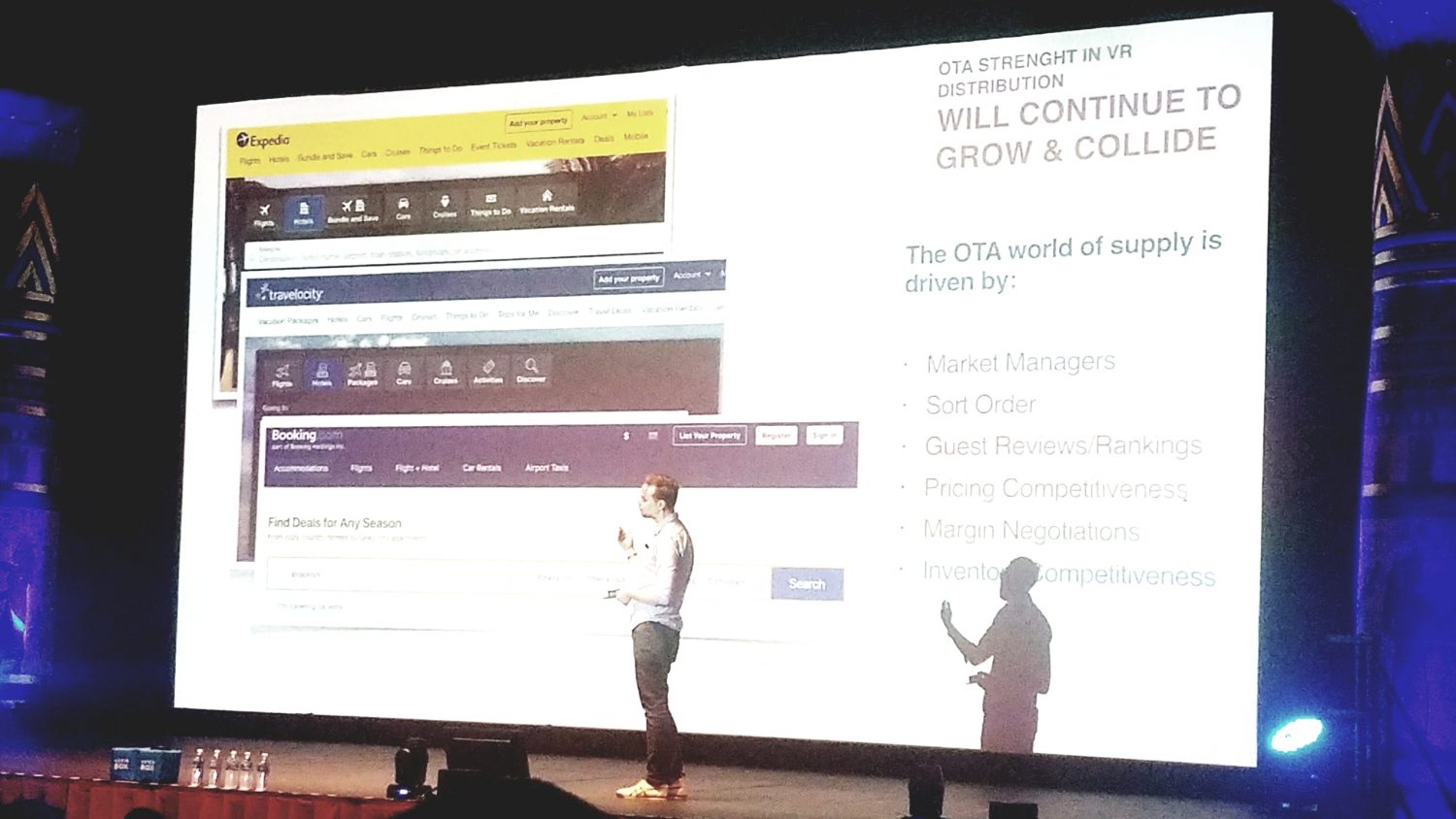
TurnKey expects to manage 4,200 vacation rentals by the end of 2018 and projects growth to approximately 6,500 over the next 12 months. In contrast to other multi-destination rental management companies, TurnKey has an organic growth model instead of an acquisition model in adding inventory to its supply.

“With organic growth, we are able to add owners to our program who want to be with us,” Clark said. “Starting the relationship with a homeowner on the right foot leads to a successful multi-year relationship. Some of the real selling and solidifying of the relationship with the owner happens during the onboarding stage, and we believe Michael and Tom can help us communicate more personally with owners to walk them through every step of the rental program.”

InvitedHome started strong when it launched in 2010, a year after Vacasa and two years before TurnKey began their businesses. In 2014, after raising $5.2 million for growth, InvitedHome was considered to be a premier short-term rental provider and was predicted to be major player among the new multi-destination vacation rental management companies, especially with its focus on luxury homes. In May 2017, Michael Joseph, then CEO at Invited Home, said, “We are aiming this year to just about double our inventory and launch several new destinations over the next 12 months. We’ve had significant growth and we’re continuing that pace.” However, the company was not able to grow inventory as quickly as its counterparts, and when Joseph and Feldhusen left the company last month, InvitedHome had approximately 300 homes in 12 markets under management.

TurnKey is actively pursuing the luxury vacation home rental market, and the addition of Joseph and Feldhusen to its team shows a commitment to the high end of the short-term rental market. “We like to to go for the higher end of the market,” Clark said. “If we could take this even further toward the top 20 to 30 percent—and up—of the market, and do an even better job of taking care of owners, that is exciting for us.”

Joseph and Feldhusen will relocate to Austin to work out of the TurnKey headquarters.

Are Hotels Obsessed with Direct Bookings?

1
direct booking summit hotels
Hoteliers at Triptease's Direct Booking Summit 2018 in Dallas discussing competitive strategies for independent hotels. From left to right: Marissa Brady of The Leading Hotels of the World (moderator), Trey Yost of SiteMinder, Gary Hawkins of Sydell Group, and Carlos Aquino of Tafer Hotels and Resorts.
direct booking summit hotels
From left to right: Marissa Brady of The Leading Hotels of the World (moderator), Trey Yost of SiteMinder, Gary Hawkins of Sydell Group, and Carlos Aquino of Tafer Hotels and Resorts.

Hoteliers are debating the amount of focus that should be given to direct bookings. Recent PhocusWire articles, written by reporter Lisa Fox and Duetto’s Patrick Bosworth, presented opposing views about whether hotels should be “obsessed with direct bookings” in light of the increasing proliferation of OTAs in the customer acquisition funnel.

But discussions at Triptease’s Direct Booking Summit last week demonstrated that hoteliers are not obsessed with direct bookings.

Or at least not with the same fervor as the vacation rental industry.

For two days in Dallas, speakers and panels discussed high-level hotel industry topics for an audience primarily made up of independent hoteliers. Surprisingly, much of the discussion was around OTAs—not whether hoteliers should use them, as many VRMs are asking themselves, but how they should maximize their relationships with them.

Third parties are here to stay.

The clear statement was that OTAs and other third parties are here to stay, and hoteliers generally accept them as a standard and necessary part of their marketing mix. Many described using them as “being on the shelf.” In fact, when I asked hoteliers about their take on OTAs, every single one shrugged and described them as a necessary evil. Despite the sentiment, my (albeit limited) peek into the hotel world revealed a more collaborative approach to the OTA relationship.

During a panel discussion on unlocking the potential of every acquisition channel, Sanovnik Destang, executive director of Bay Gardens Resort in Saint Lucia, shared that his properties currently get around 40 to 45 percent of their bookings directly, and his goal is to increase that to 60 percent. Both Destang and fellow panelist Dan Towvim, senior director of e-commerce at Sonesta, said they don’t want to reach 100 percent direct bookings because the OTAs deliver new customers they couldn’t otherwise reach.

Discussions around OTAs focused largely on four recurring themes:

  • The challenges hotels face in achieving rate parity
  • The need for hoteliers to negotiate everything they can in their contracts with OTAs
  • The opportunity hoteliers have in leveraging relationships with their market managers and the data those managers have available
  • The importance of converting OTA-booked guests into repeat, direct bookers (when it makes financial sense to do so)

Direct bookings may not always be the best bookings.

Several hoteliers mentioned their willingness to let some OTA guests continue to book through third-party sites. They weigh the costs of OTA commissions against the primary and secondary costs of direct bookings, including website and booking engine maintenance, marketing and revenue management staff salaries, loyalty program sales efforts, the cost of points used by loyalty program members, and others.

Jay Hubbs, senior vice president of e-commerce for Remington Hotels, also cited hotels’ limited budgets and staff bandwidth. Kelsey Miller, corporate director of digital marketing at Woodside Hotel Group, noted cancellation rates as another factor to consider in evaluating acquisition model costs. Considering all these layers, it may make more financial sense for a hotel to not be so obsessed with direct bookings.

Metasearch is holding its own in lodging.

Metasearch was often lumped in with OTAs, but several sessions explored metasearch on its own. Where the function may still have shaky legs in the vacation rental industry, sites such as TripAdvisor and Google are more of a given on the hotel side. Flights-first metasearch Skyscanner recently added hotels, hostels, and apartments from OTAs like Expedia and Booking.com.

During the metasearch in 2018 panel, moderator Nicholas Ward shared data showing a sharp rise in hotel competition on metasearch platforms over the past three months. Ward is the president and co-founder of Koddi, a metasearch and digital ad bid automation platform. He anticipates metasearch acquisition costs to increase with rising competition.

Discussing Google in particular, Hubbs noted how the company is becoming more ubiquitous throughout the booking process. “Being on that shelf is arguably more important than being on other shelves right now,” he said.

Hotels are welcoming Airbnb and finding early success on the platform.

Also of note was the mention of Airbnb, and an informal audience poll showed that several hoteliers are using Airbnb successfully. “Airbnb is becoming a stealth OTA,” said Destang of Bay Gardens.

Ryan MacDonald, director of revenue management and e-commerce for Palm Holdings, served with Destang on the panel on unlocking the potential of every acquisition channel. He echoed Destang and Towvim’s goal of using OTAs but then converting those guests to direct bookers. He reported that in Palm Holdings’ test of some properties on Airbnb, 70 percent of the guests booked from the site ultimately convert to direct bookings, including business travelers.

In a later panel on how independent hotels can compete against large chains, all three panelists viewed Airbnb favorably. Carlos Aquino, vice president of sales and business development for Tafer Hotels and Resorts, said, “How Airbnb has positioned itself is how independents should position themselves—look at it as inspiration, rather than a threat.” Trey Yost, vice president for the Americas with SiteMinder, said his clients are embracing it as another tool and are finding it successful. Gary Hawkins, vice president of revenue strategy for Sydell Group, agreed that they had seen revenue from the site. “We welcome it,” said Hawkins.

… but direct bookings still matter.

All of this is not to say that the summit didn’t explore how to get more direct bookings or that hoteliers don’t want to do so. Presentations more specifically tied to generating direct bookings followed four overall themes:

  • Data: Data is the lifeblood of hotels, from costs to revenue to response time, and hotels dig into it incredibly deep. However, multiple speakers and panelists encouraged looking at data in different segmentations and with better visualization, suggesting that current analysis practices may not be keeping up.
  • Silos: Operational silos appear to be an issue plaguing the industry, particularly with the lack of data sharing between marketing, sales, digital, and revenue management departments.
  • Content: The “content is king” trope echoed on this side of the travel accommodations world, and just as in the vacation rental space, attendees were encouraged to leverage their strength in local, expert content on their properties and destinations.
  • Guest experience and customer service: In another similarity to the vacation rental industry, guest experience and customer service are increasingly paramount in competing with third-party channels and winning repeat guests. This extends into survey and review responses, too.

Related Articles:

Hotels Are Right to Be Obsessed with Direct Bookings by Patrick Bosworth, Duetto

Why Hotels Should Take Cues From Home-Sharing, Stop “Obsession With Direct Booking” by Linda Fox

Former Airbnb Exec Shaun Stewart Discusses the State of the Vacation Rental Industry at LiveRez User Conference

3

Last week at the LiveRez Partner Conference in Boise, Shaun Stewart, chief business development officer of Waymo and former global head of vacation rentals at Airbnb, gave attendees a follow-up to the predictions he presented three years ago and discussed the state of the vacation rental industry.


Airbnb’s Increased Focus on Professional Property Managers

In 2015, there was a lot of hype about Airbnb shifting its focus to meet the needs of professional property managers (PMs), but managers were skeptical about whether Airbnb would be able to adapt to their needs. Stewart demonstrated that over the last three years, with over 100 software integrations, Airbnb has indeed increased its focus on management companies. In 2018, 55 percent of Airbnb’s hosts offer multiple listings, compared to 45 percent of hosts who only list one home. In contrast, he showed 67 percent of HomeAway’s suppliers offer multiple listings and 33 percent list only one property.

Stewart discussed the difference in the number of monthly reviews on Airbnb vs HomeAway (below), and the steps Expedia has taken since purchasing HomeAway, including the introduction of guest fees, a 25 percent increase in listing fees, the focus on instant booking, the new 10 percent attribution fee, communication restrictions between suppliers and guests, taking over the branding in company apps, the Premier Partner program, and changes to search algorithms.

Increased Demand for Short-term Rentals

Stewart also discussed the increasing demand for short-term rentals as a lodging alternative. Demand for short-term rentals as a lodging alternative has increased 81 percent between 2012 and 2017, and is predicted to increase 59 percent between 2017 and 2022.


Multi-destination Models

Three years ago, Stewart predicted that we would see new multi-destination models come to the forefront. While the prediction was correct, the industry has found that the vacation rental business is more complex and harder to scale than initially thought.

Instant Book

His prediction that the industry will move toward instant online booking requirements is coming true, and he showed that the online share of private accommodation revenue grew from 24 percent in 2015 to 52 percent in 2017. All of Booking.com’s listings are now instantly bookable, and HomeAway and Airbnb both have significant initiatives to push managers and hosts to instant booking. But he also pointed out that there are valid reasons that hosts are moving slowly to instant booking, and that luxury markets are moving more slowly than the market as the need to vet guests, set expectations, and provide specialized service is higher for these homes.

Technology Consolidation

In the vacation rental industry, we are hearing a ton of buzz about consolidation among property management software and technology companies. Stewart explained that this kind of consolidation is inevitable as private equity enters the space to help tech companies scale. When asked about it in a follow-up question, he said for software companies, it is “eat or get eaten.” He also predicted that new technology offerings will continue to emerge to service managers and hosts. Examples are technology designed for safety and security, data and analytics, goods and services, and check-in solutions.


Real Estate Investment in Short-term Rentals

As many in the industry are observing, real estate investors are interested in the appreciation and income-producing opportunities in short-term rentals, and they are looking for data to make buying decisions. Stewart discussed the art and science behind property selection, including factors such as:

  • Real estate prices
  • Local vacation rental rates
  • Insurance, taxes and maintenance costs
  • Overall popularity of tourism destinations

As PMs and investors get more savvy in analyzing rental performance as a driver for real estate acquisition, data will play an increasing role.


OTA Take Rates

Stewart also talked high-level about the challenges OTAs face when looking at short-term rentals. While OTAs are pushing to provide all lodging types to customers, the take rate for short-term rentals is currently much lower than hotels. Stewart explained how OTA market managers are incentivized, the importance of sort order and reviews, margin negotiations, and inventory competitiveness. As the race for supply settles and the industry matures, OTAs will inevitably compare take rates and push the short-term rental industry to match hotels in commissions.


IHG Reports Strong Hotel Industry Numbers and Outlook

0
direct booking summit triptease the statler dallas ihg
Isaac Collazo, vice president of competitive intelligence at IHG, presenting hotel industry trends at Triptease's Direct Booking Summit in Dallas
October 4, 2018 – Isaac Collazo, vice president of competitive intelligence at IHG, presenting hotel industry trends at Triptease’s Direct Booking Summit in Dallas

“We are in the best demand market of our lifetimes,” said Isaac Collazo, vice president of competitive intelligence at IHG. Collazo presented hotel industry trends, economic drivers, and outlook for hotel professionals at Triptease’s Direct Booking Summit at The Statler Hotel in Dallas.

Among the key statistics Collazo reported is that US hotels have set occupancy records the past three years in a row, reaching nearly 66 percent average in 2017. The previous peak was just shy of 65 percent in the mid-1990s, and there has been a 40 percent increase in hotel room supply since then.

Sixty-one percent of markets are reporting occupancy gains, including Houston, Phoenix, New Orleans, Chicago, San Diego, New York, and Miami, all with one or more percentage point increases. Other markets have lost one to two occupancy percentage points: DC, Los Angeles, San Francisco, Dallas, and Seattle.

Through August, US year-to-date demand is at its highest growth rate of the past four years as well, with the strongest demand growth in Houston, Phoenix, New Orleans, Boston, Denver, New York, Chicago, Dallas, Atlanta, Los Angeles, Orlando, San Diego, Seattle, San Francisco, Miami, and DC. (Collazo said September’s demand numbers will drop compared to 2017 with the spike in displacement demand after last year’s Hurricane Harvey and Hurricane Irma.)

Global lodging demand is also at a record high and is increasing at a slightly faster pace than that of the US. Seasonally adjusted January numbers going back to 2010 show US demand at about 16 percent over its previous peak, while global demand is up almost 30 percent.

In the past 10 years alone, 591,000 net rooms have been added to hotel inventory, primarily in the upscale and upper-midscale markets.

Despite occupancy and supply growth, average daily rate (ADR) growth remains below pre-recession levels. Some major markets have seen a somewhat significant increase in demand January through August of this year compared to the same time period last year, including Miami (over 8 percent), Orlando (almost 6 percent), and San Francisco (around 5 percent), while Boston and DC have seen an overall ADR decrease.

Taking inflation into account, real ADR growth is hovering around 0 percent (ADR and inflation are increasing at the same rate). With that, the faster pace of wage gains is adding to increased cost pressures.

Over the past two years, revenue-per-available-room (RevPAR) growth has remained elevated with the increases in occupancy.

Collazo noted several high-level economic drivers influencing these trends. The steady and improving economy supports a healthy travel and lodging industry, including corporate profits that remain conducive for labor and travel growth. Low unemployment is also a positive indicator for leisure travel.

Looking ahead, Collazo anticipates that the economy will cool off in the coming year as the benefits of last year’s tax reform begin to wane and economic growth slows. He and his team are also closely watching tariffs as a full-blown trade war would likely lower economic growth worldwide.

IHG expects corporate profits to continue to increase in 2019, a positive indicator for business and meetings travel, but this could change as trade slows. Arrivals to the US are also expected to increase through 2020 along with a still-growing desire to travel.

Collazo and his team predict supply growth pace to slow amid construction labor shortages and rising costs. Still, more than 168,000 hotel rooms are currently in the construction pipeline, 63 percent of which are in the upscale or upper-midscale categories.

With supply growth beginning to plateau in the next one to two years, Collazo and his team expect occupancy to remain at record levels (predicting 66.3 percent in 2018 and 2019), followed by a drop to 65.9 percent in 2020. They expect ADR growth to slow further.