












- Advertisement -
Home Blog Page 23

Vacation Rental Competition Show Comes to Netflix

1
instant hotel netflix seven network vacation rental short-term rental competition reality tv series

Netflix users in the US can add another vacation rental reality series to their watch list: “Instant Hotel.” The Aussie reality competition show pits 10 pairs of vacation rental hosts against each other to see who has the best short-term rental, or as they call it, instant hotel. The prize: an all-inclusive trip to a vacation home in Palm Springs, California, rumored to belong to Leonardo DiCaprio.

Spoiler Alert: This article does not reveal the competition winner, but there are other spoilers ahead.

Originally airing on Australia’s Seven Network at the end of 2017, “Instant Hotel” is hosted by Luke Jacobz, an Australian actor and television host. He’s joined by judge Juliet Ashworth, partner and creative director for CHADA, an interior architecture firm that specializes in high-end hotels and resorts.

The series is often mentioned together with its feel-good Netflix predecessor “Stay Here,” the streaming service’s original home makeover series hosted by well-known interior designer and TV personality Genevieve Gorder and real estate expert Peter Lorimer who visit eight struggling short-term rentals and turn them into stunning, expertly marketed properties.

The Competition

In the competition series, contestants are split into two groups of five pairs. The first five episodes follow one group as they spend a night in each other’s properties and take part in local experiences selected by the owners. The guests evaluate each home on four factors: the house itself, the location and local attractions, their night’s sleep, and the value for money. Each pair’s score out of 10 is combined into a group total out of 40.

Ashworth also supplies a score out of 10. She, too, evaluates the property on the house, the location and area attractions, and the value for money, paying close attention to the home’s design and cleanliness.

At the end of the first episode’s score reveal to the hosts, the first twist shakes things up: The hosts get to rate the guests, too. Unbeknownst to the guests until then, the hosts inspect the house after departure and evaluate them on their observance of check-out times, cleanliness, and house rules. Their score out of 10 for the group is added to each guest pair’s total score at the end of the round.

The same process plays out in the second five episodes with group two, then the winners from each round go head to head in the two-episode grand finale. A mixed group of pairs from both rounds make return visits to the finalist instant hotels, only this time, they must come to a consensus on a score out of 10 for each of the four criteria. Ashworth returns, too, to judge the original factors as well as how successfully the hosts listened to feedback from the first rounds.

The Entertainment Factor

As can be expected, the peer judging system creates a heavy dollop of controversy amongst the colorful and even vicious TV personalities. In the first group, a predictable rivalry forms between Babe and Bondi, the margarita-loving mother-daughter duo from Bondi Beach, and Brent and Leroy, the “fussy couple” from Port Douglas who like to speak in catchphrases.

“The house looks like lipstick on a gorilla,” says Leroy in the score reveal of Babe and Bondi’s coquettish home and garden.

“I know you say the devil is in the detail, but I think you’re the devil,” Babe retorts.

Their practiced, snippy one-liners and snide comments come nowhere close to the vindictiveness in group two. In this round, Point Cook’s Sturt and Serena, who repeatedly reminds everyone that she is in the top 1 percent of TripAdvisor reviewers, connive and stir up issues for lower scores. (After the show, Serena was trolled and threatened so badly that she and her family were forced to remove her rental listing and leave the country.)

Socialites Mikey and Shay do their own fair share of scheming and smack talking, and the group’s tension reaches fever pitch at the end of round two when guests visit their home in West Pennant Hills. Made out by Mikey and Shay to be an unbeatably glamorous hotspot, it turns out to be Mikey’s parents’ stodgy antique-filled house, complete with an “age care facility” smell and cats, turtles, and fish guests are required to feed.

It earns the lowest score from both the competitors and Ashworth of the entire series. Visibly enraged, Mikey and Shay give the guests a venomous (and obviously rehearsed) score of two: “One because the animals are still alive, and two because you’re leaving,” synchronized sassy hand gestures and all.

What “Instant Hotel” Means for the Vacation Rental Industry

For property managers who like to kick their feet up and indulge in a catty reality competition set in the familiar vacation rental business, this show is certainly worth the binge. But entertainment value aside, “Instant Hotel” could have noteworthy implications for the industry.

On the positive end, the series provides a new lens through which to evaluate properties. The pared-down judging criteria allow property managers to step out of the weeds of day-to-day management and focus on what it all boils down to for guests: the house, the location and area attractions, a good night’s sleep, and the value for money. Taking a moment every now and then to evaluate homes on these simplified factors–and how well their marketing efforts convey them–could be a welcomed reset button when things become overcomplicated.

The show also provides a unique look at how self-managing owners perceive and run their properties. Though taken with a grain of camera-ready salt, the inside look shows why and how these owners have created their vacation rentals, along with their decision-making factors, values, and challenges. Woven unspoken through all of this is why they choose to manage their homes themselves rather than hire property managers (although two pairs technically manage someone else’s property.) This perspective is eye-opening for property managers who want to appeal better to RBOs, particularly in how they can address challenges owners face, such as Brisbane couple Terry and Anita’s 12-hour turnover cleaning process for which they charge guests $360.

RBOs, for that matter, are benefiting too. Homeowner forum threads are filled with hosts sharing how they’re getting ideas to improve their own properties and finding value in the guest perspective, potential catalysts for elevating RBO inventory on a widespread scale.

What’s problematic, however, is the name “Instant Hotel,” doubled-down with a hotel-designer judge instead of a vacation rental expert. To Ashworth’s and the show’s credit, all of her critiques and suggestions were valid and appropriate for vacation rentals. The front-and-center tie to hotels, however, can have some negative and perhaps dangerous implications for the industry amid new anti-short-term rental proposals popping up on legislative agendas seemingly daily. Opponents of short-term rentals often describe them as “de facto hotels.” It’s only a matter of time before citizens and lawmakers use the show as “proof” of the image. “There’s even a popular Netflix show called ‘Instant Hotel’ that proves short-term rentals in our neighborhoods are really hotels,” one John Doe will say in a passionate city council testimony.

In fact, at least one of the rentals on the show landed in regulatory hot water after airing. Byron Shire mayor Simon Richardson called out Sam and James for their Gold Coast home being an unauthorized short-term rental and ignoring more than 21 complaints made to the city council about the property.

Looking ahead, a second season of “Instant Hotel” is in the works, though with a new host: Laurence Llewelyn-Bowen. The season will air on the Seven Network sometime in 2019 and is expected to come to Netflix in the US afterward.

Casting for season two has closed, but hosts in Australia interested in applying for potential future seasons can sign up for email alerts from MyCastingNet here.

Emerald Coast by Owner Acquires DestinFlorida.com, Expands Direct Booking Effort

3
destin florida destinflorida.com emerald coast by owner vacation rentals ecbyo.com

Emerald Coast by Owner (ECBYO.com) announced yesterday that it has acquired regional site DestinFlorida.com in an equity exchange for an undisclosed amount. Both sites are marketing directories that promote direct booking for vacation rental managers and homeowners, charging no booking fees and disclosing all guest contact information.

ECBYO.com is run by ivacationonline.com vacation rental software. ECBYO.com will keep on DestinFlorida.com’s founder, Anthony Morrison, and its staff.

Morrison founded the site five years ago with the goal of building the largest community online of people who love Destin and vacationing in the area. “I think we’ve accomplished that,” he said. “The merger with [ECBYO.com] really means we can serve our community of people who love Destin in a much better way… I think working together we can reach more people, help more people, and, in the end, provide more resources to vacationers to make their experience even better.”

ECBYO will rebuild the Destin site and expand its geographic coverage to feature vacation rentals, restaurants, attractions, and activities in the nearby Miramar, Sandestin, 30A, and Fort Walton Beach areas.

Property owners and managers that currently list on DestinFlorida.com can expect changes to the site in the coming months, including added map search functions, site speed, and search optimization for the 380,000 searches made every month for “Destin Florida.” “It’s like an Indy racecar versus a Chevrolet,” said Joe Godar, owner of ECBYO.com and ivacationonline.com.

ECBYO .com advertises vacation rentals from Alabama’s Dauphin Island to Florida’s Forgotten Coast. Listing subscriptions on the site cost $349 per property per year. Homes listed in the greater Destin area and surrounding towns on ECBYO.com will automatically be listed on DestinFlorida.com for no extra cost. The same will apply to ECBYO’s microsites for communities like St. George Island and the Majestic Sun Condos in Miramar Beach.

Godar launched ECBYO in November of 2016 to push back against changes happening at OTAs and promote direct booking. He’s been in the vacation rental business for 20 years, starting with his first vacation rental in Destin and later managing properties and developing vacation rental websites and software. The direct booking movement is something he’s extremely passionate about, he said. “When we saw what the big OTAs were going to do [with fees] two or three years ago, that was when we made the decision to launch Emerald Coast by Owner.”

“They’re all trying to reinvent the wheel, and the industry got flipped upside down overnight,” he continued. “We’re just trying to do a little bit by bringing it back to where we just want to be your marketing source. We don’t want to take over your business.”

Godar is planning future expansions, including the growth of his other regional site, Smoky Mountains by Owners (SMBYO.com), and a new site in Texas or the Carolinas. “We definitely plan on opening up more areas, and we want to just go slow, to make sure each site and each area is stable and it has momentum going forward.”

The Importance of DNA in The Vacation Rental Industry

1

As we start the New Year our industry can expect more changes.  From this, we expect to see more fragmentation that will impact us and the vacation rental traveler.  Here are some of the ongoing challenges we will face in 2019:


OTA’s Policy Changes

For those vacation rentals manager who are in renewal mode . . . read the fine print as the terms are getting more and more onerous.  These changes will only pull the traveler further away from your brand at a time when the traveler needs you the most. From cancellation policies to the limitation of fees to minimum stay requirements as a ranking factor, changes are coming. Many property managers are making the choice to invest in themselves and reduce the exposure to these policy changes. Your brand is your most important asset….don’t give it away.


Property Management Systems as OTAs

Property management systems are attempting to become the next OTA. We now have the benefit of hindsight to understand what happens when putting all your eggs in one basket.  Many have been preparing for this scenario and benefiting from that preparation. If you have not figured how to diversify your distribution, with an emphasis on direct bookings, your time is limited in making sure that your business can remain profitable in the coming years. Learn from history and keep your business flexible for your benefit.


Mega Property Managers Ramp Up

Mega property management companies have done a great job of expanding market share in some markets. However, integrating those pieces while continuing expansion is always a challenge. Owners are starting to understand that local operators with a proven track record are the best choice for their properties. The local relationships cultivated over the years continues to add value to your brand.


The Common Denominator

The past few years we have witnessed many challenges that have impacted our businesses. Many of these challenges (regulatory, traveler FUD) have come from outside interests with no appreciation for what it takes to deliver on the most important part of the transaction—the experience. For all of the above challenges one thing is missing, our DNA:

  • Our DNA as entrepreneurs to make adjustments as our industry grows and matures.
  • Our DNA that understands the value of a great customer experience.
  • Our DNA to go the extra step when others will not.
  • Our DNA to lead while building organizations that serve our communities.


Travelers, more and more, are understanding the value of our DNA.  Let’s make 2019 the year of the brand….your brand!

New Orleans City Council Advances Vacation Rental Ban

0
clock ticking on new orleans short-term vacation rentals

Earlier today, the New Orleans city council voted unanimously to advance a proposed ordinance to restrict short-term rentals outside of commercial zones to owner-occupied properties, effectively banning the traditional vacation rental in most of the city. This vote was the first of four required to codify the restrictions.

Put forth by council member Kristin Gisleson Palmer with co-sponsorship from council members Joseph Giarrusso, Jay Banks, and Helena Moreno, the proposed ordinance distinguishes two categories for short-term rental permitting: residential permits that would be valid in residential areas but limited to those in which the owner lives on site, up to three licenses per lot, and up to three rooms and six total guests per unit; and commercial permits valid in mixed-use zones and limited to license and occupancy caps based on unit counts.

The approved motion directs the city planning commission to draft amendments to the comprehensive zoning ordinance based on the proposal. It also asks the commission to provide a number of recommendations for commercial short-term rentals on safety, security, density, and other requirements, as well as provisions to create affordable housing based on research from an inclusionary zoning financial feasibility study that is already underway.

The council also voted unanimously to approve a resolution for code amendments to include a “substantial increase” of licensing and nightly fees to support the Neighborhood Housing Improvement Fund (NHIF), for the chief administrative officer of the city to examine the feasibility of a standalone short-term rental enforcement office, and for the department of safety and permits to provide recommendations on improved platform accountability on items like data sharing, registration, and tax and fee collection.

Furthermore, the council considered a motion to direct the city planning commission to conduct a study on the possibility of special programs or conditions to allow permit holders more than one residential short-term license in limited areas to incentivize economic development in those areas. Though multiple council members expressed significant reservations about the motion, the council voted 7 – 0 to approve it.

“Local residents who have—for decades—responsibly opened their doors to travelers deserve a policy that includes them. Unfortunately, this deeply flawed ban will harm homeowners who’ve played by the rules and the small businesses that rely upon them,” Philip Minardi, director of policy communications for Expedia and HomeAway, said in a statement. “While we’re extremely disappointed that council continues to move in the wrong direction, we’re hopeful New Orleans will find a path forward that addresses housing concerns while protecting the long-standing vacation rental community.”

“It’s possible to strike a balance that allows small mom-and-pop operators to continue supporting their families and protects long-term housing stock,” Laura Spanjian, senior public policy director for Airbnb in New Orleans, said in a statement. “Instead, the overly-restrictive Palmer ban will unfairly hurt New Orleanians who rely on short-term rentals to support their families. We remain committed to working with the city on fair, reasonable regulations for short-term rentals.”
The votes followed several hours of public comments on both sides of the issue. Among them was Eric Bay, president of the Alliance for Neighborhood Prosperity, a New Orleans short-term rental advocacy group. “Collectively we need to acknowledge and harness the positive economic benefits of all types of licensed vacation rentals. We need to maintain owners opportunity for all previously licensed or current licensed properties to continue to legally operate and craft new policy for future applicants. You were elected to serve all constituents… You are all too smart to settle on a ban, an easy fix solution,” he said, speaking directly to the council.
“Banning 1,700 whole-home operators will not create one affordable housing unit. Leveraging taxes and NHIF funding can. Grandfather. Regulate. Tax. Enforce. Limit new applicants,” he continued. “Do not ban our licenses. You all can do better.”
Read More: 

New Orleans Council Set to Step Toward Vacation Rental Ban

0
new orleans vacation short-term rental homes

Last month, New Orleans city councilmember Kristin Gisleson Palmer released her proposal to ban non owner-occupied short-term rentals outside of commercial zones, among other restrictions. After a month of discussions with other council members, the formal motion was added to the agenda for Thursday’s city council meeting showing co-sponsorship from council members Joseph Giarrusso, Jay Banks, and Helena Moreno, giving the proposal a slim majority of support.

The meeting will take place tomorrow, January 10, at 10 a.m. in the city hall council chambers at 1300 Perdido Street. Philip Minardi, director of communications for Expedia and HomeAway, encourages short-term rental advocates to attend and wear a white shirt. “It is imperative that councilmembers continue to hear from the managers and owners who will be impacted most by the vacation rental ordinance changes,” he said. HomeAway representatives will be in attendance.

New Orleans residents can share their story and urge their councilmember to oppose the ban here.

Thursday’s meeting will be the first of four steps required to pass Palmer’s proposed legislation. Council members will vote to direct the city planning commission to amend the city’s comprehensive zoning ordinance to include the following:

  • Establish only two categories for short-term rental permitting: residential and commercial.
    • Residential short-term rental licenses valid in residential zoning districts to be limited to:
      • A homestead exemption, which shows the owner lives on site
      • Up to three licenses per lot
      • Up to three rooms and six total guests per unit
    • Commercial short-term rental licenses valid in mixed-use and commercial zoning districts to be limited to license and occupancy caps based on unit count.

The motion also asks the city planning commission to provide a number of recommendations for commercial short-term rentals on safety, security, density, and other requirements, as well as provisions to create affordable housing based on research from an upcoming inclusionary zoning financial feasibility study. The complete motion can be read here.

Two related items are also on the agenda. Put forth by councilmembers Palmer, Banks, and Cyndi Nguyen, the first is a motion to direct the city planning commission to conduct a study on the possibility of special programs or conditions to allow permit holders more than one residential short-term license in limited areas to incentivize economic development in those areas. This motion can be read here.

The second is a resolution sponsored by councilmembers Palmer, Moreno, Giarrusso, Jason Williams, and Jared Brossett for code amendments to include a “substantial increase” of licensing and nightly fees to support the Neighborhood Housing Improvement Fund, for the chief administrative officer of the city to examine the feasibility of a standalone short-term rental enforcement office, and for the department of safety and permits to provide recommendations on improved platform accountability on items like data sharing, registration, and tax and fee collection. This resolution can be read here.


Read More: 

New Orleans Councilmember Palmer Proposes Vacation Rental Ban

Airbnb and HomeAway Win Preliminary Injunction Against New York City Law


Property Manager The Redwoods In Yosemite Helps Keep National Park Clean During Government Shutdown

1
yosemite national park

As the US government nears a record shutdown, the National Park Service is among the agencies that has had to furlough staff, leaving parks mostly or completely closed. While that hasn’t stopped visitors from coming, it has caused park conditions to deteriorate as trash and human waste have quickly piled up and spread. Even less responsible patrons have taken advantage of the shutdown for dangerous stunts and vandalism.

With or without these symptoms, park closures have quick negative effects on the tourism economies around them, especially those where the park is the primary or only draw. Tourism industry members and others who rely on the parks for business, together with residents and frequent visitors, have been stepping in to help short-staffed or nonexistent park ranger teams. Property management company The Redwoods in Yosemite is among the volunteers helping out at Yosemite National Park.

“During these circumstances, we decided we need to step in,” said Yuli Gotsev, marketing manager for the vacation rental company. “Yosemite is in the news for the wrong reasons, and that’s a kink in our operations that we have to be mindful of.”

The company manages 120 homes inside Yosemite in and around the town of Wawona, California. Located six miles inside the south park entrance on Highway 41, the company averages 4,500 check-ins per year. Most of their guests come to visit the park, particularly the Mariposa Grove, a famous grove of more than 500 mature Giant Redwoods. President Lincoln made this grove and the Yosemite Valley the first lands protected by the government for public use, the origin of the entire national park system.

Trash and human waste buildup throughout Yosemite had gotten so bad 12 days into the shutdown that the south entrance and other areas were ultimately closed to everyone except those with camping or lodging reservations inside the park starting January 2. That day, Gotsev and other volunteers quickly jumped in to help. In his cleanup of the Mariposa Grove parking lot and others near the south entrance, he collected an estimated 20 gallons, but others collected much more in the valley, he said. He estimated 40 to 50 volunteers collected 500 to 1,000 gallons of waste.

That was all in one day in one area of the park, but the voluntary measures from the community have been and will continue to be an ongoing effort throughout the park until the shutdown ends and services can resume. The Yosemite volunteer effort is also just one of many happening in parks around the country, like the “Toilet Paper Angels” taking care of Joshua Tree National Park restrooms. (Sadly, Joshua Tree is still being forced to close on Thursday morning because of damage to offroad areas and defacement of the park’s namesake trees.)

But for The Redwoods in Yosemite, the trash pickup initiative isn’t just a temporary stopgap for the park service. The company has adopted a section of Highway 41 and conducts trash pickups at least twice a year and as needed. Each time, they collect between six and 10 30-gallon trash bags worth of waste.

While this and other social responsibility initiatives efforts are important for maintaining a positive brand reputation, Gotsev said it is much more than that – It is simply the right thing to do. “On the human individual side, it’s important for you as a vacation rental manager or any hospitality professional to take care of the surrounding areas, not just the properties, and be a good example as much as possible,” he said. “Influence in any way possible your community members, your county, your state, your friends and family if you wish, to try to do something that’s a little bit of help when a situation like this exists.”

NWVRP Launches CaliStays.com to Promote Direct Booking

0
calistays nwvrp regional direct booking listing site

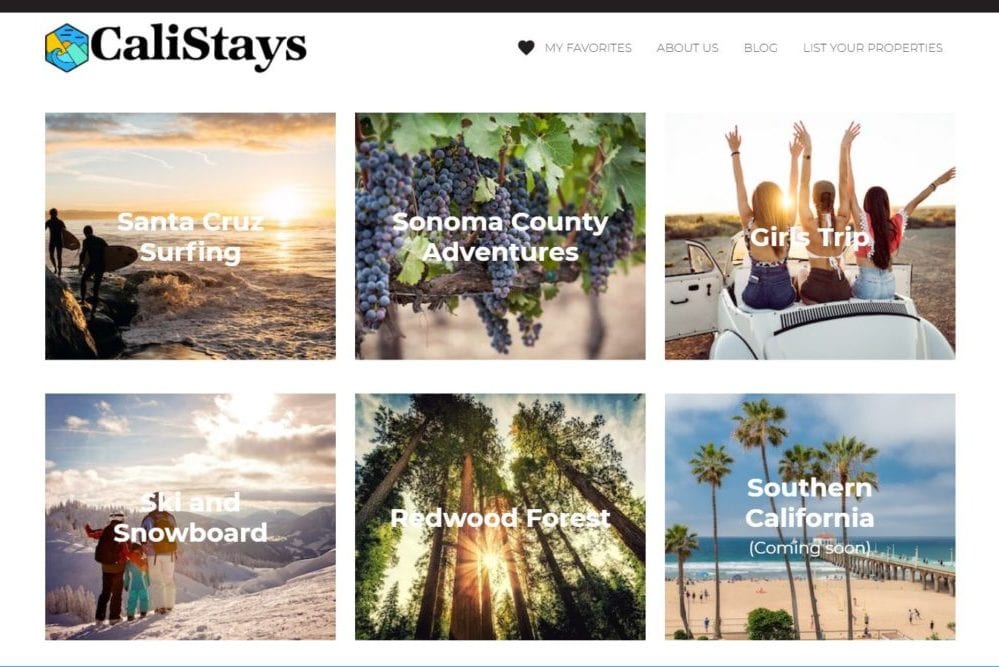
The Northwest Vacation Rental Professionals (NWVRP) announced this week it has launched a new regional listing site: CaliStays.com. The site promotes direct bookings for properties from Canada to Baja with direct communication between managers and guests and no traveler fees.

“This effort puts the independent manager back in the driver’s seat in the promotion of their local properties, thereby providing the best experiences and places to stay for west coast travelers,” Dan Eby, president of the NWVRP, said in a release.

CaliStays is currently onboarding properties. Listing on the marketplace is limited to NWVRP members and costs $66 per property per year.

The NWVRP partnered with Fetch My Guest to build the site. Fetch My Guest is a Capitola, CA-based marketing automation software provider.

“We are not surprised by the growth of the NWVRP membership and the addition of CaliStays.com,” said Vince Perez, CEO of Fetch My Guest. “California is a marquee vacation rental destination for outdoor activities, from our sunny beaches to our beautiful mountains. We expect to see the growth of these marketplaces a continuing theme in 2019 as vacation rental professionals and the travelers who support us continue the #BookDirect revolution!”

California and Lake Tahoe vacation rental managers can contact bookdirect@calistays.com for details.

Industry Veteran Michelle Marquis joins Lexicon Travel as Chief Revenue Officer

0

Lexicon Travel has added vacation rental industry veteran Michelle Marquis to its leadership team as Chief Revenue Officer. Lexicon is a channel management and revenue management platform that is designed to strategically place its client’s properties across industry-leading distribution partners by providing integrations, specialized merchandising, and revenue management services.

After spending over a decade at NAVIS developing and bringing to market its technology products, Marquis spent the last year working with an online reputation management tech platform for hoteliers.

We sat down with Marquis to talk about her experiences and why she decided to join Lexicon.


AH: What attracted you to Lexicon Travel? And what need is this company meeting that other channels managers are not?

Michelle Marquis: When the idea of joining Lexicon was put in front of me, I had some hard questions around this crowded space for Joel [Inman] and his team. I wanted to make sure I was joining a company that had some real differentiators. It was important that these differentiators were not just about the product itself, but also how the industry was served. The vacation rental (VR) industry is complicated and solving the distribution problem is not just a technical one, but a human capital one. Lexicon’s technology is by far the leader, specifically with how they can merchandise the unique properties and avoid commoditization of the product. Humans need to understand the three P’s of marketing anything (product, price, and position). Having a partner who is committed to developing easy-to-use technology and continuing education on the topic is the quickest way for a property manager to see increased revenues from their different channels. Also, their revenue management tools (currently free) are cutting-edge and perfect for anyone wanting to understand how to price their products among the different channels. Lexicon is positioned perfectly to lead this space, and I am so excited to help them do that!


AH: In coming back to the vacation rental industry, what are you most excited about?

Michelle Marquis: First and foremost, the people. Being in the VR industry is a little like being involved with a startup. Obviously, it is not a startup industry, but the changes are happening so quickly that is feels like one—it is exciting all of the time!

 

AH: In working in hotel and travel marketing technology for the last year, what have you learned that can help property managers—and what is coming for VRs that they haven’t seen yet?

Michelle Marquis: My experience before joining the VR industry was in the hotel industry so it was kind of like going back to what I knew prior to the last decade or so. Probably the funniest thing is that not much has changed in the hotel industry. I have always said the VR industry is a cousin to the hotel industry, and I still believe that. One thing that the hotel industry does really well is plan their distribution strategy. This will be an ongoing theme coming from Lexicon. There is a time and a place for most channels, you just need to plan this out. Secondarily, reviews! Reviews, reviews, reviews. There is so much data around the ability to increase rates with a review rating higher than your competitors.


AH: You’ve been on both the hotel side and the VR side. In looking at the OTA landscape, is commoditization of vacation rentals inevitable?

Michelle Marquis: As I mentioned above, if we merchandise like hotels do, we are in danger. As an industry, we need to show that every home or condo available is unique and priced based on that individual home or condo’s value. Many of the channels allow you to market who owns that listing. Pay attention to that when deciding which channels you want to have your inventory. Not all channels have the same policies or cost of sale.

 

You can see Michelle Marquis at the Vacation Rental Women’s Summit in New Orleans, Feb 19-20, as she discusses vacation rental distribution channels and leads a workshop on developing a fresh SWOT analysis for property managers.

Welcome back, Michelle!

The Inaugural Vacation Rental Women’s Summit Coming to New Orleans February 19-20, 2019

0

Hundreds of vacation rental professionals will gather for more than 50 sessions and events to celebrate, educate, and empower women in the vacation rental industry.

The vacation rental industry’s first ever women-focused event, the Vacation Rental Women’s Summit, is coming to The Ritz-Carlton hotel in New Orleans February 19 – 20. Presented by VRM Intel Magazine and the Vacation Rental Management Association (VRMA), the summit will host 500 professionals for two days and more than 50 educational sessions, plus keynotes from world-known figures like author Elizabeth Gilbert (Eat, Pray, Love) and Lady Carnarvon, countess and guardian of Highclere Castle, the real-life Downton Abbey.

“Our objective for this event is to bring the smartest and most influential women in the vacation rental industry together to inspire and empower attendees, encourage a sense of community, and discuss high-level topics specific to this unique audience,” said Amy Hinote, founder, VRM Intel. “We will also be offering opportunities for creativity, innovation, and discussion that have the potential to dramatically change the trajectory of our businesses; and we will be celebrating the pioneering women who helped build the vacation rental industry into the force that it is today.”

“At VRMA, we recognize that the vacation rental industry is being led by women in many destinations and in all facets of the business. Our association values education and networking, so it is a natural next step for us to sponsor the Women’s Summit,” said Jodi Refosco, president of VRMA and owner of Taylor-Made Deep Creek Vacations and Sales. “Now more than ever, it is important that we support events that speak to the unique challenges we all face as well as recognize the many accomplishments of our peers and colleagues. Our goal is to contribute to a professional environment where women feel empowered and inspired in a way that moves our industry forward.”

Keynote speakers will include Elizabeth Gilbert, author of Eat Pray Love and Big Magic; Lady Carnarvon, the Eighth Countess of Carnarvon and guardian of Highclere Castle – the real-life setting for Masterpiece’s Downton Abbey; Tina Weyand, CPO of HomeAway; and Mary Lynn Clark, president of Wyndham Vacation Rentals.

Sessions and presentations will cover the art of delegating, leadership, funding, change management, diversity, interviews with successful CEOs and entrepreneurs, building an influential executive presence, disruptive versus traditional models, navigating risk and competition, mentoring and coaching a winning team, hospitality and customer service, technology, balancing data with intuition, work–life balance, conflict management, and more.

The event will also feature two dozen hands-on workshops, peer group discussions, and focus groups, as well as an awards series to honor the pioneering women who helped build the vacation rental industry.

“VRM Intel is the leading source for information about the vacation rental industry, bar none, and the Women’s Summit has quickly become the must-attend conference of the year! We wouldn’t miss it,” said Claire Reiswerg, owner of Sand N’ Sea Properties in Galveston, TX.

Themed networking events will celebrate New Orleans culture and the keynote speakers, including a Downton Abbey-inspired High Tea sponsored by HomeAway, a French Quarter Brunch sponsored by Kigo, and the Mardi Gras Cocktail Party sponsored by Red Sky Travel Insurance.

Additional sponsors include Breezeway, CBIZ, Ascent Processing, Bluetent, CiiRUS, CSA/Generali, ICND, Key Data, Rentals United, Rented.com, Streamline, TruPlaceWeatherby Consulting, and Yapstone.

Registration is open at VacationRentalWomen.com until February 17 or until tickets run out. Registration costs $849 per person.

About VRM Intel Magazine

Founded by Amy Hinote in 2012, VRM Intel was created as a tool for the fast-growing and rapidly-evolving vacation rental industry. Its mission is to provide relevant industry-specific news, information, and resources to help professionals build their businesses, to address the challenges and opportunities facing the industry, and to positively contribute to the vacation rental ecosystem.

In October of 2016, it launched VRM Intel Magazine, a quarterly publication mailed to thousands of vacation rental professionals. The magazine contains articles written by industry experts addressing property care, marketing, technology, human resources, revenue management, owner relations, guest services, and regulations. Later that year, the company launched VRM Intel Live!, a series of regional events that brings together industry thought leaders and local vacation rental providers. VRM Intel Live! has visited Wilmington, Destin, Outer Banks, Portland, Denver, Gatlinburg, Orange Beach, London, and Breckenridge.

About VRMA

Founded in 1985, the Vacation Rental Management Association (VRMA) provides best-in-class education, networking, and professional development opportunities to make a difference for vacation rental management companies. VRMA works worldwide on behalf of our manager and supplier members to advance the vacation rental industry through education, information, networking, research, and advocacy.

Topsail Realty Vacations Acquires Blue Water Realty, OceanBreeze Properties and becomes Carolina Retreats

0
carolina retreats topsail island vacations blue water realty oceanbreeze properties

Topsail Realty Vacations announced this week it has acquired Blue Water Realty and OceanBreeze Properties, both of Carolina Beach and Kure Beach, NC. The roll-up of companies will now operate under the umbrella brand Carolina Retreats.

The addition of Blue Water Realty’s 60 homes and OceanBreeze’s 20 homes will bring Carolina Retreats’ total number of properties to approximately 300, making it one of the largest vacation rental management companies in the area. The company also owns the Loggerhead Inn, a 36-room boutique hotel in Surf City.

“The acquisitions of the companies on Carolina Beach were both strategic and opportunistic,” said Mike Harrington, founder and CEO of Carolina Retreats. “My overall vision when I came to Topsail from the Outer Banks was to one day build a powerhouse regional brand that could offer guests more diversified inventory, plus have more scale and resources for marketing and talent acquisition to provide the best owner experience possible.”

The acquisitions mark a big but unsurprising new chapter for Harrington, a long-time industry professional and leader. He started in vacation rental management with Hatteras Realty in 2005 and later served as CEO and general manager of Resort Realty, as well as president and board member of the Vacation Rental Management Association. He purchased Topsail Realty in 2015.

Harrington did his homework, he said, and although there were good companies throughout the southern NC coast, none were operating in more than one or two markets. “While each coastal town has its own unique identity, there was no overlap and consistent experience from beach to beach, which I think is highly frustrating to guests,” he said. “Our goal is to offer modern hospitality and vacation rental management that combines both tech and the best people to hit that sweet spot of income production and service from location to location than what is currently available. If we do it right, we think there is plenty of organic growth opportunities moving forward.”

The acquisitions came at especially good timing following Hurricane Florence. Harrington said market diversification had always been in the back of his mind, but the damage from the September hurricane made a case for not having all his eggs in one basket. Carolina and Kure Beaches are about an hour from Topsail and did not see the same level of damage. “It goes to show that with hurricanes, which is our main natural threat, that 30 to 40 miles between markets can have an enormous difference with potential damage,” he said. “Our take, especially now, is that finding ways to spread inventory around through adjacent or semi-adjacent markets is a new reality in risk management for our business in the long run.”

While Harrington has even bigger plans for Carolina Retreats, he said he has no desire to become a national brand. “Our goal is to be the absolute best in any market we operate in now and in the future within our niche of what we know. At this time, there is more opportunity than we can handle just within the Carolinas!” he said. “Also, we feel the name makes it much less intimidating to our owner base when all they care about is their home in their location. We are independent and local, and we want to portray that.”

Blue Water Realty was founded in 2002 by Ron and Teresa Clontz. “I think that Mike and his team are the perfect people to take over Blue Water Realty and lead it into the future,” the company’s former president Ron Clontz said in a release. “His extensive involvement and experience within the vacation rental industry, combined with their understanding of how to leverage technology and the ever-changing landscape of vacation rental marketing will greatly benefit all of our property owners and guests.”

OceanBreeze Properties was founded in 2007 by Cindi Jacobs. “While I love what I do and the people that I work with, it was evident that I needed help in order to provide the level of service and expertise needed in today’s vacation rental management world,” she said in a release. “In my discussions with Mike over the past year, I felt we had a very similar mindset when it came to how we view our clients as partners, and that was a very big factor for me. I feel very confident in the future of the company in such capable hands.”

“I am extremely excited for the opportunity to take over for Ron, Teresa, and Cindi in Carolina and Kure Beach,” Harrington said in a release. “By combining our resources and operations under a common brand, it will allow us to market on a more regional basis on a much more efficient scale.”

Blue Water Realty and OceanBreeze have combined under the name Blue Water Realty by Carolina Retreats and will operate out of Blue Water’s existing office in Carolina Beach led by Kelli Taylor. Jacobs will retire, Ron Clontz will stay on as an advisor until he retires later this year, and Teresa will run the real estate sales team. The entire Blue Water staff will remain on board. Topsail Realty Vacations has become Topsail Realty by Carolina Retreats and will run out of its existing office in Surf City.

How Did the Outer Banks Get So Famous, Anyway?

2

This is the short version of how the Outer Banks—a small and isolated string of barrier islands on North Carolina’s East Coast—grew from a collection of remote sand dunes and sleepy fishing villages to become a world-famous vacation destination in a relatively small amount of time.

Whether you’re new to the area, considering your first trip to the area, or are a long-time visitor, this is your story in many ways. If you visited many years ago but haven’t been back recently, it’s hard to conceive of the landscape changes but part of the magic of the place is that many of the same things remain equally as accessible as they were in the past while consumers have derived—through purchasing power—unparalleled value by sheer entrepreneurial competition and pro-consumer regulatory environment within the local economy.

What happened along the way that was so unique?

The short version is that a rare combination (not unlike Silicon Valley) of natural beauty, regional economic growth, improved regional transportation, highly competitive entrepreneurship, and government support created an environment that balanced nature, commerce, and capitalism in an remarkable way.

Before we take a look at the Outer Banks, it’s worth pointing out that three places really emerged at the same relative time across North Carolina. While the stories are different, the ingredients are remarkably similar. The Raleigh Research Triangle—at its inception a rural long-term bet on our education system at center of the State—and the arrival of Charlotte in the West as a global banking hub all occurred at a time that parallels the evolution of the East’s tourism mecca.


1975-1990: A Clear Groundswell

Nationally as the 1973 recession began to fade and millions of baby boomers began to come of age, the sense of economic growth linked to the post-war booms of the 1950s was still palpable in the minds of many vacationers seeking vibrant places to share with their families. As cars become more common, roads improved, and travel became affordable with increases in wages and consumer credit, the idea of a family vacation by car become an institution.

At a much more regional economic level, the Outer Banks had, thanks to a few small groups of people, begun to be publicized as a vacation destination outside of the historically regional vacation markets of Eastern North Carolina. Places like the Hampton Roads area, the Richmond market, and with better roads even as far as DC and Philadelphia started to see clips in local papers about investment opportunities along the Outer Banks.

Those small groups of people mentioned earlier were a unique mix of proud individualists with enough gumption to do something—they came from different backgrounds of course but what made them unique was a combination of risk-taking, an agreement that commerce was good, and a shared inclination to act. Some were marketers, some had financial backgrounds, some were hardcore entrepreneurs, and some went to Raleigh as elected officials. They all knew each other and all shared a vision for an Outer Banks that could and should grow.

With Ronald Reagan’s election nationally and Marc Basnight’s rise to power in Raleigh, economic vitality fueled with improved access options to the Outer Banks contributed to early booms in visitation, investments, and then as an outcome new home construction.  Most new construction homes started as second homes that could be rented for small amounts in between Memorial Day and Labor Day.

The introduction by Dick Brindley of Corolla Light–the resort community in formerly remote Corolla–marked a turning point.  As it began to take shape in 1986, Duck and Corolla were discovered in bigger numbers and in bigger markets–while the idea of an exact moment for the tipping point remains unclear, suffice it to say that all of a sudden the place was hot. There was a whiff of popularity in the salt air and economic conditions made access to capital, friendly interest rates, and the attractiveness of a growth market in real estate an enjoyable and in some cases speculative topic for locals and visitors alike.


1992-2007: Emergence as a Major Market—The Wave Crests

Another short-lived recession that followed the first Gulf War gave way to several years of encouraging economic growth in the region particularly for would-be investors familiar with the Outer Banks.

By this time, a small group of dedicated entrepreneurs had emerged—names like Joe Lamb, Jimbo Ward, Tim Cafferty, Doug Brindley, Paul Breaux, and Doug Twiddy all took risks and built companies focused on selling real estate, helping build homes, and renting those homes at ever higher sizes and price points as a reflection of the increasing popularity of the area.

Government emerged as an ally to business as well, with key national differentiators emerging in two ways.

First, the North Carolina legislature took steps to develop a pro-consumer approach to reserving a vacation week by requiring companies to keep any funds involved for future reservations in a trust account. This is a distinct difference from other regional states like Florida. By doing so, the risks of boom-and-bust among local companies receded as evidenced today by so many long-standing family firms. Visitors and homeowners alike derived enormous value by increased competition among firms as firms were forced to innovate and compete quickly to maintain and grow market share.

Second, with State Senator Marc Basnight’s pivotal leadership role in the state legislature, the Outer Banks began to see capital-level investment in transportation.  Things like new bridges, fast-four-lane roads connecting us to Virginia, capital investments for Outer Banks attractions (four of the state’s Top 20 most visited public sites are on the Outer Banks), and general responsiveness to commerce in Raleigh all gave local entrepreneurs distinct regional advantages as continuing economic booms led to more and more demand for vacations and vacation homes in the area.

Third, the digital revolution brought visitors the internet and with it previously impossible abilities to compare, shop, and choose based on good information from among a myriad of vacation options. The internet in many ways removed any mystery to an Outer Banks stay and also elevated again the competitive atmosphere for local companies that in turns benefited so many visitors and investment homeowners alike.

The period of time leading up to 2007 saw a robust increase in local second home construction and increased traffic from Northern Virginia, New York, New Jersey, and Pennsylvania areas. The Great Recession, however, would put a temporary end to new construction but not, of remarkable note, the family vacation.


2008-2018:  Moving to a Mature Market—Shorebreak

As the Great Recession of 2008 unfolded, new home construction virtually vanished and the sales market took a sharp dive as well. Many other emerging resort areas struggled with the new financial reality of consumer hesitancy but the Outer Banks, owing perhaps to its proximity as a well-known drive-to destination and also its head start in many ways as a vacation location, weathered the recession relatively well through still strong vacation rental markets.

From these still-strong rental segments, local companies interested in growth began to participate in ever-growing home complexity, luxury offerings, and scaleable rental experiences for ever-more discerning guests. With a decided drop in new home growth, local companies were again forced to excel simply with existing inventories and existing customers. In hindsight, the trends of boom-and-recession created a pendulum-effect based on a willing (or unwilling) environment for private sector innovation toward both growth (when possible) and efficiency (as needed).

While the 2008 recession was pronounced, the micro-market of the Outer Banks rebounded quickly especially in the vacation rental market that compliments so well the restaurant and retail markets. Home construction began to reappear (based in part on low-interest rates coming from quantitative easing) in good numbers around 2012 and with that emergence came a new focus on truly high-end and larger scale homes owned by sophisticated investors looking for alternative investments. These homes, targeted to an affluent and experienced vacationing public, announced the arrival of a bonafide luxury segment within the mature Outer Banks sales and rental community

This regional trend was reflective of larger national trends in rising incomes for groups of people for whom luxury travel became normal. Linked to larger national trends in rising incomes came a larger global awareness of vacation rentals as a viable travel option. As the vacationing public as a whole became more aware of internet-based vacation aggregators such as HomeAway, franchise options—both in sales and rentals—emerged in the competitive landscape on the Outer Banks.

Once again, things changed and local companies were forced to evolve to meet not only heightened guest expectations but also national competitors keen on luxury travel access.


2019 and Beyond: Sea Spray

As Morgan Housel points out in his remarkable piece about the larger post-war U.S. economy, economics is simply a story of cycles. The Outer Banks has seen several cycles in time over the past several decades but has emerged as competitive as ever based on a rare combination of nature, nurture, government, infrastructure, and proximity.

What made these beaches famous over the years—a great place to come with your family and an attractive investment return over time—remains intact.  As another cycle appears over the horizon, we know that things come and go and that optimism remains in the long-term.

As a barrier island linked delicately to the sea, we also know that even the ancient mariners cast a weary weather eye toward the horizon scanning for the sudden change. The only thing that’s changed really is the size and the complexity of the boat as it’s a much bigger boat now than it once was. The sea, however, remains as our visceral example of uncertainty toward the future.

Airbnb and HomeAway Win Preliminary Injunction Against New York City Law

0
new york city homeaway airbnb

A federal judge awarded Airbnb and HomeAway today with a preliminary injunction to stop a New York City’s short-term rental law from going into effect. The law would have required the platforms to provide property owner data to the city to aid in the enforcement of its ban of non-owner occupied short-term rentals in most apartment buildings, regardless of whether a property is suspected of illegal activity. The data sharing ordinance would have gone into effect on February 2.

“Today’s ruling is a victory for HomeAway and our customers and sends a strong signal to other cities looking to emulate New York City’s misguided law,” said Philip Minardi, director of policy communications for Expedia Group, which owns HomeAway. “We applaud today’s decision, in which the court recognized the constitutional deficiencies in the city’s new short-term rental law and agreed that cities cannot demand private user information from HomeAway without following the proper legal process. HomeAway remains committed to protecting the privacy of our local homeowners.”

“The decision today is a huge win for Airbnb and its users, including the thousands of New Yorkers at risk of illegal surveillance who use Airbnb to help make ends meet,” said a spokesperson for Airbnb. “The court today recognized the fundamental importance of New Yorkers’ constitutional rights to privacy and the sanctity of their own homes.”

In their motions to block the ordinance, Airbnb and HomeAway argued that the data sharing ordinance violates the Fourth Amendment and Article I, Section 12 of the New York constitution, which guarantee the right to be free from unreasonable searches, seizures, and interceptions; violates the Stored Communications Act, which prohibits providers of remote computing services or electronic communication services from knowingly divulging subscriber or customer information to any government entity without user consent or other legal processes; and violates their First Amendment rights by forcing them to communicate a message they don’t want to in telling users they must consent to the sharing of their data.

Though the injunction is temporary, the win is a reason for optimism for the industry in the largest regulatory battle in the country. To win a preliminary injunction, the plaintiffs had to demonstrate a threat of irreparable harm from the ordinance, a likelihood of success in overturning the ordinance, and that the public’s interest weighs in favor of granting an injunction. The court held that Airbnb and HomeAway met these requirements and are likely to succeed on their claim that the ordinance violates the Fourth Amendment. The full decision can be read here.

According to AlltheRooms.com, there are more than 58,000 vacation and short-term rentals in New York City. (Update: an earlier version of this article reported a count of 19,000 listings.)

Unlocking Travel for All: How VillaKey is Making Vacations Accessible for Families with Autism

0
villakey autism accessible travel

“I got an opportunity just a couple weeks ago to spend some time with one of our families in Orlando,” said Alice Horn, founder and CEO of Miami-based VillaKey. “It was really kind of emotional for me. The mom was walking around telling me how much it had meant to her son and her whole family to have a vacation experience and make vacation memories just like any other family. The little boy was over-the-moon excited that there was a Mickey-themed room and a movie theater.”

While this may seem like an average vacation rental guest story, this experience was special: the little boy, Jason Lanza, has autism spectrum disorder (ASD). ASD is a developmental disability that encompasses a range of conditions that can cause behavioral, social, and communication challenges. A report published last year by the Centers for Disease Control found that the prevalence of autism in children is about one in 59.

According to the Autism Society, more than 3.5 million Americans live with an autism spectrum disorder. Travel is particularly difficult for many families with autistic children because they may have trouble adapting to change in their surroundings and routines, can become quickly overwhelmed by sensory input, can wander off in an unfamiliar location, and experience other issues.

Lanza and his family stayed in one of VillaKey’s Orlando homes specially designed to help address these challenges and to make travel easier for families like his. The home is a part of VillaKey’s autism-friendly collection, a selection of 200 properties and growing.

The company works with homeowners and property managers to identify and upgrade homes with the following criteria:

  • Quiet location
  • Soft lighting, soft or neutral colors, soft sheets, and fragrance-free cleaning products to minimize stimulation
  • Pet friendly is strongly recommended because many kids with ASD have service pets
  • Alarms on exit doors to alert caregivers if a family member with ASD wanders off
  • Security fence around a pool
  • Full kitchens so parents can cook specialized meals because kids with ASD often have allergies and other dietary sensitivities

Although it manages a small number of properties, VillaKey is primarily a marketing platform and currently lists about 1,000 total properties across Orlando, Miami, and Colorado. The company is working with professional property managers to expand its autism-friendly collection and its wider portfolio in clusters around attractions and destinations that are appealing to families with ASD, including additional Florida beach communities, San Diego, Pigeon Forge, and Myrtle Beach.

Vacation rentals, private homes by nature, also add a layer of comfort for guests. “In the vacation rental industry, we have the opportunity to control the environment for a family much more so than in a hotel,” Horn said. “When you walk into a crowded hotel lobby, there’s a lot of people, noise, stimulation, and sensory input for a family and a child, and that can be a tough start to a vacation,” she said. “But when you walk into a home, its welcoming, calm, and familiar. A lot of kids have trouble with change, but a home environment makes it much easier for the whole family.”

Many of the families who VillaKey staff members speak with have never traveled before because of how difficult travel can be, and one of the biggest challenges is trust. “It’s really important for them to know that this is a solid opportunity and that the team behind VillaKey cares enough to learn about their needs, and part of that means certification,” Horn said.

Last fall, VillaKey became the first vacation rental company to become certified in autism travel by the International Board of Credentialing and Continuing Education Standards (IBCCES). The company is now a Certified Autism Center (CAC), and its staff are Certified Autism Travel Professionals (CATP), both of which enable the company to adequately serve the needs of families with autistic travelers young and old.

“Our program competencies are based on the training content as it relates to various settings, so applicants have a broad-based view of not only what autism is, some common signs or needs individuals on the spectrum have, and ways they can enhance the travel experience,” said Meredith Tekin, president of IBCCES. “We want our professionals to understand their clients’ needs and follow an evidence-based program so that they can use their existing knowledge of the travel industry along with their new autism-specific training to ensure an amazing experience for all families.”

IBCCES helps promote its Certified Autism Centers to a market it values at $262 billion. Certified companies receive badges, press releases, and listings on IBCCES’s online directory and AutismTravel.com, which reaches 5.6 million parents, therapists, and teachers globally. VillaKey is now featured among 36 certified autism centers around the world, including zoos, resorts, schools, hair salons, and other businesses.

Additionally, VillaKey helps extend a comfort level and trust well before guests arrive. The company partnered with the University of Miami – Nova Southeastern University Center for Autism and Related Disabilities, to develop pre-arrival materials to help educate parents and children. One is a checklist with things such as test runs to practice what it will be like to stay in a vacation rental and packing reminders for autism-specific items, including sensory-friendly toys and the child’s favorite sheets. Another is an e-book about going on a trip and staying in a vacation home that parents and kids can read together to familiarize themselves with the journey.

Another barrier to travel for autism families is cost. According to Autism Speaks, care for a child with autism costs an estimated $60,000 per year through childhood. Care for a person with an intellectual disability costs on average $2.3 million over a lifetime, compared to $1.4 million for someone without an intellectual disability. Vacations aren’t always in the financial cards.

VillaKey embraced this market by helping to break down this barrier too. Last April, it launched VillaKey Cares, a program that donates 10 percent of net profits from every reservation to help support travel expenses for families affected by autism who have limited resources. The Lanzas were the first family hosted through this program.

“As a team, we all believe that it’s important for any business to have a social component and a mission beyond the bottom line,” Horn said. Because the number of kids with ASD is growing so rapidly, “It’s going to be incredibly important, not just for the travel industry but for all industries and business, to adapt and think about how to take care of the needs of this population,” she said.

Beyond all the social good VillaKey is doing for an underserved traveler segment, pursuing niche markets is simply savvy business. “We all need to find some way to set ourselves apart with the commodification of the industry . . . Having some kind of uniqueness is incredibly important,” Horn said. “To be able to do that in a way that’s benefiting families and society is an added bonus.”

8 Most Surprising Vacation Rental Industry Developments in 2018

13

2018 was a whirlwind for those of us who cover the vacation rental industry. The pace of news about funding, acquisitions, regulation changes, and tech developments was startling; and several of these stories made our jaw drop. As we launch into 2019, let’s take a look back at the most surprising events and activity in the vacation rental industry in 2018. While it was hard to narrow down, here are our top 8.


1. Wyndham Vacation Rentals: Corporate Split and Sale of European Vacation Rental Business for $1.3 Billion

In February 2018, Wyndham announced that it had sold its market-leading European vacation rental businesses for $1.3 billion to an affiliate of private equity firm Platinum Equity. The news came on the heels of Wyndham Worldwide’s split into two publicly-traded companies: Wyndham Hotel and Resorts (NYSE: WH) and Wyndham Destinations (NYSE: WYND) which includes the timeshare  business and North America’s vacation rentals.

There were two things that made Wyndham’s activities surprising. First, while looking for a buyer for Wyndham’s European vacation rental businesses, there were at least two other qualified buyers at the table who had performed extensive due diligence and had put together comprehensive plans for the transition and long-term success. According to multiple sources, Airbnb was a part of one bid for the company, while another included an impressive team of seasoned vacation rental operators, experts and analysts. In spite of the experienced options, in the end, Wyndham selected a last-minute Platinum bid, which felt to many industry observers like a short-sighted move to take the highest bidder, regardless of downward adjustments that would inevitably have to made as the deal moved forward toward closing.

Second, the decision to put the North America vacation rental business under the timeshare business instead of the hotel business was, according to inside sources, an eleventh-hour decision—and one that many believe will haunt the company as more hoteliers move into private home accommodations. Wyndham’s vacation rental business was the largest in North America until Vacasa took the lead in 2018. And speaking of Vacasa . . .


2. Big Moves at Vacasa: $207+ million in Funding, Co-founder Leaves, Oasis Purchase, IPO, and More

The developments at Vacasa have been dramatic and fast-moving. In February 2018, co-founder Cliff Johnson exited Vacasa, a move that shocked the entire vacation rental industry. In October 2018, Vacasa announced it had raised an additional $64 million Series B-2 round from existing investors, bringing Vacasa’s funding total to $207.5 million (Almost four times the amount raised in ResortQuest’s IPO).

Also in October, Vacasa announced that it had purchased Oasis, an urban short-term rental provider that has quite a history. According to insiders, Vacasa got an amazing deal on the company, in spite of significant investments in the company from AccorHotels and Hyatt. In 2016, AccorHotels acquired a 30 percent stake in Oasis, as it grew to list more than 2,000 non-exclusive properties in 22 cities worldwide and developed a strong B2B element, marketing its urban properties to business travelers. In August 2017, Hyatt injected a “significant investment” into the company, and AccorHotels took the opportunity to exit. However, after working with Hyatt, Oasis lost inventory. By the time Oasis sold to Vacasa, the company displayed only 826 listings—over 80 percent nonexclusive—in 17 markets, a 59 percent decline in inventory in 18 months. At Skift Global Forum, Hyatt CEO Mark Hoplamazian discussed Hyatt’s investment in Oasis and what the company has learned about vacation rentals from these businesses. “We are high on companies that have control over the inventory,” he said.

In 2018, Vacasa also launched a real estate referral program and entered into homeowner association (HOA) management, and the company has been moving toward a potential IPO. However, at Phocuswright in November, CEO Eric Breon seemed to be cooling on the idea of going public in 2019 saying, “It’s not an end goal. It’s not like my life gets better once that happens.”


3. HomeAway Announces—and Later Walks Back—Online Attribution and Auditing for Vacation Rental Managers

In early 2018, HomeAway made a series of announcements that rocked the vacation rental management world, including a 25 percent increase in the cost of listing subscriptions, new auditing requirements, rate-parity language in its premier partner pledge, and a new fee assessment for property management which became known as “match back.”

With the addition of a variable fee for travelers, HomeAway eliminated tiers and increased its subscription fee from $399 to $499. But that wasn’t the decision that disturbed managers. HomeAway also announced it will invoice an additional 10 percent fee for direct bookings made that HomeAway can attribute back to inquiries on their websites using its integrations with PM software systems. The policy was based on an assumption by HomeAway that any revenue derived from a guest who booked directly with a vacation rental company—and who had previously inquired on a HomeAway site—should be attributed to HomeAway, and HomeAway is entitled to ten percent of that revenue.

“. . . subject to review and audit, (and) if the Company (HomeAway) finds that a certain booking of a Listing originated on the HomeAway Network but was not properly reported as attributable to a HomeAway Lead under the above analysis, then the Company will notify PM of such discrepancy, and will be entitled to assess a commission or Off-Platform Booking fee on the amount charged for such stay unless PM provides reasonable evidence to the contrary.

After substantial push back from property managers, HomeAway later walked back the initiatives saying that attribution is now voluntary for PMs and the auditing requirements would be removed. CCO Jeff Hurst said, “In the case of audit rights, we listened to the feedback of property managers and have removed audit rights from our terms and conditions.”

“My biggest surprise of the year was HomeAway’s roll back on their match back program,” said Tim Cafferty, president and CEO of Outer Banks Blue and Sandbridge Blue. “It was a rare instance of strength of the property manager going against corporate greed and actually winning.”


4. Several Market-Leading Property Managers Remove Listings from HomeAway, TripAdvisor, Airbnb, and Booking.com as #BookDirect Message Grows

With all of the changes at Expedia’s network (including HomeAway and VRBO), Airbnb, Booking.com, and TripAdvisor, dozens of large, market-leading property management companies have decided not to list their inventory on these mammoth marketplaces. The decision is not only based on cost, but on their companies’ inability to adequately communicate with consumers, set expectations, and manage the end-to-end guest experience for bookings coming from these channels.

“We just didn’t want to be a victim of short-term thinking,” said Michelle Hodges, CEO of Meyer Vacation Rentals, a leading vacation rental company managing over 1,100 homes on Alabama’s Gulf Coast, who joined dozens of large, market-leading property management companies that have decided to remove listings from HomeAway.

The most important podcast of the year is Sarah and T’s interview with Meyer’s Michelle Hodges, as she explains the “why” behind its decision to remove 1,150 Gulf Coast listings from Expedia’s sites.

While many newer companies are solely reliant on these sites for bookings, established management companies and owners are not—especially in markets that have strong drive-to feeder markets and a high percentage of repeat guests.

North Carolina’s Twiddy & Co. is also not listing its 500+ luxury homes on the big marketplaces, joining other NC property managers who manage over 7,000 listings. “I think in terms of partnering with listing sites our philosophy has been pretty straightforward over the years. We like to stay independent and agile, and we believe that people still do business with people,” said Clark Twiddy, who manages over 500 homes in North Carolina’s Outer Banks. “When we enter into a partnership there is a risk that our competitive advantage—our hospitality—gets diluted by things outside our control. We might lose a few bookings, but we’re unwilling to take the reputational risk for someone else to get in between us and our customers.”

Many large property management companies in established vacation rental destinations never listed their inventory on HomeAway or the other channels, a fact that will surprise analysts. “Over the years we sometimes agonized, and always analyzed, our decision, and we debated joining the many companies who were doing it,” said Claire Reiswerg, owner at Sand ‘N Sea Properties, which manages over 200 homes in Galveston, TX.. “Instead, we stuck with direct bookings. In the end, our business model has saved untold amounts of technological and policy headaches and of course, it has saved us lots of money. It also made us better at our primary job: keeping guests happy and coming back to Sand ‘N Sea.”

The non-branded Second Annual #BookDirect Guest Education Day is set for February 6, 2019, to let travelers know that there are many advantages to bypassing third-party channels to book directly with management companies and homeowners. Last year, property managers and homeowners came together to reach over 4 million guests with direct emails and over 25 million on social media platforms.

For analysts who might be counting, we’ve identified over 250,000 professionally-managed, high-producing luxury home rentals in the US in large vacation rental markets that are not listed on the channels.


5. PM Software Shakeup

Changes at leading software companies triggered hundreds of calls and emails to VRM Intel in 2018. While it is true that HomeAway’s PropertyPlus system support is coming to an end, and the announcement of the shutdown of Escapia websites affects hundreds of property managers, the largest reason for reaching out was news of a private-equity-funded rollup of technology providers in the vacation rental industry.

According to multiple sources, private equity firm Greater Sum Ventures (GSV) began rolling up existing technology companies by initiating the purchase of majority stakes in Streamline Vacation Rental Software, Virtual Resort Manager, Rental Guardian, Bluetent, BizCor and several other industry tech providers that include website development companies, payment processors, and more. Headquartered in Knoxville, Tennessee, GSV is a long-term equity investor that provides capital to growth-oriented software/SaaS, and technology-enabled business services companies.

GSV declined to comment.

How will service at these companies change? We don’t know. And GSV isn’t talking, even though they have been present and vocal at industry conferences in sourcing acquisitions. We have seen three companies purchase multiple software providers in the vacation rental industry (HomeAway, RealPage, and Airbnb), and we’ve had the chance to observe how those acquisitions were handled. However, as a private equity company, GSV may take a different approach. While we have had reports that GSV has been contacting ancillary service providers to renegotiate partnership contracts and is actively seeking additional companies to add to the mix (including a channel manager), GSV has yet to communicate with us or any other media source about its vision or plans.

In addition to this rollup, HomeAway’s Cliff Vars stepped down as HomeAway Software’s General Manager to take on a new role at Expedia, and HomeAway named Ryan Hutchings as interim GM. In December, LiveRez let go key members of its leadership and sales teams.

As we are seeing in the global economy, uncertainty causes angst in the markets. In vacation rental technology, it is also true as vacation rental managers attempt to make critical decisions in choosing software without having access to the information they need to make the decision that is right for their businesses.

If all of the leading US vacation rental software companies are in a state of transition, the industry is likely to see little innovation from these providers in 2019. And it appears they are all in the same boat. As a result, PMs are expected to look more to plug-and-play solutions to meet their needs for property care, data/reporting, channel management and merchandising, revenue management, and customer relationship management (CRM).

In his article Vacation Rental Software: The Good, the Bad, and the Ugly, Simon Lehmann said, “The incumbents (several of whose tech platforms are between 6 and 10+ years old) aren’t easy to use and simply aren’t innovating—not technologically, commercially, or in terms of customer success . . . Furthermore, the systems—even the leading ‘all-in-ones’—are disconnected, often leaving managers with no choice but to pay for, and sign into, 5 to 10+ separate providers.”


6. Massive Investment in Urban Multi-Family, Short-Term Rental Companies

The world of short-term rentals in urban, multi-family housing developments became a power-play arena in 2018.

The numbers are shocking—$135 million to Sonder, $62 million for Stay Alfred, reports of a $75 million investment from Airbnb in Lyric, Vacasa’s purchase of Oasis, Expedia’s purchase of Pillow and ApartmentJet, and Airbnb’s acquisition of urban PM Luckey Homes.

Will we see a Hilton or Marriott—or even an Airbnb—Apartment Collection? Big bets are being placed on the affirmative, and there is a current and highly competitive race to the front.

The increase in consumers’ desire to stay in short-term rentals, along with potential high occupancy rates in city centers, makes this an attractive growth opportunity. However, there are risks. The industry has yet to see an urban rental model that truly delivers hotel-level quality and services in multi-family housing developments; and with a population shift to city centers, increased regulation of urban housing is expected. In addition, the margins and retention rates are higher for whole-home vacation rental inventory.

Not everyone is bullish on this sector. In a panel at Phocuswright, we asked Vacasa CEO Eric Breon, in light of his purchase of Oasis, if we could expect to see a Vacasa/Sonder or Vacasa/Stay Alfred acquisition or partnership.

“The space scares me a lot right now,” Breon answered. “There’s a lot of bidding. They’re trying to get growth by buying market share by outbidding each other on spaces. I think that’s an unhealthy climate for the long term. When you look at individual homes, it’s ridiculously sticky. We have an owner on a home—one owner, one contract, a commission rate. That’s very, very sticky. When you think about leasing a multi-family building on a two-year lease, what comes up in two years? It’s going to be up for bid again. So I think it’s important for us to be a part of it just because we have guests looking for that accommodation, but it’s also going to be a small play for us.”

Solidifying a hotel-like brand in urban multi-family units will take time, and any hotel that leaps into this space is willing to accept significant losses in both money and resources in order to take the lead. The competition and funding activity in this sector is going to be interesting to watch in 2019.


7. Immediacy in Customer Service and Text Adoption

Immediate gratification is the new normal, as near-real-time responsiveness to guests and owners became an expectation in 2018. According to Clark Twiddy, CAO of Twiddy and Company in North Carolina’s Outer Banks, “We’ve noticed that guests and owners are less and less patient with an inefficient or clunky process—they simply will not wait through it. They will seek faster workarounds . . . With the enormous shift to online and digital engagement, we’re still learning that online engagement does not lead to less phone volume–in fact, it may even increase it.”

Vacation rental management companies rapidly adopted mobile text-based customer service and communications in 2018. “Even though we knew it was coming, the adoption of text-driven engagement has been much faster than we anticipated,” said Twiddy. “Guests seem to prefer to communicate that way more frequently than any other option.”

The shift to 24-7 support has been challenging. For in-market companies, the challenge is in staffing qualified on-site staff. For multi-destination managers, national call centers do not have in-market knowledge. In the article Instant Gratification and the Five-Minute Golden Window Alexa Nota writes, “Expediency is a nonnegotiable, especially for pre-booking questions—but also the in-home (I-can’t-work-the-toaster) as guests’ experiences during their stay are part of the sales process for future reservations. Property managers have no choice but to keep up on both sides to compete with each other and maintain a huge upper hand against the OTAs.”


8. Google

Google’s Richard Holden, vice president of product management, and Rob Torres, managing director of advertising and marketing for Google’s travel sector, spoke with Sean O’Neill at Skift Global Forum in New York and confirmed its intentions to add vacation rentals in the same way they display hotels.

To be fair, Holden indicated that adding alternative accommodations has not been easy and admitted it had been spending more time on hotel-like inventory than single homes. “We’ve struggled with what is the right way to integrate those offerings,” said Holden. “We’ve added it as a filter . . . We will be—in the near future—moving into offering [alternative accommodations] as well. We feel it’s huge.”

RedAwning CEO Tim Choate has been working directly with Google to test its vacation rental booking platform. “We are now live with Google Hotel Ads,” Choate said. “There is no doubt their movement into the vacation rental space will change the way travelers search for and book vacation homes, and we will be part of it from the ground up. So much to look forward to there.”

In the Phocuswright panel with VRM Intel, John Banczak, co-founder and chairman at Turnkey Vacation Rentals, said, “We’re looking forward to what Google has to offer . . . If you think about how Google operates, it is very clear how to work with Google. If anyone’s ever managed any type of Google campaign, you really know how to manage it. You know what you get, you know why you’re positioned in a certain area, you know why it costs what it does. You don’t get that from the HomeAways or the Airbnbs of the world . . . For us, to the degree a channel makes it hard for us to understand how to drive revenue through it, then you naturally have to look for another channel.”

Banczak continued, “And I think that’s what’s happening right now with the HomeAways of the world—if you don’t know how to manage a channel—then you either just stare at the screen and then hope for the best or you go find an alternative. We’ve been doing a lot of finding alternatives so our direct traffic is way up. I think our brand is obviously starting to catch on. We have got more repeat visitors now. But once the Google ads launch in the way we expect them to, I expect that to be a sizable dent into what we get from HomeAway.”

However, David Angotti, co-founder at SmokyMountains.com warns vacation rental managers in Google Hotels: Not the Magic Bullet, “Even if your local brand overcomes the brand favoritism that Google typically defaults to, consumer confidence is inevitably higher with Booking or HomeAway as opposed to a local brand. Complicating matters further, additional fees (including the traveler fee) are not passed into the [Google] card rates, which creates the illusion of price parity until deep in the booking process.”

Angotti also discussed commission rates on Google, “Depending on the competition in your rental market, a bid between 10 and 15 percent (rent line-item only) will be the norm. In addition to Google’s commission, you can expect an additional 2+ percent in technology costs that will be charged by the authorized Google Hotels Integration Partner. The aggregate commission is similar to the typical 15 percent Booking.com commission or the 12 percent Airbnb program that eliminates guest fees.”

Angotti added, “However, it is worth noting that unlike a traditional OTA, the Google Hotels transaction will take place on your website and you will own the guest record.”

And that may make all the difference.

Wyndham, TurnKey, VTrips, Vacasa Discuss HomeAway, Google, and What OTAs Can Do Better

0

We had the chance host a panel of executives at Phocuswright’s conference in Los Angeles, with the largest vacation rental companies in the US and talk to them about several issues facing short-term rental companies, including third-party marketplaces.

One interesting topic discussed among these leaders was Google’s entry into vacation rentals, HomeAway’s performance, and what OTAs can do better in distributing vacation rentals.

Watch the entire interview. 


AH: What could OTA’s do better?

Steve Milo (CEO, VTrips): Execute. You left off one of the OTAs, TripAdvisor Vacation Rentals. Four years ago, they were number two in terms of driving revenue and traffic to a lot of the companies up here. TripAdvisor Vacation Rentals did not execute. And the lesson right now, when we have more demand than supply, is that people in lodging have the power to pick and choose which places we want to distribute our inventory. So that means we need an OTA that can—not just talk, not just try to sign us up to a contract—but actually execute in the category in a way that is sustainable and bookable. Some of the companies have done very good job, some have done a not-so-good job.

Expedia, right now, is less than 1 percent of our revenue. They have not executed on this category. On the other hand, Google, which I would say is an OTA, continues to be a bigger and bigger component of our ad spend and our revenue because they are executing and we are looking at them and working with them and they will eventually start doing CPA directly to our site where we can have customized landing pages, particularly set up on a dynamic pattern with conversions. Remember, there is no rate parity requirement for alternative accommodations. We can always have the lowest price on our website. Google is going to be the equalizer here. The OTAs have to start to execute or they are going to be the rear view mirror for Google.


AH: Eric, Do you agree? Do you feel like Google is a game changer for you from a customer acquisition standpoint?

Eric Breon (CEO, Vacasa): Not from our perspective. I think we were built on the OTAs and I think, we’ll continue to be on the OTAs. I think we’ll have the ability to be [on Google] . . . I would say it’s not a game changer for us.


AH: Lino, you’ve been working on your brand [at Wyndham]. Where are you on direct booking now?

Lino Maldonado (VP, Wyndham Vacation Rentals): So it depends largely on the market. Some of our ski resorts are much more heavily dependent on the OTAs. We look at OTAs as very strategic partners. We don’t have inventory distributed on every channel every day. We’re very selective. Some channels are much better for larger homes. Others are perfect for condominium-type product that’s more similar to hotels. So I don’t see Google putting everybody out to pasture, but I do feel like that many of the channels can do a much better job at showcasing our inventory . . . To this day, I think it’s been a hodgepodge. Some partners we have done extremely well with. HomeAway was one of those partners that we started with back in 2007, and we did an extraordinary amount of business with them. And then they sold to Expedia, and things have slowed down a little bit and now it feels like we are being stuffed in a box.

AH: Have you seen your percentage of bookings coming from HomeAway decline since Expedia purchased the company?

Lino Maldonado: Yeah, we have. And we also have some information that was flowing through us directly. Like the guest email address [and] the guest phone number where we would do a retargeting for those guests, if they didn’t commit on the first visit. That has gone away since. That was a pretty big initial hit. And actually that same year we had a tremendous uptick in [vacation rental home] owners coming directly with us for full-service management because they lost their only marketing channel that they had. Many of them were only distributing on HomeAway at that time. And that change really negatively impacted the individual owners and chased them our way.


Amy Hinote: And John, most of your bookings are coming from HomeAway, right?

John Banczak (Co-founder and Chairman, Turnkey Vacation Rentals): They’re our largest distribution channel. For sure, it has gone down over the past year. But they don’t generate over half of our bookings.

We’re looking forward to what Google has to offer. HomeAway has made it harder over the past year. What would I like to see from them? Well, if you think about how Google operates, it is very clear how to work with Google. If anyone’s ever managed any type of Google campaign, you really know how to manage it. You know what you get, you know why you’re positioned in a certain area, you know why it costs what it does. You don’t get that from the HomeAways or the Airbnbs of the world. It’s hard to manage. You put a home on there one day, it may have a great ranking; and the next day, they do some bookings and then it falls in ranking. For us, to the degree a channel makes it hard for us to understand how to drive revenue through it, then you naturally have to look for another channel.

And I think that’s what’s happening right now with the HomeAways of the world. If you don’t know how to manage a channel and then you either just stare at the screen and then hope for the best or you go find an alternative. We’ve been doing a lot of finding alternatives so our direct traffic is way up. I think our brand is obviously starting to catch on. We have got more repeat visitors now. But once the Google ads launch in the way we expect them to, I expect that to be a sizable dent into what we get from HomeAway.

Is There a Generational Shift in Traveler Behavior? 

1
Summer vacations - Girls taking selfie on the beach

In traditional vacation markets, the vacation rental industry has enjoyed a 30-year trend of multigenerational family trips. However, changes in millennial behavior are creating disruption in the traditional family vacation. 

Historically, the large, multigenerational family vacation consisted of a matriarch/patriarch who footed most of the bill for a large vacation home for the children and grandchildren to gather every year. The ultimate score for a vacation rental manager was to capture and retain the same family for multiple years of annual vacations in large rental homes.  

revised generational birth yearsRecent data in some conventional vacation rental markets, however, is beginning to indicate a shift in family travel behavior as millennials are experiencing a late start to “adulting,” demonstrated by living at home longer and delaying marriage and parenting.  

The reasons for the changing behavior are becoming more validated. The millennial generation is the first since the Great Depression to grow up in a recession—one that peaked in 2008. According to Jeff Fromm, author of Millennials with Kids (a must-read for vacation rental marketers looking to reach millennials), this generation has not experienced the economic prosperity enjoyed by previous generations, and this has shaped how and when they form their families and raise their children. So far, only 26 percent of millennials are married, compared to 36 percent of Gen Xers and 48 percent of baby boomers when they were the same age. 

Although societal shifts, a changing workforce, and the economic landscape contribute to this change, low wages, student loan debt, and exponentially increasing rents are also factors. Analysts no longer blame millennials for being lazy or unambitious but attribute the shift to these macro-conditions, which have encouraged the most tech-savvy and educated workforce in history to live at home, take underpaying jobs, and feel disenfranchised from the American dream they were promised.  


More than a Third of Millennials Live at Home

The Pew Research Center reported 35.5 percent of 18- to 34-year-olds in the U.S. live with their parents, compared to 26 percent in 1990. And according to Trulia, that number increased to almost 40 percent when adding those living with stepparents, grandparents, and other relatives and is at its highest point in 75 years. 

“This number exceeded the 31.6 percent of young adults who were married or living with a partner in their own household,” Aimee Picchi wrote in the CBS News article, “\Young Adults Living with Their Parents Hits a 75-Year High.”\ “That marked a tipping point for the first time in modern history, since the norm for decades was for young adults to push out on their own after high school or college.” 

For parents who support these adult children, it is less appealing to initiate and pay for a special family vacation when they still see one another for breakfast and dinner every day.  


Millennials Are Delaying Marriage and Parenting

marital and parental status among 18 to 34 group

Delays in the traditional transition into adulthood among millennials carry over to having children. The share of households between the ages of 18 and 34 who had never been married or had children was 40.1 percent, compared to 27.6 percent in 1990.  

“Even though unemployment rates have decreased and the economy is picking up, we know wages are stagnant, so this will impact this generation of homebuyers,” making it more challenging to save for a down payment, said Cheryl Young, senior economist at Trulia. “The millennials are getting married later and having fewer children, and that’s particular to this generation.” 

families very likely to travel with their children in the next 12 months

As adult children put off having children and buying a home, it is taking longer for parents to become grandparents, which contributes to a reported decrease in the number of large family vacations in some key rental destinations. The Family Travel Association found in its annual Family Travel Surveys (2015–2017) that the number of families who were “very likely” or “likely” to travel with their child or children in the coming 12 months fell to 88 percent in 2017 from 95 percent in 2016.  


Delayed Behavior, Not Changing Behavior

There is good news, however. Research is showing that millennials are following the same overall trend in home ownership, having families, and travel . . . they are just getting a later start. The Pew Research Center reported that in 2019 there will be 73 million millennials, followed by 72 million baby boomers. And the upcoming family vacation unit will be led by baby boomer grandparents with millennial children—and their children/grandchildren.  

As we have reported in previous issues, millennials value travel, treasure local experiences, are tech savvy, are more brand loyal than Gen Z coming behind them and Gen X that preceded them, are more educated, are less likely to live alone, and have a strong desire to be married and have a family one day. Although their timeline is a little longer than previous generations, their trajectory is on par to catch up to their predecessors in coming years. As a result, for vacation rental marketers, finding ways to reach millennials with aspirational messaging is expected to pay significant dividends. 

The Push for Quality: How Hotel Convergence is Affecting Vacation Rentals 

3
push quality hotel convergence affecting vacation rentals jeremiah gall breezeway

A dozen years ago, before HomeAway acquired VRBO and before vacation rentals had any presence with major online travel agencies (OTAs), rental managers were busy adjusting to the new world of online marketing and discussing how to raise awareness of the vacation rental industry. At the same time that Expedia and TripAdvisor were dipping their toes into vacation rentals, Airbnb began its incredible story. First, Airbnb formalized couch surfing and then redefined the private accommodation landscape, which helped push vacation rentals to the forefront of the hospitality industry.

Fast forward ten years.

The business of vacation rentals evolved, and the short-term rental landscape looks very different today. Vacation rentals have the attention of travelers and the major travel and hospitality brands and investors. Alternative accommodations are the new normal, and unique travel experiences are the new standard. There’s never been more choice, an overwhelming choice, of accommodations to choose from.

The average traveler and rental guest look a lot younger, too. Millennials are traveling more frequently than the generations before them, averaging almost four vacations per year. These young, technology-centric guests expect the perfect rental experience: the uniqueness of a vacation rental with VIP-level amenities.

This article discusses how players in the hospitality industry—long-established hotel brands, short-term rental marketplaces, and luxury residential buildings—are evolving to meet the rising demands of rental guests.


Hotel Invasion in the Short-Term Rental Market

The line between vacation rentals and hotels is fading. Vacation rental inventory can now be found side-by-side with hotel rooms through online travel agencies such as Expedia, Booking.com, and TripAdvisor. Similarly, hotels can be found on major vacation rental marketplaces such as HomeAway and Airbnb. For hotel brands, this strategy is a no-brainer. More impressions lead to more bookings, and hotel executives feel their brand, and their ability to provide quality listings and concierge services, stands out among the sea of rental home listings. “As some of these platforms have grown into millions and millions of units, there is an almost paralyzing array of choices and a lack of branding,” said Marriott CEO Arne Sorenson. “The lack of real attributes of quality around service and product makes this an area where we think we can deliver something which is simply better.”

However, Airbnb doesn’t perceive hotel inventory on its platform as a threat. In fact, according to its policy, Airbnb “welcomes listings hosted by professional hospitality providers if they offer unique spaces and personal hospitality to the community.” These “personal qualities” can include access to common gathering spaces and rooms that incorporate local influences. As long as the listings contribute to Airbnb’s authentic and communal brand, the company will expand its listings and offer additional options to consumers.

Hotels haven’t stopped at cross-listing though. Major brands have witnessed the rampant growth of short-term rentals, and they do not want to sit idly by, so they are developing private accommodation strategies to grow with the evolving travel landscape.

For example, Marriott is currently testing a six-month short-term rental pilot in partnership with London-based home rental management company Hostmaker. Each of the pilot’s 200 homes is handpicked to adhere to Marriott’s standards and consists of one or more bedrooms, a full kitchen, and laundry facilities. Marriott expects to capitalize on a gap in the vacation rental market between easily accessible quality rentals with customized services and high consumer expectations. This is where hotel chains plan to grab market share—at the top end of the market, which is the most lucrative to vacation rental managers.

AccorHotels shares a similar thesis on the opportunity for hotels within the vacation rental market. The French hospitality company, with more than 4,200 hotels in over one hundred countries, wants to leverage its expertise and infrastructure to accommodate the rising consumer demand for quality and concierge services. The company jumped at the opportunity to enter this new market and acquired short-term rental operators Squarebreak, Travel Keys, and Onefinestay and consolidated them under the Onefinestay luxury brand. AccorHotels promotes the work it does to vet each home for comfort and uniqueness and has standardized amenities to ensure rental guests enjoy a consistent brand experience across properties. In fact, Onefinestay goes to great lengths to create a luxurious end-to-end service and offers amenities such as twenty-four-hour guest support, personalized check-in, and professional cleaning throughout the stay.

Airbnb’s Push for Hotel-Like Quality

Thanks to its meteoric rise over the last decade, Airbnb has felt significant and understandable growing pains. With so many diverse listings and the largest number of individual hosts and managers, Airbnb faces new challenges to identify listings that align with consumers’ growing interest in quality. In fact, Airbnb recently made global changes to its basic requirements for hosts and its review system. The new standards outline clear expectations for every host to follow, with specific guidance and instruction on cleanliness, amenities, and check-in. Keenly aware of this push for quality, the policy intends to create a more reliable and predictable stay for guests.

Additionally, Airbnb updated its review system to better facilitate honest feedback about the rental experience. According to Airbnb’s blog, “Hosts and guests can only see reviews from a completed trip after both participants have completed their assessment of the experience.” The blog post added, “We believe members of the Airbnb community want to ensure that their profile is an accurate representation of the way they approach hosting and traveling. We are committed to finding new, personalized ways to help our community share honest feedback and trust.”

Yet, a bigger indication of the massive push for quality came in February’s announcement of Airbnb Plus. Leveraging a segment of “Superhosts” with stellar reviews and service, the new program creates a collection of high-quality and well-equipped homes. In practice, this means predictable amenities and services that move the private accommodation experience closer to that of a hotel travel experience but with the charm and uniqueness of a vacation rental. A collective of this type of inventory would be a massive differentiator in a travel landscape that has seen commoditized inventory on all the major online travel websites.

However, the real difference is in the property itself. Every Airbnb Plus property is visited in person to ensure hotel-like conditions and amenities and is inspected with a one hundred-point quality checklist that includes things like fully stocked cooking equipment, fast Wi-Fi, filtered water, and quality toiletries. The inspection goes beyond cleanliness and amenities, incorporating the property’s intangibles of character and thoughtfully arranged decor. Attention to detail like this demonstrates Airbnb’s push for hotel-like quality and indicates a significant maturation of the product compared to Airbnb’s early days of air mattresses on the floor and leftovers in the fridge.

Emphasis on Concierge, Amenities, and Services

The elevated quality and concierge services within hospitality isn’t isolated to hotels and Airbnb. In fact, vacation rental marketplaces and managers have caught on to consumer demands for extraordinary experiences and have positioned their businesses accordingly.

This is changing the way vacation rental managers approach their own marketing. For example, look at the landing pages for TurnKey. Contrary to the traditional approach of immediately showcasing their listing inventory, the emphasis is first on the unique experience that each property provides. The message to the consumer has shifted from quantity to quality and features terms like “exceptional vacation rentals,” and “one-of-a-kind vacation rentals offering the experience of a fine hotel.”

That said, the quality experience goes beyond the comfort and condition of each property. TurnKey has recognized the demand for VIP-customized service and promotes amenities like keyless entry, a concierge app with local entertainment and restaurant suggestions, and boots-on-the-ground staff to answers questions 24/7. Yes, we all know these are the same services that many rental managers have provided for years, but many managers have yet to adjust their marketing to fully highlight this part of their business.

The types of hotel-like concierge services that are becoming the new norm for short-term rentals are permeating other living styles. Residential renters are starting to demand more in-apartment amenities, and luxury buildings are in a full-fledged “amenities arms race” to outdo each other. “We raised renters’ expectations and now have to provide this huge array of amenities just to get their attention,” said Daniel Geham, studio director for Humphreys and Partners Architects. “What was once a luxury is now an entry-level amenity.” Amenities like laundry rooms and fitness centers are practically mandatory these days, while items like Wi-Fi lounges and yoga rooms, which were once cutting edge, are now commonplace.

As the lines blur between hotels and private accommodations, convergence is bleeding into the long-term residential living experience. In the case of “Niido Powered by Airbnb,” the two are one and the same. The development firm Newgard has teamed up with Airbnb to build fourteen Airbnb-branded complexes by the end of 2019. The apartments are leased on an annual basis, but tenants can rent out their units for up to 180 days a year (tenants keep 75 percent of the profit and Niido takes 25 percent). Airbnb guests who rent a unit will have access to hotel-style amenities, which include on-demand concierge services and luggage storage.

What Does This Mean for Property Managers?

The operational role of a property manager, for the guest and the owner, is rapidly changing. Consumer expectations for quality and concierge services are growing, and managers must adapt to meet these elevated standards. With property management commissions getting squeezed by new managers in every market, a refocus on delivering excellent property care services is a key differentiator. Companies that leverage intelligent property care programs will rise above their competitors and capitalize on the continued growth of the vacation rental industry.

Even if you can’t upgrade your tech stack today, setting brand standards can help you meet guest expectations. Brand standards are the guidelines that define the personality of your vacation rentals, for example how you want guests to feel when they enter your property and interact with your business. Brand standards are a staple of most hospitality providers and help ensure a quality and consistent guest experience.

Deciding how all the small details should be handled builds a cohesive program that can be followed by staff and cleaning contractors to ensure consistency. Remember, this is how hotels and new tech-enabled operators are planning to gain market share. Brand standards will be a key differentiating factor as private accommodations and vacation rentals enter the next phase of maturity within hospitality.

Leading Economic Indicators: Are Predictive Indicators Holding?

0
leading economic indicators vacation rentals

Over the last two decades, experienced vacation rental professionals have predicted market performance using a set of economic indicators, including real estate activity, consumer confidence, unemployment, hotel performance, gas prices, international travel behavior, and vacation rental awareness.  

The effect of these indicators differs across destinations. What is a positive sign for ski markets can be a negative predictor for southeast beach destinations, and metrics that are positive indicators for destinations reliant on airline traffic can negatively affect drive-to markets. Additionally, in destinations with a major metropolitan market as the top feeder market, indicators perform differently than in drive-to markets whose major feeder markets are more heavily composed of mid-size cities and rural areas. 

In the vacation rental industry, we are just beginning to establish definitive correlations between economic conditions and realized performance, but as the vacation rental industry matures, analysts are taking more time to research and create new sets of destination-based predictive economic indicators to adjust pricing and more adequately prepare for the future. 

Now that the industry is starting to participate in and utilize integrated comparative data tools, vacation rental managers are beginning to get actual, real-time performance metrics, and several destinations are finding that realized performance during the 2018 summer months didn’t follow predicted trends. Although some vacation rental destinations saw record-breaking performance, other markets, most notably along the Gulf Coast, experienced a disappointing season—leaving destination analysts to wonder: Are predictive indicators holding, or is there a shift in consumer behavior? 

florida panhandle and alabama gulf coast summer vacation rental 2018 key performance indicators occupancy, adr, average daily rate, revpar, revenue per available room, booking window

For new vacation rental managers, the idea of monitoring economic indicators may also be new, so let’s look at an overview of common predictive sets widely used in the vacation rental sector.  


Real Estate Market

Vacation rental performance has been closely tied to real estate performance because, historically, destinations go in and out of favor among vacation renters and second-home buyers in parallel fashion. Approaching the 2018 summer season, the real estate boom was in full swing.

However, real estate analysts are already seeing signs that the peak of this cycle occurred in August, as early economic indicators are beginning to show a slowdown:

  • The number of new construction permits declined 5.5 percent in August from last year. (U.S. Census Bureau and the U.S. Department of Housing and Urban Development) 
  • Mortgage rates are on the rise. The 30-year fixed-rate mortgage rate averaged 4.65 percent in late September, according to Freddie Mac, marking the fourth straight weekly gain. 
  • Sales of previously owned homes, as of August 2018, are 1.5 percent lower year to date than in the same period last year, just months after finally regaining a post-crisis high. The decline in home sales occurred despite a shortage of supply, which has pushed housing prices to record highs in many major markets across the country. (National Association of Realtors) 
  • The median existing-home price for all housing types in August was $264,800, up 4.6 percent from August 2017 ($253,100). August’s price increase marks the 78th straight month of year-over-year gains. (National Association of Realtors) 
  • For millennials aged 25 to 34, homeownership is eight percentage points lower than baby boomers at that age and 8.4 points lower than Generation X. (The Urban Institute) 

Pro Tip: The conditions in your market can differ greatly from the macro conditions in the United States. Professional markets will find it beneficial to compare their individual market(s) to overall performance in establishing an optimal set of indicators.  

Consumer Confidence and Unemployment 

According to the Conference Board Consumer Confidence Index®, U.S. consumer confidence surged to 133.4 in August, a near 18-year high, as households remained upbeat on the labor market, pointing to strong consumer spending that should help to sustain the economy for the remainder of the year.  

For many vacation rental managers, performance over the summer paralleled the index with small declines in June and July, followed by an upswing in August.  

“Consumer confidence increased to its highest level since October 2000 (Index, 135.8), following a modest improvement in July,” said Lynn Franco, Director of Economic Indicators at The Conference Board. “Consumers’ assessment of current business and labor market conditions improved further. Expectations, which had declined in June and July, bounced back in August and continue to suggest solid economic growth for the remainder of 2018. Overall, these historically high confidence levels should continue to support healthy consumer spending in the near term.” 

Unemployment in the United States fell to 3.9 percent in August 2018, down from 4.4 percent in 2017, 4.9 percent in 2016, and 5.1 percent in 2015, according to the U.S. Bureau of Labor Statistics. 

Hotel Performance 

The value for vacation rental managers in looking at hotel data is the age-old question: “Is it travel, or is it us?”  

STR Global reported that the U.S. hotel industry showed mixed results in the three key performance metrics during July 2018. In year-over-year comparison with July 2017, the industry posted the following: 

  • Occupancy fell .2 percent to 73.6 percent. 
  • Average daily rate (ADR) increased 2 percent to 133.44. 
  • Revenue per available room (RevPAR) increased 1.8 percent to $98.17. 

According to STR, U.S. hotels have now posted 101 consecutive months of year-over-year RevPAR growth. “The heart of the summer vacation season helped the industry establish an all-time record in demand, which topped 120 million room nights sold for the first time in history,” said Jan Freitag, STR’s senior VP of lodging insights. “However, there was enough supply growth (+2.1%) to outpace the year-over-year increase in demand (+1.9%), and that led to the first monthly occupancy decrease in the U.S. since last July. That, combined with just a 2% lift in ADR, produced our lowest RevPAR increase since April 2017 . . . As we noted in our revised forecast released last week at the Hotel Data Conference, we expect the industry to continue breaking demand records through 2019.” 

Pro Tip: Experienced vacation rental revenue managers take a deeper dive into leisure travel versus business travel and into related individual markets.  

Gas Prices

Gas prices barely budged through the 2018 summer, with the national average for regular gasoline hovering around $2.85 a gallon since mid-June. That’s down slightly from a high of nearly $3.00 at the end of May, but it’s still about 43 cents a gallon more than drivers paid at this time last year. 

However, compared to the 2014 summer when gas prices averaged $3.70, most vacation rental industry analysts looking at drive-to markets do not believe that changes in gas prices had a significant impact on consumer traveler behavior in 2018. 

International Travel

The 2018 impact from changing international travel behavior has two faces: Inbound travel to the U.S., and outbound travel from the U.S. 

For destinations reliant on inbound travelers, incoming international arrivals to the U.S. were down 4 percent in the first three quarters of 2017. By comparison, international tourism arrivals worldwide in 2017 were up 7 percent, representing the strongest result in seven years, figures from the United Nations World Tourism Organization (UNWTO) show. In addition, the UNWTO says Spain is about to replace the United States as the world’s second most popular tourist destination, after France. And according to surveys conducted for the 2018 U.S. News Best Countries Rankings, the United States fell from the fourth best country in the world in 2016, to No. 7 in 2017, and down to No. 8 in 2018. 

As a result, in 2018, the U.S. Travel Association launched a “Visit US” coalition with other U.S. industries to reverse declining U.S. competitiveness for international travel dollars. 

However, many destinations have few non-U.S. travelers. For these markets, a decrease in international travel is a positive indicator as more U.S. travelers vacation domestically.  

Nevertheless, despite a decrease in international travel to the U.S., American travelers are taking more vacations outside of the U.S. According to the U.S. Department of Commerce, National Travel and Tourism Office (NTTO), the number of U.S. citizens traveling to international regions increased 9.3 percent from 2016 to 2017. The NTTO reported the top two destinations for U.S. international travelers were Mexico and Canada. Travel to Mexico (31.2 million) was up 9 percent, marking a new record for the fourth straight year. Mexico now holds a 39 percent market share of all U.S. outbound travel. U.S. travel to Canada (13.9 million) was up 10 percent.

Vacation Rental Awareness

The awareness of vacation rentals as a lodging alternative has increased among consumers. According to Phocuswright’s 2017 study, “A Market Transformed: Private Accommodation in the U.S.,” “In 2015, nearly half of U.S. travelers either rented or considered renting private accommodation, compared to just 35 percent in 2014.” 

A recent Booking.com survey showed, “One in three travelers (33 percent) say they’d prefer to stay in a holiday rental (a holiday home or apartment) over a hotel.” 

Proponents of OTAs, including Booking, Airbnb, Expedia, and TripAdvisor, often point to the increase in awareness for vacation rentals as their biggest contribution to the industry. David Angotti, in his article, “Long Live the OTAs!” in the spring issue of VRM Intel Magazine, wrote: “The larger a listing site becomes, the more powerful the brand can become and, ultimately, the whole industry benefits . . . The economies of scale are bringing additional awareness for our industry and shifting the supply and demand curve in a way that benefits us all.” 

The Future of Economic Indicators for the Vacation Rental Industry

Consumer behavior in the U.S. is quickly becoming a tale of two worlds, with economic conditions for inhabitants in major U.S. cities differing greatly from rural residents. In looking at these indicators, professionals in the vacation rental industry will find it increasingly beneficial to analyze economic and behavioral conditions in their feeder markets, rather than relying on macro-U.S. data.  

Moreover, a positive indicator for urban markets might be a negative indicator in traditional, drive-to vacation rental markets.  

Thankfully, the era of self-reported comparative data is coming to an end and is being replaced with real-time data that is integrated with property management software systems for apples-to-apples comparison. As the vacation rental industry matures, and comparative market data is available on a market basis, the correlation between economic conditions and actual performance will become rapidly clearer. And the best news is that professional managers will not have to wait as new market data platforms are able to pull in data from previous years. 

Comparing monthly vacation rental comparative performance metrics for the last three to five years to destination and feeder markets—such as new construction permits, single and multi-family real estate performance, the Consumer Confidence Index, unemployment rates, in-market hotel performance, international travel behavior, and sector awareness—is likely to yield a strong trend pattern for a professional manager that will help to establish a strong set of predictive indicators.    

As the vacation rental industry becomes more professionalized and comparative market data is more trusted and utilized, property managers will evolve in measuring how leading economic indicators aid in predicting performance for each individual destination and for specific traveler demographics.  

In analyzing trends in the economy and in consumer behavior, the vacation rental industry is maturing rapidly. The most exciting part of being in this industry, at this time and place, is the opportunity as vacation rental professionals—including technology providers, marketers, and property managers—to be the first to identify and measure correlations between these shifts and company performance. 

Agoda Outside Publishes Vacation Rental Handbook

1
at home around the world vacation rental handbook agoda outside

Agoda Outside recently released At Home Around the World: The Short-Term Rentals Handbook for Guests, Hosts, Neighbors and Governments, a compilation of research and guidance on the value and benefits of home-sharing. Agoda Outside is the outreach and public affairs arm of Agoda, a Southeast Asia-based subsidiary of Booking Holdings and a booking platform for accommodations, flights, and airport transfers.

“This handbook is written for all the stakeholders in the short-term rental community: guests, hosts, communities, and governments,” said Peter L. Allen, managing director of Agoda Outside. “We strongly believe that everyone needs to work together to maximize the benefits of the growing home-sharing economy.”

Allen wrote the book together with Robert Rosenstein, co-founder and chairman of Agoda. Topics range from the economic benefits home-sharing provides to communities to practical tips for first-time hosts and guests, but a primary mission of the handbook is to help governments create effective short-term rental legislation.

“Through our conversations with regulators and neighborhood advocates around the world, we realized that governments are struggling with how to understand and anticipate the role that home sharing plays in their cities. As this relatively new industry has emerged, a patchwork of regulations has been created,” Rosenstein said in a release. “We wanted to collect the lessons from these natural experiments and start to showcase how the successful approaches work.”

“One of the biggest takeaways from At Home Around the World is a broader perspective: Property managers will see their business from the point of view of other people involved in the local host rental ecosystem,” Allen said. The book is also a reminder that property managers should understand their customers, keep a sharp eye on the competition, comply with regulations and tax requirements, and continue to innovate, he said. The book includes a list of new businesses to help property managers be successful, as well as important perspectives from guests, neighbors, and government officials.

The book can be downloaded from its accompanying site, VacationRentalHandbook.com.

The Theory of Limited Edition: Are your homes commodities or limited edition offerings? 

1
the theory of limited edition by matt landau

I would like to share what I feel is the most radical concept in the vacation rental industry today—the theory of limited edition—which argues that, contrary to large OTAs and corporate growth, focusing on the elements of a business that do not scale is the most viable (and enjoyable) path for independent vacation rental success. Formulated over the past two years with the help of our Inner Circle Community, the theory of limited edition reminds us that we have everything we need to succeed.  


Commodity versus Limited Edition

The theory first began with a very serious realization. As the vacation rental industry grows, independent owners and managers are being forced to choose between two polar opposite business models: the commodity vacation rental and the limited edition. There is increasingly less opportunity for success anywhere in between.  

Commodity vacation rental businesses should not be looked upon negatively because they are the standardized businesses—the completely stocked kitchens, the online booking functionality, the hotel-level cleanliness—mainstream travelers want and need. Let’s face it, until a new industry has baseline standards, first-time vacation rental travelers won’t know what to expect (as a consequence, we will almost inevitably let them down). The biggest caveat (for homeowners) with the commodity model is that it plays into the hands of big business wealth and strength—the proverbial Goliath. The game of standardization is one in which big hotel chains or even companies like Vacasa or TurnKey are poised to conquer with only small tweaks to their already well-oiled systems and processes. It’s a game in which independent owners and managers will have a tough time competing because it’s all about scale. In a match of strength versus strength, Goliath wins almost every time.  

However, the opposite of the commodity vacation rental business model is the limited edition. The limited-edition business does all of the things a commodity business does but with an additional layer of personality, style, and differentiation. Fortunately, these are the things small business owners already possess, so crafting a limited edition business model is more about discipline and deliberate choices than it is rocket science. Limited edition means going against the grain and building yourself a business that is protected and whose success is defined on your own terms. It is the case in which David changes the terms of the playing field and pulls out his slingshot—and his chances at success increase dramatically. Let’s dive into how this theory was born as well as some of the factors that contribute to its success.  


The Wonderful World of Collector’s Items

When I first visited the neighborhood of Casco Viejo in Panama (a neighborhood I would go on to call home for twelve years), I walked around with a real estate agent named Patrizia, who explained there were strict preservation laws in place because the historic district was a UNESCO World Heritage Site. Developers could not build up or out in Casco Viejo, and they had to stick with the original, historic facades. This meant there would only be a fixed number of properties on the market in the entire neighborhood. Buying real estate in Casco Viejo was, as Patrizia said, “a limited-edition investment.”  

I really enjoyed this concept and began to explore what it meant in other areas of business and pleasure when I discovered Antiques Roadshow, a television show on PBS in which people submit antiques for appraisal by experts. What I noticed about one-of-a-kind antiques (as they related to real estate in Casco Viejo) was that limited supply preserved the value of the items. With this in mind, I focused on the elements of our businesses that cannot be replicated or mass-produced, and I began to look at the independent vacation rental niche. How could independent owners and managers use this idea of limited edition to harness what makes them so special and use that to change the terms of the playing field against the bigger, richer OTAs? 


Supply-Limiting Factors  

When it comes to vacation rentals, I began to notice there were two kinds of “supply-limiting” factors worth considering. The first is external factors that are outside of our control, such as beachfront properties, of which there are only so many. The penthouse is another nice example because there’s typically only one per building. Architectural homes, mountain-top properties, and one-of-a-kind views are all hard factors that contribute to a limited supply—thus, an irreplaceable vacation rental experience. These factors are worth considering when you acquire your next property or plan your next remodel.  

Because so many of these external factors are outside of our full control and are expensive to obtain, the theory of limited edition chooses to focus on the second type of supply-limiting factor, the internal factors within us. These factors include style, tastes, preferences, and stories that are unique to each and every one of us. These internal factors are essentially free and accessible to all. So, I decided to dig deeper into how these natural strengths could be channeled and packaged into a marketing portfolio to stave off bigger, richer competition. 

I began to interview limited edition entrepreneurs around the world—in the vacation rental industry and in small businesses in general—and eventually distilled their innovations into eight common factors that make up the prototypical limited edition vacation rental. They are, in no particular order, distinction, personality, names, surprises, customer zero, help don’t sell, parting thought, and landmarking (or anchoring). You can sign up for the complete limited edition workshop (www.vrmb.com/Ltd/) to learn more about these factors and how to boost your overall limited edition score.  


Why Limited Edition?  

This question is incredibly important because it is directly connected with our desired outcome. The more limited edition your business is, the less you have to worry about industry shifts or market corrections. The more limited edition your business is, the less you have to play by the commodity rules. The soft way of presenting this is that the factors involved with limited edition can help independent owners or managers carve out their own definition of success. The stronger way of presenting it—the method to which I subscribe—is that an independent owner or manager in our industry cannot succeed without it. Sway too far to the side of commodity and you’re in a race to the bottom. Meander too much in the middle and you’re swallowed whole.  

Because this is still a working theory, limited edition comes with some asterisks. For instance, it’s worth noting that just because we say we are limited edition does not mean we actually are. If you’ve seen the “limited edition collectors coin” on infomercials late at night (it’s yours for just $19.99!), you catch my drift. You really need to demonstrate the factors. You can’t fake them.   

Additionally, it’s important to remember that limited edition is not synonymous with price. Many limited-edition businesses are composed of less expensive materials than their commodity counterparts. Some limited edition efforts actually subtract value in the eyes of the general public (Google the phrase “Mario Balotelli camouflage car” and you’d argue that limited edition has made this item less desirable on the open market). In short, it’s not the price but the collection of eight factors that makes the limited-edition business more valuable and protected over the long haul.  


Conclusion

As the theory of limited edition evolves, we’re left with what I like to refer to as “the million dollar” question. Once independent vacation rental owners or managers have figured out their limited edition profile, how do they scale? We understand limited edition as it relates to single use cases, but is it prohibitively small scale? This is a question we haven’t learned the answer to yet. This is a question that may remain unanswered for years to come. My hope is that publications like this one, aimed at documenting the strengths of independent owners and managers and the truest stakeholders in this industry—the pioneering homeowners who paved the way for the greatest travel trend of our lifetime—can help guide the way. 

Massachusetts Lawmakers Approve Revised Short-Term Rental Bill

6
boston massachusetts short-term vacation rental regulations

Yesterday, Massachusetts lawmakers agreed on amendments to Bill H.4841 regulating short-term rentals throughout the state. If signed by Governor Charlie Baker, the bill will go into effect July 1, 2019 and require short-term rental operators to register with the state and pay state excise tax in addition to local taxes and fees, among other regulations. Licensed properties will be listed in a public, searchable online registry.

A previous version of the bill passed the legislature on July 30 the day before the regular session ended, but Baker returned it on August 1 with two proposed amendments: to exempt homeowners from paying taxes if they rent the property 14 days or less per year, and to limit the information available in the new registry to only the street name and the city or town where the property is located to protect residents’ personally identifiable information.

Through an informal session, legislators agreed to these changes with the modification that operators who plan to rent their property for 14 days or less sign a declaration of such with the commissioner. An additional amendment delays the inclusion of short-term rentals in the 2.75 percent hotel tax in Boston and surrounding areas to fund the Boston Convention and Exhibition Center until the bonds are paid (about 10 years).

Taxes that remain in the bill include a 5 percent state excise tax on all short-term rentals and the option for municipalities to impose a local excise tax of up to 6 percent (6.5 percent in Boston). Cities that impose the optional local excise tax must direct at least 35 percent of revenues from the tax toward affordable housing or local infrastructure projects.

Municipal legislatures will also be allowed to vote on the following in their jurisdictions:

  • Require additional local licenses or permits and cap the number of licenses allowed
  • Ban or limit the type of short-term rentals allowed
  • Limit the number of days an owner can rent his or her property in a year
  • Require building or zoning codes
  • Maintain health and safety standards
  • Issue penalties for violations
  • Charge a 3 percent community impact fee on professionally managed units, defined in the bill as “1 of 2 or more short-term rental units that are located in the same city or town, operated by the same operator and are not located within a single-family, two-family, or three-family dwelling that includes the operator’s primary residence.”

A spokesperson for Airbnb said in a statement that the bill would impose significant burdens on hosts. “What’s worse, just as the legislature passed a complicated bill at the tail end of regular session in July, it is now once again attempting to get a more complicated bill through in a lame-duck session. We urge the governor to veto this latest 11th-hour effort so that the incoming legislature can take the time necessary to deliberately address all of the issues and achieve common sense home sharing policy that keeps Massachusetts a leader in the new economy.”

Baker has 10 days to sign the bill into law.


Read More: Massachusetts Short-Term Rental Bill Hangs in Limbo

South Lake Tahoe Property Owners File Lawsuit Against City Over Measure T

1
short-term vacation rental regulation ban lawsuit south lake tahoe measure t

Update 12/24/18: El Dorado County superior court judge Thomas A. Smith issued a temporary restraining order to prohibit the city from enforcing the occupancy limits of Measure T until the case can be heard on January 24, 2019.

On December 18th, a group of South Lake Tahoe property and business owners filed a lawsuit against the city claiming Measure T is unconstitutional and unenforceable. Measure T, a ballot initiative to eliminate most vacation rentals in the city by 2021, passed by a margin of just 58 votes in November. No recount was requested.

The lawsuit, filed by Pierce & Shearer LLP, argues:

“The ordinance is unconstitutional and unenforceable because (1) it discriminates against property owners who are not “permanent residents” while allowing “permanent residents” to continue renting their properties to visitors as short-term rentals; (2) the initiative imposes occupancy limits without regard to size of the property; (3) the initiative conflicts with state and county law regarding land use regulation in the Lake Tahoe Region; (4) the initiative impermissibly intrudes into administrative matters rather than legislative issues; (5) the initiative interferes with vested rights; (6) the initiative contains numerous vague and ambiguous terms; (7) the initiative violates the privileges and immunities clause of the U.S. Constitution; and (8) the initiative impairs the obligations of contracts.”

The group, named the South Lake Tahoe Property Owners Group in the lawsuit, is requesting a preliminary and permanent injunction barring the enforcement of Measure T.

The initial court hearing to hear the case was set for Wednesday night but has been delayed as Superior Court Judge Michael McLaughlin recused himself. The announcement in the courtroom did not specify why, but local publications have reported that McLaughlin once owned a vacation rental home and used to practice real estate law in the area. A new court date has not yet been scheduled.

Meanwhile, one of the restrictions of Measure T, the occupancy limit of two per bedroom and a maximum of 12 no matter the number of bedrooms or location, is already in effect and causing problems for property managers and hosts in the city.

“The occupancy levels obviously pose a significant burden on those with reservations for the holidays,” said Stu Roberson, a member of the plaintiff group and partner at RnR Vacation Rentals. Now through January 5 is his company’s busiest time of the year. But from what he has heard, very few people are being turned away because of the new limit. These guests have contracts they’ve signed and plane trips from all over the world, it would be just inhumane to turn them away, he said. “Imagine a hotel doing that.”

“The City understands that many VHR reservations were made under the old maximum occupancy limits, and is attempting to be reasonable during the initial Measure T implementation period,” the city’s communications department said in a press release yesterday. “In an effort to accommodate previous VHR reservations, City staff will initially use discretion in enforcing the new maximum occupancy limits if VHR guests are responsible visitors and do not violate other VHR regulations by causing neighborhood disturbances.”

Although Roberson is confident in the lawsuit and optimistic that they will win the injunction, he is concerned about the damage to South Lake Tahoe’s reputation as a tourist destination, just as it took a hit when it became known as the “land of $1,000 parking violations” earlier this year.

“People will hear South Lake Tahoe is unwelcoming, that’s what they’ll hear in the news,” he said. Business travelers will stay in whatever housing is available, but with pleasure travel, people have options, and they will stay elsewhere. With 30 percent of the accommodations (vacation rentals) removed from the area, 30 percent of the tourists won’t return. “That’s my biggest fear,” he said, “It’s not that we’ll have fewer tourists, it’s that we’ll have a lot fewer tourists.”

AvantStay Raises $5 Million Series A

1
group travel wine vacation rental short-term rental

Property management company AvantStay announced yesterday it has raised $5 million in a Series A funding round led by Bullpen Capital, bringing their total funding to $6 million. AvantStay manages 60 short-term rentals that cater to groups, particularly Millennials, and specializes in offering local experiences with each stay. The company is currently operating in the Coachella Valley, Paso Robles, Scottsdale, Temecula, San Diego, and Tahoe markets.

Founded in 2016, AvantStay manages operations from its offices in San Francisco and Los Angeles through tech automation to communicate with guests, manage maintenance and cleaning, and provide customer service. The company also works closely with Airbnb on technology initiatives, policy updates, and market demands.

The latest funding will help AvantStay further invest in its operational technology infrastructure, expand to new markets, and grow its inventory to more than 200 homes by the end of 2019.

“For 2019, our focus is on beach towns, deserts oases, mountain areas, and national parks on the west coast,” said Reuben Doetsch, co-founder of AvantStay. “We’re looking for truly experiential locations with unique properties for groups that want to get away and enjoy time together.” On the technology side, the company is working on improving its operational technology to manage hundreds of properties across multiple regions, as well as enhancing the group-focused customer experience, Doetsch said.

Other investors in the round include F-Prime Capital, Zeno Ventures, and Convivialité Ventures, with continued participation from existing investors Abstract Ventures and Presidio Bay Ventures.

Community-Centered Booking Platform Fairbnb Gearing Up for 2019 Launch

0
tourists crowding venice italy burano island residential area

Tourist crowds wandering Burano, a quiet residential island off of Venice


Billed as an “ethical alternative to Airbnb,” Fairbnb is gearing up for its 2019 launch. The Bologna-based organization is a “community-centered alternative that prioritizes people over profit and facilitates authentic, sustainable and intimate travel experiences,” its manifesto states.

The idea arose out of the conflict around short-term rentals in today’s marketplace, including what the co-founders view as a lack of transparency and accountability from platforms and negative impacts on some communities. Fairbnb aims to correct these issues.

“Fairbnb is based on a cooperative mindset, where we all – hosts and property managers, travelers, neighbors, concierge services, housekeepers, decision makers – are working together to address and solve the issues and create a better vacation rental experience together,” said Indrė Leonavičiūtė, co-founder and product owner.

Fairbnb logoThe organization is based on cooperative ownership by impacted stakeholders, including hosts, guests, local business owners, and members of the neighborhoods where short-term rentals operate. Those community members will work together on how short-term rentals coexist with the locality, including working with their municipal governments on regulations that foster sustainable tourism. They will also work with Fairbnb to reinvest profits from the platform back into social projects of their choice that counter the negative effects of tourism in their areas. Additionally, Fairbnb promises to operate with transparency and accountability to both local legislation and its members, including keeping staff salaries modest and making them public.

While the organization endorses the one-host, one-home philosophy, it will not prohibit for-profit rentals on its platform. When asked how these two often conflicting policies can work together, Leonavičiūtė said “The biggest problem in the vacation rental platforms is the grey area in which [particular hosts] start operating several listings, becoming actually a professional operator without paying taxes… What our platform will do is really differentiate between professional and non-professional users, helping them to comply with the existing rules.”

Today, the organization announced its latest go-to-market timeline. Between now and March, the coop will finalize friends and family funding, complete its development team, begin onboarding hosts (“fair-hosts,” as the organization calls them) and social projects, start alpha testing, and launch a crowdfunding campaign. Its beta version is expected to go live in April with expansion throughout the European Union and global markets through September.

Its first five test cities are Amsterdam, Barcelona, Bologna, Valencia, and Venice, chosen in part because they are home to the organization’s co-founders. “Fairbnb was born organically, too. It started to pulse from European cities that were affected by mass tourism, encouraging activists and professionals like us to do something about it,” said Leonavičiūtė. “Amsterdam, Barcelona, and Venice are on top of this list. The cities are extremely affected by mass tourism, and we see significant issues there, such as very high rent prices, crowded central areas, and the dominance of businesses focused only on tourists.”

Fairbnb will evaluate the pilots on several factors, the first and foremost being that they send a message to the world, said Leonavičiūtė, and their success is the communities they empower.

Of course, success is also based on the numbers of hosts, travelers, and partners signed up, as well as the number of completed transactions and funded social projects, she said, but it is also about the learning process. “Fairbnb is a tool that will be given to everyone in these cities, and we will figure the proper techniques together.”

Fairbnb did not share how many fair-hosts and social projects had pre-registered, but Leonavičiūtė said the group is happy with the amount of interest they’ve received. “Usually the hosts share a similar mindset: They want to contribute to bringing a change to their city. As we know, hosts can have intense relationships with their neighbors [when they have short-term rentals]. Neighbors can be frustrated with the amounts of tourists walking through their apartment buildings, creating noise or causing other issues. But if the neighbors see that the host brings added value to their neighborhood – community places are built, attractions are renovated, or even more affordable housing for the locals is constructed – the relation will improve significantly.”

Leonavičiūtė said they receive messages daily from travelers and hosts asking when Fairbnb will be available in their areas. They’ve received several requests from North America, as well as some from Malaysia, India, Australia, and New Zealand. “Our vision is to have Fairbnb everywhere, not only in cities but in rural areas where we can increase tourism and give back to the social projects that preserve the beauty of nature and local culture.” She acknowledged, though, that this won’t be easy as they strive to be fair and make real change. They will launch in new cities only once they have insights on locals’ concerns, taxes, policies on short-term rentals, and a community of what they call “fair starters” in place.

In the US, part of their insight-gathering comes from its partnership with Inside Airbnb, a relationship some short-term rental advocates may find controversial as the company has often supported anti-short-term rental legislation. When asked about this partnership, Leonavičiūtė said they have common interests and support each other.  “Fairbnb believes that awareness is where it all starts. We have to celebrate the freedom of sharing economy but also be aware of the effects that short-term vacation rental can bring to city housing and communities,” she said. “And this is where the role of data comes to the debate. Having a user-centered approach, Fairbnb is analyzing quite a lot with the help of strong research-based institutions in Amsterdam and elsewhere. We try to understand the cities, their people, travelers and what could be done differently.”

In its efforts to understand each community, Fairbnb encourages feedback from all stakeholders. It launched a social network component to its site for hosts and other community members to collaborate in forums. Leonavičiūtė also said they are also looking for input from property managers about their current short-term and vacation rental experiences and how they want them to change. “Fairbnb is unique because you actually can become part of the cooperative.”