- Advertisement -
Home Blog Page 67

LiveRez Adds Steve Trover to C-Team

0
LiveRez Officially Adds Steve Trover to C-Team

BOISE, Id. –– LiveRez.com, the industry leader in cloud-based software for vacation rental managers, is excited to announce Steve Trover as its Chief Strategy Officer.

Trover will take on his new role at LiveRez.com while retaining his current position as CEO of All Star Vacation Homes, one of the world’s foremost leading professional vacation rental management companies. Trover is the immediate Past President of the Vacation Rental Managers Association (VRMA), where he contributed as a board member for the past 5 years.

“Steve is recognized as one of the brightest minds in the vacation rental industry,” said Tracy Lotz, founder and CEO of LiveRez. “As our longest standing LiveRez partner, no one understands our company and our culture better than Steve. And his experience running one of the most successful professional vacation rental management companies in the world will be a tremendous asset to our rapidly growing partner base.”

As CSO, Trover will work with Lotz and the LiveRez management team to help guide the strategy and direction of LiveRez.com.

Trover joins LiveRez at an important time in the industry and an important time in LiveRez’s history as a company, having recently announced its landmark project iVacationRental, a new industry portal that will showcase only trusted and vetted, online bookable vacation rental properties from the nation’s top professional management companies.

“Having worked closely with LiveRez and its founder, Tracy Lotz, for the past 15 years, I am excited to serve in a more formal role with the company as it continues to help professional managers thrive in the rapidly growing vacation rental industry,” Trover said. “I’m looking forward to helping LiveRez partners grow their businesses.”

10 Ways to Increase Owner Retention for Professional Vacation Rental Management Companies

0
Wireless Access to Business System

So how do you make sure you are keeping your owners from being seduced by other options in your market? Here are 10 ideas to encourage loyalty from your vacation rental owners.

Retaining owners in your vacation rental program is critical to the success of your property management company. So how do you make sure you are keeping your owners from being seduced by other options in your market? Here are 10 ideas to encourage loyalty from your vacation rental owners.


1. Know your competition
Know what your competition is saying. Provide an incentive to encourage your current owners to share solicitations and promotions from other companies. You may use a complimentary deep clean, a gift certificate, a featured property listing or a keyless lock as a way to entice your owners to share offers from competitors. Craft communications that focus on your company. Remind your owners of their success with your company and promote the services you provide. Your competitors are likely targeting specific complexes or neighborhoods so don’t be afraid to target a segment of your owners with personalized messaging.

2. Create an open communications plan between you and your owners.

Initiate a plan for the rental manager or owner’s representative to have consistent, scheduled communications with the owner about maintenance, performance, etc. Also, allow owner’s representatives to have time with the reservation agents to talk about each property’s performance. Encourage communications between the members of your team who are working with owners and the ones who are communicating with guests.

One way to do this is by implementing an internal tool which tracks all communications about a specific property/owner. If a complaint, suggestion or comment is made –good or bad –about the individual property, all communications will be in one place. This helps both the owner representative and the reservation professional easily obtain rental information about the property.


3. Deliver special services.

Everyone likes to feel like they are part of an exclusive club, and your owners are no exception. Provide special welcome services for owners and their special events. Treat your owners as VIP’s in their own homes. You could provide special parking, airport transportation, welcome gifts or a bud vase of fresh stems/flowers from the area by the master bed, or grab ideas from other luxury rewards programs.


4. Keep it clean and safe.

Clean like it is your own home, and make sure the owner sees his or her home in the best condition possible. Ensure success by encouraging your owner representative to personally inspect the property before each owner stay.


5. Provide guest profiles for individual properties.

Empower your reservation agents to gather as much guest profile information as possible. Identify niche markets which find an owner’s property particularly attractive. It is important to consistently demonstrate to the owner ways you are targeting their individual property’s guests. Your owners only know what you tell them.


6. Communicate quarterly to your owners about the channels you have used to market their property.

List the websites, articles about your company, advertising outlets, social media efforts, event promotions and other marketing initiatives you have used to promote your inventory. Provide this information to your owners in a quarterly format to 1) keep top of mind awareness with your owners, and 2) build in accountability with your marketing team.


7. Evaluate and show property specific reporting.

Show web statistics on each property. Use call reporting to show interest in the property and be sure to list objections to the property. The reservations team and front desk staff are valuable resources, so maximize their involvement. Solicit and share individual property feedback, comment cards and reviews.


8. Provide Maintenance Reports

Openly share a recap of all maintenance performed at the rental and share the recommended next action steps. This becomes increasingly compelling to your owner when you use these communications in concert with the guest feedback mentioned above.


9. Treat each home as an individual business, and you are the manager, not the CEO.

Your homeowners own extremely valuable resort vacation properties, and the owner is the CEO of that property. Remember you work for them. They can replace you with another manager. Each home rental is a business. Like any business, as a manager, you must perform, communicate, show success and build relationships in order to keep your job.


10. Regularly solicit owner reviews of your service.

Collect formal feedback from your owners of your services on a consistent basis. Ask about housekeeping, maintenance, owner relations, guest relations, marketing initiatives, and overall friendliness. You don’t have to ask all questions at once, you can have regular short polls and surveys in your emails. If there is an area you are afraid to ask about, it is likely an area you will want to improve. USE this information to reward your staff, improve you performance, build case studies and track trending changes in the owner mindset.
Note: Determine what your valuable inventory is. You may have properties which are bringing in gross revenue, but not net revenue. You may find it better for your management company to focus your retention efforts accordingly.


By Amy Hinote

Number of Affluent Travelers Rises Along With Travel Intentions According to Portrait of American Travelers®

0
Affluent Women like to Travel

Women Now Represent Majority of Affluent Travelers

The ‘one percent’ just got a little bigger – among active travelers, that is. Specifically, six percent of leisure travelers now have an annual household income of $250,000 or more, compared to four percent in 2010. And in an interesting demographic shift, women now make up the majority (54 percent) of these affluent travelers, up from 42 percent in 2010. This is according to the 2013 Portrait of American Travelers® study published by MMGY Global, the world’s largest integrated travel marketing agency, and the Harrison Group.


Affluent travelers are planning more trips in the year ahead than travelers with more modest annual household incomes. Almost three out of ten (28 percent) plan to take more trips, versus just two out of ten (18 percent) for the general population of all leisure travelers. They also intend to spend more on vacations in the year ahead. This group took an average of five leisure trips during the past 12 months and spent an average of $9,765 during that time period. They expect to spend $10,585 in the year ahead, which represents an 8.4 percent increase in spending on vacations.


“These data coincide with a growing sense of optimism on the part of affluent consumers,” explains Steve Cohen, vice president of Insights at MMGY Global. “They reflect their expectation that the economy will continue to improve, and their willingness to spend more on discretionary items and experiences like leisure travel as a result.”


Additional insights on the behavior of affluent travelers from the 2013 Portrait of American Travelers® include:

  • Affluent women take advantage of short-term rentalsShifts in the Affluent Traveler Demographic. Affluent travelers are now more likely to be married (82 percent) compared with 77 percent in 2010. Affluent travelers are also older, with an average age of 49 in 2013 compared with 43 in 2010. And just one percent of this group was retired in 2010, compared with 14 percent today.

  • Destination Preferences. Seven in ten (69 percent) affluent travelers took a vacation outside the continental U.S. during the past twelve months. The most popular destinations included Western Europe (52 percent), Caribbean (41 percent), Mexico (22 percent) and Canada (18 percent).
  • Affluent Travelers Get More Social. Affluent travelers report spending 40 minutes per day with social media platforms such as Facebook (69 percent) and LinkedIn (46 percent), while half (50 percent) are visiting online communities, travel forums or blogs to seek and/or review information about destinations or travel service suppliers, up from 40 percent in 2010. And more affluent travelers (29 percent) are authoring, commenting and/or posting content on travel-related social media sites, up from 17 percent in 2010.
  • Traditional Media Consumption Trending Down. Affluent travelers spend significantly less time watching television per day (average of 2.8 hours) than they did in 2010 (average of 4.2 hours). This group also spends less time reading newspapers and magazines (average of 1.2 hours in 2010 versus one hour in 2013). And although readership of the printed versions of Sunday Travel sections in newspapers declined to just 30 percent of all affluent travelers in 2013 from 41 percent in 2010, this medium still reaches a large number of affluent travelers and, in particular, those over fifty five years of age.
  • Have No Kids, Will Travel. More affluent travelers have no children at home in 2013 (59 percent) compared with 2010 (40 percent), and have taken fewer trips with a spouse/another adult and children (mean of 1.5 trips) than in 2010 (mean of 2.3 trips).
  • How ‘The Other Half’ Surfs. Affluent travelers spend an average of 3.2 hours a day online for personal use, with 94 percent accessing the internet from home, 74 percent from a smartphone, 68 percent from a tablet, 66 percent from the office, 28 percent from a gaming console, 26 percent from a smart TV and 23 percent from an e-Reader. Significantly more affluent travelers have downloaded travel apps to their smartphones now (49 percent) than in 2010 (27 percent).
  • Online Sources of Information. Nine in ten (91 percent) affluent travelers also use the Internet to obtain information about travel services or suppliers, including availabilities and rates. The most popular travel websites among affluent travelers include specific airline branded websites (53 percent), Expedia (46 percent), TripAdvisor (46 percent), specific hotel branded websites (45 percent), Orbitz (42 percent), Travelocity (36 percent), Kayak (33 percent) and Priceline (26 percent).


For more information on the 2013 Portrait of American Travelers® or to order a copy of the study, visit www.mmgyglobal.com/research.


# # #

ABOUT THE PORTRAIT OF AMERICAN TRAVELERS®

The Portrait of American Travelers® is a national survey of 2,511 active leisure travelers who reside in households with an annual income of $50,000 or more (including an “affluent traveler” subset of households with an annual income over $125,000) and had taken at least one leisure trip of 75 miles or more from home during the previous 12 months requiring overnight accommodations. The survey, which was conducted during February 2013, provides an in-depth examination of the impact of the current economic environment, prevailing social values, and emerging media habits on the travel behavior of Americans. Unlike most surveys in the travel category that simply provide a census of travelers’ behavior, the 2013 Portrait of American Travelers? an emphasis on how consumers plan, purchase and share information about their travel experiences and reveals the underlying motivations that in?uence travel behavior.


ABOUT THE SURVEY METHODOLOGY

Respondents were selected randomly and participated in a 45-minute online survey completed in February 2013. All tests of statistical significance were made using a two-population test at the 95 percent level of confidence. The sample is balanced by statistical weighting to ensure the data are representative of all active leisure travelers in America who meet the target profile.


For more information about these insights or other travel industry research from MMGY Global, visit www.mmgyglobal.com.


MMGY Global is the world’s largest and most integrated global marketing firm with more than 35 years of experience in the travel, hospitality and entertainment industries. The award-winning agency maintains a global communications practice in all marketing channels, serving many of the world’s premier travel and tourism brands. MMGY Global is author of acclaimed industry research (including the Portrait of American Travelers) that identifies the habits and preferences of travelers–insights that serve as the foundation for its marketing strategy. For more information, visit www.mmgyglobal.com.

Florida State Senator Seeks to Repeal Law Protecting Vacation Rentals

0
Rick Scott revuews HB 883 regulating vacation rentals

November 17, 2013 –Recently, Florida House Bill 883 has been under attack. A few local governments are wanting to control the use of vacation rentals in the state of Florida, and are pushing the governor and legislators to repeal the bill.


In 2011, Florida legislators passed House Bill 883, which blocked local governments from “regulating, restricting or prohibiting” vacation rentals and, with some grandfathered exceptions, giving control over vacation rentals to the state. The bill assured Florida property owners could rent their home, and limited local governments from enacting new ordinances to govern residential rentals. Regulations which existed on July 1, 2011, were grandfathered in, but no new restrictions are allowed.


State Sen. John Thrasher, R-St. Augustine, is leading a movement to repeal the law. Under new legislation proposed by Sen. Thrasher in late October, House Bill 883 would be repealed, which would then allow local governments to ban or impose restrictions on vacation rentals in residential areas.


Paul Hayes, President of Florida Vacation Rental Managers Association, said, “Repealing the preemption language from Chapter 509, has the ability to really devastate the vacation rental industry in areas around Florida.  This is really coming from a very vocal minority in certain communities in Flagler County.”


“I want to look at it, I want to understand the issue,” Florida Governor Rick Scott told the Bradenton Herald following a meeting with Manatee County leaders who are in support of repealing the bill. “They’re going to give me information. I think they said Sen. Thrasher and Rep. (Travis) Hudson were going to do a repeal law, so as soon I get the information we’ll look at it.”


“This is only phase one, the first step in a long process,” Thrasher’s representative said. “It’s now in draft form and has to go to committee, then return to the Senate. If the Senate approves it, the bill then goes to the house for the same process,” he said.


Sen. Thrasher said he heard stories from residents living adjacent to what are being called “party rentals.” One constituent told Thrasher that an unintended consequence of HB 883 was that too many people rent and stay in one vacation home at the same time. Local governments were powerless to regulate the overuse.


Anna Maria Mayor SueLynn was pleased to hear Thrasher proposed a repeal bill, but added she thought Thrasher would only seek to repeal section 7(b) of the bill, which took away the local government’s ability to legislate vacation rentals in residential areas. “I don’t know all the particulars and I want to look at those,” the mayor said of Thrasher’s repeal. “But at least it’s a start toward a compromise solution.”


SueLynn said she is not concerned with the majority of vacation renters who just want a quiet, peaceful vacation in Anna Maria. “It’s the party people who cause the problems,” she said.


According to Hayes, “Vacation rental managers in Anna Maria Island have adopted ‘best practices” to ease the local concerns & complaints with great success so far, but the elected officials are refusing to acknowledge there isn’t a significant problem.  This really is about the balance of property rights between neighbors.  The purpose of HB 883 was for local governments to find the balance through changes to ordinances for building size, noise, parking & trash, for example, that consistently apply to neighborhoods in their locale, regardless of who is residing in the home. The local cities and counties are refusing to exercise these powers to strike a balance.  They are throwing their hands up in defeat and turning to the legislature which is being asked to assert that one homeowner’s property rights are of a greater importance than their neighbor’s property rights.”


Skift’s Criticism of the VRMA Switch Initiative Lacks Context

0
Skift Slams VRMA Switch

Yesterday, Skift Editor, Dennis Schaal, published “The Trouble with Managing Managed Listings,” in which he discusses the Vacation Rental Managers Association’s (VRMA) ”Switch” initiative. While several of his points have some validity, Mr. Schaal may be missing some of the background and context of the progression of the VRMA Switch.


What is the VRMA Switch? In 2010, VRMA announced a plan to create a “switch,” which they defined as “a centralized location for vacation rental managers that would allow managers to easily–and at a low cost–select distribution channels, allow distribution channels to access vacation rental inventory in a well-structured format, create a revenue stream for the switch builder and software companies that participate, and help VRMA fund industry promotion efforts.”


In his article, Schaal states,” HomeAway, Expedia, and Booking.com have the audience and the clout, and if the vacation rental switch ever comes to be, its leverage with the big distributors would be suspect.”


In context, HomeAway’s partnership with Expedia doesn’t execute until 2014, and Booking.com added a limited number of vacation rentals to its inventory less than a year ago.  In late 2009 and early 2010, when the idea of the Switch was forming, the online competitive landscape looked a little different than it does today.  In 2009, for instance, Airbnb was playing “show and tell” at Y Combinator.


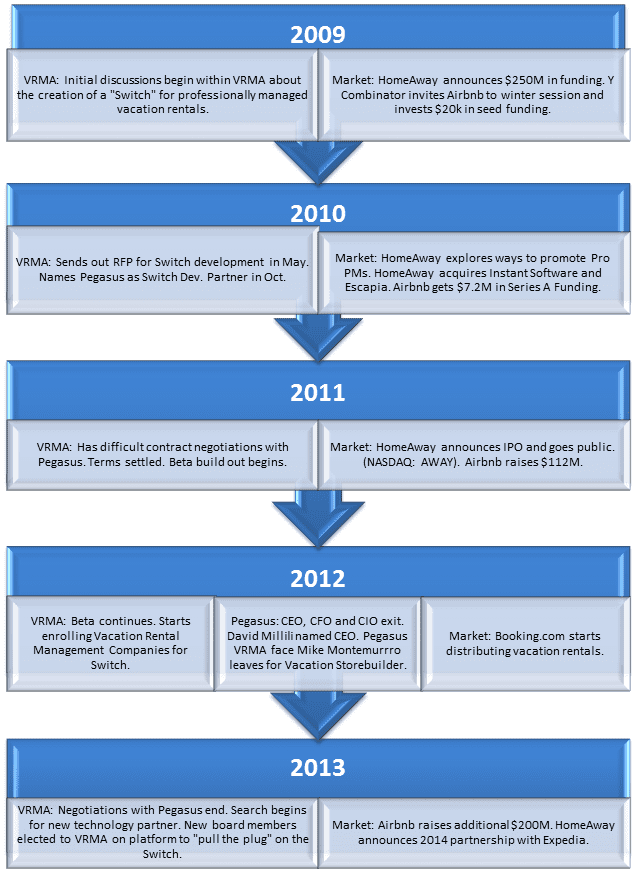
Let’s look at the progression of the Switch in relation to market conditions.


VRMA Switch Timeline


In early 2010, formal discussions began about the possibility of the VRMA facilitating the creation of this global distribution system (GDS), a.k.a. Switch, for professionally managed vacation rentals. Several software companies and industry leaders met in January 2010 to talk about how it might work. One software company offered to build it for VRMA, which leadership declined.


NAR MLS Influence on VRMAAt the time, there were valid reasons to explore the creation of an industry switch.
 

  • Online competition for travelers increased substantially.
  • Attempts to advertise vacation rental properties on online travel agency (OTA) websites had failed due to product differentiation and fee structure.
  • HomeAway received $250 million in funding (11/08), and their flagship website VRBO was making it very easy for owner-managed rentals to be marketed on a large scale for the first time, bringing significant competition to professional rental managers.
  • Instant Software (ISI) had tools to manage the distribution of the majority of the industry’s managed properties, and some members of VRMA didn’t want the relationship between the property management company and the distribution channel to be “owned” by ISI.
  • Booking fees on OTA’s were rising, and hotels were paying around 25% for distribution, which was more than VRMs could bear.
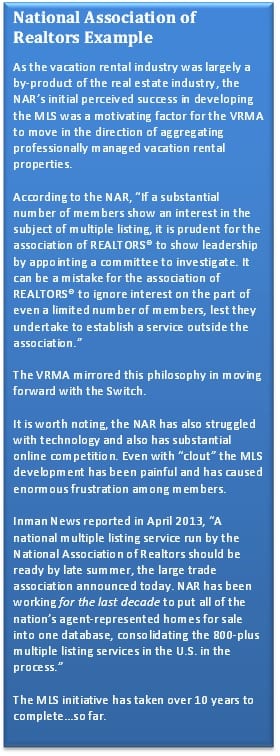
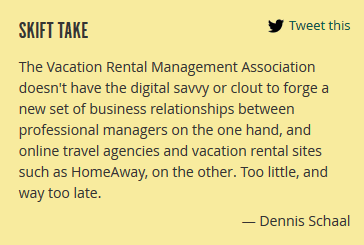
  • The National Association of Realtors (NAR) was gaining a lot of traction in their development of the Multiple Listing Service (MLS), providing a working example of a trade association building a platform to aggregate property information from members.


An RFP was sent out in May 2010, and Pegasus Solutions was named the technology partner in late 2010. Throughout 2011, the terms of the contract proved difficult to negotiate. At one point, VRMA walked away and began searching for another technology provider. However, after further negotiation, Pegasus and VRMA agreed to terms and decided to move forward. The beta build out began, and enrollment started for VRMA members.


Meanwhile, online competition skyrocketed. From 2011-2013 almost $500 million has been invested in consumer facing website startups, including Airbnb. That amount doesn’t include investment by established players (e.g. HomeAway, Priceline’s Booking.com, and TripAdvisor’s FlipKey).


Schaal asserts, “The Vacation Rental Management Association doesn’t have the digital savvy or clout to forge a new set of business relationships between professional managers on the one hand, and online travel agencies and vacation rental sites such as HomeAway, on the other. Too little, and way too late.”


Let’s think about this.


Digital Savvy

Schaal says the VRMA doesn’t have the digital savvy to succeed in this endeavor. When the VRMA looked for a technology partner to develop the Switch it chose Pegasus Solutions, one of the four leading GDS providers in the hospitality industry.

Pegasus is the single largest processor of electronic hotel transactions and provides distribution for 100,000 hotels worldwide. Every indication showed Pegasus was the optimal partner for this technology product.  In all fairness to the VRMA, they chose the company who appeared to be the most “savvy” partner in the marketplace.


Clout

Skift says VRMA lacks digital savvy and cloutThe VRMA has seen record growth in the last year. Yes, it represents less than 25% of the industry…as a direct result of the fragmented nature of the industry. The association has made enormous strides in promoting professional management in a market where “Rent by Owner” is overwhelmingly supported. The organization also provides outstanding education and networking opportunities for Vacation Rental Management Companies.


 

Whether the VRMA should be in the business of negotiating rates and contracts with OTA’s and own the relationship between the VRM and the OTA is a very different question. Members of the association are split on the issue. Regardless, the VRMA is undeniably the strongest and most influential association in the industry.


Is the Switch still a viable project?

As noted in the timeline above, the online distribution landscape changed.


As Schaal points out, “VRMA wants professionally managed properties to stand out when companies offer them on Airbnb, for instance, so travelers will know they are getting quality service, and not an inconsistent or shoddy experience.”


Most consumer facing websites have responded, including HomeAway, FlipKey and Booking.com, who have provided branding options and ways to designate a property as professionally managed.


In addition, API and XML integrations with software companies have opened up, now with enhanced normalization of complex property data. So far, booking costs have stayed within a workable range. The free market appears to be quickly catching up to the needs of the professionally managed vacation rental industry. But. Mr. Schaal, this was not the case when the Switch was initiated in 2010.


With the newly elected VRMA Board of Directors, the debate around moving forward with the Switch initiative will happen this year. Whatever the association decides, it will undoubtedly learn from the lessons of the past and continue to grow and thrive in the future with an unwavering dedication to promoting the professional management of vacation rental properties.


By Amy Hinote


Just for fun:  If you’re looking for a blast from the past, I wrote this blog for Instant Software in June 2010 (before it was purchased by HomeAway).

Why the Switch? Why not the Switch.

0
ISILink 2010

I wrote this blog in June 2010 while working for Instant Software. The VRMA had recently sent out an RFP and announced its intention to go forward with an initiative to build a GDS for professionally managed vacation rentals. -Amy Hinote


The “VRMA Switch”


The Vacation Rental Managers Association (VRMA) recently announced a plan to create a “switch,” which they define as “a centralized location for vacation rental managers that would allow managers to easily–and at a low cost–select distribution channels, allow distribution channels to access vacation rental inventory in a well-structured format, create a revenue stream for the switch builder and software companies that participate, and help VRMA fund industry promotion efforts.”


For our clients who are members of VRMA: Instant Software (ISI) wants to address some of your questions and concerns about this undertaking.

For our clients who are not members of VRMA: Below is an initiative being implemented by the VRMA. If you have any further questions, we will be happy to try to answer those for you as well.

Because we want you to have the best and most relevant information about industry news and the “VRMA Switch,” the VRMA information below was taken from The Switch FAQ from the VRMA website. After each question, you will see the VRMA response followed by Instant Software’s (ISI) comments.

Note: One of the phrases you will see mentioned often is distribution channels. Distribution channels are websites which distribute your properties to Web customers (i.e. HomeAway, FlipKey, BidAVilla, etc.).


First, what exactly is the “VRMA Switch”?


VRMA says
, “The switch is a tool that will allow Vacation Rental Managers (VRMs) to distribute inventory data to a multitude of resources via one channel. Rather than having to upload/update data on multiple sites, the VRM will update data via the switch and all distribution channels will receive the updates simultaneously.”


ISI: The “VRMA Switch,” hypothetically, will work for other VRMA members the same way ISILink currently works for you as an Instant Software client:

Many of the Property Management Companies (PMC) that are not using an Instant Software solution do not currently have a way to send their data to distribution channels (i.e.HomeAway, FlipKey, etc.) without manually entering and updating property information and availability on these sites. And they are not able to compete with your properties on these distribution sites without spending extensive time and energy.


Why do we need a “VRMA Switch”?

VRMA says, “The switch will allow access to distribution for all VRMA members regardless of other affiliations. The switch will allow property management companies to maintain their unique company brand. The switch will also create stronger trust relationships with consumers especially in developing trust in online bookings because the information provided on all distribution channels will be consistent and current.”


ISI: The short answer to this question is –as an ISI client –you don’t.You already have a “switch” in ISILink.

ISILink 2010

The “VRMA Switch” is not a distribution channel in itself. If they can build it properly, it is just a middle man that will centralize your data and carry it to the distribution channels you select, which is exactly what ISILink does for you. The “VRMA Switch” is much more beneficial for PMCs who are also VRMA members who also do not currently have an easy way to distribute their properties to the Web. That is not the case for an ISI client.

In addition, it is difficult to normalize and centralize data while differentiating brands. It appears that maintaining your “unique company brand” means having a logo or company name on your distribution channel listings, which many distribution channels currently offer. All offer the ability to put your company name in your descriptions.


Who will have access to my data if my company uses the “VRMA Switch”?


VRMA says, “The switch will permit selective control of distribution by individual, VRMA member, management companies. If the switch is owned, developed and maintained by VRMA it will eliminate the possibility of outside companies dictating how property management company data can and will be used.”


ISI: Unfortunately, eliminating data flow while enabling real-time, online booking is not possible. If your company utilizes the “VRMA Switch” VRMA will have access to your data, the Switch-building company will have access to your data, and any distribution channel you select will have access to segments of your data. It will work in a very similar way to ISILink. Please read What is ISILink? to see how ISI protects your data.


Who will pay for the switch?


VRMA says, “The provider that is selected to build the switch will be responsible for the cost of building and maintaining the switch ongoing. The provider will receive a contract that will entitle them to transactional fees for as long as the switch exists.”


ISI: To summarize, you will be billed per booking. You will also be billed by the distribution channel per your agreement with them.


Why does VRMA want to own & control the switch and what does this protect vacation rental managers from?

VRMA says, “To make sure that the switch is not used to bottleneck distribution and remove the rules that keep the managers unique company brand as part of the transaction. To ensure free market distribution.”


ISI: At Instant Software, we are committed to partnering with you –our clients. Your success is quite literally our success. We have heard it said in our industry that we “hoard” your data, which we find to be a compliment. We like to think of it as protecting your data. We do not allow everyone to have access to your data for many reasons (i.e. protecting your owners, customers, vendors, etc.). We also do not sell your data. In the entire existence as a company, ISI has never been accused of leaking data. We understand the magnitude of the information entrusted to us and take it very seriously. That is why we invest so heavily in state-of-the-art data centers, multiple redundancy options and high-level security.


We also have spent millions in developing our software and do not allow companies, whom we believe to have the malicious intent of backwards engineering our proprietary solutions, to have access to our products or your data.


Note: Free market is an interesting phrase to use here. By nature a non-profit, membership- only “VRMA Switch” discourages competition among your software companies and your distribution partners. However, by making it easier for your competitors to put their properties on the Web, they are encouraging more competition for your company.


VRMA only represents 10% of the industry. What about the rest?

VRMA says, “The VRMA represents approximately 150,000 properties which are in most cases bookable online. While the number of companies may only represent up to 10%, the number of properties represented is far greater due to the average size of VRMA member companies. It is also the hope of the VRMA board that the switch gives those managers who do not currently participate even more reason to do so.


ISI: Even with $0 cost and a 3-click turn-on process, approximately half of ISI customers currently take advantage of ISILink. From our experience having created a similar switch, VRMA is unlikely to have 100% buy-in for the “VRMA Switch” by its members for three reasons: many VRMA members already have an effective Web distribution strategy in place, some members simply don’t distribute their properties through large-scale distribution sites and would gain no advantage from the “VRMA Switch,” and many companies are very concerned about protecting their data and would be uneasy with this distribution format.


What is VRMA’s view on creating/eliminating a “choke-point” in the industry?


VRMA says, “The VRMA is for open distribution as long as the managers’ company brand stays intact. The VRMA believes a transactional model with little or no upfront cost to managers or channels will facilitate this open distribution and eliminate choke points.”


ISI: VRMA, in these FAQs, refers to choke-points and bottlenecking distribution. Besides the fact that some software companies do not have the technology to centralize data for the distribution channels, we do not see a choke point or any bottlenecking of distribution to distribution channels.


As a VRM, how easy is it to sign up, upload my properties and get started?


VRMA says, “If the software company that the manager uses integrates with the switch it will be a very simple interface. If not, a manual upload or alternative XML feed (textual data format) will have to be used which will make it more cumbersome. It is the hope of the VRMA that all software providers will participate in the switch. The switch will compensate the software providers on a transactional basis which will minimize the cost to distribution channels to participate which will open up distribution.”


ISI: While we think it’s generous of VRMA to pay your software company for use of your data, at this point, it is premature to position ourselves on integration possibilities.


How will the property management software companies respond?

VRMA says, “As we have spoken to them through the process, we feel that many will be excited about it and some will not be. There has been some concern over the ownership of the switch as certain for profit entities feel it should reside with them.”


ISI: We are not bidding for the creation and development of the “VRMA Switch,” since we have already created one for our clients. Therefore, we have no competitive interest in having the “VRMA Switch” reside with us.


Will the Switch facilitate other data streams from PMS, such as; owner info, maintenance, housekeeping, accounting, analytics, which will allow for other vendors to connect and build applications to better improve company operations?


VRMA says, “The primary purpose of the switch is to meet the distribution needs of the industry. The Switch should be developed in a way that will allow other data to be streamed in the future, however this is not a requirement for launch.”


ISI: As your software company, we are accountable to you -our client -for the partnerships we create and maintain. Accountability is a critical factor in data integration. We highly recommend that VRMA’s PMCs strongly consider accountability in any data integration their company accepts.


While we do not yet have enough details to thoroughly endorse the “VRMA Switch” to our clients, we want to share with you the preliminary information we have gathered in the early stages of, what is sure to be, an interesting discussion over the coming months. Please feel free to contact us with any of your questions or comments.


San Luis Obispo City Council Allows Short Term Rentals

1
San Luis Obispo Vacation Rental Industry

Nov 13, 2013 –Another partial victory for the vacation rental industry occurred Tuesday in San Luis Obispo, CA, when the City Council voted 3-1 to create a new ordinance allowing short term rentals of 30 days or less in owner-occupied homes.

Supporters of vacation rentals packed the council chambers, with more than 15 people speaking in support of legalization. A handful of opponents also spoke about privacy, decreased safety in neighborhoods and businesses operating in residential areas.

“If we ban this practice I think we are shooting ourselves in the foot from a tourism perspective,” said Councilwoman Kathy Smith.

Homeowners offering short-term rentals through Airbnb, VRBO.com and other sites will be required to pay transient occupancy tax and possibly get a use permit from the city. Vacation rentals that are not the homeowner’s main residence, so far, remain illegal.

To accomplish this win, a group of homeowners united to form a group called SLO Hosts, created a petition and circulated the petition using grass roots efforts and social media.

“If we are not good neighbors, we would not be able to continue as hosts,” said John Semon, who spoke on behalf of SLO Hosts.

Homeowners renting rooms to travelers began receiving enforcement letters last March telling them to stop renting or face fines of up to $500 per violation.

It is unclear how the short-term home stays will be regulated by the city. The new ordinance will come back to the City Council sometime next year for final approval.

WebChalet 728

0

WebChalet Websites and Software for Vacation Rentals

WebChalet 728

0
WebChalet Websites and Software for Vacation Rentals

WebChalet Software and Websites for Vacation Rentals

Lodgify 300 x 250

0
Lodgify Vacation Rental Software and Website Design

Lodgify Vacation Rental Software and Website Design


Lodgify

0
Lodgify Vacation Rental Software

Lodgify Vacation Rental Software


Glad to Have You™ Surpasses Hospitality Industry Milestone with Now Over 300 Clients

0
Glad to Have You hits 300

Nov. 4, 2013 –Glad to Have You™, the leading provider of mobilehospitality and guest management solutions, recently surpassed 300 clients using its Guest Management System™ as of October 2013. Glad to Have You™ joined the hospitality software market in the spring of 2012 and has rapidly introduced innovations around mobile applications and backend software through scalability and reliability, PMS integrations as well as customer support and feedback. To date, Glad to Have You™ software solutions are broadly deployed around the world reaching every corner of the United States including several clients in Australia, Canada, Mexico, Europe and the Caribbean.


“Not only is this an incredible milestone for our company” said Glad to Have You™ Co-CEO Jason Sprenkle. “This is a milestone for the hospitality industry. The widespread demand for our software solutions is evident due to the rapid growth we have seen throughout the last year and ahalf.”


In less than 20 months, Glad to Have You™ has rapidly exceeded what few hospitality companies do in a lifetime. Although growing at such afast pace, the mission behind Glad to Have You™ remains to be client focused and continuing to make products and improvements based on the feedback from its clients. Southern Vacation Rentals, located in Destin, FL, is one of those clients that continue to provide feedback in the continuous development of Glad to Have You™ products. Managing over 800+ units along the Gulf Coast, Southern Vacation Rentals has played a key role in the innovation and growth of Glad to Have You™.


“It’s been very delightful to work with Glad to Have You” said Marie Babin COO of Southern Vacation Rentals. “The staff is veryresponsive and very adaptive to new ideas, I’m very excited about the future!”

Hospitality companies across the globe are recognizing the benefits of the Guest Management System™ as a transformative technology with many uses including guest communications, custom content delivery and capturing guest data for re-marketing efforts.


“We believe in helping hospitality companies provide a better overall guest experience,” Sprenkle said. “We reached this milestone thanks to our clients embracing Glad to Have You and by giving us very valuable feedback along the way.”


Glad to Have You™ will be showcasing its software at these upcoming events and conferences:


For more information on Glad to Have You™, please visit http://www.gladtohaveyou.com


About Glad to Have You           

Glad to Have You™ believes in helping hospitality companies provide a better overall guest experience with improved operational efficiency using the latest technology, simple user-friendly designs, and a guest-centric attitude.  Simply put, Glad to Have You™ makes great software that makes hospitality professionals lives easier and improves the guest’s stay.

Over $530 Million Invested in Vacation Rental Startups Since 2011

0
Vacation Rental Startup Investment by Company 2011-2013

Over $530 million in disclosed angel and institutional funding has been raised by startups in the vacation rental industry since 2011, with 88% of that investment in consumer facing websites. Over 72% of disclosed capital has been injected into U.S. companies.

Annual Diclosed Investment into Vacation Rental Startups by Ange and Institutional Investors

Can the market support these new players?

According to the PhoCusWright’s U.S. Vacation Rentals 2009-2014: A Market Reinvented, “Vacation rentals represent a more than $24 billion opportunity in the U.S., that’s more than one fifth of all hotel room revenue and 8% of the total U.S. travel market.”


In addition, the Vacation Rental Managers Association (VRMA) reported the largest Annual Conference in its history in October of this year and is getting ready for their second annual European Seminar in Bruges, Belgium in December. Providing further evidence of growth, HomeAway, Inc. (NASDAQ: AWAY), the current leading marketplace for vacation rentals, is expecting 2013 revenues around $342 million.


Disclosed Funding for Vacation Rental Startups by Country


Vacation Rental Startup Investment by Company 2011-2013At first glance, the market may appear saturated. However, a closer look into the distribution of injected capital exposes market opportunities.


Out of $530 million in funding, over $470 million went to consumer websites with approximately $458 million being spread out among four consumer-facing websites:

  • Airbnb (U.S.): $318M
  • TruJia (China): $64M
  • Housetrip (UK): $60M
  • OneFineStay (UK): $15.9M


The Opportunity

Vacation Rental Startup Investment by Company Type 2011-2013Remarkably absent is investment in operational activities and services to support this sprouting marketplace. Both Vacation Rental Managers and individual home owners have increasing operational needs (i.e. websites, mobile communications, channel management, housekeeping, property management software, marketing automation, payment services, etc.)


Out of $530 million, less than $10 million was raised by companies providing supporting products and services to the vacation rental industry.


One of these companies is TurnKey Vacation Rentals, a marketing and professional management solution for individual vacation rental owners, who picked up $1.5 million in seed funding from an all-star cast of angel investors.


“We believe the opportunities for new consumer plays in the vacation rental market are limited with such well-established players like AWAY and now Airbnb so well-entrenched,” said John Banczak, co-founder and Executive Chairman at Turnkey Vacation Rentals. “We believe there is a huge opportunity in the value-added-services area of vacation rentals and believe the next wave of VR startups will help round out the guest and home owner experience while working with entrenched players as opposed to competing with them.”


Impact of Increased Online Competition on Vacation Rental Management Companies


VRMA President Heather Weiermann said, “As the vacation rental industry grows, vacation rental professionals have an opportunity to further define and raise awareness of the professionally managed segment. More than half of the vacation rental market’s total rental revenue now goes to industry professionals, up from 43% in 2007, according to PhoCusWright. For vacation rental professionals this translated to a more than $11.6 billion marketplace in 2012 and the total U.S. vacation rental industry is expected to reach $25.8 billion by 2014.”


With over $470 million injected into consumer-facing websites, online competition for travelers looking to stay in a short-term rental will likely increase, resulting in:

  • Rising online marketing expenses
  • Search Engine Optimization (SEO) concerns
  • Increased focus on customer retention efforts
  • Branding challenges
  • Inventory acquisition and retention efforts
  • Increased demand for revenue management tools and services


“The additional exposure is a great thing for the industry, however, it is critical that vacation rental management companies preserve their branding, “said Weiermann. “As consumers search for vacation rentals, they need to be aware of the type of accommodation they’re booking. For the first time, research from PhoCusWright reveals that most travelers prefer to go with a pro, with 31 percent of travelers saying they prefer to book with a vacation rental management company vs. booking direct with a homeowner (25 percent). Guests are more likely to associate key experiences with vacation rental management companies, such as safety and security, customer service, services such as housekeeping, concierge and dining, activities and modern amenities. Vacation rental management companies must protect their brands in order to differentiate themselves in the increasingly competitive marketplace.”


However, there are notable advantages to the addition of well-funded, visible players in the Vacation Rental Industry:

  • Increased education and awareness of vacation rentals as a lodging option
  • More cohesive effort impacting government regulations concerning vacation rentals
  • Increased options to homeowners and vacation rental managers to reach new guest markets
  • New and more cost-efficient technology products to help service vacation home management
  • Less fragmented marketplace


While the competition among consumer-facing websites as distribution channels for vacation rentals may be tightening, the opportunity for high returns in investment in supporting products and services is wide open. Despite challenges in market fragmentation, legislation and product differentiation, the multi-billion dollar vacation rental industry is here to stay as an important player in the travel sector.


Companies represented in report:

Funding Table by Company Name and Year
 

By Amy Hinote
 
Sources: StartUpBeat.com, Skift.com, Tnooz.com, AngelList.com, TechCrunch.com, Angel.co, WhoGotFunded.com

All Star Vacation Homes Acquires Southern California Vacation Rentals

1
All Star and SoCal Vacation Homes

All Star Vacation Homes -San Diego is born with All Star Vacation Home’s expansion into SoCal. Outgoing VRMA President Steve Trover, CEO of All Star Vacation Homes, and incoming VRMA President Heather Weiermann*, CEO of Southern California Vacation Rentals, join forces in expansion.


All Star Enters the California Market with Acquisition of Southern California Vacation Rentals in La Jolla


CELEBRATION, Fla., Nov. 7, 2013 /PRNewswire/ — All Star Vacation Homes announces expansion into Southern California with the acquisition of Southern California Vacation Rentals. All Star Vacation Homes, that expanded operations into Captiva and Sanibel Island, Fla. in 2012, has a long-established history in the competitive Orlando, Fla. market. In its 16 years as a professional management company, All Star has emerged as an innovative visionary in the vacation rental industry.

Southern California Vacation Rentals was established in 1999 by Heather Weiermann, and over the past 15 years has built a solid reputation in the La Jolla and Southern California area. All Star Vacation Homes – San Diego (www.allstarvacationhomes.com/san-diego/) will launch with an inventory of luxury vacation homes in the La Jolla / San Diego market through the acquisition.

“We have always put an emphasis on improving our services to accommodate the preferences of our guests,” said All Star Vacation Homes CEO, Steve Trover. “We have surveyed the guests who have been staying in our vacation homes in Orlando since 1998, and, in an overwhelming response, have continued to request California as a western U.S. destination. The La Jolla and San Diego destinations fulfill our ongoing commitment to our guests and are a good fit for expanding the All Star brand on the west coast.”

“Heather has built a strong business in Southern California and has placed a focus on quality of product and service. We look forward to utilizing her knowledge, skills and expertise to collectively grow this market together.”

Weiermann will continue to lead operations in the Southern California area as Chief Operating Officer, California for All Star Vacation Homes.

“All Star Vacation Homes sets the highest standards in our industry,” said Weiermann. “I am thrilled to be joining this team and working together to further advance the professionalism of our industry.”

About All Star Vacation Homes
All Star Vacation Homes brings its passion for high standards and hospitality to elevate the vacation home industry to new levels. Since it was established in 1998, All Star has set a solid foundation in the competitive Orlando landscape and has emerged as a market leader. As the company expands this success into other high demand travel destinations, All Star implements its unique formula of Personalized Service, Quality Home Care, Proven Marketing, Strategic Location and Guest-Influenced Experience to fulfill its vision of creating a vacation home experience like no other.

All Star provides professional management and hospitality services for vacation rental homes, condos and town homes in Kissimmee/Orlando, Fla., Sanibel Island/Captiva, Fla. and San Diego, Calif. For more information, visit www.AllStarVacationHomes.com or call 1-800-396-1173.


*Update: As of 11/26/2013, Heather Weiermann no longer serves as VRMA President. Ben Edwards of Weatherby Consulting and Newman-Dailey Resort Properties, Inc. was named the 2014 president of the VRMA by the Board of Directors.

Google’s Organic Keywords “Not Provided”? 10 Easy Ways for Vacation Rental Managers to Adapt

0
google analytics keyword not provided

For Vacation Rental marketers, this latest news from Google is disappointing. Historically, online marketers have been able to see which organic (not paid) keyword(s) drive the most traffic and revenue to their vacation rental website.

Over the last two years, Google has slowly been cutting back the amount of data related to organic searches, but in late September 2013, Google began the process of encrypting search activity. Google is expected to stop providing organic keyword data altogether by the end of the year.


Why this is a bigger problem for Vacation Rentals

Some industries are more affected by this change than others. In the Vacation Rental industry, we face significant competition in the Google SERP’s (search engine results pages) from distribution channels, in addition to local competition. Local marketers have been able to adapt with long-tail, more targeted keyword phrases and were able to measure their effectiveness in Google Analytics.  Losing visibility and insight into organic traffic diminishes the ability to compete in Google search.

In addition, keyword data from Paid Search is still available, which means companies with large AdWords (PPC) Budgets (i.e. HomeAway, TripAdvisor, etc.) have more visibility into performance from keywords and can use this information to further optimize their sites for Google search.


The impact of the loss of keyword data for Vacation Rental Managers

According to Search Engine Watch, this change means:

  • Organic traffic from Google can no longer be tracked at a keyword level via analytics.
  • Limited amount of keyword referral data available in Google Webmaster Tools.
  • No visibility into organic traffic numbers: Brand / Non-Brand, Long-Tail Performance, by Keyword Group.
  • Decrease in visibility for new keyword opportunities based on analytics data.
  • We need to use a different metric set to understand SEO performance.
  • We should expand the number of keywords we check rankings for in Google that correlate to high performance URLs.


google analytics keyword not provided

10 Ways to Adapt

There are ways to continue to succeed in Google search without organic keyword data:


1. User Experience

What is good for your user is good for Google. As Google’s Matt Cutts said, “Succeeding in SEO will be the same as it’s always been if you’re doing it right – give the users a great experience.”


2. Webmaster Tools

You can still get keyword referral data in Google Webmaster Tools with impression versus click data so you have visibility into the keywords people are using and where your site got an impression in the search results. Even thought this data isn’t 100% accurate and is typically only available for a relatively small overall percentage of search queries, there are ways to leverage Webmaster Tools to improve performance.

Read Trent Blizzard’s article 5 reasons you should use Google Webmaster Tools for more info.


3. Site Search

Including a search box on your site and tracking queries gives you insight into what visitors are searching when on your site. Read 9 Ways to Steal Your “Not Provided” Keyword Data Back! to find out how to set up your site search.


4. Add tracking to your homepage quick search

What your visitors search for in the availability search box on your home page can be tracked. Monitoring customer behavior in your availability search can provide you enormous insight into inventory demand for property types during specific data ranges, allowing you to further optimize your site.

Availability Search Box Optimization


5. Bing (remember Bing?)

Bing still provides organic keyword data. Even though the traffic sample set is smaller, you can still see how keyword(s) are performing.


6. Google AdWords

With your Google AdWords account, use the Google Keyword Planner for keyword recommendations and brainstorming.


7. Google Related Searches

Google’s SERP provides a “Searches related to…” feature which can help you to optimize your site.


Searches related to vacation homes


8. Google Trends

Google launched a new version of Google Trends (combining Google Insights and Google Trends) and allows you to explore a variety of trends in search data. It is a great tool for brand monitoring. This is also a great tool for competitive analysis.


google trends


9. Use Your Expertise: Create Great Content & Abandon the Keyword Obsession

A tip from WordStream: “Don’t despair about not having as much keyword data from Google Analytics as in the golden years of days gone by. Maybe we’re trusting technology too much as it is – after all, isn’t your brain the most powerful analytics tool of all?”

Remember, Google doesn’t know your audience like you do. What is your audience looking for from your company? You know this better than anyone else, so take pride in that and use your insider knowledge to your advantage.


10. For Experts: Moz Blog

Moz Founder/CEO and SEO guru Rand Fishkin covers what more advanced search engine marketers can do to make up for this drastic change by finding data from other sources to stay on top of their SEO efforts.


By Amy Hinote

Vacation Rental Housekeeping Professionals Conference Starts Monday

0
vacation rental housekeeping

The 2013 National Vacation Rental Housekeeping Professionals Conference starts Monday at the Canal Street Marriott in New Orleans, LA.

Join the experts at the New Orleans Marriott! Education and fun times in the “Big Easy”!


Sessions include:


  • linens for vacation rentalsHow to set up a Housekeeping Training Program
  • Inspections 101
  • Setting up a standard unit appearance and getting buy-in
  • Linens
  • Making sense of your data
  • Building Trust between housekeeping, maintenance and owner relations staff
  • Flooring solutions
  • The Money Pit of Housekeeping
  • Setting up and managing a Piecerate System
  • Do’s and Don’ts of Call-backs

Registration Info


Mandatory safety inspections for vacation rentals vote in Gulf Shores

0
Break even point for vacation investment

In Gulf Shores, AL, the city council is hoping to move forward Tuesday on a city law which requires short-term vacation rentals to pass safety inspections before a business license is issued.

This unprecedented legislation will be phased in over a 3 yr period with re-inspections done every 3 years and was prompted by a series of accidents at vacation rental properties.

According to al.com, “Currently there are about 3,900 short-term vacation rental properties within the corporate limits and 1,900 outside the limits but inside the police jurisdiction.”

A memo to the City Council outlining the requirements rental property owners will have to meet says, “These inspections will focus on the life-safety aspects of the unit which shall include decks, balconies, stairs, handrails, guardrails, smoke detectors, rescue openings in bedrooms and any obvious potential threats.”

Brandan Franklin, the city’s chief building official, said while letters were sent out to every business license holder involved with short-term rentals, there was very little complaints and more praise from property management companies and industry representatives.

gulf shores“A lot of them are grateful for it because it’s a fine line for them to walk getting an owner to fix (problems) and yet maintain that relationship with them that they can keep their business,” Franklin said. “So basically the city will be the quote-unquote ‘bad guy’ to make the owners fix it.”

One sector of concern involves individual renters who list through websites such as VRBO.com (Vacation Rentals By Owners). Once the ordinance is approved, letters will be sent to all business license holders outlining the new regulations in addition to a safety inspection checklist so there are no surprises on what’s required.

According to the draft ordinance, if inspectors find conditions in a dwelling that puts occupants in imminent danger that owner’s business license will be suspended and the dwelling vacated until the issue is fixed. If conditions are found that are not hazardous to occupants, the owner of that short-term rental unit will be given 21 days to fix the problem or have his or her license suspended. Owners will have a right to appeal violations to the City Council.

Franklin has said that owners of older homes would not be required to bring homes up to current building code standards as only “life-safety aspects” will be inspected.

This latest rule for vacation rental property owners follows the approval of new lodging tax reporting guidelines as well as the establishment of a local emergency contact for each unit, both of which go into effect in 2014.

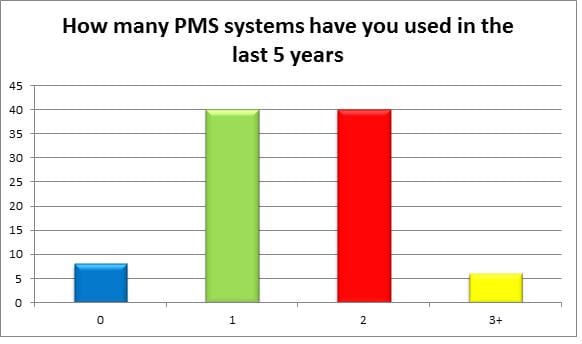
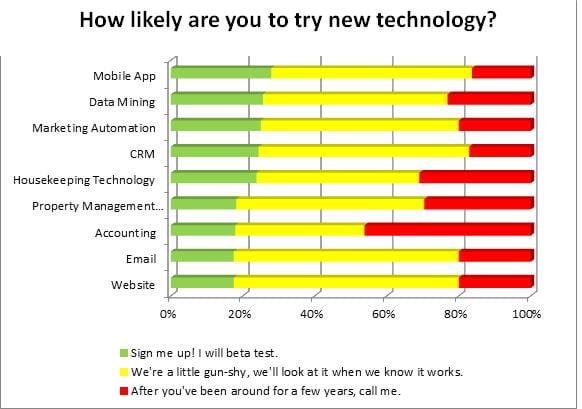
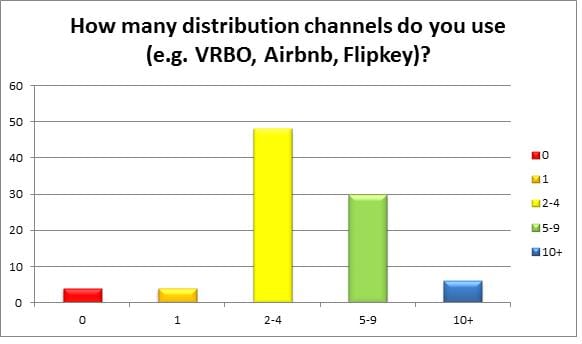
For VRM’s only: New Technology Survey

0
VRM Technology Survey

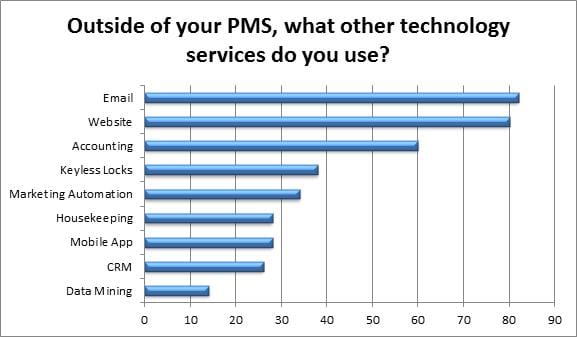
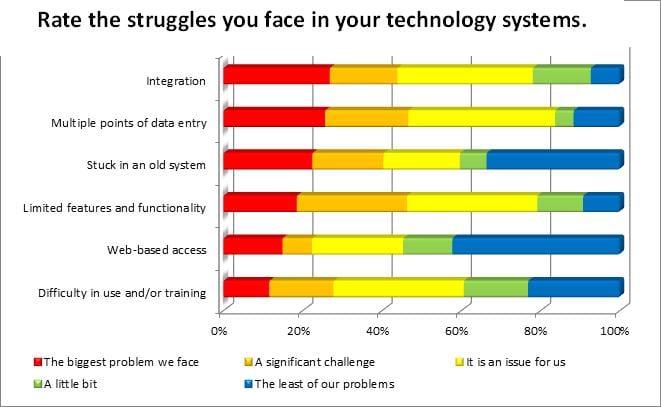
With all of the new technology products being launched in 2013, VRM Intel wants to hear from you.

For Vacation Rental Managers only, this survey is to find out what you think about the technology you currently have and what you would like to see in the future.


This survey is not sponsored by any of the software providers. It is solely for research, and any contact info you provide will not be shared with any suppliers or technology providers.


We simply would like to get a feel for what you, the Vacation Rental Manager, think about what is being launched and what you would like to see in the future.


So please take our 7 question survey and weigh in.

Click here to take survey

HomeAway Partners with Expedia

0
HomeAway, RealPage, VacationRoost acquire in Vacation Rental Industry

AUSTIN, Texas–(BUSINESS WIRE)– Two online travel leaders, HomeAway, Inc. (NASDAQ: AWAY) and Expedia.com (NASDAQ: EXPE), today announced an agreement intended to expand online travel accommodation options by surfacing HomeAway vacation rental properties on Expedia.com. The pilot expected to launch early next year will include properties throughout the U.S. and Mexico, and expands upon the current relationship with BedandBreakfast.com also operated by HomeAway.

Brian Sharples HomeAway CEOVacation rentals are an increasingly popular travel option for travelers across the globe as they look for accommodations that offer additional space and amenities beyond a traditional hotel room, coupled with the privacy of a home.

“This is a significant milestone for the vacation rental industry and for realizing HomeAway’s mission to make every vacation rental in the world available to every traveler in the world,” said HomeAway CEO Brian Sharples. “As one of the most visited online travel agencies, each month Expedia.com will give millions of travelers the opportunity to discover the benefits of booking a vacation rental, and we look forward to also helping our customers increase the visibility of their properties.”

“As a leading provider of full-service travel bookings, Expedia.com is constantly looking for opportunities to improve the breadth and depth of the products we offer,” said John Morrey, Vice President and General Manager of Expedia.com. “In exploring the addition of standalone vacation rental homes to Expedia.com in the U.S., it made the most sense to do so in partnership with HomeAway, the worlds leading vacation rental provider. We think it will be a win-win-win, for Expedia, HomeAway, and most importantly consumers.”


Vacation Rental Software: Property Management Systems used by 2013 VRMA conference attendees

0
State and Regional Data from VRMA conference attendees

October 20, 2103 — Top vacation rental software platforms used by attendees at the 2013 Vacation Rental Managers Association National Conference in Nashville, TN.

State and Regional Data from VRMA conference attendees

Vacation rental software 2013


Based on the following:
  • 173 companies in 2011, 140 in 2012, and 206 in 2013 preregistered for the VRMA National Conference.
  • Information presented does not include Wyndham owned companies.
  • 7% of property management systems being utilized in 2011. 11% in 2012, and 10% in 2013 of conference attendees are unknown.

2013 Portrait of American Travelers® Reveals Increase in Travel Intentions, But Continued Caution About Household Budgets

0
traveler behavior

82 Percent of Active Travelers Planning to Take the Same or More Trips in the Year Ahead

ORLANDO (September 30, 2013) – Americans intend to take as many or more vacations during the coming year as they did last year, although their list of preferred destinations  is smaller and they remain cautious about discretionary expenditures. This is according to the newly released MMGY Global/Harrison Group 2013 Portrait of American Travelers®.

family vacation rentalThe survey revealed a three percent increase in active travelers planning to “take more trips in the year ahead” (now 18 percent of all travelers), while two thirds (64 percent) of travelers are planning to take the same number of trips this year as they did last year. This compares with 15 percent who are planning to “take fewer trips.” And notwithstanding their concern about household budgets, leisure travelers in all annual household income segments expect to spend slightly more on travel/vacations in 2013 than they did in 2012, a good sign that travel continues to be a priority for Americans when they think about their discretionary spending.

While the recession technically ended in June 2009, Americans’ travel behavior reflects a lingering concern about the impact of the Great Recession on consumer spending, both discretionary and otherwise. Specifically, six in 10 travelers are still looking closely at every spending category, including travel services, seeking ways they can save.

The level of interest in visiting several popular domestic destinations is also flat or has declined. Travelers are interested in visiting approximately 10 percent fewer destinations now than in 2012.

“Technological advances and additional sources of information are also factoring heavily into the decision-making process, as travelers are attempting to make smarter choices, seeking better value and good deals,” explains Steve Cohen, vice president of Insights at MMGY Global, an integrated marketing firm that specializes in the travel industry. “But we are encouraged to see that travelers are planning to spend more on travel and vacations, and that 82 percent are planning to take as many or more trips in the coming year as they did in the previous year.”

Additional insights from the 2013 Portrait of American Travelers® include:

  • The Search for Travel Deals. Comparison travel shopping sites such as Kayak and Dealbase have gained in popularity and are now used to make travel reservations by 28 percent of travelers, up from 15 percent in 2010. Meanwhile, six in 10 leisure travelers (58 percent) typically use an online travel agency (OTA) such as Expedia, Travelocity or Orbitz to research travel, yet the incidence of the utilization of OTAs to make travel reservations is down from 66 percent in 2010 to 58 percent in 2013.
  • Vroom with a View. With travelers’ cautious attitude toward spending, it comes as no surprise that automobile travel is on the rise. Although the modes of transportation used by travelers remain unchanged since 2010, the incidence of travel by personal automobile has increased from 65 percent in 2010 to 69 percent in 2013.
  • Have Smartphone, Will Travel. Smartphone usage among travelers has nearly tripled since 2010, and the act of downloading travel-related applications has also increased dramatically – from 19 percent in 2010 to 36 percent in 2013. Among travelers who have downloaded travel related apps, 54 percent have downloaded airline branded apps, followed by hotel branded apps (38 percent), and destination guides (27 percent).
  • Word of Mouth. Eight out of ten travelers (82 percent) express confidence in the recommendations of friends and family members when considering vacation destinations, while six in ten (58 percent) turn to online advisory sites such as TripAdvisor.com. Approximately four in ten travelers (41 percent) are confident in reviews read on a blog, while slightly less (39 percent) are confident in articles found in newspapers, magazines, TV and radio.
  • Medical Tourism on the Mind. Travelers are significantly more likely to be familiar with the concept of medical tourism than in previous years (61 percent in 2013 versus 50 percent in 2010). When asked about their interest in having a medical procedure done in a foreign country assuming comparable quality, 22 percent would go “under the knife,” compared with 17 percent in 2010. Interestingly, the top destinations travelers are interested in visiting to receive medical treatment are those that offer universal healthcare coverage: Canada (29 percent), United Kingdom (23 percent), Germany (21 percent) and Sweden (19 percent). Cost savings (87 percent) are cited as the most popular reason why, followed by comparable or better quality of care (66 percent), and access to procedures not covered by their domestic insurance (52 percent).
  • Going Green for Green. Though eight out of 10 leisure travelers (79 percent) describe themselves as environmentally conscious, just 10 percent are willing to pay higher rates/fares for environmentally-friendly travel services, and only one in 10 (11 percent) has actually selected an environmentally-friendly travel service supplier who has demonstrated environmental responsibility.

ABOUT THE PORTRAIT OF AMERICAN TRAVELERS?

The Portrait of American Travelers® is a national survey of 2,511 active leisure travelers who reside in households with an annual income of $50,000 or more (including an “af?uent traveler” subset of households with an annual income over $125,000) who have taken at least one leisure trip of 75 miles or more from home during the previous 12 months on which they used overnight accommodations. The survey, which was conducted during February 2013, provides an in-depth examination of the impact of the current economic environment, prevailing social values, and emerging media habits on the travel behavior of Americans. Unlike most surveys in the travel category that simply provide a census of travelers’ behavior, the 2013 Portrait of American Travelers? an emphasis on how consumers plan, purchase and share information about their travel experiences and reveals the underlying motivations that in?uence travel behavior.

ABOUT THE SURVEY METHODOLOGY:

Respondents were selected randomly, screened, and participated in a 45-minute online survey completed in February 2013. All tests of statistical significance were made using a two-population test at the 95 percent level of confidence. The sample is balanced by statistical weighting to ensure the data are representative of all active leisure travelers in America who meet the target profile.

For more information about these insights or other travel industry research from MMGY Global, visit www.mmgyglobal.com.

# # #

MMGY Global is the world’s largest and most integrated global marketing firm with more than 35 years of experience in the travel, hospitality and entertainment industries. The award-winning agency maintains a global communications practice in all marketing channels, serving many of the world’s premier travel and tourism brands. MMGY Global is author of acclaimed industry research (including the Portrait of American Travelers) that identifies the habits and preferences of travelers – insights that serve as the foundation for its marketing strategy. For more information, visit www.mmgyglobal.com.


Using big data to increase the bottom line for vacation rental management companies

0
Rate parity for vacation rentals

Big data is a collection of data from traditional and digital sources inside and outside your company that represent a source for ongoing discovery and analysis. The slideshow below is from a session presented at HomeAway’s RezFest 2103 which talks about how big data affects vacation rental managers and how property managers can utilize data to increase thier revenue and inventory.

Once you start tackling vacation rental data,

•You’ll learn what you don’t know
•You’ll likely be proven wrong on some paradigms you have held close
•You’ll be inspired to take steps to resolve any problems.
•You can use the insights to improve your customer engagement and homeowner acquisition strategies
•You will add more value to both your offline and online interactions.


Special Occasions: the Latest Emerging Trend in Vacation Rentals

0
anniversary at a vacation rental

Marketing Tips for the Vacation Rental Industry

By Camilo, Acosta, PayByGroup

The vacation rental market suffers from a lack of industry-wide data, but a recent study compiled by Netamatix reveals deep insights about what managers can do to increase bookings. This is the third in a five part series of blog posts based on these insights.

Insight #3: Celebratory trips are boosting the growth of the vacation rental industry.

Did you know 69% of leisure travelers have taken a trip to celebrate a special occasion?

The three most popular celebratory trips are:

1. Milestone Birthdays

2. Milestone Anniversaries

3. Weddings

 These trips are ideal for staying in a vacation rental because the average number of people in the traveling party is higher. So what does this mean for you?

Here are 4 tips to take advantage of this emerging trend:
1. Add to their happiness

For example, if you know this is an milestone anniversary, leave a congratulatory card at the rental waiting for them at their arrival.  Little touches like these can help separate you from other property managers and lead to referrals.  A recent bride and groom left these hilarious (and effective) hangover kits for their guests, something property managers could do as well if they know their guests are visiting for a wedding. A treat like that would surely lead to word of mouth marketing!


2. Connect them with local vendors they might need

Do you know a good restaurant that a group celebrating a 30th birthday would enjoy celebrating at?  Do you know a good florist for an extended family to buy  flowers for their grandparents’ anniversary?  Perhaps you know a limo company that would be great for a group of girlfriends celebrating a bachelorette?  Let them know.  Going the extra mile makes you a memorable local host, not just a property manager.


3. Be prepared to accept multiple payments from everyone

Whether you want to accept credit card payments one by one over the phone, or you use PayByGroup, make sure it’s hassle-free for your guests.  Celebratory trips are a great source of referrals for your business due to the size of the traveling party.  You want to make sure they come back, but they won’t if it’s a hassle for them to pay.  Many might even choose to not book your property due to the group payment hassles they face within their own traveling party (another reason to use PayByGroup :) )

Keep in mind that accepting multiple payments over the phone is an expensive endeavor.  According to Mastercard, companies that do so spend at least $300 per week in staff time collecting payments – that’s nearly $16,000 per year!  Group payment solutions like PayByGroup remove this expense for you and streamline the payment process for guests.


4. Market your property as an ideal location for one of these occasions

Does your property have a big jacuzzi? Or maybe a large outdoor space that would be ideal for gathering, grilling, and dining?  Make sure you describe it in your property description in a way that appeals to these types of guests.  Write it into your copy: “Ideal lawn for a wedding party reception,” “large jacuzzi can fit up to 10 people,” “dining room table can seat a large extended family of up to 16,” etc.  Travelers celebrating these special occasions will see you have experience with their needs – whether it’s accepting multi-party payments or recommending a taxi service to bring them home after the wedding reception.

A further step you can take is making it easy for guests to find these large homes on your site. For example, create a page on your website dedicated solely to large homes for special occasions and make sure it is easy to find on your home page.  ”Home for Special Occasions” or a similar page title quickly indicates to any person browsing your site that you have a selection of homes with amenities that their traveling party needs (larger dining room, multiple rooms, etc) or are especially refined and suited for a special event.


Remember, travelers spend a lot of money on special occasions like weddings and milestone birthdays. Be sure to capture some of that spending by encouraging travelers to stay with you by implementing the tips described above!


Email Marketing and Gmail’s New Tabs Feature

0
Gmail Tabs and Hospitality Marketing

By Amy Hinote, NAVIS

Gmail Tabs and Hospitality MarketingA few months ago, Google redesigned their inbox, introducing a new Tab format which categorizes user’s emails into Primary, Social and Promotions Tabs, with Promotions taking the far right position on the page.

Gmail is now the #1 worldwide platform for emails with 425 million monthly active users, surpassing Hotmail in 2012.  In the hospitality industry, there is a concern that the Tab format could hurt email engagement because it throws marketing messages under the Promotions Tab instead of delivering them to the main-view Primary Tab


Tabs: Good or Bad for Lodging Marketers?

Open Rate before and after Gmail TabsSeveral companies have done preliminary research on how the new view is affecting email marketing.

For example, email service provider MailChimp found that open rates for promotional emails dropped more than 12% after the new tabbed view was implemented.

Shar VanBoskirk, VP-principal analyst with Forrester Research, said she could see how it could affect open rates. “My gut here is that this certainly gives users a way to overtly, or inadvertently, screen out email messages that were previously going front and center into their inbox,” she said. “So for any marketer, the challenge of being relevant is more critical than it ever was.”


How do your emails end up in the Promotions Tab?

By law, you must provide an ‘unsubscribe’ link for any kind of marketing message. Therefore, it is a simple matter for Gmail to decide that ‘if there’s an unsubscribe link’ – THEN it must be a ‘promotion’ – so it gets put it into the Promotions tab.

Google is also utilizing the Promotions tab to send paid advertisements straight into users’ inboxes (this is a new way to show Google Ads).


How do I get out of Promotions and into Primary?

The only legit ways to get a marketing email out of the Promotions Tab and into the Primary Tab are for your guest to:

  • “Drag and drop” your email from the Promotions Tab and into the Primary Tab,
  • Right-click on the email (in some browsers) to bring up a small list of options. Click the Move to tab option and select the tab you want to move the email to, or
  • Add advanced Search and Filter function in Gmail.

It is very easy to do, but less easy to compel your customer to actually do it.

Remember…your guests and leads have already told you they want to hear from you by subscribing and/or opting in to receive emails from you. Here are some tips to help your emails cut through the “Promotions” clutter.


1. Monitor your response rates by Email Service.

First, see if your email open rates are being affected by this change. Track your Gmail figures as of May 29, 2013 (when Gmail made the change), and compare date ranges to see if you have seen an impact in your open rates. Also compare campaigns with Hotmail/Outlook, AOL, Yahoo, etc.


2. Review your email “From” name, subject line, and pre-header text.

Does your “From” name clearly identify your company or brand as the sender? This is key, because each tab lists new senders by name until the user clicks on the tab.

Also, put your pre-header text to good use, so that the key reason to open your email is clear from a combination of “From” name, subject line and preheader text, regardless of tab or inbox format.

See our blog post: Subject Lines: 8 Tips for getting your emails opened


3.       Send an email to Gmail users asking them to put you in Primary

Send a quick email to your Gmail users, i.e. “Thank you for subscribing to our newsletter. In order that you continue to receive the latest resort news and specials, please drag and drop this email into your ‘Primary’ column.”


 4. Understand the potential impact on real-time emails.

If you are sending subscribers time-sensitive emails, the Tabs feature could delay the immediacy of their response.