
















- Advertisement -
Home Blog Page 1323

Airbnb doesn’t fight against PMs, they fight against second home owners

0

Facing an initial public offering, Airbnb’s overwhelming problem is that their business is illegal in the majority of the large cities in which they do business. Their attempt to enter the publicly traded arena requires changing existing legislation, and they have chosen to lobby against second home owners in favor of primary residents to accomplish their goal.


In a bizarre move, Airbnb told professional vacation rental management companies in Los Angeles they could no longer list homes on the site.

Last week, an Airbnb representative notified Sebastian de Kleer, President of Globe Homes and Condos, and Ari Eryorulmaz, CEO at AE Hospitality, along with at least 10 other professional property management companies in Los Angeles, that Airbnb was removing their vacation rental listings and canceling reservations for stays after April 15.

“What really bothers me is that Airbnb could have honored the reservations made on their site,” said de Kleer. “They even sent a notice to their customers who booked these reservations that ‘Globe Homes and Condos has canceled your reservation.’ They put it on us. For a company who is dedicated to customer service, they couldn’t have handled it worse.

According to de Kleer, Airbnb canceled an estimated $250,000 in reservations.


Mixed Messages

As Airbnb marches closer to launching an initial public offering for their $20 billion short-term rental marketplace, industry analysts are questioning inconsistent policies and direction regarding who has the right to add accommodations on the site.

In contrast to their activities which ban listings by property managers in Los Angeles, Airbnb has simultaneously initiated efforts that embrace the professionally managed vacation rental industry. Airbnb is currently in talks with property management software providers, including RealPage (NASDAQ:RP), Barefoot Technologies, and LiveRez, to integrate technology for vacation rental managers with real-time calendar, pricing and data updates on the site.

Airbnb’s actions in Los Angeles and their conflicting technology pursuits sparked questions about their intentions regarding professionally managed rentals.

According to Wyndham Worldwide (NYSE: WYN), there are approximately 1.3 million vacation rental properties in the U.S. and 4.3 million properties in Europe. A 2014 PhocusWright study showed that 44 percent of those vacation rentals are professionally managed. It appears Airbnb seeks to capitalize on the revenue from vacation rental managers in some municipalities while lobbying against them in others.

Proponents for the vacation rental management industry argue that property managers represent homeowners, work in tandem with cities, and provide beneficial professional services including around-the-clock customer service, professional housekeeping, maintenance, reservations and tax remittance.

Ben Edwards Transaction Advisor“We work with these cities,” said de Kleer. “For example, we worked hand-in-hand with the city council in Palm Springs to put legislation in place. Together we established a toll-free hotline for complaints, a city registration requirement, and a ‘Good Neighbor’ initiative which provides safeguards for both travelers and long-term residents.”

According to Ben Edwards, President of the Vacation Rental Managers Association (VRMA), “It is disappointing that professionally managed listings have been removed in this case. Our members are best served when the distribution options they choose to pursue are fair, clearly articulated and mutually beneficial.”

Both Globe Homes and Condos and AE Hospitality are members of the VRMA.


Airbnb lobbies against second homeowners, not property managers
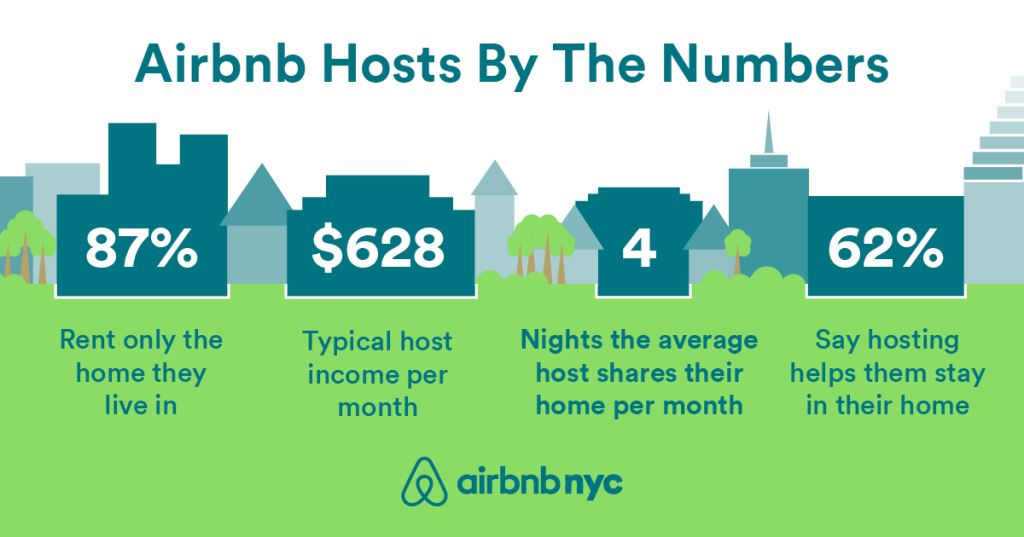
Airbnb stats primary home ownersFacing an initial public offering, Airbnb’s overwhelming problem is that their business is illegal in the majority of the large cities in which they do business. Their attempt to enter the publicly traded arena requires changing existing legislation.

However, a closer look shows Airbnb’s lobbying efforts are designed to differentiate on the basis of ownership not management.

When faced with legislative conflict, Airbnb has gravitated to their message that the company helps primary residents pay their bills via a benevolent shared economy, and their lobbyists aim to rescind the property rights of non-resident homeowners.

For example, Airbnb advocates for laws articulating that a homeowner who owns a home in San Francisco and lives in New York cannot legally rent his home as a short term rental while his long-term renter has the right to do so.

“FromCarl Shepherd Founder HomeAway what we have observed, Airbnb’s choice to pull the listings from Professional Managers is not a change in policy,” said HomeAway co-founder and CSO Carl Shepherd. “Airbnb has actively lobbied against the rights of second home owners in cities and for the rights of ‘permanent residents.’”

Shepherd said, “It is the observable basis for their extensive government relations program. Their focus has been on making Airbnb legal, not in what is best for the vacation rental industry as a whole.  That single minded focus has resulted in the laws in San Francisco and Portland, which they are now supporting in Los Angeles.  Because PM’s (property managers) represent second homeowners, it is logical that they would remove them from their L.A. listings making their Government Relations strategy consistent with their product.”

Shepherd added, “The result of this effort in San Francisco is that while a second home owner (or her property manager) is prohibited by law from renting short term, the tenant of a second home owner is empowered to do just that.”

While analysts and investors seek to determine the long-term sustainability of Airbnb’s business model, property managers -which represent 44 percent of the global market -are learning not to rely on Airbnb as a source of revenue.


What should professional vacation rental managers do?

“From a business perspective, it is critical that professional vacation rental managers diversify their marketing strategies so they are not over-reliant on any one distribution channel for their revenue,” said Edwards. “It’s also critical that they align themselves with others in this industry who share an interest in preserving the traditional professionally-managed vacation rental industry. New business models and disruptors will continue to evolve, but it’s important to safeguard your business and navigate these changes.”

Globe Homes president De Kleer agrees, “We’ve been around longer than Airbnb, and we will be fine without them. However my advice to other property managers doing business with Airbnb is to be careful and prepared. Don’t put all your eggs in this basket.”


By Amy Hinote

Job opportunities in the vacation rental industry

0
Jobs in the vacation rental industry

They’re hiring! Vacation rental industry leaders are hiring positions and are looking for talented, driven team members with vacation rental experience.


B2B Sales Executive, Vacation Rental Industry

Ascent Processing, Inc.

Job Description:

We are seeking a self-motivated individual with strong analytical capabilities, customer service, and a commitment to excellence to generate revenue by developing market potential through forecasting, lead generation, qualification, and closing sales for the Ascent Processing Solution.

The Sales Account Executive should be competitive and driven, with a strong work ethic and have experience in sales or consulting in the hospitality industry. It is also vital that the candidate display exceptional communication and interpersonal skills along with the ability to connect and establish rapport easily with a wide variety of potential clients.

Read more.


See more at VRM Intel’s Job Board ProVRM.com


Do You Have The Right Call Monitoring Scoring Criteria?

0
Over the years an increasing number of vacation rental clients are discovering the value of having a system for monitoring and scoring real-world reservations inquiries. Numerous VRMA member vendors are now providing these call monitoring / lead tracking systems and, increasingly, at more affordable price points.  
That being said, even the best call monitoring system is only as good as how a vacation rental manager uses it. Of course you have to be prepared to invest the time in listening to and scoring calls, but as importantly, you need to make sure that you have the right scoring model and criteria in place.  


By: Doug Kennedy


As a hospitality sales trainer, I often get to listen-in on the real-world calls captured by our vacation rental and other lodging clients and all too many have the wrong scoring model in place. Here are tips for reviewing and updating your criteria:

Don’t start the call with an interrogation. Many of my vacation rental clients have been told by their providers to start off the call by asking for too many details. Here is an example:

“Good afternoon, thanks for calling Kennedy Vacation Rentals, this is Doug, may I have your first and last name please? And what is your call back number in case we get disconnected?  And may I also have your email address?” 
The problem here is that most callers find this very annoying. It sets the call off on a “transactional” tone rather than starting with a friendly and personalized conversation. Strangely, most agents already have caller ID and can see the number calling. Yet they are told you need to ask for a call back number and extension in case the person is calling while at work at a company. Yet how many dropped calls are there from landlines? Further, if the person is calling from a mobile and the number drops, they have probably gone out of range and will not answer when you call back.

Also, because so many people have hard to understand email addresses, it becomes frustrating for the caller to have to give this before they even have had a conversation and made a connection with the agent. 

Instead, here are the best practices for opening a call:
  • Use a positive opening greeting including the company name and your name. Then wait for the caller to respond. Many callers (about 1/3) provide their names. If they do not, then ask for the name conversationally by saying “Certainly I can assist you with that, may I ask who I am speaking with?” The caller will then identify by first name if they want to be more casual, or by their full name in which case you can address them as “Mr. Kennedy.” 
  • Wait to get the email later in the call such as when they make the reservation, or if they do not book, then ask at that time for the email so that you can “…send links to what we have discussed.”  
  • Avoid scripted welcoming statements at the start of the call such as “Have you stayed before? No, well let me be the first to welcome you.” This seems like a good idea but when agents are forced to say it 30 times a shift it ends up sounding disingenuous. Of course agents should ask if the caller has stayed before, so that they can:
    • a) look them up in history; and
    • b) re-sell the same accommodation as most guests want to rebook what they had or something similar.
  • Add the most important criteria question for today’s over-informed callers who have probably already been online prior to calling: “As I’m checking availability, are there any questions I can answer such as about the location or amenities?” This question helps “un-mask” the caller’s story and agents then find out where they are at in their buying decision.  Are they ready to book and have no questions? Do they have questions about what part of the destination is best? Have they decided on a place to rent but want to talk price? 
  • Add a criteria for using visually and emotionally descriptive language. In the past we trained agents to briefly describe the rental property. However now most have already seen it; some are viewing pictures while on the phone. Today it is more important to “narrate the pictures” with words that evoke visual imagery and/or evoke the emotional experiences to be derived.  
  • Add a specific criteria for recommending, suggesting and/or endorsing the accommodations. This really helps callers overcome what psychologists say is the “choice overwhelm problem” we have as consumers these days. They can say something like “Now there are three accommodations I can recommend and any of these would be great choices for a family such as yours.” 
  • Make sure the criteria requires them to try to get the caller to book now before offering to email options. I have found that many agents of my clients who have invested in call and lead tracking systems move too often to offering to email a list of the available options before they try to convince the caller to decide. Instead, make sure your criteria encourages them to first try to secure the sale, and then if not to say something like, “Why don’t we put this one on hold for 48 hours and then I can email you a list of the others we have discussed. This way you at least have something locked-in.”
By updating your criteria, you will ensure that your agents are being asked to use a process that makes sense circa 2015 for the real-world callers contacting you daily.  


Want more insight from Doug Kennedy? Doug will be presenting keynote speeches at the 2015 VRMA Western Seminar (April 13-14 in Portland, Oregon) and 2015 VRMA Eastern Seminar (April 27-28 in Norfolk, Virginia). 

Is Airbnb Saying NO to Professionally Managed Vacation Rentals?

0

Airbnb recently removed listings posted by professional vacation rental management companies in Los Angeles, sparking questions about the company’s direction as they move towards their IPO roadshow.

Globe Homes and Condos and AE Hospitality saw their Airbnb listings disappear last week. The presidents of Globe Homes and Condos in Venice and AE Hospitality in downtown L.A. both said they received phone calls from Airbnb on Tuesday, telling them that their listings would be removed from the site and bookings after April 15 would be canceled.

“The rep who called us mentioned the growth plans of Airbnb conflicts with us listing on their website,” AE Hospitality president Ari Eryorulmaz wrote in an email. “No explicit reason was given.”

The LA Times reported that “An analysis of Airbnb listings for The Times by Tom Slee, an independent researcher working on a book on the sharing economy, found that 10 of the 13 hosts with the most local listings on the site in October no longer had any on Friday. Globe Homes, the biggest, had only a handful of houses listed in Palm Springs, instead of the dozens of units it typically lists in tourist-friendly parts of L.A.”

According to the LA Times, “Amid mounting pressure from housing advocates and community groups, Airbnb is cutting ties with some of its biggest money-makers.”

A 2014 PhocusWright study showed that 44% of the vacation rentals in the US are managed professionally by vacation rental management companies.


It looked like it was going to go a different way

Airbnb recently began working with vacation rental software providers LiveRez, Kigo and Barefoot, along with intermediary BookingPal, to provide software integrations allowing real time bookings and calendar management for professional property management companies.

Interestingly, AE Hospitality and Globe Homes both are members of the Vacation Rental Managers Association (VRMA) and both use HomeAway’s Escapia for their property management software.

According to the LA Times, Airbnb had little to say about the moves, issuing a brief statement that said its “mission is to connect hosts with guests and provide a quality, local and authentic experience. We routinely review our platform for market quality and adherence to this mission.” A spokesman said he couldn’t comment on specific hosts. There is no sign of similar moves in other big Airbnb markets, such as San Francisco and New York.


Backlash from Hosts

At the 2015 SXSW Interactive Conference in Austin, there was backlash from independent Airbnb hosts about the inclusion of property management companies, saying that Airbnb’s message of “connection” and “community” was not aligned with the services offered by professional vacation rental management companies.

Airbnb’s response was that their goal was to provide non-hotel alternative accommodations that provided travelers with a safe, local experience in a destination, whether or not the home was professionally managed or owner managed.


Is Airbnb Swiping Left or Right on Professionally Managed Vacation Rentals?

The move by Airbnb is possibly triggered by legality concerns in the municipalities in question, but their direction remains unclear.

The LA Times reported:

The episode highlights the tension between Airbnb’s “sharing economy” ethos of regular people renting out spare rooms, and the professional operators who are attracted to it, said Ian McHenry, president of Beyond Pricing, a firm that provides market data to Airbnb hosts.

“They’ve always had the tenuous relationship with property managers and vacation rentals in general,” said McHenry said. “Whenever there’s kind of an outrage, they’ll retreat to a position of, ‘Hey, we’re just trying to help people pay the rent.’ Professional property managers fly in the face of that.”

It also comes as many analysts expect Airbnb, whose most recent round of investment valued the company at $13 billion, to launch an initial public offering, perhaps later this year. If it plans to do so, the company needs to make sure it’s in the clear with local regulations and not triggering protests in the streets, said Sam Hamedah, managing director at PrivCo, a research firm that tracks private companies.

“One of the things that IPO investors hate most is legal and regulatory risk,” he said. “There’s no question that Airbnb has to clean up those issues if it’s going to go public. But doing that is not going to be easy.”

In L.A., big hosts such as de Kleer and Eryorulmaz, who are co-founders of the Los Angeles Short-Term Rental Alliance, have also played a big role in the discussions, pitching City Council members and defending their business model.

But on Friday, both said that they were around long before Airbnb, and could well be around long after. For a while, though, de Kleer said, Airbnb made a lot of money off of them.

“But it doesn’t match their PR story to have professionals on their platform,” he said. “Their goal is to go public, so they took this drastic step.”


By Amy Hinote

Wyndham Acquires Corolla Classic Vacations in North Carolina’s Outer Banks

0

Wyndham Worldwide (NYSE: WYN) acquired Corolla Classic Vacations in Corolla, NC, effective April 1, 2015.

The purchase of this prominent Outer Banks company adds over 200 vacation homes to the Wyndham Vacation Rental inventory and is the first acquisition of a US vacation rental management company by Wyndham in over a year.  In January of 2014, Wyndham purchased Hatteras Realty with over 500 vacation rentals.

According to Wyndham’s 2014 Annual Report, “We currently transact approximately 1.5 million vacation rental weeks per year…Wyndham currently manages approximately 9,000 vacation rental units in the U.S. and reports more than 100,000 properties in over 600 unique destinations.”

The report adds, “Wyndham Vacation Rentals primarily derives its revenues from fees, which generally average between 20% and 50% of the gross booking fees,” and assesses, “The global demand per year for vacation rentals is approximately 76 million vacation weeks, 57 million of which are rented by leisure travelers from Europe.

Wyndham Worldwide entered the US vacation rental space in 2010 with its purchase of ResortQuest from Leucadia.

Since 2010, Wyndham has grown through acquisition with purchases in Gatlinburg, Myrtle Beach, Gulf Shores and North Carolina’s Outer Banks. However, their organic growth in the US vacation rental market has been a question mark for Wyndham observers.

In September 2014, Wyndham named Marriott’s Mary Lynn Clark as President, Wyndham Vacation Rentals North America, following the resignation of industry veteran Bob Milne.

By Amy Hinote

Housetrip founder: 3 things all first time entrepreneurs should know

0

Arnaud Bertrand founded Housetrip, a UK-based online vacation rental marketplace, in 2009 and served as CEO until he stepped down in 2014. During his tenure as CEO, Housetrip raised $60 million and grew to 300,000 listings. Bertrand recently wrote an article for Hot Topics, which they dubbed “amazingly honest,” in which he discussed what he learned from both his successes and failures. Bertrand is currently writing a book about his experience with HouseTrip.


Housetrip BertrandWhen I founded HouseTrip seven years ago I had the naivety that many first time entrepreneurs experience.


I thought that armed with a good idea and a great deal of confidence, the world would be mine.

Today writing a book about the whole experience enables me to see how comically deluded I was: what I thought would be a hard but relatively straightforward journey ended up being an experience so exacting that even today, months after I left the management of the business, I still go to sleep every night thinking about stressful episodes from my time at HouseTrip.

I consider myself extremely lucky to have gone through such a formative experience and if anything it reinforced my desire to be a life-long entrepreneur but I know now that founding a company is anything but straightforward.

The funny thing is that if today’s me told past me about the challenges I was going to encounter at HouseTrip I don’t think I’d have listened to a word of it.

Most first time entrepreneurs seem to be victims of the Dunning–Kruger effect (which states that the more useless you are at something, the better you think you are) and I was far from spared: “sure they’ll be some challenges along the way but I’ll deal with them when they arise, no big deal” was my frivolous thinking. In a way this might be a good thing: if everybody understood how punishing the journey of a first time entrepreneur is, only fools would start companies.

And after all, doesn’t good judgment come from experience and experience from bad judgment?

Nonetheless I still hope that you, dear reader, will be open to some hard-earned lessons from years of managing a business through some incredible ups (HouseTrip employed hundreds of people and raised $60 million from Europe’s top venture capitalists) and some very low downs.

For you I have compiled the three biggest lessons I wish the past me had listened to.


1. Succeeding at building a good business is first and foremost succeeding in the art of hiring and managing people.

There is this mystique out there of CEOs being greater-than-life individuals who, alone, give every last bit of direction in an organization (propagated in large parts by the numerous hagiographic portraits of CEOs in the media): I think that managing people this way only leads to demotivated employees who lack initiative and a CEO who’s so embroiled in the foliage of the business that she cannot see the forest.

If your company has any ambition the only way to manage your people is to do so in a way where they have a healthy amount of freedom and empowerment (while of course remaining accountable for the outcome of their work).

Being a good leader isn’t only about a group of people putting their faith in you but it also depends on you putting your faith in them.

There is no silver bullet to achieve this – there never is – but organizing your business in a way where you have “companies within the company” typically helps.

The idea is to divide things in a way where as many people in your company as possible end up being individually in charge of all aspects of their own business unit and accountable for the profit (or other important KPIs) that it is supposed to generate.

That’s the way some of the world’s most successful companies are set up and there are many great entrepreneurs who state that this empowering organizational design was the single greatest factor behind their success.

The key for this to work for first time entrepreneurs, is to hire the right people in the first place and I cannot understate the importance of having an extremely rigorous interview process from day one.

For each new role (and especially the most senior ones) you need to ask yourself – and then ask yourself again –whether you really need the role and then you need to devise a recruitment process which only the right person for the role can nail.


2. Having a differentiated product or service is far from being enough to capture your market.

If we are to take a military metaphor, to win the war you need to first secure your beachhead and then progress battle after battle.

And in the world of business securing beachheads and winning battles means becoming the solution of choice for coherent segments of customers.

Our example at HouseTrip is quite telling: I think that our failure to go for a sensible market capture strategy is the single greatest reason behind the lead that Airbnb has on us today.

When we were focusing on tactics (namely trying to be present in Google’s paid search results for all keywords relevant to us) they were ruthlessly applying their market capture strategy: before we knew it they’d established a very strong brand among key segments in our market and that was extremely difficult for us to counter.

They started, very sensibly, with a small (but very strategic) beachhead fit for the startup with limited means that they were at their beginnings: young American budget travelers.

Once they’d captured it they went for the same segment in other countries around the world and progressively expanded their offering to appeal to a larger public.

We at first grew very fast thanks to our Google tactics, but we progressively found ourselves in a situation where everyone started to know about Airbnb and our own customers were simply saying “I booked my flat from a website I found on Google.”

From that point on it was very difficult to compete with them. They were the brand everyone knew and told their friends about.

Our respective products, in all honesty, weren’t all that different (I’d actually argue that ours is in many ways better) but because they approached the whole thing strategically by winning hearts segment after segment, whilst we focused on tactics, they’re the leader today.


3. Founding a company and seeing it to success is winning a whole lot of fights against yourself.

We humans have a natural tendency to create our own Truman Show, our own cell of comfort: entrepreneurship is really hard because it’s about constantly forcing ourselves outside this cell.

First time entrepreneurs need to do things that feel deeply unnatural.

For instance for me the hardest thing was not to lie to myself.

Often when I was faced with bad news I’d simply bury them in a deep corner of my mind and choose to focus on more positive thoughts. Worse still, I’d not share them with others in the team thinking that they were my burden to carry and that my role as a leader was to give a positive impression about the direction of the business.

This of course meant that too often bad news weren’t acted upon: not surprising if I didn’t face it and didn’t ensure that those who were part of the solution knew about the problems.

Personally that was my biggest fight but all first time entrepreneurs are different, the only certainty is that you’ll fight yourself in some way.

For instance I know many first time entrepreneurs who struggle with their ego (entrepreneurs are after all not the most ego-free bunch) and who as such tend to do things motivated by the image of themselves that they want to project to others (be it the public, their employees, their investors, etc.).

If you are this way you need to be cognizant of the danger: this isn’t about you but about your business succeeding and the right decisions are sometimes bound to be unpopular.

Re-reading myself I realize that these three lessons might not give the first time entrepreneurs among you the most motivational image of entrepreneurship, so let me counterbalance this with a rather fitting quote from Winston Churchill.

Right before the start of WW2 he wrote: “The odds were great; our margins small; the stakes infinite”.

In entrepreneurship too the stakes are infinite – in many more ways that you might imagine – and this my dear reader is why, despite the hardship you’ll inevitably face, you shouldn’t hesitate to act on your great startup idea.

After all, to quote Churchill again you don’t want to become “the old man who said on his deathbed that he had had a lot of trouble in his life, most of which had never happened”: you want to experience what life has to offer, hopefully see your bet yield those infinite returns and if not, still get a return by emerging from your extraordinary experience a stronger, prouder and wiser person.

Kaba

0
Kaba Keyless Locks

Kaba Smart Home Keyless Locks

OPMA

0

Onsite Property Management Association

Weatherby Consulting

0

Buy and Sell Vacation Rental Companies with Weatherby Consulting

PMT

0

Revenue Management for Vacation Rentals

LiveRez

0
Vacation rental software

LiveRez Software

Maxxton

0
Maxxton Vacation Rental Software

Maxxton Vacation Rental Software

Flagler County Sued by Vacation Rental Manager

8
Vacation Rental ban in Florida

Ponte Vedra, FL – – – – – Fighting to protect the property rights of vacation rental owners in Flagler County and the privacy rights of vacationing guests, Flagler property owner and vacation rental businessman Steve Milo today filed a lawsuit against Flagler County officials alleging that commissioners violated Florida law and the constitutional rights of all citizens when they passed a discriminatory anti-property rights and anti-privacy ordinance last month.

“The Commissioners passed a vindictive ordinance that will effectively prohibit certain types of vacation rentals in Flagler County,” said Milo. “We will vigorously fight for equal protection of all property owners and the privacy rights of the people we represent, and for all property owners who may want to rent their home at some point in the future.”

The lawsuit alleges that commissioners not only violated the right to equal protection provided under the Florida Constitution, but also violates a citizen’s right to privacy by requiring the government to collect the names and ages of anyone staying in certain types of vacation homes in the county, whether they are the renter or just a dependent child.

“Not only does the ordinance trample property rights, but now the commissioners want to trample personal privacy rights too, by forcing vacation rental owners to collect personal data on renters’ family members and hand that information over to the government,” said Peter Heebner, attorney for the plaintiff.

Heebner’s law firm recently won a $30 million judgement against the city of Ponce Inlet, Florida. A jury there found that city leaders stopped citizens from completing a development project after they had already invested substantial sums of money.


Flagler County’s legal exposure in this case is substantially higher.

The lawsuit lists eight counts against Flagler County, including allegations that commissioners violated state laws that specifically protect property owners from local politician who pass laws that restrict or impinge their existing, legal vacation rental homes.

“This is a ham-handed attempt by Flagler politicians to please a small but vocal minority of constituents who don’t care if other people’s jobs are destroyed,” said Milo. “This community depends on tourism and the jobs it creates, and this ordinance will crush the livelihoods of those that depend on a thriving rental industry in Flagler County.”

The lawsuit, filed today in the Seventh Judicial Circuit Court in Flagler County, seeks declaratory judgement and injunctive relief.

HomeAway’s Game Plan

0
Vacation Home Sales up 2012

Vacation rental giant HomeAway has been sending its executive team around the US this month to talk to rooms full of investors, to get the word out about its stock.

This week, chief executive Brian Sharples and chief financial officer Lynn Atchison spoke at conferences organized by investment banks Raymond James and Morgan Stanley. More talks at Piper Jaffray and Deutsche Bank are due next week.

We listened in, so you don’t have to. Here are the trade industry highlights about the Texas-based company:

 Link to original article

Getting more instantly bookable listings

Conversion on HomeAway relative to monthly unique visitors is in the 2% to 3% range, lower than what some analysts assume.

Sharples hopes to get to 100% of inventory being online bookable by the end of 2016. Today it’s at 36% of inventory, up from only 6% online bookable in the third quarter of 2013.

It will soon enable customers who want to use online booking to opt for offline payment, such as a check-in-the-mail or via PayPal — a move first pioneered by European apartment site 9Flats. Says Sharples:

“It’s kind of analogous to what Booking.com does. When you make a reservation on Booking.com, you don’t pay for the hotel then. You pay it on check-in or check-out.”


Homeowner supplier acquisition

HomeAway has built its business primarily on a subscription model. Property owners pay a fixed fee in advance, generally for a year, to advertise on the platform, regardless of how many bookings the owner collects.

HomeAway has claimed a high return-on-investment per customer, of about 30 times for every dollar spent by homeowners to post listings.

Yet as it increases its pricing and pushes out performance-based listings, the company will see downward pressure on that number.

There are suppliers out there in the industry willing to accept a return-on-investment as low as 7 times every dollar they spend to market their listings.

The company’s “take rate” is currently 4%, which it claims is the lowest in the industry.

It’s been trying to get the take rate up, as well as boost its average revenue per subscription at a high rate, by creating new upsell opportunities, such as a fee for being featured on websites in foreign markets.

The executives say this can also happen via subscription tiers, up-selling customers on the opportunity to have their listings appear higher in search result rankings — where the return on investment can be as high as 50 times.

He says when they raised the price on platinum, or the option for premier positioning in the search rankings, from $999 to $1,249, it saw no degradation on renewal rates.

The tiered pricing is still being rolled out globally.


Improving quality of listings

Not all homeowners offer a seamless experience to guests, and HomeAway is looking for ways to promote the ones who do the best.

In the past year, it began updating its algorithm to push up higher in search results properties that have up-to-date inventory calendars, have solicited the most reviews, are accepting of electronic payments, and are consistently responding to inquiries within 24 hours.

Sharples says listing quality scores have been risen about 12 points, on average, on a 100-point scale, in about a year.


Competition

HomeAway’s Atchison said that about 12% of its listings overlap with rival platform Airbnb’s listings. But she said she still saw the two companies as building different types of businesses.

“When we survey our owners, they say they get more bookings from us than from FlipKey or Airbnb. But there is no doubt that there is overlap among all of them…. We need to do a better job of differentiating ourselves against them.”

For traditional vacation rentals, HomeAway’s brands rank one, two, and three, followed by TripAdvisor’s FlipKey. Sharples believes a greater volume of bookings is flowing through its sites on an aggregate and on a per-listing basis than through FlipKey.

Airbnb’s success has inspired HomeAway to bring onto its platforms types of properties it hadn’t focused on before, such as timeshares, apartment condos, and investment properties being rented short-term. Says Atchison:

“We haven’t historically gone after them, but they represent an opportunity for us.”


Marketing challenges

HomeAway has surveyed consumers about their awareness of holiday homes as an alternative to hotels. In the US, 32% of consumers know about vacation rentals without being prompted. In Europe’s five largest countries, the un-aided awareness ranges from 53% to 68%.

Outside of those markets, only Australia and New Zealand have more established markets. Concludes Sharples:

“We’re far below our potential in the US in top-of-mind awareness about staying in a house on vacation.”

The company is launching an integrated brand marketing campaign. The company hopes that will boost brand affinity and brand loyalty.

The campaign costs money. The company will spend more on advertising, beyond the approximately 25% of revenue that it spent on marketing last year.


Marketing spend

HomeAway claims it doesn’t face much margin pressure around the cost of spending money on marketing to drive traffic to its platforms.

While Sharples wouldn’t reveal exact figures, he says it’s not “radically off” to say that only 9% of its traffic is driven from search engine marketing.

About a third is direct-to-website, or organic. The rest is mostly free or non-marketed, such as through search engine optimization, or re-marketing to existing customers through email.


Europe versus America

When HomeAway launched a pay-per-booking service in Europe, it saw “enormous pent up demand,” especially from large property managers who control thousands of units.

The new pay-per-booking model made it easier for those property managers– causing a ballooning of supply.

The largest property managers in Europe had already been relying predominantly on third-party distribution on a commission or pay-per-booking model at rates of about 15%. So it was easy for them to sign up once HomeAway offered the same tool.

In the US, the story is different. As a rule, American property managers still haven’t signed on to third-party distribution. So they’re typically buying individual subscriptions.

Overall, property managers now contribute more than 40% of the inventory on the site.

Still, the company is agnostic on pay-per-booking and is not trying to make that a standard model, says Atchison.


Acquisitions

Atchison says the company expects it will continue to growth through acquisition. That said, she adds:

“Private company valuations are quite high right now. So we’re disciplined about acquisitions. We’re mainly looking at geographic expansion.”

Sean O'Neill

About the Writer :: Sean O’Neill

Sean O’Neill is a New Jersey-based reporter for Tnooz. He’s also a regular contributor to BBC Travel.

Follow him on Twitter, Google+, and his personal site

Setting up 3rd Party Channels for Vacation Rentals: Pros and Cons

0

Looking to distribute inventory on third party channels? At the 2015 VRMA European Conference in Ireland, Steve Milo, Managing Director and founder of Vacation Rental Pros Property Management LLC, presented a session which walked through various options when setting up bookable inventory.

Milo listed pros and cons of several different options to set up third party booking channels, as well as provided tips for getting live calendars to sync on these sites and allow inventory to come up higher in the search filters.


Setting up 3rd party distribution channels for vacation rental managers


HomeAway’s Sharples talks Airbnb, Valuation, Business Model and Future

0
HomeAway Listing Quality Score

The vacation-rentals firm’s CEO says he’s running a real business, and the “sharing economy” has nothing to do with it.

Brian Sharples, CEO and founder of the vacation-home rentals site HomeAway, made it through 20 minutes or so of our conversation this week without mentioning his sort-of rival Airbnb.

By Adam Lashinski, Fortune

He was visiting San Francisco to talk about HomeAway’s 10th anniversary and its plans for the future. He recounted how shortly after starting the company he began buying up as many leading sites as possible in markets around the world that offered second-home listings. Two of the earliest were HomeAway and VRBO, short for “vacation rental by owner.”

Sharples explained that his Austin, Texas-based company had raised a total of $405 million in venture-capital money before going public in mid-2011. The money came from big-money backers including Austin Ventures, TCV, IVP, Redpoint Ventures, and Google Ventures. On the day the stock market plummeted in 2008 HomeAway closed a $225-million funding round—all to continue its rollup strategy of buying more 20 like-minded listings sites.

The company spent its money well, building a profitable business whose revenues are approaching $500 million. (HomeAway reports earnings next week.) Its valuation is nearly $3 billion, and Sharples said the company has been preoccupied for its first decade with consolidating its many acquisitions on a single technology platform.

With all that rationalizing and tinkering, there are things HomeAway has neglected. “We haven’t spent on an extraordinary user experience and marketing,” said Sharples. “On day one we had 60,000 listings. Today we have 1.05 million listings. Yet there are still 10 million vacation homes available throughout the world. We still have a big opportunity in front of us.”

Sharples is proud of his company’s heft. “We’ll do $12 billion in transactions this year as a company,” he said. “We have two to three times the traffic worldwide of Airbnb.”

Oops. There it was. The dreaded “A” word. And then later the “S” word, for sharing.

You see, HomeAway isn’t Airbnb. Its valuation isn’t theoretical, for one thing, like the reported $10 billion private-market valuation of that other company. “If you track our stock, you can pretty much track it to our EBITDA guidance,” said Sharples, unsubtly implying that HomeAway is valued on its performance, not hype.

HomeAway also makes the majority of its revenue from subscriptions paid by homeowners, rather than commissions paid by renters, Airbnb’s main method. “The sharing economy,” said Sharples, “which I don’t consider ourselves part of, survives not because people want to save the environment, but because it’s cheap. When things are sold in an economy very cheaply, the company that is selling that for a percentage, gets a very small piece of that. Airbnb is rumored to have a $300 to $400 average ticket. Ten percent of that is $30. Now the question is: What’s the cost of acquiring that customer? In our experience it costs north of $40 to find that customer. Our average customer stays for a week and spends $2,000. (HomeAway collects in the neighborhood of $500 to $600 per year from homeowners.)

To hear Sharples explain it, HomeAway and Airbnb couldn’t be more different. His company caters to people wealthy enough to own a second home. The other guys are catering to scrappers who are so hard up they offer a room in their home to strangers.

In truth, the two companies are beginning to go after each other’s business. As such, Sharples is ready to narrow the gap in awareness between the high-flying Airbnb and the lower-profile HomeAway. “We will increase marketing spend 50% this year,” he said. “Last year we spent 60 million on marketing.”

One thing could trip up the plans Sharples is making. The three monoliths of travel sites—Priceline, Expedia, and TripAdvisor—each have shown an interest in the second-home listings market of late. Priceline PCLN -0.71% has been rumored to covet HomeAway, which, along with its earnings guidance, drives the smaller company’s stock price from time to time.

Sharples professes no interest in selling, but he’s done it before. In the 1990s he sold the research company he headed, IntelliQuest, to advertising giant WPP. For now he has a business to run—and a competitor he’s trying his level best to ignore.

Do OTA’s undermine the value of the vacation rental manager?

0

Professional vacation rental management companies are important to the growth of the industry and need to be careful that they don’t become minimalized to property service providers. Unfortunately, some of the large online travel agencies (OTAs) may be contributing to a perception that can undermine the value of the vacation rental manager to the industry.

By Alan Hammond, Holiday Vacation Rentals


The renting of vacation homes is a hospitality and guest services business that, among other things, is not and should not be confused with a cleaning service or depository for keys. In the race for competitive edge, control of the marketplace, and profit from vacation rentals, OTAs, rather than promoting management brands, often seem to undervalue or ignore altogether the importance of the professional rental management company’s role.

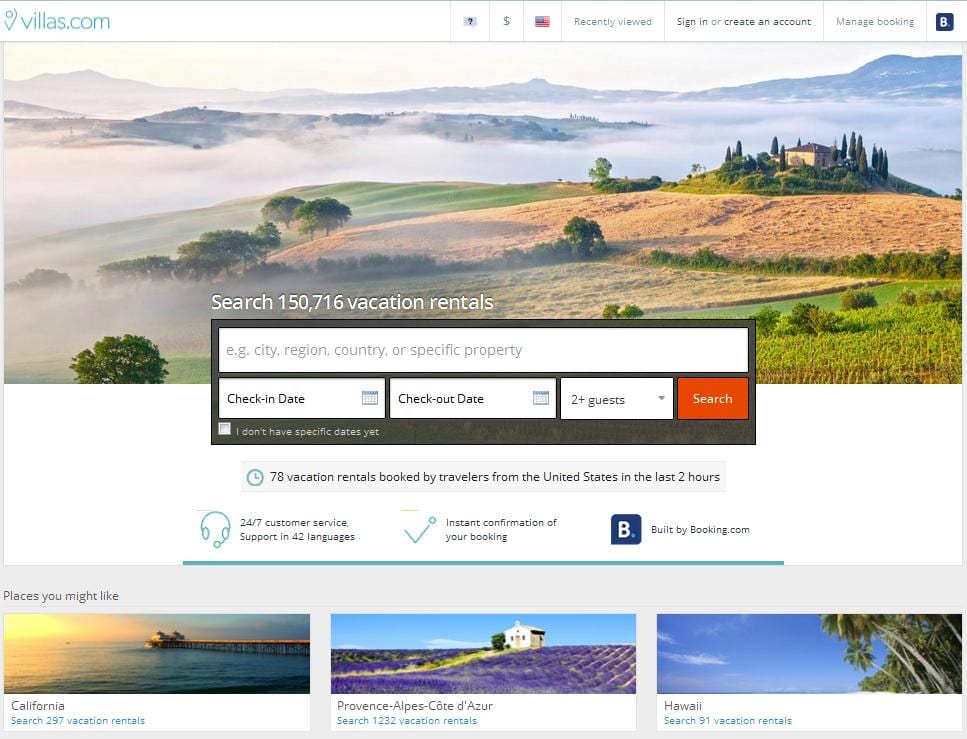
Villas-com vacation rental distibutionThe primary objective of the OTAs is to increase returns to their shareholders. Their revenue strategies include increasing subscription fees, premium ad-placement fees, and transactional fees as a percentage of the rental rate.

While the future impact  of OTAs in vacation rental distribution is uncertain, it is likely they will attempt to have rate parity, best rate guarantees, and no block-out dates to increase their profits as they grow in dominance. Currently, consolidation of OTAs is occurring as larger companies seek to maintain dominance and grow revenues, most recently evidenced with Expedia’s acquisition of Travelosity. Interestingly, Airbnb, a new entrant to the industry, has broken from the traditional OTA model by charging the consumer directly for the service provided, which has been met with high acceptance among users. Consumers appear to be willing to pay the transparent OTA fee for the convenience of using Airbnb as a one-stop service.

While some OTA distribution channels continue to sell listing ads, others are aggressively pushing transactional “Book It Now” integration to vacation rental managers as a necessity for better conversions. Professional managers that do not rely on OTAs know better.

A recent article by Tnooz reported that according to a SaleCycle survey, “conversion rates for those making a travel booking are generally low—often in the single digit percentage range”.  The conversion rates specifically for vacation rentals are likely even lower since customers generally know what to expect when it comes to hotel rooms, while vacation rental homes are all unique and travelers have more questions they’d like answered before booking.

One of the most commonly cited reasons for the low online booking conversion is that travelers (in our case, renters) are still not ready to complete their travel booking. Price is a major factor in the decision as they feel a cheaper deal may be found elsewhere and continue shopping.  OTAs may be finding themselves in a competitive struggle for consumer loyalty and to convert shoppers, which will drive more consolidation in the distribution industry.

Counterintuitively, OTAs may be conditioning users to look for a better deal elsewhere. Professional managers who do not give up control of their inventory to OTAs can benefit from higher conversion rates resulting from a better shopping experience and the ability to provide best rate guarantees when booking direct from a rental management company not encumbered by OTA agreements.

Another significant consideration is that shoppers will pay more for products and services they know. This is a compelling reason for vacation rental companies to commit resources to building a strong brand!  Unfortunately, some OTAs are stripping the value of a vacation rental company’s brand from their ads.

While OTAs may bring parties together, after the initial introduction, these intermediary or “middlemen” have little to do with the actual sale and vacation experience. Large and increasingly predatory OTAs are neither the only source of rental inquiry nor the deciding factor in the purchase and guest experience.

OTA middlemen sometimes appear not to understand that the property manager doesn’t just take accept a booking in exchange for a key and clean the property on departure. Vacation Rentals are not a commodity sale. This misperception minimalizes the services that are regularly performed by professional vacation rental companies to a function of caretaking, rather than recognizing them as managers of guest services and experiences that are essential to the vacation rental industry and which will become increasingly important if vacation rentals are to be recognized as a preferred accommodation type by travelers.

Not only are OTAs overrated as “necessary” for booking conversions, but according to the American Hotel & Lodging Association’s (AHLA) comprehensive study on distribution channels, OTAs do not create demand or raise overall occupancy. Rather, OTAs shift demand from one market or property to another, capturing a middleman fee in the process. This raises costs to the rental property managers. These costs are then passed to the property owner and, ultimately, to the consumer in the form of higher rental rates.

The practices of the OTA should be understood, and companies that choose to use them need to carefully manage how they do so. As OTAs grow in dominance in online search, they can bring a significant additional cost the rental guests that use them.

In time, market forces will impact the role and value of OTAs similarly to the changes that occurred in the hotel industry as hotelbrand.coms better managed their use of distribution channels and avoided high OTA fees by improving their online marketing and using customer loyalty programs.

Currently in Europe, OTA rate parity is being challenged under antitrust regulations. Some hotel brands have begun providing a comparison of intermediary and direct rates on their websites, dispelling consumer perceptions that shopping via OTAs will result in a better price and increasing brand direct conversion rates.

While OTAs change pricing models and strategies, vacation rental management companies need to remember that guest services are critical to successful management in the hospitality business.

Professional rental companies are in the customer relationship and care business. A booking is just one part of the multidisciplinary management skills necessary to be in the hospitality business.

Travelers are seeking rest and relaxation, new experiences, rejuvenation, and the creation of fond memories.  While a well-cared-for property is important, professional rental managers need to understand and exceed guest expectations, which requires a high level of personalized services for success.

Booking a property for a vacation is more than a real estate transaction or booking. If the vacation rental industry becomes reduced to the process of booking a property for an accommodation through a third-party OTA, professional vacation rental management companies will be providing a disservice to guests, property owners, our businesses, and the future of the industry.


Alan R. Hammond is the founder and Managing Director of Holiday Vacation Rentals. He has served as a Director and is the immediate past Treasurer of the Vacation Rental Managers Association (VRMA) and holds the Certificated Vacation Rental Manager (CVRM) designation. A recognized industry leader, Alan is quoted in the book The Rental Game: Winning with a Professional Vacation Rental Team by Maureen Regan.

Adding inventory to your rental program

0

For a vacation rental manager, the competitive landscape is rapidly changing. Acquiring new home inventory into a vacation rental program requires strategic and proactive planning.

This presentation -given at the 2015 NAVIS Leaders Conference in Orlando -provides a guideline to create a successful homeowner acquisition plan for your vacation rental program.


Expedia buys Orbitz…3 weeks after acquiring Travelocity

0

It is a two-horse race now in the online travel booking world: Expedia is buying Orbitz for about $1.6 billion in cash. This comes after Expedia announced that it was buying  Travelocity last month for a paltry $280 million.


Article by Dennis Schaal. Originally posted on Skift


Shares in Expedia rose nearly 10% in pre-market trading, while Orbitz rose over 21%.

  • Expedia will acquire all of Orbitz’s brands, including consumer brands Orbitz, ebookers, HotelClub, and CheapTickets.
  • It will offer $12.00 per share in cash, a premium of about 29% over the average share price for the five trading days up to and including February 11, 2015.
  • The deal is still pending shareholder approval and approval by regulatory authorities.


“We are attracted to the Orbitz Worldwide business because of its strong brands and impressive team. This acquisition will allow us to deliver best-in-class experiences to an even wider set of travelers all over the world,” said Dara Khosrowshahi, President and Chief Executive Officer, Expedia, Inc.

“From the flagship Orbitz.com brand, to other well-known consumer brands such as CheapTickets, ebookers and HotelClub and the business-to-business brands Orbitz Partner Network and Orbitz for Business, the Orbitz Worldwide team has built a devoted customer base and we look forward to welcoming them to the Expedia, Inc. family.”

“Our mission at Orbitz Worldwide has been to build our brands to be the world’s most rewarding places to plan and purchase travel,” said Barney Harford, Chief Executive Officer, Orbitz Worldwide. “We’re excited for Orbitz Worldwide to join the Expedia, Inc. family and for our teams to work together to further enhance the offerings we provide to our customers and partners.”

An official at a competitor to Orbitz told Skift in early January that it was an open secret that Orbitz has been engaged in a process to be acquired for some time, although the activity now appears to have entered a more formal stage. Market conditions might made this a relatively attractive time to sell. Travelocity’s 2013 decision to outsource its operations to Expedia Inc., and then Expedia’s purchase of it last month gave it even more clout with hoteliers, and put increasing pressure on Orbitz to find an exit.

Expedia was not the only bidder for Orbitz, but the rivals have not yet been determined.


Related Stories:

TruPlace and Barefoot Technologies Partner to Integrate Interactive Floor Plans into Property Management Software

0
TruPlace Floor Plans on FlipKey

TruPlace, Inc., the number one provider of interactive floor plans in the vacation rental industry, is partnering with Barefoot Technologies, a pioneer in enterprise level vacation rental property management software, to provide Barefoot’s customers with fully integrated access to TruPlace’s interactive floor plans and Central Image Management System (CIMS).

With the combination of professional photography and a detailed floor plan in one intuitive technology platform, vacation rental managers who use TruPlace interactive floor plans instantly provide guests with a visual perspective of the vacation home. The floor plans improve listing quality, help reservation agents and give travelers the information they need to make faster decisions about choosing a vacation rental.

In addition, TruPlace’s CIMS provides vacation rental managers with a single location to store and manage all of their photos for their software, their website, their distribution needs and their sales materials. The CIMS stores all of their images in multiple sizes and in print and web resolution.

“We’ve been working hand in hand with Barefoot’s technology team to fully integrate the TruPlace Interactive Floor Plans and centralized image management system into Barefoot’s vacation rental software,” said Bob Cusack, CEO at TruPlace. “Our customers have seen a significant increase in online conversions by adding floor plans, so we expect our partnership with Barefoot to enable vacation rentals to see more bookings and more revenue by adding interactive floor plans to their properties.”

“TruPlace offers a significant advantage to our clients and those that take pictures seriously and we should all take pictures in this industry seriously,” said Barefoot CEO Ed Ulmer. “We are excited to be the first property management system to integrate with TruPlace including their floor plans.”

A recent independent study measured the impact of using TruPlace’s floor plan tours on reservations for vacation rentals and found that rental properties using interactive floor plans saw an 18 percent average increase in reservations and booked 22 days faster than properties without floor plans.

TruPlace’s floor plan services are being utilized for over 35,000 properties in North America.

Judge raises concerns over HomeAway suit against San Francisco’s Airbnb law

0

SAN FRANCISCO (CN) – A federal judge Friday raised concerns about vacation rental marketplace HomeAway’s challenge to a San Francisco ordinance regulating short-term rentals in the city.

HomeAway sued the city in November over the so-called “Airbnb law,” which legalizes and places restrictions on rentals in private homes.

HomeAway claimed that the law, crafted with the help of its competitor Airbnb, discriminates against nonresidents who want to rent homes they own.

The law requires hosts to be permanent San Francisco residents, but many of HomeAway’s users list second homes and do not live in the city year-round. HomeAway’s websites include VacationRentals.com and VRBO.com.

HomeAway claims the law will create a local monopoly for Airbnb, because the regulations are tailored to its competitor’s business model.

In a dismissal hearing on Friday, U.S. District Judge Joseph Spero expressed doubts about whether the company has standing to sue.

HomeAway provides only “ancillary services” for people who want to rent out properties, the judge said.

“The ordinance itself doesn’t restrict the delivery of those ancillary services, it rather regulates a transaction that is entered into by the customers of HomeAway with others, not with HomeAway itself,” Spero said. Those people could file their own lawsuit, he said.

Spero also questioned HomeAway’s argument on hotel taxes, known as transient occupancy taxes.

HomeAway said in its complaint that the ordinance imposes a new obligation for companies like it to collect taxes.

But attorneys for San Francisco argued in a dismissal motion that HomeAway “misread” the ordinance, and that the law does not create any new rules – it just requires companies to comply with what’s already in the city tax code.

“It seems to me that one way or another the complaint would be dismissed as to the occupancy tax, as there’s no injury as a result of the ordinance,” Spero said. “The ordinance doesn’t actually do anything … in terms of increasing or decreasing the obligation of the plaintiff to collect the occupancy tax.”

HomeAway was represented by Rex Heinke of Akin Gump Strauss Hauer & Feld.

San Francisco may not be the last fighting ground for the vacation rental company. HomeAway co-founder Carl Shepherd recently threatened legal action against New York, if the city pursues a law similar to the San Francisco law.

Contact Arvin Temkar at sanfran@courthousenews.com

Expedia purchases Travelocity for $280M

0

As rumored, Expedia (NASDAQ: EXPE) announced it has acquired Travelocity from Sabre Corporation (NASDAQ: SABR) for $280 million in cash.

The acquisition follows the 2013 strategic marketing agreement between Expedia, Inc. and Travelocity under which Expedia has powered the technology platforms for Travelocity’s US and Canadian websites along with providing Travelocity access to Expedia, Inc.’s supply and customer service program.

“Travelocity is one of the most recognized travel brands in North America, offering thousands of travel destinations to more than 20 million travelers per month,” said Dara Khosrowshahi, Expedia, Inc. President and Chief Executive Officer. “The strategic marketing agreement we’ve had in place has been a marriage of Travelocity’s strong brand with our best-in-class booking platform, supply base, and customer service. Evolving this relationship strengthens the Expedia Inc. family’s ability to continue to innovate and deliver the very best travel experiences to the widest set of travelers, all over the world.”

“Our primary focus at Sabre is to provide mission-critical software solutions to our global airline, hospitality, and travel agency customers – and to help them support their customers every day,” said Tom Klein, Sabre President and Chief Executive Officer. “We have had a long and fruitful partnership with Expedia, most recently by partnering to strengthen the Travelocity business, so our decision to divest Travelocity is a logical next step for us both.”