- Advertisement -
Home Blog Page 45

Takeaways from OPMA Spring Executive Summit

0

The Onsite Property Management Association (OPMA) held its Spring Executive Summit May 18-20 at the Inverness Hotel and Conference Center in Denver, CO. This forward-looking event addressed a multitude of high-level topics and opportunities for onsite rental property managers representing the hybrid condo-hotel lodging sector.

OPMA is made up of onsite vacation rental property management companies and targeted service and product suppliers and provides education, advocacy, and the promotion of the value of the rental experience through onsite property management. The Summit was attended by executives from the largest and most influential onsite property management companies representing condo hotel properties in the U.S., and provided industry-leading education and networking.


Key takeaways from OPMA’s Spring Executive Summit


1. Partnership with DestiMetrics

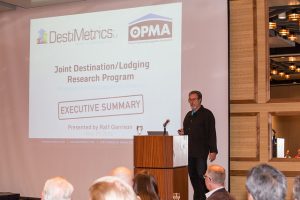
The OPMA members proposed and ratified a partnership with Ralf Garrison and DestiMetrics to initiate a Joint Destination/Lodging Research Program. This cooperative research program is designed to measure the OPMA lodging category to inform and educate local destination resort communities and to empower OPMA member companies with “non-hotel” metrics.

27287277105_4eb909999a_zDestimetrics was founded back in 2004 and currently provides lodging research programs for most of the Mountain West destinations and is focused now on penetrating the most popular beach markets in the USA.

With the partnership, properties will provide their data, in confidence, to Destimetrics who will provide the aggregated data model, systems, procedures and implementation. The research program will be funded by each Destination Marketing Organization (DMO) with the next market implementation in Panama City Beach, Florida. The DMO will also provide a local hub administrative resource and will solicit additional property participation.

With the vast onsite rental inventory represented by the OPMA membership, this partnership is an important step in establishing national benchmark reporting for non-hotel accommodations.

27011941120_d26d6fa1d8_zAccording to Paul Wohlford, OPMA President and Vice President at The Resort Collection, “The DestiMetrics program and forecasting tools can take the professionally onsite managed Property Management sector to the next level by quantifying what our segment represents in the entire travel industry.”

Wohlford added, “We have never been able to appropriately quantify our financial impact in the travel market that benefits all the destination stakeholders including retailers and local residents. The partnership between OPMA and DestiMetrics will help educate both owners and consumers as to why they should travel to those properties managed by professionals.”


2. Phocuswright Talks Industry Growth and Airbnb Impact

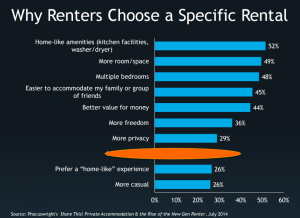
Pete Comeau, Senior Vice President, Research Sales at Phocuswright, presented research about the vacation rental industry, beginning with the finding that – in just three years – the percentage of U.S. travelers who have rented a whole home or apartment has more than doubled, from 10% in 2012 to 22% in 2014.

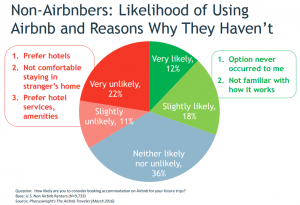
27217262771_84766610fa_zComeau discussed demographic shifts among vacation rental guests and the motivations of next-gen travelers before taking a deeper dive into Airbnb’s impact on the industry and the building blocks which contributed to their success, including Airbnb’s website design and user interface, their online booking path, their engaged community, the implementation of 2-way reviews, and their attention to the Host (Phocuswright’s The Airbnb Traveler, March 2016).

The session provided an in-depth look into the Airbnb Traveler and identified their considerations throughout the booking process. It also provided a roadmap for how OPMA members can leverage these research findings to their advantage in their respective market areas.

Phocuswright Airbnb vs hotel motivations of travelers Phocuswright on next generation vacation rental travelers


3. OPMA Takes Steps Toward Bulk Purchasing

In a session led by John Dalton, Chief Marketing Strategist at OPMA, the OPMA leadership presented to its membership ideas on collaborating on purchasing contracts to obtain better pricing from vendors. Dalton encouraged members to leverage their purchasing power through the OPMA to reduce operational costs.Additionally, OPMA has recognized and is encouraging a trend underway of multiple OPMA suppliers coming together to provide onsite manager members with a shopping cart of ancillary bundled services and products.


4. Regulations at the Forefront

For professionally managed vacation rentals, regulations and tax remittance remain hot-button issues in 2016. A panel session which included Paul Wohlford, Vice President at The Resort Collection, Lino Maldanado, Vice President at Wyndham Vacation Rentals North America, Dean Brookie, Mayor of Durango, CO, Dennis DiTinno, CEO at Liberte Management Group, and Jim Olin, Founder and President at C2G Advisors, addressed regulations, tax compliance, and the financial impact of vacation rentals to the destination.

27287355075_c5bb0f4a11_zThe panel engaged the audience with in-depth discussions about working with both city councils and DMOs to demonstrate the category’s economic value to their communities and to identify ways to bring illegal rentals out of the shadows.

Wohlford shared an experience in the Panama City Market in which lodging partners are active in the community, but even there, many decisions are made without input from the lodging partners. This year, Panama City officials decided they no longer wanted to be a “spring break destination”, so they created burdensome ordinances which effectively devastated bookings for March, which had historically brought in millions to the local economy. The decision was made without any meaningful discussion with lodging partners and without consideration for the economic fallout (In Panama City Beach, visitors spent $123 million in March 2014).

The discussions reiterated the importance of continually working with elected officials and DMOs to consistently communicate the economic impact of rental income and partner with destinations to facilitate the conversion of illegal vacation rentals to tax compliant vacation rentals. The other major focus of the session was how we can compile, with the input of diverse municipalities across the country, the best practices for ensuring that consumer friendly ordinances are introduced that provide for across the board tax compliance of all participating lodging entities while satisfying the needs and interests of both the area visitors and destination stakeholders.


5. Stop Calling it the “Off-Season”

As the vacation rental sector increases in visibility, shoulder seasons are showing signs of life across multiple destinations. Lino Maldonado, RVP for Wyndham Vacation Rentals and John Dalton shared that the Wyndham Vacation Rentals team changed the way they viewed the off-season by internally changing their season descriptions. Instead of internally referring to certain dates as “off season,” they started referring to those dates by identifying the best reason to visit during specific date ranges, i.e. festival season, fishing season, holiday season….even pirate season in one destination.

By changing the internal dialogue, they were able to change the overall perception of destinations during less busy times of the year, improving the sales and marketing process.


The summit also addressed customer relationship management, guest surveys, and loyalty programs. The next OPMA Executive Summit will be held November 9-11, 2016  at the Sandestin Golf & Beach Resort. For more information on joining OPMA, go to http://theopma.org.

RealTimeRental and PMT – Property Manager Tools Announce an Integration Partnership to provide VRMs and Property Managers Seamless Use of Both Company’s Suite of Services

0

RealTimeRental and PMT – Property Manager Tools announced a strategic partnership between the two companies.   The partnership includes a seamless, direct connection for mutual clients, so that the end user has one point of entry to utilize PMT’s suite of marketing products, Housekeeping Module, etc.

Sherry Tomasso, Co-Founder of RealTimeRental, states “We are very excited to work with the team at PMT.   Their SmartResponder™ is a cutting edge tool that will allow my clients to respond immediately to inquiries, even when their offices are closed.   We are also very excited about the other tools in their suite, and the enhancements they’ve planned for this quarter.”

According to Doug Rein, Co-Founder and development lead at PMT, “With direct access to RTR’s data, we can provide very fast account setups, with almost no effort from the PM. With SmartResponder™, for example, an RTR account can sign up and begin sending automated quote responses in the same day.”

Robert Simmons, Co-Founder and Marketing Director of PMT, remarked “We are very excited to be working with Sherry Tomasso and Joe Testa. We can provide a suite of services that complements their products, and automates their clients’ manual processes.”


About RealTimeRental

RealTimeRental is a leading cloud based vacation rental software solution that was launched in 2000. As the solution of choice for over 200 vacation rental offices, they provide their clients with a comprehensive reservation and accounting system for back office, as well as, rental property search tools for their websites! Their clients consistently provide outstanding testimonials about their level of support, the dynamic nature of their system, along with an accurate fully integrated trust accounting package. All of this transacted over 300,000 reservations in 2015, with a gross amount of just under $418 million dollars! RealTimeRental offers a trusted, secure, and robust cloud based rental management platform and online services – all at a fraction of the cost of other systems.

Learn more at www.RealTimeRental.com


About PMT – Property Manager Tools

PMT, Property Manager Tools, LLC launched in 2011 with the goal of using automation to make Property Managers more profitable. PMT offers a growing Smart Suite™ of solutions that work individually or together, including its innovative auto quote Smart Responder™, which introduced auto-suggest to the industry. PMT has partnered with some of the leading companies in the Vacation Rental Industry.

As a fully integrated partner with RealTimeRental, PMT can offer all its services to their clients. This relationship ensures that all pricing information flows directly from RealTimeRental Software directly into the PMT system. RealTimeRental’s clients know that their rates, fees and taxes are current each time a quote goes out.


Learn more at www.propertymanagertools.com


14 Words to Never Include in Your Vacation Rental Listing

2

By Layne Blakely, MaidThis!

Whether you are a seasoned host or new to the realm of hospitality entirely, it’s important to note the distinction between a good listing and a not-so-great one. You only have a few seconds to grab a vacationer’s attention, so use your words wisely. Here are 14 things you should never use in your vacation rental listing.

1. Never

“A Trip You Will Never Forget” Never use never, even if it sounds like a positive thing. The word has a definitive connotation and you should avoid sounding like a host who deals with everything only in “black and white” terms. Accommodating guests is a top priority in hospitality and often, there are some grey areas that may require deviating from “the usual procedure.” Try using words that are a bit softer and that provide more than two extremes. “A vacation to remember” sounds much more inviting than one “you will never forget.”

2. Expect

“Expect Your Dream Home” Guests’ expectations can be rather high when it comes to taking a timeout from life. Often, renters have very specific assumptions of what their experience will be like and it can be difficult to meet those expectations. As such, disappointing guests is not always due to an oversight of the host. You can help your renters set realistic expectations in the rental description by leaving out the word “expect.” This way, there is less risk of a letdown. The word may stir up some kind of anticipation, either good or bad, and can often leave potential renters with a bad taste in their mouths.

3. Busy

“A Cute Apartment Located in the Busy City of LA” Many people researching for an upcoming vacation are looking for an escape from the chaos of their day-to-day and are hoping for a quiet retreat. However, there are also those who enjoy the hustle and bustle of city life and thrive in fast-paced environments. While it makes perfect sense to direct language towards these “busy” folks, be tactical about how you do it. An apartment in a “busy city” sounds much less alluring than one in “the center of it all.” Odds are the type of person planning a vacation in surroundings that are similar to their own may be more attracted to a listing that sounds different. On the other hand, the person who is straying from their norm may be intimidated or turned off by blatant language like “busy.”

4. Broken

“Keep kitchen cupboards closed due to broken hinges.” It’s unwise to use this word! It might seem like a very obvious mistake, but it’s still important to mention. Again, this is where tact comes into play. While there is value in telling the truth, there comes a time to re-evaluate. If the toaster breaks, discard it. If it’s not possible to replace right away, simply edit your rental description to take out any mention of a toaster. It is very important to remember to update your listing. Any misleading information (even the smallest thing, such as listing an appliance that is actually not usable) can very easily cause disgruntled guests or bad reviews.

5. Old

“Old Victorian Charm” History is quite often a driving factor behind a vacation, and who wouldn’t want to stay in a place that has been around for decades or centuries? The chance to go back in time will always remain a coveted experience – one that excites vacation goers. However, words like “antique” and “historic” have a better chance at provoking the curiosity of potential renters. On top of that, analytically speaking, people tend to use more specific terms when searching online for a place to stay. “Antique victorian with vintage charm” is more likely to show up at the top of search results rather than a title beginning with “old.”

6. Jealous

“Friends Will Be Jealous of this Spectacular Getaway” This is probably true, especially if your listing is a bungalow by the sea. While this word may seem like a way to draw renters, on second glance, it doesn’t offer them much. Making friends jealous is a plus, of course, but it’s probably not the main reason people are looking at the listing. Booking a getaway is for getting away, not making people jealous! Stay on point and keep the message relevant to the end goal of filling up your rental calendar.

7. Don’t

“Don’t use the disposal.” While there are ways to insert this word into positive statements, it is best to avoid using it in your listings. This word can sometimes come off as harsh and dismissive, which is very unappealing to potential guests. Even if the intention is meant well, like the example above, seeing this word while planning a relaxing trip can be off-putting. “Please refrain from using the disposal as it is currently under repair.” This example shows the host is much more reliable than one who may have used the statement above; there is more information and it gives a vacationer confidence that the listing is updated often. (Remember: keep your listing updated as the state of things change!)

8. Sorry

“We are sorry to say no pets allowed.” This is a polite enough statement, but what is there to be sorry for? A no-pets rule is perfectly acceptable and understood among renters. In conversation, saying “No pets, I’m sorry,” is another thing entirely. A professional rental description should stick to the basics, including any ground rules you’ve established for your tenants. Keep the language friendly and open, but there is no need to apologize for any necessary conditions. “Please leave your pets at home” is polite, names a rule, and is respectably stated.

9. Everything

“You’ll find everything you need.” The word “everything” gets thrown around a lot when it comes to vacation. While it may not seem like a big deal, promising “everything” to your guests can set you up for trouble, as you could be setting yourself up for an opportunity to under-deliver. Instead, make promises to do your best to provide for a guest’s needs. Create an opportunity to over-deliver instead of the opposite.

10. Hope

“We hope you’ll enjoy your stay!” “Hope” can be a tricky word because while it seems positive and inviting, it can also insinuate you’re not confident about your hosting abilities. Of course you hope your guests will love their stay with you, but verbalizing it alters your appearance as a competent host in your listing. Rather than saying “hope,” use words like “know” or “confident.” Something like, “We’re confident you’ll love your stay with us” sounds better than, “We hope you’ll enjoy your stay.”

11. Good/Great

“Get Ready for a Good Time” / “There’s a great beach a short walk away.” It’s easy to fall back on “good” and “great” to explain your vacation rental or the locations near them. However, it’s also easy to overuse these words. The English language is full of other descriptive words, so branch out a little. Instead of saying, “There’s several great restaurants nearby,” opt for, “There’s several delicious restaurants nearby.” Instead of saying something is “good,” explain that it’s “fantastic,” “superb,” or “exceptional.” Get creative!

12. Misspellings

Any word that is misspelled should never be included in a listing. In the age of Spell Check, misspellings should not be overlooked. There are times even technology misses a thing or two, which is why it’s important to proofread – more than just once.

13. Local Jargon

Inserting local jargon can seem like a fun way to engage renters, but – especially for foreign guests – this can be a bit confusing. Stick to general terms and language, but if there is something specific to the listing that needs to be included, be sure to offer some kind of explanation or insight as to what it means.

14. Bad Photos

They say “a picture is worth a thousand words,” and in the online world, nothing is truer. Keep the toilet seat down, make the bed, put the kids’ toys away, and clean the countertops. Check your images carefully for things you might have missed when you took them before posting online. Whipping up a rental listing might seem like a daunting task. Truthfully, the only thing you need to remember is you are providing the most important thing for vacationers – a place to stay. Do your best to represent your property as you see fit and the rest will follow. Now put out the welcome mat! Need help getting your vacation rental ready for your next guests? Set up a time to have one of our fully-vetted cleaners make your space sparkle and watch the rave reviews stack up.

Austin City Council Ignored Data in Over-Reaching Decision to Phase Out Vacation Rentals

0

If you’ve ever thought about renting out your home on Airbnb or HomeAway, you might want to think again. Thanks to regulations, participating in the sharing economy is like playing Jenga outside during tornadic activity. The first — and probably the hardest — challenge is just getting everything set up with the overreaching city regulations. But keeping it up is no small task, either.

First, owners of short-term rentals (STR) — leases for less than 30 days — in Austin are required to obtain an operating license. But, as you might imagine, it’s not that simple.

By Andrea Alvarez and Allegra Hill – Special to the American-Statesman

The first challenge is figuring out which “type” of operating license you need. There are three categories for short-term rentals. “Type 1” rentals are owner-occupied single-family homes or units associated with an owner-occupied residence. Type 2 rentals are vacation or second homes not designated by the owner as a homestead. Type 3 units are those intended for multifamily use, such as apartments and condos.

Navigating this licensing puzzle does not guarantee an operating license. As of November 2015, the City of Austin implemented a ban on short-term rentals for all residential single-family homes, unless the owner lives on the premises. That means type 2 licenses are no longer issued.

What went into the conclusion that such actions needed to be taken? Basically, these vacation rentals were deemed “party homes,” thus the decision to ban them.

But this assumption does not align with reality. According to the City’s own data, in 2015 the vast majority of complaints against short-term rentals were actually against unlicensed properties. Of the 353 complaints made between October 2012 and August 2015, 200 were against unlicensed properties, meaning that about 57 percent of the problem comes from units that do not even have an STR license. In fact, less than 10 percent of all complaints were actually related to noise or occupancy issues in licensed STRs at all, and the majority of those were against owner-occupied rentals.

The ban on type 2 units represents yet another overly broad property law intended to protect people from undesirable, indefinable behavior. What constitutes a “party,” anyway? The meaning varies from individual to individual. So, rather than attempting to enforce the laws against troublesome “party” homes, the city restricted the ability of law-abiding homeowners to lease their homes at all.

Unfortunately, it did not stop there. After eradicating type 2 rentals, the city still attempted to expand the definition of “partying” behavior to affect other types of rentals. Now, guests in short-term rentals cannot participate in outdoor “assemblies” of more than six people between the hours of 7:00 a.m. and 10:00 p.m. What exactly is an “assembly?” According to the city, it is “group activities other than sleeping.” So short-term rental guests cannot hold backyard birthday parties, summer barbeques, or games of pickup basketball without risking a dreaded code citation.

Similarly, any “assembly” at a short-term rental — whether indoors or outdoors — between 10:00 p.m. and 7:00 a.m. is also considered “partying.” Bible studies, movie nights, and back-porch stargazing are no longer allowed.

These are only a few of the far-reaching regulations and prohibitions enacted by the city, all based on faulty assumptions about “party homes.” Yet, with such ridiculous regulations, will anyone actually comply? Unlikely.

What’s more likely is that the city will make it so hard to operate short-term rentals legally, that they will drive the rentals underground. Licensing a home as a short-term rental would simply be painting a target on your property, and putting the city on notice that you are subjecting your home to impossible regulations. Why draw attention to your home when you know your guests may stay awake past 10:00 p.m.? Why tell the city you’re renting out the property when you spent thousands of dollars installing a pool that accommodates more than six people? Why agree to forfeit hotel occupancy taxes when you’re forced to underutilize your six-bedroom home, and can’t charge enough to make a profit? Logically, licensing will no longer make sense. So, rather than fighting the tornadic activity, people will move indoors.

But the city has the ability to calm the storm entirely. The ban should be reexamined and the regulations revisited. It’s not too late.

Hill is a policy analyst with the Center for Local Governance at the Texas Public Policy Foundation. Alvarez is a research assistant with the Texas Public Policy Foundation.

AAA: 38 million Americans will travel this Memorial Day weekend

0

The great American road trip is back; Memorial Day travel volume will be second-highest on record.

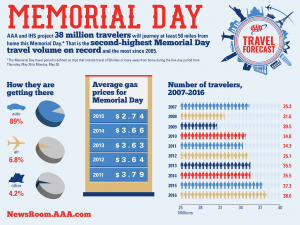
AAA projects more than 38 million Americans will travel this Memorial Day weekend. That is the second-highest Memorial Day travel volume on record and the most since 2005. Spurred by the lowest gas prices in more than a decade, about 700,000 more people will travel compared to last year. The Memorial Day holiday travel period is defined as Thursday, May 26 to Monday, May 30.

“Americans are eagerly awaiting the start of summer and are ready to travel in numbers not seen in more than a decade,” said Marshall Doney, AAA President and CEO. “The great American road trip is officially back thanks to low gas prices, and millions of people from coast to coast are ready to kick off summer with a Memorial Day getaway.”

2016-Memorial-Day-Travel-ForecastAAA estimates that Americans have saved more than $15 billion on gas so far this year compared to the same period in 2015, and prices are at the lowest levels in 11 years. The strong labor market and rising personal income are also motivating people to travel for Memorial Day this year.


Low gas prices driving increase in auto travel this Memorial Day

Nearly 34 million (89 percent) holiday travelers will drive to their Memorial Day destinations, an increase of 2.1 percent over last year as a result of lower gas prices. Air travel is expected to increase 1.6 percent over last year, with 2.6 million Americans taking to the skies this Memorial Day. Travel by other modes of transportation, including cruises, trains and buses, will fall 2.3 percent, to 1.6 million travelers.


Lowest Memorial Day gas prices in 11 years expected

The national average price for a gallon of gasoline today is $2.26, 45 cents less than last year. AAA expects most U.S. drivers will pay the lowest Memorial Day gas prices since 2005. According to a recent AAA survey, 55 percent of Americans say they are more likely to take a road trip this year due to lower gas prices.


Airfares, hotel and car rental rates

According to AAA’s Leisure Travel Index, average airfares for the top 40 domestic flight routes will be 26 percent cheaper this Memorial Day, with an average roundtrip ticket costing $165. Hotel costs are in line with last Memorial Day. AAA Three Diamond Rated hotels will average $183, while a AAA Two Diamond Rated hotel will average $151 nightly. Daily car rental rates will average $62, three percent less than last year.


Memorial Day travelers heading to warm weather destinations & cities

Many Memorial Day travelers will head to warm weather destinations and historic American cities to kick off their summer travels. The top destinations this Memorial Day weekend, based on AAA.com and AAA travel agency sales, are:

  • Orlando
  • Myrtle Beach
  • Washington, D.C.
  • New York
  • Miami
  • San Francisco
  • Boston
  • Honolulu
  • Los Angeles
  • South Padre Island


AAA’s projections are based on economic forecasting and research by IHS Global Insight. The Colorado-based business information provider teamed with AAA in 2009 to jointly analyze travel trends during major holidays. AAA has been reporting on holiday travel trends for more than two decades. The complete AAA/IHS Global Insight 2016 Memorial Day holiday travel forecast can be found here.

Study: Direct Bookings are 9% More Profitable for Hotel Sector

0

OTAs, metasearch, wholesalers and traditional travel agencies can be an important part of the mix, but they are no match for booking direct.

Following the launch of book direct campaigns by a few of the major hotel brands, some articles have surfaced with unsubstantiated information questioning the value of the business through direct channels. Hospitality Upgrade sought the guidance of an industry expert to find out what the industry data actually shows. Kalibri Labs, a Rockville, Md. based big data firm maintains a growing database from more than 25,000 hotels and tracks all bookings, revenues and customer acquisition costs with a history back to 2011.

Based on analysis provided by Kalibri Labs, direct brand.com bookings continue to be significantly more profitable than OTA bookings. The findings showed that direct bookings remain more profitable for the hotel industry — to the tune of 9 percent — and when factoring in ancillary spend, profitability can be almost 18 percent better. Costs that are considered for this analysis include commissions, transaction fees, loyalty fees, and any other direct channel costs.

On top of this, the acquisition costs for customers using direct channels decrease over time while those for OTA customers remain steady or may increase as commissions rise. Hotels essentially pay the same commissions every time a guest comes through an OTA; there is no reduction in cost when volume increases or guests come back. In contrast, as loyalty rosters grow, the overall marketing costs are reduced and the entire system becomes more efficient. The added advantage of direct engagement leads to improved relationships with guests.

The other factor regarding the OTA channel is that the presumed “billboard effect” benefit, touted by third parties to justify the high commission cost of their channels, has been shown to be a myth. The Online Travel Shopper’s Journey study published by the AH&LA Consumer Innovation Forum (to be released in June 2016 as Part I of Demystifying the Digital Marketplace: Spotlight on the Hospitality Industry) will explore this in detail, but the key finding from the 2015 study is that there is only a slight likelihood (7 percent) that a consumer will visit an OTA and then return to brand.com to book.

Further to this, early research by Kalibri Labs following the book direct initiatives reveals that when OTAs have “dimmed” hotels by removing photos and other content to de-emphasize their visibility, the hotel demand shifted to other channels, mainly direct ones, suggesting that the amount of incremental business through OTAs may be in fact less than originally thought. This raises the question of the value of paying a premium in commissions for business that will come anyway through other channels.  In examining trade-offs more closely on the hotel side, Kalibri Labs reported, the higher net ADR suggests that although some loyalty guests who had previously paid full rates are taking advantage of the discounts, many are not. This metric will be carefully tracked as the campaigns are more fully deployed but this preliminary finding implies that the book direct programs may be shifting new customers into the loyalty programs rather than simply seeing trade-down pricing from existing customers.

Kalibri Labs advises that third-party business from OTAs, metasearch, wholesalers and traditional travel agencies can be an important part of the mix, but their report summarizes: striking the optimal balance between direct and indirect business sources will ultimately result in a hotel enjoying higher profit contribution, delivering better consumer experiences through higher levels of guest engagement, and yielding healthier economics for a hotel as a result of a diverse business base.

Read the detailed analysis exclusively in the upcoming issue of Hospitality Upgrade available June 2016. Sign up here to receive your free subscription and have the full article delivered to your inbox.


About Hospitality Upgrade

With more than 32,000 readers in 110 countries, Hospitality Upgrade is committed to shaping and defining the future of the hospitality technology industry. With such formidable industry events as The CIO Summit and The Executive Vendor Summit, its network of industry trend-setters and technology purchasers is unparalleled. For more information or to sign up for a FREE subscription and join our growing network of informed hospitality technologists, please visit www.hospitalityupgrade.com.

Contact: Geneva Rinehart

grinehart@hospitalityupgrade.com / 678-802-5302


About Kalibri Labs

Kalibri Labs is a next generation benchmarking platform to evaluate hotel revenue performance in the fast moving digital marketplace. The Kalibri Labs industry database supports on-demand reports, cloud-based dashboards and revenue strategy consulting. The robust database of stay data and cost of sales for over 25,000 hotels is a valuable resource for hotel brands, operators, owners, developers, investors, destinations and vendors providing them the ability to benchmark revenue performance by hotel, competitive set, chain scale and by geographic market.

Contact: Cindy Estis Green

cindy@kalibrilabs.com

PointCentral Accelerates Penetration of Smart Home Technology In Vacation Rental Management Market

0

PointCentral, the recognized leader in keyless Smart Home solutions for vacation rental management companies, today announced significant growth has been achieved in the vacation rental segment they entered just four years ago. With a year-over-year increase of over 30%, PointCentral is now widely installed in more than 100 vacation rental companies from the Outer Banks to Hawaii.

“I am proud to say that PointCentral Vacation Rental Management customers are profiting from the many benefits of our enterprise Smart Home technology,” said Greg Burge, president of PointCentral. “These professional management companies recognize that going keyless and taking control of access and temperature across all of their vacation rental properties is good for their homeowners, their guests and their bottom line.”

Among the numerous industry leading companies to recently sign with PointCentral are MetaCoastal, Glen Burnie, Md., Newman Daily Resort Property Management, Miramar Beach, Fla., Lewis Realty Associates, Surf City, N.C., and Eastern Shore Vacation Rental, Easton, Md.

“PointCentral’s cellular capability and proven success gave us the confidence to build a Smart Home infrastructure across our vacation rental enterprises in more than 10 markets,” said Scott Fasano, chief real estate officer at MetaCoastal. “The solution has positively impacted every area of our business, streamlining processes, improving the client experience, and offering a revenue opportunity.”


About PointCentral

PointCentral, headquartered in Portland, Ore., with offices in Tysons, Va., designs, manufactures and markets Smart Home hardware and software products for the vacation rental management and residential property management markets. PointCentral solutions provide customers in these markets with the ability to monitor and control access and temperature across all the properties in their inventory – reducing risk, improving security, controlling assets, reducing energy costs and improving guest/tenant satisfaction. Visit PointCentral.com for more.

VeryUs allows guests to share luxury vacation rentals

0

A few years ago, Matt Heady asked himself a question that led him to create a new platform for renting vacation homes.

The question? Would he be willing to share a five-bedroom luxury vacation villa on the water with others who shared his same interests but whom he’d never met?

“I answered a big fat yes,” Heady said.

That emphatic yes led him to create Naples-based VeryUs, which he’s marketing as a way to unlock luxury vacation rentals for less than luxury hotel prices.

By Laura Layden of the Naples Daily News

“We’ve developed a system that allows travelers and meeting attendees to split the cost of a house,” Heady said. “But really it’s not about just the eCommerce side of the business but the brand.”

The platform will enable travelers to rent vacation homes together, one room at a time. “It’s like Airbnb, without the B&B,” Heady said.

The travelers would have to check in on the same day and check out on the same day.

“There’s nothing like it,” Heady said. “I can promise you.”

On Monday the startup launched a four-state pilot test that will allow travelers who share common interests to book vacation rentals together around 10 events — from Comic Con in San Diego and the U.S. Open Golf championship in Oakmont, Pennsylvania, to Art Basel in Miami and the PGA Championship in Springfield, New Jersey.

The rentals will be advertised on VeryUs’ website, www.very.us and will be shared through social media, with Facebook pages created around the events.

Heady, a graduate of Roger Williams University in Rhode Island with a degree in design communications, knows a thing or two about the hospitality industry. His family has operated a bed-and-breakfast in New England for more than 30 years.

“I’ve met guests from all over the world,” he said.

On the technology side, Heady, 39, also has 18 years of experience as a software designer, having worked for such notable companies as NBCUniversal and Sony. He said he originated three social patents for Sony.

“I’ve definitely had my fair share of building on other people’s dreams,” he said.

With VeryUs, he wants to build on his own dreams. He started the company in July and hasn’t looked back.

“I went all in. I left a six-figure job. I was working for another startup. It just wasn’t my vision. I was living someone else’s dream.”

For now, the company’s headquarters is Heady’s home. Asked how he came up with the company’s name, he said, “It’s not about you. It’s not about me. It’s about us as a group. It’s very much about us.”

Heady isn’t alone in his new venture. His team includes Ryan Heinemeyer, 26, a company co-founder and vice president of marketing.

VeryUs Vacation Home Rental SharingThe duo met at Venture X, a trendy co-working spot in North Naples where Heady worked for MassiveU, a mobile learning platform, and Heinemeyer handled marketing for Ezderm, a software developer for the dermatology industry.

“He’s my millennial feedback,” Heady said. “He validates a lot for me, actually. He’s smart as a whip.”

Heinemeyer sees a lot of value in the concept. He likes to ski in Park City, Lake Tahoe and Vail, and VeryUs would open up opportunities for him to meet others with the same interests who can share the cost of a vacation rental with him. He also would rather attend an out-of-town event with a friend.

“I don’t want to be a loner,” he said. “This kind of gives me the chance to stay with guys or girls, depending on what the trip may be and at least have a friend that is staying with me who is interested in doing the same things.”

The VeryUs team also includes four engineers in Europe.

In April, VeryUs.com announced a partnership with rented.com, a company that connects homeowners with professional property managers. The partnership is designed to help vacation rental owners and property managers capture more bookings, while helping VeryUs.com get its name out.

“We’re all about having our managers and homeowners try to maximize their income,” said Monika Haebich, an associate for rented.com. “We saw a lot of potential in VeryUs and how it’s approaching rentals in the industry. It’s a new approach to sharing. It’s a great way to get more guests in these homes. We have a lot of confidence they will do pretty well.”

Through pilot tests, Heady is looking to prove his business model before building an online marketplace. He plans to use the data he gets from those tests to woo investors, who are needed to fully develop the concept, he said.

Heady sees the opportunity to make money in two ways. Property management companies could put the VeryUs widget on their own websites and pay a flat monthly fee for it, or they could choose a performance-based model and pay a fee to VeryUs for every booking the company generates for them.

Heady wishes there was something like VeryUs when he was trying to plan a getaway with his wife in 2012 to the Turks and Caicos Islands and had to cancel his plans because most of his friends backed out and they could no longer afford to go.

The letdown is what led Heady to ask himself whether he’d be willing to share a vacation home with strangers who had the same interests.

“The world has never seen what we’re doing, and they are about to,” Heady said. “A lot of people are going to be shocked. A lot of people are going to be happy. A lot of people are going to be anxious. It’s going to be a mixed bag.”

Travel Tech strikes back at AH&LA’s efforts to ban vacation rentals in Chicago

0

The Travel Technology Association (Travel Tech), the premier trade association for leaders in online travel innovation released the following statement in response to the American Hotel and Lodging Association’s latest attack on short-term rental providers and the peer-to-peer economy in Chicago.

“AH&LA’s claims are a transparent and desperate attempt to denigrate the short-term rental industry in hopes of convincing city officials to eliminate short-term and vacation rental options for Chicago visitors. This manufactured narrative is wholly dependent upon a gross mischaracterization of data,” said Matt Kiessling, who heads Travel Tech’s short-term rental policy.  “We commend Mayor Emanuel for recognizing the value of short-term rentals as a travel accommodations option in Chicago. The rise of the sharing economy indicates the shifting preferences of the modern traveler, and the economic benefits realized through the use of these innovative short-term rental platforms spans the city.”

More and more consumers are looking to short-term rentals when they travel.  And those travelers stay longer and spend more than those that stay in hotels – sharing the economic impact with new businesses and neighborhoods around the city.  Chicago is a top travel destination, and the city should seek to ensure the availability of all types of accommodations for those seeking to visit.

“Chicago officials should embrace the future of the travel economy and no longer allow themselves to be held hostage by the local hotel industry.  After all, visitors to the windy city are increasingly seeking short-term rentals, and adopting legislation that benefits everyone – homeowners, community-members, business owners and travelers, just makes sense,” Kiessling continued.  “The short-term rental industry is ready and willing to work with the city in this effort, protecting communities while allowing the economy to thrive.”


HomeAway Takeaways from Expedia’s Q1 Report and Earnings Call

0

The changes at HomeAway since Expedia’s acquisition of the company have caused significant buzz in the vacation rental industry. With changes in the subscription pricing model, the implementation of a service fee paid by travelers, new sort methodology, class action lawsuits, and changes in top leadership, there has been much written about Expedia’s footprint on HomeAway.

To be candid, with so much news and social media circulating in the marketplace, we hesitated to comment further on the movement at HomeAway. However, as facts turned to speculation, we thought it might be helpful to take a fresh look at what Expedia actually said and reported regarding shifts to the business model.

Below are takeaways regarding HomeAway’s post-acquisition activities from Expedia’s Q1 2016 Quarterly Report and comments from Expedia CEO Dara Khosrowshahi in the Earnings Call.

  • Changes to the Subscription Model
  • Online Booking
  • Traveler Fee
  • Where is the Traveler Fee Going?
  • SEO
  • HomeAway Team
  • Listings Growth
  • Expanded Distribution
  • Owners vs Property Managers
  • Is There Consumer Movement from Hotels to Vacation Rentals?
  • Class Action Suits Against HomeAway


1. Changes to Subscription Model

HomeAway is eliminating subscription tiers, effective in July 2016.

DK:  Today we announced some significant changes at HomeAway as we continue to accelerate the transition of our platform from advertising to transactions. In the U.S., we’re moving to a single and simple subscription model of $349 annually for listings that are online bookable and $499 for those that aren’t. This will allow us to begin to optimize the sort and the properties consumers see by matching their unique travel preferences with the right listings while driving booking volume for owner and manager communities.


2. Is HomeAway Looking to Make All Listings Online Bookable?

In a previous article, we reported that HomeAway had “a short timeline to making all listings bookable online.”

HomeAway reached out to say that is not the case.

Today, we received an email from HomeAway stating, “There is no hard timeline in place for OLB, though it’s certainly a very important factor in where listings display in search results.”

DK: We are much more focused on driving online bookings versus trying to get every single property out there online bookable at this point. You know there’s always going to be a tail, we haven’t exactly kind of figured out a strategy, do we want to go to a 100% or do we want to go to 90%, you know what we want to do is solve for kind of the heart of the business at this point, optimize it, get it transactional, get the flywheel of higher conversion allowing you to market more, allowing you to gain more traffic. Gets that flywheel going and we’re not as focused on getting every single listing out there online bookable at this point. We’ll determine that over the year.

However, Expedia has said since its acquisition of HomeAway that it intends to turn HomeAway into a transactional marketplace.

Their quarterly report states: With Expedia’s expertise in powering global transactional platforms and our industry-leading technology capabilities, we are partnering with our HomeAway brand to accelerate their shift from a classified marketplace to an online, transactional model to create even better experiences for HomeAway’s global traveler audience and the owners and managers of its properties around the world.

The report also states: Our future working capital benefits could also be impacted by the transition of our recent HomeAway acquisition’s shift to more of a transactional model from a subscription model.


Subscriptions vs Online Booking

DK: We want to create a marketplace that is flexible but also provides the right incentives and what is very, very clear as it relates to our travelers is that they want and like online booking, so the subscription price for one of our partners who is providing online bookings is significantly lower than someone who is not online bookable – so to speak – and we think that kind of provides the right incentives in order to create a healthy marketplace that works for both sides. From a philosophical standpoint, we do want to build out toolsets that allow our supply partners – and this is at Expedia or Hotels.com or HomeAway – to have a very low entry base price and then to be able pay when they need to the bit demand or when they want to demand. It’s a very flexible model, it’s easy to get into the marketplace and then if you want to optimize to the marketplace, you can absolutely optimize to it and those are tools that we have built that on Expedia and Hotels.com. So I think those are the tools that we anticipate building out with HomeAway as well. And HomeAway being part of our family definitely gives us an advantage there because we have done it before.


3. Traveler Fee Implementation

DK: We launched a booking fee a bit earlier than we had anticipated. The early results have been excellent and transactional booking growth is up very big – 170% – and that will be revenue that we recognize kind of down the pike in Q2, Q3 based on a stay. So you don’t see that revenue coming yet, but we’re very, very optimistic. Conversion in general has held up very well, actually better than we have planned.


4. Where is the Traveler Fee Going?

DK: I’d say there are three areas. One is certainly product and technology. It is going to take some significant investment to build out a global transactional infrastructure. Second is marketing, both on the brand marketing side, but also building out a more robust variable marketing platform. Because HomeAway revenue was much more based on subscriptions and to some extent not related to traffic and conversions, HomeAway couldn’t bid on variable channels the way that some of our other brands can. More traffic means and higher conversion means, more transactions means, you can bid more on variable channels. HomeAway didn’t have that factor, and any time you bid up into variable channels typically your margins initially are lower and then you optimize to get to a higher return place. So certainly product, certainly marketing, we are going to reinvest a fair amount of the fees also to the consumer experience to make sure that they’ve got a great experience, to make sure that they get the home that they expect. So I’d say those are the three big factors. Another factor to be aware of, and it’s an announcement that we made today is on a go-forward basis, we are going to simplify the subscription product, which is going to take away some of the premium tiers that we had sold previously. And that’s going to be a revenue negative, which we do believe is going to be offset by transactional revenue, but we are taking some revenue out of the system, which then we have to replace through transaction.


5. SEO

DK: With booked transactional revenue up 170% year-over-year in the quarter, we took the opportunity to more than double our direct marketing investment, in order to drive more traffic to our sites and partners, while also offsetting some weakness that we’re seeing in Google SEO volumes for some of our brands.

DK: We are seeing some of the moves I’d say broadly from Google, for example they’re adding a fourth paid search link, move a higher proportion of traffic from free to paid. Fortunately, we are a company that has built up some pretty strong capabilities on the paid search side. So we’re able to bring in the volume anyway, it is probably a next headwind for us on the margin side, but this is a headwind that we’ve been living with for a number of years and it’s a headwind that we’ve been able to grow through and so it’s nothing new. We’ve heard this song before and we’re up for the dance.

DK: On the SEO side I don’t want to get into too many specifics, there are some SEO effects that are structural, such as in general some of the search results being moved down the page or the free search results being moved down the page, some of the SEO results are results that we can optimize around and we can kind of build technology around, so I would say that the HomeAway team is definitely not standing still and we’re hoping to improve the SEO trends. In the meantime though our direct traffic trends are super-super strong and the team is more than making up for it.


6. Changes to the HomeAway Team

While the departure of HomeAway COO Tom Hale was not discussed in their call, Expedia did say they are moving “talent from the Expedia team” over to HomeAway.

DK: The HomeAway team has an incredible knowledge of the homeowners and managers and what they need, and it’s built up an incredible toolset there. And we want to combine that knowledge with the kind of knowledge that we have on the Hotels.com and the Expedia side as far as what travelers want. And when you combine those two you can create a pretty powerful platform. We’ve obviously done that on Expedia and Hotels.com side so we know what has to happen and right now. The HomeAway team is heads down and really building up the infrastructure that you need in order to build a global transactional travel platform, and it’s a bunch of technical work being done, design work being done, but we have done it before and the HomeAway opportunity is so attractive that a fair bit of talent from the Expedia teams are moved over to the HomeAway teams to help out.


7. Listings Growth

DK: Listings growth is actually very healthy and certainly healthy compared to historical trends, and we are taking a very significant portion of our services revenue and putting it either back to customer. For example, with the guarantee and we are putting in marketing money to make sure that we’re driving traffic growth on a global basis. So I’d say at this point, while there is certainly going to be some questions from homeowners in the community et cetera, I think the HomeAway team is executing very, very well in the plan. We still have a long way to go, but so far, so good.

MO: We are going to see a ramp up at HomeAway with the traveler fee and that’s just going to build as the year goes on. We feel good about that, we already see progress.


8. Expanded Distribution

DK: We are also seeing encouraging volume trends in the alternative lodging category for Brand Expedia and Hotels.com, which bodes well for a future state when we fully interweave supply and demand across all product categories within our global lodging marketplaces.

DK: And I think on the Hotels and Expedia front, once we get the HomeAway inventory – a higher percentage of the HomeAway inventory –online bookable, once we feed it into Hotels.com and Expedia and Orbitz and Travelocity in an integrated manner, all signs point to that inventory producing very well. We have been adding some apartment inventory mostly in urban centers, etcetera, on Expedia and Hotels.com and it is producing and it’s producing very well and it’s clearly kind of inventory category that our users want.


9. Owners vs Property Managers

DK: The HomeAway team is very focused on making sure that they have a marketplace that individual owners can play in, because those individual owners, those kinds of FRBO listings are the heart and soul of HomeAway. And having a marketplace where – obviously – the professional PMs can operate in, as well. And listen, it was true that professional PMs and individual owners were buying different tiers of subscriptions, etc, and they were figuring out ways to play in that marketplace. I think that the rules of the marketplace are changing. They will be a bit more favorable to travelers and traveler preferences. So the owners who are updating their calendars, the owners who have great reviews, the owners who have terrific pictures, who put up pricing, and are online bookable will tend to get more share in our marketplace. And we’ll make sure that we’re making tools available for individual owners to do it. We’ll make sure we’ve got FAQs. We’ll make sure that we’re in contact with them so that ultimately the right product is showing up in front of the right customer. It’s something that the HomeAway team thinks about a lot.


10. Is There Consumer Movement from Hotels to Vacation Rentals?

DK: Just on the HomeAway side, this has been a category that has been growing for some period of time and we look at HomeAway traffic and we look at listing counts, etc. And the growth rates there are consistent with the past or slightly stronger. Is that volume that is moving from a hotel to a home or is that just volume moving online? My bet is that that majority of that is just offline volume moving online, that’s powered our hotel listing for some period of time. And we think that this category behind where hotels were. So I think it’s really the move online that’s driving this business at this point. But HomeAway is young in our family and as we observe the trends over a greater period of time. And especially as we bringing this inventory into Hotels.com and Expedia, I think we will be smarter about telling you whether there is trade happening or whether it’s net new volume, it’s just too early at this point.


11. Putative Cases against HomeAway

On March 15, 2016, a putative class action suit was filed against HomeAway.com, Inc. related to its recent implementation of a service fee. Arnold v. HomeAway.com, Inc. , Case No. 1-16-cv-00374 (U.S. District Court, Western District of Texas). The putative class is comprised of homeowners that list their properties on HomeAway’s websites.

The complaint asserts claims against HomeAway for breach of contract, breach of the duty of good faith and fair dealing, fraud, fraudulent concealment, and violations of the Texas Deceptive Trade Practices Act, the California Consumer Legal Remedies Act, and the California Unfair Competition Law.

On April 15, 2016, a similar putative class action suit was filed against HomeAway.com, Inc., which also related to the implementation of a service fee. Seim v. HomeAway, Inc. , Case No. 1:16-cv-00479 (U.S. District Court, Western District of Texas).

The putative class is comprised of homeowners that list their properties on HomeAway’s websites. The complaint asserts claims against HomeAway for breach of contract, breach of the duty of good faith and fair dealing, fraud, fraudulent concealment, unjust enrichment, and violations of the Texas Deceptive Trade Practices Act, the Kentucky Consumer Protection Act, and other state consumer protection statutes.


Growing Your Business: 6 Hats You Need to Wear Every Week to Maximize Your Growth 

0

By Bruce D, Johnson – When you start planning your week, where do you begin? What’s the first thing you think about? If you’re like most business owners and property managers, the first thing you probably think about is, “What is the biggest fire that needs to be put out this week?” Or maybe, “What projects need to be moved forward this week?” Or possibly a tactical item like, “What meetings do I need to be prepared for?”

Unfortunately, as the person at the top of your business, that is not a great starting place for planning out your week. Why? Because it immediately puts you in a reactive and tactical mindset instead of a strategic and proactive mindset – which is the level where your business needs you to be thinking if you want to grow it.

In order to remind yourself every week to think at this higher level, you need a framework to help you conceptualize what you should be thinking about – and my favorite framework to do that is to think of the six hats you need to wear every week as the person at the top of your business: strategy, marketing, money, leadership, management and you.

While the people you hire can often wear one or two hats (maybe the marketing hat, the finance hat or the management hat), the reality is that if you’re the person at the top of your business or organization, you don’t have that luxury because you have to think globally. As the person at the top, you have to think of the business as a whole. Plus, it’s rarely your strengths that will take a business down. It is usually your weaknesses that will cause you trouble.


Why You Can’t Wear Just One or Two Hats

Bruce Johnson Business CoachingLet’s say you came up through the sales or marketing function of your business. If that’s true, chances are you focus your time and energy on sales and marketing activities (which, of course, isn’t a bad thing). However, if you are not really paying attention to – or not good at — managing the money, for example, chances are you’ll be out of business. You can’t say, “But I’m not a finance person. I’m just a marketing person. Cut me some slack.”

That won’t work. Nor can you say, “Managing money isn’t my strength, that’s why I hired someone to manage the money.” Again, that won’t work. Your business will still be bankrupt. As the person at the top, you don’t have the option of not paying attention to or getting good at money management.

Similarly, if you came up through the management/operations part of the business and are really good at managing and executing projects, chances are you will focus your time and energy on the management part of your business (again, not a bad thing). However, if the market has changed and your strategy is outdated, no matter how efficient you are and no matter how well your people execute, chances are you’ll be in trouble. You can’t say, “But I’m not good at that strategy thing.” Or, “I’m not a visionary.” Or, “That competitive intelligence stuff just isn’t my jam.” It won’t work. You will still be killed by your competitors.

Likewise, if you are great at the leadership piece (i.e. you like casting vision, building teams, recruiting top talent and inspiring that talent to produce great results) that’s good. However, if you are not great at managing yourself (meaning your mindset, your skill set, your productivity, etc.), then you’ll quickly become the bottleneck of your business and your business will stagnate.

In other words, whenever you’re the leader of a business or organization, you don’t have the freedom or the option of not wearing multiple hats. You don’t have the right to say, “I’m not good at [blank], so I’m not going to do that.” Nor do you have the option of simply thinking, “I’ll hire someone to do that.”

Why? Because at the end of the day, you are the person responsible for your business or organization. You can hire people to handle certain tasks and functions (e.g., creating a marketing plan or leading a strategic planning process or producing financial reports), but as the leader of your business or organization, you’re still responsible.


Why You Can’t Hire People to Wear Your Six Hats

Abdication is a poor leadership trait. While you can hire people to whom you delegate tasks (which is a good leverage decision), ultimately you have to own the responsibility for everyone you hire. You can’t just hire someone and say, “That’s not my fault,” when something goes wrong. If you don’t know enough about interpreting financial data so that you miss the errors your accountant, bookkeeper or CFO is making, that is on you.

Now, the good news is that you don’t have to do everything, nor do you have to understand everything in your business, you simply need to know enough about each of the six key areas to make wise decisions — because making good decisions is what good executives do.

Just because you do not feel competent or good at one or more of the six key areas of executive attention (strategy, marketing, money, leadership, management and you), does not mean you can abdicate your responsibility and blame someone else for not getting something right.  Use Harry Truman’s famous line, “The buck stops here.”

In addition, if you’re the leader and you aren’t good in one of the six key areas, how can you lead the people you hire in those areas well? For example, if you do not know how to think like a marketer or do not know how to judge what makes a marketing piece good or bad, how can you effectively lead your head of marketing? You can’t. Or if their marketing campaigns aren’t generating the results you want, how can you effectively coach them if you don’t have the mental framework for determining what great marketing looks like?

And lastly, the third reason why you can’t have someone else wear any of your six hats is because all organizations take on the personality of their senior leader. If you are not good at something, your business will become weak in that area. For example, if you are not very productive yourself, your employees won’t be productive. If you are not very good at managing people, your managers will not be very good at managing their people. If you are not investing the time to think strategically about the future of your business, your people will not invest the time to think strategically about the future of their area or department either.

For good or for bad, all businesses become a reflection of their leader, which is the final reason why you don’t have the option of not wearing all six hats. You don’t have to do all the work in each of the six key areas, you just have to wear the hat for each of those areas every week.


How to Wear All Six Hats Every Week

In order to make sure that you are working on your business and not just in it, what I recommend is that you start each week (either Sunday evening or Monday morning) by pulling out a piece of paper and writing out the six hats you need to wear that week along the left side of your paper. Or if you prefer, you can download a PDF of this from my website at www.WiredToGrow.com. Just go to “Free Tools and Helps” and select “Senior Executive Weekly Planner.”

If you want to do this on your own, here are the questions I recommend you ask each week for each one of these six key areas of executive attention. Note: The I/we combination is meant to remind you to think of both your responsibility and what you need to hold others on your team responsible for.

1. Strategy

What do I/we need to do this week to better position and differentiate our business and offerings? And what do I/we need to do to innovate the next iteration of our products and services?

2. Marketing

What do I/we need to do this week to ratchet up our company’s ability to attract, retain and/or delight our customers? And is there anything we need to do to increase the average stay value and/or the average lifetime value of a customer?

3. Money

What do I/we need to do this week to make better well-reasoned financial decisions that can both fuel and sustain growth?

4. Leadership

What do I/we need to do this week to better attract, motivate and leverage the talented group of the people in our company? And is there anything I need to communicate to them this week to keep morale high and for them to feel informed?

5. Management

What do I/we need to do this week to make sure we’re executing our strategy effectively, completing our projects on time and/or raising our level of execution excellence?

6. You

What do I need to work on this week to improve my productivity, mindset, skill set and/or knowledge base so that I’m the best version of me to lead this company while doing everything I can to avoid becoming the bottleneck?

Can you imagine what could happen for you and your business if you got in the habit of asking and answering those six questions every week so that you made sure that you were focused on wearing all six hats and not just the one or two that you like or are good at?

It could be a game changer. Not only will you become more and more of the kind of leader that your business needs you to be. You’ll also end up building a bigger, better, faster and more profitable business.

So, as you look at these questions, how are you doing? Are you wearing all six hats every week? If not, which ones aren’t you wearing? Why? And what’s keeping you from wearing that hat (or those hats)?

If you want to build a healthy and fast growing business or organization, you have got to wear all six hats. If you feel like you are not very competent in one or more of them, no problem. Just make the commitment to become more proficient in that key area of executive attention. Remember, you do not have to be the best in each of these six key areas, you just need to be good enough to know how to make wise decisions in each of these areas. Plus, you need to know enough to be able to lead/coach those whom you hire to do the tasks associated with each of those areas.

While you can, and should delegate as many of the tasks on your plate as possible, if you want to grow a great business, you need to make sure you’re wearing all six hats: strategy, marketing, money, leadership, management and you. And if you want to avoid being the bottleneck, you’ll want to make sure you’re growing in each of them.
Bruce D. Johnson is the President of Wired To Grow, a business growth coaching, consulting and executive education firm located in Charleston, SC that helps business owners and entrepreneurs grow their businesses faster, generate more profits and reduce their labor intensity by building more scalable and successful versions of their businesses. He can be reached at bruce@wiredtogrow.com

Big Changes at HomeAway: Online Bookable Listings, No Subscription Tiers and More

0

Today, HomeAway announced big changes to their platform, including the a short timeline to making all listings bookable online, the elimination of subscription tiers, the platform-wide launch of reciprocal (2 way) reviews and the addition of new tools.

Read the email to PMs.

While more details will come over the next few days and weeks, the initial unveiling of changes includes:

  • All listings will be bookable online. Managers and owners can still communicate with guests before accepting the booking.
  • The service fee for travelers. The fee is paid by travelers and be used to drive traffic to listings and to provide enhanced protection for guests and will top end cap was lowered by 20%.
  • Simplify subscription pricing. HomeAway is eliminating subscription tiers (i.e. Gold, Platinum, Classic, etc.).
  • 2-Way Reviews. Reciprocal Reviews is being rolled out on all HA platforms.
  • New tools for better booking. HomeAway will be introducing new tools over the next few months to help managers and owners rank better and book more.


Big Changes at HomeAway
 

One Annual Subscription

As of July 11, 2016, HomeAway will stop selling subscription tiers and will offer “One Annual Subscription” at the rate of $349 for subscriptions with online booking enabled and $499 without online booking. But online booking will be the #1 factor in the Best Match sort algorithm.

The new annual subscription will also provide regional and global exposure on the Expedia family of sites with no additional cost.

For companies who need more time to adjust, they can extend their current subscription by one year by letting customer service know before July 11. The transition will take place over time based on your subscription expiration date.
 

Best Match Sort Algorithm

The primary factor in how listing are shown is online bookability, followed by accurate calendars and rates, response time and reviews. Managers will also have opportunities elevate their position through the beta testing of future listing enhancements.


The Service Fee

  • The service fee paid for travelers with no change, but HomeAway added more color to how the fee will be used:
  • Fraud Protection for Travelers
  • Addition of 24/7 Customer Support for Travelers
  • Enhancement to Websites and Mobile Apps
  • SEO/SEM

In addition, the top end cap of the traveler fee was lowered by 20%.


Reciprocal Reviews

HomeAway has been testing reciprocal reviews with homeowners, but is now launching 2-way reviews over all their sites. This allows managers to review customers. If it works like the testing, reviews from guests will only be posted after you have reviewed the guest.


More details and analysis to come.

HomeAway Owners and Managers Wait for Big Announcement

0

HomeAway’s supplier community of homeowners and property managers is eagerly awaiting HomeAway’s promised “April Announcement.”

The HomeAway Community Manager posted the following message:

“I’ve seen some questions around the “April Announcement” so I wanted to give you the following heads-up: we are currently scheduled to send out an update to our HomeAway, VRBO, and VacationRentals.com owners and property managers in the U.S. on April 28th. U.S. customers: please be on the lookout for this information from us in the forms of an email, a posting on our sites and dashboard notifications to make sure you remain informed about the latest news pertaining to our partnership with you.”

Speculation from owners and managers is largely revolving around HomeAway’s execution of a service fee for travelers. Many suppliers believe the April Announcement will lower or eliminate subscription fees and move even further toward a complete replica of Airbnb’s transactional business model.

There are other possibilities, as well. HomeAway COO Tom Hale recently resigned from HomeAway, and the company has given no explanation about the circumstances surrounding his surprising departure or a replacement for his role. In addition, the new Best Match sort criteria has been widely criticized, as both homeowners and managers have reported a significant drop in inquiries and bookings. Furthermore, rumors about limiting the amount of guest information the supplier is able to access have also been circulating.

With the explosion of public criticism about the latest series of HomeAway’s platform changes via social media and community forums, it is likely HomeAway’s “April Announcement” is designed to improve relations with homeowners and managers with the goal of stabilizing renewal rates and encouraging bookings on the HomeAway platform.

Expedia, Inc. is expected* to report earnings on 04/28/2016 after market close. The report will be for the fiscal Quarter ending Mar 2016.

The analyst consensus expects the company to report a loss of 6 cents per share, on revenue of $1.84 billion. Expedia stock rose to $140.51 less than 24 hours after the announcement of the HomeAway acquisition. Since then, Expedia stock has underperformed the broader markets and – YTD – has seen a 14.4% decline in the stock price.

expedia stock price since HomeAway Acquisition


Cornell Study: Don’t Overdo Responses to Online Review

0

A new study from Cornell University suggests that hotel guests appreciate substantive responses to negative reviews, but operators should go easy on review responses. The study found that revenue levels increase as the number of management responses increases, but only to a point. After about a 40-percent response rate, hotels seem to reach a point of diminishing returns. A full description of the study, “Hotel Performance Impact of Socially Engaging with Consumers,” by Chris Anderson and Saram Han, is available at no charge from the Cornell Center for Hospitality Research. Anderson is an associate professor at the Cornell School Hotel Administration, where Han is a doctoral student.

“We see that hotel managers generally want to interact with guests who post reviews on line, but the question remains of exactly how to do that,” Anderson explained. “We ran several tests of what happens when the hotels respond to reviews posted on TripAdvisor. For one thing, simply encouraging reviews is related to an improvement in a hotel’s TripAdvisor ratings, compared to competitors. Our study used Revinate Surveys for this purpose.”

Anderson and Han found that the simple fact that managers respond to reviews leads to improved sales and revenue, when consumers click through from TripAdvisor to the hotel’s listing at online travel agents. “However, we found a cautionary situation,” Anderson added. “It turns out that making too many responses is worse than offering no response at all, in terms of both ratings and revenue. So, managers should focus on making constructive responses to negative reviews rather than simply acknowledging positive comments.”

See Study

Don’t Listen to This: Housekeeping Advice Gone Bad

0
Ocean front housekeeping services

By Steve Craig, Pro Resort Housekeeping — On April 19, a colleague sent me this message and link:

“This article was in the VRMA newsletter as an education piece provided on the VRMA blog. If you have time, I would love to hear your thoughts on this. – 18 Tips for Washing Linens, by Susan Sternthal. InnStyle

Well, I read the article- twice- and I must admit I am distressed that the professional association for vacation rental managers would waste their time printing such an article. Let me tell you why the article bothered me so much:

  • First, let me say that I am not a member of VRMA, so this fact alone may cause anyone who reads this to discount what I have to say.
  • But the purpose of the above, this article was not intended for professionally managed vacation rentals. It was written for those of us who process linens we personally own in our personal houses – when we have unlimited time to follow these guidelines.
  • The only possible relation to vacation rental industry would be for those companies who launder the departure clean linens right in the property using the property owner’s household washer and dryer. And VRMA should never be publishing any article in support of this system because this system does not benefit the owner of the property, the company managing that property, or the rental guests.
  • First, the author of this article has obviously never done a departure clean where they had to launder the linens right in the vacation rental property. Because if they had, they would realize that almost none of these tips apply to housekeepers who hate this system and whose sole goal is getting the linens done so they can get out of the property. Any property – anywhere – can be cleaned faster than the linens can be processed! That is a flat out fact that cannot be disputed. But this is not the fault of the author. Their article was just mis-used!!
  • Laundering in the units is rife with issues: To keep from sitting around and waiting (especially if they are on piece rate) the housekeepers often do things like:
    • Rinsing linens only because rinsing takes less time than proper washing.
    • Not paying attention to stains because stained items need replacements and the entire replacement process under this system is extremely difficult to do. As a result, either the stained items are left for the guest anyway or the guest will be short their pars of linens because the housekeeper may not even report what and how many are stained.
    • Guest find linens that are still damp. Why? Because in many dryers, especially stacked sets, the dryer vent throat is so clogged with lint a load takes forever to dry. In some condo projects dryers share the same venting stack and if more than one dryer in the stack is running – Ohmigawd!! I have timed loads of towels that take 70-75 minutes to dry! That is one load and the bigger the property, the more loads that are required creating an even greater need to conjure shortcuts.
    • Colored terry has faded so that little matches and if replacements of stained or ruined linens were done, then the likelihood of those linens matching what the owner had provided may be quite slim.
    • And there are many, many more issues I do not have the space to list here for fear of boring you!


The VRMA should be publishing articles urging small-start-up companies to NOT go to this system because it is not the easiest and most affordable system to maintain, although many think it is. Instead VRMA should be sharing detailed articles as to why this system is unacceptable, and sharing guidelines as to how to crate acceptable alternative systems.


About Steve Craig

Steve Craig is the recognized national authority on Vacation Rental Housekeeping. Steve started his adventure in housekeeping with his own cleaning company in 1984. Craig Services Management was actively servicing 13 resorts throughout the state of Florida by the time Steve sold it in 1986 and started his consulting business Pro Resort Housekeeping (proresort@aol.com). Since that time Steve has consulted with over 220 vacation rental, vacation ownership and destination resorts throughout the U.S., Canada, the Caribbean, Mexico, and Great Britain. He has published over 800 articles and newsletters, including the Vacation Rental Housekeeping Professionals (VRHP) newsletter where he served as founder and director for 13 years, spoken at numerous industry conferences by NTC, ARDA, VRMA, FVRMA, CFRMA, Colorado Lodging Association, California Lodging Association and VRHP seminars, and designed and overseen installation of 17 on-premise laundries across the country. Throughout his entire career Steve has stayed abreast of cutting employee relations, legal and operational changes in the vacation rental housekeeping industry. Steve has worked directly with numerous product manufacturers to test their products and share his findings. From new product evaluations to labor laws, Steve has recognized, monitored, evaluated and shared their impacts on the vacation rental housekeeping industry with his VR View and in his VR Maintenance newsletter (www.proresort.net).

Choice Hotels Appoints Steve Caron Head of Vacation Rentals by Choice Hotels

0

Choice Hotels International, Inc. (NYSE: CHH) announced today the appointment of Steve Caron to vice president, Head of Vacation Rentals by Choice Hotels™. With over 20 years of expertise building and running vacation rentals businesses, Steve will spearhead Choice’s strategy in this growing market, which represents great opportunities for Choice Hotels’ customers and Choice Privileges® members.Choice Hotels recently launched its vacation rentals business, offering a new level of quality and service for consumers in this fast growing lodging industry segment by working with experienced and professional management companies. Leading this launch, Caron brings to Choice a depth of experience in distribution, marketing and technology for vacation rental management operators.

“Steve’s entrepreneurial energy and dedicated background in the vacation rentals sector represents an important addition to our management team as we look to build our presence in this compelling segment of the lodging experience,” said Tom Song, senior vice president, corporate development and innovation at Choice Hotels. “There is strong demand from vacation rental managers for solutions that help them grow and remain competitive, and I am pleased to have a leader with the capabilities that Steve brings to solidify Choice Hotels’ position in the vacation rentals industry.”

Caron comes to Choice with executive-level experience at leading companies in the vacation rentals industry, including both ResortQuest and VacationRoost.com. Immediately before Choice, Steve was Vice President of Product Integration, Business Development and Vacation Rentals from Tourico Holidays, Inc., a subsidiary of Travel Holdings, Inc., where he created and launched a vacation rentals division. He has experience managing both vacation rental booking platforms and vacation rental properties across the globe. Before entering the hospitality industry, Caron served in the United States Air Force for 10 years and is a decorated combat veteran with over 2,000 hours of flight experience.

The Time Has Come For Statewide Standards for Short-Term Rentals

0

By Matthew Kiessling, Short Term Rental Advocacy Center (STRAC) — With the first few months of 2016 behind us, presidential primary battles are headed into the home stretch, and state and federal election season is about to kick into high gear. But despite the prevailing wisdom that meaningful legislation falls by the wayside in such a politically charged environment, there is a reason for optimism throughout the short-term rental industry. At the time of this writing, no fewer than half a dozen state legislatures are in the process of considering bills that would implement statewide standards for short-term rentals. At present, Florida is the only state with such a law on the books.

Although there are various permutations of these bills, the spirit of each is the same: they seek to create a statewide structure that protects individuals’ property rights by prohibiting local municipalities from pursuing an outright ban of short-term rentals in their community. At the same time, these bills would provide local government the freedom to create any provisions or stipulations such as licensing, registration, enforcement, etc. that they deem necessary to ensuring the safety and well-being of travelers, providers, residents and the community as a whole. In short, they provide a state framework and leave the details up to local government.

But why the need for states to delve into a matter that has historically been ceded to localities as purely a zoning issue?

To answer that question, we need to look no further than Austin, Texas. A city that just a few short years ago gave us the gold standard of local short-term rental ordinances.

Brian Sharples Stands Up for Vacation Rentals in Austin
HomeAway CEO Brian Sharples Protests to Save Vacation Rentals in Austin, TX

If you’re not familiar with this particular story, you’ve almost certainly encountered a similar one. Owners, managers and hosts take great care to ensure their properties are rented to responsible travelers who will act accordingly and abide by the guidelines set forth by short-term rental providers. By all accounts, the city’s short-term rental regulations were a success. However, among thousands of positive short-term rental interactions, a few misguided homeowners entered into the market and have resulted in the ensuing “baby out with the bathwater” scenario. Despite overwhelming evidence to the contrary, a few isolated incidents or a “problem property” suddenly became the poster child for short-term rentals. And with that narrative and a few very vocal opponents, no amount of public education, data or anecdotal evidence could successfully stem the tide. The solution offered by the largely newly elected city council was to ban short-term rentals in Austin. Despite the presence of dozens, and sometimes hundreds, of upstanding and responsible providers and hosts, the small vocal minority has spent countless time and energy painting short-term rentals as the scourge of the local community, making them the scapegoat for everything from safety concerns to affordable housing issues. And with that, the ban passed.

The community has been…saved???

In reality, we know quite the opposite to be true. Communities that embrace short-term rentals are simply recognizing the new economy and embracing the future, providing a regulatory environment for accommodations options that travelers are demanding with ever-increasing frequency. And when travelers utilize short-term rentals, studies show they stay longer and spend more money, not to mention the additional influx of much needed tax revenue for both the municipality and the state.

On the other end of spectrum are communities that effectively “ban” short-term rentals through ordinances or local laws that have little hope of being enforced, even less chance of reducing the occurrence of short-term renting and ultimately deprive the community of the corresponding local tax revenue by driving the activity underground.


Solution

Statewide standards provide a solution solving a variety of problems when implemented correctly. Unlike the various local laws and ordinances that many municipalities have created, a simple statewide standard codifies the practice of short-term renting and ensures both positive economic impact to the community and additional tax revenue generated by these accommodations.

But the path ahead is not an easy one.

VA Chris Peace on Vacation Rental RegulationsDelegate Chris Peace of Virginia knows that all too well, writing of his attempt to get a statewide standard adopted this session in the Richmond Times-Dispatch after its defeat:

Due to the leverage exerted by localities and the hotel industry, Virginia missed a real opportunity to be a leader in the sharing economy and to provide localities with much-needed revenue. That is disappointing. But you simply cannot stop economic innovation and creativity; it will always move forward.

To be sure, the industry will encounter opposition to statewide standards from a variety of opponents. But done correctly, such legislation has the ability to unify state policymakers, while not usurping municipalities’ ability to govern short-term rentals locally.

At their core, statewide standards offer the opportunity to protect the rights of an individual to utilize a home or property as a short-term rental while simultaneously encouraging the positive economic impact of travel and tourism. They also create a stable new tax base while allowing cities and municipalities to ascribe the necessary local requirements to balance the needs of travelers and providers with those of long-term residents and the community as a whole.

This is a common sense solution to an issue that will continue to be fought and go unresolved at the local level. The time has come for state governments to lend a hand to municipalities on this issue, create a framework and allow everyone to embrace the future.

RealTimeRental Turns NFC Chip Technology into New Real Estate Marketing Opportunity

0
OLYMPUS DIGITAL CAMERA

The internet has already reshaped the way the Real Estate industry conducts business. In order to remain competitive in today’s Real Estate market, it is imperative that Real Estate professionals take the steps to make their business model mobile friendly.

Keeping the current technological trends in mind, RealTimeRental developed Tap Tags as a simple way for real estate professionals to embrace mobile technology.

“With just a simple tap of a phone on the Tap Tag, your clients will be looking at your message right on their NFC capable smartphone,” said Joseph Testa, co-founder RealTimeRental.

Tap tags have an adhesive backing, and can be programmed to open a URL to any website, bring up contact information or digital business cards, make phone calls, send emails, and direct people to social media profiles. For offices that use RealTimeRental as their vacation rental software, Tap Tags can be programmed to pull property information directly from the software.


Using the same technology that is becoming common in credit cards, Tap Tags contain top of the line NFC (near field communication) chips that facilitate the communication between the tag and the smartphone.

“Tap tags eliminate the need for real estate agents to print out physical copies of property sheets for interested buyers. Simply place a Tap Tag inside of a property, and interested parties can immediately get access to property information and photos right on their Smartphone,” said Testa.

In addition to placing Tap Tags inside to virtually anywhere, water proof Tap Tags are also available to put outside a property or on listing signs.

Along with their ability to display property information, Tap Tags have multiple uses that are relevant to today’s real estate market.

COO Tom Hale Leaves HomeAway

0

“Mr. Hale is no longer with the company,” a HomeAway customer service representative told a homeowner on Saturday. “He is off to other pastures.”

Confirmed by the company, the news of Homeaway COO Tom Hale’s departure comes as a  surprise. However, during Hale’s tenure as COO, HomeAway has faced a series of difficulties, including the roll out of major initiatives (i.e. its “Best Match” sort algorithm that almost immediately resulted in a decline in inquiries and bookings for many homeowners). In early November, Expedia announced its intent to purchase HomeAway and that it would be adding a traveler fee in order to compete head-to-head with Airbnb and to increase its overall “take rate.”

In late 2015, Expedia completed its acquisition of the company for $3.9 billion and revealed a plan to triple HomeAway’s earnings to $350 million by 2018, and consequently, the traveler fee was implemented in February 2016.

VRBO Consumer Affairs Rating 1 StarAs a result, HomeAway’s suppliers – both homeowners and property managers – pushed back.

Some suppliers vowed not to renew their subscriptions, other turned to social media to complain, and many looked for marketing alternatives. The traveler fee was seen as the “straw that broke the camel’s back” in a long series of HomeAway’s actions which dictate fundamental changes in the way the vacation rental industry operates between suppliers and travelers.

In March, a federal lawsuit was filed that accuses HomeAway of engaging in “bait and switch tactics” after rolling out the new service fee for customers.

COO Tom Hale quickly became the face of the changes, fielding questions, accusations and attacks on HomeAway Community forums, on Q&A webinars and on social media.

While the comments directed to Hale were at times vicious and personal, Hale towed the Expedia line and maintained  – without exception – that the new policies were good for suppliers and good for travelers.

HomeAway, Inc. stock chartHale stepped into the COO role last year after Brent Bellm resigned from his position as President and COO. The moves were announced the same day that HomeAway posted first quarter financial results that fell short of investor expectations, contributing to share prices dipping 13 percent in after-market trading.

Details surrounding Hale’s departure are unknown.

Expedia is scheduled to report on Q1 2016 earnings on May 5.

Is Your Email Inbox An Untapped Distribution Channel?

0

By Doug Kennedy – By now most vacation rental companies have long recognized the potential of outbound email as a marketing tool and have actualized their potential in that area. However, too many companies still overlook their email inbox as a distribution channel worthy of attention. While we might prefer that guests book online or contact us via telephone, many guests prefer to be contacted via email, and they make it known by using the “rentals@…” address posted on a website or by completing an inquiry form on the “contact us” portion of a webpage instead.

With that being said, websites can be confusing and phone lines are sometimes busy so email inquiries seem to be prevalent (especially in this era of texting over talking). Perhaps the inquirer is a soccer mom who has only a few seconds between plays to plan the family’s annual vacation or maybe a husband planning a secret getaway while his wife is watching The Walking Dead. Regardless, their motivation doesn’t matter because either way these prospective customers get to choose how to reach us.

Has your vacation rental company already embraced email sales as a distribution channel or is it in the early stages of recognizing missed opportunities?

The true measure of your organization’s commitment to email as a distribution channel is exemplified in the reaction of whomever opens the inbox first in the morning. Does the person sigh and say with despondence, “Oh no! How did we get so many emails today?” Or instead is the first staffer to encounter this untapped revenue stream of the correct mindset exclaiming, “Yes! How did we get so many emails today?!” Negative mindset is mostly the result of leaders who have not yet recognized this opportunity nor have reorganized their operations to support it, but it can be corrected. Here are some training tips and suggestions for your next meeting or in-house training session:


1. Make Email Everyone’s Job

All reservations sales agents should be part of the email sales team especially for smaller companies. Larger organizations who can staff to the skill-set level and maximize the talent of those who type better than they talk should do so; yet all agents should be cross-trained for both voice and email sales.

2. Respond Promptly

By making email everyone’s job, your team will be able to respond well ahead of the industry’s current minimal standard of 24 hours. Better yet, if your team is able to respond immediately or within a few hours then most likely you will be able to maintain the interest of your prospective customer.

3. Budget and Staff for Email Sales and Service

If next year’s budget calls for an increase in email marketing campaigns and other online advertising, plan accordingly so that you have resources in place when the responses you are anticipating arrive. The additional inquiries you will convert will generate an ROI many times over.

4. Sort and Prioritize Responses

It is essential to sort and prioritize responses so that a balance is achieved between the quality of the response versus its timeliness especially for companies receiving a high volume of email inquiries from numerous distribution channels. To sort and prioritize, consider this:

  • What is the source of the inquiry? Generally, direct channels (such as your website) should be a priority over those arriving via third-party listing sites.
  • How much information did the sender include in the “remarks” or “comments” fields? The more time the sender has invested in voluntarily divulging his travel plans, the higher priority we, as a team, should place in responding.

5. Personalize the Response

Although it is always a good idea to prepare your team to respond with templates, it is important to personalize the templates to the highest extent possible. Again, by sorting and prioritizing according to the above principles, the responder can pick the template which best applies and then personalize it as needed. Personalize responses by:

  • Opening with a greeting and signing with a name.
  • Restating the sender’s needs as he has originally indicated to show that we “get it” and to make sure that we have the details correct.
  • Ending with an invitation to become a guest and a message of fond farewell.

6. Mirror and Match the Sender’s Style and Commitment Level

Just as voice reservations agents are trained to do, email sales works best when the responder replies with the same style and tone of writing as the sender. In other words, if the sender has taken time to send personalized remarks about his plans, the responder should do so as well. Likewise, a longer description of said travel needs and details in the “comments” field calls for a more in-depth and informative response.

7. Be Specific on What is Promised and Be Precise in the Terms

Given all the opportunities with recognizing email as a potential source of additional revenue, it is also important to reiterate the importance of having your team provide accurate information since it will be in writing. So encourage them to error on the side of caution. This means that rather than just saying, “We have received your request for an early arrival…”, make sure your staff adds a friendly reminder such as, “Please keep in mind that we cannot guarantee this in advance.”


As a final note, this article is not to say that we shouldn’t pick up the phone and call someone who has sent an email inquiry if their question or concern involves a complex scenario. But, even if your website’s “contact us” form has a mandatory field requiring a phone number, those who don’t want to be called (for whatever reason) typically enter a fictitious phone number, so don’t be surprised if you find yourself unable to reach the inquirer. However, if you do call the inquirer to discuss his question or concern and are able to reach him then chances are that he will be impressed that you care enough to call to clarify his needs.

By focusing your organization’s full attention on email as its own unique distribution channel, your vacation rental team will be able to outsell the competitors whom the sender is also contacting during his online search.


Doug Kennedy is President of the Kennedy Training Network, Inc. a leading provider of customized training programs and telephone mystery shopping services for the lodging and hospitality industry. Doug continues to be a fixture on the industry’s conference circuit for hotel companies, brands and associations, as he been for over two decades. Since 1996, Doug’s monthly hotel industry training articles have been published worldwide, making him one of the most widely read hotel industry training writers. Visit KTN at www.kennedytrainingnetwork.com or email him directly. doug@kennedytrainingnetwork.com

Owners and Managers Report Drop-off in HomeAway Bookings and Inquiries

22

“I have seen a 75% drop in page views over last year.”
“I have a calendar that is WIDE OPEN. for the first time ever.”
“Has anyone else experienced such a low rental season?”
“My page views and inquiries are down 75% and 50% respectively over last year.”
“There has been a considerable drop in inquiries since it started at the tail end of last year.”

Both vacation rental managers and individual homeowners are reporting a significant drop in the number of inquiries and bookings coming from HomeAway causing many vacation rental suppliers to look for marketing alternatives.

In what can be considered a perfect storm, HomeAway inquiries have dropped for a number of reasons:

  • HomeAway’s traffic has declined as a result of SEO issues.
  • Google’s changes to AdWords have caused CPC to increase and impressions to decrease.
  • HomeAway’s Best Match algorithm has resulted in the number of inquiries for many homes to decrease, at least short-term.
  • The addition of Traveler Fees/Service Fees has caused prices to go up and demand to go down.


1. HomeAway’s SEO Issues

In the travel industry over the last two months, search engine marketers have reported that OTAs are seeing a jump in CPC (cost per click) and a downward trend in CTR (click through rate).

HomeAway, in particular, was aware that changes were coming to SEO that would negatively impact their traffic. In November of 2015, the Securities and Exchange Commission filing detailing Expedia’s then proposed purchase of HomeAway revealed an interesting statement regarding changes in search engine performance:

“On October 1, 2015, the HomeAway board of directors held a special telephonic meeting in which Mr. Sharples reported on a recent change in the search algorithms of a leading search engine and the potential for such a change to impact HomeAway’s business. The HomeAway board of directors discussed that this change would require an adjustment in anticipated marketing expense in management’s preliminary analysis of the subscription and transaction-based revenue model.”

As a result, HomeAway made a number of adjustments to the assumptions underlying their initial projections, including annual visits growth deceleration (due primarily to SEO reduction) in fiscal years 2016, 2017 and 2018.

Google’s recent algorithmic updates have been shown to negatively impact listing and directory sites while promoting local sites and content. However, HomeAway – in particular –saw an above average drop in traffic. When HomeAway announced that it expected to see a tick down in organic traffic, several marketers looked to the updates to see if changes would affect all vacation rental listing websites. As HomeAway’s organic traffic began to decline, speculation arose that HomeAway.com had been penalized by Google.

Conrad O’Connell, Digital Marketing Director at InterCoastal Net Designs (ICND), noticed changes with HomeAway’s ranking. “Searches in many of my clients’ main areas indicate that HomeAway has dropped out of the search results in lots of popular areas…For many vacation rental owners, marketers and managers, HomeAway dropping out of the Google search results would make a huge difference to their website traffic.”

O’Connell did some research to see what had impacted changes to HomeAway’s drop. “After doing some digging, I am pretty confident I have the answer,” said O’Connell. “HomeAway.com was not penalized by Google. Instead, the reason for the drop in many search results was something much more simple (and completely self-inflicted). HomeAway told Google to not crawl certain pages.”

O’Connell concluded, “Based on my sleuthing, HomeAway was using these links on tons of various internal linking structures throughout their website. As a result, their most popular pages (like to Deep Creek Lake, North Myrtle Beach and tons of others) are getting noindexed and blocked by Googlebot. It appears that HomeAway has since removed their robots.txt rules, but the recovery may be slow as search engine crawlers take a while to reindex results.”


2. Google’s AdWords Changes

SERP One, of Google’s more significant changes, is the new format for their SERP (Search Engine Results Page). To summarize, Google eliminated the right sidebar of ads and added a fourth position at the top for “highly commercial queries” (like hotels and vacation rentals), pushing organic results further down the page, and in most cases, below the fold. For organic search, it was quite a blow, but for OTA’s the impact on PPC was significant as well.

By changing the format of the SERP and eliminating the right column of ads, fewer positions will be displayed in the first page, resulting in skyrocketing CPC and lessened paid real estate on page 1.

In the end, fewer AdWords slots means the average CPC for the first page has increased and HomeAway is paying more for being on the first page, achieving less impressions and consequently less chances to achieve a conversion.


3. HomeAway’s Best Match Sort Algorithm

On October 29. 2015, just days before Expedia announced the purchase of HomeAway, HomeAway initiated a new sort algorithm called Best Match. Previously, search results were determined by subscription level followed by a listings’ quality score. The new system determines search position within a subscription level, placing the listings in front of a traveler that are most likely to result in a booking.

According to HomeAway, “Best match is a sophisticated process that looks at traveler preferences as well as the booking experience a listing provides to place listings within search results. Listings are first placed within their subscription level (as applicable) in search results and then sorted based on the best match for the traveler and their search to optimize bookings for property owners and managers. Best match is also used to determine the optimal placement of pay-per-booking listings throughout the search results.”

The goal of Best Match is to convert quickly. According to HomeAway COO Tom Hale, “It is true that conversion is critical to Best Match – within tiers (Platinum listings sort above Gold listings which sort above Silver, and so on). And it’s also true that if you do not have online booking enabled, or if you do not have alternate payment methods enabled, the system cannot know if your listing is converting or not. So you are well advised to make sure that the system can give you credit for conversions.”

Hale continued, “Our goal is to get bookings. Service fee enables Marketing spend. Marketing $$ enables more traffic. Best Match makes the conversion of that traffic on our site better.”

However, the Best Match system potentially drives traffic away from properties that already have a lot of bookings, properties that are not online bookable and properties that do not have a high percentage of “accepted bookings.” For homeowners and managers who steer bookings off of the site, Best Match will drop the home in search results.

According to Hale in a response to a homeowner, “Your bookings will come —- PROVIDED you have nights to sell AND provided we have good signals about your property in best match. If you are not taking bookings, and we can’t see your performance on the site, all bets are off. But assuming that you are working hard to succeed in best match, the algorithm will deliver you demand LATER in the year than you expect. But it will come.”


4. Addition of Traveler Fees/Service Fees

When HomeAway decided to mimic Airbnb’s pricing model by incorporating a Traveler Fee, HomeAway’s suppliers raced to forums and social media to express their discontent. As one owner said, “I had a significant drop in inquiries prior to the service fee – the service fee was just the nail in my vrbo coffin.”

The HomeAway Traveler/Service Fee tacks on an additional fee, paid by the traveler, to bookings made on the HomeAway family of sites. Below is a chart showing how traveler fees are calculated.

HomeAway Service Fee Table

HomeAway CEO Brian Sharples explained, “The reality is that we’re re-investing the majority of this money into marketing to bring in more travelers (we nearly doubled marketing spend with the introduction of this fee) and to provide true financial guarantees that can protect and help travelers who have bad experiences from using our sites. And we’re also more than doubling our investment in government relations efforts to continue fighting for the rights of property owners all over the world.”

However, unlike the majority of Airbnb’s inventory, HomeAway’s inventory of second homes are typically listed on multiple channels, and pricing for each home is carefully set based on market conditions (i.e., supply, demand, seasonality, events, etc.).

The HomeAway Traveler/Service Fee ignores any pricing sensitivity in the marketplace. This fee burdens consumers with a five to nine percent increase in the cost of their vacation rental at a time that hotel and resort prices are becoming more competitive.

The number of bookings and inquiries from HomeAway will likely continue to decline if 1.) There is more price sensitivity in the market than HomeAway realized, or 2.) Consumers realize they can compare pricing and choose to book via another channel.


What is coming? Beware. 

A few months ago, Booking.com announced to its hotel customers that it would stop providing the hotel with the guest’s email address as part of the booking confirmation process. Booking.com cited security as the key reason for the change.

In the hotel community, there is heavy speculation that the other OTAs will also decide to cease passing on guest email address. If their predictions are accurate, an Expedia-owned HomeAway is likely to follow suit.

Purchasing Vacation Rental Linens: Everything You Want To Know But Are Afraid To Ask 

7

By Stephen R. Craig — This is the time of the year when many summertime season vacation rental companies are spending money to buy linens in preparation for the summer. And the total dollars they are spending on linens is getting higher every year. A great part of this massive increase is due to linen losses.

There are basically two types of vacation rental companies. One type of vacation rental company is the one I call “The Owners.” They own their own linens and get these linens cleaned on a guest or owner departure in one of two ways: they either send it to a laundry company for cleaning and pay per pound, or they have their own laundry machines and wash everything themselves. The other type of vacation rental company I call “The Non-Owners.” These companies do not own linens and either rent them from a linen supplier at a set price per piece, or their property owners own the linens and clean them in the unit washer and dryer on a departure clean.

I wish I had time to share the pros and cons of all these systems, but I’ll leave that for a later date. Suffice it to say that laundering in a rental unit is the worst system imaginable.

The only system where linen losses are usually not an issue is when a company rents linens. (The other systems mentioned above should strongly take a look at how they are losing linens.) The key to a successful linen system is using the same linens over and over again.

Linens that cannot be used over and over again are referred to as “shrinkage,” and these numbers are getting worse every year. Take a look at a few ways shrinkage can occur in a vacation rental company:

Collection

  • Employee theft
  • Stains (laying linens on oil or grease, wheel burns, etc.)
  • Tears (rips occurred by removing sleeper sofa linens)
  • Mildew (being stored prior to processing)
  • Damage (stuffing pillow cases and dragging them on cement, etc.)
  • Accidental Loss (linens can be left on landings or even thrown in the dumpster by getting mixed with trash)

Processing 

  • Over-bleaching
  • Irremovable stains
  • Tears or rips from getting caught on machines and carts
  • Rust from tumblers or carts
  • Employee theft
  • Over-drying or scorching
  • Chemical residue in linens

Distribution 

  • Employee theft
  • Guest theft (when carts are left unattended)
  • Stains

Guest Use

  • Theft
  • Irremovable stains (make-up, blood, etc.)
  • Abuse
  • Misplacement (beach, tennis court, golf course, etc.)


To put this in more common terms, I’ll cite actual examples of ways shrinkage has occurred that have been shared with me:

  • Employees use room linens to do the cleaning. The stains do not come out. This is the single biggest way that linens are abused at many properties, primarily vacation rental companies.
  • Owners take a pillow and it’s case when they depart so kids can sleep in the car on the way home, or they take a pillow case to hold dirty clothes.
  • Golfers take face towels to clean their clubs and put a hole in the towels in order to hang them on their bags.
  • Blood located on a fitted or bottom flat sheet that is not removed during cleaning.
  • The owners or guests take towels home or renters exchange linens.
  • Employees steal linens for their own use or for sale at flea markets.
  • Dirty linens are stuffed into pillow cases and dragged along the ground causing irremovable stains on the case.
  • Employees carelessly take sheets off sleeper sofas and rip the sheets on the springs.
  • Wash cloths are used to shine shoes, wash cars, remove makeup, etc.
  • Skis are waxed using room linens causing irremovable stains.
  • Maintenance crews wipe up messes with face towels or use sheets as drop cloths.
  • Guests wash linens in the in-unit washers and dryers and they become dyed from other linens.
  • Chemicals are improperly added to washing machines — either too much or the wrong chemical — and damage the linens.


Regardless of the processing system you use, you can minimize your expenses by following some of these guidelines:

Bed linens 

  • Use 250-thread count for king and queen sized beds — no higher — for all sheets. Use a 65/35 blend of poly/cotton.
  • Use 180-thread count for twin beds. They are cheaper than 250-thread count and kids won’t notice or care.
  • Eliminate the use of double sheets and use queen sheets on double beds. You only need to have queens marked by laundry markers or threads. This saves time and money.
  • Use deep pockets on all fitted sheets.
  • Pillow cases: use either all regulars or all kings. No combinations. And use 180-thread count because they will take many, many stains and will need replacing.

Terry 

  • I believe your linens are measured by the quality of your bath towel. Invest in a good bath towel. Use at least a 14-pounder (pound weight is the total weight of 12 of the items). Many companies are investing in 17-pounders.
  • Limit the quantity of towels per occupant. The oldest rule in the linens book is “the more you give, the more you will need to replace.” Most companies give two bath towels per occupant, but many companies have limited bath towels to one per occupant.
  • Do not provide hand towels per occupant, but provide one per bath/half bath instead.
  • Use hand towels of a lesser quality than bath towels.
  • Purchase the least expensive wash cloths possible. They are now viewed as disposable, so why waste the money? They are going to go by the wayside no matter what the quality is.
  • Do not provide dish rags in the kitchen. Use kitchen towels only and add an inexpensive wrapped sponge.
  • Minimize the number of kitchen towels, never more than two. Consider microfiber kitchen towels instead of cotton.


Presentation can often be as important as what or how much you provide. A big trend in our industry is to display terry on the beds in attractive piles per occupant. Don’t place them under sinks or hide them in cabinets. Also, place the sleeper sofa linens on the cushions so the guests do not have to track them down.

Preventing shrinkage is critical, but in the meantime we hope these purchasing tips will help to minimize your investment.


About Steve Craig

Steve Craig is the recognized national authority on Vacation Rental Housekeeping. Steve started his adventure in housekeeping with his own cleaning company in 1984. Craig Services Management was actively servicing 13 resorts throughout the state of Florida by the time Steve sold it in 1986 and started his consulting business Pro Resort Housekeeping (proresort@aol.com). Since that time Steve has consulted with over 220 vacation rental, vacation ownership and destination resorts throughout the U.S., Canada, the Caribbean, Mexico, and Great Britain. He has published over 800 articles and newsletters, including the Vacation Rental Housekeeping Professionals (VRHP) newsletter where he served as founder and director for 13 years, spoken at numerous industry conferences by NTC, ARDA, VRMA, FVRMA, CFRMA, Colorado Lodging Association, California Lodging Association and VRHP seminars, and designed and overseen installation of 17 on-premise laundries across the country. Throughout his entire career Steve has stayed abreast of cutting employee relations, legal and operational changes in the vacation rental housekeeping industry. Steve has worked directly with numerous product manufacturers to test their products and share his findings. From new product evaluations to labor laws, Steve has recognized, monitored, evaluated and shared their impacts on the vacation rental housekeeping industry with his VR View and in his VR Maintenance newsletter (www.proresort.net).

Is Airbnb a threat to Expedia and Priceline?

0

Cowen & Co. analysts Kevin Kopelman and James Sullivan offered up a massive note summarizing findings from a survey of 1,400 travelers, which suggest to him that while the threat of home-sharing startup Airbnb to Priceline (PCLN) and Expedia (EXPE), two stocks he rates Outperform, is real but also overestimated by most.

Kopelman has price targets of $1,360 on Priceline and $135 on Priceline and Expedia, respectively.

We surveyed 1,400 US travelers to gauge Airbnb’s trajectory as it triggers shift from hotels to homes. Results were favorable for Airbnb, driving our long term estimate of ~500M nights in FY20 & ~1B in FY25. We remain cautious on Hotel REITs as Airbnb places add’l pressure on top line, esp. in gateway markets. However, our cannibalization & market share scenarios indicate risk to Priceline/Expedia is overstated.

Kopelman estimates that Airbnb had bookings in 2015 of $7.2 billion, perhaps rising to $12.3 billion this year. That’s based on what he thinks were 68 million guests in 2015 and what may be 129 million this year, at an average of $4,837 per guest last year, rising to $4,907 this year.

On all that, Airbnb, may have made $900 million in total revenue last year, and may make $1.6 billion this year.

That would be a revenue growth rate this year of 76% this year, down from 87% last year.

Airbnb vacation rental consumer research


He describes some of the survey results:

Airbnb had an extremely high net promoter score (NPS) of +75% and compared favorably vs. the average hotel. Airbnb customers in our survey were passionately in favor of the service, with an NPS of +75% (82% would recommend, vs. 7% who would not), including 44% saying they were “very likely” to recommend Airbnb. Airbnb users were also 9X as likely to be more satisfied by their average Airbnb stay vs. their average hotel stay for leisure travel (63% vs. 7%, with 30% neutral). Lastly, customers who used Airbnb for business were 5X as likely to be more satisfied with Airbnb for business than their average hotel stay (51% vs. 10%, with 39% neutral).

Regarding Expedia and Priceline, Kopelman writes

There is some investor concern that Airbnb hotel cannibalization could disproportionately affect OTAs, given a high customer overlap, effectively stalling or slowing down OTA market share gains within the hotel industry.

Given relatively high levels of reported hotel cannibalization, and survey responses showing that most Airbnb customers prefer Airbnb to their average hotel stay, we expected to see evidence of some Airbnb customers abandoning hotels entirely for Airbnb. On the contrary, we found that 99% of Airbnb customers in our survey used hotels in the past year, and were heavier users of hotels (at 10 leisure hotel nights per customer) than the average hotel customer in our survey (at 7 leisure hotel nights per customer). In fact, looking at share of all paid travel nights (hotel + all short-term rental), hotels continued to account for 69% of Airbnb customers’ total nights.

Kopelman also observes that Priceline and Expedia are investing in their own “short-term house/apartment rental” offerings:

Priceline began investing heavily in alternative accommodations in Q4:13. Since that time, vacation rentals have increased as a percentage of properties listed on Booking.com from an estimated 29% to 46% today. Most of Booking.com’s vacation rental properties are located in Europe. The company has focused on maintaining 100% instantly bookable properties, in order to seamlessly integrate its vacation rental properties into the overall Booking.com experience and maintain high customer conversion rates. Booking.com has also specialized adding new types of professionally managed ‘self-catered product’ in urban areas, such as apartment- hotels. We estimate that vacation rentals now account for ~15% of Priceline room nights booked.

Things are a lot darker for LaSalle and hotel REITs like them:

We believe that Airbnb creates an incremental negative variable for our Hotel REIT coverage at the same time that other fundamentals, unrelated to Airbnb, have become more challenging. The primary impact over the next 2–3 years, assuming the Airbnb penetration rates outlined above, should be that room night demand should trail the typical levels that we would expect per unit of GDP growth. Given that the industry has entered a multi-year period in which supply growth should be above long-term average annual levels, this is likely to make it more difficult for the industry to achieve pricing gains. As a result, we expect near- term ADR growth rates to trail the current forecasts provided by the primary third-party sources that the industry uses, which typically range from 4%-6% for 2016. We reiterate our Market Perform ratings on Host, LaSalle, and Pebblebrook.

Vacasa raises $35M

0

Vacasa today announced a $35 million funding round — the largest of any Portland-based company in nearly two years and the largest of any vacation rental management company since 1998.

“Over the next year, Vacasa will be expanding both organically and through acquisitions to many of the great vacation rental markets in which we don’t yet have a presence,” said Vacasa CEO Eric Breon.

The vacation rental website had bootstrapped since launching in 2009 before this Series A round led by Level Equity.

Last fall, Vacasa added Kuljeet Singh as COO. Singh previously served as senior vice president with Florida-based Pods Moving and Storage and in executive and management positions at retailer Home Depot and Ikea. By bringing Singh on board, Vacasa was able to add the experience with large distributed organizations that investors prefer.

Vacasa employs more than 1,000 people that oversee more than 3,500 vacation homes in 135 markets across the U.S., Europe, Central America, and South America.

Vacasa is currently the second largest vacation rental management company behind Wyndham Vacation Rentals and offers marketing, rate optimization, reservations, guest services, housekeeping, maintenance, etc. — to help homeowners earn money off their property.

According to GeekWire, Eric Breon said that Vacasa does not have any direct competition.

“Vacasa is the only full-service, tech-enabled property management company on the market today,” he said.

When asked about Airbnb, Breon said, “Airbnb plays in the peer-to-peer space, which has grown quickly. We see Airbnb as the eBay of our industry, while we view ourselves as the Amazon of our industry.”

Vacasa will use the new money to expand around the world and double its workforce in 2016. The company will also move into a 40,000 square foot office in June.