
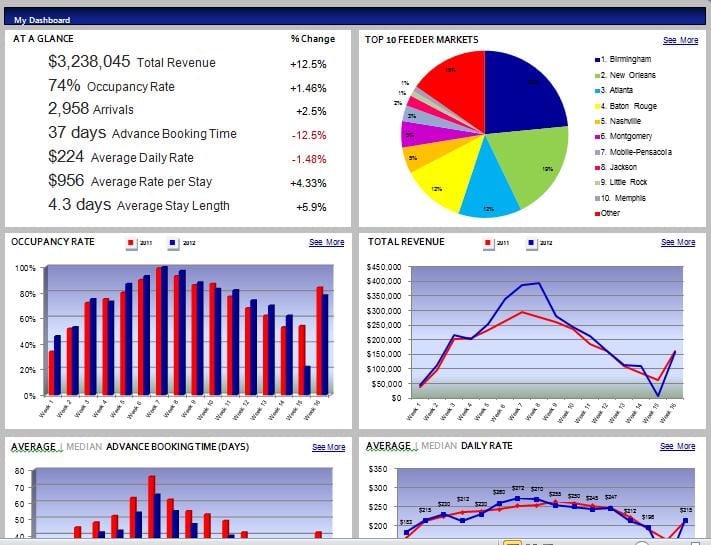

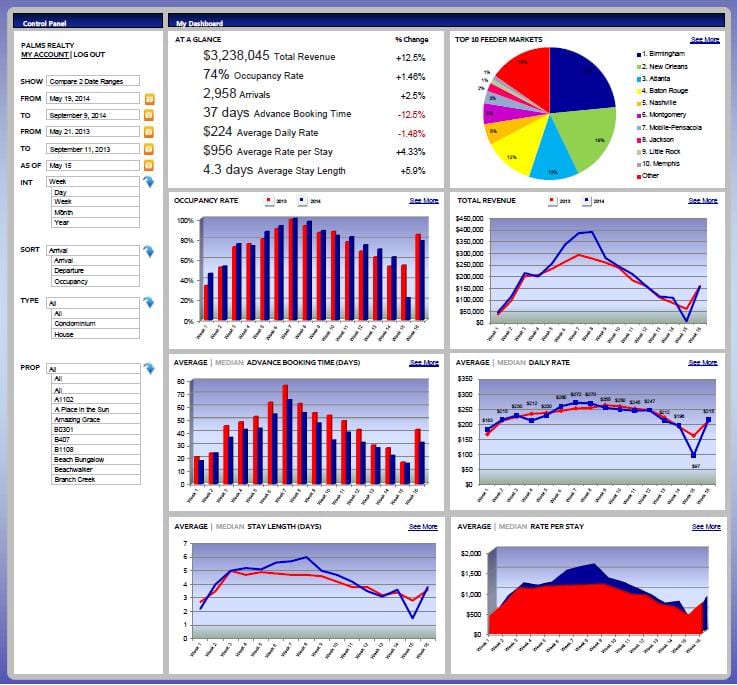
Vacation rental managers who collect accurate data and learn to use their data in real-time for marketing, reservations, rate management and intelligent business decisions will gain an enormous competitive advantage in the near future.
The process of collecting clean data can be overwhelming for a busy vacation rental manager. However, adding processes to collect clean data isn’t burdensome once the necessary data fields have been identified.
What data should be collected?
There are four types of vacation rental data needed to accomplish “big data” needs:
- Property data
- Rate data
- Reservation data
- Prospect data
Here is a data collection cheat sheet below.
Not all of the following data is necessary for every short term rental businesses, but this provides a good starting point to assess the data currently being collected, what could be collected, and what data is not relevant to the business.
(An industry vendor/supplier will also need client data.)
1. Property Data
This is the most complicated data to secure, which is why distribution channels are putting so much time and energy into optimizing their property pages. Fortunately, once property data has been verified and added to the database, updating he information is easy.
**Tip** Design software to make as many of these items as possible displayed in drop down options to avoid errors in data entry.
| Internal Property Code |
| Property Type 1 (House, condo, villa) |
| Property Type 2 (Waterfront, ski in/out, waterview) |
| Property Type 3 (Additional type criteria) |
| Property Type 4 (Additional type criteria) |
| Property Name |
| Property Address 1 |
| Property Address 2 |
| City |
| State |
| Country |
| Zip/Post Code |
| Destination Type |
| Region 1 |
| Region 2 |
| # Bedrooms |
| # of Baths |
| # of Half Baths |
| Amenity (1-30) |
| Sleeps |
| Parking allowed |
| Bedding Configuration |
| Dining capacity |
| Seating capacity |
| Company Rating |
| External Rating |
| Pets |
| Property specific fees (1-x) |
| Handicapped Accessible |
| Suitable for (Kids, Retirees, etc) |
| Attraction 1 (Beach, Disney World, Downtown) |
| Attraction 1 Address or Mapping Coordinates |
| Attraction 2 |
| Attraction 2 Address or Mapping Coordinates |
| Attraction 3 |
| Attraction 3 Address or Mapping Coordinates |
| Attraction 4-x |
| Attraction 4-x Address or Mapping Coordinates |
| Property Contract Start Date |
| Property Contract End Date |
2. Rate Data
Like property data this information is likely to be added periodically, and not all data fields apply to all companies (e.g., some VRMs only allow weekly rentals, while some urban markets have one rate for all seasons).
*Season 2-x = as many seasons as are provided
| Internal Property Code |
| Season 1 Start Date |
| Season 1 End Date |
| Season 1 Title |
| Season 1 Daily Rate |
| Season 1 Weekend Rate |
| Season 1 Weekly Rate |
| Season 1 Monthly Rate |
| Season 2-x Start Date |
| Season 2-x End Date |
| Season 2-x Title |
| Season 2-x Daily Rate |
| Season 2-x Weekend Rate |
| Season 2-x Weekly Rate |
| Season 2-x Monthly Rate |
3. Reservation Data
Collecting clean data from reservations is critical for success in analyzing performance, setting rates and implementing successful marketing efforts.
Again, it is advisable to add preset options to as many fields as you can (e.g., state, country, source codes, discounts, reason for stay, etc.).
| Reservation number |
| Internal Property Code |
| Client Code |
| Guest Name |
| Guest Name (2-x) |
| Gender |
| Email (1-x) |
| Address 1 |
| Address 2 |
| City |
| State |
| Country |
| Zip/Post Code |
| Primary Phone |
| Mobile Phone |
| Reservation Made Date |
| Check In Date |
| Check out Date |
| Source 1 |
| Source 2 -x |
| Status |
| Entry Date |
| Rate |
| Revenue |
| Discount code |
| Discount applied |
| # Adults |
| # Kids |
| # Pets |
| Special Needs |
| Reason for Stay |
| Activities interest |
| Lease signed date |
| Survey sent date |
| Survey complete date |
| Survey results/rating |
| (For marketing purposes, some VRMs are adding names, emails and mobile numbers for all guests staying at the property) |
4. Prospect Data
Ecommerce companies such as Amazon and Zappos have become religious about monitoring and collecting data for prospective customers. Through abandoned shopping carts, user surveys, subscription sign ups and special offers, the ecommerce industry prioritizes data gathering from shoppers who have not yet purchased.
This is why, when a customer calls, the salesperson asks for a name and then asks, “If we get disconnected, is this a good number to reach you?” At that point, they have secured the customer’s name and telephone number, followed by information on what the prospect is shopping for and solicited an email address to send a special offer.
These primary data points can be collected through:
- Subscription sign up
- Special offers
- Comparison shopping tool
- Customer sign in
- Call center
Here are data collection options for prospective guests:
| Guest Name |
| Gender |
| Email (1-x) |
| Address 1 |
| Address 2 |
| City |
| State |
| Country |
| Zip/Post Code |
| Primary Phone |
| Mobile Phone |
| Dates requested |
| Property type interest |
| Property region interest |
| Attractions interest |
| Activities interest |
| Event interest |
| # Adults |
| # Children |
| Pets |
Conclusion
In order to get to “big data,” a professional property management company will identify which data to collect and put in systems to collect the information in a consistent way. This checklist provides a solid starting point in assessing current data collection and determining data goals.
By Amy Hinote


Comments are closed.