

Everyone wants a thriving business. How do you get to increased profits and increased market share? The most intuitive way is to expand your presence from the center—the place where you cast that first stone. 
Ben Edwards, president of Weatherby Consulting, LLC, a Florida-based firm specializing in mergers and acquisitions (M&A), defines adjacent growth as “a business growing by increasing inventory, whether by organic, strategic, or through M&A or by an intentional acquisition, within or near the current market area.”
The tide is coming in for those looking to grow. Despite the pandemic, vacation rental companies in most US states have experienced an increase in bookings. With many pockets full, by all accounts, growth in the vacation rental market is trending up.
“We’re seeing a lot of conversation from bigger partners, equity groups, and larger companies reaching out wanting to buy more businesses and wanting to be in the VR business,” says Edwards. “We anticipate tremendous M&A activity in 2021.”
Yet the vacation rental industry has been likened to the Wild West. How do you know when to pull the trigger on a deal? What preparation is required? How can you tell a good from a bad deal? There’s no vacation rental growth guidebook to steer one forward toward certain success, but we can learn from one another. Let’s look at three vacation rental businesses across the country and how they maneuvered through adjacent growth.
CAROLINA RETREATS, NORTH CAROLINA
Carolina Retreats, an umbrella brand for several local-based vacation rental sub-brand companies, was launched through an acquisition in 2015. Its CEO and president, Mike Harrington, purchased Topsail Realty, a 40-year locally owned business managing 100 properties. Harrington invested to modernize and improve it to make it profitable, and, in less than 5 years, this 15-year veteran of the vacation rental business has more than tripled his business portfolio to 300 units and three motels.
With the success of Topsail under his belt, he had the confidence to do more. “The investment thesis was if you can buy one company, you probably could buy multiple companies,” Harrington says. “We would be one consistent overall brand in multiple locations.”
In 2017, he acquired Loggerhead Inn. In 2018, he purchased three companies on Carolina Beach, just south of Topsail, and in 2020 Harrington acquired the 22-unit Oak Island Resort and Inn as well as Tranquil House Inn, a 25-room boutique property on the Outer Banks.
Although he admits the business has grown quickly, not everything happened quickly. “We looked at Oak Island for the better part of a year,” he says. After going back and forth with the broker, they settled on a number.
For Harrington, it was a strategic deal.
“I knew if we could get our hands on this property, it would provide an anchor on Oak Island that we own. We could work out of there and grow from there,” he explains.
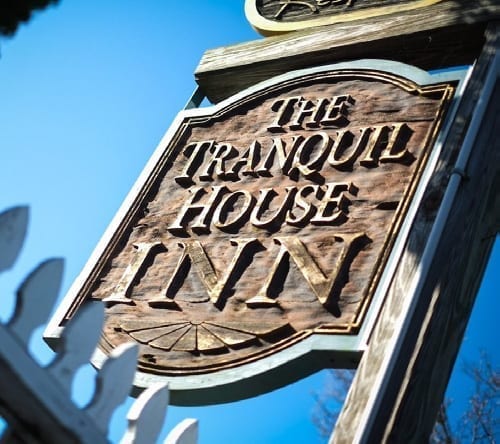
Instead of purchasing a property management company, Harrington focused on investing in real estate that he could “grow property management around.” He says most deals are strategic, but then there are surprises—like the Tranquil House Inn located in historic downtown Manteo on the Outer Banks. “This was completely opportunistic. I knew the family that owned it. They had a tough year because of COVID. They really needed a sale, and I was in the right place at the right time to do it,” he says.
What Harrington categorizes as “hybrid vacation rental motels” may not be an obvious choice for some. “These older mom-and-pop-run properties were left for dead from an investment perspective for years,” he says. “The owners don’t have the capital to improve them. No one wants to buy them at some of the prices people ask.”
Although the Tranquil House, built in 1988, is admittedly a “departure” from his business, it’s a clear opportunity to grow Carolina Retreats in a new way. “This is our first full-service boutique hotel,” Harrington says. “This is an exciting part of our business and a completely different part of our growth that we didn’t expect. We’re excited about getting our feet wet and looking at some other opportunities in that sector down the road.”
Harrington says that successful growth means taking it slow and avoiding a “shotgun approach.” He advises patience and restraint— which can require passing on a deal if it doesn’t feel right. “Don’t get too starry-eyed. Eventually you’ll have to walk away from a deal,” he cautions.
The biggest lesson learned? Less is not always more. “Not all the homeowners will like you when you buy the company,” he says. “You could be Mr. Rogers, and they won’t care. Plan to build in some attrition. It’s somewhat counterintuitive. The smaller companies, 20 to 30 units, are harder in that every home you lose [from your rental program] is a bigger hit. The bigger companies are easier. You have more stability.”
How do you know when to say “when” to growth?
That’s simple.
“The guests and owners will tell you when you reach that line,” Harrington chuckles.
SOUTHERN VACATION RENTALS, FLORIDA
The Southern Vacation Rentals story began 25 years ago when two brothers, Mike and Brad Shoults, launched Pointe South, a real estate and vacation rental enterprise on the Northwest Florida Gulf Coast, with properties from Destin to the beaches of Perdido Key. Around that time, Kevin and Kerry Veach, another set of brothers with similar aspirations, formed the rental and real estate company Southern.
In 2001, after years of friendly competition, the brothers joined forces, providing more inventory and more opportunity for prospective owners, guests, and clients alike. With the merger, Southern Vacation Rentals was born.
CEO Scott Seay came aboard in 2013 after 30-plus years operating major brands (Home Depot, Comp USA, Kinkos, and Build-A-Bear Workshop). He says the initial strategy for Southern Vacation Rentals was motivated by its geographic location.
“Kevin and Mike had the foresight to look at diversity,” Seay explains. “If anything happens to you, if a natural disaster hits you, that’s it. There is no backup plan. How do you recover from something like that?”
The solution: adjacent market growth to the east and west. They looked to the east first.
Seay continues, “The idea was to expand down the same beach along the Gulf Coast. When it comes to a hurricane, being 20 miles away could mean you don’t get touched at all or you don’t lose your whole business to one natural disaster.” So they expanded into Port St. Joe in Panama City.
Then, they went west.
The first opportunity for westward expansion came from familiar territory. After the 2001 merger that created Southern Vacation Rentals, the team spun off the Pointe South operations in Perdido Key, Florida, and Orange Beach, Alabama to Susan Carleton, a real estate broker who grew the business. Ten years later, recognizing the opportunity for expansion, Southern reacquired Pointe South, and together they became Southern Rentals and Real Estate in 2011.
Since Mike Shoults had originally founded Pointe South, when he folded the company into Southern, there was little risk. “It was a known entity already,” Seay says. “They understood it. Mike lived there. He already had contacts there. He knew the lay of the land, so it was an easier transition.”
Fast-forward another decade, and Southern Vacation Rentals represents nearly 1,200 short-term rental properties spanning 200 miles of coastline from Panama City Beach, Florida, to Fort Morgan, Alabama.
Southern’s expansion crossed state lines from Florida into Alabama. If you plan on “jumping states,” Seay says to do your homework. “Rules are different in Alabama, so you have to understand those laws. For example, there, every contract must be signed by a registered real estate agent,” he explains.
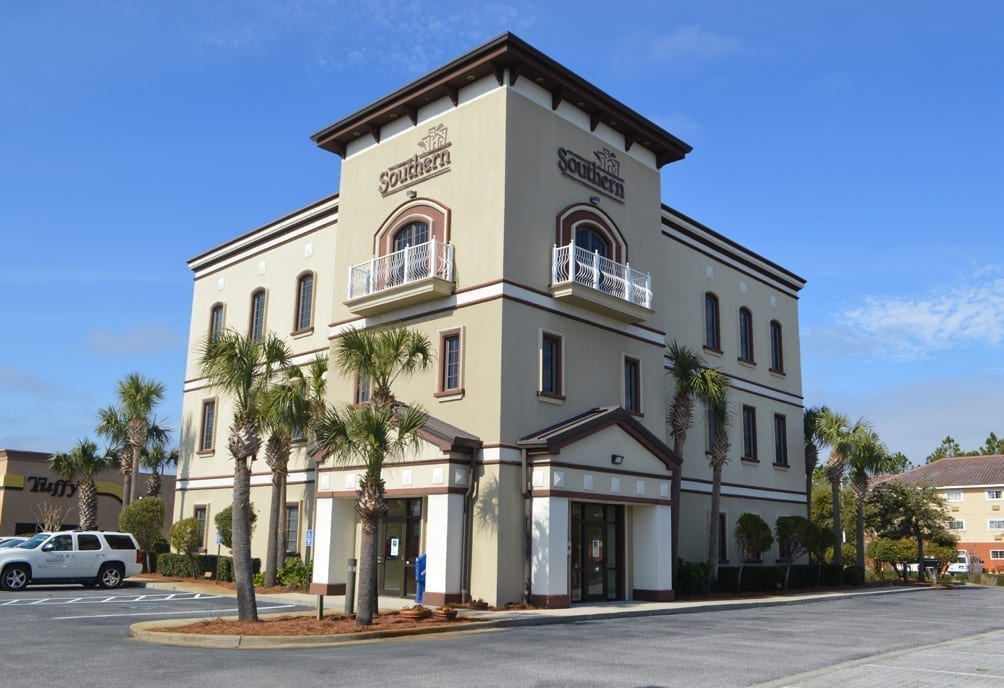 For Southern, having a large multistate footprint provides a clear advantage. In 2010, when the perception was that the BP oil spill affected the beach, guests were able to stay inland. When COVID-19 hit last spring, Florida shut down, but Alabama was still open. “Things will happen. You will shut down. When your business is geographically strained, you won’t have many options. So allow yourself opportunities,” Seay encourages.
Still, be careful what you wish for. At one time, Southern had ballooned to 1,400 units, and, according to Seay, it wasn’t all “good growth.” Over the past few years, Southern has intentionally “slimmed down” to 1,150 units and is much “healthier” as a result.
“We have certain standards that are important to our guests and owners,” Seay says. “It’s okay to shed properties that don’t meet those.” Seay says that some properties can be an albatross on a company’s reputation by “costing money, time, or bad reviews.”
What’s on the horizon for Southern?
“We don’t want to just grow for the sake of growth; we want to have good growth, highly profitable growth, which is good for our owners and our guests, because the more we can be successful, the more we can offer in terms of our services. . . . At this point, what we really look at is volume because what you want is to have more stays for some of the units and grow another couple of reservations for them and leveraging that because it doesn’t cost you more. So, right now, we are focusing on how we grow our sales.”
MEREDITH LODGING, OREGON
After years in real estate and development, entrepreneur Jon Oksenholt and his wife, Meredith, established Meredith Lodging in 2012. Jon is CEO, and Meredith is both president and chief branding officer. The Oregon company has regional headquarter offices in both Bend and Lincoln City.
Today, Meredith Lodging—touted as one of Oregon’s fastest growing companies—is a full-service vacation rental business that manages 700 vacation rental properties in central Oregon and along the coast. Oksenholt says that about one-third of Meredith Lodging is the result of adjacent acquisitions. Seven deals—companies ranging from 10 to 60 units—have been completed in the past three years.
“My strategy is, when there is a complementary market that is adjacent to ours or that we’ve already been in, where we believe that we can provide better service, better revenue, I’m very eager to do things . . . and I do them very quickly.”
Eight years in, Oksenholt attributes Meredith’s growth success to its track record. “One of the reasons we had a series of acquisitions was that people talk—it’s a small industry, so they know who’s buying, and they know who the players are,” he says. “If you have a simpler, faster way to do it . . . that’s what people want.”
For Oksenholt, success is knowing the art of the deal. “The financial analysis we’re able to do, we do in a different manner than most. We look at what these are going to add to our program, rather than we bought some companies that have been losing money. One of my specialties is deals and understanding what the seller wants and doing it quickly. I’ve been able to template that process to where we’ll close in 30 days.”
If you ask Oksenholt, the 29th fastest growing company in Oregon, is in no rush to cross a finish line. “Maybe call us the tortoise in The Tortoise and the Hare,” he says. “To everyone else they say we’re so big, but I think it’s the tip of the iceberg versus our potential. We will be in other states, that will happen. But it will only happen very methodically and very intentionally, at the right time and in the right place, and when we have our human talent in place ahead of that growth, instead of trying to digest it and add on.”
Looking to Grow? Keep These Considerations in Mind
For vacation rental management companies looking to expand into adjacent markets, Ben Edwards shared the following seven tips.
1. Right Fit?
Anyone who wants to grow wants to increase profitability and revenue; although doing so is extremely important, you must have meaningful profit to stay in business. That said, there’s both good and bad growth, and good growth is acquiring certain businesses in certain markets that are going to fit culturally.
2. Think Sustainable
It’s important to find the right deal. Too many large-scale operators are just trolling to buy. It can be flattering to be approached, but they may intend to just scrape what they can out of your company and then add it to a pile of dead companies. Be sure that you are creating growth that is also sustainable.
3. Suit Up
Everyone is an entrepreneur, but you don’t know what you don’t know. The slightest tweak or twinge can have catastrophic results. It’s like going into battle without armor.
4. Be Strategic
You want to find businesses and areas that are right for your business. Expand your footprint locally, and then branch out. Take a methodical, strategic approach that sets you up for the most profit and that doesn’t stress, test, or strain the business.
5. Be Prepared
It’s imperative that you have a fundamental foundation from which to grow. You’re not going to build a 20-foot skyscraper on top of a mobile home. Prepare your business to ramp up to grow so that, when you slam two businesses together, you don’t kill both.
6. Buyer Beware
Consider the reason someone is selling. Plenty of people have fantastic businesses but are tired and ready to exit; however, there are others out there who have a defined issue and may not be forthright about it. Be measured about the process.
7. Enlist Expert Help
Hire a professional expert who knows the ropes of mergers and acquisitions. Look for someone to help you who fits both culturally and financially into your business model.


For meredith lodging that “1/3 has been acquisitions” number is not correct. Factoring in the acquisitions they’ve actually had negative organic growth since starting their acquisition spree. They are good with their press releases though!
I’m proud that All 3 of these wonderful companies run on TRACK Software. It’s amazing to see them grow and be leaders in our industry.